
Gue Mummy Monastery, Spiti Valley
A 500 year old self mummified monk in a glass case, in a tiny village above the Spiti River near the Indo Tibet border
- Monastery
- ~3,080 m
- Tabo · 35 km
- Kaza · 80 km
- May to Sep
What makes it special
Gue is the only place in India where you can sit a few feet from a naturally preserved Buddhist monk in a glass case. The mummy is of Lama Sangha Tenzin, believed to be around 500 years old. His skin, hair and teeth are still visible. He sits cross legged, robe draped over bony knees, eyes half closed. People go quiet when they enter the room, even the loud ones.
The village itself is tiny, maybe 50 to 60 stone and mud houses scattered on a slope above the Spiti River, very close to the Indo Tibet border. The monastery is small, painted in the classic red and white of the region, with prayer flags snapping hard in the wind. There is no big tourist circus here, no shops, no parking attendants. Most travellers driving the Kinnaur to Spiti road do not even know the turnoff exists, which is exactly why the place still feels the way it does.
Worth knowing: Gue is not a destination on its own. It is a 60 to 90 minute detour off NH 505, between Sumdo and Tabo. If you are doing the full Spiti circuit from the Shimla side, fitting it in costs you barely half a morning. If you skip it, you skip one of the strangest, quietest stops in the Indian Himalayas.
Quick answers
- Is it worth visiting?
- Yes, if you are already passing through on the Kinnaur to Spiti road. The mummy is genuinely unlike anything else in India, and the detour from NH 505 is short. Skip it only if you are short on time and the road conditions look rough.
- How much time do you need?
- Plan 60 to 90 minutes once you leave the highway. Around 30 to 45 minutes at the monastery itself, plus the 8 to 10 km drive up from the main road and back down.
- Can you stay here?
- No proper hotels. The village has only a couple of basic homestay options and most travellers do not stay. Sleep at Tabo (35 km) or Kaza (around 80 km) and visit Gue as a day stop on the drive.
Quick facts
Everything you need to know at a glance.
At a glance
- Altitude
- ~3,080 m / ~10,100 ft
- Location
- Gue village, Lahaul & Spiti, Himachal Pradesh
- Nearest town
- Tabo, ~35 km
- Best season
- May to September, often extends April to October
- Monastery timings
- Generally morning to early evening, aim for after 9 AM
- Entry fee
- Small village contribution, around Rs 30 per person as of recent reports. Confirm on site.
- Time needed
- 60 to 90 minutes including the detour
- Effort
- Easy. Short walk from parking on uneven ground.
On the ground
- Mobile network
- Patchy. BSNL and Jio work in parts. Do not count on data.
- ATMs
- None in Gue. Nearest reliable ATMs in Kaza, sometimes erratic. Carry cash.
- Food
- One small cafe near the monastery serves Maggi, thukpa and tea. Limited hours. Eat properly in Tabo or Nako.
- Fuel
- No fuel pump at Gue. Tank up in Reckong Peo, Pooh or Kaza.
- Permits
- Indian travellers need no permit for Gue itself, only the standard NH 505 checkpost entry at Sumdo. Foreign nationals should carry an Inner Line Permit (ILP) for the Kinnaur stretch.
- Drones
- Not allowed. Border sensitive area, ITBP presence.
- Washrooms
- Basic. Use facilities in Tabo before driving up.
Seasonal weather
- May to June22°6°Summer
- July to August20°8°Monsoon
- September to October18°2°Autumn
- November to March5°-15°Winter
Suitable for
- Couples — suitable
- Families — suitable
- Seniors — with some care
- Solo — suitable
- First-timers — suitable
- Pet-friendly — with some care
How to reach Gue Mummy Monastery, Spiti Valley
4 approach routes, with seasonal access.
From Tabo
Generally May to October, sometimes April to early November depending on snow- Distance
- ~35 km
- Time
- 1 hr 15 min to 1 hr 30 min one way
- Road
- Mostly tarred NH 505 till the Gue Nullah turnoff, then 8 to 10 km of narrow uphill village road
- Last fuel
- Last reliable fuel at Kaza on the Spiti side or Pooh on the Kinnaur side. None at Tabo or Gue.
Easiest base for a Gue day trip. Drive east on NH 505 towards Sumdo. About 3 km past Sumdo checkpost you cross a small bridge over the Gue Nullah. The turnoff goes left (uphill) from there, climbing roughly 8 km to the village. Road is narrow with blind curves, drive slow. Plan to be back in Tabo by late afternoon.
From Kaza
Generally May to October- Distance
- ~80 km
- Time
- 3 hr to 3 hr 30 min one way
- Road
- NH 505 most of the way, fair tarmac with rough patches near Sumdo, then the village road
- Last fuel
- Fuel up in Kaza before leaving. Nothing reliable till you return.
Long for a same day return from Kaza. Most people fold Gue into the day they shift base from Kaza to Tabo, or Tabo to Nako, rather than making it a separate trip. If you must do it from Kaza, leave by 7 AM and combine with Tabo and Dhankar to make the day worth it.
From Nako
Most of the year via the Kinnaur side, weather permitting- Distance
- ~47 km
- Time
- 1 hr 30 min to 2 hr one way
- Road
- NH 505, mostly fair, occasional rough patches near Khab and Sumdo
- Last fuel
- No fuel at Nako or Gue. Last clean fill at Reckong Peo or Pooh.
The natural way to fit Gue into a Kinnaur to Spiti road trip. Leave Nako after breakfast, cross the Sumdo checkpost (have your ID ready), then take the Gue turnoff just past the bridge. Continue to Tabo for the night after the visit.
From Shimla
NH 5 on the Kinnaur side stays open most of the year, with brief closures after heavy snow or landslides- Distance
- ~430 km via Reckong Peo and Nako
- Time
- 2 to 3 days of driving
- Road
- NH 5 from Shimla up to Khab, then NH 505 onwards. Landslide prone stretches between Wangtu and Pooh on NH 5.
- Last fuel
- Rampur, Reckong Peo, Pooh
The standard way travellers reach Gue. A typical itinerary is Shimla to Sarahan or Sangla on day one, Sangla or Kalpa to Nako on day two, then Nako to Gue to Tabo on day three. Do not try to compress this. The road is what defines this trip.
Best time to visit
Season by season, so you can plan around the weather rather than hope.
- Recommended
Summer
May to June
The window most travellers aim for
- Day temperature
- 15 to 22 C
- Night temperature
- 4 to 10 C
- Roads
- Generally open and stable on the NH 505 side
- Crowds
- Light. Gue is rarely busy even in peak season
This is when most people visit. Days are clear and sunny, the road on the Kinnaur side is dependable, and the village fields are at their greenest. Cold at night even in June, so carry a proper jacket, not a hoodie. Honestly the best time if you only get one shot at Spiti.
Monsoon
July to August
Spiti is rain shadow, but the approach is not
- Day temperature
- 15 to 20 C
- Night temperature
- 6 to 10 C
- Roads
- Kinnaur side prone to landslides, check status before leaving
- Crowds
- Low
The Spiti side itself stays mostly dry, but the Kinnaur stretch on NH 5 between Wangtu and Pooh sees regular landslides and shooting stones in monsoon. Plan for delays. If it is raining on the day of your visit, skip Gue. Rolling stones can block the village road in or out.
- Recommended
Autumn
September to mid October
Quietest skies, sharpest light, fewest people
- Day temperature
- 10 to 18 C
- Night temperature
- -2 to 6 C
- Roads
- Generally good, occasional early snow on high passes
- Crowds
- Very low
If you can manage it, this is the quiet sweet spot. Air is cleaner, light is sharper, the slopes turn golden, and the road is usually back to normal after monsoon. Nights get properly cold by late September. Many travellers prefer this window over summer.
Winter
Late October to March
Reachable in theory, hard in practice
- Day temperature
- -2 to 5 C
- Night temperature
- -15 to -5 C
- Roads
- Village road may be snowed over from December to March
- Crowds
- Almost nobody
NH 505 from the Kinnaur side often stays open through winter, but the short uphill village road to Gue can get blocked by snow or ice. The monastery is open in principle but caretakers are not always around. Only attempt this if you have winter driving experience and a confirmed plan in Tabo or Nako for the night.
Things to see & do
6 things worth your time at Gue Mummy Monastery, Spiti Valley.
See the mummy of Lama Sangha Tenzin
15 to 30 minutesThe reason most people make the detour. The monk sits in a glass case in a small room beside the monastery, in the same meditative posture he died in. Skin, teeth and a few strands of hair are still visible. Treat the room as a place of worship, not a museum exhibit. Voices low, no flash, do not lean on the case.
Walk through Gue village
20 to 30 minutesThe village itself is worth a slow walk. Stone houses, narrow lanes, small fields, occasional yaks, and big sky in every direction. You will likely have it almost to yourself. Locals are friendly but private, a quiet namaste goes a long way.
Sit at the monastery viewpoint
15 to 30 minutesFrom the monastery courtyard the view drops across the gorge towards the Spiti River and the bare folded mountains on the far side. Pure silence except for the wind and prayer flags. One of the most underrated views on the Spiti circuit.
Tea at the small monastery cafe
15 to 20 minutesThere is a tiny cafe in the monastery premises run by the village. Tea, Maggi, sometimes thukpa. Read the handwritten quotes on the walls, they are unexpectedly good. Drop a contribution, the money goes back into the monastery.
Spend a few quiet minutes inside the prayer hall
10 to 15 minutesThe prayer hall is small but has the standard butter lamp altar, painted pillars and a few thangkas. If a monk is around and seems open, a soft conversation about the mummy or the village is often welcome. Do not push for one.
Photograph the village from the spur above
15 to 20 minutesThe slope just above the monastery gives the cleanest frame of the village against the gorge. Best light is mid morning and again in the last hour before sunset. Keep the camera away from the border facing direction. No drones.
Know before you visit Gue Mummy Monastery, Spiti Valley
The practical bits, from people who have been.
The story of the mummy500 years old, discovered after a 1975 earthquake, locally believed to have ended a scorpion plague.
The monk inside the glass case is Lama Sangha Tenzin, believed to have lived around the 15th century. He is one of the very few naturally preserved mummies in the world, and the only known one in India. Most ancient mummies elsewhere were embalmed and wrapped in cloth. This one was not. He sat in deep meditation, slowed his metabolism, gradually stopped eating and drinking, and his body dehydrated naturally. The dry, cold, low oxygen air of Spiti did the rest.
The mummy was apparently buried in an old stupa for centuries. In 1975 a strong earthquake in this area cracked the stupa open and the body was rediscovered, intact. Locals tell a folk version too: that during a scorpion infestation of the village, the monk asked his followers to mummify him after his death so his spirit could protect Gue. They say a rainbow appeared and the scorpions vanished. Whether you take that story as faith or as folklore, the village still treats him as their guardian.
Photography rulesPhotos fine outside. No flash near the mummy. No drones anywhere in the area.
Photography is allowed freely outside the monastery, in the courtyard, and around the village. Inside the room with the mummy, do not use flash. The flash damages the preserved tissue over time and the caretakers will, rightly, ask you to leave.
Drones are not permitted anywhere around Gue. The village sits very close to the Indo Tibet border and there is regular ITBP presence in the area. Even if nobody is watching, do not fly. It is the kind of thing that ends in a long, awkward conversation with the army.
If you want close ups of the mummy or the prayer hall, ask the caretaker first. A small donation in the box on your way out is good practice.
Who should visit, and who can skip itGreat for curious travellers and culture nerds. Skip if you only want big monasteries.
Gue is for the kind of traveller who likes a strange, quiet, slightly haunting stop more than a grand spectacle. If the idea of a 500 year old preserved monk fascinates you, it is worth the detour. If you are mainly chasing landscapes and big monasteries, Tabo and Key will give you more.
Families with young kids: Fine for older kids who can handle the idea of seeing a mummified body. For very young children it can be a bit unsettling. Gauge your child first.
Seniors: The drive is the harder part. The road from the highway to the village is narrow and bumpy. Once you are there the walk to the monastery is short and easy. If altitude has been bothering them earlier in the trip, this is a short stop, not a place to spend hours.
Pets: Most travellers do not bring pets to a Buddhist monastery. Keep them in the car if you must, and respect the space.
Planning your visitBest as a half day stop on the Kinnaur to Spiti drive. Aim to arrive after 9 AM.
The cleanest way to fit Gue in is on the day you move between Nako and Tabo, or between Tabo and Kaza. Trying to do it as a separate excursion from Kaza wastes a full day on driving.
The monastery is generally open from morning to early evening, but caretakers are most reliably around from about 9 AM onwards. Reaching too early can mean waiting outside in the cold. Reaching too late risks finding the inner room locked.
Total time on the ground at Gue is usually 30 to 45 minutes. The drive up and back from the highway takes another 30 to 45 minutes. Build in a buffer, do not stack Gue with too many other stops on the same day.
One quiet recheck reminder: road status, opening times and the entry contribution all change without notice. Confirm at Tabo or Sumdo on the morning of your visit.
Where to stay and eatSleep at Tabo or Kaza. Eat at Tabo. Almost nothing at Gue itself.
There are no hotels in Gue village. A couple of homestays exist but they are basic and not always open. The right move is to stay at Tabo, 35 km away, which has a good range of guesthouses and the well known Tabo Monastery Guesthouse, or push on to Kaza, around 80 km, for more variety.
For food, the small cafe in the monastery premises serves tea, Maggi and sometimes thukpa, but stock and timings are unreliable. Eat a proper meal in Tabo or Nako before driving up. Carry a couple of snacks and a water bottle in the car.
Safety, altitude and the borderMild altitude, narrow road, sensitive border zone. Drive slow, stay polite at checkposts.
At around 3,080 metres, Gue sits on the lower side of the Spiti scale. If you have already spent a night or two at Nako, Tabo or Kalpa, your body is fine for a brief stop here. If you are arriving fresh from the plains, do not rush. Most travellers have already acclimatised by the time they reach Gue.
The village road is narrow, sometimes single lane with blind curves. Honk on bends, give way to uphill traffic, and do not try to overtake. In wet weather small rockfalls happen, so skip the visit if it is actively raining.
You will pass through the Sumdo checkpost on NH 505. Indian travellers usually only need to enter vehicle and ID details in the register. Foreign nationals should carry their Inner Line Permit, issued at the SDM office in Rampur or the DM office in Reckong Peo, since the Kinnaur stretch is restricted. ITBP personnel are courteous, just be patient and respectful.
Do's and don'ts at the monasteryTreat the mummy room like a shrine, not a horror attraction.
- Speak softly inside the monastery and the mummy room.
- Remove caps and sunglasses inside the prayer hall.
- No flash, no touching the glass case, no leaning on walls.
- Walk clockwise around the inner shrine if you are doing a kora.
- Drop a small contribution in the donation box, the village uses it for monastery upkeep.
- Do not interrupt monks during prayers. Wait for a pause if you have a question.
- Carry your trash back. There is no garbage system in the village.
- No drones, no border facing telephoto shots, no arguments at the checkpost.
Local tips most guides missSmall things that change the visit, from light to layers to timing.
- Mid morning light, roughly 9 to 11 AM, is the best for both the mummy room and the village. The afternoon wind picks up sharply and makes the courtyard uncomfortable.
- Carry a thin headlamp or use your phone torch. The mummy room is dim and the glass case can reflect badly in low light.
- Layer up even in July. The monastery is on a windy spur and the temperature drops the moment a cloud passes over.
- If the caretaker is not around when you arrive, ask at the cafe or the houses just below the monastery. Someone usually knows where to find them.
- Take a few minutes to read the painted quotes around the cafe and outer walls. They are surprisingly thoughtful and often the bit travellers remember most.
- If you are short on time and forced to choose, prioritise Tabo Monastery over Gue. If you have an extra half day, Gue is the more unusual experience of the two.
Nearby attractions
Other places worth the detour.
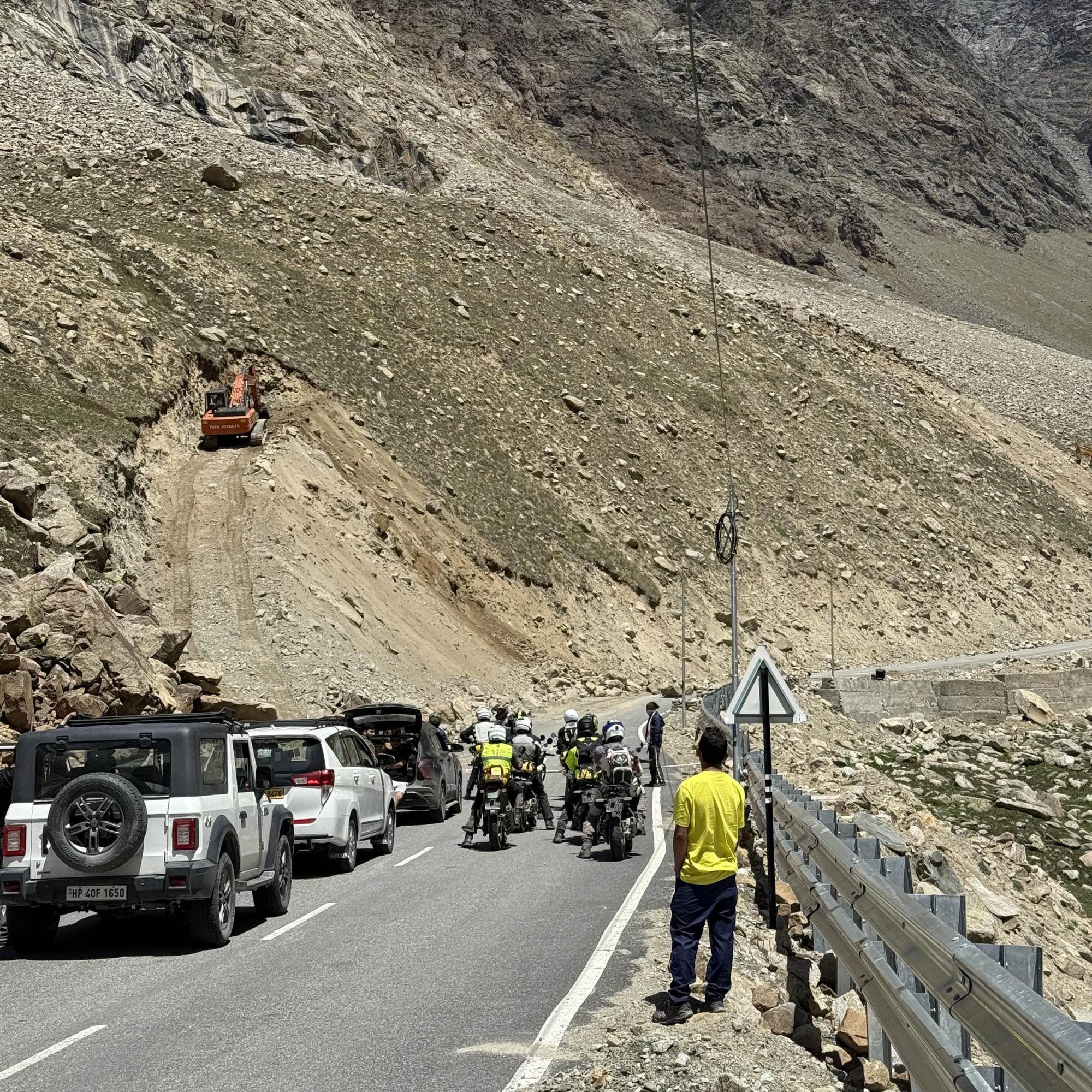
Sumdo Checkpost
~11 km · 20 min
Where Kinnaur ends and Spiti officially begins. The bridge over the Pare Chu is just before the Gue turnoff, so you will pass through anyway. Quick stop for register entry, occasional ID check.
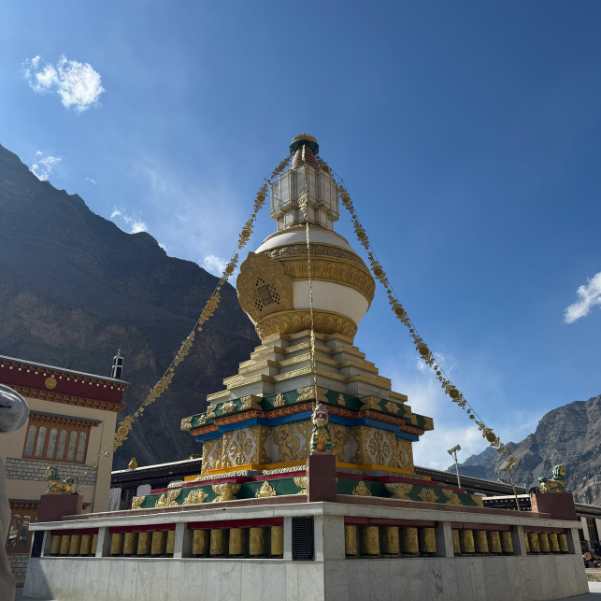
Tabo Monastery
~35 km · 1 hr 15 min
The 1,000 year old Tabo Monastery is the natural pair to Gue. Mud brick temples with some of the finest surviving Indo Tibetan murals in the world. Most travellers sleep at Tabo and visit Gue as a half day side trip.
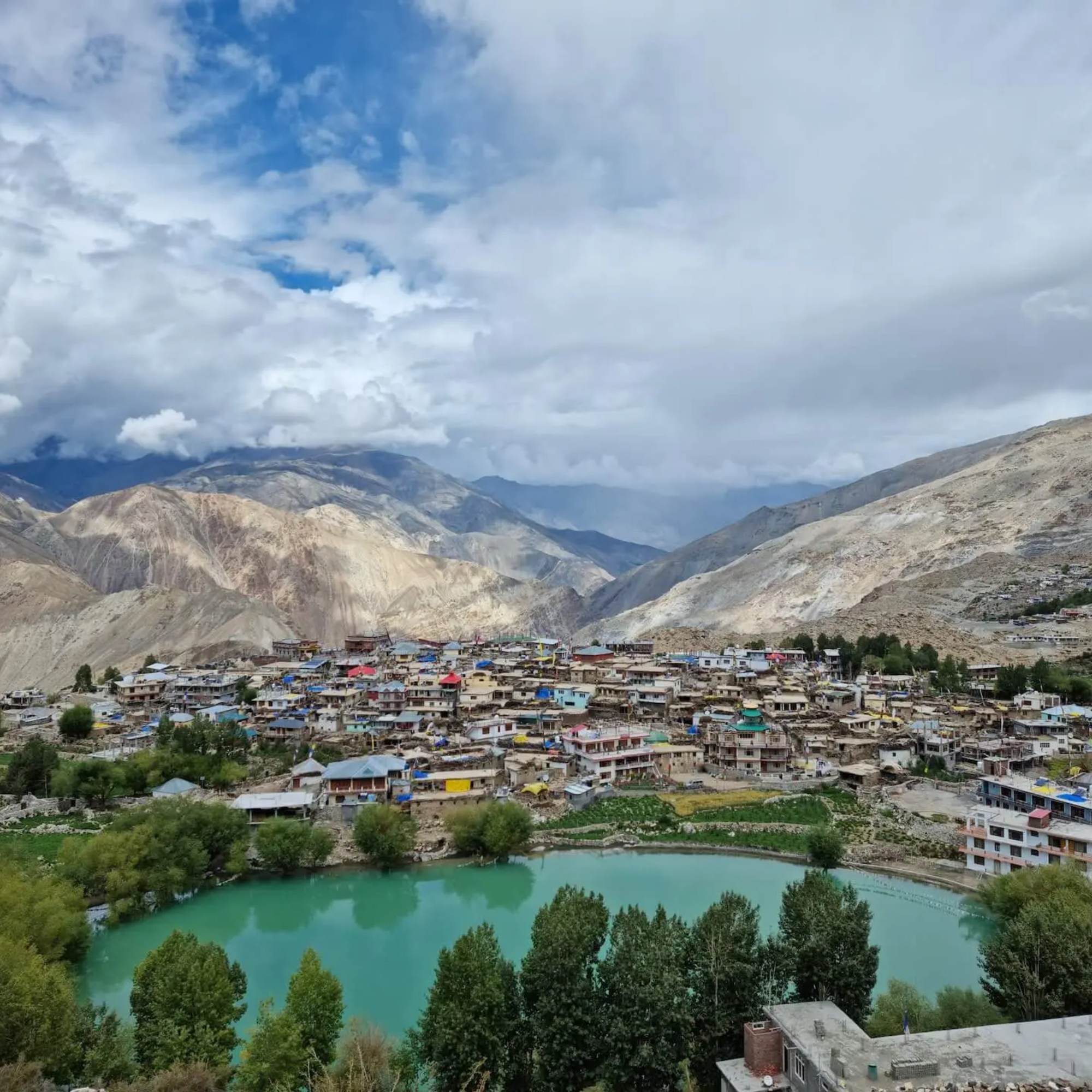
Nako Village and Lake
~47 km · 1 hr 30 min to 2 hr
A small high altitude village in Hangrang valley with a calm lake, an old monastery, and stone lanes. Often the previous night halt for travellers entering Spiti from the Kinnaur side. Greener and softer than Gue.
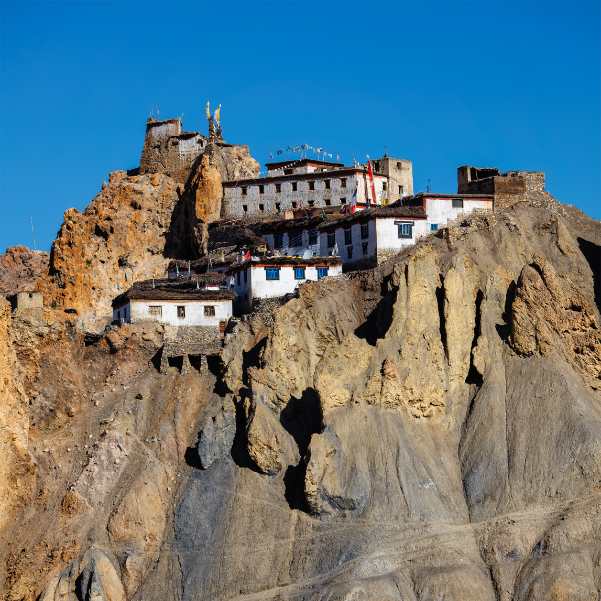
Dhankar Monastery and Lake
~67 km · 2 hr 15 min
The old capital of Spiti, perched on a cliff above the confluence of the Spiti and Pin rivers. The hike up to Dhankar Lake from the monastery is one of the most rewarding short walks in the valley.
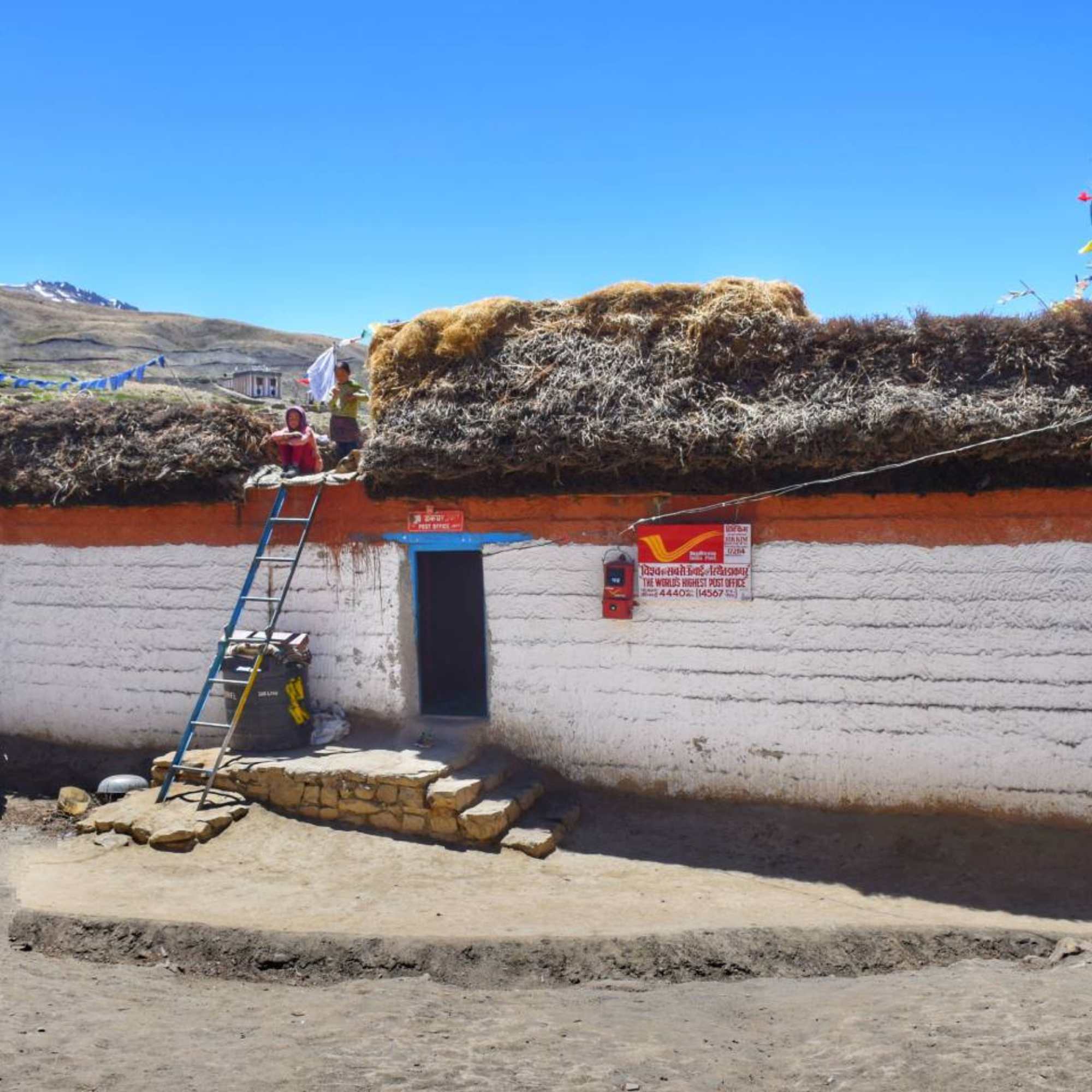
Kaza
~80 km · 3 hr
The main town of Spiti and the base for almost everything else in the upper valley. ATMs (sometimes working), fuel, cafes, hotels, and the route head for Key, Kibber, Langza and Komic.
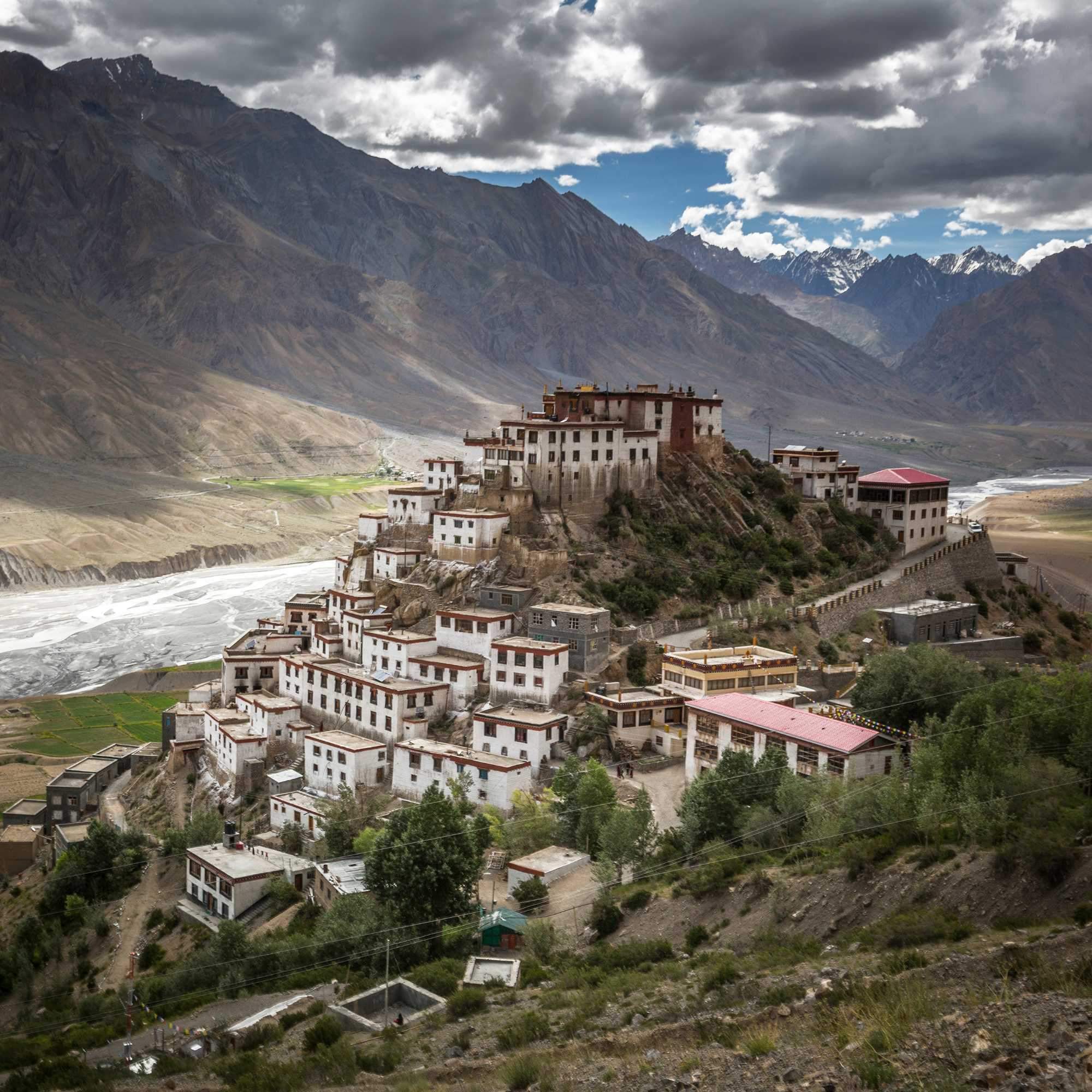
Key Monastery
~92 km · 3 hr 30 min from Gue, 12 km from Kaza
The largest and most photographed monastery in Spiti, sitting like a fortress on a conical hill above the river. Pair it with a visit to Kibber if you are continuing past Kaza.
Our packages with Gue Mummy Monastery, Spiti Valley
Curated trips that include a visit to Gue Mummy Monastery, Spiti Valley.
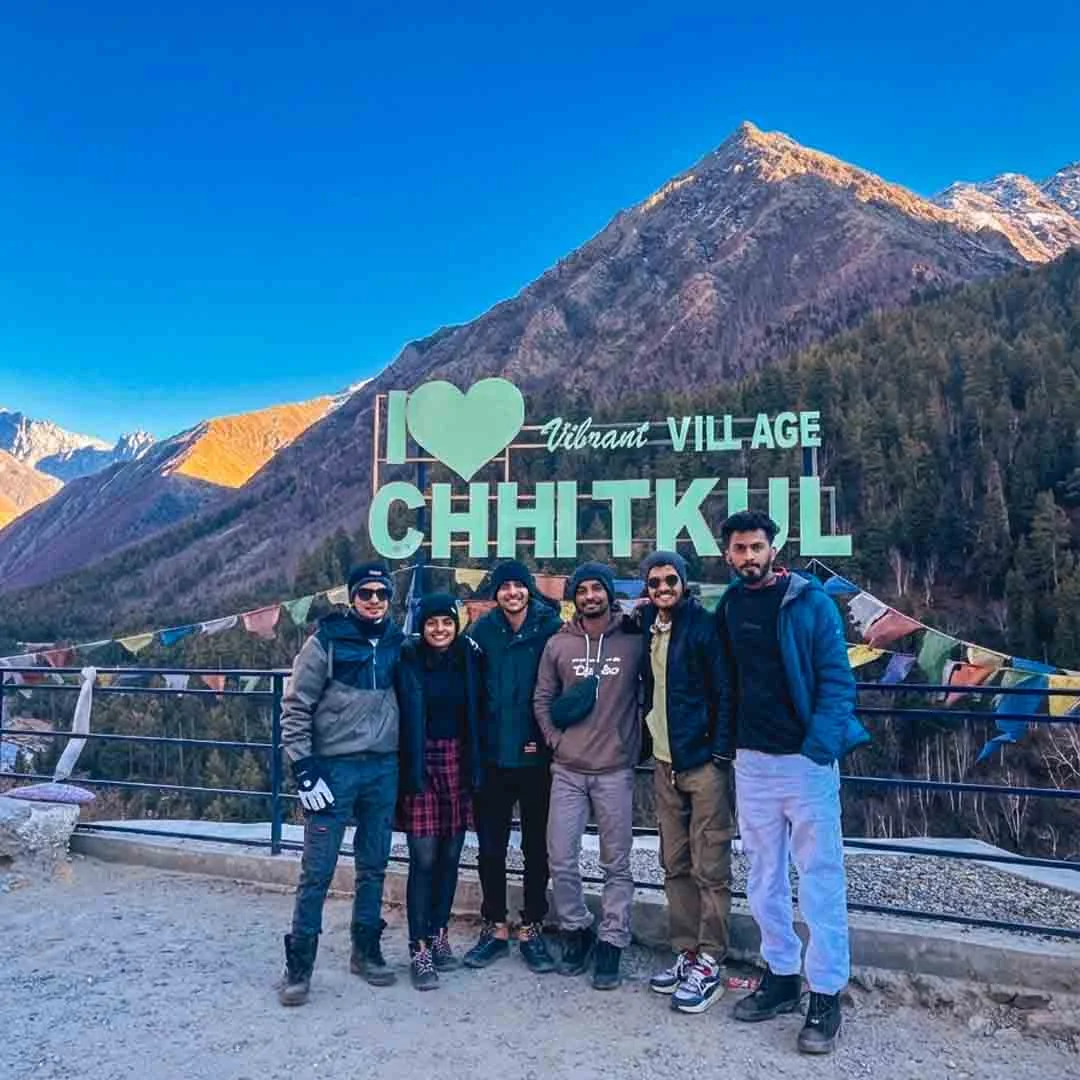 Group Tour9D/8N
Best Selling Winter Spiti Valley Group Tour
2D Sangla•1D Tabo+2
₹18,999₹23,999SAVE INR 5,000/ person
Gue Mummy Monastery FAQs
What is so special about Gue Monastery?
It houses the only known naturally preserved mummy in India, of a Buddhist monk called Lama Sangha Tenzin. He is believed to be around 500 years old, sits in a meditative posture in a glass case, and his skin, hair and teeth are still visible. Most other ancient mummies in the world were embalmed. Sangha Tenzin was not. The dry, cold, low oxygen air of Spiti preserved him naturally.
How old is the Gue mummy?
Locally believed to be around 500 years old, dating to roughly the 15th century. He was rediscovered after a strong earthquake in this area in 1975 cracked open the old stupa where he was buried.
How do you reach Gue Monastery?
Gue is on a short detour off NH 505, between Sumdo and Tabo. From Tabo it is around 35 km, from Kaza about 80 km, and from Nako roughly 47 km. The turnoff is just past the Sumdo checkpost, after a small bridge over the Gue Nullah. From there it is 8 to 10 km of narrow uphill road to the village.
What is the best time to visit?
Generally May to September, often extending to October if the weather holds. June and September are the sweet spots for clear skies and stable roads. Skip the visit on rainy days, since the Kinnaur stretch is landslide prone and the village road can be blocked by rolling stones.
Is there an entry fee?
As of recent reports the village society collects a small contribution, around Rs 30 per person, used for monastery upkeep. Some older sources list it as free. Carry small notes and confirm on site, since this can change.
What are the Gue Monastery timings?
Generally open from morning to early evening. The mummy room is most reliably accessible from about 9 AM onwards, when the caretaker is around. Avoid arriving too early or too late.
Do I need a permit to visit Gue?
Indian travellers do not need a special permit for Gue itself, only the standard register entry at Sumdo checkpost on NH 505. Foreign nationals should carry an Inner Line Permit (ILP) for the Kinnaur stretch, issued at the SDM office in Rampur or the DM office in Reckong Peo.
Can you fly drones at Gue?
No. Gue sits very close to the Indo Tibet border with regular ITBP presence, and drones are not permitted in the area. Do not fly even briefly.
Is there accommodation in Gue village?
No proper hotels. A couple of basic homestays exist but they are not always open. Most travellers stay at Tabo (35 km) or Kaza (80 km) and visit Gue as a day stop.
How much time should I keep for Gue?
Plan 60 to 90 minutes from the moment you leave NH 505. About 30 to 45 minutes at the monastery and village, plus the drive up and back.
Is Gue suitable for senior citizens or kids?
Yes, with sense. Altitude is moderate at around 3,080 metres, the walk is short, and the visit is brief. The narrow village road is the main hassle. For very young children, the idea of seeing a mummified body can be unsettling, gauge your child first.
Can photos be taken inside the monastery?
Photos are fine outside, in the courtyard, and around the village. Inside the mummy room, do not use flash. The flash damages the preserved tissue over time. Ask the caretaker before close ups.
Related guides
Posts about Lahaul and Spiti
- Spiti Valley in January 2027: Who Should Book a 4x4 Trip and Who Should Wait?
- Winter Spiti 4x4 vs Tempo Traveller: What Does the Price Difference Buy in 2026?
- Rent or Buy Winter Gear for Spiti in 2026? Jackets, Boots, Costs and Pickup Options
- Winter Spiti 4×4 Seating Guide 2026: Jimny, Scorpio N, Thar and Hilux for Passengers and Luggage
- Stargazing in Winter Spiti 2026: Where to Stay, Moonlight and What You Can See
- Joining a Winter Spiti Group in 2026: Room Sharing, Privacy and Group Expectations