
Dhankar Monastery & Lake
A thousand year old fort gompa clinging to a cliff above the Spiti and Pin rivers, with a quiet alpine lake an hour's climb above it
- Monastery & Lake
- Gompa ~3,894 m
- Lake ~4,140 m
- Kaza · ~32 km
- Jun to Sep
- Old gompa fragile
What makes it special
Dhankar is the place in Spiti where the geography does the talking. The old monastery sits on a narrow rock spur, around 300 metres above the point where the Pin river meets the Spiti. From the village above Shichilling, you walk a few minutes and the whole valley opens up below you, brown and grey and turquoise, with the gompa looking like it is about to slide off the cliff. It has been doing that for centuries. The site has two monasteries. The old one, the dramatic cliff structure, is structurally fragile. It was weakened by the 1975 Spiti earthquake and was placed on the World Monuments Fund's list of 100 most endangered sites in 2006. You can still go inside the small prayer rooms, but the monks now live and run daily life out of the new monastery at Shichilling village just below, which holds around 150 Gelug school monks. Visit the old gompa with respect, do not crowd the upper rooms, and let it be the slow, quiet experience it asks for. What most travellers miss is the lake. From Dhankar village, a steep, exposed trail climbs roughly 280 to 300 metres in about 2 to 3 kilometres to Dhankar Lake, a small high altitude tarn at around 4,140 metres. It is not big. It is not turquoise like Chandratal. But the silence at the top, and the view back down at Manirang peak across the valley, is the kind of half hour that justifies the whole detour off the main Spiti highway.
Quick answers
- Is Dhankar worth the detour off the Kaza Tabo highway?
- Yes, especially if you have at least half a day. Skip it only if you are passing through in one rushed shot. The view from the village alone is one of the best in Spiti, and the lake trek above adds a real reason to stay longer.
- How much time do you need at Dhankar?
- Three to four hours covers the village, the old gompa, and the new monastery. Add another two and a half to three hours if you plan to trek up to Dhankar Lake. A relaxed half day works for most travellers. Stay a night only if you want to slow Spiti down.
- Can you stay at Dhankar?
- Yes, the village has a handful of basic homestays and a couple of small guest houses. Rooms are simple, bathrooms are modest, and food is what the family is cooking. It is a good place to break the Tabo to Kaza drive if you want a quieter night than a town stay.
Quick facts
Everything you need to know at a glance.
At a glance
- Monastery altitude
- Around 3,894 m / 12,774 ft
- Lake altitude
- Around 4,140 m / 13,580 ft
- Location
- Between Kaza and Tabo, Spiti, Himachal Pradesh
- Nearest town
- Kaza, around 32 km
- Best season
- Late May to early October
- Time needed
- Half day for monastery, full day with lake
- Monastery timings
- Generally around 7 AM to 6 PM, can vary
- Entry
- Small donation expected, no fixed ticket as of recent reports
- Lake trek
- 2 to 3 km one way, 280 to 300 m climb, 1.5 to 2 hours up
- Lake trek difficulty
- Easy to moderate, hard mainly because of altitude
On the ground
- Mobile network
- Mostly Jio and BSNL, patchy. Do not rely on data
- ATM
- None at Dhankar. Nearest reliable ATMs are at Kaza
- Fuel
- No fuel pump at Dhankar. Tank up at Kaza
- Food
- A few small dhabas and homestay kitchens. Thukpa, momos, rice, daal
- Parking
- Small open lot near the new monastery at Dhankar village
- Permits
- Indian travellers no permit. Foreign nationals need an Inner Line Permit if entering via Sumdo from the Kinnaur side
- Drone
- Not allowed inside monastery premises. Sensitive border zone, fly only after checking local rules
- Walking inside
- Cobbled village paths and uneven steps. Easy short distances, harder breath
Seasonal weather
- May to Jun20°5°Late spring
- Jul to Aug22°8°Summer / Monsoon
- Sep to mid Oct17°2°Autumn
- Nov to Apr5°-15°Winter
Suitable for
- Couples — suitable
- Families — with some care
- Seniors — with some care
- Solo — suitable
- First-timers — suitable
- Pet-friendly — with some care
How to reach Dhankar Monastery & Lake
4 approach routes, with seasonal access.
From Kaza
Generally open all year, weather permitting- Distance
- Around 32 km
- Time
- Around 1 to 1.5 hours
- Road
- Tarred main road, then narrow uphill branch road
- Last fuel
- Tank up at Kaza, no fuel beyond
Drive south on the Kaza to Tabo road for around 24 km until you reach Shichilling. The Dhankar branch road climbs off to the left, marked by a board and a gate. From there it is roughly 8 km uphill on a narrow paved road to the village. The branch is fine for cars and bikes but tight in places. Drive in low gear, especially on the way down.
From Tabo
Generally open all year, weather permitting- Distance
- Around 32 km
- Time
- Around 1 to 1.5 hours
- Road
- Tarred main road, then narrow uphill branch road
- Last fuel
- No fuel at Tabo. Carry enough from Kaza or Reckong Peo
From [Tabo](/places-to-visit/tabo-monastery), drive towards Kaza for around 24 km to Shichilling. The branch road to Dhankar village turns right and climbs about 8 km. The detour fits cleanly into a Tabo to Kaza day, and most travellers do it that way.
From Manali via Kunzum
Late May to early October- Distance
- Around 235 km
- Time
- 10 to 12 hours, ideally with a night halt
- Road
- Mountain road with rough patches, two high passes
- Last fuel
- Manali, then Kaza. Long stretch in between with no reliable fuel
This route crosses Atal Tunnel, drops into Lahaul, climbs over [Kunzum Pass](/places-to-visit/kunzum-pass), then enters Spiti via Losar and Kaza. Doing it in one day is brutal. A night at Kaza or Chandratal is the sane choice. Acclimatise in Kaza for at least a night before pushing the lake trek at Dhankar.
From Shimla via Kinnaur
Generally open year round, with weather based closures- Distance
- Around 410 km
- Time
- 2 to 3 days, with overnight halts
- Road
- Mostly tarred, narrow and exposed in stretches through Kinnaur
- Last fuel
- Shimla, Rampur, Reckong Peo, Powari. Last reliable fuel before Kaza is at Powari
The longer, gentler approach. Shimla to Narkanda or Sarahan, then Kalpa, Nako, Tabo, and into central Spiti. The slow gain in altitude is the body friendly way to enter Spiti. Most travellers reach Tabo on day 2 or 3 and visit Dhankar on the next morning's drive towards [Kaza](/places-to-visit/kaza).
Best time to visit
Season by season, so you can plan around the weather rather than hope.
- Recommended
Late spring
May to Jun
Best window for first time visitors
- Temperature
- Around 15 to 22°C day, 5 to 10°C night
- Roads
- Both routes generally open by early June. Manali side later if snow lingers
- Lake trek
- Open and dry
- Crowds
- Moderate
Roads from both Shimla and Manali are usually open by late May to early June. Days are clear, the lake trek is dry, and crowds are still moderate. This is the easiest time to do Dhankar with the lake.
Summer / Monsoon
Jul to Aug
Busiest stretch, occasional landslide risk
- Temperature
- Around 18 to 22°C day, 7 to 10°C night
- Roads
- Mostly open. Watch for landslide closures on approach roads
- Lake trek
- Open, occasionally muddy
- Crowds
- High
Spiti is in a rain shadow, but the road in from Kinnaur or Manali can be hit by landslides during the plains monsoon. Dhankar itself stays fairly dry. This is also the peak crowd window. Book stays in advance.
- Recommended
Autumn
Sep to mid Oct
Cleanest light of the year
- Temperature
- Around 12 to 17°C day, 0 to 5°C night
- Roads
- Generally open through September, Manali side may close by mid October
- Lake trek
- Open, cold mornings
- Crowds
- Low to moderate
If you care about photography, this is the window. Crowds thin out, the air is sharp, and the contrast between the rivers and the brown cliffs gets dramatic. Nights start getting cold quickly. Pack a proper jacket.
Winter
Nov to Apr
Only via Shimla, only for the prepared
- Temperature
- Around 0 to 5°C day, minus 10 to minus 15°C night
- Roads
- Manali side closed. Shimla side open with frequent disruptions
- Lake trek
- Effectively closed
- Crowds
- Very low
The Manali approach via Kunzum is closed by snow. The Shimla route stays open most of winter but can be blocked for days at a time. Dhankar is cold, quiet, and beautiful, but the lake trek is buried in snow and the old gompa interiors are colder than outdoors. This is for serious cold weather travellers, not casual visitors.
Things to see & do
7 things worth your time at Dhankar Monastery & Lake.
Walk to the old fort gompa
30 to 45 minThe cliff structure is the photo everyone wants, but the real value is being inside it for a few quiet minutes. Walk up gently from the new monastery, climb the wooden ladders inside with care, and keep your voice low. The structure is fragile. Honour that. Step out on the rooftop terrace for the view down to the river confluence, which is the single best vantage point in Dhankar.
Visit the new monastery at Shichilling
20 to 30 minThis is where the active community of around 150 Gelug school monks lives and prays. The hall is bright, the murals are well kept, and if you time it right you may catch a prayer session. Less dramatic than the old gompa, more alive.
Trek up to Dhankar Lake
3 to 4 hours round tripThe trail starts near the new monastery's parking area. It is short on paper, around 2 to 3 km one way, but it climbs steadily and exposes you to sun the whole way. Plan 1.5 to 2 hours up, an hour at the lake, an hour down. Carry at least 2 litres of water per person and a hat. Most fit travellers find it manageable. The altitude does the work, not the gradient.
Climb to the Dhankar fort ruins
20 minA short scramble above the old monastery takes you to the remains of the original fort. Not much survives, but the position is the point. This is where Spiti's old rulers, the Nonos, kept watch over the valley. It is also a good warmup for the lake trek.
Sit at the river confluence viewpoint
20 minEither from the gompa rooftop or from a flat patch above the village, the view of the Pin and Spiti rivers braiding into one is what travellers remember. Best in late afternoon when the light catches the water. Bring a thermos and stop talking for a bit.
Photograph the village at golden hour
30 to 60 minAround half an hour before sunset, the cliff and the mud houses turn warm and the gompa stands out against the darkening valley below. From the road just before the village, you get the postcard frame. From the rooftop of the old monastery, you get the wide one. Both are worth the wait.
Eat a slow lunch at a local homestay
1 hourHomestay kitchens here serve simple local meals, usually thukpa, momos, rice, daal, and seasonal vegetables. Order ahead by an hour if you can. The food is honest, the chai is strong, and after the lake trek it tastes better than it should.
Know before you visit Dhankar Monastery & Lake
The practical bits, from people who have been.
History and significanceSpiti's old capital, a thousand year old fort gompa now on the world's endangered list
Dhankar was the seat of the Nonos, the early rulers of Spiti, and served as the region's capital before Kaza took over. The name itself, Dhang plus Khar, means fort on a cliff, which is exactly what it is. Parts of the structure date back to roughly the 12th century, with some legends and lineage claims tied to the lama Lha-od, born in 1121. The 1975 Spiti earthquake weakened the old gompa significantly. Constant erosion of the spur it sits on has not helped. In 2006, the World Monuments Fund placed Dhankar on its watch list of 100 most endangered sites, and a non-profit called the Dhankar Initiative has been working on conservation since. The active monastic community has shifted to the new monastery at Shichilling village just below, which holds around 150 monks of the Gelug school of Tibetan Buddhism.
Photography guideBest at golden hour from the road below and the rooftop above
Three frames are worth planning for. First, the wide valley shot from the road just before you enter the village, late afternoon, with the gompa lit up and the rivers below in shadow. Second, the rooftop view from the old monastery looking down at the Pin and Spiti confluence. Third, the lake from the small ridge just above its eastern bank, around midday when the water turns deep blue. Drones are not allowed on monastery premises. The wider valley sits in a sensitive border zone, so confirm current rules locally before flying anywhere in Spiti. Inside the prayer halls, photography is usually not allowed. Always ask the monk on duty.
Who should visit and who should reconsiderGreat for most travellers, harder call for very young kids, seniors, and pets
The monastery and village suit almost any reasonably mobile traveller, including first time Spiti visitors and solo travellers. The lake trek is a different conversation. Honest version below. - **Families with kids under 8**, the village is fine, the lake trek is too steep and exposed for most small children. Skip the lake or go just to the first viewpoint. - **Seniors**, the old gompa interiors involve steep wooden ladders and very tight passages. The lake trek is taxing because of altitude, not gradient. Most seniors should enjoy the village and skip the lake. - **Travellers with heart, lung, or BP issues**, do not push the lake trek. The rest is fine if you have already acclimatised in Kaza or Tabo. - **Pets**, dogs are not allowed inside the monastery. The village and the trail are fine for fit dogs, but the loose scree and exposed sun on the lake trail are tough on paws.
Plan your visitHalf day for monastery, full day if you add the lake
The simplest version is to fold Dhankar into the Tabo to Kaza drive, spend three to four hours there, and continue. If you want the lake, leave Tabo early, reach Dhankar by 10 AM, start the trek by 11, and you will be back at the village by mid afternoon with time to drive on to Kaza before dark. If you want to slow things down, stay a night at a Dhankar homestay. The village empties out after sunset when the day visitors leave, and the silence is the actual reason to be here. Acclimatise at [Kaza](/places-to-visit/kaza) for at least one night before attempting the lake trek if you are coming up from the Manali side.
Where to stay and eatBasic homestays in the village, a couple of guest houses, simple food
Dhankar has a handful of family run homestays and two or three small guest houses. Rooms are clean but plain, mattresses on the floor in some, basic Western or Indian style toilets, hot water by bucket on request. Expect to pay roughly 800 to 1500 rupees a night per person including dinner and breakfast as of recent reports. Confirm the current rate when you book. Food at Dhankar is what the family is cooking that day. Usually thukpa, momos, rice, daal, sometimes a local bread called khambir. Order at least an hour ahead. There are no real restaurants in the village. If you need more options, eat at [Kaza](/places-to-visit/kaza), which has cafes and a proper market.
Safety and altitude notesAcclimatise before the lake trek, watch for AMS, no medical facility on site
Dhankar sits high enough that altitude sickness is a real risk if you have driven up too fast. If you have come from Manali in one shot, do not attempt the lake trek the same day. Sleep a night at Kaza first. Symptoms to watch for are headache, nausea, breathlessness at rest, and confused thinking. If they show up, descend. There is no proper hospital or pharmacy in the village. The nearest medical care is at Kaza. Carry your own basic medical kit, including paracetamol, ORS, and any prescription medication. Diamox is commonly used for altitude prevention but talk to your doctor before the trip. Carry at least 2 litres of water per person on the lake trek. The trail has zero shade.
Do's and don'tsRespect the gompa, leave no trace at the lake
- Walk clockwise around prayer halls, stupas, and prayer wheels. It matters here. - Speak softly inside the monastery. Step around the monks, not in front of them. - Do not touch ritual objects, masks, or instruments unless invited. - Ask before photographing monks or interiors. The answer is often no. - Carry every wrapper and bottle back down from the lake. The lake is sacred and locals are protective of it. - Do not camp on the banks of the lake. You can camp further out on the open ground if you are self sufficient. - Do not bathe in or wash anything in the lake. - Inside the old gompa, move slowly. The structure is fragile. Avoid stamping on the wooden floors.
Local tips that matterThings travellers wish they had known
- Most people skip Dhankar in a rushed Spiti circuit. The ones who stop almost always say it was the most memorable village stop. Plan it in. - Start the lake trek by 11 AM at the latest. Afternoon winds pick up and clouds can roll in fast. - The trail is well marked but exposed. A trekking pole helps on the descent more than the climb. - The old gompa is tiny inside. Wait your turn rather than crowding in. The structure is genuinely fragile. - Network is patchy. Tell people back home you may be off grid for the night if you stay over. - If you only have time for one of either Tabo or Dhankar, pick Tabo for art and history, Dhankar for setting and the lake. - Bring small change. Donations at the gompa and small homestay extras are easier in cash. - If you can, time your Dhankar evening with sunset at the village viewpoint. It is the single best half hour Spiti gives you for free.
Nearby attractions
Other places worth the detour.
Pin Valley
Around 25 km to the Attargu turnoff
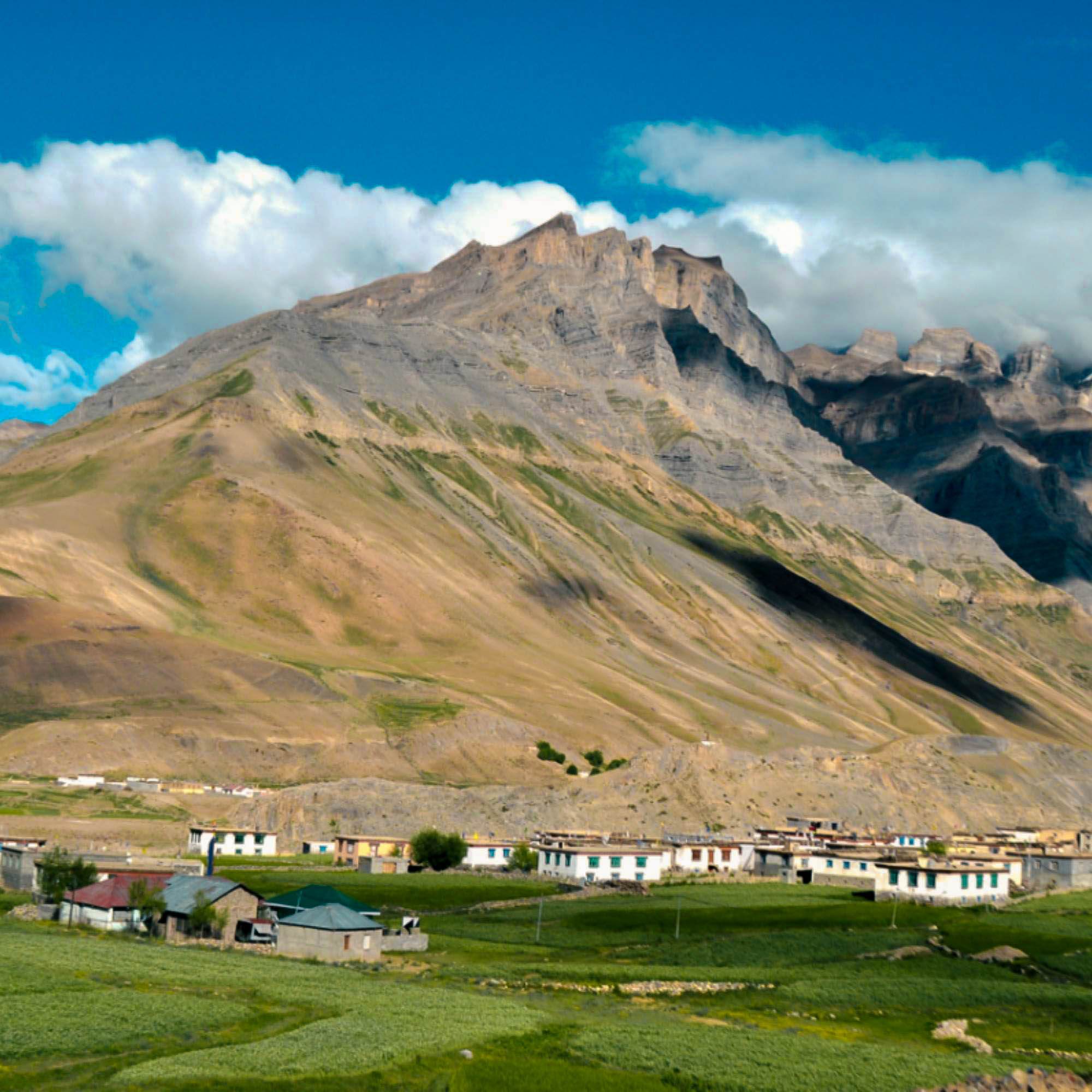
The greener side valley off the main Kaza Tabo road, leading to Mud village and the cold desert national park. Pairs naturally with a Dhankar visit if you have an extra day.
Lalung Monastery
Around 30 km · 1 hour from Dhankar via Lingti
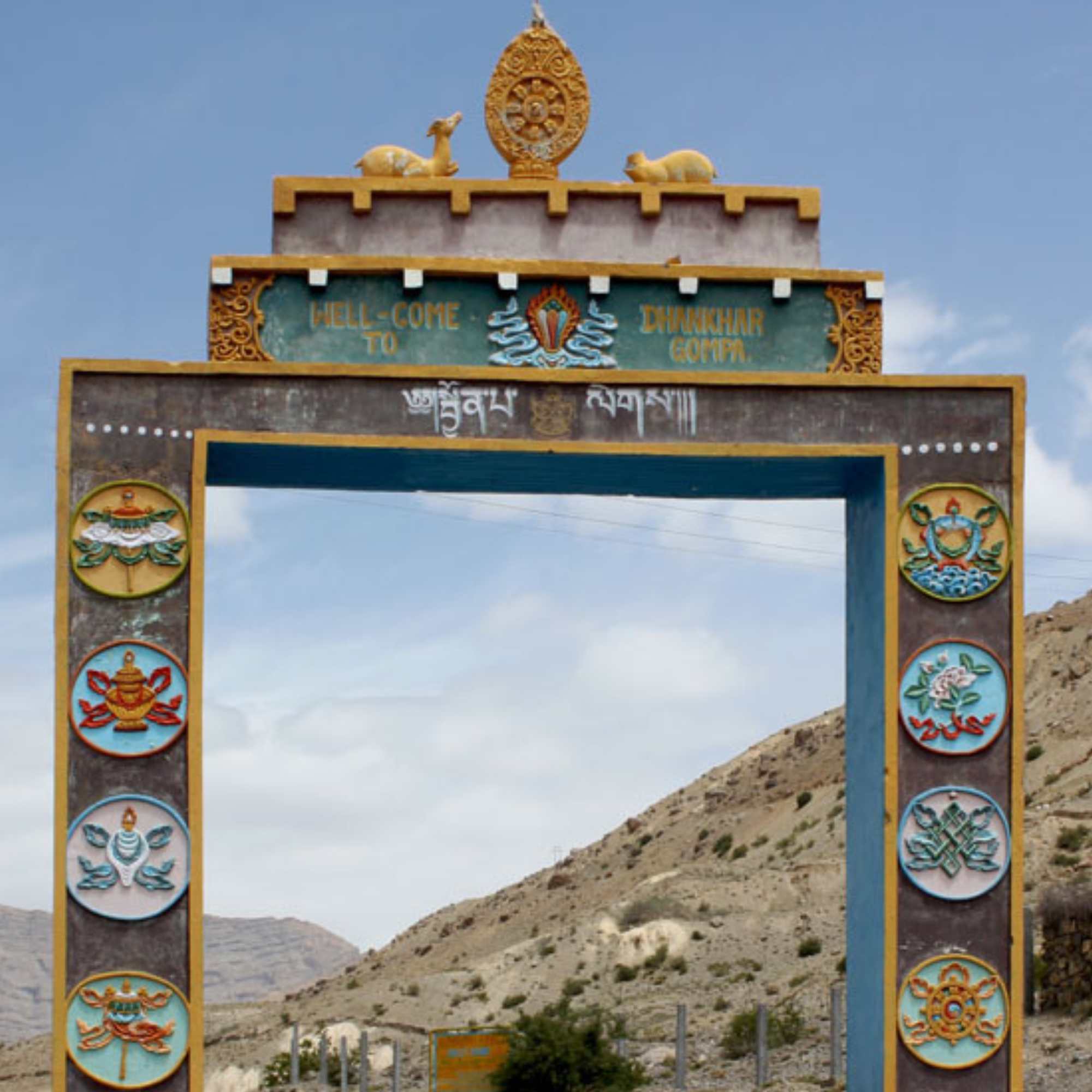
A small, quiet 11th century gompa in Lingti valley known as Serkhang, the golden temple, for its old gilded sculptures. Almost no crowds, even in peak season.
Tabo Monastery
Around 32 km · 1 hour
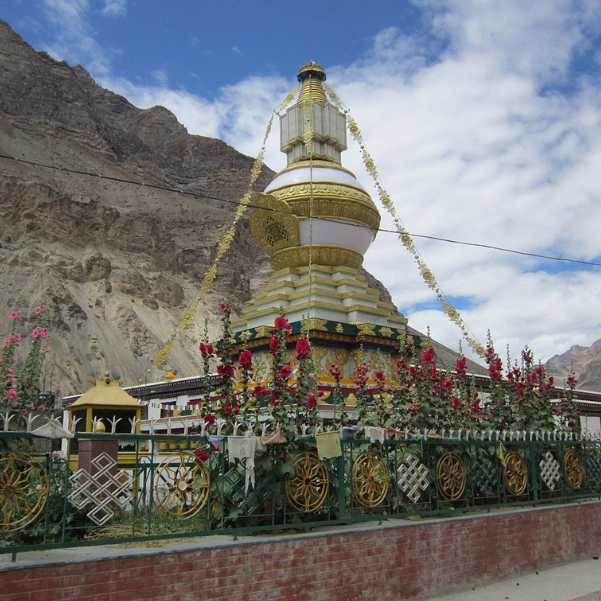
The 996 AD monastic complex with the famous murals and stucco sculptures, often called the Ajanta of the Himalayas. Pair Tabo and Dhankar in one day, with Tabo first thing in the morning.
Kaza
Around 32 km · 1 to 1.5 hours
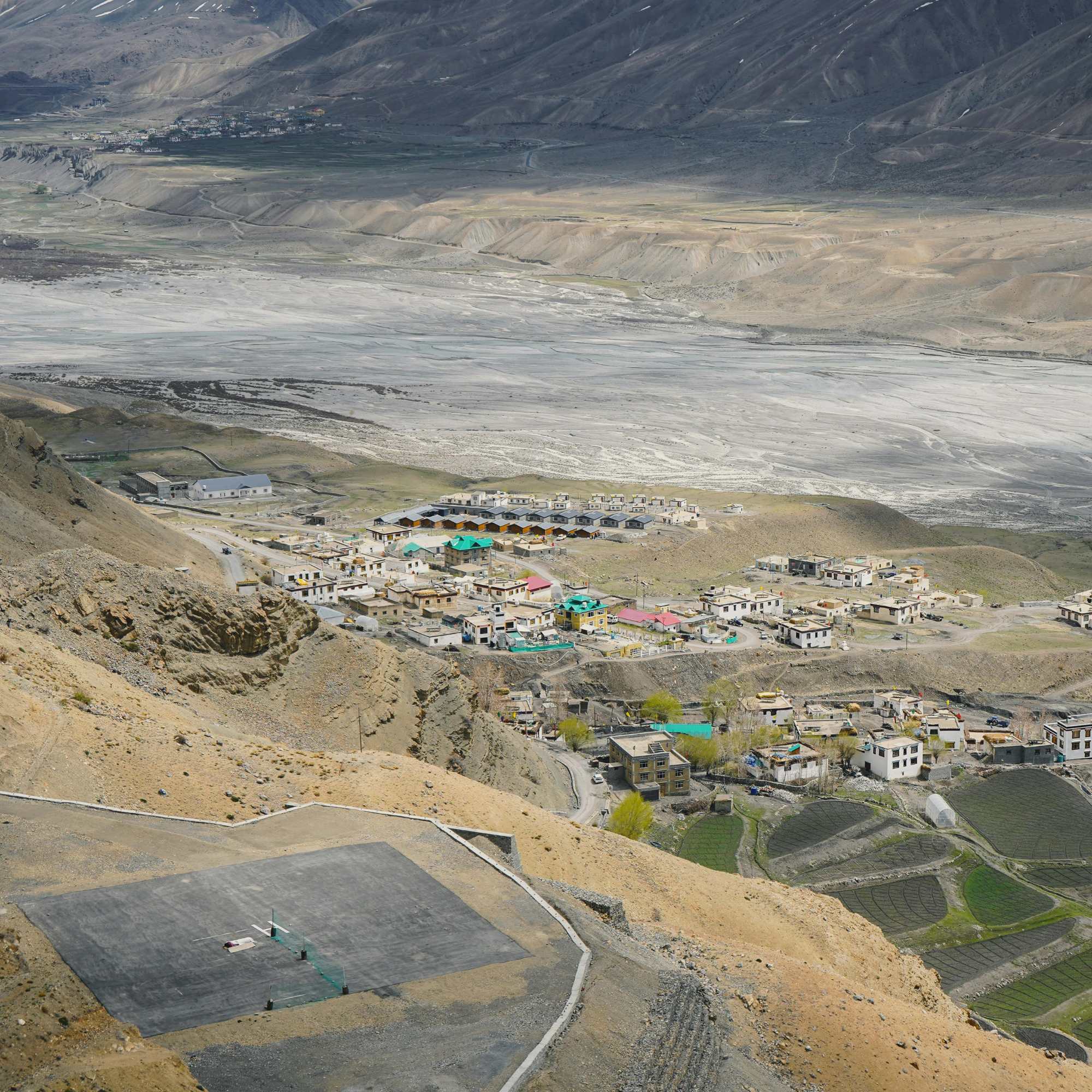
Spiti's main town and the natural base for everything in the central valley. ATMs, fuel, cafes, and the only real medical care for a long way around.
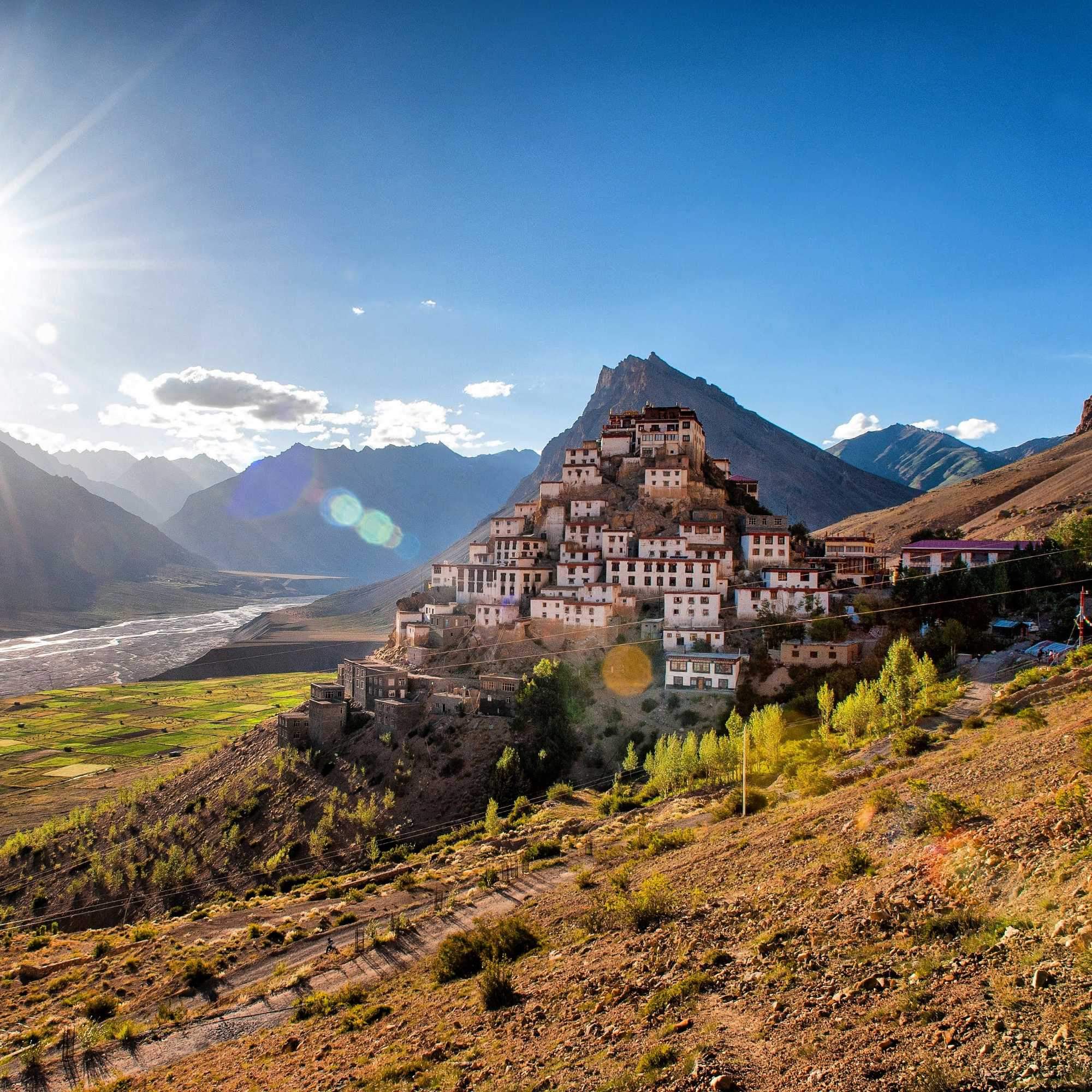
Key Monastery
Around 45 km · 1.5 hours
The largest gompa in Spiti, sitting on a conical hill above the river just past Kaza. The classic photo of Spiti.
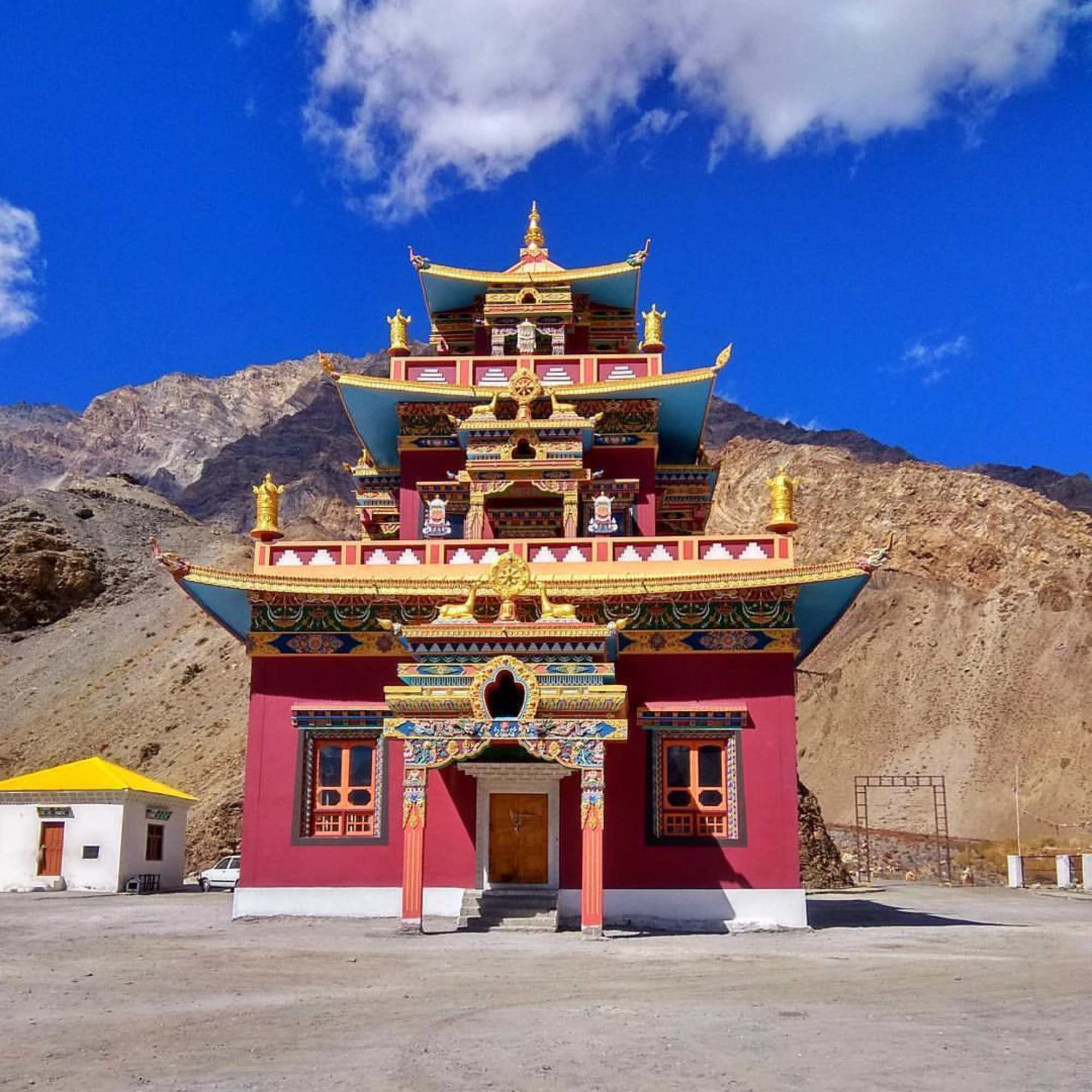
Gue Mummy
Around 50 km · 2 hours
The naturally preserved mummy of the monk Sangha Tenzin at Gue village, dated to roughly the 15th century. A short, strange, memorable detour off the road towards Sumdo.
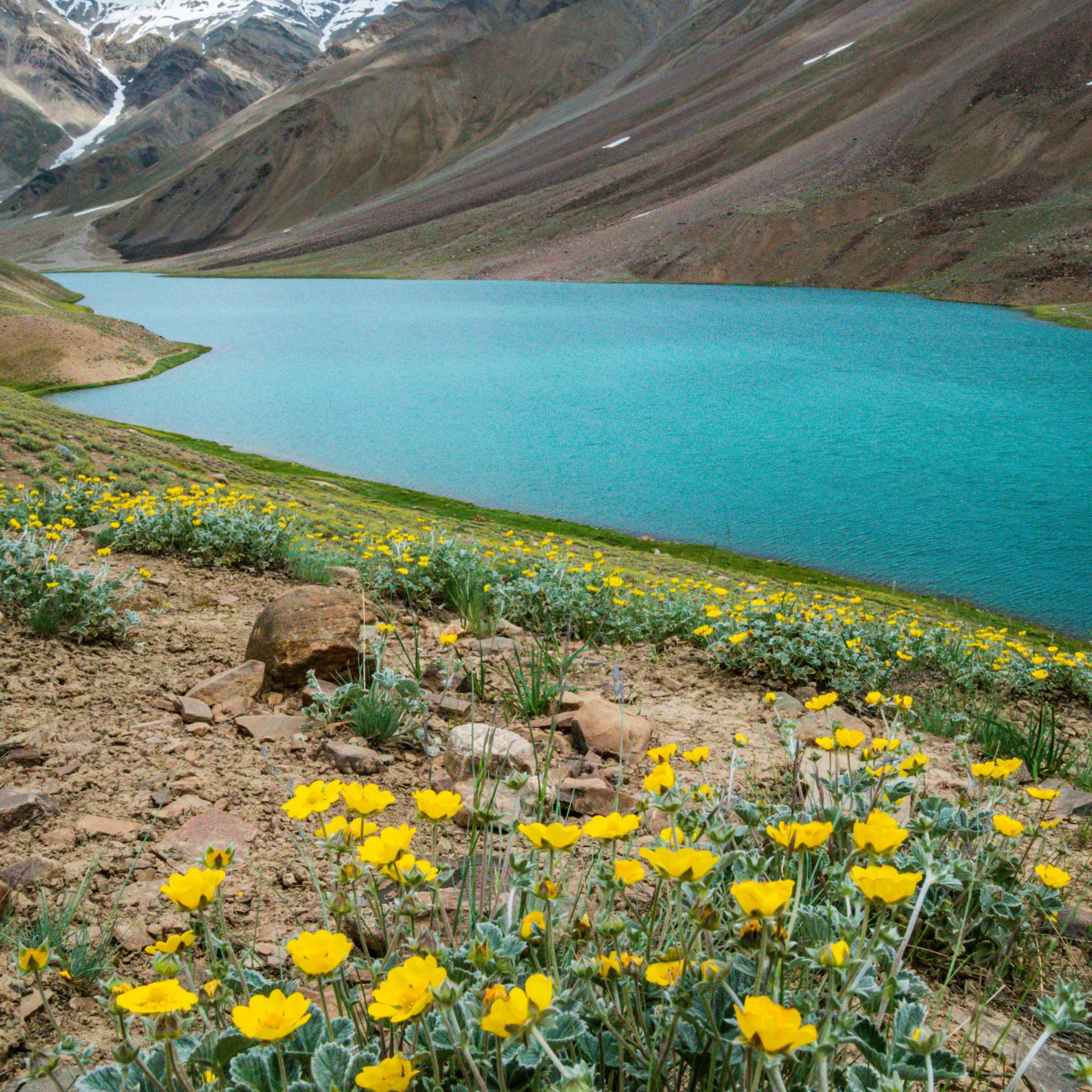
Chandratal Lake
Around 100 km · 4 to 5 hours via Kaza and Kunzum
The high altitude crescent lake on the Manali side of Kunzum Pass, accessible only from late May to early October. Worth a separate day, not a same day combo with Dhankar.
Frequently asked questions about Dhankar
How high is Dhankar Monastery and Dhankar Lake?
The old monastery sits at around 3,894 m (12,774 ft). The lake above the village is at around 4,140 m (13,580 ft). The trek between them gains roughly 280 to 300 m of elevation.
How far is Dhankar from Kaza and Tabo?
Dhankar is around 32 km from Kaza and around 32 km from Tabo. From the main Kaza Tabo road, you turn off at Shichilling and climb about 8 km on a narrow paved branch road to reach the village.
How long does the Dhankar Lake trek take?
Most fit travellers take 1.5 to 2 hours to reach the lake from the village, spend 30 to 60 minutes there, and another hour to descend. Plan around 3 to 4 hours total. The trail is short but steep and exposed, and the altitude is what makes it hard.
Is the Dhankar Lake trek difficult?
On paper it is easy to moderate, around 2 to 3 km one way. In practice, the steep gradient and the thin air at over 13,000 ft slow most people down. Anyone with reasonable fitness and a couple of days of acclimatisation in Spiti can do it. Skip it if you have BP, heart, or lung issues.
When is the best time to visit Dhankar?
Late May to early October is the easy window when both routes into Spiti are usually open and the lake trek is dry. June and September are generally the most comfortable months. The Shimla side stays open in winter but the experience is harder and the lake trek is effectively closed under snow.
Do I need a permit for Dhankar?
Indian travellers do not need a permit to visit Dhankar. Foreign nationals need an Inner Line Permit if they enter Spiti via Sumdo from the Kinnaur side, but the permit is not specifically for Dhankar. Rules can change, so confirm current requirements before your trip.
Can I stay overnight at Dhankar?
Yes. The village has a few homestays and small guest houses with basic but clean rooms. Expect simple meals, bucket hot water, and very limited mobile network. Booking a day or two ahead in peak season is wise.
Is camping allowed at Dhankar Lake?
Camping right on the banks of the lake is not allowed because the site is considered sacred. You can camp on the open ground at a respectful distance from the water, but you need to be fully self sufficient with tent, food, water, and warm gear. Carry every bit of waste back down.
Is Dhankar safe to visit with kids or seniors?
The village and the new monastery are fine for most ages. The old gompa has steep wooden ladders and tight passages that are not great for very small children or anyone with mobility issues. The lake trek is too taxing for kids under 8 and most seniors. Adjust the day to skip the lake if needed.
Can I drive my own car or bike up to Dhankar?
Yes. The 8 km branch road from Shichilling is paved and motorable for cars and bikes, though narrow in places. Drive in low gear, especially while descending. There is a small parking area near the new monastery in the village.
Why is Dhankar Monastery on the endangered sites list?
The old gompa was weakened by the 1975 Spiti earthquake and the spur it sits on has been eroding for decades. The World Monuments Fund placed Dhankar on its 100 most endangered sites watch list in 2006. Conservation work has continued since, and visitors are asked to enter the upper rooms briefly and respectfully to avoid further stress on the structure.
Is the Pin Valley visible from Dhankar?
Yes. The signature view from the gompa is the confluence of the Pin and Spiti rivers below. From there the Pin valley opens to the south, and you can clearly see how the two rivers join.
Related guides
Posts about Lahaul and Spiti
- Spiti Valley in January 2027: Who Should Book a 4x4 Trip and Who Should Wait?
- Winter Spiti 4x4 vs Tempo Traveller: What Does the Price Difference Buy in 2026?
- Rent or Buy Winter Gear for Spiti in 2026? Jackets, Boots, Costs and Pickup Options
- Winter Spiti 4×4 Seating Guide 2026: Jimny, Scorpio N, Thar and Hilux for Passengers and Luggage
- Stargazing in Winter Spiti 2026: Where to Stay, Moonlight and What You Can See
- Joining a Winter Spiti Group in 2026: Room Sharing, Privacy and Group Expectations