
Tabo Monastery
A thousand year old mud brick monastery on the valley floor, founded in 996 CE and often called the Ajanta of the Himalayas
- Monastery
- ~3,050 m
- Kaza · 48 km
- Founded 996 CE
- Free entry
What makes it special
Tabo Monastery is the one gompa in Spiti where the outside looks nothing like the inside, and that catches almost everyone off guard. From the road, it is a low cluster of mud brick buildings on a flat valley floor, easy to drive past if you did not know what it was. Step inside the older temples and you are standing in rooms that were painted over a thousand years ago, by artists who blended Indian, Kashmiri, and Tibetan traditions into something nobody has quite replicated since. Founded in 996 CE by the great translator Rinchen Zangpo, on behalf of King Yeshe Ö of the Guge kingdom, the complex is widely considered the oldest continuously operating Buddhist monastery in both India and the Himalayas. It has nine temples, four decorated stupas, cave shrines carved into the cliff behind the village, and a small community of monks who still run the daily rhythm of prayers. The ASI protects the site as a national monument, and it has long been on UNESCO's tentative list for World Heritage status. Honestly, if you are a rush and run traveller, Tabo will underwhelm you. It is humble, quiet, and dark inside. But if you sit down on the floor of the old assembly hall, let your eyes adjust, and actually look at what is on the walls, the place does something no other monastery in Spiti does. The Dalai Lama has visited several times and has said he would like to retire here, which is not a small thing.
Quick answers
- Is Tabo Monastery worth visiting?
- Yes, if you slow down. The murals inside the old temples are over a thousand years old and genuinely rare. If you only walk through in 15 minutes you will miss the point. Give it at least an hour, ideally stay the night in Tabo village.
- How much time do you need?
- One to two hours for a proper visit to the old and new temples. Half a day if you also want to climb to the meditation caves above the village. One night in Tabo is the ideal, it also helps acclimatisation on the way up to Kaza.
- Can you stay overnight?
- Yes. Tabo village has basic to mid range guesthouses and homestays, and the monastery has long run its own simple guest house. Meals and rooms are simple. Pre book in July and August, walk ins usually work in the shoulder months.
Quick facts
Everything you need to know at a glance.
At a glance
- Altitude
- ~3,050 m / ~10,010 ft (village ~3,280 m)
- Location
- Tabo village, Spiti Valley, Himachal Pradesh
- Nearest town
- Kaza, about 48 km
- Best season
- May to October, generally
- Visiting hours
- Generally daylight hours, often closes by around 5 to 6 pm. Morning prayers around 6 am. Confirm locally
- Entry
- No formal fee, donations welcome
- Time needed
- 1 to 2 hours minimum, half a day ideally
- Effort
- Flat valley floor, easy walking. Caves above need a 15 minute climb
On the ground
- Mobile network
- Jio and BSNL work best in the village, patchy inside the old temples
- ATM
- A small ATM exists in Tabo village but can be unreliable. Carry cash from Kaza or Reckong Peo
- Food
- Small cafes and guesthouse kitchens in the village. Thukpa, momos, dal rice, basic Indian and Tibetan meals
- Parking
- Open parking area right outside the monastery, easy even in peak season
- Permits
- Indian nationals generally do not need a permit for Tabo. Rules on some parts of the Kinnaur Spiti route can change, verify for your nationality and route before travel
- Photography
- Not allowed inside the old temples. Exteriors, courtyards, and the caves are generally fine. Always ask
- Drones
- Follow current civil aviation rules. Do not fly around a working monastery without explicit permission
- Washroom
- Basic washrooms in guesthouses and at the monastery guest house. Not much at the complex entry
Seasonal weather
- May to Aug22°5°Summer
- Sep to mid Oct15°-2°Autumn
- Mid Oct to Mar2°-25°Winter
- Apr12°-5°Spring
Suitable for
- Couples — suitable
- Families — suitable
- Seniors — suitable
- Solo — suitable
- First-timers — suitable
- Pet-friendly — with some care
How to reach Tabo Monastery
4 approach routes, with seasonal access.
From Kaza
Generally motorable year round, occasional winter closures after heavy snow- Distance
- About 48 km
- Time
- 1.5 to 2 hours
- Road
- Tarred for most of the way, some patches rough
- Last fuel
- Kaza petrol pump, the most reliable in the region
The easiest approach. Drive down the Spiti valley on the Kaza to Reckong Peo road, past Sichling and Dhankar junction, arrive in Tabo village. Flat drive by Spiti standards, no high passes on this stretch. Pair the visit with Dhankar Monastery on the way, it is a natural combination.
From Reckong Peo
Generally motorable year round, subject to landslide or snow closures- Distance
- About 148 km
- Time
- 6 to 7 hours
- Road
- Mountain road, narrow in stretches past Pooh
- Last fuel
- Reckong Peo, Pooh, then Kaza. Tabo itself does not have a reliable pump
The standard approach from the Shimla side. Cross into Spiti after Khab and Nako, climb to the Sumdo check post, then continue to Tabo. Tabo is often chosen as the first night halt in Spiti because it sits lower and helps acclimatisation before Kaza.
From Shimla
Open most of the year in theory, winter closures possible- Distance
- About 380 km
- Time
- 2 days with halts
- Road
- Highway to Shimla, then mountain road through Kinnaur
- Last fuel
- Narkanda, Rampur, Reckong Peo, Pooh, Nako, Tabo is not reliable
The gentler Spiti circuit. Night halt at Sarahan or Sangla, then Nako or Kalpa, then into Tabo. Best route if you want to acclimatise properly and see Kinnaur on the way in.
From Manali
Typically June to October only, Kunzum closes in winter- Distance
- About 250 km via Kaza
- Time
- 2 days recommended
- Road
- Atal Tunnel, Kunzum La, Spiti road
- Last fuel
- Manali, Kaza. No reliable fuel in between
Come in via the Kunzum La side, night halt in Kaza, then drive down to Tabo the next day. Not a same day route, do not try. Best used as the return or second leg of a Spiti loop.
Best time to visit
Season by season, so you can plan around the weather rather than hope.
- Recommended
Summer
May to August
The main window, all routes are generally open
- Temperature
- About 5 to 22 C
- Roads
- Shimla side open, Manali side usually open by June
- Crowds
- Moderate, peaks in July
- Photography
- Bright afternoons, strong contrast outdoors
Warm days, cold nights, clear light on the murals in the afternoon. Both the Shimla and Manali approaches are usually running by June. July and early August bring the peak of the season and also the small monsoon risk on the Kinnaur side, so build a buffer day if you are travelling tight.
- Recommended
Autumn
September to mid October
The quietest and sharpest version of Tabo
- Temperature
- About minus 2 to 15 C
- Roads
- Generally open through October, check late Oct
- Crowds
- Low
- Photography
- The best light of the year, honestly
Fewer travellers, cleaner air, and the valley starts turning yellow around the village. Nights get cold quickly, so carry a proper jacket. This is also the window where a slow visit with an evening prayer attendance works best.
Winter
Late October to March
Open but tough, only for prepared travellers
- Temperature
- Often well below zero, nights can hit minus 25 C or lower
- Roads
- Kinnaur side only, subject to closures
- Crowds
- Very low
- Photography
- Stark and dramatic, if you can tolerate the cold
The monastery itself stays active for the monks, and Tabo sits lower than most of Spiti, so it is one of the few places that remains reachable in winter via Kinnaur. Temperatures drop hard, many guesthouses shut, and power and water can be erratic. Come only if you want the winter version on purpose.
Spring
April
Awkward shoulder month, plan with care
- Temperature
- About minus 5 to 12 C
- Roads
- Kinnaur side generally open, Manali side closed
- Crowds
- Very low
The Manali route is usually still closed. Come via Shimla and Kinnaur. Days warm up but nights are still well below zero. A few guesthouses open for the new season, options are thin.
Things to see & do
7 things worth your time at Tabo Monastery.
Sit inside the old Assembly Hall
30 to 45 minutesThe Tsug la Khang, the main old temple, is the one you came for. Dim, low ceilings, thick mud walls, and murals that rise slowly out of the dark once your eyes adjust. Sit down on the floor, do not try to see everything at once. Take fifteen minutes just to let the paintings emerge.
Walk through the nine temples and stupas
45 to 60 minutesThe complex has nine temples built across different centuries, plus decorated chortens. The Golden Temple and the Temple of Drom ton are usually open to visitors. A young monk or caretaker will sometimes walk you through, a small donation is appreciated.
Attend morning or evening prayers
30 to 45 minutesMorning prayers generally start around 6 am. Sit at the back, keep your phone away, let the chanting happen. Evening prayers are shorter and less predictable. Timings can shift on festival days, confirm with the guest house the evening before.
Climb to the Tabo caves above the village
1 to 1.5 hoursA short steep climb up the cliff behind the village leads to a cluster of meditation caves used by monks for retreat. Some still have faded paintings. Good views back across the valley floor. Wear grippy shoes, the trail is loose in places.
Visit the new monastery next door
20 to 30 minutesBuilt in the 1980s, the new complex houses a larger assembly hall, a modern dining area, and the monk school. It is where the Dalai Lama conducted the 1996 Kalachakra. Less atmospheric than the old temples but gives context for how the community lives today.
Stay overnight in Tabo village
OvernightThe single best thing you can do for this place is not leave in the afternoon. Stay at a homestay or the monastery guest house, walk the village at dusk, attend morning prayers, then drive on. You see a completely different Tabo than the bus tour version.
Kalachakra, Chaam dances, and festivals
VariesTabo hosts periodic Kalachakra ceremonies and Chaam masked dances, often tied to the Tibetan calendar. Dates shift each year and major Kalachakra events are rare, so confirm with the monastery or a trusted operator before planning around one.
Know before you visit Tabo Monastery
The practical bits, from people who have been.
History in briefFounded 996 CE, oldest continuously operating Buddhist monastery in the Himalayas
Tabo was founded in 996 CE, in the Tibetan year of the Fire Ape, by the translator Rinchen Zangpo on behalf of King Yeshe Ö of the Guge kingdom. It was built during the second diffusion of Buddhism into Tibet, when scholars were translating Sanskrit texts and building monasteries across the western Himalayas. The original murals in the main assembly hall date back to the founding and to a major renovation around 1042 CE. The complex has survived earthquakes, attacks, and centuries of weather, and is today protected by the Archaeological Survey of India. It has long been on UNESCO's tentative list for World Heritage status, though inscription has not been confirmed as of recent years.
Why the murals matterOften called the Ajanta of the Himalayas for a reason
The comparison to Ajanta is not marketing. The wall paintings in the old temples, executed in mineral pigments on mud plaster, are among the most complete surviving records of early Indo Tibetan Buddhist art. You see narrative scenes from the Buddha's life, life size stucco Bodhisattvas that appear to step out of the walls, and mandalas that blend Kashmiri, Indian, and Tibetan styles. Bring a small torch if you want to look at detail, the temples are deliberately kept dark to protect pigments. Do not touch the walls. Even light finger oils can damage paintings that have survived a thousand years without you.
Photography guideNo photos inside the old temples, exteriors are fine
Photography is not allowed inside the main old temples and the prayer halls, to protect the ancient murals from flash and light exposure. This is enforced and it is for good reason, so please do not try to sneak a shot. Exteriors, courtyards, the new monastery, and the caves above the village are generally fine to photograph, but always ask before photographing monks or ceremonies. Drone rules change often and vary by zone. Follow current civil aviation rules and do not fly near a working monastery without explicit permission.
Who should visitGood for almost everyone, including seniors and families
This is one of the few monasteries in Spiti that is genuinely easy for seniors, families with young children, and people still acclimatising. At around 3,050 m the altitude is real but far gentler than Key or Kibber. The complex is on flat ground, there are no steep climbs unless you choose to walk up to the caves. Pets are best left at your stay rather than at the monastery itself. For people who love history, art, and Buddhist culture, Tabo is the single most rewarding stop in Spiti.
Plan your visitOne night in Tabo is the sweet spot on a Spiti trip
If you are coming from Shimla, Tabo makes a natural first or second night halt in Spiti. The lower altitude helps you acclimatise before Kaza. If you are coming from Manali via Kaza, plan Tabo on the return leg, spend the night, attend morning prayers, and then continue to Nako or Kalpa. Bare minimum on a through drive is 60 to 90 minutes at the monastery, but an overnight is what unlocks the place. A quick reality check before you go, timings, photography rules, festival dates, and road status on the Kinnaur side can all shift. Reconfirm with the monastery office or a trusted operator close to your travel date.
Where to stay and eatMonastery guest house, homestays, and a few mid range options
Tabo village has more stay options than most people expect. The monastery guest house is simple, clean, and the atmospheric choice if you want to be inside the complex. A few homestays and small guesthouses run across the village with rooms in the 1,000 to 2,500 rupee range. Mid range options include Dekit Norphel, Tashi Gangsar, and a Banjara property, with prices higher in peak season. Food is basic Indian and Tibetan, thukpa, momos, dal rice, a few small cafes open in summer. Pre book in July and August, walk ins usually work in the shoulder months.
Safety and healthGentler altitude than Kaza, but still real
At roughly 3,050 m the altitude is friendlier than much of Spiti, which is why Tabo is often recommended as a first or second night halt. Even so, if you have rushed up from Shimla in two days, you can feel it. Walk slowly, drink water, skip alcohol the first evening. The nearest hospital is the community health centre in Kaza, about 48 km away. Carry your own medicines, do not count on the local pharmacy stocking specific brands. If symptoms worsen, descend toward Kalpa, not onward to Kaza.
Do's and don'tsQuiet, respectful, no photos inside the old temples
Do remove your shoes before entering any temple. Do walk clockwise around shrines, stupas, and prayer wheels. Do speak softly inside the halls, this is a living place of worship, not a museum. Do ask before photographing monks or any interior. Do not touch the murals, statues, or ritual objects. Do not lean against painted walls. Do not sit with your feet pointing at the altar. Do not smoke, drink, or bring pets into the complex. Dress modestly, shoulders and knees covered.
Local tips from people who keep coming backSmall things that change the visit
Carry a small torch, the old temples are intentionally dark and a phone light is usually enough to see detail on the walls. Come at opening or after 3 pm, the middle of the day brings bus tours and the place feels different. Buy a few postcards or a small handicraft from the village shops, the tourism economy here is genuinely small and direct. Try the butter tea at a homestay, even if you do not finish it. And one last nudge, please reconfirm timings, photography rules, and any ongoing Kalachakra or festival schedule close to your travel date, these details shift season to season.
Nearby attractions
Other places worth the detour.
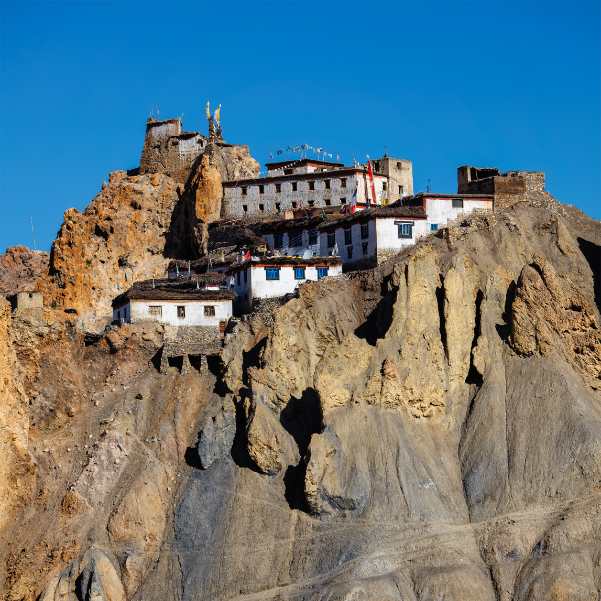
Dhankar Monastery and Lake
About 32 km from Tabo, 1 hour
A cliffside monastery that looks like it is about to fall off the hill, with a small high altitude lake a short trek above. One of the most photogenic stops on the Tabo to Kaza drive.
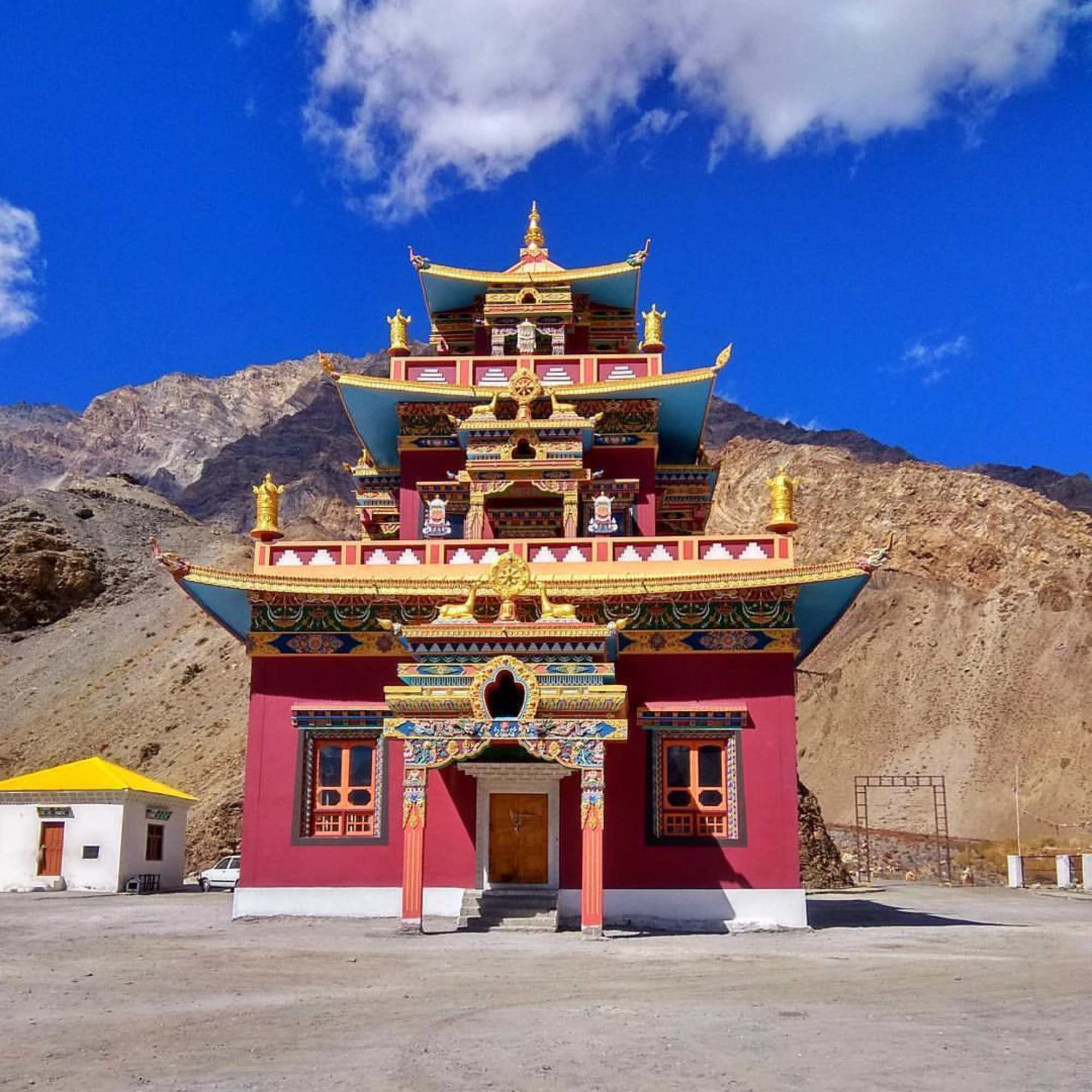
Gue Mummy
About 35 km, 1.25 hours
A naturally preserved 500 year old mummy of a Buddhist monk in the small village of Gue, near the Sumdo check post. Quick, quiet, memorable.
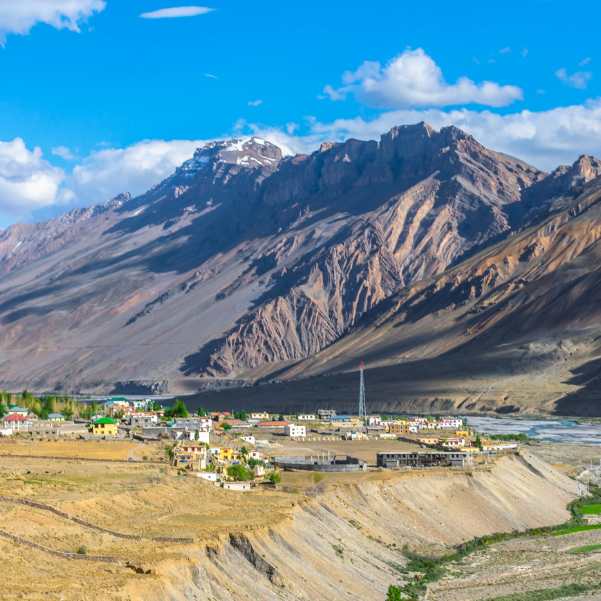
Kaza
About 48 km, 1.5 to 2 hours
The main town of Spiti Valley and the base for most onward travel. Fuel, cash, homestays, and cafes.
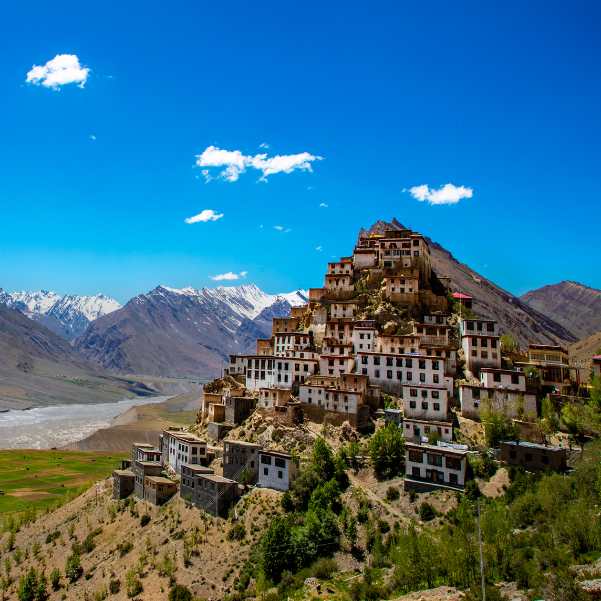
Key Monastery
About 60 km, 2 to 2.5 hours
Spiti's largest and most photographed gompa, stacked on a hill at around 4,166 m. Natural pairing with Tabo on a Spiti circuit.
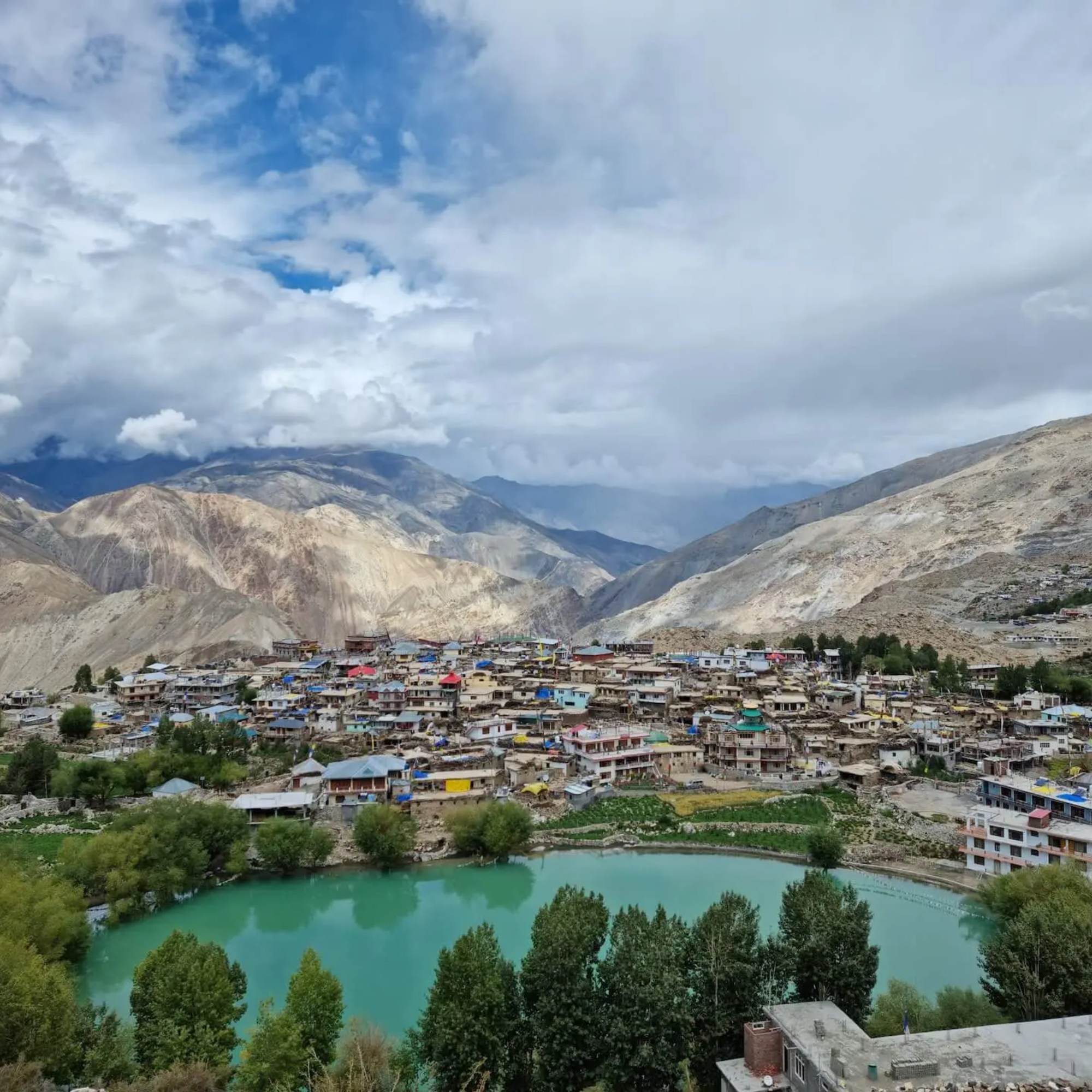
Nako Village and Lake
About 65 km, 2.5 hours
A Kinnaur side village with a small lake, an old monastery, and a very different feel from Spiti. Good lunch or overnight stop if you are coming from Shimla.
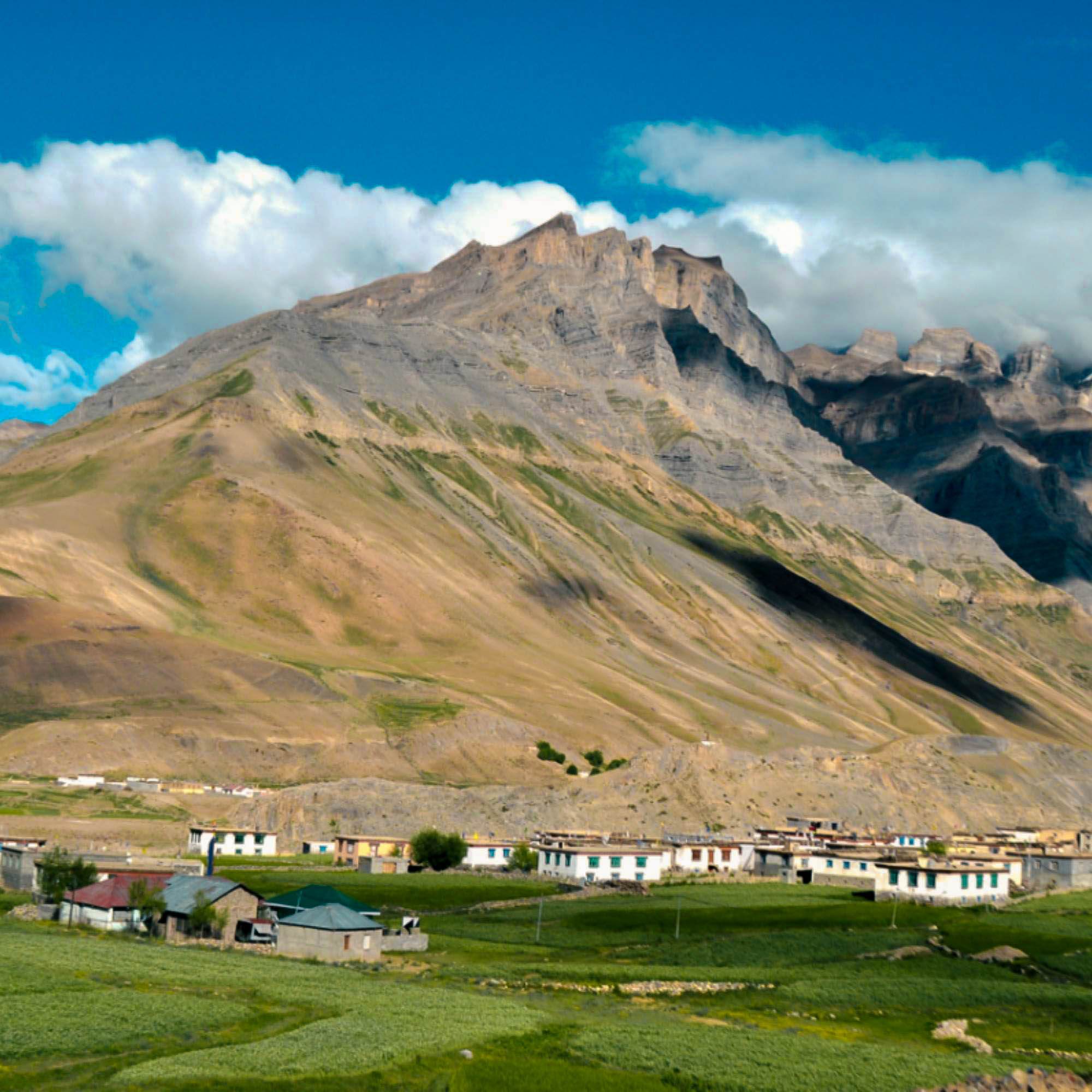
Pin Valley
About 80 km from Tabo, 3 hours
The side valley off the Kaza road, with a national park, snow leopards in winter, and some of the quietest landscapes in Spiti.
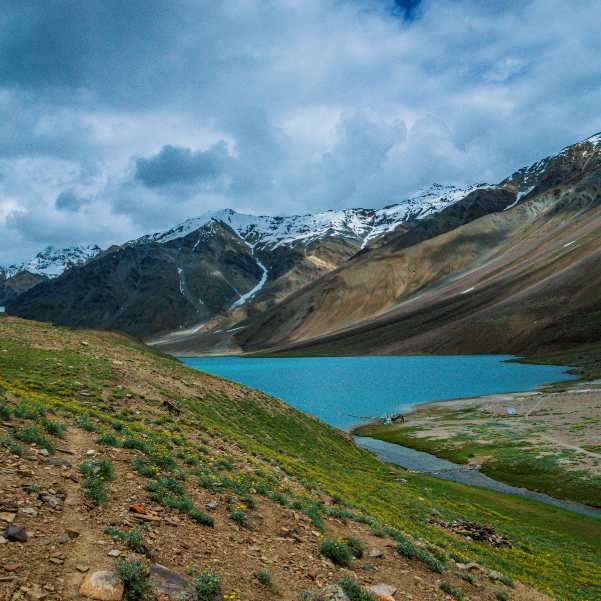
Chandratal Lake
About 170 km, 6 to 7 hours via Kaza and Kunzum La
The high altitude crescent lake beyond Kunzum La. Not a same day trip from Tabo, but a natural end point for a full Spiti circuit.
Our packages with Tabo Monastery
Curated trips that include a visit to Tabo Monastery.
 Group Tour9D/8N
Best Selling Winter Spiti Valley Group Tour
2D Sangla•1D Tabo+2
₹18,999₹23,999SAVE INR 5,000/ person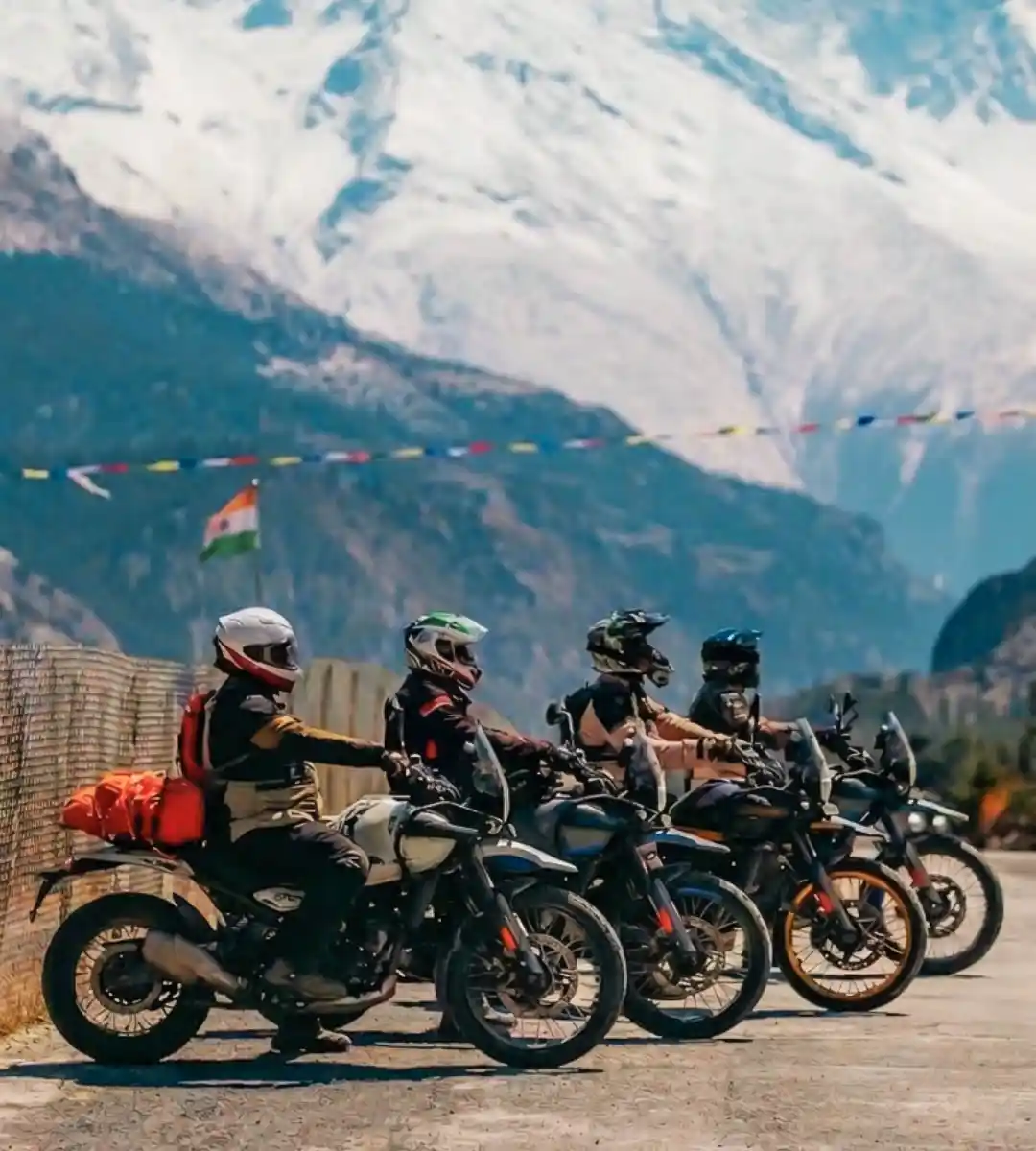 Group Tour10D/9N
Most Loved Spiti Valley Bike Expedition With Chandratal
1D Jibhi•1D Sangla+4
₹34,999₹41,999SAVE INR 7,000/ person
Frequently Asked Questions
What is the altitude of Tabo Monastery?
The monastery sits at roughly 3,050 metres, about 10,010 feet. Tabo village itself is slightly higher at around 3,280 metres. Different sources quote figures in this range, treat them as close approximations.
How old is Tabo Monastery?
It was founded in 996 CE, which makes it over a thousand years old. It is widely regarded as the oldest continuously operating Buddhist monastery in India and the Himalayas. The main old temple preserves murals from the founding period and a major renovation around 1042 CE.
Is Tabo Monastery a UNESCO World Heritage Site?
Not officially inscribed as of recent information. The ASI has proposed Tabo for UNESCO World Heritage status and the site sits on the tentative list, but it has not been confirmed as inscribed. Some travel websites state otherwise, be careful with that claim. It is protected as a national monument by the ASI.
Is there an entry fee?
No formal ticket fee. Donations are welcome and go toward the maintenance of the monastery and the monk school. A couple of hundred rupees is a reasonable contribution.
What are the timings?
The monastery is generally open during daylight hours, with morning prayers starting around 6 am and the complex usually closing by around 5 to 6 pm. Exact timings can shift by season and on festival days, so reconfirm at the monastery office or your guesthouse on arrival.
Can I take photos inside the monastery?
Photography is not allowed inside the old temples and prayer halls, in order to protect the centuries old murals. Exteriors, courtyards, the new monastery, and the caves above the village are generally fine. Always ask before photographing monks or ceremonies.
Why is Tabo called the Ajanta of the Himalayas?
Because its temple walls are covered in narrative murals, mandalas, and stucco sculptures from the 10th and 11th centuries onward, comparable in scale and importance to the paintings at the Ajanta caves. The styles blend Indian, Kashmiri, and Tibetan traditions.
Can you stay overnight at Tabo?
Yes. The monastery runs its own simple guest house, and the village has homestays, small guesthouses, and a few mid range options. Pre book in July and August. One night in Tabo is often the single best addition to a Spiti trip.
When is the best time to visit?
May to early October is the main window, with September being the quietest and most photogenic. Tabo remains reachable in winter via Kinnaur because of its lower altitude, but many guesthouses shut and conditions are tough.
Do you need a permit for Tabo?
Indian nationals generally do not need a permit for a normal Tabo visit. Some foreign nationals may need a permit for parts of the Kinnaur and Spiti route. Rules can change, please confirm current requirements for your nationality and route with a local operator or an official source before travel.
How far is Tabo from Kaza?
Roughly 48 km, about 1.5 to 2 hours by road. It is a flat, low altitude drive by Spiti standards, along the Spiti River. Dhankar Monastery is a natural stop on the way.
Is Tabo suitable for kids and seniors?
Yes, more than most places in Spiti. The altitude is gentler at around 3,050 m, the monastery is on flat ground, and the village is walkable. Seniors with heart or breathing issues should still acclimatise slowly via the Kinnaur route.
Are there caves near Tabo Monastery?
Yes. A set of meditation caves is carved into the cliff behind the village, used by monks for retreats and meditation. A short steep trail takes you up in about 15 to 20 minutes. Some caves still hold faded paintings, the views back across the valley are the bigger draw.
Has the Dalai Lama visited Tabo?
Yes, several times. He has publicly expressed his wish to retire here and has called Tabo one of the holiest monasteries in the Indo Tibetan region. He conducted the Kalachakra initiation ceremony at Tabo in 1996, coinciding with the monastery's millennium celebrations.
Related guides
Posts about Lahaul and Spiti
- Spiti Valley in January 2027: Who Should Book a 4x4 Trip and Who Should Wait?
- Winter Spiti 4x4 vs Tempo Traveller: What Does the Price Difference Buy in 2026?
- Rent or Buy Winter Gear for Spiti in 2026? Jackets, Boots, Costs and Pickup Options
- Winter Spiti 4×4 Seating Guide 2026: Jimny, Scorpio N, Thar and Hilux for Passengers and Luggage
- Stargazing in Winter Spiti 2026: Where to Stay, Moonlight and What You Can See
- Joining a Winter Spiti Group in 2026: Room Sharing, Privacy and Group Expectations