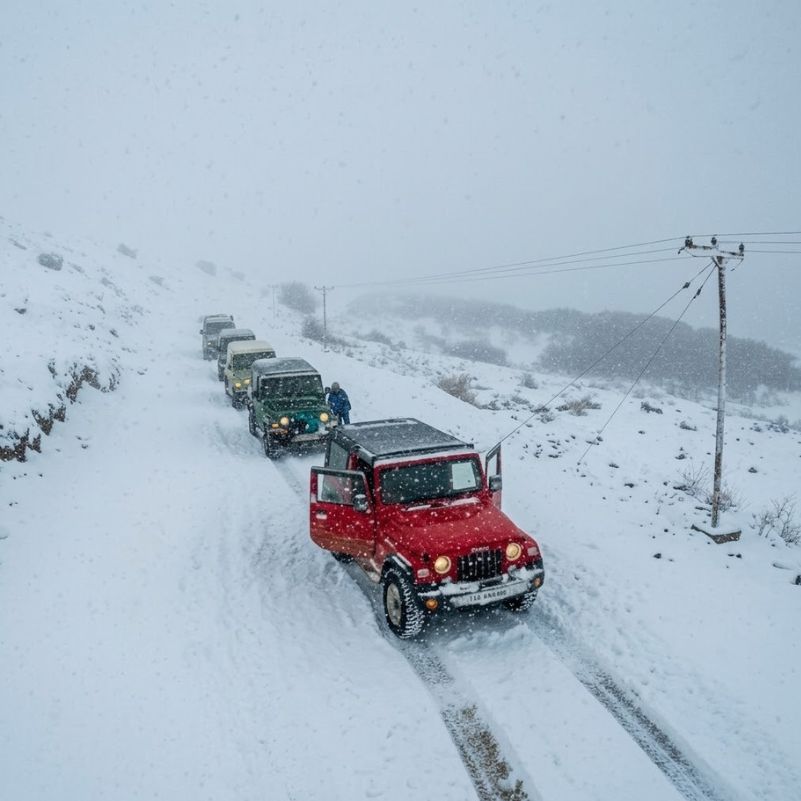
 Group Tour
9D/8N
Most Loved 4×4 Winter Spiti Expedition
2D Sangla•1D Tabo+2
₹29,999₹35,999SAVE INR 6,000/ person
Best Spiti Valley Group Tour Packages Curated By Experts
Group Tour2D Sangla•1D Tabo+2
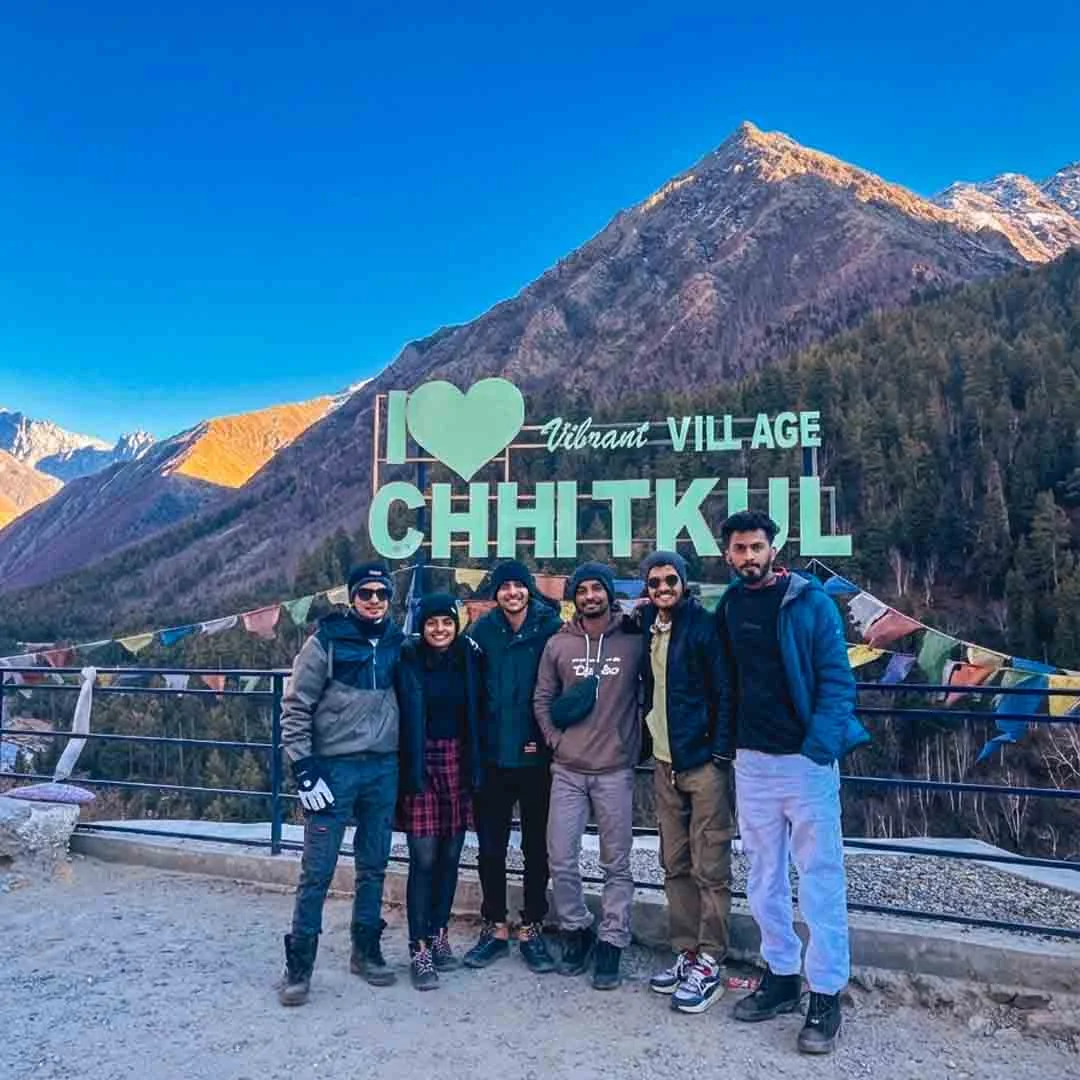 Group Tour
2D Sangla•1D Tabo+2
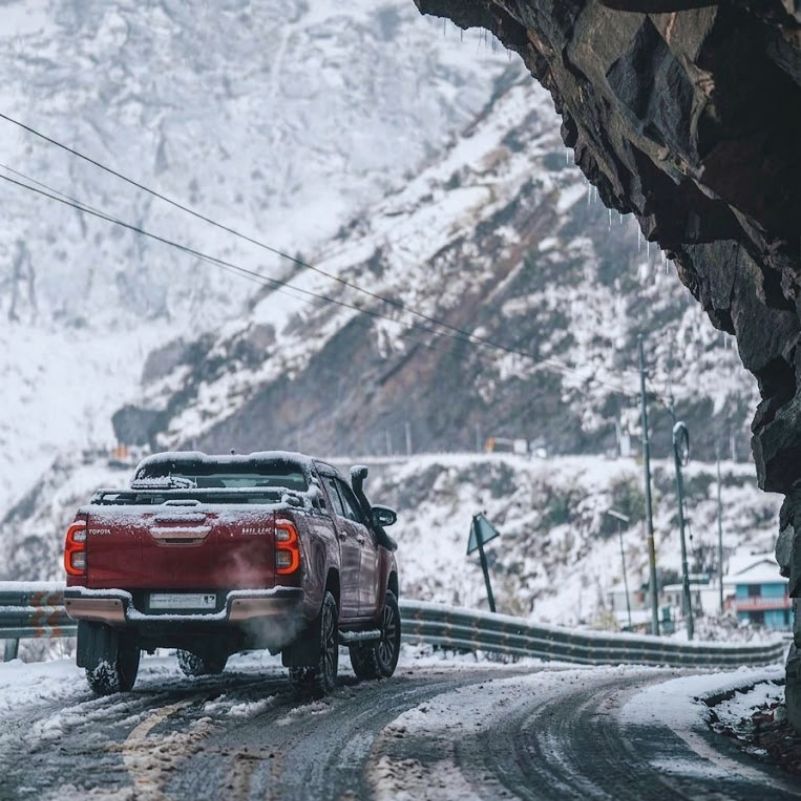 Group Tour
1D Sangla•1D Nako+2
Some places ask you to arrive. Spiti asks you to earn it.
Beyond the last green valley, past the point where the treeline gives up and the mountains turn bare, Spiti opens like a secret kept between rock and sky. The air is thinner here. The colours are sharper. The silence is the kind you feel in your chest.
This is not another Himalayan hill station. This is a cold desert at the edge of India, where Buddhist monasteries sit on ridgelines older than most civilizations. Villages of thirty families live at altitudes that would make city lungs protest. And the sky out here does not end.
A Spiti Valley group tour is days of shared wonder on roads that climb past 4,000 metres, meals at roadside dhabas where the chai tastes like survival, and nights where the Milky Way is the actual sky above your tent. You travel with people who become friends somewhere between Kunzum Pass and Chandratal. You return home quieter, carrying something that does not fit in a suitcase.
Travel Coffee is not a portal that sells every destination under the sun. We are a Himachali travel company based in Shimla, and Spiti is one of the roads we know best.
Our team has driven the Hindustan Tibet Highway in loose gravel and fresh snow. We have waited out landslides near Batal and sat in monastery courtyards in Kaza while the prayer flags snapped in the wind. When we plan a Spiti Valley tour package, it comes from repetition, not research.
We know where the road washes out in July. We know which homestays cook the best rajma chawal at 3,800 metres. And we know why your body needs a slow day in Kalpa before climbing higher.
We care about honest pacing so altitude does not punish you. We choose routes for the experience, not the shortest distance. Our drivers read mountain weather the way most people read traffic signals.
If you want a Spiti group tour with a team that actually lives in these hills, you are in the right place.
Small groups that feel like a road trip with friends, not a bus tour with strangers.
Altitude gain planned carefully so your body adjusts before the big passes hit.
Routes picked for what you will feel along the way, not how many pins we can drop on a map.
Real local stays where it makes sense, including homestays and monastery guesthouses.
Drivers who have spent years on mountain roads and know when to slow down or push through.
No rushed checkbox tourism. If a place deserves an extra hour, it gets one.
Strong on-ground support from a team that is usually just a valley away.
Most of Himachal is green. Thick forests, apple orchards, misty valleys. Spiti is the opposite.
Somewhere past Kinnaur, the green fades. The mountains stand fully exposed, layered in rust, grey, ochre, and bone white. You are entering a cold desert at over 3,500 metres. The valley floor stretches wide, the river is a thin blue thread far below, and the sky feels close enough to press against.
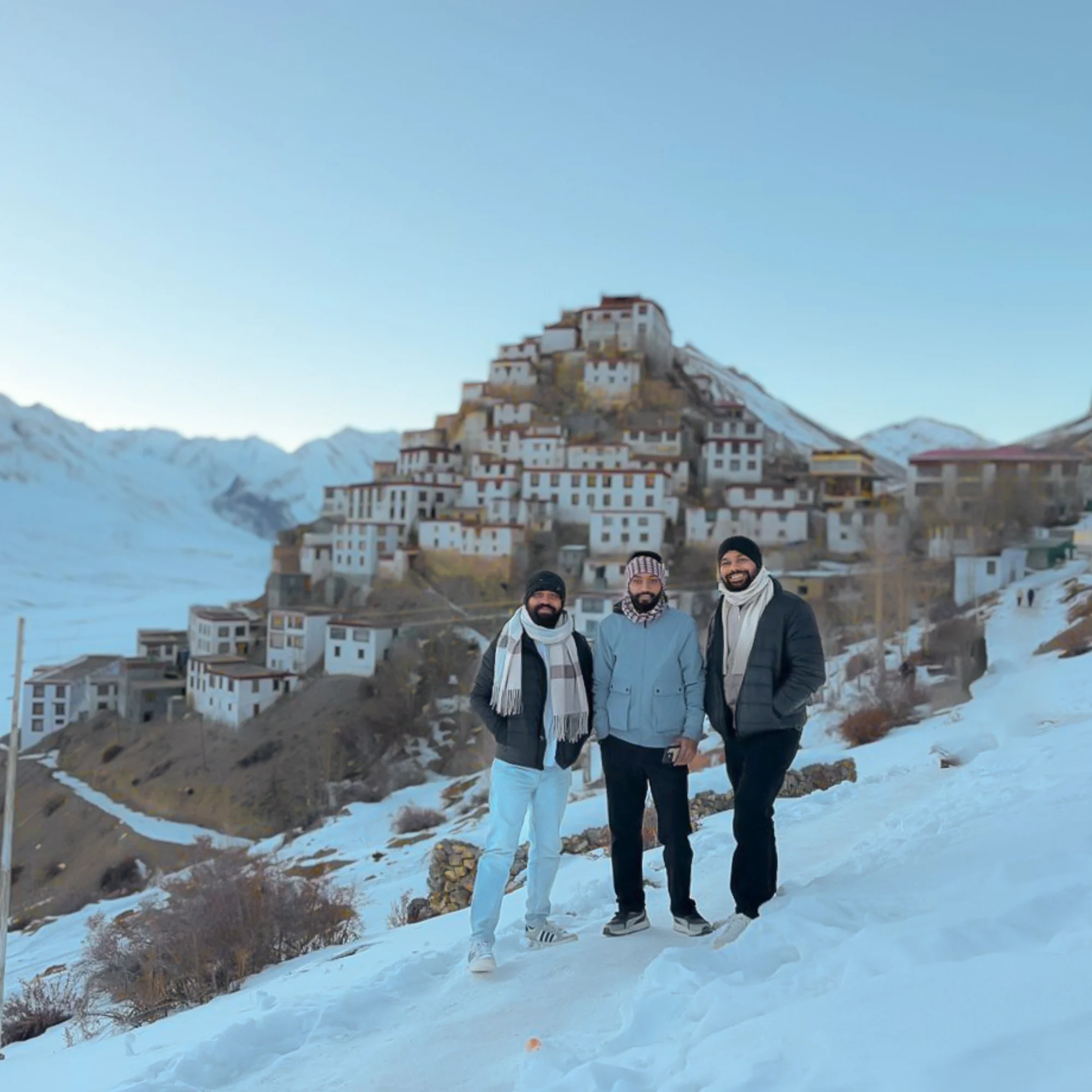
Key Monastery on its hilltop, centuries old, watching over the valley. Tabo, with murals over a thousand years old, sitting in a village so unassuming you could almost drive past. Dhankar, perched on a crumbling cliff above the confluence of the Spiti and Pin rivers.
These are not museum stops. They are living places of worship. Monks in maroon robes. Morning chants off stone walls. Butter lamps flickering in dark prayer halls. The Tibetan Buddhist culture in Spiti is not arranged for visitors. It simply is.
Langza, Hikkim, and Komic sit where the barley fields end and the sky begins. Walking through these villages is stepping into a way of life most of India has forgotten. That is what a Spiti Valley trip package gives you. Not just scenery, but a shift in how you experience time.
Spiritual stillness: morning chants inside a thousand-year-old gompa, juniper incense, and prayer wheels turning in a courtyard where nothing has hurried for centuries.
High altitude road trip thrill: switchbacks above 4,000 metres, gravel under tyres, river crossings, and the slow earned reveal of each new valley.
Village life and Tibetan Buddhist culture: prayer flags between mud-brick homes, mani walls along narrow paths, grandmothers spinning wool in doorways.
Night skies and open silence: no light pollution, no traffic hum, just the Milky Way stretched across the roof of the world.
Cold desert drama: a landscape stripped to its bones, where every colour is geological and every shadow is a canyon.
Slow conversations and simple food: a bowl of thukpa in Kaza, butter tea in a monastery kitchen, momos at a roadside stall, and talk that happens when there is nowhere else to be.
Our full circuit group tours cover the complete Spiti experience. You enter from the Shimla and Kinnaur side via the Hindustan Tibet Highway and exit through Kunzum Pass toward Manali, or the reverse.
This route gives your body time to acclimatize through Kinnaur and lets you experience the dramatic shift from green valleys to cold desert. A Spiti full circuit runs nine to twelve days and suits anyone who wants the complete story, not just the highlights.
These enter through the Atal Tunnel, cross Kunzum Pass, and reach Kaza faster. Five to seven days. Best for fit travellers comfortable with quicker altitude gain who want the core Spiti villages, monasteries, and Chandratal without the Kinnaur stretch.
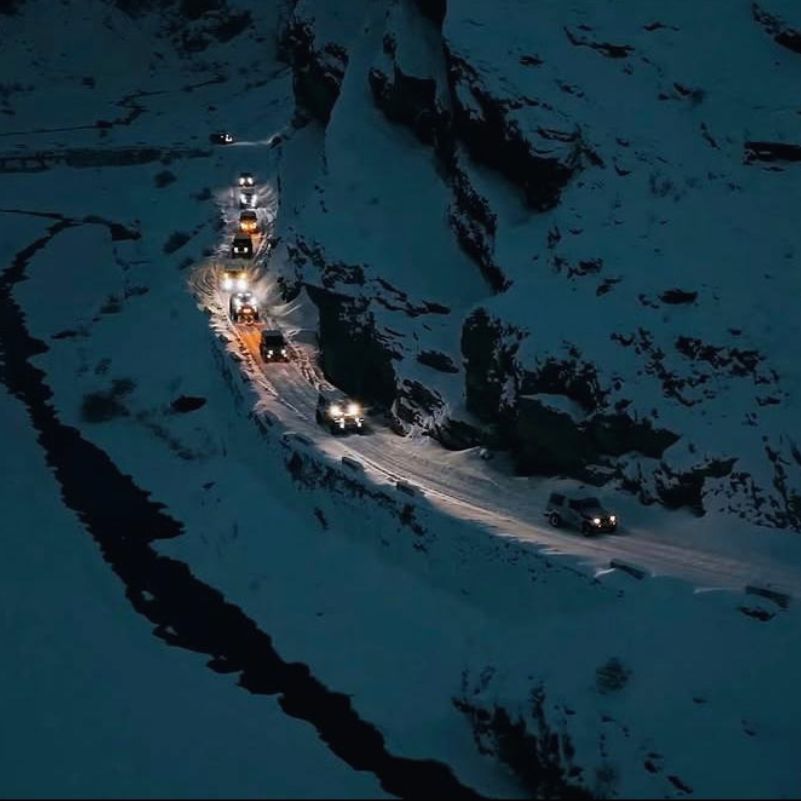
From roughly late December through March, the Manali route closes. The only way in is through Shimla and Kinnaur. Snow-covered valleys, frozen rivers, white monasteries, and villages where you might be the only visitor for days.
These trips are slower, colder, and demand more flexibility. But if you want Spiti at its most raw, this is it. See all our winter Spiti tour packages for the fixed winter departures and 4x4 expeditions that run this season.
Homestays, local transport connections, and walking stretches that get you closer to the valley than a vehicle window ever could. Not luxury. Experience over thread count.
Road trip focused small-group departures are built around the drive itself. SUVs or tempo travellers depending on group size, itineraries shaped for the best driving stretches and the most dramatic passes.
We also run select bike trip departures for experienced riders and SUV-based small group trips for those who want a specific vehicle experience on these high altitude roads.
Spiti has no airport or railway station. The closest airport is Bhuntar near Kullu, and the nearest railhead is Chandigarh or Kalka.
Most travellers coming from Delhi, Mumbai, Bangalore, Pune, Chennai, Kolkata, Hyderabad, or Ahmedabad fly into Chandigarh or Delhi and travel by road. From Chandigarh, the drive to Kaza takes two to three days depending on the route.
This route follows the Hindustan Tibet Highway through Narkanda, Sarahan, Sangla, Chitkul, Kalpa, and Nako before entering Spiti. It climbs gradually, giving your body time to adjust through the greener, lower Kinnaur stretch.
This is the route we recommend for first-timers, families, and anyone serious about acclimatization. It is also the only route open in winter.
This goes through the Atal Tunnel, past Batal, over Kunzum Pass at roughly 4,590 metres, and down into Losar and Kaza. Faster and more dramatic, with rapid altitude gain and rougher roads. Usually open late June to mid-October. Best suited for experienced mountain travellers and shorter trips.
For group tours, tempo travellers work well for groups of eight to twelve on the full circuit. SUVs suit smaller groups of four to six, especially on rougher stretches. We always use experienced mountain drivers who know these roads personally.
If you are booking a Spiti Valley package from any metro city, fly into Chandigarh or Delhi and join the group from there. We help coordinate arrival logistics so you do not have to figure it out alone.
Spiti follows Indian Standard Time (IST), UTC+5:30. Currency is the Indian Rupee. Carry enough cash in small denominations. ATMs in Kaza and Reckong Peo are unreliable. Do not depend on digital payments past Kinnaur.
Common languages are Bhoti (the local Tibetan dialect), Hindi, and some English in Kaza. In smaller villages, Hindi works but a smile works better.
The summer and early autumn window, mid-June through early October, is when both routes are open, Chandratal is accessible, and the full circuit is possible. Clear weather, manageable roads, and the classic season for Spiti Valley group tours. Temperatures in Kaza range from about 5°C at night to 20°C during the day.
The winter window, late December through March, is a completely different experience. Snow-covered valleys, entry only via Kinnaur, temperatures dropping well below minus 15°C at night. Extraordinary light, otherworldly monasteries, and almost no other tourists. For the raw, undiluted version of Spiti.
For a full circuit group tour, plan nine to twelve days from Chandigarh or Shimla. Shorter Manali-side trips work in five to seven days. We recommend the longer window for first-timers. Spiti rewards patience, and rushing through altitude is both unpleasant and unwise.
16 packages found
Group Tour2D Sangla•1D Tabo+2
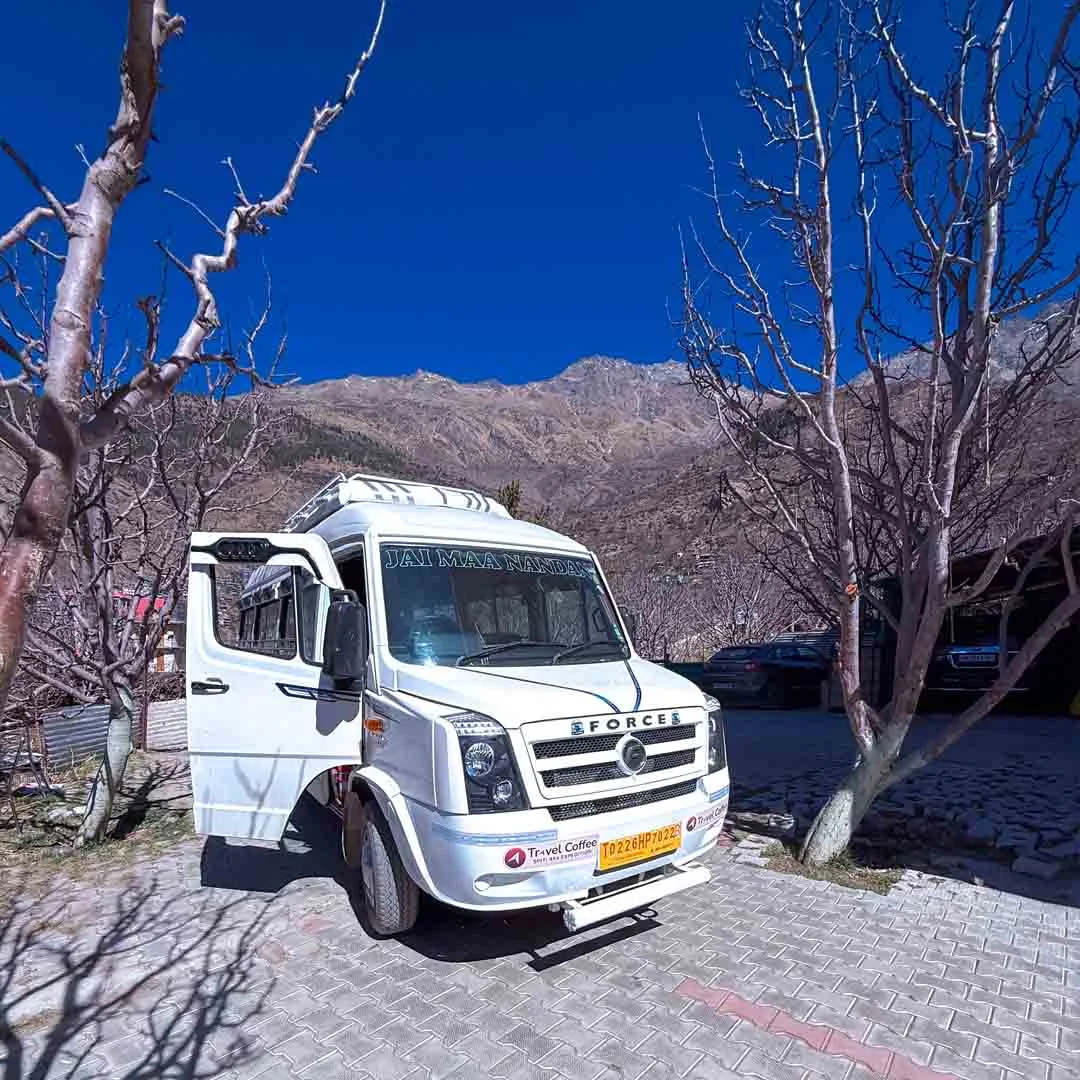 Group Tour
1D Sangla•1D Nako+2
Group Tour1D Sangla•1D Nako+2
 Group Tour
1D Shimla•2D Sangla+3
Group Tour2D Sangla•1D Tabo+2
 Group Tour
1D Shimla•2D Sangla+3
 Group Tour
1D Sangla•1D Kalpa+3
 Group Tour
1D Shimla•1D Sangla+4
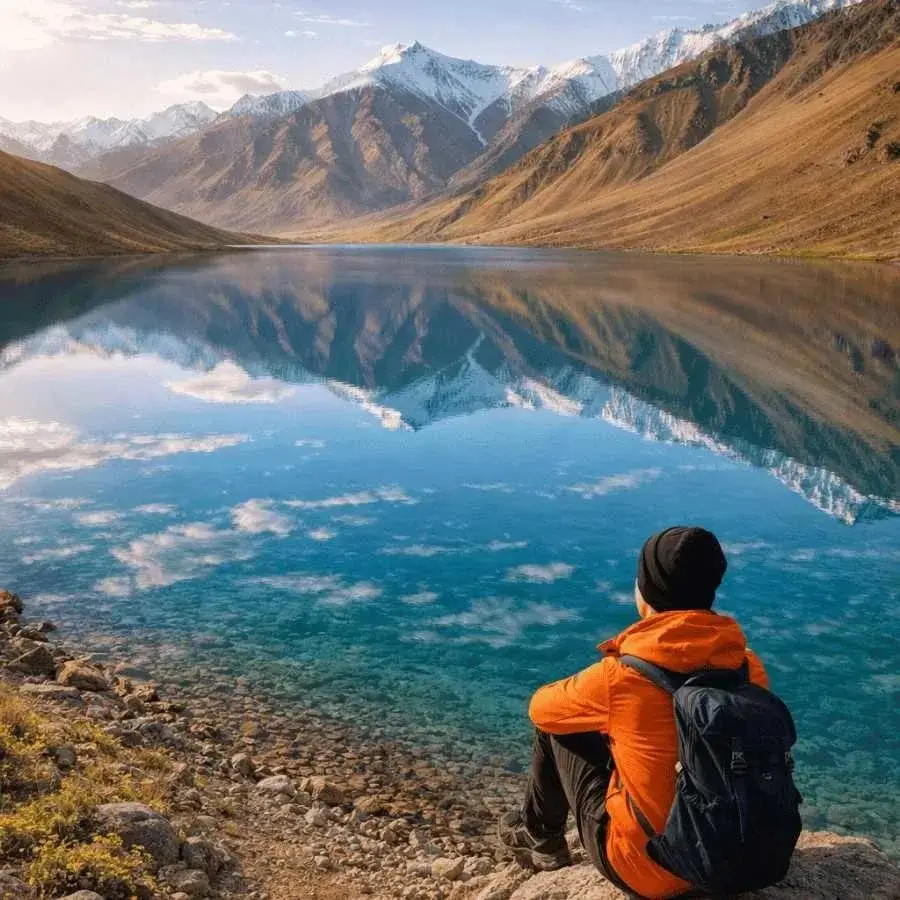 Group Tour
1D Manali•2D Kaza+1
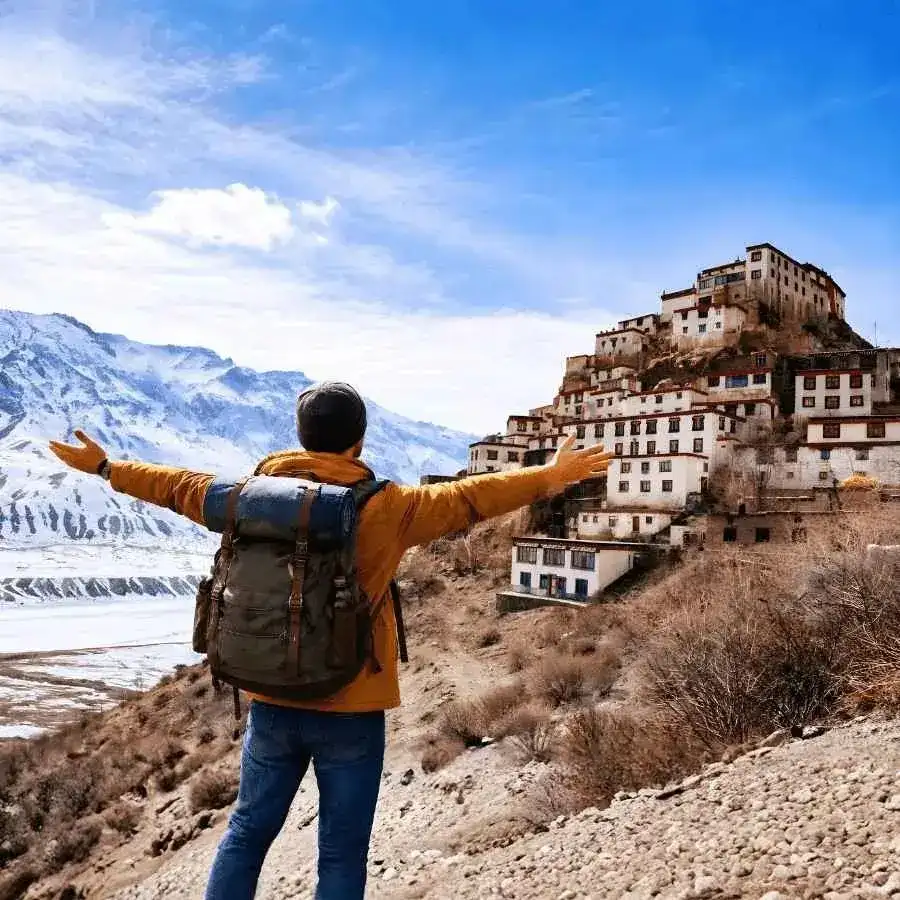 Group Tour
1D Manali•3D Kaza+1
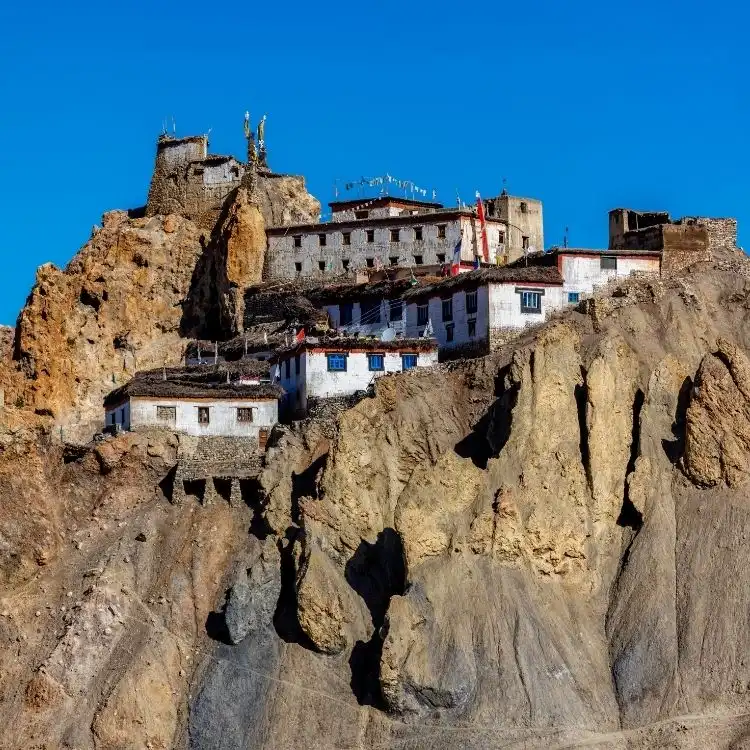 Group Tour
1D Narkanda•1D Sangla+5
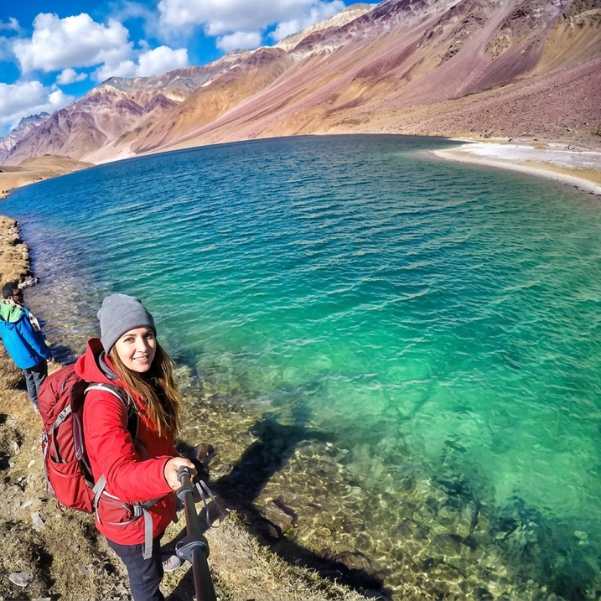 Group Tour
1D Sangla•1D Kalpa+3
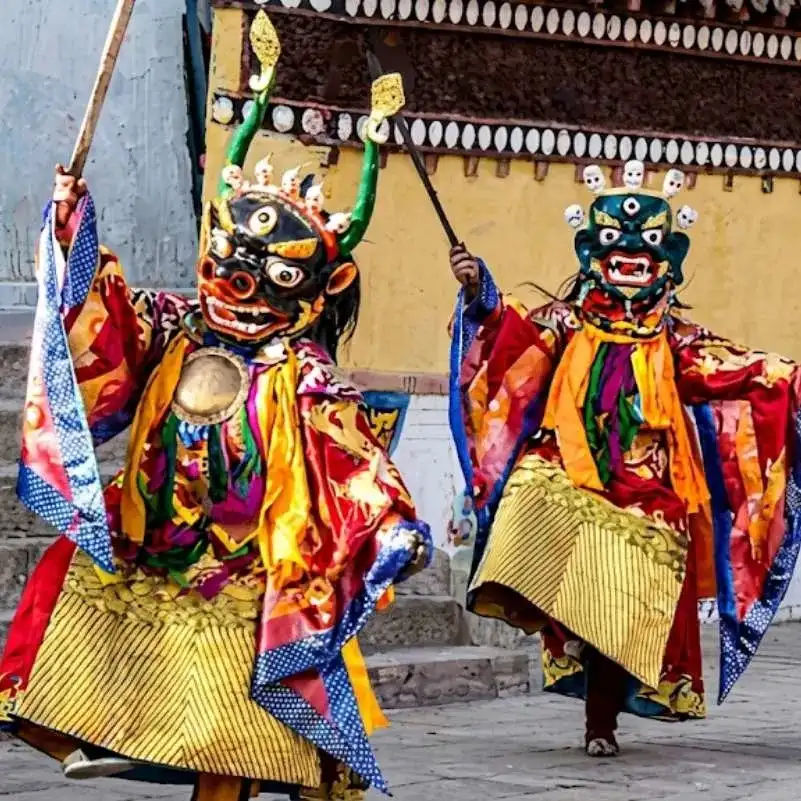 Group Tour
1D Sangla•1D Kalpa+3
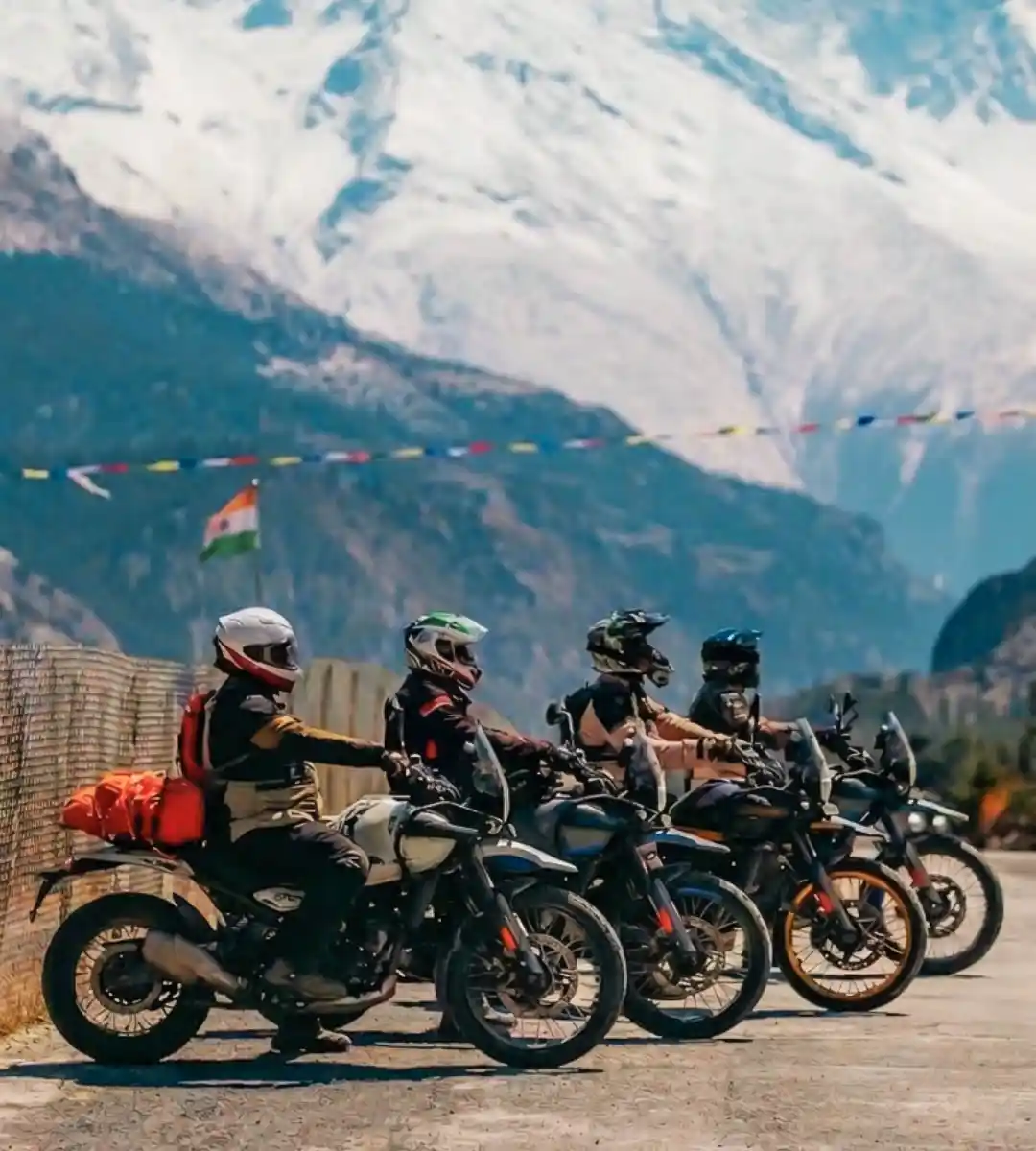 Group Tour
1D Jibhi•1D Sangla+4
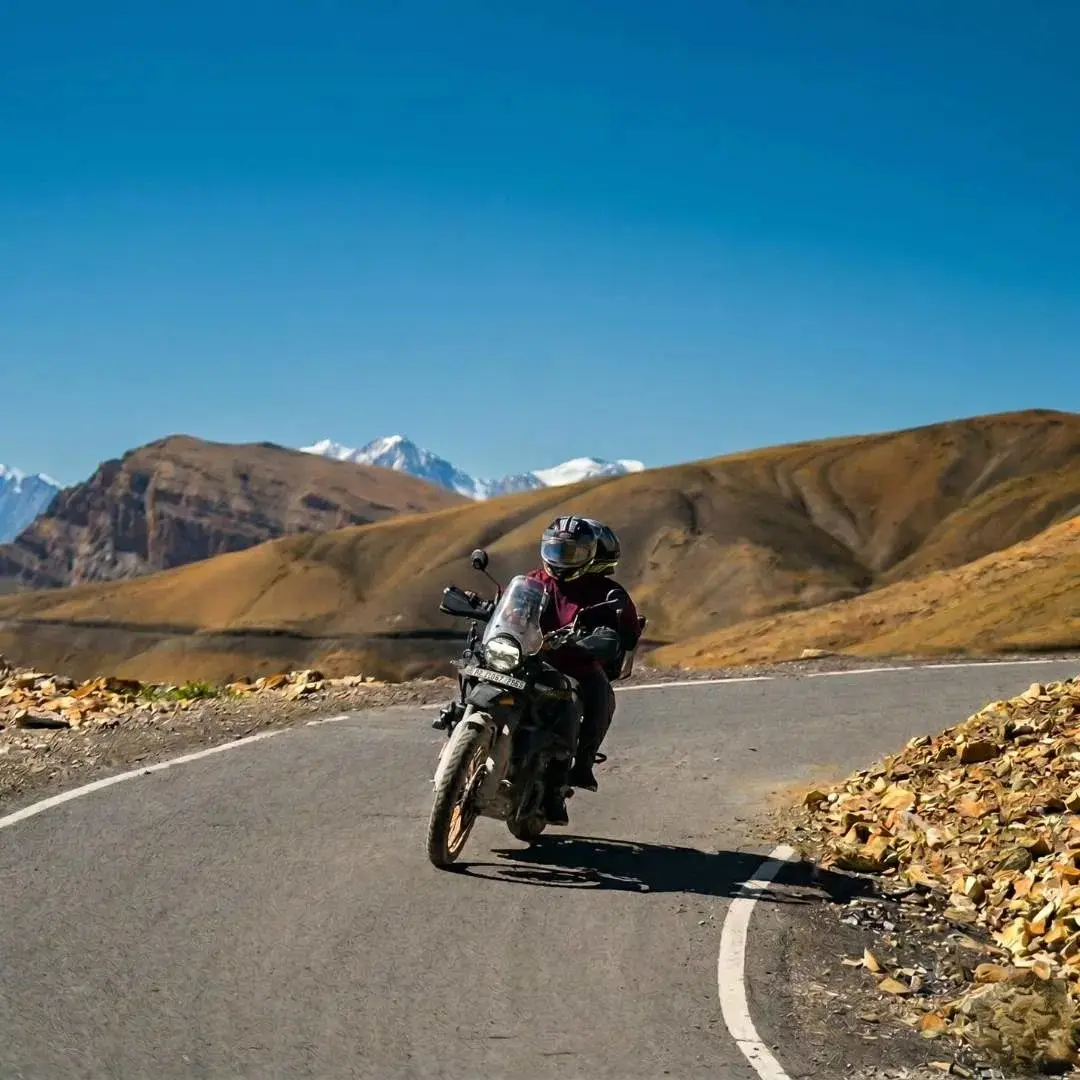 Group Tour
1D Narkanda•1D Sangla / Baspa Valley+5
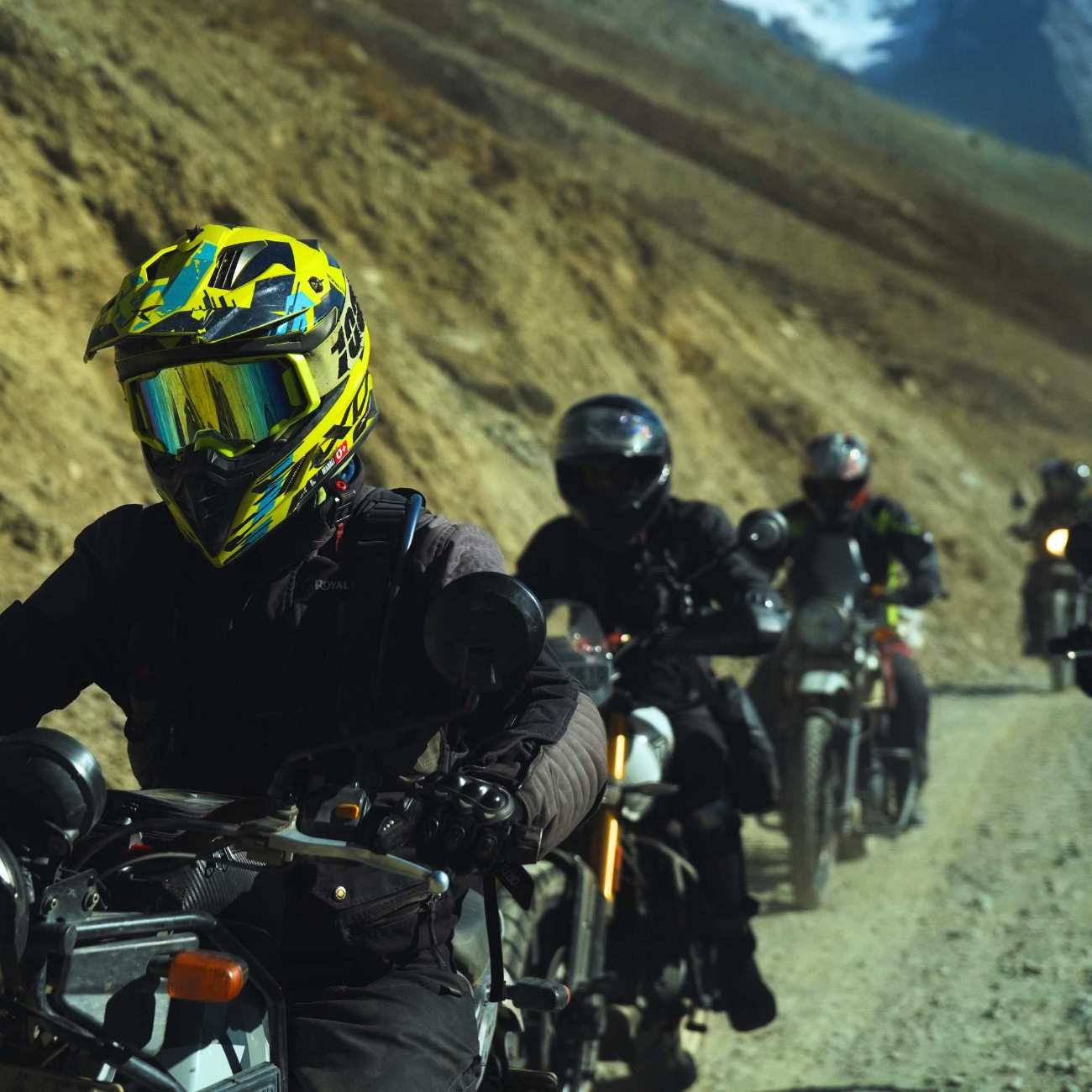 Group Tour
1D Narkanda•2D Sangla+3
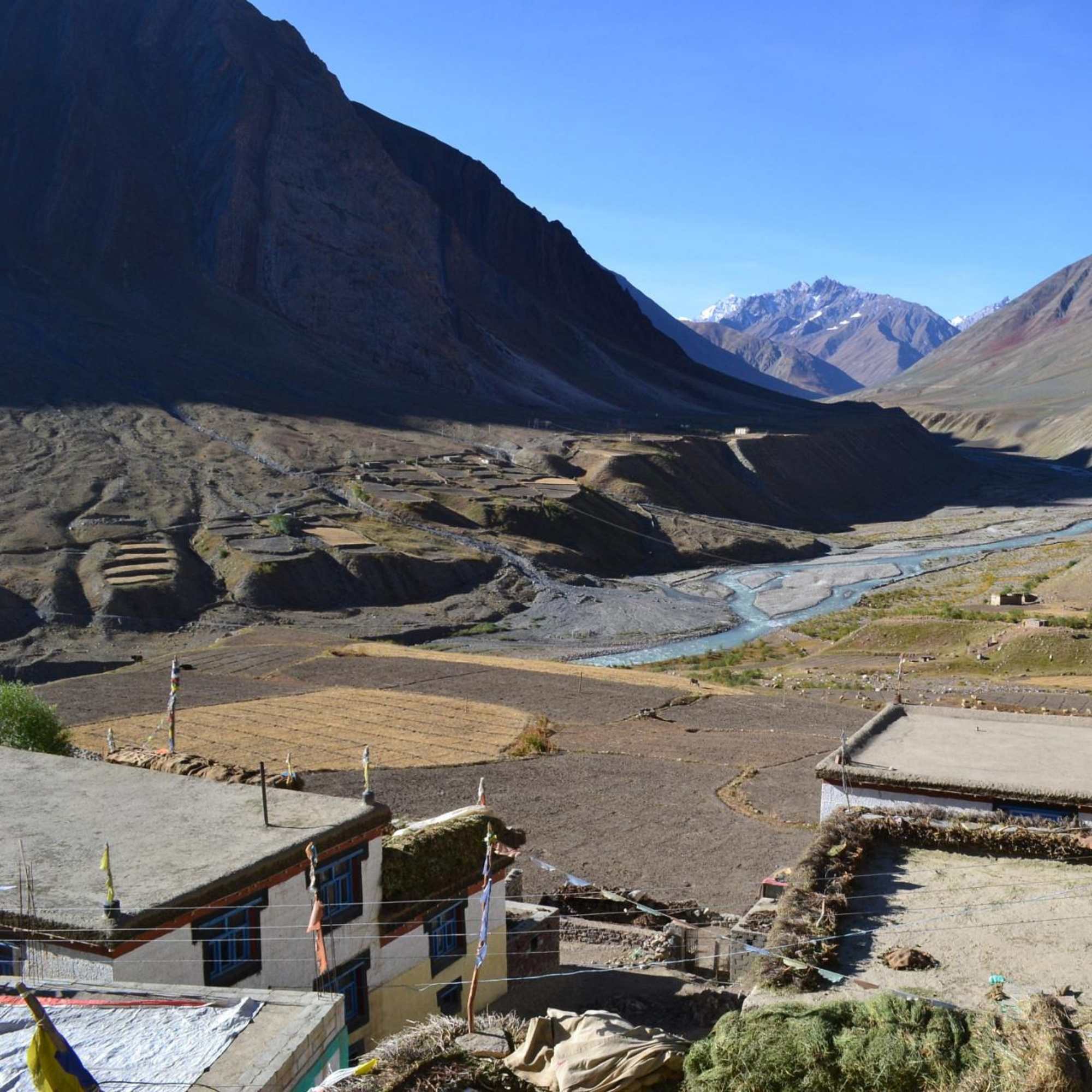
Mud sits at roughly 3,810 metres on the left bank of the Pin river, the last village on the road in Pin Valley before the high passes take over. It is about 50 km from Kaza and acts as the start or end point for the Pin Parvati and Pin Bhabha treks. Greener than the rest of Spiti, no network, basic homestays, and a road that takes its time.
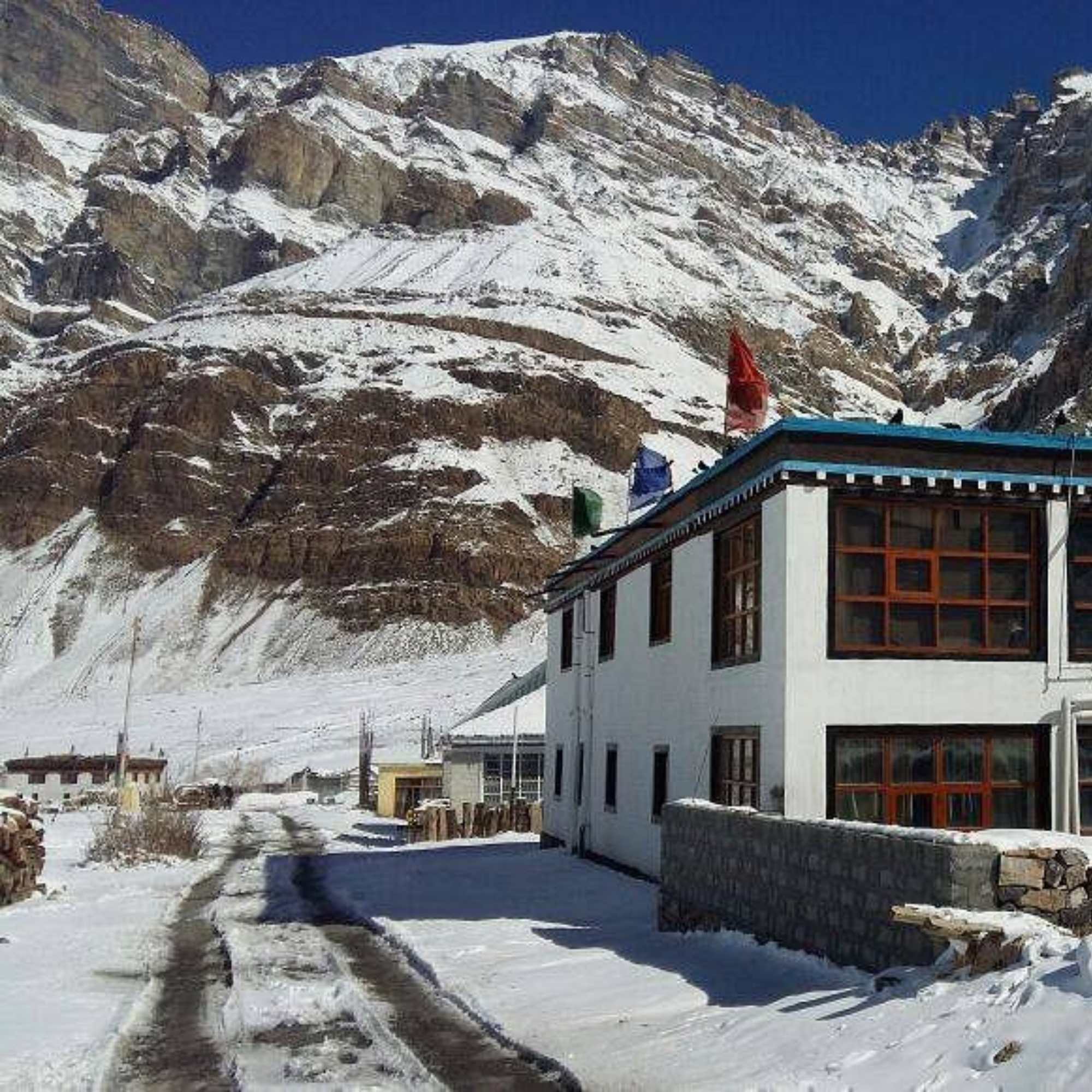
Losar is the first village of Spiti when you cross over Kunzum Pass from Manali, sitting at roughly 4,080 metres (around 13,400 ft). It is about 56 km from Kaza and 18 km from the pass, a small settlement of mud brick houses, a handful of homestays, and the last proper acclimatisation halt before you drop into the valley.
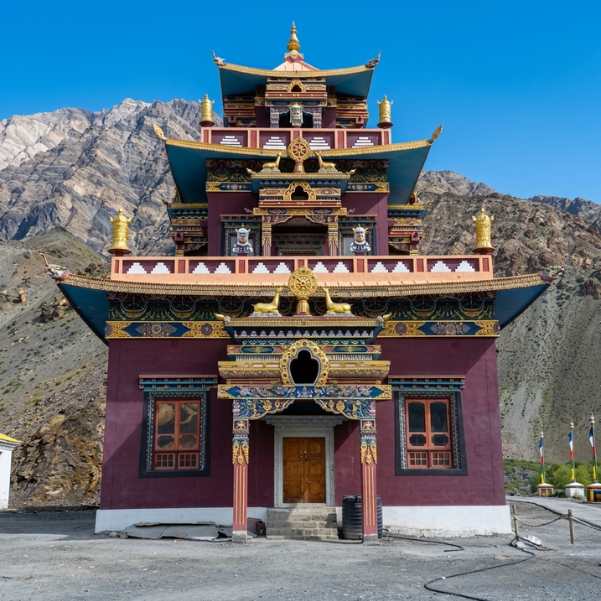
Gue is a small Buddhist monastery in Spiti Valley that houses the naturally preserved mummy of Lama Sangha Tenzin, believed to be around 500 years old. It sits at roughly 3,080 metres (about 10,100 ft), 35 km from Tabo and 80 km from Kaza, on a short detour off NH 505 near Sumdo.
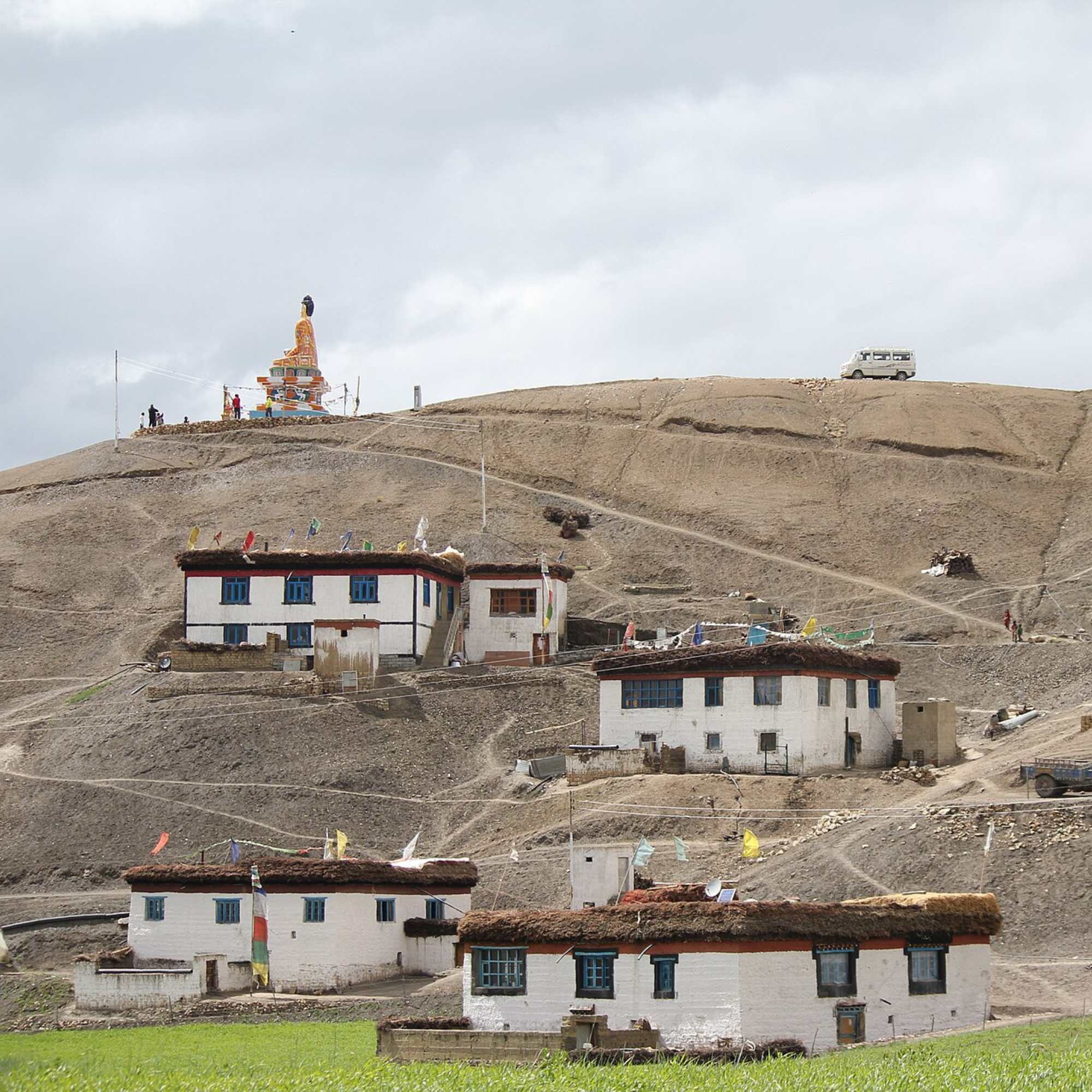
Langza sits at roughly 4,400 metres above Kaza, about 15 km away. The reasons to come are the large seated Buddha facing the Chau Chau Kang Nilda peak, the ammonite fossils on the slopes around the village, and the wide silence of a high Spitian hamlet. Most travellers visit as part of the Langza, Komic, Hikkim loop. One night here is the version that actually pays off.
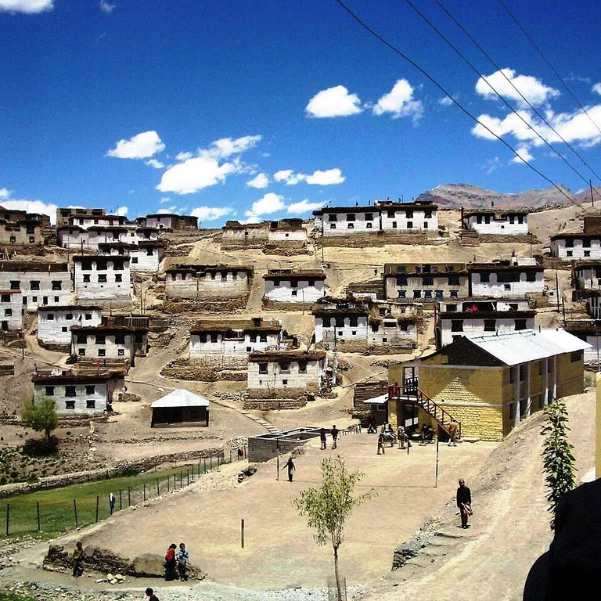
Kibber sits at roughly 4,270 metres above Kaza, about 18 km away. The village itself is small and quiet, the real reason to come is the wildlife sanctuary around it and, in deep winter, the genuine if rare chance of spotting a snow leopard. Most travellers visit as a half day from Kaza, paired with Key Monastery and Chicham Bridge.
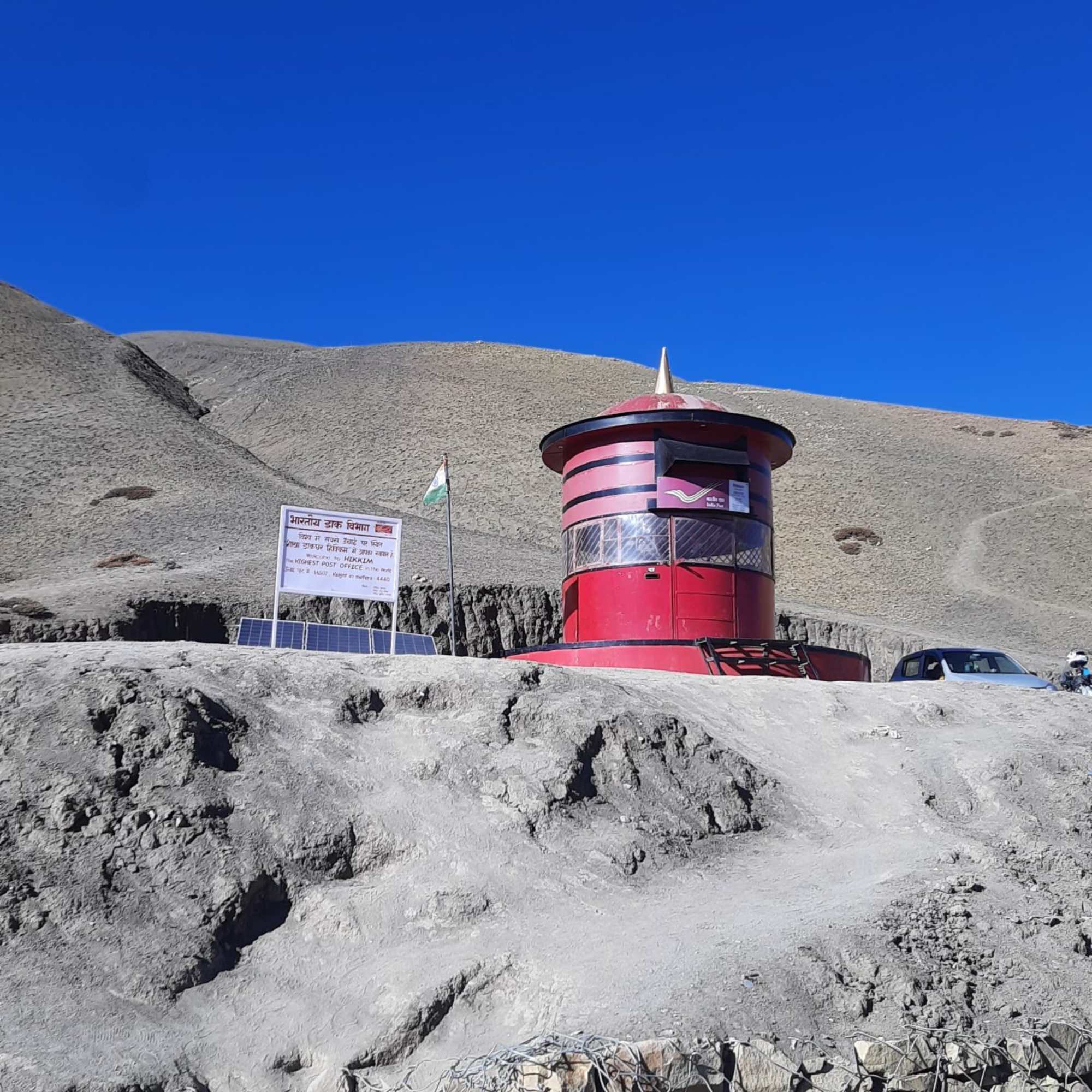
Hikkim sits at roughly 4,400 metres above Kaza, about 16 km away. The reason most travellers come is the small India Post branch here, widely promoted as the highest post office in the world, in operation since 1983. Plan a 30 to 45 minute stop as part of the standard Langza, Komic, Hikkim loop. Buy your postcards in Kaza first, the stock here is unreliable.
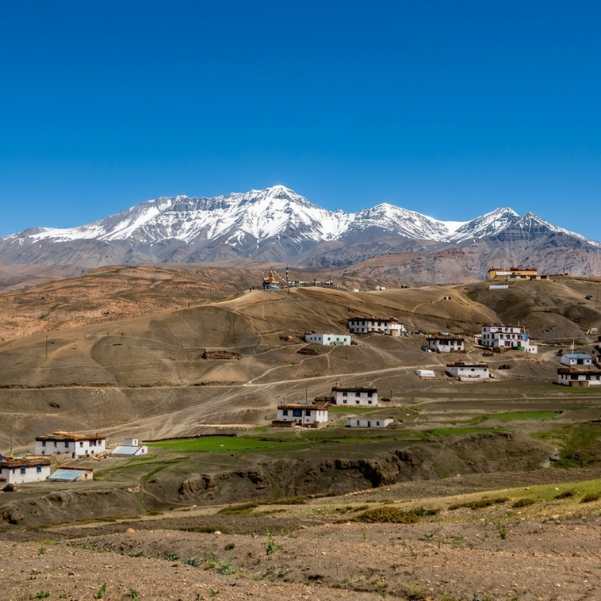
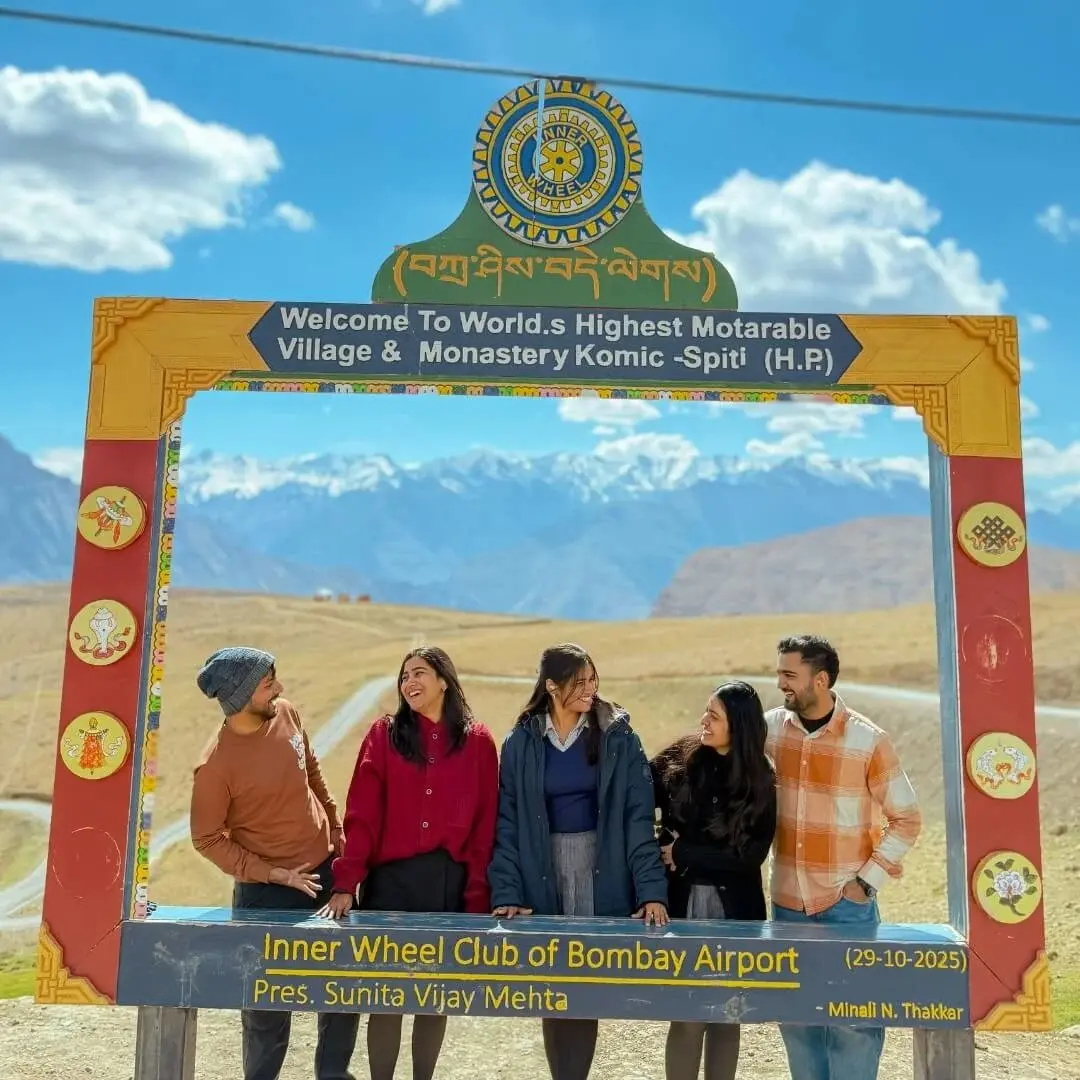
Komic sits at roughly 4,587 metres in the high mustard cold desert above Kaza, about 18 km away. It is widely promoted as the highest motorable village in the world. The point of coming here is the Tangyud Monastery on the canyon rim, the silence, and the night sky. Most travellers do it as a half day from Kaza. One night here is the version that actually pays off.
Dhankar sits between Kaza and Tabo, with a fort monastery perched on a 300 m spur above the confluence of the Spiti and Pin rivers. The old gompa is fragile and best entered briefly. The real reward is the short, steep climb above the village to Dhankar Lake at around 4,140 m. Plan a half day. Most travellers underrate it.
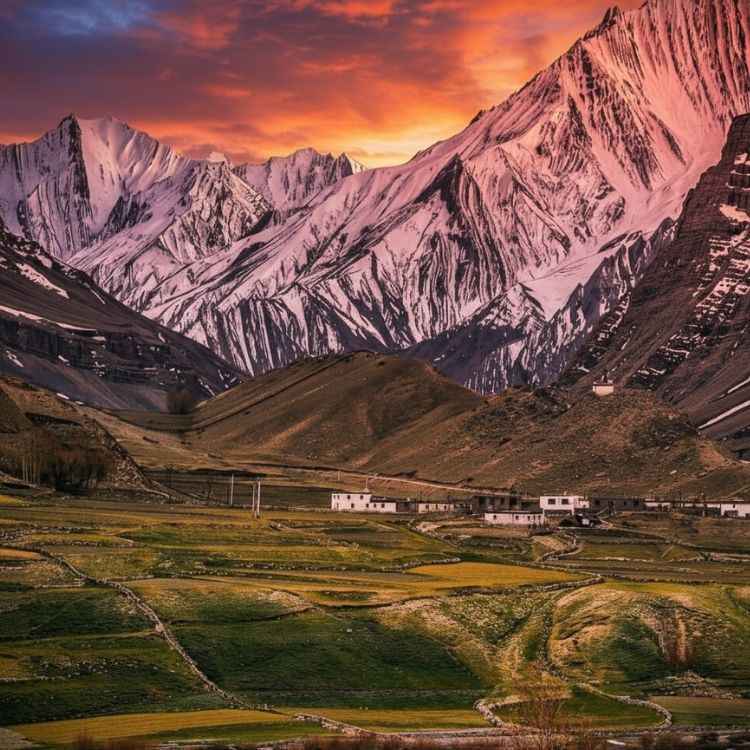
Pin Valley National Park sits in the cold desert of Spiti, established in 1987, with a core zone of about 675 sq km and elevations from roughly 3,500 m at the river to over 6,000 m at the peaks. Most travellers drive in as far as Mud village, around 50 km from Kaza, and spend a day or a night. The park itself is a trek in, not a drive through.
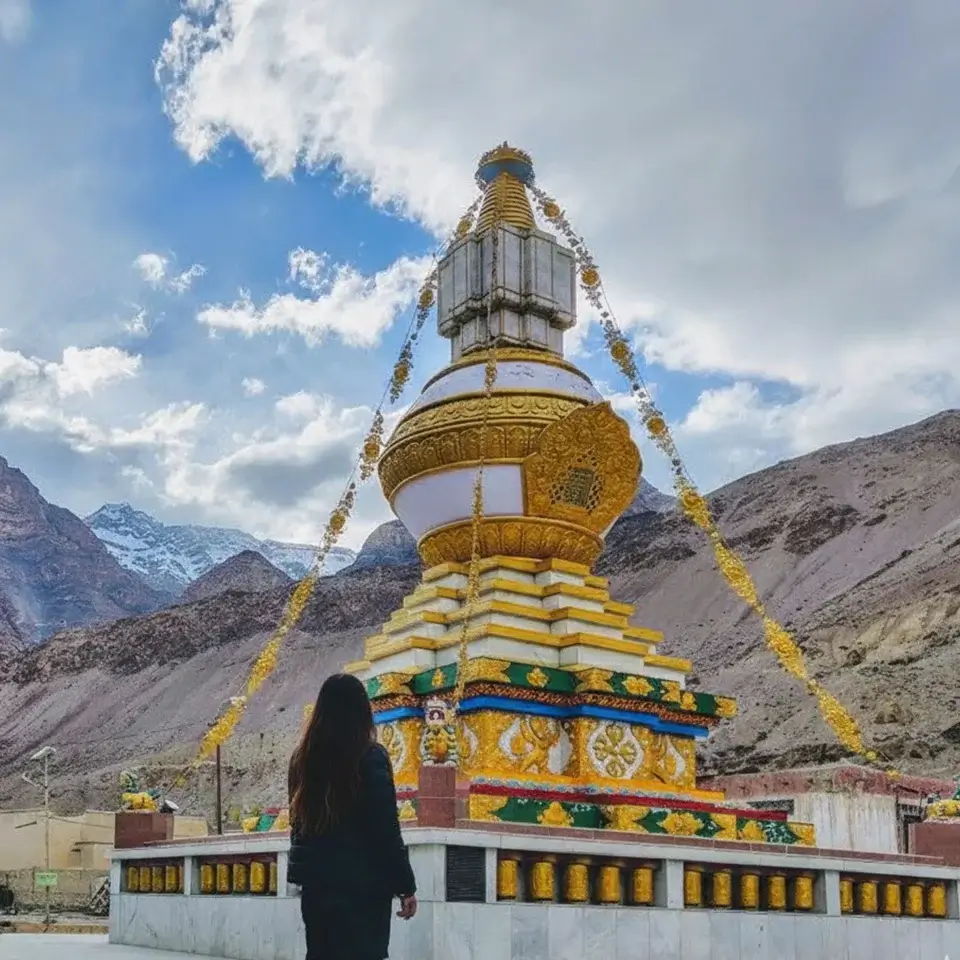
Tabo Monastery sits at roughly 3,050 metres in Tabo village, about 48 km from Kaza. Founded in 996 CE, it is widely considered the oldest continuously operating Buddhist monastery in India and the Himalayas, famous for its 10th and 11th century wall murals. Most travellers stop for an hour, the murals deserve longer.
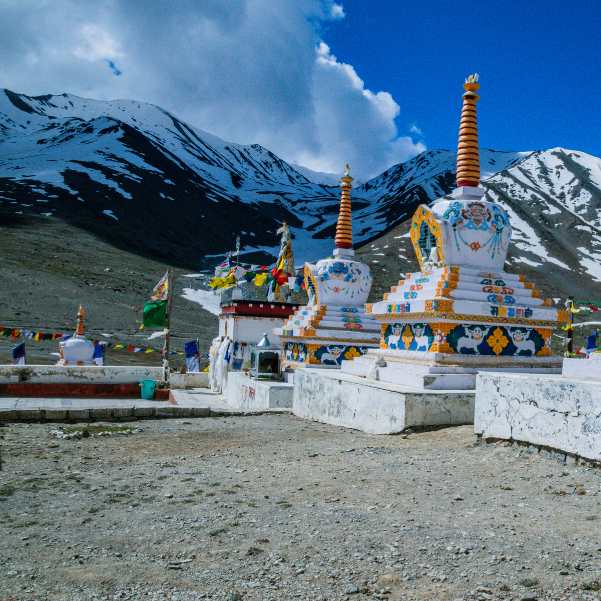
Kunzum Pass sits at roughly 4,551 metres on NH505 and is the only road link between Manali and Spiti in summer. It generally opens around late May or early June and closes with the first heavy snow, usually by mid to late October. Most travellers stop for 20 to 30 minutes, take a round of the Kunzum Mata temple, and move on.
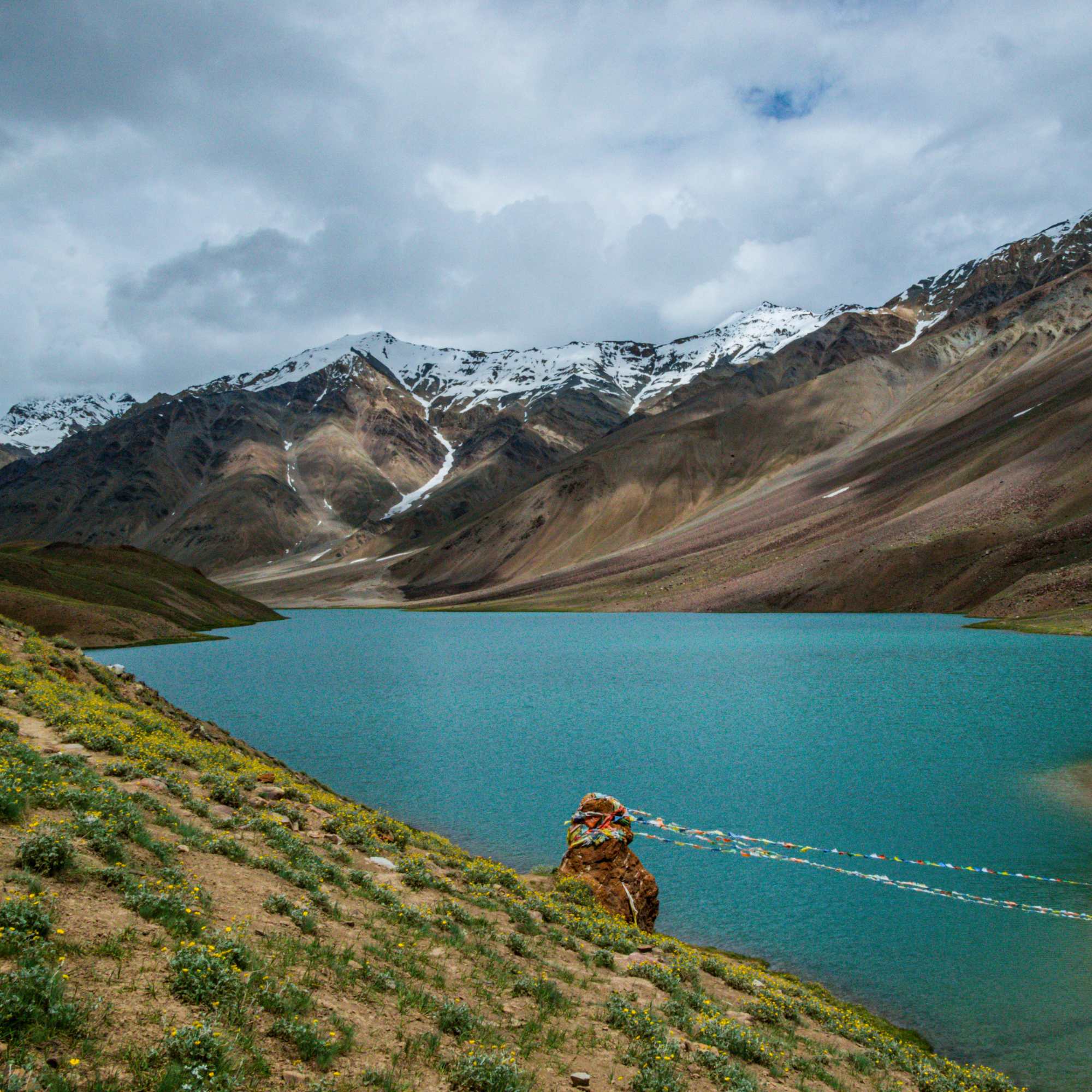
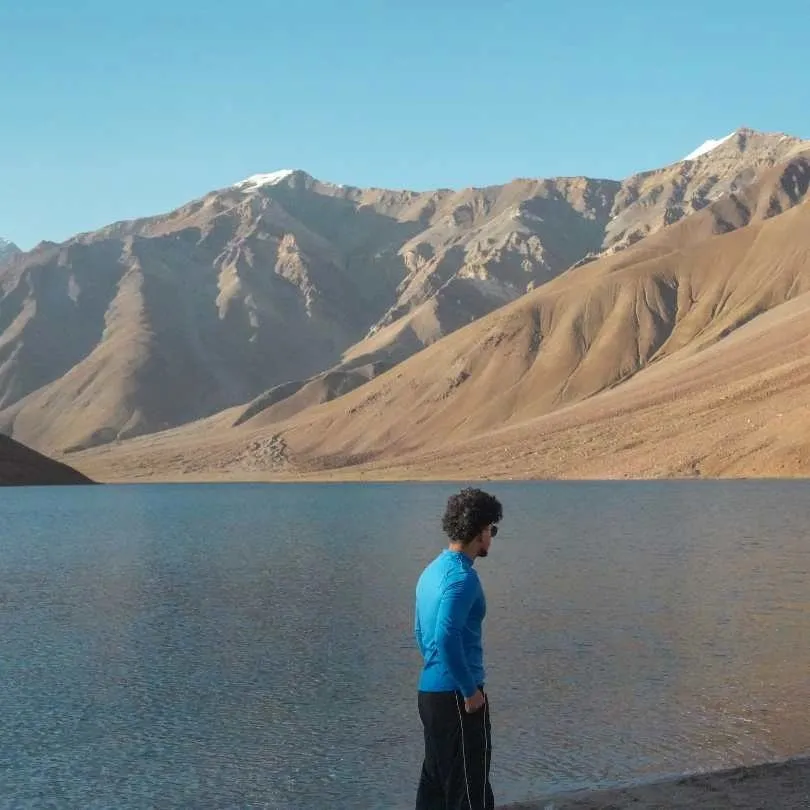
Chandratal is a high altitude Ramsar lake sitting at roughly 4,300 m between Kunzum La and Batal. Best visited from June to early October. Camping on the shore is banned, authorised camps sit 2 to 3 km away, and most travellers pair the lake with a full Spiti circuit.
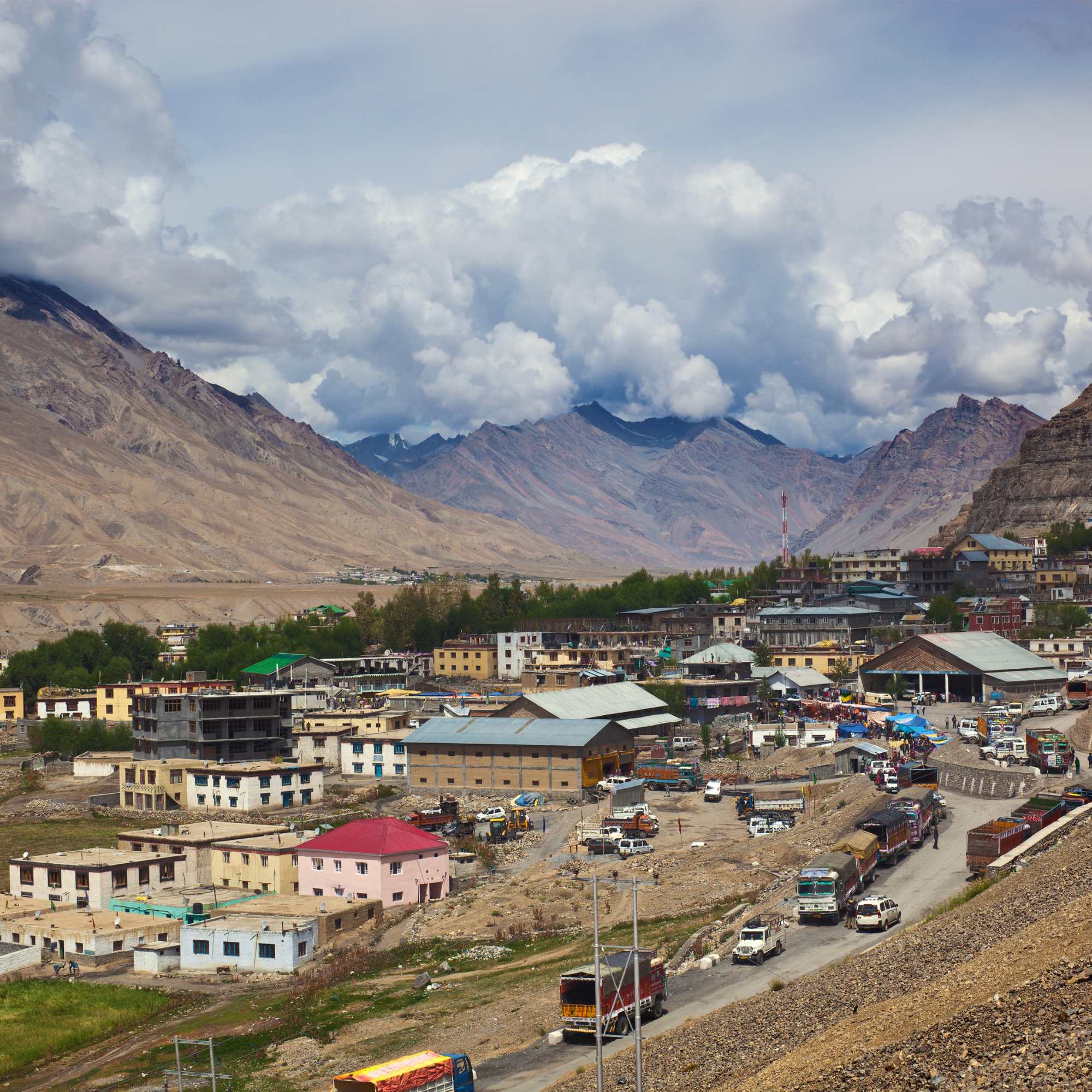
Kaza is the main town of Spiti Valley and the base almost every traveller uses to explore Key, Kibber, Langza, Komic, Hikkim, and Chandratal. It has the valley's most reliable petrol pump, ATMs, cafes, and stays. Most people spend two to three nights here.
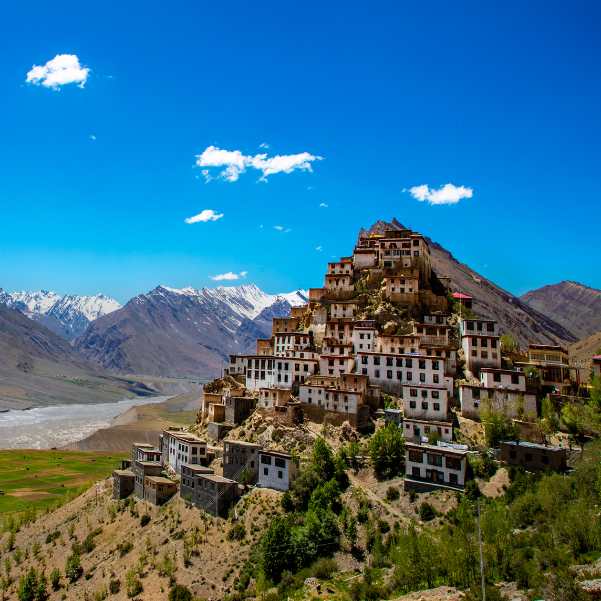
Key Monastery is the biggest and arguably most photogenic gompa in Spiti, sitting about 12 km from Kaza. Most travellers stop here for an hour, though arriving early for morning prayers can make the visit feel quieter, if the timing works out.
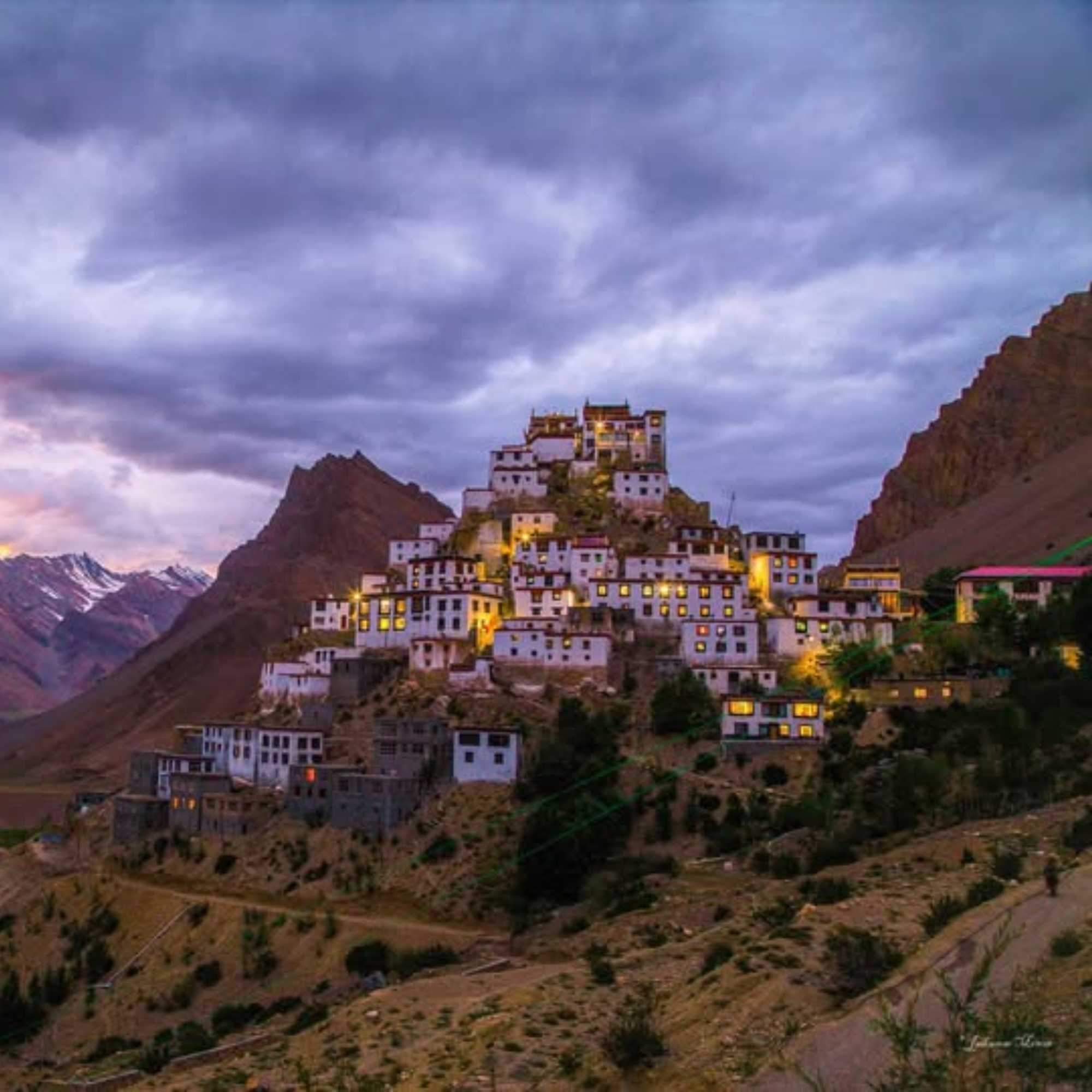
Early morning, when sunlight catches the white walls and shadows stretch long across the valley. Or late evening, when the monastery turns golden against a darkening sky. Sit across the river and just watch.
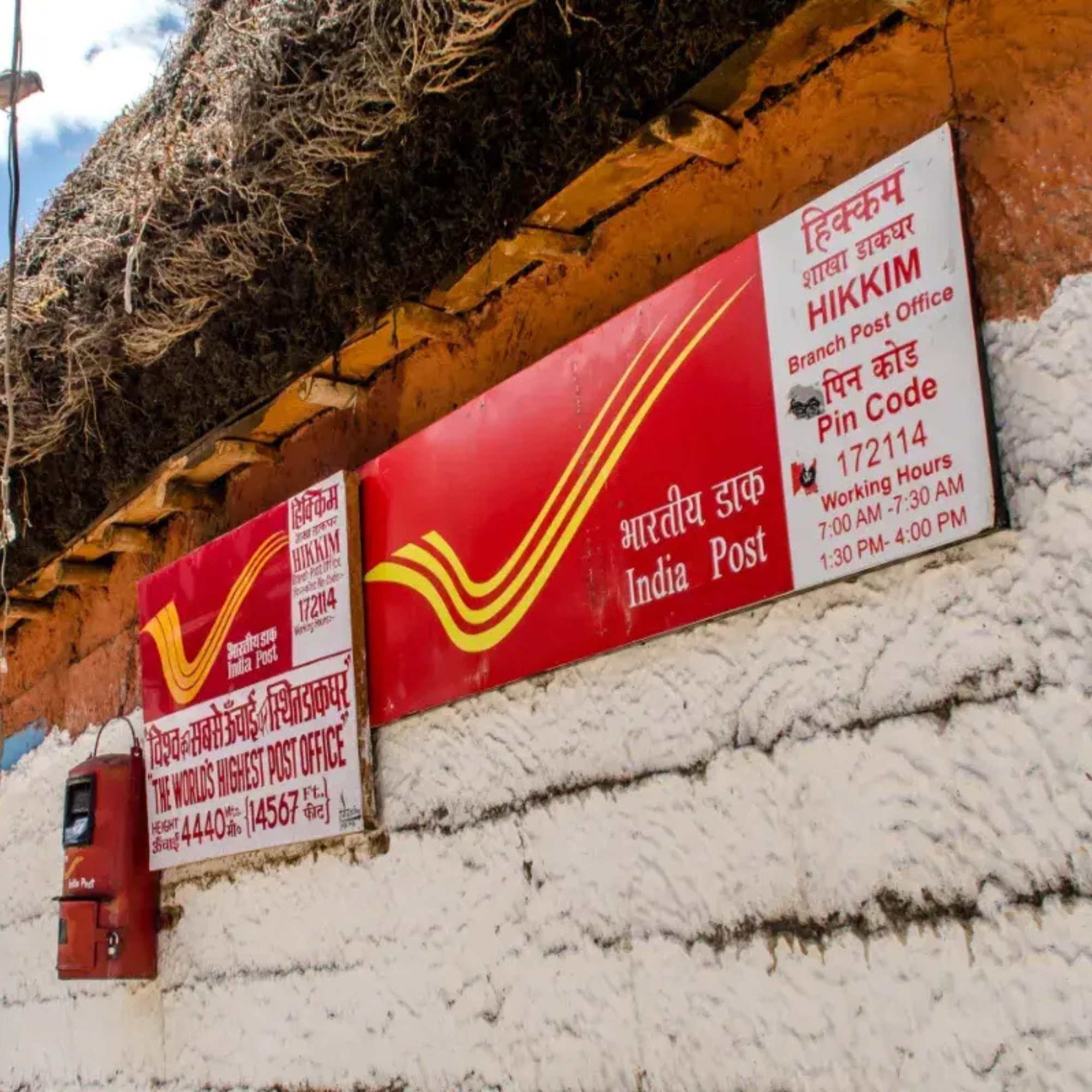
A few lines, a stamp, a tiny post office at 4,440 metres. Sending a physical letter from one of the highest post offices in the world, surrounded by nothing but mountain and sky, feels oddly meaningful.
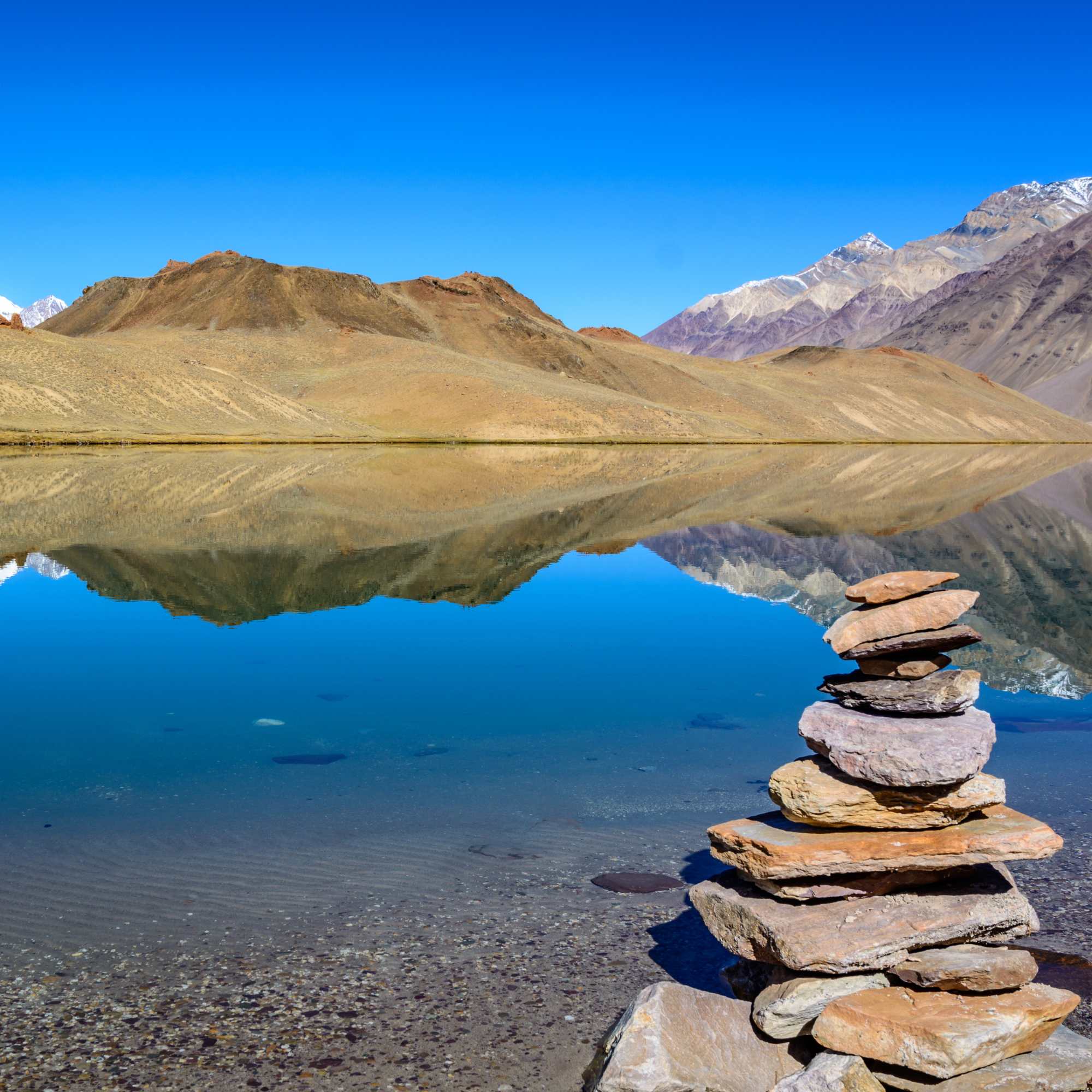
Step outside your tent after dinner. No light pollution. The Milky Way is a thick bright band directly overhead. The cold bites, but you will not want to go back inside.
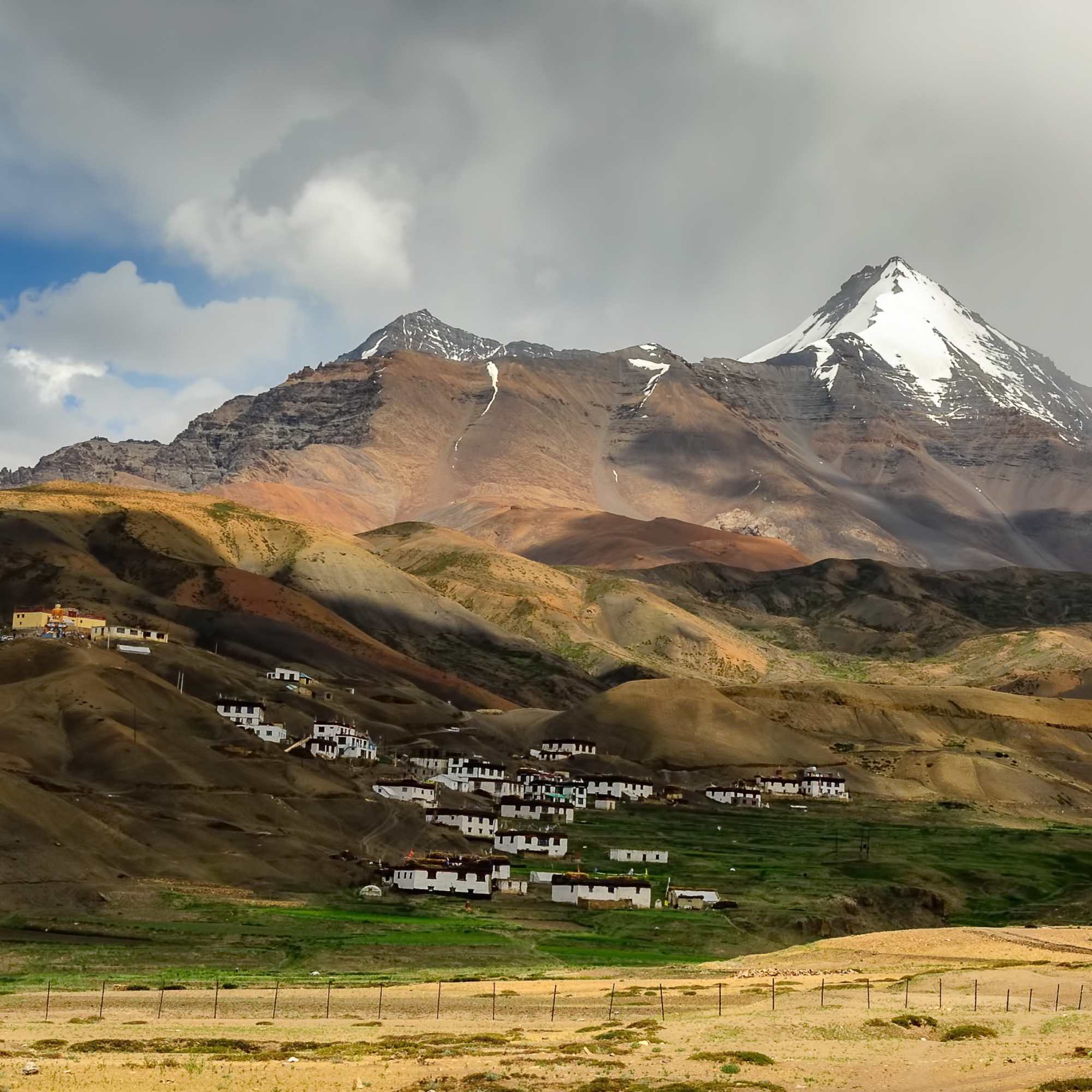
The hillsides are full of marine fossils from millions of years ago. Walk slowly, look at the rocks, and the fossils will find you. The kind of experience that quietly rearranges your sense of time.
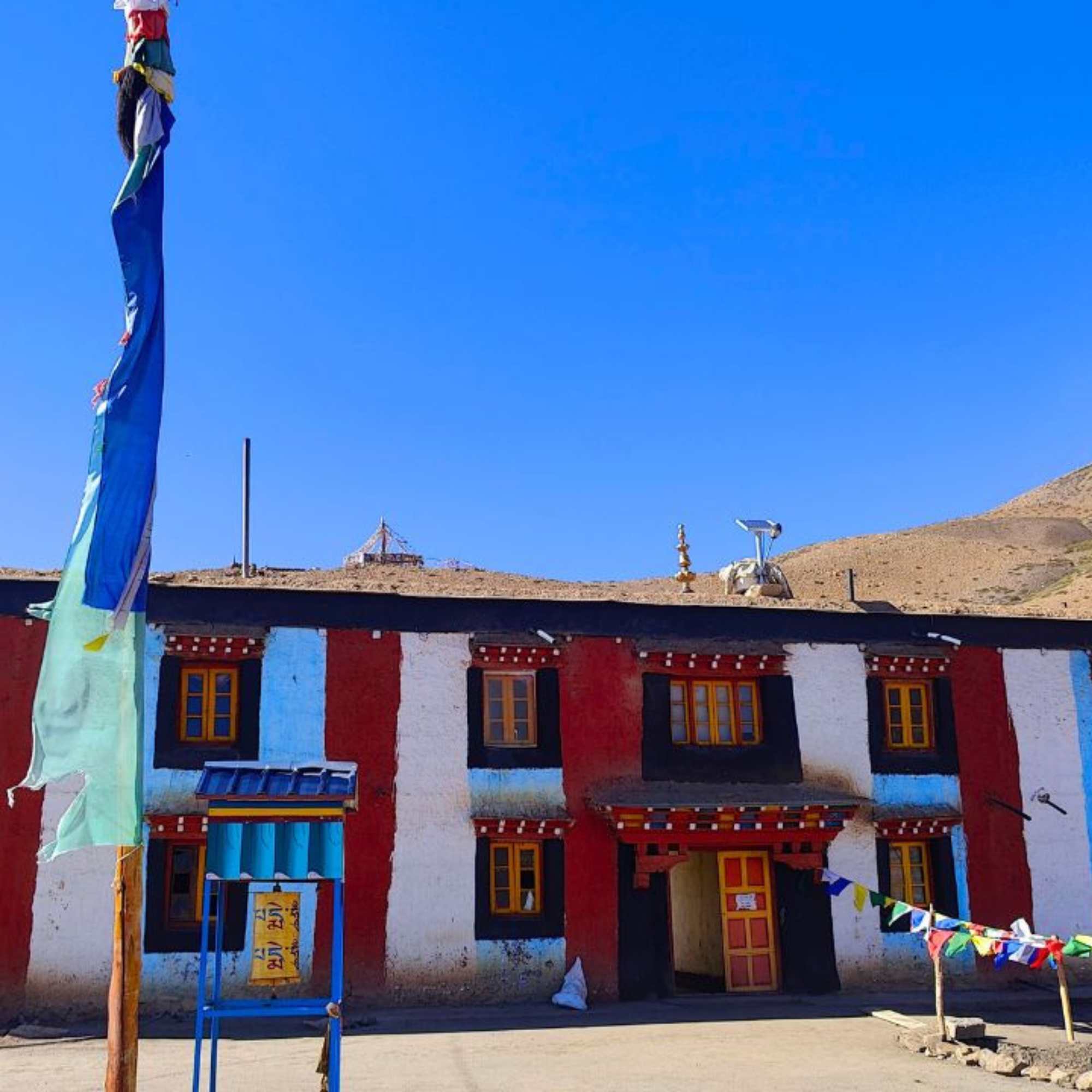
Walk to the monastery, look out over the valley, and notice how your breathing has changed. The thinness of the air at 4,587 metres is something you feel in your lungs. Standing here, you understand what high altitude actually means.
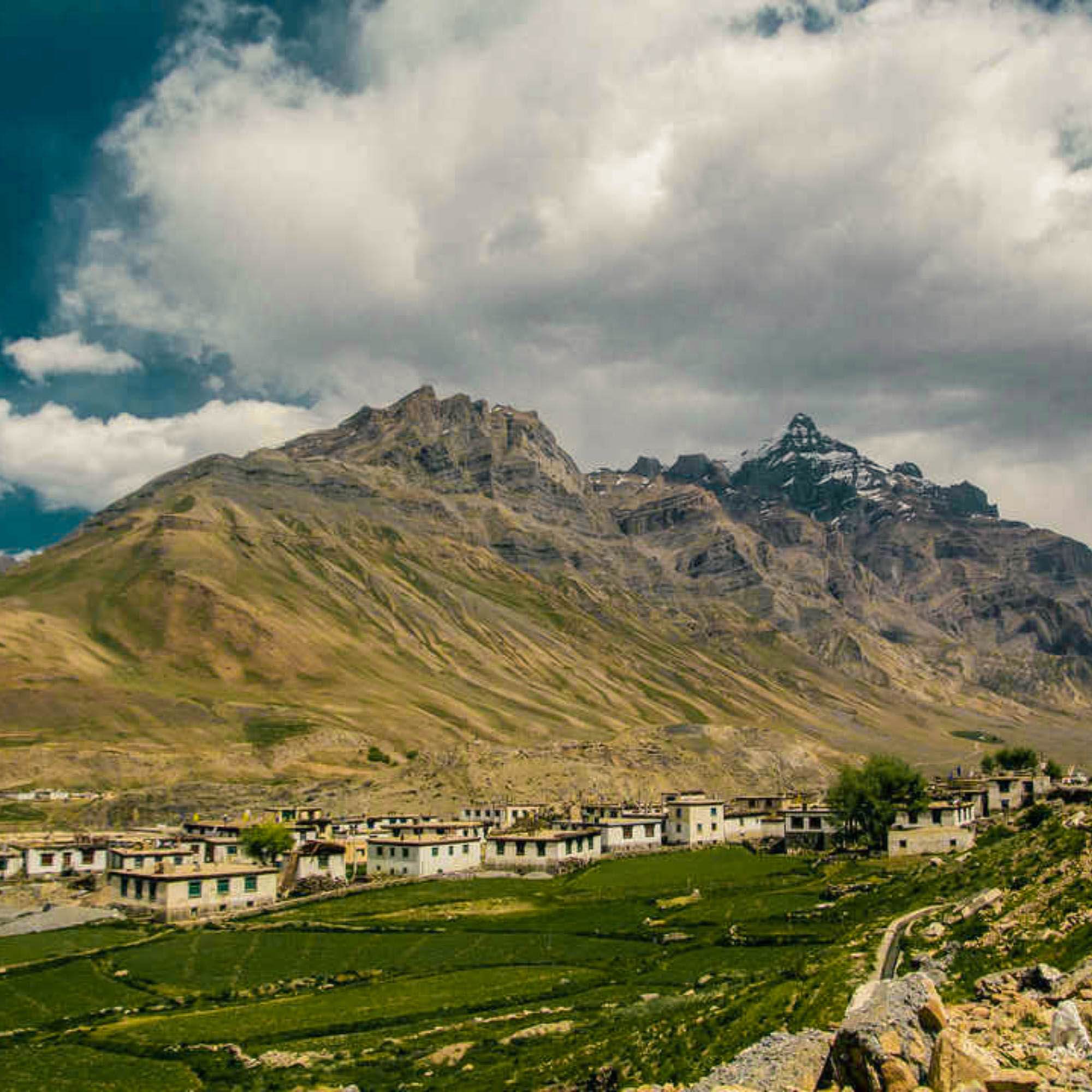
Quieter than the main Spiti circuit. The road follows the Pin River into a national park where snow leopards live but are almost never seen. Mud Village, at the end of the road, feels like the edge of the inhabited world.
Not a restaurant recommendation. A Spiti road trip rite of passage. Hot food in a tin-roofed shack beside a glacial river, after hours of rough road. A plate of rajma chawal here tastes like the best meal you have ever had.
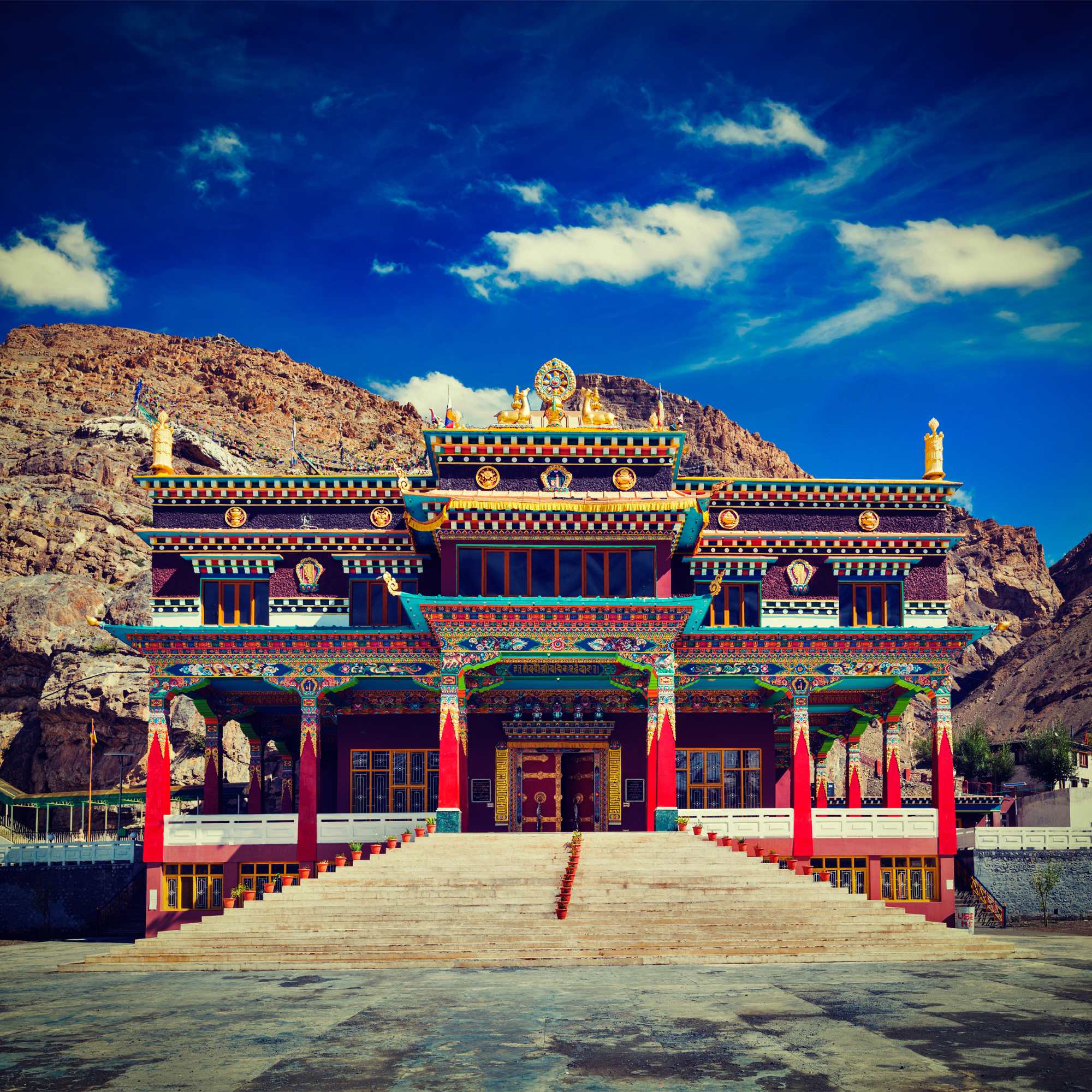
Thukpa that fixes everything after a cold day. Momos everywhere. Tsampa in villages and monasteries. Butter tea, salty and rich, warming you from the inside in ways regular chai cannot. And sea buckthorn tea, sharp and tangy, made from bright orange berries growing wild across the valley.

“Travel Coffee truly went above and beyond. Even though we booked from Indonesia without meeting them, we always felt secure — their team was available 24/7 and took care of every detail. Shubham personally ensured our comfort throughout the Himachal trip, from hotel checks to small gestures like bringing lotion and altitude pills. Their sincerity and local expertise made the journey unforgettable.”
Andre & Angel
Spiti is one of the last inhabited cold deserts in the world, sitting between 3,500 and 4,500 metres in Himachal Pradesh. It is known for ancient Tibetan Buddhist monasteries like Key, Tabo, and Dhankar, high-altitude villages untouched by modern speed, and Chandratal Lake. What sets Spiti apart from the rest of Himachal is the silence, the scale, and the genuine remoteness.
For the full Spiti circuit via Shimla/Kinnaur and Manali, nine to twelve days. This allows proper acclimatization and buffer for weather surprises. A shorter Manali-side trip works in five to seven days for fit travellers. We do not recommend under five days. Compressing Spiti leads to altitude discomfort and a surface-level experience.
September is arguably the best: clear skies, golden barley fields, both routes open. July is reliable after roads settle post-monsoon. August works but carries more landslide risk. June and October are shoulder months with less predictable conditions. For winter trips, January and February offer the most dramatic snow experience via the Shimla-Kinnaur route.
A full circuit group tour of nine to eleven days typically ranges from around ₹18,000 to ₹35,000 per person, depending on format, vehicle, and accommodation. Shorter Manali-side trips cost less, winter trips slightly more. Reach out to us for current pricing on upcoming fixed departures, since costs shift with fuel prices and seasonal demand.
Spiti is one of the best destinations in India for a group tour. The logistics, long driving days, altitude, remoteness, and limited connectivity make it significantly easier with an experienced operator handling the details. Beyond the practical side, sharing those roads and starry nights turns strangers into friends fast.
Yes, with the right planning. We recommend the full circuit via Kinnaur for gradual altitude gain. Children above eight usually do well with a well-paced itinerary. First timers should take acclimatization seriously: spend at least one or two nights in Kinnaur before ascending. Altitude sickness is real and preventable with patience.
Yes, and many of our travellers are solo. Fixed departure Spiti tours let individuals join an existing group with safety and logistics handled, while still leaving space for your own rhythm. It is one of the easiest ways to experience the valley without self-arranging transport and stays in a remote high-altitude region.
The Shimla-Kinnaur route allows gradual acclimatization, passes through Sangla, Chitkul, Kalpa, and Nako, and stays open year-round. Better for first timers, families, and winter travel. The Manali route is faster, crossing Kunzum Pass at 4,590 metres, but altitude gain is rapid and it is only open late June to mid-October. If you have the time, the full circuit is ideal: enter from one side, exit the other.
Tempo travellers for groups of eight to twelve. SUVs for groups of four to six, offering better handling on rough stretches. The driver matters as much as the vehicle in Spiti. We use experienced mountain drivers who know every hairpin and water crossing on these routes.
Enter from the Shimla side and spend one or two nights in Kinnaur before ascending. Stay hydrated, avoid alcohol at altitude, and do not push through symptoms like headache or nausea. Pack layers: thermals, fleece, windproof jacket, and a good down jacket. Sunscreen, sunglasses, headlamp, personal medication, and a refillable water bottle are essential. Even in summer, Spiti nights are cold. Pack warmer than you think.
Yes. If your trip includes Chandratal Lake, we offer a dedicated Chandratal group tour package with camping, Kunzum Pass crossing, and stargazing at 4,300m. See our Chandratal group tour at travelcoffee.in/group-tour-packages/himachal/chandratal for fixed departure dates and pricing.
Real experiences shared by Travel Coffee travellers in Spiti Valley Group Tour.
55 traveller reviews
Based on Google reviews.
Real photos and videos shared by travellers from recent trips.
Had an absolutely incredible trip exploring Manali, Solang, Sethan, Khokhsar, Sissu, and Darcha, all the way up to Shinkula Pass and Shinkula Top, thanks to Travel Coffee! A huge shoutout to Preeti Jasyal, who helped us a lot throughout the process. She is an amazing person and went above and beyond to help us create the perfect booking. The entire service was seamless and highly effective, and the hotels she selected for us were absolutely amazing with great comfort and views. Driving through those massive mountain terrains can be daunting, but their flawless coordination made the entire journey stress-free. If you're planning a trip to Leh, Ladakh, Spiti, or any of these mountain regions, Travel Coffee is the way to go!
I, being a senior citizen travelled solo with Travel Coffee for Spiti Valley and Chandratal Lake for 8N/9D. It was an amazing trip, well organised with decent hotels. Vanshika from Travel Coffee supported me, took great care of me till the very end. I enjoyed a lot and am looking forward to join any upcoming trips in future
We had an amazing experience on our Spiti Valley trip organised by Travel Coffee. Everything was well organized, from the itinerary and accommodations to transportation. The entire journey was smooth and hassle-free, allowing us to truly enjoy the breathtaking beauty of Spiti. A special thanks to Preeti Jaysal and the team for their constant support before and during the trip. They were always available to help and ensured that everything went as planned. Our driver was experienced, friendly, and made us feel safe on the challenging mountain roads. We made unforgettable memories, visited stunning places, and had an incredible overall experience. I would definitely recommend them to anyone planning a Spiti trip. Thank you for making our journey so special!
Our Delhi to Kaza round-trip with Travel Coffee was incredible! Huge thanks to Manju ma'am (Manju Mehta) for her flawless management and organization throughout. Special gratitude to our driver, Negi bhai (Prakash Negi), whose expert driving skills kept us completely safe on the challenging Spiti roads. Highly recommend them for a seamless, unforgettable adventure!
Lovely and nice experience with travel coffee During my recent trip of spiti valley tour, nice arrangements done from their side in every aspect, thanks to travel coffee for arranging such a nice trip
We did a spiti bike trip with travel coffee this early June. We had a very new experience this time as we travelled with travel coffee for the first time. We booked 7 bikes, a Bolero Camper to travel as backup vehicle …
Thanks to Travel Coffee team for making such wonderful Spiti Circuit tour. We enjoyed this tour thoroughly 🙏🙏 …
Ms Manju of Travel coffee helped with arranging everything on our Kinnaur Spiti trip in May 2026 . We had nice home stay, food and vehicle services for the entire trip. Destination covered Shimla,Fagu,Bhima Kali temple Sarahan, Sangla,Chitkul,Kaza,Tabo,Nako,Kalpa in 7N/8D. Special mention of Ms Vipasa Negi of Hotel Kamru Sangla that she arranged Birthday cake for me on my Birthday during the trip, that was so special
Very good experience with travel coffee during trip to spiti Very well organized trip by travel coffee Hotel rooms,food, vehicle and driver very well arranged
The tour management of travel coffee was great during my spiti valley trip. The hotels were superb. The facilities and services provided in the hotels were too good. The food served was tasty. The travel service provided were great ad did not face any problems during my trip
Very nice arrangement by travel coffee Excellent rooms,food and driver during trip to Spiti Valley
We recently completed our Spiti Valley trip, and it was an amazing experience. A big thanks to Travel Coffee for organizing everything so smoothly, and special appreciation to our driver Ravi for guiding us throughout the journey. We truly had the best time