 Group Tour
6D/5N
Best Jibhi Tirthan Valley Tour With Shangarh Meadows
2D Tirthan Valley•1D Shangarh (Sainj Valley)
₹6,899₹9,699SAVE INR 2,800/ person
Best Jibhi Tour Packages Curated By Experts
Group Tour2D Tirthan Valley•1D Shangarh (Sainj Valley)
1D Delhi•2D Jibhi+2
1D Delhi •2D Jibhi / Tirthan Valley+1
1D Delhi •2D Tirthan Valley+2
Jibhi is one of those places people still find by word of mouth. A river running past wooden guesthouses, a waterfall ten minutes off the road, and a pass road that climbs into open meadows above the treeline.
We are based in Himachal and drive these roads through the year. This page is here to help you work out which trip actually suits you, rather than to talk you into the most expensive one.
Our trips cover Jibhi along with Shoja, Tirthan Valley, Jalori Pass, Serolsar Lake and Shangarh. They are all listed above with live prices. Everything below is here to help you choose between them.
Two full days in the hills covers the essentials. The Jibhi Waterfall walk, the boulder pools at Mini Thailand, and one full day at Jalori Pass with either the Raghupur Fort or Serolsar Lake trek.
Three days is where the trip stops feeling like a schedule. You get both Jalori treks if you want them, plus a slow morning by the river or the walk up to Chehni Kothi.
Four days lets you add Shangarh in the Sainj Valley, which is a proper route day rather than a quick detour.
One thing worth knowing if you are starting from Delhi. Our trips travel by overnight Volvo on both sides, so a five day package gives you three days in the hills and two nights on the bus. We count road nights separately from hotel nights so nothing comes as a surprise.
If you are planning your own days, this is the order we suggest most often.
Day one. Arrive, settle in, keep it light. The Jibhi Waterfall walk takes about twenty minutes each way, and Mini Thailand is a short morning stop rather than a half day. Spend the evening by the river or in a cafe.
Day two. The Jalori day. Leave by eight so you have daylight in hand. Raghupur Fort is roughly three kilometres each way through meadows. Serolsar Lake is five to six kilometres each way through oak forest. Both in one day is possible if you start early, though doing just one is more enjoyable.
Day three. Chehni Kothi, the old stone and timber tower above Banjar, reached by a walk up through apple orchards. A good final morning before you head back down.
Adding Shoja. Sleep in Shoja on night two so you wake up close to the pass. It saves you the climb on your Jalori morning and gives you the quietest night of the trip.
This is the question we get asked most, and there is no single right answer.
Jibhi sits lower, beside the river. Cafes you can walk to, more stay options, better mobile signal, and both the waterfall and Mini Thailand close by. It suits first timers, anyone travelling with parents or young children, and people who like having somewhere to eat after dark.
Shoja is seven to ten kilometres further up the same road, at around 2,700 metres. Deodar forest on every side, colder nights, wider views, and very little to do after sunset. That is rather the point of it.
If silence matters more than convenience, stay in Shoja. If you want a bit of life around you, stay in Jibhi. Plenty of travellers split their nights and get both.
Either way you will see Shoja. Jalori Pass sits about five kilometres above the village, so every Jalori day drives straight through it.
None of our current packages includes a Shoja overnight as standard, so we build that as a private trip. Send us your dates and we will suggest how to split the nights. Ask us for a Jibhi and Shoja plan on WhatsApp.
Jibhi and Tirthan are neighbours, under an hour apart, but they feel quite different.
Jibhi is a compact village scene. Tirthan is a long river valley running up towards the Great Himalayan National Park, where the usual experience is a riverside homestay near Gushaini, trout for dinner and the sound of water all night.
Most travellers do both, because the day plans overlap anyway. Two to three hotel nights is the comfortable window for the pair.
Choose this combination if riverside time and easy trails matter more to you than covering ground. If you want to read about the valley first, here is our Tirthan Valley travel guide.
Our trips start at ₹8,299 per person. The package cards above always carry the live price, so treat those as the real number for your dates.
A few things move the figure, and none of them are hidden.
Shared transfers cost less than a private cab. Budget homestays cost less than riverside cottages or boutique stays. On group departures quad sharing is the base rate, and triple or double rooms cost a little more per person.
Smaller batches also cost more per head, simply because vehicle and stay costs split fewer ways.
Your starting city matters too. Delhi is the default on our current trips, and joining from Chandigarh or Manali works out cheaper.
Peak dates, long weekends and the festive season push stay rates up across the whole valley. If your dates are flexible by a few days, say so and we will usually find you a better rate.
The final quote depends on your dates, group size, transport and stay category. Message us and we will give you an exact figure rather than a range.
Inclusions vary by package, so do check the itinerary on whichever trip you are looking at. That said, our current Jibhi packages share the same core.
You get return AC Volvo between Delhi and Aut with reserved seats, local travel by shared vehicle or private cab depending on the trip, stays with breakfast and dinner, and all driver, toll, parking and tax costs including GST.
There is on trip coordination throughout, with a trip captain on the larger group batches.
Not included: lunches, snacks and drinks, entry tickets, optional trek guides and activities, heater charges where a property bills them separately, travel insurance, and any extra cost if weather or a landslide forces a route change.
Group departures run on fixed dates with shared transport and set stays. They cost less, they suit solo travellers and friend groups, and you do not have to organise anything.
Private trips give you your own vehicle, your own pace, and the freedom to change the plan on the day. Better for couples, families, and anyone who would rather not wait for fifteen people at every stop.
If fixed dates are what you want, our Jibhi group tour packages page carries the full departure calendar and current seat status.
Travelling from Delhi and want boarding points and route detail? That is all on our Jibhi tour packages from Delhi page.
March to June is the easiest window. Trails open, valley green, Jalori road usually running, and every itinerary works as written.
July to mid September is monsoon. The valley looks its best, but landslides and slow roads are a genuine possibility. Travel then only if you can stay flexible about the order of your days.
October to early December brings the clearest views of the year. A lot of our travellers rate this the finest season on this circuit, and we would agree.
December to February can bring snow around Jalori Pass. The road is cleared seasonally and can shut for days after fresh snowfall, so treat the Jalori day as condition dependent rather than promised. The lower valley usually stays open and the wooden stays are at their cosiest.
We check the road position before every departure and reorder days when conditions ask for it. For the current state of the pass, see our Jalori Pass travel guide.
Jibhi is a road destination. From Delhi it is roughly 500 km and ten to twelve hours, which is why the overnight Volvo to Aut is the sensible way to do it. Aut to Jibhi is about two hours from there.
From Chandigarh it is around 260 km and six to seven hours. From Manali it is about 210 km via Kullu and Aut.
Flying? Bhuntar near Kullu is the closest airport at roughly two hours away, though flights are limited and weather dependent. Most people fly into Chandigarh or Delhi and continue by road instead. The nearest railheads are down in the plains, so there is a road leg whichever way you come.
The Shimla route over Jalori Pass is the prettiest of the three, but it is seasonal, so we only plan it when the pass is reliably open.
A fair number of people arrive here still deciding between the two, so here is the honest version.
Manali has the infrastructure. Hotels at every price point, proper restaurants, adventure operators, and something to do when the weather turns. It also has the crowds, the Mall Road traffic, and the feeling of being in a busy town that happens to have mountains around it.
Jibhi has almost none of that, which is the entire appeal. Fewer people, smaller stays, and days built around a walk rather than a booking counter.
Pick Manali if it is your first trip to Himachal, you are travelling with a large mixed group, or you want options every evening. Pick Jibhi if you have already done the standard hill stations and want somewhere quieter.
You do not have to choose, as it happens. Aut sits on the Manali highway, so the two combine easily on a longer trip.
Couples do well here, particularly on the private trips where you set the pace. Families manage comfortably too, because the drives are short and every trek is optional.
Solo travellers usually join a group departure and find a good mix of people. Friend groups get the lowest per head rate and the most flexible room sharing.
Now the honest part. These are simple mountain stays, not luxury hotels. Hot water can be timed, heaters are often chargeable, and the signal drops past Banjar.
If you want nightlife, shopping and large resorts, this is not the right valley for you, and we would rather say that now than after you have booked.
Carry cash. ATMs are limited around Banjar and Jibhi, and the dependable ones are back towards Aut. Card machines work at some stays and not at others.
Mobile signal is patchy. Jio and BSNL do best in the valley, and coverage falls away almost entirely on the Jalori side. Download your maps before you leave Aut.
Bring layers whatever the month. Even in June the evenings turn cold once the sun drops behind the ridge, and Jalori Pass is always colder than the valley floor.
Shoes matter more than anything else you pack. The Serolsar and Raghupur trails are forest paths rather than paved walkways, and they get slippery after rain.
Altitude is not a worry here. Jibhi sits at around 1,600 metres and Jalori tops out near 3,100, which is a day walk rather than anything needing acclimatisation.
We are a Himachal based team and these are roads we drive in every season, not routes we have read about.
It shows up in small practical ways. We start the Jalori day early because the treks need daylight. We use stays we have checked ourselves. We plan around the actual road status instead of pretending mountain weather is predictable.
Through your trip you have local transfers arranged end to end and a WhatsApp helpline, with a trip captain on the bigger group batches.
The reviews and traveller photos further down this page are from real Travel Coffee guests, several from this exact circuit. Do read them before you decide.
Still not sure which trip fits? Tell us your dates on WhatsApp and we will point you to the right one, even if that turns out to be the cheapest trip on the page.
6 packages found
 Group Tour
1D Delhi •2D Tirthan Valley+1
1D Delhi •2D Tirthan Valley+2
Group Tour2D Tirthan Valley•1D Shangarh (Sainj Valley)
1D Delhi•2D Jibhi+2
1D Delhi•2D Jibhi+1
1D Delhi •2D Jibhi / Tirthan Valley+1
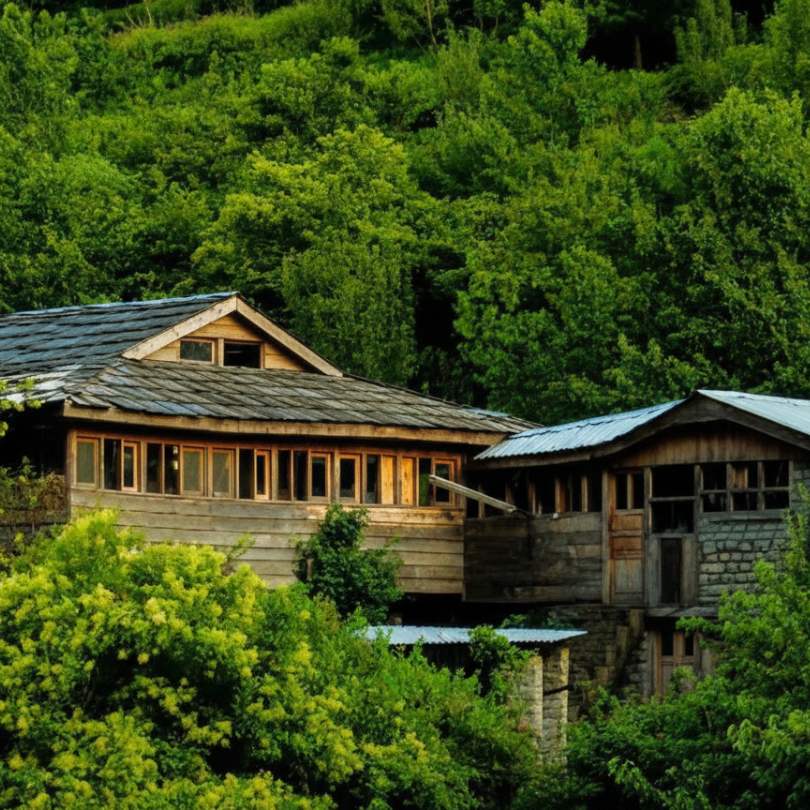
Gushaini is a small riverside village in Banjar tehsil of Kullu district, sitting at around 1,500 m on the Tirthan river, with the Falachan nala joining just upstream. It is the last real road head on the Tirthan side of the Great Himalayan National Park, the most popular base for riverside homestays in Tirthan Valley, and the closest village to the GHNP gate at Ropa. Most travellers come here for two or three slow nights, a walk to the park gate, and a morning of trout fishing on the river.
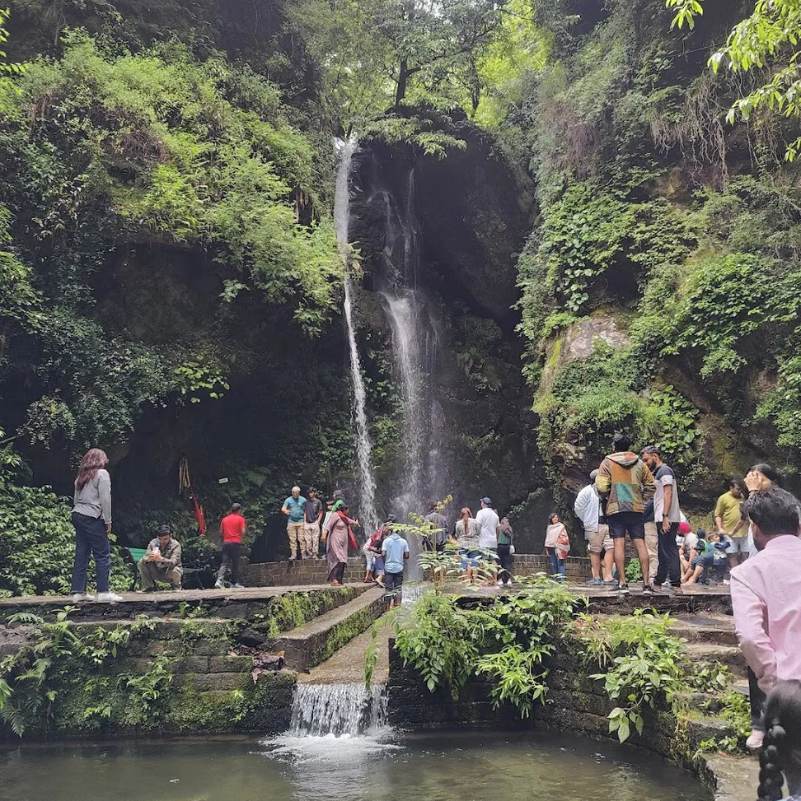
Jibhi Waterfall is a small forest waterfall a short walk from Jibhi village market in Kullu district, Himachal Pradesh. A stone and wooden bridge path through pine and deodar leads to a modest cascade with a shallow pool at the base, maintained by the forest department. Plan it as a 45 minute to 1 hour stop, pair it with the boulder pool at Mini Thailand for the standard slow Jibhi morning.
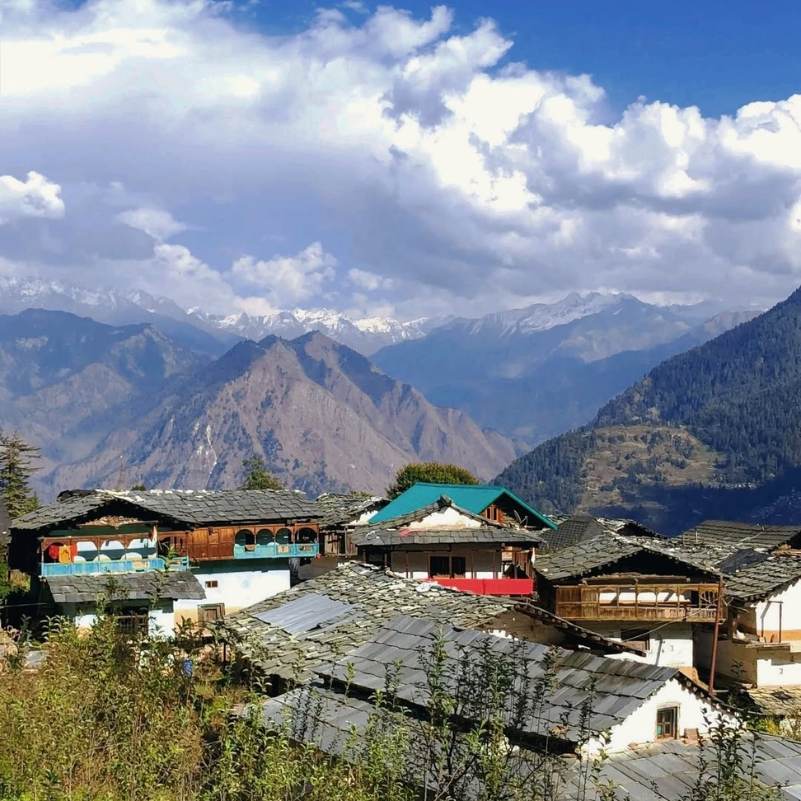
Bahu is a small village in Banjar tehsil of Kullu district, sitting on a ridge roughly 7 to 10 km above Jibhi by a road of tight hairpins. Traditional Kath Kuni stone and timber homes, the Bahu Nag temple at the upper end of the village, and pine and deodar forest on every slope. The standard pick for travellers who want a quieter, higher base than Jibhi for two slow nights.
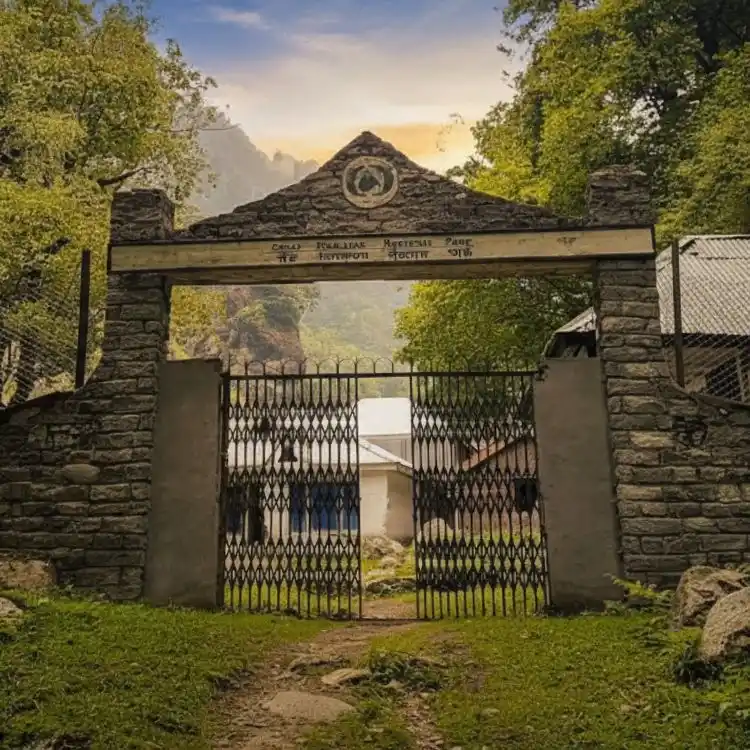
Great Himalayan National Park (GHNP) is a UNESCO World Heritage protected area in Kullu district of Himachal Pradesh, covering the high catchments of the Tirthan, Sainj, Jiwa Nal and Parvati rivers. The park itself is roughly 905 sq km, and the wider Conservation Area with the Sainj and Tirthan sanctuaries and the ecozone runs to about 1,171 sq km. There are no roads inside, only foot trails, with permits issued at the range offices at Sairopa, Ropa Sainj and Largi.
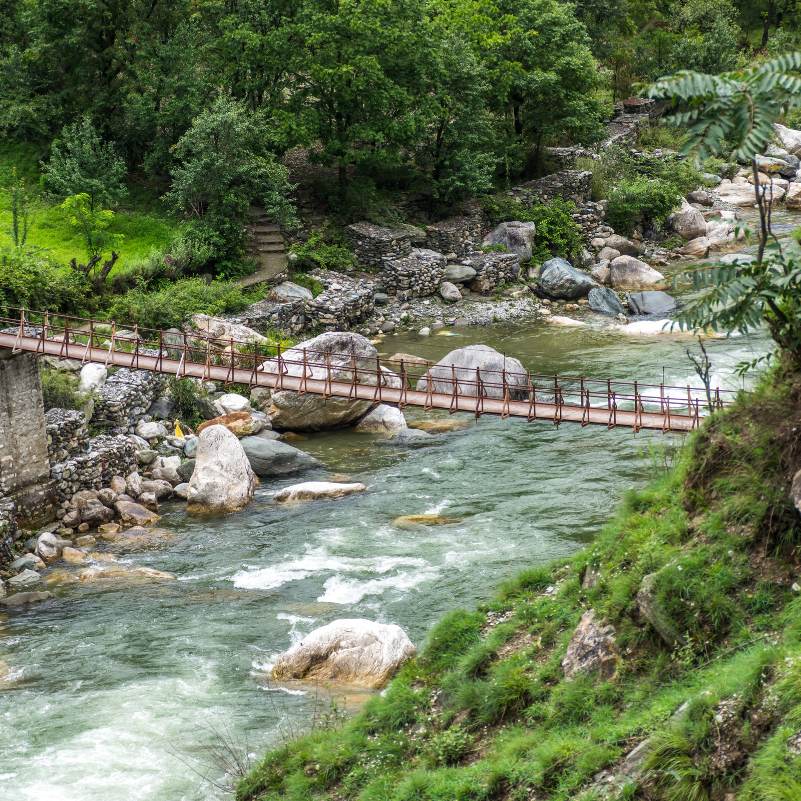
Tirthan Valley is a 25 to 30 km river valley in Banjar tehsil of Kullu district, running along the Tirthan River from Banjar town up to Bathad on the edge of the Great Himalayan National Park. The main villages are Sai Ropa, Nagini, Gushaini, and Bathad, and most travellers base in a riverside homestay for two to four slow nights. Quieter than Jibhi and Shoja next door, the valley draws travellers who want the river, the trout, the GHNP treks, and the slowest pace in Kullu.
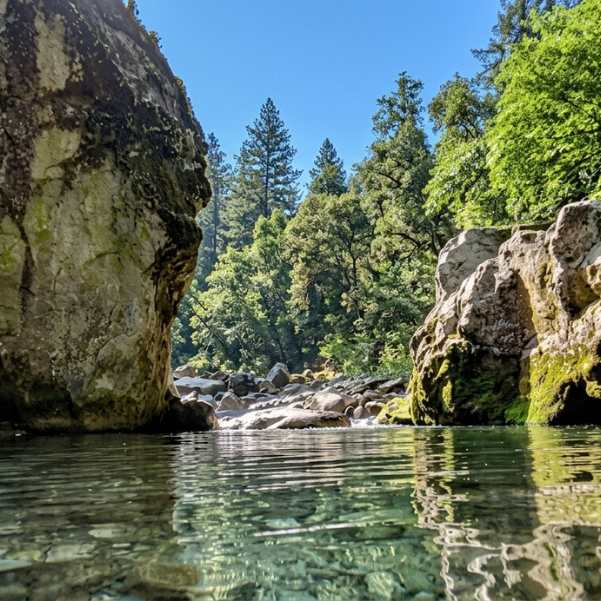
Mini Thailand is the tourist nickname for Kulhi Katandi, a small spot on the Pushpabhadra stream a short walk off the road from Jibhi village towards Jalori Pass. Two large boulders form a natural arch over a clear pool, which is the photo people came for. Plan it as a 30 to 45 minute morning stop, not a destination day.
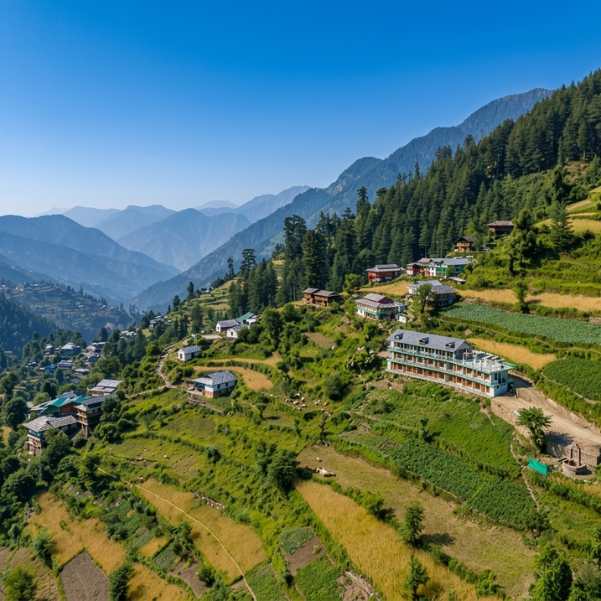
Shoja is a small forest village at around 2,700 metres in Banjar tehsil of Kullu district, sitting on the road between Jibhi and Jalori Pass. About 5 km below the pass and 7 to 10 km above Jibhi, higher and quieter than its neighbour, with a handful of homestays, a few small cafes, and deodar forest at every edge. The standard high altitude base for travellers who want silence after dark and a short drive to the Jalori day walks.
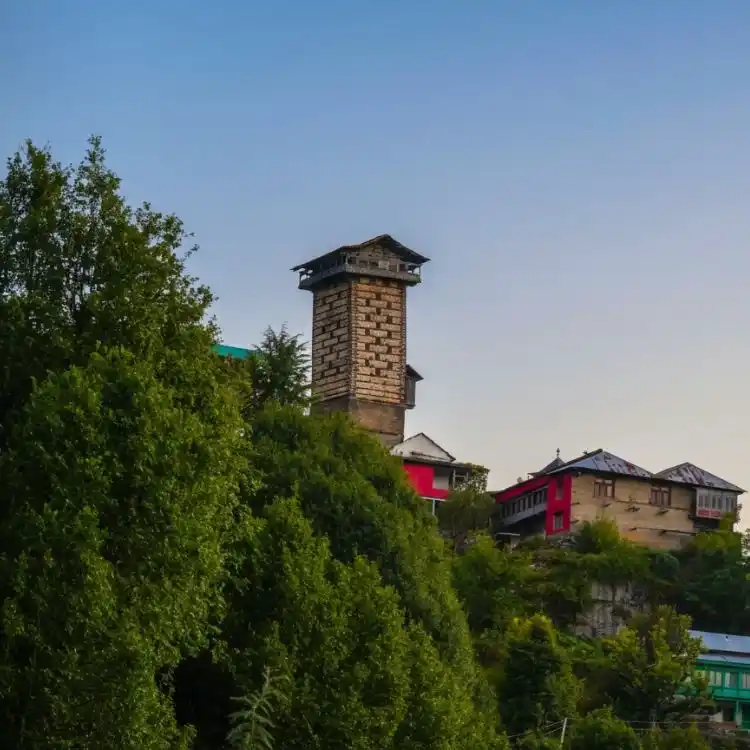
Chehni Kothi is a tall stone and wood tower in Chehni village above Banjar in Kullu district, built in the Kath Kuni style with no cement, nails, or metal fasteners. Several centuries old and partly damaged in the 1905 Kangra earthquake, it stays one of the tallest surviving wooden towers of its kind in the western Himalaya. Most travellers visit as a half day from Jibhi or Tirthan, walking up through apple orchards from Bagi or Bihar village.
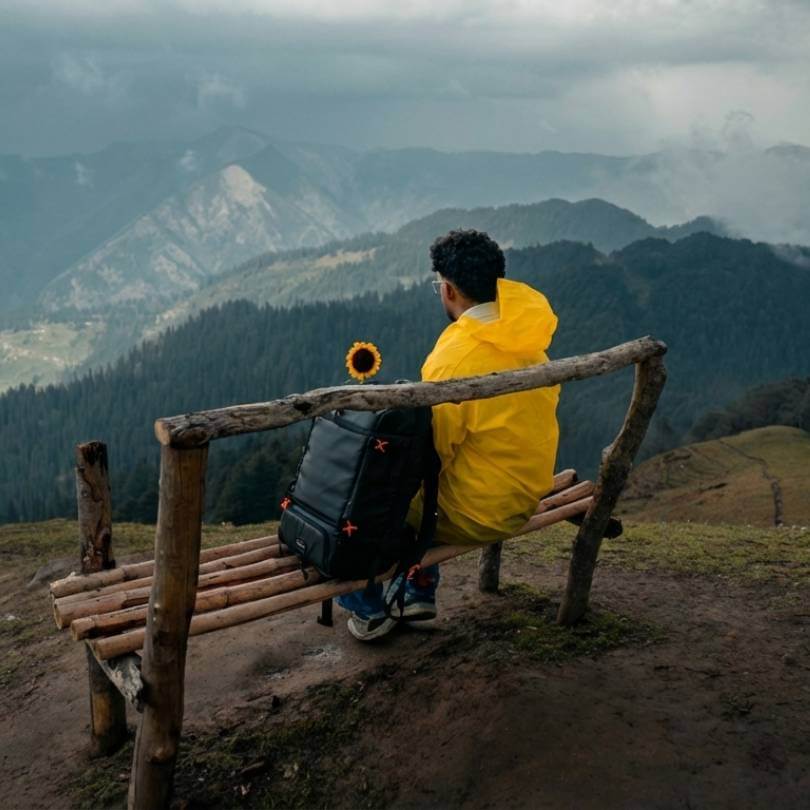
Raghupur Fort Trek is a short, steep walk that starts at Jalori Pass, climbs roughly 3 km through oak and rhododendron forest, and tops out on a grassy ridge at around 3,300 metres with the ruined walls of an old hill fort. From the meadow you get an open view across the Pir Panjal and the Great Himalayan Range. Most travellers do it as a 2 to 3 hour day hike from Jibhi or Shoja.
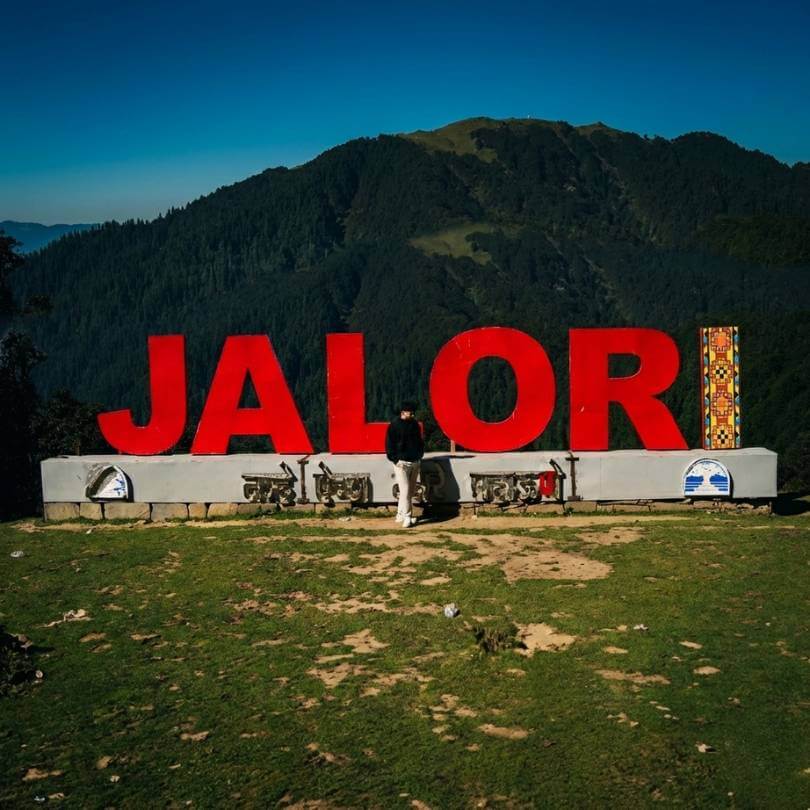
Jalori Pass tops out at 10,800 ft on NH 305, the highway branch that crosses from the Banjar valley into Outer Seraj. At the top you get a small Mata Jalori temple, four or five dhabas, and the trailheads for Serolsar Lake (5 km one way) and Raghupur Fort (3 km one way). The road is seasonal — generally open April to November on BRO snow clearance, and firmly shut through peak winter from January to March.
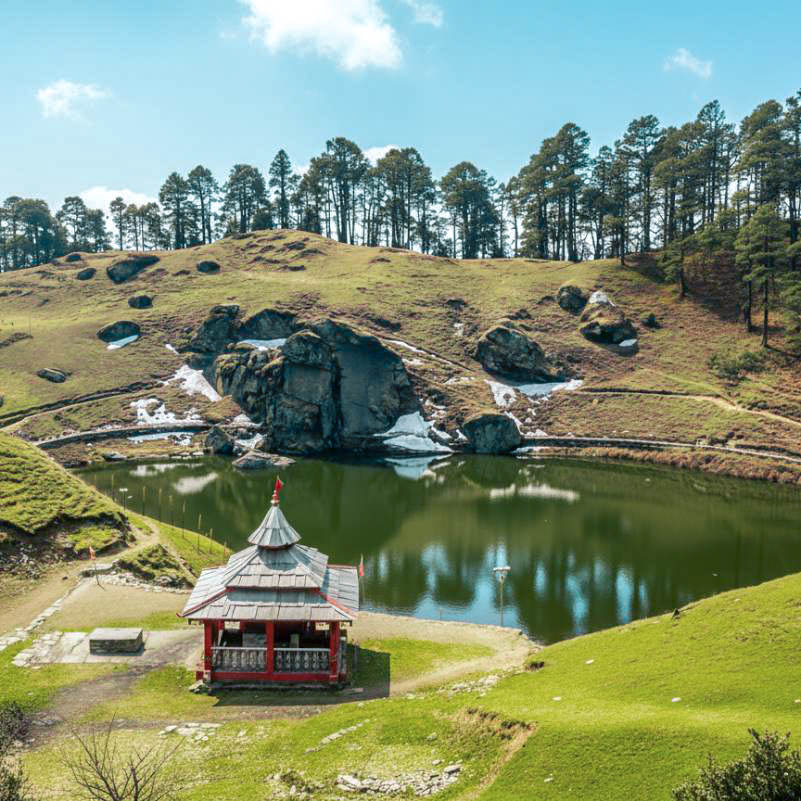
Serolsar is a small alpine lake in the Seraj Valley of Kullu district, sitting at roughly 3,100 metres, about the same altitude as Jalori Pass itself. You reach it by an easy 5 km walk from the pass through oak and deodar forest, and a small Budhi Nagin temple stands on its bank. The most popular day hike from the Jibhi and Shoja area.
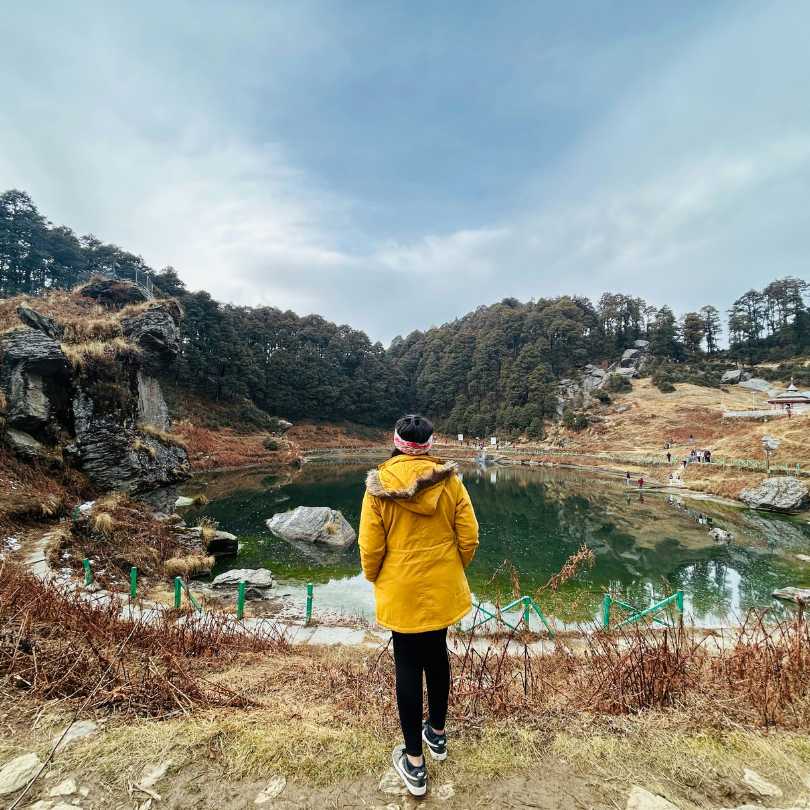
Starting from Jalori Pass at around 10,800 feet, this trek leads through dense deodar and oak forests to the sacred Serolsar Lake, a still green-edged pool with a small shrine to Budhi Nagin at its edge. The lake sits in genuinely tranquil surroundings, and a short trail around the perimeter offers clear views of the treeline reflected in the water. Best experienced before 9 AM when the morning mist is still lifting and the path feels completely yours. The route takes a full day, so locals recommend hiring a car with a driver-guide for the Jalori Pass section.
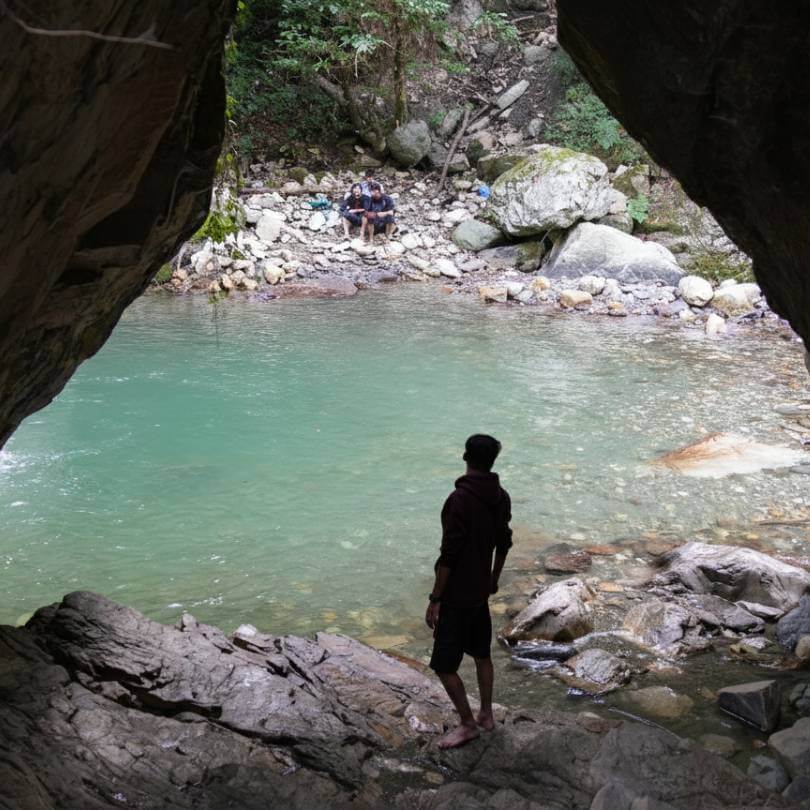
Tucked in the forested hills near Jibhi, Kulhi Katandi, popularly called Mini Thailand, features crystal-clear turquoise water flowing between massive smooth boulders. Visit before 10 AM in summer when water clarity is at its best and you will likely have the place to yourself. Do not swim as the currents between the rocks are stronger than they look, but dipping your feet from a stable boulder at the edge is perfectly fine. The place rewards people who sit quietly far more than it rewards people in a hurry.
Chehni Kothi is one of the most remarkable heritage structures in Himachal Pradesh. The tower stands approximately 40 to 45 metres tall, built entirely from stone and wood using traditional Himachali construction methods, without cement, nails, or any material that did not come from the surrounding landscape. The trek begins between Banjar and Jibhi, passing through the Shringa Rishi Temple at Bagi village, and takes around 40 minutes to reach. Originally taller, the tower lost its upper stories in the 1905 Kangra earthquake and now stands at five stories. Outsiders are not permitted to climb the interior. This is a living sacred site for the local community. Respect the rule without question. The exterior alone is extraordinary.
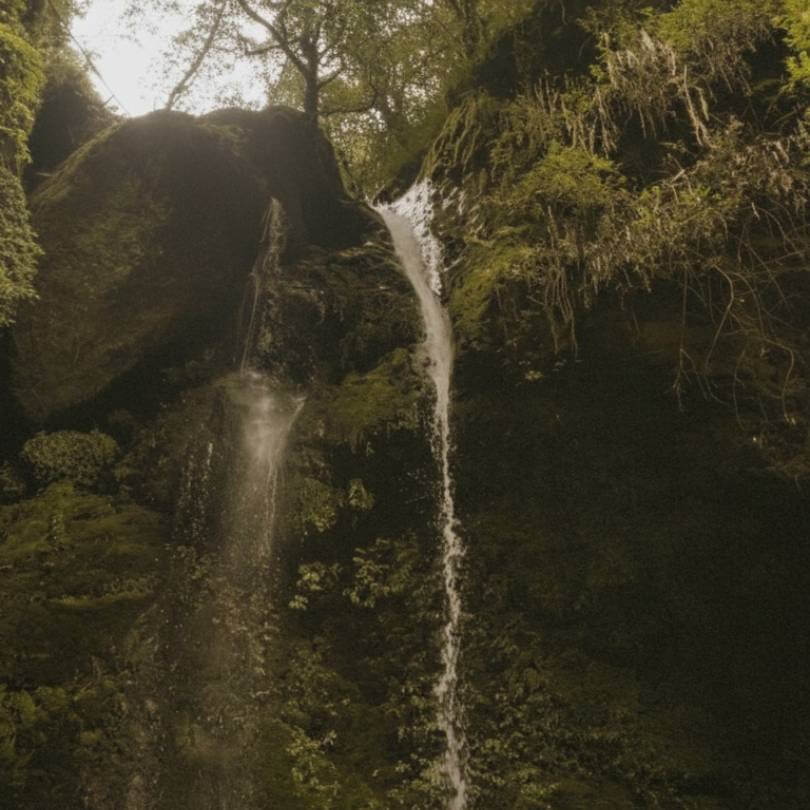
The Jibhi Waterfall sits hidden inside the forest above the village. Wooden bridges near the base of the falls make for the most photographed spot on the trail. The path starts from the main road and takes about 15 to 20 minutes through a well-laid stone pathway under pine cover. Mornings between 8 and 10 AM bring soft sunlight filtering through the trees, which is exactly the atmosphere people come for. Expect crowds on weekends. A weekday visit makes a meaningful difference.
Raghupur Fort sits above Jalori Pass with a 360-degree panorama of snow-capped Himalayan ranges and requires a 3-kilometre walk from the pass through open meadows and light alpine terrain. Built by the Mandi rulers as a defensive position against regional invasions, the fort now stands as one of the least commercially developed viewpoints in this part of Himachal. No chai stalls, no crowds, no selfie frames. If clouds settle low after 2 PM in winter months, snowfall can follow quickly. Plan accordingly.
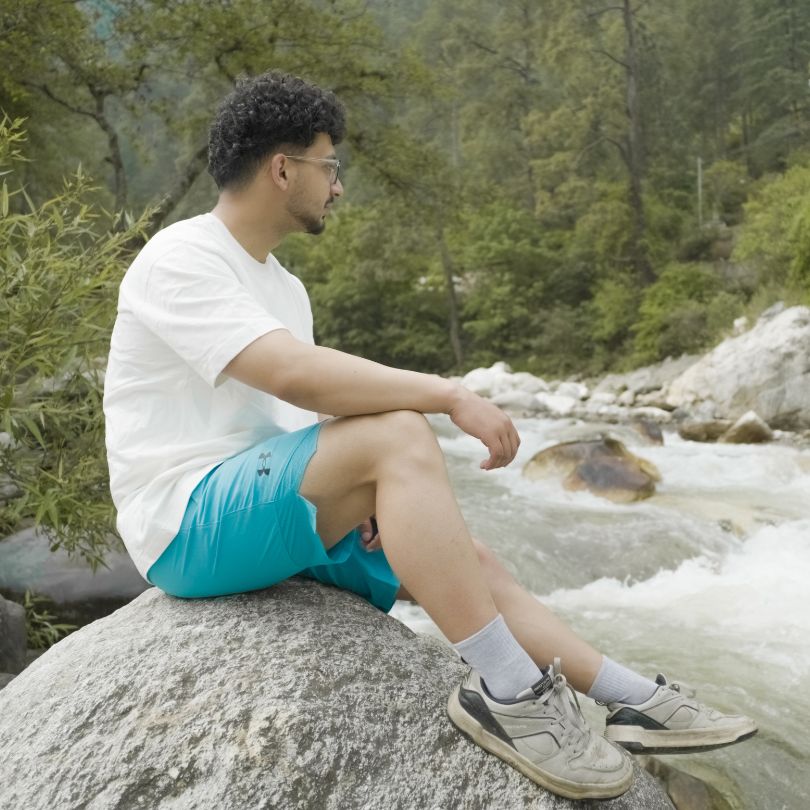
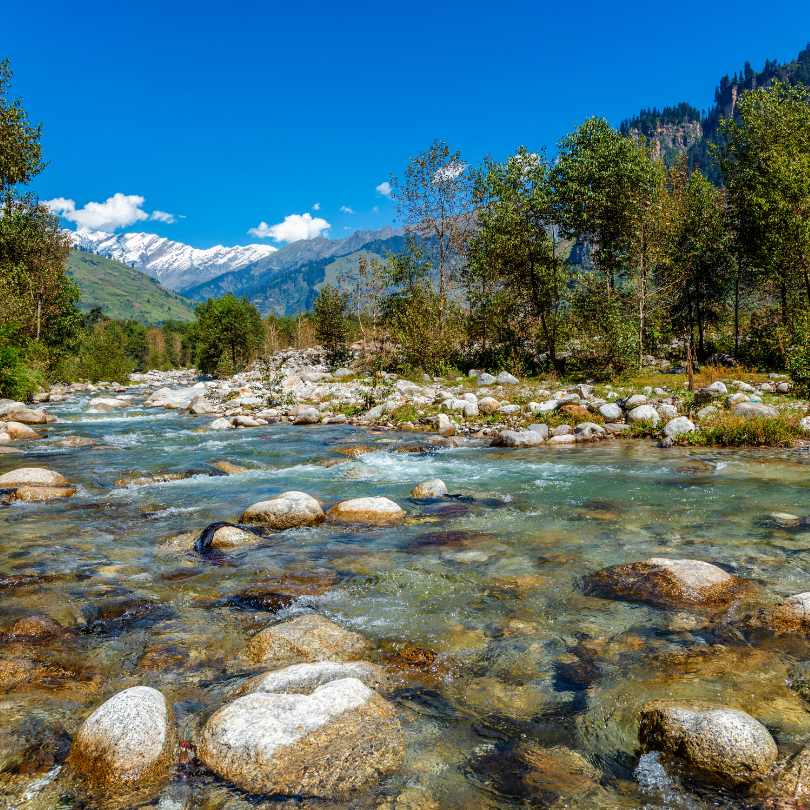
The Tirthan River flows through and around Jibhi and the experience of sitting next to it is one of those things that does not sound impressive until you actually do it. Walk between Jibhi village and the nearby hamlets along a natural riverside route with smooth boulders that locals use as evening gathering spots. The water stays ice-cold year-round. Dip your feet, find a boulder that feels right, and stay longer than you planned to.
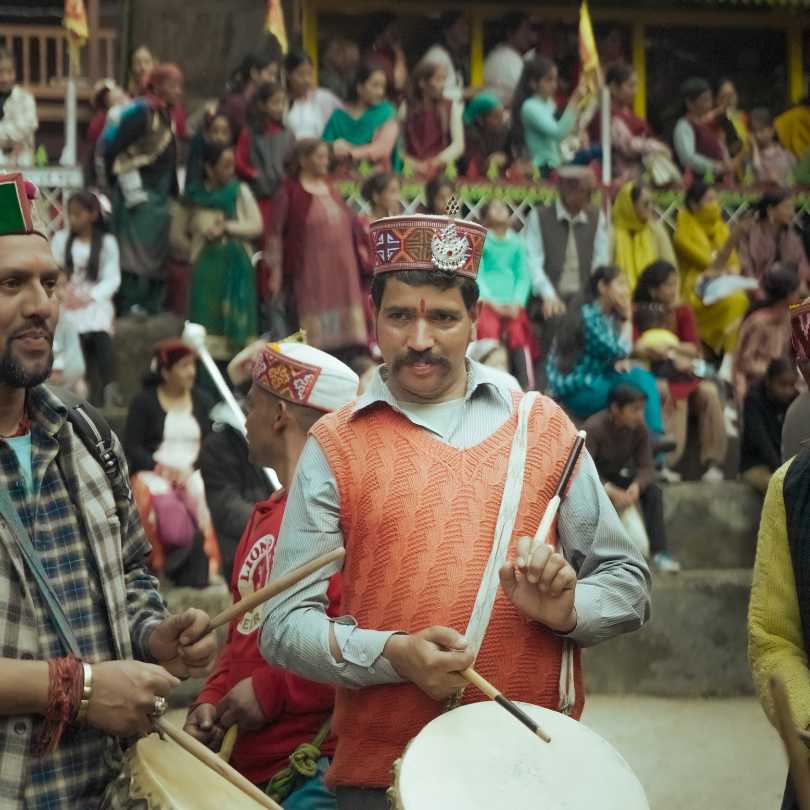
The Balu Nag temple requires roughly a 45-minute hike from Bahu Pond, site of the Shesh Nag temple, through 2.5 kilometres of deodar forest. The wooden shrine at the top has valley views that almost no regular tourist ever sees. Mountain goats graze around the temple compound. The whole place has a quality of solitude that is increasingly rare in accessible Himachal. This trek suits anyone actively seeking quiet over popular sightseeing. Carry your own water as there are no shops on the route.
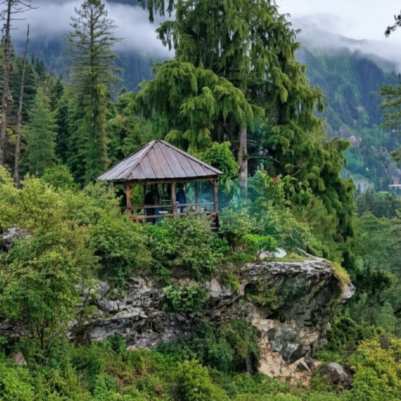
The UNESCO World Heritage Site supports over 375 species of fauna including Himalayan brown bears, snow leopards, blue sheep, musk deer, and more than 180 bird species. Entry into the core zone requires permits and must be done through park-approved operators. Solo entry beyond the buffer zones is not allowed. Plan guided treks through registered operators based at Gushaini or Sai Ropa, both roughly 15 to 20 km from Jibhi. Best months are March through June and September through November when the weather supports multi-day treks and wildlife sightings are most reliable.
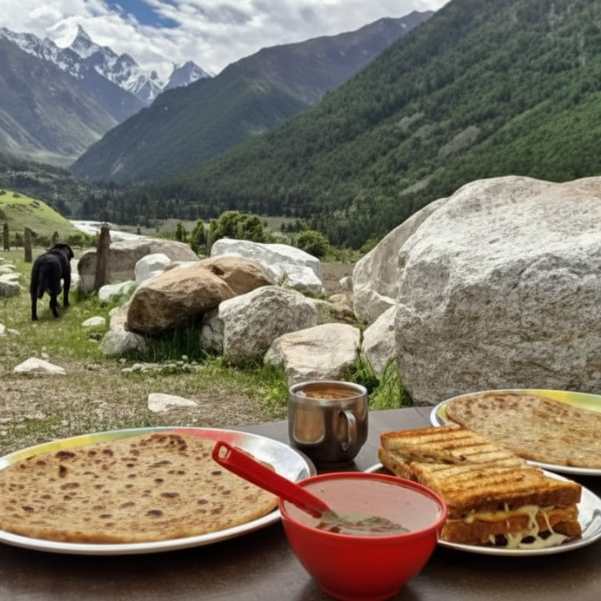
Jibhi's charm is not only in its trails. It is also in the wooden balconies where you sit with chai while clouds move across the valley at their own pace. Homestays here serve traditional Himachali food that rarely appears on menus outside these valleys. Siddu is a steamed bread filled with walnut and poppy seed paste. Chana madra is a chickpea curry cooked in yogurt with mountain spices. Both are worth specifically asking for. Do not fill every hour of your itinerary. The best version of a Jibhi trip has empty time built into it.
The Tirthan River supports a healthy population of brown and snow trout and is actively managed under catch-and-release rules in most stretches to protect the ecosystem. Local operators offer half-day and full-day fishing experiences with equipment, permits, and a guide who knows the river well. Some include a lunch cooked riverside as part of the experience. Permits are required and operators handle the paperwork as part of the package. Do not fish independently without a permit. Best season is March through June and again in September and October when the river runs clear and the trout are active.

“Travel Coffee truly went above and beyond. Even though we booked from Indonesia without meeting them, we always felt secure — their team was available 24/7 and took care of every detail. Shubham personally ensured our comfort throughout the Himachal trip, from hotel checks to small gestures like bringing lotion and altitude pills. Their sincerity and local expertise made the journey unforgettable.”
Andre & Angel
Our trips start at ₹8,299 per person, and the package cards above carry the live price for your dates. What moves the number is fairly simple: shared transfers versus a private cab, the stay category you pick, your room sharing, and your starting city. Peak dates cost more. Send us your dates and we will give you an exact figure rather than a range.
Three days in the hills is the sweet spot. That gives you a waterfall and cafe day, a full day at Jalori Pass, and a slower morning before you leave. Two days works if you are happy to pick just one Jalori trek. Add a fourth only if you want Shangarh. Coming by overnight Volvo from Delhi? Count one road night on each side.
Neither, honestly. They suit different people. Jibhi is lower, beside the river, with cafes you can walk to and better signal. Shoja is higher at around 2,700 metres, colder at night, quieter, and closer to Jalori Pass. First timers and cafe lovers usually prefer Jibhi. Couples and slow travellers often prefer Shoja. Splitting your nights between the two is never a bad call.
Our current trips include return AC Volvo between Delhi and Aut with reserved seats, local travel by shared vehicle or private cab, stays with breakfast and dinner, driver allowance, tolls, parking and all taxes including GST. Lunches, entry tickets, optional activities and heater charges are not included. Inclusions do vary by package, so have a quick look at the itinerary before you book.
Yes, every current package includes a Jalori Pass day with the Raghupur Fort trek, the Serolsar Lake trek, or both if you start early enough. The pass road is seasonal and can shut for a while after fresh snow, most often somewhere between late December and March. On closure days we move the plan down into the valley, and your coordinator confirms conditions before you travel.
March to June gives you green valleys, open trails and easy travel. October to early December brings the clearest mountain views of the year, and many of our travellers rate it the best season here. December to February can bring snow near Jalori Pass, though the road may close after heavy snowfall. July and August are lush but carry landslide risk, so stay flexible.
Yes. Every package on this page starts and ends in Delhi with return overnight Volvo travel and reserved seats included. Boarding points are Kashmere Gate ISBT, Majnu Ka Tilla and RK Ashram Metro. You can also switch to a Chandigarh or Manali start while booking, which works out a little cheaper. Full route detail sits on our Jibhi packages from Delhi page.
Yes to both. The walks are short to moderate, the drives are manageable, and stays range from simple homestays to riverside cottages and treehouses. Couples usually pick a private trip for the flexible pacing. Families do well on the five day formats where every trek is optional. It is not the right place if you want nightlife or large luxury hotels.
Yes. Private trips can be adjusted with extra nights, a Shoja or Tirthan extension, a different stay category or a different starting city, with revised costing. Group departures run fixed routes, but you can still choose your room sharing, group size and join point. Message us on WhatsApp with your dates and we will suggest the closest workable plan.
Yes. Two of our trips run on fixed dates through the season, both from Delhi with Chandigarh and Manali join points available. Departure dates and live seat status show on each product page and on our Jibhi group tour packages page, so you are always looking at the current calendar rather than an outdated list.
Broadly yes, and we get a good number of solo women on our group departures. The valley is quiet, the villages are small, and people are used to travellers. The usual sense applies: finish the Jalori and Serolsar trails well before dark, tell your stay where you are heading, and carry a torch since street lighting is thin. On a group departure you also have a coordinator on call throughout.
They suit different trips. Manali has the hotels, restaurants and activity operators, plus the crowds and traffic that come with it. Jibhi has far less of everything, which is exactly why people come. Choose Manali for a first Himachal trip or a large mixed group. Choose Jibhi if you have done the usual hill stations and want quiet. Aut sits on the Manali highway, so combining both on a longer trip is easy.
Real experiences shared by Travel Coffee travellers in Jibhi.
7 traveller reviews
Based on Google reviews.
Real photos and videos shared by travellers from recent trips.
I had an amazing experience with Travel Coffee. I booked tirthan-jibhi-manali tour and travel coffee team was super quick and swift in planning the entire trip. Ishita Sood was super indulgent and efficient in taking care of my preferences. … More
We recently completed a Shimla–Kufri–Manali trip with my partner, and our driver, Vinod, truly made the journey exceptional. He navigated icy mountain roads—especially while heading towards Jibhi—with great skill and care, always … More
Just got back from an amazing trip to Jibhi and Shoja, and overall it was a really refreshing experience 🌄✨ … More
Thanks to Travel Coffee team for arranging a perfect jibhi manali trip for us. Everything was smooth and hassle free. Definitely booking again with them and special thanks to mr saurabh for taking care and always checking with us.
We booked our Manali–Jibhi–Kasol–Shangarh trip with Travel Coffee and it honestly felt like travelling under the care of someone who genuinely knows the mountains. Every part of the route had its own charm, but what made the trip truly … More
⭐ Worst Travel Experience Ever – Felt Like a Punishment Our trip to Jibhi, Himachal Pradesh with this travel agency was a total nightmare. We paid in advance for a soothing, luxurious stay but ended up suffering. The hotel was under construction, full of dust and noise, which badly affected my husband’s dust allergy. There was no room heater unless we paid extra, no complimentary clean water, no tea or coffee options, and our 8-year-old daughter didn’t even get hot milk. The meal menu was the same every day, making the experience even worse. The agency ignored all our messages, and to make it worse, they have no refund or compensation policy. Completely unprofessional, careless, and heartless — they turned our family holiday into a punishment. Avoid this agency at all costs.
Our group booked the Manali–Jibhi trip through Travel Coffee and we were genuinely impressed. The itinerary felt relaxed and well-planned, and we actually got time to enjoy everything without rushing. The hotels they gave us were clean, … More