
Atal Tunnel
The 9.02 km highway tunnel on NH 3 that cuts under the Pir Panjal range and connects Manali to Lahaul year round, bypassing Rohtang Pass and turning the Manali to Keylong drive into a 2 hour trip
- 9.02 km on NH 3
- ~3,060 m both portals
- Manali · ~25 km to south portal
- Year round access to Lahaul
- 15 to 20 min to cross
What makes it special
The Atal Tunnel is the 9.02 km highway tunnel on National Highway 3 that cuts under the Pir Panjal range of the Himalayas, connecting the Kullu valley at its south portal near Dhundi to the Lahaul valley at its north portal near Teling, just short of Sissu village. It was inaugurated on 3 October 2020 by Prime Minister Narendra Modi and named after former Prime Minister Atal Bihari Vajpayee, who first announced the project on 3 June 2000. Built by the Border Roads Organisation, it is certified by the World Book of Records as the longest highway single tube tunnel above 10,000 feet in the world.
What it actually changed. Before the tunnel opened, Lahaul was cut off from Manali for roughly six months a year because the Rohtang Pass above it shut under snow from about November to May. The old road from Manali to Keylong via Gramphu and Rohtang was about 116 km and took 5 to 6 hours in good conditions, much longer in bad weather. Through the tunnel, the same drive is around 71 km and takes roughly 2 hours. Sissu, Keylong, Jispa, and the deeper Lahaul valley are now year round destinations from Manali. This is the single biggest change to Himachal travel in the last decade.
Honest framing most pages skip. This is a road, not a monument. You drive through it. There is no ticket counter, no entry fee, no designated tourist parking inside, and stopping inside is not allowed. Photography and videography are banned from 200 metres before the south portal all the way to the end of the tunnel, and the ban is enforced by CCTV with fines issued under the Motor Vehicles Act. If you are planning to visit the Atal Tunnel, the practical meaning of that plan is to drive from Manali through the tunnel to Sissu, take a few photographs at the portal approaches, and then spend the rest of the day in Lahaul. Treat it as the route, not the destination.
What to expect on the drive. Approach from Manali on NH 3, about 25 km from the main town, climbing past Kothi and Solang. The road is tarred and rises steadily. You queue at the south portal entrance, especially on summer weekends when traffic can back up for 30 to 60 minutes. Inside, the enforced speed limit is 60 km/h for cars and light vehicles, and 40 km/h for heavy vehicles. Automatic radar and CCTV speed traps monitor your speed throughout, and exceeding 60 km/h triggers automated fines under the Motor Vehicles Act. Most drivers sit comfortably at 40 to 55 km/h, which is the sensible pace on a long straight tunnel. Fifteen to twenty minutes later you emerge at the north portal, and the landscape flips from green Kullu to dry rocky Lahaul in the space of nine kilometres. That contrast is the thing people remember.
Quick answers
- Is the Atal Tunnel worth visiting?
- Only as part of a larger Lahaul or Spiti trip. The tunnel itself is a 15 to 20 minute drive through, not a destination. If you are heading to Sissu, Keylong, Jispa, or deeper into Spiti, yes you will cross the Atal Tunnel and it is worth the crossing. A standalone day trip from Manali that just drives up to the south portal and turns back is a thin experience. Plan around Lahaul, treat the tunnel as the route.
- Can you stop inside or take photos in the Atal Tunnel?
- No. Stopping is prohibited inside except in a genuine emergency, and photography and videography are banned from 200 metres before the south portal to the end of the tunnel. The ban is enforced by CCTV with fines under the Motor Vehicles Act. You can photograph the portals from outside that 200 metre zone on either side, which is where most of the shareable pictures are taken anyway.
- Do I need a ticket or permit for the Atal Tunnel?
- No. It is a public highway on NH 3. There is no entry fee, no ticket, and no permit required for Indian nationals. Foreign travellers do not need a permit for the tunnel itself but should check current Lahaul and Spiti rules before continuing deeper. The tunnel is open 24 hours in normal operation.
Quick facts
Everything you need to know at a glance.
At a glance
- Altitude
- South portal ~3,060 m, north portal ~3,071 m. Tunnel generally runs at 3,000 to 3,100 m.
- Location
- NH 3 under the Pir Panjal range, between Dhundi (Kullu side) and Teling near Sissu (Lahaul side), Himachal Pradesh
- Nearest points
- South portal is ~25 km from Manali. North portal is ~5 km from Sissu. Keylong is ~40 km past the north portal.
- Access
- Year round, 24 hours in normal operation. Occasional short closures for maintenance or heavy snow on the approach roads.
- Peak queue window
- Weekend mornings from May to September, 9 AM to 1 PM at the south portal, queues of 30 to 60 minutes common
- Entry fee
- None. Public highway on NH 3, open to all vehicles at no cost.
- Time needed
- 15 to 20 minutes to cross at the posted speed. 30 to 90 minutes total if you include queue time in peak season.
- Known for
- The 9.02 km link between Manali and Lahaul, certified by the World Book of Records as the longest highway single tube tunnel above 10,000 feet
- Access difficulty
- Very easy. Standard hill driving, paved highway throughout. Moderate altitude at the portals.
On the ground
- Mobile network
- 4G antennas are installed inside the tunnel, signal works reasonably on most Indian networks though it drops in sections. In the Lahaul valley up to Keylong, BSNL, Jio, and Airtel 4G are all now highly reliable.
- ATMs
- None at either portal. Nearest ATMs are in Manali or Keylong. Carry cash for your Lahaul leg.
- Fuel
- None at either portal. Fill up in Manali before the drive. Nearest onward pump is at Tandi, about 35 km past the north portal.
- Food
- Small dhabas and tea stalls operate on the approach on both sides in the open season. Nothing inside the tunnel. Better food in Manali or Sissu.
- Parking
- Informal parking along the approach roads outside the 200 metre security zone at each portal. Do not stop inside the tunnel or within 200 m of the south portal.
- Permits
- None for the tunnel itself. Indian nationals drive through freely. Foreign travellers continuing into deeper Lahaul and Spiti should check current permit rules.
- Drones
- Prohibited around the portals and the approach roads, the area is under security surveillance. Keep drones grounded.
- Photography
- Allowed at the approach roads outside the 200 m zone at each portal. Banned from 200 m before the south portal all the way to the end of the tunnel.
- Walking
- Not permitted. The tunnel is a vehicular highway, no pedestrian access.
- Guided tours
- Not applicable. You drive through, there is no tour operation.
Seasonal weather
- May to June20°8°Spring (portal area)
- July to August22°12°Summer monsoon (portal area)
- September to October18°4°Autumn (portal area)
- November to March5°-10°Winter (portal area)
Suitable for
- Couples — suitable
- Families — suitable
- Seniors — suitable
- Solo — suitable
- First-timers — suitable
- Pet-friendly — suitable
How to reach Atal Tunnel
6 approach routes, with seasonal access.
From Manali to south portal
Year round- Distance
- About 25 km to the south portal
- Time
- 45 minutes to 1 hour from Manali
- Road
- Tarred highway (NH 3), climbs steadily. Winter icing possible above Solang.
- Last fuel
- Fill up in Manali. No fuel between Manali and Tandi, roughly 65 km ahead.
The standard approach. From Manali, take NH 3 north out of town, climb through Kothi and past the Solang valley turn off, and reach the south portal at Dhundi in about 25 km. Road is tarred and in decent shape year round, though the climb is steady and traffic can back up in peak summer. Leave Manali by 7 or 8 AM to clear the queue at the portal before the morning crowd builds. Return via the same route in reverse.
From North portal onwards
Year round to Sissu, seasonal further east towards Gramphu for Spiti- Distance
- 5 km to Sissu, 14 km to Koksar, 40 km to Keylong
- Time
- 10 min to Sissu, 25 min to Koksar, 1.25 hours to Keylong
- Road
- Tarred highway with patched sections, mountain driving
- Last fuel
- Tandi petrol pump, ~35 km past the north portal, first fuel on the Lahaul side
The onward leg after the tunnel. Exit the north portal at Teling, continue a short distance on NH 3 to the Sissu village junction, and take the turn for the village or continue west towards Tandi, Gondhla, and Keylong. The road is tarred highway through here, and in decent shape year round. Most travellers stop briefly at the first safe pullout past the north portal for a photograph, the shift from Kullu green to Lahaul rock is most striking in the first few kilometres.
From Delhi via Manali
Year round to Manali, then year round via the tunnel- Distance
- About 540 km to Manali, then 40 km to Sissu via the tunnel
- Time
- 14 to 16 hours to Manali, then 1.5 hours onward
- Road
- NH 44 and NH 3 to Manali, then the tunnel approach
- Last fuel
- Chandigarh, Sundernagar, Mandi, Manali
Most travellers take an overnight Volvo from Delhi to Manali, arriving around 8 to 10 AM. From Manali, push through the tunnel to Sissu and you can be on the Lahaul side by lunch. Self driving in one stretch from Delhi is possible but tiring, plan an overnight in Manali before you tackle the tunnel. The comfortable plan is reach Manali on day one, drive to Sissu through the tunnel on day two morning.
From Manali by motorcycle
Year round, winter needs chains and proper gear- Distance
- About 25 km to the south portal, 40 km to Sissu
- Time
- 45 minutes to an hour to the south portal
- Road
- Tarred highway, can be icy in deep winter
- Last fuel
- Fill up in Manali, next pump at Tandi
For riders, the tunnel is a popular stretch on the Manali to Leh run. Leave Manali early, climb steadily to the south portal, cross in 15 to 20 minutes at the posted speed, and emerge in Lahaul. Carry proper riding gear including thermals, gloves, and a windproof jacket even in summer, the temperature at 3,060 metres drops fast once the sun drops behind the ridge. Inside the tunnel is cooler than outside, the surface is smooth, headlights mandatory. Do not film with a helmet camera inside.
From Manali by bus
Year round via the tunnel, fewer services in winter- Distance
- About 40 km to Sissu via the tunnel
- Time
- 2 to 3 hours including stops
- Road
- Highway through the tunnel
- Last fuel
- Not applicable
HRTC buses running from Manali towards Keylong, Udaipur, or Leh use the tunnel route and cross through it. Frequency varies by season, a few services a day in summer, fewer in winter. Confirm timings at the Manali bus stand on the day. The bus does not stop at either portal, it crosses through in roughly 20 minutes and continues to Sissu, Tandi, Keylong, or beyond depending on the service. Useful for budget travellers heading into Lahaul.
From the Lahaul side back to Manali
Year round- Distance
- From Keylong ~40 km to the north portal, from Jispa ~60 km
- Time
- 1.25 hours from Keylong, 2 hours from Jispa
- Road
- Tarred highway along the Chandra and Bhaga valleys, mountain driving
- Last fuel
- Tandi pump, ~35 km before the north portal from Keylong direction
The reverse approach if you are returning from Leh, Jispa, or Keylong towards Manali. Drive west on NH 3 through Tandi, Gondhla, and Sissu, reach the north portal at Teling, cross the tunnel, and come out at Dhundi on the Kullu side. In peak summer, the north portal side is usually queue free, the queue builds on the south portal side instead. Leave Keylong or Jispa by 8 AM for a comfortable crossing before the afternoon rush.
Best time to visit
Season by season, so you can plan around the weather rather than hope.
- Recommended
Spring
May to June
Clean approach roads, moderate queues, and the best contrast between Kullu and Lahaul landscapes
- Day temperature at portal
- 12 to 20 C
- Night temperature
- 5 to 8 C
- Queue at south portal
- Low in May, moderate in June
- Road condition
- Clean on both sides
A good window to cross. The snow has cleared from the approach roads on both sides, the queue at the south portal is manageable in May and builds through June, and the landscape contrast between Kullu green and Lahaul rock is at its most dramatic as the lower snow melts on the Lahaul side. Days at the portals are warm enough for a t-shirt in the afternoon, nights still need a jacket. Traffic builds through June as the Spiti season starts up.
Summer monsoon
July to August
Busiest season with real queue times and landslide risk on the approach, plan for early crossings and buffer days
- Day temperature at portal
- 15 to 22 C
- Night temperature
- 10 to 12 C
- Queue at south portal
- High on weekends, moderate on weekdays
- Road condition
- Generally good, landslide risk on Kullu side after heavy rain
Peak tourist season and peak queue season. Queues at the south portal on weekends can stretch 30 to 60 minutes and sometimes longer, midweek is better. The Spiti circuit is at its busiest, which means a lot of bike groups and SUVs on the road. Lahaul itself sits in a partial rain shadow so direct rain is rare past the tunnel, but the Kullu side approach can see landslides and debris flows after heavy rain. The stretch near Pagal Nala close to Sissu has caused multi day road blockages in some years. Plan for early morning crossings, roughly 7 to 8 AM, and keep a buffer day in your itinerary.
- Recommended
Autumn
September to October
Sharpest light, thinnest crowds, and the cleanest photographs at the portals
- Day temperature at portal
- 10 to 18 C
- Night temperature
- 2 to 5 C
- Queue at south portal
- Low
- Road condition
- Excellent, cleanest light of the year
If you can time it, late September to mid October is the cleanest version of the tunnel drive. Post monsoon air clears the view at the portals, the Spiti traffic drops after the first week of September, and queues at the south portal thin out considerably. The poplars along the Lahaul side turn yellow, the light is the sharpest of the year for photographs at the north portal viewpoint. Nights get cold by October, carry a proper warm layer even for a day trip.
Winter
November to March
Open year round in theory, but approach roads can close for days after heavy snow, plan with flexibility
- Day temperature at portal
- -2 to 5 C
- Night temperature
- -10 to -15 C
- Queue at south portal
- Very low
- Road condition
- Icy sections on approach, tunnel itself clear, road closures possible after heavy snowfall
Open but different. The tunnel itself stays open year round with normal 24 hour operation. The Kullu side approach from Manali climbs to 3,060 metres at the south portal and can be icy or snow covered from December to February, especially above Solang. The Lahaul side is snow covered for most of the winter, making Sissu, Koksar, and Keylong white over. Queues at the south portal mostly disappear, which is the best window for traffic. Heavy snowfall spells can block the approach road for hours or even days, the BRO works to clear it but deep winter storms are real. The administration sometimes restricts access to 4x4 vehicles with snow chains only. Travel in daytime only, roughly 10 AM to 5 PM. Carry chains for your tyres, pack serious cold weather gear, and check the road status on the morning of your drive.
Things to see & do
9 things worth your time at Atal Tunnel.
Drive through the tunnel
30 to 90 minutes including queue timeThe main thing. From Manali, drive to the south portal at Dhundi, join the queue, pass through in 15 to 20 minutes at the posted speed, and emerge in Lahaul at Teling near Sissu. You cannot stop inside and you cannot photograph inside, so the drive itself is the point. Keep headlights on, stay in lane, avoid overtaking. On the other side, pull over in a safe spot past the north portal for the first photograph of Lahaul. Do not stop within the restricted zone near either portal, the Lahaul and Spiti administration has clamped down on stopping, parking, and gathering near the portals for safety reasons.
Photograph the portals from outside the restricted zone
10 to 20 minutesPhotography and videography are banned from 200 metres before the south portal to the end of the tunnel, and the Lahaul and Spiti administration has designated a wider restricted zone around both portals where stopping, parking, and commercial activity are prohibited. The cleanest shots are from a few hundred metres back on the approach roads, outside this zone, where you can frame the portal with the surrounding peaks. Early morning and late afternoon light work best. Park safely off the tarmac and do not block traffic or trigger security attention near the entrance.
Stop for chai at dhabas on the approach
30 to 45 minutesA few small dhabas and tea stalls operate in the open ground along the approach roads, well outside the restricted zone near the portals, and more on the Lahaul side near Teling and Sissu. Simple chai, Maggi, omelette, dal rice. On the Lahaul side, the view from the dhabas is the one most people go for, with the brown rock faces and the Chandra river below. Note that unauthorised stalls right near the portals have been cleared in recent years as part of the administration's safety enforcement.
Book a BRO guided tour for a closer look
1 to 2 hoursSince 2022, the Border Roads Organisation runs guided tours of the tunnel for visitors who want to understand the engineering and technical aspects from inside. Tickets are booked online at the BRO's official portal (marvels.bro.gov.in) for roughly Rs 100 per person. Groups of 10 to 50 tourists per slot, with two daily slots at the south portal. A trained guide walks you through sections of the tunnel that are otherwise off limits. Children under 12 are generally complimentary. Educational tours for students are also available, conducted by BRO officers. This is the only way to legally stop inside and look at the tunnel infrastructure up close. Availability and pricing may change, confirm on the BRO website before your visit.
Combine with a Sissu trip
1 to 2 daysThe practical purpose of crossing the tunnel. A 1 to 2 night trip to Sissu from Manali is the natural way to treat the tunnel as part of a wider plan. See the Sissu Waterfall across the Chandra, walk to Sissu Lake and the helipad viewpoint above it, spend a night at a village homestay. This is a far better version of a Manali holiday than a day trip that only turns around at the tunnel.
Use it as the gateway to a Spiti circuit
6 to 8 daysBeyond Sissu, the tunnel unlocks a real Spiti circuit that used to be impossible until June each year. The usual plan is to drive through the tunnel, continue via Koksar and the Gramphu junction to Batal and Chandratal, cross Kunzum Pass into Spiti, and return via Shimla and Kinnaur. Summer and early autumn only, the Gramphu to Batal stretch remains closed under snow for most of winter. A proper circuit takes 6 to 8 days.
Ride by motorcycle from Manali
45 minutes each way from ManaliA popular stretch for motorcycle riders, and the south portal queue is often heavy with Royal Enfield groups in peak season. Ride with proper gear, thermals, gloves, windproof jacket, even in summer, because the temperature at 3,060 metres drops fast once the sun dips behind the ridge. Inside the tunnel it is cooler and the surface is smooth. Do not stop, do not film with a helmet camera inside. Ride in pairs or groups rather than solo.
Cross to Lahaul for a winter snow day
Half day from ManaliEven in peak winter, the tunnel itself stays open. Many travellers from Manali drive up specifically in January and February to see the snow covered Lahaul landscape just past the north portal, which is impossible without the tunnel. Dress for real cold, night temperatures at the portal drop well below freezing, and the approach road on the Kullu side can be icy. Carry chains for your tyres if self driving, and check the road status before you leave Manali. In deep winter, the administration sometimes restricts access to 4x4 vehicles with snow chains only, and travel is advised only between roughly 10 AM and 5 PM.
Do the Rohtang plus Tunnel loop in summer
Full dayIf you have a Rohtang Pass permit and the pass is open (generally May to October), one of the best single day plans from Manali is to go up via the old Gulaba and Marhi road to Rohtang Pass, descend on the other side to Koksar and Gramphu, then return to Manali through the Atal Tunnel. You see both the old route and the new one, the contrast between the two is striking, and you cover the Lahaul landscape from both angles. Check road status for both routes on the morning of your drive.
Know before you visit Atal Tunnel
The practical bits, from people who have been.
What the Atal Tunnel actually isA 9.02 km highway tunnel under the Pir Panjal range, opened October 2020, connects Manali to Lahaul year round
The Atal Tunnel is a 9.02 km highway tunnel on National Highway 3 that cuts under the Pir Panjal range of the Himalayas. It has a south portal near Dhundi on the Kullu side, about 25 km from Manali, and a north portal near Teling on the Lahaul side, about 5 km short of Sissu village. It is a single tube, two lane, horseshoe shaped tunnel with a road width of 8 metres and an overhead clearance of about 5.5 metres. A 3.6 by 2.25 metre emergency escape tunnel runs within the main tunnel itself.
Inaugurated on 3 October 2020 by Prime Minister Narendra Modi, it is named after former Prime Minister Atal Bihari Vajpayee, who first announced the project in June 2000. The Border Roads Organisation built it over roughly a decade, beginning excavation at the south portal on 28 June 2010. The World Book of Records certified it as the longest highway single tube tunnel above 10,000 feet in the world in February 2022.
The reason it matters is simple. Before the tunnel, the only road link from Manali to Lahaul was across the Rohtang Pass, which shut under snow for roughly six months a year. Now the drive is year round, about 71 km from Manali to Keylong in around two hours versus 116 km and five to six hours the old way.
Rules inside the tunnel and near the portalsNo stopping, no photography, 60 km/h limit for cars (40 for heavy vehicles), headlights on, restricted zone around portals
These are not suggestions. They are enforced rules, with CCTV and fines under the Motor Vehicles Act.
No stopping inside. Do not stop your vehicle inside the tunnel for any reason except a genuine emergency. Several accidents in the first week after the 2020 inauguration came from tourists stopping for selfies, which is why the rules are so strict.
No photography or videography inside. The ban runs from 200 metres before the south portal all the way through to the end of the tunnel. Helmet cameras and GoPros count. Photography at the approach roads outside that zone is fine.
Speed limits enforced by automatic radar. The limit is 60 km/h for cars and light vehicles, and 40 km/h for heavy vehicles. Automatic radar and CCTV speed traps monitor your speed throughout the tunnel. Exceeding 60 km/h triggers automated fines under the Motor Vehicles Act. Most drivers sit comfortably at 40 to 55 km/h. Overtaking inside is discouraged.
Headlights on. Always, from the moment you enter.
No wandering in the emergency exits. The escape tunnel is not a shortcut. Anyone found inside it without an emergency faces prosecution.
No walking, no cycling for casual use. It is a vehicular highway.
Restricted zone around both portals. As of early 2026, the Lahaul and Spiti administration has designated restricted zones around both portals where entry of tourists on foot, commercial activity, vehicle stopping, and parking are strictly prohibited. This was tightened after a surge in tourist footfall and unauthorised stalls created avalanche evacuation risks. Traffic movement near the portals is now regulated by police and BRO personnel. Pull over only in designated safe spots well outside these zones.
How to plan your visitThe tunnel is a route, not a destination. Plan around what is beyond it, ideally a day trip or overnight in Sissu.
The tunnel itself is a 15 to 20 minute transit, not a destination. Plan your visit around what lies on the Lahaul side.
Half day from Manali: drive through the tunnel, pull over near the north portal for a few photographs, continue 5 km to Sissu for a chai and a waterfall viewpoint, turn back. Possible but thin. Most travellers who do only this end up wishing they had stayed longer.
Full day from Manali: add Sissu Lake, the helipad sunset, and lunch at a village dhaba. A comfortable 7 AM start gets you back to Manali by dinner. This is the right shape for most Manali holidays that want a Lahaul taste.
One to two nights: stay in Sissu or push further to Keylong or Jispa. Use the tunnel twice, once in and once back. Best version of a first Lahaul trip.
Full Spiti circuit: the tunnel is the first leg of the Manali to Kaza via Gramphu route, roughly a 6 to 8 day trip. Summer and early autumn only, the Gramphu to Batal stretch stays closed under snow most of the year.
BRO guided tour: if you are genuinely interested in the engineering, book a guided tour on marvels.bro.gov.in (roughly Rs 100 per person). You get to walk inside sections of the tunnel with a guide explaining the ventilation, safety systems, and construction. This is the only legal way to stop inside.
Timing the drive to avoid queuesCross before 8 AM for no queue, avoid 9 AM to 1 PM on summer weekends, plan the return before 3 PM
Queue management at the south portal is the single thing that determines whether your Atal Tunnel day is smooth or frustrating.
Best window: leave Manali by 7 AM, reach the south portal by 7:45, cross before 8:15, and you will have mostly empty road on both sides. This is also the cleanest light for photographs at the portals.
Queue window: roughly 9 AM to 1 PM on weekends from May to September, peak summer season, 30 to 60 minute waits are common. Some weekends it gets worse. Avoid this window if you can.
Return leg: queues on the north portal side build in late afternoon as day trippers head back to Manali. Leave Sissu or Lahaul by 3 PM if you want to avoid them.
Winter: queues mostly disappear from late November to March. Traffic is thin, the road past the tunnel on either side can be icy, carry chains if self driving.
A gentle recheck reminder. Traffic patterns, occasional maintenance closures, and weather related shutdowns change the picture. Check the BRO or HPTDC social pages on the morning of your drive in peak season.
Winter access and conditionsTunnel open year round, approach roads can be icy or briefly closed, carry chains and warm gear
The Atal Tunnel stays open year round, which is the headline of this section. Lahaul is now a winter destination from Manali, something that was not possible before 2020. The caveats are on the approach roads, not the tunnel itself.
South portal side (Kullu): the 25 km road from Manali to Dhundi climbs steadily and can get icy in deep winter, especially the stretch above Solang. Fresh snow occasionally blocks the road for a few hours, sometimes a few days, while the BRO clears it. In January and February 2026, the road was blocked for several days during heavy snowfall spells.
North portal side (Lahaul): the 5 km from Teling to Sissu is usually open but can be snow covered from December to February. The longer drive to Koksar, Keylong, or further in winter has its own risks, including avalanche prone stretches.
Inside the tunnel: temperature is managed by the ventilation system and is generally 10 to 15 degrees year round. No ice inside, no snow, no visibility issues beyond occasional fog at the portals in extreme weather.
Practical winter advice: the administration sometimes restricts winter access to 4x4 vehicles with snow chains only. Travel is advised only during daytime, roughly 10 AM to 5 PM. Hire a local taxi rather than driving yourself if you are unfamiliar with mountain winter driving. Fill fuel in Manali because there is nothing till Tandi, and leave early so you are back on the Manali side before sunset. Confirm the road status on the day of your drive, road conditions change fast after snowfall.
Monsoon and landslide realityThe tunnel itself is safe but the approach road on the Kullu side and stretches near Sissu can see landslides in heavy rain
The tunnel is a sealed underground passage and is not directly affected by rain. But the approach roads on both sides are mountain roads, and monsoon brings real risk.
Kullu side: the stretch from Manali to the south portal can see landslides, debris flows, and road blockages during heavy rain in July and August. Pagal Nala near Sissu on the Lahaul side has been a recurring trouble spot, causing multi day blockages in some years.
What this means for planning: if you are crossing in monsoon, keep a buffer day in your plan. Check road status before you leave Manali. Drive in the morning, not after heavy afternoon rain. Keep enough supplies in the car for a possible overnight wait if the road gets blocked while you are on the Lahaul side.
The good version of monsoon: Lahaul sits in a partial rain shadow, so the valley itself sees less rain than Manali. If the road is clear, the green landscape on the Kullu side and the rock faces of Lahaul are at their most dramatic in July and August.
Common myths and misunderstandingsA highway tunnel, not a monument or a walking attraction. Plan around it, not towards it.
A few things the Atal Tunnel is not, despite how it gets described on tourism pages.
Not the world's longest highway tunnel. It is the longest highway single tube tunnel above 10,000 feet in the world per the World Book of Records, which is a more specific claim. Several highway tunnels elsewhere are longer in absolute length.
Not a tourist attraction in the usual sense. No ticket counter for regular driving, no walking tour (though BRO runs guided tours by prior booking), no designated tourist parking inside. It is a working public highway on NH 3.
Not a replacement for a Rohtang Pass visit. Some travellers confuse the two. If you want to stand on Rohtang Pass in summer, you still drive up the old road from Manali with a Rohtang permit, then down the other side to Koksar. The tunnel bypasses all of that.
Not a destination in your itinerary. It is a route. Plan the day around Sissu, Keylong, or Spiti, and the tunnel will take care of itself.
Not a good place to overnight near. There is no village at either portal itself. Sissu on the Lahaul side and Manali on the Kullu side are the natural bases.
Nearby attractions
Other places worth the detour.
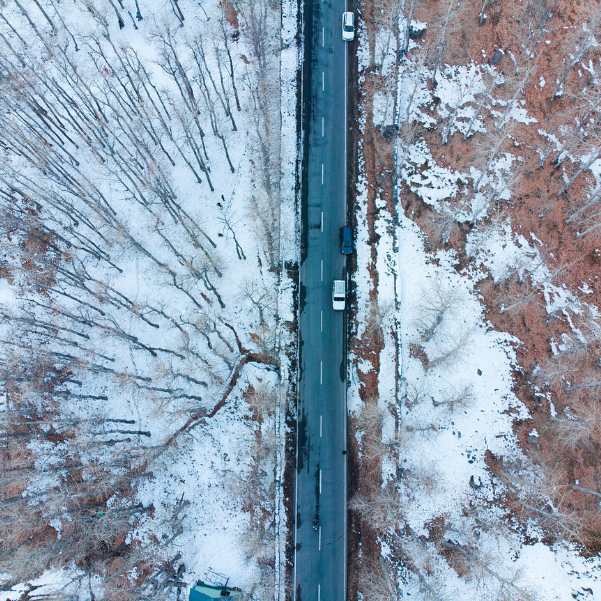
Sissu Village
~5 km from the north portal · 10 min drive
The first village you reach after the north portal, about 5 km ahead. The natural base for any Lahaul trip through the tunnel, with a waterfall, a small lake, a helipad viewpoint, homestays, and dhabas. A full day or overnight here is the right way to use the tunnel.
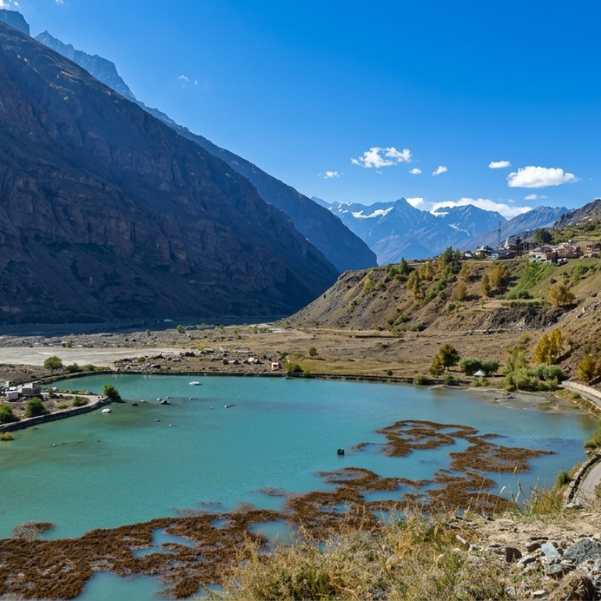
Sissu Lake
~5 km from the north portal · 10 min drive
A small man made lake near the Sissu helipad, just past the north portal, with a view across the Chandra to the Sissu waterfall cliff. An easy 20 to 45 minute stop after crossing the tunnel, good for families.
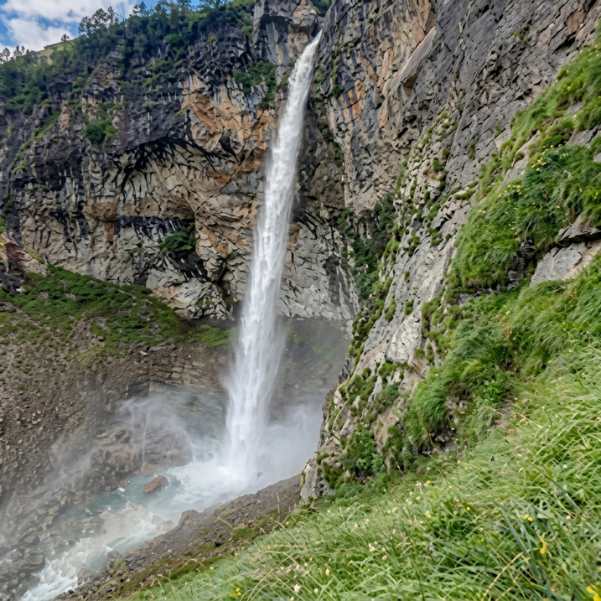
Sissu Waterfall
~6 km from the north portal · 12 min drive
The tall Palden Lhamo Dhar waterfall visible on the cliff face across the Chandra river from Sissu village, the first proper sight after the tunnel for most travellers. Strongest flow June to September, frozen into an ice column December to February.
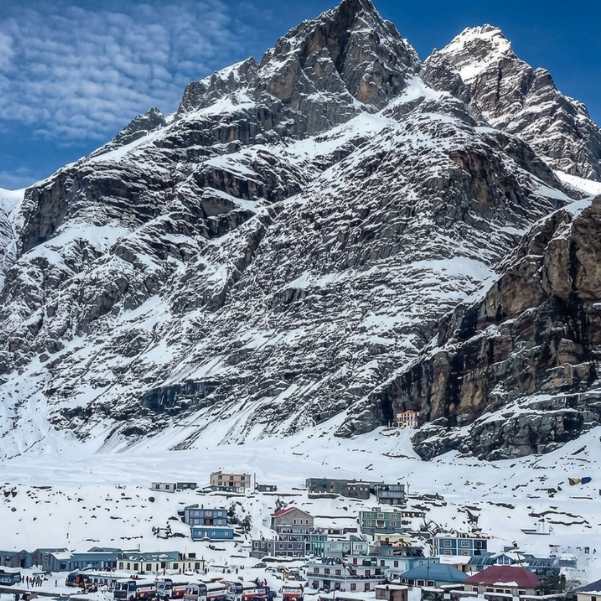
Koksar Village
~14 km east of the north portal · 25 min drive
The small Lahauli village below Rohtang Pass, about 14 km east of the north portal, functioning today as a tea halt and the police check post for Spiti bound traffic via Gramphu. A natural pairing on a deeper Lahaul day.
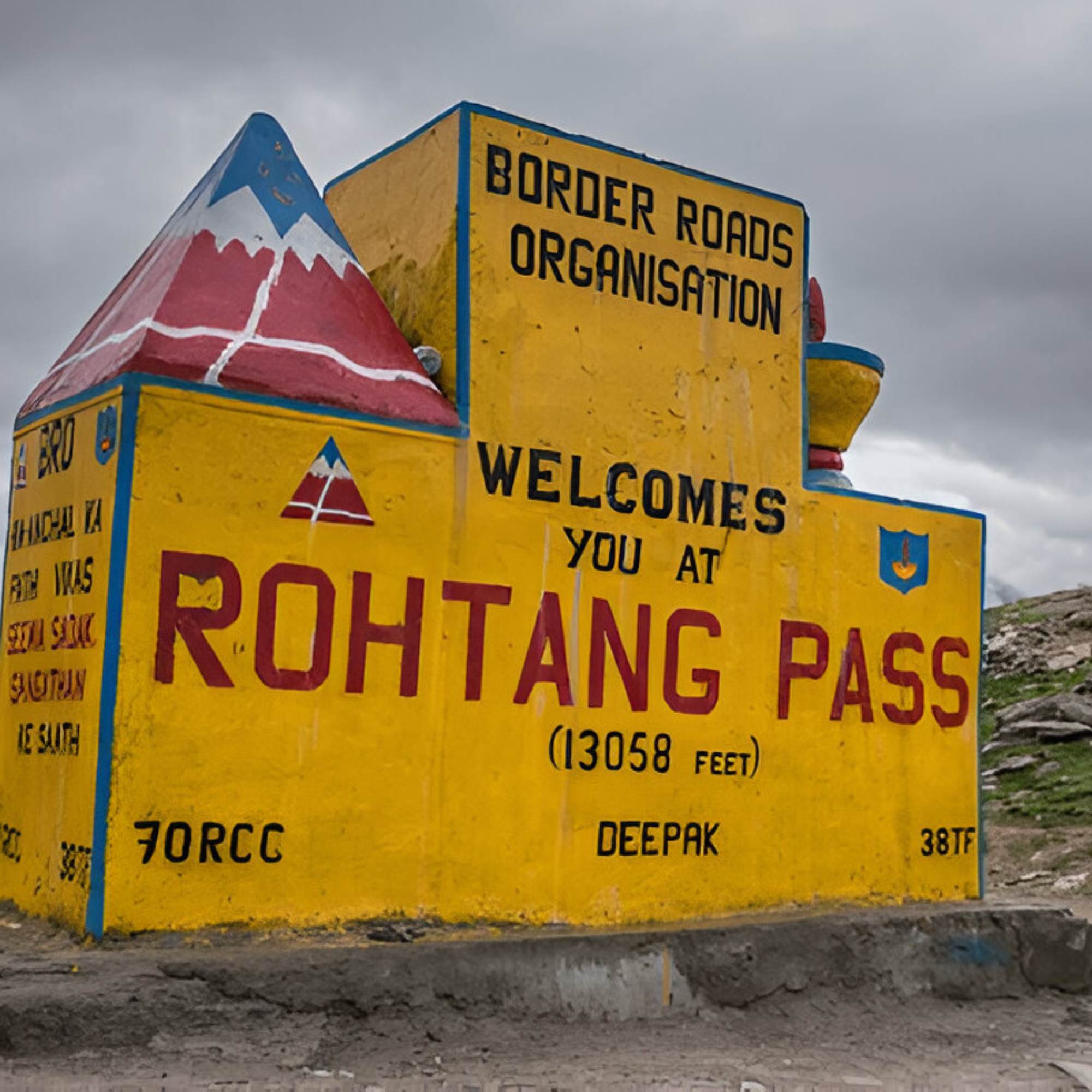
Rohtang Pass
~50 km from the south portal via old road · separate route from Manali
The 3,978 m pass on the old Manali to Lahaul road, now a separate day trip from Manali requiring an online permit. The tunnel bypasses Rohtang entirely. If you want to stand on the pass itself, you take the old road through Gulaba and Marhi, not the tunnel. Some travellers go up via Rohtang and return through the tunnel for a loop, which is the best of both worlds if you have the permit and the pass is open (generally May to October).
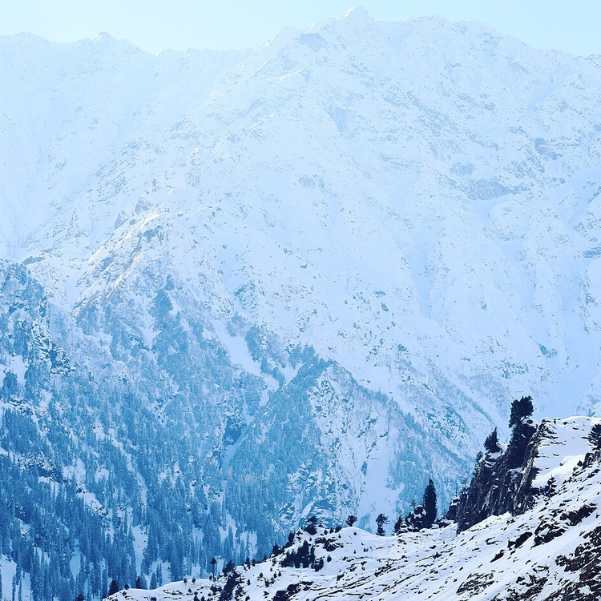
Gulaba
~10 km south of the south portal · on the approach road from Manali
The Rohtang permit checkpoint and snow point on the highway between Manali and the tunnel. You pass through Gulaba on the way to the south portal. In winter, Gulaba is as far as most tourists get when the approach road to the tunnel is restricted. In summer, it is a brief viewpoint stop.
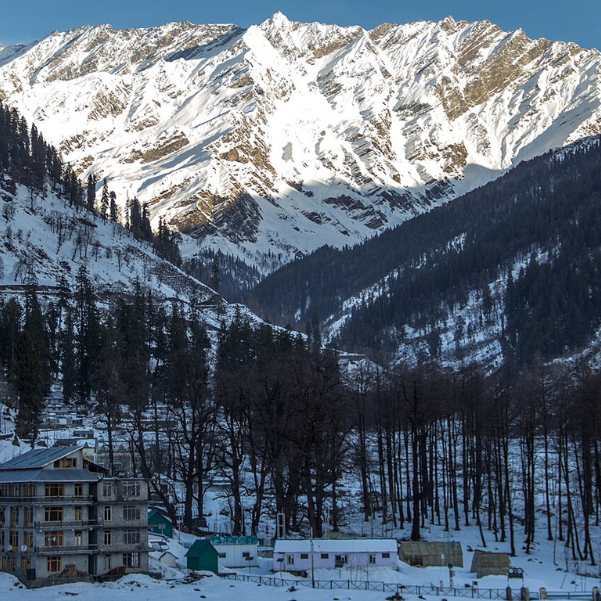
Solang Valley
~12 km south of the south portal · 25 min drive towards Manali
Solang valley, about 12 km south of the tunnel's south portal on the Manali side, is the popular winter sports and paragliding stop on the way up. A common pairing if you are returning to Manali in the afternoon and have time.
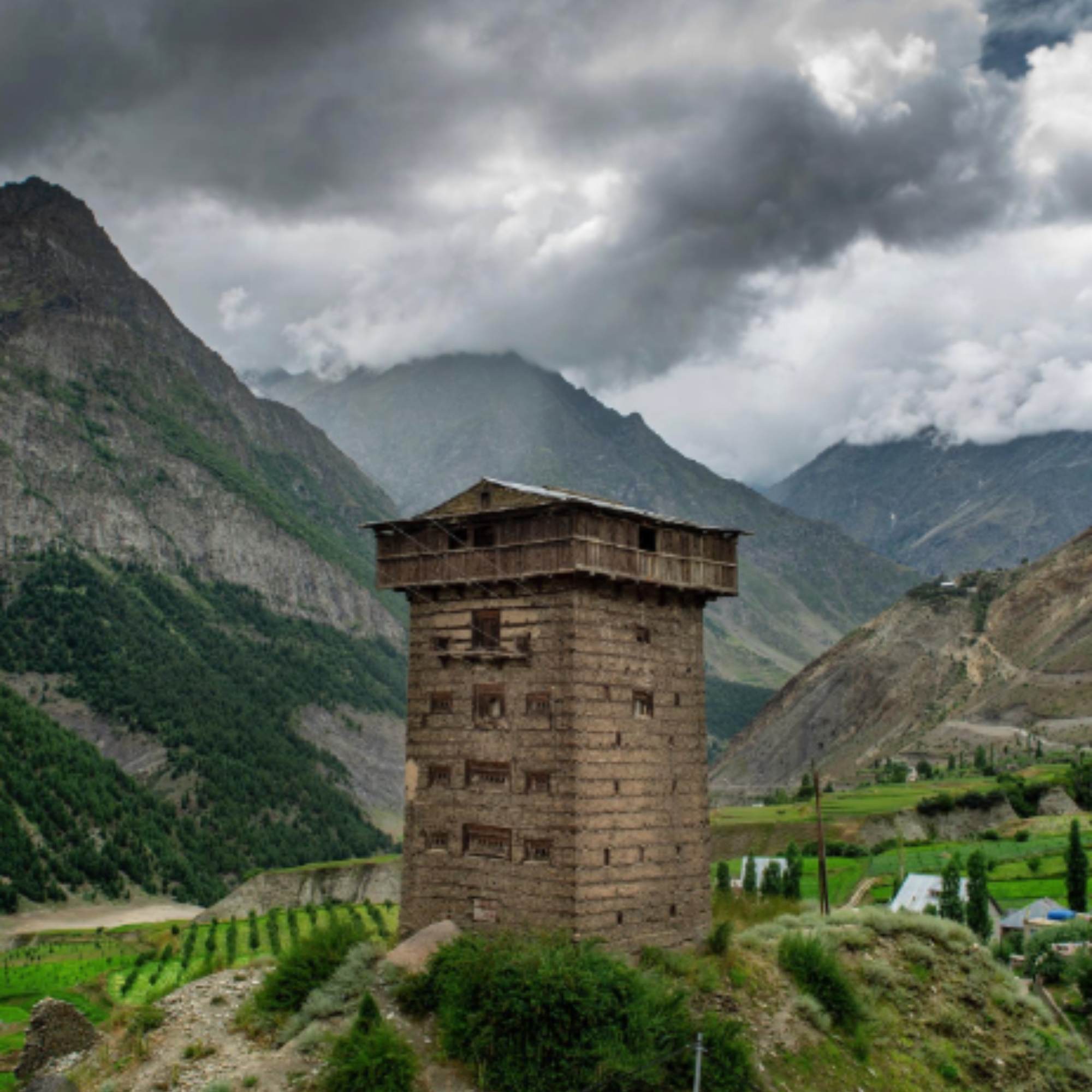
Gondhla Fort
~25 km west of the north portal · 45 min drive
The only seven storey Kathkuni tower fort in Lahaul, built around 1700 AD for the Thakurs of Gondhla. About 25 km west of the north portal on the road towards Keylong. A 20 to 30 minute architectural halt on a longer Lahaul drive.
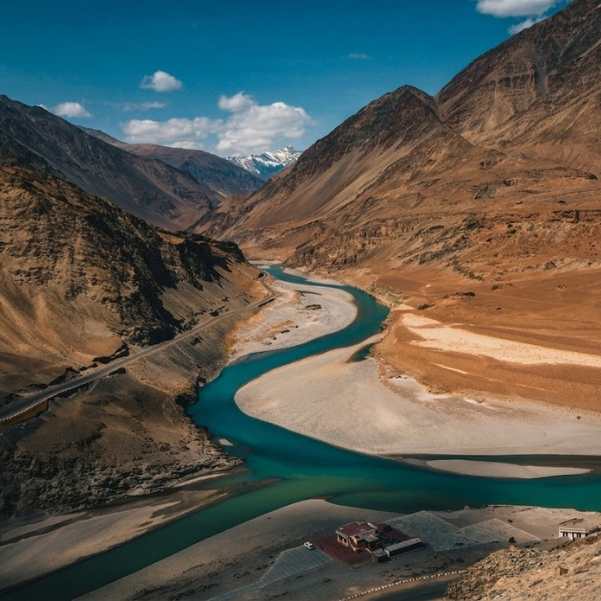
Tandi Sangam
~35 km west of the north portal · 1 hour drive
The confluence of the Chandra and Bhaga rivers where they meet to form the Chenab, about 35 km past the north portal. The last reliable fuel pump before Keylong sits here. A common quick halt on a Lahaul or Ladakh drive.
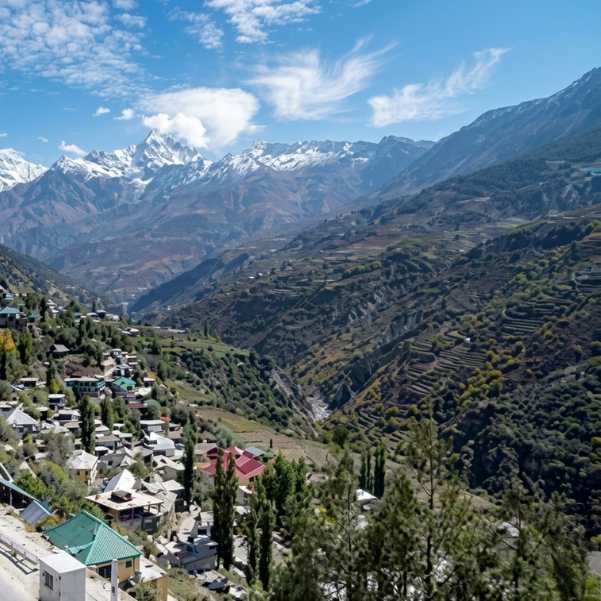
Keylong
~40 km west of the north portal · 1.25 hours drive
The district headquarters of Lahaul and Spiti, with the only proper market in the valley, an ATM, fuel, and a hospital. The natural base for anyone spending two or more nights in Lahaul after crossing the tunnel.
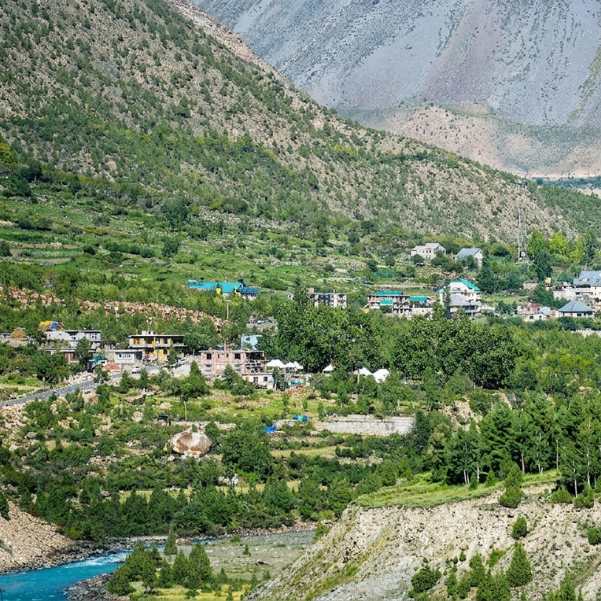
Jispa
~60 km west of the north portal · 2 hours drive
A quiet Lahauli hamlet on the Bhaga river with riverside camping, about two hours past the north portal. The softer alternative to Keylong for a first or second night in Lahaul after the tunnel.
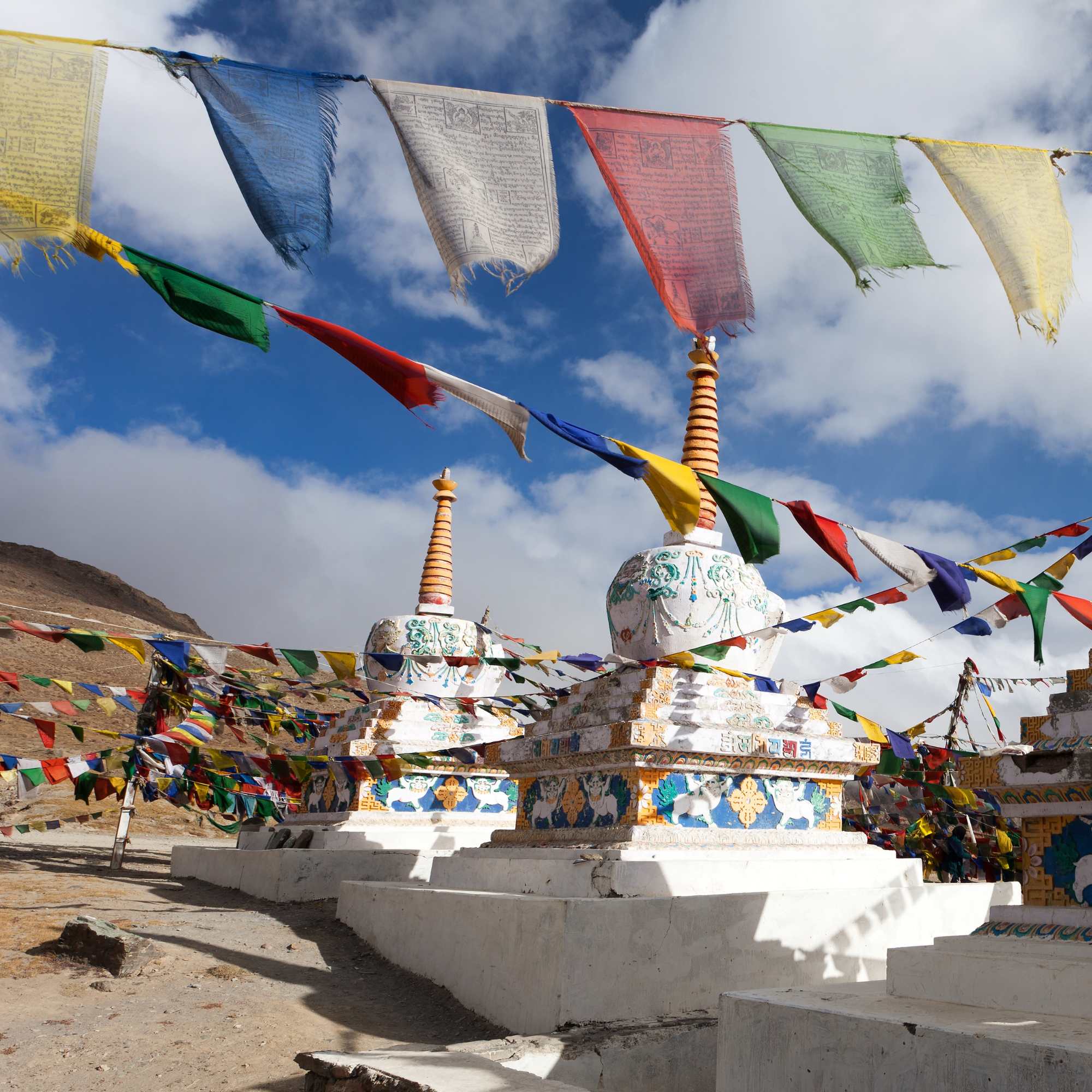
Kunzum Pass
~90 km via Gramphu and Batal · 5 to 6 hours drive
The high pass at around 4,551 metres connecting Lahaul to Spiti, reachable from the north portal via Koksar and Gramphu in 5 to 6 hours. Only for travellers doing a Spiti circuit, generally June to October.
Our packages with Atal Tunnel
Curated trips that include a visit to Atal Tunnel.
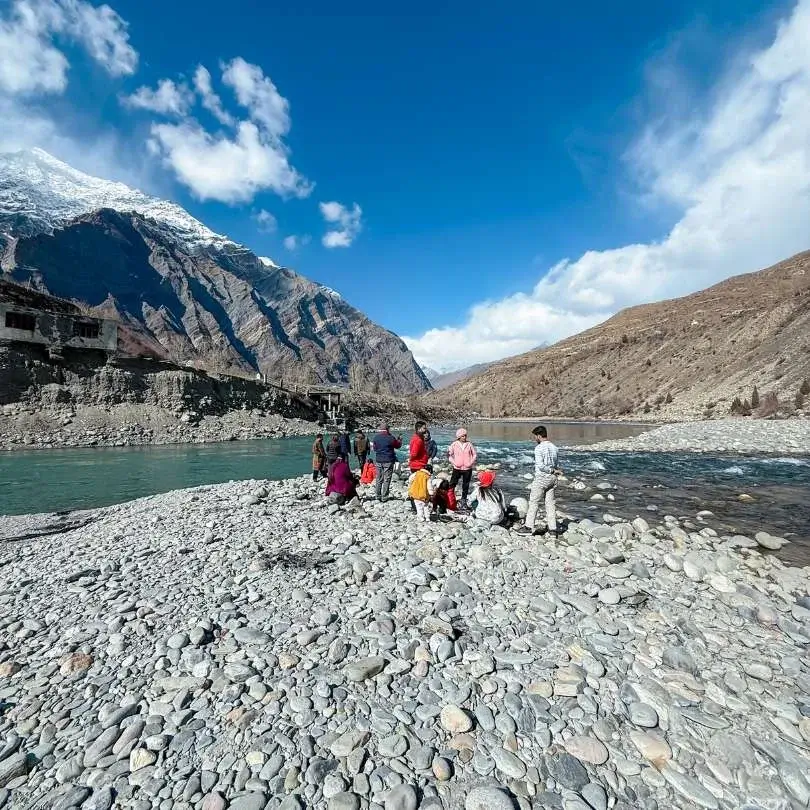 6D/5N
6D/5NMost Loved Sissu Valley Escape With Jispa Riverside Stay
2D Sissu•1D Jispa
₹15,999/ person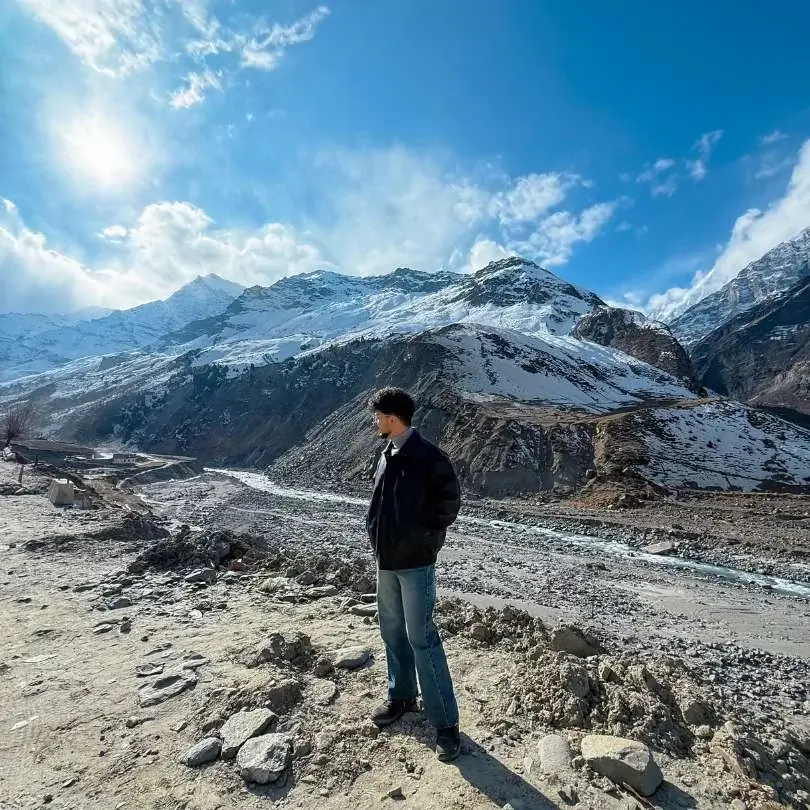 5D/4N
5D/4NClassic Sissu Valley Trip
2D Sissu•1D Manali
₹12,799/ person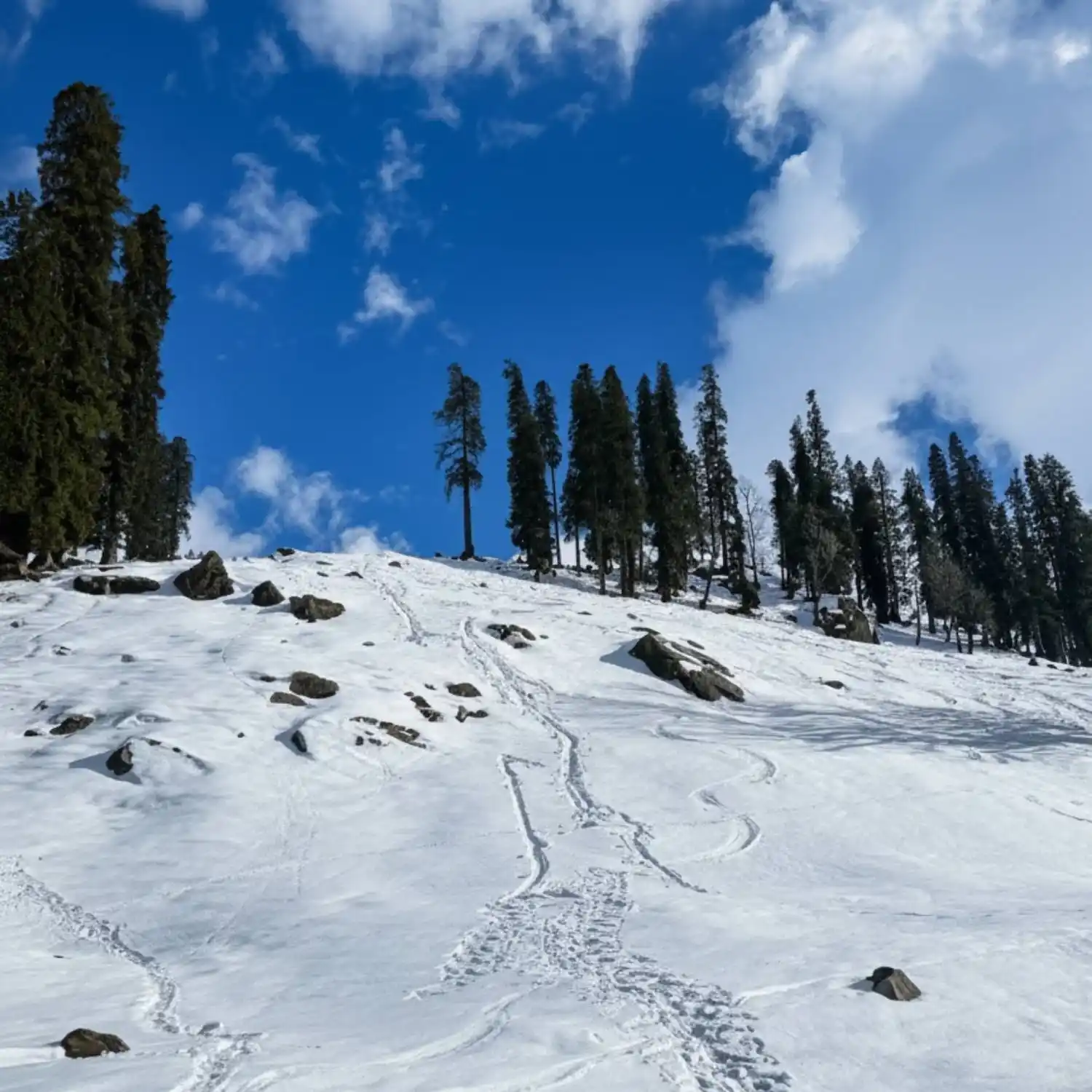 6D/5N
6D/5NManali Solang Sissu & Snow Village Sethan Budget Trip
1D Delhi•3D Manali+2
₹12,999₹19,999SAVE INR 7,000/ person
Frequently Asked Questions about the Atal Tunnel
Where is the Atal Tunnel?
The Atal Tunnel is in Himachal Pradesh, cutting under the Pir Panjal range on National Highway 3 between the Kullu valley and the Lahaul valley. The south portal is near Dhundi, about 25 km from Manali, and the north portal is near Teling, about 5 km short of Sissu village.
How long is the Atal Tunnel?
The tunnel is 9.02 km long and takes 15 to 20 minutes to cross at the posted speed. It is the longest highway single tube tunnel above 10,000 feet in the world per the World Book of Records.
What is the altitude of the Atal Tunnel?
The general altitude of the tunnel is 3,000 to 3,100 metres. The south portal is around 3,060 metres, and the north portal is around 3,071 metres, both roughly 10,040 to 10,075 feet above sea level.
How do I reach the Atal Tunnel from Manali?
Drive north from Manali on NH 3 for about 25 km, passing Kothi and Solang, and you reach the south portal at Dhundi. Taxis, shared cabs, and HRTC buses heading towards Keylong or Leh all pass through. Peak queues at the south portal on summer weekends can add 30 to 60 minutes to the drive, so leave by 7 or 8 AM for a comfortable morning crossing.
Is there an entry fee for the Atal Tunnel?
None. The Atal Tunnel is a public highway on NH 3, and there is no entry fee, no ticket counter, and no permit required for Indian nationals. Foreign travellers do not need a permit for the tunnel itself but should check current rules for deeper Lahaul and Spiti travel, which can change.
What are the Atal Tunnel timings?
The tunnel operates 24 hours in normal conditions. Peak traffic is between 9 AM and 1 PM on summer weekends, when queues at the south portal can add 30 to 60 minutes. Occasional short closures happen for maintenance or during heavy snowfall on the approach roads. Check the status on the day of your drive if winter weather is in the forecast.
Can I stop inside the Atal Tunnel?
No. Stopping inside is prohibited except in a genuine emergency, and the ban is enforced by CCTV and speed traps. Tourists who stop for photographs face fines under the Motor Vehicles Act. Park at designated areas near the portal approaches, outside the security zone, for photographs or a break.
Can I take photos or videos inside the Atal Tunnel?
No. Photography and videography are banned from 200 metres before the south portal all the way to the end of the tunnel. This rule has been enforced since shortly after the tunnel opened in 2020, after several accidents caused by tourists stopping for selfies. You can photograph the portals from outside the 200 metre zone on either side.
What is the speed limit inside the Atal Tunnel?
The enforced speed limits are 60 km/h for cars and light vehicles, and 40 km/h for heavy vehicles. Automatic radar and CCTV speed traps monitor the tunnel throughout. Exceeding 60 km/h triggers automated fines under the Motor Vehicles Act. Most drivers sit comfortably at 40 to 55 km/h. Headlights must stay on throughout, lane discipline is expected, and overtaking is discouraged.
Does mobile network work inside the tunnel?
Yes, 4G antennas are installed inside the tunnel and most Indian networks work reasonably well, though signal can drop in sections. In the Lahaul valley up to Keylong, BSNL, Jio, and Airtel 4G are all now highly reliable. Do not rely on mobile coverage for navigation inside the tunnel, there is only one road through it anyway.
Is the Atal Tunnel open in winter?
Yes. This is the single biggest thing the tunnel changed. Before it opened in 2020, the Manali to Lahaul route shut for roughly six months a year under snow on the Rohtang Pass. The tunnel stays open year round, with only occasional short closures for maintenance or extreme weather. The short approach road on the Kullu side can still be icy in deep winter, carry chains for your tyres if self driving.
Who built the Atal Tunnel?
It was built by the Border Roads Organisation (BRO), a tri service arm of the Indian Defence Ministry specialising in roads and bridges in difficult terrain. Construction was entrusted to the BRO on 6 May 2002 and the tunnel was inaugurated on 3 October 2020. It was renamed Atal Tunnel in December 2019 in honour of former Prime Minister Atal Bihari Vajpayee, who first announced the project in 2000.
Is the Atal Tunnel a tourist destination on its own?
Not really. The tunnel is a highway, not a monument, and a day trip from Manali that just drives up to the south portal and turns back is a thin experience. The practical plan is to drive through the tunnel to Sissu, spend a few hours or a night in the village, and use the tunnel as the route into Lahaul rather than the destination. Day trippers who do go just for the tunnel often end up underwhelmed.
Can I walk through the Atal Tunnel?
No. The tunnel is a vehicular highway with no pedestrian access. Walking through it is prohibited, and you cannot park your vehicle inside either. Cycling is technically on the road and done occasionally by endurance cyclists, but it is strongly discouraged due to the altitude, ventilation, and high vehicle speeds.
What do I see when I exit the north portal?
You see the landscape flip. The Kullu side at the south portal is green and forested. Ninety seconds into the tunnel, at the north portal in Lahaul, the mountains turn brown, the trees thin out, and the Chandra river runs in a wide open valley below. This contrast in less than nine kilometres of driving is what makes the tunnel worth crossing.
Related guides
Posts about Sissu
- Where to Stay in Sissu in 2026: Best Hotels, Homestays & Areas for Every Budget
- Sissu in October 2026: Weather, Snow Chances, Road Status & Autumn Travel Guide
- Sissu in December 2026: Snowfall, Weather, Road Status & Winter Travel Guide
- Sissu in November 2026: Weather, First Snow, Road Status & Travel Guide
- Best Time To Visit Sissu in 2026: Month Wise Weather, Snow and Road Guide
- Manali To Sissu Road Trip Guide 2026: Route, Distance, Road Status, Cost And Local Tips