
Turtuk Village
A Balti Muslim village on the banks of the Shyok River, about 205 km from Leh at roughly 9,850 feet. India's northernmost village open to tourists, with apricot orchards, stone lanes, and a border history that feels nothing like the rest of Ladakh.
- Nubra Valley · Balti village
- ~9,850 ft / ~3,000 m
- ~205 km from Leh
- Overnight stay recommended
- ILP / permit required
What makes it special
Turtuk is a Balti village on the banks of the Shyok river in the far northern reach of Nubra Valley, about 205 km from Leh and roughly 80 km north of Hunder. It sits at around 3,000 metres (roughly 9,850 feet), which makes it one of the lowest points in Ladakh. That lower altitude means something visitors notice immediately: there are actual trees here. Apricot orchards, walnut groves, poplars, and willows crowd the lanes and terraced fields, and in July the branches bend under the weight of ripe fruit. After days of driving through high altitude desert, arriving in Turtuk feels like entering a different country. Which, until 1971, it was.
Here is the part most travel pages gloss over. Turtuk was part of Pakistan controlled Baltistan until the Indo Pak war of 1971, when it was reclaimed by the Indian Army under Major Chewang Rinchen. For the older residents, this means they grew up in one country and woke up in another. Families were split across the Line of Control. Some have relatives in Skardu they have not seen in over fifty years. The village only opened to tourists in 2010, after locals petitioned the government. When people here tell you their stories, they are not repeating a guidebook version. They are telling you what actually happened to their family.
The culture is Balti Muslim, which sets Turtuk apart from every other destination on a standard Ladakh circuit. The language is Balti (a Tibetan dialect with heavy Persian and Urdu influence), the food is Balti (zan, thathuk, apricot pancakes, yak butter tea), the architecture is Balti (thick stone walls, carved wooden balconies, flat roofs used for drying apricots), and the mosques are Balti. After a week of Buddhist monasteries in Leh and Nubra, walking through Turtuk's lanes feels like crossing a cultural border more dramatic than any mountain pass.
Most travellers visit as part of a Nubra Valley extension, spending one night in Turtuk before returning to Hunder or continuing towards Pangong. One night is enough to walk the village and absorb the atmosphere, but if you can spare two, the pace changes. People invite you in for tea. You eat apricots off the tree. You hear the partition stories in unhurried detail. Two nights is when Turtuk stops being a checkbox and starts being the thing you remember most about the trip.
Quick answers
- Is Turtuk Village worth visiting?
- Yes, if you have one night to add beyond Nubra Valley. Turtuk is the only place on a standard Ladakh circuit where you experience Balti Muslim culture, eat Balti food, hear partition era stories from the people who lived them, and walk through orchards instead of barren desert. It is not a sightseeing destination with monuments and museums. It is a village you experience by slowing down. If you are the kind of traveller who talks to locals and sits in someone's kitchen drinking tea, Turtuk will be a highlight. If you want to tick off viewpoints and move on, you might wonder what the fuss was about.
- How many days should you spend in Turtuk?
- Most people spend one night, arriving in the afternoon from Diskit or Hunder and leaving the next morning after a village walk. That gives you a solid taste. Two nights is better if you want to explore properly, walk to Turtuk Youl (the old quarter), visit the Balti Heritage House and Museum, try local food at a homestay, and possibly drive to Thang, the actual last village before the LoC. Beyond two nights, there is not enough to do unless you simply want to sit still in a beautiful place, which is a perfectly good reason.
- How far is Turtuk from Leh?
- About 205 km from Leh, roughly 6 to 8 hours depending on road conditions, Khardung La traffic, and stops along the way. The route goes over Khardung La Pass (roughly 17,582 feet), then through Nubra Valley past Diskit and Hunder, and another 80 km north along the Shyok river. Most travellers break the journey with a night in Nubra Valley (Hunder or Diskit) before continuing to Turtuk the next day. Doing Leh to Turtuk in one go is possible but exhausting.
Quick facts
Everything you need to know at a glance.
At a glance
- Altitude
- Approximately 3,000 m / 9,850 ft. One of the lowest altitude villages in Ladakh, noticeably warmer and greener than Leh or Nubra.
- Location
- On the Shyok river in the far northern Nubra Valley, Leh district, Ladakh. About 205 km from Leh and 80 km north of Hunder.
- Nearest town
- Diskit, about 90 km south. Leh is 205 km away.
- Open season
- Generally June to September. The road from Hunder to Turtuk is snow cleared by late May or early June and can close anytime from late October. Confirm road status before leaving.
- Visiting hours
- Open village, no fixed hours. The Balti Heritage House and Museum has informal hours, generally daytime. Ask locally.
- Entry fee
- No entry fee for the village itself. The Balti Heritage House and Museum may request a small donation.
- Time needed
- One night minimum. Two nights recommended to explore the old quarter, visit Thang village, and absorb the pace.
- Known for
- Northernmost Indian village open to tourists, Balti Muslim culture, apricot orchards, partition history, proximity to the Line of Control.
- Difficulty
- Easy once you arrive. The village lanes are walkable but uneven. Getting there requires a full day drive from Leh via Khardung La and Nubra Valley.
On the ground
- Mobile network
- BSNL postpaid is the only network that works in Turtuk as of 2026. Jio and Airtel do not reach here. Data is very slow to nonexistent. Plan for near total disconnection.
- ATMs
- None in Turtuk. The nearest ATM is in Diskit, about 90 km south, and even that can run dry. Carry all the cash you need from Leh.
- Fuel
- No fuel pump in Turtuk. Nearest fuel is in Diskit. Ensure a full tank before leaving Diskit. The round trip from Diskit to Turtuk and back is about 180 km.
- Food
- Homestays serve Balti food: zan (roasted barley), thathuk (noodle soup), apricot pancakes, and yak butter tea. A few small eateries in the village serve momos, Maggi, and simple meals. Nothing fancy, but the Balti food is worth trying.
- Parking
- Informal parking at the edges of the village. The old quarter lanes are too narrow for vehicles. Walk from where the road ends.
- Washrooms
- Homestays and guesthouses have basic facilities. Carry tissue and hand sanitiser. No public washrooms in the village lanes.
- Permits
- Inner Line Permit (ILP) required for Indian nationals, obtainable online at lahdclehpermit.in or at the DC Office in Leh. Protected Area Permit (PAP) required for foreign nationals. Carry printed copies. Checked at multiple points.
- Drones
- Strictly prohibited. This is a sensitive border area very close to the Line of Control. Do not fly drones under any circumstances. The army monitors this closely.
- Accommodation
- Homestays are the main option and the best way to experience Balti culture. A few guesthouses and camps also operate in season. Book ahead in July and August. Expect basic but clean rooms.
- Guides
- Not essential but helpful. Local guides in the village can explain the history and take you to the Balti Heritage House. Your taxi driver usually knows the basics.
Seasonal weather
- Jun to Aug22°5°Summer (Jun to Aug)
- Sep to Oct15°0°Autumn (Sep to Oct)
- Nov to Mar5°-10°Winter (Nov to Mar)
- Apr to May18°2°Spring (Apr to May)
Suitable for
- Couples — suitable
- Families — suitable
- Seniors — with some care
- Solo — suitable
- First-timers — suitable
- Pet-friendly — not suitable
How to reach Turtuk Village
2 approach routes, with seasonal access.
From Leh (via Khardung La and Nubra Valley)
Generally June to September. The Hunder to Turtuk road can open as early as late May and close by late October, depending on snow and BRO clearance. Confirm locally before leaving.- Distance
- About 205 km
- Time
- 6 to 8 hours in one go. Most travellers split over two days via Nubra Valley.
- Road
- Tarred highway over Khardung La, decent road through Nubra to Hunder, then progressively rougher for the last 80 km to Turtuk with gravel, loose stone, and possible water crossings.
- Last fuel
- Fill up in Leh. Top up again in Diskit if possible. No fuel available beyond Diskit.
The standard route. From Leh, drive south then turn north over Khardung La Pass (roughly 17,582 feet, about 40 km from Leh). Descend into the Nubra Valley and continue to Diskit and Hunder. From Hunder, the road follows the Shyok river northward for about 80 km to Turtuk. This last stretch is the roughest part of the drive, with unpaved sections, loose gravel, and the occasional river crossing depending on recent weather. Most travellers break this into two days, spending the first night in Hunder or Diskit and continuing to Turtuk the next morning. Doing it in one day from Leh is possible but tiring, especially after Khardung La. The army check post at South Pullu before the pass and another before Turtuk will check your ILP, so keep printed copies accessible.
From Hunder (continuing from Nubra Valley)
Generally June to September- Distance
- About 80 km
- Time
- 2.5 to 3.5 hours depending on road condition
- Road
- Starts tarred, deteriorates to gravel and unpaved for much of the stretch. A high clearance vehicle is strongly recommended.
- Last fuel
- Fill up in Diskit before heading north. No fuel on this stretch.
Coming from Hunder (the sand dunes and Bactrian camel area), the road follows the Shyok river north through a narrow valley. The first 30 km are reasonable, then the road quality drops. A couple of bridges, some unpaved sections, and army checkpoints mark the route. This is the most common approach, done as a morning drive after a night in Hunder, arriving in Turtuk by early afternoon with the full evening and next morning to explore. Start early to have maximum time in the village.
Best time to visit
Season by season, so you can plan around the weather rather than hope.
- Recommended
Summer
June to August
Apricot season, green fields, the village at its best, and the only reliable window for the road
- Day temperature
- 18 to 22 C
- Night temperature
- 5 to 10 C
- Apricots
- Blooms in June, ripe fruit in July and August
- Crowds
- Moderate. Turtuk gets fewer visitors than Hunder or Pangong but July sees the most.
- Road
- Open. Condition can vary after heavy rain.
The best window for Turtuk. The apricot trees are in full bloom in June, and by July and August the branches are heavy with ripe fruit. Locals offer apricots freely. The fields are green, the poplars line every path, and the village looks its most alive. Temperatures are pleasant by day, cool at night. This is also peak Ladakh tourist season, so the road from Leh will be busy, especially over Khardung La. Homestays fill up in July and August, book ahead or arrive flexible. The Shyok river runs high and fast during melt season, which makes some of the riverside stretches more dramatic but also occasionally riskier for road closures.
Autumn
September to October
Quieter, harvest season, good light, but the road window is narrowing
- Day temperature
- 10 to 15 C
- Night temperature
- 0 to 3 C
- Crowds
- Low after the first week of September
- Road
- Usually open through September, first closures possible in October
September is underrated for Turtuk. The tourist rush drops off, the light sharpens, the air clears, and the apricot and walnut harvest continues into early October. Nights get cold quickly, and by mid October the road from Hunder can see its first closures depending on early snowfall. This is a quieter, more reflective version of the village. Carry proper warm layers for evenings. Homestays start winding down by late September. Confirm road status before committing.
- Closed
Winter
November to May
Village largely cut off, road closed, not a tourist season
- Day temperature
- -5 to 5 C
- Night temperature
- -10 to -15 C
- Road
- Closed. Snow blocks the Hunder to Turtuk stretch.
- Tourist infrastructure
- Shut down. Most homestays closed.
Turtuk in winter is a village largely cut off from the outside. The road from Hunder closes with snow, temperatures drop well below freezing, and most homestays and guesthouses shut down. The army presence continues but tourism stops. Not a viable option for visitors unless you have a specific reason, serious gear, and a very flexible timeline.
Things to see & do
7 things worth your time at Turtuk Village.
Walk through Turtuk Youl (old quarter)
1 to 2 hoursThe old quarter of the village, known as Turtuk Youl, is where the Balti character is strongest. Stone houses with carved wooden balconies, narrow alleys barely wide enough for two people, apricot trees growing through courtyards, and hand built water channels running alongside the paths. Most of the houses are centuries old. This is not a curated heritage walk. It is a working village, and the best approach is to wander slowly without a fixed plan. You will end up in conversation with someone, and that conversation is usually the highlight.
Visit the Balti Heritage House and Museum
30 to 45 minutesA small museum in the old royal house of the Yabgo family, the last local rulers of the region before the 1971 handover. The collection includes old weapons, clothing, documents, a throne, and photographs that tell the story of Turtuk's shift from Baltistan to India. A local guide or family member is often present and can add context the displays do not. The stories of the partition, the family's role, and the cross border connections still maintained today are more interesting than the objects themselves.
Walk through the apricot orchards
As long as you likeIn July and August, the apricot orchards are laden with ripe fruit. Locals are generous with their crop. Walking through the orchards, eating apricots straight off the branch, and buying bags of dried apricots, apricot oil, or apricot jam to take home is one of the quiet pleasures of a Turtuk visit. The village also grows walnuts, buckwheat, and barley. If your homestay host is willing, ask to see how apricots are dried on the flat roofs.
Eat Balti food at a homestay
Depends on the mealHomestay food in Turtuk is Balti, not Ladakhi. Zan (roasted barley mixed with butter tea into a dough), thathuk (a thick noodle soup), apricot pancakes, and yak butter tea are the staples. If your host is cooking, ask if you can sit in the kitchen and watch. The flavours are unfamiliar to most Indian travellers and closer to what you would find across the border in Skardu than in Leh. Trying the food here is not a food tourism exercise. It is a way to understand the culture.
Drive or walk to Thang village
1 to 2 hours round trip from TurtukThang is a tiny settlement about 9 km further north from Turtuk, generally considered the actual last civilian habitation before the Line of Control. You can drive or walk the stretch. From Thang, you can see the LoC markers and, on clear days, the mountains of Pakistan administered Baltistan across the valley. The road is rough, and there may be additional army checks. Confirm with your driver or local guide whether Thang is accessible on the day of your visit, as access can be restricted depending on the security situation.
Sit by the Shyok river
As long as you likeThe Shyok runs right past the village, wide and braided in summer, and there are several spots where you can walk down to the bank and sit by the water. The river is glacier fed, cold, and fast, so do not wade in. But the riverside is a good spot for an hour of quiet in the late afternoon. Some homestays are close enough to the river that you can hear it from your room.
Hear the partition stories from locals
Depends on the conversationTalk to the older residents if you get the chance. Some remember the 1971 handover in vivid detail. The stories of families split across the border, of identity documents changing overnight, of relatives they have not seen since are the most powerful thing about Turtuk. These are not stories told for tourism. They are told because you asked and because they matter. Listen well. Ask respectfully.
Know before you visit Turtuk Village
The practical bits, from people who have been.
The partition history, in plain termsPart of Pakistan until 1971. Families split across the LoC. Opened to tourists only in 2010.
Turtuk was part of Baltistan, in Pakistan controlled Kashmir, until December 1971. During the Indo Pak war, the Indian Army recaptured a strip of territory along the Shyok river that included Turtuk, Tyakshi, and a few surrounding villages. Major Chewang Rinchen led the operation. Overnight, the residents became Indian citizens. Families with relatives in Skardu and Gilgit were separated by the new Line of Control.
For the older generation, this is not a textbook event. It is personal. Some residents have siblings in Pakistan they cannot visit. Some grew up speaking Urdu in school and switched to Hindi. The Balti Heritage House and Museum in the village preserves artefacts from the pre 1971 era. The village only opened to tourists in 2010, after local leaders petitioned the government. When you walk through Turtuk, you are walking through a place where geopolitics and daily life collided in the most human way possible.
The Balti culture and how to respect itBalti Muslim culture, not Buddhist. Distinct language, food, and architecture. Dress modestly and ask before photographing.
The people of Turtuk are Balti, not Ladakhi in the Buddhist sense. They speak Balti (a dialect related to Tibetan but with heavy Persian and Urdu influence), practice Shia and Noorbakhshi Islam, and maintain customs, food, and architecture that are closer to Baltistan than to Leh. The mosques, the clothing, the music, and the hospitality all carry this distinct identity. For travellers who have spent days in Buddhist Ladakh, the shift is immediately noticeable and genuinely interesting.
Respect the culture. Dress modestly when walking through the village. Ask permission before photographing people, especially women and children. Remove shoes before entering mosques or homes when invited. Do not litter, especially near the water channels that the village depends on. Turtuk is a real community, not a themed tourism village, and treating it that way earns you the kind of welcome that makes the visit memorable.
Permits and how to get them rightILP for Indians, PAP for foreigners. Apply online or at DC Office Leh. Carry printed copies. Make sure Turtuk is listed.
Indian nationals need an Inner Line Permit (ILP), which covers Nubra Valley and Turtuk under the same permit. Apply online at lahdclehpermit.in or get it stamped at the DC Office in Leh. The ILP is generally valid for up to 21 days. Foreign nationals need a Protected Area Permit (PAP), valid for up to 7 to 15 days depending on nationality. As of recent reports, some foreign nationals may face restrictions beyond Hunder due to the sensitive border area. Check the latest rules before travelling.
Carry at least two printed copies of your permit. Army check posts at South Pullu (before Khardung La), Khardung village, and before Turtuk will ask for them. Digital copies on your phone are sometimes accepted but not always. Do not assume your permit from a Nubra trip covers Turtuk automatically. Make sure Turtuk is listed on the permit when you apply.
Who should go, and who should skip itWorth it for most travellers with 6+ days. The cultural highlight of any Ladakh circuit. Skip only if very short on time.
Most travellers on a Nubra Valley trip. Yes, absolutely. Adding one night in Turtuk extends the circuit by a day but gives you the single most distinctive cultural experience in Ladakh. The drive from Hunder is about 80 km and takes 2.5 to 3.5 hours.
First time Ladakh visitors. Yes, if you have at least 6 to 7 days total. A typical circuit runs Leh, Nubra (Diskit/Hunder), Turtuk, back to Hunder or direct to Pangong. Dropping Turtuk saves a day but loses the cultural highlight.
Families with kids. Yes, for children old enough to appreciate a village walk and cultural stories. The altitude here is lower than most of Ladakh, which helps. The drive is long but manageable if broken over two days via Nubra.
Seniors. Possible if in decent health. The village lanes are uneven and involve short climbs. The drive from Leh via Khardung La is the hard part. If you can handle the journey, the village itself is easy to explore at a slow pace.
Skip Turtuk if. You have fewer than 5 days total in Ladakh and need to prioritise Nubra and Pangong. Or if you are not interested in cultural and village experiences and prefer landscape oriented stops. Turtuk rewards the curious, not the hurried.
Where to stayHomestays are the best option. Rs 800 to 2,000 per person per night including meals. Book ahead in peak season.
Homestays are the best and most common option. They range from very basic (a mattress, a shared bathroom, home cooked meals) to reasonably comfortable (clean rooms, attached baths, good food). A few guesthouses and seasonal camps also operate. Expect to pay roughly Rs 800 to 2,000 per person per night including meals, though rates can vary. In July and August, the better homestays fill up. Book ahead through your Leh travel agent or call the homestay directly if you have a number.
The homestay experience is the point. Your host family serves Balti food, tells you stories, and often joins you for tea. Choosing a homestay over a guesthouse is the single best decision you can make for your Turtuk visit.
Connectivity and cash: plan for noneBSNL postpaid only. No data. No ATMs. Carry all cash from Leh.
BSNL postpaid is the only mobile network that works in Turtuk as of 2026. Jio and Airtel do not reach here. Even BSNL data is very slow. Plan for near total disconnection from the internet. Calls may work intermittently. There are no ATMs in the village or anywhere nearby. The nearest ATM is in Diskit, about 90 km south, and even that can run out of cash on busy days. Carry all the cash you need from Leh. UPI does not work without data. Most homestays and shops operate on cash only.
Altitude, health, and getting there safelyAcclimatise in Leh for 48 hours before crossing Khardung La. Turtuk itself is lower and easier. Medical help is very limited.
The drive from Leh to Turtuk crosses Khardung La at roughly 17,582 feet, then drops into the Nubra Valley before climbing and descending again to Turtuk. Turtuk itself is at about 9,850 feet, one of the lowest points in Ladakh, so you will actually feel better here than in Leh. But the Khardung La crossing is the concern. Do not attempt this drive on your first or second day in Leh. Acclimatise for at least 48 hours in Leh before crossing any high passes.
Nearest medical help is a small army facility and a basic health sub centre in the village area. Anything serious means evacuation to Leh, which is a full day drive away. Carry a basic first aid kit, any personal medication, altitude sickness tablets (Diamox, consult your doctor), and sunscreen. The sun at this altitude is strong even though the air feels cool.
Nearby attractions
Other places worth the detour.
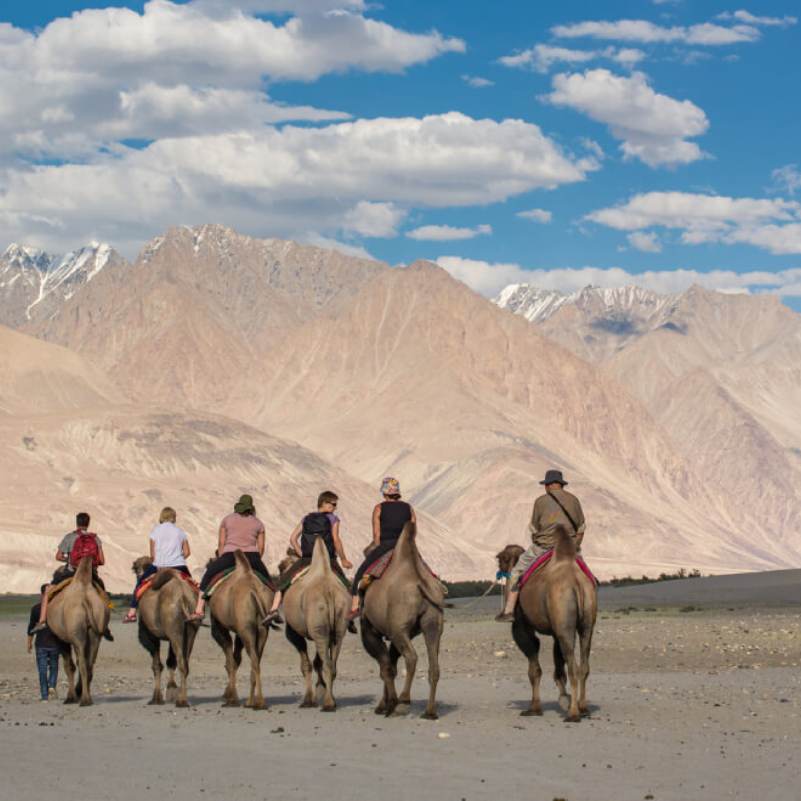
Hunder Sand Dunes
~80 km south, 2.5 to 3.5 hours
Sand dunes at high altitude with double humped Bactrian camels. The standard Nubra Valley stop and the natural base before driving to Turtuk. Most travellers spend a night here before or after Turtuk.
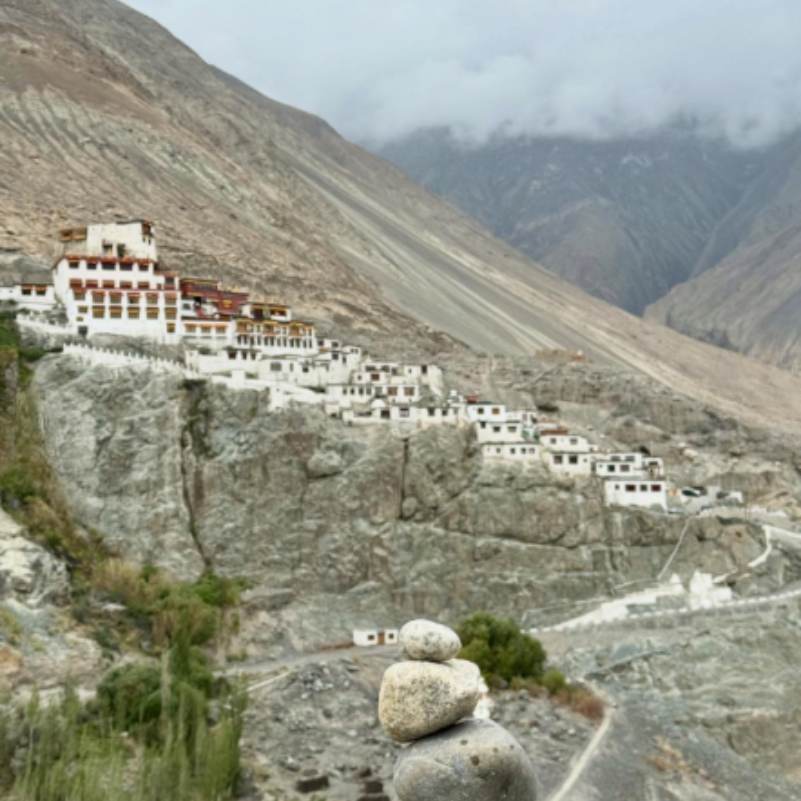
Diskit Monastery
~90 km south, 3 hours
The largest and oldest monastery in the Nubra Valley, with a 32 metre Maitreya Buddha statue overlooking the Shyok valley. A 30 to 45 minute stop on the drive between Hunder and the road north to Turtuk.
Khardung La Pass
~165 km south (on the route back to Leh)
The high pass at roughly 17,582 feet connecting Leh to Nubra Valley, crossed on the way to and from Turtuk. Quick photo stop, do not linger at the top.
Thang Village
~9 km north, 30 to 45 minutes
A tiny settlement about 9 km further north from Turtuk, often called the actual last village before the Line of Control. You can see the LoC markers and, on clear days, the mountains of Baltistan across the valley. Access can be restricted depending on the security situation. Ask locally before attempting.
Nubra Valley
Turtuk is in the far northern end of Nubra Valley
The broader valley that Turtuk sits in, covering Diskit, Hunder, Sumur, Panamik, and the surrounding area. The standard Ladakh circuit includes at least one night in Nubra, which pairs naturally with a Turtuk extension.
Pangong Lake
~300 km via Leh, or ~250 km via the direct Shyok road
The famous high altitude lake on the India China border, often combined with Turtuk and Nubra into a multi day Ladakh circuit. The direct road from Nubra to Pangong via Shyok is rough but saves backtracking to Leh. Ask your driver about current road status.
Our packages with Turtuk Village
Curated trips that include a visit to Turtuk Village.
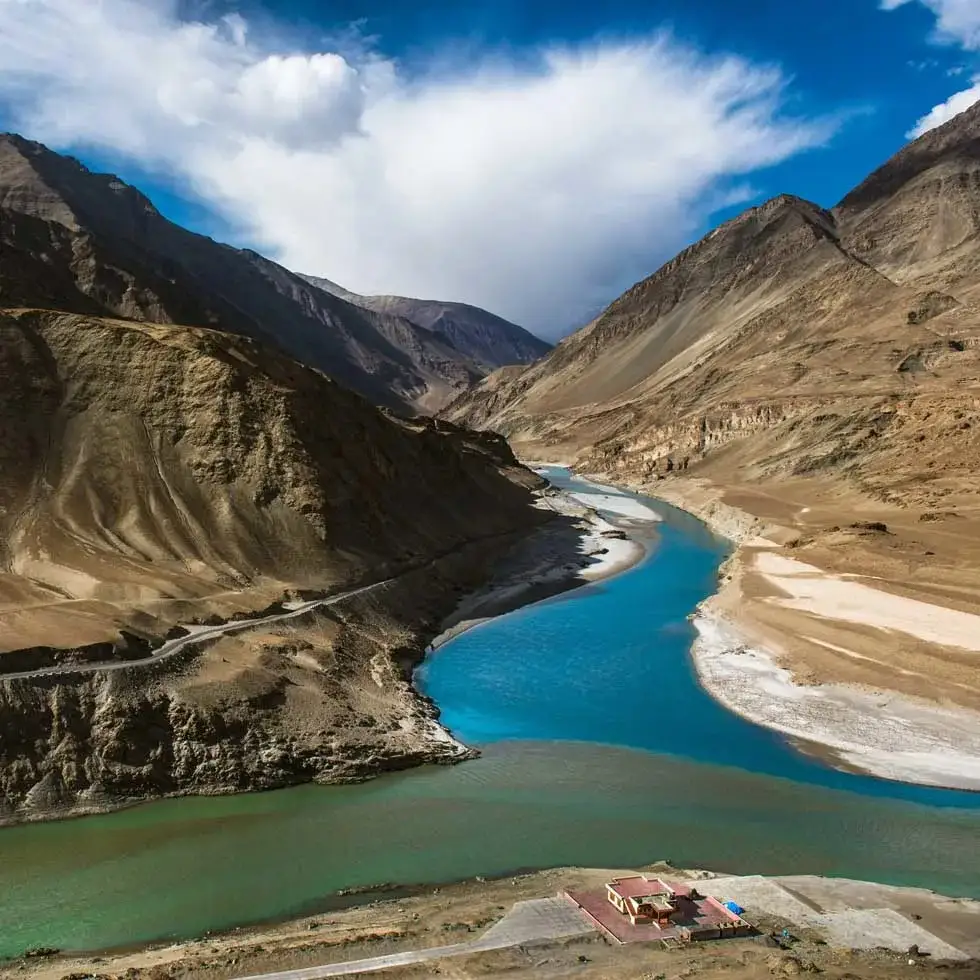 7D/6N
7D/6NBest of Leh Ladakh With Turtuk Village Nubra Valley and Pangong Lake
2D Leh•2D Nubra Valley+1
₹34,999₹43,999SAVE INR 9,000/ person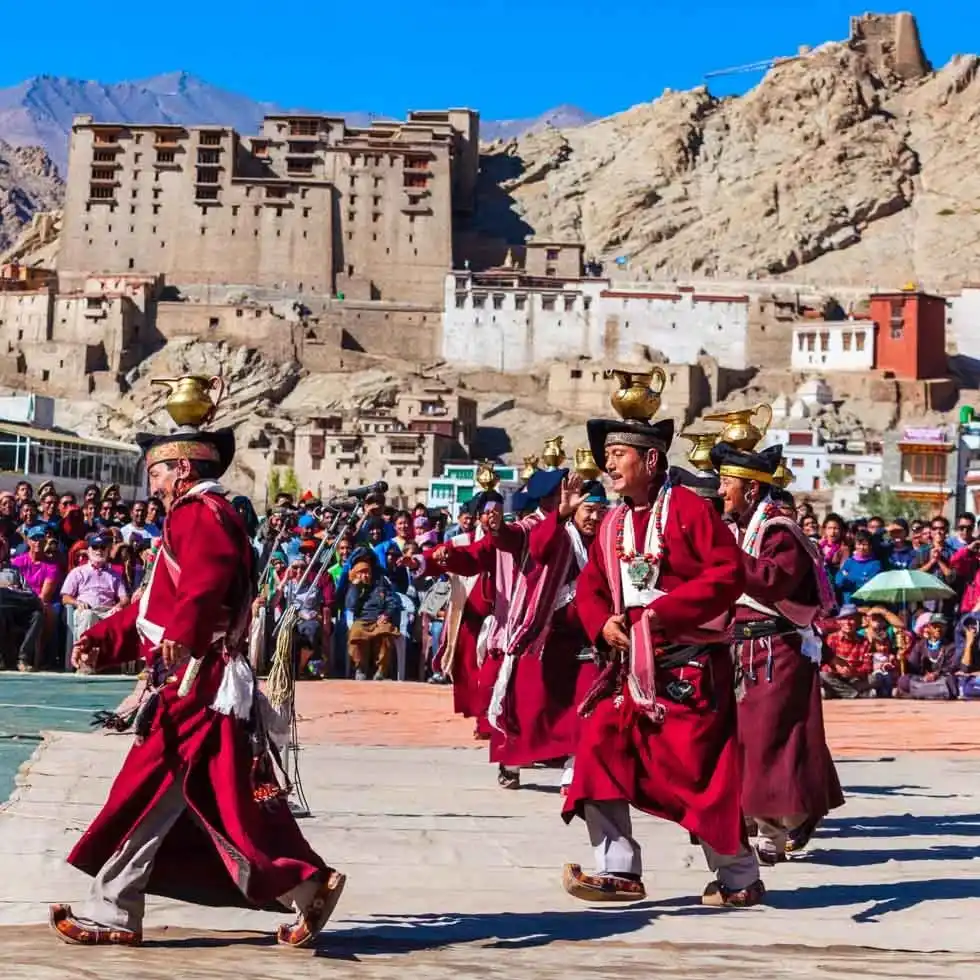 7D/6N
7D/6NLeh Ladakh Tour With Turtuk Village Nubra Valley and Pangong Lake
2D Leh•2D Nubra Valley+1
₹27,999₹33,999SAVE INR 6,000/ person Group Tour6D/5N
Leh Ladakh Group Tour With Nubra Valley and Pangong Lake
2D Leh•1D Nubra Valley+1
₹18,999/ person
Common questions about Turtuk Village
Where is Turtuk Village?
On the Shyok river in the far northern reach of Nubra Valley, Leh district, Ladakh. About 205 km from Leh and 80 km north of Hunder. It is the northernmost village in India that is open to tourists.
What is the altitude of Turtuk?
Approximately 3,000 metres, or about 9,850 feet. This makes it one of the lowest altitude villages in Ladakh. You will actually feel better here than in Leh or most of the Nubra Valley. The lower altitude also means warmer temperatures and more vegetation.
How far is Turtuk from Leh?
About 205 km from Leh. The drive takes 6 to 8 hours via Khardung La and Nubra Valley. Most travellers break this into two days, spending a night in Hunder or Diskit before continuing to Turtuk the next morning.
What is the best time to visit Turtuk?
June to September. The road is generally open from late May or early June through late October, depending on snow and BRO clearance. July and August are peak season with ripe apricots and the warmest temperatures. September offers fewer crowds and harvest season.
Do I need a permit to visit Turtuk?
Yes. Indian nationals need an Inner Line Permit (ILP), obtainable online at lahdclehpermit.in or at the DC Office in Leh. Foreign nationals need a Protected Area Permit (PAP). Make sure Turtuk is specifically listed on your permit when you apply. Carry at least two printed copies.
Was Turtuk part of Pakistan?
Turtuk was part of Pakistan controlled Baltistan until December 1971, when the Indian Army recaptured the area during the Indo Pak war. Major Chewang Rinchen led the operation. Overnight, the residents became Indian citizens. Families were separated across the new Line of Control. Some older residents have relatives in Skardu they have not seen in over fifty years.
Where can I stay in Turtuk?
Homestays are the best and most common accommodation. Expect basic but clean rooms with home cooked Balti meals. Rates generally range from Rs 800 to 2,000 per person per night including meals. A few guesthouses and seasonal camps also operate. Book ahead in July and August.
Is there mobile network and ATMs in Turtuk?
BSNL postpaid is the only network that works in Turtuk. Jio and Airtel do not reach here. Data is extremely slow to nonexistent. Plan for near total disconnection. There are no ATMs in Turtuk. The nearest ATM is in Diskit, about 90 km away. Carry all cash from Leh.
Can you see Pakistan from Turtuk?
Thang village, about 9 km further north from Turtuk, is generally considered the actual last civilian habitation before the Line of Control. From Thang, you can see the LoC markers and the mountains of Pakistan administered Baltistan on clear days. Access can be restricted depending on the security situation.
Is Turtuk safe for families with children?
Yes, as long as children are old enough to handle a long drive (6 to 8 hours from Leh via Khardung La) and enjoy village walks and cultural experiences. The altitude at Turtuk is lower than most of Ladakh, which helps with acclimatisation. The village is safe and locals are welcoming to families.
How do I fit Turtuk into a Ladakh itinerary?
Most travellers add Turtuk as an overnight extension to a Nubra Valley circuit. A common itinerary runs: Day 1, Leh to Nubra Valley (Hunder or Diskit). Day 2, Nubra to Turtuk, spend the night. Day 3, Turtuk back to Hunder or direct to Pangong Lake. Day 4, Pangong back to Leh. This covers the main Ladakh highlights in a comfortable loop.
Can I fly a drone in Turtuk?
Strictly prohibited. Turtuk is a sensitive border area very close to the Line of Control. The Indian Army monitors the area closely. Do not fly drones under any circumstances. Confiscation and questioning are likely outcomes.
Related guides
Posts about Ladakh
- Manali to Leh Highway 2026: Every Pass, Stop and Distance
- Umling La Ladakh Guide 2026: Route, Altitude, Permit, Safety & Reality Check
- Turtuk Ladakh Travel Guide 2026: Balti Culture, Apricot Orchards and Why It Is Perfect for Families
- Offbeat Ladakh for Couples in 2026: Quiet Routes Beyond Pangong and Nubra
- Aryan Valley Ladakh Guide 2026: Dah, Hanu, Brokpa Culture, Route and Who Should Visit
- Hanle vs Tso Moriri vs Turtuk: Which Offbeat Ladakh Place Should You Choose in 2026?