
Hunder Sand Dunes
A compact cold desert dune belt at around 3,050 m in Nubra Valley, 130 km from Leh across Khardung La. The dunes are small, the double humped Bactrian camels are the point. Sunrise or sunset only, never midday. One to two nights.
- Altitude ~3,050 m / ~10,010 ft
- ~130 km from Leh, 10 km from Diskit
- Environment Fee or PAP required
- Best window late May to September
- One to two nights, not a day trip
What makes it special
Hunder is the small dune village on the Nubra valley floor, about 130 km from Leh across Khardung La, sitting at roughly 3,050 metres. The dunes themselves run as a narrow belt between Hunder and Diskit villages, about 7 km long in total, and the whole experience is smaller, gentler, and colder than a first time visitor usually expects.
Worth saying upfront. If you have seen Jaisalmer or any proper desert, the dunes at Hunder will look modest. That is not what you came for. You came for the combination. Sand at 3,050 metres, snow peaks on the horizon, seabuckthorn scrub in the gaps, and the two humped Bactrian camels that have lived in this valley since the old Silk Route.
The camel story, since most travellers ask. These are Bactrian camels, not the single humped animals of Rajasthan. Native to the Central Asian steppe, they crossed into Nubra centuries ago with caravans moving between Yarkand and Leh. When the Silk Route collapsed after 1950, the caravans stopped. The camels stayed. Most of India's small remaining Bactrian population lives in this valley today, and watching one calmly chew thorn bushes at eye level is genuinely one of the more unusual moments on a Ladakh trip.
Timing is the single thing most travellers get wrong. Midday at the dunes, roughly noon to 3 PM, is crowded, hot, and harshly lit. The sand glares. The camels are tired. First light before 8 AM and the last hour before sunset, usually around 6 to 7 PM in peak season, are when the place actually works. Arrive at Hunder in time for a late afternoon visit on day one, and squeeze in a short morning visit before you move on.
The ride itself. Short, organised, on a fixed track. Roughly 15 to 30 minutes depending on the operator and the loop you choose. Prices generally sit between Rs 300 and 500 per person in 2026, occasionally higher on July weekends. Book at the main counter in the parking strip, not from the men walking around with offers. Do not feed or pet the camels, do not tug the fur, and do not push for a gallop. These are working animals, and they are well treated precisely because travellers respect that.
How long to stay. One night at Hunder is fine if you are fitting the dunes into a two night Nubra plan that also includes Diskit or Sumur. Two nights is honestly better, because it gives you both a late afternoon and an early morning at the dunes without racing light. If Turtuk is on your list, one night at Hunder and one at Turtuk works, with a short dunes stop on the way back.
Who it suits. Most travellers on a Ladakh trip, with a few caveats. Families with children aged six and above handle this well, and the camel ride is usually a hit with kids. Seniors in reasonable health manage the short walks and the ride without trouble, provided Leh acclimatisation has gone well. Pets are impractical because of the long drive across Khardung La and the lack of pet friendly camps. If you want an expansive, classical desert experience, go to Jaisalmer. If you want the strangeness of dunes at 3,050 m with Bactrian camels and Karakoram peaks behind them, Hunder is the only place on earth that gives you that.
From photographers chasing the golden hour to travellers seeking a quiet moment in the high-altitude desert, Hunder offers something rare for everyone. The light, the altitude, the animals, and the sheer stillness of the valley floor at dawn are not things you forget easily.
For the wider valley context (Diskit monastery, Turtuk, Panamik, permit logistics), our full Nubra Valley guide covers the whole loop. This page focuses on Hunder itself, the dunes, and the camel ride day.
Quick answers
- Is Hunder Sand Dunes worth visiting?
- Yes, if you know what it actually is. The dunes are a compact 7 km belt between Hunder and Diskit villages at roughly 3,050 m, noticeably smaller than most travellers expect. The real reason to come is the combination of sand, snow peaks, and the double humped Bactrian camels that have been in this valley since the Silk Route trade. Go at sunrise or sunset for decent light and thinner crowds, skip the midday slot entirely. One or two nights at Hunder is the right plan. Indian tourists must pay the mandatory Environmental Fee (formerly ILP), and foreign nationals require a Protected Area Permit (PAP) to enter Nubra.
- How much does the Hunder camel ride cost and how long does it last?
- The standard ride is 15 to 30 minutes on a fixed track, priced between Rs 300 and 500 per person depending on the season and the operator. Late afternoon rides, roughly 4.30 to 6.30 PM, are best enjoyed for photography thanks to the soft side light and long shadows across the dunes. July peak weekends push prices to the higher end. Longer rides or a photograph combo cost more and are negotiated on the spot. Book at the main counter in the parking strip, not from touts walking around. Payment is cash only, there are no card machines and no reliable network for UPI. Children and nervous riders should ask for a calm animal and a shorter loop. Prices can update yearly, confirm at the counter.
- How many nights should I spend at Hunder?
- One night works if Hunder is a single stop inside a two night Nubra plan with another night at Diskit or Sumur. Two nights is better if you want the dunes at both sunset and sunrise without rushing, or if you are pairing Hunder with Diskit monastery, Panamik, and Sumur at a calm pace. If Turtuk is on your list, one night at Hunder plus one at Turtuk is the standard plan. A day trip from Leh is technically possible but strongly not recommended, it means 10 hours of road over Khardung La twice in a day for 20 minutes at the dunes.
Quick facts
Everything you need to know at a glance.
At a glance
- Altitude
- Hunder village and the dune belt sit at around 3,050 m / 10,010 ft, noticeably lower than Leh at 3,500 m. Khardung La pass on the route is far higher at roughly 5,359 m by modern GPS measurement, despite the local signboards still claiming 5,602 m.
- Location
- Nubra Valley, northern Ladakh, on the Shyok river side about 10 km west of Diskit. The dune belt runs between Hunder and Diskit villages on the valley floor, around 130 km from Leh via Khardung La.
- Nearest base
- Hunder itself for most travellers, walking distance from the dunes. Diskit, 10 km east, is the administrative headquarters of the valley and the alternative base.
- Open season
- Main visit window is generally late May to late September, with June to early September the sweet spot. Camel operations usually run from about May through October depending on the year. Most tourist camps in Hunder shut from late October to April.
- Dune and camel ride timings
- The dunes are open ground with no fixed hours. Organised camel rides typically run from around 8 AM to 6 PM in season, occasionally extending past sunset in July and August. Sunrise around 5 to 5.30 AM in peak summer is fair game for walking the dunes, though rides will not be running yet.
- Permit and fees
- Indian tourists must pay the mandatory Environmental Fee (formerly ILP) online at lahdclehpermit.in or at the Leh DC office, typically Rs 400 environment fee plus around Rs 20 per day wildlife fee. One payment usually covers Nubra, Pangong, Tso Moriri, and Hanle. Foreign nationals require a Protected Area Permit (PAP) through a registered Leh agent, group of two minimum on paper. Camel ride at Hunder is priced separately at around Rs 300 to 500 per person for a short ride. Confirm current fees locally.
- Time needed
- About 1.5 to 2 hours at the dunes for a camel ride plus a short walk into the dune belt. Ideally split across two visits, late afternoon and early morning. One to two nights at Hunder.
- Known for
- Cold desert sand dunes at high altitude, double humped Bactrian camels as a living Silk Route remnant, shimmering sunset light against the Karakoram, and proximity to Diskit monastery and the 106-foot (32-metre) Maitreya Buddha statue.
- Difficulty
- Easy. The dunes are walkable in any reasonable footwear, the camel ride is short and fixed route, and the altitude here is among the gentlest on a Ladakh trip. The one real challenge is the Khardung La crossing to reach the valley.
On the ground
- Mobile network
- Patchy to poor. BSNL postpaid gets intermittent signal in Hunder and Diskit, Jio and Airtel are effectively dead after Khardung La. Plan to be mostly off grid. Download offline maps in Leh before leaving.
- ATMs
- No ATM at Hunder. The Diskit ATM is often out of service. Last reliable ATMs are in Leh. Carry at least Rs 5,000 to 7,000 per person in cash for the camel ride, camp stay, food, and road side dhabas.
- Fuel
- No pump at Hunder. Diskit has a generally working pump 10 km east, the T-Mor junction near Khalsar has a second intermittent pump. Fill up fully in Leh before crossing Khardung La, and again at Diskit if you are heading on to Turtuk.
- Food
- Decent spread. Hunder has several dhabas, camp restaurants, and small cafes with Ladakhi, north Indian, Tibetan, and some continental options. Most camps include dinner and breakfast. Khalsar and Khardung village on the drive in are the usual lunch stops. Carry snacks if you are continuing further toward Turtuk.
- Parking
- Open parking strip next to the camel ride counter at the dunes, usually free. Camps and hotels in Hunder village have on site parking. Never leave valuables visible in the car at the dunes parking.
- Washrooms
- Basic public washrooms at the dune parking area, usable but not comfortable. Camps and guesthouses in Hunder village have attached bathrooms with running water, and hot water is typically on request or on a fixed evening schedule.
- Photography
- Fine across the dunes and at the camel ride area. Ask the camel handler before photographing the animals up close. Do not photograph the Thoise military airbase you pass on the way to Turtuk, any army convoy, or the check post at South Pullu. Golden hour from an hour before sunset is the standout window, soft side light, long shadows.
- Drones
- Strongly discouraged, and in practice prohibited across most of Nubra as a sensitive border region. Losing a drone to confiscation at a check post is a real outcome. Keep it grounded. The photographs are not worth the trouble.
- Walking
- Easy. A 20 minute walk from the camel counter into the dune belt gets you away from the crowd. The short loop through Hunder village, with its prayer wheels and stone lanes, is another pleasant half hour. No formal trekking required.
- Guided tours
- Most travellers come on a guided Leh package that includes Nubra. Self drive and motorcycle trips are common in season. At the dunes, the camel handlers are the informal guides, and they are usually happy to explain the animals and the route if you slow down to ask.
Seasonal weather
- Late May to early June20°4°Late May to early June
- Mid June to August28°10°Mid June to August
- September to early October18°2°September to early October
- November to April2°-18°Winter
Suitable for
- Couples — suitable
- Families — suitable
- Seniors — suitable
- Solo — suitable
- First-timers — suitable
- Pet-friendly — not suitable
How to reach Hunder Sand Dunes
5 approach routes, with seasonal access.
From Leh to Hunder via Khardung La (standard route)
Khardung La is generally open year round thanks to BRO, with occasional winter closures after heavy snow. Practical Hunder visit window is late May to late September.- Distance
- About 130 km
- Time
- 5.5 to 6.5 hours one way with stops
- Road
- Mostly tarred with rough, narrow sections around Khardung La top and the first few kilometres of descent. Standard SUVs handle it well, experienced motorcyclists manage fine.
- Last fuel
- No reliable pump between Leh and Diskit. Fill up fully in Leh. Diskit pump is 10 km before Hunder and is usually open in season.
The default route, used by almost every traveller. Leh to North Pullu to Khardung La at around 5,359 m, then down through South Pullu and Khardung village to Khalsar, where the road splits. Left at Khalsar for Diskit, and another 10 km on for Hunder. Leave Leh by 8 AM at the latest. Earlier if you are self driving. Clear Khardung La before midday traffic builds, keep the pass stop to 15 minutes because the altitude at the top is higher than anywhere else on this trip. Lunch at Khalsar, where the dhabas are the honest local pick. You should be at your Hunder camp by 3 to 4 PM, comfortable pace, in time for a late afternoon visit to the dunes.
From Diskit to Hunder (inside the valley)
Open year round.- Distance
- About 10 km
- Time
- 20 to 30 minutes
- Road
- Tarred valley floor road, flat, easy in any vehicle.
- Last fuel
- Diskit has a working pump. Fill up here if you are continuing to Turtuk afterwards.
The short hop most travellers make between the monastery and the dunes. If you are based at Diskit for the monastery and the Maitreya Buddha, Hunder is a quick 20 to 30 minute drive west along the Shyok. Perfect for a late afternoon dunes visit followed by dinner back at Diskit, or the reverse, an early morning monastery visit followed by a dunes stop on the way out of the valley.
From Hunder to Turtuk (extending north)
Typically open from late May to October, occasional brief closures after heavy rain or flash floods near Bogdang.- Distance
- About 80 km
- Time
- 2.5 to 3 hours one way
- Road
- Tarred for most of the stretch along the Shyok river, with patches of rough road and one check post near Turtuk. Generally smooth by Ladakh standards.
- Last fuel
- Fill up in Diskit before heading on. Nothing reliable past Hunder.
The logical extension if you have an extra day. Hunder to Thoise to Bogdang to Chalunka to Turtuk, running along the Shyok as it bends westward toward the Pakistan border. Plan this as a morning start from Hunder with an overnight at Turtuk, not a same day return. Turtuk is a Balti Muslim village with apricot orchards and a completely different food and architecture tradition, worth the drive.
From Hunder to Pangong via the Shyok route
Typically July to September, strictly dependent on Shyok water level and BRO road clearance. Can close at short notice after flash floods.- Distance
- About 160 km from Hunder to Spangmik
- Time
- 7 to 9 hours
- Road
- Rough and broken in long stretches along the Shyok, multiple small water crossings in peak melt season, one pass crossing depending on the exact variant used.
- Last fuel
- Last reliable pump is in Diskit. Nothing again until you loop back to Leh via Karu after Pangong.
The circuit route that saves a day by skipping the return to Leh. Hunder to Agham, then the Shyok downstream through Durbuk to Tangtse, meeting the standard Pangong road. It saves a full day and gives you one of the more remote drives in India. The trade off is rough road, water crossings in midsummer, and limited help if something goes wrong. Do this only with a sturdy SUV and an experienced driver, and confirm current road status with your camp or driver on the morning you leave, not the evening before.
From Delhi to Leh by flight, then Hunder
Flights run year round, weather permitting. Practical Hunder access is late May to late September.- Distance
- Flight Delhi to Leh is about 1.5 hours. Leh to Hunder is 130 km.
- Time
- Flight half a day, then minimum two nights of acclimatisation in Leh, then Hunder on day three or later.
- Road
- Flight, then the standard Leh to Nubra road.
- Last fuel
- Not applicable for the flight. Fill up in Leh for the Nubra leg.
The fastest option and the one most Indian travellers use. Land in Leh by late morning, rest the rest of that day, keep day two light around Leh town. On day three head up to Hunder. Because the valley floor is lower than Leh, a first overnight here after two nights in Leh usually feels easier than staying another night at 3,500 m. Do not try to come up on day two of a fly in trip, Khardung La does not care how well you feel at sea level.
Best time to visit
Season by season, so you can plan around the weather rather than hope.
- Recommended
Late May to early June
Late May to early June
Khardung La clearing, pink apricot blossom across the valley, quiet dunes, one of the cleanest windows of the year
- Day temperature
- ~12 to 20 C
- Night temperature
- ~0 to 7 C
- Crowds
- Low to moderate
- Camel operations
- Most operators open by late May, a few wait till early June
- Special draw
- Apricot blossom across Hunder and Turtuk villages
The window many Ladakh regulars quietly prefer. Apricot and almond trees across Hunder and the lower valley bloom pink and white, the dunes are uncrowded, and the quality of light is excellent. Nights still get cold enough that you will want a real jacket. A few camel operators are still warming up in early May, full operations are running by the end of the month. A strong pick if you want the dunes photograph without the July crowds.
- Recommended
Mid June to August
Mid June to August
Warmest days of the year, full camel operations, peak crowds in July at the dunes, still the most reliable all round window
- Day temperature
- ~22 to 28 C
- Night temperature
- ~8 to 12 C
- Crowds
- High, peak in July
- Camel rides
- All operators running, longest operating hours of the year
- Booking
- Hunder camps fill two to three weeks ahead on July weekends
The main season. Daytime highs on the valley floor climb into the mid twenties Celsius, nights are comfortable, and every camp, dhaba, and camel operator is running full hours. July sees the biggest crowds at the dunes in the late afternoon slot, sometimes a queue for the camel ride. Our honest pick inside this window is late June and the second half of August, when crowds are thinner than the July school holiday peak and the weather is still warm and reliable. Book Hunder stays at least two to three weeks ahead for any July weekend.
- Recommended
September to early October
September to early October
The photographer's window, clean skies, sharp light, apricot and poplar leaves turning yellow across the valley
- Day temperature
- ~14 to 18 C
- Night temperature
- ~0 to 5 C, dropping fast late September
- Crowds
- Low to moderate
- Light
- The cleanest of the year at the dunes
- Camel operations
- Full through mid October, then progressive closure
Honestly, our favourite window at Hunder. Skies go crisp after the last spell of summer haze, the sand picks up a warmer gold in late afternoon, and traffic thins out fast after the middle of September. Nights drop toward freezing by the first week of October, so carry a real down layer. Camel rides are still running full hours through most of the month, with the last operators winding down by mid October as temperatures fall and the first snow touches Khardung La.
Winter
Late October to April
Most camel operations and camps shut, Khardung La closure risk is real, only specialist winter trips make sense
- Day temperature
- ~-3 to 5 C
- Night temperature
- ~-10 to -18 C
- Crowds
- Almost none
- Camel operations
- Mostly shut by late October
- Who it suits
- Specialist winter itineraries only
Off season for all practical purposes. BRO keeps Khardung La open through most of winter for military logistics, so the valley is technically reachable, but most camps in Hunder and most camel operators close by late October. Nighttime temperatures drop to minus 15 C or lower. Winter Nubra trips do run, but they are specialist operations through experienced Leh operators, usually as part of a wider winter Ladakh itinerary. Not a casual visit window.
Things to see & do
8 things worth your time at Hunder Sand Dunes.
Bactrian camel ride at the dunes
15 to 30 minutes for the ride, 1 to 1.5 hours total at the dunesThe main event, and honestly worth doing at least once. These are two humped Bactrian camels, not the single humped dromedaries of Rajasthan, and the species has been in Nubra for centuries. Rides are typically 15 to 30 minutes on a fixed loop across the dunes, depending on the operator and the route, priced around Rs 300 to 500 per person depending on the season. Pay cash at the main counter, not the touts. Go in the first hour after the dunes open at 8 AM, or in the last hour before sunset. The late afternoon window, roughly 4.30 to 6.30 PM in peak summer, is the best slot for photography, with soft side light raking across the ridges and long shadows stretching over the sand. Midday is harsh, crowded, and the animals are tired. If you are travelling with children or first time riders, tell the operator and ask for a calmer animal and a shorter loop.
Walk the dune belt at sunset
45 minutes to 1 hourThe thing most travellers skip, and should not. Walk 15 to 20 minutes west from the camel ride counter, past the main cluster of people, and you will usually have a section of dunes entirely to yourself. Sit down on the sand, watch the light move across the Karakoram, listen to the wind. The dunes photograph best from here, without camel tracks in the frame. Wear closed shoes, the sand stays cool on the top but gets in everywhere. Walk back to the parking before proper dark because the sand dips are hard to read by torchlight.
Sunrise at the dunes
45 minutes to 1 hourUnderrated, and the reason a second night at Hunder earns its keep. Get to the dunes by 5.30 AM in June and July, 6.30 AM in September. The light is softer than sunset, the air is cold and still, and there is usually no one else around. Camel rides do not run at that hour so you have the dunes for walking, not riding. Take a warm layer and a flask of tea. This is the ethereal Hunder moment most travellers never see.
Combine the dunes with Diskit monastery
Half a day totalThe natural pairing, and the default half day plan for most travellers. Late afternoon at the dunes, dinner back at your camp, next morning drive 10 km east to Diskit for the monastery and the 106-foot (32-metre) Maitreya Buddha statue. The Buddha faces the Shyok river and Pakistan, consecrated by the Dalai Lama in 2010, and it genuinely earns the hype. Our full guide to Diskit monastery covers what to expect and the best time of day to visit.
Short walk through Hunder village
30 to 45 minutesA quiet half hour that most travellers miss. Walk out of your camp into the old lanes of Hunder village, past the prayer wheels, the small stupas, and the irrigation channels running between fields. You will see what the valley floor actually grows, which is more than most people expect. Wheat, barley, peas, and the famous seabuckthorn that the camels eat. A village grandmother will almost certainly smile at you. Do not photograph homes or people without asking. Best done in the late afternoon before you head to the dunes for sunset.
Stargazing from the dunes
30 to 60 minutes after 9 PMThe low light pollution at Hunder is the real luxury. On a moonless night in July, August, or September, the Milky Way is clearly visible with the naked eye from any quiet corner of the dunes. Walk 100 metres away from the camp lights, give your eyes ten minutes to adjust, and look up. Most camps will keep a thermos of hot tea waiting if you tell them in advance. Bring a red torch or use the red filter on your phone torch to save your night vision.
Skip the ATV and quad bike rides
Not recommendedA few operators at the dunes push ATV and quad bike rides across the sand at steep prices. We would not bother. They are loud, they cut up the dunes, they disturb the camels and other travellers, and the experience itself is underwhelming. The Bactrian camel is why this place exists. Take the camel, walk the dunes, and leave the machines parked. Most local operators quietly agree.
Skip the one day trip from Leh
Avoid entirelyEvery season a few travellers try to do Khardung La and Hunder as a single long day from Leh. Do not. It is 10 to 12 hours on the road, 20 minutes at the dunes, no monastery visit, and a rough return over the pass at dusk. It is also the single most common way for altitude problems to show up on a Ladakh trip because you cross over 5,300 m twice in one day. Give the valley at least one night or skip it.
Know before you visit Hunder Sand Dunes
The practical bits, from people who have been.
What Hunder actually is, expectations resetA compact 7 km dune belt between Hunder and Diskit villages at around 3,050 m. Smaller than Rajasthan, colder than Rajasthan, and the Bactrian camels are the real draw, not the sand.
Useful to calibrate before you go. Hunder is not a vast ocean of dunes. The main dune belt runs about 7 km along the Shyok valley floor between Hunder and Diskit villages, and the deepest sand is concentrated in a few clusters rather than stretching to the horizon. On a first look, especially if you have seen Jaisalmer or anywhere in the Middle East, the scale may surprise you downward.
What makes it unusual is the setting. Cold desert sand at 3,050 m, with snow peaks on the horizon, seabuckthorn and thorn scrub in the gaps, and the double humped Bactrian camels grazing through it. This combination does not exist anywhere else in India and almost nowhere else in the world at this kind of altitude.
Practically, this means you plan your visit around two things. The camel ride, which is short and fixed route, and a walk deeper into the dune belt where the crowds thin out. Thirty to forty five minutes past the camel counter and you will usually have sand to yourself.
The Bactrian camels, the respectful storyTwo humped Central Asian camels, living remnants of the Silk Route, mostly found in this valley. Rides are 15 to 30 minutes on a fixed track. Do not feed, do not tug the fur, do not push for a gallop.
A small amount of context that changes how the ride feels. Bactrian camels are native to the steppes of Mongolia, western China, and Central Asia. They have two humps, they handle cold and altitude in a way single humped camels cannot, and they were the workhorse of the Silk Route caravans that once moved silk, wool, salt, and turquoise between Yarkand in Xinjiang and Leh across the Karakoram Pass.
When the route closed in 1950 after the formation of the People's Republic of China, the caravans stopped. The camels that were in Nubra at the time stayed, and their descendants are the animals you see at Hunder today. The population in India is small, estimated in the hundreds, and conservation is managed jointly by the army, the local community, and a handful of NGOs.
What this means for you. These are not theme park animals, they are working animals descended from trade caravans. The ride is short and calm because that is what respects the animal. Do not feed them, they have a careful diet of seabuckthorn and thorn scrub. Do not tug the fur, which is shed naturally in summer and used for traditional wool. Do not push for speed, they are walkers. Pay the operator cleanly, tip a little if you had a good ride, and leave the animal to rest between rounds.
Timing is everything at the dunesMidday is harsh, crowded, and unflattering. Sunrise before 8 AM and the last hour before sunset are the only slots that work. Plan arrival for afternoon of day one, departure after a short morning visit on day two.
The single biggest difference between a Hunder visit that works and one that disappoints is the time of day.
Midday, roughly noon to 3 PM, is rough. The sun is directly overhead, the sand glares white, the contrast is too harsh for photography, the camels are tired, the crowds are thickest, and the temperature in July can cross 28 C on the dunes even at 3,050 m. Add dust from car traffic and it is genuinely unpleasant.
Sunrise, about 5.30 AM in June and 6.30 AM in September, is the quietest slot. Rides are not running yet, so you walk the dunes free. The light is soft and cold, and the Karakoram catches pink first light for about fifteen minutes. Carry a jacket, the temperature drop after midnight at 3,050 m is real.
Late afternoon, roughly 5 PM until sunset, is the camel ride sweet spot. Side light across the ridges, long shadows, soft gold over the sand. Rides are busier at this hour so arrive by 4.30 to beat the peak. The last ride usually runs about 30 minutes before sunset.
A simple plan. Day one, arrive at your Hunder camp by 3 to 4 PM, walk to the dunes by 5 PM, ride at 5.30, wander the belt for another 45 minutes, head back for dinner. Day two, before checkout, brief sunrise walk on the dunes, then move on.
Permit and Environment Fee for Hunder in 2026Indian tourists pay the mandatory Environmental Fee (formerly ILP) online or at the Leh DC office. Foreign nationals require a Protected Area Permit (PAP). Carry four or five printed copies for the South Pullu check post.
Hunder sits inside the protected area of Nubra, so entry is regulated by the same system as the rest of the valley.
For Indian tourists. Indian tourists must pay the mandatory Environmental Fee (formerly ILP) online at lahdclehpermit.in or at the Leh DC office. The structure is typically Rs 400 one time environment fee plus around Rs 20 per day wildlife fee, with an optional Red Cross contribution. One payment usually covers Nubra, Pangong, Tso Moriri, and Hanle on the same trip. Carry the payment receipt along with a valid photo ID. Residents of Ladakh UT and children under 12 are generally exempt from the fee but still need ID at check posts.
For foreign nationals. Foreign nationals require a Protected Area Permit (PAP) to enter Nubra Valley. Apply through a registered Leh travel agent or the overseas section of the LAHDC portal. The stated rule requires a minimum of two foreign travellers per application on paper, processing takes longer than the Indian version. Some nationalities face additional Ministry of Home Affairs clearance, so allow three to four weeks if you are in that category.
Check posts. The main one on this route is South Pullu on the Nubra side of Khardung La. A second is near Turtuk if you go that far. Carry four or five printed paper copies of your Environmental Fee receipt or PAP. Phones can freeze in the cold, and paper is what every check post prefers.
Fees and process can update at the start of each season. Confirm the current structure with your Leh operator or on the LAHDC portal close to your travel date.
Where to stay at HunderHunder village has a wide range from basic tent camps at around Rs 1,500 to luxury cottages at Rs 8,000 to 15,000. Diskit 10 km east is the alternative. Peak July weekends book out two to three weeks ahead.
Hunder is the default base for most travellers because the dunes are walking distance or a five minute drive from almost any camp. The spread of accommodation is wider than you would expect in a village this size.
Basic tent camps. Swiss style tents on a raised platform, attached bathroom with geyser hot water, dinner and breakfast included. Typically Rs 1,500 to 3,000 per night per person in twin sharing. Fine for one or two nights in summer, less comfortable in late September and early October when nights get cold.
Mid range cottages and small hotels. Solid rooms with heating, consistent hot water, better dining. Typically Rs 3,500 to 6,000 per night. The honest best value bracket for most travellers, and what most packages book.
Luxury camps and premium cottages. Larger rooms, proper heating, multi course dining, sometimes a small spa. Typically Rs 8,000 to 15,000 per night, higher on July peak weekends. A real upgrade if you are spending two nights and the budget allows.
Diskit as an alternative. Ten kilometres east of Hunder and closer to the monastery, Diskit has more hotel style properties and fewer tent camps. Good if you want to wake up for the dawn monastery visit or prefer a small town feel.
Booking reality. July and the first half of August see Hunder fill up two to three weeks ahead on weekends. Late June, late August, and September are much easier. Most camps still run their bookings through Leh operators, so a package or a trusted Leh agent often lands a better room and rate than an unknown direct booking.
Small things that save your Hunder visitCash, offline maps, closed shoes for the dunes, SPF 50, a real jacket for sunrise, and patience for the check posts. Most avoidable problems come from running late or trusting network that is not there.
The practical list most travellers forget until it bites.
Cash. Plan for Rs 5,000 to 7,000 per person for the Nubra leg. The Diskit ATM is out of service often, there is no ATM at Hunder, and last reliable ATMs are in Leh. Camel rides, tips, snacks, and any small spend is cash.
Offline maps. Download the Leh to Hunder stretch in Google Maps before leaving Leh. Network dies after Khardung La and is unreliable inside the valley. BSNL postpaid works patchily, Jio and Airtel do not.
Closed shoes for the dunes. Sandals look fine but sand gets in, sits between your toes, and is surprisingly cold on a September evening. Light trail shoes or trekking boots are better. Shake them out before you get in the vehicle.
SPF 50 and polarised sunglasses. UV at 3,050 m is stronger than most travellers appreciate, and the dunes amplify it. Mild sunburn on the face and forearms is the single most common complaint at Hunder. Apply before you leave camp.
A real jacket for sunrise. Even in July, the dunes at 5.30 AM are cold enough that a fleece is not enough. A light down layer fits in a daypack and changes the experience.
Patience for the check posts. South Pullu on the way in, and sometimes on the way out, slows things down by 15 to 30 minutes. Keep your Environmental Fee receipt or PAP in a clear pocket, stay in the vehicle unless waved out, and be polite with the soldier at the boom. They are doing a job in difficult conditions and they remember the rude ones.
Paper permit copies. Four or five printed copies of the Environmental Fee receipt or PAP. Phones freeze, posts prefer paper.
A light snack for the pass. A small energy bar or a few dry fruits at Khardung La. Heavy food at 5,359 m is a known trigger for altitude headache in some travellers. Small is better.
Nearby attractions
Other places worth the detour.
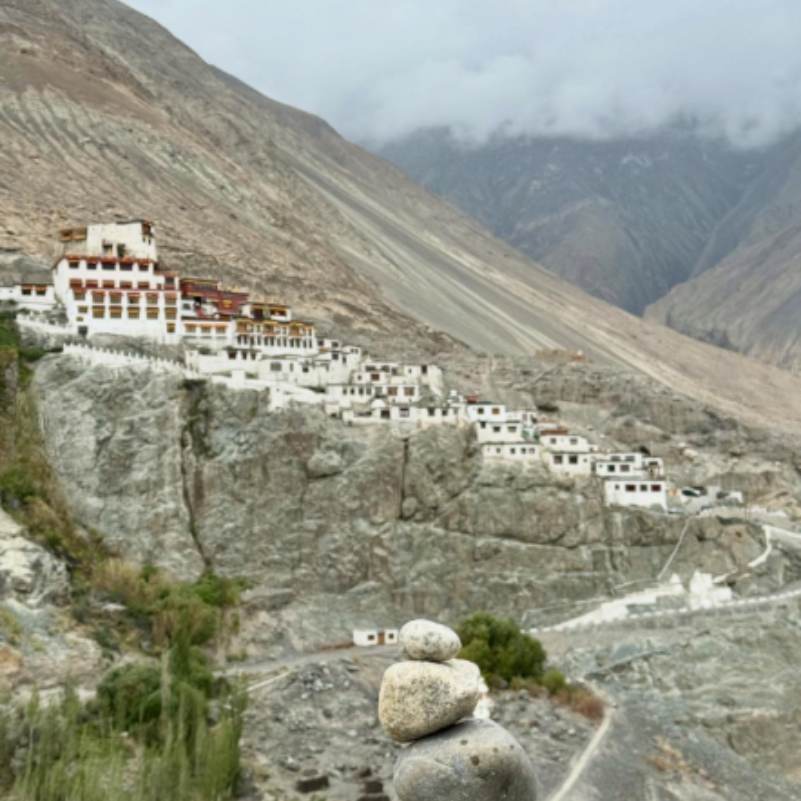
Diskit Monastery and Maitreya Buddha
About 10 km east of Hunder, 20 to 30 minutes
The oldest and largest gompa in Nubra, founded in the 14th century, Gelugpa school, perched on the hillside above the village. The separate 106-foot (32-metre) Maitreya Buddha statue on the adjacent ridge, consecrated by the Dalai Lama in 2010, is the landmark photograph of the valley and pairs naturally with a Hunder visit.
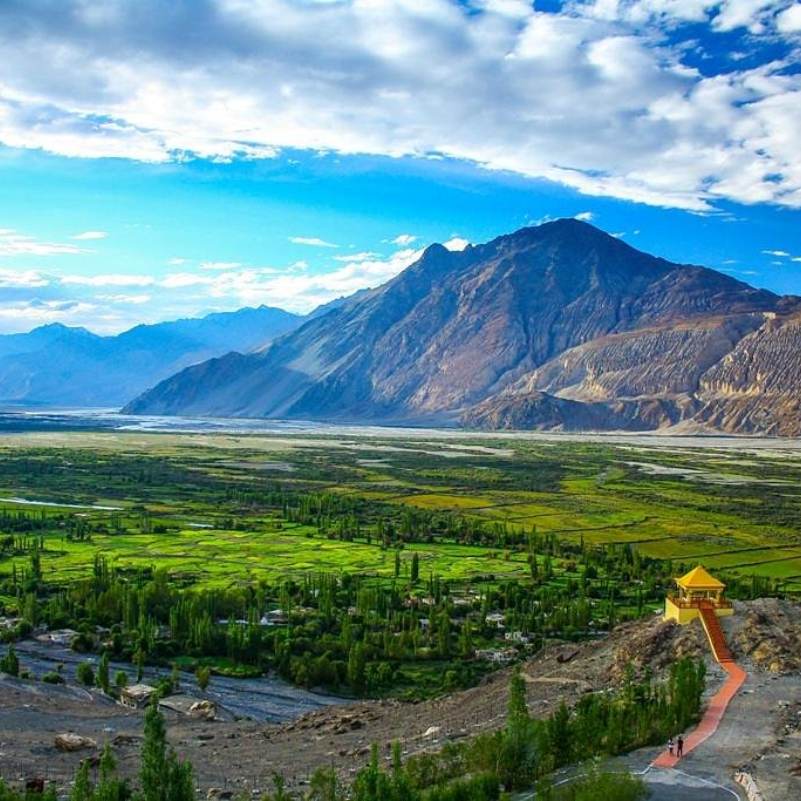
Nubra Valley (wider context)
Hunder sits inside Nubra, on the Shyok side
The broader valley guide covering Diskit, Hunder, Sumur, Panamik, and Turtuk as a full 2 to 4 night loop. Useful if you are planning the whole Nubra leg and not just the dunes day.
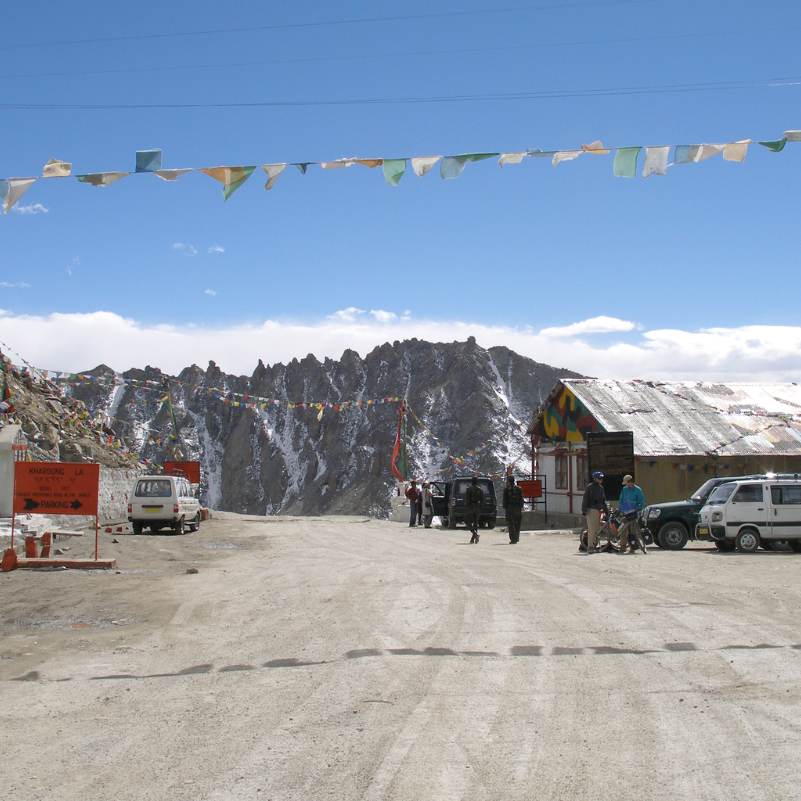
Khardung La Pass
About 80 km from Hunder, on the route back to Leh
The high pass at roughly 5,359 m that connects Leh to Nubra. Signboards still claim 5,602 m and world's highest motorable road, both of which have been contested by modern surveys. Worth a 15 minute photo stop, not longer, the altitude there is higher than anywhere you will sleep.
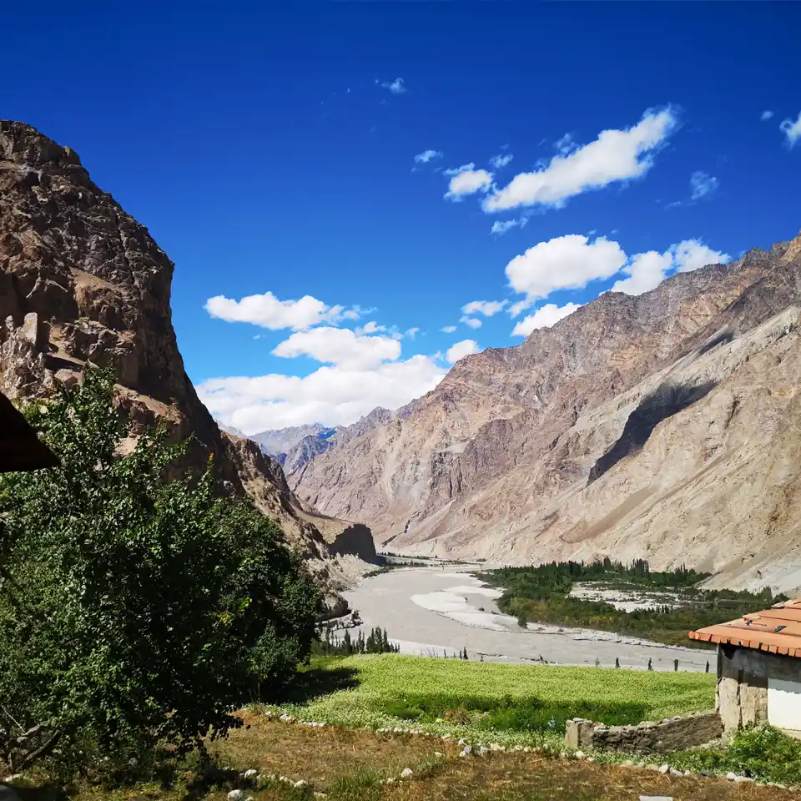
Turtuk Village
About 80 km north of Hunder along the Shyok, 2.5 to 3 hours
The Balti Muslim village that became part of India only in 1971 and opened to tourists in 2010. Apricot orchards, stone houses, narrow lanes, and a completely different food and language tradition. Worth at least one overnight stop if you can spare the extra day from Hunder.
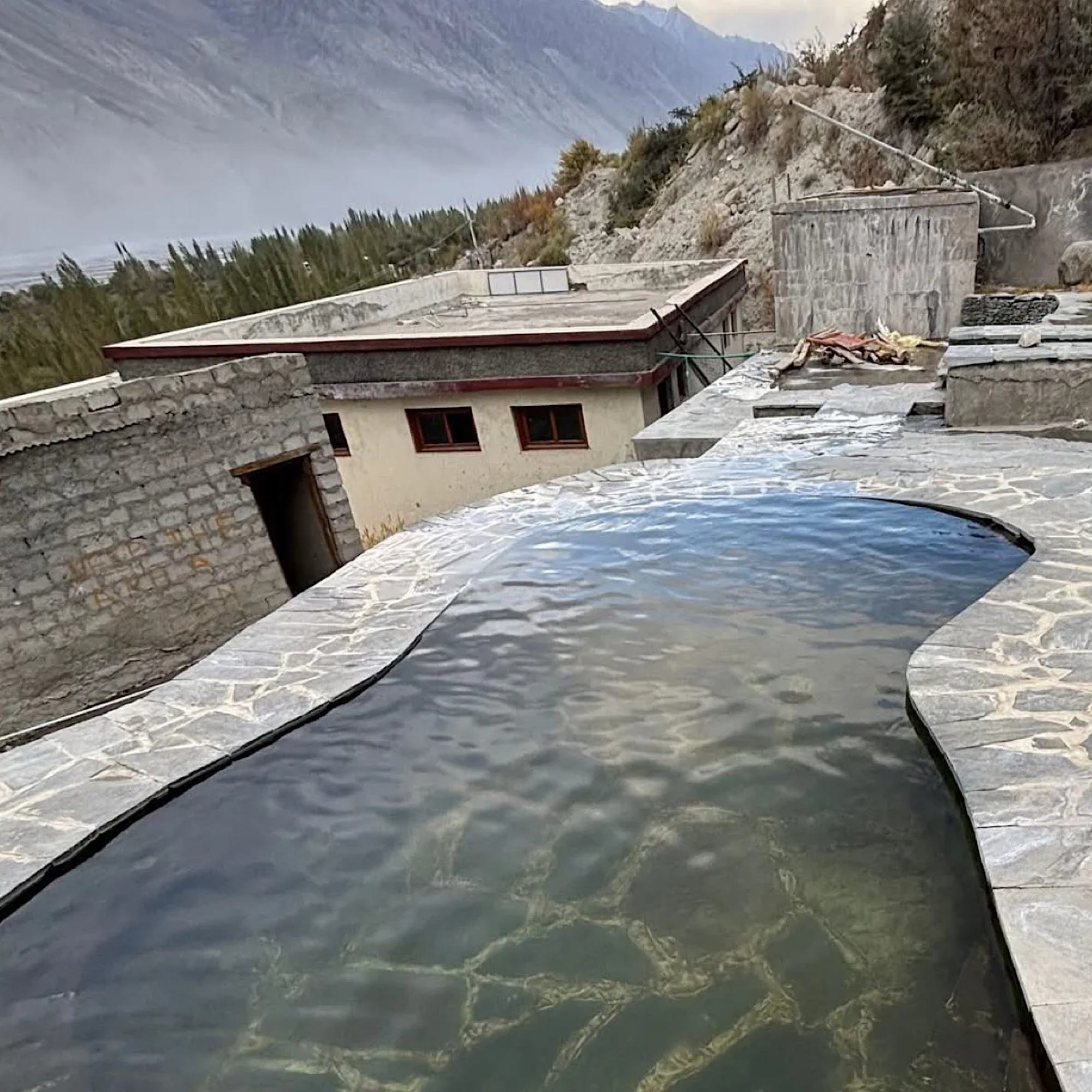
Panamik Hot Springs
About 65 km from Hunder via Khalsar, 2 hours
Sulphur hot springs once used by Silk Route caravans, on the Sumur side of the valley. The bathing facility is basic and the springs are more interesting as a historical stop than a bathing experience. Pairs well with a half day loop on the Sumur side on your last morning.
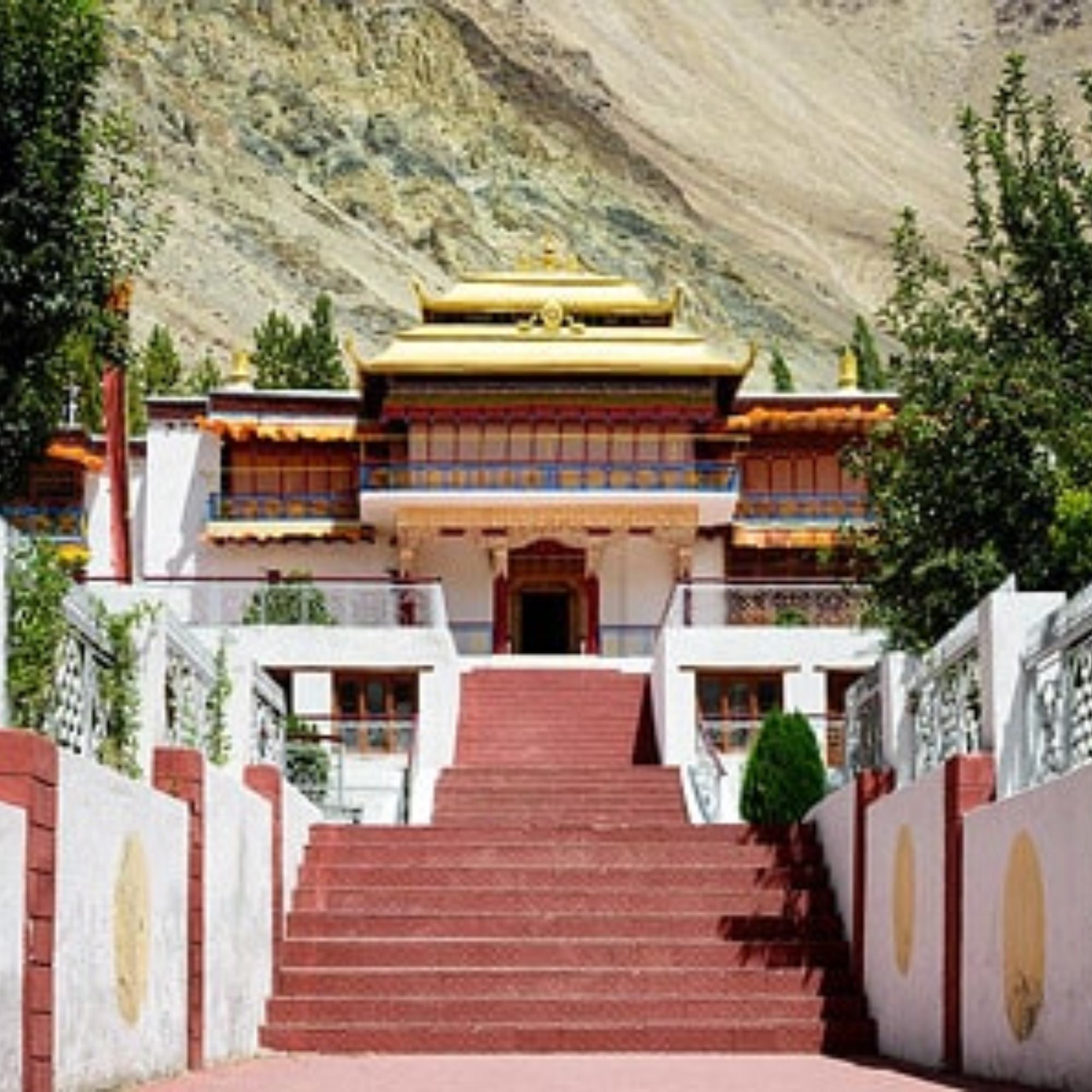
Sumur and Samstanling Monastery
About 35 km from Hunder via Khalsar
A quieter orchard village on the Nubra river side with a working monastery above it, less touristy than Diskit. A gentler pace if you are staying three nights and want a slower alternative to a second dunes visit.
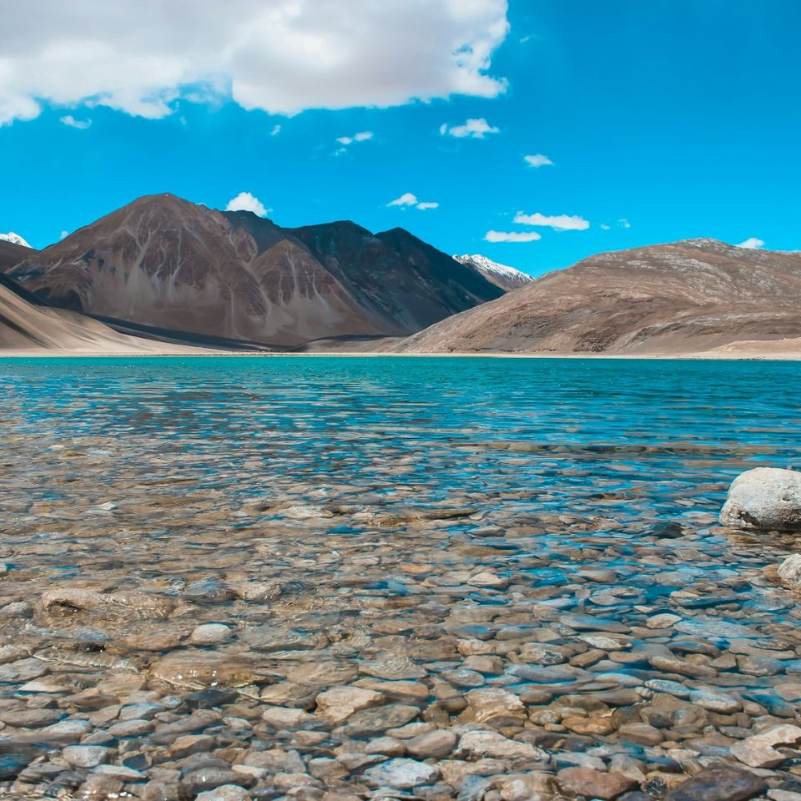
Pangong Lake
About 160 km via the Shyok direct route, or via Leh
The big high altitude lake on the other side of the Ladakh Range. Most serious Ladakh itineraries combine Nubra and Pangong, either by returning to Leh between the two or by taking the rougher Shyok route direct from Hunder.
Our packages with Hunder Sand Dunes
Curated trips that include a visit to Hunder Sand Dunes.
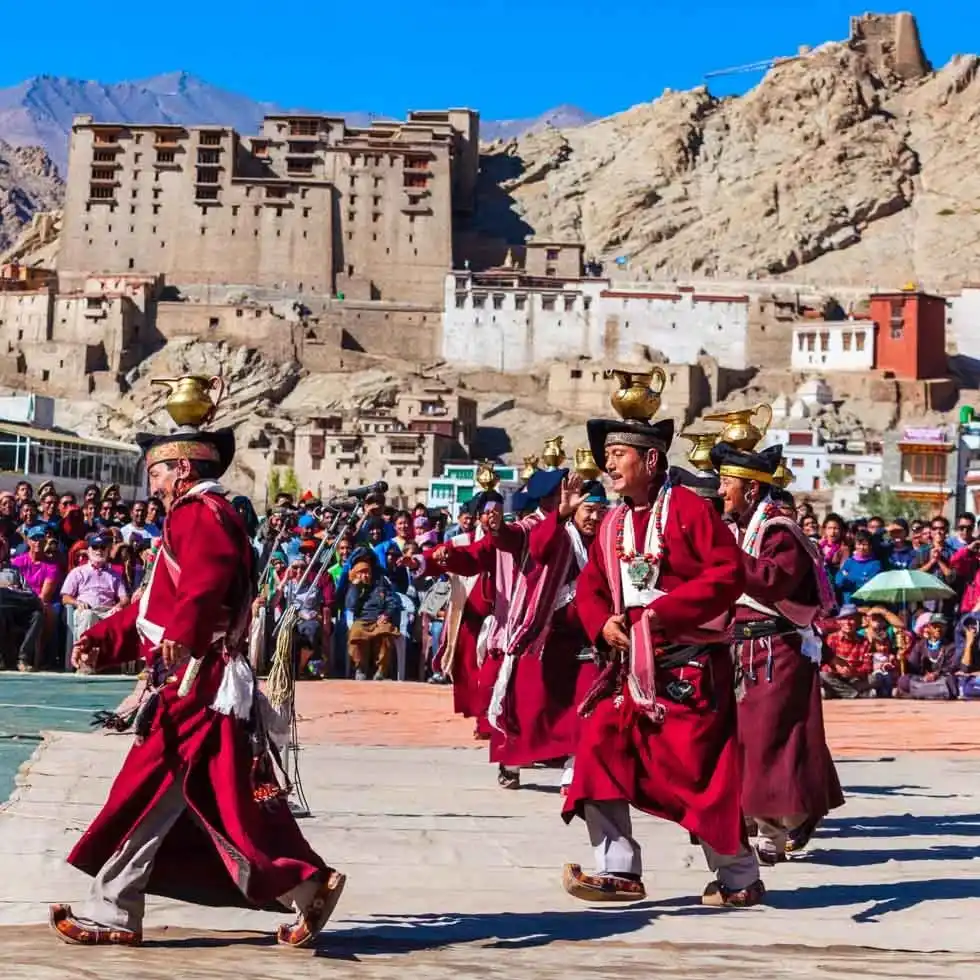 7D/6N
7D/6NLeh Ladakh Tour With Turtuk Village Nubra Valley and Pangong Lake
2D Leh•2D Nubra Valley+1
₹27,999₹33,999SAVE INR 6,000/ person 6D/5N
6D/5NBest Selling Leh Ladakh Tour With Nubra Valley and Pangong Lake
2D Leh•1D Nubra Valley+1
₹23,999₹28,599SAVE INR 4,600/ person Group Tour6D/5N
Leh Ladakh Group Tour With Nubra Valley and Pangong Lake
2D Leh•1D Nubra Valley+1
₹18,999/ person
Frequently Asked Questions about Hunder Sand Dunes
What is the altitude of Hunder Sand Dunes?
Hunder village and the dune belt sit at around 3,050 m (roughly 10,010 ft). That is noticeably lower than Leh itself at 3,500 m, which is one reason most travellers feel better here than they do in Leh. Khardung La pass on the route is far higher at about 5,359 m by modern GPS measurement, despite the local signboards claiming 5,602 m.
How far is Hunder from Leh and how long does the drive take?
Hunder is about 130 km from Leh via Khardung La. The drive takes 5.5 to 6.5 hours with stops. You cross Khardung La at around 5,359 m, descend to Khalsar, turn left for Diskit, and continue 10 km west to Hunder. Leave Leh by 8 AM to reach Hunder by early afternoon in time for a late afternoon visit to the dunes.
How far is Hunder from Diskit?
About 10 km, roughly 20 to 30 minutes by road. The two villages are linked by a short tarred valley floor road along the Shyok. Diskit has the monastery and the 106-foot (32-metre) Maitreya Buddha, Hunder has the sand dunes and the Bactrian camels. Most travellers visit both, usually over one or two days.
Are Hunder Sand Dunes like the Sahara or Jaisalmer?
No, and it helps to know that before you go. Hunder is a compact cold desert dune belt, about 7 km long between Hunder and Diskit villages at 3,050 m. On pure scale, Jaisalmer and any proper desert will beat it. The reason people come to Hunder is not the size of the dunes but the combination, sand at high altitude, snow peaks on the horizon, and double humped Bactrian camels grazing through the scrub, which exists nowhere else in India.
Do I need a permit for Hunder in 2026?
Yes. Hunder sits inside the protected area of Nubra. Indian tourists must pay the mandatory Environmental Fee (formerly ILP) online at lahdclehpermit.in or at the Leh DC office, typically Rs 400 environment fee plus around Rs 20 per day wildlife fee, and carry the receipt with ID. One payment usually covers Nubra, Pangong, Tso Moriri, and Hanle. Foreign nationals require a Protected Area Permit (PAP) to enter Nubra Valley, applied for through a registered Leh travel agent, with a minimum of two travellers on paper. Fees can update yearly, confirm close to your travel date.
How much does the Bactrian camel ride at Hunder cost?
The standard ride is 15 to 30 minutes on a fixed track, priced between Rs 300 and 500 per person in 2026, with July peak weekends at the higher end. Late afternoon rides are best for photography, with the soft side light creating long shadows across the dunes. Longer rides or a photograph combo cost more and are negotiated at the counter. Payment is cash only. Confirm the current rate at the main counter, not from touts walking around.
What is the best time to visit Hunder Sand Dunes?
Late May to late September is the main window. Mid June to August is the warmest and most reliable, with the fullest camel operations and the biggest crowds in July. September to early October is the photographer's pick, with clean skies, sharp light, and thinner traffic. At the dunes themselves, the best slots any day are sunrise before 8 AM and the last hour before sunset, never midday.
How many days should I spend at Hunder?
One night is enough if Hunder is a single stop inside a two night Nubra plan, with another night at Diskit or Sumur. Two nights is better because it gives you the dunes at both sunset and sunrise without rushing. Three nights only makes sense if you are adding Turtuk, Panamik, and Sumur at a slower pace. A day trip from Leh is technically possible but strongly not recommended.
Is Hunder family friendly?
Yes, more so than most Ladakh destinations, thanks to the lower altitude on the valley floor. Families with children aged six and above generally handle Hunder well. The camel ride is usually a hit with kids, and the short walks into the dune belt are easy. Acclimatise for at least two nights in Leh first. Khardung La on the route is the one thing to handle carefully, keep the stop short and do not let anyone sleep through the pass.
Where should I stay at Hunder?
Hunder village has a wide range. Basic tent camps at Rs 1,500 to 3,000 per night for summer comfort, mid range cottages and small hotels at Rs 3,500 to 6,000 for solid year round comfort, and luxury camps at Rs 8,000 to 15,000 for premium stays. Most camps are walking distance to the dunes. Diskit, 10 km east, is the alternative base if you want to be closer to the monastery. Book two to three weeks ahead for July weekends.
Is there network, ATM, and fuel at Hunder?
Limited on all three. No ATM at Hunder, the Diskit ATM is often out of service, carry Rs 5,000 to 7,000 per person in cash from Leh. No fuel pump at Hunder, Diskit 10 km east has a generally working pump. Fill up in Leh before Khardung La. Mobile network is patchy, BSNL postpaid gets intermittent signal, Jio and Airtel are effectively dead after Khardung La. Plan to be mostly off grid.
Can I skip Hunder on a Ladakh trip?
You can, but few travellers regret visiting. If you are tight on days and have already picked Pangong, skipping Hunder is defensible. If you have three days or more outside Leh, Hunder and Diskit are an easy add and the Bactrian camels are genuinely unusual. For most first time Ladakh travellers, a two night Nubra leg with Hunder and Diskit is one of the better uses of time, and the valley floor altitude helps acclimatisation before you take on Pangong.
Can I combine Hunder with Pangong Lake directly?
Yes, via the Shyok route through Agham, Durbuk, and Tangtse. It is about 160 km from Hunder to Spangmik and takes 7 to 9 hours on a rough road with water crossings in midsummer. This route saves a full day compared to returning to Leh in between, but it is only reliable from July to September and can close at short notice after heavy rain. Do it only with a sturdy SUV and an experienced driver, and confirm current status on the morning you leave.
Related guides
Posts about Ladakh
- Manali to Leh Highway 2026: Every Pass, Stop and Distance
- Umling La Ladakh Guide 2026: Route, Altitude, Permit, Safety & Reality Check
- Turtuk Ladakh Travel Guide 2026: Balti Culture, Apricot Orchards and Why It Is Perfect for Families
- Offbeat Ladakh for Couples in 2026: Quiet Routes Beyond Pangong and Nubra
- Aryan Valley Ladakh Guide 2026: Dah, Hanu, Brokpa Culture, Route and Who Should Visit
- Hanle vs Tso Moriri vs Turtuk: Which Offbeat Ladakh Place Should You Choose in 2026?