
Diskit Monastery
The oldest and largest gompa in Nubra Valley, on a hilltop above the Shyok river at around 3,144 metres. A 14th century Gelugpa monastery with a 32 metre Maitreya Buddha on the ridge below, consecrated by the Dalai Lama in 2010. 120 km from Leh across Khardung La, easy 1 to 1.5 hour visit, best early morning or late afternoon.
- Altitude ~3,144 m / 10,315 ft
- ~120 km from Leh via Khardung La
- Open roughly 7 AM to 7 PM
- 32 m Maitreya Buddha consecrated in 2010
- Allow 1 to 1.5 hours
What makes it special
Diskit is the kind of monastery that earns its hype without trying. A short turn off the main Nubra road, a climb of a few switchbacks past rows of prayer flags, and there it is on the ridge. The old whitewashed gompa built into the hillside, the giant seated Maitreya Buddha on the next ridge across, and the Shyok river running wide and slow below.
The short version. It is a 14th century Gelugpa (Yellow Hat) monastery on a hill above Diskit village, the oldest and largest gompa in Nubra Valley, part of the wider Thikse network, and home to around a hundred monks plus a small residential school run with a Tibetan support group. Altitude sits at roughly 3,144 metres at the main hall and slightly higher at the Maitreya Buddha ridge.
The statue is what most travellers come for. Thirty two metres tall, construction started in 2006, finished with 8 kg of donated gold on the face and crown, and consecrated by the Dalai Lama on 25 July 2010. It sits on the adjacent ridge below the old monastery, facing the Shyok river and in turn the Pakistan border. The commissioning committee stated three specific reasons for it. Protection of Diskit village. Prevention of further war with Pakistan. Promotion of world peace. Most big religious statues are abstract in their intent. This one feels specific, which is part of why it lands.
Honest framing on how long to give it. One to one and a half hours is enough for most travellers. You walk up the stone steps past the chortens, visit the old prayer hall with its guardian deities and the large ceremonial drum, climb to the cupola to see the fresco of Tashilhunpo Monastery, then either walk or drive across to the Maitreya Buddha ridge for the photograph and the wider view. If you stay longer, it is because you have caught a prayer session and want to listen.
The right time of day. Early morning between 7 and 9 AM is when monks gather for the morning prayer, the drum and chants fill the old hall, and tour groups have not yet arrived. Late afternoon between 4 and 6 PM is the better light on the statue, especially in September when the sun drops behind the Ladakh range and the copper face catches gold. Midday is the flattest and busiest window. If you can only pick one, go early.
One honest note about the monastery itself. The older parts are in modest condition. The dukhang's older murals are dark with centuries of butter lamp soot, the zimcchungh is showing its age in visible ways, and some structures have settled. If you are coming with expectations from a curated museum, adjust them. This is a working religious site that has been in continuous use for roughly six hundred years, which is precisely what makes it worth climbing to.
Who this place suits. Almost everyone on a Nubra trip should stop here. It is the one non negotiable cultural visit in the valley. Families with children handle it easily because the walk is short and the site is open, though young kids tire quickly in direct sun at this altitude. Seniors manage it comfortably too, with the option to ask the driver to take the vehicle higher up. Real accessibility is limited though, the stone steps and the path across to the Buddha ridge are not wheelchair friendly. Pets are not practical inside the monastery complex.
A small aside on context. This is part of a broader Nubra Valley trip for almost everyone who comes here. If you are still planning the wider itinerary, the valley's main article covers altitude, permits, and where to stay in more depth. For most travellers the monastery is a half day stop on the way into or out of Hunder, not a standalone destination.
Quick answers
- Is Diskit Monastery worth visiting?
- Yes, for almost anyone on a Nubra Valley trip. The monastery is a 14th century Gelugpa gompa on a hill above the Shyok river, the oldest and largest in the valley, and its 32 metre Maitreya Buddha statue on the next ridge over, consecrated by the Dalai Lama in 2010, is the signature photograph of northern Ladakh. One to one and a half hours is enough for most travellers, more if you catch the morning prayer in the old hall or time it for late afternoon light on the statue.
- What are the entry fee and timings for Diskit Monastery?
- The monastery generally opens from around 7 AM to 7 PM daily, with some sources noting a short lunch break from about 1 to 2 PM. There is a small entry fee, usually Rs 30 to 50 per person, collected at the main gate. The separate Maitreya Buddha viewing area is generally free. Timings and fees are semi stable, confirm on arrival.
- What is the best time of day to visit Diskit Monastery?
- Early morning between 7 and 9 AM for the quiet and the monks' prayer in the old hall, or late afternoon between 4 and 6 PM for golden light on the Maitreya Buddha. Midday, especially between 10 AM and 12 PM, is when tour buses arrive and the light is flat. September and the shoulder months are the best overall for clear air and sharp visibility of the valley below.
Quick facts
Everything you need to know at a glance.
At a glance
- Altitude
- Around 3,144 m / 10,315 ft at the main monastery on the hilltop. The Maitreya Buddha ridge sits slightly higher, reached by a short walk or service road from the monastery.
- Location
- On a hilltop immediately above Diskit village in Nubra Valley, northern Ladakh. The Maitreya Buddha statue stands on an adjacent ridge below the monastery, facing the Shyok river to the west.
- Founded
- 14th century, by Changzem Tserab Zangpo, a disciple of Tsongkhapa. Belongs to the Gelugpa (Yellow Hat) sect of Tibetan Buddhism and is a sub gompa of Thikse near Leh.
- Nearest base
- Diskit village at the foot of the hill, Hunder about 10 to 12 km away, Leh about 120 km south via Khardung La.
- Open season
- The monastery itself is open year round. Practical access depends on Khardung La pass conditions. Standard tourist window is May to late September, with occasional winter visits possible for the Dosmoche festival in late January or February, typically via specialist Leh operators.
- Timings
- Generally 7 AM to 7 PM daily. Some sources note a lunch break roughly from 1 to 2 PM. Confirm on arrival, smaller religious sites can close without notice around festival days or monastic events.
- Entry fee
- Small nominal fee at the monastery, usually around Rs 30 to 50 per person, paid in cash at the entrance. The separate Maitreya Buddha viewing area is generally free. You also need the Ladakh Environment and Development Fee receipt (Indians) or a Protected Area Permit (foreigners) to enter Nubra, applied online at lahdclehpermit.in or through a Leh agent. Fees are semi stable and can change, confirm before travel.
- Time needed
- 1 to 1.5 hours is enough for most travellers, covering the old monastery, the terrace view, and the Maitreya Buddha ridge. Allow 2 hours if you want to catch morning prayers or stay for light changes on the statue.
- Known for
- The 32 metre Maitreya Buddha statue on the adjacent ridge, consecrated by the Dalai Lama in 2010. Being the oldest and largest Gelugpa monastery in Nubra Valley. Panoramic views of the Shyok river and the valley floor. The annual Dosmoche festival in late winter.
- Difficulty
- Easy. A short climb of around 100 metres of elevation on stone steps from the main parking to the old monastery, or you can ask your driver to take the vehicle higher up the service road. Walk across to the Maitreya Buddha ridge is level and short. Accessibility for wheelchair users is limited.
On the ground
- Mobile network
- Patchy. BSNL postpaid works intermittently around Diskit village and the monastery, Jio and Airtel are usually dead. Expect to be mostly off grid while in the valley.
- ATMs
- There is a bank in Diskit village with an ATM that is frequently out of service. Carry cash from Leh, at least Rs 5,000 per person for the Nubra leg. The monastery entry fee is cash only.
- Fuel
- Diskit village has a generally working fuel pump, the main one in this side of Nubra. Fill up in Leh before crossing Khardung La and do not rely on a single Nubra pump as your only backup.
- Food
- A small cafe at the monastery serves tea and simple meals. For proper food, Diskit village has dhabas and small restaurants with Ladakhi and Tibetan options, Khalsar on the main road is the other honest lunch stop.
- Parking
- Informal open parking near the main entrance of the monastery. A second parking exists higher up the service road closer to the Maitreya Buddha ridge. Usually free.
- Washrooms
- Basic washrooms at the monastery, usable but keep expectations modest. Carry tissues and hand sanitiser.
- Photography
- Allowed and welcomed outdoors at the monastery and at the Maitreya Buddha platform. Restricted inside prayer halls and inside the statue's plinth interior, ask before shooting. Do not photograph monks at close range without permission, and avoid photographing prayer sessions.
- Drones
- Strongly discouraged. The whole valley is a sensitive border region and drones have been confiscated in similar areas. Keep yours packed.
- Walking
- Short stone step climb of about 100 metres vertical from the main parking to the prayer hall. A level short walk or drive across to the Maitreya Buddha ridge. No long hikes required.
- Guided tours
- Most travellers reach the monastery on a Nubra Valley package or a private taxi from Leh or Hunder. Local caretakers at the monastery will often answer questions informally, especially in the quieter morning window.
Seasonal weather
- May to June start20°5°May to early June
- Mid June to August28°10°Mid June to August
- September to early October18°2°September to early October
- November to March2°-18°Winter
Suitable for
- Couples — suitable
- Families — suitable
- Seniors — suitable
- Solo — suitable
- First-timers — suitable
- Pet-friendly — not suitable
How to reach Diskit Monastery
3 approach routes, with seasonal access.
From Leh via Khardung La
Generally accessible year round, though Khardung La can close for a day or two after heavy snow in winter. Main tourist window is May to late September.- Distance
- About 120 km from Leh to Diskit
- Time
- 5 to 6 hours one way with stops
- Road
- Mostly tarred with rough and narrow stretches near the top of Khardung La. Standard SUVs handle it comfortably.
- Last fuel
- Fill up in Leh. Diskit village has a generally working pump as backup.
The default route and the one ninety percent of travellers take. From Leh, head north to Karu, then west to North Pullu, climb Khardung La at around 5,359 metres, descend through South Pullu and Khardung village to Khalsar. At Khalsar, the road splits, take the left fork toward Diskit. The monastery is on the hill immediately above Diskit village, well signposted, with a short service road off the main Nubra highway. Leave Leh by 8 AM to reach the monastery by early afternoon.
From Hunder to Diskit Monastery
Year round access for this stretch, same as Hunder itself.- Distance
- ~10 to 12 km
- Time
- 25 to 30 minutes one way
- Road
- Tarred, easy drive.
- Last fuel
- Not needed for this short leg.
If you are already staying at Hunder, the monastery is a short drive away. Take the main Nubra road east toward Khalsar, the monastery service road is well signposted off on the left just before Diskit village. Most travellers do this as a half day trip, combining the monastery with the Hunder sand dunes in the same day (monastery in the morning, dunes in the late afternoon).
From From Sumur, Panamik, or Yarab Tso
Year round.- Distance
- ~25 to 35 km from Sumur or Panamik, via Khalsar
- Time
- 45 minutes to 1 hour 15 minutes
- Road
- Tarred main Nubra road, the same road that carries all valley traffic.
- Last fuel
- Refuel at Diskit village on arrival.
From the Sumur, Panamik, or Yarab Tso side of the valley, return to Khalsar where the two forks of the valley join, then take the Diskit fork south. Add about 30 to 40 minutes to your drive depending on your exact starting point. Useful if you are basing at Sumur for a quieter stay but want to cover the main monastery on a half day trip.
Best time to visit
Season by season, so you can plan around the weather rather than hope.
- Recommended
Main window
May to late September
Full road access, standard timings, best window for most travellers, September gives the cleanest light
- Day temperature at the site
- ~15 to 25 C
- Light window for the statue
- Best after 4 PM
- Crowds
- High in July, moderate in May, June, and September
- Monastery access
- Full, all paths open
The main tourist window for both the valley and the monastery. Days are warm enough at the monastery hilltop, light is usually clean by late morning, and prayer sessions run through their regular rhythm. Tour groups from Leh peak between 10 AM and 12 PM, so plan before 9 or after 3 for the quieter experience. Late September in particular gives some of the cleanest air of the year and the best light on the Maitreya Buddha in the late afternoon.
Shoulder
Mid October to early November, and April
Quiet, atmospheric, cold, and access is weather dependent, worth it only if your plan can flex by a day
- Day temperature at the site
- ~0 to 10 C
- Night temperature
- ~-10 to -5 C
- Khardung La access
- Usually passable with occasional closures after snow
- Crowds
- Low
A short and often lovely shoulder window. Days shorten fast, nights drop toward freezing in October and stay well below zero by late March and April. Khardung La sees intermittent snow closures, so any trip in this window needs flexibility. Crowds almost vanish. The monastery itself is open, and this is when the most interesting prayer rhythms happen in the old dukhang because there are no tour groups interrupting. If you can get in, it is arguably the most atmospheric time to visit. But do not plan a tight schedule around this window.
Winter
Late November to March
Hard access, Dosmoche festival is the one reason, specialist winter logistics only
- Day temperature at the site
- ~-5 to 2 C
- Night temperature
- ~-15 to -20 C
- Khardung La access
- Intermittent, specialist logistics required
- Dosmoche festival
- Usually late January or February, dates shift yearly
Off season for standard travel, the single window when Dosmoche festival makes the monastery worth a special trip. The festival, usually in late January or February with dates set by the Tibetan lunar calendar, draws the Nubra community and a handful of winter travellers. Access is entirely weather dependent and Khardung La can be closed for days at a time. Any visit this time of year needs a specialist Leh operator who will make real time decisions on the morning of travel, proper winter equipment, and accommodation pre booked in Diskit or Hunder where a few places stay open for festival visitors.
Things to see & do
5 things worth your time at Diskit Monastery.
The old prayer hall and the morning chants
30 to 45 minutesThe oldest part of the monastery and the reason to come up early. The prayer hall (dukhang) houses a central statue of Maitreya Buddha, surrounded by fierce guardian deity images and a large ceremonial drum. Morning prayer sessions typically run around 7 to 8 AM, and sitting quietly on the wooden benches while the chants and drum fill the hall is one of the better quiet experiences in Ladakh. The cupola above displays a fresco of the Tashilhunpo Monastery of Tibet, which is a small detail most travellers miss. Remove shoes before entering, keep voices low, and do not photograph inside the hall without asking.
The 32 metre Maitreya Buddha and the ridge walk
20 to 45 minutesThe signature photograph of the whole Nubra Valley. The 32 metre seated Maitreya Buddha sits on a separate ridge immediately below the old monastery, facing the Shyok river and the Pakistan border about 80 km to the west. You can walk from the monastery across or drive the short service road. Allow 20 to 30 minutes at the statue itself, more if the light is on your side. The platform around the base is open and free to walk. Photography is fine outside the statue. The small interior space inside the plinth has restricted photography, ask the caretaker if in doubt.
The terrace viewpoint over Nubra Valley
15 to 30 minutesThe terrace above the main monastery gives the classic wide view down into Nubra Valley, with the Shyok river on the left, Diskit village immediately below, and on a clear day a distant haze of sand dunes between Diskit and Hunder. Most travellers spend fifteen minutes here and then move on. Our suggestion, come back up here for five minutes just before you leave, after the crowd at the Buddha ridge has thinned. The soundscape of prayer flags in wind and the lack of anyone else is the best memory of the visit for a lot of travellers.
Dosmoche festival, if you time it right
Most of a day, in February, dates vary yearlyNot a casual visit, an annual festival. Dosmoche, sometimes called the Festival of the Scapegoat, is the monastery's biggest ceremonial event. Monks perform masked Cham dances in the courtyard, a scapegoat effigy made of dough is burned to cast out bad luck for the coming year, and the full valley community gathers for it. Dates shift each year because they follow the Tibetan lunar calendar, but the festival usually falls in late January or February. Outsider attendance is modest because Khardung La is often snowbound, which is exactly what makes it worth planning if you can swing the logistics with a specialist Leh operator.
Short tea stop at the monastery cafe
20 to 30 minutesA small in house cafe next to the monastery serves basic tea, thukpa, and simple Ladakhi food at reasonable rates. It is genuinely convenient after the climb, and the money goes back into the monastery's running. Not a destination meal, but a useful stop if you arrived early and did not eat in Diskit village. The better full meal option is at one of the dhabas in Khalsar or Diskit village itself.
Know before you visit Diskit Monastery
The practical bits, from people who have been.
What Diskit Monastery actually is14th century Gelugpa monastery, sub gompa of Thikse, roughly 100 resident monks, running a small school. Working religious site, not a curated attraction.
A little context helps you appreciate what you are walking through.
Founded in the 14th century by Changzem Tserab Zangpo, a disciple of Tsongkhapa, the founder of the Gelugpa (Yellow Hat) school of Tibetan Buddhism. The monastery is a sub gompa of Thikse near Leh, which is why you will see stylistic overlaps in the architecture and cupolas.
It is a working religious site, not a museum. Around a hundred monks live here, and the administration runs a small residential school for local children with support from a Tibetan Buddhist organisation. Treat it accordingly. Dress modestly, speak softly in the prayer halls, do not sit on monks' benches unless invited, and circulate around chortens and prayer wheels clockwise.
The older sections are in modest condition. Some of the dukhang murals are soot darkened from centuries of butter lamps, and parts of the original structure have visible cracks. Recent additions are well maintained, and the Maitreya Buddha statue on the adjacent ridge is brand new by comparison. If you come expecting a polished museum experience, adjust that expectation. The value is in the continuity, not the upkeep.
The Maitreya Buddha, in brief32 m seated Maitreya, started 2006, consecrated by the Dalai Lama on 25 July 2010, faces the Shyok river toward Pakistan. Built around three ideas: protection, prevention of war, promotion of peace.
The giant Buddha is the reason many travellers come here, and it is worth a minute of context.
Dimensions and build. 32 metres tall (about 106 feet), seated on a square plinth, visible from most of Diskit and Hunder valley floor. Construction started in 2006, the statue was decorated with roughly 8 kg of donated gold on the face and crown, and it was consecrated by the Dalai Lama on 25 July 2010.
The three ideas. The committee that commissioned the statue stated three specific reasons for building it, and they are worth knowing before you stand there. Protection of Diskit village. Prevention of further war with neighbouring Pakistan. Promotion of world peace. The statue faces the Shyok river to the west, which is also the direction of the Pakistan border roughly 80 km away. This orientation is not accidental.
Position and access. The statue sits on a separate ridge directly below the old monastery, about 200 to 300 metres away as the crow flies. You can walk across the ridge or drive the short service road. From Diskit village in the valley below, a small staircase trail also climbs straight up to the Buddha ridge if you prefer to approach it first before going up to the old monastery. Most tour groups do it the other way round, monastery first, Buddha second.
Inside the plinth. There is a small interior space at the base of the statue with photographs and history. It is open when a caretaker is on site. Photography inside is usually restricted, ask before shooting. The platform around the outside is free to walk and photograph.
How to actually visit, without wasting timeDrive or walk up to the parking, do the old monastery first then the Maitreya Buddha ridge, budget 1 to 1.5 hours, photography mostly fine outdoors but ask inside prayer halls and the statue plinth.
Not complicated, but a few small decisions save time.
By car. Most taxis from Leh or within Nubra drop you at the parking below the old monastery, from where a short walk of stone steps takes you up to the main hall. If you ask, most drivers will take the vehicle higher up the service road to spare the climb for older travellers or small children.
On foot. If you are staying in Diskit village, the direct walk from village to monastery is about 2.5 km and takes 30 to 45 minutes uphill, a pleasant morning walk if you are acclimatised. The trail passes a long row of chortens which is one of the better approaches in Nubra.
Order of sites. The old monastery first (terrace, prayer hall, cupola) and then the Maitreya Buddha ridge is the default order and works well. Do the opposite if the late afternoon light is on the statue and you want to catch it last.
Time budget. 45 minutes for the old monastery, 30 minutes for the statue and the ridge, 15 minutes of buffer for photographs and a short tea at the monastery cafe. Total 1 to 1.5 hours for most travellers.
Photography notes. Outdoors is generally open. Inside the dukhang and inside the statue's plinth, photography is restricted. Drones are strongly discouraged, the whole valley is a border region and not a good place to test the limits.
Dosmoche festival, if you can make it workAnnual late January or February festival with masked Cham dances and a scapegoat effigy burning. Dates shift each year by the Tibetan lunar calendar. Logistics are winter specialist level.
This is the one cultural event at the monastery worth planning around if you can.
What it is. Dosmoche, sometimes called the Festival of the Scapegoat. An annual winter prayer festival held at the monastery, one of the two main such festivals in Ladakh (the other is at Leh). Masked Cham dances by the monks, a dough effigy of a scapegoat ritually burned on a nearby hill to clear bad luck for the coming year, clothes of temple deities changed, and the full valley community gathering for the event.
When it happens. Late January or February, with exact dates set by the Tibetan lunar calendar so they shift each year. Check current year dates with a Leh operator before planning, because Khardung La may or may not be passable at that point, and the festival is the one time most non Ladakhi visitors will come to Nubra in deep winter.
Practical logistics. You will need a winter tolerant 4x4, a driver with Khardung La winter experience, a proper down layer, and ideally accommodation pre booked in Diskit or Hunder because most camps and hotels are shut. This is adventure travel logistics, not a summer side trip.
What to expect culturally. Visitors are welcomed but should watch respectfully, not photograph monks performing without clear permission, and avoid blocking the community view. The dances are religious rituals, not performances for tourists.
Etiquette and practical notesDress modestly, shoes off in prayer halls, clockwise circulation, low voices, ask before photographing monks, carry small cash and water, and time your visit to avoid the 10 to 12 tour bus window.
Small things that keep the visit easy and respectful.
Dress modestly. Long trousers and covered shoulders for men and women, especially in the prayer halls. Shorts and sleeveless tops are inappropriate inside the monastery.
Shoes off for the prayer halls. Keep your socks on if the floor is cold, there are no heaters.
Circulate clockwise. Around chortens, prayer wheels, and inside most chambers. Spinning prayer wheels clockwise is the norm.
Donations are welcome, not required. Small notes of Rs 10, 20, or 50 placed quietly at altars or on the central figure are the usual gesture.
Keep voices low. Even outside prayer times, the monastery is a place of quiet.
Do not touch statues or frescoes. Even if they look weathered. Especially the older murals in the dukhang.
Photography etiquette. Ask before photographing monks, especially at close range. Do not photograph active prayer sessions unless you have been explicitly told it is fine.
Time your visit around tour buses. A quick practical tip. Group tours typically arrive between 10 AM and 12 PM. Before 9 AM and after 4 PM you will often have the site half to yourself.
Water and sunscreen. Altitude UV is intense, and there is no shade on the Maitreya Buddha ridge. Carry water.
Currency. The small entry fee is usually cash only. Carry small notes.
Nearby attractions
Other places worth the detour.
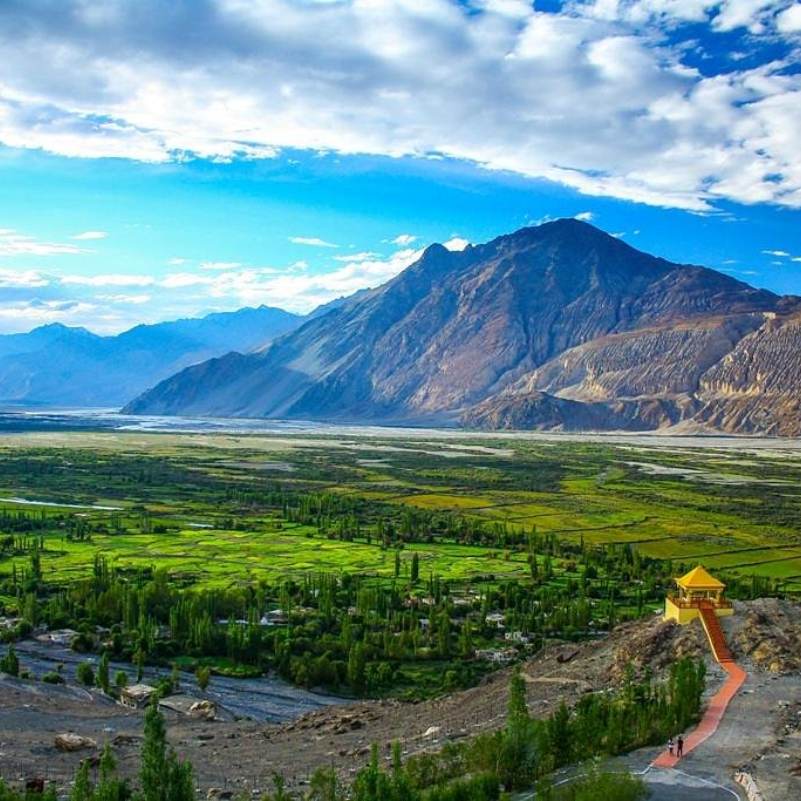
Nubra Valley
Monastery is the main cultural stop inside the valley
The broader valley this monastery sits in, covering the Hunder sand dunes, the Bactrian camels, Sumur, Panamik, Turtuk, permits, where to stay, and the Khardung La crossing from Leh. If you are planning the wider Nubra trip around this visit, start here.
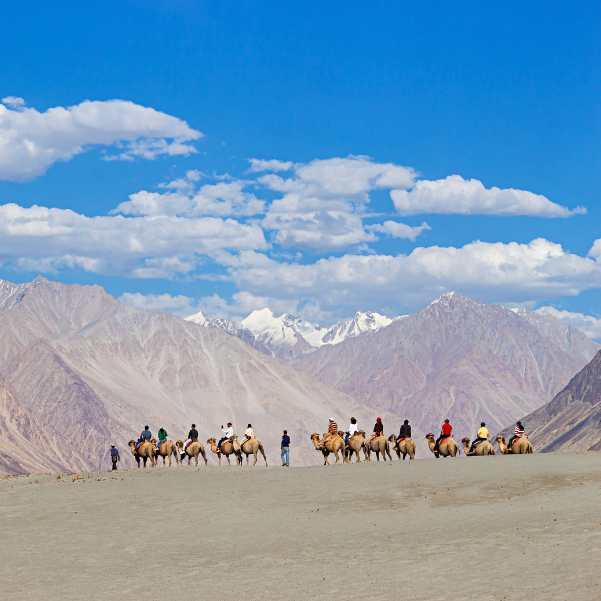
Hunder Sand Dunes
~10 to 12 km from Diskit
The signature cold desert dunes of Nubra, running between Hunder and Diskit villages at roughly 3,050 metres. Famous for its double humped Bactrian camel rides. Easily combined with the monastery on the same day, most travellers do the monastery in the morning and the dunes in the late afternoon.
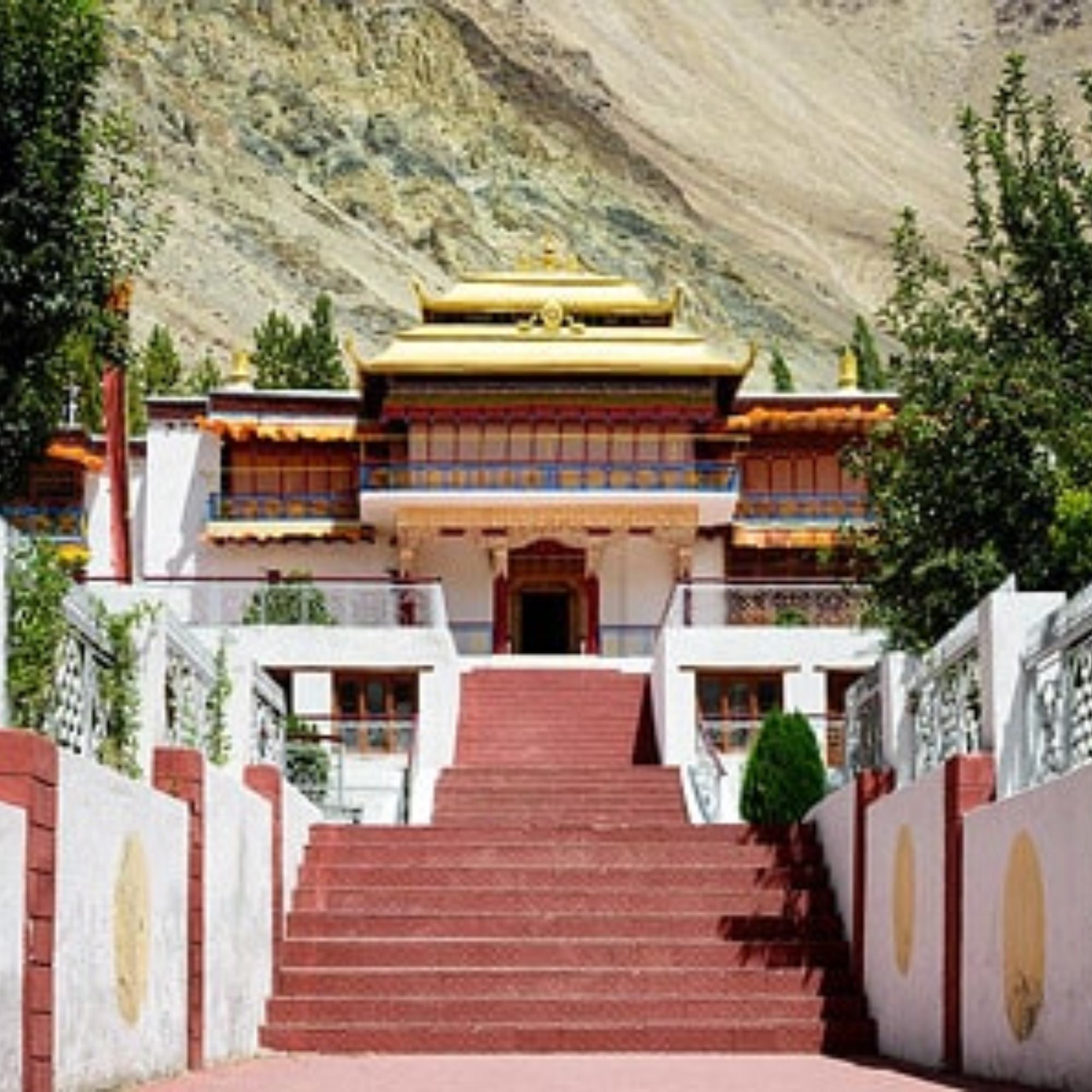
Sumur and Samstanling Monastery
~25 km from Diskit on the opposite fork at Khalsar
A smaller working monastery above Sumur village on the Nubra river fork, set among apricot orchards, quieter than Diskit and often the place where travellers actually see monks at daily life rather than performing. A gentle half day add on, especially if you want a contrast to the main monastery crowd.
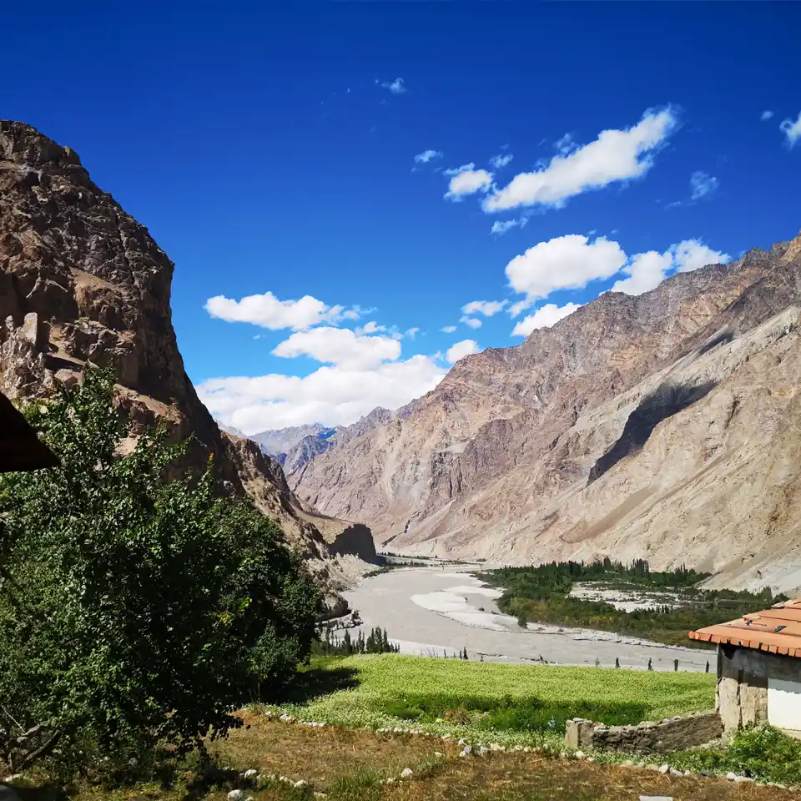
Turtuk Village
~80 km past Hunder, ~95 km from Diskit
The Balti Muslim village that became part of India in 1971 and opened to tourists only in 2010. A long drive up from Diskit, but the apricot orchards, stone houses, and completely different food and language tradition make it the most memorable overnight on most Ladakh trips. Worth a dedicated one or two night stay.
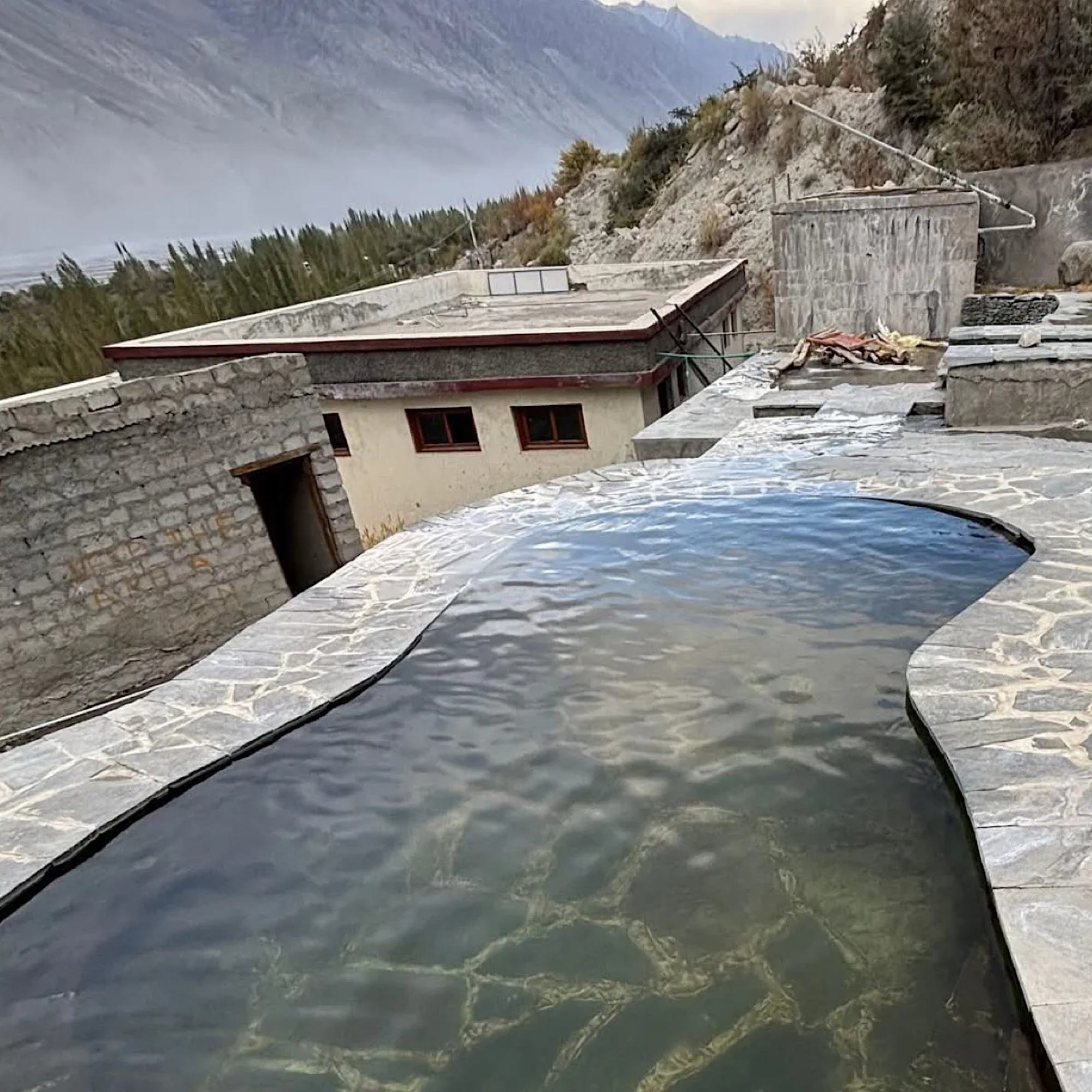
Panamik Hot Springs
~55 km from Diskit on the Sumur fork
The northernmost civilian accessible village in Nubra, about 55 km from Diskit on the Sumur fork, known for sulphur hot springs once used by Silk Route caravans. Best combined with a short detour to the nearby Yarab Tso, a small lake locals consider sacred.
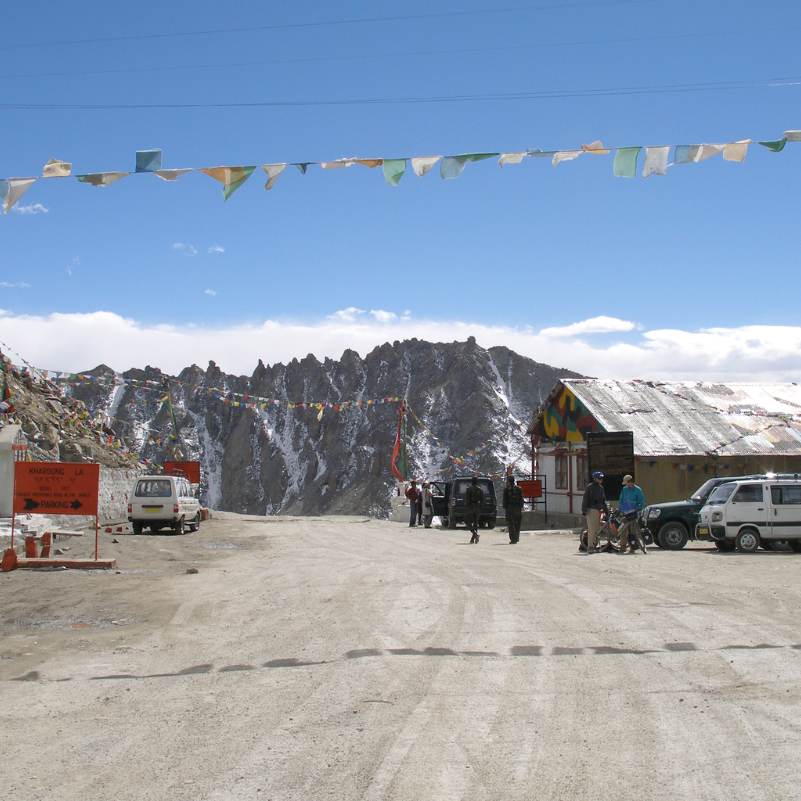
Khardung La Pass
~80 km from Diskit on the road back to Leh
The high pass you cross to reach Nubra from Leh, at roughly 5,359 metres by modern GPS measurement despite the signboards that still claim 5,602 metres. Worth a 10 to 15 minute photo stop on the drive up or back, not longer, because the altitude there is higher than anywhere you will sleep in Nubra.
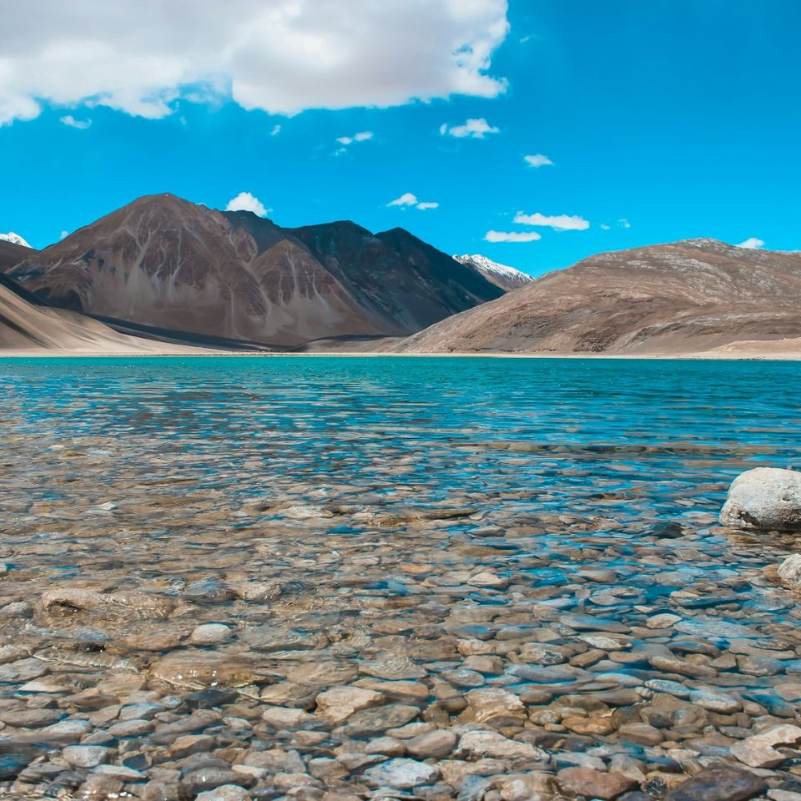
Pangong Lake
~230 km via Shyok route, or via Leh
The big high altitude lake on the other side of the Ladakh Range, on the India and China border. Most serious Ladakh itineraries combine Nubra and Pangong on the same trip, either by returning to Leh between the two or taking the rougher Shyok river route directly from Nubra.
Our packages with Diskit Monastery
Curated trips that include a visit to Diskit Monastery.
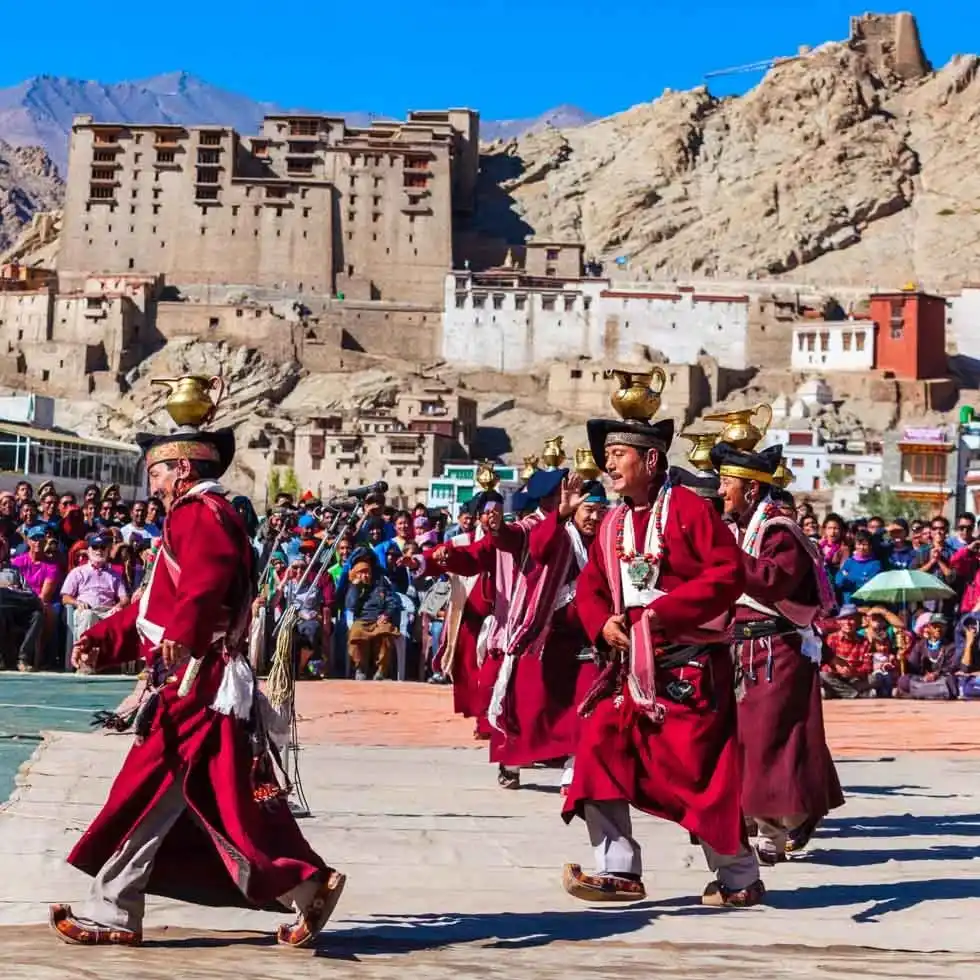 7D/6N
7D/6NLeh Ladakh Tour With Turtuk Village Nubra Valley and Pangong Lake
2D Leh•2D Nubra Valley+1
₹27,999₹33,999SAVE INR 6,000/ person 6D/5N
6D/5NBest Selling Leh Ladakh Tour With Nubra Valley and Pangong Lake
2D Leh•1D Nubra Valley+1
₹23,999₹28,599SAVE INR 4,600/ person Group Tour6D/5N
Leh Ladakh Group Tour With Nubra Valley and Pangong Lake
2D Leh•1D Nubra Valley+1
₹18,999/ person
Frequently Asked Questions about Diskit Monastery
Is Diskit Monastery worth visiting?
Yes, for almost anyone on a Nubra Valley trip. It is the oldest and largest Gelugpa monastery in the valley, founded in the 14th century, still a working religious site with around a hundred monks, and its 32 metre Maitreya Buddha statue on the adjacent ridge is the signature photograph of northern Ladakh. Most travellers find one to one and a half hours here well spent, more if they catch the morning prayer or hit the late afternoon light on the statue.
How far is Diskit Monastery from Leh?
Diskit is about 120 km from Leh, via the Khardung La pass. By road, the drive typically takes 5 to 6 hours one way with stops, and the monastery itself sits a short drive or 35 minute walk above Diskit village. From Hunder, where many travellers base themselves, it is only 10 to 12 km and about 30 minutes away.
What are the timings and entry fee for Diskit Monastery?
The monastery generally opens from around 7 AM to 7 PM daily, with some sources noting a short lunch break roughly from 1 to 2 PM. There is a small entry fee, usually around Rs 30 to 50 per person, collected at the monastery. The adjacent Maitreya Buddha viewing platform is generally free to visit. Timings and fees are semi stable and can change, confirm on arrival.
How tall is the Maitreya Buddha statue at Diskit?
The statue stands 32 metres tall (about 106 feet). Construction was started in 2006, decorated with around 8 kg of donated gold on the face and crown, and the statue was consecrated by the Dalai Lama on 25 July 2010. It faces the Shyok river and the Pakistan border to the west, and the commissioning committee built it around three stated ideas. Protection of Diskit village, prevention of further war with Pakistan, and promotion of world peace.
How old is Diskit Monastery?
The monastery was founded in the 14th century by Changzem Tserab Zangpo, a disciple of Tsongkhapa (the founder of the Gelugpa or Yellow Hat sect of Tibetan Buddhism). That makes the oldest sections roughly 600 years old. The Maitreya Buddha statue on the adjacent ridge is much newer, finished and consecrated in 2010.
What is the best time of day to visit Diskit Monastery?
Early morning between 7 and 9 AM, or late afternoon between 4 and 6 PM. Mornings are quietest and you may catch the monks at prayer in the old dukhang. Late afternoon is the better light on the Maitreya Buddha, especially in September when the sun drops behind the Ladakh range. Midday is the flattest light and the busiest window with tour groups, and we suggest avoiding it if you can.
Do I need a permit to visit Diskit Monastery?
Yes. The monastery lies inside the Nubra Valley inner line area, so you need the Ladakh Environment and Development Fee receipt (for Indian citizens) or a Protected Area Permit (for foreign nationals). Indian citizens apply online at lahdclehpermit.in, one payment covers Nubra, Pangong, and other zones on the same trip. The check post is at South Pullu on the descent from Khardung La, not at the monastery itself.
Is Diskit Monastery accessible for seniors and families?
Yes, the monastery itself is a straightforward stop for most age groups. The climb from the parking to the main prayer hall is around 100 metres of elevation on stone steps, which most fit travellers handle in ten to fifteen minutes, and drivers can usually take the vehicle higher up if needed. Altitude at 3,144 metres is mild by Ladakh standards. Accessibility for wheelchair users or travellers with major mobility issues is genuinely limited though, the steps and paths are uneven.
What is the Dosmoche festival at Diskit?
Dosmoche, sometimes called the Festival of the Scapegoat. It is held annually around late January or February, with exact dates set by the Tibetan lunar calendar, so they shift each year. The event involves masked Cham dances by the monks, a dough effigy burned to clear bad luck for the coming year, and the full valley community gathering. Attendance from outside the valley is limited because Khardung La is often snowbound at this time, confirm dates and access with a Leh operator before planning a visit around it.
Can I take photographs inside Diskit Monastery?
Photography is generally welcomed outdoors at the monastery complex and at the Maitreya Buddha viewing area. Inside the prayer halls and the small interior space inside the statue's plinth, photography is restricted, ask the caretaker or follow posted notices. Drones are strongly discouraged and often effectively prohibited because the whole valley is a sensitive border region. Keep drones on the ground.
What else is worth visiting near Diskit Monastery?
Hunder sand dunes are about 10 to 12 km away, and most travellers combine the two in the same day. Sumur village and Samstanling Monastery are about 25 km on the opposite fork from Khalsar, a gentler alternative. Turtuk is further up the valley, around 80 km, and needs its own overnight. Panamik hot springs are about 55 km on the Sumur side. All of these fit naturally into a standard two or three night Nubra trip.
Related guides
Posts about Ladakh
- Manali to Leh Highway 2026: Every Pass, Stop and Distance
- Umling La Ladakh Guide 2026: Route, Altitude, Permit, Safety & Reality Check
- Turtuk Ladakh Travel Guide 2026: Balti Culture, Apricot Orchards and Why It Is Perfect for Families
- Offbeat Ladakh for Couples in 2026: Quiet Routes Beyond Pangong and Nubra
- Aryan Valley Ladakh Guide 2026: Dah, Hanu, Brokpa Culture, Route and Who Should Visit
- Hanle vs Tso Moriri vs Turtuk: Which Offbeat Ladakh Place Should You Choose in 2026?