
Rohtang Pass Family Trip 2026: Safe Manali Itinerary, Permit and Cost Guide
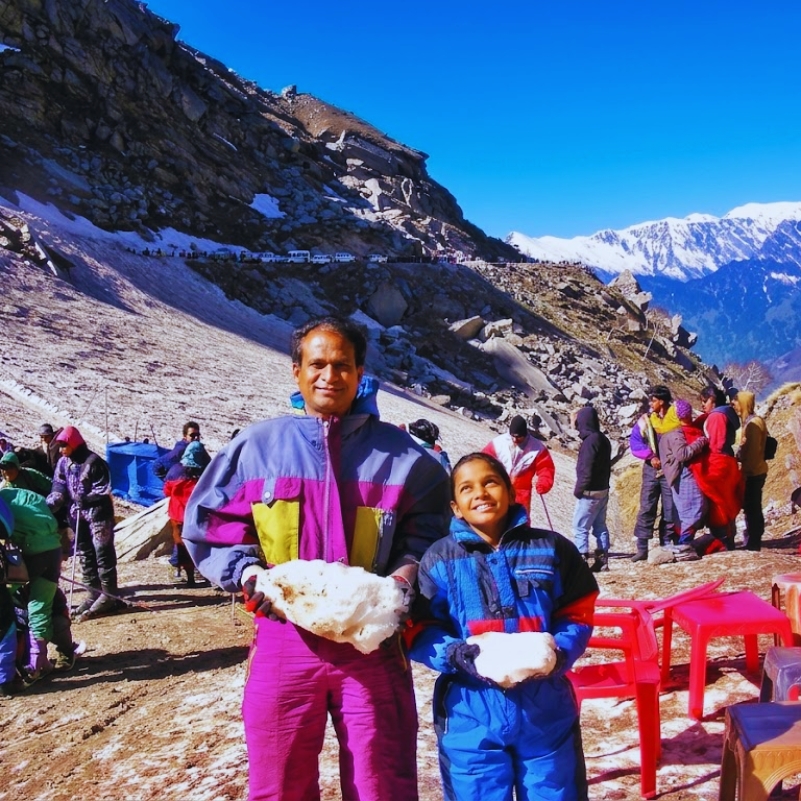
Planning a Rohtang Pass family trip in 2026 with kids, parents, or grandparents? The short drive from Manali fools a lot of families. It looks like a quick day out on the map. On the ground, it is high, cold, and slow.
Travel Coffee runs family trips on this route every season. The families who enjoy Rohtang the most are the ones who plan around the altitude and stay flexible, not the ones who chase a fixed schedule.
Quick Answer: How Should You Plan a Rohtang Pass Family Trip in 2026?
Stay in Manali for a night or two first, so everyone adjusts before going high. Keep a full day free for Rohtang, not a rushed few hours.
Travel in a permitted vehicle with the right documents, and check the live access order the evening before and the morning of your trip.
Rohtang Pass is 51 km from Manali and sits at about 3,978 metres. That short distance hides a lot. The altitude and the unpredictable road matter far more than the kilometres.
If you want a base trip sorted first, our Manali tour packages and Rohtang Tour Packages cover stays, transport, and pacing for families.
Is Rohtang Pass a Good Destination for a Family Trip?
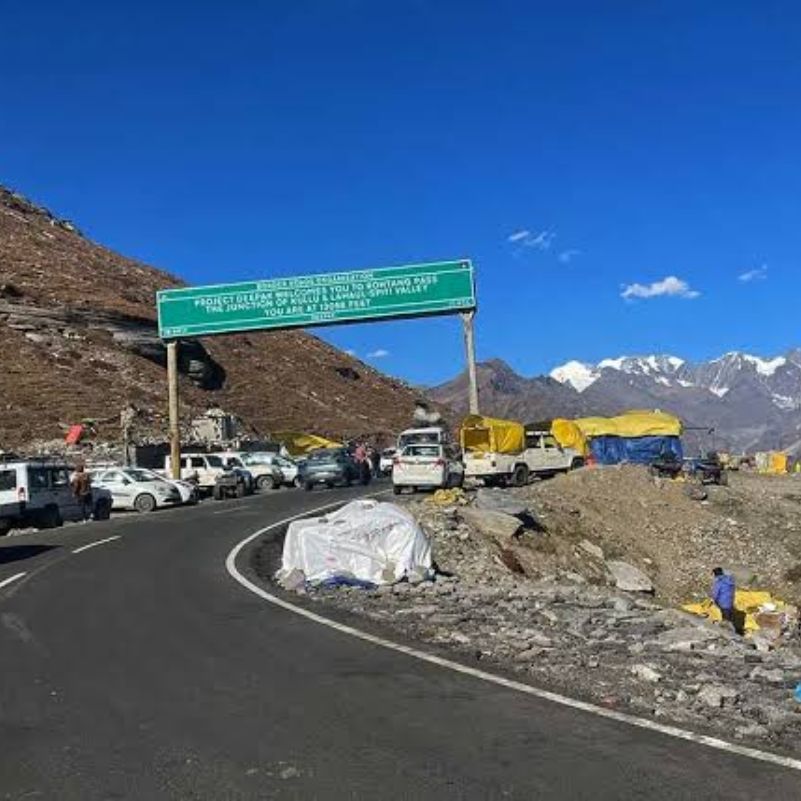
For many families, yes. Kids love the snow. Parents love the mountain views and the photos. The drive itself, when the weather holds, is one of the prettiest you will do near Manali.
But here is the honest part. The climb is winding, the air is thin, and the wind up top is cold even in summer.
Traffic delays are common on busy dates. Facilities near the top are limited. Vehicle access is regulated, so you cannot just drive up whenever you like.
Rohtang works best for families who stay flexible. That means being willing to turn back early when a child, a parent, or a grandparent feels unwell, instead of pushing on for one more photo.
What Most Tourists Get Wrong About Rohtang
Most families drive straight up to Rohtang on the same day they arrive from the plains or an overnight bus. That single mistake causes headaches and nausea that ruin the whole day at the top.
In our experience, one calm night in Manali before the Rohtang day changes everything. Your body gets a head start on the altitude.
What Is the Best Time for a Rohtang Pass Family Tour?
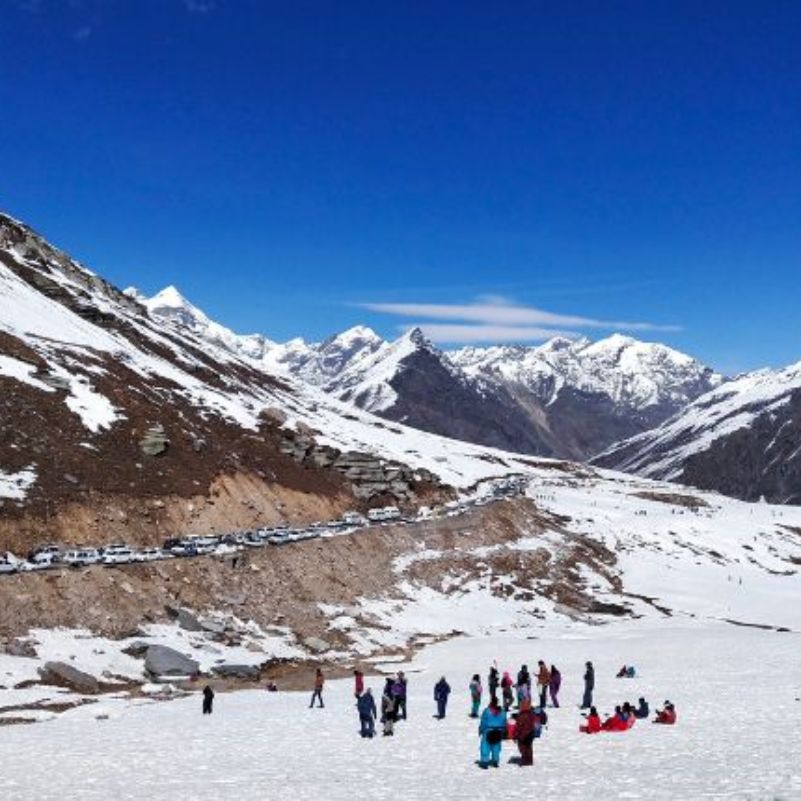
There is no single perfect month. It depends on whether you want deep snow, easier roads, or smaller crowds. Let us go month by month.
Can Families Visit Rohtang in March or April?
Rohtang Top usually stays shut in March and April. The snow is too heavy and BRO is still clearing the road.
In these months, the administration often points tourists to a lower snow point instead. But that spot is not fixed. Its location changes based on where the road is cleared and what the local order says.
So we never promise Rohtang Top for March or April. If someone guarantees it, be careful.
We broke down what to actually expect in our guides on Rohtang Pass in March and Rohtang Pass in April.
Is May or June Better for a Family Snow Trip?
May and June are the classic snow months. But the exact opening date depends on snow clearance and a formal order from the administration.
In 2026, access was opened progressively in May as authorities cleared and inspected the Manali–Rohtang road. So rather than relying on a single "opening date," check the latest official order and the actual permitted tourist access point shortly before your trip.
Two things to know. May and June bring the heaviest permit demand of the year. School holidays mean more traffic and longer queues, especially near Solang.
If you want the full picture of early-season conditions, read our Rohtang Pass in May guide.
Should Families Visit During July or August?
July and August bring the monsoon. Expect rain, fog, wet roads, and the odd landslide. Vehicle restrictions can pop up at short notice.
Late-July 2026 reporting showed widespread road disruption across Himachal. It did not confirm that Rohtang itself was closed.
So if you travel in these months, check the route the evening before and again on the morning of your trip. Do not assume yesterday's road is today's road.
Read our detailed guide to Rohtang Pass in August to learn about road conditions, rain, landslide risks, snow chances and what to expect before you travel.
Is September or October Suitable?
After the monsoon eases, September and early October often bring clearer views and lighter crowds. Many families prefer this window.
Planning your trip for September or October? Read our detailed guides on Rohtang Pass in September and Rohtang Pass in October to compare weather, road conditions, crowds and snow chances before you decide when to visit.
One catch. Snow is not guaranteed. Early snowfall or road maintenance can change access with little warning. Plan for the scenery, and treat snow as a bonus.
Is Rohtang Pass Safe for Children, Parents and Grandparents?
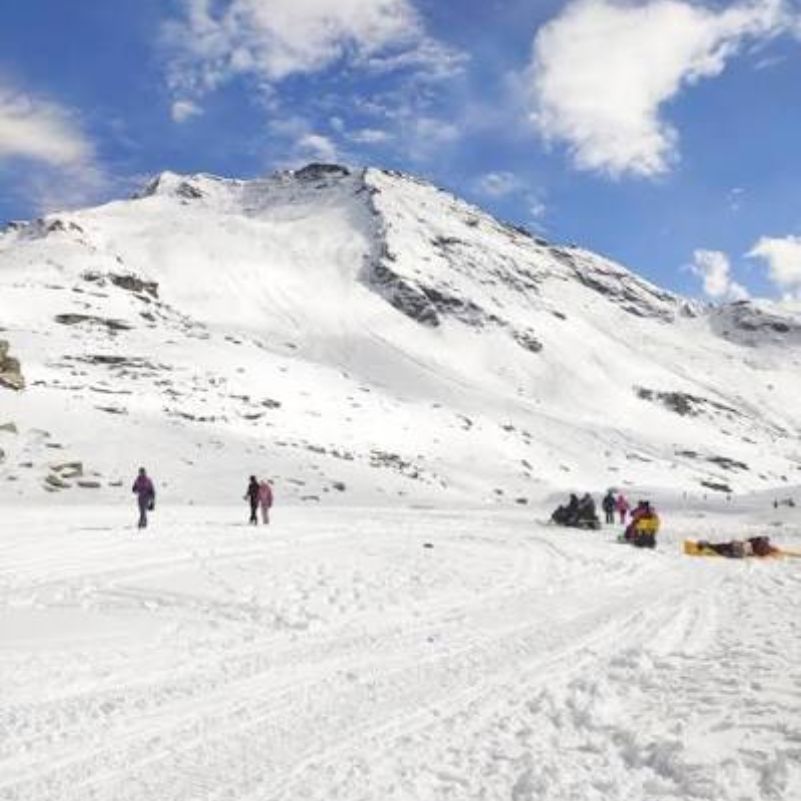
Safety here is not about age alone. It is about health, weather, traffic, and how each person's body handles the altitude. Let us go through the real concerns.
What Should Parents Know About the Altitude?
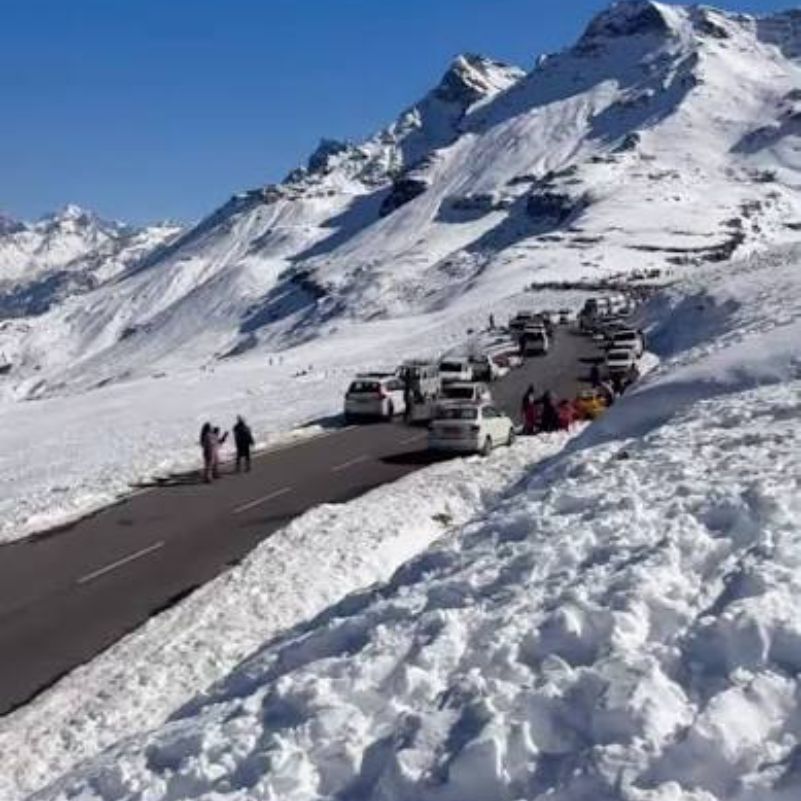
Rohtang sits at about 3,978 metres. That is high enough for altitude to affect children just as much as adults.
Early symptoms include headache, nausea, tiredness, loss of appetite, and vomiting.
A younger child who cannot explain how they feel may act differently instead. Watch for a child who turns unusually fussy, pale, sleepy, or refuses to eat.
If symptoms show up, do not go higher. If they get worse, come down. Descending is the safest and fastest fix for altitude trouble.
Can You Take a Baby or Toddler to Rohtang Pass?
We do not give a universal minimum safe age, because there is no reliable one. Every child is different.
The real problem with babies and toddlers is that they cannot tell you about a headache, nausea, or breathlessness. You are guessing from their behaviour.
Before taking a very young child up to nearly 4,000 metres this fast, talk to your paediatrician. That conversation matters more than any blog.
If the risk makes you uneasy, choose Solang Valley or another lower, officially open snow point instead. Kids still get their snow, and you get an easier day.
Is Rohtang Suitable for Senior Citizens?
Age by itself does not decide fitness. Plenty of active seniors handle Rohtang fine. Some younger people struggle.
If a grandparent has heart, lung, mobility, or balance concerns, get individual medical advice before the trip. Do not rely on general reassurance.
Our team recommends a comfortable private vehicle, very little walking, frequent check-ins, and an immediate return the moment symptoms appear.
Can a Pregnant Traveller Visit?
Recognised travel-health advice suggests avoiding high-altitude activity during pregnancy, unless the traveller is already used to that altitude and has personal medical guidance.
So this is a doctor conversation, not a decision to make from a travel article.
Which Symptoms Mean the Family Should Turn Back?
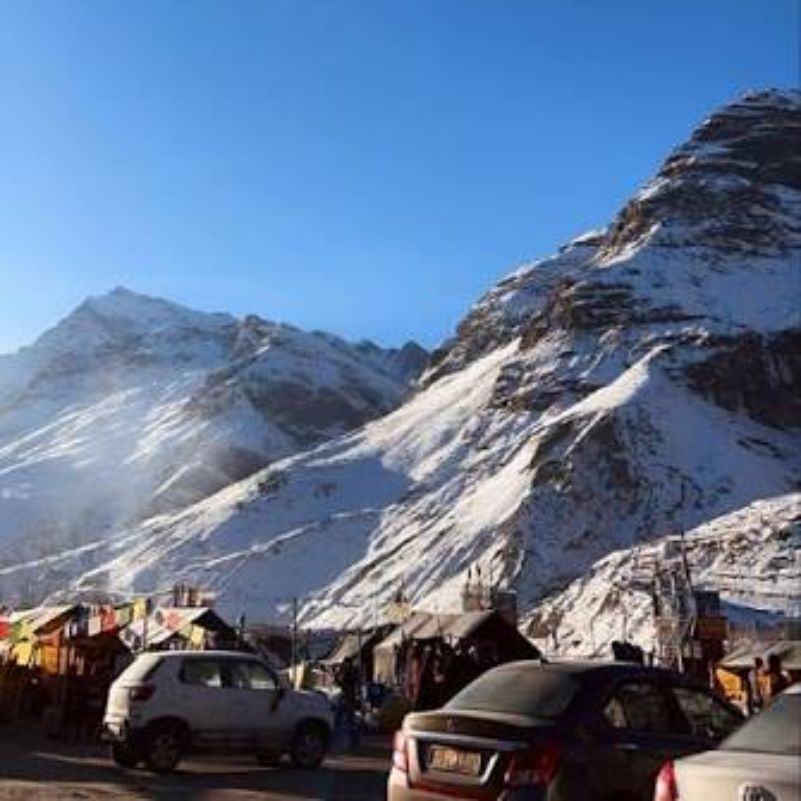
Turn back if anyone develops a worsening headache, repeated vomiting, unusual sleepiness, confusion, unsteadiness on their feet, or difficulty breathing while resting.
Do not treat portable oxygen, painkillers, or altitude tablets as a green light to keep going. They are not a fix. Descending is.
For a deeper family safety breakdown, read our Rohtang Pass safety for kids guide.
What Permit Does a Family Need for Rohtang Pass in 2026?
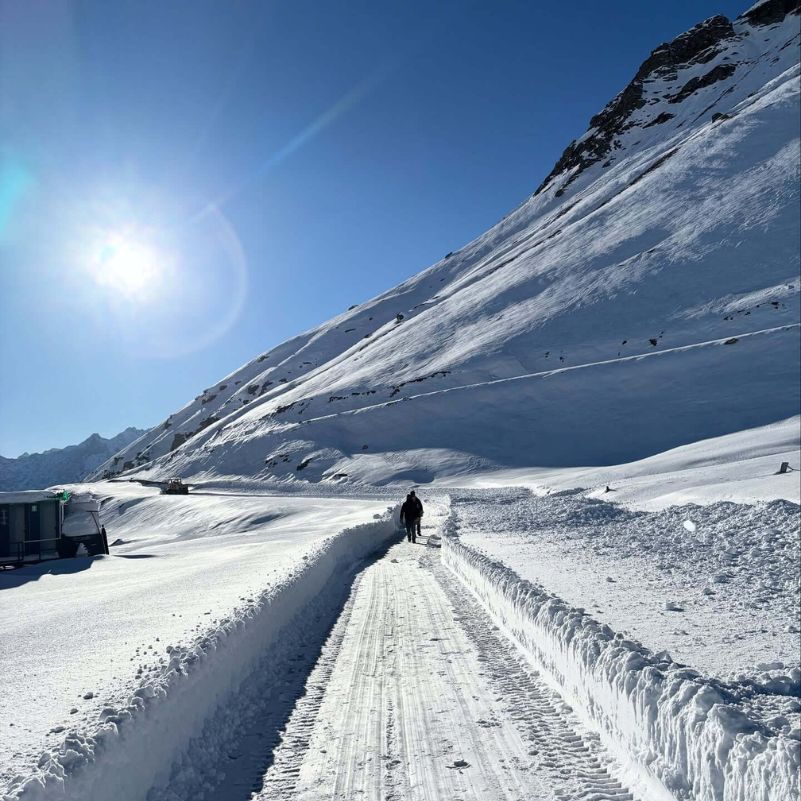
The permit trips up a lot of families because they assume it is per person. It is not. Here is how it actually works.
Is the Permit Per Person or Per Vehicle?
The regulated tourism permit is tied to the vehicle, not to each traveller.
For a car, jeep, or MUV, the government charge is a ₹500 permit fee plus a ₹50 congestion charge, which comes to ₹550 per permitted vehicle.
Important. That ₹550 is only the government charge. It is not your total taxi price. A taxi fare is a separate thing on top.
What Is the Daily Vehicle Quota?
The official daily quota is 800 petrol vehicles and 400 diesel vehicles.
On busy dates, permits sell out. So booking on time matters, especially in peak May and June.
When Can the Permit Be Booked?
The live portal currently lists two release windows, at 10:00 AM and 4:00 PM.
Right now the portal allows applications for the next two days only. This is an operational rule that can change, so check it again close to your travel date.
Which Documents Are Required?
You need valid identification, a valid PUC certificate, and your vehicle-registration details.
The vehicle must be no more than 10 years old. A printed permit is currently compulsory, so carry a hard copy. Do not rely on a phone screen.
Is Rohtang Closed Every Tuesday?
Here is where guides disagree. Several travel blogs repeat that Tuesday is a maintenance closure day.
But the live official permit portal currently lists the maintenance day as "NONE". Verify it on the travel date.
So do not assume any weekday is closed. Check your exact date on the official portal before you plan around it.
What Is the Best Four-Day Manali–Rohtang Family Itinerary?
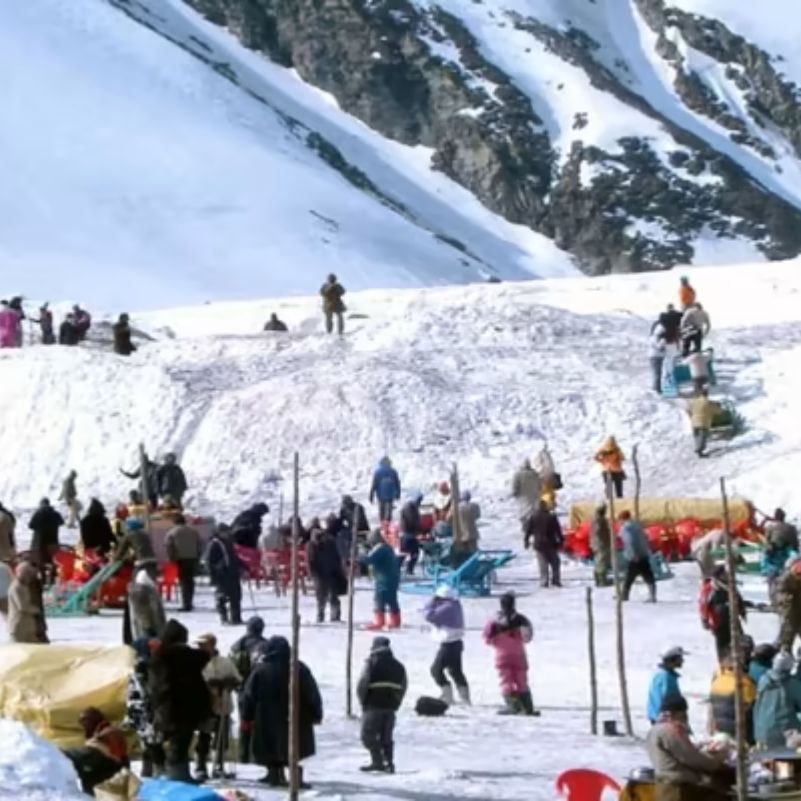
This is the balanced plan we suggest for most families. It is not the only way to do it, but it gives you rest, acclimatisation, and a buffer if the weather turns. Adjust the nights and pace to suit your group.
Day 1: Reach Manali and Rest
Check into your hotel, rest, take a gentle walk on Mall Road, and have an early night.
Do not go straight from an overnight bus or a long plains-to-mountains drive up to Rohtang. That is how altitude sickness starts. Give your body one settled night first.
Day 2: Manali Local Sightseeing
Keep it light. Visit Hadimba Temple and the cedar forest around it. Spend time in Old Manali or Vashisht, depending on what your family enjoys and how mobile everyone is.
Use the evening to sort the practical stuff. Print the permit, confirm the vehicle, check everyone's warm clothes, look at the weather update, and pack snacks.
Day 3: Rohtang Pass Family Excursion
Treat this as a full-day excursion, not a quick morning trip. Leave early. An early departure gives you daylight and beats some of the traffic, though we will not promise you an exact arrival or return time. The road decides that.
Possible stops on the way include Nehru Kund, Kothi, Gulaba, Rahala Falls, Marhi, and Rani Nallah. Whether you actually stop depends on access, weather, traffic, and what the driver and police allow that day.
Keep snow play and walk moderately. The second anyone feels off, or the weather turns, head back. The lake, the snow, the photos are all better when nobody is suffering.
Day 4: Solang Valley, Atal Tunnel or Sissu
Give the family a lighter day. Solang Valley is the easy pick for a relaxed snow-and-activity day.
If the Atal Tunnel route is open and everyone is up for one more drive, Sissu is a good option. But do not cram Solang, the tunnel, and Sissu into one rushed day.
For activity ideas, see our guide on adventure activities in Manali. If Sissu tempts you, here is our Sissu tour information.
What Should the Rohtang Pass Day Schedule Look Like With Family?
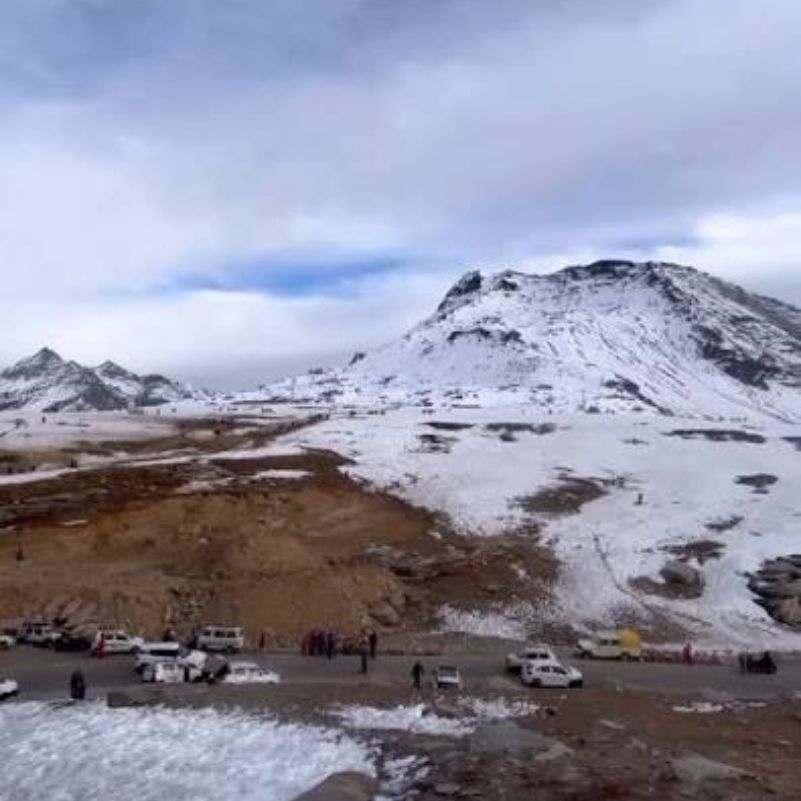
Eat breakfast before you leave. Check the road and weather one more time. Keep water, snacks, documents, and motion-sickness supplies within easy reach in the car.
The drive is commonly estimated at two to four hours one way. Treat that as a rough range, not a promise. Traffic, weather, and road controls can stretch it.
Use the toilets and buy any food you need before the highest point. Facilities thin out fast as you climb.
The right rhythm is simple. Reach the open snow point, take your photos, enjoy some limited snow play, check how everyone feels, and head back. Do not try to squeeze every minute out of the top.
A Timing Tip That Changes the Day
Leaving Manali early does more than beat traffic. Mornings usually bring clearer skies and calmer wind at the top. By midday, clouds often roll in and the wind picks up, which is harder on kids and older travellers.
Should a Family Hire a Local Taxi or Take Its Own Car?
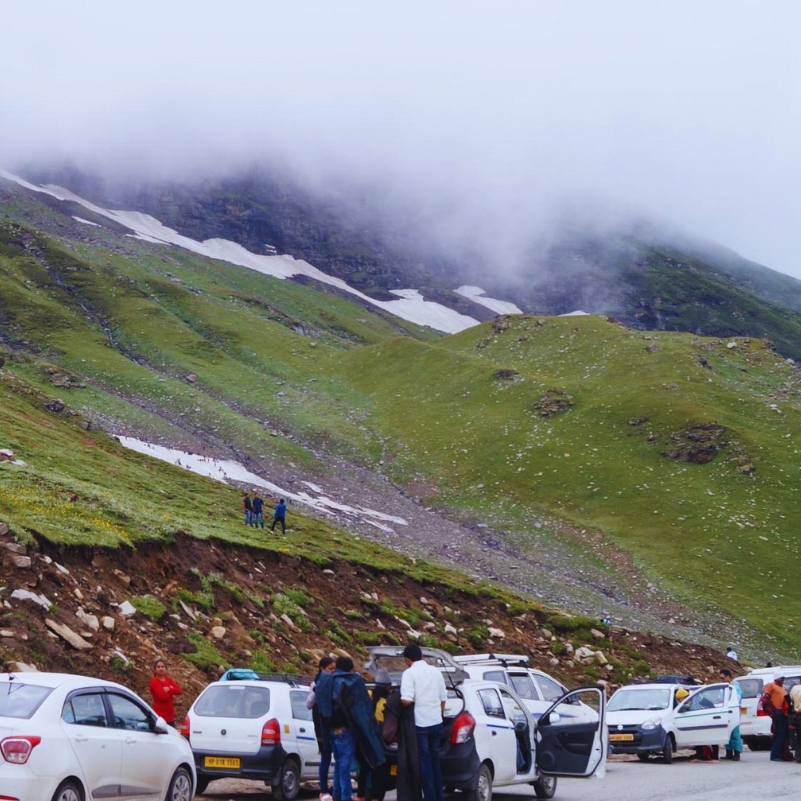
Both work. The right choice depends on who is driving and how comfortable your group is on mountain roads.
When Is a Local Private Taxi Better?
A local taxi takes the parking and mountain-driving stress off your shoulders. For families with children or grandparents, that comfort is worth a lot.
We will not quote a taxi price here. What matters more is what the fare includes.
Before you agree, ask whether the price covers the government permit, the congestion charge, parking, the driver allowance, waiting time, and the stops along the way. Sort this before you sit in the car, not after.
Can Families Take Their Own Vehicle?
Yes, an eligible private vehicle can go up with the correct permit and documents.
We only suggest self-driving if the driver has real mountain-road experience. The roads are narrow, often wet, and traffic queues build fast. Visibility can drop in minutes.
Are Public Buses Available?
HRTC says electric buses run around Manali and Rohtang during the tourist season.
We could not confirm the current details, so treat this as a starting point only.
Which Places Can Families Visit on the Manali-Rohtang Route?
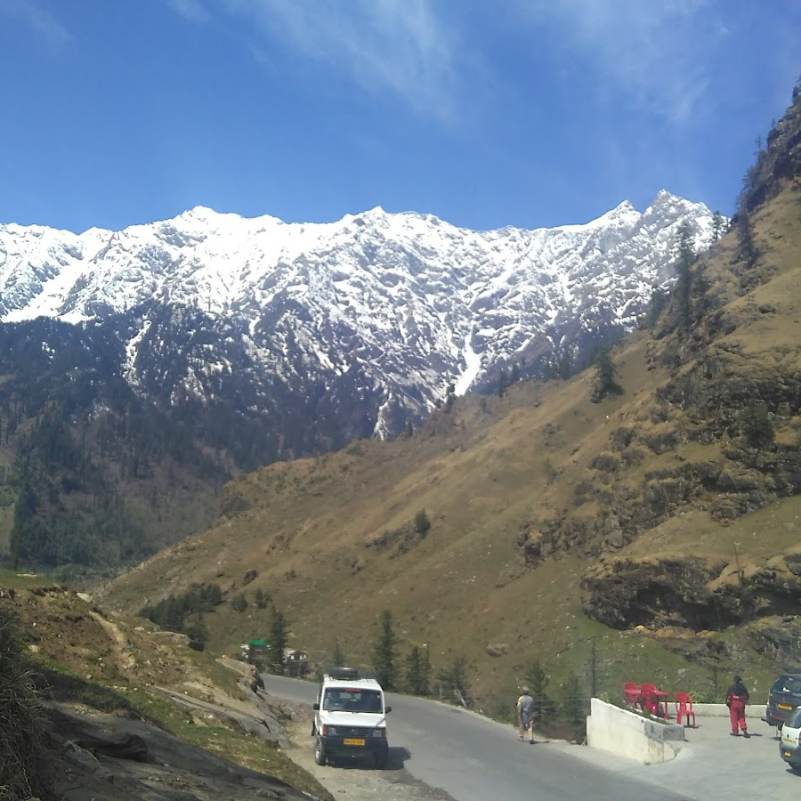
The route has a handful of stops worth knowing. Just remember that not every stop is guaranteed on every trip.
Nehru Kund and Kothi
Both are possible scenic stops on the way up. Whether you actually stop depends on the driver and the traffic police on the day. Do not bank on it.
Gulaba and Marhi
Gulaba is linked to permit checking, so expect a stop there. Marhi usually works as a seasonal food and rest halt, which makes it a handy break point.
We would not promise the state of the toilets or food stalls, since these change season to season.
Rahala Falls and Rani Nallah
The visibility and safety of these points shift with the season. Some days they are lovely. Other days they are not worth the stop.
Avoid tricky snow walking here with small children or anyone with mobility concerns. It is not worth a fall.
Rohtang Top
At the top, you get the wide mountain scenery and snow when it is naturally around.
But access to the very top can be restricted even when part of the Rohtang road is open. So do not treat "road open" as "top open."
What Should Families Pack for Rohtang Pass?
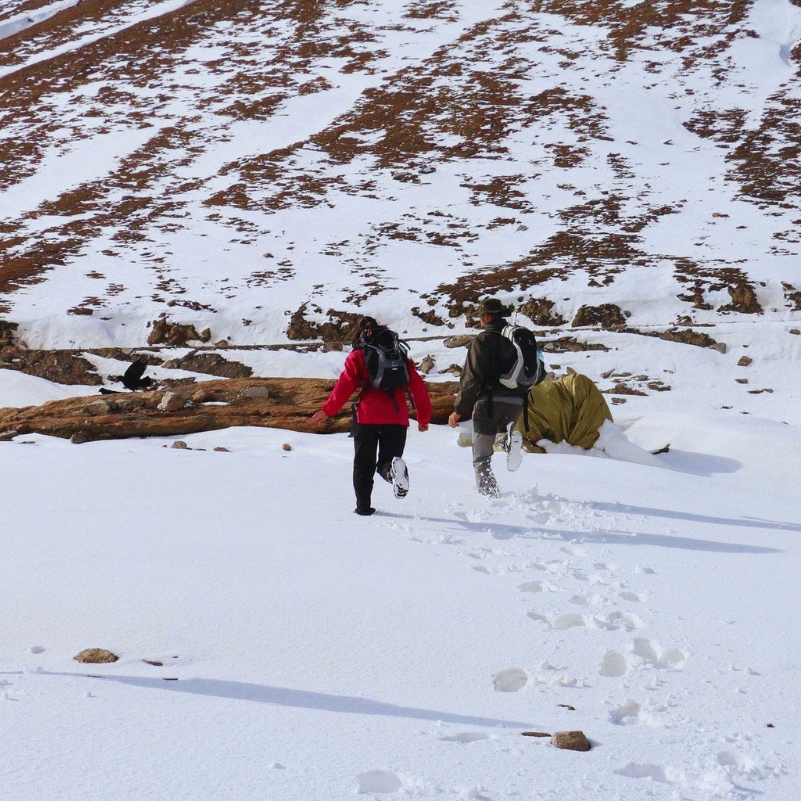
Layers are everything here. Start with a warm base layer, add a fleece or sweater, and finish with a wind-resistant outer jacket. Add gloves, a cap that covers the ears, warm socks, and waterproof footwear.
For kids, carry spare socks and spare trousers. Ordinary clothes get wet in the snow and turn cold and miserable within minutes, and a change of clothes saves the whole afternoon.
The bright high-altitude sun is strong even when it feels cold, so pack sunglasses, sunscreen, and lip protection for everyone.
Then the essentials bag. Carry drinking water, easy snacks, tissues, wet wipes, vomit bags, any prescribed medicines, a basic first-aid kit, a power bank, and your printed permit documents.
If you rent boots or snowsuits near the snow point, check the condition before you pay. Look for tears, broken zips, and damp lining.
One Thing We Always Tell Families
We tell first-time families to carry a thermos of warm ginger tea from Manali. At altitude, a warm drink comforts a cold, cranky child faster than anything you will find up top, where options are limited.
How Much Does a Rohtang Pass Family Trip Cost?
Let us be clear about what is fixed and what is not. The only fixed, verified government charge for Rohtang is ₹550 per permitted car, jeep, or MUV.
Everything else varies. Your total trip cost also includes your Manali hotel, transport, meals, clothing rental, and any optional snow activities.
We will not make up a hotel, taxi, skiing, sledging, or snow-scooter price for you. Anyone quoting exact figures blindly is guessing.
Before you pay a taxi driver or a package operator, ask exactly what is covered. Does the price include the permit and congestion charge, parking, meals, waiting time, and the alternative plan if Rohtang Top is shut? Get it in plain words before money changes hands.
A Money Tip Worth Knowing
Snow gear rental prices near the snow point climb sharply with the crowds and the altitude. Families who carry their own gloves, caps, and waterproof layers from Manali, or even from home, avoid paying inflated on-the-spot rates for basic items.
What If Rohtang Pass Is Closed?
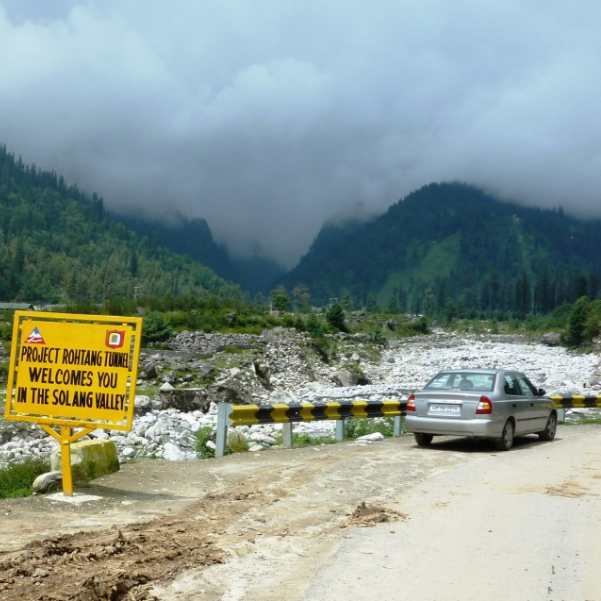
Rohtang Top can be shut while Manali, Solang Valley, or a lower snow point is still open and worth visiting. A closed top does not mean a wasted trip.
Your backups are Solang Valley, Manali local sightseeing, or Sissu through the Atal Tunnel when that route is open.
Remember, a "snow point" is not a permanent, fixed attraction. It moves based on where the road is cleared. What was a snow point last week may not be one this week.
So choose a trip or package that gives you a sensible alternative, not one that promises Rohtang access no matter what. That promise cannot be kept.
Which Mistakes Should Families Avoid?
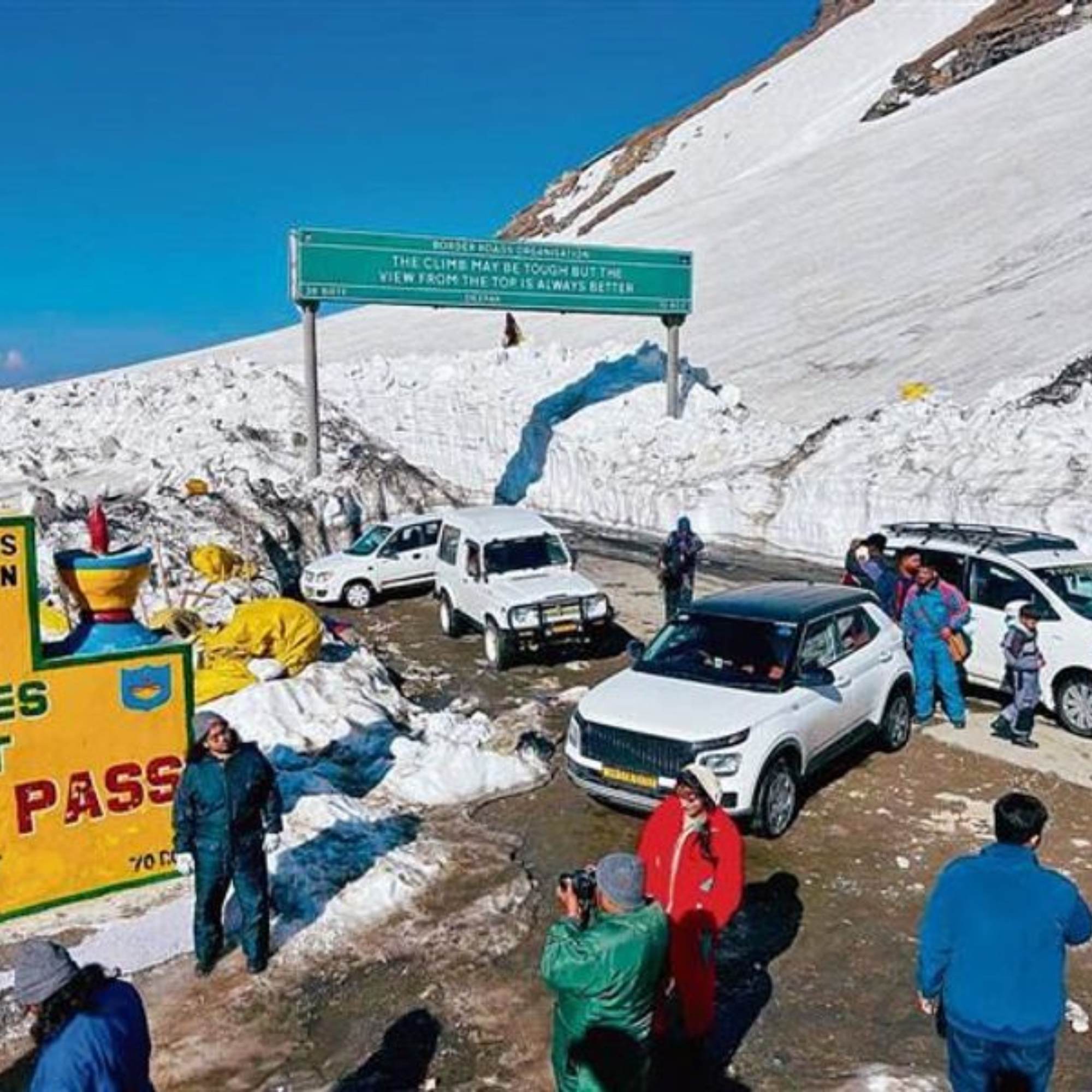
The biggest one is going straight to Rohtang right after an overnight journey. Rest first.
Do not travel without checking the permit and the live road status. Do not force a child to stay for photos when they are clearly uncomfortable.
Skip the jeans and ordinary shoes in wet snow. You will be cold and soaked in no time. Do not overload the itinerary and try to see everything in one day.
Do not treat portable oxygen as a safety guarantee. And do not trust anyone who guarantees Rohtang access regardless of weather.
One more honest truth. Snow cannot be guaranteed for a specific travel date. The mountain does not follow your calendar.
How Can Travel Coffee Plan Your Rohtang Pass Family Tour?
We are based in Himachal Pradesh, and we plan these trips every season. We can shape the number of nights, the hotel category, the vehicle size, the pacing for kids and grandparents, and the alternative sightseeing if Rohtang does not cooperate.
In our experience, the best family itineraries keep one flexible day rather than treating Rohtang access as guaranteed. That one buffer day is what turns a stressful trip into a relaxed one.
We cannot bypass the permit quota, the government restrictions, or a weather closure. Nobody can. What we can do is build a plan that stays rewarding whatever the road does that day.
Explore Our Curated Rohtang Pass Tour Packages
 5D/4N
5D/4NPremium Manali Tour Package with Private Cab and Rohtang Pass
4D Manali
₹14,999₹19,999SAVE INR 5,000/ person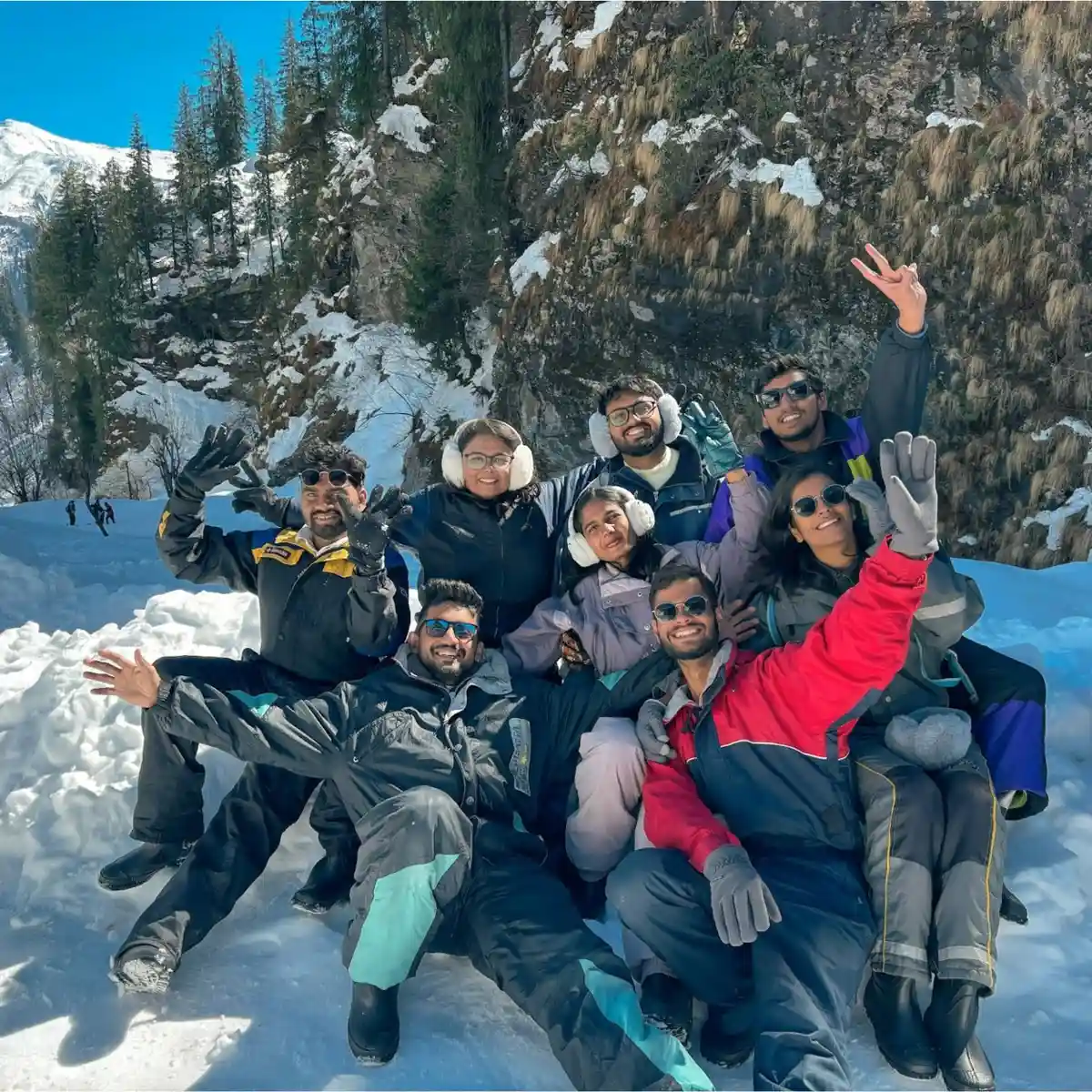 5D/4N
5D/4NBest Value Manali Volvo Package with Rohtang Pass
3D Manali
₹9,999₹13,999SAVE INR 4,000/ person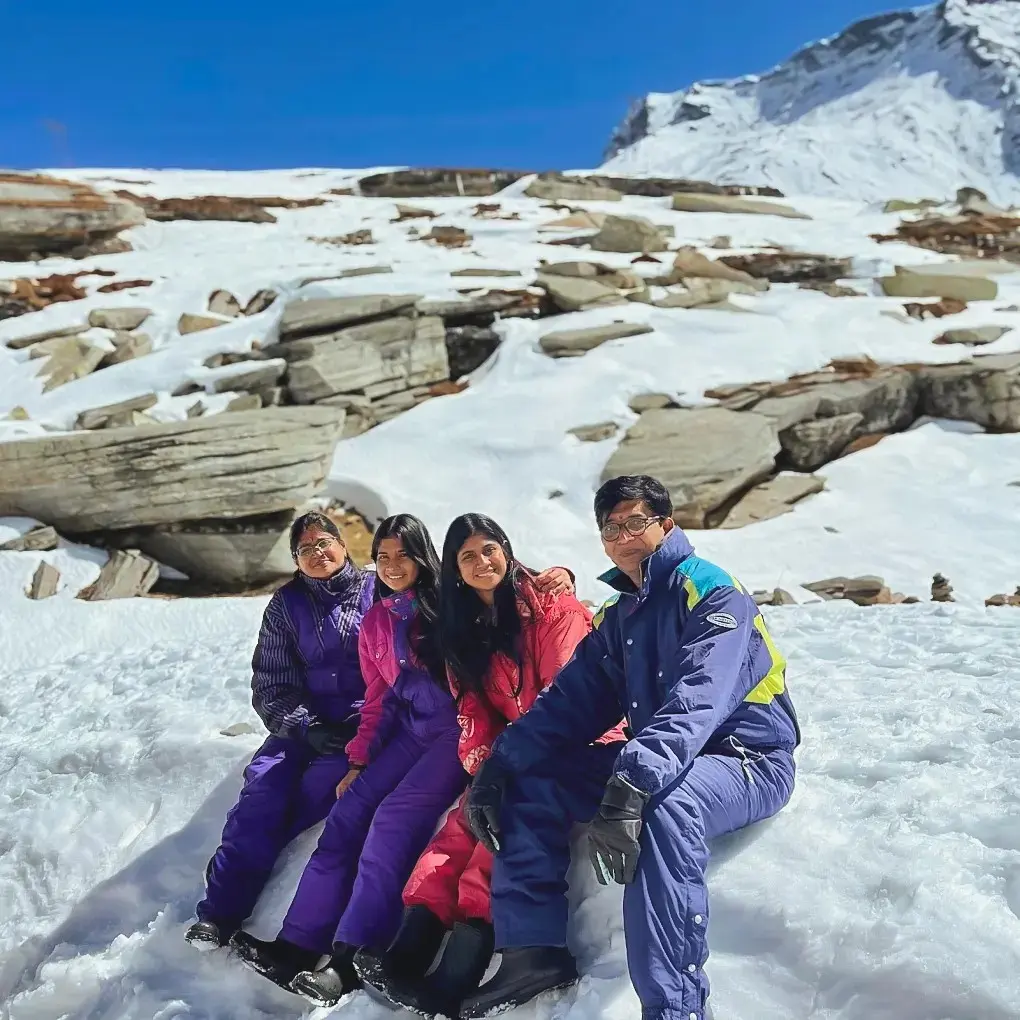 7D/6N
7D/6NComplete Shimla Manali Volvo Package with Rohtang Pass
2D Shimla•2D Manali
₹15,999₹19,499SAVE INR 3,500/ person
Related topics
Frequently Asked Questions
Is Rohtang Pass safe for children?
It can be, with care. Rohtang sits at about 3,978 metres, and children feel altitude just like adults. Watch for headache, nausea, tiredness, and fussiness. Rest in Manali first, keep snow play moderately, and turn back if any symptoms appear. Safety depends on your child's health, the weather, and how they respond to the altitude, not on age alone.
Can a two-year-old or three-year-old visit Rohtang Pass?
There is no reliable universal safe age, so we do not publish one. The concern is that toddlers cannot tell you about a headache, nausea, or breathlessness. Before taking a very young child to nearly 4,000 metres this quickly, speak to your paediatrician. If you feel uneasy, choose Solang Valley or another lower snow point instead for an easier, safer day.
Is Rohtang Pass suitable for senior citizens?
Age alone does not decide it. Many seniors handle Rohtang well. But if a grandparent has heart, lung, mobility, or balance concerns, get individual medical advice first. Use a comfortable private vehicle, keep walking to a minimum, check on them often, and return straight away if symptoms show up. Do not push through discomfort at altitude.
How many days are enough for Manali and Rohtang Pass?
Four days is a comfortable balance for most families. It gives you a rest day in Manali, local sightseeing, a full Rohtang day, and a lighter final day at Solang or Sissu. You can do it in fewer days, but the extra time helps with altitude and gives you a buffer if the weather or road delays your Rohtang plan.
Can Rohtang Pass be visited in one day from Manali?
Yes, a one-day Manali to Rohtang trip is possible if the road and permit are sorted. But it is a full day, with a two to four hour drive each way depending on traffic and weather. We suggest arriving in Manali at least a night earlier so your family is rested and better adjusted to the altitude before going up.
What is the best month for a Rohtang Pass family trip?
May and June bring the most snow but also the biggest crowds and permit demand. September and early October often give clearer views and lighter crowds, though snow is not guaranteed. July and August carry monsoon risk. For families wanting reliable snow, late May or June is popular. For an easier, quieter trip, post-monsoon is worth considering.
Is Rohtang Pass open in 2026?
Rohtang opens seasonally after BRO clears the snow and the administration issues a formal order. Reports place the 2026 tourist opening in mid-May, though sources differ on the exact date. Access and road status change day to day, so always check the official permit portal and the live road status the evening before and the morning of your trip.
How much is the Rohtang Pass permit in 2026?
For a car, jeep, or MUV, the government charge is ₹500 as the permit fee plus a ₹50 congestion charge, which is ₹550 per permitted vehicle. This is a per-vehicle charge, not per person, and it is not your taxi fare. The daily quota is 800 petrol and 400 diesel vehicles, and permits can sell out on busy dates.
Can we take our own car to Rohtang Pass?
Yes, if the vehicle is no more than 10 years old and you have the permit, valid ID, a valid PUC certificate, and registration details. Carry a printed permit, as it is currently compulsory. Only self-drive if the driver has real mountain-road experience. The roads are narrow, often wet, and traffic queues build quickly, with visibility that can drop fast.
Is Rohtang Pass closed on Tuesday?
Maybe, maybe not. Several travel guides repeat a Tuesday maintenance closure, but the live official permit portal currently lists the maintenance day as "NONE". Do not assume any particular weekday is closed. Check your exact travel date on the official portal before you plan around it, since this rule can change from season to season.
Is snow guaranteed at Rohtang Pass?
No. Snow cannot be guaranteed for any specific date. May and June usually have strong snow near the top, and September to October can be hit or miss. Early snowfall, melting, or road maintenance all affect what you find. Plan for the scenery and the drive, and treat fresh snow as a bonus rather than a certainty you have booked.
Is Solang Valley better than Rohtang Pass for small children?
Often, yes. Solang Valley sits lower, so the altitude risk is smaller and the day is easier on toddlers and grandparents. Kids still get snow and activities without the long, winding climb to nearly 4,000 metres. For families uneasy about the altitude or the road, Solang, or another lower officially open snow point, is a sensible and less stressful choice.
More about Rohtang Pass
 Rohtang Pass
Rohtang Pass Altitude Sickness in 2026: Symptoms, Prevention and When to Turn Back
Planning a trip to Rohtang Pass in 2026? Learn the symptoms of altitude sickness, prevention tips, and when to turn back for a safe mountain journey.
- Altitude & Health
- First-Time Travellers
- Rohtang Pass
Best Places to Visit on the Way to Rohtang Pass in 2026
Discover the best places to visit on the way to Rohtang Pass in 2026, including Solang Valley, Rahala Waterfalls, Gulaba, Marhi, and more for an unforgettable Himalayan road trip.
- Places to Visit
- Road Trips
 Rohtang Pass
15 Rohtang Pass Mistakes to Avoid in 2026: Permits, Taxi Scams, Timing and Snow Rentals
Planning a Rohtang Pass trip in 2026? Discover 15 common mistakes to avoid, from permits and weather to packing and safety, for a smooth mountain adventure.
- First-Time Travellers
- Permits & Fees