
Tirthan Valley
A river valley along the Great Himalayan National Park eco buffer, a string of small villages from Banjar to Bathad with the river, the trout, and a slower pace than anywhere else in Kullu
- River valley
- ~1,600 m at the river
- GHNP buffer zone
- Aut · ~30 km
- Best Mar to Jun, Sep to Nov
What makes it special
Tirthan Valley is a 25 to 30 km river valley in Kullu district that runs along the western boundary of the Great Himalayan National Park. One road, one river, and a string of small villages from Banjar town at the head down to Bathad at the park edge. The villages worth knowing along the road are Sai Ropa, Nagini, Gushaini, and Bathad. The valley is not a single place, it is the road, the river, and the villages strung along them.
Geographically the valley is part of the broader Banjar area along with Jibhi and Shoja, which sit on a parallel road climbing towards Jalori Pass. Many travellers and travel sites group all of this together as Jibhi Tirthan or just Banjar Valley. Tirthan Valley specifically refers to this riverside stretch. The Tirthan rises near Tirth in the high GHNP backcountry and joins the Beas at Larji, and the road into the valley follows the river the whole way.
Here is the honest framing most pages skip. The valley is not Manali. There is no central market, no nightlife, no cafe scene to drift between, and no single must see attraction. What is here is the river, the trout, the GHNP buffer, half a dozen good homestays, and the slowest pace in Kullu district. If that sounds like the trip you came for, you will love it. If you want cafes, shopping, and a packed schedule, base in Jibhi instead and day trip into the valley.
Quick answers
- Is Tirthan Valley worth visiting?
- Yes if you want a quiet river valley with good homestays, day walks into forest, and the option of trout fishing or GHNP treks. Skip it if you came expecting Manali energy or a tight schedule of things to do. The valley rewards two to four slow nights, not a one night stop.
- How many days do you need?
- Two nights is the minimum, three or four is the sweet spot. One night is rushed because the drive in and out eats half a day each way. Five or more nights starts to feel slow unless you are working remotely or specifically came for multi day GHNP treks. The classic plan is three nights riverside with one day for a Jalori Pass loop and one day for a GHNP gate walk or fishing.
- Where should I base in the valley?
- Gushaini for the GHNP gate access and the most riverside stays, Nagini for the easier road and good food, Sai Ropa if you specifically want the Tourist Centre and the permit office close. All three sit within about 10 km of each other on the same road. Jibhi or Shoja are not in the Tirthan Valley itself but are 30 minutes away if you want a livelier base and only day trip into the valley.
Quick facts
Everything you need to know at a glance.
At a glance
- Altitude
- ~1,600 m at the river (~5,250 ft); valley climbs higher towards the GHNP boundary
- Location
- Banjar tehsil, Kullu district, Himachal Pradesh; along the Tirthan River
- Nearest base
- Banjar at the head of the valley, Aut for the highway turn off, ~30 km away
- Open season
- Year round. Best Mar to Jun and Sep to early Nov.
- Best stay length
- Two to four nights
- Entry fee
- None for the valley itself. GHNP core zone entry needs permits and a registered guide.
- Time needed
- Two nights minimum, three or four if you want a full Jalori day plus the GHNP gate walk
- Access difficulty
- Easy by road. Valley road is decent, walks are short and manageable.
On the ground
- Mobile network
- Decent at Banjar and Sai Ropa, patchy past Gushaini, almost none at Bathad. BSNL works best, Jio sometimes catches a signal.
- ATMs
- One ATM at Banjar (often out of cash). Withdraw enough at Aut or Mandi before driving in.
- Fuel
- Banjar is the last reliable pump. No fuel beyond. Tank up on the way in.
- Food
- Mostly homestay home cooking. A few small riverside cafes near Gushaini, hours are inconsistent.
- Parking
- Most homestays have informal parking. Roadside parking elsewhere, no fees.
- Permits
- None for the valley. GHNP core zone permits issued at Sai Ropa Tourist Centre, require a registered guide. Fishing permits at Banjar, around 100 to 250 rupees per rod per day.
- Drones
- Not welcome anywhere near the GHNP boundary, which is most of the upper valley. Better to leave it.
- Walking surface
- Tarred valley road, dirt forest tracks, occasional river bank paths. Sturdy shoes recommended.
- Guides
- Naturalist and trek guides for GHNP available through the Sai Ropa Tourist Centre, Himalayan Ecotourism, and most homestays. Hire one if you plan to enter the park beyond the gate.
Seasonal weather
- March to early June24°8°Spring
- July to August28°16°Summer monsoon
- September to early November24°6°Autumn
- Mid November to February14°-2°Winter
Suitable for
- Couples — suitable
- Families — suitable
- Seniors — suitable
- Solo — suitable
- First-timers — suitable
- Pet-friendly — with some care
How to reach Tirthan Valley
4 approach routes, with seasonal access.
From Aut (the primary turn off)
Year round- Distance
- ~30 to 35 km depending on the village
- Time
- ~1 to 1.5 hours
- Road
- Tarred NH 305 from Aut to Banjar, then a narrower tarred valley road following the river up to Gushaini and Bathad.
- Last fuel
- Aut and Banjar
The standard approach. From the Aut tunnel on the Manali highway, take the right turn just before the tunnel onto NH 305. Banjar is 24 km in. The valley road branches off shortly after Banjar, the left fork goes up to Jibhi, Shoja, and Jalori, the right fork follows the river into the Tirthan Valley villages. Watch the signage at the junction, it is small and easy to miss.
From Delhi or Chandigarh
Year round on the approach- Distance
- ~500 km from Delhi, ~270 km from Chandigarh
- Time
- 12 to 14 hours from Delhi, 8 to 9 hours from Chandigarh
- Road
- NH 44 to Chandigarh, NH 3 to Aut, NH 305 onwards. Mostly decent tar, slower in monsoon because of landslide risk between Mandi and Aut.
- Last fuel
- Chandigarh, Swarghat, Bilaspur, Sundernagar, Aut, Banjar
Most travellers do this as an overnight Volvo to Aut and a taxi onwards, or a long self drive. The Volvo drops you at Aut some time around 5 to 7 AM. Pre book a taxi from Aut to your homestay, around 1,500 to 2,500 rupees one way depending on which village. Self drive 12 to 14 hours from Delhi, plan a stop in Mandi if driving with kids.
From Bhuntar Airport (Kullu Manali)
Year round on the road. Flights to Bhuntar can be cancelled in poor weather, particularly in winter.- Distance
- ~50 to 70 km
- Time
- ~2 to 2.5 hours
- Road
- NH 3 through the Aut tunnel, then NH 305 to Banjar and into the valley.
- Last fuel
- Bhuntar, Aut, Banjar
Hire a taxi from Bhuntar (Kullu Manali) airport, around 2,500 to 4,000 rupees one way depending on the village. Allow 2 to 2.5 hours. The route runs back through the Aut tunnel, then NH 305 to Banjar and into the valley.
From Manali
Year round- Distance
- ~75 to 85 km
- Time
- ~2.5 to 3 hours
- Road
- NH 3 south to Aut, then NH 305 into Banjar Valley.
- Last fuel
- Kullu, Bhuntar, Aut, Banjar
Drive south on NH 3 from Manali to Aut, take the left turn just past the Aut tunnel onto NH 305, and follow the road into Banjar and onwards into the valley. The natural route if you are doing a Manali plus Tirthan combination across one trip, total 2.5 to 3 hours of driving.
Best time to visit
Season by season, so you can plan around the weather rather than hope.
- Recommended
Spring
March to early June
The cleanest window for the river, the orchards, and the GHNP gate walks
- Day temperature
- 14 to 24 C
- Night temperature
- 8 to 12 C
- Trail
- Dry and easy underfoot
- Crowds
- Light to moderate, busier on May and June weekends
Usually the best window. The Tirthan runs full but clear with snowmelt, apple and apricot blossom hits through April, and the GHNP buffer trails dry out by early May. Trout fishing season opens in spring, generally around late February or early March depending on the year. Mornings are crisp, days warm enough to sit by the river. Weekends from May get busy with travellers from Delhi and Chandigarh, weekdays stay calm.
Summer monsoon
July to August
Skippable, landslides on the approach, slick trails, and the river runs muddy
- Day temperature
- 18 to 28 C
- Night temperature
- 16 to 18 C
- Trail
- Slippery, river runs high and dirty
- Crowds
- Low
The most skippable window. The road from Mandi to Aut sees regular landslides through July and August, the trails turn slick, leeches show up in the forest, and the river runs muddy enough that fishing is suspended at the official level for breeding season. Most homestays drop rates in monsoon for a reason. If you do come in August, plan around weather, carry a rain shell, and accept that the photos will be more about mist than peaks.
- Recommended
Autumn
September to early November
Sharpest panoramas of the year, apple harvest in the orchards
- Day temperature
- 12 to 24 C
- Night temperature
- 6 to 10 C
- Trail
- Dry and bright, the easiest underfoot of any season
- Crowds
- Moderate, drops sharply after mid October
If you can time it, late September to mid October is the cleanest window of the year. Post monsoon air clears the views toward the GHNP ridges, the apple harvest fills the orchards, and the Tirthan settles back to clear running water. Weekends in October pull crowds, weekdays stay quiet. Carry a warm layer, mornings get cold by November.
Winter
Mid November to February
Quiet riverside days, snow up the slopes but rarely at the river
- Day temperature
- 6 to 14 C
- Night temperature
- -2 to 4 C
- Trail
- Cold, occasional ice on higher trails
- Crowds
- Low to moderate, busier around Christmas and New Year
The valley itself rarely gets heavy snow at the river level (about 1,600 m), but the slopes above and the road to Jalori Pass do get snowed in. The riverside experience continues all winter, with cold bright days and very few other travellers. Trout fishing is generally closed for breeding through this window. Pack warm layers, expect bucket hot water at some homestays, and check road conditions to Jibhi and Shoja before driving up to higher villages.
Things to see & do
10 things worth your time at Tirthan Valley.
Trout fishing on the Tirthan
3 to 5 hours, half day morningThe Tirthan is one of the few rivers in India where rainbow trout breed naturally, and one of the more credible trout fishing destinations in the country. The experience is not a charter with a guarantee. It is a slow morning on the river bank with a guide, a borrowed rod, and a permit. Permits come from the Fisheries Department at Banjar (your homestay can arrange one). Catch and release is the rule on most of the upper river. Plan a 5 to 8 AM start, hire a local guide for the first morning, around 800 to 1,500 rupees.
Walk to the GHNP gate (Rolla side)
4 to 6 hours round tripFrom Gushaini, follow the road past the village to the GHNP gate at Ropa, then walk a short way along the Tirthan into the buffer towards Rolla, the first proper camping point inside. About 6 to 7 km of mostly flat forest walk along the river. No permit needed up to the gate area; deeper into the park core needs permits and a registered guide. Carry water and snacks, no shops past the village.
Riverside slow day at your homestay
All day, by designPick a flat rock by the river outside your homestay, take a book, sleep, eat, repeat. Most stays sit directly on the Tirthan with terraces or steps down to the water. Honestly the main reason most travellers come to the valley. Two of these days in a row resets you in a way a busier holiday cannot.
Day hike to Chhoie Waterfall
2 to 3 hours round tripA short forest walk to a small waterfall that drops about 40 to 50 feet into a forest pool. The trailhead is at Nagini village, the walk is about 1.5 km each way through pine and oak forest. Easy enough for older kids and a good morning outing within the valley itself. Best done before 10 AM, the path gets busier on weekends.
Bird watching with a local guide
2 to 4 hours at dawnThe valley sits on the GHNP buffer, which means more than 200 species of birds, including pheasants, eagles, vultures, and (very rarely) the Western Tragopan. Dawn is the only window worth showing up for, midday is a waste. Arrange a naturalist guide through the Sai Ropa Tourist Centre or your homestay the night before, around 1,000 to 2,000 rupees per morning.
Day trip up to Jalori Pass
Full day from TirthanDrive 30 to 40 minutes back to Banjar, then up the Jibhi road to Jalori Pass at the top. Either a short walk to the 360 Viewpoint or a longer day walk to Serolsar Lake or Raghupur Fort, both detailed in our separate guides. A full day from a Tirthan base because of the drive each way, leave by 8 AM if you plan to trek.
Half day to Chehni Kothi
Half day from TirthanDrive about 30 minutes back through Banjar towards Jibhi, turn off at the Bagi or Bihar signboard, and walk up about 1 to 1.5 km through orchards to the great Kath Kuni tower. Worth the trip for travellers interested in heritage architecture. Our Chehni Kothi guide covers the climb and the history in detail.
Eat trout and Himachali food at your homestay
Across your stayTrout cooked the local way (pan fried with masala) is the obvious order if it is in season and your stay can source one. Beyond that, ask for siddu (steamed wheat bun usually filled with poppy seed paste or dal), madra (chickpea or rajma curry in a yoghurt base), and the local rajma chawal. Tell your hosts at check in what you cannot eat and let them suggest the rest. The food is the meal here, not a side experience.
Drive up to Sharchi or Pekhri for the high view
Half dayIf you want to see the valley from above rather than from the river, drive up to Sharchi or Pekhri, among the higher villages in the area at around 2,200 m. The road climbs sharply off the main valley road past Banjar, runs through apple orchards, and tops out at small villages with open views down the valley and across to the GHNP ridges. Roads are dusty in places and can be rough, doable in a small car in dry weather. About 1.5 hours each way from Gushaini, plan a half day.
Multi day GHNP trek
3 to 10 daysFor serious trekkers only. Routes from the GHNP gate go up to Tirath (the source of the Tirthan), the high meadows, and across to the Sainj or Parvati side. Need permits, a registered guide, porters, camping gear, and prior acclimatisation. Plan with Himalayan Ecotourism or an established operator from Delhi well in advance, not on your own and not on a weekend visit.
Know before you visit Tirthan Valley
The practical bits, from people who have been.
What Tirthan Valley actually isA 25 to 30 km river valley with a string of villages, not a single place.
The valley is the lower stretch of the Tirthan River, from Banjar town at the head down to Bathad at the GHNP boundary. The whole valley is connected by one tarred road that follows the river the entire way. The villages worth knowing along that road are Sai Ropa (which has the Tourist Centre and permit office), Nagini (where the Chhoie Waterfall trail starts), Gushaini (the most popular base, with the GHNP gate access close by), and Bathad (the last village before the park boundary).
The valley sits at roughly 1,600 metres at the river. The GHNP boundary climbs sharply from the eastern bank into a wilderness covering more than 1,000 sq km, with peaks well over 5,000 m. That contrast between gentle riverside on one side and protected high mountain wilderness on the other is what makes the valley what it is.
A common confusion. The broader area, including Jibhi, Shoja, and Banjar, is sometimes called Banjar Valley or Jibhi Tirthan together. Tirthan Valley specifically refers to this riverside stretch. Jibhi and Shoja are on a parallel road climbing towards Jalori Pass and have a different feel, more travellers, more cafes, less river.
Tirthan vs Jibhi vs Shoja: which to base inTirthan for the river. Jibhi for cafes. Shoja for height and silence.
The choice between bases in this corner of Kullu is genuine. Each suits a different trip.
Pick Tirthan Valley if: you want the Tirthan River right outside your room, you came specifically for trout fishing or GHNP buffer walks, you like riverside homestays where dinner is whatever the host cooks, and you do not need a cafe scene to drift between in the evening.
Pick Jibhi if: you want a wider range of stays and cafes, you like the option of three or four restaurants, and you are travelling with kids who get bored without options. Our Jalori Pass guide covers the broader Jibhi area.
Pick Shoja if: you want height (it sits at around 2,700 m), silence after dark, and a 20 minute drive to the Jalori trailhead. Quieter than both Tirthan and Jibhi, fewer food options.
A pragmatic plan many travellers like: 2 nights in Tirthan for the river and the GHNP, 2 nights in Jibhi or Shoja for the higher altitude trails. Total 4 nights, you see both sides of the area, and the drive between is short.
Where to stay in the valley specificallyPick by village. Gushaini for the GHNP, Nagini for the road, Sai Ropa for the permits.
Most homestays sit directly on or above the river, with terraces, kitchen gardens, and a meal included rate that runs roughly 2,500 to 5,000 rupees per night for two depending on quality and season. A few well known older properties are heritage names with strong reputations and need to be booked weeks ahead in peak season. Newer properties have opened in the last few years and the choice is wider than it was a decade ago.
Gushaini: The most stays, closest to the GHNP gate, the standard base. Pick this if you want walking access to the park boundary and the most homestay choice.
Nagini: On the easier road, closest to the Chhoie Waterfall trail, good food at the homestays. Pick this if you want a slightly more accessible base than Gushaini.
Sai Ropa: More spread out, has the Tourist Centre and the GHNP permit office. Pick this if you specifically need permit help close by.
Bathad: The quietest end of the valley with almost nothing else around. Pick this only if you genuinely want isolation and have a vehicle.
A small recheck reminder. Stay quality and availability change faster than any web page can keep up with. Read recent guest reviews from the last six months before booking, not from two or three years ago.
Trout fishing, the honest versionCatch and release, permit needed, dawn or dusk only, season generally Mar to Jun and Sep to Nov.
The Tirthan is genuinely one of the better trout rivers in India and one of the few where rainbow trout breed naturally. The fishing experience here is not a charter with a guarantee. It is a slow morning on the river bank with a guide, a borrowed rod, and a permit.
Permits: Issued by the Fisheries Department at Banjar, or through your homestay (most can arrange this for you). Rates are modest, around 100 to 250 rupees per rod per day, but rules change so confirm with your homestay before you arrive.
Catch and release: The rule on most of the upper river. Kill fishing is permitted on lower stretches with a separate licence. Do not catch fish to eat unless you arranged it with your homestay ahead of time and the licence specifically allows it.
Season: The official fishing season is generally early March to mid June and September to mid November, with the rest of the year closed for breeding. Best fishing is at dawn (5 to 8 AM) and just before sunset. Hire a local guide for the first morning, around 800 to 1,500 rupees, they know the deep pools and which flies the trout are taking that week.
Great Himalayan National Park, what is possible vs what is notFree walk to the gate, permits and guide needed for the core, multi day treks need full planning.
The Great Himalayan National Park is a wilderness covering more than 1,000 sq km adjacent to the valley, made a UNESCO World Heritage Site in 2014. The park is divided into a strictly protected core zone and a surrounding ecozone (buffer). Tirthan Valley sits in the buffer.
What you can do without much planning: Walk to the GHNP gate at Ropa from Gushaini, walk a short way into the buffer along the river, see the entry station and the start of the inner trail. This is a half day walk, no permit needed up to the gate.
What needs permits and a guide: Anything past the Rolla camping area, the multi day treks (Tirath at the source of the river, the high meadows, the cross valley routes). Permits are issued at the Sai Ropa Tourist Centre or the GHNP Headquarters at Shamshi. You will also need a registered guide, and for longer treks, porters and camping gear. Plan with Himalayan Ecotourism or a similar registered operator, not on your own.
A small honest note. Most travellers who come to the valley do not actually go deep into the park. The walk to the gate and back, plus a night in a riverside homestay, is the GHNP experience for the majority of visitors. That is fine. The deep treks are a separate kind of trip with a multi day plan, not a weekend visit.
Photography guideRiver at dawn, orchards in spring, autumn for the panoramas, no drones near GHNP.
Best light at the river is the first hour after sunrise and the last hour before sunset. Through the morning the river runs in shadow under the eastern slopes and the light is soft, midday is flat and harsh. Apple and apricot blossom in late March and April are a strong subject if you can time your visit. Autumn (late September to mid October) gives the cleanest air for the panoramas across to the GHNP ridges.
A 24 to 70 mm zoom covers most scenes. The river, the orchards, and village portraits are all in that range. A polariser cuts surface glare on the water. For wildlife photography in the buffer, a 200 mm or longer lens is the minimum, and bring a guide who knows where the pheasants go.
Drones: Not welcome anywhere near the GHNP boundary, which is most of the upper valley. The park is a protected area and noise overhead disturbs wildlife. The villages are small and any drone gets noticed quickly. Better to leave the drone in the car for this trip.
Who should visit (and who can skip)Yes for slow travellers, families, fishing enthusiasts. Skip if you want pace, nightlife, or major attractions.
Honest framing for who this valley suits.
Couples and slow travellers: Yes, probably the best fit. The valley is built for two to four night stays where you wake up to the river, eat what your host cooked, and let the day take its shape.
Solo travellers: Yes. Most stays are family style and you may be the only solo guest at the table, usually a feature, not a bug. Ask your host to introduce you to other guests on the first night.
Families with kids: Generally yes. The river is a permanent activity, the homestays have space, and short walks to waterfalls and into the buffer keep most kids happy. Kids 6 and above do well, under that the slow pace and limited entertainment can test patience. Pack books and games.
Seniors: Yes in the more accessible homestays at Gushaini and Nagini. Pick a property where parking is right at the door and the river is reached by a short level walk, not by 50 stairs down. Confirm with the host about steps and walking distance before booking.
Pets: Many homestays welcome dogs but not all, confirm before booking. The valley road has very light traffic so dogs do well off leash on quieter stretches.
Skip the valley if: you want a packed schedule of attractions, nightlife, shopping, or cafes, you are travelling for less than 2 nights, or you have small children who need a kids menu and other kids around. Manali or Kasol are better fits for those trips.
Local tips most travellers missCarry cash, ask the homestay to plan, eat what they cook, and leave the schedule loose.
Carry enough cash for your whole trip. The single ATM at Banjar is often out of cash, the homestays prefer cash for any extras, and there is no UPI signal in most of the upper valley. Withdraw at Aut or Mandi on the way in.
Tell your homestay your rough plans the evening before. They can arrange a guide for the GHNP walk, a fishing permit and rod, a taxi to Jalori, and tell you whether the Chhoie Waterfall trail is muddy. They are far better planners than any web page including this one. Local advice always wins over an itinerary built from blogs.
Eat what your homestay cooks. The food across the valley is mostly home cooking by the host family, and the quality is consistently good. Tell them at check in what you cannot eat (alcohol is not always served, vegetarian is the default at many properties) and let them suggest the rest. Special requests outside their plan rarely improve the meal.
Leave the schedule loose. The valley does not reward optimisation. The best days here are the ones where you intended to do one thing and ended up doing nothing because the river was too good to leave. Plan one fixed thing per day, leave the rest open. Two or three days of this resets you in a way a busier holiday cannot.
Nearby attractions
Other places worth the detour.
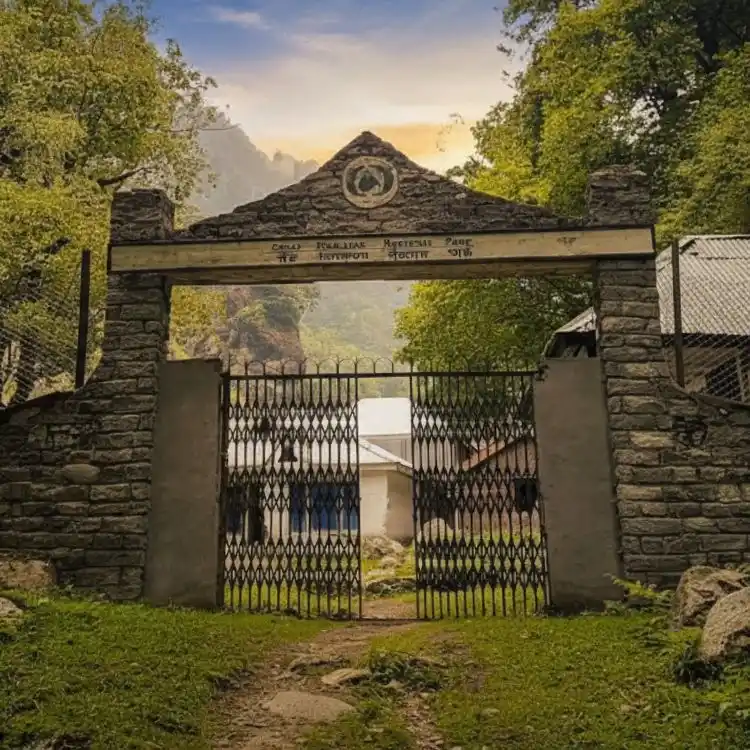
Great Himalayan National Park
GHNP gate at Ropa, ~3 km past Gushaini
UNESCO World Heritage site covering more than 1,000 sq km of high Himalayan wilderness, with the valley sitting in its eco buffer. The walk to the gate at Ropa from Gushaini is open access. Deeper entry needs permits.
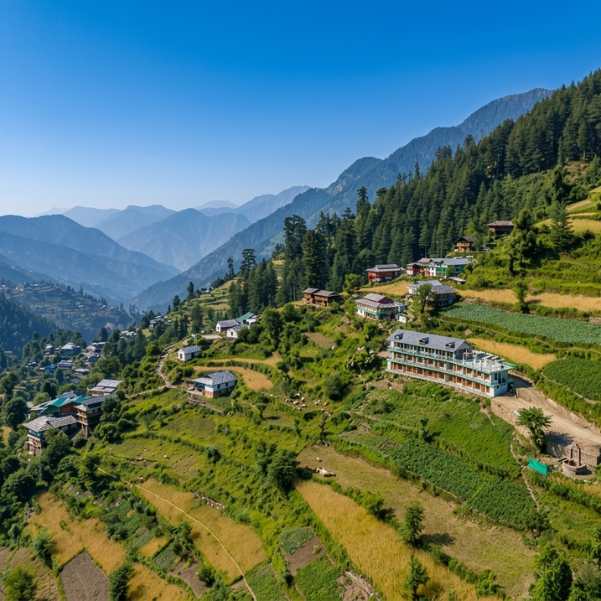
Banjar town
At the head of the valley
The nearest market town with the only ATM in the area, a fuel pump, and the road junction for both the Tirthan Valley and the Jibhi or Shoja road.
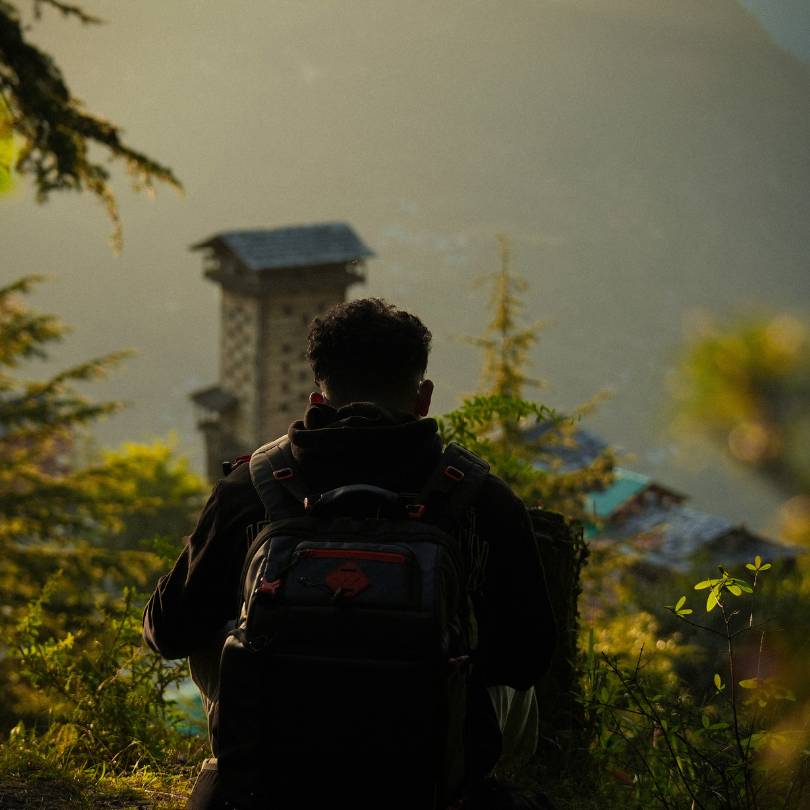
Chehni Kothi
~25 km · 1 hour drive from Gushaini
A tall Kath Kuni stone and wood tower above Banjar, several centuries old, reached by a short uphill walk through orchards.
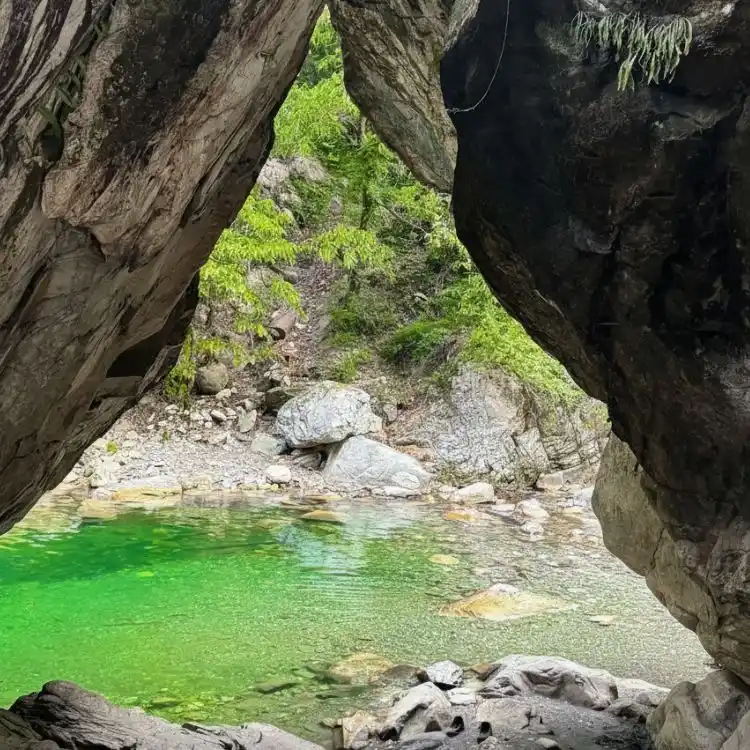
Mini Thailand Jibhi
~25 km · 1 hour drive
A small forest stream spot a short walk off the road in Jibhi, with two boulders forming a natural arch over a clear pool.
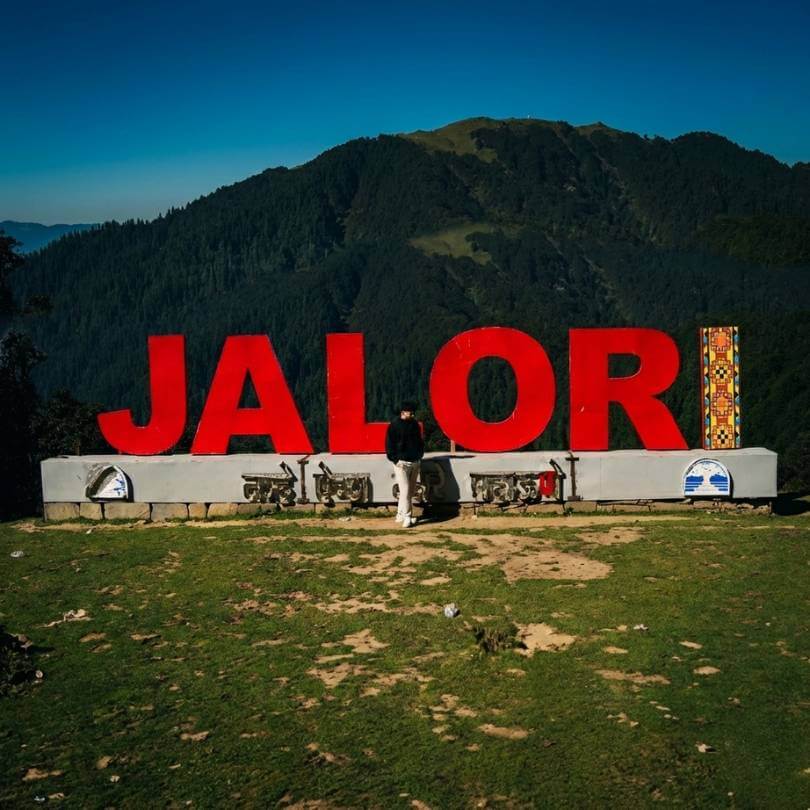
Jalori Pass
~30 km · 1.5 hours drive from Gushaini
The mountain pass on NH 305 above Jibhi and Shoja, the trailhead for the area's day walks.
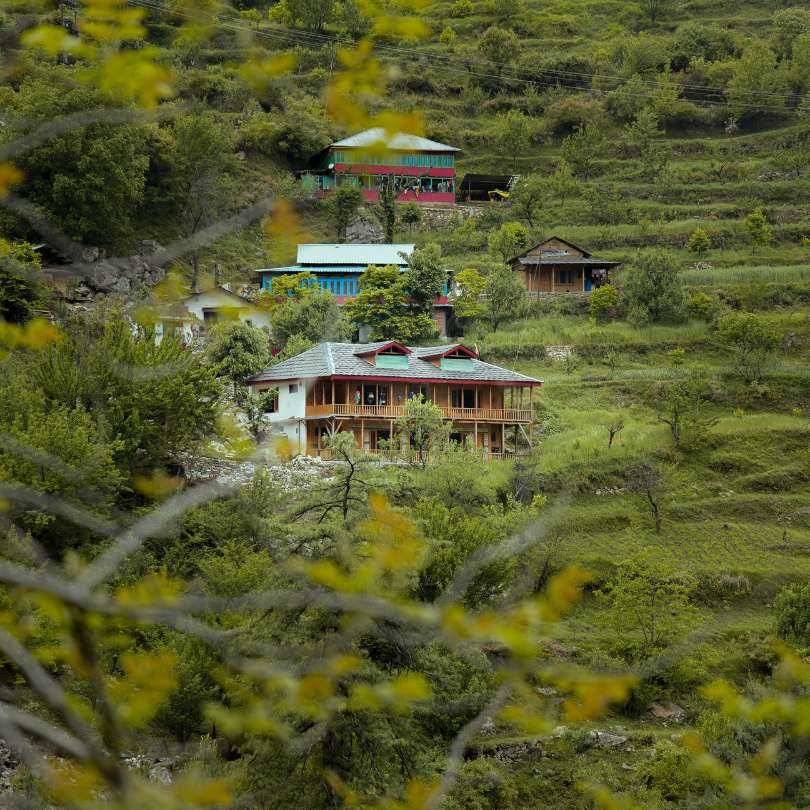
Shoja
~30 km · 1.5 hours drive uphill
A small forest village at around 2,700 m, the closest base to Jalori Pass. Quieter and higher than the Tirthan villages.
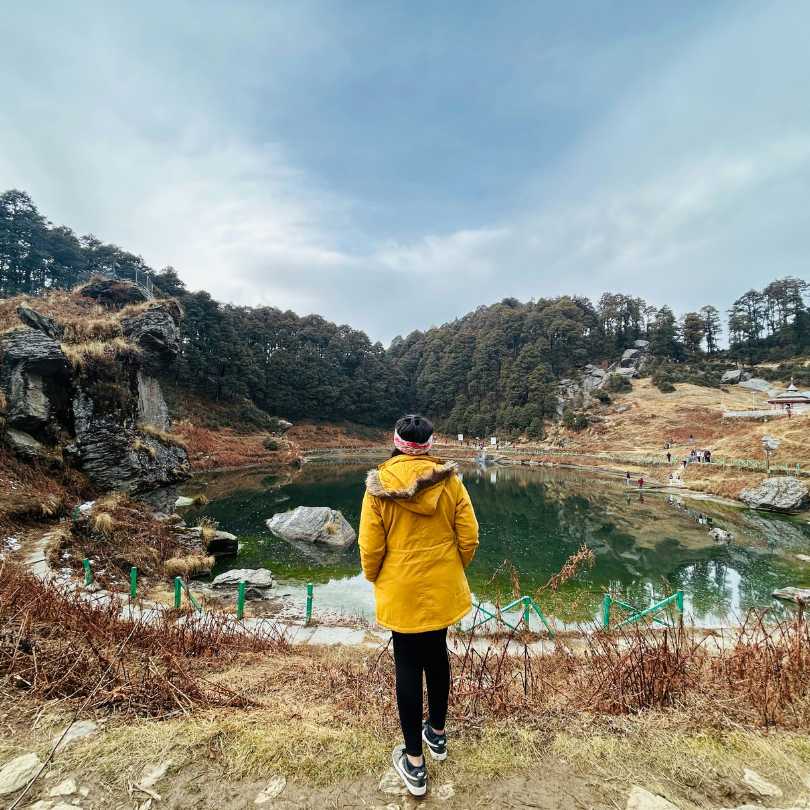
Serolsar Lake
From Jalori Pass, 5 km trek each way
A small sacred alpine lake reached by an easy 5 km forest walk from Jalori Pass.
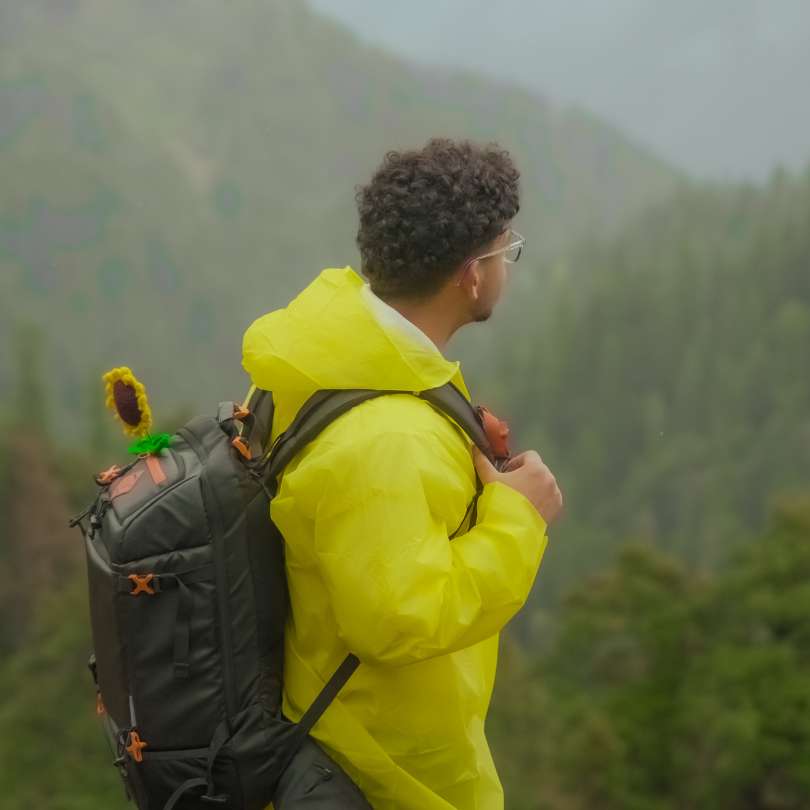
Raghupur Fort Trek
From Jalori Pass, 3 km trek each way
A short steep day hike from Jalori Pass to a meadow ridge with old fort walls and a wide panorama.
Our packages with Tirthan Valley
Curated trips that include a visit to Tirthan Valley.
 Group Tour5D/4N
Best Jibhi Tirthan Valley & Jalori Pass Weekend Tour From Delhi
1D Delhi •2D Tirthan Valley+1
₹5,999₹6,599SAVE INR 600/ person 5D/4N
5D/4NJibhi Tirthan Valley & Jalori Pass Scenic Weekend Tour
1D Delhi•2D Jibhi+1
₹11,999₹15,999SAVE INR 4,000/ person 6D/5N
6D/5NBest Jibhi Tirthan Valley & Shangarh Meadows Trip
1D Delhi •2D Tirthan Valley+2
₹15,999₹21,900SAVE INR 5,901/ person
Frequently Asked Questions
Where is Tirthan Valley?
In Banjar tehsil of Kullu district, Himachal Pradesh, along the Tirthan River. The valley runs roughly 25 to 30 km from Banjar town at its head down to Bathad on the edge of the Great Himalayan National Park. The main villages along the valley road are Sai Ropa, Nagini, Gushaini, and Bathad.
What is Tirthan Valley known for?
The Tirthan River, the eco buffer of the Great Himalayan National Park (a UNESCO World Heritage site), riverside homestays, and natural rainbow trout fishing. It is one of the few rivers in India where rainbow trout breed in the wild. Most travellers come for slow riverside days, short forest walks, and the GHNP gate access from Gushaini.
How many days do you need in Tirthan Valley?
Two nights minimum, three or four is the sweet spot. One night is rushed because the drive in and out eats half a day each way. Five or more nights starts to drag unless you are working remotely or specifically came for multi day GHNP treks. The classic plan is three nights riverside with one day for a Jalori Pass loop and one day for a GHNP gate walk or fishing.
When is the best time to visit?
March to early June and September to early November are the clean windows. Spring brings clear water, blossom in the orchards, and the fishing season opening. Autumn brings the sharpest air of the year. Skip July and August, monsoon brings landslides on the approach road and the river runs muddy. Winter is quiet and accessible at the river but the higher trails are snowed in.
How do I reach Tirthan Valley?
From Aut on the Manali highway, take the right turn just before the Aut tunnel onto NH 305, drive 24 km to Banjar, and continue into the valley road past Banjar (around 30 to 35 km total to Gushaini). From Delhi, most travellers take an overnight Volvo to Aut and a taxi onwards, total 12 to 14 hours. From Bhuntar airport, around 2 to 2.5 hours by taxi.
How is Tirthan Valley different from Jibhi?
Genuinely different. Tirthan is a river valley with riverside homestays, the GHNP buffer, and almost no cafe scene. Jibhi is a more developed village with cafes, more travellers, and a livelier evening. Pick Tirthan for the river and a slower pace, Jibhi for variety and cafes, or split a longer trip between both. They are about 30 minutes apart by road.
Is Tirthan Valley good for families?
Yes, generally one of the better choices in the region for families. The river is a permanent activity, homestays have space to run around, and short walks to waterfalls and into the GHNP buffer keep most kids happy. Kids 6 and above do well, under that the slow pace and limited entertainment can test patience. Pack books and games. Most homestays welcome children and arrange family meals.
Can I do trout fishing in Tirthan?
Yes, with caveats. The Tirthan has natural rainbow and brown trout, and the official season generally runs early March to mid June and September to mid November (closed for breeding the rest of the year). You need a Fisheries Department permit (around 100 to 250 rupees per rod per day, your homestay can arrange one). Catch and release is the rule on most of the upper river. Hire a local guide for the first morning.
Do I need permits for the Great Himalayan National Park?
Permits are issued at the Sai Ropa Tourist Centre or the GHNP Headquarters at Shamshi. You can walk to the GHNP gate at Ropa from Gushaini without a permit. Going past the Rolla camping point and into the core zone needs both a permit and a registered guide. Multi day treks need porters and camping gear arranged through a licensed operator like Himalayan Ecotourism.
Does Tirthan Valley get snow in winter?
Mostly no at the river itself, around 1,600 m. The valley sees the occasional dusting in deep winter but rarely heavy snow. The slopes above the valley and the road up to Jalori Pass do get snowed in from December to February. If you specifically want snow, base higher at Shoja or plan a winter trip with a guide.
Where should I stay in Tirthan Valley?
The three usable bases inside the valley are Gushaini, Nagini, and Sai Ropa. Gushaini has the most stays and is closest to the GHNP gate, the most popular base. Nagini is on the easier road and closest to Chhoie Waterfall. Sai Ropa is more spread out but has the Tourist Centre and permit office. Most homestays are riverside, with rates roughly 2,500 to 5,000 rupees per night for two with meals. Book ahead in peak season.
Are there cafes and restaurants in Tirthan Valley?
Mostly no, the valley has very limited cafe options compared to Jibhi or Manali. A few small riverside cafes have opened near Gushaini in recent years but hours are inconsistent and menus are short. The best food is at your homestay, where dinner is whatever the host family has cooked. Tell them at check in what you cannot eat and let them suggest the rest. If you specifically want cafe variety, day trip to Jibhi (about 30 minutes away).
How far is Tirthan Valley from Manali?
About 75 to 85 km, around 2.5 to 3 hours of driving. Drive south on NH 3 from Manali to Aut, take the left turn just past the Aut tunnel onto NH 305, and follow the road into Banjar and then into the valley. A natural pairing if you are doing a Manali plus Tirthan combination across one trip.
Related guides
Posts about Jibhi
- Jibhi in December 2026: Snowfall, Weather, Road Status and Winter Guide
- Jibhi in October 2026: Weather, Road Conditions, Places and Trip Plan
- Jibhi in August 2026: Weather, Road Safety, Itinerary and Honest Advice
- Jibhi for Honeymoon in 2026: Why Couples Choose It Over Manali
- Best Things to Do in Jibhi for Couples in 2026: Romantic Places, Walks and Hidden Gems
- Jibhi or Kasol — Which Is Better? An Honest, No-Fluff Comparison