
Chehni Kothi
A several centuries old Kath Kuni stone and wood tower above Banjar, half temple half medieval fortress, reached by a short uphill walk through apple orchards from Bagi or Bihar village
- Heritage tower
- Kath Kuni architecture
- ~30 to 45 m
- Jibhi · ~12 km
- Open year round
What makes it special
Chehni Kothi is a tall stone and wood tower in Chehni village, above Banjar in Kullu district. Built in the Kath Kuni style of the western Himalaya, the layered timber and stone construction uses no cement, no nails, and no metal fasteners. It started life as a defensive fort and a watchtower, and now also functions as a temple, with a Bhagwati shrine in the upper level and the Shringa Rishi tower beside it. The local name is Dhadhiya Kothi, after the king credited with building it.
A few words on the height and age, because this is where most other pages contradict each other. The tower today stands somewhere around 30 to 45 metres, depending on which source you trust. It was taller before the 1905 Kangra earthquake brought down the top storeys. Age estimates run from 17th century to several hundred years to a frankly improbable fifteen hundred. The honest answer is that no one alive can date it precisely. Treat it as several centuries old, built in a style that goes back further still, and remarkable mostly because it has stayed up at all.
The reason to come is not the precise number of storeys. It is the experience of standing at the base of a wooden and stone structure that an entire village built and rebuilt without any of the materials that modern construction takes for granted, in an active earthquake zone, and which has survived for centuries. The walk up through apple orchards is half the trip. Plan a half day, not a quick stop.
Quick answers
- Is Chehni Kothi worth visiting?
- Yes if you are spending a few days in Jibhi, Tirthan, or anywhere in the Banjar area, and you have any interest in old architecture, village life, or a slow morning walk through apple orchards. The kothi itself is the destination, but the climb up through the village is half the experience. Skip it only if uphill walks of around an hour are not for you and you have no interest in heritage construction.
- How much time do you need?
- Plan a comfortable half day. About 30 to 40 minutes of driving each way from Jibhi to the walk start, around an hour of walking up, an hour at the kothi and the village, and an hour walking back down. Total 4 to 5 hours door to door. A morning visit followed by a late lunch in Jibhi is the standard plan.
- Can you climb inside the tower?
- Generally not for casual visitors. The structure is sacred and the wooden interior is fragile, so the local community keeps the inside closed to outside foot traffic. You can walk fully around the base, see the joinery up close, and visit the Shringa Rishi temple in Bagi on the way up. That is the standard visit and it is plenty.
Quick facts
Everything you need to know at a glance.
At a glance
- Altitude of Chehni village
- Roughly 2,100 to 2,400 m (~7,000 to 7,800 ft, sources vary)
- Location
- Chehni village, Banjar tehsil, Kullu district, Himachal Pradesh
- Nearest base
- Jibhi 10 to 12 km, Banjar 10 km, Gushaini in Tirthan ~22 km
- Open season
- Year round, weather permitting. Best Mar to Apr and Sep to early Nov.
- Best arrival window
- Reach the walk start by 9 to 10 AM
- Entry fee
- None. A small temple donation is appreciated, not required.
- Time needed
- Half day, about 4 to 5 hours from a Jibhi base
- Difficulty
- Easy to moderate. 1 to 1.5 km of steady uphill walking each way.
On the ground
- Mobile network
- Patchy. BSNL and Jio sometimes work in the village, signal drops on parts of the walk. Tell your homestay your plan before you head up.
- ATMs
- None at the village or the walk start. Nearest ATMs are at Banjar and Aut. Withdraw cash before you head up.
- Fuel
- No fuel at Jibhi, Bagi, or Chehni. Last reliable pumps are at Banjar and on the Aut side. Tank up on the way in.
- Food on site
- A handful of small tea shops have opened in Chehni village in recent years, opening hours are inconsistent. Plan to eat at your homestay before and after, carry a snack and water for the walk.
- Parking
- Park at the Bagi gate, the Bihar trailhead, or in Chehni village itself if you drive up the rough track. All three options have informal village parking, no fees, ask a local where to leave the car.
- Permits
- None required. The site is part of an active village and temple complex.
- Drones
- Not welcome. The complex is sacred, the village is small, and noise overhead is intrusive. Avoid.
- Walking surface
- Forest path with stone steps in some sections, soft mud, and apple orchard tracks. Trekking shoes or sturdy sneakers with grip work, slippery soles do not.
- Guides
- Not strictly needed, the trail is easy and the village is small. A local guide arranged through your Jibhi or Tirthan homestay adds context on the architecture and culture and is worth it if you have a real interest in the heritage.
Seasonal weather
- March to early June18°6°Spring
- July to August22°14°Summer monsoon
- September to early November18°4°Autumn
- Mid November to February8°-4°Winter
Suitable for
- Couples — suitable
- Families — suitable
- Seniors — with some care
- Solo — suitable
- First-timers — suitable
- Pet-friendly — with some care
How to reach Chehni Kothi
4 approach routes, with seasonal access.
From Jibhi (drive + walk)
Year round. The village road can get muddy in heavy monsoon, ask locally before driving up.- Distance
- ~10 to 12 km drive + 1 to 1.5 km walk each way
- Time
- 30 to 40 min drive + 45 to 60 min walk one way
- Road
- Narrow tarred road from Jibhi towards Banjar, then a smaller link road to the village. The final stretch to Bagi or Bihar is rougher but manageable in a small SUV or taxi.
- Last fuel
- Last reliable pumps at Banjar and on the Aut side. Tank up on the way in.
The standard plan. Drive from Jibhi towards Banjar on the link road, watch for the painted signboard pointing up to Chainsi Marg or Bagi village (signage varies), turn off, and continue 1 to 2 km on a narrower side road to either the Bagi gate near the Shringa Rishi temple or the trailhead at Bihar village. Park, walk up. The drive from Jibhi takes about 30 to 40 minutes and the walk another 45 to 60 minutes. Half day round trip.
From Gushaini or Tirthan Valley
Year round, with the same monsoon caveat for the village access road.- Distance
- ~22 km drive + 1 to 1.5 km walk each way
- Time
- ~45 min drive + 45 to 60 min walk one way
- Road
- Tarred valley road from Gushaini to Banjar, then the same approach as the Jibhi route from there onwards.
- Last fuel
- Banjar is the only reliable fuel stop on this approach.
Slightly longer drive than from Jibhi but a natural pairing if you are based by the river in Tirthan. Drive out to Banjar first on NH 305, then continue towards Jibhi and turn off at the Chainsi Marg or Bagi signboard. About 45 minutes of driving each way to the walk start. Add the walk and you have a full half day from a Tirthan base. The Gushaini road is tarred but narrow, do not be in a hurry.
From Banjar (drive + walk)
Year round, monsoon caveat applies.- Distance
- ~10 km drive + 1 to 1.5 km walk each way
- Time
- 25 to 30 min drive + 45 to 60 min walk one way
- Road
- Tarred NH 305 for the first stretch, then a narrower link road and a rough final approach to the village.
- Last fuel
- Banjar itself, last fuel stop before the village.
Easy access if you are passing through Banjar or based there for any reason. Drive out of town on NH 305 towards Jibhi, watch for the link road signboard within the first 5 to 7 km, and turn off. From the turn it is another 2 to 3 km to the walk start. Quickest of the three approaches, about 25 to 30 minutes total drive plus the walk.
From Delhi or Chandigarh (approach to Jibhi or Tirthan)
Year round. Slower in monsoon because of landslide risk between Mandi and Aut.- Distance
- ~500 km from Delhi, ~270 km from Chandigarh
- Time
- 12 to 14 hours from Delhi, 8 to 9 hours from Chandigarh
- Road
- NH 3 from Chandigarh to Aut, then NH 305 into the Banjar valley. Mostly decent tar, slower in monsoon.
- Last fuel
- Chandigarh, Swarghat, Bilaspur, Sundernagar, Aut, Banjar.
Most travellers reach Jibhi or Tirthan as an overnight Volvo bus to Aut and a taxi onwards, or a long self drive. Aut is the key turn off, just before the Aut tunnel on the Manali highway, easy to sail past at night. From Aut it is 24 km to Banjar and another 8 km to Jibhi. Plan to sleep one night in Jibhi or Tirthan before doing the kothi visit, this is not a same day arrival kind of trip.
Best time to visit
Season by season, so you can plan around the weather rather than hope.
- Recommended
Spring
March to early June
Apple blossom in April, clean light, easy walking
- Day temperature
- 12 to 18 C in the village
- Night temperature
- 6 to 10 C
- Trail
- Dry and easy underfoot, occasional mud in early March
- Crowds
- Low to moderate, busier on April and May weekends
Usually the best window of the year along with autumn. Apple blossoms across the slopes through April, the air is clean, and the walk up is comfortable in a single layer. Weekdays stay quiet. Carry a warm layer, mornings still drop into single digits in March. April and May are the easiest underfoot, the trail dries out and the orchards look cared for.
Summer monsoon
July to August
Skippable unless you actively want mist
- Day temperature
- 16 to 22 C
- Night temperature
- 12 to 16 C
- Trail
- Slippery, leeches likely after rain
- Crowds
- Very low
The most skippable window. The walk turns slick and slippery, the slate roofs and stone walls of the kothi look fine in mist but the views vanish, and leeches show up in the orchard sections after rain. Roads to the village can get muddy and intermittently bad. Photographers who actively want moody mist photos sometimes plan around this. Most other travellers should pick a different month.
- Recommended
Autumn
September to early November
Apple harvest and the clearest air of the year
- Day temperature
- 14 to 18 C
- Night temperature
- 4 to 8 C
- Trail
- Dry and bright, the easiest underfoot of any season
- Crowds
- Moderate, busier in October weekends
The other clean window and the one most photographers prefer. Apple harvest fills the orchards through September and into October, post monsoon air gives the sharpest panoramas across the valley, and the colours in the village turn rich. Mid October weekends pull crowds from Delhi and Chandigarh, weekdays stay calm. By early November the nights bite, carry a real warm layer.
Winter
Mid November to February
Atmospheric and quiet, but cold and short on daylight
- Day temperature
- 4 to 8 C
- Night temperature
- -4 to 0 C
- Trail
- Cold, occasional snow and ice on the path
- Crowds
- Almost none
The kothi stays open year round and a winter visit has its own quiet appeal, with snow on the slate roofs and the village mostly to yourself. The trade off is real cold, occasional ice on the walk path, and shorter daylight. The local cafes and tea shops in Chehni often shut down in deep winter, so plan to bring a flask. If you are coming in January or February, ask your Jibhi homestay about trail conditions before driving out, the village access road can get tricky after fresh snow.
Things to see & do
10 things worth your time at Chehni Kothi.
Walk up from Bagi (Shringa Rishi gate)
45 to 60 minutes one wayThe standard route. Park near the Shringa Rishi gate at Bagi village, off the link road between Banjar and Jibhi, and start walking. The trail climbs through pine and apple orchards for roughly 1 to 1.5 km, depending on which spur you take. Steady uphill, never punishing. Forty five minutes to an hour at a relaxed pace, less if you are fit. This is the more devotional approach because pilgrims use it for the Shringa Rishi temple too.
Walk up from Bihar village
~60 minutes one wayThe gentler alternative. Bihar village is the other access point, slightly longer in distance but with an easier gradient and more time spent in the orchards. Locals often recommend it for slower walkers and for anyone who wants to see more of village life on the way up. About an hour at a relaxed pace.
Pause at the Shringa Rishi temple in Bagi
15 to 20 minutesOn the way up from Bagi, the Shringa Rishi temple is itself worth the stop. Three storeys of stone and wood, prayer flags strung across the courtyard, apple orchards on every side. Shringa Rishi is the presiding deity of the Banjar valley and the temple is in active use. Remove shoes and caps before going up the steps. Photographs of the exterior are fine, the inner sanctum is off limits.
Stand at the base and just look up
30 to 45 minutesHonestly the main moment. Once you reach the courtyard at the top, walk slowly around the base of the great tower. The lower courses are heavy stone, the upper levels mostly deodar wood, and you can see the horizontal timber beams interlocking the corners that give Kath Kuni its name. The slate roofs step down in tiers. Try to spot a single nail or piece of metal anywhere on the structure. You will not find one.
See the Dev Bhandar tower beside the kothi
10 to 15 minutesThe shorter tower right next to the great Kothi is the Dev Bhandar, the temple treasury, traditionally guarded by a hereditary keeper called the Bhandari. It is roughly 30 to 35 metres tall in its own right and built in the same Kath Kuni style. Locals usually keep this tower closed to outsiders. Photograph the exterior, do not try to enter without permission.
Visit the Muralidhar Mandir and Tankri inscriptions
10 to 15 minutesA small temple to Lord Krishna in the same complex, with carved Tankri script inscriptions on the walls. Tankri is the old script of several Himachali languages and even local experts struggle to translate parts of it. Worth a slow look if you find old scripts interesting. The carvings on the door frames repay close attention.
Wander the lanes of Chehni village
30 to 45 minutesChehni village itself is a working Himachali settlement of 30 or 40 traditional homes, most built in the same stone and timber method as the great tower. Walking the lanes for half an hour gives you more sense of how Kath Kuni actually houses people than the kothi itself does. Children may say hello, dogs nap in patches of sun, and the flat roof spaces dry chillies and grain in season. Walk slowly, do not photograph people without asking.
Apple orchards in autumn
Through the walk in seasonIf you are here in September or October, the apple harvest is in full swing on every slope around the village. Local growers are usually happy to chat for a few minutes and sometimes hand a fruit to passing walkers, though it is polite to offer to pay for anything you take more than a single tasting bite of. The fruit is mostly going to wholesale markets in Banjar and beyond, do not assume picking is free.
Extension to Myagi village
2 to 3 hours extraIf you have legs left after the kothi, a path continues up from Chehni to Myagi village, another small Kath Kuni cluster on a higher shoulder of the ridge. The reward is a much wider view across the Tirthan side toward the Great Himalayan National Park boundary. Roughly an hour each way of steady climb on top of what you have already done. Hire a local guide from Chehni if you want to do this, the path is not always obvious.
Photograph the architecture in good light
Across your visitThe first hour after sunrise and the last hour before sunset are the windows that work for the great tower. Side light catches the stone and wood layers and the slate tiers, where midday tends to flatten everything out. Dawn is calmer and emptier than dusk, when local devotees come up for evening prayers. A 35 to 50 mm lens covers the full tower from the courtyard. A wider lens helps inside the village lanes.
Know before you visit Chehni Kothi
The practical bits, from people who have been.
What Chehni Kothi actually isA multi storey Kath Kuni tower above Banjar, part fort, part temple, several centuries old.
Chehni Kothi is a multi storey stone and wood tower in Chehni village, above Banjar in Kullu district. It was built as a defensive fort and watchtower for the surrounding villages, and over time it also became a temple, with a Bhagwati shrine in the upper levels. The complex includes a smaller second tower called the Dev Bhandar, the temple treasury, and a nearby Krishna temple called the Muralidhar Mandir.
Local tradition credits a king named Dhadhu with building the great tower, which is why you will sometimes hear it called Dhadhiya Kothi. Most reliable accounts date it to roughly the 17th century, though you will see numbers as wild as 1,500 years quoted online. The tower was originally taller. The Kangra earthquake of 1905 brought down the top two storeys, and locals later carried out the repair work that has kept it standing since.
For the visitor, what matters is that this is a working religious site inside a working village, not a museum. Almost every house in Chehni is built in the same stone and timber method as the great tower. The point of coming up here is not just to see one famous structure, it is to walk through a living example of how an entire village in the western Himalaya used to build and still does, in some places.
Kath Kuni explained, in plain wordsLayered stone and wood with interlocked timber corners. No cement, no nails, surprisingly earthquake resistant.
Kath Kuni is the local name for a building method that uses alternating horizontal courses of timber and stone, with interlocking wooden corners that hold the wall together without any mortar. Kath means wood. Kuni means corner. The deodar beams across each layer act like a flexible spine that lets the wall sway slightly during a tremor instead of cracking, which is why these structures survive in an earthquake prone region.
The construction uses no cement, no nails, no iron bands, and no modern fasteners of any kind. The weight of the stone holds the timber down. Wooden pegs lock the corner joints. A high stone plinth lifts the building off the wet ground, and the multi tier slate roof sheds snow while adding the downward weight that keeps the wood layers tight.
The reason this matters when you stand in front of the great tower is simple. Several centuries ago, in a village without machines or mortar or imported materials, people built a structure tall enough to qualify as a small skyscraper, and engineered it well enough to survive the 1905 Kangra earthquake which killed roughly 20,000 people across the region. Spending five minutes looking at the joinery is the closest thing this trip offers to a history lesson.
Climbing the tower, the honest answerWalking around the base is the standard visit. Climbing inside is not. Do not push for it.
This is the part most travel pages get wrong. The local community is protective of the great tower for two reasons. The structure is sacred, with a Bhagwati shrine in the upper levels that pilgrims use. And the wooden staircase and floors are old, fragile, and not safe for routine visitor traffic. So while a few accounts online describe climbing inside, that is not the standard or expected experience anymore.
What you can do without question is walk fully around the base of the tower, examine the construction up close, sit in the courtyard, visit the Shringa Rishi temple in Bagi on the way up, and photograph the exterior. That is the standard visit and it is plenty.
If you genuinely want to see the inside, the right approach is to ask politely at the Shringa Rishi temple complex when you arrive, accept a no without negotiating, and never push. Some local guides arranged through homestays in Jibhi or Tirthan can sometimes get a brief look at the lower interior at certain times of year, but this is not guaranteed and not something to plan a trip around.
Which trail to takeWalk from Bagi for the classic approach, Bihar for a gentler climb, drive only if you have a real reason.
Three ways to reach the tower. Pick by mood and fitness, not by default.
Walk from Bagi village (Shringa Rishi gate): The classic route. Park at the gate off the link road from Banjar to Jibhi, walk up through the orchards and forest, pass the Shringa Rishi temple at Bagi on the way, and continue to Chehni. About 1 to 1.5 km, 45 to 60 minutes at a relaxed pace. The most rewarding way to arrive.
Walk from Bihar village: The slightly longer but gentler approach. More time among the orchards, fewer steps. Recommended for slower walkers, families with younger kids who can walk, and travellers who want to see more of village life on the way.
Drive up the rough track: A jeepable road now reaches Chehni village. It is narrow, dusty, and not enjoyable in a low clearance car. Use this only if you have a strong reason not to walk, an elderly traveller for example. The walk is the better experience and you lose all of the orchard scenery if you drive.
A small note. The road status to Chehni village can change in monsoon. If you plan to drive up, ask your homestay in Jibhi or Tirthan the day before.
Photography guideBest in early morning and late afternoon side light. Ask before photographing people. Skip the drone.
The first hour after sunrise and the last hour before sunset are when the great tower photographs best. Side light at those times catches the alternating stone and timber layers and the stepped slate roof tiers in a way midday flat light cannot. The courtyard is small enough that a 35 to 50 mm lens covers the full tower from the ground. Step back into the orchard for the wide shot, get close for the joinery details.
Inside the village, the wooden balconies, slate roofs, and prayer flags strung between houses are quietly photogenic without being cliched. Walk slowly with the camera down for the first ten minutes after you arrive, look around, then start shooting. Locals are usually welcoming if you ask before photographing them or their children, and uncomfortable if you do not.
Drones: Not welcome here. The complex is sacred, the village is small, and any noise overhead is intrusive. Some sources suggest special permission may be possible, in practice it is far better to leave the drone behind. The ground level photos are the ones worth getting anyway.
Where to base for the visitDay trip from Jibhi or Tirthan. A few homestays exist in Chehni village if you want to stay overnight.
No accommodation at the kothi itself. Most travellers do this as a half day trip from Jibhi or Tirthan. A few small homestays have started to operate in Chehni village in recent years if you want a quieter overnight in a Kath Kuni house, ask your Jibhi or Tirthan homestay to recommend one and to check current availability before you go up. Do not just turn up at the village expecting a bed.
From Jibhi: The most common base, with the widest range of stays and cafes. Drive 10 to 12 km to the walk start at Bagi or Bihar, walk up, do the kothi, walk back, drive home for a late lunch. Easy half day. Our Jalori Pass guide has more on the broader Jibhi area.
From Tirthan or Gushaini: Slightly longer drive, about 45 minutes to the walk start. A natural pairing if you are also visiting the Great Himalayan National Park entry side.
Food: A handful of small cafes and tea shops have opened in Chehni village in recent years, but the choices are limited and inconsistent. The smarter plan is to eat a proper breakfast at your stay, carry one snack and a water bottle, and have a real meal back in Jibhi or Tirthan when you return.
Who should visitGood for couples, families with older kids, and most seniors. Skip if you cannot manage 1 km uphill on a forest path.
Honest framing for who this trip suits.
Couples and solo travellers: Yes. The half day pace, the gentle uphill walk, and the quiet of the village all work well. Pair it with an afternoon at a Jibhi cafe or a riverside walk in Tirthan and you have a satisfying day.
Families with kids: Generally fine for kids 8 and above. The walk is short, the orchards keep them interested, and the village is small enough that they can roam without getting lost. Under 6 or 7, plan to carry them on parts of the climb. Strollers do not work on this trail.
Seniors: Doable for active seniors. The Bihar approach is gentler than Bagi. If your parents struggle with stairs at home, consider asking your Jibhi homestay about the rough motorable track up to Chehni village instead of walking, accepting that you trade the orchard experience for getting there at all.
Pets: Mixed. Dogs handle the walk fine. The village has its own free roaming dogs and the temple courtyard is sensitive ground. If you bring a pet, keep it on leash near the kothi and skip the temple complex entirely.
First time visitors to Himachal: Yes. This is one of the better introductions to traditional western Himalayan architecture and village life that you can do as a half day from a comfortable base.
Local customs and the Shringa Rishi connectionActive temple, working village. Remove shoes at shrine steps, ask before photographing people, do not pick apples without asking.
The site is sacred and the village is small. A few small things to know before you go up.
Remove shoes and caps before going up the steps of the Shringa Rishi temple in Bagi or any active shrine area at the kothi complex. Walk clockwise around shrines if you do the parikrama. Do not touch the wooden pillars or carved beams of the temples, the wood is old and fragile and constant touch wears it down faster than you would think.
Shringa Rishi is the presiding deity of the Banjar valley. The temple in Bagi is in active use and pilgrims come up regularly with offerings of flowers and fruit. If you are around at puja time, stand to the side, watch quietly, and do not photograph the inner sanctum or the deity images. Photographs of the temple exterior, the courtyard, and the great tower itself are fine.
A note on the apples in season. Local growers are friendly and may offer a single fruit to taste, which is fine to accept with thanks. Do not pick from the trees yourself without asking, and do not assume anything you take is free, the apples are a working crop and the income matters to families here.
Local tips most travellers missMorning start, eat before you go, walk fully around the tower, sit for ten quiet minutes before leaving.
Start in the morning. Reach the Bagi or Bihar walk start by 9 to 10 AM, do the climb, the kothi, the village, and the Shringa Rishi temple, and you are back at your homestay for a late lunch. Afternoon arrivals work too but the orchard light is harsher and the village is quieter at midday.
Eat first, then walk. There is almost nothing to eat at Chehni and what does exist is inconsistent. A real breakfast at your stay before you set off works much better than expecting to find food at the top.
When you reach the courtyard at the top, do not just walk to the great tower and take a photo. Walk fully around it, then sit on the low wall on the far side for ten minutes. The tower changes character depending on which face you are looking at and which time of day, and ten quiet minutes are how you actually take it in. The biggest mistake travellers make here is treating it as a five minute photo stop.
Carry small cash for any tea or snacks in the village, and a refilled water bottle from your stay. Plastic bottles are best avoided in a small village like this where waste management is basic.
Nearby attractions
Other places worth the detour.
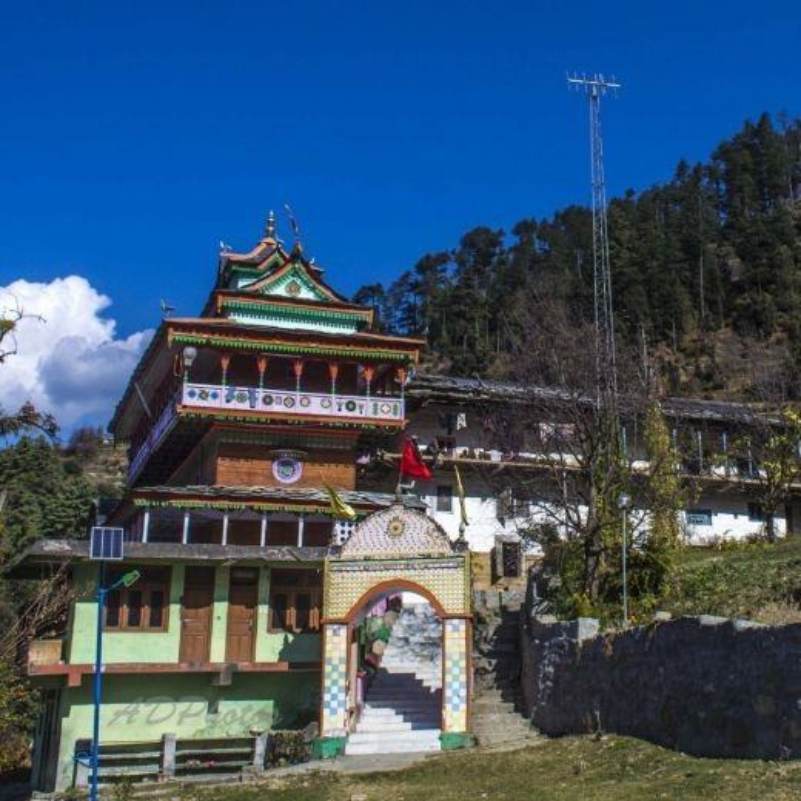
Shringa Rishi Temple, Bagi
On the walk up from Bagi
An active Kath Kuni temple in Bagi village, dedicated to the presiding deity of the Banjar valley. Most walks up to the kothi pass directly through here.
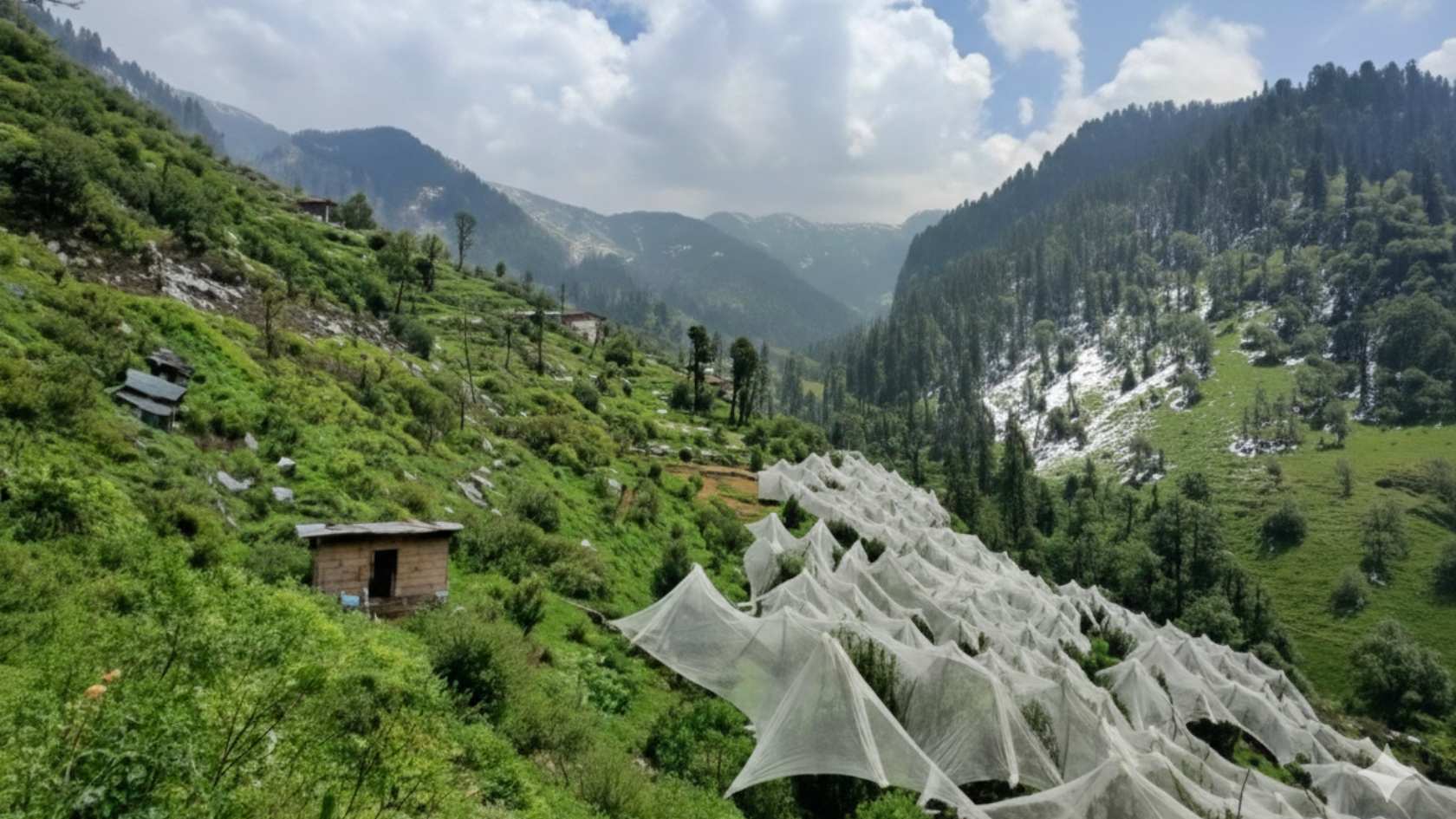
Myagi Village
~1 hour climb from Chehni
A higher Kath Kuni village above Chehni, reachable by an extra hour of climbing from the kothi. The reward is a much wider view across the Tirthan side.
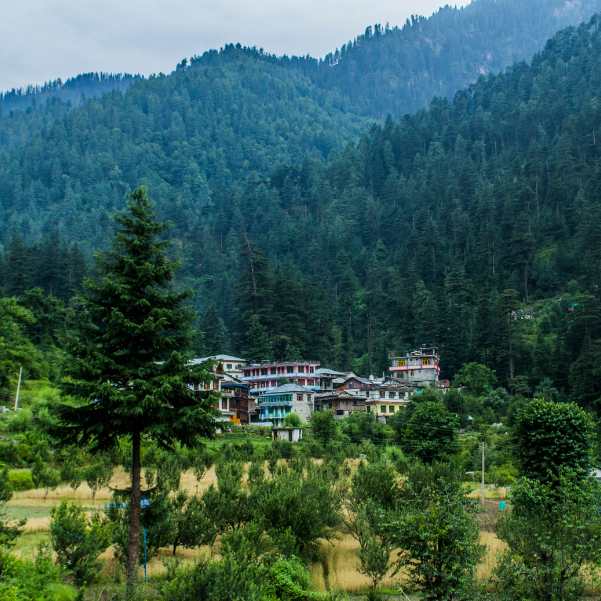
Jibhi Village
~10 to 12 km · 30 to 40 min drive
The standard base for visiting the kothi. Homestays, cafes, Jibhi Waterfall, and a relaxed mountain village feel.
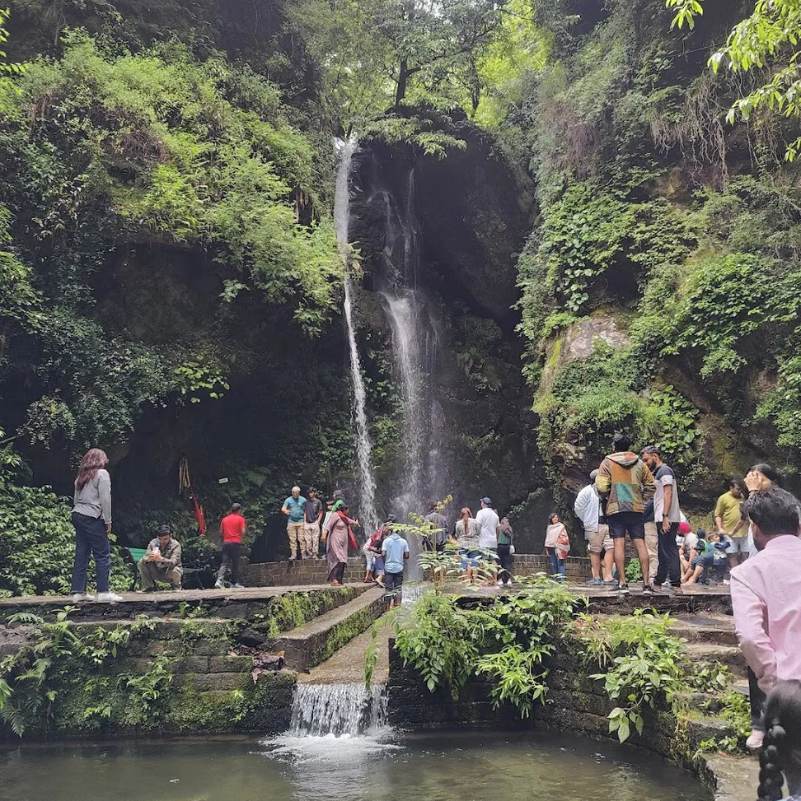
Jibhi Waterfall
~12 km from the kothi walk start
A small waterfall in the Jibhi bazaar. Easy family stop on the way back from the kothi.
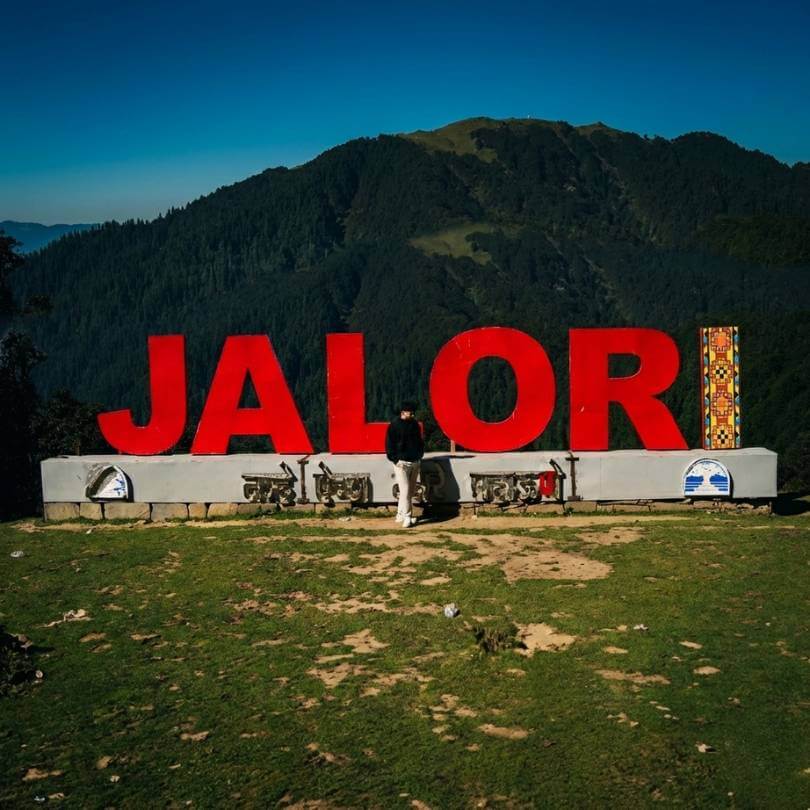
Jalori Pass
~25 km · 1.5 hours drive from the kothi walk start
The mountain pass on NH 305 above Jibhi and Shoja, the trailhead for several day walks.
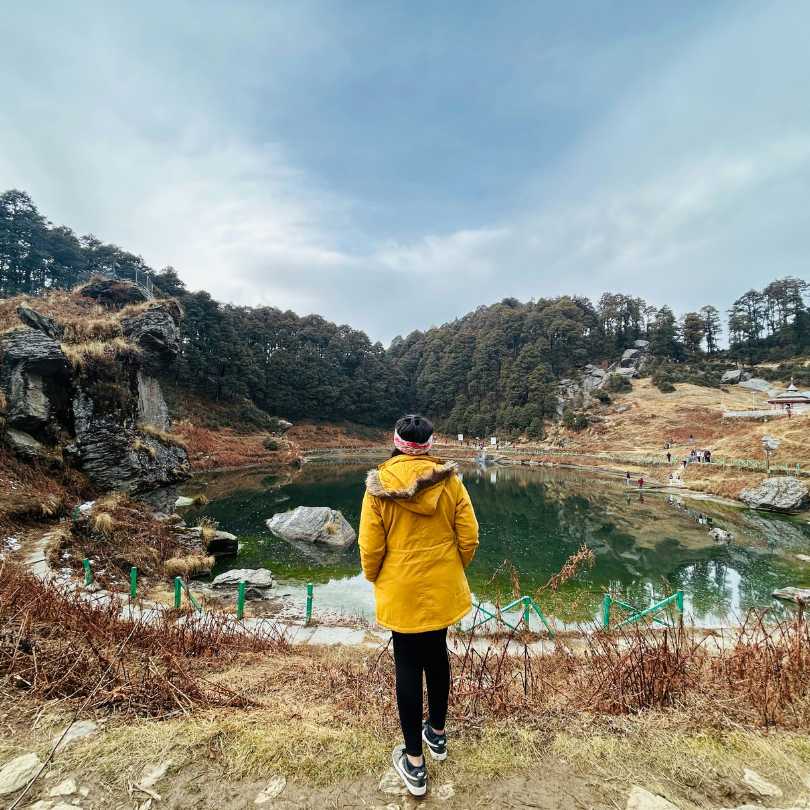
Serolsar Lake
Trek from Jalori Pass, ~25 km drive from the kothi base
A small sacred alpine lake reached by an easy 5 km forest walk from Jalori Pass.
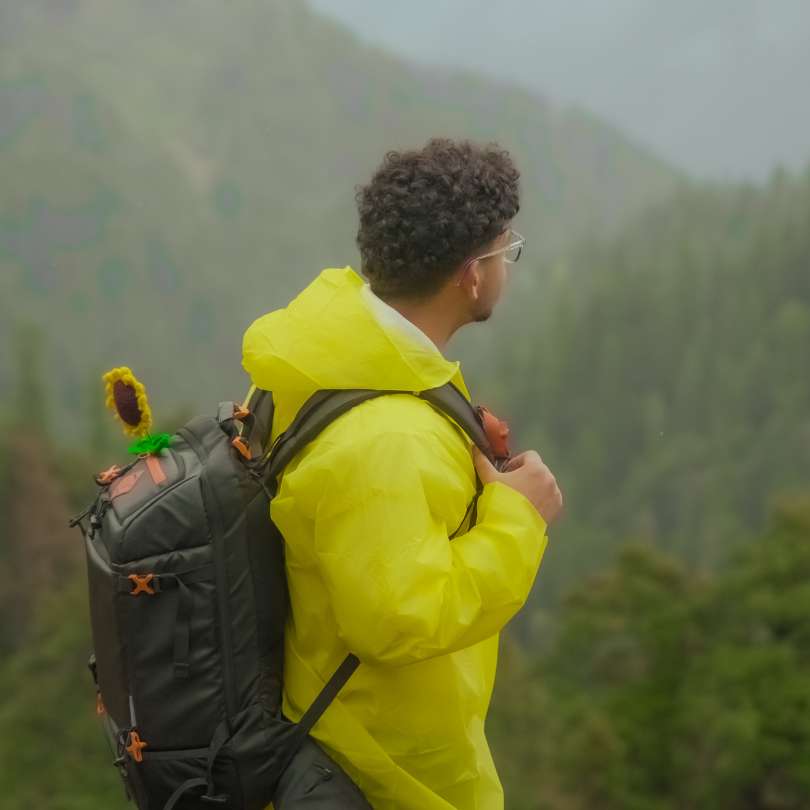
Raghupur Fort Trek
Trek from Jalori Pass, ~25 km drive from the kothi base
A short steep day hike from Jalori Pass to a meadow ridge with old fort walls and a wide panorama.
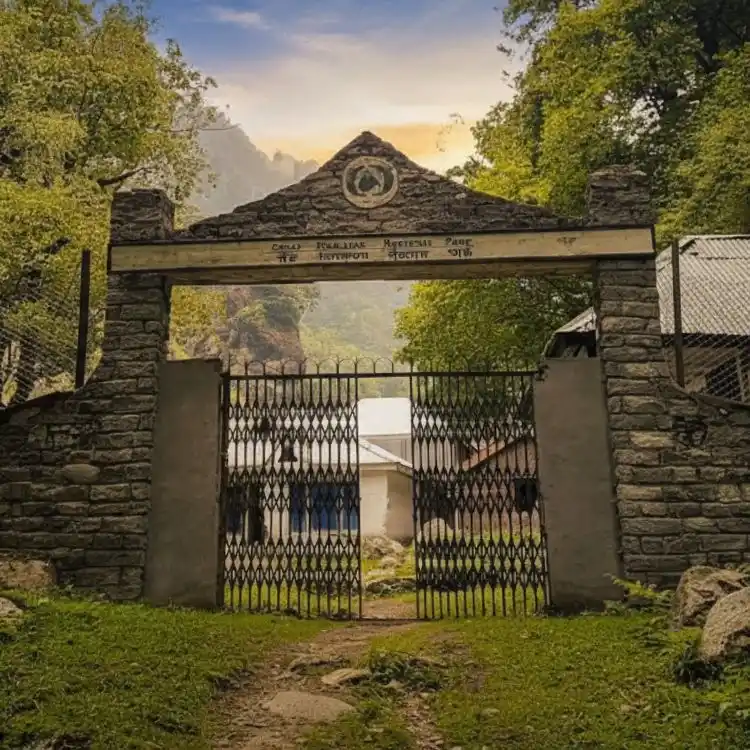
Great Himalayan National Park
Tirthan entry ~25 km from the kothi base
UNESCO World Heritage site covering the Tirthan, Sainj and Jiwa river catchments. Separate entry permits needed.
Our packages with Chehni Kothi
Curated trips that include a visit to Chehni Kothi.
 Group Tour5D/4N
Best Jibhi Tirthan Valley & Jalori Pass Weekend Tour From Delhi
1D Delhi •2D Tirthan Valley+1
₹5,999₹6,599SAVE INR 600/ person 5D/4N
5D/4NJibhi Tirthan Valley & Jalori Pass Scenic Weekend Tour
1D Delhi•2D Jibhi+1
₹11,999₹15,999SAVE INR 4,000/ person 6D/5N
6D/5NBest Jibhi Tirthan Valley & Shangarh Meadows Trip
1D Delhi •2D Tirthan Valley+2
₹15,999₹21,900SAVE INR 5,901/ person
Frequently Asked Questions
How tall is Chehni Kothi?
Roughly 30 to 45 metres, depending on which source you read. The tower was taller before the 1905 Kangra earthquake brought down the top storeys. Most accounts on site put the present height in the upper part of that range, though the older estimate of around 30 metres also has serious backing. Treat any single figure as approximate.
How old is Chehni Kothi?
Genuinely uncertain. Local tradition credits a king named Dhadhu and dates the tower to roughly the 17th century, which is why it is also called Dhadhiya Kothi. Other sources stretch the age to 500 or even 1,500 years, but those numbers are not well supported. The Kath Kuni style itself is older than the tower, and the structure has been repaired and rebuilt many times since whenever it first went up.
What is Kath Kuni architecture?
It is a kind of layered Himalayan construction made of alternating courses of stone and deodar wood, with interlocking timber corners and no cement, no nails, and no metal fasteners. Kath means wood and Kuni means corner. The wood layers give the wall enough flexibility to absorb earthquake shocks, which is why so many of these structures have survived in the western Himalaya.
How many storeys does Chehni Kothi have?
Currently around 5 storeys of original structure remain, though Wikipedia describes the surviving structure as 9 storeys high and other accounts say 7 or 12. The honest reading is that the count depends on what you call a storey, since some levels are short ones with low ceilings. The point is not the number, the point is that a wooden tower this tall is rare anywhere.
Can I climb the Chehni Kothi tower?
Generally not for casual visitors. Locals are protective of the structure for both religious reasons and conservation reasons, and the wooden staircase inside is fragile. You can walk fully around the base, photograph the exterior, and visit the lower temple area. Climbing higher is not the standard tourist experience and you should not push to do it.
How do I reach Chehni Kothi on foot?
Two main starting points. From Bagi village near the Shringa Rishi gate, the walk is about 1 to 1.5 km uphill, around 45 minutes to an hour at a relaxed pace. From Bihar village it is slightly longer but gentler. A new jeepable track now reaches Chehni village itself, but the road is rough and the walk is the better experience.
How far is Chehni Kothi from Jibhi?
From Jibhi by road it is roughly 10 to 12 km to the Bagi or Bihar walk start, depending on which signboard you turn at. Drive towards Banjar, take the marked link road, and park at the village. Allow about 30 to 40 minutes for the drive plus the walk and your time at the tower. A half day is a comfortable plan from Jibhi.
Is there a road right up to Chehni village?
Generally yes, the rough motorable track that was opened around 2020 is now drivable for small SUVs and taxis. Honestly, walking up is the better option. The road is narrow, dusty when dry and slick when wet, and the village is small enough that arriving on foot fits the place. Park at Bagi or Bihar and walk.
Is there an entry fee or permit needed?
No entry fee. The site is part of an active village and an active temple complex. A small donation at the Shringa Rishi temple if you go inside is appreciated, not mandatory.
When is the best time to visit?
March to April and September to early November are usually the best windows. Spring brings apple blossom, autumn brings the harvest and the clearest air. Monsoon makes the trail slippery and reduces the panorama. Winter is open and atmospheric with snow on the slate roofs, though the walk underfoot can be icy and you should ask locally before going.
Is the walk to Chehni Kothi difficult?
Easy to moderate. Roughly 1 to 1.5 km of steady uphill on a forest and orchard path, no scrambling, no exposure. Most reasonably active adults manage it in under an hour without training. Children 8 and above usually do well. Older travellers who are slow on stairs at home should add buffer time and not rush.
Are photos and drones allowed?
Generally yes. Photograph the exterior of the great tower, the village lanes, and the surrounding orchards freely. Ask before photographing locals or pilgrims. The interiors of the active shrines, including the inner sanctum of the Shringa Rishi temple and the upper sections of the kothi, are off limits. Drones are not welcome here for both wildlife and religious reasons, and may need special permission. Better to leave them in the car.
Related guides
Posts about Jibhi
- Jibhi in December 2026: Snowfall, Weather, Road Status and Winter Guide
- Jibhi in October 2026: Weather, Road Conditions, Places and Trip Plan
- Jibhi in August 2026: Weather, Road Safety, Itinerary and Honest Advice
- Jibhi for Honeymoon in 2026: Why Couples Choose It Over Manali
- Best Things to Do in Jibhi for Couples in 2026: Romantic Places, Walks and Hidden Gems
- Jibhi or Kasol — Which Is Better? An Honest, No-Fluff Comparison