
Chashme Shahi Srinagar
The smallest and quietest of Srinagar's three Mughal gardens, built in 1632 around a natural spring on the slopes of the Zabarwan hills. Three terraces, a spring that locals still drink from, and a 20 minute visit that works best as a quick, calm stop on the standard garden circuit. The one people come for is the water, not the size.
- Mughal garden, built 1632 by Ali Mardan Khan
- Three terraces, about 1 acre
- Eastern shore of Dal Lake, Zabarwan slopes
- Entry roughly Rs 20 to 30 per person
- Open 9 AM to 7 PM (summer)
- Best in April to June (flowers and spring flow)
- 20 to 30 minutes to explore
What makes it special
Chashme Shahi is the garden people almost skip, and that is partly the point. It is tiny. About an acre. Three terraces. You can walk the whole thing in 20 minutes without hurrying. But it has something the other two Mughal Gardens do not: a natural spring that has been flowing from the Zabarwan hills since before the Mughals built around it, and a quiet that the bigger gardens rarely manage.
The name means "Royal Spring," though it was not always royal. The spring was originally associated with Rupa Bhawani, a revered Kashmiri saint, and called Chashme Sahibi after her clan name. The Mughal governor Ali Mardan Khan built the garden around it in 1632, on Shah Jahan's orders, as a gift for Prince Dara Shikoh. Over time the name shifted from Sahibi to Shahi, and the royal tag stuck.
Here is the honest framing. If you are comparing the three Mughal Gardens in Srinagar, Chashme Shahi is the one with the least visual drama. Nishat Bagh has the terraces and the view. Shalimar Bagh has the history and the water channels. Chashme Shahi has the spring and the calm. If you are doing the full circuit, it is a nice palate cleanser between the bigger gardens. If you are cutting the circuit short, this is the one most people drop, and that is a fair call.
But if you do visit, two things make it worth the stop. First, the spring water itself. Locals have been drinking from it for generations. Jawaharlal Nehru reportedly had the water sent to Delhi. Whether the health claims hold up is another matter, but the water is cold, clean, and genuinely refreshing after a walk. Second, the position. Chashme Shahi sits higher up the Zabarwan slopes than the other gardens, and the view down over Dal Lake from the upper terrace has a different angle than what you get from Nishat or Shalimar.
Most visitors cover Chashme Shahi as part of the standard Mughal Gardens afternoon, pairing it with Pari Mahal (which is just uphill), then moving on to Nishat and Shalimar. The Indira Gandhi Memorial Tulip Garden, one of the largest in Asia, is also close by and open roughly mid March to mid April if your timing lines up. If you are visiting Srinagar on a Kashmir trip, our Kashmir tour package covering Srinagar, Gulmarg, and Pahalgam includes the garden visit as part of the Srinagar sightseeing day.
Quick answers
- Is Chashme Shahi worth visiting if I am short on time?
- If you are doing the full Mughal Gardens circuit, yes, it is worth a 20 minute stop. It is the smallest garden and the quickest to walk. The spring water is the main draw, and the elevated view of Dal Lake from the upper terrace is different from what the other gardens offer. If you can only visit one garden, choose Nishat Bagh instead. But if you are already in the area for Pari Mahal or the Tulip Garden, Chashme Shahi is right next door and takes almost no extra time.
- How much time do I need at Chashme Shahi?
- About 20 to 30 minutes for a comfortable walk through all three terraces, including time to drink from the spring and take in the view from the top. It is the quickest of the three Mughal Gardens. Most visitors spend more time at the nearby Tulip Garden (when it is open) or Pari Mahal than they do at Chashme Shahi.
- What is special about the spring water at Chashme Shahi?
- The natural spring flows from the Zabarwan hills through the centre of the garden. Locals have long believed the water has digestive or medicinal properties. Jawaharlal Nehru reportedly had the water sent to Delhi. Whether the health claims hold up scientifically is unclear, but the water is cold, clean, and refreshing. Visitors can drink directly from the spring source at the upper terrace.
Quick facts
Everything you need to know at a glance.
At a glance
- Altitude
- About 1,600 to 1,650 m, slightly higher than Srinagar city. No altitude concerns.
- Location
- Zabarwan slopes above Dal Lake, about 8 to 9 km from Lal Chowk. Near Raj Bhawan and the Tulip Garden.
- Best season
- April to October for flowers and steady spring flow. The garden may close or have reduced access in winter.
- Timings
- Generally 9 AM to 7 PM (Apr to Oct). Shorter hours in winter. Confirm locally.
- Entry fee
- Approx Rs 20 to 30 per person (Indian). Higher for foreign nationals. Fees can change.
- Time needed
- 20 to 30 minutes. Quick and compact.
- Known for
- Natural freshwater spring with reputed medicinal properties, compact Mughal terraced design, proximity to Pari Mahal and the Tulip Garden.
- Difficulty
- Easy. Short walk with some steps between terraces. Comfortable for most visitors.
On the ground
- Mobile network
- Good. Postpaid SIMs work fine. Prepaid from outside J&K may face restrictions.
- ATMs
- None at the garden. Nearest on Boulevard Road. Carry cash.
- Food
- A few vendors near the entrance for chai and snacks. No restaurants inside.
- Washrooms
- Available near the entrance. Basic.
- Parking
- Paid parking available. Can fill up when the Tulip Garden is also open.
- Photography
- Allowed. No extra charges. The spring and the view from the upper terrace are the main subjects.
- Drones
- Restricted. Srinagar has military installations. Do not fly without permission.
- Safety
- Safe. Near Raj Bhawan (Governor's residence) with security presence in the area.
Seasonal weather
- March to May22°6°Spring
- June to August31°16°Summer
- September to November25°4°Autumn
- December to February8°-4°Winter
Suitable for
- Couples — suitable
- Families — suitable
- Seniors — suitable
- Solo — suitable
- First-timers — suitable
- Pet-friendly — with some care
How to reach Chashme Shahi Srinagar
3 approach routes, with seasonal access.
From Boulevard Road / Dal Lake area
Year round.- Distance
- About 8 to 9 km
- Time
- 15 to 25 minutes by auto or taxi
- Road
- Well surfaced city roads. The last stretch climbs slightly uphill toward the Zabarwan slopes.
Most visitors reach Chashme Shahi from Boulevard Road by auto or taxi. The garden is the closest of the three Mughal Gardens to the city centre, so it is often the first stop on the circuit. Auto fare from Boulevard Road is roughly Rs 100 to 250 one way. A taxi for the full Mughal Gardens half day circuit costs Rs 800 to 1,200.
From Nishat Bagh
Year round.- Distance
- About 5 to 6 km
- Time
- 10 to 15 minutes by auto or taxi
- Road
- City road along the lake shore, then a short climb uphill.
Chashme Shahi is the next stop after Nishat on the standard garden circuit (or the first stop if you start here). The road climbs slightly from the lakeshore up toward the Zabarwan slopes. Most visitors pair the two gardens.
From Srinagar Airport
Year round.- Distance
- About 14 to 18 km
- Time
- 35 to 50 minutes by taxi
- Road
- City roads via Boulevard Road.
The garden is on the opposite side of the city from the airport. Most travellers visit on their second or third day in Srinagar, not straight from the airport. Prepaid taxis are available.
Best time to visit
Season by season, so you can plan around the weather rather than hope.
- Recommended
Spring
March to May
Flowers in bloom, tulip garden nearby, comfortable walking weather
- Temperature
- ~6 to 22°C, pleasant afternoons
- Crowds
- Moderate. Higher when the Tulip Garden is open.
- Highlights
- Flower beds, tulip garden nearby, steady spring flow
- What to carry
- Light jacket, sunscreen, comfortable shoes
This is the best window for Chashme Shahi. The flower beds are colourful, the spring flow is strong, and the nearby Tulip Garden (open roughly mid March to mid April) adds a major reason to visit this part of the circuit. Temperatures are comfortable for walking. Crowds grow through May but stay manageable because the garden is small.
Summer
June to August
Green and warm, but midday heat and bigger crowds at the other gardens
- Temperature
- ~16 to 31°C, hot midday
- Crowds
- Moderate at Chashme Shahi, high at the bigger gardens
- Honest advice
- The spring water is most refreshing in the heat
The garden is green and the spring flow continues. Summer crowds are mainly at Nishat and Shalimar, so Chashme Shahi actually feels quieter than the bigger gardens during this period. Visit in the morning or late afternoon to avoid the midday heat on the uphill walk.
- Recommended
Autumn
September to November
Chinar colour, cool air, and the quietest stretch of the year
- Temperature
- ~4 to 25°C, cooling through November
- Crowds
- Low
- What to carry
- Light jacket in September, proper jacket by November
Chashme Shahi does not have as many chinar trees as Nishat or Shalimar, so the autumn colour is less dramatic here. But the air is crisp, the crowds thin, and the spring water is as cold as it gets. If you are doing the full circuit in October, Chashme Shahi feels like a calm pause between the more dramatic gardens.
Winter
December to February
The garden may close or have very limited access
- Temperature
- ~-4 to 8°C, cold
- Access
- May be closed. Check locally.
- What to carry
- Heavy warm layers
Chashme Shahi typically closes or has significantly reduced hours during winter. The flower beds are bare, the fountains may not run, and the uphill approach can be slippery. If you are in Srinagar during winter for other reasons, check locally whether the garden is open. Most winters, the bigger gardens stay accessible but Chashme Shahi is the least reliable.
Things to see & do
3 things worth your time at Chashme Shahi Srinagar.
Walk the three terraces and drink from the spring
15 to 20 minutesThe garden has three terraces connected by stone staircases on either side. Start at the bottom (entrance level), where a square pool with five fountains greets you. Climb to the second terrace for the main fountain pool, and then to the uppermost terrace where the spring originates inside a two storey Kashmiri hut. The water is cold and clean. Locals fill bottles here. Whether it genuinely has medicinal properties is debatable, but the taste is noticeably different from city water, and on a warm afternoon the cold spring water after the uphill climb is its own reward.
Pari Mahal (just uphill)
30 to 40 minutesPari Mahal is a six terrace Mughal era ruin on a hilltop directly above Chashme Shahi. Originally a Buddhist monastery, it was converted by Prince Dara Shikoh into a school of astrology. What remains is a skeletal structure with the best panoramic view of Dal Lake and Srinagar from any garden area. The climb from Chashme Shahi is short but steep. Go near sunset if you can. Entry is about Rs 25. The two pair well because they share the same Dara Shikoh connection.
Indira Gandhi Memorial Tulip Garden (seasonal)
45 minutes to 1 hourAsia's largest tulip garden is just uphill from Chashme Shahi and opens roughly mid March to mid April each year. Over 1.5 million tulips across 30 hectares, with the Zabarwan hills behind. The exact dates shift yearly depending on when the tulips bloom, so check locally before planning around it. If the timing lines up, this is the strongest reason to start your Mughal Gardens circuit at Chashme Shahi.
Know before you visit Chashme Shahi Srinagar
The practical bits, from people who have been.
How Chashme Shahi fits into the Mughal Gardens circuitUsually the first or last stop on the half day circuit covering all three Mughal Gardens plus Pari Mahal.
The standard circuit. Most travellers cover Chashme Shahi, Pari Mahal, Nishat Bagh, and Shalimar Bagh in a single afternoon by auto or taxi along the eastern shore of Dal Lake. The full circuit takes 3 to 4 hours including travel time.
Starting here. If you begin at Chashme Shahi, you can do the Tulip Garden (if open), then Pari Mahal (uphill), then drive to Nishat and Shalimar. This saves the best (Nishat) for the afternoon light.
If you skip one. Chashme Shahi is the one most people drop when cutting the circuit short. That is fair. Nishat has the view, Shalimar has the history. But if you are already here for the Tulip Garden or Pari Mahal, Chashme Shahi is literally next door and takes 20 minutes.
Practical tipsCarry cash, wear comfortable shoes for the steps, and bring a water bottle to fill at the spring.
Carry cash. Entry fees, parking, and vendors are cash only. No ATMs nearby.
Wear comfortable shoes. The three terraces are connected by stone steps. Nothing difficult, but sandals on wet stone can be slippery.
Bring a bottle. If you want to take spring water with you, bring an empty bottle. The spring source at the top terrace is where most people fill up.
Combine with Pari Mahal. Pari Mahal is just uphill and takes about 30 minutes. The two share the Dara Shikoh connection and pair naturally.
Entry fees can change. The fees listed here are approximate as of recent reports. Confirm at the gate.
Nearby attractions
Other places worth the detour.
Pari Mahal
Adjacent, uphill
A six terrace Mughal era ruin on a hilltop directly above Chashme Shahi with the best panoramic view of Dal Lake. Short steep climb. Go near sunset for the best light. About Rs 25 entry.
Nishat Bagh
About 5 to 6 km, 10 to 15 minutes
The largest and most visually dramatic of the three Mughal Gardens, with 12 terraces stepping down toward Dal Lake. If you are at Chashme Shahi, Nishat is the next natural stop on the circuit.
Shalimar Bagh
About 10 to 12 km
The most historically significant of the three Mughal Gardens, built by Emperor Jahangir for Nur Jahan in 1619. Three terraces, the chini khanas, and the Black Pavilion. Usually the final stop on the garden circuit.
Dal Lake
Below, along the western shore
Chashme Shahi sits on the slopes above Dal Lake. Most visitors combine the garden circuit with a shikara ride, either before or after. The standard plan is gardens in the afternoon, shikara at sunset.
Indira Gandhi Memorial Tulip Garden
Adjacent, uphill
Asia's largest tulip garden, open roughly mid March to mid April. Over 1.5 million tulips. The timing is narrow and shifts yearly. If it is open during your visit, start your garden circuit here.
Gulmarg
About 50 km, 1.5 to 2 hours
Kashmir's gondola and ski destination. Most itineraries pair the gardens (Srinagar day) with a Gulmarg day trip.
Our packages with Chashme Shahi Srinagar
Curated trips that include a visit to Chashme Shahi Srinagar.
 5D/4N
5D/4NBest Of Kashmir – Srinagar, Gulmarg & Pahalgam Tour Package
1D Srinagar•1D Gulmarg (day trip)+3
₹12,500₹28,999SAVE INR 16,499/ person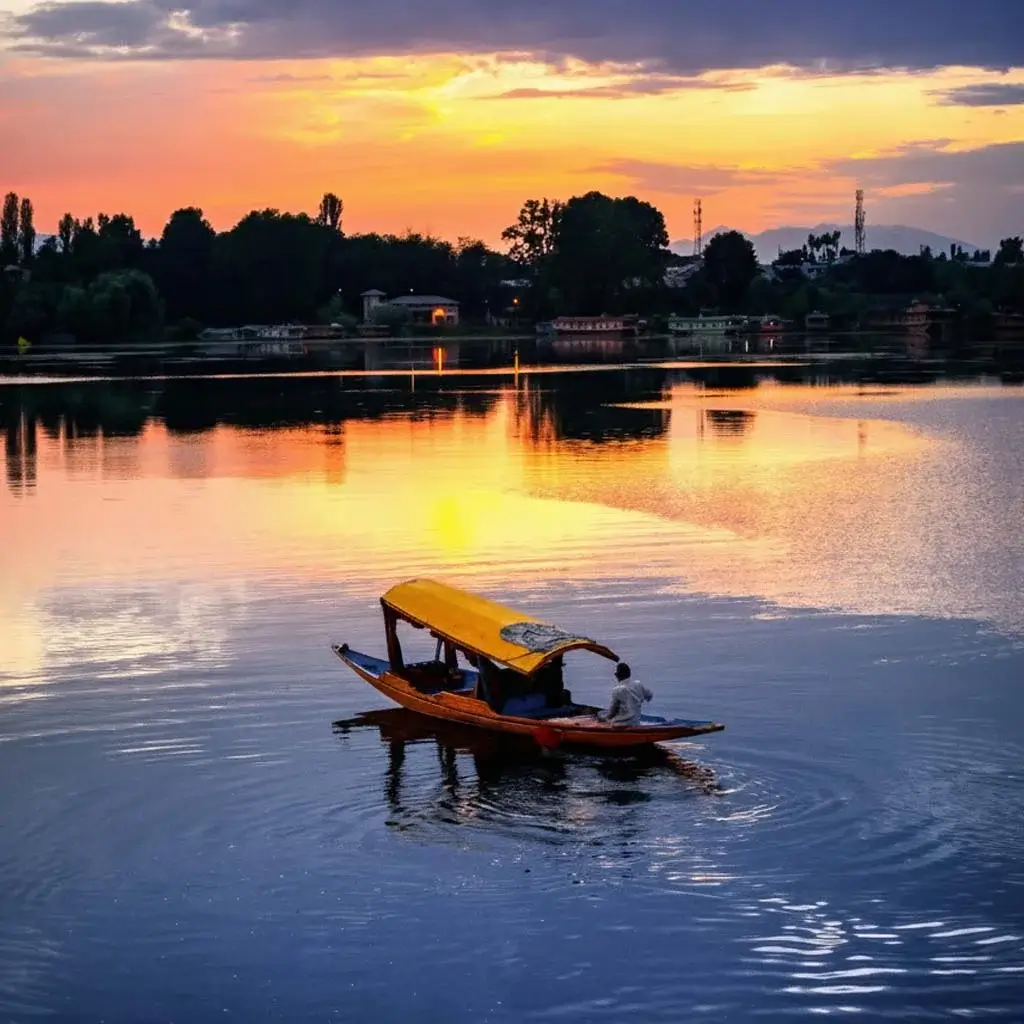 4D/3N
4D/3NThe Perfect 4 Day Kashmir Getaway
1D Srinagar•1D Gulmarg +2
₹8,999₹24,999SAVE INR 16,000/ person 5D/4N
5D/4NTimeless Kashmir Retreat – Srinagar, Gulmarg & Pahalgam Experience
1D Srinagar •1D Gulmarg (day trip)+3
₹39,999₹65,999SAVE INR 26,000/ person
Frequently Asked Questions about Chashme Shahi Srinagar
What is the entry fee for Chashme Shahi in 2026?
Entry is approximately Rs 20 to 30 per person for Indian visitors. Foreign nationals pay more, generally Rs 50 to 300. Children may get a discounted rate. Fees can change, so confirm at the gate.
What are the timings for Chashme Shahi?
Generally 9 AM to 7 PM from April to October. The garden may have shorter hours or close during winter (December to February). Confirm locally, especially in shoulder months.
What is the best time to visit Chashme Shahi?
April to June for flowers in bloom and the strongest spring flow. If the Tulip Garden nearby is open (roughly mid March to mid April), that is the single best time to visit this part of the circuit. October is good for autumn colour at the other gardens, though Chashme Shahi itself has fewer chinars.
Can I drink the spring water at Chashme Shahi?
Yes, visitors can drink from the spring at the upper terrace. Locals have been doing so for generations and the water is generally considered safe. It is cold, clean, and has a noticeably fresh taste. Whether it has medicinal properties as traditionally claimed is not scientifically established.
How is Chashme Shahi different from Nishat Bagh and Shalimar Bagh?
Chashme Shahi is much smaller (about 1 acre vs 46 acres for Nishat and 31 acres for Shalimar). It has three terraces compared to 12 at Nishat. Its unique feature is the natural spring. Nishat has the best view, Shalimar has the richest history, and Chashme Shahi has the spring and the most intimate feel.
Can I visit all three Mughal Gardens in one day?
Yes, easily. The standard circuit covering Chashme Shahi, Nishat Bagh, and Shalimar Bagh plus Pari Mahal takes 3 to 4 hours including travel time. A comfortable half day from Boulevard Road.
Is Chashme Shahi suitable for seniors?
Mostly yes. The garden is small and the walk is short. The main consideration is the stone steps between the three terraces, which require some effort. Most mobile seniors will manage fine. There are handrails in places.
Who built Chashme Shahi and when?
The Mughal governor Ali Mardan Khan built it in 1632 on the orders of Emperor Shah Jahan, as a gift for Shah Jahan's eldest son, Prince Dara Shikoh. The garden was designed around a natural spring that was already locally revered.
Is Chashme Shahi near the Tulip Garden?
Yes, the Indira Gandhi Memorial Tulip Garden is just uphill from Chashme Shahi. When the Tulip Garden is open (roughly mid March to mid April), the two pair very well and can be covered in a single stop before moving to the other Mughal Gardens.
Is photography allowed at Chashme Shahi?
Yes, photography is allowed everywhere with no restrictions or extra charges. The spring source and the view from the upper terrace are the most interesting subjects.
Related guides
Posts about Srinagar