
Mughal Gardens Srinagar
Three Mughal era gardens on the eastern shore of Dal Lake, built in the 17th century and still the most satisfying half day in Srinagar. Nishat Bagh for the terraces and the view, Shalimar Bagh for the history and the water channels, Chashme Shahi for the spring and the quiet. All three in one afternoon, with the chinar trees doing most of the work in October.
- Three gardens along Dal Lake's eastern shore
- Nishat Bagh, Shalimar Bagh, Chashme Shahi
- Entry Rs 20 to 40 per garden
- Open 9 AM to 7 PM (summer)
- Half day from Boulevard Road
- Best in April (flowers) and October (chinars)
What makes it special
The Mughal Gardens are three terraced gardens on the eastern shore of Dal Lake, each built in the 17th century by Mughal emperors and courtiers who loved Kashmir enough to plant their mark in it. They are Srinagar's most visited cultural attraction after the lake itself, and they deserve the attention, not because they are grand ruins or museums, but because they are some of the most thoughtfully designed public spaces in India, still alive and well maintained, still doing exactly what they were built to do: give you a place to walk slowly, look at water and mountains, and feel the temperature drop under a 400 year old chinar tree.
Most visitors cover all three in a single half day, moving east along the shore from Nishat Bagh to Shalimar Bagh to Chashme Shahi (or in reverse). The gardens are roughly 2 to 4 km apart. An auto or taxi from Boulevard Road handles the circuit. If you are staying on Dal Lake, you can take a shikara to Nishat Bagh and start from there. The whole visit, including a slow walk through each garden, takes about 3 to 4 hours. Add Pari Mahal, a ruined Mughal era school on a hilltop above Chashme Shahi, if you want a view and do not mind a short, steep walk.
Here is the honest framing. These are gardens, not adventure destinations. If you need adrenaline, this is not it. If you are looking for a crowd free experience in July, this is not it either. But if you have any interest in Mughal history, landscape design, or just want a genuinely pleasant afternoon in one of the most beautiful settings in the country, the gardens deliver. And in October, when the chinar trees turn gold and red and the afternoon light comes through the leaves at a low angle, they deliver something that no amount of adjectives can prepare you for. You just have to see it.
If you are visiting Srinagar on a Kashmir trip, the gardens are a standard second day activity after the Dal Lake experience. Most travellers pair them with a walk along Boulevard Road and an evening shikara ride. Our Kashmir tour package covering Srinagar, Gulmarg, and Pahalgam includes the garden visit as part of the Srinagar sightseeing day.
Quick answers
- Which Mughal Garden in Srinagar is the best?
- Nishat Bagh is the most impressive for sheer scale and the view. It has 12 terraces stepping down toward Dal Lake with the Zabarwan mountains behind, and the combination of water channels, chinar trees, and the lake below is the strongest visual of the three. Shalimar Bagh has the deepest history and the best water features. Chashme Shahi is the smallest and quietest, good for a 20 minute stop. If you only have time for one, go to Nishat. If you have an afternoon, do all three.
- How much time do I need for the Mughal Gardens?
- Three to four hours for all three gardens, including travel time between them. Nishat Bagh deserves 45 minutes to an hour. Shalimar Bagh about 45 minutes. Chashme Shahi 20 to 30 minutes. Add another 30 to 40 minutes for Pari Mahal if you want the hilltop view. A comfortable half day from Boulevard Road.
- What is the best time to visit the Mughal Gardens?
- October is the standout month. The chinar trees turn gold and red, the light is warm, and the crowds are thinner than summer. April is the other peak, when the flower beds are in full bloom and the tulip garden nearby is open. Avoid July and August if you can, as the gardens get crowded and the midday heat on the walk between terraces can be uncomfortable.
Quick facts
Everything you need to know at a glance.
At a glance
- Altitude
- About 1,585 to 1,650 m. All three gardens are at roughly the same elevation as Srinagar city, on the hillside above Dal Lake. No altitude concerns.
- Location
- Eastern shore of Dal Lake, along the base of the Zabarwan Hills. Nishat Bagh is about 11 km from Lal Chowk. Shalimar Bagh is about 15 km. Chashme Shahi is about 9 km.
- Best season
- October for chinar colour. April for flower beds and the tulip garden nearby. The gardens are open year round, but winter months (December to February) are cold and bare.
- Timings
- Generally 9 AM to 7 PM from April to October. 10 AM to 5 PM from November to March. Timings can vary slightly, so confirm locally.
- Entry fee
- Approximately Rs 20 to 40 per person per garden for Indian visitors. Higher for foreign nationals (approximately Rs 50 to 300 depending on the garden). Fees can change, so check at the gate.
- Time needed
- 3 to 4 hours for all three gardens. Half a day with Pari Mahal. A comfortable afternoon from Boulevard Road.
- Known for
- Mughal terraced garden design, chinar trees, water channels and fountains, the view of Dal Lake from Nishat Bagh, the historical connection to Jahangir and Nur Jahan at Shalimar Bagh, and the natural spring at Chashme Shahi.
- Difficulty
- Easy. Paved paths with some gentle uphill walking on terraces. Pari Mahal requires a short steep climb. Comfortable for families and most seniors.
On the ground
- Mobile network
- Good coverage at all three gardens. Postpaid SIMs work fine. Prepaid SIMs from outside J&K may face restrictions.
- ATMs
- None at the gardens. Nearest ATMs on Boulevard Road or at Lal Chowk. Carry cash for entry fees and any purchases.
- Food
- Small vendors selling chai, corn, and snacks near the entrances of each garden. No sit down restaurants at the gardens themselves. Eat before or after at a Boulevard Road restaurant.
- Washrooms
- Available at each garden entrance. Quality is basic but usable.
- Parking
- Paid parking available at all three gardens. Can be crowded on weekends and during peak season.
- Photography
- Excellent. Nishat Bagh looking down toward Dal Lake is the signature shot. Chinar trees in October are the standout subject. Afternoon light is best.
- Drones
- Restricted. Srinagar has military installations. Do not fly drones without explicit permission.
- Safety
- Safe. Well maintained public parks with staff and other visitors. Standard precautions apply.
Seasonal weather
- March to May22°6°Spring
- June to August31°16°Summer
- September to November25°4°Autumn
- December to February8°-4°Winter
Suitable for
- Couples — suitable
- Families — suitable
- Seniors — suitable
- Solo — suitable
- First-timers — suitable
- Pet-friendly — with some care
How to reach Mughal Gardens Srinagar
2 approach routes, with seasonal access.
From Boulevard Road / Dal Lake area
Year round.- Distance
- About 8 to 15 km to the various gardens
- Time
- 20 to 40 minutes by auto or taxi
- Road
- Well surfaced city roads along the eastern shore of Dal Lake.
Most visitors start from Boulevard Road or a Dal Lake houseboat. Chashme Shahi is the closest garden, about 8 to 9 km from the Boulevard. Nishat Bagh is about 11 km. Shalimar Bagh is about 15 km. An auto or taxi covers the circuit along the shore road. The road passes through some of the prettiest chinar lined stretches in Srinagar. You can also reach Nishat Bagh by shikara from Dal Lake, which is a nice way to start the garden half day. Auto fare for the full circuit is roughly Rs 400 to 600. A taxi for the half day is Rs 800 to 1,200.
From Srinagar Airport
Year round.- Distance
- About 17 to 22 km
- Time
- 40 to 60 minutes by taxi
- Road
- City roads via Boulevard Road.
The gardens are on the opposite side of the city from the airport. Most travellers visit the gardens on their second or third day in Srinagar, not straight from the airport. If you are arriving and heading directly to the gardens, take a prepaid taxi to the eastern shore. The drive passes through the city and along Boulevard Road.
Best time to visit
Season by season, so you can plan around the weather rather than hope.
- Recommended
Spring
March to May
Flower beds in bloom, tulip garden nearby, comfortable walking weather, the gardens at their most colourful
- Temperature
- ~6 to 22°C, pleasant afternoons
- Crowds
- Moderate, rising through May
- Highlights
- Flower beds, tulip garden (mid March to mid April), comfortable weather
- What to carry
- Light jacket, sunscreen, comfortable shoes
The flower beds fill with colour from March onward, and by April the gardens are at their most vibrant. The Indira Gandhi Memorial Tulip Garden, just uphill from Chashme Shahi, is open roughly mid March to mid April and adds another layer to the visit. The weather is comfortable for walking (15 to 22 degrees during the day). Crowds are moderate and growing through May. This is the best window if colour matters to you.
Summer
June to August
Lush and green, but hot midday, crowded weekends, not the ideal window
- Temperature
- ~16 to 31°C, hot midday
- Crowds
- High, especially weekends and July
- Honest advice
- Go early morning or after 3 PM to avoid heat and crowds
The gardens are green and well watered, but summer brings the largest crowds and the midday heat makes the terraced walk uncomfortable. July and August are the busiest months. If you are in Srinagar during summer, visit early morning or late afternoon to avoid the worst of both. The gardens are still worth seeing, just not at their peak.
- Recommended
Autumn
September to November
The best window: chinar trees in gold and red, clean light, thinner crowds, the gardens at their most dramatic
- Temperature
- ~4 to 25°C, warm days cooling by November
- Crowds
- Lower than summer. October weekends can be busy.
- Highlights
- Chinar colour, warm afternoon light, fewer tourists
- What to carry
- Light jacket in September, proper jacket by November
This is when the gardens are at their absolute best. The chinar trees begin turning colour in late September, and by mid October the canopy is a mix of gold, red, and orange that transforms the entire character of the gardens. The afternoon light is warm and low, the crowds thin out compared to summer, and the air is crisp. If you can time your Srinagar visit for October, plan the gardens for a late afternoon and watch the light move through the chinars. November is cooler and quieter, with the last of the autumn colour.
Winter
December to February
Cold, bare, quiet, for people who want the gardens without anyone else in them
- Temperature
- ~-4 to 8°C, cold
- Crowds
- Very low
- Gardens
- Bare, fountains may be off, reduced hours
- What to carry
- Heavy warm layers, gloves
The gardens are open in winter but the flower beds are bare, the chinars have dropped their leaves, and the fountains may not be running. The opening hours are shorter (roughly 10 AM to 5 PM). On the other hand, if you want to see the gardens with snow on the Zabarwan peaks behind them and almost no other visitors, this is when you come. Dress warmly. The terraced walk is cold in the shade.
Things to see & do
5 things worth your time at Mughal Gardens Srinagar.
Nishat Bagh: the biggest and the best view
45 minutes to 1 hourNishat Bagh is the one to see if you only have time for one garden. Built in 1633 by Asif Khan, the brother of Nur Jahan, it has 12 terraces stepping down toward Dal Lake, each at a different level with water channels connecting them. The garden is the largest of the three in terms of visual impact, and the view from the upper terraces, looking down over the fountain line toward the lake with the Pir Panjal range in the background, is the single best composed landscape in Srinagar. Chinar trees line the central axis, and in October, their gold and red canopy against the blue lake is the image that ends up on most people's phone wallpapers. Walk the full length from bottom to top. The upper terraces are quieter and the view improves with every level.
Shalimar Bagh: the historical one
30 to 45 minutesShalimar Bagh is the garden with the strongest story. Built in 1619 by Emperor Jahangir for his wife Nur Jahan, and extended by Shah Jahan around 1630, it covers about 31 acres and was originally the royal garden of the Mughal court in Kashmir. The layout has four terraces, with the innermost terrace historically reserved for the emperor and empress. The water channels here are the most elaborate of the three gardens, with chini khanas (arched niches behind the waterfalls) that were lit with oil lamps during Mughal gatherings. The garden sits slightly further from the main tourist circuit than Nishat, which means it is often a bit quieter. A light and sound show runs during the peak tourist season (roughly May to October), usually in the evening. Check locally for timings and availability.
Chashme Shahi: the quiet one
20 to 30 minutesChashme Shahi is the smallest of the three, built in 1632 by Shah Jahan around a natural spring. The name means "Royal Spring," and the spring water, which comes from the Zabarwan hills above, is still flowing. Locals consider the water to have health properties, and you will see people filling bottles at the source. The garden itself is compact and takes about 20 minutes to walk through. It is quieter than the other two and makes a good final stop if you are visiting all three. The view of Dal Lake from here is partially obscured by trees, but the garden has a more intimate, less touristy feel.
Pari Mahal: the hilltop ruin above Chashme Shahi
30 to 40 minutesPari Mahal is not technically a Mughal garden, but it is right above Chashme Shahi and most visitors combine the two. Originally a Buddhist monastery, it was converted into a school of astrology by Mughal prince Dara Shikoh, the eldest son of Shah Jahan. What remains is a six terrace ruin on a hilltop with the best panoramic view of Dal Lake and Srinagar from any garden in the area. The climb from Chashme Shahi is short but steep. If you go, go at sunset. The view of the lake going dark while the city lights come on is worth the effort. Entry is around Rs 25. It is illuminated at night and visible from across the lake.
The full garden circuit by taxi or auto
3 to 4 hoursThe standard way to cover all three gardens plus Pari Mahal is by auto or taxi from Boulevard Road. The route runs east along the lake shore: Chashme Shahi first (smallest, get it done), then Pari Mahal (the climb), then Nishat Bagh (the highlight), then Shalimar Bagh (the finale). Or reverse it, starting with Shalimar and ending at Nishat for the sunset light on the terraces. Auto fare for the circuit is roughly Rs 400 to 600. A taxi costs Rs 800 to 1,200 for the half day. You can also reach Nishat Bagh by shikara from Dal Lake, which adds a nice transition from water to garden.
Know before you visit Mughal Gardens Srinagar
The practical bits, from people who have been.
Which garden to prioritise if you are short on timeOne garden: Nishat. Two: Nishat plus Shalimar. Half day: all three plus Pari Mahal.
If you have time for only one: Nishat Bagh. It has the best view, the most dramatic terracing, and the strongest visual payoff. Walk the full 12 terraces from the lake side entrance to the top.
If you have time for two: Nishat Bagh plus Shalimar Bagh. The two are about 4 km apart and contrast well. Nishat is about the view. Shalimar is about the water channels and the history.
If you have a full half day: All three gardens plus Pari Mahal. This is the standard circuit and the most rewarding way to spend an afternoon in Srinagar.
If you care about history more than views: Start at Shalimar. The Jahangir and Nur Jahan connection, the chini khanas, and the imperial layout make it the most historically layered of the three.
Timing and crowd tipsGo in the afternoon for the best light and fewer crowds. Avoid midday in summer. Weekdays are quieter.
Best time of day. Late afternoon, roughly 3 PM to 6 PM. The light on the terraces and the lake is at its warmest, and the worst of the midday crowds have thinned. If you are visiting in autumn, the chinar trees glow in the afternoon sun.
Worst time of day. 11 AM to 1 PM, when tour groups arrive in waves and the light is flat.
Weekends. The gardens are popular with local families on weekends, especially in summer. Expect more people. Weekdays are quieter.
Avoid in July and August if possible. The gardens get hot, crowded, and the midday glare on the terraces makes the walk uncomfortable. Spring and autumn are dramatically better.
Practical tipsCarry cash, wear comfortable shoes, combine with a shikara ride, go in the afternoon for best light.
Carry cash. Entry fees, parking, vendors, and autos are mostly cash transactions. ATMs are on Boulevard Road, not at the gardens.
Wear comfortable shoes. The terraces involve gentle uphill walking. Pari Mahal is a short, steep climb on stone steps.
Combine with a shikara ride. Take a shikara from your houseboat or ghat to Nishat Bagh, walk the gardens by taxi, and return to the Boulevard by auto. It is a nice transition from water to land.
Entry fees can change. The fees listed here are approximate. Confirm at the gate. Foreign nationals pay more.
Photography. Allowed everywhere. No restrictions. The afternoon light at Nishat from the upper terraces, looking down toward the lake, is the signature shot.
Nearby attractions
Other places worth the detour.
Dal Lake
Adjacent, along the western shore
The gardens line the eastern shore of Dal Lake. Most visitors combine the garden visit with a shikara ride, either arriving at Nishat by shikara or ending the afternoon with a sunset ride from a nearby ghat. See our full Dal Lake guide for shikara costs, houseboat tips, and timing advice.
Indira Gandhi Memorial Tulip Garden
Adjacent to Chashme Shahi, uphill
Asia's largest tulip garden, open roughly mid March to mid April. Over 1.5 million tulips. The timing is narrow and shifts yearly, so check locally before planning around it. If it is open during your visit, add 45 minutes to an hour to your garden circuit.
Shankaracharya Temple
About 3 km from Chashme Shahi
An ancient Shiva temple on a hilltop with the best panoramic view of Srinagar and Dal Lake. About 250 steps to the top. Can be combined with the garden circuit if you start early enough. Go in the late afternoon for the best light.
Hazratbal Shrine
About 5 km from Nishat Bagh, on the northern shore
A white marble mosque on the northern bank of Dal Lake. The mosque reflected in the lake at sunset is one of the most photographed scenes in Srinagar. Open to visitors of all faiths.
Gulmarg
About 51 km from Srinagar, 1.5 to 2 hours
Kashmir's gondola and ski destination in the Pir Panjal range. Most Kashmir itineraries pair the gardens (Srinagar day) with a Gulmarg day trip. Book gondola tickets well in advance during peak season.
Our packages with Mughal Gardens Srinagar
Curated trips that include a visit to Mughal Gardens Srinagar.
 5D/4N
5D/4NBest Of Kashmir – Srinagar, Gulmarg & Pahalgam Tour Package
1D Srinagar•1D Gulmarg (day trip)+3
₹12,500₹28,999SAVE INR 16,499/ person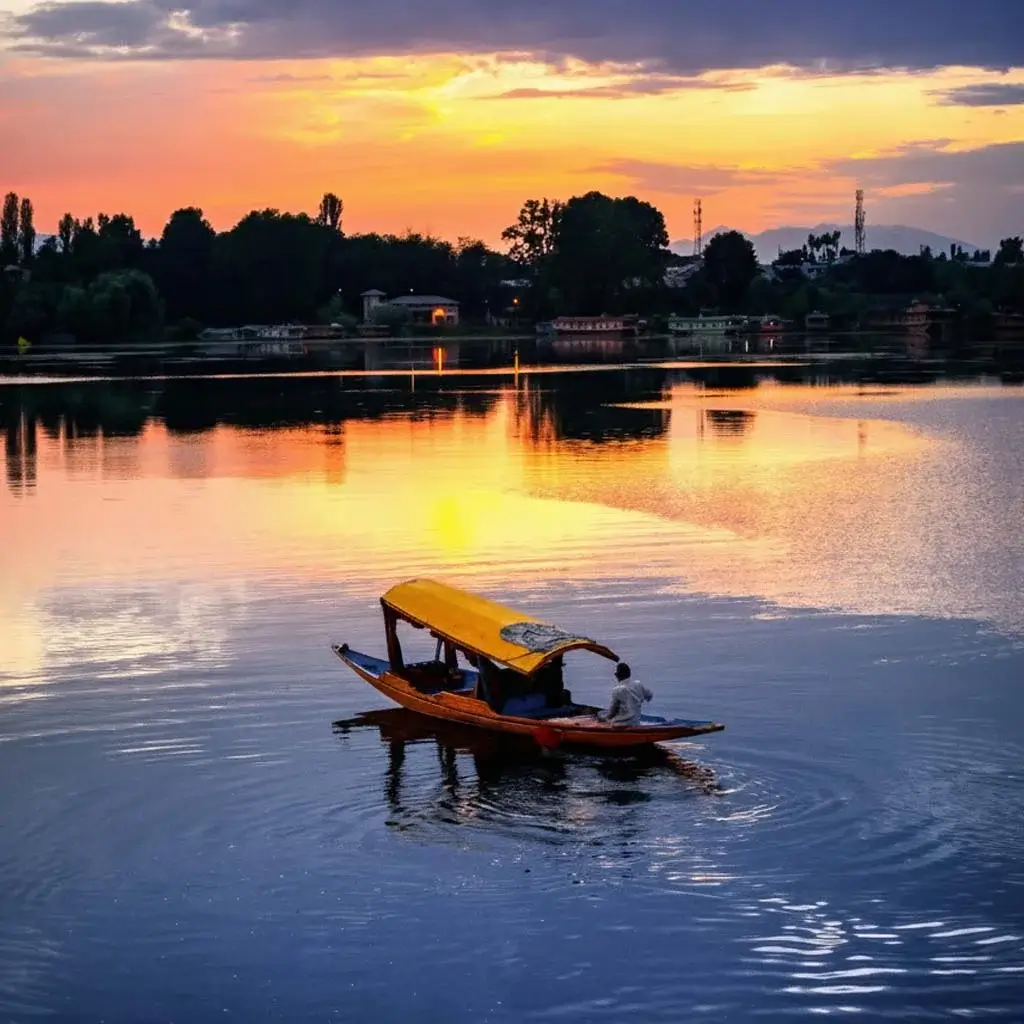 4D/3N
4D/3NThe Perfect 4 Day Kashmir Getaway
1D Srinagar•1D Gulmarg +2
₹8,999₹24,999SAVE INR 16,000/ person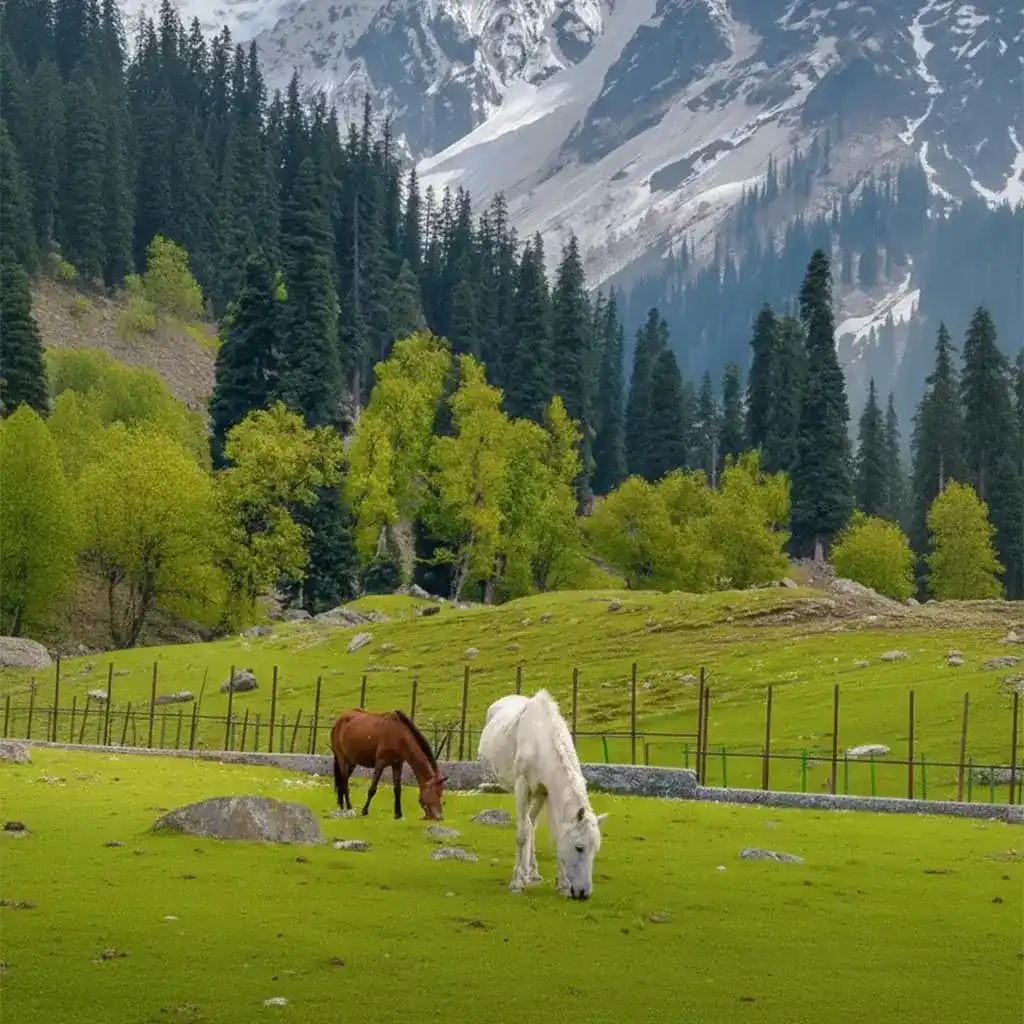 5D/4N
5D/4NTimeless Kashmir Retreat – Srinagar, Gulmarg & Pahalgam Experience
1D Srinagar •1D Gulmarg (day trip)+3
₹39,999₹65,999SAVE INR 26,000/ person
Frequently Asked Questions about Mughal Gardens Srinagar
How many Mughal Gardens are there in Srinagar?
The three main Mughal gardens most visitors see are Nishat Bagh, Shalimar Bagh, and Chashme Shahi, all on the eastern shore of Dal Lake. Pari Mahal, a Mughal era ruin above Chashme Shahi, is often included in the circuit. Three other Mughal gardens, Achabal, Verinag, and Kokernag, are further away in south Kashmir and require separate trips.
What is the entry fee for the Mughal Gardens in 2026?
Entry is approximately Rs 20 to 40 per person per garden for Indian visitors. Foreign nationals pay more, roughly Rs 50 to 300 depending on the garden. Pari Mahal is about Rs 25. Fees can change with the season, so confirm at the gate.
What are the timings for the Mughal Gardens?
Generally 9 AM to 7 PM from April to October and 10 AM to 5 PM from November to March. These timings can vary slightly, so check locally, especially if visiting in shoulder season months.
Which is the best Mughal Garden to visit in Srinagar?
Nishat Bagh is the most visually impressive, with 12 terraces overlooking Dal Lake and the Zabarwan mountains. It has the best view and the strongest chinar colour in October. Shalimar Bagh has the richest history and the best water features. Chashme Shahi is the smallest and quietest. If choosing one, go to Nishat.
How do I reach the Mughal Gardens from Boulevard Road?
By auto (Rs 400 to 600 for the circuit) or taxi (Rs 800 to 1,200 for the half day). The gardens are 8 to 15 km from the Boulevard along the eastern shore of Dal Lake. You can also take a shikara to Nishat Bagh and start from there.
Can I visit all three gardens in one day?
Yes, easily. The standard circuit takes 3 to 4 hours including travel time. Add Pari Mahal for another 30 to 40 minutes. A comfortable half day from Boulevard Road.
What is the best time to visit the Mughal Gardens?
October for chinar colour and warm autumn light. April for flower beds in bloom and the nearby tulip garden. Avoid midday in July and August when the gardens are hot and crowded.
Is Pari Mahal worth visiting?
Yes, if you have the time and do not mind a short steep climb. The panoramic view of Dal Lake and Srinagar from the hilltop is the best from any garden in the area. Go near sunset for the best light. It takes about 30 to 40 minutes.
Are the Mughal Gardens suitable for seniors?
Nishat Bagh, Shalimar Bagh, and Chashme Shahi are manageable for most mobile seniors. The paths are paved and the incline is gentle. Pari Mahal involves a steeper climb on stone steps and may be difficult for those with mobility issues.
Is there food available at the gardens?
Small vendors selling chai, corn, ice cream, and snacks are near the entrances. No sit down restaurants inside the gardens. Eat before or after at a restaurant on Boulevard Road or near the lake.
Related guides
Posts about Srinagar