
Srinagar
The summer capital of Jammu and Kashmir at 1,585 metres in the Kashmir Valley. Dal Lake, Mughal gardens, the old city, and the starting point for every Kashmir trip. A city that runs on water, walnuts, saffron, and a pace that makes you forget you checked in for four days and stayed for six.
- Altitude ~1,585 m / ~5,200 ft
- Kashmir Valley, J&K
- Dal Lake, houseboats, shikaras
- Mughal gardens along the lake
- Gateway to Gulmarg, Pahalgam, Sonamarg
- Best season: April to October
What makes it special
Srinagar is the city most people picture when they say they are going to Kashmir. A shikara on still water, mountains behind it, smoke from a houseboat kitchen in the morning. That image is real. But Srinagar is also a living, working, complicated city of over a million people, and the gap between the postcard and the ground reality is where your actual trip happens.
The city sits at about 1,585 metres in the Kashmir Valley, built along both banks of the Jhelum River, with Dal Lake filling the eastern half of the city like a second centre of gravity. Everything in Srinagar orbits the lake. The houseboats, the shikaras, the Mughal gardens on the eastern shore, the Boulevard Road hotels on the west, the floating vegetable market at 5 AM, and the old city sprawling away from the water toward the Jhelum. If you are coming to Kashmir for the first time, Srinagar is where you start, where you base, and where you keep coming back to between excursions to Gulmarg, Pahalgam, and Sonamarg.
Here is the honest version. Srinagar is not a resort. It is a real Indian city with traffic, noise, touts, and security checks. Boulevard Road gets congested. Shikara operators at the ghats will quote you double the government rate. Some budget houseboats are poorly maintained. The water in parts of Dal Lake is visibly unclean. Prepaid SIM cards from outside J&K may not work. And the city has a security presence that is noticeable, especially near Lal Chowk and the old city.
None of this should discourage you. It should prepare you. Because Srinagar, once you know what to expect and how to navigate it, delivers experiences that genuinely do not exist anywhere else in India. The sunrise on Dal Lake when the floating market is active and the Zabarwan mountains are turning pink. The carved walnut interiors of a well maintained houseboat. Nishat Bagh in October when the chinar trees are on fire. The wazwan meal that takes four hours and leaves you wondering why you ever ate a buffet. The old city lanes near the Jama Masjid where copperware is still hammered by hand. The view from Shankaracharya Temple at dusk, when the whole valley lays itself out below you.
Time needed. Two to three days in Srinagar is the right amount for most travellers. One full day for the lake (sunrise shikara, floating market, houseboat experience). One day for the Mughal gardens and the old city. A third day if you want to explore Nigeen Lake, the tulip garden in spring, or just slow down. After that, you head to Gulmarg, Pahalgam, or Sonamarg, and most travellers return to Srinagar for a final night before flying out.
If you want help planning the full circuit, our Kashmir tour package covering Srinagar, Gulmarg, and Pahalgam handles the stays, transport, shikara bookings, and union taxi logistics so you can focus on the place instead of the planning.
Quick answers
- Is Srinagar worth visiting in 2026?
- Yes, and it is still the essential starting point for any Kashmir trip. Dal Lake, the Mughal gardens, the old city, and the houseboat experience are genuinely unlike anything else in India. The city has good flight connectivity, improving tourist infrastructure, and the security situation has been stable for tourism in recent years. Come prepared for the touts and the traffic, and let the lake, the food, and the mountains do the rest. Two to three days in the city, then branch out to Gulmarg, Pahalgam, or Sonamarg.
- How many days do I need in Srinagar?
- Two to three days is ideal. Day one for Dal Lake: sunrise shikara ride, floating vegetable market, and an evening on the water. Day two for the Mughal gardens (Nishat Bagh, Shalimar Bagh, Chashme Shahi) and the old city (Jama Masjid, Khanqah e Moula, the spice and copper markets). Day three if you want Shankaracharya Temple, the tulip garden in spring, or a slow morning on Nigeen Lake. Most Kashmir itineraries then head to Gulmarg and Pahalgam before returning to Srinagar for the flight out.
- What is the best time to visit Srinagar?
- April to October covers the full good window. September and October are the standout months: golden chinar trees, clear mountain views, comfortable weather, and fewer crowds than summer. April is excellent for the tulip garden. July and August bring lotus blooms on Dal Lake but also peak crowds and heat. Winter (December to February) is cold but dramatic, with snow and quiet. Each season offers a genuinely different city.
Quick facts
Everything you need to know at a glance.
At a glance
- Altitude
- About 1,585 m / 5,200 ft. The Kashmir Valley floor. No altitude concerns for any traveller. The surrounding mountains rise much higher, but the city itself is comfortable.
- Location
- Kashmir Valley, Jammu and Kashmir union territory, northern India. On the banks of the Jhelum River. Dal Lake sits in the eastern half of the city with the Zabarwan Hills behind it.
- Nearest base
- Srinagar is the base. The airport (Sheikh ul Alam International) is about 14 km from the city centre. Lal Chowk is the commercial heart. Boulevard Road runs along Dal Lake.
- Best season
- April to October for the full range. September and October are the standout months for weather, light, and chinar colour. Winter is cold but dramatic.
- Timings
- The city is active year round. Mughal gardens generally 9 AM to 7 PM. Dal Lake and shikaras available dawn to dusk. Floating vegetable market 5 AM to 7 AM. Old city markets 10 AM to 8 PM.
- Entry fees
- No fee for Dal Lake or shikaras (ride cost is separate). Mughal gardens Rs 25 to 40. Shankaracharya Temple free. Tulip garden Rs 50 to 75 during the season. Houseboat stays priced separately.
- Time needed
- Two to three days for the city. Five to seven days for a full Kashmir trip covering Srinagar, Gulmarg, Pahalgam, and optionally Sonamarg.
- Known for
- Dal Lake and shikara rides, heritage houseboats, Mughal gardens (Nishat Bagh, Shalimar Bagh, Chashme Shahi), the floating vegetable market, wazwan cuisine, Kashmiri handicrafts, the old city, and as the gateway to Gulmarg, Pahalgam, and Sonamarg.
- Difficulty
- Easy. The city is flat. Lake activities are boat based. Mughal gardens involve light walking. Shankaracharya Temple has about 250 steps. No physical challenges for most travellers.
On the ground
- Mobile network
- Postpaid SIMs from major operators work well in the city. Prepaid SIMs from outside J&K may face restrictions or not work. Check with your operator before travelling. Wi Fi available at most hotels.
- ATMs
- Widely available along Boulevard Road, Lal Chowk, and Residency Road. Carry cash for shikara rides, the floating market, and smaller shops. UPI acceptance is growing but not universal.
- Food
- Excellent. Wazwan is the highlight. Mughal Darbar and Ahdoos are popular for Kashmiri cuisine. Chai and noon chai everywhere. Kehwa from lakeside vendors. Good bakeries in the old city. International options at larger hotels.
- Parking
- Hotels provide parking. Paid parking near ghats along Boulevard Road, often crowded on weekends. City traffic can be slow during peak hours.
- Washrooms
- Available at Mughal gardens, larger ghats, hotels, and restaurants. Quality on houseboats varies by category.
- Photography
- Outstanding. Dal Lake at sunrise, the Mughal gardens, chinar trees in autumn, the old city lanes, and Shankaracharya Temple views are the standout shots.
- Drones
- Restricted. Srinagar has military installations and a significant security presence. Do not fly drones without explicit permission.
- Safety
- Generally safe for tourists. The city has been stable for tourism in recent years. Visible security presence is routine. Standard travel precautions apply. Stay updated on local advisories through your hotel.
Seasonal weather
- March to May22°6°Spring
- June to August31°16°Summer
- September to November25°4°Autumn
- December to February8°-4°Winter
Suitable for
- Couples — suitable
- Families — suitable
- Seniors — suitable
- Solo — suitable
- First-timers — suitable
- Pet-friendly — with some care
How to reach Srinagar
3 approach routes, with seasonal access.
From Delhi (by air)
Year round. Winter flights may face delays or cancellations due to fog. Morning flights are generally more reliable.- Distance
- About 876 km, direct flight
- Time
- 1 hour 20 minutes to 1 hour 40 minutes
- Road
- Multiple daily flights from Delhi, Mumbai, Bengaluru, Kolkata, and other cities. Srinagar airport is well connected.
Flying is how most travellers reach Srinagar. Multiple airlines operate direct flights from Delhi (about 1 hour 20 minutes), and there are connections from most major Indian cities. The airport (Sheikh ul Alam International) is about 14 km from Dal Lake, roughly 30 to 50 minutes by taxi depending on traffic and security checks. Prepaid taxis are available at the airport. If you have booked a houseboat, confirm which ghat your transfer shikara will meet you at. Most packages and houseboats include airport pickup.
From Delhi (by road via Jammu)
Generally year round, but the Jammu Srinagar Highway can close for hours or days due to landslides, especially during monsoon. Check road status before starting.- Distance
- About 850 to 900 km
- Time
- 18 to 22 hours of driving, usually split over two days with a night in Jammu or Patnitop
- Road
- NH44 to Jammu, then the Jammu Srinagar Highway through the Banihal Tunnel. Prone to landslides, traffic jams, and weather closures.
The road trip is scenic but unpredictable. The Jammu Srinagar Highway, particularly the stretch through Ramban and the Banihal Tunnel, is one of the most disruption prone highways in India. Landslides, construction, and single lane traffic can add hours. Most road travellers split the drive: Delhi to Jammu on day one, Jammu to Srinagar on day two (about 8 to 10 hours). Unless you specifically want the road trip experience, fly. The time saved is worth it.
From Jammu
Generally year round. The highway is subject to closures from landslides, especially in monsoon. Check NHAI and J&K traffic updates before departing.- Distance
- About 260 to 270 km
- Time
- 8 to 10 hours by road
- Road
- The Jammu Srinagar Highway via Udhampur and Banihal Tunnel. Mostly tarred, with construction and landslide prone sections.
If you are arriving in Jammu by train (Jammu Tawi is well connected to Delhi and other cities), the road to Srinagar takes about 8 to 10 hours. The drive passes through Udhampur, along the Chenab, and through the Banihal Tunnel into the Kashmir Valley. The first view of the valley after the tunnel is genuinely dramatic. Shared taxis and JKSRTC buses run this route daily. Private taxis cost approximately Rs 4,000 to 6,000 one way.
Best time to visit
Season by season, so you can plan around the weather rather than hope.
- Recommended
Spring
March to May
Tulip garden in bloom, almond blossoms, comfortable weather, the valley waking up after winter
- Temperature
- ~6 to 22°C, cool mornings, warm afternoons by May
- Crowds
- Moderate. Rising through April and May.
- Highlights
- Tulip Garden (mid March to mid April), almond blossoms, Mughal gardens greening, comfortable weather
- What to carry
- Light jacket for mornings and evenings. Sunscreen.
Spring is when Srinagar shakes off the cold and starts looking like the postcards again. March is still cool, with almond blossoms appearing in Badamwari garden. April brings the tulip garden into full bloom near Dal Lake, one of the best flower displays in Asia, and daytime temperatures settle around 15 to 22 degrees. May is warmer and tourist numbers start climbing. Shikara rides are pleasant, houseboats reopen fully, and the Mughal gardens are green. This is a strong window for first time visitors who want comfortable weather without the peak summer rush.
- Recommended
Summer
June to August
Peak tourist season, warm days, lotus blooms on Dal Lake, floating market at its busiest
- Temperature
- ~16 to 31°C, warm days, pleasant evenings
- Crowds
- High. Book houseboats and tours well in advance.
- Highlights
- Lotus blooms (July and August), active floating market, long daylight hours
- Watch out for
- Aggressive touts, midday heat on water, mosquitoes near lotus gardens
Summer is when Srinagar sees the most visitors. Days reach 28 to 31 degrees, evenings are pleasant, and Dal Lake comes alive. Lotus flowers bloom across the water in July and August, turning entire sections of the lake pink. The floating market is at its busiest. The downside is crowd density: popular ghats are packed, shikara touts are at peak aggression, and houseboat rates hit their highest. If you come in summer, book everything in advance, take your shikara rides early morning or late afternoon, and avoid the midday glare on the water. This is also when most families visit, making it the liveliest window.
- Recommended
Autumn
September to November
The best window: golden chinar trees, clear skies, perfect light, fewer crowds
- Temperature
- ~4 to 25°C, warm September days cooling to cold November mornings
- Crowds
- Lower than summer. October weekends can be busy.
- Highlights
- Chinar colour (October to early November), clear mountain views, best photography light
- What to carry
- Warm layers. Light jacket in September, proper jacket by November.
If you can choose one season for Srinagar, this is it. September is warm during the day and the crowds thin noticeably. October is when the chinar trees along Boulevard Road and the Mughal gardens turn gold and red, and the combination of chinar colour, clear skies, and snow appearing on the higher Zabarwan peaks creates the most photogenic version of the city. November is cooler and quieter still, with the last of the autumn colour before winter sets in. Shikara rides in late afternoon with golden light on the water are the signature experience of this window. Hotel and houseboat rates drop from summer peaks.
Winter
December to February
Cold and quiet: snow on the mountains, the lake sometimes freezes, dramatic beauty for winter lovers
- Temperature
- ~-4 to 8°C, harsh cold, especially at night
- Crowds
- Low. Many houseboats reduce operations.
- Highlights
- Snow on Zabarwan, partially frozen lake, extreme quiet, Chillai Kalan cold season
- What to carry
- Heavy thermals, down jacket, gloves, beanie, warm socks. Serious winter gear.
Winter in Srinagar is for people who like cold weather and quiet. Temperatures drop below freezing at night, regularly hitting minus 5 to minus 10. In extreme cold spells, sections of Dal Lake freeze over, and snow on houseboats with ice around them is genuinely dramatic. The floating market slows down. Most tourist shikara operators reduce activity. Houseboats have heating, but budget ones can be uncomfortable. The Mughal gardens are mostly bare. If you come for winter, come for the snow and the solitude, not for the classic shikara and garden experience. Flights may face delays due to fog. Pack seriously warm clothes and expect a slower, quieter city.
Things to see & do
8 things worth your time at Srinagar.
Sunrise shikara ride on Dal Lake
1 to 2 hoursThe single best thing to do in Srinagar. Hire a shikara before 6 AM, when the water is still, mist sits on the surface, and the Zabarwan mountains catch the first light. You will pass houseboats with smoke rising from morning fires, farmers heading to the floating market, and lotus covered sections in summer. The lake at this hour is a completely different place from the midday tourist rush. Book through your hotel or houseboat for a fair price rather than negotiating with ghat touts. Government fixed rate is about Rs 770 to 790 per hour for up to 4 people. For more detail, see our Dal Lake guide.
Floating vegetable market
30 to 60 minutes (5 AM to 7 AM)A pre dawn gathering of farmers and traders buying and selling vegetables, flowers, and lotus roots directly from shikara to shikara on the water. No stalls, no shops. Just boats loaded with produce, jostling side by side in the half light. It is one of the last remaining water markets in the world, and it is a working market, not a tourist setup. Arrange an early shikara through your houseboat or hotel, reach by 5:30 AM, and keep a low profile. The market wraps up by 7 AM. Best from April to October when the growing season is active.
Mughal gardens: Nishat Bagh, Shalimar Bagh, Chashme Shahi
Half a day for all threeThe eastern shore of Dal Lake is lined with Mughal era gardens from the 16th and 17th centuries. Nishat Bagh has 12 terraces stepping down toward the water and is the most impressive for scale. Shalimar Bagh, built by Emperor Jahangir for Nur Jahan in 1619, has the strongest historical atmosphere. Chashme Shahi is smaller but has a natural spring. Visit in the afternoon for the best light on the mountains behind the gardens. Entry is around Rs 25 to 40 per person. The gardens are at their best in spring (flowers) and autumn (chinar colour). An auto or taxi from Boulevard Road covers all three in a comfortable half day.
Houseboat stay on Dal Lake or Nigeen Lake
One night minimumSleeping on the water is a distinctly Kashmiri experience. Heritage houseboats are made of carved deodar and walnut wood, with bedrooms, a dining area, and a sundeck. They are stationary, moored near the shore, and you reach them by shikara from the nearest ghat. Standard houseboats start around Rs 2,500 to 3,500 per night including meals. Deluxe runs Rs 4,000 to 8,000. Luxury goes above Rs 10,000. One night gives you the full experience. Nigeen Lake houseboats tend to be quieter and cleaner than the main Dal Lake ones. Book through a verified operator. See our Dal Lake page for the full houseboat reality check.
Old city walk: Jama Masjid, Khanqah e Moula, and the markets
2 to 4 hoursThe old city on the southern bank of the Jhelum is where Srinagar's cultural depth lives. The Jama Masjid, originally built in 1394, is a massive wooden mosque with 370 pillars of deodar wood and a courtyard that holds thousands. Khanqah e Moula, built in 1395, is a smaller, more atmospheric shrine on the Jhelum bank. Between them, the lanes wind through copperware workshops, spice stalls, and bakeries selling Kashmiri bread. This is the part of Srinagar most tourists skip because it is not on the lake. That is their loss. Walk it in the morning when the workshops are active.
Shankaracharya Temple
1 to 1.5 hoursAn ancient Shiva temple on Takht e Sulaiman hill, about 3 km from Boulevard Road. The climb is approximately 250 steps, manageable for most people at a slow pace. The reward is the best panoramic view of Srinagar: Dal Lake, the Jhelum, the city, and the Zabarwan range all visible in a single sweep. Phones and cameras are not allowed inside the temple itself, but photography from the viewpoint is fine. Go late afternoon for the best light. Security check at the base.
Shopping: Kashmiri crafts, saffron, and dry fruits
2 to 3 hoursSrinagar is the best place in India to buy Kashmiri pashmina, papier mache, walnut wood carvings, kesar (saffron), and dry fruits. Polo View Market and Lal Chowk are the main shopping areas. The Government Emporium near Lal Chowk has fixed prices and authentic quality, which makes it a useful baseline before you negotiate elsewhere. Avoid buying pashmina or saffron from floating shops on the lake or from airport vendors. Prices are inflated and quality is inconsistent. For saffron, look for the Lacha variety and buy from a reputable shop where you can verify the product.
Hazratbal Shrine
30 to 45 minutesA white marble mosque on the northern shore of Dal Lake, considered one of the holiest Muslim shrines in Kashmir. The mosque reflected in the lake at sunset is one of the most photographed scenes in the city. Open to visitors of all faiths. Dress modestly and remove shoes. Best visited in the late afternoon when the light catches the marble and the lake behind it.
Know before you visit Srinagar
The practical bits, from people who have been.
How Srinagar actually works as a baseSrinagar is the hub. Gulmarg, Pahalgam, and Sonamarg branch out from here. Book one taxi for the full trip.
Most Kashmir trips follow the same pattern: fly into Srinagar, spend two to three days in the city, then take day trips or overnights to Gulmarg (51 km, 1.5 to 2 hours), Pahalgam (90 km, 2.5 to 3 hours), and Sonamarg (80 km, 2.5 to 3 hours). All three destinations are different directions from Srinagar, with no practical direct road between them, so Srinagar is the hub you keep returning to. Most travellers book a taxi for the full trip duration rather than hiring separately for each leg. This is cheaper and simpler.
Your Srinagar taxi can take you to Gulmarg and Sonamarg and drive you to Pahalgam. But at Gulmarg, Pahalgam, and Sonamarg, local sightseeing within those destinations requires union taxis or ponies. Your Srinagar cab cannot enter the sub routes. This is the single most common surprise for first time visitors. Understand the union system before you arrive.
What things actually cost in Srinagar (2026 estimates)Shikara rides Rs 600 to 800/hr negotiated. Houseboats from Rs 2,500/night. Gulmarg day taxi Rs 2,500 to 3,500.
Shikara rides. Government rate approximately Rs 770 to 790 per hour per boat (up to 4 adults). Touts will quote Rs 2,000 to 3,000. Negotiate to Rs 600 to 800, or book through your hotel.
Houseboats. Standard Rs 2,500 to 3,500 per night including meals. Deluxe Rs 4,000 to 8,000. Luxury Rs 10,000+. Nigeen Lake boats tend to be better value.
Taxis. Airport to Dal Lake about Rs 800 to 1,200. Day trip to Gulmarg Rs 2,500 to 3,500 return. Multi day taxi for a 5 to 7 day Kashmir trip Rs 15,000 to 25,000 depending on vehicle and itinerary.
Mughal gardens. Rs 25 to 40 entry. Tulip garden Rs 50 to 75 during season.
Meals. A proper wazwan meal at a good restaurant costs Rs 500 to 1,200 per person. Street food and basic meals Rs 100 to 300.
All rates are approximate and can change with the season. Recheck locally when you arrive.
Ground reality most travel pages skipBook shikaras through your hotel, verify houseboat quality, check your SIM card works in J&K, carry ID.
Touts. Shikara operators at ghats quote inflated prices. Book through your hotel. Commission shops on the lake will try to sell you overpriced carpets and papier mache during your ride. Say no firmly if you are not interested.
Houseboat quality. Varies wildly. Budget houseboats under Rs 2,000 can have damp rooms, old plumbing, and aggressive upselling. Book through a verified operator or your tour package. Ask for photos of the specific boat.
SIM cards. Prepaid SIMs from outside J&K may not work or may require local verification. Postpaid SIMs from Jio, Airtel, and VI generally work fine. Check before you travel.
Security checks. Expect security checkpoints on major roads, at the airport, and near sensitive areas. These are routine and usually quick. Carry your ID.
Traffic. Boulevard Road and the route from the airport can get congested, especially on weekends and during peak season. Build buffer time.
Food worth planning forWazwan at Mughal Darbar or Ahdoos. Noon chai. Kehwa. Old city bakeries. Houseboats include meals.
Srinagar has the best food of any mountain destination in India. The centrepiece is wazwan, a multi course Kashmiri feast centred on slow cooked meat: rogan josh, gushtaba (meat dumplings in yoghurt), tabak maaz (fried ribs), and more. A full wazwan at Mughal Darbar or Ahdoos is an experience, not just a meal. Budget Rs 500 to 1,200 per person.
Beyond wazwan: noon chai (the pink salt tea), kehwa (saffron and almond tea), Kashmiri bread from old city bakeries (try lavasa and girda), and street food like haris (a slow cooked meat porridge eaten in the morning). For dry fruits and saffron, buy from shops near Lal Chowk or the Government Emporium rather than tourist vendors.
Most houseboats include breakfast and dinner, and the cooking is often excellent on the better boats.
Practical tips for a smoother tripCarry cash, wake up early for the lake, come in October if you can, one houseboat night is enough, download offline maps.
Carry cash. Shikara operators, the floating market, many smaller shops, and taxi drivers prefer cash. ATMs are available but carry a buffer from the airport.
Wake up early. The best version of Srinagar happens between 5 AM and 8 AM. The floating market, the sunrise on the lake, the empty Mughal gardens. If you do one early morning, make it the shikara ride.
October is the sweet spot. If you have flexibility, come in early to mid October. Chinar trees in colour, clear skies, comfortable temperatures, fewer tourists than summer, and better hotel rates.
One night on a houseboat is enough. It is worth the experience, but two nights on the boat can feel confining. Stay one night on the water and the rest at a good hotel for more flexibility.
Download offline maps. Mobile data can be patchy, especially in areas away from the main roads. Save your accommodation and ghat locations offline before arriving.
Recheck locally. Shikara rates, houseboat prices, garden timings, and taxi fares can shift with the season. Confirm details with your hotel or tour operator close to your travel date.
Nearby attractions
Other places worth the detour.
Dal Lake
In the city, 0 km
The defining experience of Srinagar: shikara rides, heritage houseboats, the floating vegetable market at dawn, and the Mughal gardens along the eastern shore. One full day on and around the lake is the minimum. Two days is better. See our detailed Dal Lake guide for shikara costs, houseboat tips, and timing advice.
Gulmarg
About 51 km, 1.5 to 2 hours
A meadow at 2,650 metres in the Pir Panjal range, home to one of the world's highest gondola systems. Winter brings India's best skiing. Summer brings wildflower meadows and snow at the peak. The most popular day trip from Srinagar. Book gondola tickets 15 to 20 days in advance during peak season.
Pahalgam
About 90 km, 2.5 to 3 hours
A valley town on the Lidder River, known for Betaab Valley, Aru Valley, and as the base for the Amarnath Yatra. The gentler counterpart to Gulmarg: more river and valley, less gondola and peak. Two nights is ideal. A union taxi system controls sub valley sightseeing.
Sonamarg
About 80 km, 2.5 to 3 hours
A mountain valley at 2,740 metres on the road to Ladakh. Home to the Thajiwas Glacier, Zero Point near Zoji La, and the base camp for the Kashmir Great Lakes Trek. The rawest of Kashmir's big four destinations. The Z Morh Tunnel now allows year round access to the town.
Shankaracharya Temple
About 3 km from Boulevard Road
An ancient Shiva temple on a hilltop above the city. About 250 steps to the top. The best panoramic view of Srinagar, Dal Lake, and the Kashmir Valley. Late afternoon is the best time for photography. Security check at the base.
Dachigam National Park
About 22 km from the city centre
Home to the endangered Hangul (Kashmir stag), Dachigam is a wildlife reserve in the Zabarwan range just outside Srinagar. Permits required. The park is not always open to casual visitors, and access depends on current regulations. Check with the wildlife department before planning a visit.
Yusmarg
About 47 km, 1.5 to 2 hours
A smaller, less touristy meadow at about 2,400 metres southwest of Srinagar. Pine forests, a stream, and genuine quiet. Not on the standard tourist circuit, which is part of the appeal. A good half day if you have an extra day in Srinagar and want something the crowds have not found yet.
Our packages with Srinagar
Curated trips that include a visit to Srinagar.
 5D/4N
5D/4NBest Of Kashmir – Srinagar, Gulmarg & Pahalgam Tour Package
1D Srinagar•1D Gulmarg (day trip)+3
₹12,500₹28,999SAVE INR 16,499/ person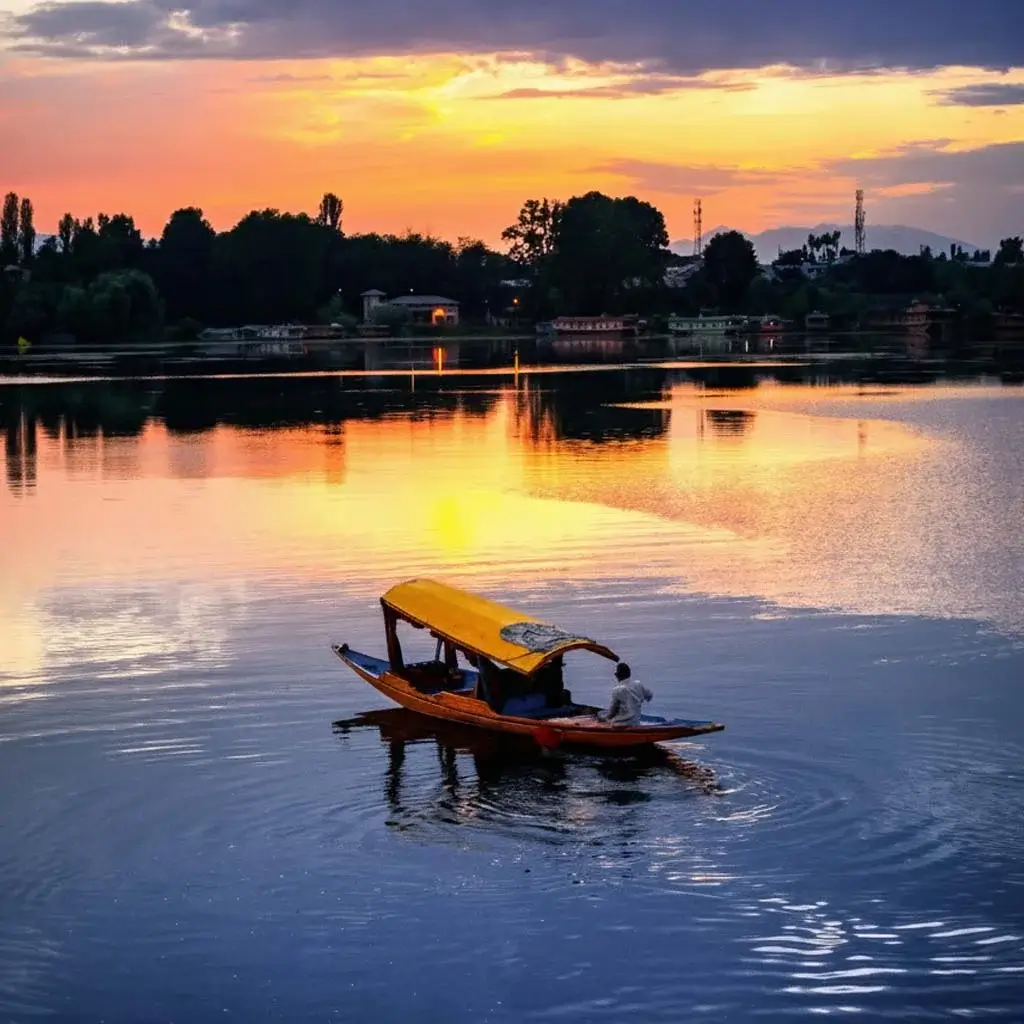 4D/3N
4D/3NThe Perfect 4 Day Kashmir Getaway
1D Srinagar•1D Gulmarg +2
₹8,999₹24,999SAVE INR 16,000/ person 5D/4N
5D/4NTimeless Kashmir Retreat – Srinagar, Gulmarg & Pahalgam Experience
1D Srinagar •1D Gulmarg (day trip)+3
₹39,999₹65,999SAVE INR 26,000/ person
Frequently Asked Questions about Srinagar
Is Srinagar safe to visit in 2026?
Srinagar has been stable for tourism in recent years, and the city receives a large number of domestic and international visitors annually. Standard travel precautions apply: stay updated on local advisories, carry your ID for security checks, and follow guidance from your hotel or tour operator. The visible security presence is routine and usually does not impact the tourist experience.
How do I reach Srinagar from Delhi?
Fly. Multiple airlines operate direct flights daily, taking about 1 hour 20 minutes. The road option via Jammu takes 18 to 22 hours over two days and the Jammu Srinagar Highway is unpredictable due to landslides. Unless you specifically want the road trip, flying saves a day and a half of travel stress.
What is the best time to visit Srinagar?
April to October covers the full good window. September and October are the standout months for chinar colour, clear skies, and fewer crowds. April is ideal for the tulip garden. Summer (June to August) brings lotus blooms and peak crowds. Winter is cold and quiet, for people who enjoy snow and solitude.
How many days should I spend in Srinagar?
Two to three days for the city itself. A full Kashmir trip covering Srinagar, Gulmarg, and Pahalgam takes five to seven days. Add Sonamarg for a day or overnight. Most itineraries use Srinagar as the base, branching out to the other destinations and returning for the flight out.
Should I stay on a houseboat or in a hotel?
One night on a houseboat is worth it for the unique experience: sleeping on the water, waking to the lake at sunrise, kehwa on the sundeck. But houseboats are stationary and quality varies. For comfort and flexibility, combine one houseboat night with hotel stays for the rest of your trip. Nigeen Lake boats tend to be quieter and cleaner than the busy Dal Lake sections.
How much does a shikara ride cost in Srinagar?
The government notified rate for 2026 is approximately Rs 770 to 790 per hour per boat (up to 4 adults). Touts at the ghats open at Rs 2,000 to 3,000. You can negotiate to Rs 600 to 800, or book through your hotel for a fair fixed rate. Special routes like the floating market or Char Chinar may cost Rs 1,000 to 1,500.
Do prepaid SIM cards work in Srinagar?
Prepaid SIMs from outside Jammu and Kashmir may face restrictions or not work at all. Postpaid SIMs from Jio, Airtel, and VI generally work fine in the city. Check with your telecom provider before travelling. If you rely on mobile data, consider getting a local postpaid connection or using hotel Wi Fi.
What should I eat in Srinagar?
Wazwan is the highlight, a multi course Kashmiri feast with rogan josh, gushtaba, tabak maaz, and more. Mughal Darbar and Ahdoos in the city are popular. Try noon chai (pink salt tea), kehwa (saffron almond tea), and bread from old city bakeries. Houseboat meals are often excellent on the better boats. Street food like haris (morning meat porridge) is worth trying if you are adventurous.
How do I get from Srinagar to Gulmarg, Pahalgam, and Sonamarg?
By taxi. Gulmarg is about 51 km (1.5 to 2 hours). Pahalgam is about 90 km (2.5 to 3 hours). Sonamarg is about 80 km (2.5 to 3 hours). All three are in different directions from Srinagar. Most travellers hire one taxi for the full trip duration. At each destination, local sightseeing uses union taxis, not your Srinagar cab.
Is Srinagar suitable for families with children?
Yes. Shikara rides, houseboat stays, Mughal gardens, and pony rides at Gulmarg and Pahalgam are all family friendly. The main caution is supervising children near water, particularly on houseboat decks and during shikara boarding. The floating vegetable market requires a very early start, so judge based on your children's age. The city is easy to navigate with kids and there are no altitude concerns.
Related guides
Posts about Srinagar