
 Group Tour
6D/5N
Best Jibhi Tirthan Valley Tour With Shangarh Meadows
2D Tirthan Valley•1D Shangarh (Sainj Valley)
₹9,999₹12,999SAVE INR 3,000/ person
Best Shoja Tour Packages Curated By Experts
Group Tour2D Tirthan Valley•1D Shangarh (Sainj Valley)
1D Delhi•2D Jibhi+2
1D Delhi •2D Jibhi / Tirthan Valley+1
1D Delhi •2D Tirthan Valley+2
We plan Shoja trips for travellers who want quiet mountain days without the crowds of the bigger hill stations. Shoja sits high in the Banjar valley, so it pairs naturally with Jalori Pass, Jibhi and Tirthan Valley, all of which are close by.
There are really two ways to do Shoja. You can visit it on a Jibhi and Jalori Pass route, or you can build a trip around an actual overnight stay in Shoja, which we arrange as a private trip. You can travel as a couple, a small group, a family or on your own, over anything from a weekend to a slower five night trip.
The one thing worth getting right is to plan around how much time you genuinely want in Shoja, rather than picking the longest itinerary by habit. Shoja is small, and a calmer plan almost always beats a packed one.
When you compare the packages on this page, look past the headline number of days and read what each trip actually gives you. Before you shortlist one, check the actual hotel nights, the nights genuinely spent in Shoja, the departure point, the places covered, the transport, the stay type, the meals, and whether the trip is group or private.
A Shoja trip and a Shoja stay are not the same thing. Many Himachal itineraries list Shoja as a stop but sleep in Jibhi or lower down, because most standard packages visit Shoja on the way to Jalori Pass rather than staying there overnight.
If you specifically want to wake up in Shoja, that is usually best as a private trip built around a Shoja overnight, which we are glad to plan. Either way, check each package for the real nights in Shoja before you book.
The simplest way to choose is by how many nights you have. Here is what each length realistically gives you in this valley.
In a hurry? A quick guide by nights:
This is the compact trip, good for a long weekend from a nearby city. You get the drive in, a proper day around Jalori Pass with one short trek, and a slow morning before you head back.
Keep the plan honest. Two nights is not enough to do every Jalori area trek plus Jibhi plus Tirthan. Pick one main walk, enjoy Shoja itself, and leave the rest for another trip.
For most first time visitors this is the sweet spot. The extra night takes the rush out of the trip and gives you a clear buffer for weather or a tired travel day.
A typical split is one relaxed day for Jalori Pass and a trek, one gentler day for Shoja walks or a short Jibhi visit, and enough unhurried time to actually feel the place rather than tick it off.
Four nights suits couples, photographers and people who simply like to travel slowly. It also gives you room to combine Shoja with a night or two in Jibhi or Tirthan Valley without cramming.
With this length you can attempt both the Serolsar Lake and Raghupur Fort treks on separate days, spend real time over meals and views, and still keep a spare morning for weather.
Longer trips make sense for genuine slow travel, or for a workation in a property that has been checked for network and comfort. You can settle in, keep a light daily rhythm, and take short walks without a fixed sightseeing list.
One honest point though. Shoja does not need a week of sightseeing just because you have a week free. The attractions are limited by design. Beyond four or five nights the pull is the quiet and the routine, not more places to see.
Not sure how many days you need? Tell us your dates and we will help you choose.
This is one of the biggest decisions for the valley, and there is no single right answer. The two villages are close, about seven kilometres apart, but they feel different. Choose the base that matches the kind of evenings you want.
Tirthan is the river valley, lower and greener, built around slow days by the water rather than a mountain pass. It suits travellers who want calm riverside stays and easy access to the Great Himalayan National Park. It is quiet in a different way to Shoja, less about high forest and open ridges, more about the sound of the river.
On a three night or longer trip, splitting your nights often gives the best of the valley. Shoja with Jibhi lets you enjoy quiet high evenings and easy café days. Shoja with Tirthan pairs the pass with the river.
Yes, if you value silence and the Jalori side above everything and you are fine with limited dining. A true Shoja only stay is usually a private arrangement, since standard packages tend to base in Jibhi or Tirthan. For a short two night trip, one base keeps things simple and restful.
This works well and is the most common way people experience Shoja. It is a short uphill drive, so you can base in Jibhi for comfort and cafés and still spend a full day up around Shoja and Jalori Pass.
For three nights or more, usually yes. The villages are close, so shifting base costs you little time and gives your trip more variety. For two nights, a single base is easier.
There is no single perfect Shoja itinerary. The right plan depends on your total nights, the weather, whether Jalori Pass is open, and how much walking you actually want to do. Use these as frameworks rather than fixed schedules. The exact stops on your trip come from the package you choose.
Day one is mainly the journey in, with an evening to settle in. Day two is your main day: Jalori Pass with one trek, either Serolsar Lake or Raghupur Fort, at a relaxed pace. Day three is a slow start and the drive back.
This keeps a short trip enjoyable instead of exhausting. Trying to fit both treks and Jibhi into two nights is where weekends go wrong.
Day one, arrive and settle in. Day two, a full Jalori Pass day with one trek. Day three, a gentler day for Shoja walks, the waterfall or a short Jibhi visit. Day four, an easy morning and the return drive.
The spare day is the point. It gives you room for a weather change, a second short walk, or simply doing less.
With four nights you can spread things out. One day for Serolsar Lake, a separate day for Raghupur Fort, and a day for Jibhi or a short move to Tirthan Valley, with unhurried time in between.
This length lets you enjoy each place rather than march through it, and still hold a morning back for the weather.
In winter the plan has to stay flexible, and that is normal for this area. We shape the exact days close to your travel date based on the latest road and trail conditions.
Jalori Pass is generally open from April to November and usually shut through peak winter, roughly January to March, so we do not treat it as a guaranteed winter inclusion. If the road is open and safe, the trip can include the pass and, conditions allowing, a short walk on the Serolsar or Raghupur side.
If heavy snow has closed higher access, the trip shifts toward what is genuinely reachable: Shoja village walks, Jibhi and its waterfall, the Chehni Kothi tower, Banjar and the lower valley. A good winter trip here is about the snow and the quiet, not about forcing the pass.
Shoja is not a sightseeing packed hill station, and it helps to know that before you book. Here is what each place adds, how it fits into a trip, and who tends to enjoy it.
Shoja itself is a scatter of stone and timber homes along the road, at roughly 2,700 metres, with deodar forest pressing in on all sides. There is not a long list of things to do.
The reason to be here is the setting: the forest walks, the open views, the silence after dark, and how close you are to the Jalori side. If that is what you came for, Shoja delivers. If you want activity, you may prefer Jibhi. Our full Shoja travel guide covers the village in more detail.
Jalori Pass, at around 3,100 metres, about 10,800 feet, and roughly five kilometres above Shoja, is the anchor of most trips. At the top there is a small Mata Jalori temple, a few dhabas, and the trailheads for both the Serolsar Lake and Raghupur Fort walks.
It is seasonal. The road generally opens around April once the snow is cleared and is usually shut through peak winter, so plans around the pass always depend on conditions. More on this in our Jalori Pass guide.
Raghupur Fort is a shorter, steeper walk of about three kilometres from Jalori Pass, climbing through forest to a grassy ridge with the ruined walls of an old hill fort and a wide, open view across the ranges.
This one is for people who like open landscape and big panoramas rather than a forest tunnel, usually a two to three hour walk. It is a favourite for photographs. See our Raghupur Fort trek guide for the walk detail.
Serolsar Lake is an easier five kilometre walk from Jalori Pass through oak and deodar forest, ending at a small, still alpine lake with a quiet temple on its bank. It usually takes a full day at a relaxed pace.
Choose this if you prefer a shaded forest walk and a calm end point over an exposed ridge. Mornings are the quietest. Details are in our Serolsar Lake guide.
The Shoja area waterfall is a smaller, less obvious stop than a conventional roadside attraction. It is a short walk off the main road, and the exact trail is easy to miss.
Because the trail is not always clearly marked, it is best to ask your host or driver to point out the trail head on the day rather than relying on an old map.
Many Shoja trips include Jibhi because it fills the gaps Shoja leaves. Jibhi has more cafés, more places to eat, and a livelier village feel, plus the popular Jibhi Waterfall, a ten to fifteen minute walk from the village with no vehicle needed.
It also puts you near Chehni Kothi, a centuries old wooden tower reached on a short walk through orchards. If you want the fuller Jibhi picture, see our Jibhi tour packages.
Tirthan Valley works best as an add on for travellers who want a river based, slower stretch after the higher forest of Shoja. Think riverside stays near Gushaini, trout for dinner and easy days.
It suits four night and longer trips more than short ones. Our Tirthan Valley guide explains when it is worth the extra nights.
The Great Himalayan National Park sits at the head of the Tirthan valley and is a separate experience with its own permits, guides and planning. It is not something you cover casually on a general Shoja trip.
If a proper park visit interests you, plan it deliberately. Read our dedicated Great Himalayan National Park guide rather than treating it as a quick stop.
On a short trip you often have time for one of these treks, not both. They start from the same place, Jalori Pass, but the experience is quite different. Here is how to pick.
It is physically possible for a fit walker on a long, clear summer day, but we rarely recommend rushing both just to tick them off.
Between the two treks, the driving, the daylight, the weather at altitude and the time you will actually want to sit and enjoy each place, one relaxed trek usually beats two hurried ones. If both matter to you, keep them on separate days, which a four night trip allows comfortably.
This is where honest local knowledge matters more than a list of famous spots, because Shoja does not really work that way.
In Shoja the quality of your view usually depends more on your exact stay, terrace or hillside position than on any named viewpoint. A well placed balcony can beat a walk to a spot someone labelled online.
So rather than chasing invented view points, we focus on matching you to a property whose orientation and terrace actually face the valley. Tell us this matters and we will factor it into the stay.
The best sunset in Shoja is often from your own stay or a short stroll along the road to a west facing clearing. Because the forest is dense, an open terrace or a small gap in the trees matters more than distance walked.
Clear, drier months tend to give better colour. In the monsoon the cloud can close everything in, so treat a good sunset as a bonus rather than a guarantee, and ask your host for the best nearby spot on the evening.
Be realistic here. Shoja has far fewer cafés than Jibhi, and options can change season to season. Most food comes from homestays and a handful of small places, and that is part of the quiet.
For a proper café afternoon, many travellers drive down to Jibhi, where the choice is much wider. We point you to places that are actually open when you travel rather than to a fixed list that may have moved on.
Rather than quoting temperature bands, here is how each part of the year actually feels for a trip, and how it changes what you can plan.
This is the main window. The Jalori road typically clears through April, the deodar forest greens up, and mornings stay clear before the afternoon cloud that comes later in summer.
Mornings are cold even in May, so carry a warm layer. Weekends in May and June get busier, while weekdays stay calm.
The monsoon brings the greenest scenery of the year, but it also brings rain, cloud and occasional road disruption. Views can be hidden for hours, then open up beautifully.
If you travel now, keep the plan flexible and do not chase risky roads. We build in buffer time and adjust around the weather rather than pushing on regardless.
For many travellers this is the finest stretch after spring. The air is clear, views are at their sharpest, and the crowds thin out as the season turns cooler.
Nights get properly cold, so this suits people who like crisp weather and long clear days over warmth. November is a borderline month for the pass, so access can shift with the weather.
Deep winter is cold, still and often snowy, and Shoja tends to get more snow than Jibhi. Stays are colder, so heating and warm layers matter, and higher road access becomes uncertain.
Come now for the winter feel and the quiet, with the understanding that the pass and higher trails may not be reachable.
Yes, Shoja usually sees snow in the winter months, and it holds snow longer than the lower villages. But snowfall depends entirely on the weather system in any given week.
We cannot promise snow for a specific date. If a snow trip is your main goal, travel in the colder months and keep your dates a little flexible.
Usually not at the peak of winter. The pass is generally open from April to November once the snow is cleared, and it is often shut through roughly January to March, with November and April as borderline months that shift each year.
This is why we check status close to your travel date and keep a winter fallback ready, rather than fixing a plan around the pass.
Shoja sits above the Banjar valley, reached through the Aut tunnel and then up past Jibhi. Here are the common ways in.
From Delhi it is roughly 500 kilometres and a full day of travel, usually via Mandi, the Aut tunnel, Banjar and Jibhi, then the climb up to Shoja.
Most people either take an overnight bus toward Aut, around ten hours, and continue by cab, or do the whole trip by private road, which is about thirteen to fourteen hours of driving. On our packages we handle the transport where it is included, so you are not left arranging the last uphill stretch on your own. For boarding points and route detail, see our Tirthan Valley and Jibhi packages from Delhi, which cover the same approach.
Chandigarh is a popular gateway because the drive is shorter than from Delhi and entirely by road. Many travellers fly or train into Chandigarh, then continue by car or taxi through Mandi and Aut.
It suits people who want to break the journey less and reach the valley in a single comfortable day of driving.
Aut is the real turning point. From the Aut tunnel you drop into the Banjar valley and follow the Tirthan river up through Banjar and Jibhi, then climb the last stretch to Shoja.
You have options here: local buses running toward Jalori Pass or Ani, shared transport, or a private taxi for the final climb. Bus and shared services are cheaper but less flexible with timing and luggage, while a private cab is easier if you are carrying bags or travelling with family. We do not publish current fares, as they change, so confirm the rate before you set off.
Around the village itself, walking works fine for short strolls and reaching nearby viewpoints. Anything further, Jalori Pass, the trek roadheads, Jibhi or the waterfall, normally needs transport.
The choice is between depending on limited public transport, which runs on its own timing, and having a private cab that waits and moves with you. On a packed sightseeing day, private transport saves a lot of standing around. On our packages this is built into the plan where included.
Shoja trips are priced by how you build them, so each package card on this page shows its live starting price and the figure for your exact dates. The main things that change the number are:
Because of all this, two trips of the same length can be priced very differently. A private trip built around a Shoja overnight will also price differently from a shared route that only visits Shoja.
This one saves people from disappointment. A trip advertised as five days may count an overnight bus or a long travel day as part of the count, which is not the same as five nights in a hotel.
Before you book anywhere, check the total calendar days, how many are road or travel nights, how many are actual hotel nights, and specifically how many hotel nights are in Shoja. We spell this out on every package so you know exactly what you are paying for.
Inclusions are not identical across trips, so it is worth checking rather than assuming. Depending on the itinerary you choose, a package may cover some or all of the following.
Travel insurance and personal expenses are usually separate unless a package states otherwise. Always read the exact inclusions on each package card before booking, since that is where the specific list for your trip appears.
Shoja suits couples who want time rather than a checklist. The pace is slow, the evenings are quiet, and a private trip gives you the freedom to plan around your own mood, not a group schedule. A valley facing room and an unhurried plan tend to matter more here than any single attraction.
Solo travellers do well on our group departures or in social stays where those are available, since that makes it easier to share costs and meet people. Local transport takes some planning, so factor that into your days. If you would rather not depend on bus timings, a package with transport included makes solo travel here a lot smoother.
Shoja is a small, quiet village and many women travel this valley on their own. As anywhere, plan sensibly: arrive in daylight, keep your host informed of your plans, and prefer stays and drivers that are known and verified.
We cannot make absolute safety guarantees, and we will not pretend otherwise. What we can do is arrange checked stays, reliable transport and a plan that avoids late arrivals and long waits alone.
Groups of friends usually get the most out of a short, active trip: a good trek day up at Jalori Pass, café time down in Jibhi, and shared transport that keeps costs sensible. Two or three nights is often plenty, with one main trek as the centrepiece.
Families should plan around road comfort and walking ability. The drive up is winding, and not every trek suits young children or older travellers.
Choose the easier walks, keep a relaxed daily pace, and do not assume a trek that is fine for a fit adult is right for a child or a senior. Tell us the ages in your group and we will keep the plan comfortable.
Here we have to be especially honest. Shoja does not automatically have reliable WiFi, and the mobile network is patchy in parts of the village. A workation only works if the specific property supports it.
Before you plan to work from here, confirm the actual WiFi speed, the mobile network, power backup, a proper desk or workspace, heating in cold months, meals, noise levels and how far the stay is from the road. We only suggest a workation stay after it has been checked recently, and we will tell you plainly if a place is not suitable.
A few quick, decision focused notes. For deeper detail, see the guide linked at the end of this section.
Signal is limited and patchy, and it varies by network and by exact spot in the village. Do not count on constant connectivity, and download offline maps before you go up.
WiFi is property dependent and not guaranteed. If it matters to you, confirm it with the specific stay before booking rather than assuming.
Short power cuts can happen, especially in bad weather. Ask whether your stay has a backup arrangement, and keep a power bank charged.
There are no reliable ATMs up in Shoja. Withdraw enough cash at Aut, Banjar or Kullu on the way in, since many small places prefer cash.
There is no fuel at Jibhi or Shoja. Tank up at Banjar or Aut before you climb, and keep a comfortable margin for the hills.
Parking in Shoja is informal, usually near your stay or along the road. Some properties involve a short walk from where you can leave the car, so ask in advance if this matters.
A few stays sit a short walk uphill from the road. Pack so you can carry your bags for a few minutes, and mention heavy luggage or mobility needs when you book.
Buses and shared cabs run but on their own timing. For a flexible sightseeing day, private transport is far easier, which is why it is built into many packages.
Serious medical facilities are down in the larger towns, not in the village. Carry your regular medicines and a basic kit, and treat the altitude and cold sensibly.
Mountain weather can change the plan at short notice, particularly in the monsoon and deep winter. Keep a day of buffer where you can, and travel with drivers who know the road.
Both main treks are much easier in proper shoes with grip. Trails can be wet, rocky or snow patched depending on the season, so leave the smooth soled footwear at home.
Winter nights are genuinely cold. Confirm the heating arrangement at your stay before booking a cold month trip, and pack warm layers regardless.
We would rather be useful than boastful, so here are the actual reasons travellers plan Shoja with us.
Choosing the right Shoja trip really comes down to a handful of things: your dates, how many are travelling, your departure city, the number of nights you have, and the pace you want.
It also helps to know whether you prefer group or private travel, whether you want Shoja only or a combined trip, how keen you are on trekking, your stay preference and your budget. Share these and we will put together a plan that fits, with no fixed script and no pressure.
Tell us your dates and how you like to travel, and we will help you pick a Shoja trip that feels right rather than rushed.
6 packages found
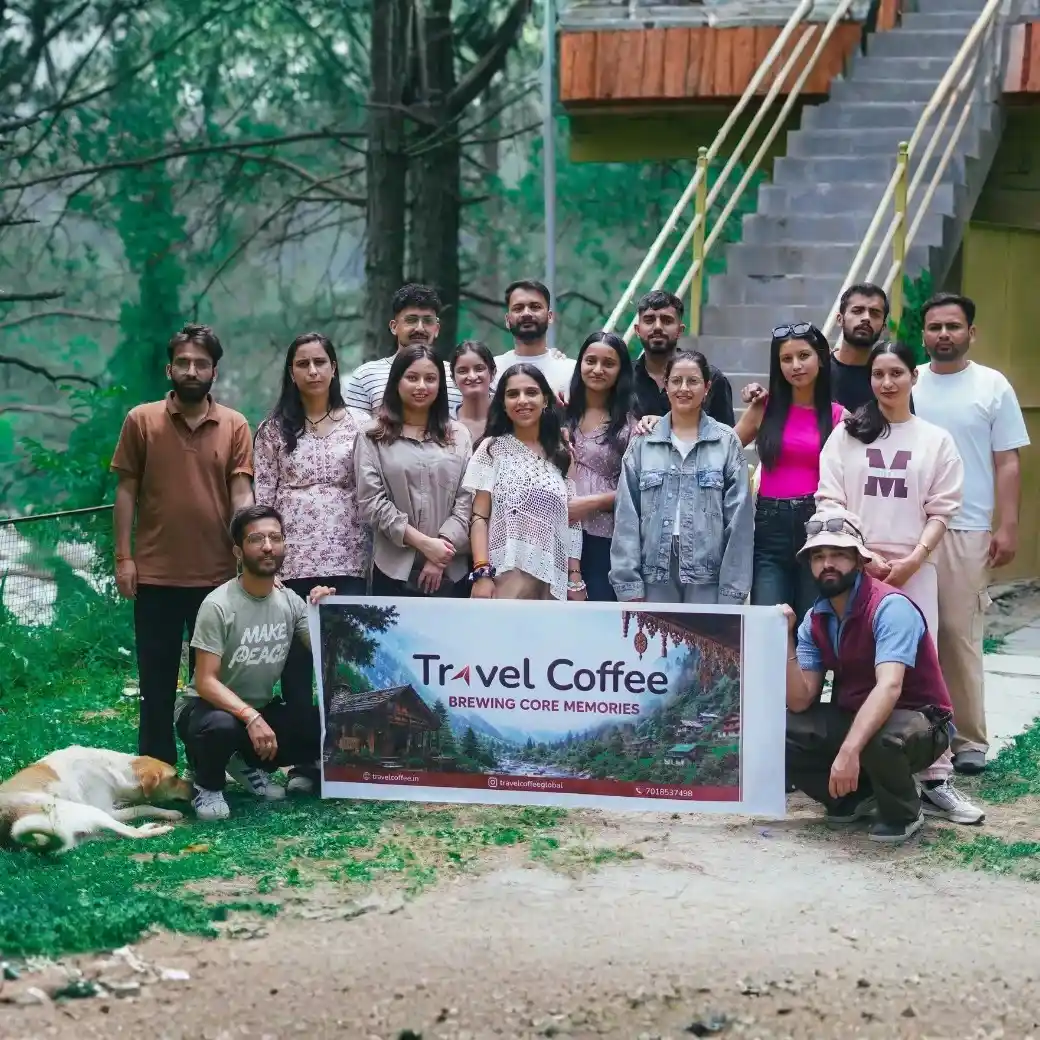 Group Tour
1D Delhi •2D Tirthan Valley+1
1D Delhi •2D Tirthan Valley+2
Group Tour2D Tirthan Valley•1D Shangarh (Sainj Valley)
1D Delhi•2D Jibhi+2
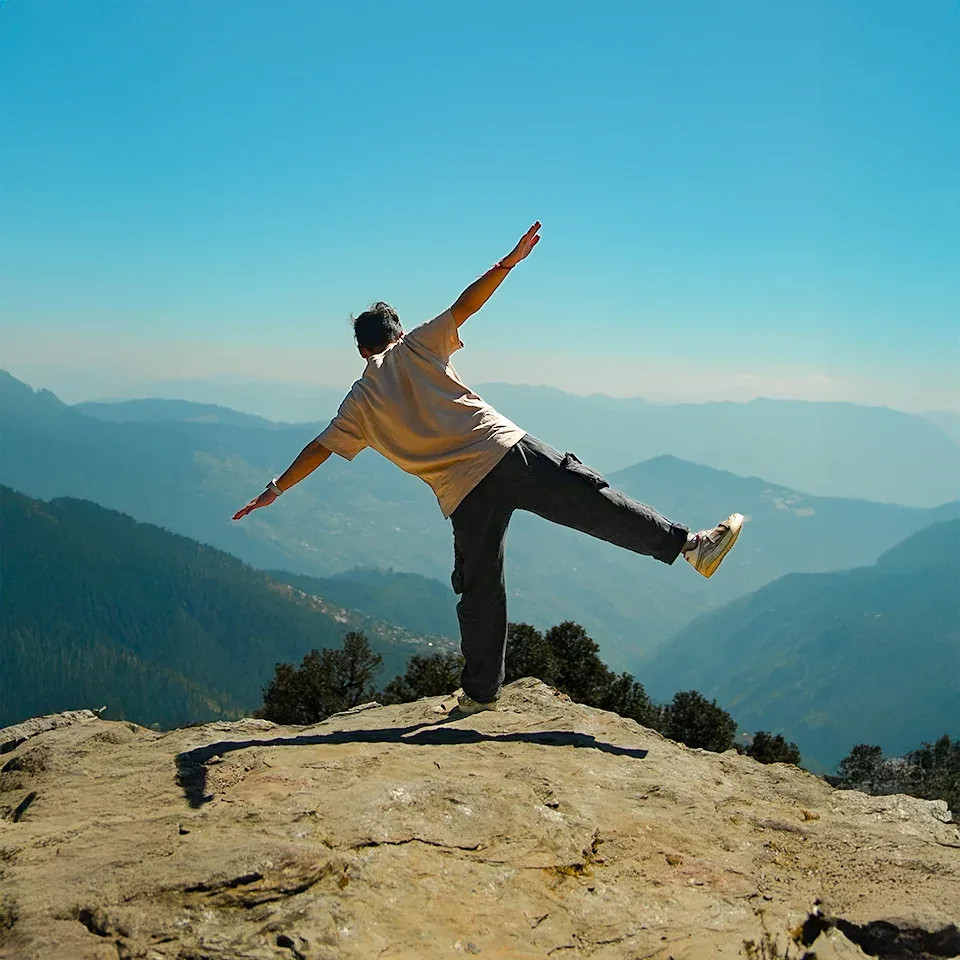
1D Delhi•2D Jibhi+1
1D Delhi •2D Jibhi / Tirthan Valley+1
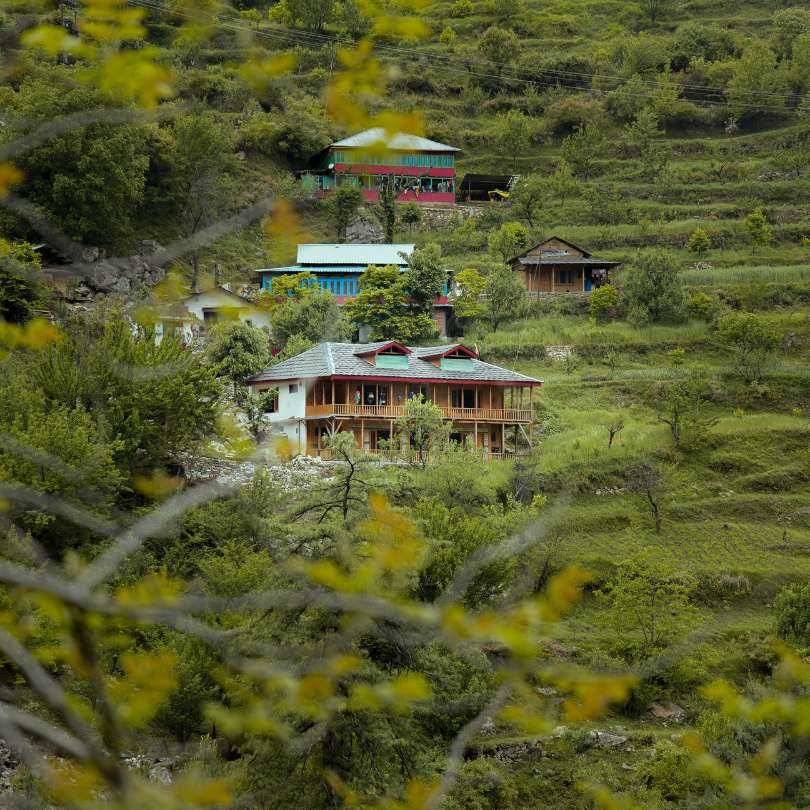
The base for the whole trip, a quiet scatter of stone and timber homes at around 2,700 metres, wrapped in deodar forest. The draw is the setting rather than a checklist: forest walks, open mountain views and long silent evenings, with the Jalori side close above.
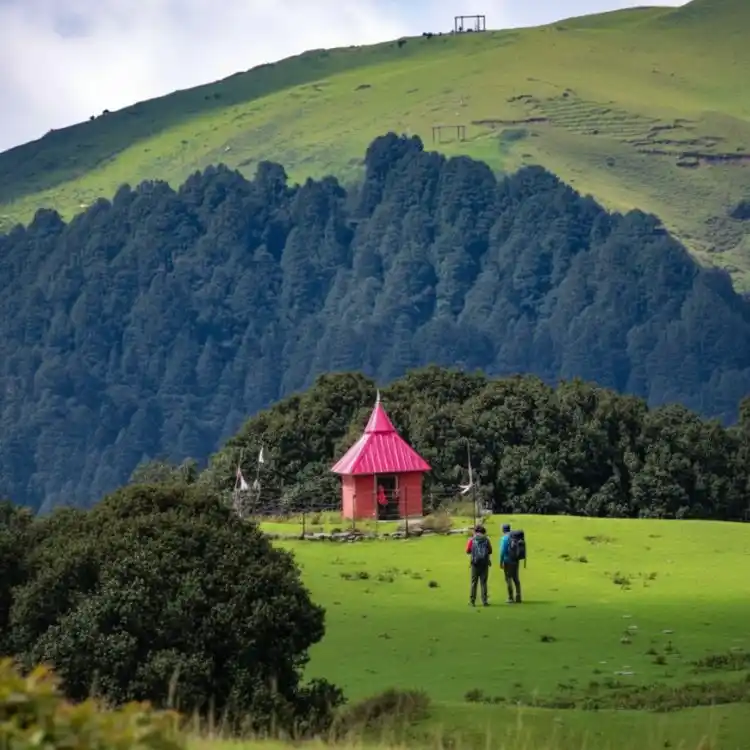
The anchor of most Shoja trips, about five kilometres above the village at roughly 3,100 metres. At the top sit a small Mata Jalori temple, a few dhabas and the trailheads for both the Serolsar Lake and Raghupur Fort walks. The road is seasonal, generally open April to November.
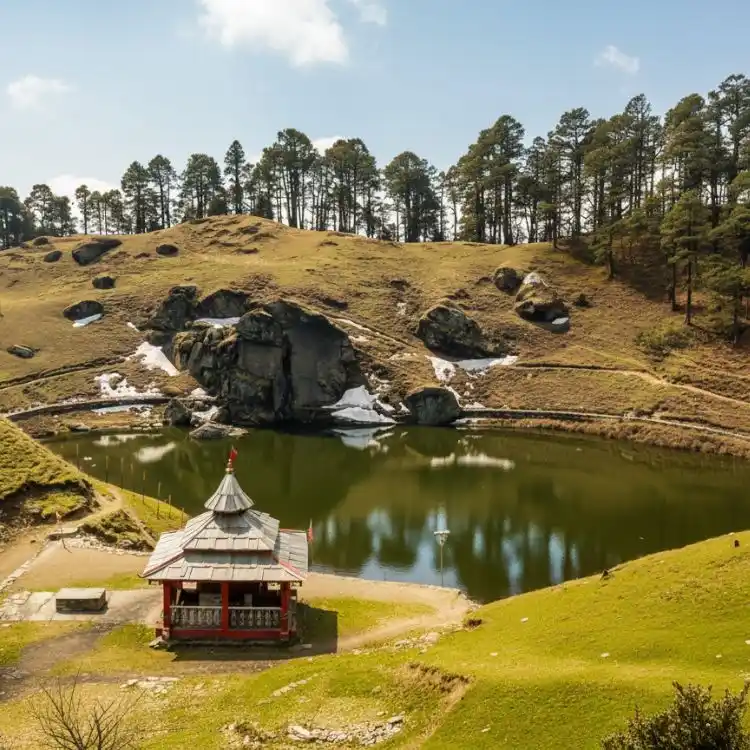
An easier five kilometre forest walk from Jalori Pass to a small, still alpine lake with a quiet temple on its bank, usually a full day at a relaxed pace. Oak and deodar shade most of the trail. Best in the calm of the morning.
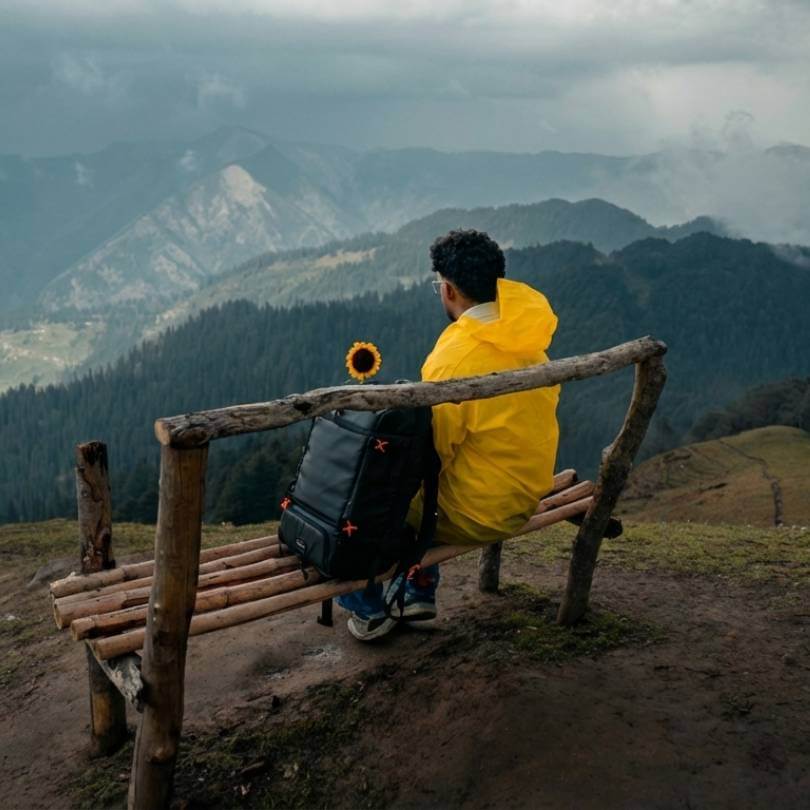
A shorter, steeper three kilometre walk from Jalori Pass to a grassy ridge with the ruined walls of an old hill fort and wide, open views across the ranges. Usually two to three hours, and a favourite for landscape photographs on a clear day.
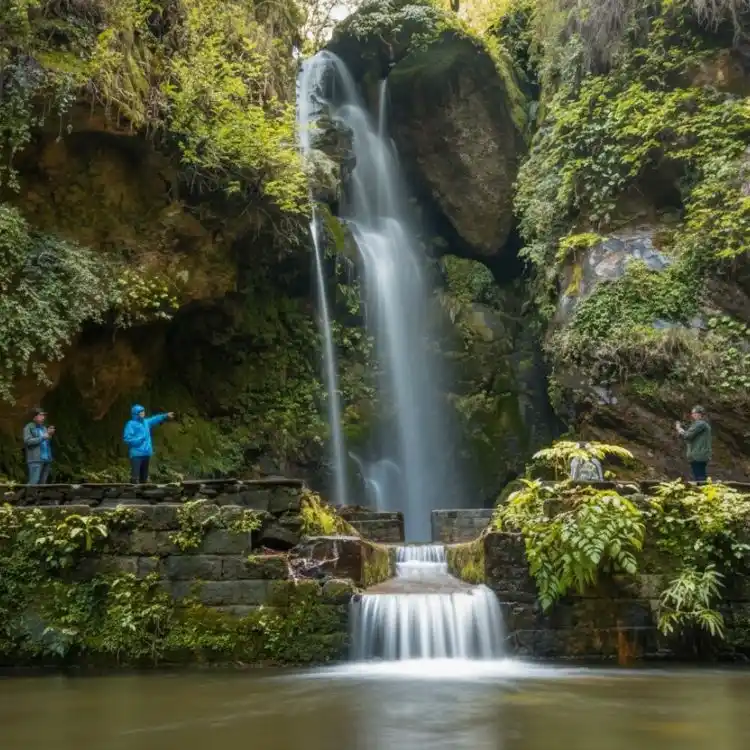
A short ten to fifteen minute walk from Jibhi village to a forest waterfall, with wooden bridges near the base for the best photograph. An easy stop when you head down to Jibhi for cafés, and quietest on a weekday morning.
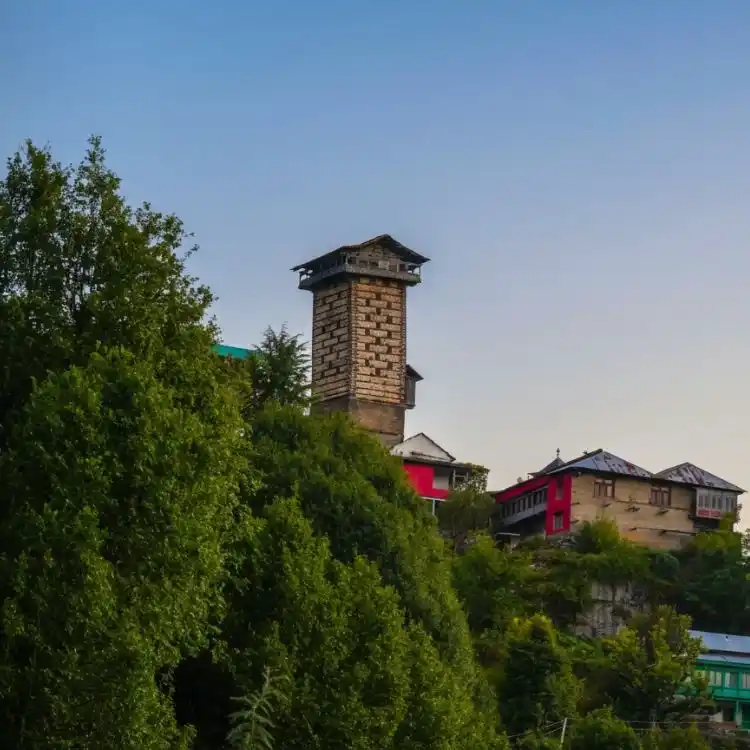
A centuries old stone and timber tower reached on a short walk through orchards from near the Shringa Rishi temple, built without cement or nails. It is a living heritage site, so the exterior is the experience rather than climbing inside.
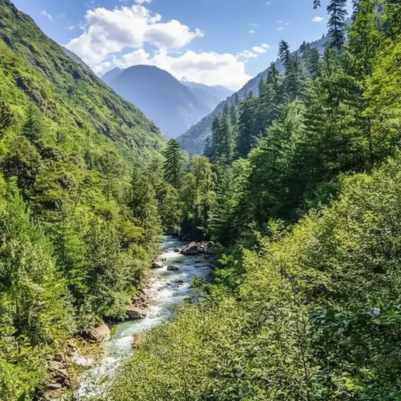
The river valley below, lower and greener, built around slow days by the water near Gushaini. It pairs the high forest of Shoja with an easy stretch by the river, and suits four night and longer trips as an add on.
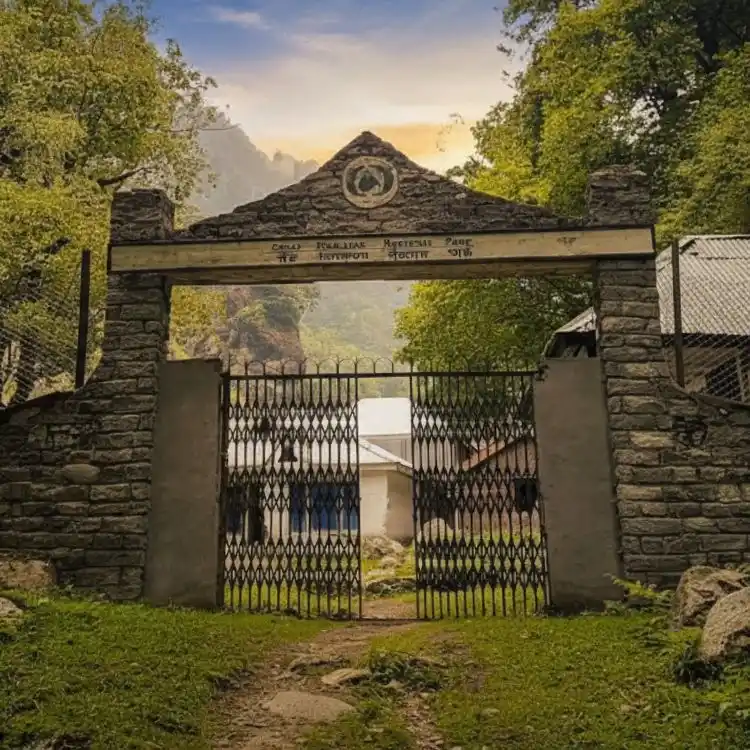
A UNESCO listed park at the head of the Tirthan valley, entered on permits with registered guides from Gushaini or Sai Ropa. Best planned deliberately for wildlife and longer guided treks rather than added casually to a short trip.
The classic Shoja day out. Drive up to the pass at around 3,100 metres, look in at the small Mata Jalori temple, and use it as the starting point for the Serolsar or Raghupur walk. The road is seasonal, so the day depends on conditions, which your coordinator confirms before you travel.
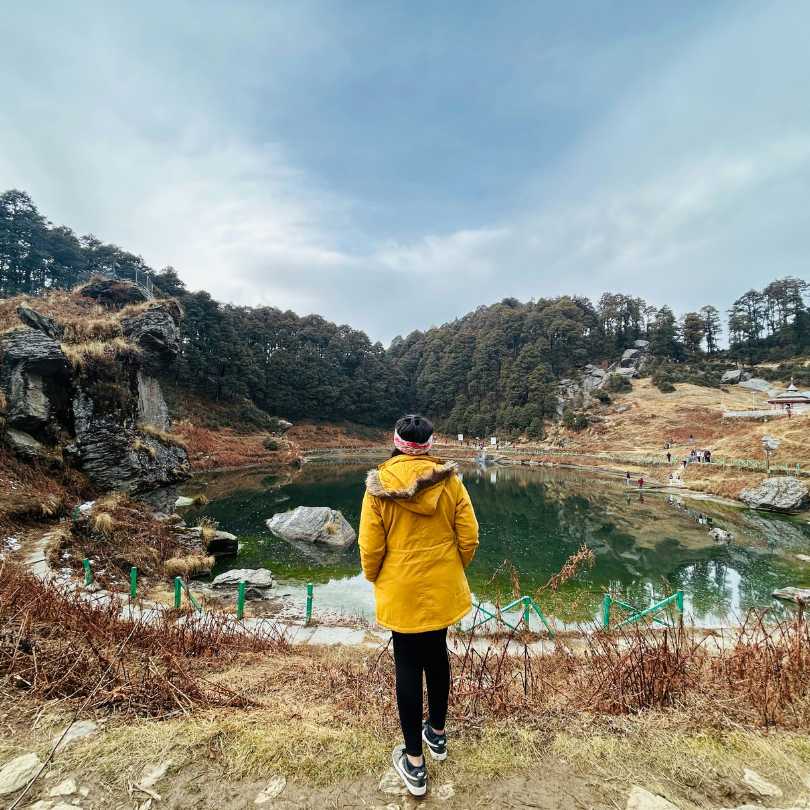
An easier five kilometre forest walk from Jalori Pass to a still alpine lake with a small temple on its bank, usually a full day at a relaxed pace. Oak and deodar shade most of the trail. Set out early, when the path is at its quietest.
A shorter, steeper three kilometre walk from Jalori Pass to a grassy ridge with the ruined walls of an old hill fort and wide open views. Usually two to three hours and a favourite for photographs. Keep an eye on the afternoon cloud in colder months and turn back if the weather closes in.
Shoja rewards doing less. Take the short forest trails around the village, find an open clearing for the view, and let the evening go quiet. There is little to rush to here, which is rather the point of staying.
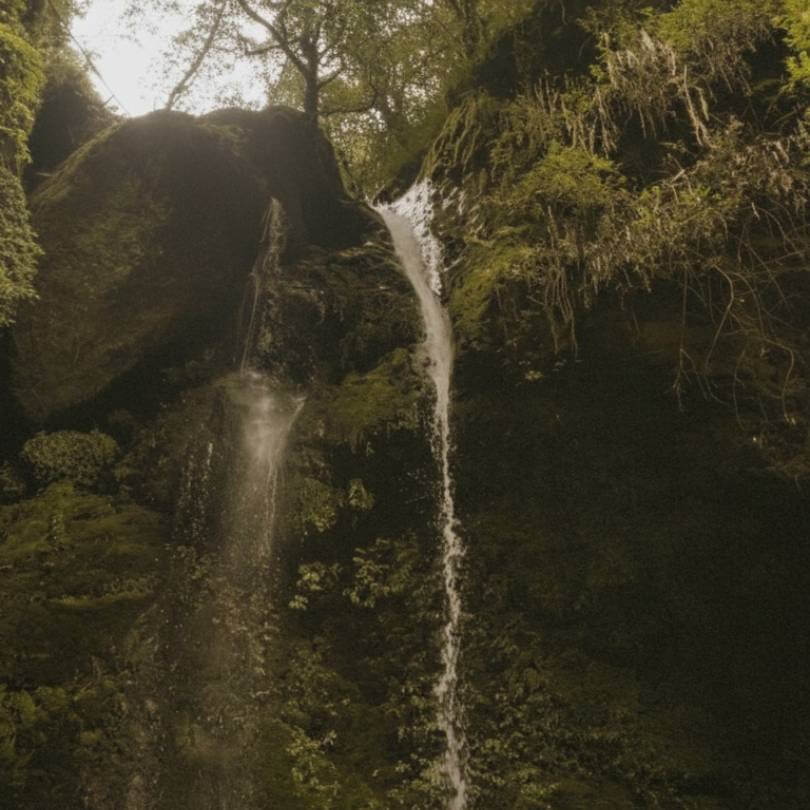
A short ten to fifteen minute walk from Jibhi village to a forest waterfall, with wooden bridges near the base for the best photograph. Easy to combine with a café afternoon down in Jibhi, and quietest on a weekday morning.
A short walk through orchards from near the Shringa Rishi temple brings you to a centuries old stone and timber tower, built without cement or nails. It is a living heritage site, so enjoy it from the outside rather than climbing in.
For four night and longer trips, drop down to the Tirthan river near Gushaini for riverside time, trout for dinner and gentle village walks. It balances the high forest of Shoja with an easy day by the water.
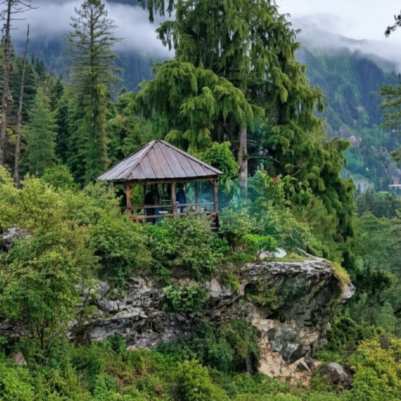
A UNESCO listed park at the head of the valley, entered on permits with registered guides from Gushaini or Sai Ropa. Best planned deliberately for wildlife and longer guided treks rather than added casually to a short trip.
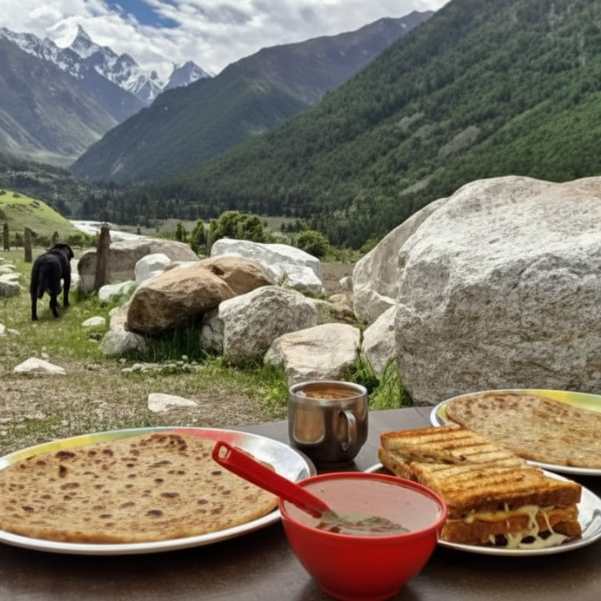
Ask your homestay for siddu, a steamed bread with a walnut and poppy seed filling, and chana madra, chickpeas cooked in yoghurt with mountain spices. Both are worth requesting ahead, and both rarely turn up on menus outside these valleys.

“Travel Coffee truly went above and beyond. Even though we booked from Indonesia without meeting them, we always felt secure — their team was available 24/7 and took care of every detail. Shubham personally ensured our comfort throughout the Himachal trip, from hotel checks to small gestures like bringing lotion and altitude pills. Their sincerity and local expertise made the journey unforgettable.”
Andre & Angel
Yes, if you want quiet forest days, open mountain views and easy access to the Jalori Pass treks. It is small and calm rather than packed with attractions, so it rewards slow travellers more than sightseeing chasers.
Three nights and four days is the balanced choice for most first trips. Two nights works for a quick weekend, and four or more suits slower travel or combining Shoja with Jibhi or Tirthan.
Yes, for a compact trip. You get the drive in, one full Jalori Pass day with a single trek, and a slow departure. Just do not try to fit both treks plus Jibhi into that window.
Three nights is comfortable and usually ideal. The extra night removes the rush and gives you a buffer for weather or a tired travel day, with time for a trek and some gentler village days.
Neither is simply better. Shoja is higher, colder and quieter with easier trail access. Jibhi is warmer, easier and has more cafés and activity. Choose by the kind of evenings you want.
Stay in Shoja for silence and the Jalori side, or Jibhi for comfort and dining. On three nights or more, a split stay often gives you the best of both. A true Shoja stay is usually a private arrangement, since standard packages tend to base in Jibhi.
Yes, and it is a popular choice on longer trips. The villages are close, so shifting base costs little time and adds variety. We build this as a private or custom plan.
For two nights: arrive and settle, spend a full day at Jalori Pass with one trek, then a relaxed morning and the drive back. Pick one main walk rather than rushing several.
Each package card on this page shows its live starting price and the figure for your dates. The final cost depends on duration, hotel nights, private versus group transport, your starting city, stay category, meals and season.
Many do, but not all. Check each package card for the departure point and exactly what transport is covered, since this is one of the biggest differences between trips.
Yes. Tell us your dates, group size, preferred nights and pace, and whether you want Shoja only or a combined trip. A genuine overnight stay in Shoja is usually built as a private, custom trip.
Typically accommodation, transport, some meals and local sightseeing, with a trek guide where needed. Inclusions vary by itinerary, so read the exact list on your chosen package card.
Most trips pair Shoja with Jalori Pass and one or both of the Serolsar Lake and Raghupur Fort treks, often with Jibhi. Tirthan Valley is a common add on for longer trips.
They are different, not ranked. Raghupur is a shorter, steeper walk to an open ridge with wide views. Serolsar is a longer forest trail to a quiet lake. Pick by whether you prefer panoramas or shaded woods.
A fit walker can on a long clear summer day, but we rarely advise rushing both. Between driving, daylight and time to enjoy each, one relaxed trek beats two hurried ones. Keep them on separate days if both matter.
The access is less obvious than a roadside stop and the trail is easy to miss. You do not always need a formal guide, but it is best to have your host or driver point out the current trail head locally.
In Shoja the view depends more on your exact stay, terrace or hillside position than on a named viewpoint. Choosing a valley facing property usually matters more than walking to a labelled spot.
Often from your own stay or a short walk to a west facing clearing, since the forest is dense. Clearer, drier months give better colour. Ask your host for the best nearby spot on the evening.
There are a few, but far fewer than Jibhi, and options change with the season. For a proper café afternoon, most travellers drive down to Jibhi where the choice is wider.
Only if the specific property supports it. The network is patchy and WiFi is not guaranteed. Confirm actual WiFi speed, power backup, a workspace and heating before you plan to work from here.
It is limited and patchy, and varies by network and location in the village. Do not rely on constant signal, and keep offline maps handy.
Sometimes, but it is property dependent and not guaranteed. If you need it, confirm with the specific stay before booking.
It is a small, quiet village and many people travel here alone. Plan sensibly around arrival times and transport, and use known, verified stays and drivers.
Many women travel this valley solo. Arrive in daylight, keep your host informed and prefer verified stays and transport. We cannot promise absolute safety, but we can arrange a plan that avoids late arrivals and long waits alone.
Yes, with the right pace. The drive up is winding and not every trek suits young children or seniors. Choose easier walks and tell us the ages in your group so we keep it comfortable.
Usually in the deep winter months, roughly December to February, and Shoja holds snow longer than the lower villages. Exact snowfall depends on the weather system in any given week.
No. Snow depends on the weather and cannot be promised for a specific date. If snow is your main goal, travel in the colder months and keep your dates flexible.
Usually not at the peak of winter. The pass is generally open from April to November and often shut through roughly January to March, with November and April as borderline months. We check status close to your travel date.
We shift the trip toward what is genuinely reachable, such as Shoja village walks, Jibhi and its waterfall, Chehni Kothi, Banjar and the lower valley. The plan is designed to stay enjoyable without depending on the pass.
It is around 500 kilometres and a full day, usually via Mandi, the Aut tunnel, Banjar and Jibhi, then up to Shoja. Most people take an overnight bus to Aut with an onward cab, or travel by private road.
From the Aut tunnel you drive into the Banjar valley along the Tirthan river through Banjar and Jibhi, then climb the last stretch to Shoja. You can use local buses, shared transport or a private taxi.
Yes. Local buses run toward Jalori Pass and Ani and pass through the area. They are cheap but less flexible with timing and luggage than a private cab.
Yes, shared transport runs between the valley villages, though frequency depends on the day and season. For a full sightseeing day, a private cab is more flexible.
Yes, if you are comfortable on mountain roads. The climb from Jibhi is steep and winding, so use engine braking, fill fuel at Banjar or Aut, and check conditions in bad weather.
Parking is informal, usually near your stay or along the road. Some properties involve a short walk from the car, so ask in advance if that matters to you.
It is generally an affordable mountain destination. Your total cost depends mostly on your stay category, private versus shared transport and the season rather than the village itself.
Not usually. It is quieter than Jibhi and much quieter than the big hill stations. Weekends in peak months are busier, while weekdays stay calm.
It works for both. A weekend covers Jalori Pass and one trek nicely. A slower trip lets you enjoy the quiet, both treks and a Jibhi or Tirthan extension without rushing.
Yes, on a four night or longer trip. They sit close together in the same valley, so a combined route is comfortable when you allow enough nights and avoid cramming.
Yes. Sojha is simply an alternate spelling of Shoja. They refer to the same village near Jalori Pass.
Real experiences shared by Travel Coffee travellers in Shoja.
1 traveller review
Based on Google review.
Just got back from an amazing trip to Jibhi and Shoja, and overall it was a really refreshing experience 🌄✨ … More
