

6D/5N
Best Value Manali to Shinkula Pass Tour With Jispa Stay
1D Manali•2D Jispa
₹12,999₹20,999SAVE INR 8,000/ person
Best Shinkula Pass Tour Packages Curated By Experts
1D Manali•2D Jispa
1D Manali•3D Jispa
2D Manali•2D Jispa+1
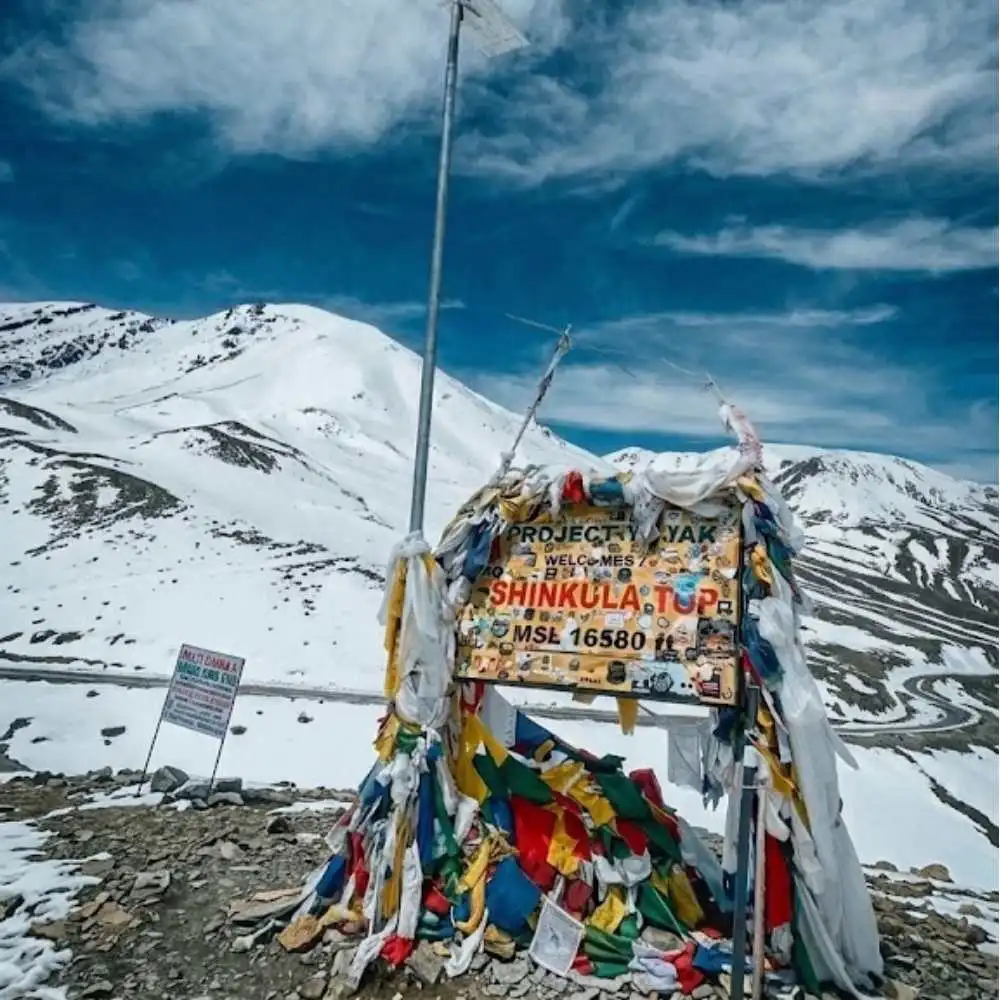
A Shinkula Pass tour is a high-altitude road trip that starts in Manali, crosses the Atal Tunnel into Lahaul, and climbs past Jispa and Darcha towards one of the more remote motorable passes in this part of the Himalaya.
Some travellers do it as a long sightseeing and snow drive and return. Others use Shinkula as the doorway into Zanskar and keep going.
What you can actually reach on any given day depends on road and weather conditions, so we plan each trip around what the route is doing at the time. If you want a gentler Lahaul day instead, our Sissu and Rohtang Pass trips are worth a look.
In simple terms: Shinkula Pass is a roughly 5,000 metre class Himalayan pass that sits on the newer Darcha to Padum road linking Lahaul in Himachal Pradesh with Zanskar in Ladakh. Most people reach it by road from Manali or Jispa. A Shinkula Pass tour package is either a there-and-back road and snow trip, or the first leg of a longer Zanskar journey. Whether you reach the pass top depends on conditions on your travel date.
You will see the pass written several ways. Shinkula Pass is also called Shinku La, Shinkun La and Shingo La across different maps, government records and travel sources. They all refer to the same pass. We use Shinkula Pass throughout this page, and Shinkun La only when we talk about the tunnel project further down.
We would rather show you a dated observation than a permanent badge, because Shinkula changes week to week.
This is a dated record of what our team saw on a specific trip. It is not a promise about your travel date. Conditions on the ground can change quickly, so we confirm the current situation again closer to departure.
The right Shinkula Pass package depends on where you start, how many days you have, and whether you simply want to see the pass or want to cross it into Zanskar.
Depending on live availability, you may find a Shinkula Pass day trip from Manali, a Jispa and Shinkula Pass package, a private Shinkula SUV trip, a 4x4 Shinkula snow trip, a Shinkula run that pairs with Gonbo Rangjon, a full Shinkula and Zanskar Valley trip, or bike and expedition options.
We do not list fixed prices in this introduction, because they move with season, vehicle and group size.
The package cards below carry the actual duration, dates, vehicle, stay and current price. Have a look through them, then tell us what fits and we will help you choose.
A Manali start suits travellers who are already based there and want to see Shinkula without shifting their stay.
The honest catch is distance. Shinkula sits well beyond Darcha, and a same-day return from Manali becomes a very long mountain day with an early start and a late finish. Some people enjoy that. Others find it tiring at altitude.
If a long single day does not appeal, a night at Jispa makes the trip far more comfortable.
Jispa is the more practical base for most travellers. It sits much closer to Darcha and the start of the Shinkula climb, so your driving day on the pass is shorter and less rushed.
Staying a night in Lahaul before going high also gives your body a little more time at altitude. It usually makes for a calmer, more enjoyable trip.
If snow is your main reason for going, choose a trip timed for the earlier part of the season and be ready to travel in a capable vehicle.
Please read one thing clearly. Snow and access work against each other at these heights. Heavier snow can mean a better snow experience lower down but a restricted or closed pass higher up. We will explain the realistic window for your dates rather than promise a snow wall.
If you want to cross Shinkula and keep going towards Gonbo Rangjon, Purne and Padum, that is a different trip altogether.
This becomes a proper multi-day Zanskar road trip, not a Shinkula sightseeing excursion. It needs more days, more planning and the right vehicle. Our Zanskar Valley tour packages are built for exactly this.
A private trip gives you your own vehicle, your own pace and control over stops and photo breaks. Couples, families and small friend groups usually prefer this.
Shared trips, where available, cost less per head and suit solo travellers or budget-minded groups who do not mind travelling with others. Availability of shared departures is limited on this route, so private is often the more reliable choice.
It depends on what you mean by open. On the same date, the lower road can be open while the pass top is not, and tourist movement can be permitted only up to a certain point. Access shifts with snow, ice, weather, BRO clearance, road damage and police orders. So "open" is really four separate questions, not one.
Here is how to think about it.
The stretch from Manali through the Atal Tunnel into Lahaul, towards Keylong and Jispa, is usually the most stable part of the journey. It is often open even when higher sections are not.
Beyond Darcha, the road climbs towards Shinkula. On some days all vehicles are allowed part of the way, while access closer to the pass is limited to certain vehicles or held back entirely. The permitted point can move through the season.
Reaching the actual Shinkula Pass top is a separate matter again. Even when the lower road is fine, the top can be under snow, closed for clearance, or off limits by order. Reaching the summit is never something we can promise in advance.
Crossing the pass and continuing towards Padum is the most conditional level of all. The Darcha to Padum road can be open for the drive up, yet through movement into Zanskar may still be restricted by conditions on the far side.
These differ because snow, water and road works do not affect every section equally, and because the local administration can permit movement in stages. A road being physically open does not mean every vehicle should attempt it, and the point tourists are allowed to reach is not always the summit.
Checking current status: for the live picture, confirm the current Shinkula Pass road status with us close to your departure. We do not display a fixed "open today" claim unless verified live information is actually being shown on the page.
The route runs from Manali, up the Solang side and through the Atal Tunnel, then down to Sissu. From there it continues to Tandi, Keylong and Jispa, and on to Darcha.
At Darcha the route splits. This is the part many first-time travellers miss.
The conventional Manali to Leh direction carries on towards Baralacha La. The Shinkula route branches away from that highway and heads up the Darcha to Padum corridor into Zanskar. So Shinkula is not on the standard Manali to Leh highway. It is on a separate road that leaves the highway at Darcha.
[ADD TRAVEL COFFEE GPS VERIFIED DISTANCE]
We are not going to quote a confident figure until we publish our own measured one, because the numbers online genuinely disagree with each other.
Different websites publish different distances for this route. Some measure to Darcha, some to the pass top, and some to points in between, so the figures rarely match. A GPS-verified distance from our own vehicle is more useful than any of them, and we will add it here.
[ADD TRAVEL COFFEE OBSERVED DRIVE TIME RANGE]
A single map estimate is not a reliable answer for this road. Mountain drive time changes with road surface, traffic, weather, the number of stops, and the point currently permitted for tourists.
Our observed time range, based on trips we have actually run, will go here once confirmed.
It is possible on a good day, but it makes for a long and demanding drive. Manali to Shinkula and back covers serious distance on high mountain roads, so expect a very early start and a late return.
We will not pretend this is a relaxed sightseeing outing. Travellers who want a calmer trip, or who are travelling with children or senior citizens, are usually happier staying a night at Jispa and doing the pass with a shorter driving day.
Map apps assume a steady speed that these roads do not allow.
On this route your real pace is shaped by narrow and unpaved stretches, temporary road works, snow or slush higher up, checkpoints, photo stops, meal stops, oncoming traffic, weather, and whichever point is currently the authorised endpoint. Any one of these can add time. Together they explain why the drive often takes longer than a phone suggests.
For most travellers, yes. Jispa is closer to Darcha and the Shinkula climb, so your pass day is shorter, and a night in Lahaul gives you a little time at altitude before going higher.
From Manali, you carry the full driving load in a single day, which can mean a rushed schedule and a tired evening. From Jispa, the pass is within a more manageable reach, so you drive at a calmer pace with more time for stops.
If comfort matters to you, Jispa wins. If you are set on staying in Manali, we plan the day carefully around an early departure.
Keylong is the larger town, with more shops, easier supplies and a fuller range of services. Jispa is smaller and quieter, and it sits a little further along the route towards Darcha.
Neither is a wrong choice. Keylong suits travellers who want a proper town and more options. Jispa suits those who want to be closer to the start of the climb and enjoy a calmer riverside stay.
Darcha is the strategic point on this route. It is where the road to Zanskar branches away from the Manali to Leh highway, and it is a natural check point before the climb.
[TC DATA NEEDED: CURRENT DARCHA STAY OPTIONS AND QUALITY]
Stay options around Darcha are limited and basic, so we will only describe what our team has actually verified. For most guests, Jispa or Keylong remains the practical overnight base, with Darcha as a stop rather than a stay.
A 4x4 is not a permanent requirement on every operating day. The suitable vehicle depends on road conditions, snow, ice, slush, road damage and current traffic restrictions.
On some dates the authorities allow only four-wheel-drive vehicles near the pass, while other vehicles are permitted part of the way. On drier, settled days a capable high-clearance vehicle can do more of the route. Because this changes, the vehicle is matched to the product and the conditions, not fixed in advance.
A 4x4 earns its place when there is fresh snow, ice, slush, poor road surface, high water flow across the road, or in the shoulder season when conditions are unsettled. There are also days when official orders simply restrict the higher stretch to four-wheel-drive vehicles.
In those situations a 4x4 is not about comfort. It is about actually getting up and back safely.
On good, dry-season days, an Innova or Innova Crysta can handle much of this route, and it is a common choice for the Lahaul stretch.
We will not promise it for every date. When there is snow, slush or a vehicle restriction near the pass, a 4x4 may be the only sensible option, and on some days it may be required by order. We match the vehicle to the conditions we expect on your trip.
Being allowed and being suitable are two different things. A standard SUV may be permitted on the road, but that does not mean it is the right tool for a snowbound or badly broken stretch.
On settled days a capable SUV manages well. On difficult days, ground clearance and traction matter more than the label on the vehicle.
We would not recommend it, and it is not a simple yes or no.
A low car may be legally allowed on parts of the route on a good day, but low ground clearance becomes a real problem where the surface is broken, where water crosses the road, or where there is any snow or slush. The risk of grounding out or getting stuck is high, so this is not the vehicle for Shinkula.
You can, but only after an honest look at a few things: the current road condition, your vehicle's real capability and ground clearance, your tyres, your driver's experience on rough mountain roads, and the traffic order in force on your date.
The road after Darcha is remote and evolving, help is far away, and a wrong call at altitude is costly. This is why we recommend verifying the current route condition before you attempt it in your own car.
Motorcycles do ride this route, and it is a favourite among experienced riders, but access is condition dependent.
Riders need to check snow, ice and the current traffic orders before setting out, and carry fuel, because the reliable pumps are far apart. Cold, water crossings and loose surfaces make this a route for confident riders rather than first-timers.
Think of it as a simple buying decision. Choose a shared seat, where available, if you want the lowest cost and do not mind travelling with others. Choose a private SUV for your own pace and control on settled days. Choose a 4x4 when the conditions or the orders call for it, especially in snow, slush or the shoulder season.
Not sure which applies to your dates? Tell us when you are travelling and we will point you to the right one.
There is no single fixed answer, so please do not rely on a blanket "no permit required" line copied from other sites.
Shinkula is not part of the Rohtang tourism permit system that applies near Manali. That said, district, police, checkpoint and vehicle-related requirements on this route can change, and they can differ for a sightseeing return versus onward travel into Zanskar. Carry valid government photo identification for everyone travelling, and keep your vehicle documents to hand.
Requirements for foreign nationals can be different, and we will only state those once verified for your travel date rather than guess.
Darcha is where the route to Zanskar branches off, and there is a checkpost here where the police can record and regulate movement. On some days traffic is held or filtered at Darcha depending on conditions further up.
[TC DATA NEEDED: CURRENT CHECKPOST PROCESS]
Rather than publish paperwork rules that may have changed, we check the applicable requirement close to your departure date and tell you exactly what to carry.
There is no single best month, because the right time depends on what you want. As a general guide, the more established road window tends to fall across the summer months, while the earlier season leans towards snow but carries more access uncertainty.
High snow potential and high access uncertainty. This is not a normal, guaranteed tourist window. The pass can be under deep snow and movement can be restricted or closed, so trips in this period are condition led.
A period where you may still find snow, with the road opening up in stages. Clearance work and vehicle restrictions can still apply near the pass, so plan with flexibility.
Often a reasonable balance between improving access and remaining snow, though nothing is guaranteed. Some years open up nicely by now, others stay unsettled. Worth watching the current status as your dates approach.
In typical years, summer road conditions are more established through July, and snow begins reducing. Meltwater and road surface can still matter, especially after rain, but this is usually a more dependable travelling month.
Often more about the road trip than the snow. We would not promise snow at the pass in August. It tends to suit travellers who want the drive, the scenery and the Zanskar connection rather than snow walls.
Frequently a useful month for clearer road travel and for onward Zanskar trips, when conditions allow. Skies often settle and the route can be at its most rewarding for a longer journey.
Cold increases and weather turns less predictable. Early snowfall can arrive, and access becomes uncertain again as the season closes.
We will not tell you the pass is always open or always closed in winter, because neither is true.
Movement can happen in favourable windows, but heavy snowfall, closures and four-wheel-drive requirements can change rapidly. Winter travel here is for a specific kind of trip and needs live verification.
If your priority is snow: aim for the earlier part of the open season and accept that access is the trade-off. More snow can mean a restricted pass.
If your priority is clearer roads: the mid to later summer months are usually your best chance of a smoother drive.
If you want to continue into Zanskar: the more settled summer and early-autumn window, when the route is established, gives you the best odds for a full crossing.
These are operational expectations based on typical years, not guarantees. We will give you the honest picture for your specific dates.
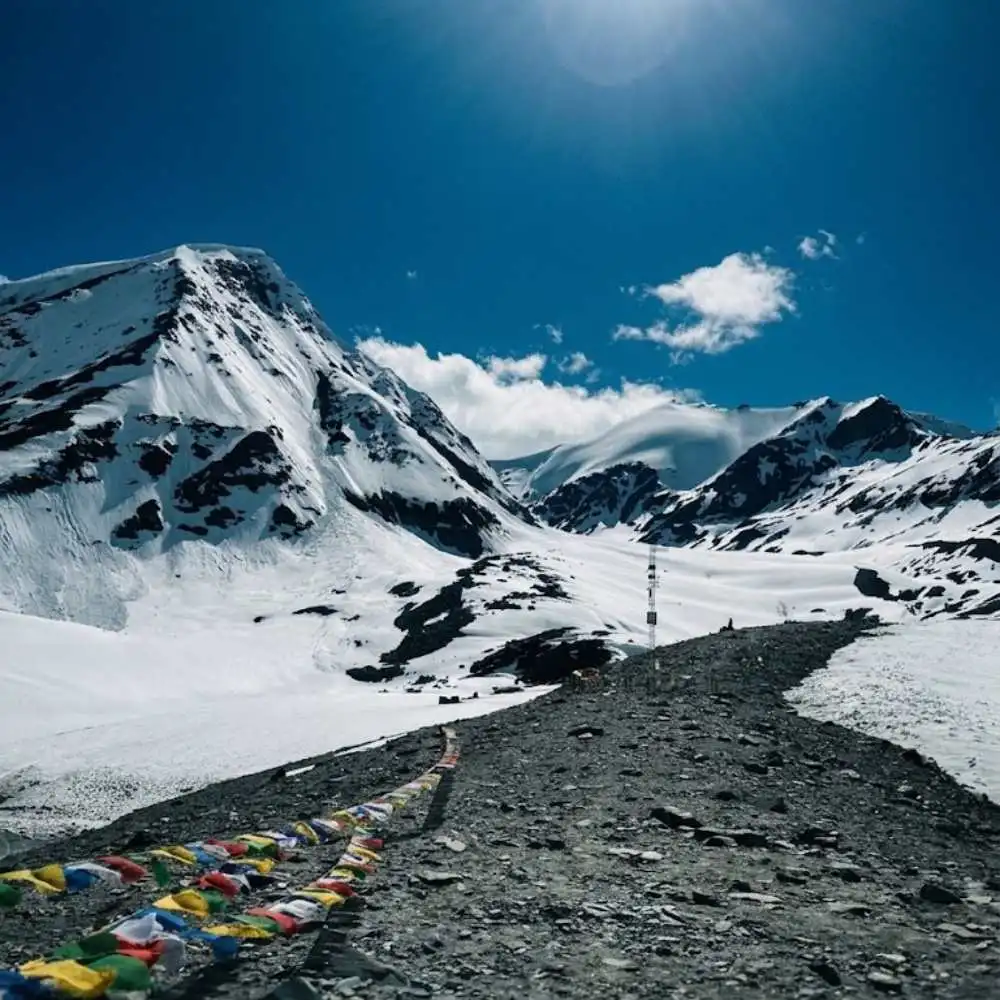
No, snow should never be guaranteed for a Shinkula Pass trip. What you see depends entirely on the season and the conditions on your travel date.
Fresh snowfall gives you the clean, white experience most people picture, but it is unpredictable and can also close the road. Older, settled snow can linger in patches and along the higher sections well into the warmer months. They are different experiences, and only one of them is likely on any given trip.
There is often a difference between snow near the top and snow lower down. You may find patches on the climb even when the very top is clear, or the reverse. The point at which you meet snow shifts through the season.
Snow walls, where cleared snow stands high on either side of the road, appear at certain times when clearance follows heavy snowfall. They are a seasonal, timing-dependent sight and not something we can arrange on demand.
The earlier part of the open season generally offers a better chance of meaningful snow, with the trade-off that access is less certain. As summer settles in, your odds of a snow-focused trip drop and the route becomes more about the drive.
Yes, and this is the part worth understanding. The same snow that makes the trip beautiful can also block or restrict the pass. More snow can mean less access, not more.
So a trip chasing deep snow is also the trip most likely to be turned back short of the top. We plan for this honestly rather than promise both the snow and the summit.
Shinkula is a roughly 5,000 metre class high-altitude pass, commonly cited at about 16,580 ft. At this height the air holds noticeably less oxygen than the plains, and the climb from Manali gains altitude quickly. Some travellers feel the effects, and that is normal. What follows is general guidance, not medical advice.
The concern is not just the final height but how fast you get there. Going from Manali to a 5,000 metre class pass in a short span gives your body little time to adjust, which is what tends to bring on symptoms.
A night at Jispa, which sits at a meaningful altitude itself, gives you a little more time to adjust before going higher, and many travellers find it helps them feel better on the pass day.
We want to be careful here. This is a sensible, common practice, but it is not a guarantee against altitude sickness. People respond differently, and altitude does not follow rules.
There is usually no reason to linger at extreme altitude. Enjoy the pass, take your photos, and then begin the descent.
Coming down to a lower height is one of the simplest ways to feel better, so a shorter stop at the top is often the more comfortable choice.
Mild headache, tiredness or breathlessness can be a normal response to altitude. Symptoms that should not be ignored include a severe or worsening headache, repeated vomiting, confusion, difficulty walking steadily, or breathlessness at rest.
If these appear, the recognised response is to stop going higher and to descend. Please tell your driver or guide straight away so we can act early rather than wait.
There is no blanket safe or unsafe answer. Children can be affected by altitude just as adults can, and some feel it more.
Whether it suits your child depends on their age, health and how they handle a long, high-altitude day. If you are unsure, speak with your paediatrician before booking.
Again, it comes down to the individual. Many older travellers manage high passes well, while others find the altitude and the long driving day demanding.
Existing health matters more than age alone, so a quick word with their doctor is the sensible first step.
If you have a heart or lung condition, or any condition that altitude might affect, please speak with your doctor before booking this trip. We can plan a gentler itinerary, but we cannot give medical clearance, and your doctor's advice should come first.
This part of the trip runs through remote country, so a little planning goes a long way. Here is the practical picture.
Tandi is widely known as the last reliable fuel point before the route diverges towards Zanskar, with the next dependable pump much further on at Padum.
[VERIFY WITH TRAVEL COFFEE OPERATIONS BEFORE PUBLISHING] [TC DATA NEEDED: LAST VERIFIED FUEL STOP]
We top up at the last reliable pump and plan fuel for the stretch ahead. If you are on a bike or in your own vehicle, fill up at Tandi and carry a reserve.
Proper food stops are limited once you are past the main Lahaul towns. You will find dhabas and small eateries along the Keylong and Jispa stretch, which thin out considerably beyond Darcha.
[TC DATA NEEDED: FOOD STOP]
We plan meal and tea stops around the reliable points our team uses, and carry snacks and water for the remote sections where nothing is open.
Basic toilet facilities exist at the food and fuel stops along the Lahaul stretch, but they become scarce and very basic beyond Darcha.
[TC DATA NEEDED: TOILET STOP]
We time stops sensibly, and for the remote sections it is best to be prepared, as there is little in the way of facilities near the pass.
Connectivity becomes increasingly unreliable as you head into the remote stretches. Signal is generally usable around the larger towns and drops off well before the pass.
[ADD RECENT TRAVEL COFFEE NETWORK OBSERVATION BY CARRIER]
Do not count on a stable signal near Shinkula. Tell your family your plan in advance and expect to be out of contact for parts of the day.
Carry some cash. Digital payments can work in the towns, but UPI and card acceptance become patchy in remote areas and depend on a signal that may not be there.
We are not saying UPI never works. We are saying do not rely on it once you are past the main towns.
Medical facilities on this route are limited and spread far apart, with proper care concentrated in the larger towns rather than near the pass.
[TC DATA NEEDED: NEAREST VERIFIED MEDICAL FACILITY]
We would rather point you to a facility we have actually confirmed than list something we cannot stand behind. For altitude, early descent remains the most important response, and our team is briefed to act quickly if a guest is unwell.
These four often get compared, but they suit very different trips. Here is how to choose.
You want an easier, lower-effort Lahaul day. Sissu gives you the Atal Tunnel crossing, a waterfall and valley scenery without a demanding high-altitude push. It is a good pick for families and first-timers who want Lahaul without a long, high day.
You want the classic, well-established Manali high-pass experience close to base. Rohtang is the familiar snow and views day trip that most Manali visitors know, with a shorter run than the Lahaul passes. Our Rohtang Pass tour packages cover it.
You want a high pass on the conventional Manali to Leh route. Baralacha sits on that main highway beyond Darcha, so it fits travellers heading in the Leh direction or wanting a serious high pass on the established road. See our Baralacha Pass tour packages.
You want a more remote road trip, a bit more adventure, and the option of continuing into Zanskar. Shinkula leaves the main highway at Darcha and heads into quieter, rougher country. It suits confident road trippers rather than those after an easy day.
Both can hold snow in season, and both are condition dependent. Shinkula's road is rougher and more remote, so a snow trip there leans more towards adventure. Baralacha, on the main highway, can be the slightly more straightforward snow-season pass, though neither guarantees snow.
For most families, Rohtang or Sissu is the more comfortable choice. Shinkula is a long, high, remote day that can be tiring for young children and older travellers. Families set on Shinkula are usually happier basing at Jispa and keeping the pass day short.
Both are strong rides. Baralacha is part of the classic Manali to Leh run, so it fits riders on that route. Shinkula is the more remote, rougher and adventurous option, and it is the one that opens the door to a Zanskar crossing for experienced riders.
Shinkula, at a roughly 5,000 metre class height of about 16,580 ft, is higher than both Rohtang and Baralacha. All three are serious altitudes, but Shinkula tops the group.
Rohtang is the easiest and closest. Sissu is next in terms of effort. Baralacha and Shinkula are both long, high days, with Shinkula the most remote and demanding of the four.
If it is your first Himalayan high-pass trip, Sissu or Rohtang is the gentler introduction. Choose Shinkula when you specifically want the remote road trip and are ready for a long, high day, ideally with a night at Jispa to break it up.
Shinkula connects Lahaul in Himachal Pradesh with Zanskar in Ladakh, through the Darcha to Padum corridor. Cross the pass and you descend out of Himachal and into the Zanskar side of Ladakh, on the newer road that links the two valleys.
From the top, the route drops steeply and then works its way north through Zanskar.
Below the pass you reach the Kargyak area, also spelt Kurgiakh, one of the first settlements on the Zanskar side. It marks the start of the inhabited stretch after the empty high country.
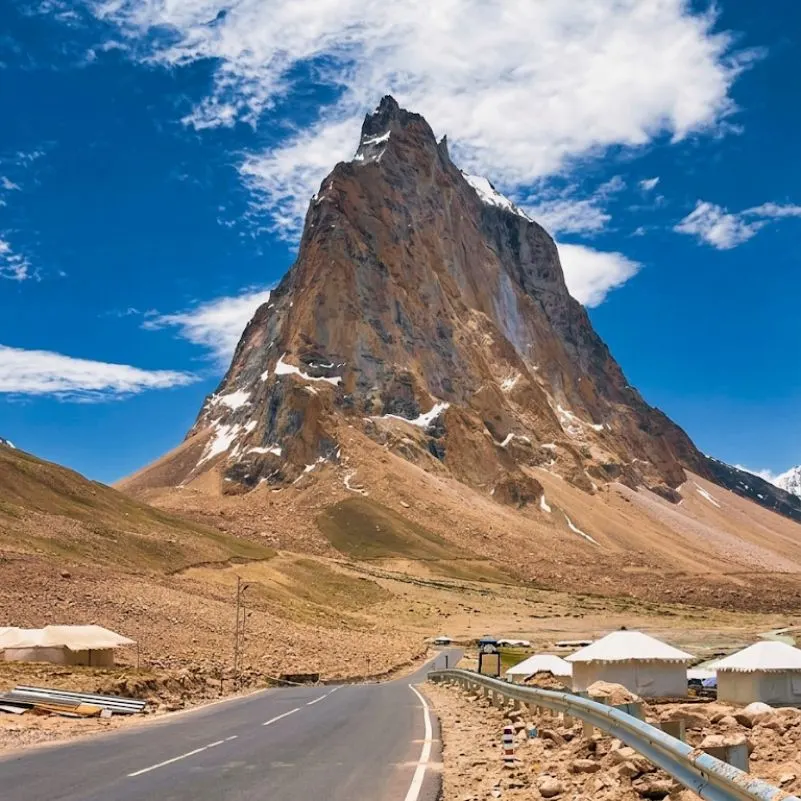
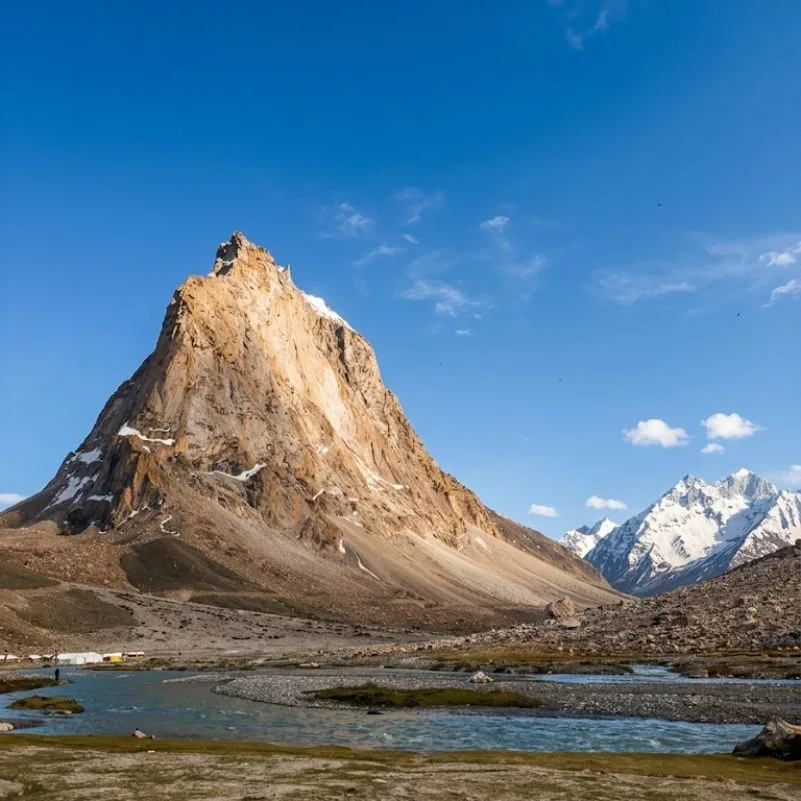
Near Kargyak stands Gonbo Rangjon, a striking, solitary rock peak that local Buddhist communities revere as a sacred mountain. It is one of the most memorable sights on the onward journey and a highlight for many travellers.
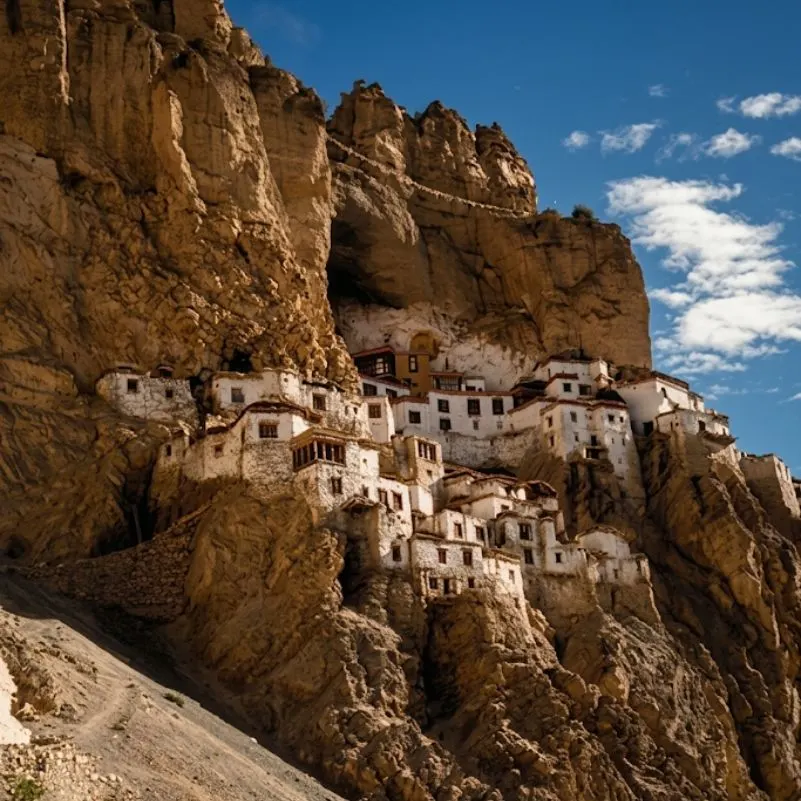
Further on lies Purne, a tiny settlement and a natural halt on the way deeper into Zanskar. It is also the jumping-off point for the walk to Phugtal Monastery.
Padum is the main town of Zanskar and the practical hub of the region, with the area's main fuel and services. For most road trips through here, Padum is the anchor point.
This distinction matters, so please read it before you book.
Reaching Shinkula and returning the same way is one kind of trip. It is a road and snow outing focused on the pass.
Crossing Shinkula and continuing through Gonbo Rangjon, Purne and Padum is a completely different, multi-day Zanskar journey. It needs more days, more planning and a proper Zanskar itinerary. If that is what you have in mind, our Zanskar Valley tour packages are the right starting point.
The Shinkun La Tunnel is not the same thing as driving over Shinkula Pass. It is a separate infrastructure project being built under the pass, on the Nimu to Padum to Darcha road.
According to the latest official project information, it is a roughly 4.1 km tunnel being constructed by the Border Roads Organisation, at a height in the region of 15,800 ft beneath the Shinkula Pass. Its purpose is all-weather road connectivity between Lahaul and Zanskar, giving Ladakh a third road link alongside the existing Srinagar to Leh and Manali to Leh highways. On completion it is expected to be among the world's highest and longest high-altitude highway tunnels.
The project has seen several revised timelines over the years, so we will not present a completion date as certain. As per the latest available government updates, construction is ongoing.
For travellers, the key point is simple. Today you still cross the pass by road over the top, in whatever conditions apply. The tunnel is a future route, not the current one.
Shinkula is a high mountain route, so we build our planning around the fact that conditions can change. We check the latest available road information before departure, the permitted endpoint can move, and reaching the actual pass top is never something we can guarantee.
Here is how we handle it.
We check the latest available road and weather information for your route as your travel date approaches, and we keep you informed if the picture changes.
If the top is expected to be under snow, closed for clearance, or off limits by order, we tell you in advance what point is realistically expected to be reachable. You travel with a clear picture rather than a surprise at Darcha.
[ADD OFFICIAL TRAVEL COFFEE ROAD CLOSURE AND ALTERNATIVE POLICY]
Our published policy for this situation applies here, and we will share it with you clearly at the time of booking. We do not want to state a refund, reschedule or alternative arrangement on this page that differs from our actual policy, so the confirmed terms are what count.
A good fit if you want a private vehicle, a scenic remote drive and a bit of adventure together. Base at Jispa for a calmer pace, and keep the pass day relaxed rather than rushed.
Well suited to a small group that wants a road trip with some grit. Share a private vehicle, split the cost, and enjoy the flexibility to stop where you like along the way.
Workable, especially on a shared departure where available, or by joining a private trip. Solo riders on bikes should be experienced and self-sufficient, given the remote road and long distances.
This is your kind of trip. The rough road after Darcha, the altitude and the option to continue into Zanskar are exactly what draws adventure travellers here.
Strong choice. The pass, Gonbo Rangjon on the onward route, and the changing light across Lahaul and Zanskar give you plenty to work with. A private vehicle helps, so you can stop for the shot.
A rewarding ride for confident, experienced riders who are ready for cold, water crossings and remote stretches. Check conditions and traffic orders, carry fuel, and do not underestimate the distances.
Think carefully here. This is a long, high, remote day that can be hard on young children. Many families are more comfortable with Sissu or Rohtang, or with a Jispa-based Shinkula trip that keeps the pass day short. We will be honest with you about what suits your children.
It depends on individual health and stamina rather than age. For some it is manageable with a Jispa stay and a gentle pace. For others, a lower Lahaul trip is the wiser choice. A word with their doctor helps, and we will plan accordingly.
This is a vehicle-based trip, so you do not need specialised expedition gear. You do need to be ready for cold and altitude.
Bring warm layers and a wind-resistant outer layer, because it can be cold and windy at the top even in summer. Add comfortable shoes with grip, gloves, a warm cap and sunglasses. Carry sunscreen, water, and some snacks for the remote stretches.
Keep your government photo ID and any personal medicines with you. A power bank is useful where charging is scarce, and carry some cash for places where digital payment will not work.
If you are travelling in the snow season, snow boots or rented snow clothing can be worth it, and we will tell you if your dates call for them. Beyond that, keep it simple.
We check the expected permitted endpoint for your route before you depart, so you travel with a realistic picture rather than a guess.
We match the vehicle to the product and the prevailing road conditions, whether that means an SUV on a settled day or a 4x4 when snow, slush or orders call for it.
Our drivers and ground support are local to these mountains, and they know where the road quality changes, where to stop and how to read the conditions.
We keep our inclusions and exclusions transparent, and we communicate clearly when the road situation changes rather than leave you to find out at Darcha.
We offer private and group options where available, we support you through the journey, and our planning draws on first-hand observations from trips we have actually run, including our own route photos and videos.
Where the top is unlikely to be reachable, we plan realistic alternatives with you rather than overpromise. That honesty is the point. We would rather you choose the right trip than simply book any trip.
Shinkula changes through the season, so a dated record of what our team actually saw is far more useful than a permanent "open" badge. This section is populated with our real operating observations.
We think the honest way to judge a Shinkula trip is to see it, so this page carries our own photography and video from the route rather than stock imagery.
Depending on what we have from recent trips, you may see actual footage from the Shinkula top, our vehicle on the road after Darcha, the dry-season road surface, and snow conditions where we met them. You may also see 4x4 operation in snow, a Jispa departure, the Darcha junction where the route splits, the actual permitted turnaround point on a given day, snow walls where they formed, and short clips of the real road condition.
On the longer Zanskar trips, you may see Gonbo Rangjon on the onward leg.
Watch these before you book, and judge the trip on what it actually looks like. Everything here is from our own trips. We do not label stock photos as ours.
Below you will find genuine reviews from Travel Coffee guests, with a focus on those who have travelled Shinkula, Lahaul, Zanskar, Spiti, Ladakh and comparable high-altitude road trips.
Tell us your travel dates, how many of you are travelling, and where you want to start from.
We will suggest the most practical Shinkula option for your trip, based on your duration, your group, and the road conditions we expect around your dates. If Sissu, Rohtang or a Jispa-based plan would suit you better, we will say so.
7 packages found
1D Manali•3D Jispa
1D Manali•2D Jispa
2D Manali•2D Jispa+1
1D Manali•1D Purne / Kargyak / Gonbo Rangjon Side+2
 Group Tour
1D Manali•1D Purne / Kargyak / Gonbo Rangjon Side+2
 Group Tour
1D Manali•1D Purne / Kargyak / Gonbo Rangjon Side+2
1D Manali•1D Purne / Kargyak / Gonbo Rangjon Side+2
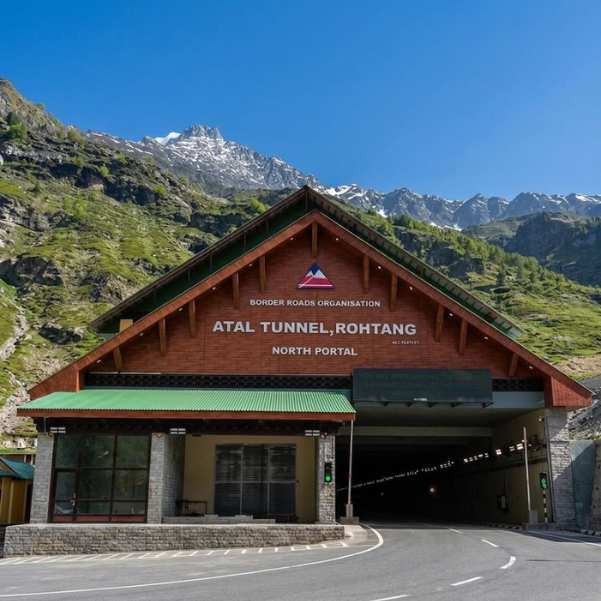
Your gateway from the Manali side into Lahaul. It cuts under the old Rohtang route and drops you into a different, higher landscape within minutes.
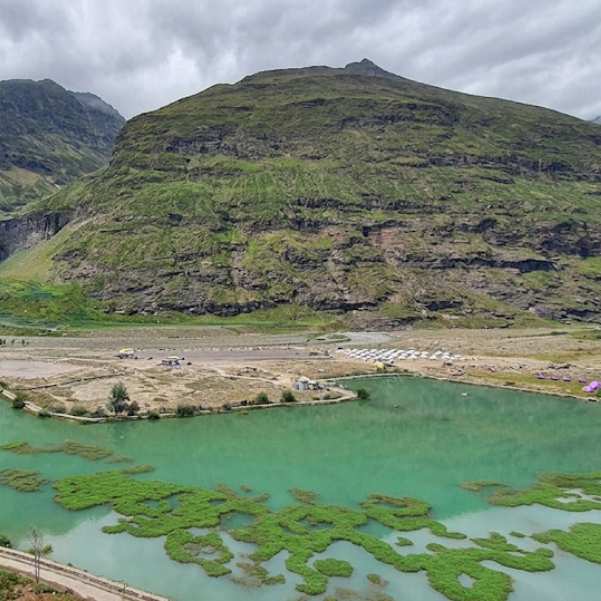
A popular first stop in Lahaul, with a waterfall and open valley views. It is an easy, pleasant halt and a good place to stretch and take photographs early in the drive.
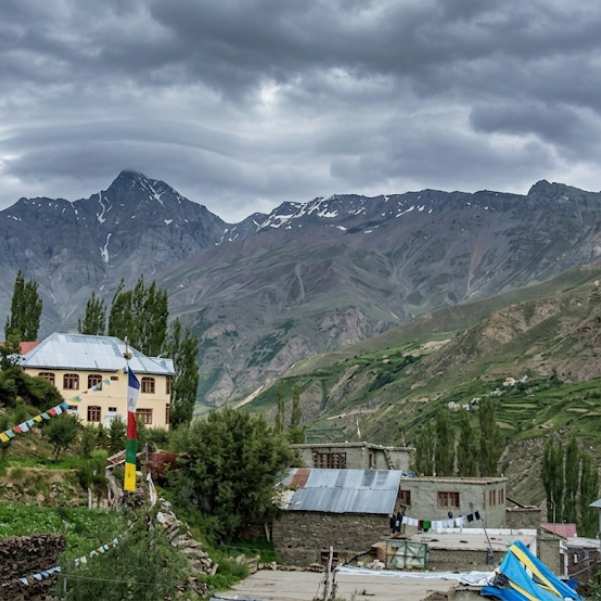
Best known for its fuel station, the last reliable one before the route branches towards Zanskar. Practically, this is a key stop to top up before the remote stretch.
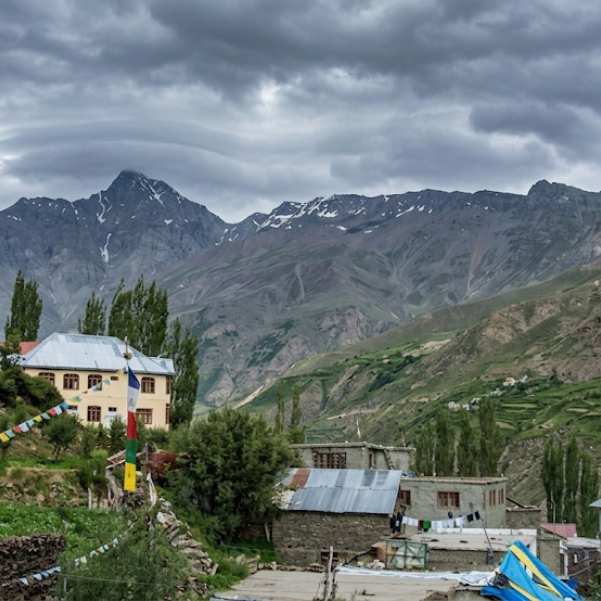
The main town of Lahaul, with shops, food and services. A useful base or supply stop, especially if you want to gather anything before heading higher.
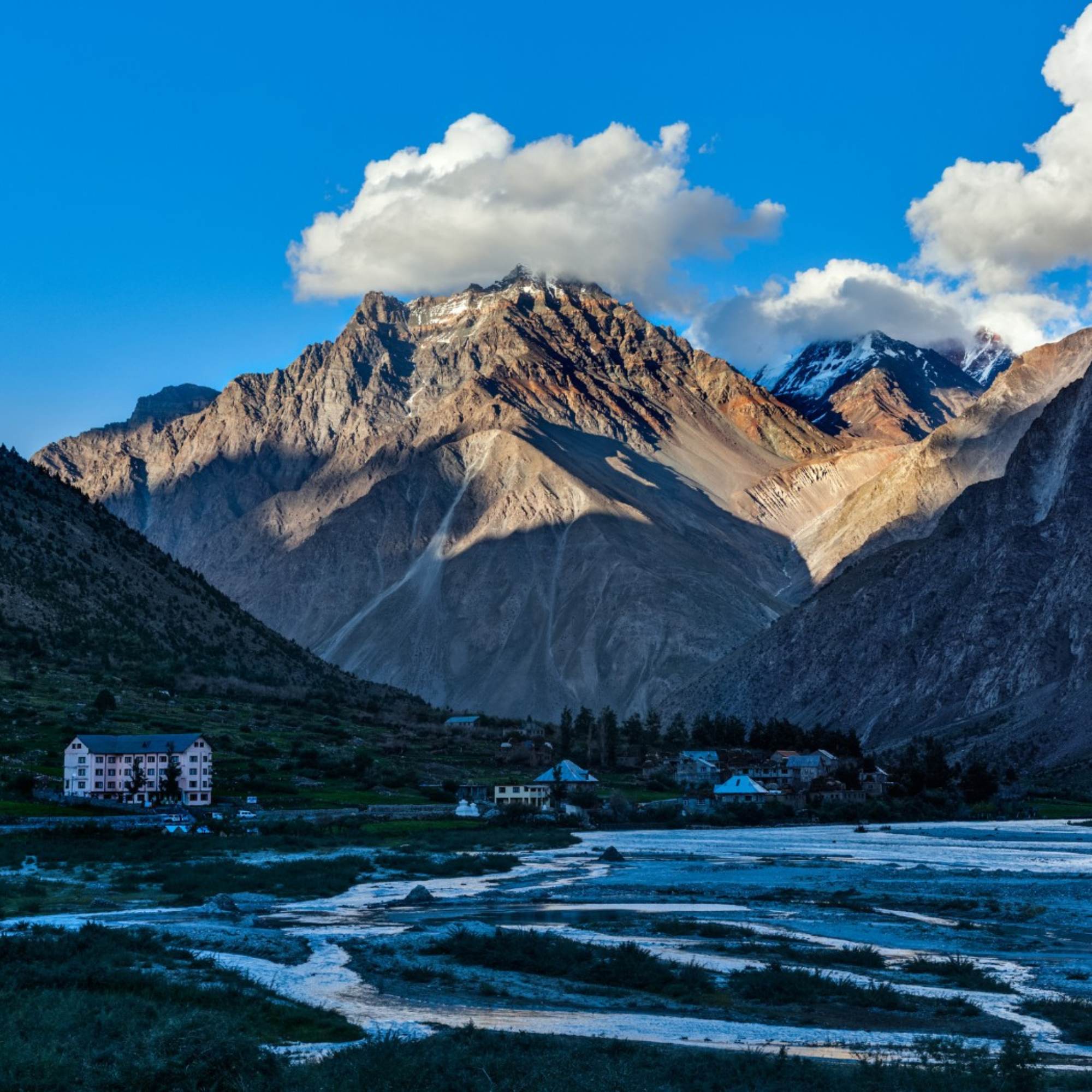
A quiet riverside settlement beyond Keylong and the more practical overnight base for a Shinkula trip. Its altitude also gives you a little time to adjust before the pass day.
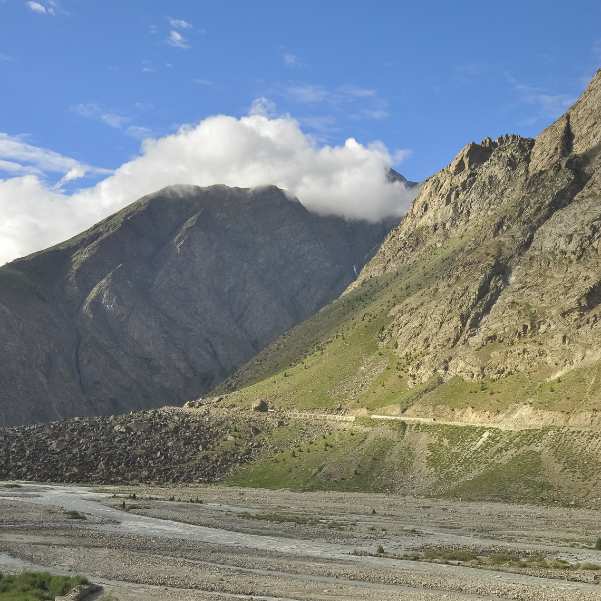
The junction that matters. Here the road to Zanskar leaves the Manali to Leh highway, and there is a checkpost where movement can be recorded or regulated. Your Shinkula climb effectively begins from here.
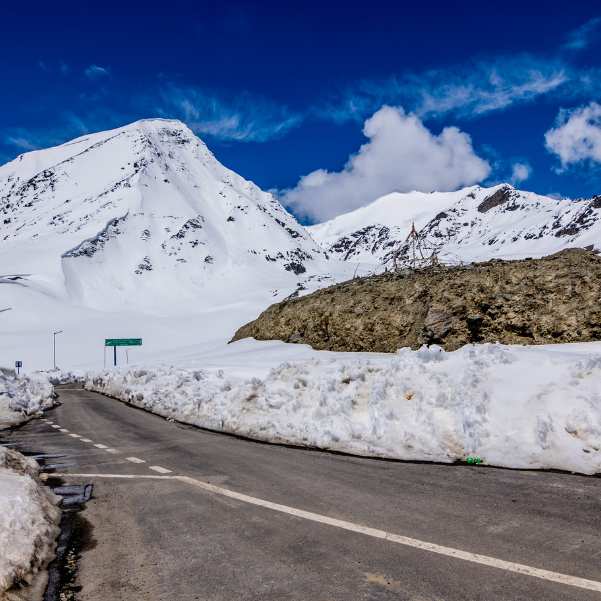
The high point of the trip, on the road between Lahaul and Zanskar. Whether you reach the very top depends on conditions, but the climb towards it is the heart of the journey.
The core of the trip is the climb up the Darcha to Padum road towards Shinkula. Whether you reach the very top depends on snow, weather and traffic orders on the day, so we plan around the point that is realistically reachable rather than promise the summit.
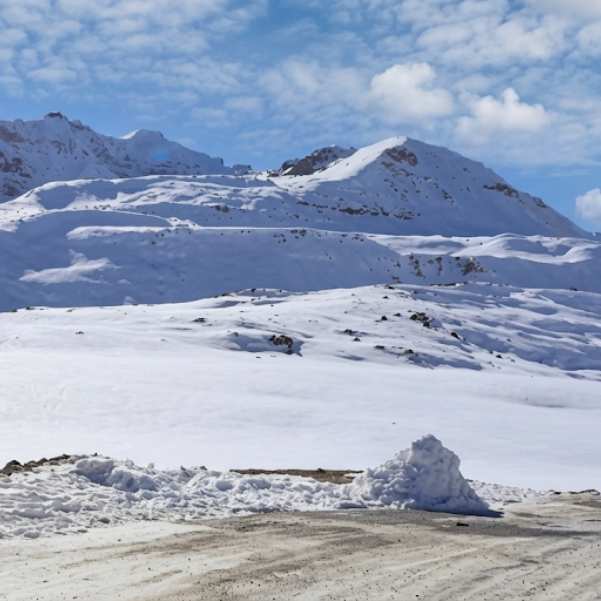
In spring and early summer you may meet snow on the climb, sometimes cleared into walls beside the road. The honest trade-off is that heavier snow can restrict or close the pass, so a snow-focused trip is timed carefully and never guaranteed.
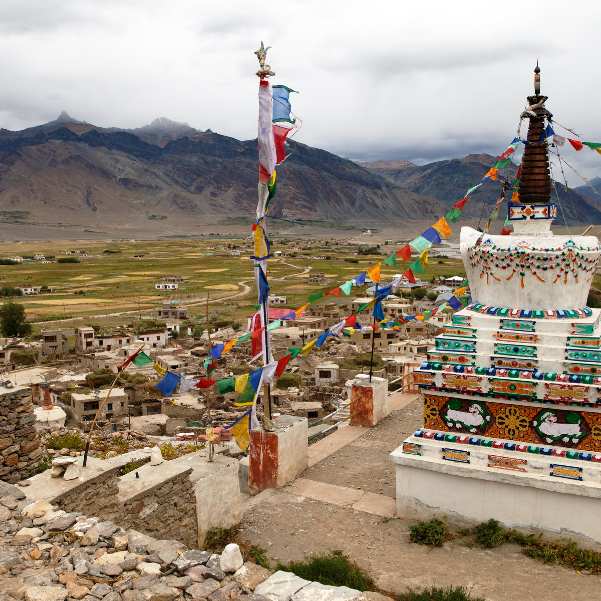
On a longer multi-day trip you can continue over the pass towards the sacred peak Gonbo Rangjon, then Purne and Padum, the cultural hub of Zanskar. This is a full road journey rather than a day return, and it needs the right vehicle and enough days.
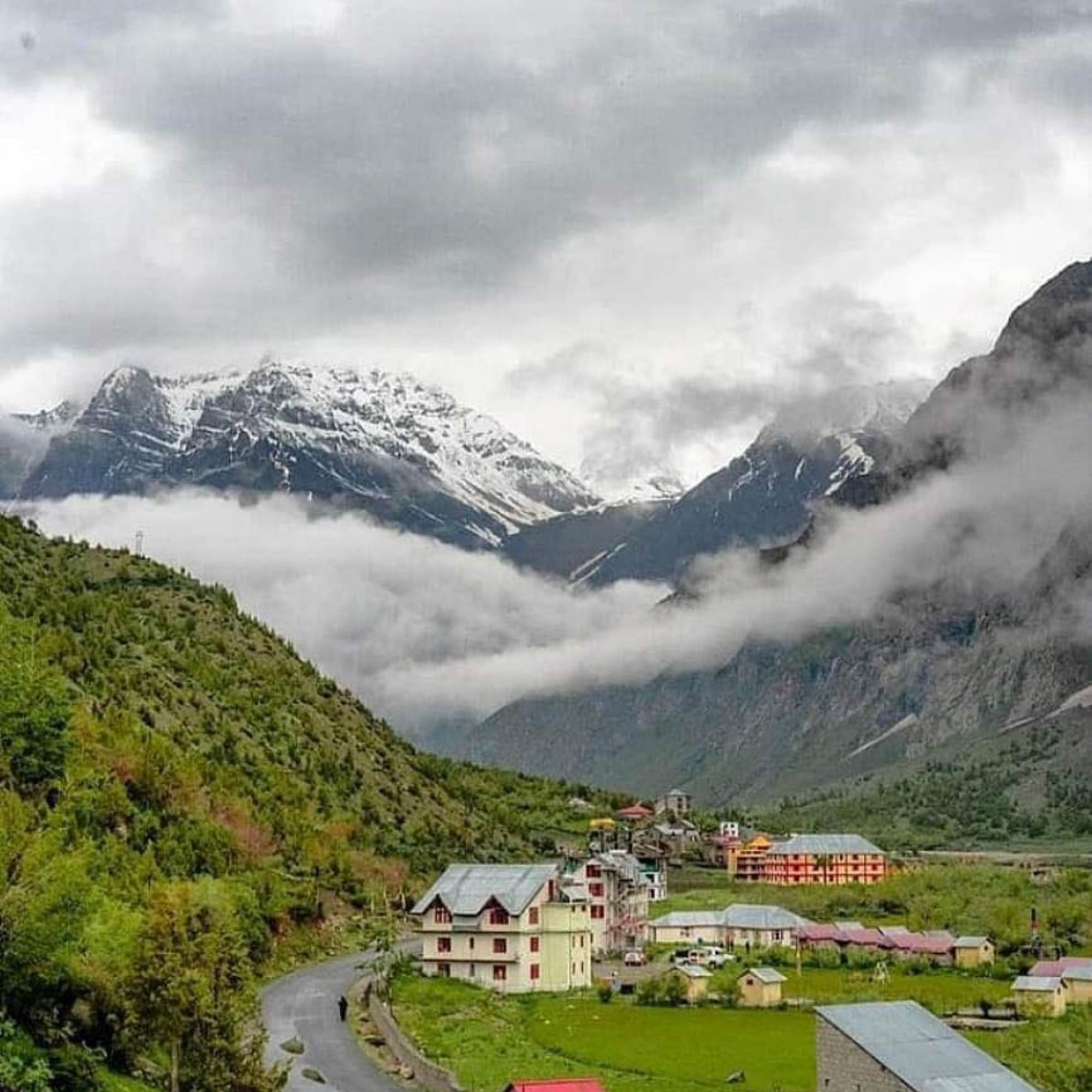
Spend a night in Lahaul before going high. It shortens your driving day, gives your body a little time at altitude, and makes the whole trip calmer than a long single run from Manali.

“Travel Coffee truly went above and beyond. Even though we booked from Indonesia without meeting them, we always felt secure — their team was available 24/7 and took care of every detail. Shubham personally ensured our comfort throughout the Himachal trip, from hotel checks to small gestures like bringing lotion and altitude pills. Their sincerity and local expertise made the journey unforgettable.”
Andre & Angel
There is no single fixed price, because the cost depends on several things: your starting point, whether you travel private or shared, the vehicle, whether a 4x4 is needed, your group size, the stay category, the season, and whether the trip continues into Zanskar. A short private SUV trip and a multi-day Zanskar crossing sit far apart on price. For current, accurate figures, use the live package cards above, which show the real Travel Coffee pricing for each option.
Yes. Manali is one of the two usual starting points, and the route runs through the Atal Tunnel, Lahaul, Jispa and Darcha before the Shinkula climb. The main thing to know is that it is a long way from Manali, so many travellers prefer to base at Jispa for a more comfortable pass day. What you can reach on the day depends on conditions.
It is possible on a good day, but it makes for a very long and demanding drive, with a very early start and a late return. It is not a relaxed sightseeing outing. If you would rather not spend so long on the road, or you are travelling with children or older family members, a night at Jispa and a shorter pass day is the more comfortable choice.
We will publish our own GPS-verified distance rather than quote a guess, because online figures genuinely disagree. Different sources measure to different points, some to Darcha and some to the pass top, so the numbers rarely match. Once our team confirms the measured distance from our own vehicle, we will add it here. [ADD TRAVEL COFFEE GPS VERIFIED DISTANCE]
Longer than a map app suggests, and it varies. Real drive time depends on the road surface, traffic, weather, the number of stops, and the point currently permitted for tourists. A single map estimate is not a reliable answer for this route. Our observed time range, based on trips we have actually run, will be published here. [ADD TRAVEL COFFEE OBSERVED DRIVE TIME RANGE]
We do not display a fixed open today claim on this page unless verified live information is being shown. Conditions change with snow, weather and orders, sometimes within a day. For the current picture, check our Shinkula Pass road status update or confirm with us close to your departure, and we will tell you what is realistic for your date.
No, and it is not fixed to a simple calendar either. The route tends to be more reliably open across the summer months, while winter access is uncertain and can shift quickly with snowfall and closures. We will not promise year-round access or a fixed opening date. The honest answer is that it depends on conditions, which we verify close to your travel date.
It depends on what you want. The mid to later summer months usually give the most dependable road conditions. The earlier season leans towards snow but with more access uncertainty, and the settled summer and early-autumn window suits onward Zanskar trips. There is no single best month for everyone, so tell us your priority and we will match it to your dates.
The earlier part of the open season generally offers the better chance of meaningful snow. The trade-off is that access is less certain then, because heavier snow can restrict or close the pass. As summer settles in, snow reduces and the trip becomes more about the drive. We will give you the realistic snow outlook for your specific dates.
No. Snow is never guaranteed on a Shinkula Pass trip. Whether you see it, and how much, depends entirely on the season and the conditions on your travel date. The earlier season improves your chances, but even then it is weather led. We plan honestly around this rather than promise a snow wall.
Not permanently, on every date. The suitable vehicle depends on conditions. On some days the authorities allow only four-wheel-drive vehicles near the pass, especially with snow, ice or slush, while other vehicles are permitted part of the way. On settled, dry days a capable high-clearance vehicle can do more of the route. We match the vehicle to the product and the expected conditions for your trip.
On good, dry-season days, yes, and it is a common choice for the Lahaul stretch. We will not promise it for every date, though. When there is snow, slush or a vehicle restriction near the pass, a 4x4 may be the only sensible option and can be required by order. We advise on the right vehicle based on the conditions we expect.
Being allowed and being suitable are different things. A standard car may be permitted on parts of the route on a good day, but low ground clearance becomes a real problem on broken surfaces, water crossings or any snow and slush. For a comfortable and safe trip, a capable high-clearance vehicle, and a 4x4 when conditions call for it, is the sensible choice.
You can, but only after honestly weighing the current road condition, your vehicle's real capability and ground clearance, your tyres, your driver's experience on rough mountain roads, and the traffic order in force. The road after Darcha is remote and evolving, and help is far away. We recommend verifying the current route condition first.
Yes, and it is a favourite among experienced riders, but access is condition dependent. Check snow, ice and the current traffic orders before you set out, and carry fuel, because reliable pumps are far apart. Cold, water crossings and loose surfaces make this a route for confident riders rather than beginners. Verify conditions close to your ride date.
There is no single fixed answer, so avoid blanket no permit claims. Shinkula is not part of the Rohtang permit system, but district, police and vehicle-related requirements on this route can change, and can differ for a return trip versus onward Zanskar travel. Carry valid government photo ID and your vehicle documents. Rules for foreign nationals can differ, and we verify the applicable requirement close to departure.
There is no blanket answer. Children can feel altitude just as adults can, and some feel it more. Whether the trip suits your child depends on their age, health and how they handle a long, high day. Many families are more comfortable with a lower Lahaul trip or a Jispa-based Shinkula day. If unsure, speak with your paediatrician before booking.
Often yes, but it depends on individual health and stamina rather than age. Some older travellers manage high passes comfortably with a Jispa stay and a gentle pace, while others find the altitude and long drive demanding. Existing health matters most, so a quick word with their doctor is the sensible first step, and we will plan the trip accordingly.
Yes. Shinkula is a 5,000 metre class pass, and the quick altitude gain from Manali means some travellers feel the effects. Mild headache or breathlessness can be normal, but severe headache, repeated vomiting, confusion or breathlessness at rest should not be ignored. The recognised response is to stop going higher and descend. Tell your driver or guide early so we can act.
For a Shinkula trip, Jispa is usually the most practical base, because it is closer to Darcha and the climb, and its altitude helps you adjust. Keylong suits travellers who want a larger town with more services. Manali works if you are set on staying there, but expect a long pass day. We will suggest the base that fits your plan.
No. This page is about the motorable road trip to Shinkula, done by vehicle, not the historic trekking route. Shinkula is also a well-known trekking pass on foot, but that is a separate, multi-day walking journey. For our purposes, you reach the pass by road, subject to conditions on your travel date.
Only when your dates fall in the snow season. On a summer road trip you generally do not need them. If you are travelling when snow is likely, snow boots or rented snow clothing can be worth it, and we will tell you if your trip calls for them. You do not need specialised expedition gear for a vehicle-based trip.
Only partly. Signal is generally usable around the larger towns like Keylong, and drops off well before the pass, with remote stretches having little or no coverage. Do not rely on a stable network near Shinkula. We will add our recent carrier-specific observations here. [ADD RECENT TRAVEL COFFEE NETWORK OBSERVATION BY CARRIER]
Tandi is widely known as the last reliable fuel point before the route diverges towards Zanskar, with the next dependable pump much further on at Padum. We top up at the last reliable pump and plan fuel for the remote stretch, and we advise bikers and own-car travellers to carry a reserve. We will confirm the current fuel position here. [TC DATA NEEDED: LAST VERIFIED FUEL STOP]
Along the Lahaul stretch, yes, with dhabas and basic facilities near Keylong and Jispa. Beyond Darcha they become scarce and very basic. We plan meal, tea and toilet stops around the reliable points our team uses, and carry snacks and water for the remote sections where nothing is open. Be prepared for limited facilities near the pass.
They suit different trips. Baralacha sits on the conventional Manali to Leh highway and fits travellers on that route or wanting a high pass on the established road. Shinkula leaves the highway at Darcha and offers a more remote road trip with the option to continue into Zanskar. Choose Baralacha for the classic route, Shinkula for remote adventure and the Zanskar connection.
For an easy, close snow day from Manali, Rohtang is the more convenient choice. Shinkula can hold snow too, but it is a long, remote, high-altitude trip and the snow experience there leans towards adventure. Both are condition dependent and neither guarantees snow. If you want simple snow near Manali, choose Rohtang. If you want a remote snow road trip, consider Shinkula.
Yes. Shinkula, at a roughly 5,000 metre class height of about 16,580 ft, is higher than Rohtang Pass. It is also higher than Baralacha. All are serious altitudes, but Shinkula is the highest of the group, which is part of why altitude and vehicle choice matter more on this route.
No, and this is a common mix-up. From Manali you follow the highway up to Darcha, and there the route splits. The conventional Manali to Leh direction continues towards Baralacha La. The Shinkula route branches away onto the Darcha to Padum road into Zanskar. So Shinkula is on a separate road that leaves the main highway at Darcha.
Shinkula connects Lahaul in Himachal Pradesh with Zanskar in Ladakh, through the Darcha to Padum corridor. Cross the pass and you descend into the Zanskar side, passing the Kargyak area, the sacred peak Gonbo Rangjon, Purne, and on to Padum, the main town of Zanskar. Reaching Shinkula and returning is one trip. Crossing into Zanskar is a longer, multi-day journey.
Yes, when conditions allow. The road over Shinkula continues into Zanskar towards Padum, and this is the newer link between the two valleys. It is a multi-day road trip, not a day outing, and through movement depends on conditions on both sides of the pass. If this is your plan, our Zanskar Valley tour packages are the right place to start.
Yes, on the onward Zanskar route. Gonbo Rangjon is a solitary, sacred rock peak near the Kargyak area, beyond the pass on the way towards Purne and Padum. Reaching it means crossing Shinkula and continuing into Zanskar, so it is part of a longer multi-day trip rather than a Shinkula day return.
It is a separate infrastructure project, not the same as driving over the pass. According to the latest official information, the Shinkun La Tunnel is a roughly 4.1 km tunnel being built by the BRO under Shinkula Pass, on the Nimu to Padum to Darcha road, to give all-weather connectivity between Lahaul and Zanskar. Today you still cross the pass by road over the top.
No. As per the latest available government updates, the tunnel is under construction, not open to traffic. The project has had several revised timelines, so we will not present a completion date as certain. For now, travel is over the pass by road, in whatever conditions apply.
No. Reaching the actual pass top can never be guaranteed, because snow, weather, clearance work and traffic orders can restrict it on any date. We check the expected reachable point before departure and tell you what is realistic. If the top is unlikely to be reachable, we say so in advance and plan around it honestly rather than promise the summit.
We check the latest available road information before departure, and if the top is restricted, we tell you what point is expected to be reachable. If the route cannot be operated at all, our published policy applies. We will share the confirmed terms with you at booking rather than state a refund or reschedule here that differs from our actual policy. [ADD OFFICIAL TRAVEL COFFEE ROAD CLOSURE AND ALTERNATIVE POLICY]