
Winter Spiti vs Kashmir in 2026: Which Snow Holiday Fits Your Time and Comfort?
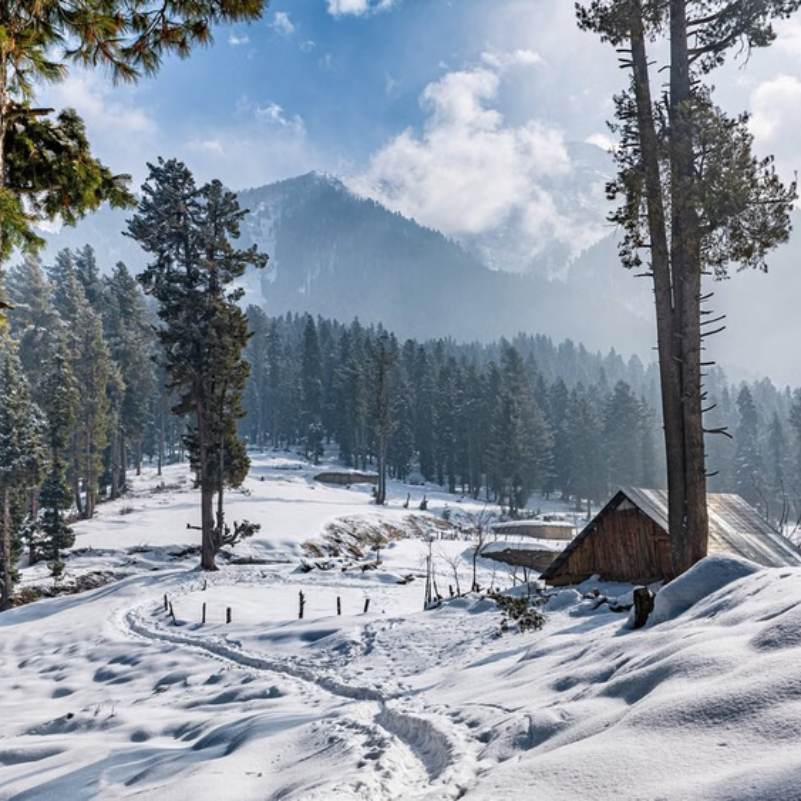
You have some leave saved up, you want snow, and now you are stuck between two names everyone keeps throwing at you: Spiti and Kashmir. Both give you snow.
But they are not the same kind of holiday, and picking wrong means either a rushed trip or a cold, exhausting one you were not ready for.
We plan both every winter from our base in Himachal. Here is the honest breakdown so you book the one that actually fits your days off, your budget, and how much roughing it you can handle.
Quick Answer
For a shorter, comfortable snow holiday, Kashmir wins. Fly into Srinagar, base yourself there, and do Gulmarg for snow play, skiing, and the Gondola. A focused 4 to 6 day trip works well, with real hotels and easy fallback options if weather shifts.
Winter Spiti is a longer, high-altitude road expedition. You need roughly 8 to 10 days from a Delhi-style start, and you should expect long drives, basic winter homestays, serious cold, and itinerary changes driven by weather. Neither guarantees fresh snowfall on your exact dates.
If you want to browse both, look at our Kashmir tour packages and our Winter Spit tour packages before you decide.
Winter Spiti vs Kashmir: What Is the 30-Second Verdict?
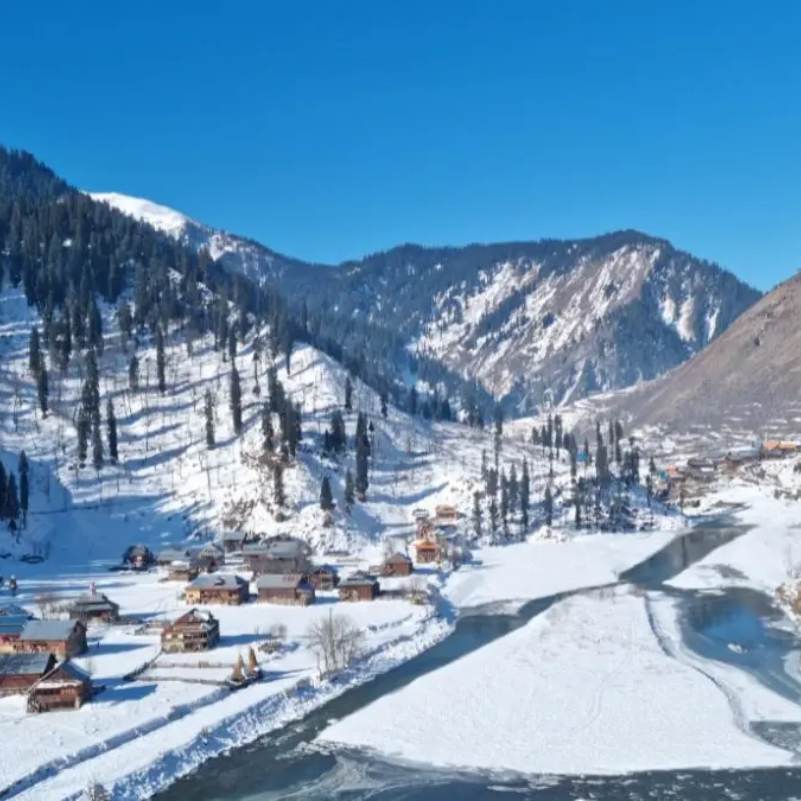
Here is the thing most people get wrong. They treat Winter Spiti as "Kashmir but colder and more offbeat." It is not. It is a different category of trip with different risks and a very different daily rhythm.
Choose Kashmir if…
You have limited leave and want heated rooms, an easy arrival through Srinagar, organised snow activities around Gulmarg, and more backup plans if the weather turns. Kashmir lets you land, settle in, and enjoy snow without a three-day drive to get there.
Choose Winter Spiti if…
You want quiet frozen villages, old monasteries, empty white landscapes, and the road journey itself as the main event. Solitude matters to you more than comfort. You are fine with basic stays and plans that change on short notice.
Winter Spiti is not a colder version of a Kashmir snow holiday. It is a remote road expedition that happens to have snow. Keep that difference in your head and the rest of this decision gets easier.
How Much Time Do You Actually Need?
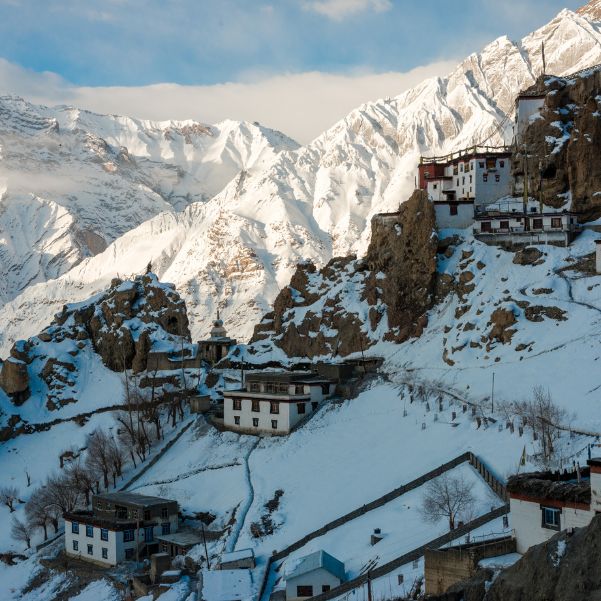
This single question sorts most people into the right choice.
If you have only 4 to 5 days
Kashmir is the sensible pick. We currently run a 4D/3N Kashmir trip, and a short window like this works best when you keep it focused on Srinagar and Gulmarg instead of chasing every famous valley.
Do not try to squeeze Srinagar, Gulmarg, Pahalgam, and Sonamarg into four days. You will spend more time in the car than in the snow. Pick two, do them properly.
If you have 8 to 10 days
Now Winter Spiti becomes realistic. The drive alone eats several days, and the route punishes you if you rush it. Our dedicated Winter Spiti page lists eight days as the shortest winter plan and nine days as what we recommend for most travellers.
Why compressing Spiti is the wrong saving
People try to cut Spiti down to five or six days to save leave. In our experience, that is the fastest way to ruin the trip or make yourself sick.
The extra days are not about extra sightseeing stops. They are about acclimatising to altitude slowly and keeping a weather margin so one blocked road does not collapse your whole plan. Cut the days and you cut your safety buffer, not just your photos.
If you are drawn to the Kinnaur stretch of this route on its own, our Kinnaur tour packages cover that lower-altitude belt too.
Which Destination Is Easier to Reach in Winter?

Getting there is half the decision.
Kashmir: fly into Srinagar and build the trip around Gulmarg
Srinagar is your practical gateway. You land, and the holiday can start the same day. Gulmarg is about 60 km from Srinagar, and J&K government tourism describes it as roughly a 1.5 hour drive under normal conditions.
Here is the honest catch. Winter weather can still delay that road. Treat 1.5 hours as a good-day estimate, not a promise. Snow can slow or briefly block the climb up to Gulmarg.
Winter Spiti: the journey starts long before Kaza
The official Lahaul and Spiti district website gives Shimla to Kaza as 412 km and about 20 hours of travel time, and that excludes one overnight halt. It calls the Shimla to Kaza road an "almost all weather road."
Read that phrase carefully. "Almost all weather" does not mean open every hour of winter. Snow, ice, road damage, and restrictions can still shut sections temporarily. You plan around that, you do not pretend it away.
Can you reach Kaza from Manali through Atal Tunnel in winter?
No. Not for a normal Winter Spiti road trip.
The official district page lists Keylong to Kaza as 185 km and says this road closes roughly from October or November until June or July because Kunzum Pass and the route get heavy snow.
The Atal Tunnel keeps access into Lahaul open, but it does not bypass Kunzum Pass. That pass is the wall.
So the winter route to Kaza runs through Shimla and Kinnaur, not Manali. Anyone selling you a Manali to Kaza winter drive does not know the road.
Since Shimla is your winter launch point, our Shimla tour packages can help you plan that first leg.
Which Gives You the Better Snow Experience?

Both have snow. What you do in it differs completely.
Kashmir: snow play, skiing and Gondola experiences
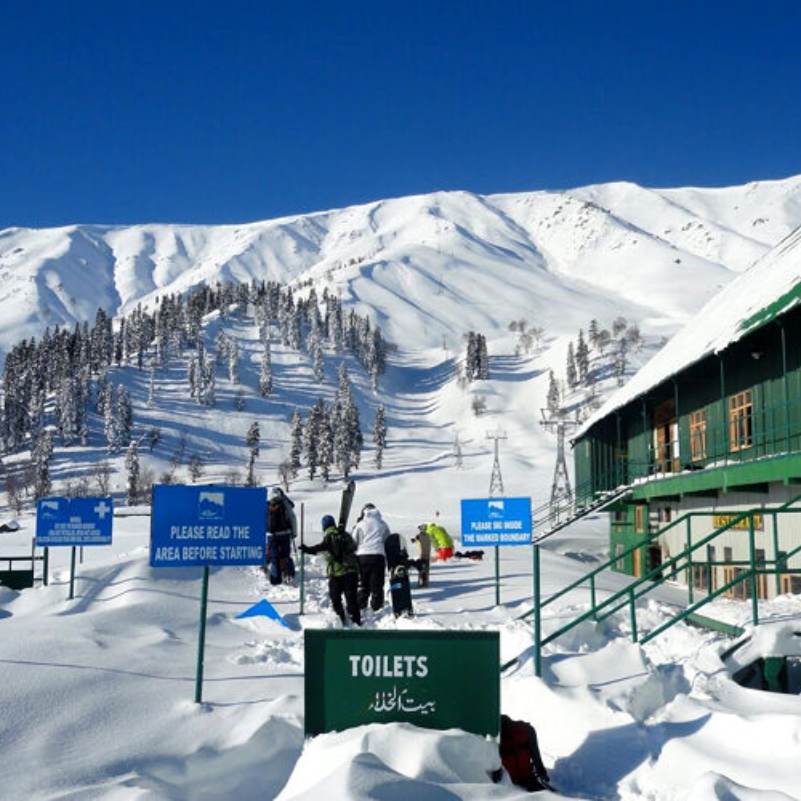
If your idea of a snow holiday is skiing, sledging, throwing snowballs, and riding a cable car above white slopes, Gulmarg is the stronger choice. J&K government tourism describes Gulmarg as a winter skiing destination.
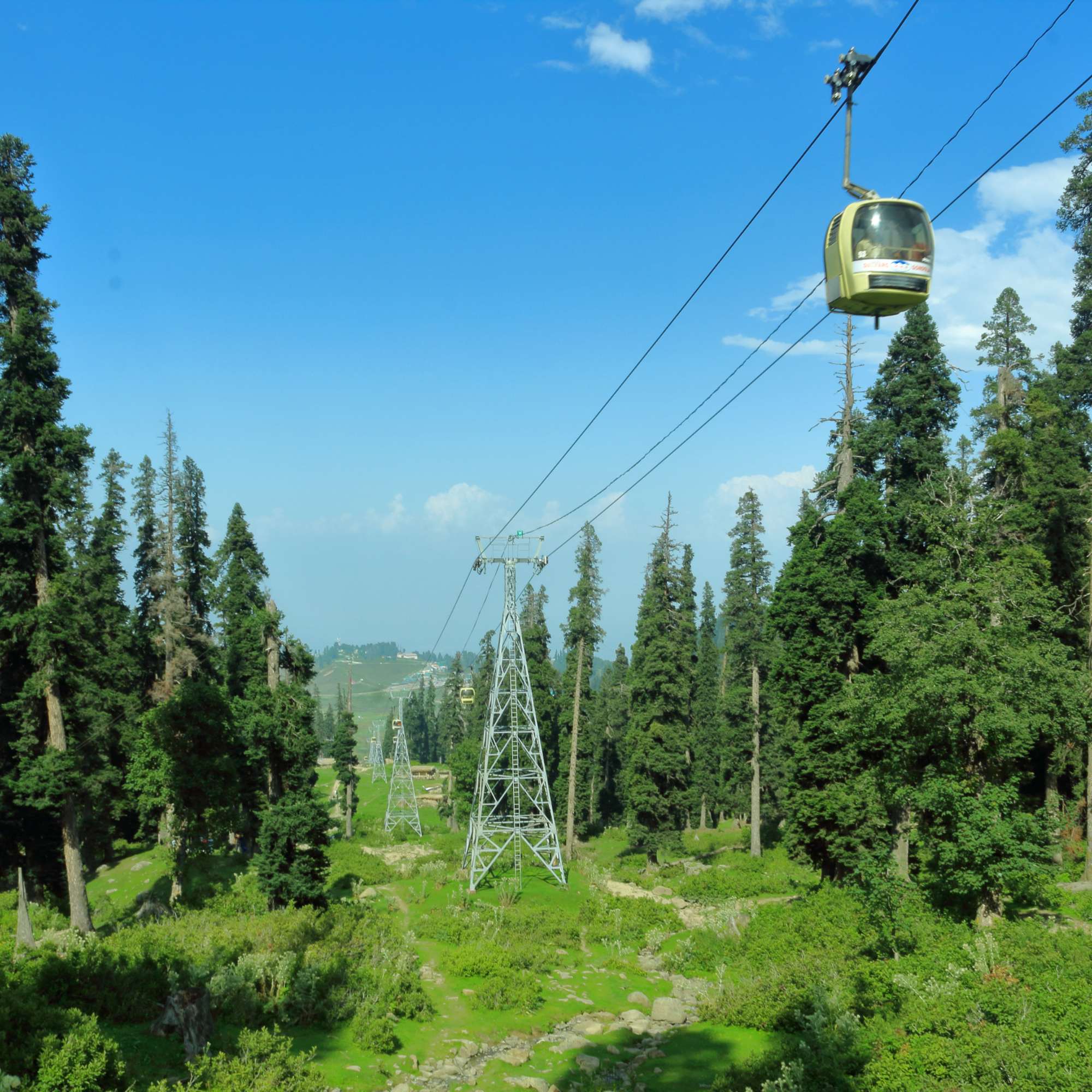
The Gulmarg Gondola runs in two phases. Phase 1 reaches about 8,530 ft and Phase 2 reaches about 12,293 ft. It is the centrepiece of most Kashmir winter trips.
Spiti: frozen landscapes and the road expedition
Spiti gives you something quieter. Frozen rivers, snow-draped monasteries, silent villages, and a road journey through country almost no one else is crossing in winter. It is not a ski resort and you should not expect resort facilities.
What we tell our travellers is simple. Come to Spiti in winter for the emptiness and the drive, not for organised snow activities. If you want a lift ticket and a ski instructor, that is Gulmarg's job.
Fresh snowfall versus snow on the ground
These are two different expectations. Seeing snow already lying on the ground is very likely in deep winter at both places.
Actually witnessing snow falling during your dates is a gamble nobody can promise, in either destination. Book for the landscape, and treat live snowfall as a bonus.
Which Is Colder and Harder on the Body?
What winter feels like in Spiti
Himachal Tourism says temperatures in Spiti can fall to around minus 20 degrees Celsius in some places during December to February. That is a different level of cold from most people's experience. Layers are not optional, they are survival.
What winter feels like in Srinagar
Srinagar sits lower, at 1,585 metres, and the numbers show it. Using IMD 1991 to 2020 climate normals, January has a mean daily minimum of minus 1.9 degrees Celsius and a mean maximum of 7.1 degrees Celsius.
February runs a mean minimum of 0.7 degrees Celsius and a mean maximum of 10.5 degrees Celsius.
One caution. These are Srinagar figures, not Gulmarg. Up at Gulmarg's altitude it gets sharply colder, so pack for that if the Gondola is your plan.
Why altitude changes the Spiti decision
Cold is only half the Spiti problem. Altitude is the other half.
CDC Yellow Book 2026 guidance says that once you are above 3,000 metres, you should generally raise your sleeping altitude by no more than 500 metres per night, and add an extra acclimatisation night for each additional 1,000 metres of sleeping-altitude gain.
In plain terms, even a fit 25-year-old can get a splitting headache, nausea, or worse if they climb too fast. Fitness does not make you immune.
This is exactly why the route should not be rushed, and why we build slow nights into every Spiti plan. We are not doctors, though, so anyone with a health condition should get personal advice before committing.
Which Trip Is More Comfortable Day to Day?
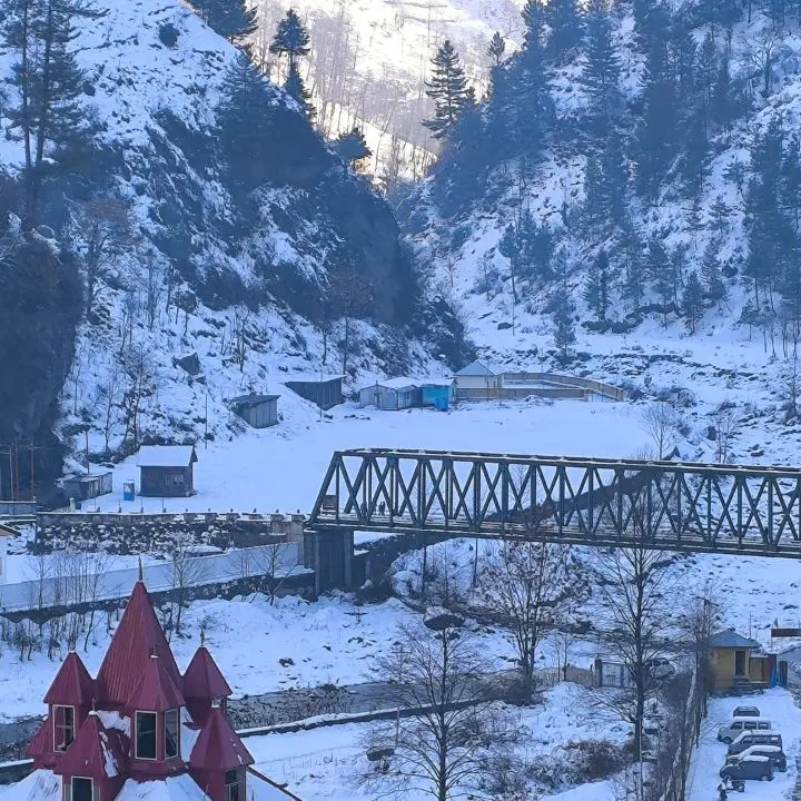
Kashmir comfort
Kashmir gives you a wide range of normal hotels, and Srinagar works as a comparatively easy base you return to each evening.
One tip from experience: confirm hotel heating and hot water before you book. Heating quality varies between properties, and you do not want to discover that at 11 PM in January.
Winter Spiti comfort
Many Spiti winter stays are simpler homestays. In deep cold, pipes freeze, so hot water can mean a bucket rather than a shower. Heating is often concentrated in one common room with a stove, not piped through the whole house.
Basic does not mean bad. A warm homestay room, hot dal, and a family's kitchen fire can be one of the best parts of the trip. But go in knowing what you are choosing so it feels like adventure, not a nasty surprise.
Medical access matters
Spiti has limited medical infrastructure compared to a city. Do not assume a fully equipped major hospital is sitting ready in Kaza.
If you or anyone in your group has a relevant medical condition, take proper advice from a qualified professional before choosing a high-altitude winter journey. This is the one area where we would rather you overthink it.
Which Is Better for Families, Couples, Seniors and First-Time Snow Travellers?
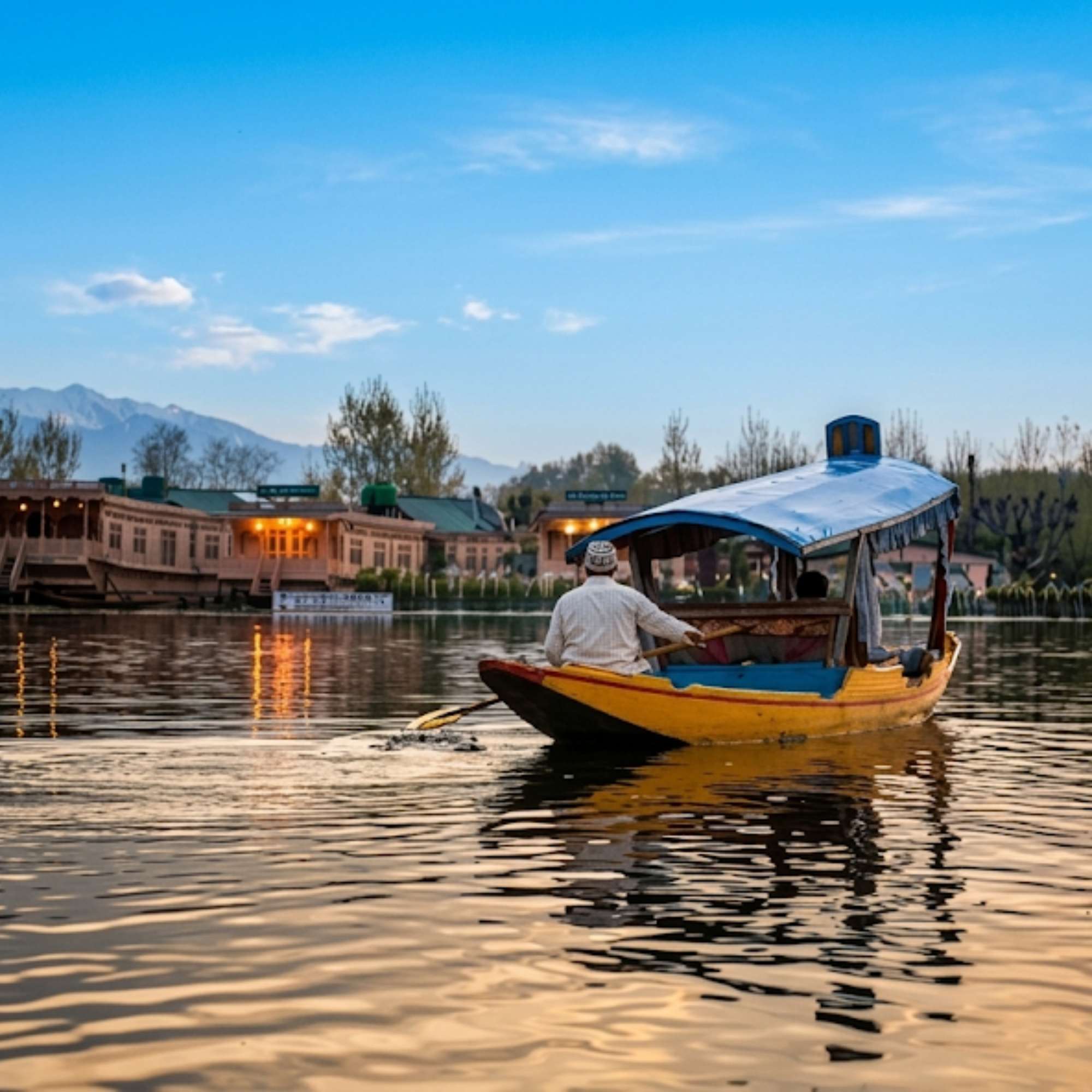
Families with children
Kashmir is generally easier to build around shorter transfers and conventional hotel comfort, which matters a lot with kids. It is not risk free, though. Winter weather still disrupts flights and roads, so keep a buffer day even here.
Couples
Both work. Kashmir suits couples who want an easy snow holiday with comfortable stays and Gulmarg activities. Winter Spiti suits adventure-minded couples who find the road journey and the remoteness romantic in itself.
Senior citizens and travellers with health concerns
We will not give a blanket yes or no here, because it depends on the person. What we will say plainly is that the altitude, the cold, and the remoteness make Winter Spiti a far more serious decision for older travellers or anyone with health issues.
Kashmir carries fewer of those specific pressures.
First Himalayan snow holiday
If your one requirement is "I want to see snow and enjoy a winter holiday," Kashmir is the easier and safer first choice. If you specifically want a demanding, remote road expedition and you know that going in, Winter Spiti can be the better fit.
What Can You Actually Do in Each Destination?

Kashmir winter highlights
Srinagar and Gulmarg are the dependable core, and honestly, that core alone justifies the trip. Ride the Gulmarg Gondola and ski, subject to weather, maintenance, and operating conditions on the day. Pahalgam or Sonamarg can be added depending on current road and weather.
An important 2026 update: skip the old advice that Sonamarg is simply shut all winter. The Sonamarg Tunnel was inaugurated on 13 January 2025.
The project runs around 12 km overall, including a 6.4 km main tunnel, and government information says it gives all-weather Srinagar to Sonamarg connectivity for year-round tourism.
That said, this does not mean every onward road or high attraction beyond Sonamarg is open every winter day. The tunnel changed access to Sonamarg, not the whole valley behind it.
Winter Spiti highlights
Think Kaza, Tabo, Key Monastery, and Kibber. These are the realistic winter anchors. Any high-village sightseeing stays subject to that day's road conditions, so we do not promise every village on every departure. Some days the road says no, and you adjust.
What is definitely not a normal Winter Spiti stop?
Chandratal. The Kunzum side is snowbound and shut in winter. Do not believe anyone who tells you a regular tourist can just drive to a frozen Chandratal if they get lucky.
It does not work that way in the cold months. If you want to see when it actually opens, read our guide on when Chandratal opens in 2026.
What Does Winter Spiti vs Kashmir Cost in 2026?
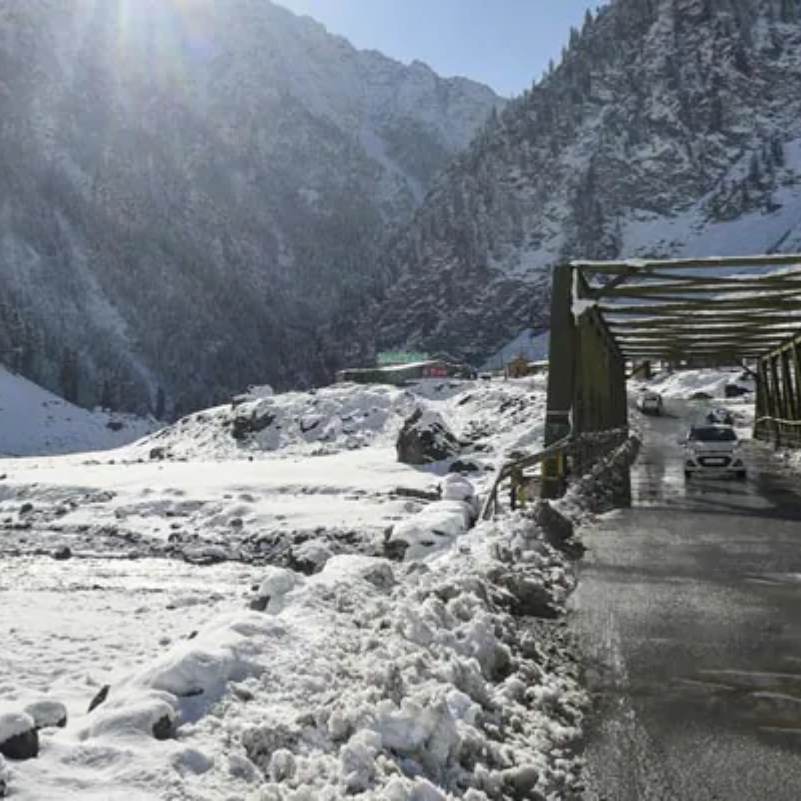
First, a reality check. These are not like-for-like packages. The durations, vehicles, and inclusions are different, so comparing the sticker prices directly is misleading.
Here are current Travel Coffee examples we saw on our own site in September 2026. Kashmir packages currently start from ₹7,999 per person. The Perfect 4 Day Kashmir Getaway (4D/3N) is currently listed at ₹8,999 per person, and Best of Kashmir (5D/4N) at ₹12,500 per person.
On the Spiti side, a currently listed 9D/8N Winter Spiti group tour sits at ₹18,999 per person, while our flagship 9D/8N 4x4 Winter Spiti expedition is ₹28,999 per person.
Notice the gap comes largely from duration and the 4x4 vehicle, not from Spiti being "premium." Prices shift with dates, hotels, group size, and inclusions, so treat these as snapshots.
December vs January vs February: Which Destination Fits Each Month?
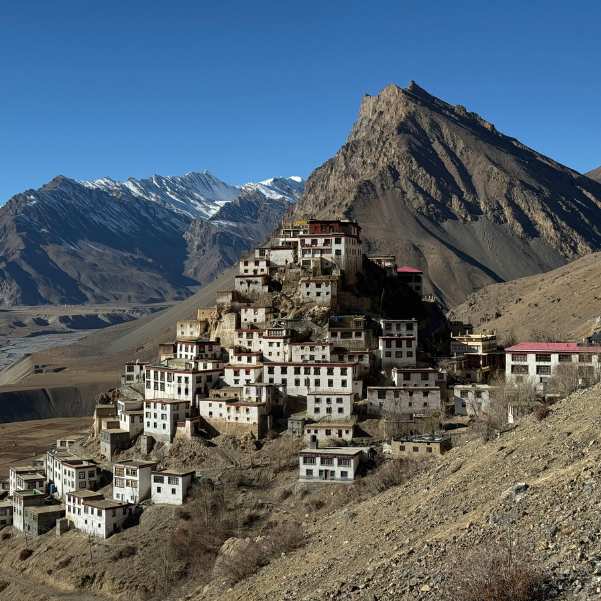
December
Early to core winter depending on your exact dates. Snow may already be down, but we cannot promise you will personally see it falling. In Kashmir, Christmas and New Year push up demand, so book early for those dates.
In Spiti, December means serious cold and real road uncertainty. Go in prepared, not hopeful.
January
The deepest part of winter. That means the best snow-on-the-ground odds and also the sharpest cold and the highest disruption risk. Great for atmosphere, harder on logistics. We will not promise a specific snow depth to anyone.
February
Still a genuine winter month, but daylight slowly stretches out, which helps on long drive days. Do not assume February is automatically safer or snowier than January. It is a trade-off, not an upgrade.
What Happens If Winter Weather Ruins the Plan?
Kashmir disruption
Flights, the Gulmarg road, and Gondola operations can all be hit by weather. The saving grace is Srinagar. With a city base, you have alternative outings and comfortable places to wait it out, which a remote expedition simply does not offer.
Spiti disruption
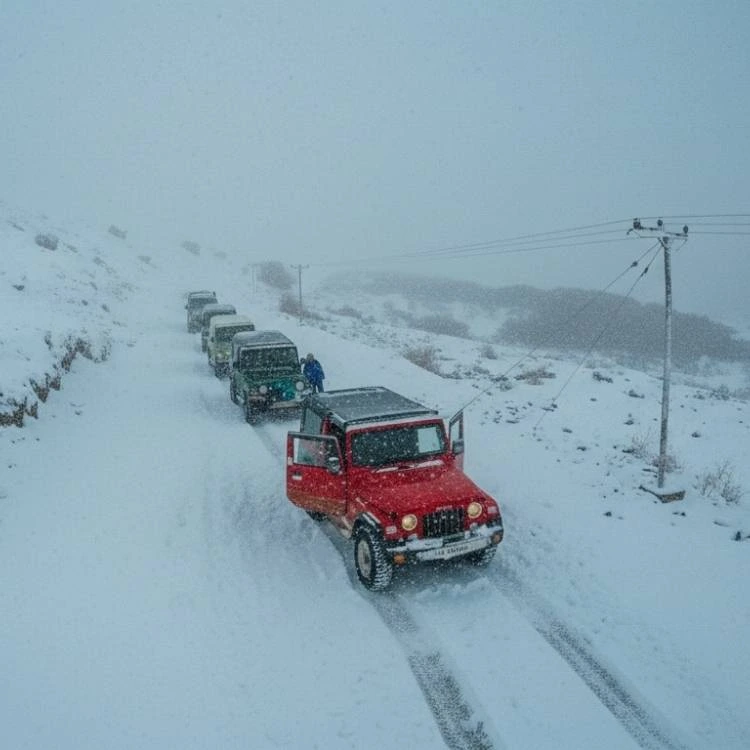
Spiti runs on one practical winter corridor. A single road problem on it can reshape your entire trip. This is why our tone on Spiti is always "stay flexible." Rigid plans and Spiti winters do not mix.
The fixed return-flight problem
Here is the honest warning. If you have a return flight you absolutely cannot miss, think hard before choosing Winter Spiti. A blocked road can add a day, and the mountains do not care about your booking. Kashmir handles a fixed schedule far more gracefully.
What Changed for the 2026 to 2027 Winter Season?
Four concrete updates worth knowing before you plan.
First, the Sonamarg Tunnel has changed old assumptions. Winter Sonamarg access is no longer the flat "it's closed" it used to be, even if roads deeper in still depend on daily conditions.
Second, the Jammu and Kashmir Cable Car Corporation currently says the Gulmarg Gondola boarding starts at 8:00 AM, closes at 3:30 PM, and the last return is 5:00 PM.
It also says the Gondola stays closed on the second and fourth Monday of every month for maintenance. Do not plan your one Gulmarg day on a closed Monday.
Third, Winter Spiti road status is live and changing. When we last checked the source research, the official Lahaul and Spiti road-status page showed Keylong to Kaza as closed.
Do not carry that forward as a guarantee for your dates in either direction. Recheck immediately before you leave.
Fourth, permits and entry procedures need checking. The district page lists protected areas for foreign visitors including Khab, Samdo, Dhankar, Tabo, and Kaza.
Published sources do not fully agree on the current foreign-tourist group-size requirement, so foreign passport holders should confirm the latest rule with the district administration or Himachal Tourism before travelling.
Himachal e-Aagman currently lists E-Pass, e-permit and e-ticket requirements for different destinations and vehicle movements.
Because the exact requirement can depend on your route and destination, check the current e-Aagman rules for your specific Shimla-Kinnaur-Spiti itinerary before departure.
Two Sample Trips for Different Types of Leave
A 4-Day Kashmir Snow Break
On Day 1 you land in Srinagar and, depending on your arrival time, do something light like the Dal Lake area or the old city rather than rushing anywhere far.
Day 2 is your Gulmarg day. Head up early, ride the Gondola if it is running, and give the snow slopes real time instead of a quick photo stop.
Day 3 stays flexible. Use it for more of Srinagar, or add one condition-dependent outing if the weather cooperates. Do not overload it.
Day 4 is departure. Notice what this plan does not do, it does not force Pahalgam and Sonamarg into the mix. Two anchors, done well, beat four rushed ones.
A 9-Day Winter Spiti Journey
This runs through Shimla and Kinnaur, the only sensible winter approach. You start from Shimla and climb gradually, spending nights at intermediate points through the Kinnaur belt so your body has time to adjust before the high country.
You reach the Kaza area only after those gradual nights, never in one push. Then you give yourself two Kaza-area days, using them for Tabo, Key Monastery, and Kibber where the roads allow that day.
The return runs back down through the same Kinnaur corridor. There is no Manali exit in winter, and there is no Chandratal, because both are shut. The nine days are not padding, they are your acclimatisation and your weather cushion.
Final Verdict: Choose by Time, Comfort and Appetite for Uncertainty
It comes down to three things: your leave, your comfort needs, and how much uncertainty you can stomach.
Short leave, a wish for conventional comfort, and a want for organised snow activities all point to Kashmir. It is the easier, warmer, more forgiving snow holiday, and there is nothing lesser about choosing easy.
Longer leave, tolerance for altitude and basic stays, and a real hunger for a remote road experience all point to Winter Spiti. It asks more of you and gives back something quieter and rarer.
Neither is objectively better. They are different trips for different people. We would rather help you pick the one you will actually enjoy than sell you the harder one for the sake of it.
Explore Our Curated Winter Spiti Tour & Kashmir Tour Packages
 Group Tour9D/8N
Most Loved 4×4 Winter Spiti Expedition
2D Sangla•1D Tabo+2
₹28,999₹35,999SAVE INR 7,000/ person Group Tour9D/8N
Best Selling Winter Spiti Valley Group Tour
2D Sangla•1D Tabo+2
₹18,999₹23,999SAVE INR 5,000/ person Group Tour8D/7N
Best Selling Kinnaur & Spiti Winter 4x4 Expedition
1D Sangla•1D Nako+2
₹25,999₹30,999SAVE INR 5,000/ person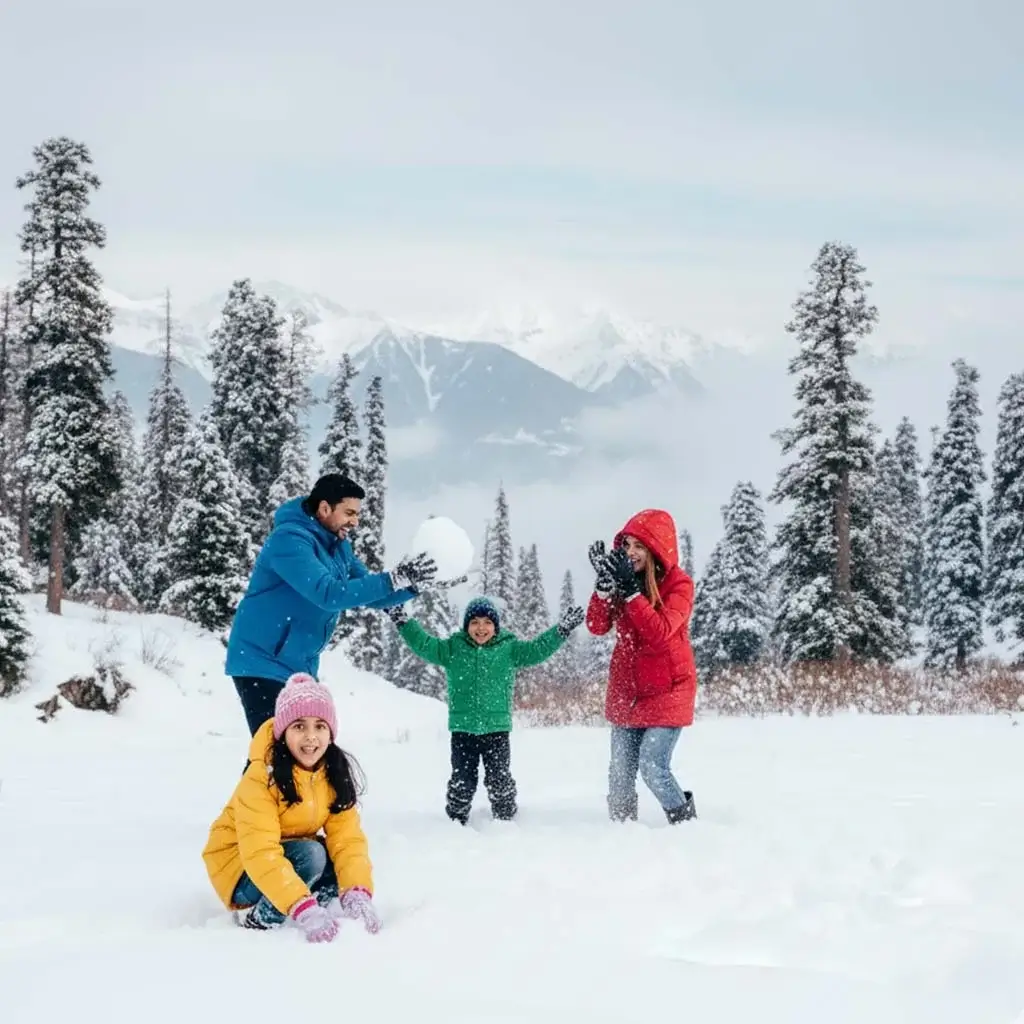 5D/4N
5D/4NBest Of Kashmir – Srinagar, Gulmarg & Pahalgam Tour Package
1D Srinagar•1D Gulmarg (day trip)+3
₹12,500₹28,999SAVE INR 16,499/ person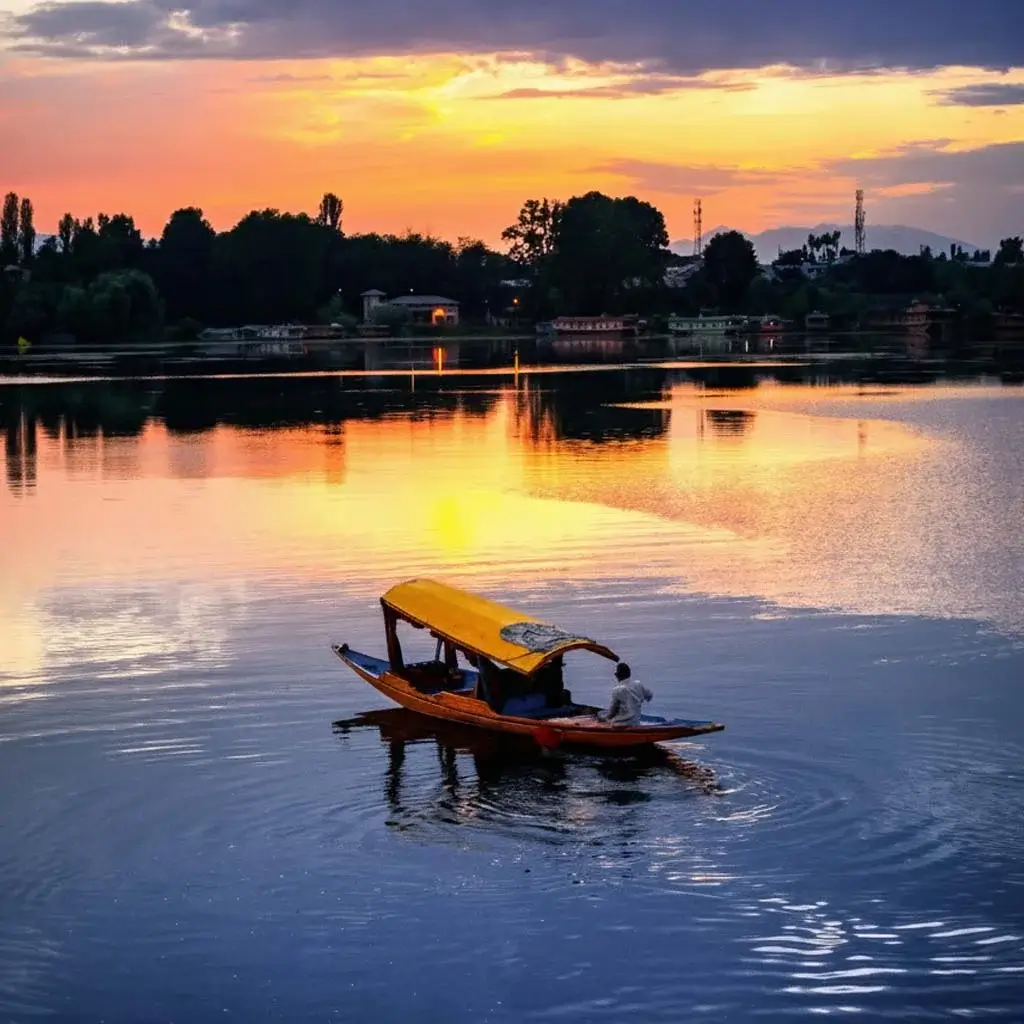 4D/3N
4D/3NThe Perfect 4 Day Kashmir Getaway
1D Srinagar•1D Gulmarg +2
₹8,999₹24,999SAVE INR 16,000/ person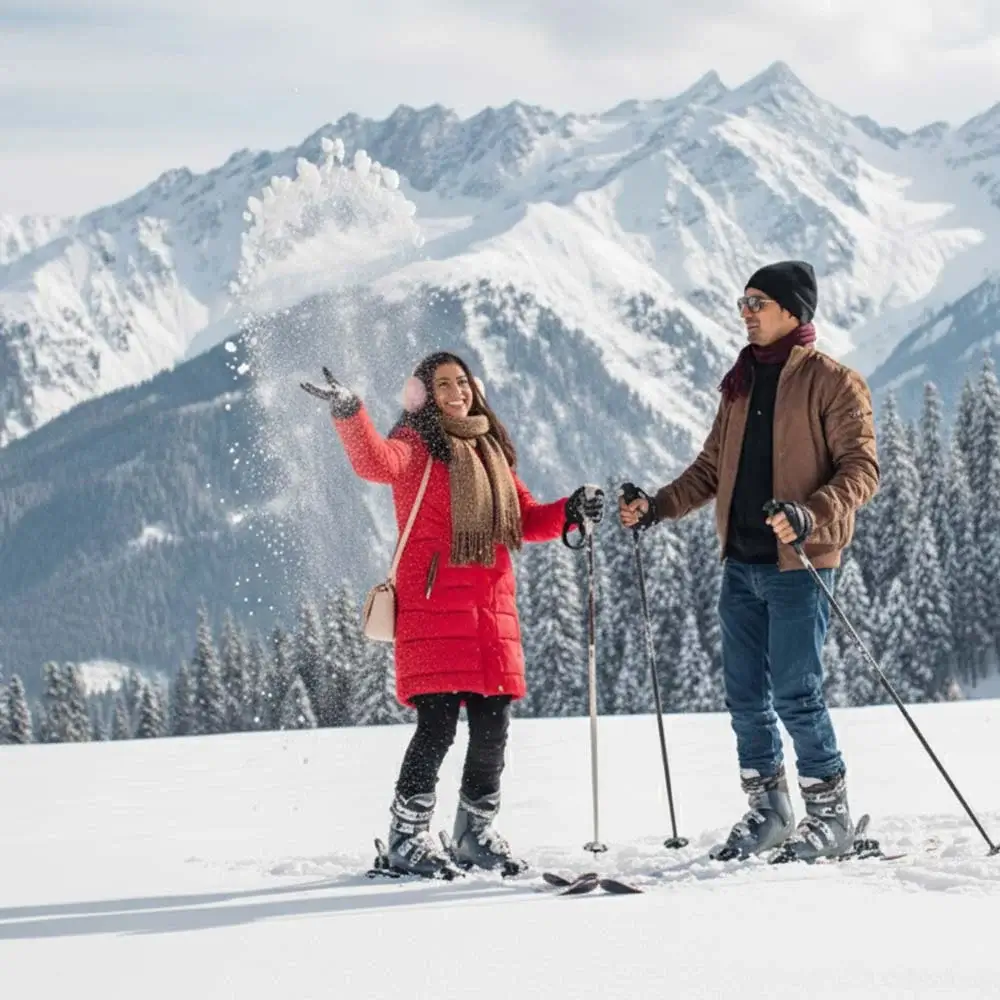 5D/4N
5D/4NKashmir Honeymoon Experience – Srinagar, Gulmarg & Pahalgam
1D Srinagar•1D Gulmarg (day trip)+3
₹14,999₹29,999SAVE INR 15,000/ person
Related topics
Frequently Asked Questions
Which is better in winter, Spiti or Kashmir?
Neither is universally better. Kashmir suits a shorter, more comfortable snow holiday with easy access and Gulmarg activities. Winter Spiti suits a longer, remote, high-altitude road expedition with basic stays and weather uncertainty.
How many days do I need for Winter Spiti?
Plan for roughly 8 to 10 days from a plains start. Our Winter Spiti page lists eight days as the shortest sensible plan and nine as what we recommend for most travellers.
How many days do I need for a Kashmir winter trip?
A focused 4 to 6 day trip works well. Centre it on Srinagar and Gulmarg rather than forcing every valley into the plan.
Can I reach Kaza from Manali in winter?
No. The Keylong to Kaza road closes roughly October or November to June or July because of Kunzum Pass snow. The winter route to Kaza is through Shimla and Kinnaur.
Is Chandratal open in winter?
No. The Kunzum side is snowbound and Chandratal is not a winter tourist stop. Check our guide on when Chandratal opens in 2026 for the actual season.
Which is colder, Spiti or Kashmir?
Spiti. Himachal Tourism says it can drop to around minus 20 degrees Celsius in places in deep winter. Srinagar is much milder, with a January mean minimum near minus 1.9 degrees Celsius.
Which destination is better for a first snow trip?
Kashmir, for most people. It gives you snow, comfort, and easy access without the altitude and remoteness that make Spiti a serious commitment.
Is Winter Spiti suitable for families and senior citizens?
Kashmir is generally the easier choice for both. Winter Spiti's altitude, cold, and limited medical access make it a more serious decision, so get personal advice if health is a concern.
Do I need a 4x4 for Winter Spiti?
Our flagship winter expedition uses a 4x4, and the conditions are why. For the winter route and terrain, a capable high-clearance vehicle with an experienced driver matters a lot.
Is fresh snowfall guaranteed in Kashmir or Spiti?
No. You are very likely to see snow already on the ground in deep winter, but nobody can promise fresh snowfall on your exact dates in either place.
Is the Gulmarg Gondola open throughout winter?
It runs subject to weather and maintenance. Current notices say boarding is 8:00 AM to 3:30 PM with last return at 5:00 PM, and it closes on the second and fourth Monday of each month.
Is January or February better for a snow holiday?
January is deeper winter with sharper cold and higher disruption risk. February stays wintry with slightly longer daylight. Neither is automatically safer or snowier, so choose by your comfort with cold.
More about Lahaul and Spiti
 Lahaul and Spiti
Stargazing in Winter Spiti 2026: Where to Stay, Moonlight and What You Can See
Discover the best places for stargazing in Winter Spiti 2026, where to stay for darker skies and how moonlight affects visibility. Learn what you can realistically see from Kaza, Tabo and nearby villages during the winter months.
- Things to Do
- Snow Travel
 Lahaul and Spiti
Joining a Winter Spiti Group in 2026: Room Sharing, Privacy and Group Expectations
Planning to join a Winter Spiti group in 2026? Learn how room sharing works, what privacy to expect, options for solo travellers and couples, and when a single room supplement may apply.
 Lahaul and Spiti
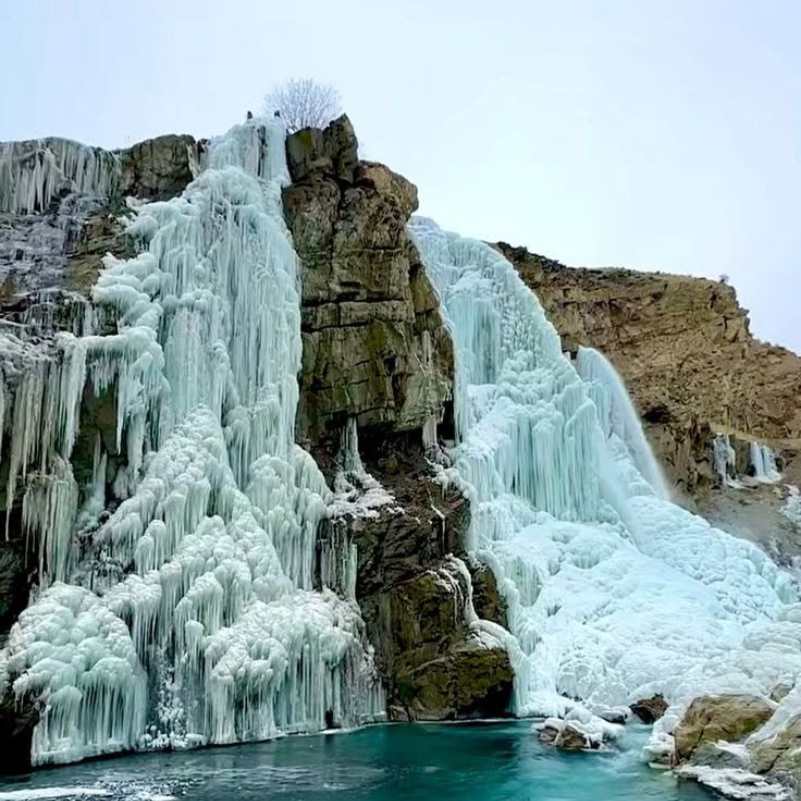
Lingti Frozen Waterfall in Winter 2026-27: Access, Photo Stops and What to Confirm
Plan your visit to Lingti Frozen Waterfall in winter 2026-27 with practical details on access, road conditions, the best photo stops and seasonal conditions. Learn what to confirm before leaving Kaza and how to visit this spectacular frozen waterfall safely.
- Places to Visit
- Snow Travel