
Most Loved 4×4 Winter Spiti Expedition
Days inSanglaDay inTaboDays inKaza+1 more
Day inKalpa
Highlights
- Two nights in Sangla with a full day for Rakcham, Chitkul and the Baspa valley, then Tabo and two nights in Kaza
- Two nights in Kaza, including one full day for the best accessible monastery and village circuit
- Shared 4x4 mountain travel with experienced local drivers, snow chains carried and fitted when needed, and a travelling coordinator
Package Options
Duration
Start & End Point (required)
Trip Dates (required)
Vehicle Type
Room Sharing
Itinerary
Your journey begins in Delhi on a Friday evening. Reach the confirmed boarding point, settle into the Volvo, and start the overnight ride to Shimla. Keep your warm layers, medicines, and overnight things in a small bag you can reach easily. You meet the mountain team the next morning. Rest well, the mountain days start tomorrow.
Report at the Confirmed Delhi Boarding Point (Friday Evening)
19:00 - 20:00
Delhi Boarding Point
Board the Overnight Volvo to Shimla
20:00 - 21:00
Delhi Boarding Point
Overnight Journey to Shimla (Keep Warm Layers in a Small Reachable Bag)
21:00 - 07:00
Delhi to Shimla (Volvo)
Inclusions
- Return overnight Volvo travel between Delhi and Shimla, plus shared 4x4 transport for the mountain itinerary. Snow chains are carried and fitted when appropriate
- 6 nights accommodation plus 2 nights on the overnight Volvo. Accommodation: Sangla (2N), Tabo (1N), Kaza (2N), and Kalpa (1N), on the sharing you book, using local homestays, guest houses, or hotels operating during your departure
- The mountain 4x4 is a Jimny, a Scorpio N 4WD, or another confirmed 4x4, based on the group size, staff seating, and luggage
- 6 breakfasts (Day 3 to Day 8) and 6 dinners (Day 2 to Day 7) at your mountain stays. This is the MAP meal plan
- A travelling coordinator and experienced local drivers, with sightseeing arranged around the accessible itinerary
- An emergency oxygen cylinder carried during the mountain journey. Oxygen use is charged separately under the package policy
- Fuel, driver allowances, tolls, parking, help with applicable permit formalities, and GST
- All taxes included
Exclusions
- Flights, trains, and travel to your agreed Delhi boarding point
- Lunches, snacks, bottled water, tea, coffee, and other drinks
- Arrival breakfast in Shimla, meals during the Volvo journeys, and the return dinner in Shimla
- Entry tickets, monastery donations, camera charges, tips, laundry, and personal purchases
- Separately billed room heaters, accommodation upgrades, exclusive vehicle use, and a dedicated backup vehicle unless added to your booking
- Travel insurance, medical treatment, medicines, oxygen use, hospital expenses, and emergency evacuation
- Any extra accommodation, meals, transport, or replacement tickets needed because of weather, road closures, local restrictions, or other disruption
- Anything not listed under Inclusions
Your Trip in a Nutshell
- Duration
- 8 Nights / 9 Days
- Start / End Point
- Delhi, with Chandigarh or Shimla joining on compatible departures
- Stay
- Sangla (2N) • Tabo (1N) • Kaza (2N) • Kalpa (1N) • Overnight Volvo (2N)
- Meals
- 6 breakfasts (Day 3 to Day 8) and 6 dinners (Day 2 to Day 7), 12 meals in total on the MAP plan
- Main Highlight
- A signature winter Spiti expedition from Delhi in a shared 4x4, with two nights in Sangla for a full Chitkul and Baspa valley day, then Tabo and two nights in Kaza for the best accessible monastery and village circuit
- Best Season
- Published winter departures. Snow cover, facilities, and access vary with the month and recent weather
- Ideal For
- Travellers comfortable with sub zero cold, simple local winter stays, long mountain drives, and a plan that adapts to conditions. No trekking is scheduled, but it is a remote high altitude winter journey
Know Before You Go
- Winter Spiti is a weather led Himalayan expedition, not a regular hill holiday with snow added on. Temperatures stay well below freezing, many hotels and businesses close for the season, water lines can freeze, and fresh snow can change the plan overnight. That unpredictability is part of what makes it special, and it is why the stays, amenities, and sightseeing here are kept flexible
- This is a fixed departure group expedition, not a private trip. The Volvo, the mountain 4x4 vehicles, and the accommodation are all shared as per your booking. A private vehicle is not included. Groups are small, micro groups of 3 to 5 or small groups of 6 to 10 travellers, spread across the required vehicles
- On the morning you reach Shimla, the freshen up after the overnight Volvo is quick and in a common area, usually at the breakfast stop. There is no dedicated room, hotel, or shower for this, and it is often time bound. Dedicated showers can be arranged at an extra cost if you ask in advance. Breakfast in Shimla is at your own expense
- The mountain vehicle may be a Jimny, a Scorpio N 4WD, or another confirmed 4x4, chosen by the group size, staff seating, and luggage. Please note a Jimny has four seats in total, including the driver. The remaining seats take guests and any accompanying staff, so it is not three guests plus a coordinator on top
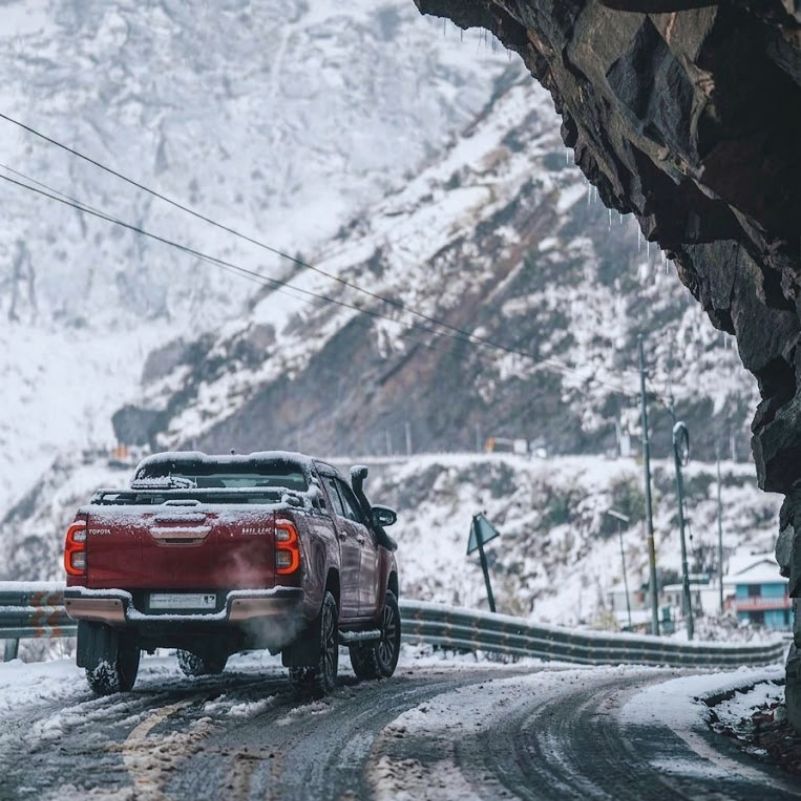
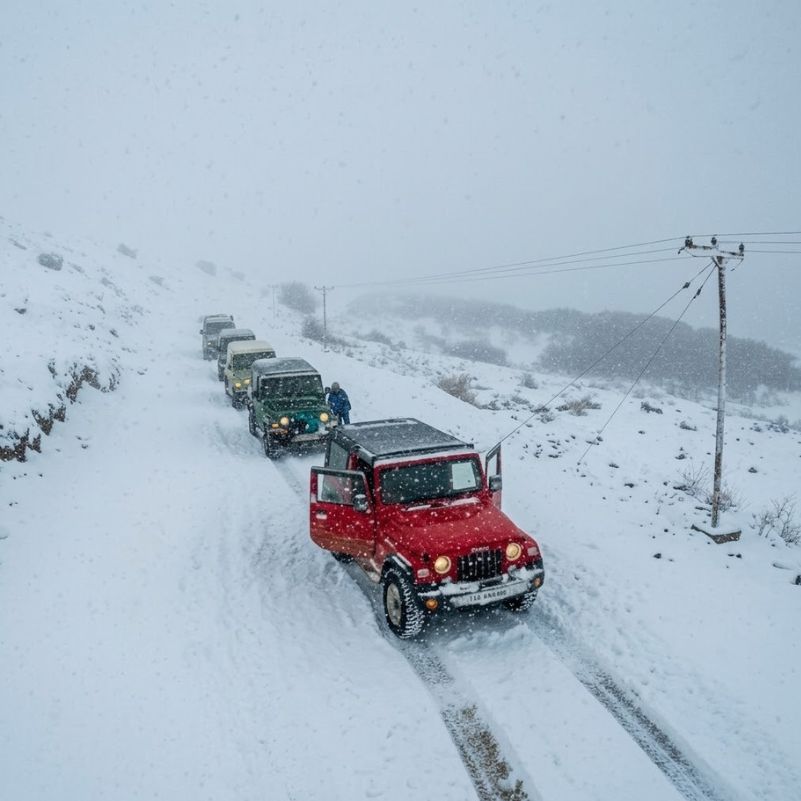
- The 4x4 and snow chains greatly improve what we can drive in winter, but no vehicle can cross an official closure, deep fresh snow, black ice, or an unsafe slope. Black ice can form even without snowfall and is often not visible, so drives are slower than a maps app suggests and days may start early or late. Please do not rush the driver. The final call on vehicle movement stays with the driver, the coordinator, and the local authorities. We do not plan routine night driving on the mountain
- Even when the main Shimla to Kaza road is open, the smaller approach roads to Chitkul, Dhankar, and the high villages can stay blocked or icy after the main route reopens. Monastery interiors, shops, and Hikkim's postal service also depend on local opening. So every sightseeing point is subject to weather and road access, and the team picks the safest practical plan rather than forcing a checklist
- Chitkul is planned on your Sangla based day (Day 3), reached via Rakcham with time in the snow, when the road beyond Rakcham is safely open. After heavy snow that last stretch can close, and then the team covers the best safely accessible part of the Baspa valley instead. Roghi village and the Suicide Point viewpoint at Kalpa are covered on the return morning (Day 8) when the road allows. Please do not book only to see Chitkul
- Nako is a visit on this itinerary, considered on Day 4 when access and daylight allow, not an overnight stay. The overnight stops do not by themselves guarantee acclimatisation
- Winter does not remove altitude sickness. Tell the coordinator at once about any headache, nausea, dizziness, unusual tiredness, or breathlessness, and do not keep climbing with symptoms that have not settled. Worsening signs, breathlessness at rest, confusion, or trouble walking need urgent care and a descent when it is safe to move. Keep activity light after reaching height, eat regularly, and avoid alcohol during the early days
- Your one full Kaza sightseeing day is planned to cover the high village circuit in order: Key, Kibber, and Chicham first on the lower arm above the Spiti river, then the higher plateau villages Langza, Komic, and Hikkim, always weather and road permitting. The team sets the order for the day and covers what is safely open, so treat the full list as the plan when conditions allow rather than a cast iron guarantee. Reaching a village does not mean every monastery, building, or post office will be open
- In peak winter many regular hotels are shut, so your stay may be an operational homestay, guest house, or winter hotel, chosen by the destination, weather, and availability. Electric blankets are provided wherever available and keep the bed warm, but that is not the same as a centrally heated room. Room heaters are only at some properties and may be chargeable, since power supply and load are limited in winter
- Water pipes and tanks can freeze, so hot water is usually given in limited buckets, not as continuous running water, and a daily shower may not always be practical in extreme cold. Some stays have attached washrooms, but in deep cold only some lines stay working, so you may use a shared operational washroom or be shifted to a working one. Some homestays use traditional dry toilets. This is frozen plumbing at altitude, not a cleanliness issue, and water is scarce, so please use it carefully
- Electricity is usually there in inhabited areas, but expect the odd power cut or low voltage. Mobile network, internet, UPI, and cards can also go patchy or drop in remote stretches and bad weather. Carry a power bank, charge whenever you can, keep phones and spare batteries warm since the cold drains them fast, and carry enough emergency cash rather than relying only on your phone
- In winter many cafes and shops close and supplies are limited, so meals at your stays are simple, warm, home style food made with what is available locally. Tell the team about allergies and dietary needs before booking. Between settlements there are few cafes, washrooms, ATMs, pharmacies, or mechanics, and some stay shut, so use washrooms when the team suggests and carry your own snacks for the long driving days
- For safety, use only the heating the property provides. Never bring an outdoor gas stove, a charcoal burner, or a camping heater into a room, as this can be deadly in a closed space
- This trip enters and returns through the Kinnaur approach only. There is no Chandratal, Kunzum Pass, or Manali crossing, since the Kunzum route is closed by snow in winter, and Manali is not a dependable alternative winter exit. Gue and Pin Valley are deliberately excluded from this product, and Dhankar Lake trekking and Tani Jubbar Lake are also not included. The Kinnaur approach is the usual winter route but it is not free from closures
- Fresh snowfall can occasionally stop movement until roads are cleared and considered safe, so this expedition can run behind the planned schedule. There is no dedicated buffer day inside the itinerary, so keep extra time before an important flight, train, exam, or work commitment, and do not book anything tight right after the scheduled return. No buffer can promise a closure will clear within a set time
- Snowfall, snow cover, frozen rivers, frozen scenery, clear views, and stargazing cannot be promised for your exact dates. Winter Spiti usually brings severe cold and seasonal snow, but the amount varies with recent weather. This is a regular winter expedition, not a specialist wildlife tour, so snow leopard and other wildlife sightings are chance encounters, not inclusions
- Pack for real winter. Bring thermal base layers, a fleece or down layer, a proper winter jacket, warm lower layers, waterproof or snow ready shoes, several warm socks, gloves, a woollen cap, a neck warmer, sunglasses, sunscreen, lip balm, and moisturiser. Ordinary city winter clothing is not enough here. Carry an insulated water bottle and keep drinking water at altitude even when the cold makes you feel less thirsty
- Spiti is remote. Kaza has a Community Health Centre and other settlements have basic health facilities, but specialist care is not comparable with a large city, and snow can add time to reach it. Carry all your personal medicines with a few spare doses and tell the team about important medical needs. Anyone with significant heart or breathing conditions, or previous serious altitude illness, should speak with a doctor before booking. Choose insurance that covers the altitude, winter travel, and evacuation. Carry a valid government photo ID for every traveller, and foreign nationals must contact the team before booking, since the Kinnaur approach includes protected areas that need a permit for foreign travellers
- Take care around ice. Walk slowly on icy paths, stay away from unstable snowbanks and cliff edges, remain with the group in poor visibility, and do not step onto frozen lakes or rivers because the surface looks solid. The oxygen cylinder carried with the group is for emergencies and you pay only if you use it. It does not replace a doctor or make it safe to keep climbing when someone is unwell
Frequently Asked Questions
Is this a private trip?
No. This is a fixed departure group expedition. The mountain vehicles are shared and the group follows one itinerary. A private vehicle is not included.
Which 4x4 will we travel in?
The vehicle may be a Jimny, a Scorpio N 4WD, or another confirmed suitable 4x4, and the model and seating are shared before departure. A Jimny has four seats in total, including the driver, so the remaining seats take guests and any accompanying staff, not three guests plus a coordinator on top.
If we travel in a 4x4, can every destination still be covered?
A capable 4x4 with snow chains improves access a lot, but no vehicle can cross an official closure, deep fresh snow, black ice, or an unsafe slope. Final movement always depends on the road and weather on the day, and the driver and team decide what is safe.
Can I join from Chandigarh or Shimla?
Yes, when the joining fits the departure. Confirm the pickup point, timing, and price before booking connecting travel. Joining in Shimla on Day 2 and finishing there on Day 8 gives you seven mountain days and six accommodation nights, without the Delhi Volvo journeys.
Is Chitkul guaranteed?
Chitkul is planned on your Sangla based day (Day 3) weather permitting, reached via Rakcham with time in the snow. After heavy snow the last stretch beyond Rakcham can close, and then the team covers the best accessible part of the Baspa valley instead. Roghi village and the Suicide Point viewpoint at Kalpa are covered on the return morning (Day 8) when the road allows. These are planned stops when the road is safe, not cast iron guarantees.
Will we cover all the Kaza high villages?
The one full sightseeing day is planned to cover the whole circuit, Key, Kibber, Chicham, Langza, Komic, and Hikkim, in that lower to higher order and always weather and road permitting. The team sets the order for the day and covers what is safely open, so treat the full list as the plan when conditions allow rather than a cast iron guarantee.
Will we have a heated room and a private bathroom?
Neither should be assumed throughout. Electric blankets warm the bed, room heaters depend on the property and power supply and may be chargeable, and frozen plumbing may mean using a shared working washroom. Please check the actual arrangements before booking, particularly if these facilities are essential for you.
Does an electric blanket heat the whole room?
No. An electric blanket keeps the bed warm, which helps a lot on a cold night, but it is not central room heating. Rooms in peak winter Spiti should not be expected to feel like a heated city hotel.
Can I take a shower every day?
That may not be practical in peak winter. Hot water is generally supplied in limited buckets, and running water depends on the property and freezing conditions.
Will UPI and cards work, or should we carry cash?
Carry enough cash. Mobile network and internet can be patchy or drop in remote stretches and bad weather, and that also affects UPI and card payments. Treat cash as your main option once you are deep in the valley.
Can you accommodate food preferences?
Tell the team about dietary needs and allergies before paying. Meals are simple, warm, home style food based on available winter supplies, so special requirements need confirmation rather than an assumption that every stay can provide them.
Is snowfall guaranteed?
No. Snowfall, snow cover, frozen scenery, and clear skies are natural and cannot be promised for your exact dates. Winter generally brings snow and severe cold to Spiti, but the amount varies with recent weather.
Does the trip go via Manali or Chandratal?
No. This trip enters and returns through the Kinnaur approach only. Chandratal, Kunzum Pass, and a Manali crossing are not part of a winter expedition, because the Kunzum route is closed by snow in winter.
Is this suitable for first time visitors, children, or older travellers?
It depends on health, altitude experience, and comfort with cold, long drives, and simple facilities. No trekking is scheduled, but that does not make it right for everyone. Please discuss individual needs with the team, a slower or lower altitude holiday may suit better.
What happens if I feel unwell or need oxygen?
Tell the coordinator immediately so the team can reassess the journey and seek appropriate help. An emergency oxygen cylinder is carried, with use charged separately under the package policy. Confirm the charge before booking, but never delay reporting symptoms because of a billing question.
What happens if weather changes the itinerary or we miss the Volvo?
The team assesses the alternatives, which may include waiting, another stay, or replacement transport. Extra services caused by weather disruption are not in the standard price, and for a major change or cancellation the options follow the written terms shared for your booking.
Can solo travellers join?
Yes. Room pairing depends on the group and your chosen sharing option. A single room costs extra and must be confirmed in advance.
Do foreign travellers need permits?
Foreign passport holders must contact the team before paying, because the Kinnaur approach includes protected areas. Permit eligibility, documents, processing time, and any charges need advance confirmation. Indian travellers do not need a permit for this route.
Reviews
Real experiences shared by Travel Coffee travellers.
55 traveller reviews
Based on Google reviews.
Guest Moments
Real photos and videos shared by travellers from recent trips.
55 reviews
- owais khanVerifiedviaGoogle
Had an absolutely incredible trip exploring Manali, Solang, Sethan, Khokhsar, Sissu, and Darcha, all the way up to Shinkula Pass and Shinkula Top, thanks to Travel Coffee! A huge shoutout to Preeti Jasyal, who helped us a lot throughout the process. She is an amazing person and went above and beyond to help us create the perfect booking. The entire service was seamless and highly effective, and the hotels she selected for us were absolutely amazing with great comfort and views. Driving through those massive mountain terrains can be daunting, but their flawless coordination made the entire journey stress-free. If you're planning a trip to Leh, Ladakh, Spiti, or any of these mountain regions, Travel Coffee is the way to go!
- Khianush DadabhoyVerifiedviaGoogle
I, being a senior citizen travelled solo with Travel Coffee for Spiti Valley and Chandratal Lake for 8N/9D. It was an amazing trip, well organised with decent hotels. Vanshika from Travel Coffee supported me, took great care of me till the very end. I enjoyed a lot and am looking forward to join any upcoming trips in future
- Moksh GodaniVerifiedviaGoogle
We had an amazing experience on our Spiti Valley trip organised by Travel Coffee. Everything was well organized, from the itinerary and accommodations to transportation. The entire journey was smooth and hassle-free, allowing us to truly enjoy the breathtaking beauty of Spiti. A special thanks to Preeti Jaysal and the team for their constant support before and during the trip. They were always available to help and ensured that everything went as planned. Our driver was experienced, friendly, and made us feel safe on the challenging mountain roads. We made unforgettable memories, visited stunning places, and had an incredible overall experience. I would definitely recommend them to anyone planning a Spiti trip. Thank you for making our journey so special!
- SANJEEV KUMAR SINGHVerifiedviaGoogle
Our Delhi to Kaza round-trip with Travel Coffee was incredible! Huge thanks to Manju ma'am (Manju Mehta) for her flawless management and organization throughout. Special gratitude to our driver, Negi bhai (Prakash Negi), whose expert driving skills kept us completely safe on the challenging Spiti roads. Highly recommend them for a seamless, unforgettable adventure!
- Prabir BhattacharjeeVerifiedviaGoogle
Lovely and nice experience with travel coffee During my recent trip of spiti valley tour, nice arrangements done from their side in every aspect, thanks to travel coffee for arranging such a nice trip
- Shivam GargVerifiedviaGoogle
We did a spiti bike trip with travel coffee this early June. We had a very new experience this time as we travelled with travel coffee for the first time. We booked 7 bikes, a Bolero Camper to travel as backup vehicle …






Package Policies
Confirmation Policy
- Your booking is confirmed only after the required payment is received and Travel Coffee confirms your place. The confirmed departure, joining point, mountain vehicle and seating, the stays with their heating and washroom arrangement, and any supplement are shared before you pay. Winter accommodation is subject to road clearance and confirmed availability for your dates.
Refund Policy
- This is a winter expedition through high and remote terrain, and the plan can change for weather, road closures, altitude, or guest health. If conditions require it, the team may wait, change an overnight halt, shorten the route, or turn back. Any extra accommodation, meals, transport, or replacement tickets needed because of disruption are charged as per the written terms for your booking, and the scheduled return is not guaranteed, so keep a buffer after it. Oxygen use, medical treatment, and emergency evacuation are not included.
Cancellation Policy
- Travel Coffee's booking, payment, amendment, and cancellation policies apply to the final booking. There is no refund for unused services, missed sightseeing, guest delay, no show, or leaving the trip early. If you report late and miss the Volvo, arranging other travel is not included.
Payment Term Policy
- The price shown is a starting price with GST included. The final amount depends on your departure, joining point, and room sharing, and is confirmed before payment. A booking amount holds your place and the rest is paid before the trip, as per the plan the team shares.