
When Will Chandratal Open in 2026? Best Time to Visit, Road Status and Planning Guide
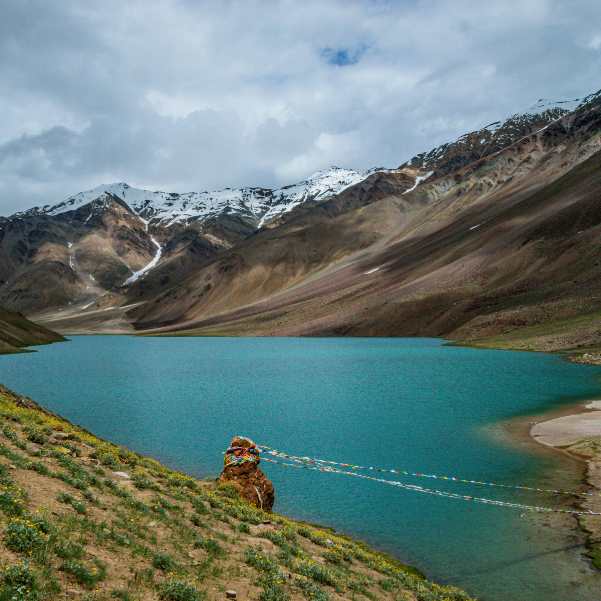
If you are planning a trip to Chandratal in 2026, the first thing you probably want to know is the exact opening date. And that is where most travellers hit a wall of confusion.
Every year, blogs and social media posts throw around dates like "Chandratal opens on June 1" or "you can visit from May 15." In reality, the opening of Chandratal Lake is not fixed.
It depends on how much snow fell during winter, how quickly the Border Roads Organisation (BRO) clears Kunzum Pass, and whether the narrow diversion road from Batal to the lake is actually drivable.
This guide covers everything you need to plan around that uncertainty. From realistic opening expectations and the safest travel months to road access, camping conditions, weather and the kind of practical detail that actually helps you lock your dates with confidence.
Quick Answer: When Will Chandratal Likely Open in 2026?
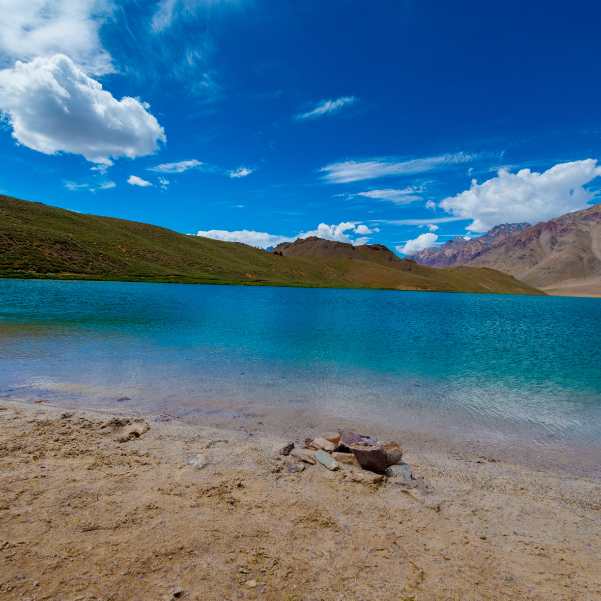
🟢 2026 Season Status: Kunzum Pass OPEN (confirmed late May 2026)
Kunzum Pass opened for the 2026 season in late May following BRO snow clearance. The Manali-Keylong-Kaza highway is now fully open for traffic from both sides. The Chandratal diversion road from Batal typically opens 1 to 2 weeks after Kunzum clears, with seasonal camps expected to begin operations by mid-June 2026.
This follows the pattern from recent years: in 2025, the Kaza side became accessible around May 20 and camps were running by early June. In 2024, a similar timeline played out with full camp operations by the first week of June.
Safest planning window: Mid-June to early September 2026
This is the window where both routes are generally open, campsites are functional, and road conditions are at their most predictable. If you are booking leave or planning with family, this is the range to target.
Best overall month to visit: September
September consistently delivers the most rewarding combination of clear skies, stable weather, lower crowds and stunning landscapes. The monsoon recedes, the air feels crisp, and lake colours tend to be at their deepest. For most travellers, this is the month that delivers the fullest Chandratal experience.
Entry fee and permits (2026)
Entry fee is ₹150 per Indian national and ₹500 per foreigner, collected at the Batal checkpost in cash. A free e-permit via the Himachal e-Aagman portal is required for vehicles entering through the Atal Tunnel-Rohtang-Koksar route. Foreign nationals may additionally need a Protected Area Permit from the SDM office in Kaza or Keylong.
👉 Explore our Lahaul and Spiti Valley packages
Why the Chandratal Opening Date Changes Every Year
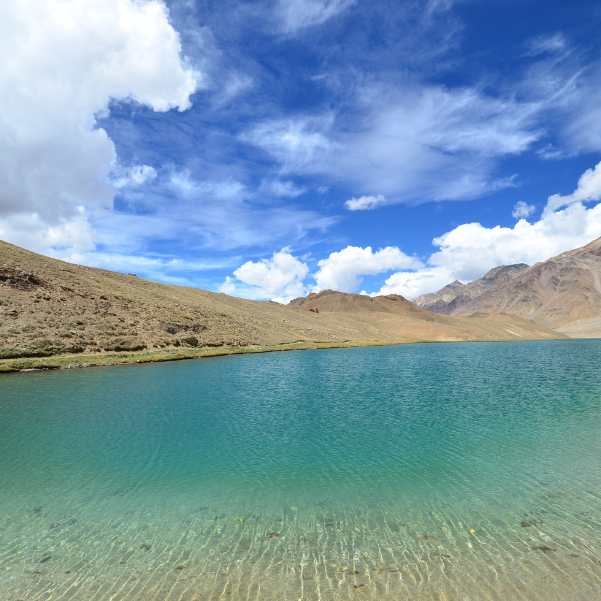
Unlike popular hill stations with year-round road access, Chandratal sits at roughly 14,100 feet in the Himalayas. The lake is not just high in altitude. It is also isolated. The only vehicle access is through Kunzum Pass and then along a rough diversion road that branches off near Batal.
Here is what controls the opening timeline each season:
Snow depth on Kunzum Pass. Kunzum Pass sits at about 15,060 feet. Heavy winter snowfall means BRO needs more time to cut through. A mild winter can mean clearance by mid-May. A harsh one can push it into June.
BRO road clearance progress
The Border Roads Organisation works from both the Manali and Kaza sides to clear roads. Their timeline depends on equipment availability, weather windows, and the sheer volume of snow. This is not a corporate project with a fixed deadline. It is manual, weather-dependent work in extreme terrain.
Chandratal diversion road condition
Even after Kunzum Pass is open, the narrow diversion from Batal to Chandratal is a separate stretch that needs its own clearance. This road is rough, prone to water crossings, and sometimes the last section to become passable.
Weather shifts after initial clearance
A late snowfall in May or early June can temporarily block a road that was open just days before. This happens more often than people expect.
This is exactly why phrases like "Chandratal opens on this date" are misleading. The opening is a process, not an event.
One important thing to understand
Just because the Manali to Kaza highway opens does not mean Chandratal is accessible. The Spiti circuit and Chandratal access are two different things. Many travellers reach Kaza only to find that the Chandratal diversion road is still blocked or that camps are not yet set up.
For a deeper look at whether Chandratal is technically in Lahaul or Spiti, and why that matters for route planning, we have covered it separately.
What Recent Seasons Tell Us About 2026
While no two years are identical, looking at recent patterns helps set realistic expectations.
What 2024 suggested
In 2024, the Kaza side opened for day trips around mid-May. The Manali side took until late May to early June for full clearance. Campsites became operational by the first week of June. The season ran smoothly through September, with most camps winding down by October 10.
What 2025 suggested
In 2025, the Kaza side became accessible around May 20, and the Manali side was fully open by early June. The road from Batal to Chandratal was cleared slightly earlier than in some previous years. Campsites were operational from early June, and the full season extended through September into early October.
What this may mean for 2026
2026 confirmed status (updated May 24, 2026): Kunzum Pass opened for the 2026 season in late May, following the pattern set by 2024 and 2025. BRO cleared the pass from both sides, and the Manali-Kaza highway is now fully open. The Chandratal diversion road from Batal is expected to be cleared by early to mid-June, with seasonal camps beginning operations shortly after.
This confirms the late-May-to-mid-June opening window that recent years had established as the norm. For travellers planning a July or later trip, the 2026 season is on track.
If your dates are in June, confirm the Chandratal diversion road status separately before departure. Camp availability in early June can be limited — mid-June onward is the safer bet for overnight stays.
Best Time to Visit Chandratal in 2026
There is no single "best time" that works for everyone. It depends on what you are looking for.
Best overall month: September
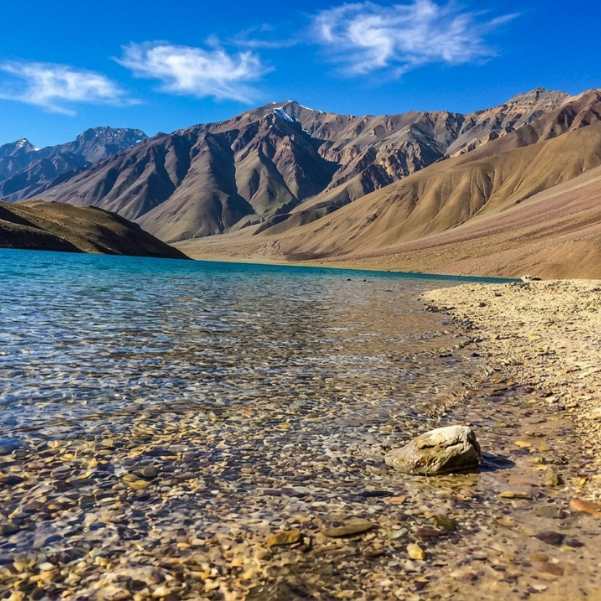
September consistently delivers the most rewarding combination of clear skies, stable weather, lower crowds and stunning landscapes.
The monsoon starts receding, and the air feels crisp and transparent. Lake colours tend to be at their deepest. For most travellers, this is the month that delivers the fullest Chandratal experience.
Best time for snow lovers: Late May to early June
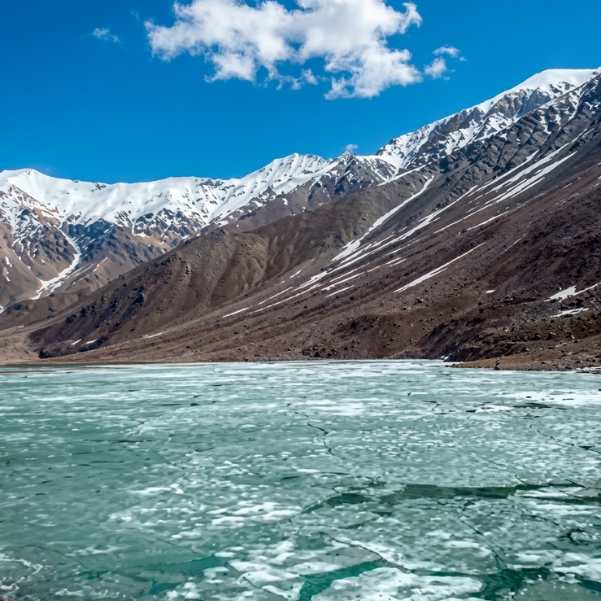
If you want to see snow walls near Kunzum, partially frozen lake edges, and dramatic white landscapes, the earliest accessible window is your best bet.
Roads will be rough and camps may be limited, so this suits experienced mountain travellers more than first-timers.
Best time for comfortable travel: July
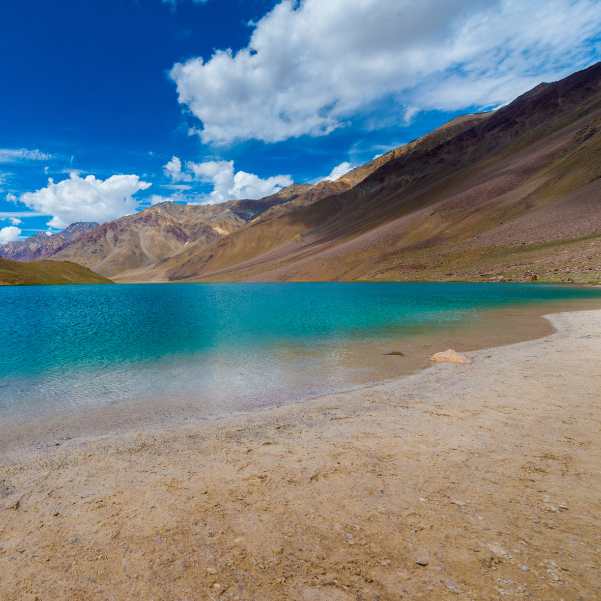
July offers the most predictable conditions. Roads are settled after early-season repairs, camps are fully operational, weather is warmer during the day, and the overall logistics of getting to Chandratal are easier. You may encounter some rain on the Manali side, but the Spiti side stays largely dry.
Best time for photographers: September to early October
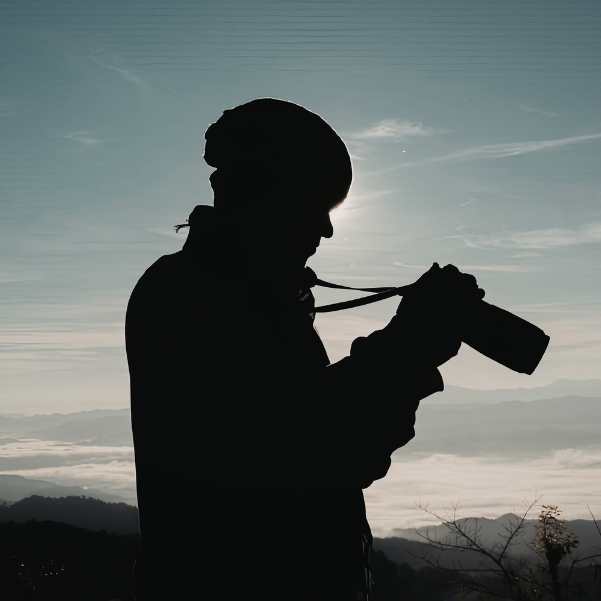
The golden-brown tones of the landscape, reflected against the lake's shifting blues, make September and early October a photographer's dream window.
The light is cleaner, the haze is gone, and the sky has a depth you will not see in peak summer.
Best time for fewer crowds: Late June or September
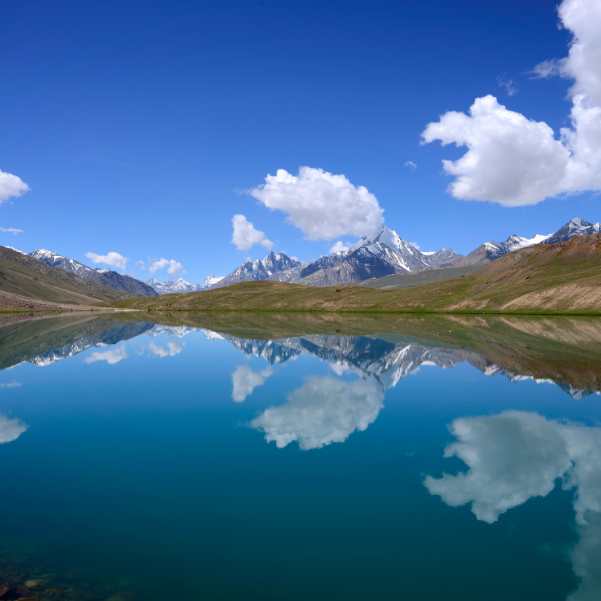
July and August are the peak months for tourist footfall. If you want a quieter experience at the lake, plan for either the tail end of June (when camps have just opened) or September (when the rush has eased).
Best time for families: July to mid-August
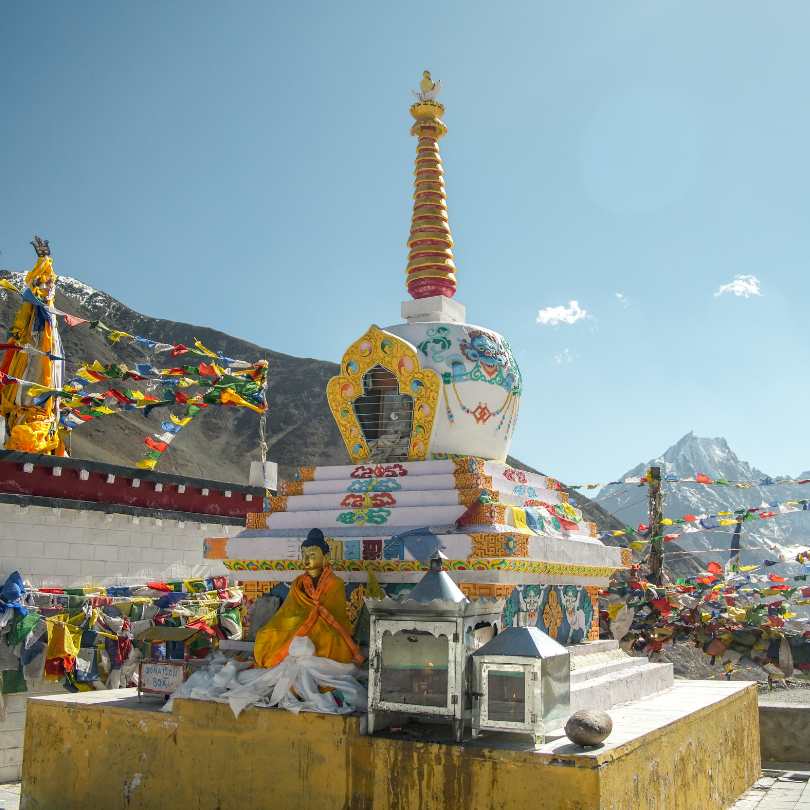
This is when road conditions are at their most stable, camps are fully set up with basic amenities, and daytime temperatures are the most comfortable. Families travelling with children should aim for this window and avoid the early or late edges of the season.
Best time for bikers: June or September
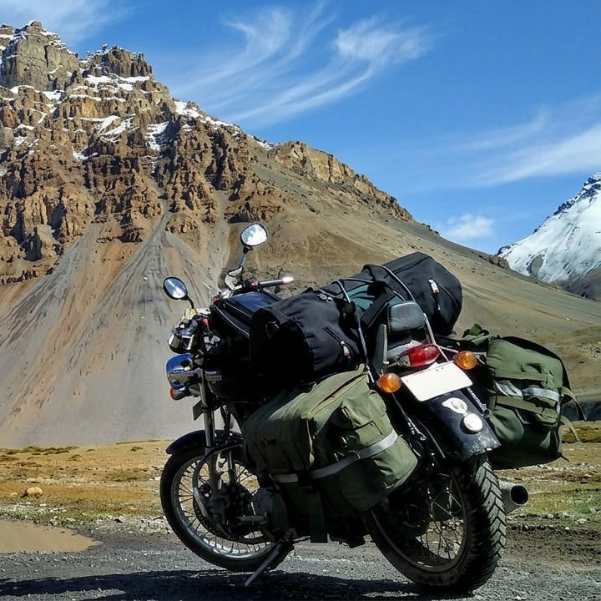
For riders doing the Manali to Kaza circuit, June offers dramatic post-snow landscapes and cooler riding temperatures. September offers cleaner roads and better visibility. July and August can bring rain and slush patches on the Manali side, which many bikers prefer to avoid.
Explore Spiti Valley with Curated Packages by Locals
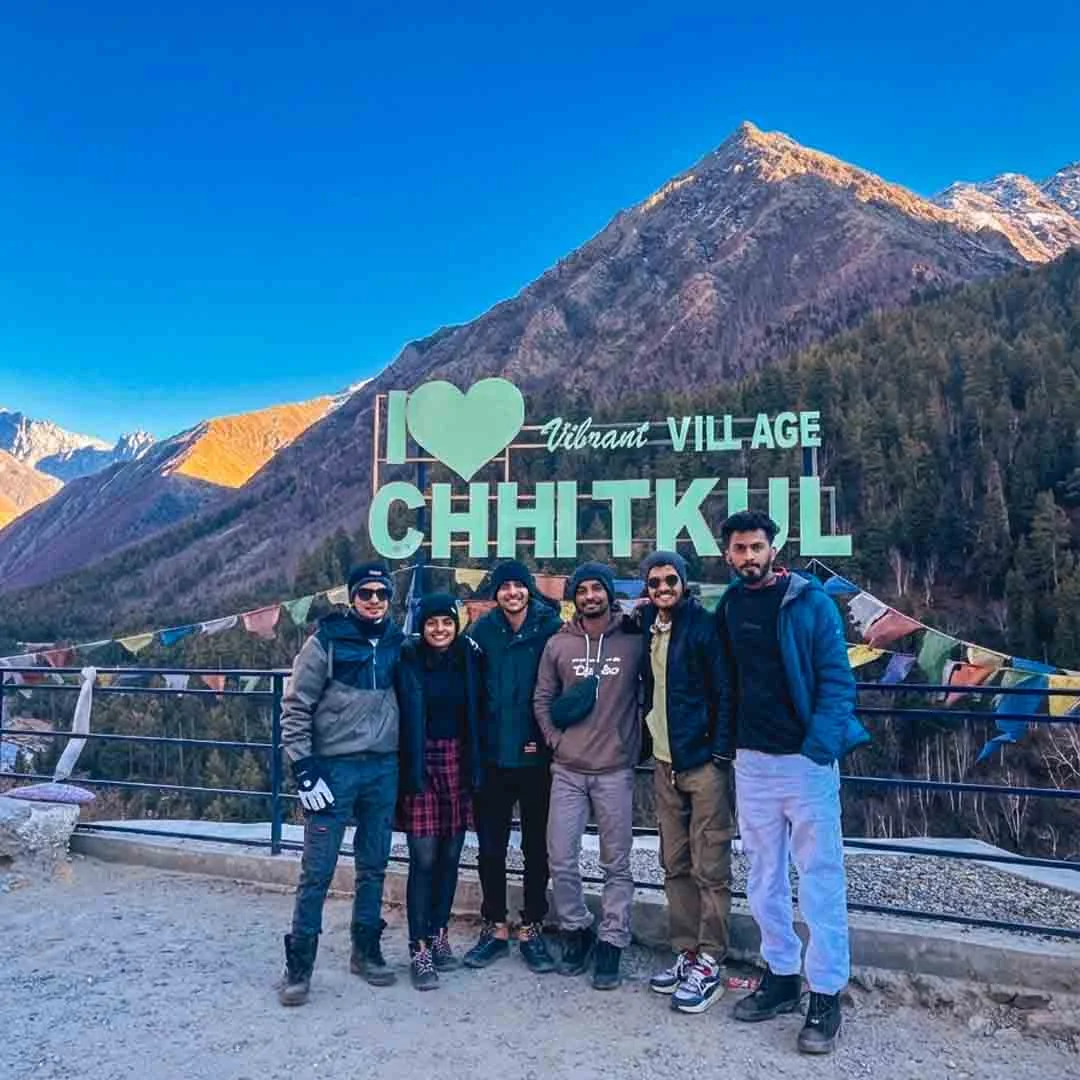 Group Tour9D/8N
Best Selling Winter Spiti Valley Group Tour
2D Sangla•1D Tabo+2
₹18,999₹23,999SAVE INR 5,000/ person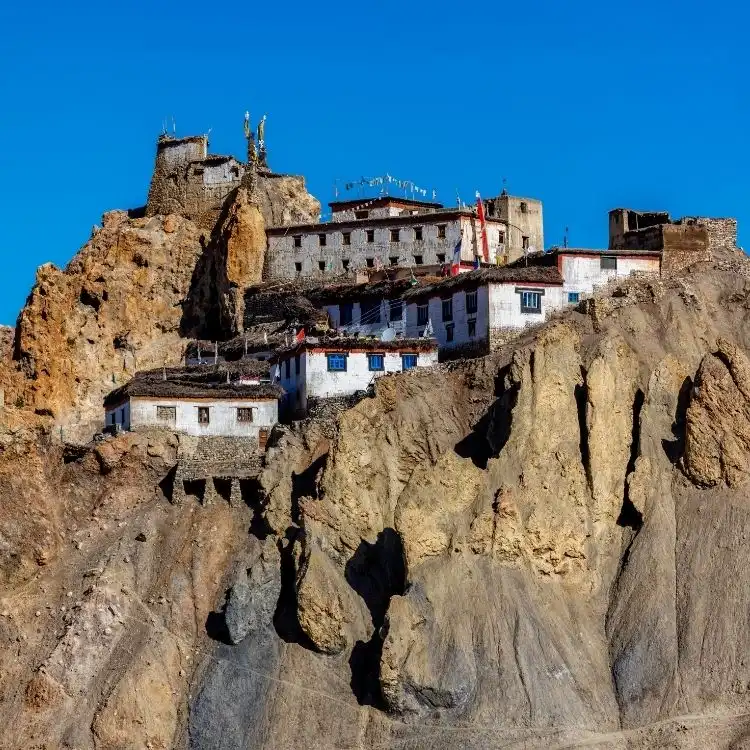 Group Tour10D/9N
Full Spiti Valley Circuit With Chandratal
1D Narkanda•1D Sangla+5
₹29,999₹32,999SAVE INR 3,000/ person
Month-by-Month Chandratal Guide for 2026
Chandratal in May
Opening probability
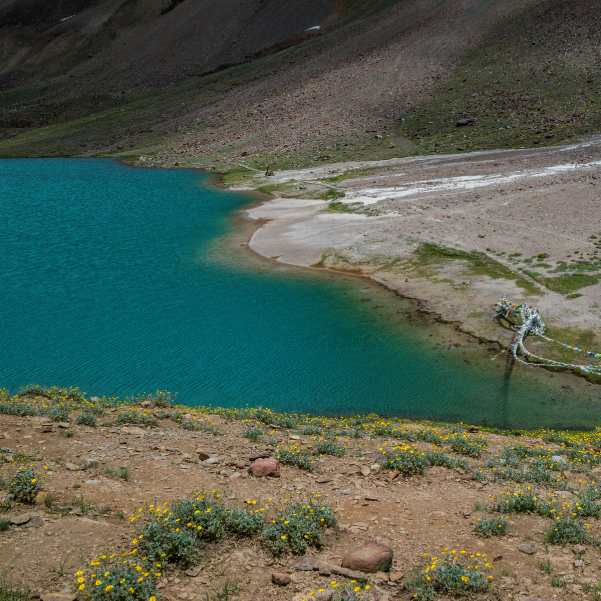
2026 update: Kunzum Pass opened in late May 2026, confirming the pattern from previous years. However, the Chandratal diversion road from Batal was not yet cleared by the end of May. Camps are not operational in May.
Day trips from Kaza via Kunzum may be possible in the last week of May once the pass opens, but the diversion road to the lake may still be blocked. Do not plan an overnight stay in May.
The lake may still be partially frozen. Snow walls near Kunzum Pass can be impressive. But this is not a standard tourist window — it suits experienced mountain travellers who are comfortable with uncertainty and self-sufficient on supplies.
Who it suits
Experienced travellers comfortable with uncertainty, willing to adjust plans, and not dependent on camps being open.
Chandratal in June
Opening probability
High from mid-June onward. Early June is still a coin toss for the Manali side.
June is when Chandratal transitions from closed to open. The first half of the month can be unpredictable, but by the second or third week, most camps are up and running. Snow is still visible on surrounding peaks. The weather is cool and pleasant during the day.
The Manali side may involve rough patches near Gramphu and Batal. Check Rohtang Pass conditions in May if you are starting from Manali early in the month, as delays there affect the entire route.
Who it suits
Travellers who want a quieter start to the season with dramatic scenery.
Chandratal in July
Opening probability
Very high. Both routes generally open and stable.
July is the heart of Chandratal's season. Camps are fully operational. Roads are in their best early-season shape. Wildflowers appear across the meadows. Daytime temperatures hover around 10 to 15 degrees Celsius.
The Manali side may see occasional rain, but the Spiti side remains dry and sunny. Tourist footfall starts picking up, especially on weekends and around holidays.
Who it suits
Families, first-time visitors, anyone who wants the smoothest possible experience.
Chandratal in August
Opening probability
High, but monsoon disruptions are possible on the Manali side.
August is a mixed month. The weather at Chandratal itself remains cool and manageable, but the approach roads, especially the stretch between Manali and Gramphu, can be affected by landslides and rain. The Shimla-Kaza route via Kinnaur is also landslide-prone in August.
If you are travelling in August, build buffer days into your plan. The lake experience itself can be excellent, with lush green surroundings and fewer crowds compared to July.
Who it suits
Travellers with flexible dates who do not mind the possibility of road delays.
Chandratal in September
Opening probability
High. One of the most stable months for both roads and weather.
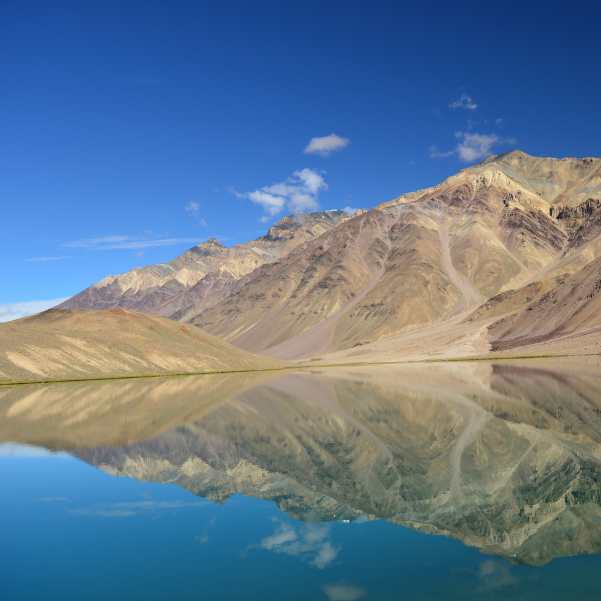
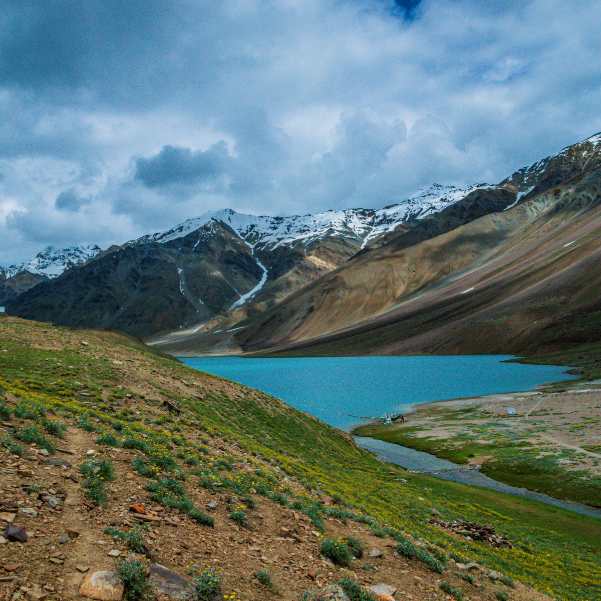
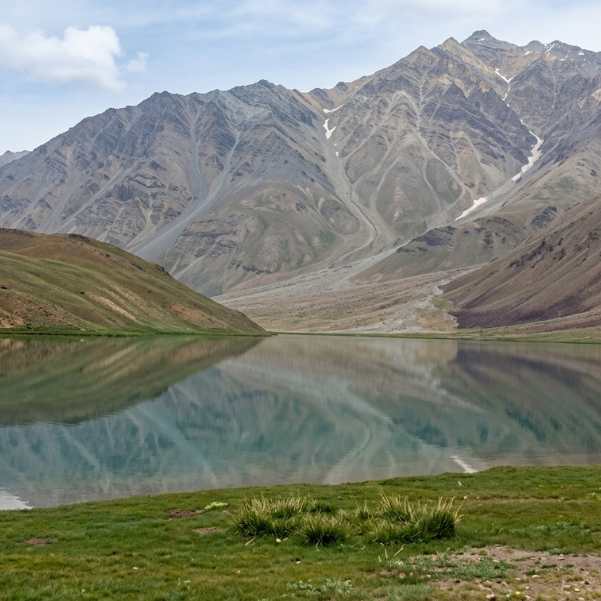
September is when Chandratal is at its visual best. The monsoon recedes, skies clear up, and the landscape shifts to golden-brown hues. The lake reflects the mountains with stunning clarity. Nights are cold, sometimes dropping below freezing, but days are bright and dry.
Crowds thin out significantly compared to July and August. Camps remain open through most of September.
Who it suits
Photographers, couples, anyone who values clean skies and a quieter atmosphere.
Chandratal in October
Opening probability
Moderate in early October. Low after the 10th.
Most camps start shutting down around October 10. The road may remain open a few days longer for day visits, but overnight stays become impractical after that. Early October can be spectacular if the weather holds, with a chance of fresh snow dusting the peaks.
However, this is a gamble. An early snowfall can close Kunzum Pass without warning, leaving you stranded or forcing a long detour.
Who it suits
Experienced travellers comfortable with risk and short windows.
Chandratal in Winter (November to April)
Chandratal is completely inaccessible in winter. Kunzum Pass is buried under several feet of snow. Roads are not maintained. No camps operate. There is no safe or legal way to reach the lake during these months.
If you are planning a winter Spiti trip via the Shimla route, Chandratal will not be part of the itinerary. The lake remains locked under ice and snow until the following summer.
>> Join our Summer Spiti Circuit with Chandratal
How to Check if Chandratal Is Actually Open Before You Travel
Do not rely solely on blog posts or social media predictions. Here is how to verify live status the right way:
Follow BRO updates
The Border Roads Organisation (Project Deepak) posts updates on road clearance. Their social media handles and press releases are the most official source.
Check with Himachal Pradesh Tourism
The official HP Tourism website and the DC Lahaul-Spiti office sometimes share road status updates.
Ask local taxi operators or camp owners
People based in Kaza, Batal, or Manali who run camps near Chandratal know the ground reality before any official announcement is made. A quick WhatsApp message to a local operator is often the fastest way to get real information.
👉 WhatsApp the Travel Coffee team to know today’s Chandratal status.
Join Spiti travel groups on social media
Active Facebook and WhatsApp groups for Spiti travellers share real-time road updates, photos, and conditions.
Do not assume "Spiti is open" means "Chandratal is open."
The Shimla to Kaza route can be open while Chandratal remains inaccessible. Always check Chandratal access separately.
👉 WhatsApp the Travel Coffee team to know today’s Chandratal status.
How to Reach Chandratal in 2026
Via Manali
This is the most popular approach. You travel from Manali through the Atal Tunnel to the Lahaul side, then continue via Gramphu and Batal to the Chandratal diversion road.
This side opens later (usually early to mid-June) but allows you to include Chandratal as part of a one-way Manali to Kaza journey.
The road between Gramphu and Batal is one of the roughest stretches in the entire Spiti circuit. Water crossings near Pagal Nala and Batal can be challenging, especially in early season.
Via Kaza
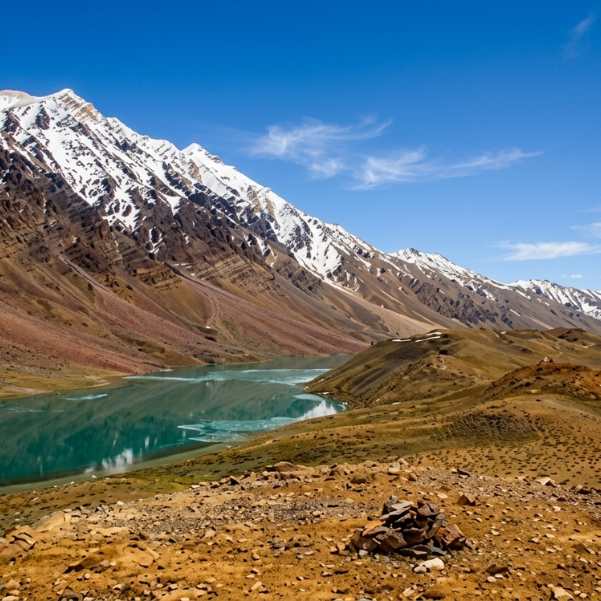
From Kaza, you drive through Losar and over Kunzum Pass to reach the Chandratal diversion. This route typically opens slightly earlier than the Manali side because BRO clears Kunzum from the Kaza direction first.
Which route is better for first-timers?

If this is your first time in Spiti, entering via Shimla and exiting via Manali gives you a complete circuit. Adding Chandratal between Kaza and Manali works well in this loop.
A well-planned Shimla to Manali Spiti circuit with Chandratal is one of the most popular ways to experience the full route without backtracking.
Which route is better for acclimatisation?

The Shimla-Kinnaur-Kaza route is better for gradual altitude gain. You ascend slowly over several days, passing through Narkanda, Kalpa, Nako, and Tabo before reaching Kaza at about 12,500 feet. By the time you head toward Chandratal at 14,100 feet, your body has had time to adjust.
Coming directly from Manali, you gain altitude rapidly through the tunnel and over Kunzum, which increases the risk of altitude sickness if you have not acclimatised in Manali first.
Safety and Travel Practicality

Is Chandratal safe?
Yes, within the right season and with basic precautions. The lake area itself is safe. The risks come from altitude, roads, and weather, not from the destination itself.
Altitude concerns
Chandratal is at 14,100 feet. Altitude sickness is a real possibility, especially if you have come directly from the plains without acclimatising. Symptoms include headache, nausea, breathlessness, and fatigue. Stay hydrated, avoid alcohol, and spend at least one or two nights at a moderate altitude (Manali or Kaza) before heading to the lake.
Families and kids
Families with older children (above 8 to 10 years) can visit Chandratal safely during July and August. For younger children or elderly family members, consider a day visit from Kaza or Batal rather than an overnight camp stay.
Road conditions
The road from Batal to Chandratal is rough, unpaved, and narrow. It involves some water crossings and loose gravel sections. A high-clearance vehicle is strongly recommended. SUVs and 4x4s are preferred. Sedans are not suitable for this stretch.
When to avoid an overnight stay
Avoid camping overnight if the forecast suggests sudden weather changes, if you arrived at altitude the same day without acclimatisation, or if anyone in your group is showing signs of altitude sickness. A day visit to the lake from Batal or a nearby camp is always a safer alternative.
Camping and Stay Reality at Chandratal
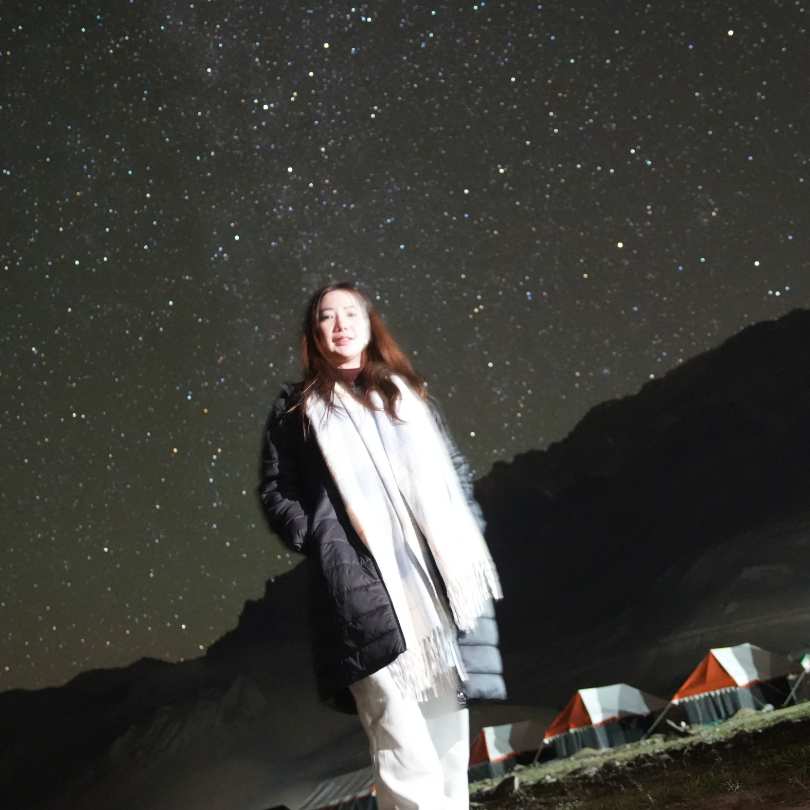
Where camps are located
Camps are set up in designated zones roughly 2 to 5 km from the lake, along the road leading to the parking area. Camping directly at the lakeside is banned by the Koksar Gram Panchayat to protect the Ramsar-designated wetland ecosystem. You walk from your camp to the lake, which takes about 20 to 40 minutes.
Camp pricing in 2026
Expect to pay ₹1,200 to ₹2,500 per person per night at organised camps. This typically includes a tent, sleeping bag, mattress, and basic meals (dal, rice, roti, chai). The upper end of that range gets you slightly better tents, thicker mattresses, and more food variety. The toilet is still a basic pit at all price levels. A few camps have solar panels for limited device charging.
Pre-booking is strongly recommended during July and August. Walk-in availability is unreliable on weekends and holidays. Contact your camp operator or travel planner directly.
Entry fee and permits
Entry fee: ₹150 per Indian national, ₹500 per foreigner. Collected at the Batal checkpost in cash. Keep exact change.
e-Aagman permit: Free vehicle e-permit required if entering via the Atal Tunnel-Rohtang-Koksar route. Register at eaagman.hp.gov.in before you leave Manali. Not required if approaching from the Kaza side via Kunzum Pass.
Inner Line Permit: Foreign nationals need a Protected Area Permit obtainable from the SDM office in Kaza or Keylong. Indian nationals do not need one.
Rules that are strictly enforced
No lakeside camping. All camps must be in designated zones 2 to 5 km from the lake. Pitching your own tent at the lake edge can result in fines or removal.
No drones. Flying drones at Chandratal is prohibited. This is a Ramsar-designated high-altitude wetland and ecologically sensitive zone. Violation can lead to fines and equipment confiscation.
No littering. Carry all trash back with you. The National Green Tribunal has flagged waste management violations in the Koksar panchayat area. This is not optional — it is a legal and ecological requirement.
What to realistically expect from camps
Basic tents, sleeping bags, blankets, and simple meals. Toilet facilities are basic pit setups. No electricity at most camps. No mobile network (BSNL has faint, patchy coverage at best). Download offline maps before you leave. The dhabas at Batal serve the last proper hot meals before you reach the camping zone.
If you are looking for alternatives to camping, our guide on where to stay near Chandratal without camping covers guesthouses and rooms at Batal and Chatru.
Weather and Packing for Chandratal

What days and nights feel like
During the season (June to September), daytime temperatures at Chandratal typically range from 8 to 15 degrees Celsius. It feels pleasant in the sun but cool in the shade.
Nights are a different story. Temperatures can drop to zero or below, even in July. By September, night temperatures regularly dip to minus 5 or colder. The wind chill at 14,100 feet makes it feel even sharper.
What to pack even in summer
Layers are essential. Carry a good down jacket or insulated jacket, thermal inners, warm socks, gloves, and a beanie. A windproof outer layer is important because the wind near the lake can be biting.
Sunscreen and sunglasses are non-negotiable. The UV exposure at this altitude is intense, even on cloudy days. Carry a headlamp or torch. Good trekking shoes with grip are important for the walk to the lake.
What travellers usually underestimate
The cold after sunset. Even people who have trekked before are sometimes caught off guard by how quickly the temperature drops once the sun goes down at Chandratal. Pack warmer than you think you need to.
Also, the lack of mobile network. Most networks do not work near Chandratal. BSNL has patchy coverage at best. Download offline maps and inform someone about your plan before heading out.
Sample Itinerary Ideas
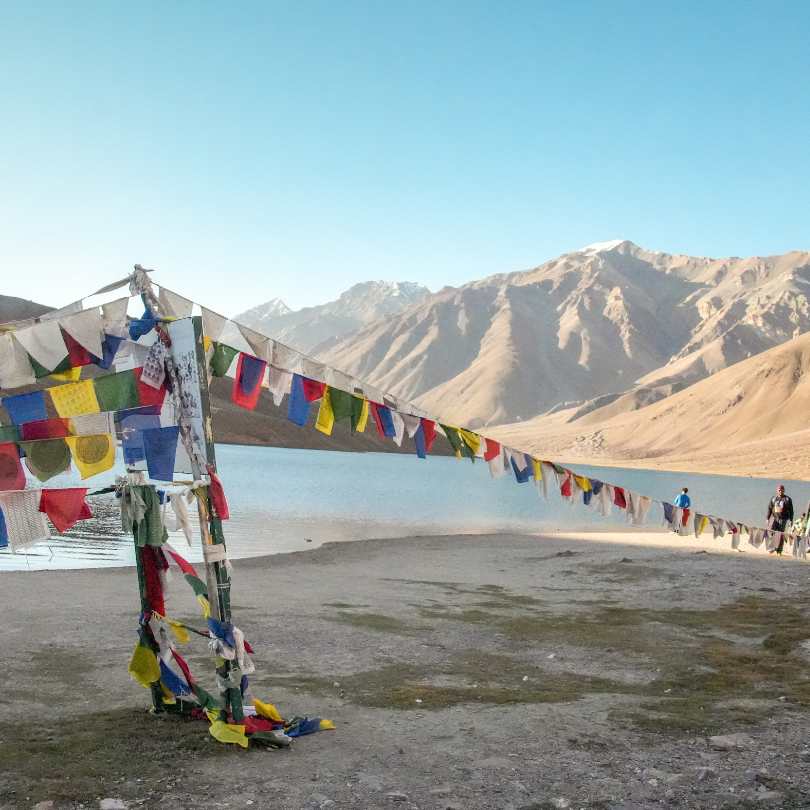
Short Chandratal trip from Manali (4 to 5 days)
Day 1
Arrive in Manali, rest and acclimatise.
Day 2
Drive from Manali via Atal Tunnel to Batal or Chandratal camp (8 to 10 hours).
Day 3
Visit Chandratal Lake in the morning. Drive to Kaza.
Day 4
Explore Kaza and nearby villages. Day 5: Buffer day for road delays.
Chandratal with a full Spiti circuit (9 to 10 days)
This is the most popular format. You enter Spiti from Shimla via Kinnaur, spend a few days exploring Kaza, Tabo, Dhankar, and Key, then exit via Chandratal toward Manali.
Our Full Spiti Valley Circuit with Chandratal (10D9N) covers this route with built-in acclimatisation stops and a Chandratal overnight.
Explore Our Curated Spiti Valley & Chandratal Tours
- Group Tour10D/9N
Full Spiti Valley Circuit With Chandratal
1D Narkanda•1D Sangla+5
₹29,999₹32,999SAVE INR 3,000/ person  10D/9N
Shimla Spiti Manali Circuit With Chandratal
1D Narkanda•1D Sangla+5
₹45,999₹52,499SAVE INR 6,500/ person 10D/9N
Summer Spiti Circuit With Chandratal
1D Narkanda•1D Sangla+5
₹29,999₹38,999SAVE INR 9,000/ person
What to do if Chandratal is not open yet
If your trip falls in late May or early June and the Chandratal diversion road is still blocked, you have options.
You can still complete the Spiti circuit via Kaza and return through the same route. Or you can visit Kunzum Pass for panoramic views and plan a return trip later in the season.
Do not try to force a visit on a closed or partially cleared road. The risk is not worth it, and the experience at a half-accessible lake without camps is not the same.
Common Mistakes Travellers Make When Planning Chandratal

Assuming May is safe for camping
In most years, camps are not set up until early June. Planning an overnight stay in May is risky unless you are prepared for self-sufficient camping.
Not checking the Chandratal diversion separately
The Manali-Kaza road being open does not mean the Chandratal diversion from Batal is clear. Always confirm this stretch independently.
Ignoring acclimatisation
Jumping from Delhi or Chandigarh to Chandratal in two days is a recipe for altitude sickness. Spend at least one night at a mid-altitude point.
Packing light for "summer."
Summer at 14,100 feet is not summer in the plains. Night temperatures can be brutal if you are underprepared.
Not keeping buffer days
Roads in this region are unpredictable. A single landslide or heavy rain can block access for 12 to 24 hours. Always keep one or two buffer days in your plan.
Relying on one source for road updates
Cross-check with locals, travel groups, and BRO updates instead of trusting a single blog or social media post.
Final Verdict
If Chandratal is on your 2026 list, the safest planning window is mid-June to September. September is the best single month for the fullest experience. July is the best for families and first-timers.
Avoid planning an overnight camp before early June unless you are comfortable with uncertainty.
Always verify road status independently before you travel. Keep buffer days in your itinerary. Pack warmer than you think.
And treat Chandratal access as separate from Spiti access, because they do not always align.
The lake is worth every bit of effort it takes to get there. You just need to time it right.
👉 WhatsApp Travel Coffee to check if Chandratal is open and worth including in your Spiti trip today
Related topics
FAQ
When did Chandratal open in 2026?
Kunzum Pass opened for the 2026 season in late May following BRO snow clearance. The Chandratal diversion road from Batal is expected to be cleared by early to mid-June, with camps becoming operational shortly after. This follows the same pattern as 2024 and 2025.
What is the best time to visit Chandratal in 2026?
The safest and most rewarding window is mid-June to September. September is widely considered the best single month for clear skies, fewer crowds, and the deepest lake colours. July is best for families and first-timers.
What is the entry fee for Chandratal Lake in 2026?
₹150 per person for Indian nationals and ₹500 for foreign nationals. This is collected at the Batal checkpost in cash. You also need a free e-permit via the Himachal e-Aagman portal (eaagman.hp.gov.in) if entering through the Atal Tunnel-Rohtang-Koksar route.
How much does camping at Chandratal cost in 2026?
Organised camps charge ₹1,200 to ₹2,500 per person per night. This includes a tent, sleeping bag, mattress, and basic meals. Pre-booking is strongly recommended during July and August peak season.
Can I fly a drone at Chandratal Lake?
No. Flying drones at Chandratal is prohibited. The lake is a Ramsar-designated high-altitude wetland and an ecologically sensitive zone. Violating this can result in fines and confiscation of equipment.
Can I camp at the Chandratal lakeshore?
No. The Koksar Gram Panchayat has banned camping directly at the lake edge to protect the fragile Ramsar wetland ecosystem. All camps must operate in designated zones 2 to 5 km from the lake. Pitching your own tent at the lakeside can result in fines.
Is Chandratal open in May 2026?
Partial access from the Kaza side became possible in late May after Kunzum Pass opened. However, the Chandratal diversion road from Batal and seasonal camps are not operational in May. Day trips may be possible in the last week if conditions allow, but overnight stays are not feasible.
Can Chandratal be visited from Manali?
Yes. The route goes from Manali through the Atal Tunnel to Gramphu, then Batal, and along the Chandratal diversion road. This route usually opens by early to mid-June. A free e-Aagman vehicle permit is required.
Is Chandratal in Lahaul or Spiti?
Chandratal is technically located in the Lahaul region, near the border between Lahaul and Spiti. However, it is commonly associated with Spiti Valley trips because of its proximity to Kunzum Pass and the Kaza route.
When does Chandratal close for the season?
Camps typically shut down around October 10. The road may remain open a few more days for day visits, but access becomes unreliable after mid-October. By November, the lake is completely inaccessible until the following summer.
Do I need a permit for Chandratal in 2026?
Indian nationals need the free e-Aagman vehicle permit if entering via the Atal Tunnel-Rohtang route (register at eaagman.hp.gov.in). Foreign nationals additionally need a Protected Area Permit from the SDM office in Kaza or Keylong. The entry fee of ₹150 (Indians) or ₹500 (foreigners) is separate from permits.
Can families with kids visit Chandratal?
Yes, during July and August when roads and camps are most stable. Families with children above 8 can visit safely with proper acclimatisation. A day trip from Kaza is a safer option for families who prefer not to camp overnight in basic conditions at 4,300 metres.
More about Lahaul and Spiti
 Lahaul and Spiti
Rent or Buy Winter Gear for Spiti in 2026? Jackets, Boots, Costs and Pickup Options
Planning a Winter Spiti trip in 2026? Compare the cost of renting vs buying jackets, snow boots, thermals and other essential winter gear, along with practical tips on what to rent, what to buy and where to arrange it before your trip.
- First-Time Travellers
- Snow Travel
 Lahaul and Spiti
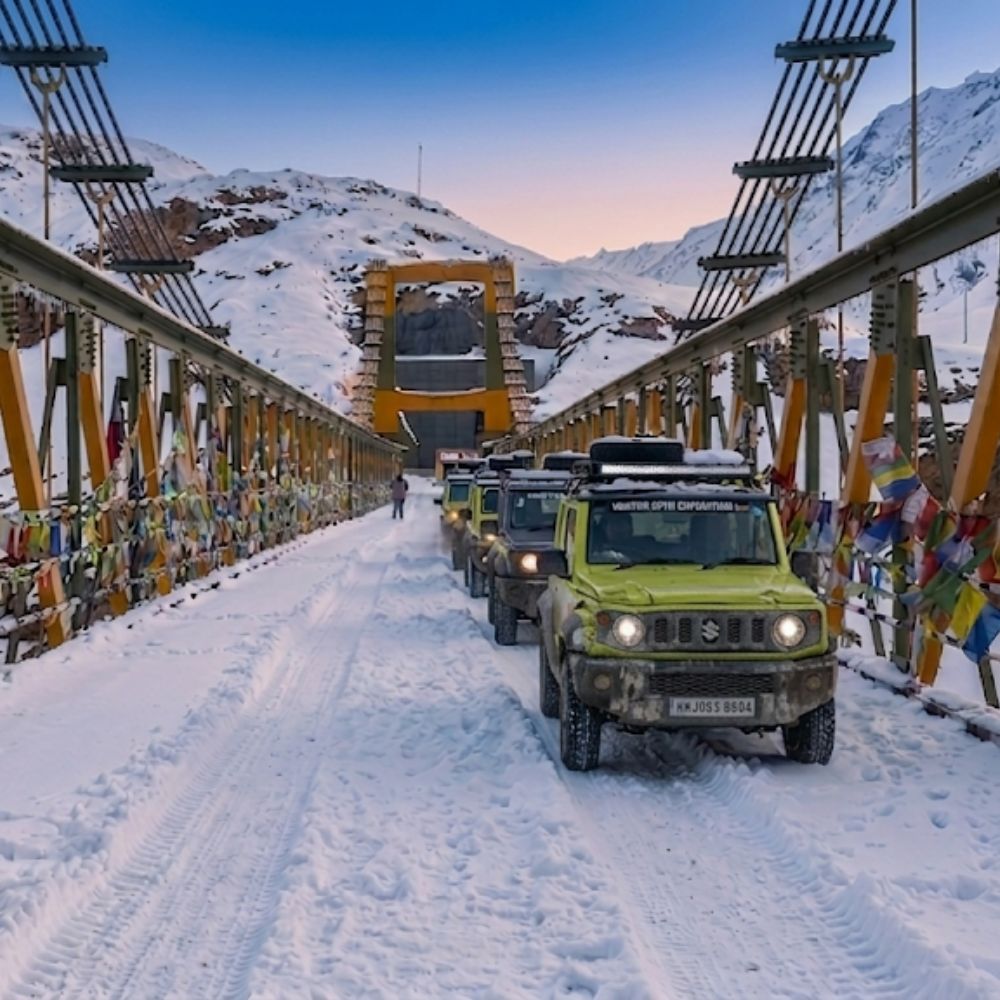
Winter Spiti 4×4 Seating Guide 2026: Jimny, Scorpio N, Thar and Hilux for Passengers and Luggage
Planning a Winter Spiti trip in 2026? This practical 4×4 seating guide compares the Jimny, Scorpio N, Thar and Hilux for passenger comfort, luggage space, winter roads and long mountain drives, helping you choose the right vehicle for your group size and travel style.
- Road Trips
- Snow Travel
 Lahaul and Spiti
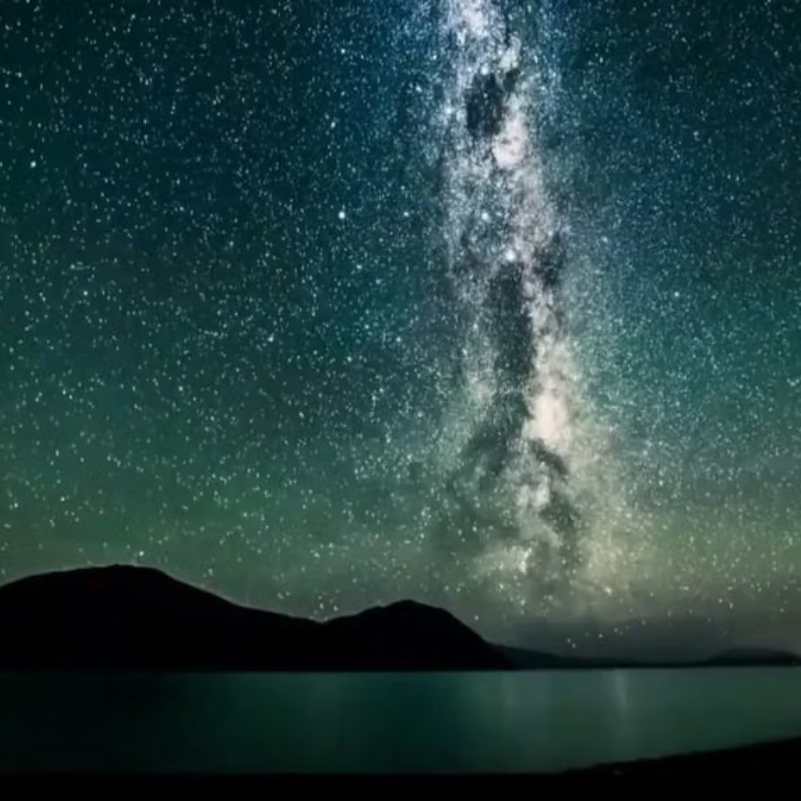
Stargazing in Winter Spiti 2026: Where to Stay, Moonlight and What You Can See
Discover the best places for stargazing in Winter Spiti 2026, where to stay for darker skies and how moonlight affects visibility. Learn what you can realistically see from Kaza, Tabo and nearby villages during the winter months.
- Things to Do
- Snow Travel