
Thiksey Monastery
The largest monastery in central Ladakh, a 12 storey Gelugpa gompa on a hillock 19 km south of Leh. Home to the 15 metre Maitreya Buddha, the signature 6:30 AM morning prayer, a rooftop cafe with valley views, and the closest thing Ladakh has to the Potala Palace in Lhasa. The single most important cultural stop on the Indus valley circuit from Leh.
- Altitude: ~3,600 m (~11,800 ft)
- 19 km south of Leh, on the Leh Manali highway
- Entry fee generally around Rs 40 to 50
- Morning prayer at 6:00 to 7:00 AM, open to visitors
- Largest monastery in central Ladakh, Gelugpa sect
What makes it special
Thiksey is the one. If you are doing only one monastery near Leh, this is it. If you are doing the whole Indus valley circuit, this is the one you start your day with, and the one you remember after everything else fades. It is the largest monastery in central Ladakh, 12 storeys of whitewashed walls and red ochre rooftops built into a hillock that rises directly from the Indus plain, and when the first light hits the facade around 6 AM, the resemblance to Tibetan hilltop monasteries is striking, right down to the tiered construction and the red and white colour scheme.
The comparison to the Potala Palace in Lhasa is not hype. Thiksey genuinely resembles it, the tiered construction climbing from monastic residences at the base to the main prayer halls and the chief lama's quarters at the top, all of it assembled across five centuries of building and rebuilding on the same hilltop. People call it the Mini Potala, and for once the nickname is fair.
Thiksey belongs to the Gelugpa (Yellow Hat) school of Tibetan Buddhism and was founded in 1433 by Palden Zangpo, a disciple of Jangsem Sherab Zangpo, who was himself a student of Je Tsongkhapa, the founder of the Gelugpa order. There is a story about a crow carrying a ritual cake to this hilltop and the monks reading it as a divine sign to build here. Regardless, the location works. The monastery sits about 19 km south of Leh on the Leh Manali highway at around 3,600 metres, visible for several kilometres before you arrive. At its peak, Thiksey administered ten other monasteries across Ladakh, including Diskit in Nubra, and controlled over 1,300 acres of land and 25 villages.
What you actually see. You climb through the lower levels past monk quarters and small shrines, each floor opening up new angles over the Indus valley. The main assembly hall (dukhang) is on the upper levels, with murals of the Tibetan calendar on one wall, images of Avalokiteshvara and protector deities, and rows of old manuscripts and thangka paintings. The Tara Temple, a small shrine dedicated to the goddess, holds 21 images of Tara. The Lamokhang Temple has more scripture collections. But the draw everyone comes for is the Maitreya Buddha.
The Maitreya statue is 15 metres tall, made of clay, copper, and gold paint, seated in the lotus position across two full storeys of the monastery. It was commissioned in 1970 to mark the 14th Dalai Lama's visit to Thiksey and consecrated in 1980. It is the largest indoor Buddha statue in central Ladakh, larger than the 12 metre copper Shakyamuni at Shey Palace next door. The 32 metre Maitreya at Diskit in Nubra Valley is taller overall, but that is an outdoor statue. Here, the scale only lands when you stand at the feet and look up. The room is dim, lit by butter lamps, and the gold face stares down from two floors above. It catches even the most experienced travellers off guard.
The morning prayer is the Ladakh experience that travellers talk about for years. Every morning at around 6:00 to 6:30 AM, monks gather in the upper prayer hall for the first chanting session of the day. Visitors are welcome to sit quietly at the back. Drums, long horns, cymbals, chanting that builds and fades, butter lamps flickering in the half light. The whole session lasts about 30 to 45 minutes. You need to leave Leh by 5:30 AM to make it, and yes, it is cold in the dark, and yes, the alarm at 5 AM hurts. But if someone asks you for one experience in Ladakh, most travellers who have been will point to this one.
After the prayer, walk up to the rooftop cafe. Sit on the terrace with a cup of butter tea or instant coffee, and look out over the Indus plain while the sun climbs over the Stok range. On a clear morning you can see Shey Palace on its hillock to the north, Stakna across the river, and the flat green band of the Indus floodplain stretching in both directions. This is the breakfast view that no hotel in Leh can match, and it costs roughly Rs 50 for a tea and a paratha.
Timing your visit. Most travellers spend 1 to 1.5 hours at Thiksey, which covers the main assembly hall, the Maitreya temple, the Tara Temple, a walk through the upper floors, and time on the rooftop. If you catch the morning prayer, add another 45 minutes. The full visit including the prayer and breakfast is roughly 2.5 to 3 hours, and it is the best spent morning on a Leh trip.
Who this suits. Everyone. Families, couples, solo travellers, seniors, first timers, repeat visitors. The climb through the monastery is steady but not extreme, and the views reward every level. Children are usually fascinated by the scale of the Maitreya. Seniors manage at a slow pace, and there is a vehicle road that gets you closer to the upper levels if the full stair climb is too much. Pets are not practical inside. The only travellers who should skip Thiksey are those who genuinely have zero interest in Buddhist culture, and even then the architecture and the view would probably win them over.
If you are planning the wider trip, our Shey Palace page covers the next stop on the monastery circuit, and our Pangong Lake guide has the permit and timing context for travellers combining the monastery day with the Pangong drive.
Quick answers
- Is Thiksey Monastery worth visiting?
- Yes, and it is the single most important cultural stop on the Indus valley circuit from Leh. The 15 metre Maitreya Buddha is the largest indoor Buddha in central Ladakh, the 6:30 AM morning prayer is the signature Ladakh experience most travellers remember longest, and the architecture genuinely resembles the Potala Palace in Lhasa. If you visit only one monastery near Leh, make it this one.
- What are the timings and entry fee for Thiksey Monastery?
- Generally open from around 7 AM to 6 or 7 PM daily between May and October, with reduced hours in winter. Morning prayers are held from around 6:00 to 7:00 AM and are open to visitors. Entry fee is usually around Rs 40 to 50 per person, cash only, same for Indian and foreign visitors. No additional camera fee. Fees and hours are semi stable, confirm on arrival.
- What is the best time of day to visit Thiksey?
- Dawn. Leave Leh by 5:30 AM, arrive for the 6:00 to 6:30 AM morning prayer, stay for breakfast on the rooftop cafe, and explore the monastery before the tour groups arrive around 10 AM. If the early start is too much, arrive by 8 to 9 AM for a quieter visit. Avoid 11 AM to 2 PM when the parking fills and the prayer halls get crowded.
Quick facts
Everything you need to know at a glance.
At a glance
- Altitude
- Around 3,600 m (~11,800 ft). Slightly higher than Leh at 3,500 m, so if you have acclimatised to Leh you are fine here.
- Location
- Thiksey village, about 19 km south of Leh on the Leh Manali highway (NH3). The monastery hillock is visible from several kilometres away on the approach.
- Founded
- 1433 by Palden Zangpo, a disciple of Jangsem Sherab Zangpo, in the Gelugpa (Yellow Hat) lineage. The monastery grew to administer ten other gompas across Ladakh.
- Nearest base
- Leh, about 30 to 40 minutes by road. Shey Palace is 4 km north on the same highway. Karu junction for Hemis and Chang La is about 17 km further south.
- Open season
- Open year round. Main tourist season is May to October. Morning prayers happen daily regardless of season. Winter visits are possible by flying into Leh, but services are reduced.
- Visiting timings
- Generally 7 AM to 6 or 7 PM. Morning prayers from around 6:00 to 7:00 AM, open to visitors. Some sources note slightly different hours. Winter schedule may be shorter. Confirm on arrival.
- Entry fee
- Usually around Rs 40 to 50 per person, cash only. No additional camera fee. Fees are semi stable and can update season to season.
- Time needed
- 1 to 1.5 hours for a standard visit. 2.5 to 3 hours if you catch the 6:30 AM morning prayer and stay for breakfast.
- Known for
- 15 metre Maitreya Buddha (commissioned 1970, consecrated 1980), the largest indoor Buddha in central Ladakh. The 6:30 AM morning prayer. Resemblance to the Potala Palace in Lhasa. Rooftop cafe with Indus valley views. The Gustor festival in October or November.
- Difficulty
- Moderate. The climb from the parking area through the 12 storey monastery involves many stairs and gradual elevation. Most visitors handle it comfortably at a slow pace. A vehicle road reaches the upper levels for those who need it.
On the ground
- Mobile network
- Good. BSNL, Jio, and Airtel all have workable signal on the highway near Thiksey. Data is slightly slower than Leh town but usable.
- ATMs
- None at Thiksey. Nearest working ATMs are in Leh, 19 km north. Carry cash for the entry fee, the rooftop cafe, and any donations.
- Fuel
- No pump at Thiksey. Leh has several working pumps, and Karu about 17 km south is the next option if continuing to Hemis or toward Pangong.
- Food
- The rooftop cafe at Thiksey serves tea, butter tea, instant coffee, parathas, and simple meals with a terrace view over the Indus valley. One of the better breakfast spots in all of Ladakh. A couple of small dhabas in Thiksey village also serve tea and Maggi.
- Parking
- Open parking area at the base of the hill. Usually free. Can fill up between 10 AM and 2 PM in peak season, especially when tour buses arrive. Early arrivals for morning prayer park easily.
- Washrooms
- Basic but adequate near the monastery entrance. The rooftop cafe area also has a washroom. Carry tissue and sanitiser.
- Photography
- Allowed outdoors and in most public areas. Photography inside the main prayer hall and near the Maitreya Buddha is generally restricted. Ask before shooting inside any shrine. Never photograph monks during prayer without permission. No additional camera fee.
- Drones
- Discouraged. The Leh Manali highway is a military supply corridor and recreational drone use has been flagged by local police. Keep drones grounded.
- Walking
- Moderate. The climb from the base parking through the 12 storey complex involves many stone and wooden stairs. Budget 15 to 20 minutes for the climb at altitude. A vehicle road reaches the upper levels for seniors or those with mobility concerns.
- Guided tours
- Not strictly needed, but a local guide adds context to the murals and statues. Most travellers arrive on a private taxi running the Indus valley monastery loop for a fixed day rate set by the Leh Taxi Operators Union.
Seasonal weather
- April to May18°2°Spring
- June to August28°10°Summer
- September to early October18°0°Autumn
- November to March5°-15°Winter
Suitable for
- Couples — suitable
- Families — suitable
- Seniors — suitable
- Solo — suitable
- First-timers — suitable
- Pet-friendly — not suitable
How to reach Thiksey Monastery
3 approach routes, with seasonal access.
From Leh to Thiksey (standard)
Year round. The highway is BRO maintained.- Distance
- About 19 km
- Time
- 30 to 40 minutes one way
- Road
- Tarred Leh Manali highway (NH3) in good condition.
- Last fuel
- Fill up in Leh. No pump at Thiksey.
Head south from Leh on the Leh Manali highway past Choglamsar, Sindhu Ghat, and Shey. Thiksey appears on the left as a large tiered monastery on a hillock, visible from a good distance. Well signposted. If you are coming for the morning prayer, leave Leh by 5:30 AM at the latest. The road is empty at that hour and the drive takes barely 25 minutes in the dark. Most Leh taxis know the route cold.
From As part of the Indus valley monastery circuit from Leh
Year round, main tourist season May to October.- Distance
- About 75 to 80 km round trip covering Thiksey, Shey, Stakna, and Hemis
- Time
- 5 to 7 hours including all stops
- Road
- Tarred highway the whole way.
- Last fuel
- Fill up in Leh. Karu has a pump on the highway for the return.
The standard day plan. Thiksey first at 6:00 to 6:30 AM for the morning prayer, breakfast on the rooftop, then drive 4 km north to Shey Palace around 9 AM. Stakna if you have time around 10:30, then Hemis by noon for the longest stop. Back to Leh by late afternoon. Most Leh taxis quote a fixed rate for this circuit set by the Leh Taxi Operators Union. This sequence gives each site its best light and keeps you ahead of the tour bus crowd almost everywhere.
From Thiksey to Shey Palace
Year round.- Distance
- About 4 km
- Time
- 10 minutes by road
- Road
- Tarred highway, easy drive.
- Last fuel
- Not needed for this short leg.
Thiksey and Shey are effectively neighbours, 4 km apart on the same highway. Almost everyone does them in the same half day. The natural sequence is Thiksey first for the dawn prayer and breakfast, Shey by 9 AM. You can also walk between the two on the local chorten trail, about 45 minutes, which is a quiet village morning for travellers who want the slower version.
Best time to visit
Season by season, so you can plan around the weather rather than hope.
- Recommended
Spring
April to May
Valley greens up, clean morning light, moderate crowds, the strongest overall window
- Day temperature
- 10 to 18 C
- Night temperature
- -2 to 7 C
- Crowds
- Low to moderate
- Light
- Cleanest of the year, especially early morning
The best overall window for most travellers. The highway is open, the Indus valley turns green with barley and mustard, apricot trees blossom in early May, and the monastery catches clean morning light that the summer haze takes away later. Crowds are moderate, lighter than July, and the morning prayer at dawn is at its quietest. If you are choosing one month for the monastery circuit, May is the pick.
Summer
June to August
Warmest days, peak crowds, tour bus rush between 10 and 2
- Day temperature
- 18 to 28 C
- Night temperature
- 7 to 12 C
- Crowds
- High, peak in July
- Parking
- Full between 10 AM and 2 PM on most days
The main tourist season. Daytime highs reach the high twenties Celsius, which is comfortable for exploring the monastery's many levels. The catch is the crowds. Tour buses from Leh arrive in waves between 10 AM and 2 PM, and the Maitreya temple and assembly hall feel busy. Pro tip: arrive before 9 AM or after 4 PM. The morning prayer at dawn is worth every minute of the early alarm, and the parking is empty at 6 AM when the rest of Ladakh is still asleep.
- Recommended
Autumn
September to early October
Sharpest light, thinning crowds, golden poplars, the best photo window
- Day temperature
- 8 to 18 C
- Night temperature
- -3 to 5 C
- Crowds
- Dropping after mid September
- Festival
- Gustor in October or November, dates shift yearly
The pick for photographers and travellers who want Thiksey at its cleanest. Summer haze settles by mid September, the sky goes deep blue, and the monastery's red and white facade stands out against the Ladakh range in a way it never does in July. Poplars along the highway turn gold. The Gustor festival usually falls in October or November, worth timing around if you can. Nights cool fast, so carry a proper layer.
Winter
November to March
Open but cold and quiet, morning prayer continues, specialist window only
- Day temperature
- -5 to 5 C
- Night temperature
- -15 to -25 C
- Crowds
- Almost none
- Access
- Fly in only, highways closed
The monastery stays open through winter and the morning prayer happens daily regardless of season. Very few visitors come, so you may have the prayer hall to yourself. But temperatures at 3,600 m in January are brutal, dropping to minus 20 C at night, and the whole complex feels different when the wind cuts through the open stairways. You need to fly into Leh since both highways close. Worth it only for travellers already in Leh on a winter trip.
Things to see & do
6 things worth your time at Thiksey Monastery.
Attend the 6:30 AM morning prayer
30 to 45 minutesThe experience that defines Thiksey and, for many travellers, defines Ladakh. Monks gather in the upper prayer hall before dawn. The chanting begins around 6:00 to 6:30 AM, accompanied by drums, long horns, and cymbals. Visitors are welcome to sit quietly at the back. Remove shoes, keep your voice down, do not photograph, and do not sit on the monk benches unless invited. The whole session lasts 30 to 45 minutes. Leave Leh by 5:30 AM to make it. The early start hurts, the cold at that hour is real, and you will not regret a single minute of it.
See the 15 metre Maitreya Buddha
15 to 20 minutesThe largest indoor Buddha statue in central Ladakh, 15 metres tall, made of clay, copper, and gold paint, seated in the lotus position across two full storeys. Commissioned in 1970 to mark the 14th Dalai Lama's visit to Thiksey and consecrated in 1980. The room is dim, lit by butter lamps, and the scale does not register until you stand at the feet and look straight up. Photography is generally restricted inside the Maitreya temple, ask before shooting.
Breakfast on the rooftop cafe
30 to 45 minutesAfter the morning prayer, walk up to the rooftop. The monastery runs a small cafe with a terrace that looks out over the entire Indus valley. Butter tea, instant coffee, parathas, and simple Ladakhi meals for roughly Rs 50 to 150. On a clear morning you can see Shey Palace on its hillock, Stakna across the river, and the Stok range rising behind the far bank. One of the best breakfast views in India, and nobody charges for the view.
Explore the assembly hall, Tara Temple, and upper floors
30 to 45 minutesThe main dukhang has murals of the Tibetan calendar, images of Avalokiteshvara and protector deities, and rows of old manuscripts. The Tara Temple is a small, quiet shrine with 21 images of the goddess. The Lamokhang Temple has more scripture collections. Each floor of the 12 storey complex opens new angles and smaller shrines. The walk up is the exploration, with views from every level growing wider as you climb. Take the stairs, not just the direct route to the Maitreya.
Time a visit for the Gustor festival
Half a day to a full dayThe annual Thiksey Gustor is held over two days, generally on the 17th to 19th day of the ninth month of the Tibetan calendar, which usually falls in October or November. Monks perform masked Cham dances in the courtyard, culminating in the ritual destruction of a Torma effigy symbolising evil. A small trade fair runs at the base of the monastery during the festival, with villagers from across Ladakh gathering. Dates shift yearly by the lunar calendar, confirm with a Leh operator before planning around it.
Combine with Shey, Stakna, and Hemis for a full day
5 to 7 hoursThe standard Indus valley circuit. Thiksey first at dawn for the prayer and breakfast. Shey Palace by 9 AM (4 km north, 45 to 60 minute stop). Stakna if you have time around 10:30 (30 minute stop across the Indus). Hemis by noon (the biggest monastery in Ladakh, 1.5 to 2 hour stop). Back to Leh by late afternoon. Most Leh taxis quote a fixed day rate for this exact loop.
Know before you visit Thiksey Monastery
The practical bits, from people who have been.
What Thiksey Monastery actually isThe largest monastery in central Ladakh, 12 storeys, Gelugpa sect, founded 1433. Often called the Mini Potala for its resemblance to the Potala Palace in Lhasa.
A bit of context that makes the visit land better.
Scale and lineage. Thiksey is the largest monastery in central Ladakh, belonging to the Gelugpa (Yellow Hat) school of Tibetan Buddhism. It is a 12 storey complex housing around 120 monks, ten temples, an assembly hall, a nunnery, and the chief lama's quarters at the top. At its peak, it administered ten other monasteries across Ladakh, including Diskit in Nubra Valley.
The founding. The monastery was founded in 1433 by Palden Zangpo, continuing the work of his teacher Jangsem Sherab Zangpo, who had established a smaller Gelugpa monastery nearby at Stagmo. The legend says that while choosing a site, a crow carried a ritual offering cake to this hilltop, and the monks read the sign as auspicious. The name Thiksey is said to derive from a word meaning "in perfect order," because the cake was placed neatly at the top.
The Potala comparison. The tiered architecture, climbing from monk residences at the base to the main prayer halls and the Rinpoche's quarters at the summit, genuinely resembles the Potala Palace in Lhasa. The red, white, and ochre colour scheme is similar too. It is one of those comparisons that actually holds up when you see the building in person.
The nunnery. Thiksey has a separate set of buildings for Buddhist nuns, and the monastery played an important role in improving conditions for nuns across Ladakh from the 1990s onward. The Thiksey Rinpoche donated land for a nunnery at Nyerma near the monastery. This is a working institution, not just a tourist site.
The Maitreya BuddhaA 15 metre statue of the future Buddha, the largest indoor Buddha in central Ladakh. Commissioned in 1970 to mark the 14th Dalai Lama's visit and consecrated in 1980.
The single most important thing at Thiksey, and worth a minute of context before you climb the stairs.
What it is. A 15 metre (roughly 49 feet) statue of Maitreya, the future Buddha, seated in the lotus position. Made of clay and copper and painted in gold. It occupies two full storeys of the monastery, housed in a dedicated Maitreya Temple built specifically for it.
Why it was built. The statue was commissioned in 1970 to mark the visit of the 14th Dalai Lama to Thiksey. Construction took several years and the statue was consecrated in 1980.
What you see inside. The Maitreya temple is dimly lit, mostly by butter lamps. You enter at foot level and look straight up at the enormous gold face two floors above. The room smells of butter lamp oil and incense. Photography is generally restricted inside, ask before shooting. The statue's hands are in the dharmachakra mudra, the teaching gesture, which fits the Maitreya's role as the Buddha who will come to teach when the current teachings fade.
Size context. This is the largest indoor Buddha statue in central Ladakh. The 12 metre copper Shakyamuni at nearby Shey is the second largest indoor Buddha. The 32 metre Maitreya at Diskit Monastery in Nubra Valley is taller overall, but that is an outdoor statue on an open hillside. Thiksey's Maitreya is the largest enclosed Buddha in the region.
How long to actually give it1 to 1.5 hours standard. 2.5 to 3 hours with morning prayer and breakfast. The prayer plus breakfast is the version you want.
Time budget for different types of visits.
The morning prayer visit, 2.5 to 3 hours. Arrive by 6 AM. Sit in on the 30 to 45 minute prayer session. Walk through the upper floors and the Maitreya temple. Breakfast on the rooftop cafe with the valley view. Explore the assembly hall and Tara Temple. This is the version of Thiksey that sticks with people.
The standard visit, 1 to 1.5 hours. If you arrive after the prayer window, budget about 90 minutes for the climb through the 12 storeys, the Maitreya temple, the assembly hall, a walk through the upper shrines, and time on the rooftop terrace. This covers everything a first time visitor needs.
The quick stop, 45 minutes to 1 hour. If you are running behind on the monastery circuit and need to compress. Climb directly to the Maitreya temple, see the assembly hall, and grab a quick tea on the roof. You will miss the smaller shrines and upper floors, but you will have seen the two main draws.
Recommended sequence for the day. Thiksey at dawn, breakfast on the rooftop, Shey by 9 AM, Stakna 10:30, Hemis by noon, back to Leh. This sequence works because the morning prayer only happens at Thiksey, and it gives you the best version of each site.
Etiquette and photographyModest dress, shoes off in shrines, clockwise circulation, ask before photographing inside. Morning prayer is a no camera zone.
Dress modestly. Long trousers and covered shoulders for everyone, especially in the prayer halls and temples. Shorts and sleeveless tops are not appropriate inside the monastery.
Shoes off in prayer halls. Including the Maitreya temple, the assembly hall, and the Tara Temple. Socks are fine on the cold stone floors.
Clockwise. Walk clockwise around statues, chortens, and prayer wheels. Spin prayer wheels clockwise only.
Photography. Outdoors and in the courtyards, photography is generally fine. Inside the prayer halls and the Maitreya temple, it is usually restricted. Ask before shooting. During the morning prayer, keep your phone and camera away entirely. Photographing monks at close range without permission is not acceptable.
Donations. Welcome but not required. Small notes of Rs 10 to 50 in the offering boxes near the main shrines. The money supports maintenance, butter lamp oil, and the resident monks.
The morning prayer specifically. Sit at the back. Keep your voice at zero. Do not move around during the session. Do not sit on monk benches unless invited. This is not a performance for tourists. It is a daily religious practice that you are being allowed to witness. Treat it accordingly.
Pro tips that will save your Thiksey visitLeave Leh by 5:30 AM for the prayer, carry cash, eat on the rooftop, and start with Thiksey before the rest of the circuit.
Leave Leh by 5:30 AM. The morning prayer is the thing to build around. The alarm hurts, the drive is cold and dark, and there is no way around it. Set the alarm, get in the taxi, and go. You will thank yourself by 7 AM when you are sitting on the rooftop with a tea and the whole valley below.
Carry cash. Rs 200 to 300 per person covers the entry fee, breakfast on the rooftop, a donation, and a tea at the village dhaba. No ATMs at Thiksey.
Eat on the rooftop. Do not skip this. The cafe is basic, butter tea or coffee and simple food, but the terrace view over the Indus is the real draw. Morning light after the prayer session is when it is at its best.
Start with Thiksey on the circuit. The morning prayer only happens here, and the rooftop breakfast only makes sense before 9 AM when the light is clean. Start here, then move to Shey, Stakna, Hemis in that order.
Stay at the monastery if you want. Thiksey offers basic guest rooms for visitors who want to experience monastery life. Simple rooms, vegetarian food, usually around Rs 500 to 800 per night. Book directly at the monastery. This lets you attend the morning prayer without the predawn drive from Leh.
The Gustor festival. If your Ladakh dates are flexible, try to overlap with the Gustor in October or November. Masked dances, the Torma ceremony, and a village trade fair at the base. Dates shift by the Tibetan calendar, confirm with a Leh operator.
Confirm timings and fees on arrival. Both are semi stable and can shift with the season. Winter hours may be shorter, and the entry fee has adjusted slowly over the years.
Nearby attractions
Other places worth the detour.
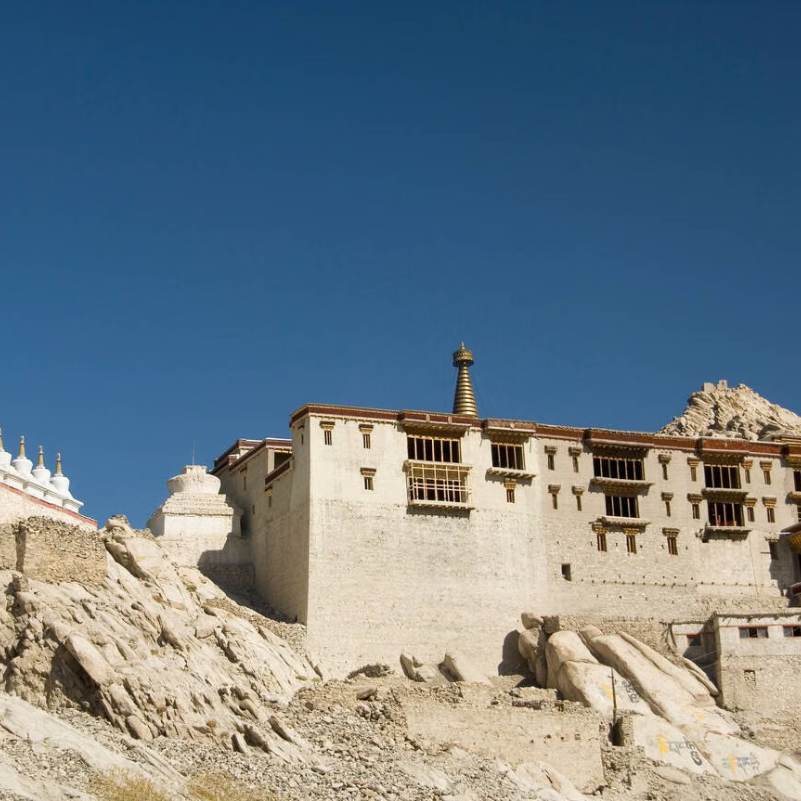
Shey Palace
About 4 km north on the Leh Manali highway
The former summer capital of the Namgyal kings, with a 12 metre Shakyamuni Buddha built in 1655, the second largest in Ladakh after Thiksey. A 45 to 60 minute stop, the natural next stop after Thiksey on the monastery circuit.
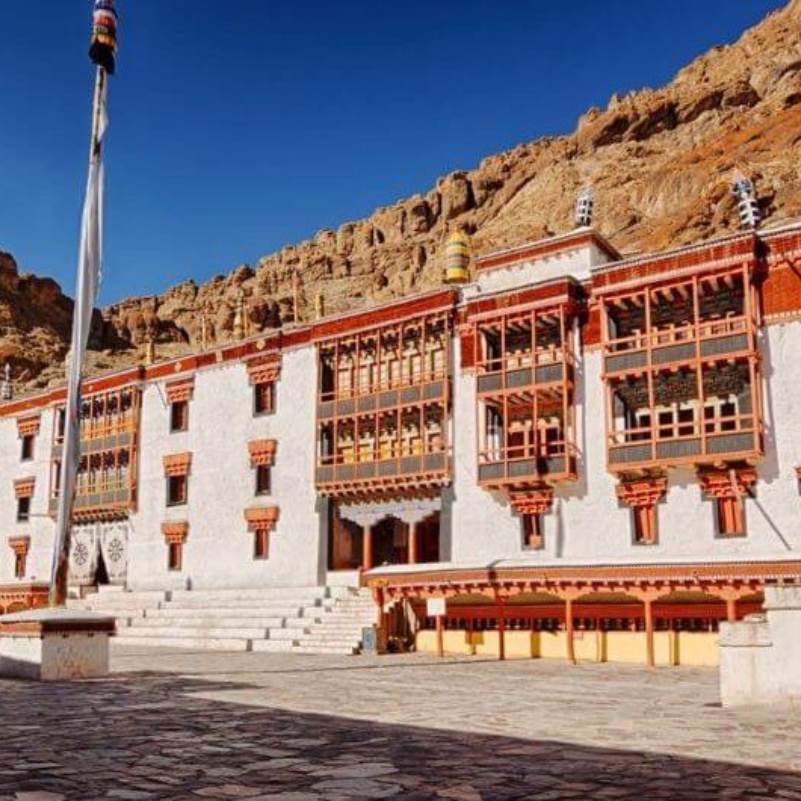
Hemis Monastery
About 25 km south, off the main highway via Karu
The largest and wealthiest Drukpa Kagyu monastery in Ladakh, in a sheltered gorge off the highway. Known for the Hemis Festival in June or July, a museum of centuries old artefacts, and the famous giant thangka unveiled every 12 years. Worth 1.5 to 2 hours on the full circuit day.
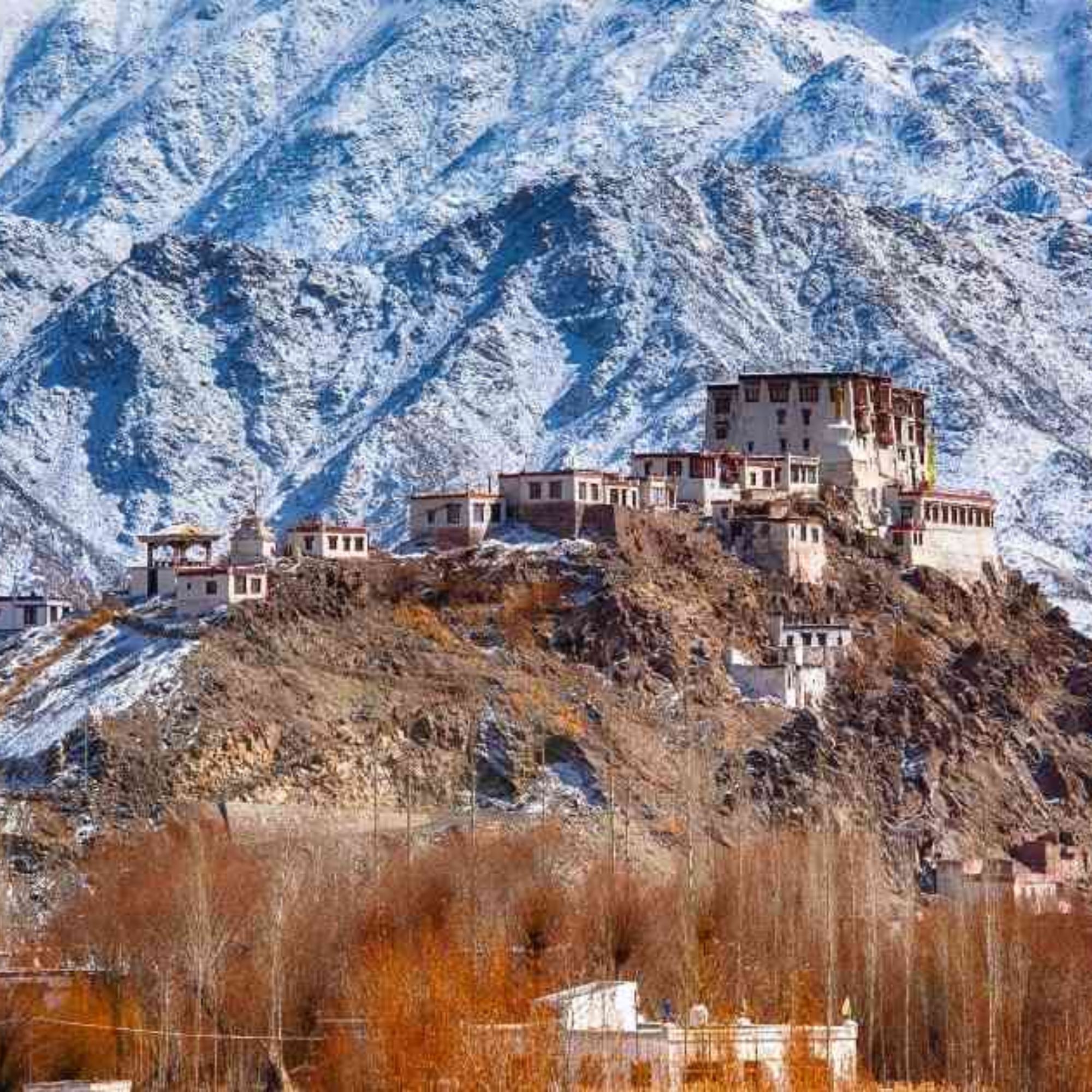
Stakna Monastery
About 10 km south, across the Indus
A smaller Drukpa monastery perched on a conical hill, the name means tiger's nose. Fewer tourists than Hemis or Thiksey, one of the quieter working gompas in the valley. A 30 minute stop on the full circuit.
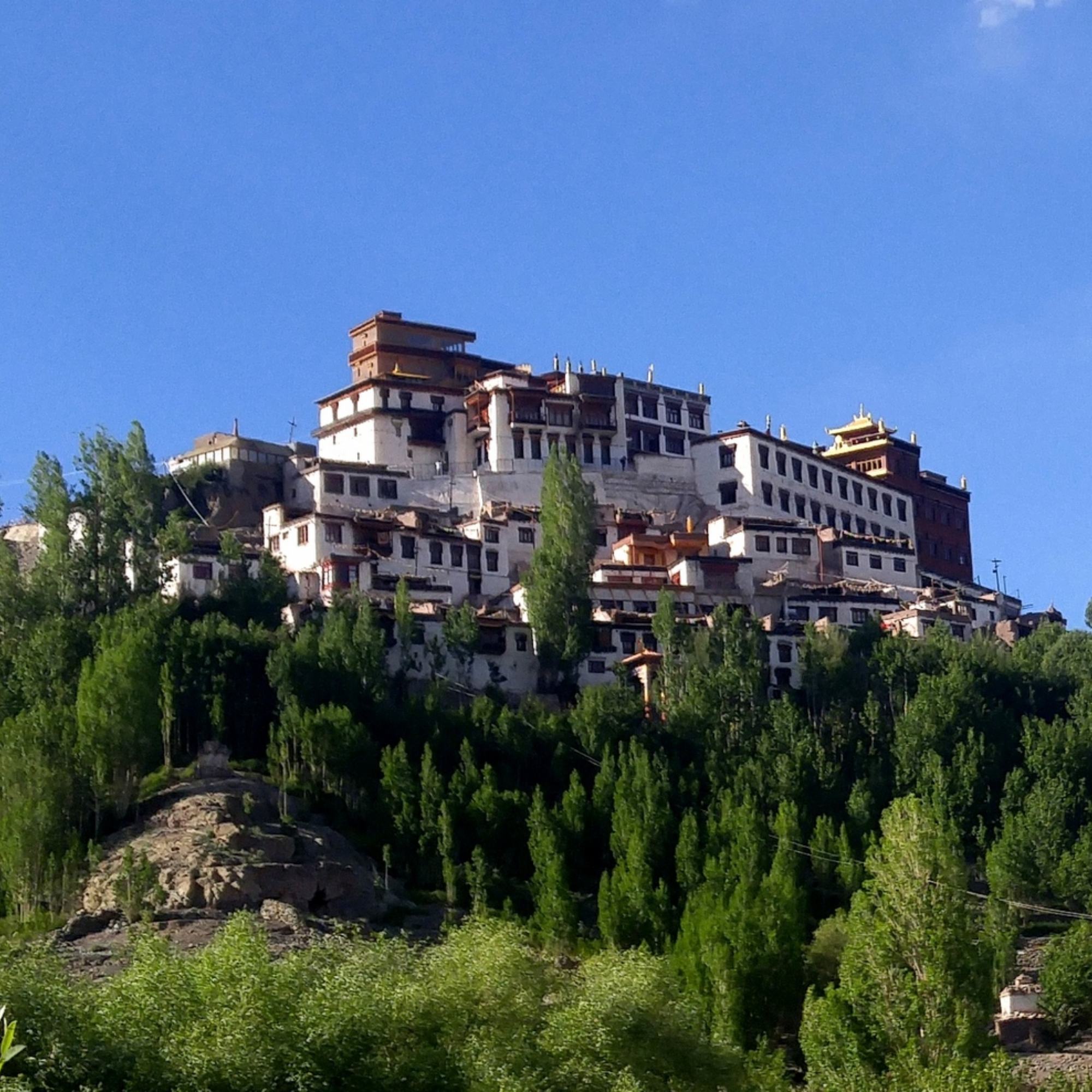
Matho Monastery
About 15 km south, across the Indus
The only Sakya school monastery in Ladakh. Best known for the Matho Nagrang festival in late February or early March when two monks enter oracle trances. Quiet outside festival time.
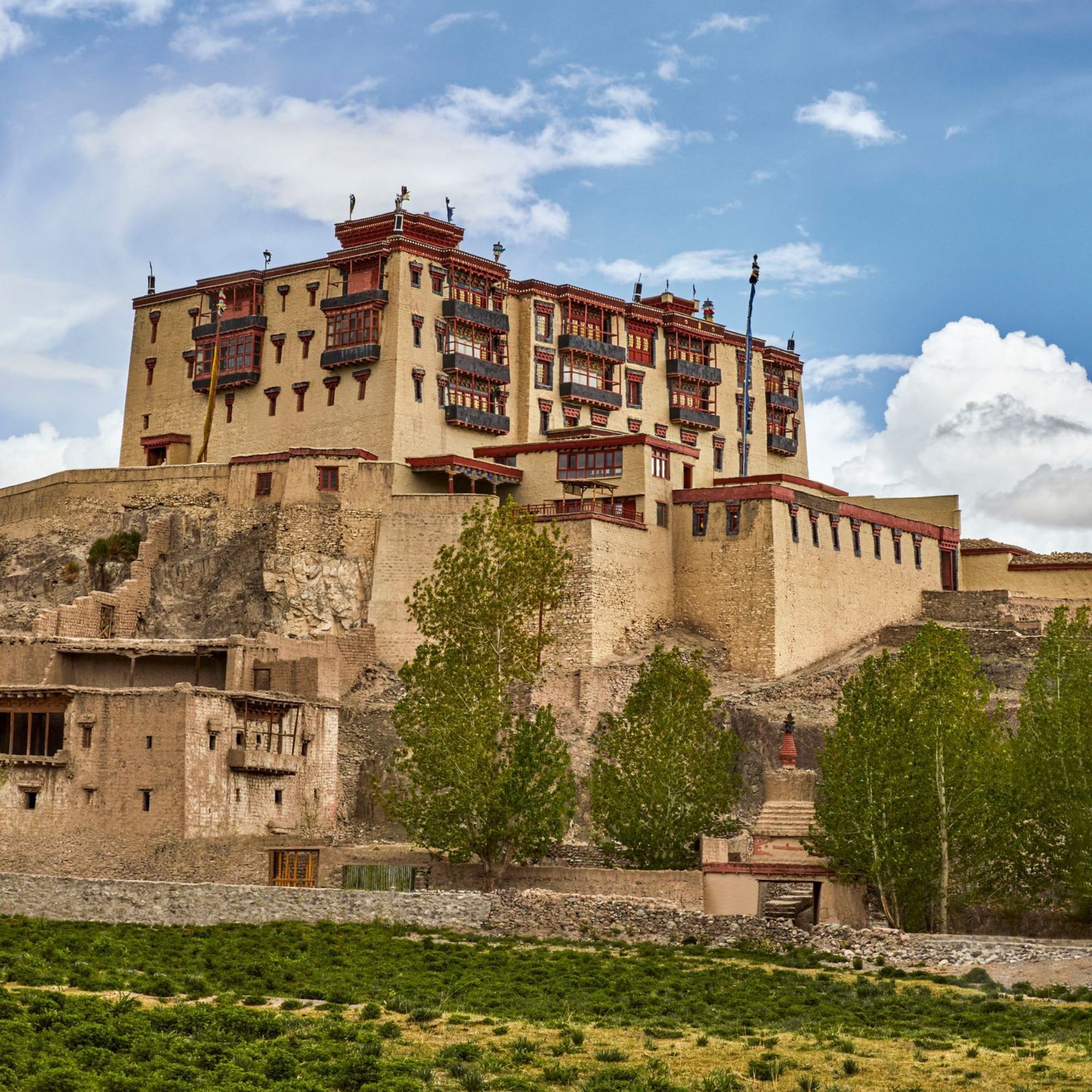
Stok Palace and Village
About 12 km west, across the Indus
Where the Namgyal royal family moved in 1842 after abandoning Shey. A small museum of royal artefacts including thangkas, jewellery, and robes. Part of the palace is now a heritage hotel.
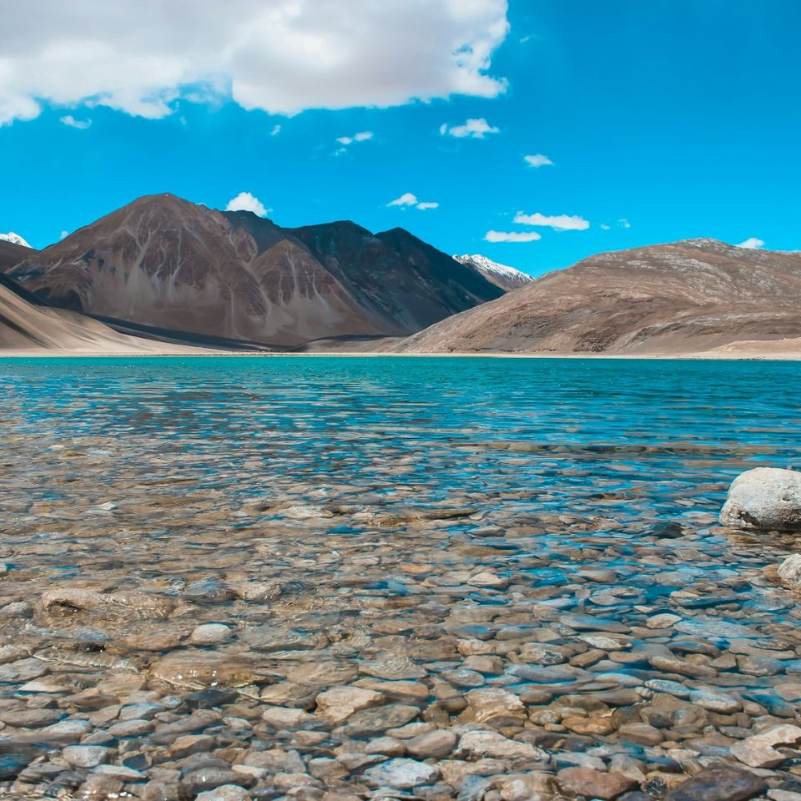
Pangong Lake
About 140 km east via Chang La from Karu
The high altitude saltwater lake on the India China border. The Karu junction near Thiksey serves both the monastery circuit and the Pangong road, so many travellers combine them on different days of a Ladakh trip.
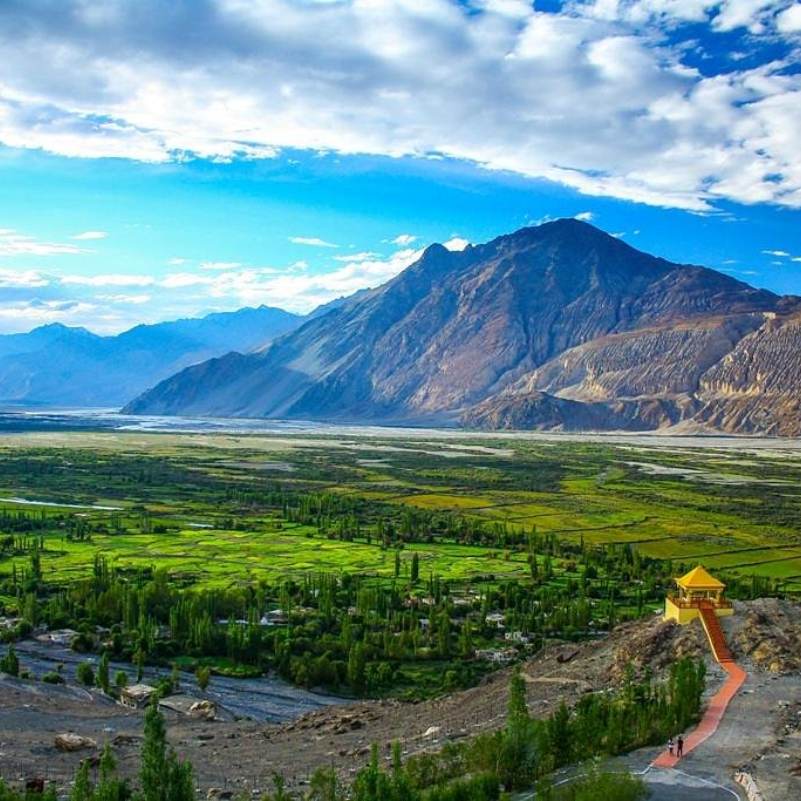
Nubra Valley
About 130 km north via Leh and Khardung La
The broad desert river valley north of Leh with sand dunes, Bactrian camels, Diskit Monastery, and Turtuk village. A separate 2 to 4 night leg on any Ladakh itinerary.
Our packages with Thiksey Monastery
Curated trips that include a visit to Thiksey Monastery.
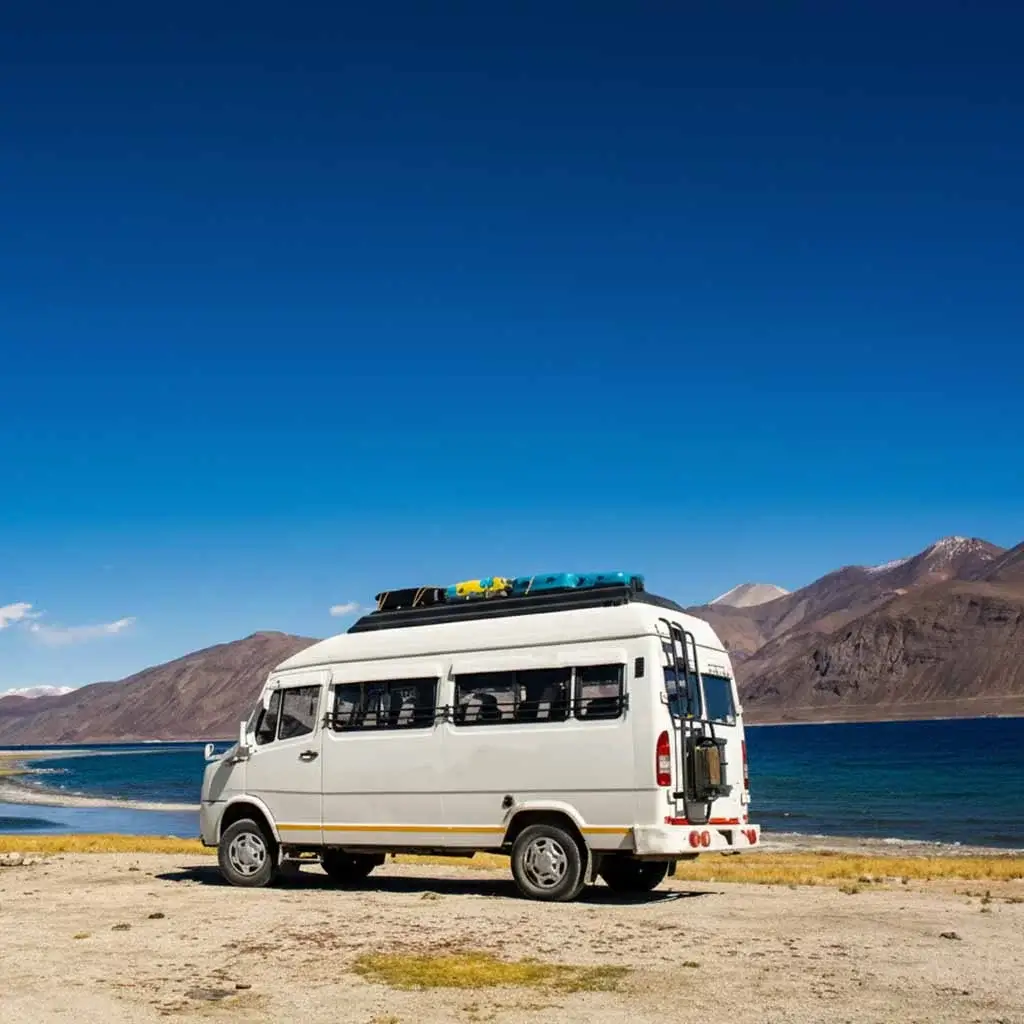 Group Tour6D/5N
Leh Ladakh Group Tour With Nubra Valley and Pangong Lake
2D Leh•1D Nubra Valley+1
₹18,999/ person 4D/3N
4D/3NLeh Ladakh Quick Escape
2D Leh•1D Pangong Lake
₹20,999₹24,999SAVE INR 4,000/ person 7D/6N
7D/6NLeh Ladakh Tour With Turtuk Village Nubra Valley and Pangong Lake
2D Leh•2D Nubra Valley+1
₹27,999₹33,999SAVE INR 6,000/ person
Frequently Asked Questions about Thiksey Monastery
Is Thiksey Monastery worth visiting?
Yes, and it is the single most important cultural stop on the Indus valley circuit from Leh. The 15 metre Maitreya Buddha is the largest indoor Buddha in central Ladakh, the morning prayer at dawn is the signature Ladakh experience most travellers remember longest, and the 12 storey tiered architecture genuinely resembles the Potala Palace in Lhasa. If you visit only one monastery near Leh, make it this one. If you do the full circuit, start here.
How far is Thiksey Monastery from Leh?
About 19 km south of Leh on the Leh Manali highway (NH3). The drive takes roughly 30 to 40 minutes by car or taxi. Shey Palace is another 4 km north, and most travellers combine the two in the same half day.
What are the timings and entry fee for Thiksey Monastery?
Generally open from around 7 AM to 6 or 7 PM daily in the main season (May to October). Morning prayers are held from around 6:00 to 7:00 AM and are open to visitors. Entry fee is usually around Rs 40 to 50 per person, cash only, same for Indian and foreign visitors. No additional camera fee. Timings and fees are semi stable and can shift, confirm locally.
What is the altitude of Thiksey Monastery?
Around 3,600 metres (roughly 11,800 feet). That is slightly higher than Leh itself at 3,500 m. If you have spent a day or two acclimatising in Leh, the altitude at Thiksey is comfortable for most travellers. The climb through the 12 storey monastery will feel harder than the elevation suggests because of the thin air, so go at a steady pace.
What time does the morning prayer start at Thiksey?
Around 6:00 to 6:30 AM. Monks gather in the upper prayer hall and the session lasts roughly 30 to 45 minutes. Visitors are welcome to sit quietly at the back. Leave Leh by 5:30 AM to arrive in time. The prayer happens daily, year round, regardless of season.
Can I stay overnight at Thiksey Monastery?
Yes. The monastery offers basic guest rooms for visitors who want to experience monastery life. Simple rooms, vegetarian food, usually around Rs 500 to 800 per night as of recent reports. This is the best way to attend the morning prayer without the predawn drive from Leh. Book directly at the monastery.
How long should I spend at Thiksey Monastery?
1 to 1.5 hours for a standard visit covering the Maitreya temple, assembly hall, Tara Temple, and rooftop. 2.5 to 3 hours if you catch the 6:30 AM morning prayer and stay for breakfast. The prayer plus breakfast version is the one worth doing.
Do I need a permit to visit Thiksey Monastery?
No separate permit is required. Thiksey sits on the main Leh Manali highway inside the Leh district. The Ladakh Environment Fee that covers Nubra, Pangong, and Tso Moriri does not apply to the standard Indus valley monastery circuit. Foreign nationals need standard Leh entry registration but not a Protected Area Permit for Thiksey.
What is the Thiksey Gustor festival?
An annual two day festival held at the monastery, generally on the 17th to 19th day of the ninth month of the Tibetan calendar, which usually falls in October or November. Monks perform masked Cham dances, the Torma cake effigy is ritually destroyed, and a small trade fair runs at the base. Dates shift yearly, confirm with a Leh operator before planning around it.
Is Thiksey Monastery the same as the Mini Potala?
Yes. Thiksey is widely called the Mini Potala because its tiered, multi storey architecture on a hilltop closely resembles the Potala Palace in Lhasa, Tibet. The comparison holds up in person. Both are multi storey hilltop structures with red, white, and ochre facades, built in tiers from residential quarters at the base to sacred spaces at the top.
What other monasteries should I combine Thiksey with?
The standard Indus valley circuit covers Thiksey, Shey Palace (4 km), Stakna (across the Indus), and Hemis (the biggest, about 25 km further south) in one full day. Start with Thiksey at dawn for the morning prayer, then move through the others in order. Matho across the river is a possible addition if you have a longer day.
Can I take photographs inside Thiksey Monastery?
Photography in the courtyards and outdoor areas is generally fine. Inside the prayer halls and the Maitreya temple, it is usually restricted. Always ask before shooting indoors. During the morning prayer, keep your camera completely away. Do not photograph monks at close range without permission. No additional camera fee applies.
Related guides
Posts about Ladakh
- Manali to Leh Highway 2026: Every Pass, Stop and Distance
- Umling La Ladakh Guide 2026: Route, Altitude, Permit, Safety & Reality Check
- Turtuk Ladakh Travel Guide 2026: Balti Culture, Apricot Orchards and Why It Is Perfect for Families
- Offbeat Ladakh for Couples in 2026: Quiet Routes Beyond Pangong and Nubra
- Aryan Valley Ladakh Guide 2026: Dah, Hanu, Brokpa Culture, Route and Who Should Visit
- Hanle vs Tso Moriri vs Turtuk: Which Offbeat Ladakh Place Should You Choose in 2026?