
Pulga Village
A small village at roughly 2,210 metres on the left bank of the Parvati River, where you cross a footbridge at Barshaini and walk uphill through deodar forest for half an hour until you reach bright wooden houses, apple orchards, and the Fairy Forest, a dense grove above the village where the canopy closes overhead and the only sound is wind through old trees
- Village
- Parvati Valley
- ~2,210 m
- 30 to 40 min walk from Barshaini
- Fairy Forest
- No road access
- Traditional wooden houses
- Homestays
- No entry fee
- Near Kheerganga trail
What makes it special
Pulga sits on the left bank of the Parvati River, across from Barshaini, at roughly 2,210 metres. To get there you cross a footbridge over the river and walk uphill through trees for about 30 to 40 minutes. The bridge is the dividing line. Barshaini has roads, buses, and the last major taxi stand in the valley. Pulga has none of that. (If you are driving, note that the nearest petrol pump is further down the valley near Jari or Bhuntar. There is no fuel at Barshaini.)
The village is tiny. Traditional wooden and stone houses, some painted in bright colours, scattered across a hillside that opens into apple orchards and deodar forest. A Lord Narayana temple sits at the centre where the older villagers gather in the evenings after work. Children play cricket in whatever flat space they can find. Dogs sleep in the sun. Firewood is stacked against every second wall. It looks, and feels, like a place that runs on its own clock.
What most people talk about when they talk about Pulga is the Fairy Forest. It is a dense stretch of tall deodar trees just above the village, where the canopy closes overhead and the light filters through in patches. The name comes from local belief that the forest is home to spirits. Whether or not you believe that, the silence inside the trees is real. The air temperature drops noticeably. The smell of damp wood and pine is strong. It is a 15 to 20 minute walk from the village and worth doing even if you are only staying one night.
Pulga, Kalga, and Tulga form a trio of small villages around Barshaini. Pulga is on the left bank, Kalga on the right, and Tulga sits between them. You can walk between all three in a half day. Most people pick one as a base and visit the others on foot. The character is similar across all three, but Pulga tends to have the most vibrant facades, a touch more of the backpacker cafe scene, and the Fairy Forest as its signature walk.
Honest framing. Pulga is not for everyone. No road access means carrying your luggage uphill for half an hour. Facilities are basic. Electricity is intermittent. Hot water is not guaranteed. The nearest medical help is in Kasol, about an hour and a half away by a combination of walking and road. If that sounds uncomfortable, Tosh has road access and more developed infrastructure just across the valley. If it sounds like exactly the kind of place you have been looking for, you will understand the appeal the moment you see the valley open up below you on the walk in.
Quick answers
- What is Pulga Village?
- A small village at roughly 2,210 metres in the Parvati Valley, on the left bank of the Parvati River. Accessible only by a 30 to 40 minute walk from Barshaini. Known for its Fairy Forest, a dense deodar grove above the village. Classic Himachali timber architecture with splashes of colour on the facades. Basic homestays from a few hundred to 1500 rupees. Part of the Pulga, Kalga, Tulga trio of villages near Barshaini.
- Is it worth visiting?
- Yes, if you want a genuinely quiet village where the main thing to do is walk through forests and orchards and not much else. The Fairy Forest is the signature draw. If you need cafes, nightlife, or structured activities, look elsewhere. If you need silence, pine air, and a few days without engine noise, this delivers.
- How much time do I need?
- One night minimum. Two nights is the comfortable pace. That gives you a morning for the Fairy Forest, an afternoon in the village, and time to walk to Tulga and Kalga. Three nights if you are adding the Kheerganga trek.
Quick facts
Everything you need to know at a glance.
At a glance
- Location
- Left bank of the Parvati River, above Barshaini. Parvati Valley, Kullu district, Himachal Pradesh.
- Altitude
- Approximately 2,210 m (about 7,250 feet).
- Access
- 30 to 40 minute walk from Barshaini. Cross the footbridge and walk uphill. No road.
- Time needed
- One night minimum. Two nights recommended.
- Entry fee
- None.
- Key highlight
- The Fairy Forest, a dense deodar grove above the village. 15 to 20 minute walk from the village centre.
On the ground
- Mobile network
- Patchy. BSNL works in spots. Jio sometimes. Airtel barely.
- Food
- Homestay meals (dal rice, roti, eggs, chai). A few guesthouse cafes. Carry snacks from Kasol.
- ATM
- None. Nearest in Kasol (not always stocked). Carry cash.
- Accommodation
- Homestays and guesthouses. A few hundred to 1500 rupees per night.
- Safety
- Generally safe. Trail from Barshaini is well used. Carry a torch. No medical help in the village.
Seasonal weather
- March to June22°5°Spring and Summer
- July to September20°12°Monsoon
- October to November16°0°Autumn
- December to February10°-5°Winter
Suitable for
- Couples — suitable
- Families — with some care
- Seniors — not suitable
- Solo — suitable
- First-timers — with some care
- Pet-friendly — with some care
How to reach Pulga Village
3 approach routes, with seasonal access.
From Barshaini (on foot)
Year round. Muddy in monsoon. Possibly icy in deep winter.- Distance
- About 3 km
- Time
- 30 to 40 minutes uphill
- Road
- Footpath through forest. Uphill. Muddy after rain.
From Barshaini, walk to the footbridge over the Parvati River. Cross the bridge. On the other side, the path goes left and uphill through forest. Follow it for about 30 to 40 minutes. The trail is well used and you will likely see other walkers. In monsoon, the trail gets muddy. Wear proper shoes. If arriving late, the forest section is dark. Carry a torch.
From Kasol (by road to Barshaini, then on foot)
Year round. Road to Barshaini can be disrupted in heavy monsoon.- Distance
- About 16 km by road, then 3 km walk
- Time
- 45 minutes by road, then 30 to 40 minutes walking
- Road
- Valley road to Barshaini, then footpath.
From Kasol, take a local bus or shared taxi to Barshaini (about 16 km, 45 minutes by road). The road passes through Manikaran Sahib on the way. At Barshaini, walk to the footbridge and follow the trail to Pulga as described above.
From Delhi (overnight bus)
Year round from Delhi.- Distance
- About 500 km to Bhuntar, 31 km to Kasol, 16 km to Barshaini, then walk
- Time
- Full travel day from Delhi
- Road
- Highway to Bhuntar, valley road to Barshaini, footpath to Pulga.
Overnight bus from Delhi to Bhuntar or Kasol (10 to 12 hours). From Kasol, bus or taxi to Barshaini (45 minutes). Walk to Pulga. Plan to arrive at Barshaini before dark.
Best time to visit
Season by season, so you can plan around the weather rather than hope.
- Recommended
Spring and early summer
April to June
Green forest, flowering orchards, and the most comfortable weather.
- Weather
- 5 to 22 degrees. Warm days, cool nights.
- Trail
- Dry and clear.
- Homestays
- Most open. Book ahead for peak weekends.
The best time. Apple trees flower. The forest is at its greenest. Daytime weather is comfortable. Nights are cool but manageable. Peak weekends in May and June bring more visitors, but Pulga stays quieter than Tosh or Kasol. The Fairy Forest is at its most atmospheric in the morning mist.
Monsoon
July to September
Very green, very wet. Leeches and mud. For rain lovers only.
- Weather
- 12 to 20 degrees. Rain frequent.
- Trail
- Muddy, slippery. Leeches likely in forest.
- Homestays
- Some close. Confirm before heading up.
Intense green. But the trail from Barshaini gets muddy and slippery. Leeches in the forest sections are likely. Rain is frequent and sometimes heavy. Some homestays close. The Fairy Forest is atmospheric in a different way, dripping and dark. Come only if you genuinely do not mind getting wet and muddy.
- Recommended
Autumn
October to November
Clear air, golden forest floor, and the valley at its sharpest. October is the peak.
- Weather
- 0 to 16 degrees. Cold nights.
- Views
- Best of the year.
- Crowds
- Very low.
The best month is October. Post monsoon clarity. The valley views are the widest and sharpest of the year. The Fairy Forest floor is covered in golden needles. Apple harvest time. Crowds are at their thinnest. Nights get cold by November, but the days are stunning.
Winter
December to February
Cold, possibly snowy. Most homestays close.
- Weather
- Minus 5 to 10 degrees. Snow possible.
- Trail
- May be icy.
- Homestays
- Most close. Confirm before going.
Cold. Snow is possible at this altitude. Many homestays close. The trail from Barshaini can be icy. Come only with proper winter gear, confirmed accommodation, and experience with cold mountain travel.
Things to see & do
4 things worth your time at Pulga Village.
Walk through the Fairy Forest
30 to 60 minutesThe Fairy Forest is a dense cluster of tall deodar trees above the village. The canopy is thick enough that the light changes completely once you step inside. The ground is soft with fallen needles. The sound drops. Locals believe the forest has spirits. Most travellers just find it unusually quiet. The walk from the village takes about 15 to 20 minutes uphill. No marked trail, but the path is well used. Ask at your homestay for directions. Best in the morning when the mist is still sitting between the trees.
Walk to Tulga and Kalga
Half a day for all threeA 10 minute walk from Pulga takes you to Tulga, an even smaller hamlet between Pulga and Kalga. From Tulga, Kalga is another 15 to 20 minutes. The paths are gentle and pass through orchards and forest. You do not need a guide. Each village has a slightly different feel. Tulga is the smallest and quietest. Kalga has its own homestay scene and connects to the Kheerganga trek on the right bank. A half day loop through all three is one of the most pleasant things you can do in the upper Parvati Valley.
Trek to Kheerganga from Barshaini
4 to 5 hours one wayFrom Barshaini (which you pass through on the way to Pulga), the trail to Kheerganga starts on the left bank of the Parvati River. The trek takes roughly 4 to 5 hours depending on pace. Hot springs at the top. Many people base at Pulga and do Kheerganga as a day or overnight trek. Check locally for trail status, especially in monsoon and post snowfall.
Visit the Narayan temple
15 to 20 minutesThe Narayan temple sits at the centre of the village. It is small, wooden, and not a tourist attraction. It is where the older villagers come to sit in the evening. If you visit, be quiet and respectful. Do not photograph people without asking. Do not enter unless invited. The temple and the life around it give you a sense of how the village actually works when tourists are not around.
Know before you visit Pulga Village
The practical bits, from people who have been.
Getting there and the trailCross the bridge at Barshaini, turn left, walk uphill 30 to 40 minutes. Carry a backpack, not a suitcase.
From Barshaini, cross the footbridge over the Parvati River. Do not follow the path to the right (that leads uphill to Kalga). After crossing the bridge, turn left and follow the trail uphill through trees. The walk takes 30 to 40 minutes at an easy pace, longer with heavy luggage. The trail is clear in dry weather but gets muddy and slippery in monsoon.
Pack your things in a backpack, not a suitcase. There is no wheeled access. If you are arriving late in the day, start early enough to reach before dark. The trail is not lit and the forest section is completely dark after sunset.
Where to stay and eatHomestays from a few hundred to 1500 rupees. Simple food at most places. Walk ins usually work except peak weekends.
Multiple homestays and guesthouses operate in the village. Basic rooms with shared bathrooms go for a few hundred rupees. More comfortable rooms with attached bathrooms and mountain views range from 800 to 1500 rupees. Some newer places have small cafes with expanded menus. Most places serve dal rice, roti, eggs, and chai.
Walk in bookings usually work except in peak season weekends (May and June). For peak dates, contact ahead through whatever phone number you can find online or through recommendations from other travellers.
Ground realityNo ATM, no medical help, no reliable signal. Carry cash, medicines, and a torch from Kasol.
No ATM. No medical shop. No proper road. Mobile signal is patchy at best. BSNL has the most reach. Jio works in spots. Airtel barely registers. WiFi at guesthouses is unreliable. Electricity is intermittent. Hot water is not guaranteed in all homestays.
Carry everything you need from Kasol. Cash, medicines, torch, warm layers, rain jacket (if monsoon), and a portable charger. The nearest medical help is in Kasol, roughly 1.5 hours away by walking plus road.
Worth remembering. Homestay availability, trail conditions, and pricing can change with the season. Check with your Kasol guesthouse or recent travellers before heading up.
Who it suits and who should reconsiderGreat for solo travellers and quiet seekers. Not ideal for families with small kids, elderly, or connectivity dependent travellers.
Pulga works best for solo travellers, backpackers, couples who want mountain quiet, trekkers using it as a Kheerganga base, and anyone looking for a village where the Fairy Forest is a 15 minute walk and the loudest evening sound is the wind.
It is not ideal for families with very young children, elderly travellers who cannot manage the uphill walk, anyone needing reliable connectivity, or travellers expecting hotel standard comfort. Tosh across the valley has road access and more developed stays for those who want a Parvati Valley village with less roughness.
Nearby attractions
Other places worth the detour.
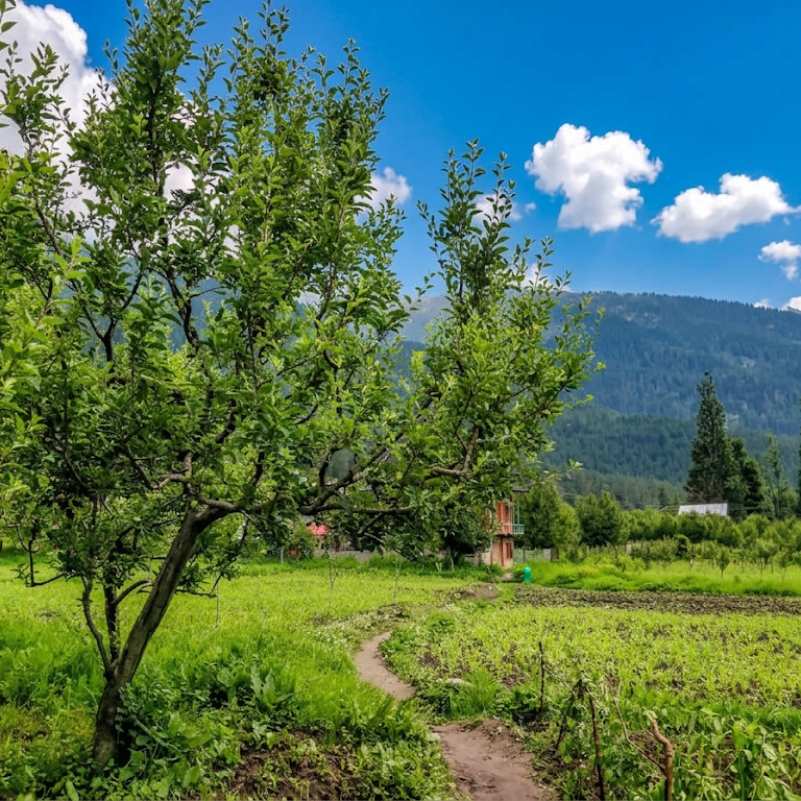
Kalga Village
About 30 to 40 minutes walk via Tulga
A small village at about 2,280 m on the right bank of the Parvati River, reachable by a trail through Tulga. Similar character to Pulga but with a more direct connection to the Kheerganga right bank trail.
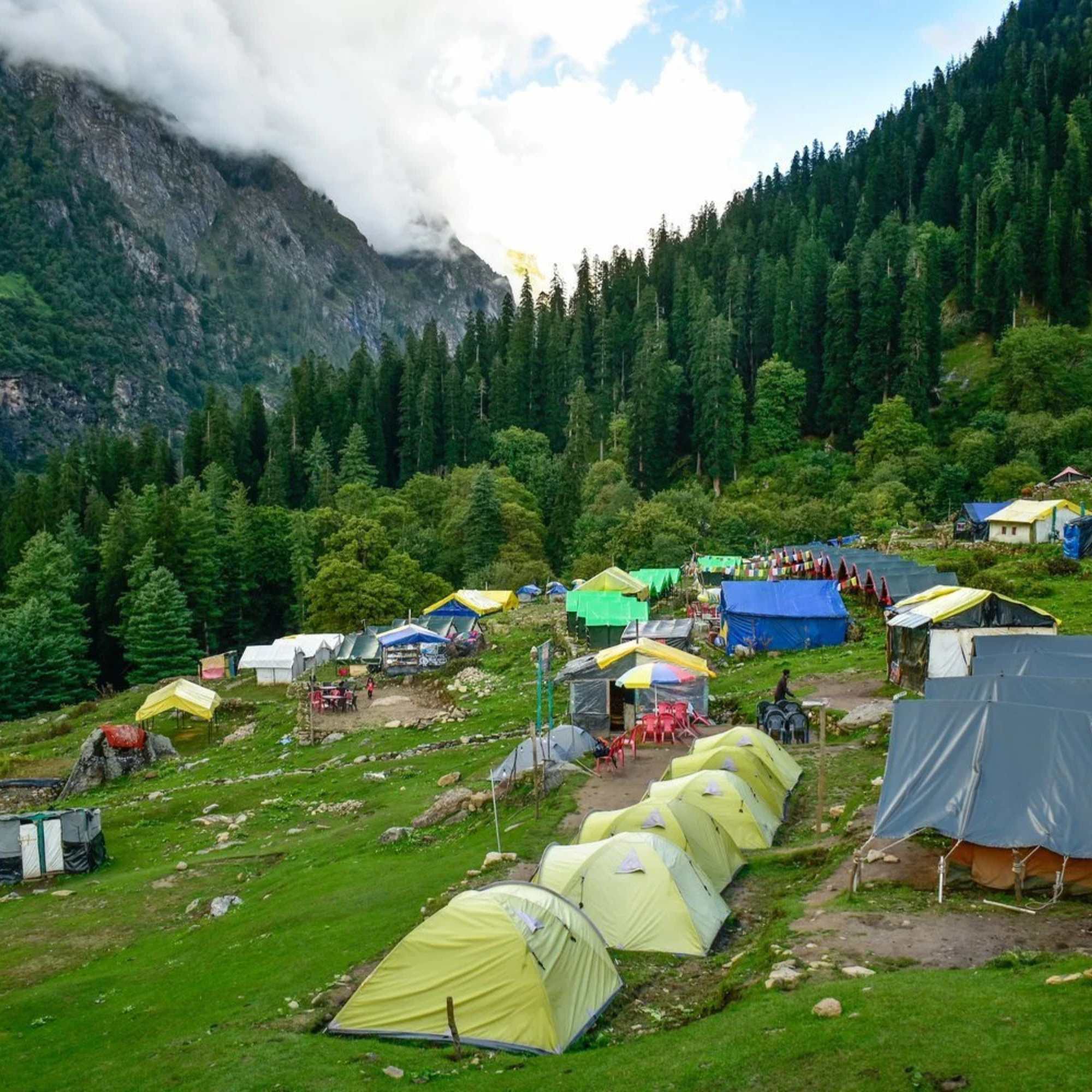
Kheerganga
4 to 5 hours trek from Barshaini
A high altitude meadow with natural hot springs. Trek starts from Barshaini on the left bank (near the Pulga trail start) or from Kalga on the right bank. One of the most popular treks in the Parvati Valley.
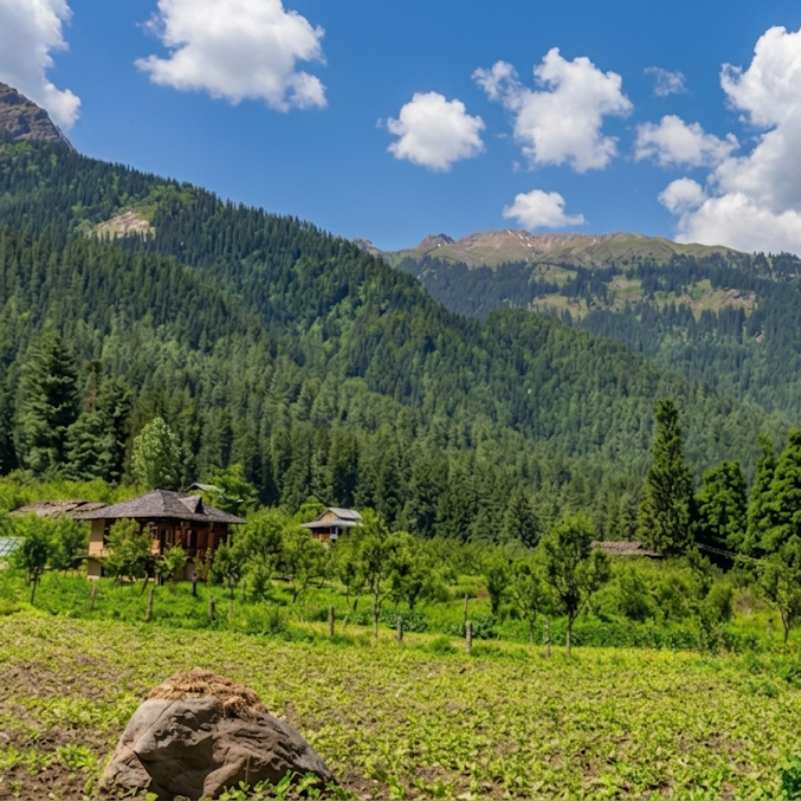
Tulga
About 10 minutes walk
An even smaller settlement between Pulga and Kalga. A 10 minute walk from Pulga. The quietest of the three villages. Worth passing through on a half day walk.
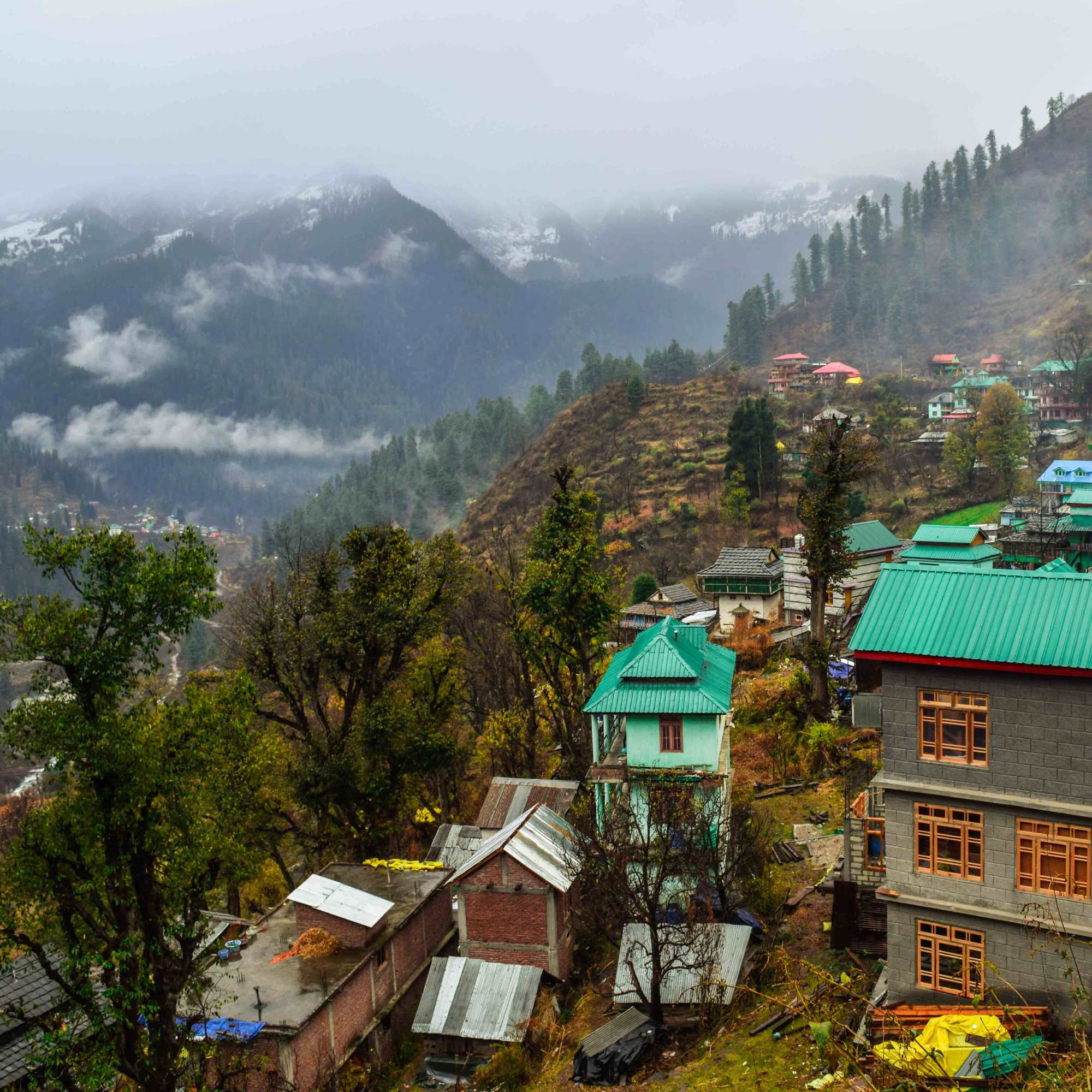
Tosh Village
About 3 km from Barshaini by road
A hillside village with road access, more cafes, and a busier tourist economy. Reachable by road from Barshaini. If you want the social version of the upper Parvati Valley, Tosh is it.
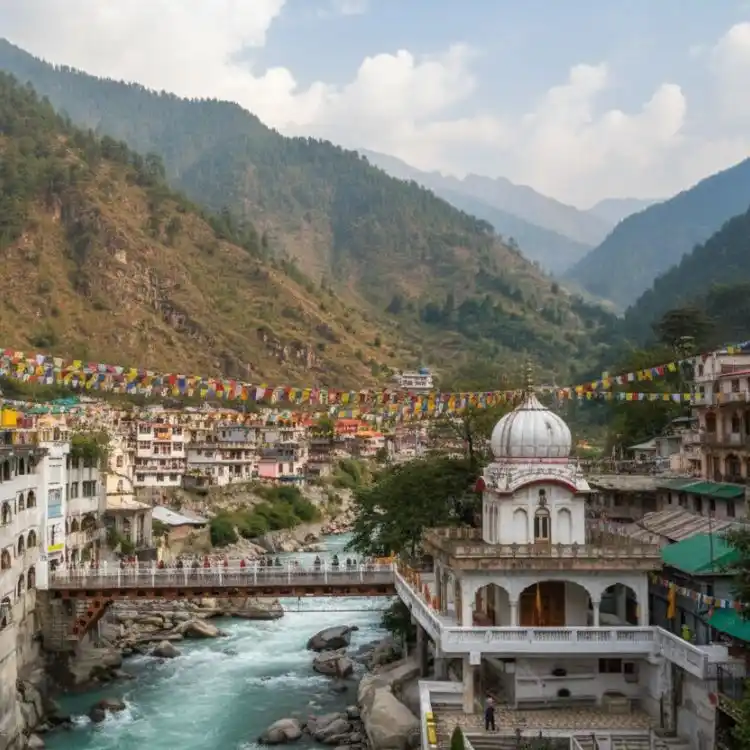
Manikaran Sahib
About 12 km from Barshaini by road
A pilgrimage town with a Gurudwara, hot springs, and a free langar. On the road between Kasol and Barshaini. Worth a stop on the way in or out.
Our packages with Pulga Village
Curated trips that include a visit to Pulga Village.
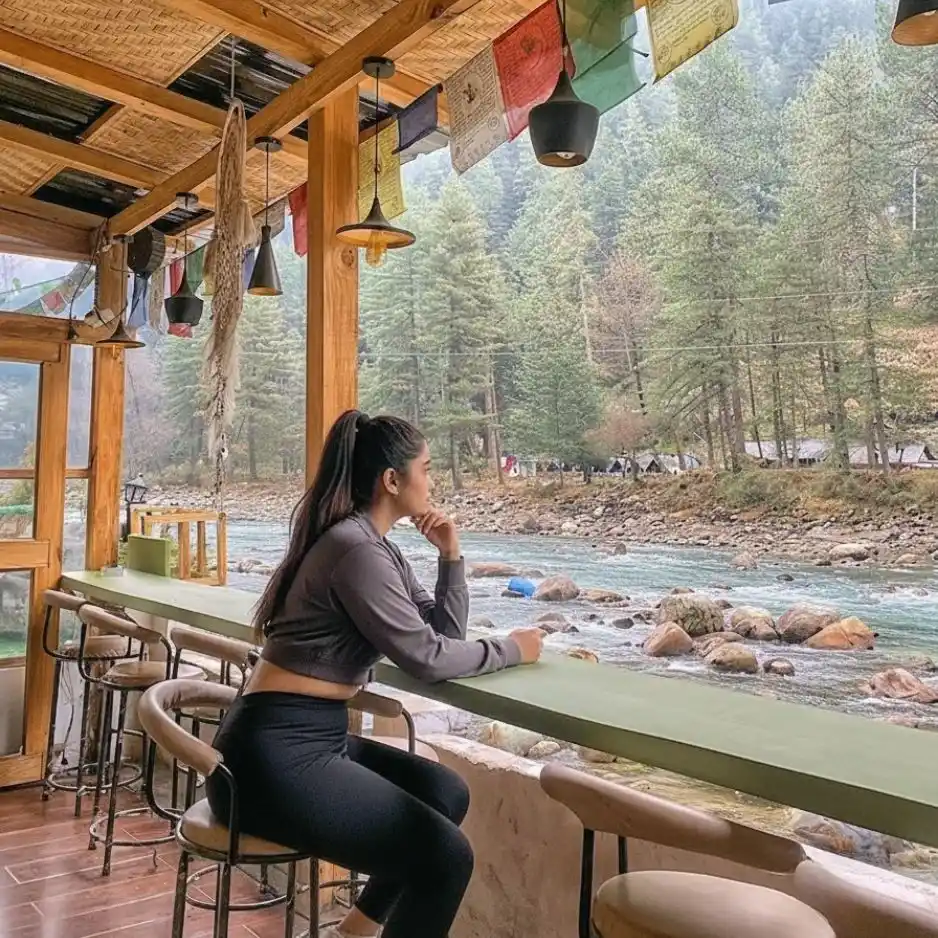 4D/3N
4D/3NPerfect Manikaran Kasol Tosh Weekend Getaway
1D Delhi•2D Kasol+1
₹15,999₹19,999SAVE INR 4,000/ person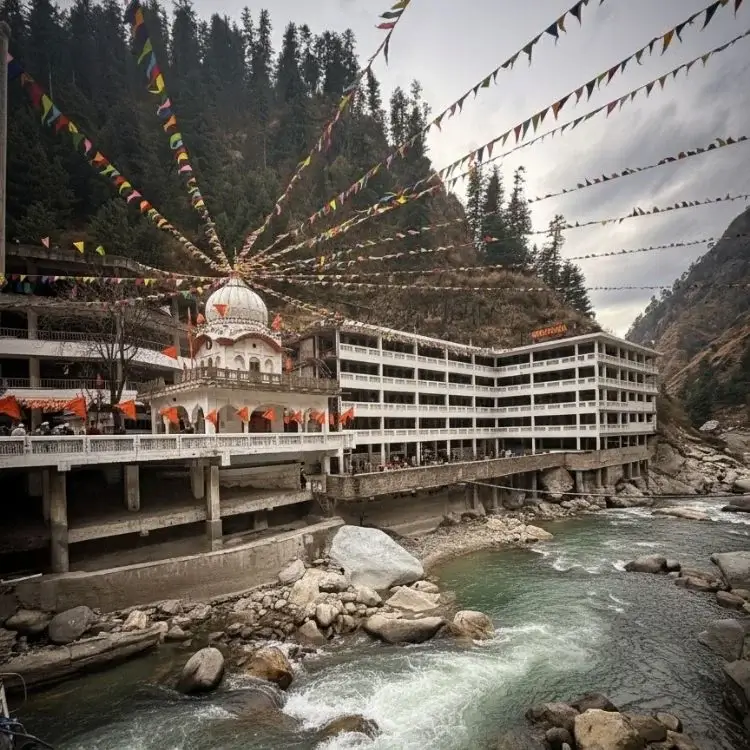 4D/3N
4D/3NWeekend Trip To Manikaran, Kasol & Tosh
1D Delhi •2D Kasol+1
₹9,999₹14,999SAVE INR 5,000/ person
Frequently Asked Questions
What is Pulga Village?
A small village at about 2,210 metres in the Parvati Valley, on the left bank of the Parvati River. Accessible only by a 30 to 40 minute walk from Barshaini. Known for its Fairy Forest (a dense deodar grove), colourful timber and stone houses, apple orchards, and a pace that feels disconnected from anything resembling a town.
How do I reach Pulga?
Take a bus or taxi from Kasol to Barshaini (about 16 km, 45 minutes). At Barshaini, cross the footbridge over the Parvati River and walk uphill for about 30 to 40 minutes. The trail goes through forest and is well used. Carry your luggage in a backpack. Wheels do not work on this path.
Is there a road to Pulga?
No. There is no motorable road. The only way in is on foot from Barshaini.
What is the Fairy Forest?
A dense stretch of tall deodar trees just above the village. The canopy closes overhead, the light changes, and the air temperature drops. Locals believe it is home to forest spirits. Travellers mostly find it unusually quiet and atmospheric. A 15 to 20 minute walk from the village.
What kind of accommodation is available?
Homestays and guesthouses range from basic rooms with shared bathrooms (a few hundred rupees) to more comfortable options with attached facilities (roughly 800 to 1500 rupees). Some places have small cafes. Most serve home cooked meals. Prices shift with the season.
What is the best time to visit?
April to June and September to November. October is the best single month for clear views and thin crowds. Monsoon (July to September) makes the trail muddy and brings leeches. Winter is cold and many places close.
How much time do I need?
One night minimum. Two nights is better. You need at least one full morning for the Fairy Forest walk and one afternoon for wandering the village and orchards. Three nights if you are adding the Kheerganga trek or walking to Kalga and Tulga.
How is Pulga different from Kalga?
Pulga and Kalga are at similar altitudes, both walkable from Barshaini. Pulga is on the left bank (cross the river), Kalga on the right (stay on the Barshaini side). Pulga has the Fairy Forest and livelier painted facades. Kalga has a more direct connection to the Kheerganga right bank trail. The character is similar. Pick one and visit the other on foot.
Is there mobile signal?
Patchy. BSNL works in some spots. Jio occasionally. Airtel barely. Do not rely on data or calls. Some homestays advertise WiFi but do not expect it to function consistently.
Is there an ATM?
No. Nearest ATM is in Kasol, and even that is not always stocked. Carry enough cash for your stay.
Is Pulga suitable for families?
Depends on the family. The walk from Barshaini is manageable for active families with older children. Very young kids and elderly members will find it tiring, especially with luggage. Facilities are basic. No medical help nearby. Families comfortable with simple living will enjoy it. Others should consider Tosh for road access.
Related guides
Posts about Kasol
- Shimla Manali Kasol Itinerary 2026: 7, 8 and 9 Day Routes Without Rushing
- Best Offbeat Places Near Kasol Most Tourists Miss in 2026
- Rasol Village Trek From Kasol 2026: Route, Distance & What to Expect
- Kalga, Pulga & Tulga Villages in 2026: The Offbeat Side of Parvati Valley
- Kheerganga Trek from Kasol 2026: Route, Difficulty, Cost & Best Time
- Snowfall in Kasol 2026: Does It Snow, Best Time & Nearby Snow Places