
Kheerganga Trek from Kasol 2026: Route, Difficulty, Cost & Best Time

If you are planning the Kheerganga trek from Kasol, here is the first thing most blogs will not tell you straight: the walk does not actually start from Kasol. You drive out to Barshaini or the Pulga side first, and that is where your feet hit the trail.
We have sent a lot of travellers up this trail over the years, and the same small mistakes trip people up every single time. This guide by Travel Coffee fixes that.
Quick Answer: Is Kheerganga Trek from Kasol Worth It in 2026?
Yes, the Kheerganga trek from Kasol is one of the most loved short treks in the Parvati Valley, and most people plan it from Kasol as the base.
But the real walking trail usually starts from Barshaini or the Pulga side, not central Kasol. From Barshaini it is around 12 km one way, takes about 4 to 6 hours to climb up, and the difficulty sits at easy to moderate.
The best months are April to June and September to November.
One honest heads-up
Overnight camping at the top has changed over the years and sources still conflict. Check the camping and stay status locally before you plan a night up there.
👉 Talk to our team on WhatsApp for the latest Kheerganga trail updates.
Where Is Kheerganga and Does the Trek Really Start from Kasol?
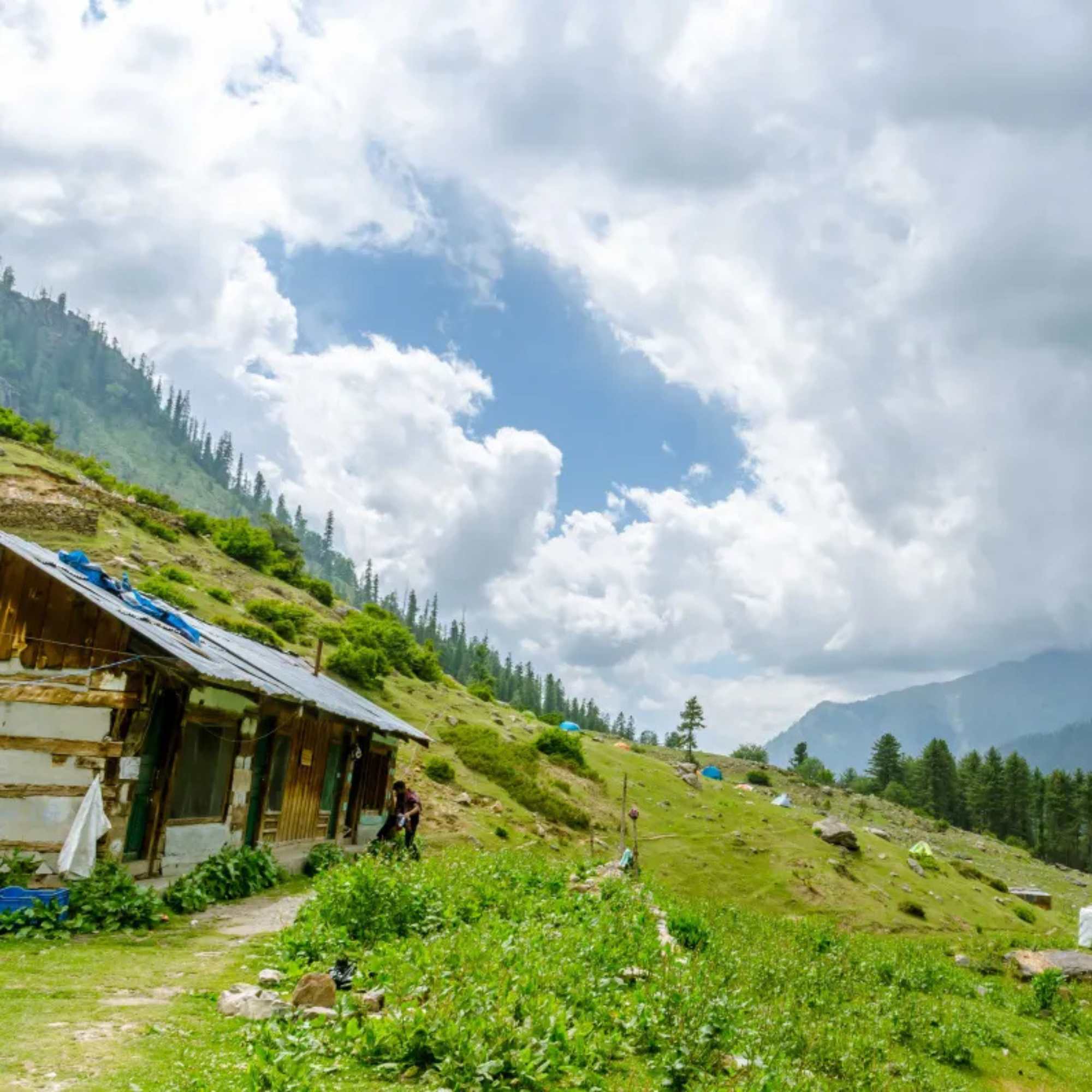
Kheerganga sits in Kullu district, Himachal Pradesh, deep inside the Parvati Valley. People come for the hot spring at the top and the wide Himalayan views around it.
It sits at roughly 2,960 m, which you will also see written as 9,700 to 9,750 ft.
HPTDC mentions Kheerganga is about 22 km from Manikaran. So while everyone calls it the "Kasol trek," Kasol is really just the comfortable base town where you sleep, eat, and stock up.
Most travellers drive from Kasol towards Barshaini or Pulga and start the actual climb from there. Central Kasol to the lake is not a single walk. It is a road trip first, then a trek.
Here is what most tourists get wrong. They book a stay in Kasol thinking the trail begins outside their guesthouse. Then they lose half a morning arranging transport to Barshaini and start the climb late, in the heat, with tired legs.
For a relaxed base before the trek, see our Kasol tour package.
How to Reach the Kheerganga Trek Starting Point from Kasol
Kasol to Barshaini by Road
You reach the trailhead from Kasol by taxi, shared cab, or local bus heading towards Barshaini.
Fares change with season, demand, and how many of you are sharing, so we will not throw a random number at you.
The exact Kasol to Barshaini distance is messy too. One source puts it around 16 km, while another package page shows a different figure.
Drive time is mentioned as 30 to 45 minutes by Himalayan Hikers, but treat that as a rough guide.
Why You Must Check Road Status Before Leaving Kasol
The Manikaran to Barshaini link road has faced landslide trouble in 2026, especially around the Ghatigarh area.
This is not a permanent closure. It is a live-check situation. The road clears, then a fresh slide blocks it again, then it clears.
During monsoon and heavy rain spells, you need extra caution here. Ask your guesthouse or a local driver about the road on the morning you leave, not the night before.
If you get stuck, the Kullu District Emergency Operation Center numbers are 01902-225630 and 01902-225631. Save them before you lose network.
Barshaini, Pulga, or Kalga: Which Starting Point Should You Choose?
Barshaini is the standard, practical starting point. It is where the road ends and the trail begins, and it is the easiest to navigate for a first-timer.
Pulga and Kalga work better if you want a slow, scenic village night before or after the trek. These two villages are quiet, full of old wooden houses, and a lovely way to ease into the valley.
In our experience, families and couples who add one night at Kalga or Pulga enjoy the whole trip more. They are not rushing up and down in a single sweaty push.
What Is the Best Route for Kheerganga Trek from Kasol?
Route 1: Barshaini to Nakthan to Rudranag to Kheerganga
This is the route we recommend for most first-timers.
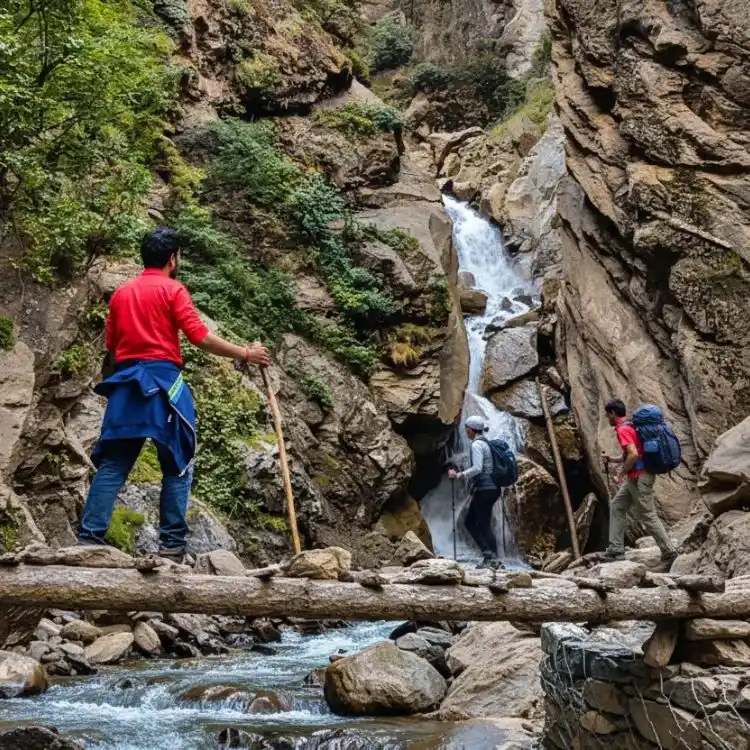
You walk from Barshaini through Nakthan village, then past the Rudranag waterfall, and finally up to Kheerganga. Barshaini to Rudranag is mentioned as 3 km by Himalayan Hikers.
The trail is clearer here, with regular tea stops and small dhabas along the way. You pass through a proper village, so even if you wander off track, someone can point you back.
This is the easiest route to follow, the busiest in season, and the safest if you are walking without a guide.
Route 2: Barshaini to Kalga to Kheerganga
This one runs more through forest and feels quieter and greener.
The trade-off is that some sections get confusing, especially where the trail forks under tree cover.
If this is your first time and you are walking alone, skip this route unless conditions are clear or you have local guidance. It is a beautiful walk, but not the one to gamble on without help.
Route 3: Tosh Side Route
The Tosh route is an alternate or an extension, not the default first-timer line.
If you have extra days in the Parvati Valley, you can add Tosh to your trip and approach from that side. But if your only goal is to reach Kheerganga cleanly, stick with the Barshaini to Nakthan to Rudranag route.
If you are comparing Kasol with quieter Himachal stays, read our Jibhi or Kasol comparison.
What Is the Kheerganga Trek Distance and Duration?
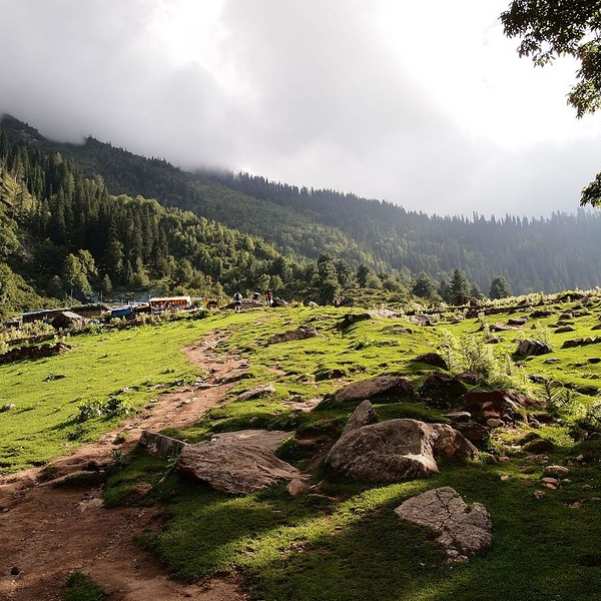
Most current trek operators put the Kheerganga trek distance at around 12 km one way from Barshaini.
Come back the same way and the round trip works out to roughly 24 km.
The climb up usually takes 4 to 6 hours. The way down takes 3 to 5 hours, depending on your pace, the weather, your knees, how many breaks you take, and how crowded the trail is.
Now here is where people get confused. Some older blogs and reviews quote 9 to 14 km.
That gap exists because they count different starting points and different routes. A walk that begins at Pulga measures differently from one that begins at Barshaini. So do not panic if numbers do not match across websites. Check which starting point each one is measuring from.
How Difficult Is Kheerganga Trek for Beginners?
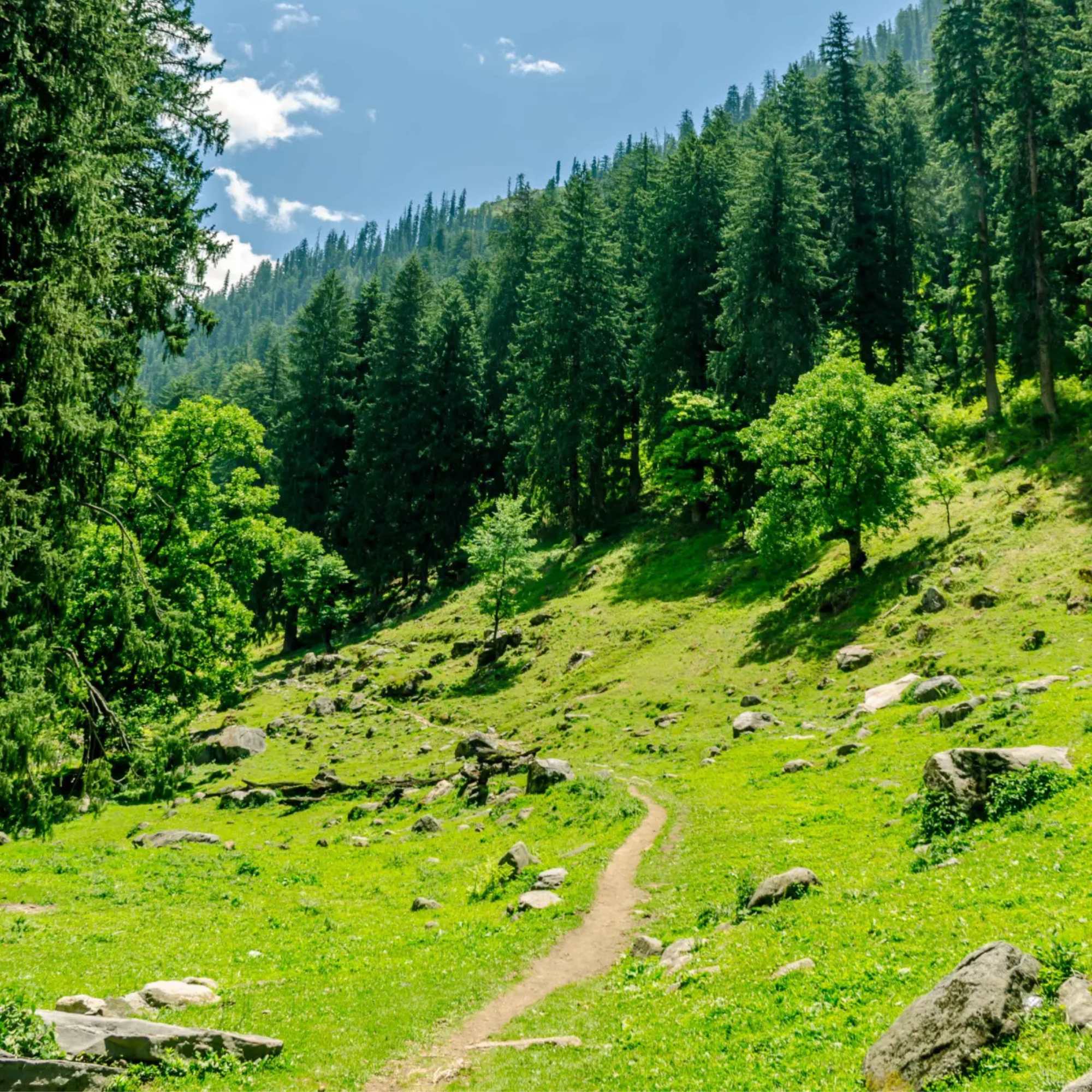
The Kheerganga trek difficulty is easy to moderate. It is not a brutal high-altitude climb, but it is also not a flat riverside stroll.
You will climb steadily, walk over loose stones, pass through forest patches, and feel your legs on the way down more than on the way up.
After rain, the trail turns slippery, especially on the rocky sections. That is when most slips happen.
Fit beginners can absolutely do this trek. The trick is to start early, wear proper trekking shoes, carry a light bag, and never trek intoxicated.
In our experience, most beginners struggle less with altitude and more with late starts, heavy backpacks, and bad footwear. We have watched people in fresh white sneakers slide around on wet rock while someone's grandmother in proper shoes walks past them.
Can Kheerganga Trek Be Done in One Day from Kasol?
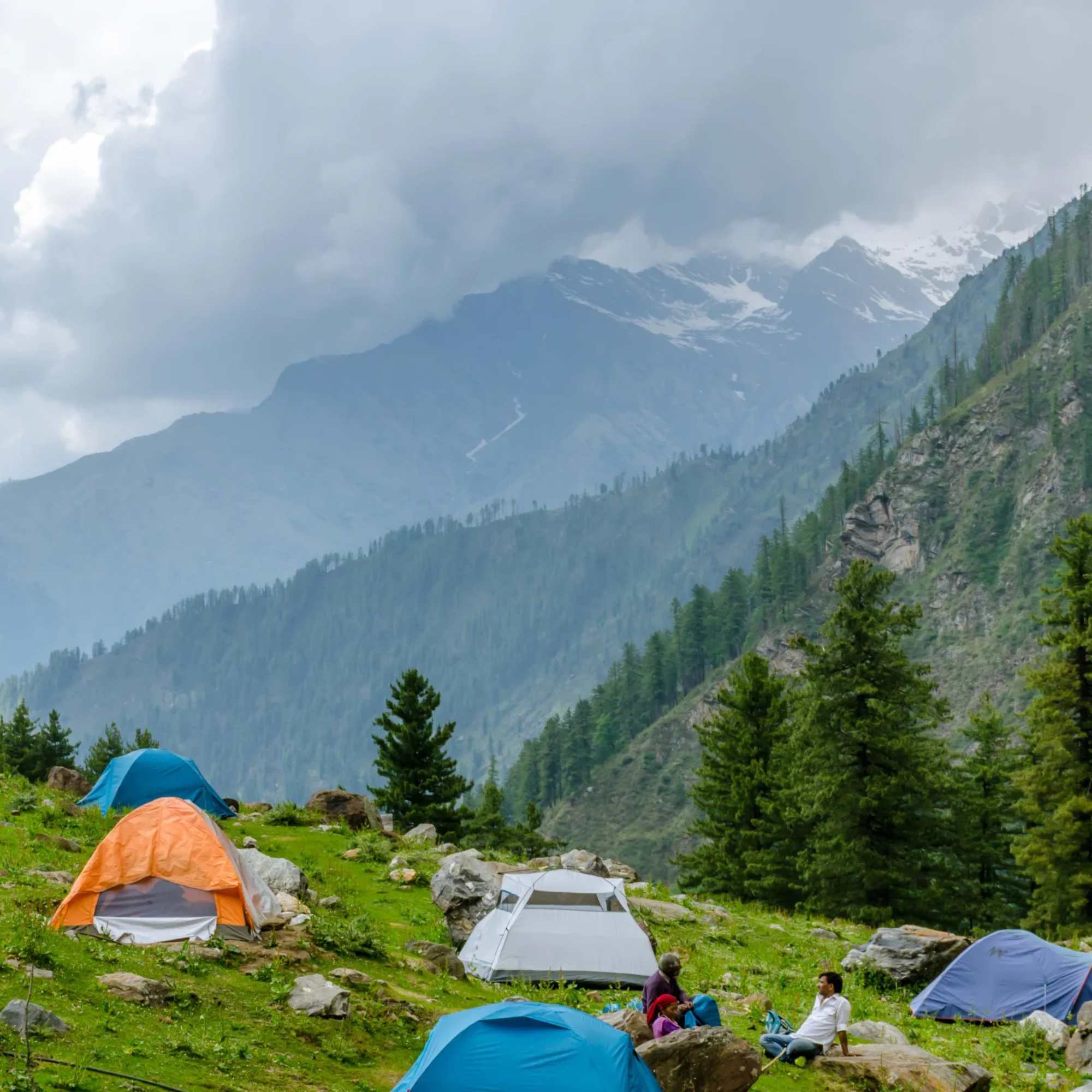
Yes, but only with an early start, decent fitness, and clear weather.
Remember the full picture. You still have to cover the Kasol to Barshaini road stretch, then roughly 24 km of trekking if you return the same way.
Start early in the morning, climb up, take a short break at the top, and head down so you finish before dark. Walking this trail in fading light is how people get hurt.
If camping at the top is not allowed or not running, the relaxed move is to stay in Kasol, Kalga, Pulga, or Tosh and do the trek with a fresh early start the next day.
👉 Need help balancing trekking and sightseeing? Talk to our team on WhatsApp.
Is Camping Allowed at Kheerganga in 2026?
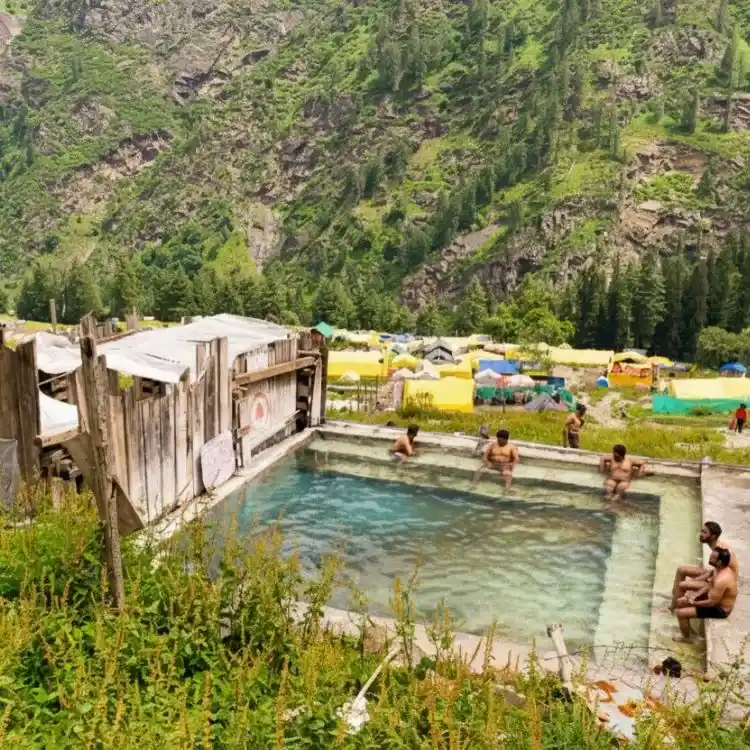
This needs honesty, so read carefully.
Back in 2018, reports said illegal cafés and camps were removed from Kheerganga because of environmental and forest land concerns.
Older reporting said tourists could still visit and even camp with forest department permission, as long as they carried their waste back down.
More recent traveller discussions and travel blogs show real confusion about whether camping and commercial overnight stays are currently allowed.
For 2026, do not assume Kheerganga overnight camping is allowed by default. Check the latest rule with the local forest check post, local administration, or a reliable local operator before planning a night at the top.
Do not trust an old blog post on this. The one thing that has stayed constant for years is that you carry your own garbage back down. Do not leave a single wrapper up there.
Do You Need a Permit for Kheerganga Trek?
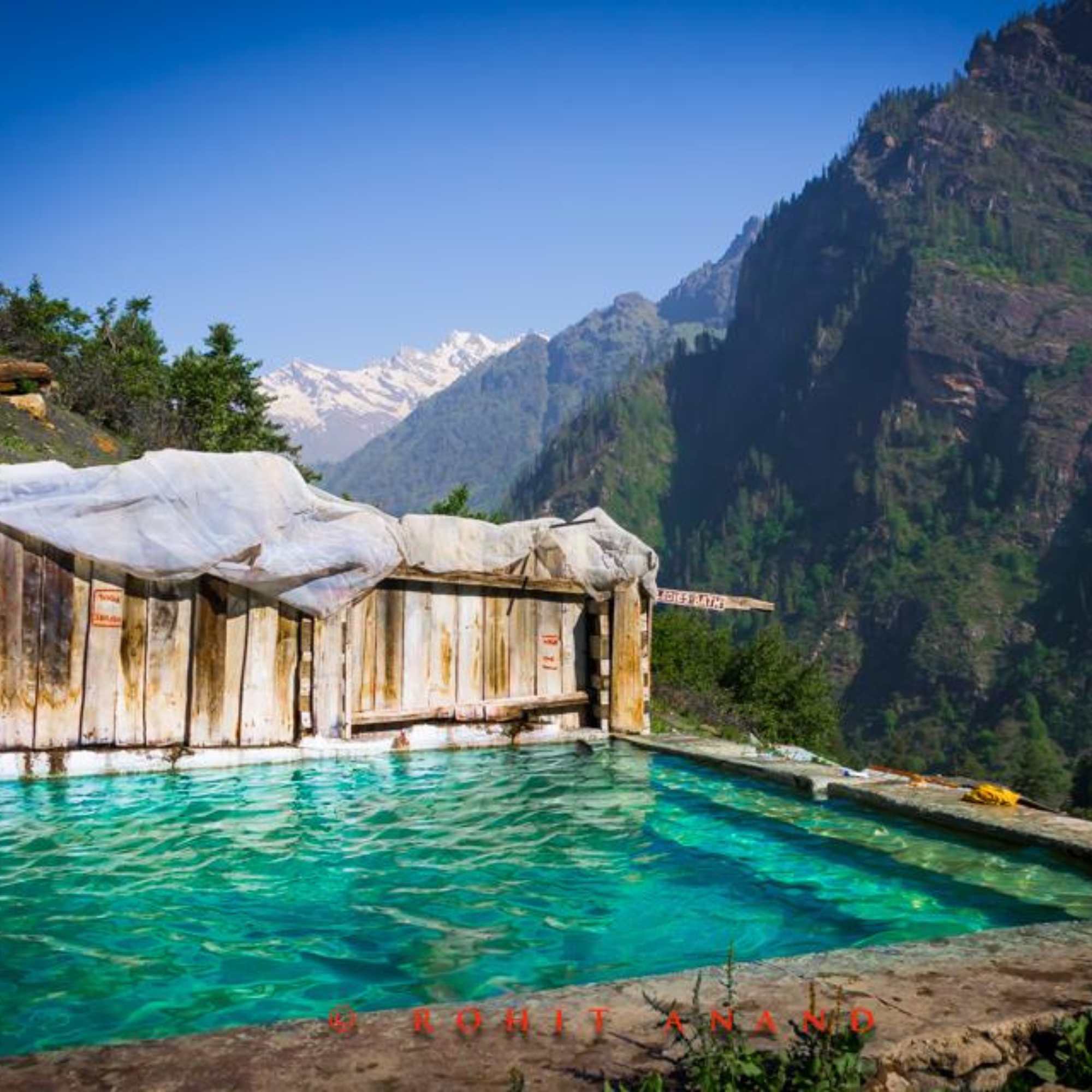
This is not a restricted-area permit trek like some routes near the border.
But forest registration or permission may be needed, especially around overnight stay, camping, and waste rules.
The current permit process and fee can change, so confirm the latest details before you travel. Do not rely only on old blogs for this, because the system has shifted over the years and information written in 2019 may no longer be accurate.
How Much Does Kheerganga Trek from Kasol Cost in 2026?
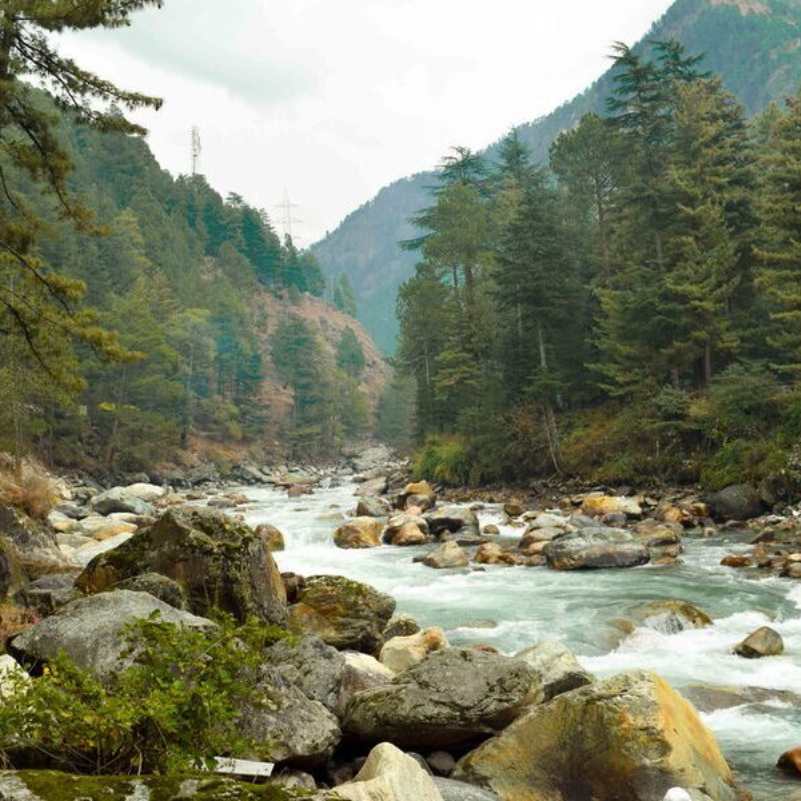
DIY Budget from Kasol
If you do this yourself, your money goes into a few clear heads.
You pay for Kasol to Barshaini transport, meals and snacks along the trail, and your stay in Kasol, Kalga, Pulga, or Tosh.
Add an optional guide if the route makes you nervous, and an optional porter if you do not want to carry your own bag.
Always keep an emergency buffer for a stuck road, a longer stay, or a sudden weather change. We will not invent taxi or bus fares for you.
Package Cost from Kasol
Here is where actual numbers help, based on current trek and tour package listings.
Basic Kasol Kheerganga trek packages can start around ₹1,100 to ₹1,700 per person, depending on inclusions. Winter ex-Kasol packages may start around ₹3,500 + 5% GST, while summer ex-Kasol packages can start around ₹4,500 + 5% GST.
Sharing type also changes the cost. Winter rates can sit around ₹3,500 for quad sharing, ₹3,750 for triple sharing, and ₹4,250 for double sharing, plus GST. Summer rates can move higher, around ₹4,500 for quad sharing, ₹5,000 for triple sharing, and ₹5,500 for double sharing, plus GST.
Some operators also offer porter or backpack offloading at around ₹400 to ₹500 per backpack per day. That small add-on can really help beginners on the climb.
Ex-Delhi packages usually cost more, with some listings starting around ₹6,500 to ₹7,500 per person depending on sharing type.
Prices move with season, inclusions, group size, transport, meals, guide, and whether an overnight stay is legally included in the deal. A cheap quote that skips transport is not really cheap once you add the cab.
Here is a money tip most agents will not volunteer. The ₹1,099 and ₹1,699 packages are usually bare-bones, often ex-Kasol with minimal inclusions. Read what is actually covered before you celebrate the low price.
What Is the Best Time for Kheerganga Trek?
April to June
This is one of the best Kheerganga trek best time windows. The weather is generally pleasant and the trail is active, with dhabas open and other trekkers around.
Wildcraft lists April to June as a best-time window.
September to November
This is the other strong window. After the monsoon clears, the views sharpen and the whole valley feels fresher and cleaner.
September to November is widely considered a good window for this trek, with clear post-monsoon views and more stable trail conditions. Many trek planners also recommend May to June as another strong season before the heavy rains arrive.
Monsoon Caution
Heavy rain turns the trail slippery and makes the road stretch landslide-prone, especially around that Ghatigarh section.
We do not recommend monsoon for casual beginners. The lake is not going anywhere. Wait for a safer window.
Winter Caution
Winter can look stunning, with snow on the trail and quiet everywhere. But it brings snow, ice, limited services, and uncertain trail conditions.
Skip winter as a casual first-timer unless a local confirms the trail is safe and open.
Month-by-Month Kheerganga Trek Guide
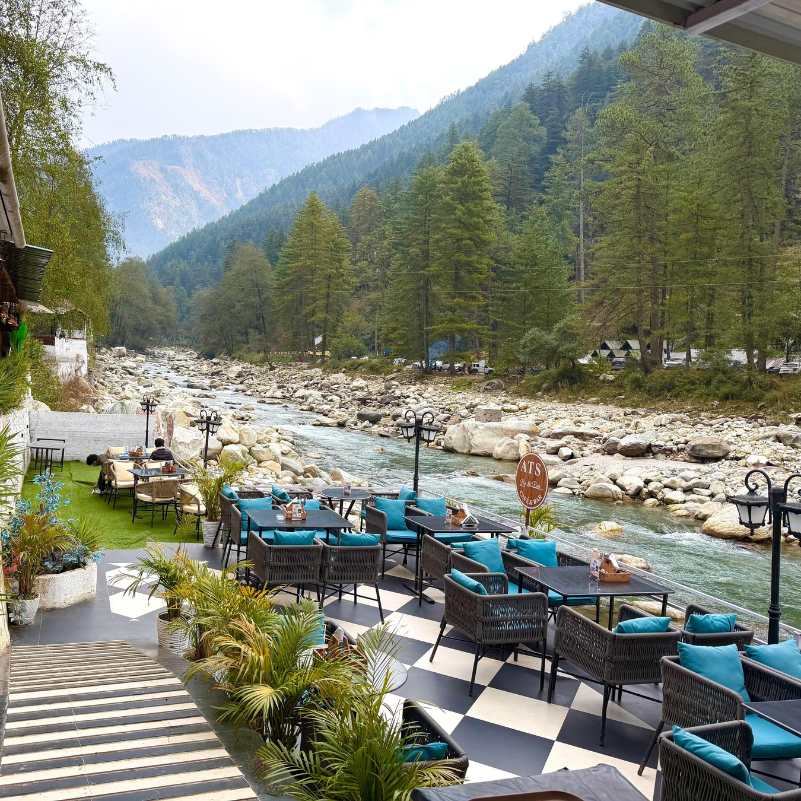
March
March is condition-dependent. The trail can still hold snow and services may be thin, so check before you commit.
April to June
April to June is the popular, easy-going stretch. Weather is friendly, dhabas are running, and the trail feels alive.
July to August
July to August is rain caution. The monsoon makes the trail slick and the road unpredictable. Not the window for nervous beginners.
September to November
September to November is the lovely post-monsoon window. Clear air, sharp views, and a fresher valley.
December to February
December to February is cold and condition-dependent. Beautiful in photos, tough in reality, and only worth it with solid local confirmation.
We will not throw temperature numbers at you here, because they swing too much by week and altitude.
What to Carry for Kheerganga Trek
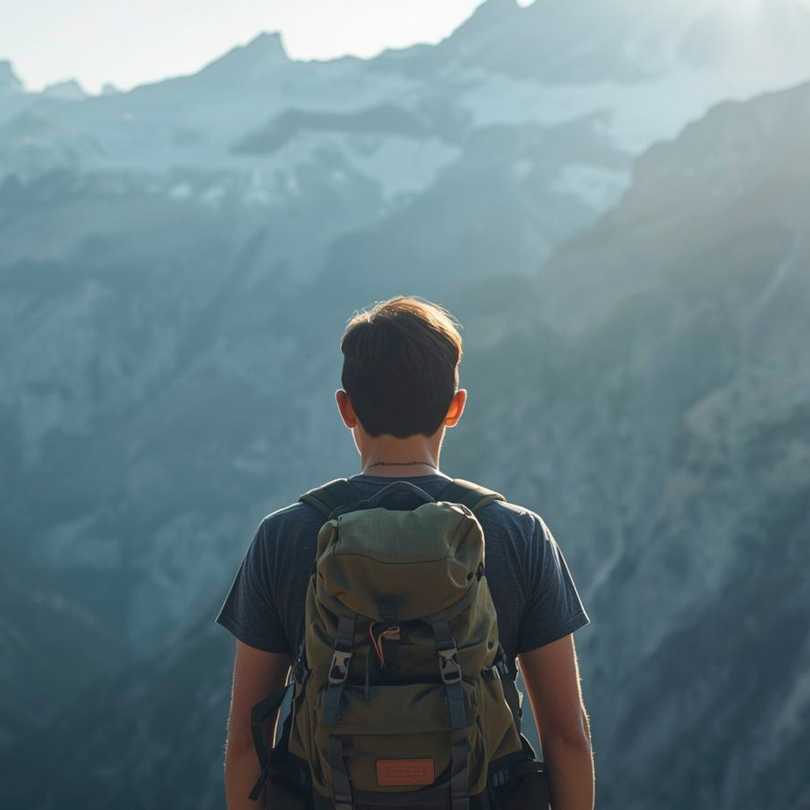
Pack light, but pack right.
Carry proper trekking shoes with grip, a warm layer for the top, and a rain jacket even on a clear morning. Mountain weather lies.
Bring a water bottle, snacks, a power bank, basic medicines, and a headlamp in case you finish in low light.
Keep cash on you, since cards and UPI fail once you are out of network, and carry your ID proof.
Two small things people forget: a small towel for the hot spring at the top, and a garbage bag. Carry every bit of your waste back down. Nobody is cleaning up after you up there.
Is Kheerganga Trek Safe for Solo Travellers and Women?
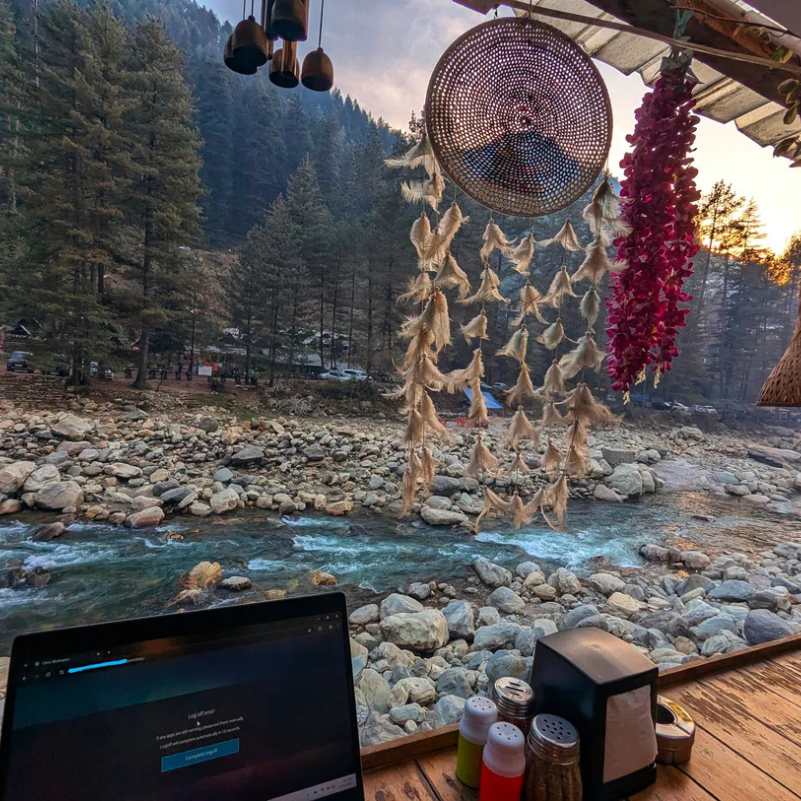
Kheerganga is popular, and plenty of solo travellers and women do it every season.
Safety here comes down to timing, weather, route choice, and plain common sense.
Start early, stay on the main Barshaini to Nakthan to Rudranag trail, and avoid descending late in the evening.
Share your plan with someone before you lose network, do not accept random intoxicated company on the trail, and hire a local guide if you feel even slightly unsure.
Suggested Kheerganga Trek Itinerary from Kasol
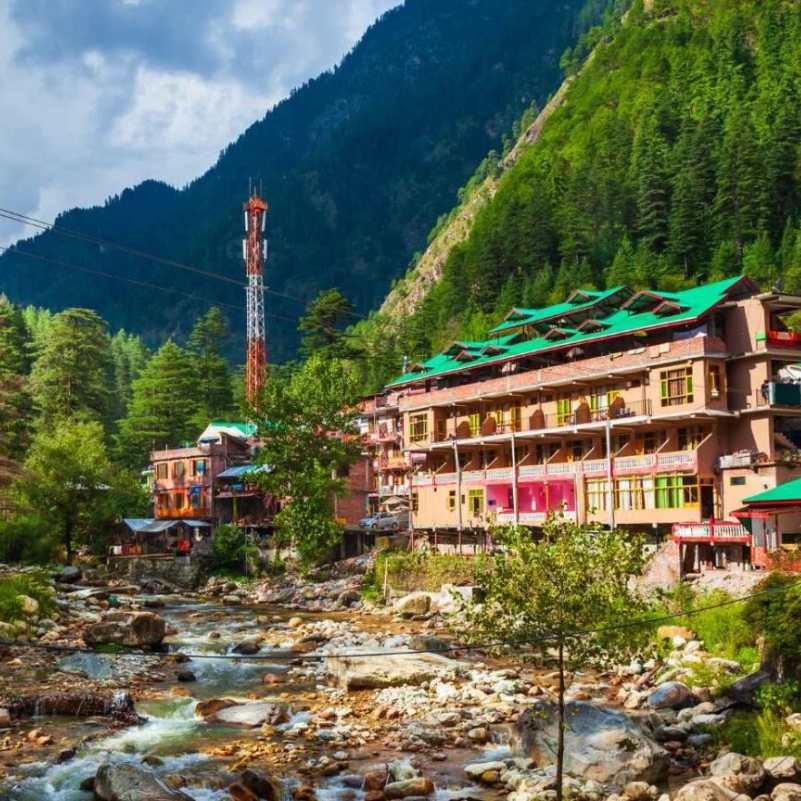
2 Days / 1 Night Relaxed Plan
Arrive in Kasol, settle in, and rest. The next morning, transfer to Barshaini or Pulga and start the trek.
Climb up to Kheerganga, soak in the hot spring, and enjoy the mountain views. Do not assume overnight stay or camping at Kheerganga is allowed by default, because local rules can change.
Confirm the latest camping and stay rules with a local operator or forest check post before planning a night at the top.
Return the following day, with time to breathe instead of rushing.
1 Day Fast Plan
Leave Kasol very early and transfer to Barshaini. Trek up, take a short break at the top, and head down to finish before dark.
This is tiring but possible for fit travellers. It is the right plan only if you are reasonably fit and the weather is clear.
3 Days Slow Parvati Valley Plan
This calmer version covers Kasol, Chalal, Manikaran, and a night at Kalga or Pulga before the Kheerganga climb.
It suits couples, first-timers, and anyone who does not want to rush. You get hot springs at Manikaran, a quiet village night, and the trek without the pressure.
Here is a timing tip that changes everything: reach the top early and you get the hot spring almost to yourself, plus the morning light on the peaks. By midday the crowd and the noise both arrive.
If you want to combine this with another Himachal destination, see our Manali tour package.
Common Mistakes to Avoid on the Kheerganga Trek
Starting late is the big one. A 10 AM start means a hot climb and a risky descent in fading light.
Overpacking is next. A heavy bag on a 12 km climb breaks people faster than the altitude does.
Wearing casual sneakers on wet rock is asking for a fall. Ignoring the weather is the same gamble.
Do not assume mobile network on the trail. It works in Kasol but fades higher up.
Do not trek during heavy rain, and do not trust old camping information you found on some 2018 blog.
Carry cash, because there is no UPI up there. And carry your trash back. The valley stays beautiful only if every trekker does this one thing.
Here is something to skip
The urge to hire the first "guide" who approaches you at Barshaini quoting a fat fee. On the main route in season, the trail is busy and clear enough that most fit people do not need a paid guide at all. Save that money unless you genuinely want the help.
Should You Book a Kheerganga Package or Do It Yourself?
DIY works well for experienced backpackers who can handle a stuck road, a changed plan, and a confusing trail fork without panicking.
A guided or custom plan works better for first-timers, couples, families, and anyone who just wants the transport, stay, and route sorted without a dozen phone calls.
We run trips out of Shimla, on the ground in Himachal, every season. What we tell our travellers is simple: the trek is the easy part. The road checks, the camping uncertainty, and the right starting point are where people slip up, and that is exactly what we help you sort.
👉 Need help building the right Kasol–Kheerganga itinerary? Talk to our Himachal team on WhatsApp.
Explore Our Curated Kasol Tour Packages
 4D/3N
4D/3NPerfect Manikaran Kasol Tosh Weekend Getaway
1D Delhi•2D Kasol+1
₹15,999₹19,999SAVE INR 4,000/ person 7D/6N
7D/6NManali Kasol Jibhi Valley Trip
1D Delhi•2D Manali+3
₹25,799₹32,999SAVE INR 7,200/ person 8D/7N
8D/7NManali Kasol Bir Himalayan Explorer
1D Delhi•2D Bir+3
₹21,999₹27,999SAVE INR 6,000/ person
Related topics
Frequently Asked Questions
How long is Kheerganga trek from Kasol?
The trek is around 12 km one way from Barshaini, which becomes roughly 24 km round trip if you return the same way.
How difficult is Kheerganga trek?
It is easy to moderate. There is a steady climb with stones and forest patches, but no extreme altitude or technical sections.
Can beginners do Kheerganga trek?
Yes. Fit beginners manage it well if they start early, wear proper shoes, carry a light bag, and avoid trekking intoxicated.
Is camping allowed in Kheerganga?
For 2026, do not assume camping at Kheerganga is allowed. Check with the forest check post or a reliable local operator before planning an overnight stay.
Do I need a permit for Kheerganga trek?
It is not a restricted-area permit trek, but forest registration or permission may apply, especially for overnight stay.
Which route is best for Kheerganga trek?
The Barshaini to Nakthan to Rudranag route is best for first-timers. It is clearer, busier, and easier to follow.
Can Kheerganga be done in one day?
Yes, with an early start, good fitness, and clear weather, including the road transfer and about 24 km of trekking. Return before dark.
What is the best time for Kheerganga trek?
April to June and September to November are the best windows. Avoid monsoon for casual trekking.
Is Kheerganga safe for solo female travellers?
Many solo women do it in season. Start early, stick to the main trail, avoid late descents, share your plan, and hire a local guide if you feel unsure.
Is there mobile network on Kheerganga trek?
You get network in Kasol, but it becomes limited higher up the trail. Do not count on signal near the top.
What should I carry for Kheerganga trek?
Trekking shoes, a warm layer, a rain jacket, water, snacks, a power bank, basic medicines, a headlamp, cash, ID proof, a small towel for the hot spring, and a garbage bag.
More about Kasol
 Kasol
KasolShimla Manali Kasol Itinerary 2026: 7, 8 and 9 Day Routes Without Rushing
Plan a relaxed Shimla Manali Kasol itinerary for 2026 with practical 7, 8 and 9 day routes covering Himachal’s key sights without rushing between destinations.
- Itinerary
- Places to Visit
 Kasol
KasolBest Offbeat Places Near Kasol Most Tourists Miss in 2026
Escape the crowds and discover the hidden side of Kasol in 2026. From peaceful villages and untouched valleys to scenic trails and secret viewpoints, these offbeat places near Kasol offer authentic Himalayan experiences that most tourists completely miss.
- Places to Visit
- Things to Do
 Kasol
KasolRasol Village Trek From Kasol 2026: Route, Distance & What to Expect
Planning the Rasol Village Trek from Kasol in 2026? Explore the complete trekking route, distance, difficulty level, stay options, and essential travel tips to experience one of Parvati Valley’s most peaceful and offbeat Himalayan villages.
- Things to Do