
Nakthan Village
A small traditional village at roughly 2,300 metres on the sunny, left bank of the Parvati River, sitting midway on the Kheerganga trek, where trail dhabas serve hot rajma chawal and chai to trekkers pausing between the easy first half and the steep forest climb that comes after
- Village
- Parvati Valley
- ~2,300 m
- Kheerganga trek midway
- Left bank route
- Trail dhabas
- Apple orchards
- Kathkuni architecture
- Near Rudranag
- No entry fee
- Carry cash
What makes it special
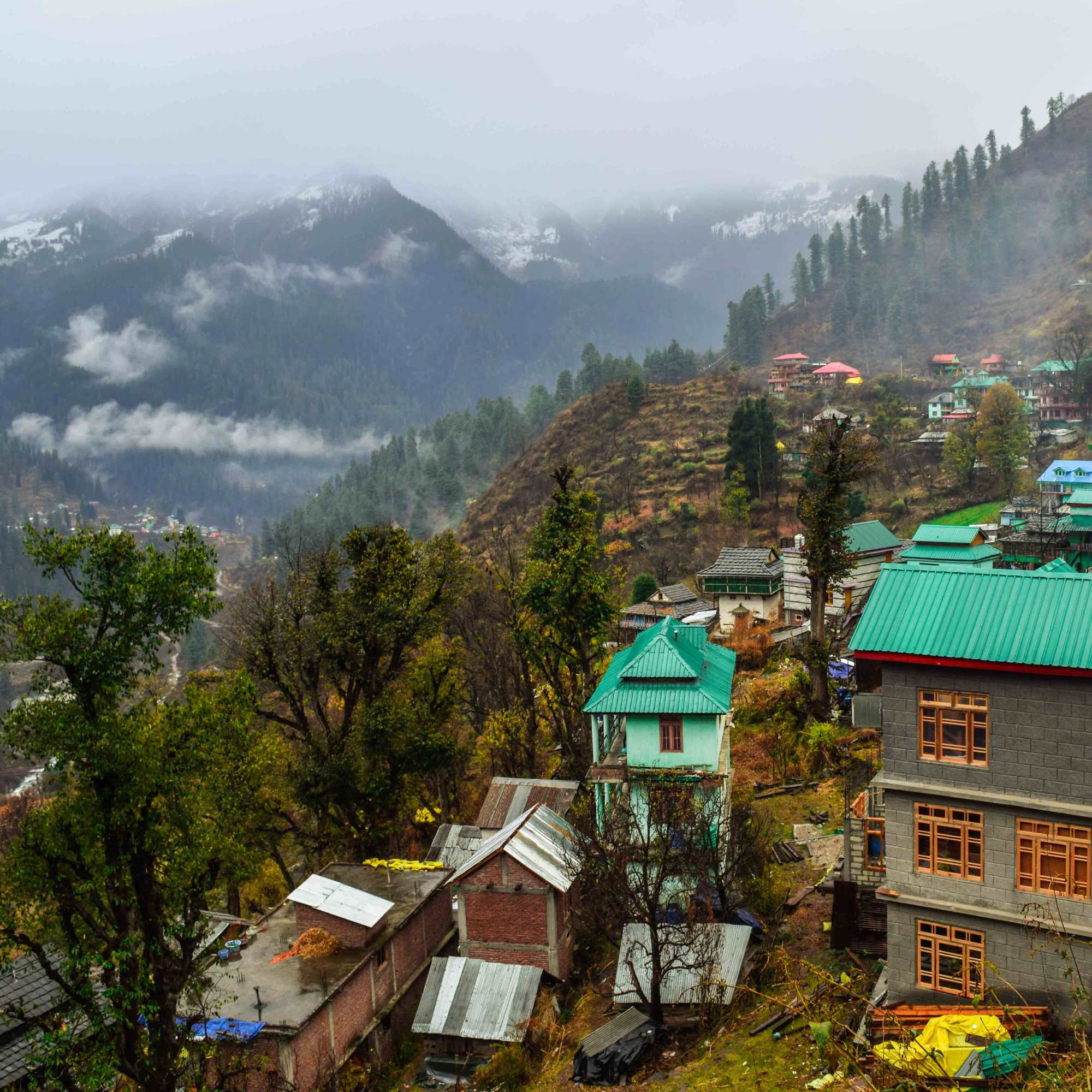
Nakthan is the village where most trekkers heading to Kheerganga stop for their first proper meal on the trail. It sits roughly halfway on the left bank route, at approximately 2,300 metres, on the left (sunny) side of the Parvati River. About 20 to 30 households, several dhabas, a few basic homestays, and rows of apple orchards lining both sides of the trail. That is the whole village.
The walk from Barshaini to Nakthan takes roughly 1.5 to 2 hours. You follow the left bank of the Parvati River through open, sun exposed terrain with river views and apple orchards flanking the path. This is the easier, sunnier half of the roughly 12 km Kheerganga trek. By the time you reach Nakthan, you have done about 5 to 6 km and gained enough altitude to feel like you have earned a plate of rajma chawal.
The dhabas here are the real draw for trekkers. Several small eateries operate in season, serving Maggi, dal rice, rajma chawal, omelettes, and chai. Prices are trail prices, meaning higher than Kasol but not unreasonable. The food is hot, simple, and good. If you are doing the Kheerganga day trek (now the only option since overnight camping at the top was banned in July 2024), Nakthan is where you fuel up for the steeper second half.
The village has traditional Himachali Kathkuni architecture. Stone and wood houses with slate roofs, stacked firewood against every wall, and apple orchards that produce fruit from July through October. It is a working village, not a tourist attraction. The people here farm apples and keep livestock. Tourism is a side economy built around the Kheerganga trail passing through.
One thing you need to know. The ancient village temple in Nakthan has strict local religious customs. Outsiders must not touch the temple structures or the boundary walls. This is not a casual suggestion. It is a deeply held local law, similar to what you will find in Malana, Rasol, and other upper Parvati Valley villages. Fines can be imposed for violations. Keep a respectful distance, photograph from afar if you wish, and do not approach or touch any part of the temple complex. The locals are warm and welcoming otherwise, but this boundary is non negotiable.
About 30 minutes past Nakthan, the trail reaches the Rudranag Temple and waterfall, where the two Kheerganga routes (left bank via Nakthan and right bank via Kalga) converge. From there, a single steep trail climbs through dense forest for another 2 to 3 hours to the Kheerganga meadow at the top.
A practical warning about money. There is no ATM anywhere near Nakthan. The nearest is in Kasol, and even that one runs out of cash sometimes. Mobile networks are unreliable here (BSNL in patches, other networks barely work), which means UPI and digital payments will fail more often than they succeed. Carry enough physical cash from Kasol to cover your entire trek, including dhaba meals, any accommodation, and a buffer. Do not assume you can pay digitally anywhere on this trail.
Most people pass through Nakthan in 20 to 40 minutes, eat, rest, and continue. That is the right use of the village for most trekkers. If you want to stay overnight, a few basic homestays and guesthouses exist, and Nakthan works as a pre dawn Kheerganga base. But Kalga and Tosh have better views and more developed stay options. Nakthan is best understood as the Kheerganga trek's lunch stop, and a good one at that.
Quick answers
- What is Nakthan Village?
- A small traditional village at roughly 2,300 metres on the sunny, left bank of the Parvati River, sitting midway on the Kheerganga trek. About 5 to 6 km from Barshaini. Known for trail dhabas serving rajma chawal and Maggi, apple orchards, and Kathkuni architecture. Most trekkers stop here to eat and rest before the steeper second half of the climb.
- How much time do I need?
- Most trekkers spend 20 to 40 minutes here for food and rest. If you are staying overnight (to start Kheerganga at dawn), one night is enough. But Kalga and Tosh are better overnight options with more atmosphere.
- What is the best thing to eat here?
- Rajma chawal at one of the trail dhabas. Hot, filling, and good protein for the climb ahead. Better than Maggi for energy. Dhabas operate roughly April to November.
Quick facts
Everything you need to know at a glance.
At a glance
- Location
- Left bank of the Parvati River, midway on the Kheerganga trek. Parvati Valley, Kullu district, Himachal Pradesh.
- Altitude
- Approximately 2,300 m (about 7,545 feet). Sources vary slightly.
- What it is
- A small traditional village and the main food stop on the left bank Kheerganga trek route. Sunny, apple orchard lined trail.
- Distance from Barshaini
- About 5 to 6 km on foot. 1.5 to 2 hours walking.
- Entry fee
- None.
- Time needed
- 20 to 40 minutes for most trekkers. One night if using as a Kheerganga base.
On the ground
- Mobile network
- BSNL in patches only. Jio, Airtel, and other networks unreliable. Do not count on UPI or digital payments.
- Food
- Trail dhabas serving Maggi, rajma chawal, dal rice, omelettes, chai. Seasonal (roughly April to November).
- ATM and cash
- No ATM. Nearest in Kasol (and it runs out). Mobile networks too unreliable for UPI. Physical cash is mandatory.
- Accommodation
- A few basic guesthouses and homestays. Simple rooms, shared facilities. Most trekkers eat and continue.
- Village temple
- Ancient temple with strict local customs. Outsiders must not touch the temple structures or boundaries. Fines may apply.
- Safety
- No medical facility. Nearest help in Kasol or Manikaran, 1.5 to 2 hours away. Carry first aid.
Seasonal weather
- March to June20°3°Spring and Summer
- July to September16°8°Monsoon
- October to November14°-2°Autumn
- December to February5°-8°Winter
Suitable for
- Couples — suitable
- Families — not suitable
- Seniors — not suitable
- Solo — suitable
- First-timers — with some care
- Pet-friendly — not suitable
How to reach Nakthan Village
2 approach routes, with seasonal access.
From Barshaini (on foot, left bank trail)
Generally April to November. Trail can be muddy in monsoon and snow covered in winter.- Distance
- About 5 to 6 km
- Time
- 1.5 to 2 hours
- Road
- Mountain trail along the left bank of the Parvati River. Open terrain, some sun exposure. No road access.
From Barshaini, do not cross the bridge. Turn left and follow the trail upstream along the left bank of the Parvati River. The trail is the main Kheerganga (Nakthan) route, well marked and well trodden. The first section is relatively flat, following the river through open terrain. The path gradually climbs, passing through small clearings and occasional apple orchards before reaching the village. The trail has more sun exposure than the Kalga (right bank) route, so carry sun protection on clear days.
From Tosh Village (on foot)
April to November.- Distance
- About 3 to 4 km
- Time
- 1 to 1.5 hours
- Road
- Mountain trail. Less marked than the Barshaini route. Ask for directions at Tosh.
A separate trail from Tosh descends to the Nakthan area and joins the main Kheerganga route. This option works for trekkers based in Tosh who want to do the Kheerganga trek without backtracking to Barshaini first. The trail drops down from Tosh to the valley floor, crosses the Tosh Nala, and meets the left bank trail near Nakthan. Ask your guesthouse in Tosh for directions, as this route is less clearly marked than the main Barshaini trail.
Best time to visit
Season by season, so you can plan around the weather rather than hope.
- Recommended
Spring and early summer
April to June
Dry trail, all dhabas open, the main Kheerganga trekking window.
- Weather
- 3 to 20 degrees.
- Trail
- Dry and clear.
- Dhabas
- All open.
Dry trail, comfortable temperatures, and all dhabas in the village open and operating. This is the busiest window on the Kheerganga trek, especially weekends in May and June. Pass through Nakthan early (by 7 to 8 AM) to beat the midday heat on the exposed trail sections.
Monsoon
July to September
Muddy trails, leeches past the village, and some dhabas close.
- Weather
- 8 to 16 degrees. Frequent rain.
- Trail
- Muddy, slippery. Leeches past Nakthan.
- Dhabas
- Some may close.
Rain makes the trail muddy and slippery. Leeches are possible in the forest sections past Nakthan. Some dhabas may close in heavy monsoon. The approach road from Manikaran to Barshaini is landslide prone. Not impossible but significantly less comfortable.
- Recommended
Autumn
September to November
Clear air, apple harvest, thin crowds. October is the best month.
- Weather
- Minus 2 to 14 degrees. Cold nights.
- Views
- Best clarity.
- Apple harvest
- July through October.
The best window. Post monsoon clarity gives wide views from the trail. The air is clean, the crowds thin, and the apple orchards in the village are at harvest time. October is the single best month. November gets cold but the trail is still open and the dhabas generally stay running through the month.
Winter
December to February
Cold, snow above the village, and most dhabas close.
- Weather
- Minus 8 to 5 degrees.
- Trail
- Snow above Nakthan.
- Dhabas
- Most close.
Cold. Snow is possible on the upper trail past Rudranag. Most dhabas at Nakthan close. The trail from Barshaini is still passable but the conditions above Nakthan become genuinely difficult. For experienced winter trekkers only.
Things to see & do
3 things worth your time at Nakthan Village.
Eat at a trail dhaba
20 to 40 minutesThis is what most people do at Nakthan. Pick a dhaba, order rajma chawal or Maggi and chai, sit with your backpack, and look at the valley before tackling the steep second half of the Kheerganga trek. The dhabas are basic but the food is hot and filling. Rajma chawal is the better option, more protein and energy than Maggi for the climb ahead. Most dhabas operate from roughly April through November. In off season, options shrink.
Continue the Kheerganga trek
3 to 4 hours from Nakthan to Kheerganga topFrom Nakthan, the Kheerganga trail continues for another 6 to 8 km. The first stretch past the village reaches the Rudranag Temple and waterfall (about 30 minutes), where the left bank and right bank routes merge. From Rudranag, the trail climbs steeply through dense forest for another 2 to 3 hours. Since July 2024, Kheerganga is a day trek only. Start from Barshaini by 5 AM to pass through Nakthan by 7 to 8 AM and reach the top before 10 AM.
Walk through the village and orchards
20 to 30 minutesA short walk through the village takes you past traditional Kathkuni houses (stone, wood, and slate construction), apple orchards, and terraced fields. The architecture style is the same you see in Kalga and Pulga but fewer tourists stop to notice it here because they are focused on reaching Kheerganga. If you are staying overnight, the morning walk through the orchards is worth 30 minutes of your time.
Know before you visit Nakthan Village
The practical bits, from people who have been.
The trek to Nakthan5 to 6 km from Barshaini, 1.5 to 2 hours walk. Sunny left bank route along the Parvati River through apple orchards.
Nakthan sits at the midpoint of the left bank route from Barshaini to Kheerganga. The walk from Barshaini is about 5 to 6 km and takes 1.5 to 2 hours. At Barshaini, do not cross the bridge. Turn left and follow the trail upstream along the Parvati River. The path is well marked and you will see other trekkers.
This is the sunny, apple orchard lined half of the roughly 12 km Kheerganga trek. The trail follows the left (south facing) side of the river through open terrain with good sun exposure. Past Nakthan, the trail steepens significantly. If you are doing the day trek to Kheerganga, plan to pass through Nakthan by 7 to 8 AM to stay on schedule.
Village temple: strict local customsAncient temple with strict rules. Outsiders must not touch the temple structures or boundary walls. Fines enforced.
Nakthan has an ancient village temple with intricate wooden carvings. This temple follows strict local religious customs common across upper Parvati Valley villages (similar to Malana, Rasol, and others). Outsiders are not allowed to touch the temple structures, the boundary walls, or any religious objects in and around the temple area.
This is a deeply held local rule, not a casual guideline. Fines can be imposed for violations. The villagers take this seriously. Keep a respectful distance, do not approach or touch any part of the temple complex, and photograph only from afar. The locals are otherwise welcoming and hospitable, but this boundary is absolute.
Food and staysDhabas serving Maggi, rajma chawal, and chai. A few basic rooms for overnight stays. Most trekkers eat and continue.
Several dhabas in the village serve Maggi, rajma chawal, dal rice, omelettes, and chai. This is the main food stop on the left bank Kheerganga route. Prices are higher than Kasol (trail pricing) but not extreme. The rajma chawal is the better choice for trekkers, more filling and more protein for the steep climb ahead.
A few basic guesthouses and homestays are also available if you want to stay overnight. Expect simple rooms, shared facilities, no hot water, and limited electricity. Most trekkers prefer Kalga or Tosh for overnight stays because the views and atmosphere are better. Nakthan is a practical choice if you want the shortest walk to the Kheerganga trailhead the next morning.
Cash and connectivity warningNo ATM. Mobile networks unreliable, so UPI will not work. Physical cash is mandatory for the entire trek.
There is no ATM anywhere near Nakthan. The nearest is in Kasol, and even that one runs out of cash on busy weekends. Withdraw enough before you leave Kasol.
Mobile networks are unreliable. BSNL works in patches. Jio and Airtel barely function. This means UPI, Google Pay, PhonePe, and any app based payment will fail more often than it works. Most dhabas and homestays on the trail are cash only anyway. Carry enough physical rupees to cover dhaba meals, any accommodation, snacks, and a buffer for the unexpected.
No medical facility either. Nearest doctor is in Kasol or Manikaran, 1.5 to 2 hours away by trail and road. Carry basic medicines, a torch, and enough water (at least 2 litres from the start).
Dhaba availability, trail conditions, and Kheerganga rules can change with the season. Confirm the current status at Barshaini before starting.
Nearby attractions
Other places worth the detour.
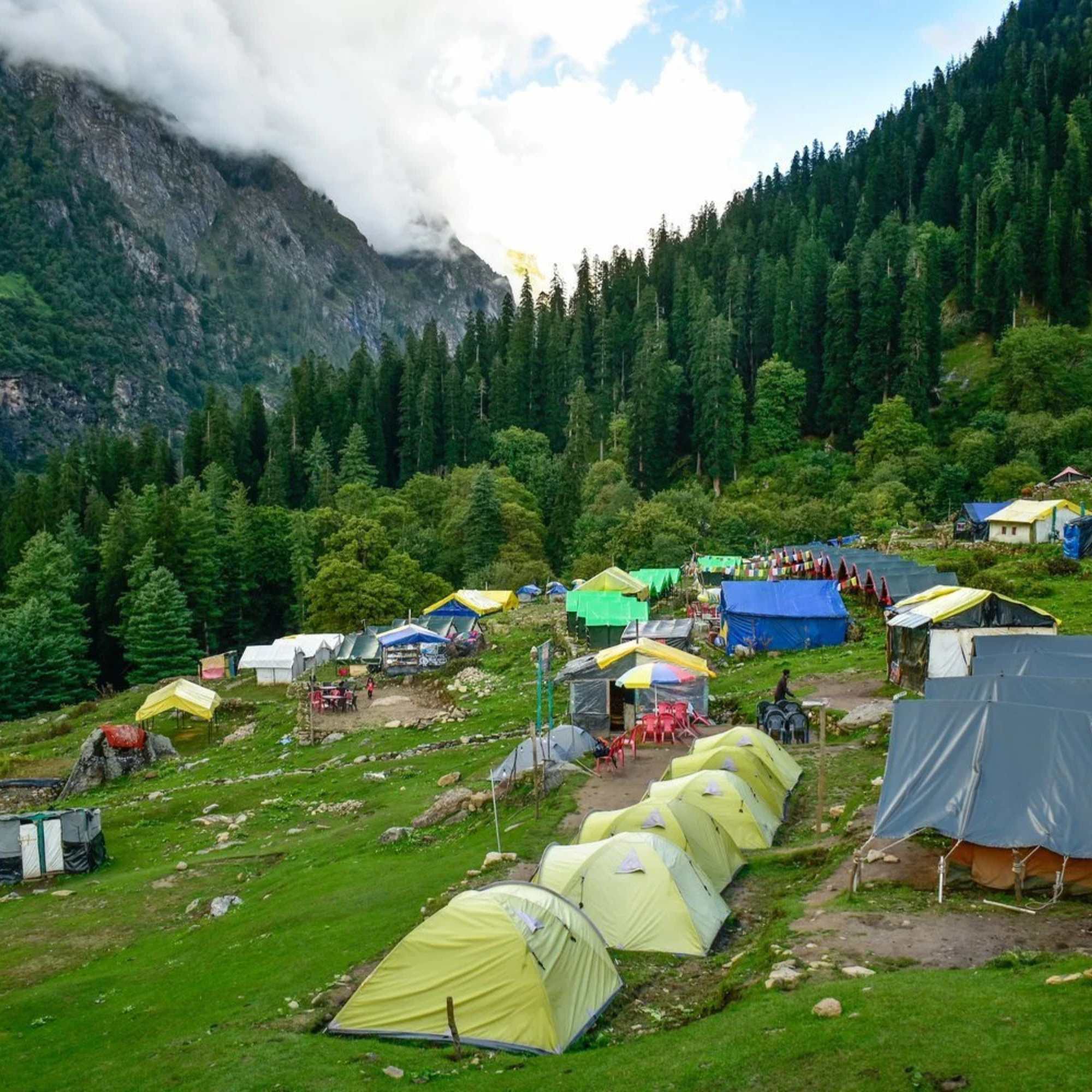
Kheerganga
About 6 to 8 km further up the trail (3 to 4 hours)
A high altitude meadow with natural hot springs at roughly 2,960 metres. The Kheerganga trek continues from Nakthan for another 6 to 8 km, reaching the top in about 3 to 4 hours. Day trek only since July 2024.
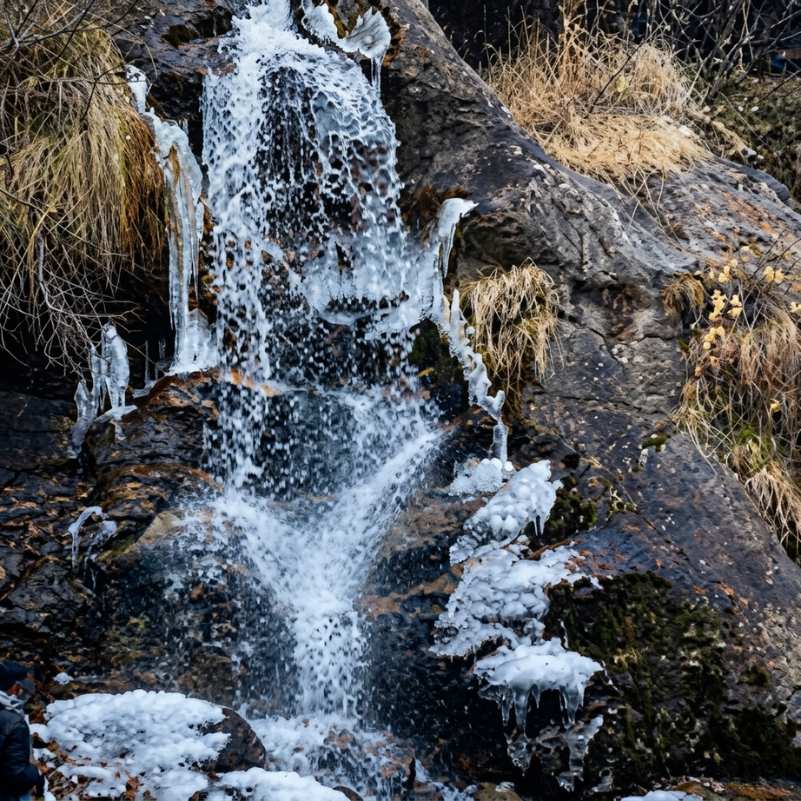
Rudranag Temple and Waterfall
About 30 minutes walk uphill
A serpent shaped waterfall with the Rudranag Mahadev Temple beside it, about 30 minutes past Nakthan on the Kheerganga trail. This is where the left bank (Nakthan) and right bank (Kalga) routes merge into a single trail.
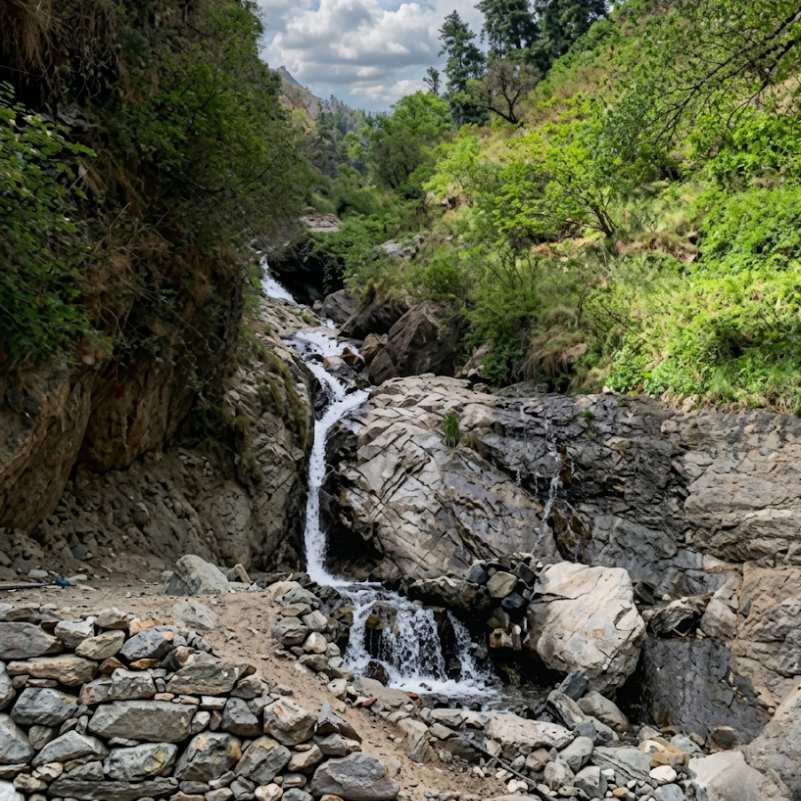
Barshaini
About 5 to 6 km, 1 to 1.5 hours downhill
The last road head in the upper Parvati Valley. The Kheerganga trek starts here. Tea stalls, parking, and basic guesthouses. About 5 to 6 km downhill from Nakthan by trail.
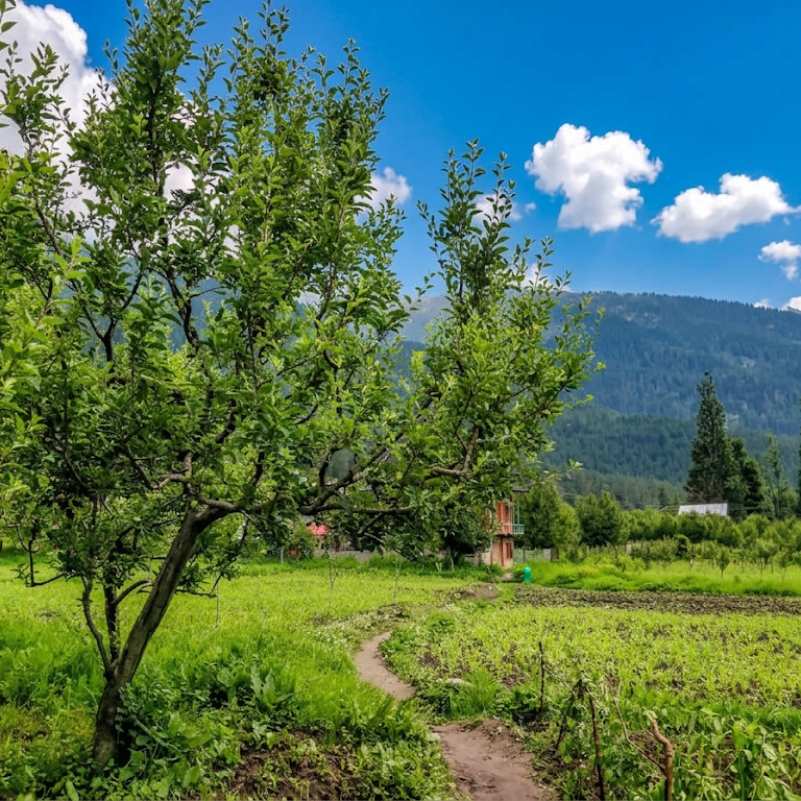
Kalga Village
Across the river from Nakthan area (via Barshaini)
A small village at about 2,280 metres on the right bank. Connects to Kheerganga via the alternative forest route. A quieter alternative to staying in Barshaini the night before the trek.
Tosh Village
About 3 km from Barshaini by road (separate trail)
A hillside village at 2,400 metres with mountain views, cafes, and guesthouses. About 3 km uphill from Barshaini. A separate trek route from Tosh joins the Nakthan route near the village.
Our packages with Nakthan Village
Curated trips that include a visit to Nakthan Village.
 4D/3N
4D/3NPerfect Manikaran Kasol Tosh Weekend Getaway
1D Delhi•2D Kasol+1
₹15,999₹19,999SAVE INR 4,000/ person 4D/3N
4D/3NWeekend Trip To Manikaran, Kasol & Tosh
1D Delhi •2D Kasol+1
₹9,999₹14,999SAVE INR 5,000/ person
Frequently Asked Questions
What is Nakthan Village?
A small traditional village of about 20 to 30 households at roughly 2,300 metres on the sunny, left bank of the Parvati River. It sits midway on the Nakthan (left bank) route of the roughly 12 km Kheerganga trek. Known for trail dhabas, apple orchards, and Kathkuni architecture. Most trekkers pass through for a meal and rest on the way to Kheerganga.
How do I reach Nakthan from Barshaini?
About 5 to 6 km on foot, roughly 1.5 to 2 hours. At Barshaini, do not cross the bridge. Turn left and follow the well marked trail upstream along the left bank of the Parvati River. The trail goes through open, sunny terrain with apple orchards.
Is Nakthan halfway to Kheerganga?
Roughly, yes. Nakthan is about 5 to 6 km from Barshaini and about 6 to 8 km from Kheerganga. The first half to Nakthan is the easier, sunnier stretch. The second half after Nakthan is steeper and harder.
Is food available at Nakthan?
Yes. Several dhabas operate in season (roughly April to November) serving Maggi, dal rice, rajma chawal, omelettes, and chai. This is the best food stop on the left bank Kheerganga route. Carry snacks as backup for off season or early morning when dhabas may not yet be open.
Can I stay overnight in Nakthan?
Yes, though options are basic. A few guesthouses and homestays offer simple rooms. Expect shared facilities and no hot water. Most trekkers prefer to stay in Kalga, Tosh, or Barshaini. Nakthan works if you want a very early start on the Kheerganga trail.
Are there any temple rules I should know?
Yes. The ancient village temple in Nakthan has strict local religious customs. Outsiders must not touch the temple structures, boundary walls, or religious objects. Fines can be imposed for violations. This is a deeply held local rule, not a suggestion. Keep a respectful distance and do not approach or touch any part of the temple complex.
Do I need to carry cash?
Absolutely. There is no ATM anywhere near Nakthan. The nearest is in Kasol. Mobile networks are too unreliable for UPI or digital payments. Physical cash is mandatory for the entire trek. Carry enough from Kasol to cover food, accommodation, and extras.
How far is Rudranag Temple from Nakthan?
About 30 minutes walk uphill. The temple and its serpent shaped waterfall are at the point where the left bank (Nakthan) and right bank (Kalga) routes converge. The trail continues steeply uphill from there to Kheerganga.
Is there mobile signal?
Barely. BSNL works in some spots at Nakthan. Jio and Airtel are unreliable. Signal drops out completely on the upper trail past Rudranag. Do not count on making calls or using app based payments.
What is the best time to visit?
April to June and September to November. October is the best single month. Monsoon (July to September) makes the trail muddy and slippery. Winter brings cold and possible snow on the upper trail.
Does the Tosh route to Kheerganga pass through Nakthan?
Yes. A separate trail from Tosh descends to the Nakthan area and joins the main left bank route near the village.
What is Kathkuni architecture?
Traditional Himachali construction using stone foundations, interlocking wood and stone layers, and slate roofs. The same style you see in Kalga, Pulga, and other upper Parvati Valley villages. Many houses in Nakthan still use this method.
Related guides
Posts about Kasol
- Shimla Manali Kasol Itinerary 2026: 7, 8 and 9 Day Routes Without Rushing
- Best Offbeat Places Near Kasol Most Tourists Miss in 2026
- Rasol Village Trek From Kasol 2026: Route, Distance & What to Expect
- Kalga, Pulga & Tulga Villages in 2026: The Offbeat Side of Parvati Valley
- Kheerganga Trek from Kasol 2026: Route, Difficulty, Cost & Best Time
- Snowfall in Kasol 2026: Does It Snow, Best Time & Nearby Snow Places