
Kalpa
A quiet Kinnauri village at roughly 2,760 metres where you wake up to the Kinner Kailash range filling your window, apple orchards line every slope, and the Sutlej runs thousands of feet below
- Village & Mountain Views
- ~2,760 m
- Shimla · ~240 km
- Apr to Oct
- Kinnaur, Himachal Pradesh
What makes it special
You do not earn the Kinner Kailash view. It is just there. You step onto your balcony at 6 AM, and the range fills the sky across the valley. In the minutes before the sun clears the eastern ridge, the snow is flat and colourless. Then the first light catches the Shivling, just the top, a thin line of pink on grey rock. Over the next ten or fifteen minutes, the pink spreads down the face and warms to orange, then gold. By the time the sun is fully up, the whole range is white and ordinary again. That transition is what people come for. No trek, no ticket, no effort. Just your blanket, a cup of tea, and the mountain.
But Kalpa is more than a viewing platform. Walk through the old part of the village, still called Chini by locals, and you step into something unusual. The Narayan Nagini temple sits in a small courtyard, built in the Kinnauri Kathkuni style with interlocking deodar timber and stone. Inside are stone idols of Vishnu and the serpent deities, the Nag and Nagini, that Kinnauri families have worshipped for generations. Thirty metres away, through a gap between two houses, you reach the Hu Bu Lan Kar monastery. Prayer flags hang from the eaves. A small Buddha sits inside. The monastery is believed to have been originally founded by Rinchen Zangpo in the 10th or 11th century, though the current structure was rebuilt after a fire in 1959. Walk from the temple to the monastery and back, and you cover maybe a hundred metres. Hindu worship on one side, Buddhist practice on the other, separated by nothing but a few wooden doors and a shared village lane. Nobody treats this as remarkable. It is simply how life has worked here for centuries, and it is the single most defining thing about Kalpa's culture.
The village climbs a steep slope above the Sutlej gorge. The lanes are narrow, paved with uneven stone, and lined with old wooden houses that have carved balconies and heavy slate roofs blackened by woodsmoke. You share the path with goats, children, and the occasional grandmother hauling firewood. The air at this altitude has a dry cold bite even on sunny days, and if you are here during apple season, from late August through October, the smell of overripe fruit on the ground mixes with pine resin and chimney smoke in a way that is specific to this village.
Apple orchards cover every available slope. In spring, the blossoms are pale pink against green leaves. By September, the branches bend under the weight of fruit and families are out picking and packing. Chilgoza pines, the edible pine nut trees, are common around the edges of the orchards and along the road. Below the orchards, the Sutlej runs thousands of feet down in a gorge so deep you hear it before you see it, a low, constant rumble on quiet mornings.
Most travellers reach Kalpa as part of a Kinnaur circuit, combining it with Sangla Valley and often continuing to Nako and Spiti. Two nights is what the place needs. One night is a waste because you arrive tired from the road and leave before the village has really landed. Three nights works if you are the kind of person who can watch a mountain change colour for an hour without reaching for your phone. Kalpa rewards that kind of stillness more than most places do.
Quick answers
- Is Kalpa worth visiting?
- Yes. The Kinner Kailash sunrise alone justifies the drive: you watch the Shivling peak turn from grey to pink to gold from your balcony, no trek required. Then walk through old Chini village where a Hindu temple and a Buddhist monastery share the same lane, separated by thirty metres and centuries of easy coexistence. Add apple orchards, chilgoza pines, and the Sutlej gorge rumbling far below, and you have a place that earns two nights. It works for couples, solo travellers, and families with older kids.
- How many days do you need in Kalpa?
- Two nights. One full day lets you watch the sunrise, walk the old village (make sure to see how the Narayan Nagini temple and the Hu Bu Lan Kar monastery sit side by side), and maybe drive to Roghi. One night means you arrive exhausted and leave before the village gets into your bones. Beyond two, you have seen what there is to see, unless sitting with the mountain for an hour counts as an activity. At Kalpa, it does.
- Is Kalpa good for families?
- Depends on the kids and how they handle mountain roads. The altitude at 2,760 metres is moderate, but the drive from Shimla takes 8 to 10 hours through the Sutlej gorge and is not fun for small children. Once you arrive, the village walks are gentle if steep. Not great for toddlers because of the uneven lanes. Works well for children old enough to enjoy mountains, apples, and a temple visit.
Quick facts
Everything you need to know at a glance.
At a glance
- Altitude
- Approx 2,760 m / 9,050 ft (some sources cite up to 2,960 m)
- Location
- Kinnaur district, Himachal Pradesh, on the old Hindustan Tibet Road
- Nearest town
- Reckong Peo (district HQ), about 7 km downhill
- Open season
- Generally April to October for comfortable travel; accessible in winter but cold
- Time needed
- 2 nights recommended
- Entry fee
- No fee to enter the village or any local sites
- Effort level
- Easy village walks on steep lanes; no strenuous trekking required for the main sights
On the ground
- Mobile network
- BSNL works most reliably. Jio has improved but can be patchy. Airtel is unreliable. Download offline maps.
- ATM
- No reliable ATM in Kalpa. Nearest ATMs in Reckong Peo, 7 km away. Carry cash from Shimla or Rampur.
- Fuel
- Nearest petrol pump in Reckong Peo. Fill up before climbing to Kalpa.
- Food
- Hotels and homestays serve North Indian, Kinnauri, and Tibetan food. No standalone restaurants.
- Stay
- Hotels, homestays, HPTDC property. Budget to mid range. Book ahead in peak season.
- Permits
- No permit for Indian travellers. Foreign nationals need ILP only beyond Jangi toward Spiti. Confirm locally.
- Drone
- Sensitive border zone. Do not fly drones without official permission.
Seasonal weather
- Apr to Jun22°6°Summer (Apr to Jun)
- Jul to Sep20°10°Monsoon (Jul to Sep)
- Oct to Nov18°0°Autumn (Oct to Nov)
- Dec to Mar10°-8°Winter (Dec to Mar)
Suitable for
- Couples — suitable
- Families — with some care
- Seniors — with some care
- Solo — suitable
- First-timers — suitable
- Pet-friendly — with some care
How to reach Kalpa
5 approach routes, with seasonal access.
From Shimla
Generally April to October; winter access possible but harder- Distance
- Approx 240 km
- Time
- 8 to 10 hours; best split over 2 days
- Road
- NH 5 mountain highway, narrow and rough in several stretches
- Last fuel
- Rampur, Reckong Peo
The standard route. Shimla to Narkanda is smooth. After Rampur, the road narrows along the Sutlej gorge and gets rough between Tapri and Powari. At Karcham you stay on the highway and continue to Reckong Peo, then climb 7 km to Kalpa. Most people break the journey with a night at Narkanda, Sarahan, or Rampur. Driving Shimla to Kalpa in a single day is possible but exhausting, especially with a family.
From Reckong Peo (district HQ)
Year round, though icy in winter- Distance
- 7 km
- Time
- 15 to 20 minutes
- Road
- Steep mountain road with tight switchbacks
- Last fuel
- Reckong Peo
The short climb from Reckong Peo to Kalpa is the last leg. Switchbacks, steep grade, and a narrow road that gets crowded when buses try to pass. Fill fuel, withdraw cash, and stock up on anything you need in Reckong Peo before heading up.
From Delhi
Generally April to October for comfortable travel- Distance
- Approx 570 to 600 km
- Time
- 2 to 3 days by road
- Road
- Highway then mountain roads
- Last fuel
- Chandigarh area, Rampur, Reckong Peo
Delhi to Shimla by Volvo bus or car, then Shimla to Kalpa the next day or in two segments. An HRTC bus runs from Delhi's Kashmiri Gate to Reckong Peo (roughly 18 hours overnight). From Reckong Peo, local buses or shared taxis cover the 7 km to Kalpa. Compressing Delhi to Kalpa into a single day of driving is a bad idea.
From Chandigarh
Generally April to October- Distance
- Approx 370 km
- Time
- 10 to 12 hours; split over 2 days recommended
- Road
- NH then mountain highway
- Last fuel
- Shimla area, Rampur, Reckong Peo
Through or around Shimla, then the same NH 5 route to Rampur, Karcham, Reckong Peo, and up to Kalpa. A night at Narkanda or Sarahan makes this comfortable rather than gruelling.
From Sangla Valley (via Karcham)
Generally April to October- Distance
- Approximately 50 km
- Time
- 1.5 to 2.5 hours
- Road
- Mountain road via Karcham and NH 5
- Last fuel
- Reckong Peo
The standard move on a Kinnaur circuit. Drive down from Sangla to the Karcham junction on NH 5, turn right toward Reckong Peo, then climb 7 km to Kalpa. The distance adds up because of the descent to Karcham and the winding climb back up. Fill fuel at Reckong Peo.
Best time to visit
Season by season, so you can plan around the weather rather than hope.
- Recommended
Summer
April to June
Clear skies, warm days, the main window for Kinnaur travel.
- Temperature
- Roughly 15 to 22°C day, 6 to 10°C night
- Crowds
- Moderate to high, peaks on long weekends
- Roads
- Generally open, occasional delays from road work
- Photography
- Best early morning for Kinner Kailash; clean light most days
This is when most people visit. Roads are generally open, the Kinner Kailash views are sharp in the morning, and daytime temperatures are comfortable at 15 to 22°C. Nights drop to 6 to 10°C, so a light jacket is essential. Apple orchards are green and the village is fully alive. Long weekends in May and June get busy. If possible, visit midweek for a quieter experience.
Monsoon
July to September
Kalpa itself stays drier than the road getting there. Landslides are the real worry.
- Temperature
- Roughly 14 to 20°C day, 10 to 14°C night
- Crowds
- Lower than summer
- Roads
- Landslide risk on the highway, especially Rampur to Karcham
- Rain
- Intermittent in Kalpa, heavier on the approach road
The village gets less rain than the lower stretches of the Kinnaur highway, and the orchards turn thick and green. But the road between Rampur and Reckong Peo is serious landslide country in this season. Closures of a few hours to a few days are common. If you go, build in buffer days and check road conditions before leaving. The Kinner Kailash views are less reliable because clouds move in by late morning most days.
- Recommended
Autumn
October to early November
Apple harvest, crisp air, clean mountain light. Quietly the best season.
- Temperature
- Roughly 10 to 18°C day, 0 to 5°C night
- Crowds
- Low
- Roads
- Generally good, post monsoon repairs mostly done
- Orchards
- Apple harvest in full swing, one of the best reasons to visit
If you want one window, this is it. The orchards are in full harvest from late September through October, with apples, walnuts, and the smell of ripe fruit everywhere. Skies are the clearest of the year, the Kinner Kailash views are their sharpest, and the crowds thin out. Evenings get cold fast, dropping to near freezing by late October. Pack warm layers. By mid November, early snow is possible and many stays start closing.
Winter
Late November to March
Snow, silence, and sub zero nights. Only for travellers who want winter on purpose.
- Temperature
- Roughly 0 to 10°C day, minus 8 to 0°C night
- Crowds
- Very few visitors
- Roads
- Icy stretches, possible closures after heavy snow
- What stays open
- Some hotels remain open; most smaller stays shut down
Kalpa in winter is a different place. Snow blankets the village, the peaks glow white against cold blue skies, and the silence is startling. But temperatures drop to minus 8°C or lower at night, many hotels shut, and the road from Reckong Peo can be icy or blocked after snowfall. The Kinnaur highway is generally open through winter (unlike the Spiti side), but delays and closures happen. Come only if you have warm gear, a reliable vehicle, and the flexibility to wait out weather.
Things to see & do
7 things worth your time at Kalpa.
Watch the sunrise light move across Kinner Kailash
30 to 60 minSet your alarm for thirty minutes before sunrise. Step outside. In the pre dawn grey, the Kinner Kailash range is just a dark silhouette. Then the first light catches the tip of the Shivling, a thin line of pale pink on rock. Over the next ten to fifteen minutes, the pink deepens to orange, spreads down the snow face, and warms to gold. The lower ridges stay in shadow while the high peaks glow. By the time the sun is fully up, the colour drains and the mountain turns white. The whole thing takes twenty minutes, and it happens every clear morning, and it is different every time. The sunset is less famous but worth watching too: the western light warms the entire range and the clouds tend to build in ways that the dawn sky does not. Do both if you can.
Walk through old Chini village, the temple, and the monastery
1 to 2 hoursMake sure to walk through the narrow lanes of old Chini village to see the thing that defines Kalpa more than any mountain view. Start at the Narayan Nagini temple, where stone idols of Vishnu and the serpent deities sit inside a courtyard of interlocking deodar timber and carved wood panels. The incense is usually burning. Then walk thirty metres through a gap between houses to the Hu Bu Lan Kar monastery, where prayer flags hang from the eaves and a quiet Buddha watches from the dim interior. Hindu worship and Buddhist practice separated by nothing but a few wooden doors and a shared lane. Nobody in the village treats this as unusual. That ordinariness is the point. Beyond the temple and monastery, the old village is worth exploring on its own: carved wooden balconies, slate roofs stained dark by decades of woodsmoke, small shrines tucked into corners. Ask before photographing anyone. The whole loop takes about an hour, longer if you stop and talk to people.
Walk or drive to Roghi village
Half dayRoghi is a small village about 6 to 8 km from Kalpa by road, though a shorter footpath through apple orchards cuts the walking distance to roughly 2 km. The road is the one with the reputation: a narrow cliff shelf carved into vertical rock, with drops that go straight down to the Sutlej. About 3 km along this road, you pass the cliff edge bend that locals call Suicide Point, which gives you a stomach level sense of how deep this valley actually is. The name is dramatic and misleading. It refers to the vertical drop, not any specific event. Beyond it, the village itself is older and quieter than Kalpa, with wooden houses, the Roghi Mata temple, and the kind of silence you do not get in Kalpa's main market area. Go in the afternoon when the light on the western face of the Kinner Kailash range is warm and the shadows stretch across the orchard terraces.
Hike to Chaka meadows
Full dayThe trail climbs from Kalpa through forest into open meadows and a small glacial lake at roughly 3,800 metres. It is 3 to 5 km uphill, moderate difficulty, and the altitude gain is real. You do not need technical gear but you do need water, a jacket, and an early start. In summer the meadows are green and the air up there is thin and cold and sharp in your lungs. Come back before the afternoon clouds roll in. This is the best option if you want to stretch your legs beyond village lanes.
Sit in an apple orchard during harvest season
Open endedIf you are here in late September or October, find an orchard. They are everywhere. Sit under a tree with branches bending under the weight of fruit, the cold air crisp enough to sting your cheeks, the smell of fallen apples and pine needles mixing with woodsmoke drifting from the village below. Some homestays have their own orchards and will let you pick a few apples. This sounds like doing nothing. It is. That is why it works.
Spend a slow hour at the Narayan Nagini temple
1 hourThe village walk takes you past the Narayan Nagini temple, but most people glance at the courtyard, take a photo, and move on. If you have the time, come back and sit. The temple courtyard is small, built in the Kathkuni style with interlocking deodar timber and stone, and it has the kind of stillness that only survives in places where tourism has not yet turned worship into performance. Morning is best, when the incense is fresh and the light falls through the wooden eaves onto the stone floor. Watch the way local families come in to pray, quietly, without ceremony, the way you would check in on a neighbour. The carved wood panels on the outer walls reward a close look. Some of the figures and motifs are centuries old and mix Hindu iconography with local Kinnauri folk traditions in ways that do not appear in textbooks. You will not find signboards or explanations. Ask the temple caretaker if he is around. He usually is.
Buy chilgoza and a Kinnauri cap
30 min to 1 hourKalpa's small market has a handful of shops selling chilgoza (pine nuts), dried apples, apricots, local honey, and Kinnauri caps and shawls. Reckong Peo has a slightly larger market. Chilgoza from Kinnaur is some of the best in India, and it costs less here than anywhere else you will find it. The hand woven Kinnauri cap is the other thing worth buying.
Know before you visit Kalpa
The practical bits, from people who have been.
Where to stay and what to eatGet a mountain facing room. Ask for siddu. Book ahead in peak season.
Every hotel in Kalpa markets the Kinner Kailash view. Most of them deliver, because the range is so close that you would have to try hard to block it. Still, ask for a mountain facing room when booking. A room without the view at Kalpa is like booking a seaside hotel facing the car park.
HPTDC runs a property (Kinner Kailash) with some of the best positioned rooms in the village, though service quality varies with the season. Several private hotels and homestays have opened recently, most small, family run, and with decent views. Rates range from Rs 800 to 1,500 for basic guesthouses, Rs 2,000 to 4,000 for mid range hotels, and Rs 5,000 to 8,000 for the nicer rooms. Book ahead in May, June, and long weekends. Walk ins during peak season are risky in a village this small.
Food is hotel food, mostly. Dal chawal, rajma, thukpa, momos, paranthas. A few places make good apple chutney and fresh juice in season. Ask for siddu (steamed wheat bread with walnut or poppy seed filling) or aktori (buckwheat pancake) if the kitchen makes them. There is no restaurant scene. Eat where you sleep.
Who Kalpa suits and who should know themselvesMountain view lovers and slow travellers. Less so if you need activity or adventure.
Will love it. Couples who want to wake up to a 6,000 metre peak and do nothing all day. Solo travellers who read, walk, and sit with views. Photographers chasing dawn light on snow without any trekking. Anyone curious about the way Hindu and Buddhist traditions share a single village lane in Kinnaur. People on the Kinnaur circuit who want the mountain view counterpoint to Sangla's green river valley.
Might get restless. If you need structured activities, adventure sports, or nightlife, Kalpa is the wrong place. The draw is the view, the village, and the orchards. After two full days, you have seen what there is to see. Also, if you are expecting the stark, barren drama of Spiti, Kalpa will surprise you with how green and soft it is.
Families with small kids. The altitude is moderate but the road in is long and tiring. Village lanes are steep and uneven. Works for kids aged 8 and up who enjoy being outdoors. For toddlers, Sangla Valley is the easier option.
Senior travellers. Manageable for healthy seniors in a private vehicle, provided the drive is broken into two days. The village walks involve steep lanes but nothing extreme. Anyone with heart, lung, or blood pressure concerns should check with a doctor first.
Pets. Most hotels do not accept pets. Temple and monastery areas do not allow animals. Check in advance.
The road, the altitude, and what to respectTranda Dhank road, moderate altitude, late July monsoon risk, border area rules
The road to Kalpa from Shimla passes through the Sutlej gorge, including the Tranda Dhank section where the road is a narrow shelf carved into cliff face. Do not drive this after dark. Start early, keep buffer days during monsoon, and check road status before you leave. Landslide closures between Rampur and Reckong Peo are common in late July and August.
Kalpa sits at roughly 2,760 metres. Not extreme, but if you have come up fast from the plains, expect a dull headache or fatigue the first evening. Drink water, skip alcohol on the first night, and do not rush into a village walk within hours of arriving. Symptoms usually ease by morning.
Medical facilities in Kalpa are basic. The nearest proper hospital and pharmacy are in Reckong Peo, 7 km downhill. Carry your own kit: prescription medicines, painkillers, ORS, band aids.
Kalpa is in a border zone. Carry valid photo ID at all times. Do not fly drones without official permission. Road conditions, permit rules, and local customs can change with the season. Reconfirm details close to your travel date.
How to build your Kalpa tripTwo nights in Kalpa, paired with Sangla, optionally continuing to Spiti
Most Kinnaur itineraries pair Kalpa with Sangla Valley. Two nights in Sangla (with a Chitkul day trip) and two nights in Kalpa is the standard, before either returning to Shimla or continuing toward Nako and Spiti.
The full Kinnaur to Spiti circuit looks like this: Shimla, Sarahan (one night), Sangla (two nights), Kalpa (two nights), Nako (one night), Tabo, Kaza, Chandratal, Manali. Allow 10 to 14 days.
Short on time? Shimla, Sarahan or Narkanda (one night), Sangla (two nights with Chitkul day trip), Kalpa (one to two nights), back to Shimla. Five to six days covers the core of lower Kinnaur.
Road conditions and local situations shift with the season. Always reconfirm with your operator or a recent local source before you go.
What I would tell a friend before they goSunrise alarm, temple lane at sunset, cash in hand, eat the local food
Set your alarm for thirty minutes before sunrise. The light on Kinner Kailash moves fast: pink tip to golden face to flat white in about twenty minutes. If you wake up at 7 AM in summer, you have already missed it. The sunset is less famous but better for photography because the western light warms the entire range and the clouds build drama.
Walk through old Chini village in the late afternoon. The light is warm, the lanes are quiet, and the way the Narayan Nagini temple and the Hu Bu Lan Kar monastery sit next to each other, Hindu worship and Buddhist practice sharing a lane, is the thing about Kalpa that stays with people long after the mountain photos fade.
Carry cash. ATMs in Reckong Peo can run dry and UPI is unreliable up here. Bring enough from Shimla or Rampur for your whole Kinnaur stay.
Fill fuel at Reckong Peo. No petrol pump in Kalpa.
If you are here in September or October, ask about the Phulaich festival. Locals climb to the high meadows to pick wildflowers for their ancestors. If your timing lines up, it is one of those things you will talk about for years.
One more thing: the cliff viewpoint near Roghi called Suicide Point is a 20 minute stop for perspective on the Sutlej gorge. The name is dramatic and unfortunate. It is not the main attraction. The main attraction is the mountain outside your window at 6 AM.
Nearby attractions
Other places worth the detour.
Roghi Village
About 6 to 8 km from Kalpa by road
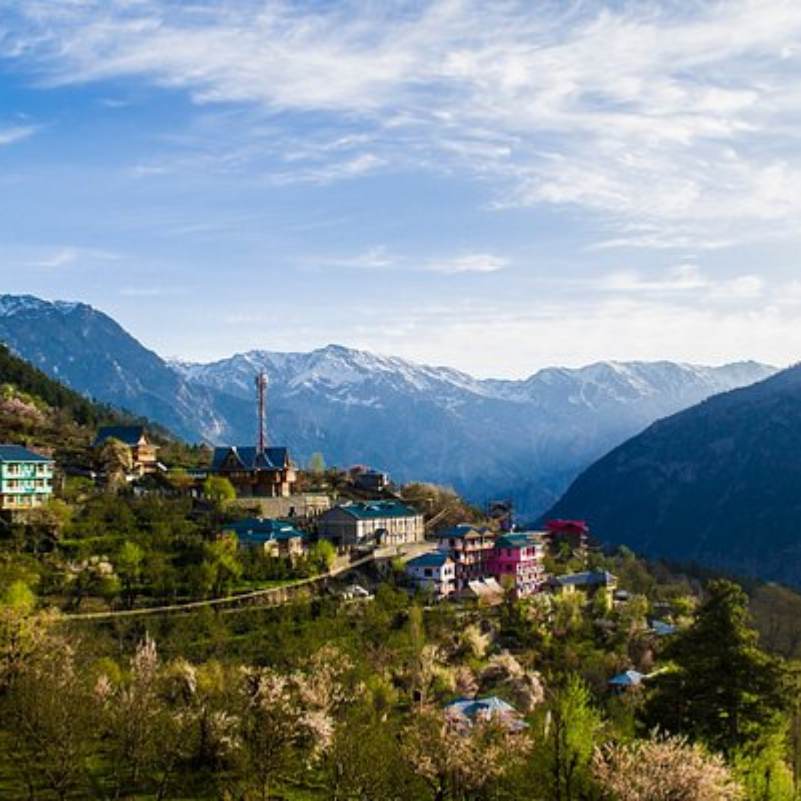
A quieter, older village reachable by a dramatic cliff road or a shorter footpath through orchards. Traditional Kinnauri houses, the Roghi Mata temple, and afternoon light on the Kinner Kailash range that some photographers prefer to the sunrise from Kalpa. The cliff edge viewpoint en route (Suicide Point) gives a stomach dropping view of the Sutlej gorge.
Reckong Peo
7 km downhill
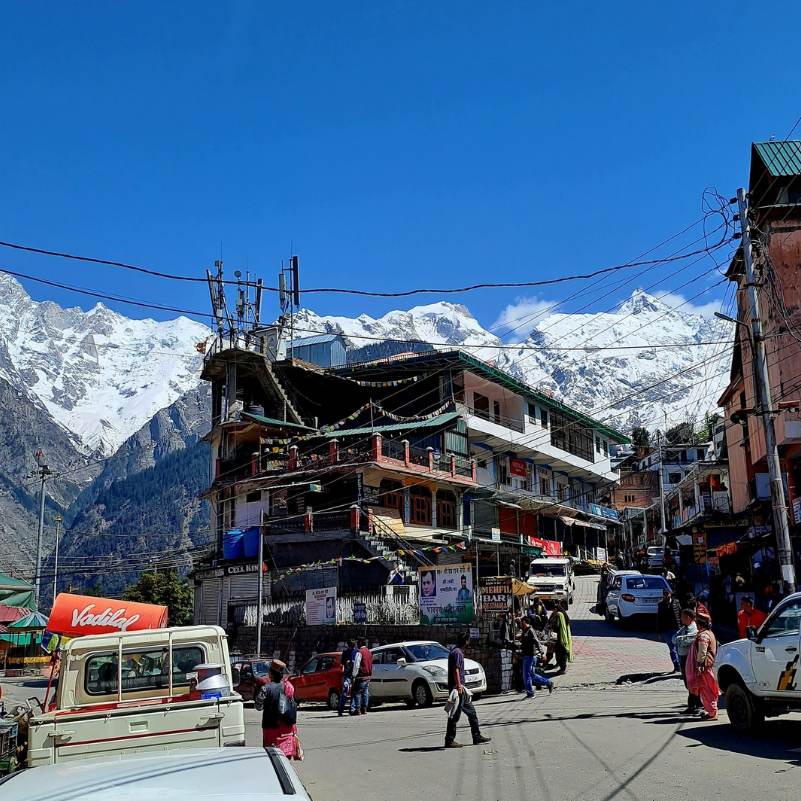
The district headquarters of Kinnaur. Not a tourist destination, but the place you go for fuel, ATMs, a pharmacy, a proper market, and the Inner Line Permit office if you are a foreign national heading toward Spiti. Stock up here before climbing to Kalpa.
Sangla Valley
Approximately 50 km via Karcham
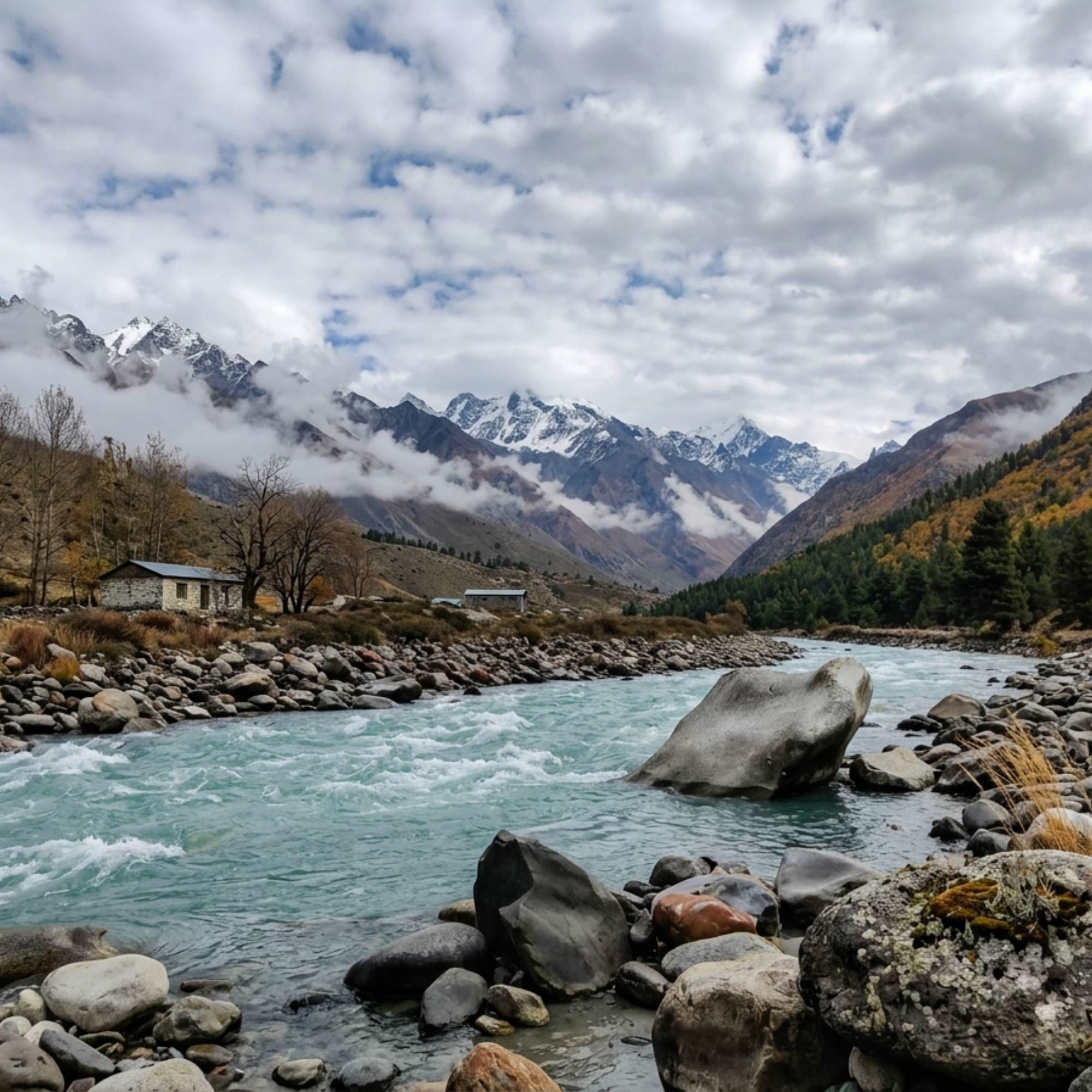
The green, river cut Baspa Valley with apple orchards, Kamru Fort, and the drive to Chitkul. Most Kinnaur trips combine Sangla and Kalpa, spending two to three nights at each.
Kamru Fort
About 50 km (in Sangla)
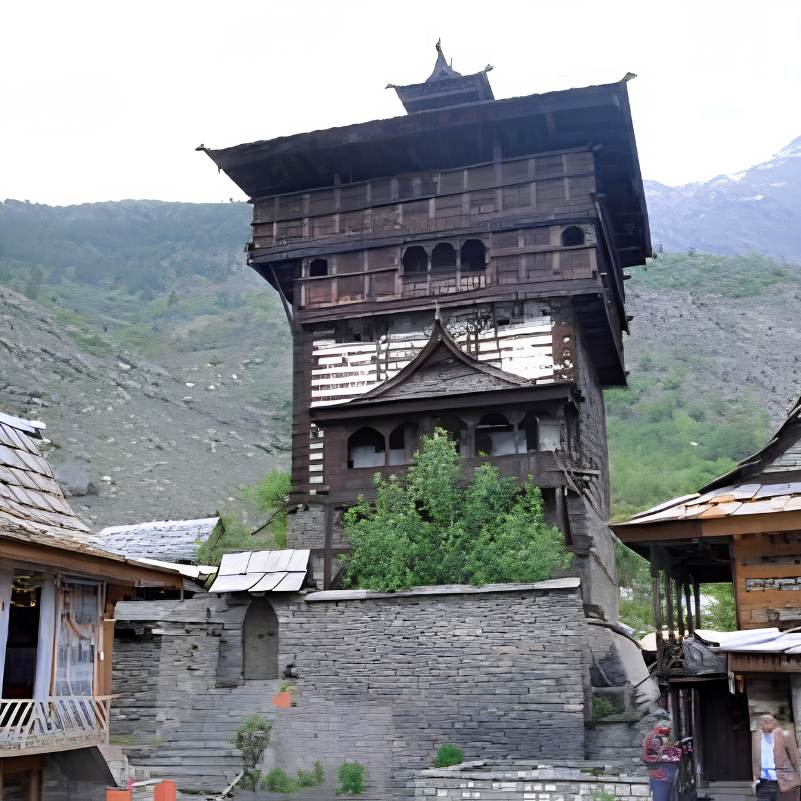
A living fort and temple complex above Sangla with a five storey Kathkuni wooden tower and one of the best valley views in Kinnaur. Worth the steep climb.
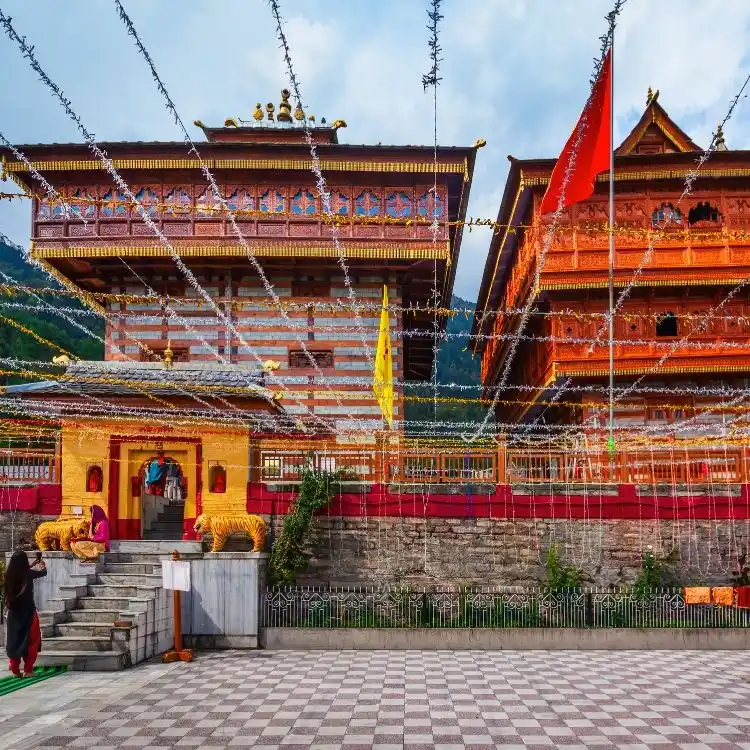
Sarahan and Bhimakali Temple
About 100 km toward Shimla
A natural night halt on the way to or from Kalpa. The Bhimakali temple complex is one of the most important in Himachal Pradesh, with striking tower architecture.
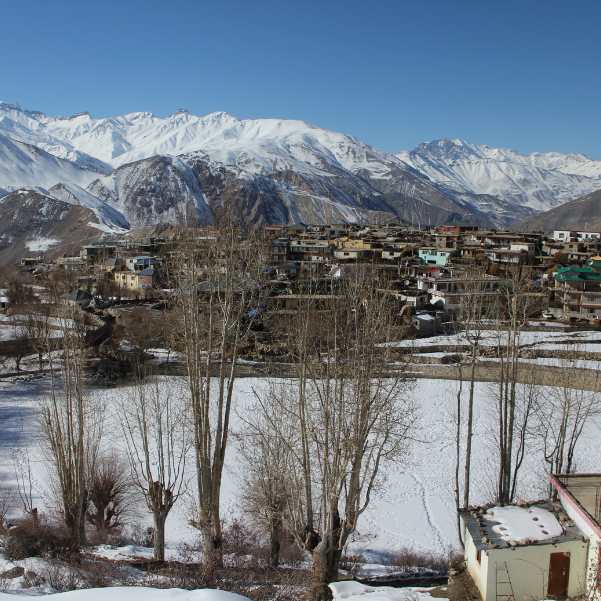
Nako Lake and Village
About 120 km toward Spiti
A Buddhist village at roughly 3,660 metres around a sacred lake in upper Kinnaur. The natural next stop if you are continuing the Kinnaur to Spiti circuit.
Our packages with Kalpa
Curated trips that include a visit to Kalpa.
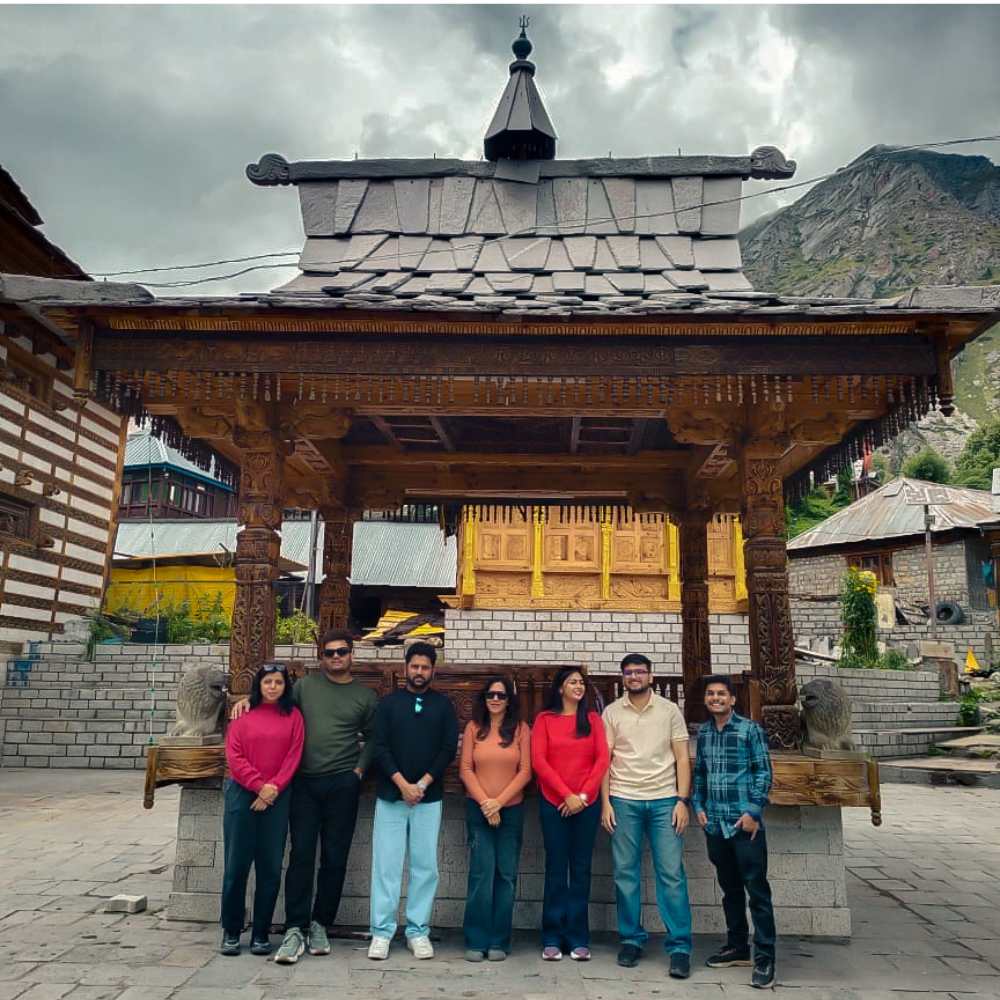 Group Tour5D/4N
Kinnaur Valley Weekend Group Trip With Sangla Chitkul and Kalpa
1D Sangla•1D Kalpa
₹6,999₹9,999SAVE INR 3,000/ person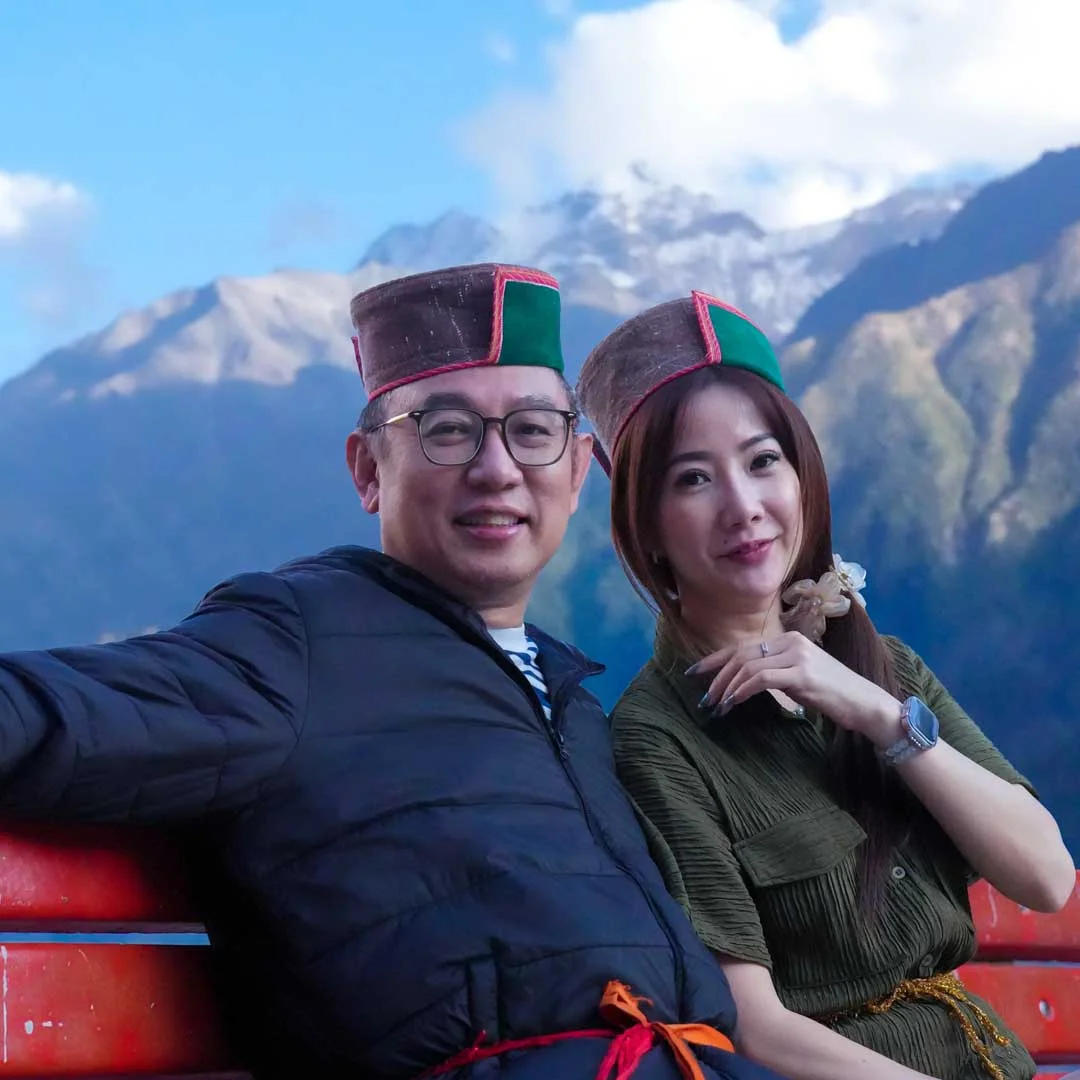 4D/3N
4D/3NKinnaur Valley Scenic Circuit With Sangla Chitkul and Kalpa
1D Shimla•1D Sangla+1
₹16,999₹17,999SAVE INR 1,000/ person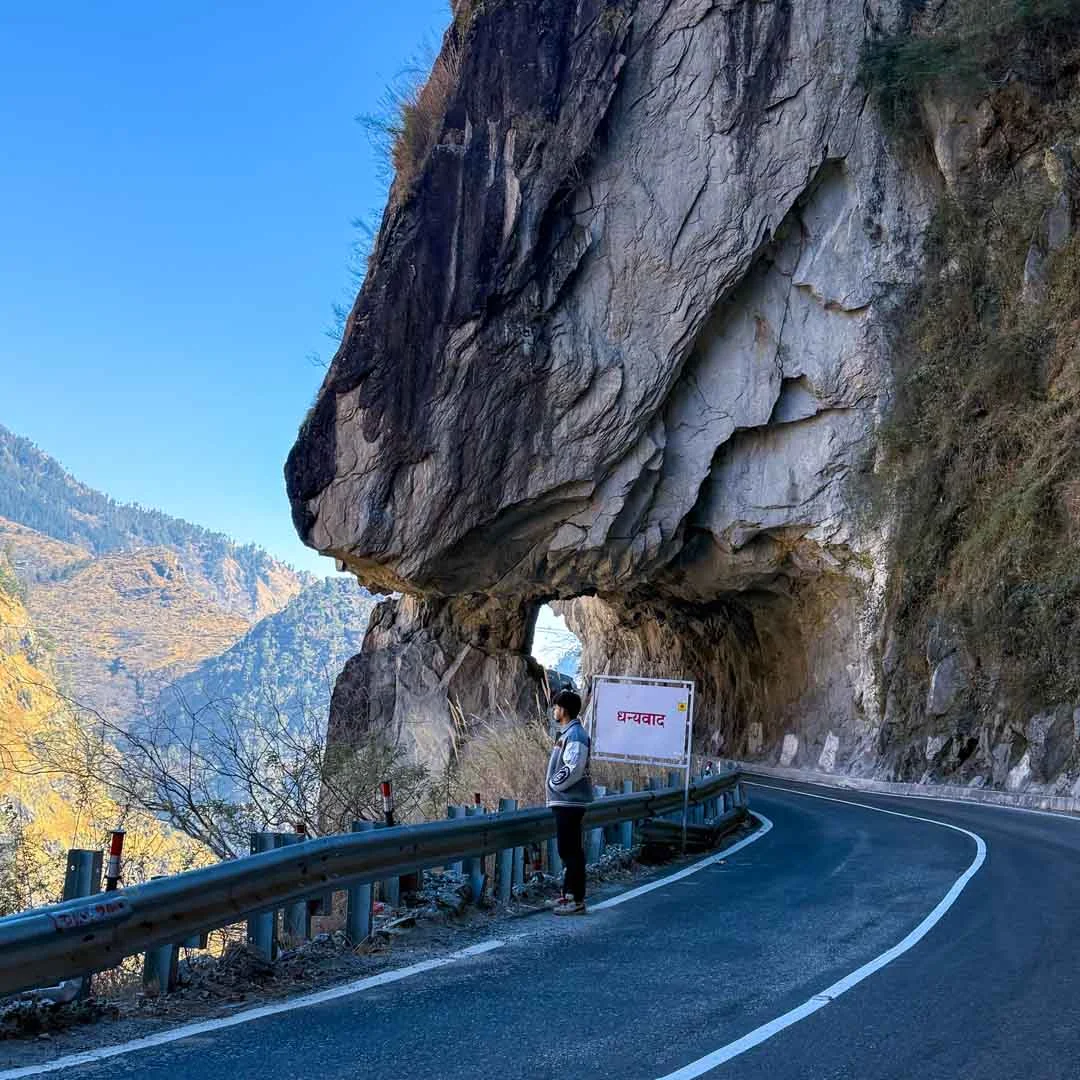 5D/4N
5D/4NKinnaur Tour Package From Delhi With Sangla Chitkul and Kalpa
1D Sangla•1D Kalpa
₹14,999₹16,999SAVE INR 2,000/ person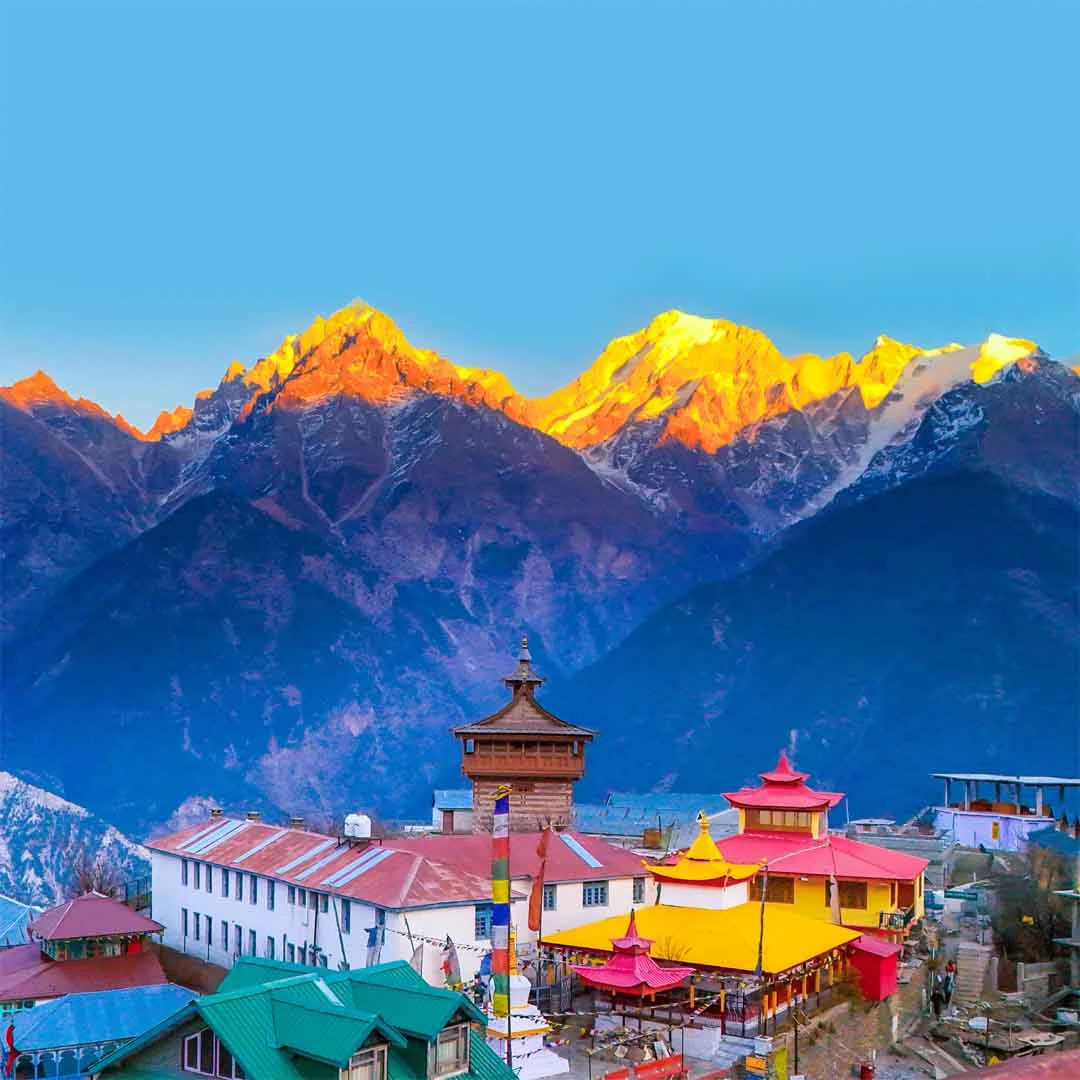 5D/4N
5D/4NClassic Kinnaur Valley Circuit With Sarahan Sangla Chitkul and Kalpa
1D Shimla•1D Sarahan+2
₹19,999₹21,999SAVE INR 2,000/ person
Common questions about Kalpa
Where exactly is Kalpa?
Kalpa is a village in Kinnaur district, Himachal Pradesh, at roughly 2,760 metres above sea level. It sits about 7 km uphill from Reckong Peo (the district headquarters) and roughly 240 km from Shimla on the old Hindustan Tibet Road (NH 5).
What is the best time to visit Kalpa?
April to June for clear weather and open roads. Late September to October for apple harvest, clean light, and thin crowds, this is quietly the best window. July to September is possible but the highway is landslide prone. Winter is cold and some stays shut, but the snow covered peaks are striking if you are prepared.
How do I reach Kalpa from Delhi or Chandigarh?
Drive or take a bus to Shimla, then continue on NH 5 to Reckong Peo (about 8 to 10 hours from Shimla), and climb 7 km to Kalpa. Total from Delhi is roughly 570 to 600 km. Do not try to do it in one day. Break the journey with a night at Narkanda, Sarahan, or Rampur.
Do I need a permit for Kalpa?
Indian travellers do not need any permit for Kalpa or anywhere in Kinnaur Valley. Foreign nationals do not need a permit specifically for Kalpa but will need an Inner Line Permit if continuing beyond Jangi (about 35 km past Reckong Peo) toward Spiti. Rules can change, so confirm current requirements locally.
Is Kalpa safe for solo women travellers?
Yes. The community is conservative, respectful, and welcoming. Hotels and homestays are generally safe and well run. Standard precautions apply, especially when walking after dark on unlit village lanes. Most solo women travellers report feeling comfortable.
Does mobile network work in Kalpa?
BSNL works most reliably. Jio has improved in recent years but can still be patchy. Airtel is generally unreliable. Do not count on UPI for payments. Download offline maps and inform people back home that you may be intermittently unreachable.
Is there an ATM in Kalpa?
No reliable ATM in Kalpa itself. The nearest ATMs are in Reckong Peo, 7 km away. Even those can run out of cash. Carry enough cash from Shimla, Chandigarh, or Rampur to cover your entire Kinnaur stay.
What food is available in Kalpa?
Hotels and homestays serve North Indian staples (dal chawal, rajma, roti), Kinnauri dishes (siddu, aktori), and Tibetan food (thukpa, momos). Fresh apple juice is available in season. A few small dhabas exist but most meals happen at your stay. Vegetarian options are easy. Vegan options are limited.
Can I visit Kalpa with kids or elderly parents?
Older kids (8+) who enjoy being outdoors will do well. The altitude is moderate and village walks are gentle, though lanes are steep. The drive in is the tiring part, so break it. For elderly travellers, a private vehicle and a two day approach from Shimla makes it manageable. Anyone with serious health conditions should consult a doctor before visiting at this altitude.
Is Kalpa better than Sangla?
They are different and most people visit both. Kalpa is about the mountain view, the Kinner Kailash range, and a higher, drier setting. Sangla is about a green river valley, apple orchards, villages, and Kamru Fort. Kalpa suits mountain view seekers. Sangla suits families and people who prefer gentler, greener terrain. Two to three nights at each is the ideal Kinnaur trip.
What is the Kinner Kailash range?
Kinner Kailash is a mountain range in Kinnaur with a peak at roughly 6,050 metres, topped by a distinctive rock formation called the Shivling, traditionally considered the winter home of Lord Shiva. It is visible from almost every part of Kalpa and is the primary reason most travellers visit.
What is Suicide Point near Kalpa?
A cliff edge viewpoint about 3 km from Kalpa on the road to Roghi village, where the mountain drops almost vertically to the Sutlej gorge below. The name refers to the dramatic vertical cliff, not any specific incident. It is a short stop for perspective on the valley depth, not a main attraction. Roghi village is about 6 to 8 km from Kalpa by road, or roughly 2 km on the footpath through orchards.
Related guides
Posts about Kinnaur
- Shipki La Pass in September 2026: Weather, Permit, Road Status and Travel Guide
- Shipki La Pass in August 2026: Weather, Road Status, Permit Rules and Travel Tips
- Shipki La Pass in July 2026: Road, Permits, Weather and Travel Guide
- Shipki La Pass in June 2026: Road Status, Permits, Weather and Travel Guide
- Shipki La Pass in May 2026: Road Status, Permits and Honest Travel Advice
- Best Time to Visit Kinnaur Valley in 2026: Month-by-Month Guide