
Kinnaur Permit Guide 2026: Do You Need an Inner Line Permit for Kinnaur or Spiti?

The Kinnaur permit question trips up more travellers than the actual roads in Kinnaur. We get asked about it almost every week, especially from foreign travellers who are planning a Shimla to Spiti circuit and do not know whether they will get stopped, sent back, or fined somewhere between Kalpa and Nako.
The confusion is real. Official government pages say one thing. Travel blogs say another. And the rules for Kinnaur, Spiti, Rohtang, and the Atal Tunnel all get mixed up into one giant mess.
This guide sorts it out. Plain language, verified facts, and honest flags wherever the official sources disagree with each other.
Quick Answer
Indian citizens
Indian citizens do not need an inner line permit for standard tourist travel in Kinnaur or the Shimla-side Spiti route. No paperwork, no fees, no applications. Just carry a valid government photo ID.
Foreign nationals
Foreign nationals need a Protected Area Permit (PAP) for upper Kinnaur beyond the inner line and for several villages in the Spiti Valley near the Tibet border. Lower Kinnaur spots like Kalpa, Sangla, and Chitkul do not require this permit.
One important warning: official sources conflict on several details including whether Kaza itself needs a PAP, exact validity periods, and whether online filing is functional yet. If you are a foreign traveller, verify directly with the issuing office before your trip.
Not sure whether your route needs a permit? Reach out Travel Coffee on WhatsApp and get the latest ground-level guidance before you travel.
👉 WhatsApp us for the latest permit guidance before you travel
Do Indian Tourists Need a Permit for Kinnaur?
No. If you hold an Indian passport, you do not need any inner line permit or Protected Area Permit for travelling through Kinnaur or the Shimla-side Spiti route. Not for Kalpa, not for Chitkul, not for Nako, not for Kaza.
What most tourists get wrong here is confusing an ID check with a permit requirement. At certain checkpoints like Jangi or Sumdo, police or ITBP personnel may ask for your ID.
They might note your name and vehicle number in a register. This is a routine security check, not a permit verification.
Carry a valid government photo ID at all times. Aadhaar card, driving licence, voter ID, or passport. In our experience, a driving licence works fine at every checkpoint. You will not be turned back or asked to pay a fee at any point.
The permit conversation only applies to foreign nationals. If you are Indian, skip ahead to the route planning section at the bottom. It will save you time.
When Do Foreigners Need an Inner Line Permit for Kinnaur or Spiti?
This is where things get real and where the confusion usually starts.
Parts of Kinnaur and Spiti sit close to the India-Tibet (China) border. The central government has classified several villages in these districts as "protected areas." Foreign nationals need a permit to enter these zones.
The technical name for this permit is Protected Area Permit (PAP), not Inner Line Permit (ILP).
Most travellers, blog posts, and even some government tourism pages use ILP, but the correct term under central government language is PAP.
The practical difference does not matter much at the checkpoint. What matters is that you have the document.
The rule exists because these border-adjacent areas fall between the "inner line" and the international boundary. The Indian government controls access to this strip for security reasons. The permit process is how they manage that access for foreign visitors.
Now, when people search for "Kinnaur Spiti permit," they usually want to know one thing: will I get stopped on the road from Shimla to Kaza? The answer depends on exactly which villages you plan to visit. Some are permit-free. Others are not.
Which Kinnaur Places Are Permit-Free and Which Fall in the Protected Area?
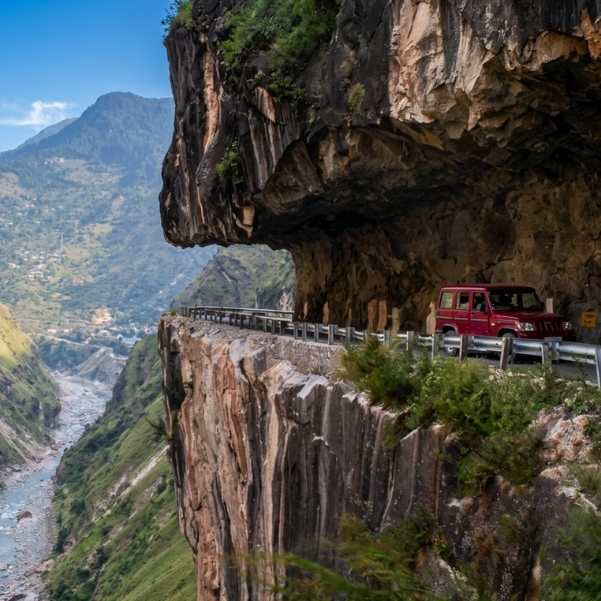
Lower Kinnaur is straightforward. The popular tourist stops that most people visit on a Kinnaur trip do not fall in the restricted zone.
Kalpa, Sangla, Chitkul, and Sarahan are consistently described in current travel guides as permit-free for foreign nationals.
These places sit below the inner-line zone and are open to everyone. You can stay, eat, photograph, and move freely through this belt without any paperwork beyond your passport.
The protected area begins further up in Kinnaur's Pooh Block. This is where the landscape gets drier, the road gets rougher, and the Tibet border gets closer.
The officially notified protected villages in this zone include Nako, Khab, Pooh, Moorang, Charang, Lippa, Asarang, Sumra, Shalkhar, Chango, and Maling, among others. These are all part of the Pooh Block in Kinnaur district.
If you are a foreign traveller driving from Shimla towards Spiti, the inner-line boundary becomes relevant after you cross Jangi. HPTDC describes Jangi as the inner-border point beyond which foreigners need a permit up to Tabo.
So the practical picture is this: everything up to and including Chitkul and Kalpa is open. Once you start heading towards Nako and beyond, you need your PAP sorted.
If your plan is a short trip staying within lower Kinnaur, our Kinnaur tour packages cover this belt without any permit complications.
Do You Need a Permit for Nako, Tabo, Dhankar, Kaza and Spiti Villages?
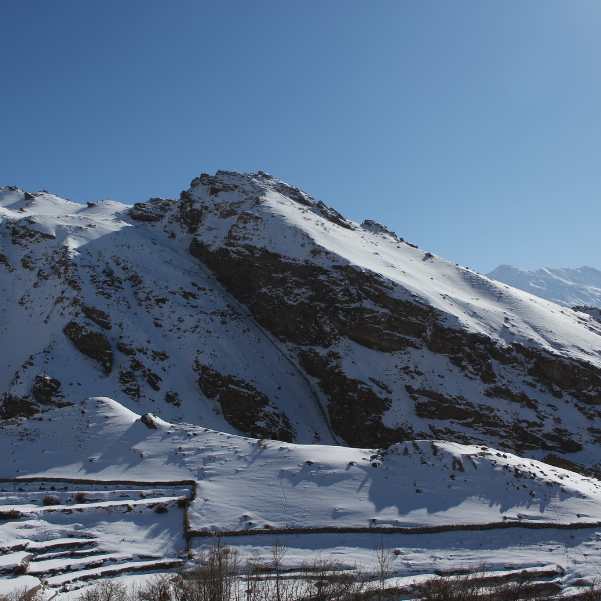
This is the question that affects the most travellers because almost everyone doing a Kinnaur trip eventually wants to continue into Spiti.
The official protected-area list for the Spiti side includes Dhankar, Shichling, Poh, Tabo, Hurling, Lari, Gue, C.P. Samdo, and Korik. Foreign nationals need a PAP to visit these villages.
Now, here is the tricky part about Kaza.
One official source (the District Kinnaur page and older MHA text) says that a foreign tourist without a PAP can visit "Kaja" and the Kaja-Kibbar-Prangla Pass-Baralacha-Keylong-Manali trekking route. This suggests Kaza is outside the restricted zone.
But the District Lahaul and Spiti official page lists Kaza among places requiring a protected-area permit.
We are not going to pretend this conflict does not exist. Both are government sources. Both are currently live on their websites. And no single clarification has resolved the contradiction.
What we tell our travellers
If you are a foreign national planning to visit Kaza and beyond, apply for the PAP anyway. Getting it takes a day or less in most cases.
Showing up in Kaza without it and finding out the checkpoint officer follows the stricter interpretation is a problem you do not want at 12,500 feet with no internet and no backup plan.
If you are planning a full circuit through the valley, our Spiti Valley tour packages handle the permit logistics so you do not have to sort through conflicting government pages yourself.
Where Can You Get the Permit for Kinnaur and Spiti?
Reckong Peo
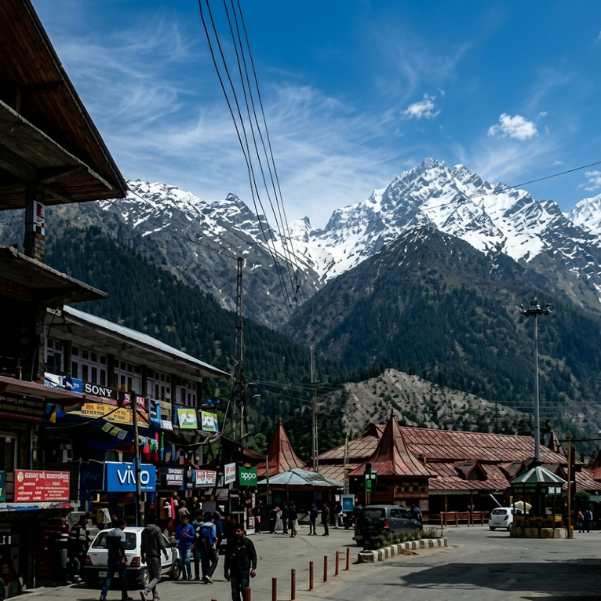
This is the most commonly used office and the one that shows up in almost every traveller report. The SDM Office at Kalpa, Reckong Peo handles PAP applications for the Kinnaur protected area.
The District Kinnaur tourist contact point is at this office. The phone number is 01786-222253.
Reckong Peo is also the last proper town before you enter the restricted zone heading towards Nako. So if you are travelling the Shimla to Spiti route, this is the natural stop to get your paperwork done.
Our team recommends reaching Reckong Peo by mid-morning to give yourself enough time for processing.
The small dhaba right opposite the SDM office complex sells solid rajma chawal. If you are waiting for your permit, eat there. It is the best meal you will get before Nako.
Shimla, Kaza, and Keylong
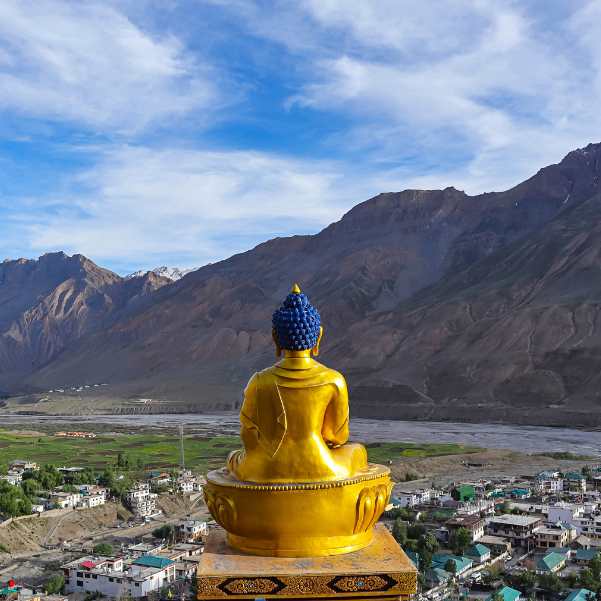
The permit can also be processed at other offices depending on which direction you are entering from.
If you are starting from Shimla, the Shimla Sugam Centre handles applications. This works well for travellers who want to sort the permit before hitting the road.
If you are entering Spiti from the Manali side via Kunzum Pass, the relevant offices are the SDM Kaza (phone: 01906-222302) and the DC Lahaul and Spiti at Keylong (phone: 01900-222501).
The HPTDC simplified list mentions SDM Manali, SDM Reckong Peo, DC Lahaul-Spiti at Keylong, and DC Kinnaur at Reckong Peo as the main issuing points.
The route logic is simple. Coming from Shimla, sort it at Reckong Peo. Coming from Manali, sort it at Kaza or Keylong. Want it done before your trip starts, sort it at Shimla.
What Documents, Fee, Validity and Processing Time Should You Expect?
Foreign travellers applying for the PAP should carry their passport with valid Indian visa, passport-sized photographs, a copy of their itinerary showing the specific villages they plan to visit, and a photocopy of their passport and visa pages.
Some offices also ask for hotel booking confirmations or a letter from a recognised travel agency. In our experience, having a printed itinerary with dates and village names makes the process smoother and faster.
The fee situation is where things get messy again. The District Kinnaur official website lists the fee as ₹200 per person at the e-Governance Centre, plus service charges.
But current travel guides report fees of ₹250 and ₹400 (at the Shimla Sugam Centre).
The money-saving tip here: go directly to the government office and skip any agent who offers to "speed up" the process. The SDM office handles it the same day in most cases.
Validity is another point of conflict. The official Kinnaur and MHA text references 30 days for eligible organised foreign tourist groups.
Current travel guides report validity of 15 days or roughly two weeks. The safest assumption is to plan your trip within the shorter window unless you have confirmed the longer validity directly with the issuing office.
One more thing the government pages state clearly: this permit is described as being for foreign tourist groups of two or more sponsored by a recognised travel agency.
However, the District Lahaul and Spiti page says groups of four or more foreigners. And multiple current guides report that solo foreigners are sometimes issued permits at Reckong Peo, Pooh, or Kaza depending on officer discretion.
The honest picture: the rules on paper are strict about group size and agency sponsorship. The ground reality is more flexible.
But "more flexible" is not the same as "guaranteed." If you are a solo foreign traveller, our advice is to apply and be polite. Most officers will help. But do not count on it as a right.
If you are a solo female traveller and concerned about safety on this route, our guide on whether Spiti Valley is safe for solo female travellers covers the practical realities.
Processing typically happens the same day if you reach the office early with complete documents. Morning submissions usually get cleared by afternoon. But treat this as a practical guideline, not a guaranteed turnaround.
Need help with your Kinnaur or Spiti permit? Talk to our team on WhatsApp now.
👉 WhatsApp us for the latest Kinnaur Spiti permit updates
Is the Kinnaur or Spiti Permit Available Online in 2026?
In September 2025, the central government issued an order stating that PAP and RAP applications may be submitted electronically through indianfrro.gov.in or the Indian Visa Su-Swagatam app. The order also says permits are to be issued electronically.
On paper, this should mean you can apply online before your trip and show up with a digital permit.
In practice, current 2026 travel guides still describe the Kinnaur-Spiti permit process as offline, handled in person at district offices.
What we recommend: check the indianfrro.gov.in portal before your trip. If it accepts your application and issues a permit, great.
If it does not work or the Kinnaur-Spiti section is not yet live, plan for the offline process at Reckong Peo or whichever office is on your route. Do not assume the online system is functional without testing it first.
What About Jangi, Dubling, Sumdo, Rohtang and e-Aagman?
This section exists because almost every traveller we talk to confuses at least two of these systems.
Jangi
Jangi is a checkpoint in Kinnaur. HPTDC describes it as the point beyond which foreigners need a PAP. If you have your permit, you pass through. If you do not, you will likely be turned back.
Sumdo
Sumdo is another checkpoint further along the Spiti route. Same deal. Your PAP gets checked here.
Rohtang and Beyond Rohtang
Rohtang and Beyond Rohtang are completely different systems. The permit you need for crossing Rohtang Pass or travelling beyond it towards Lahaul is not a PAP or an ILP. It is a separate traffic and environmental management system.
e-Aagman
e-Aagman is a vehicle-entry system for Lahaul and Spiti. Vehicles entering the region must apply for an E-Pass. There is a separate E-Permit for the Atal Tunnel-Rohtang-Koksar-Chandratal circuit, and an E-Ticket for other places.
This is a vehicle registration system, not a personal travel permit. It has nothing to do with your PAP.
Skip the "Rohtang permit" if you are not going through Rohtang at all. Many travellers entering Spiti from the Shimla side waste time researching Rohtang rules that do not apply to their route.
One more thing: official rules also restrict access on roads leading to Shipkila and Kaurik from NH-22. If your itinerary includes any border detours in that direction, verify locally before heading out. These are sensitive military areas and casual visits are not allowed.
If your plan includes Chandratal as part of a Spiti exit towards Manali, the permit situation there is different again.
Our guide on when Chandratal opens in 2026 covers road status and access. And if you are unsure whether Chandratal falls in Lahaul or Spiti (it matters for route planning), we have explained that in our piece on whether Chandra Taal is in Lahaul Valley or Spiti Valley.
Common Permit Mistakes Travellers Make
The biggest mistake we see is confusing the Kinnaur PAP with the Rohtang or Beyond Rohtang system. These are completely separate.
One is a border-area security permit for foreign nationals. The other is a vehicle and traffic management system. Getting the wrong one does not help you at the checkpoint where you need the other.
The second mistake is assuming all of Kinnaur needs a permit. It does not. Lower Kinnaur is open to everyone. You only need the PAP once you cross into the protected Pooh Block area beyond Jangi.
Third, trusting a single old blog post for current rules. We cannot stress this enough. Permit rules, fees, validity periods, and even which offices issue the permit can change between seasons.
A blog written in 2023 might say ₹250 and 15 days. The official page might say ₹200 and 30 days. Another blog might say ₹400. The only way to get the real answer is to call or visit the issuing office directly.
Fourth, not carrying photocopies. Officers at remote checkpoints sometimes keep a copy of your permit. If you only have one original, you are stuck. Carry at least three photocopies of your permit, passport, and visa.
Carry extra passport-sized photos too. This is the kind of small preparation that saves you a massive headache at 13,000 feet where the nearest photocopy shop is three hours away.
Here is a timing tip that matters more than you think: reach the SDM office by 10 AM. Government offices in these small towns run on their own clock.
Lunch breaks are long, afternoon processing is slow, and if you show up at 3 PM expecting same-day clearance, you will probably spend an extra night in Reckong Peo. Show up early, get it done, and be on the road by noon.
Should You Plan Kinnaur Only, or Combine Kinnaur with Spiti?
If you are an Indian traveller, this is purely an itinerary question. No permit involved either way.
If you are a foreign traveller, the answer changes the complexity of your trip.
A lower-Kinnaur-only trip covering Sarahan, Sangla, Chitkul, and Kalpa needs zero permits.
You drive in from Shimla, spend three to five days exploring the apple orchards and valleys, and drive back. Simple, clean, no paperwork.
A Kinnaur plus Spiti circuit means entering the protected zone, and that means getting your PAP sorted at Reckong Peo before you continue towards Nako, Tabo, Dhankar, and Kaza. The permit adds half a day to your trip at most, but you need to plan for it.
In our experience running both types of trips, the full circuit is worth the extra effort. Kinnaur gives you green valleys, riverside villages, and apple country.
Spiti gives you high-altitude desert, ancient monasteries, and a landscape that looks like another planet. The combination is what makes this route one of the best road trips in India.
If you want to see what a full circuit looks like, check our popular tours page. And if you want to talk specifics about your dates, group size, or budget, reach out to us directly. We sort the permits, the vehicle, the stays, and the routes so you focus on the trip.
Related topics
Frequently Asked Questions
Do I need a permit for Kinnaur if I am Indian?
No. Indian citizens do not need any permit for travelling through Kinnaur or the Shimla-side Spiti route. Carry a valid government photo ID. That is all you need.
Do foreigners need a permit for Kalpa?
No. Kalpa falls in lower Kinnaur, below the inner-line zone. Foreign nationals can visit Kalpa without a PAP.
Do foreigners need a permit for Sangla or Chitkul?
No. Both Sangla and Chitkul are in lower Kinnaur and are permit-free for foreign travellers.
Where does the restricted area start in Kinnaur?
The restricted (protected) area begins in the Pooh Block of Kinnaur district. HPTDC describes Jangi as the inner-border point beyond which foreigners need a permit. Villages like Nako, Khab, Pooh, Moorang, and Charang fall in this zone.
Is the Kinnaur permit the same as the Spiti permit?
The PAP covers both the protected areas of Kinnaur and Spiti. You apply for one permit and list the specific villages you plan to visit. The issuing office covers both districts depending on your itinerary.
Is it ILP or PAP?
The technically correct term is Protected Area Permit (PAP). Most travellers and blogs call it an ILP (Inner Line Permit), but PAP is the term used in central government language for foreign nationals in border-adjacent areas.
Can I get the permit in Reckong Peo?
Yes. The SDM Office at Kalpa, Reckong Peo is the most commonly used office for Kinnaur PAP applications. Phone: 01786-222253. Reach by 10 AM with complete documents for same-day processing.
Can I get the permit in Kaza?
Yes. The SDM Spiti office in Kaza (phone: 01906-222302) can issue permits. This is useful for travellers entering from the Manali side via Kunzum Pass.
Is the permit available online?
A September 2025 central government order allows electronic PAP applications through indianfrro.gov.in. However, current 2026 guides still describe the process as offline at district offices. Check the portal before your trip, but plan for the offline process as backup.
How much does the permit cost?
The District Kinnaur official page lists ₹200 per person plus service charges. Other sources report ₹250, ₹400, and higher amounts through agents. Go directly to the government office to avoid paying more than the official rate.
How long is the permit valid?
Official text references 30 days for organised groups. Current guides report 15 days. The exact validity may depend on the issuing office and your itinerary. Confirm directly when you apply.
Can a solo foreigner get the permit?
The official rule mentions groups of two or more (or four or more, depending on the source) sponsored by a recognised travel agency. In practice, solo foreign travellers have reported getting permits at Reckong Peo and Kaza on officer discretion. Apply with complete documents and a clear itinerary. It is not guaranteed, but it works more often than the written rules suggest.
More about Kinnaur
 Kinnaur
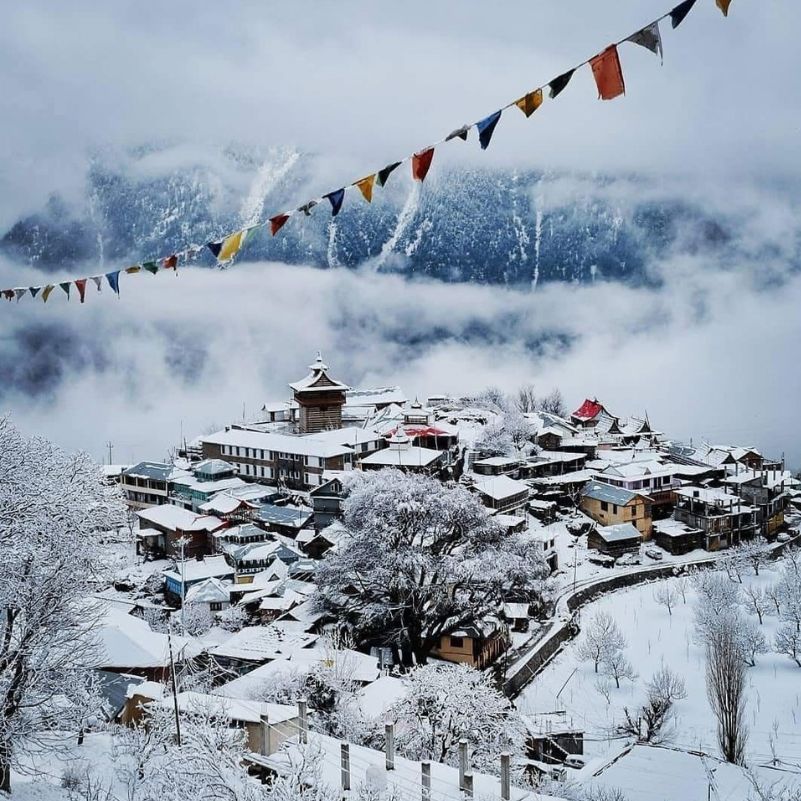
Yulla Kanda Trek Guide 2026: Route, Best Time, Cost and Planning
Planning the Yulla Kanda trek in 2026? This practical guide covers the trekking route from Yulla village in Kinnaur, distance and difficulty, the best time to visit, expected costs, camping options, and essential preparation tips. Discover how to plan this high-altitude Himalayan trek to the sacred Krishna Lake with realistic expectations and local travel insights.
- Things to Do
- How to Reach
 Kinnaur
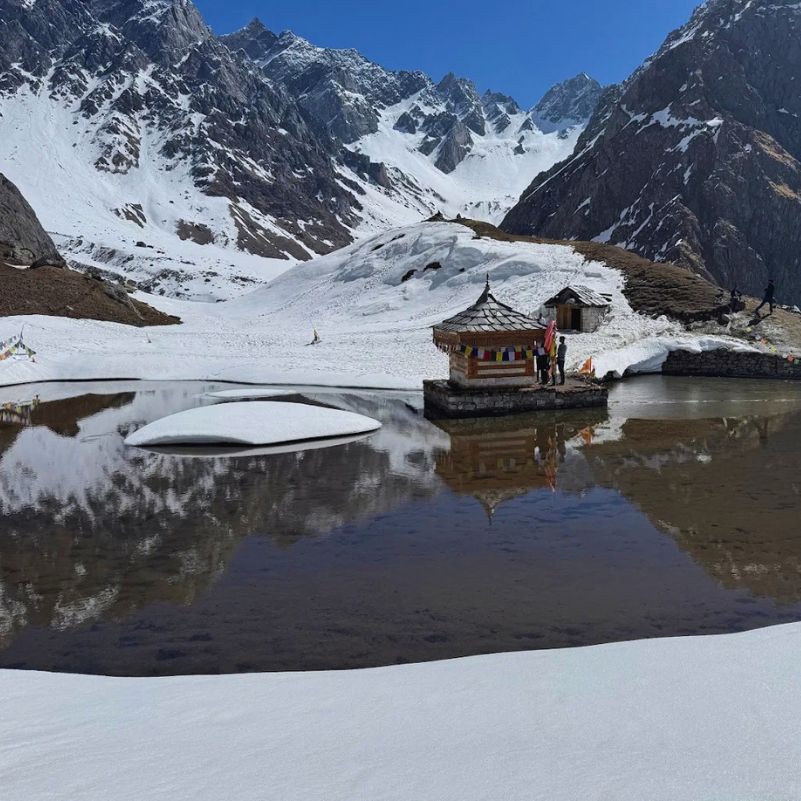
Kinnaur Snowfall Guide 2026: When & Where to Look for Snow
Planning a snow trip to Kinnaur in 2026? This guide explains the best months for snowfall, the top places to find snow in Kalpa, Sangla and Chitkul, and what weather and road conditions to expect during winter.
- Snow Travel
- Best Time to Visit
 Kinnaur
Christmas & New Year in Kinnaur: A 2026-27 Winter Trip Guide
Planning Christmas and New Year in Kinnaur for 2026-27? Explore winter weather, snowfall chances, road conditions, stay options and a practical festive-season itinerary for Kalpa, Sangla and nearby areas.
- Snow Travel
- Itinerary