
Zanskar Bike Trip via Shinkula Pass: Route, Difficulty and Tips (2026)
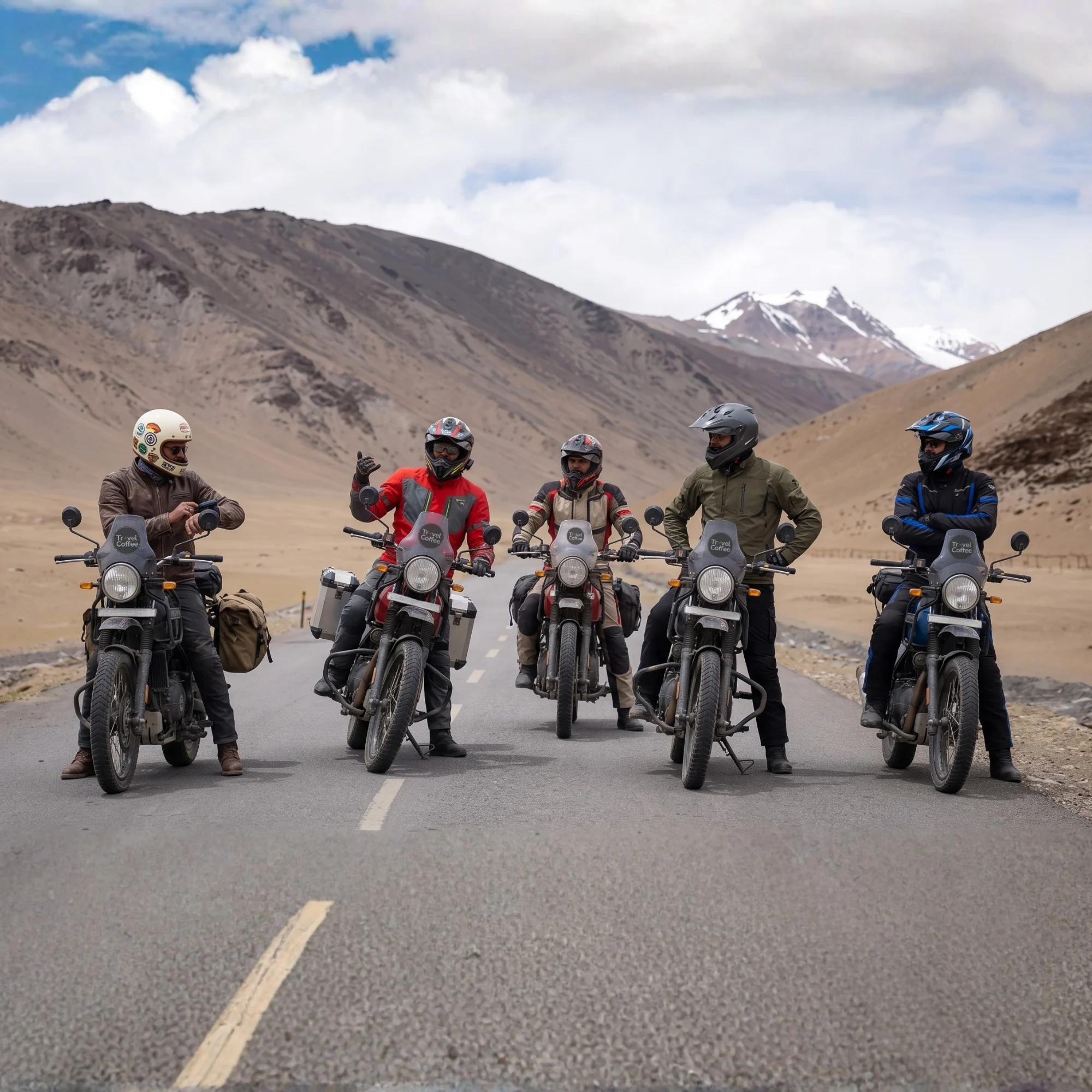
A Zanskar bike trip via Shinkula Pass is one of the most adventurous ways to enter the remote Zanskar Valley, combining high mountain roads, river crossings, steep sections and constantly changing terrain.
The route is incredibly scenic, but it also demands careful planning because of the altitude, road conditions and limited facilities along the way.
This guide by Travel Coffee will explain the Zanskar bike trip route via Shinkula Pass, how difficult the ride is, the best way to plan your days and the practical tips that can help make the journey safer and more comfortable.
Quick Answer
A Zanskar Bike Trip via Shinkula Pass starts in Manali, runs through the Atal Tunnel to Sissu, then past Keylong and Jispa to Darcha, where you leave the Manali-Leh highway.
From Darcha you climb Shinku La, then ride through Gonbo Rangjon, Kurgiakh and Purne to reach Padum.
This is a demanding Himalayan ride. You cross a pass near 5,000 metres, deal with changing road surfaces, water crossings and very little support out there.
The pass is seasonal. Check same-day road status before you commit to it.
What Most Riders Get Wrong Before They Even Start
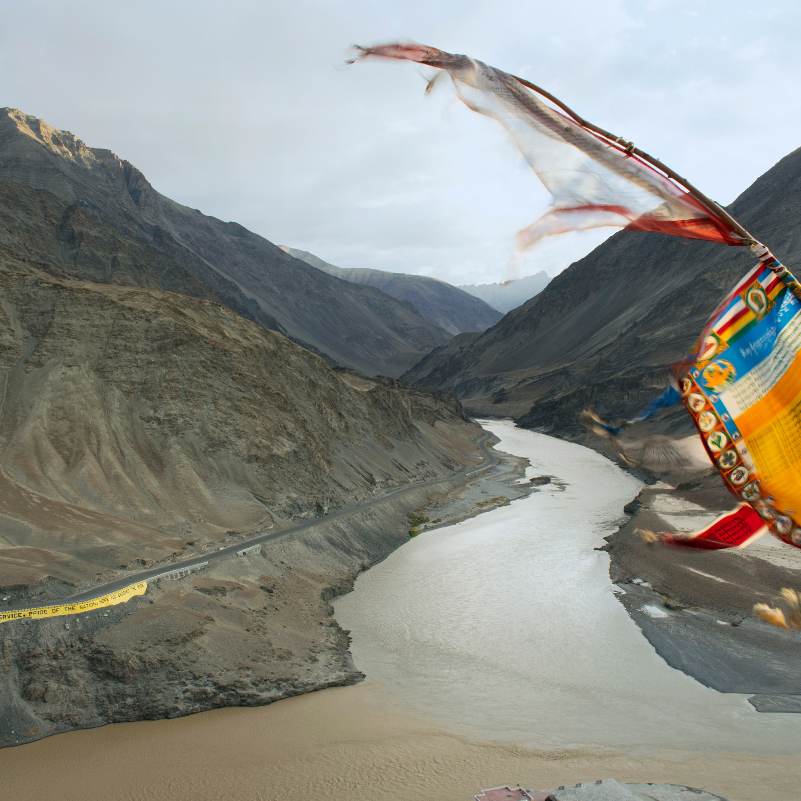
Here is the thing we see again and again. People copy an itinerary off some 2026 blog, and that itinerary sends them through Gata Loops and More Plains before the pass. That is wrong for this trip.
Gata Loops and More Plains sit on the conventional Manali-Leh highway, well beyond the Darcha turn. If you follow them, you have gone the wrong way and missed the entire Zanskar approach.
The turn that matters is Darcha. That is where you leave the Leh highway and head toward Shinku La. Get that one decision right and the rest of the route makes sense.
One more thing
The pass gets written several ways. You will see Shinku La, Shinkun La and Shingo La across different maps and boards. They all mean the same crossing. We use Shinkula and Shinku La in this guide because that is what most riders type.
What Is the Correct Zanskar Bike Route via Shinku La in 2026?
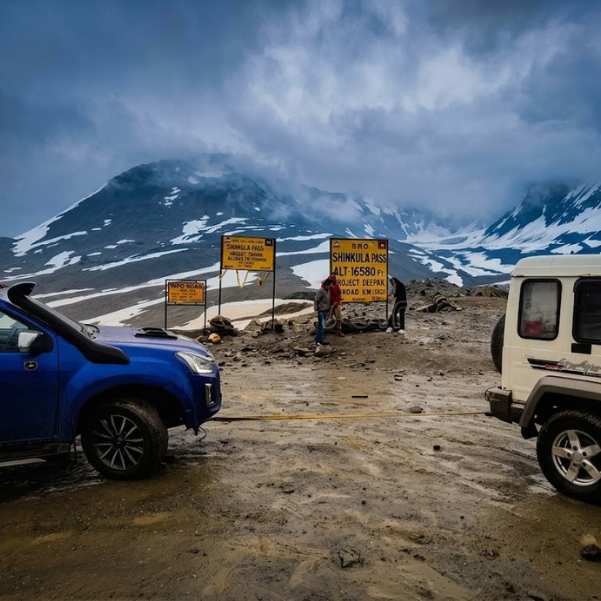
The correct Manali-side route runs like this. You ride from Manali through the Atal Tunnel to Sissu, then continue via the Tandi and Keylong area to Jispa and on to Darcha.
At Darcha you leave the conventional Manali-Leh highway. This is the single most important navigation point of the whole trip. Miss it and you end up on the road to Sarchu and Leh instead.
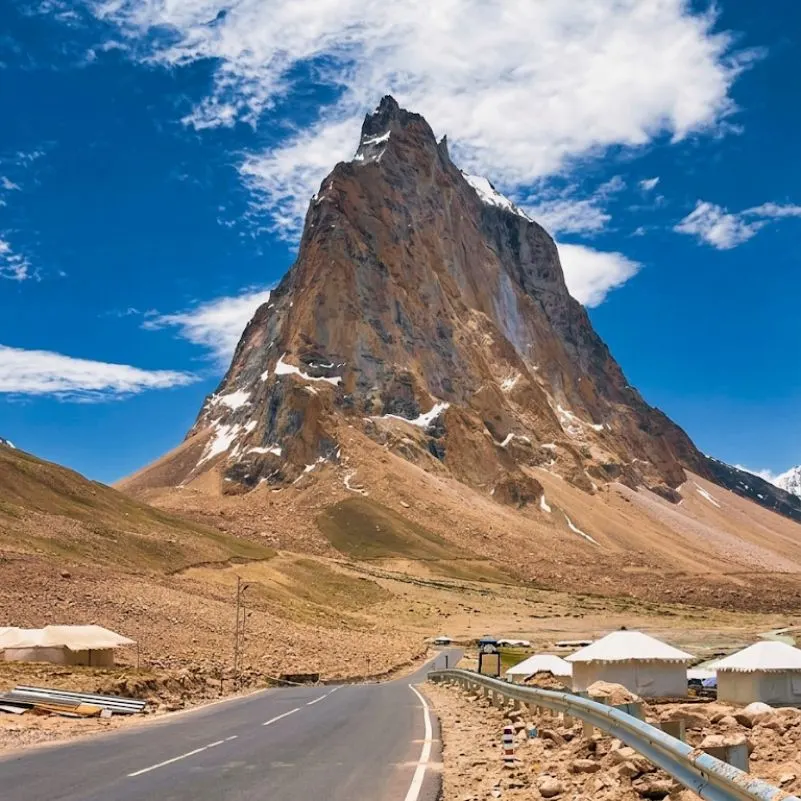
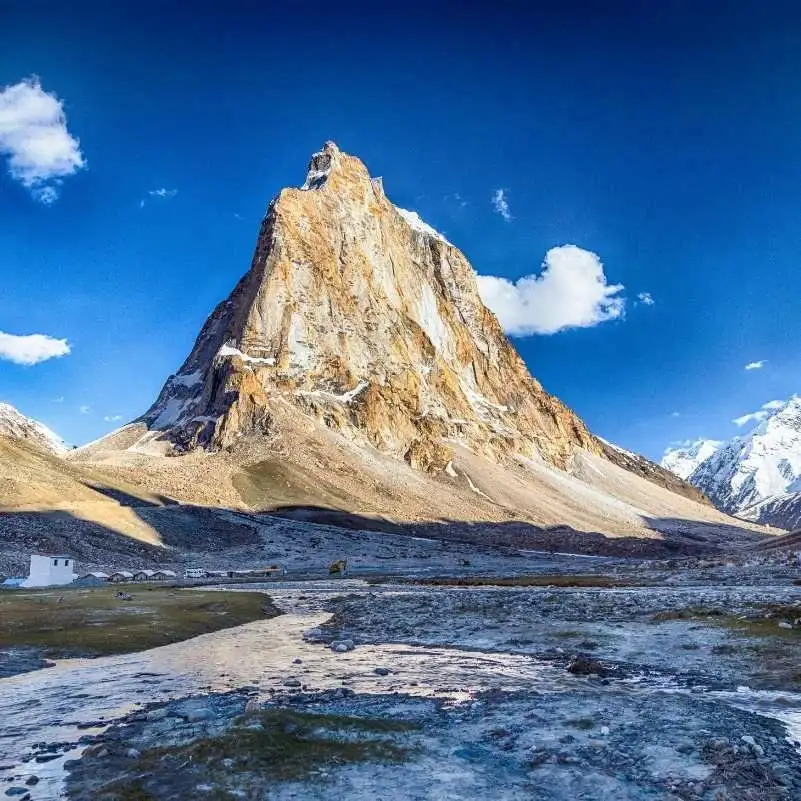
From Darcha you climb toward Shinku La, drop past the striking rock tower of Gonbo Rangjon, then ride through Kurgiakh and Purne before reaching Padum, the main town of the Zanskar Valley.
Do not follow any plan that lists Gata Loops or More Plains before the pass. Those are Leh-highway landmarks, not Zanskar-approach landmarks.
There is also a naming point worth clearing up. The official Nimmu-Padam-Darcha road is a larger 298 km strategic axis built by the Border Roads Organisation.
That 298 km figure covers the whole axis. It is not the Darcha-to-Padum distance you will actually ride, so do not plan your fuel or timing around it.
If you are still shaping the Himachal side of your trip, our Manali tour packages cover stays and logistics around your start point. Many riders also break the first stretch at Sissu, and our Sissu tour packages help with that.
In our experience, the riders who plan the Darcha turn properly are the ones who reach Padum relaxed instead of frazzled.
How Difficult Is a Zanskar Bike Trip via Shinku La?
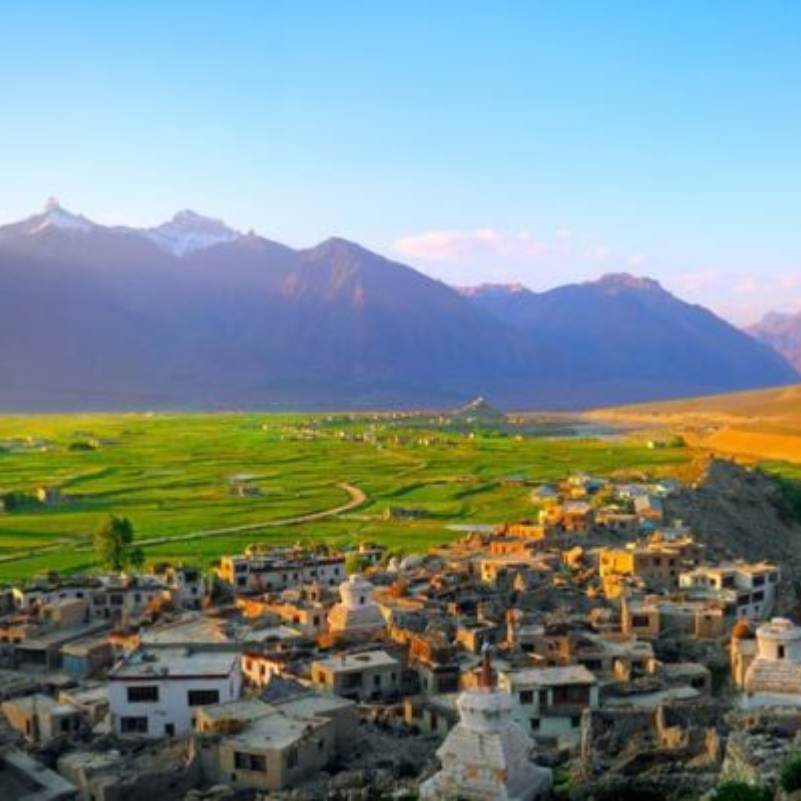
Let us clear up a myth first. This is not a question of engine size. People ask us "is my 350 enough" when they should be asking "am I confident on this kind of ground."
The real challenges are loose gravel and shale, the odd water crossing, active construction surfaces where the road is being cut and re-cut, thin air around the pass, long remote stretches and very limited mechanical help if something breaks.
If you already ride rough Himalayan roads with some confidence, handle gravel without freezing up, and can pick a sensible line through a shallow stream, you will manage this route. It rewards steady, calm riding far more than speed.
If this would be your first proper Himalayan ride, we honestly suggest cutting your teeth somewhere more established first.
A run through Spiti or the standard Manali-Leh circuit builds the exact skills Zanskar demands. Our Spiti Valley tour packages are a sensible warm-up season before you attempt Shinku La.
There is no minimum engine capacity rule here, whatever the forums tell you. A well-ridden smaller bike in confident hands beats a big machine ridden nervously.
What Are Shinku La Road Conditions Like in 2026?
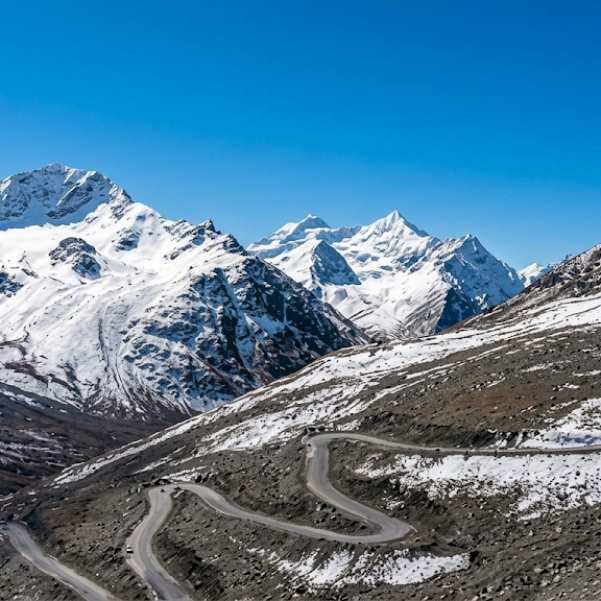
The BRO established connectivity on the Nimmu-Padam-Darcha axis on 25 March 2024. That was a big moment for the region. But road development and the separate Shinkun La Tunnel project are still going on.
The tunnel is not open as an all-weather bypass. In 2026 you still cross the surface pass when the route is open. Do not plan around a tunnel that is still an active construction site.
Treat the road as dynamic. Some stretches have improved a lot and feel almost easy. Other sections still throw gravel, loose rock, broken roads and seasonal streams at you.
It is a changing mix, not a single surface, so anyone who tells you it is "fully paved now" or "all off-road" is oversimplifying.
Here is a tip most guides skip
"Open" does not mean the route stays the same all day. Weather can roll in and construction crews can put in temporary controls or hold-ups. A road that was fine at 9 AM can have a delay by afternoon.
What Is the Best Time for a Zanskar Bike Trip via Shinku La?
The practical planning window is roughly mid or late June through September. We will not give you a guaranteed opening date, because nobody can honestly promise one.
Snow clearance controls the early season. If it has been a heavy winter, the pass opens later. Fresh snow can also mess with the shoulder season at both ends.
July and August usually bring better snow clearance, so the pass side is more reliable. The catch is that the Himachal approach can get monsoon disruption, and snowmelt makes water crossings stronger as each day warms.
September is a favourite with riders. Skies clear, the crowds thin. But nights get cold and an early snowfall is always possible up high.
Whenever you see a fixed "the pass opens on this date" claim, treat it with suspicion. We would rather you keep your dates flexible than trust a number someone invented.
A Sensible 7-Day Zanskar Bike Itinerary from Manali
This is a recommended pacing plan, not an official timetable. Adjust it to your own speed, fitness and the road status you actually find.
Day 1: Manali to Keylong or Jispa
The point of Day 1 is not distance. It is altitude.
You ride a shorter, gentler stretch through the Atal Tunnel to Sissu and on toward Keylong or Jispa. Sleeping a little higher tonight prepares your body for the pass without shocking it. Resist the urge to push all the way to Darcha on day one.
Day 2: Jispa to Shinku La and Gonbo Rangjon or Kurgiakh
Start early. This is the day you take the Darcha turn away from the Leh highway and climb toward the pass.
Keep any stop at the summit short. The altitude and exposure up there are not places to linger for photos and chai. Get your picture, breathe, and keep moving down toward Gonbo Rangjon or Kurgiakh where the air is kinder.
Day 3: Kurgiakh to Purne and the Phugtal side trip
Ride down to Purne, the usual base for visiting Phugtal Monastery.
Here is the honest part. You cannot reach Phugtal fully by motorcycle. The final approach is on foot from the Purne side, along a trail.
Current sources give different estimates for the walking distance and time to Phugtal Monastery from the Purne side, so allow a generous part of the day for the trek rather than planning around one fixed figure.
Day 4: Purne to Padum
Make this a relaxed logistics and recovery day. Your body has done real work by now.
Ride into Padum, sort out refuelling, and let the pace drop. There is no prize for rushing this leg.
Day 5: Padum rest and local exploration
Keep a spare day here. This is your weather buffer, your bike-check day, and your chance to see nearby villages and monasteries without a helmet on.
If everything went smoothly, great, you get a rest. If the road threw you a delay earlier, this is the day that absorbs it.
Day 6: Padum toward Rangdum and the Suru Valley
The classic exit runs toward Rangdum and down the Suru Valley on the Kargil side. This is the core route we recommend for most riders.
There is also a direct Padum to Nimmu road, but movement controls can change with ongoing construction and local conditions. Confirm the latest access status before relying on this route.
Confirm it before you rely on it. This is a separate matter from the Darcha-Shinku La-Padum section, so do not mix up the two.
Day 7: Continue to Kargil
From Padum the Suru Valley road brings you to Kargil. From there you can push on toward Leh or Srinagar depending on your wider plan.
If Ladakh is the real goal of your trip, our Ladakh tour packages help you join this ride to a longer Leh itinerary.
Where Can You Get Fuel on the Shinku La Route?
This is where people get caught out, so read carefully.
IndianOil's official locator confirms a Zanskar Filling Station in the Padum/Karsha area, listed at Ground Floor, Salapi Gyapak, Padum Zanskar, Karsha, Kargil. Its published hours are 06:00 AM to 10:00 PM daily.
That said, remote fuel stock and actual operating conditions are worth checking locally. A published time on a website is not a promise that the tank has fuel the day you arrive.
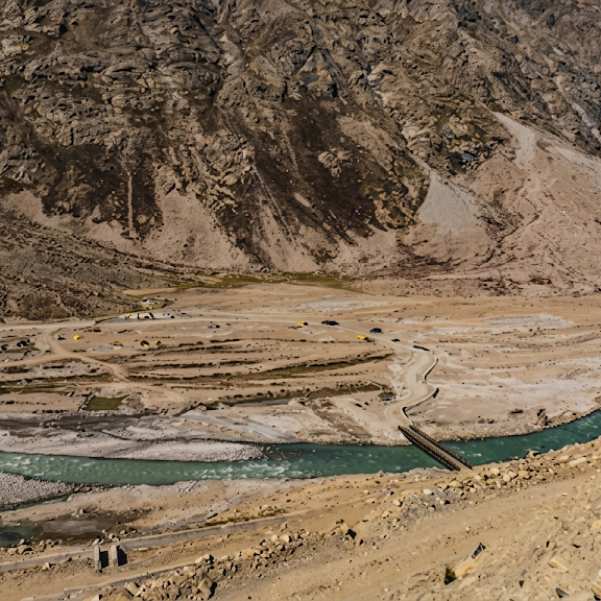
The bigger issue is the gap. Current travel sources consistently report a long fuel stretch on the Darcha-Padum corridor. Darcha is not a petrol-pump stop, whatever some itineraries imply.
So start the remote section with a full tank. Then work out your reserve from your own bike's real, loaded range, not from a number a stranger posted online.
We deliberately will not tell you to carry exactly 10, 15 or 20 litres, because the right amount depends entirely on your machine and how heavy you are riding.
What we tell our travellers is simple. Know your bike's honest range with luggage and a pillion, then carry enough spare that you never have to gamble on it.
Do You Need a Permit for Zanskar or Shinku La in 2026?
An official Ladakh government statement refers to the abolition of the earlier Inner Line Permit regime in the UT of Ladakh. So no, an Indian tourist does not need a standard ILP just to visit the ordinary Zanskar Valley.
But do not swing to the other extreme and assume no permits exist anywhere in Ladakh. That is not true either.
Protected Area Permit and Restricted Area Permit rules still matter for foreign tourists and for certain restricted itineraries.
The Ladakh administration was still reviewing this framework as recently as 24 August 2026, and District Leh's official online-services page still listed a permit service as of 28 August 2026.
If you are a foreign tourist, confirm your exact route against the latest official Ladakh rules before you travel. And remember, permit requirements are a separate matter from your normal vehicle papers and ID, which you always carry regardless.
Can You Take a Manali Rental Bike to Zanskar?
We have to be careful and honest here because the picture is genuinely unclear.
Some commercial operators report local cooperative or union restrictions affecting certain motorcycles rented outside Ladakh on internal Ladakh circuits.
But we did not find solid, authoritative government wording setting out exactly how such a restriction applies to every part of the Shinku La to Padum route.
So we will not describe restrictions on outside rental motorcycles as a government law. Confirm the current rules for your exact route with your rental company and the relevant Ladakh or Zanskar authorities before travelling.
What you should do is straightforward. Confirm your exact itinerary with your Manali rental company, and check with current Ladakh or Zanskar authorities, before you pay for the bike. Sorting this out on the phone beforehand is far cheaper than being turned back on the road.
Which Bike Is Best for Shinku La?
Skip the brand-versus-brand arguments. They miss the point.
What actually matters is reliability, manageable weight, good low-speed control, enough ground clearance for the rough bits, tyres suited to mixed surfaces, a healthy clutch and brakes, and luggage mounted so it does not shift when you hit a rut.
A familiar, well-maintained motorcycle you know inside out is often a better choice than a big adventure bike you have never ridden. Zanskar is not the place to learn a new machine.
Carry puncture repair equipment, an inflator, basic tools and a proper pre-trip inspection. Nobody is coming to fix a slow puncture for you out past Darcha.
And to be clear, there is no verified rule that "350cc and above is mandatory." Ignore anyone who says otherwise.
How Should Riders Acclimatize Before Shinku La?
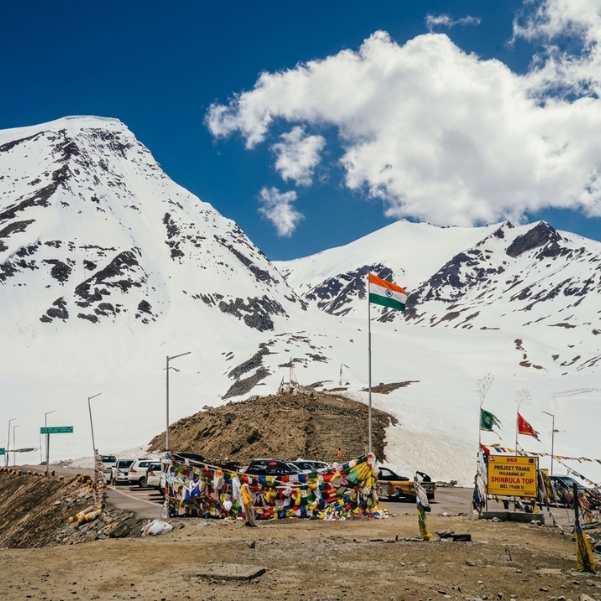
The surface pass sits at about 5,050 metres, roughly 16,580 feet. Published elevations vary a little between sources, so we keep it approximate rather than pretend one exact figure is gospel.
The CDC Yellow Book 2026 guidance is worth following. Acute acclimatization during your first 3 to 5 days after ascent is crucial.
The CDC says spending a minimum of 2 to 3 nights around 2,450 to 2,750 metres before going higher is strongly protective against acute mountain sickness. That is a good argument for not rushing your first days in the mountains.
Above 3,000 metres, the guidance is to raise your sleeping altitude by no more than about 500 metres per night, and to add an extra acclimatization night for each additional 1,000 metres of sleeping-altitude gain.
Here is the rule that saves lives
If you develop altitude illness, do not keep climbing just to save your itinerary. Worsening symptoms mean you descend and get medical attention. A trip is replaceable. We will not prescribe any medicine doses, that is a conversation for your doctor.
How Do You Handle Water Crossings on a Zanskar Bike Trip?
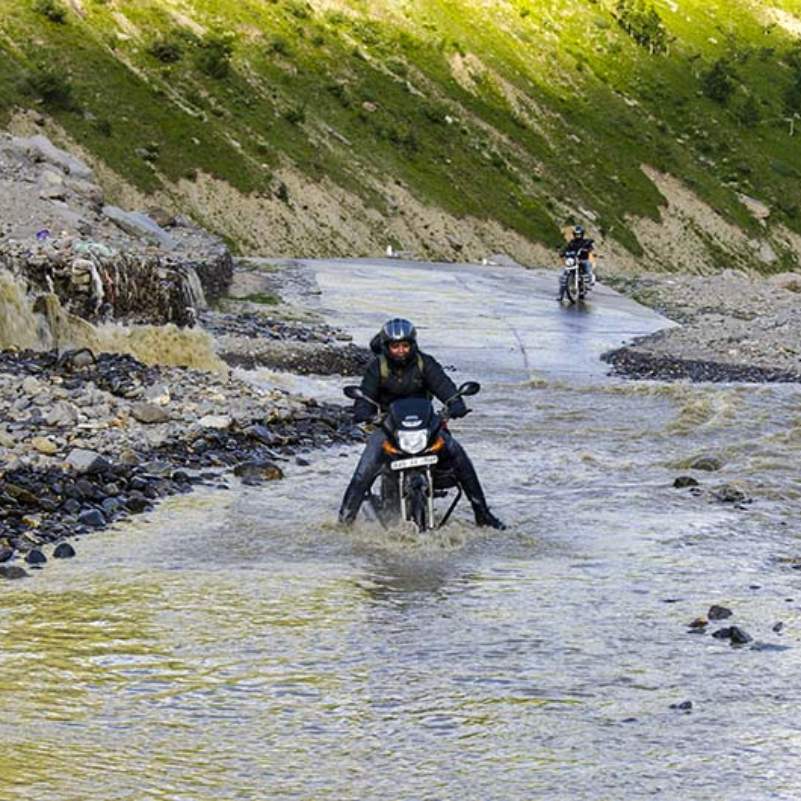
Snowmelt and glacial melt make streams stronger as the day warms up. A crossing that is ankle-deep at 8 AM can be pushy by afternoon.
So leave early. And before you enter any crossing where depth, current or rocks are uncertain, stop and actually look at it. Walk the line if you need to.
A tip riders often ignore
Do not blindly copy the line another motorcycle just took. Their weight, tyres and the exact water depth under them differ from yours. What held their bike up might drop yours.
We will not hand you a universal tyre pressure or a magic throttle formula, because those depend on your machine and the specific crossing in front of you.
Can You Ride Zanskar Solo or With a Pillion?
Experienced riders do this route solo, and manage fine. But be honest about what solo means out here. A breakdown, a fall or an injury gets far more complicated where mechanics and phone signal are scarce.
Carrying a pillion adds its own load on the suspension, cuts your clearance, adds luggage, and makes a loaded bike much harder to pick up after a fall on gravel.
We are not going to say solo or pillion riding is universally safe or unsafe, because it depends on you.
What we will say is this: if you have not already handled comparable remote terrain, ride with a companion or a clearly planned backup. That single decision changes your safety margin more than any piece of gear.
What Should You Pack for a Zanskar Bike Trip?
Pack for cold, wet, altitude and self-reliance. Start with a certified helmet and proper armoured riding gear, then a waterproof outer layer, thermal layers and spare gloves, because a wet, cold rider makes bad decisions.
Carry bike-specific puncture solution, an inflator, basic tools and the right spares for your machine, along with a solid first-aid kit.
Bring water, food and snacks, offline maps since signal is unreliable, a power bank and enough cash, because card machines and UPI are not something you can count on out there.
One principle ties it all together. Packing lighter makes the motorcycle easier to control on rough ground.
Every kilo you strap on works against you on gravel, so be ruthless about what actually earns its place. We will not quote you a baggage weight limit, just ride as light as you sensibly can.
Shinku La vs Spiti or the Regular Manali-Leh Highway: Which Is Harder?
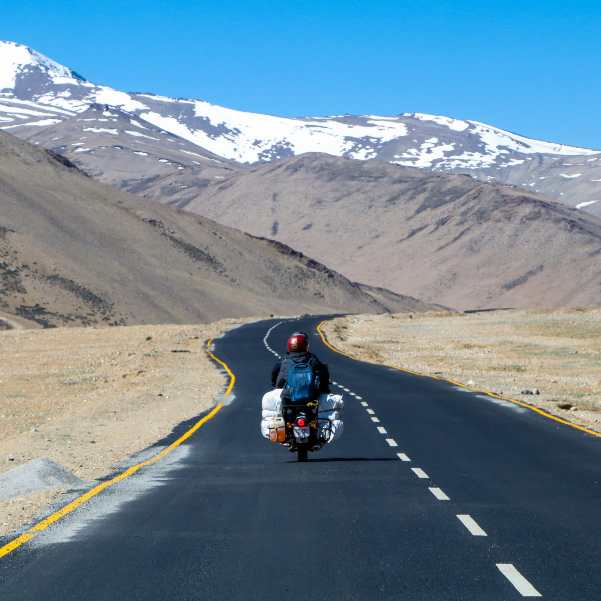
Honestly, road construction keeps changing the answer season to season. Some stretches that were brutal one year are smoother the next.
Shinku La's extra difficulty is not one killer section. It is the combination of remoteness, variable surfaces and fewer support options all at once. That mix is what makes it a step up.
If you have no Himalayan riding behind you, build confidence on a more established route first. Our Spiti Valley tour packages and Ladakh tour packages both give you the mountain miles that make Zanskar far more enjoyable and much safer.
Common Mistakes to Avoid on the Shinku La Route
The classic error is following an outdated route and confusing the Darcha turn with the regular Manali-Leh highway. Get that turn wrong and your whole day goes sideways.
Starting technical sections too late is another. Water crossings and loose ground are easier in the morning, so do not dawdle over breakfast.
Do not assume "road open" guarantees a smooth passage all day. Weather and works can change it. And do not underestimate the altitude, carry too much luggage, or set off without working out your real fuel range.
Build at least a little weather buffer into your plan. An itinerary with no slack is one delay away from becoming a mess.
The most useful warning we can give
Do not confuse the temporary Padum-Nimmu construction schedules with the Darcha-Shinku La-Padum section you are actually riding. They are different roads with different rules, and mixing them up leads to bad planning.
Final Planning Advice for a 2026 Zanskar Bike Trip
Keep at least one buffer day in your wider travel plan. This route does not respect tight schedules, and the buffer is what turns a delay into a shrug instead of a crisis.
Confirm weather and road conditions as close to your departure as you can, ideally the day before and the morning you ride the technical stretch. Same-day information beats any blog, including this one.
We are a Shimla-based team, and we plan Himachal and Ladakh trips every season. If you want a second pair of eyes on your Zanskar routing, just WhatsApp us.
Explore Our Curated Zanskar Valley Packages
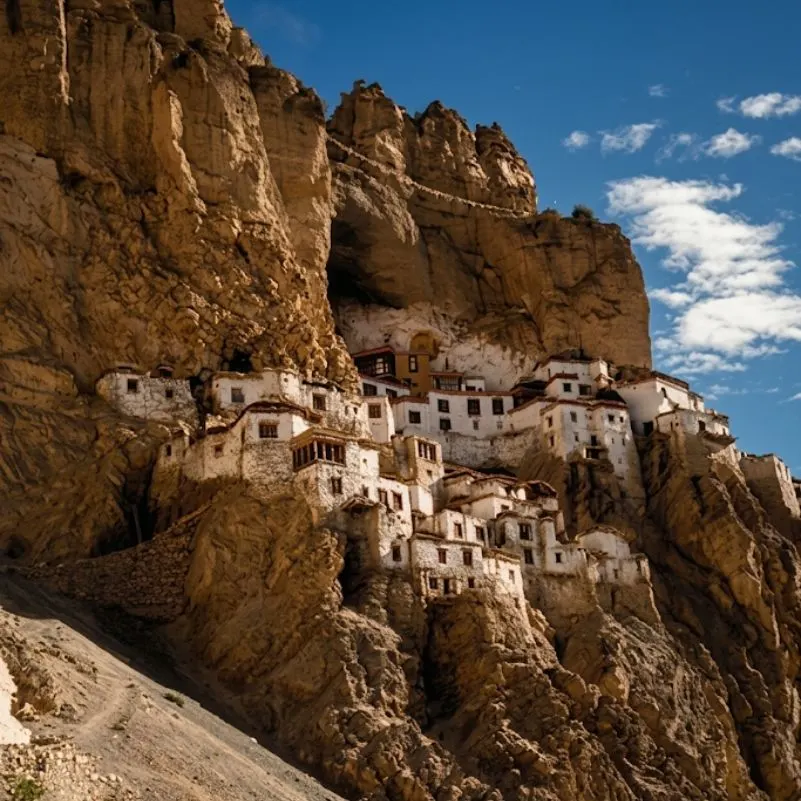 8D/7N
8D/7NPrivate Zanskar Valley 4x4 Expedition With Phugtal Gonbo Rangjon and Baralacha La
1D Manali•1D Purne / Kargyak / Gonbo Rangjon Side+2
₹44,999/ person- 8D/7N
Private Zanskar Valley Tour With Phugtal Gonbo Rangjon and Baralacha La
1D Manali•1D Purne / Kargyak / Gonbo Rangjon Side+2
₹29,999/ person  Group Tour8D/7N
Most Loved Zanskar Valley 4x4 Group Expedition
1D Manali•1D Purne / Kargyak / Gonbo Rangjon Side+2
₹32,999/ person
Related topics
Frequently Asked Questions
Is Shinku La Pass open for bikes in 2026?
Shinku La is seasonally open for motorcycles in 2026, but access can change due to snow, weather and roadwork. Always check the latest road status before travelling.
How difficult is the Zanskar bike trip via Shinku La?
It is a challenging high altitude ride with gravel, rough roads and water crossings. Good riding control and confidence matter more than speed or engine size.
Can beginners ride through Shinku La?
It is not ideal as a first Himalayan bike trip. Beginners should gain experience on mountain roads and rough terrain before attempting the Shinku La route.
What is the correct Manali to Zanskar bike route?
The route is Manali, Atal Tunnel, Sissu, Tandi, Keylong, Jispa, Darcha, Shinku La, Gonbo Rangjon, Kurgiakh, Purne and Padum. The route leaves the Manali Leh Highway at Darcha.
How far is Darcha to Padum via Shinku La?
Most current estimates place Darcha to Padum at roughly 135 to 140 km. Since road alignments can change, confirm the latest route distance before planning fuel and riding time.
What is the best month for a Zanskar bike trip?
July to September is generally the best period for a Zanskar bike trip via Shinku La. Road conditions still depend on snow clearance, rain and seasonal weather.
Do Indian riders need an ILP for Zanskar in 2026?
Indian tourists generally do not need a standard Inner Line Permit for ordinary Zanskar Valley travel. Restricted areas may have separate rules, so check your exact itinerary.
What permits do foreign tourists need for Zanskar?
Foreign tourists may need Protected Area or Restricted Area permits depending on their route. Check the latest Ladakh administration rules before travelling.
Is petrol available between Darcha and Padum?
Fuel is available in the Padum and Karsha area, but the Darcha to Padum section has a long fuel gap. Start with a full tank and carry enough reserve for your motorcycle.
Can a Manali rental bike be taken to Zanskar?
Rental bike rules can vary between operators and local areas. Confirm directly with your rental company that the motorcycle is permitted on the Zanskar route before booking.
Is the Zanskar route safe for a solo rider?
Experienced riders can travel solo, but remote sections have limited recovery and emergency support. A riding partner or strong backup plan is recommended.
Can you ride a motorcycle all the way to Phugtal Monastery?
No. Motorcycles cannot reach Phugtal Monastery itself, and the final approach must be completed on foot from the Purne side.
More about Zanskar Valley
 Zanskar Valley
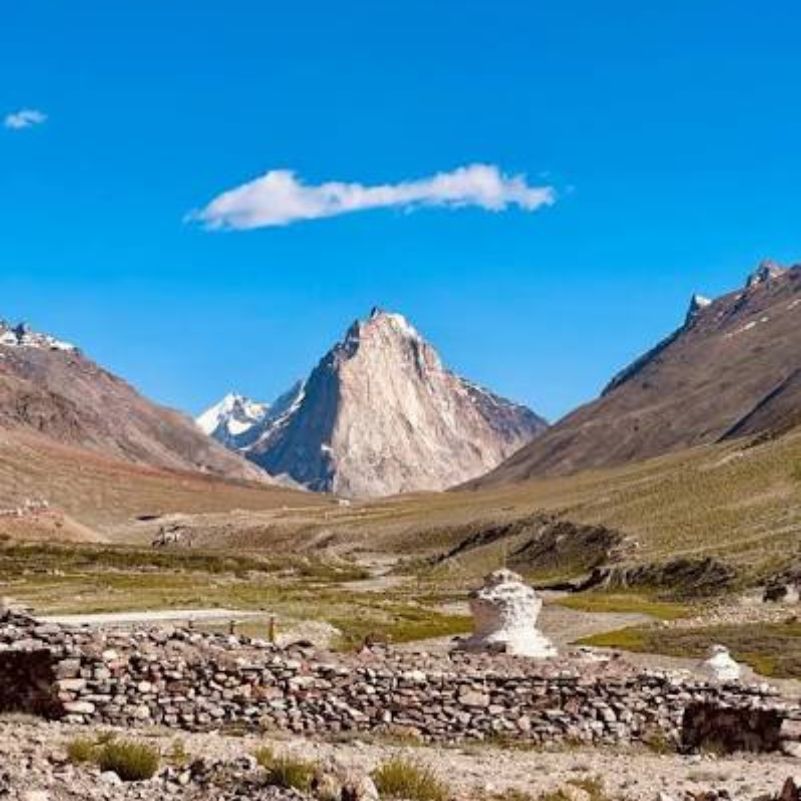
Gonbo Rangjon: The Sacred Peak on the Shinkula Route and How to Visit in 2026
Discover Gonbo Rangjon, the dramatic sacred peak rising along the Shinkula Route into Zanskar. This 2026 travel guide covers how to reach Gonbo Rangjon, the best time to visit, route conditions, permits, nearby stops, and practical tips for planning an unforgettable journey through one of the Himalayas’ most spectacular landscapes.
- Places to Visit
- How to Reach
 Zanskar Valley
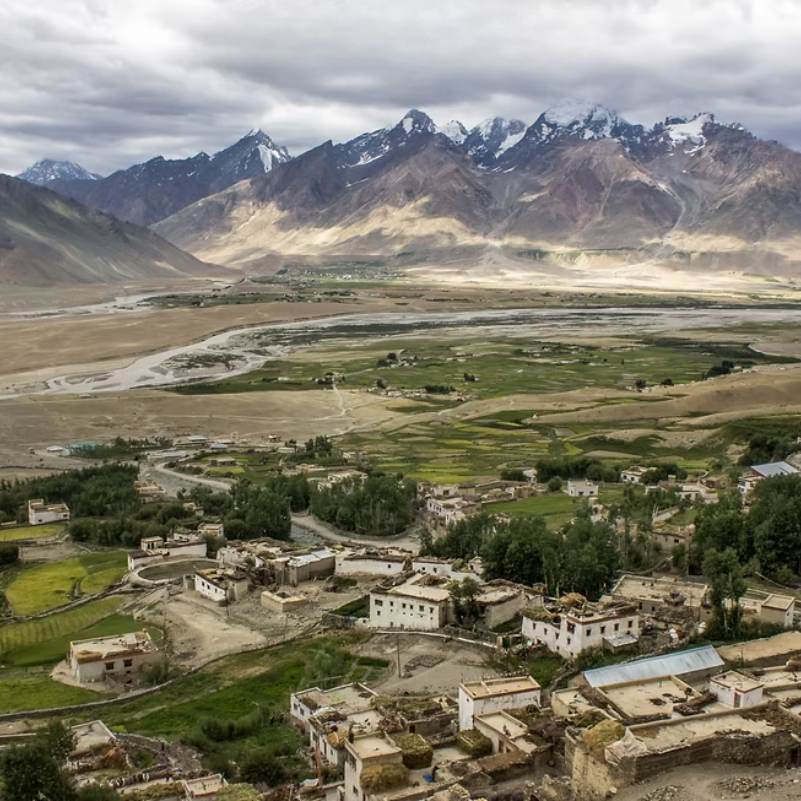
The New Manali to Zanskar Road: Nimmu Padum Darcha Route Explained (2026)
Explore Gonbo Rangjon and the Nimmu–Padum–Darcha Road in 2026 with this complete Manali to Zanskar guide, covering the route, key stops, Shinku La, road conditions, and essential travel tips.
- How to Reach
- Road Trips
- Zanskar Valley
Manali to Zanskar Itinerary: 5 and 7 Day Plans That Actually Work (2026)
Planning a Manali to Zanskar trip in 2026? This guide gives you practical 5 day and 7 day itineraries with the best route, overnight stops, driving times and key places to cover without making the journey too rushed.
- Itinerary
- Road Trips