
Gonbo Rangjon: The Sacred Peak on the Shinkula Route and How to Visit in 2026
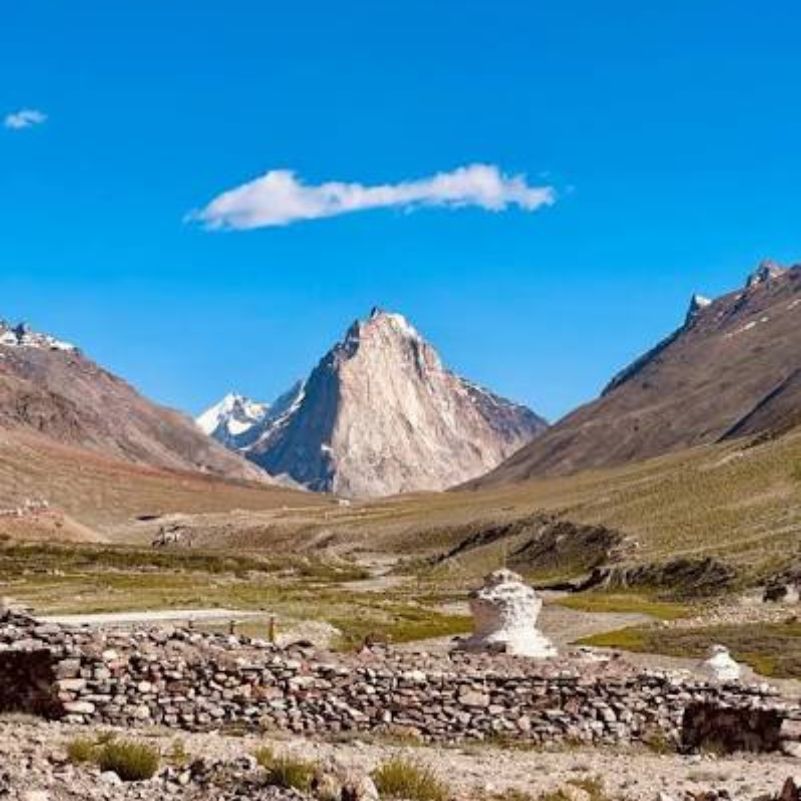
You searched for Gonbo Rangjon because you saw a photo of a lone dark tower of rock rising out of nowhere, and you want to know how to get there.
Here is the honest version, including the part most travel blogs skip: this is a sacred mountain, not a summit to conquer. Get that right first, and the rest of the planning falls into place.
Quick Answer
Gonbo Rangjon is a sacred standalone rock peak in the Lungnak Valley of Zanskar, Ladakh. From the Himachal side, you reach it via Manali, Lahaul, Darcha and the Shinku La pass, then drop into southern Zanskar.
Road access depends entirely on current Shinku La conditions. Check the stretch the evening before you travel and again the morning you leave.
Treat Gonbo Rangjon as a place to visit with respect, not a peak to climb. Local Buddhist tradition holds it sacred, and that changes how you behave once you arrive.
If you want the trip handled end to end, look at our Ladakh tour packages or read on for the full 2026 plan.
What is Gonbo Rangjon and where exactly is it?
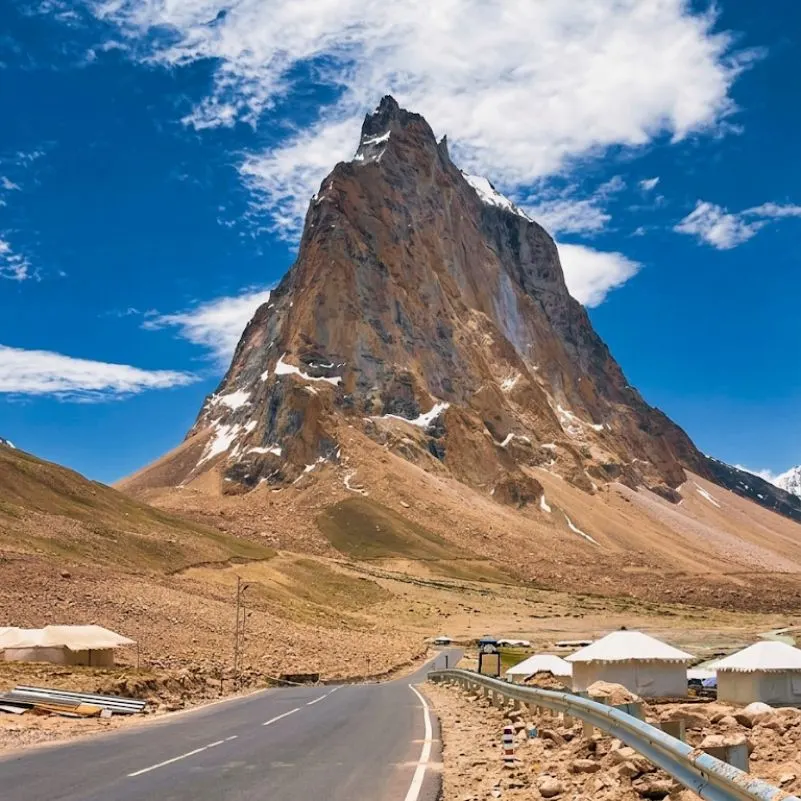
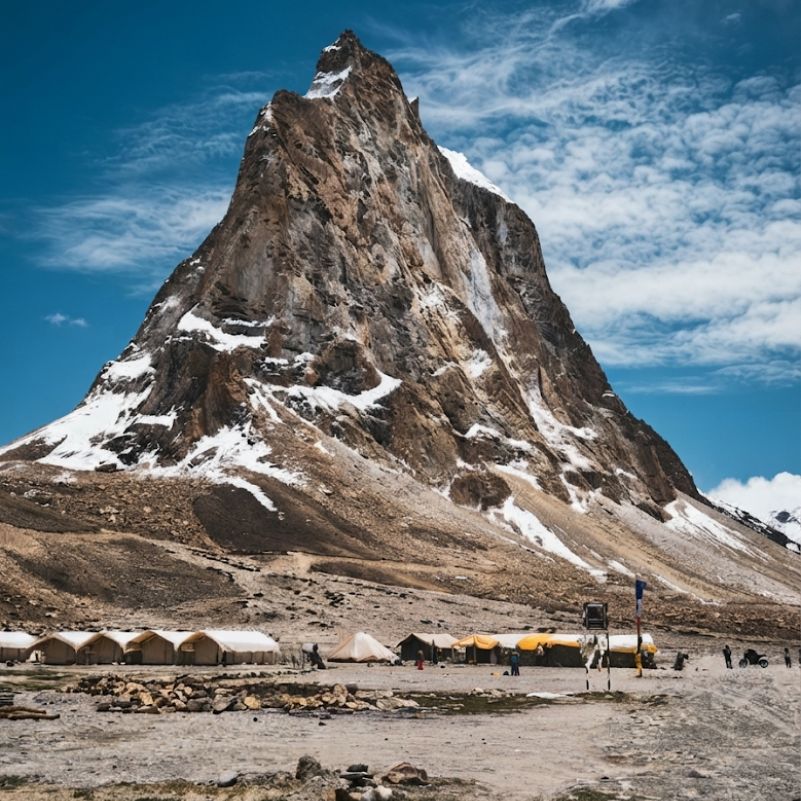
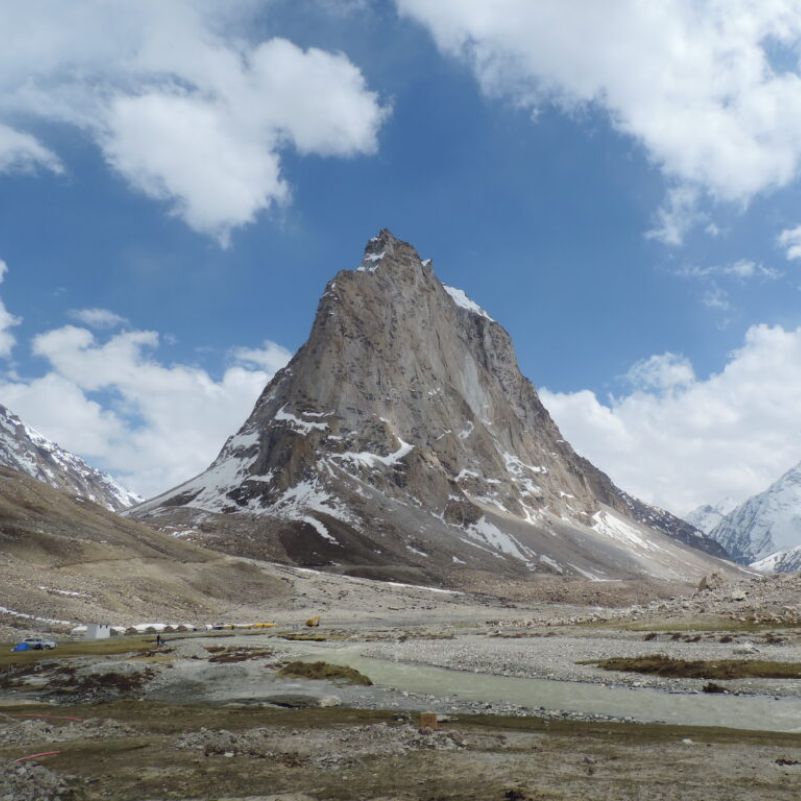
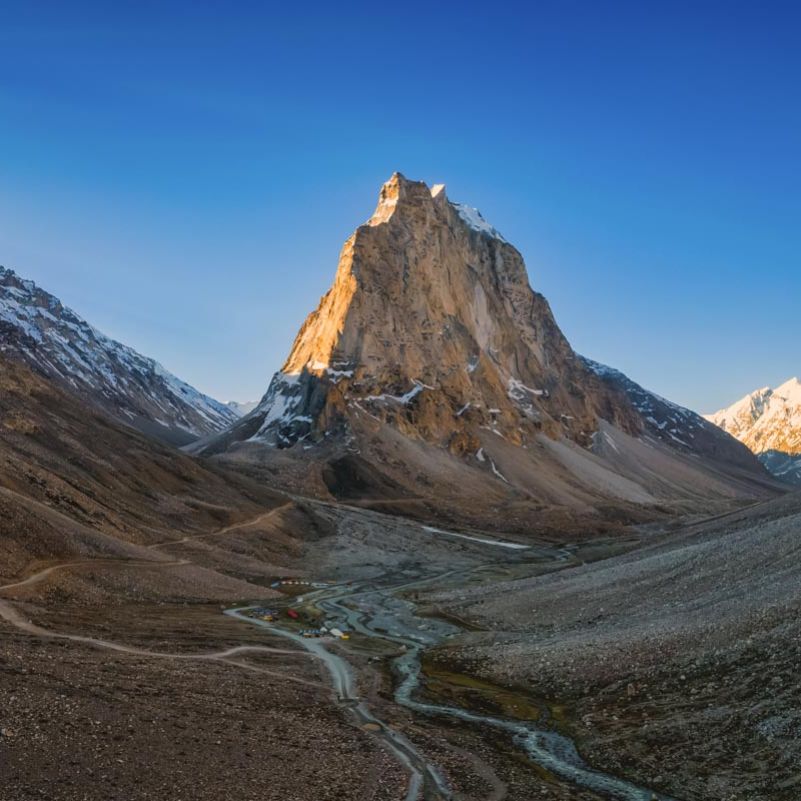
Gonbo Rangjon is a standalone sacred rock pinnacle in the Lungnak Valley of Zanskar, sitting south of Kargyak village.
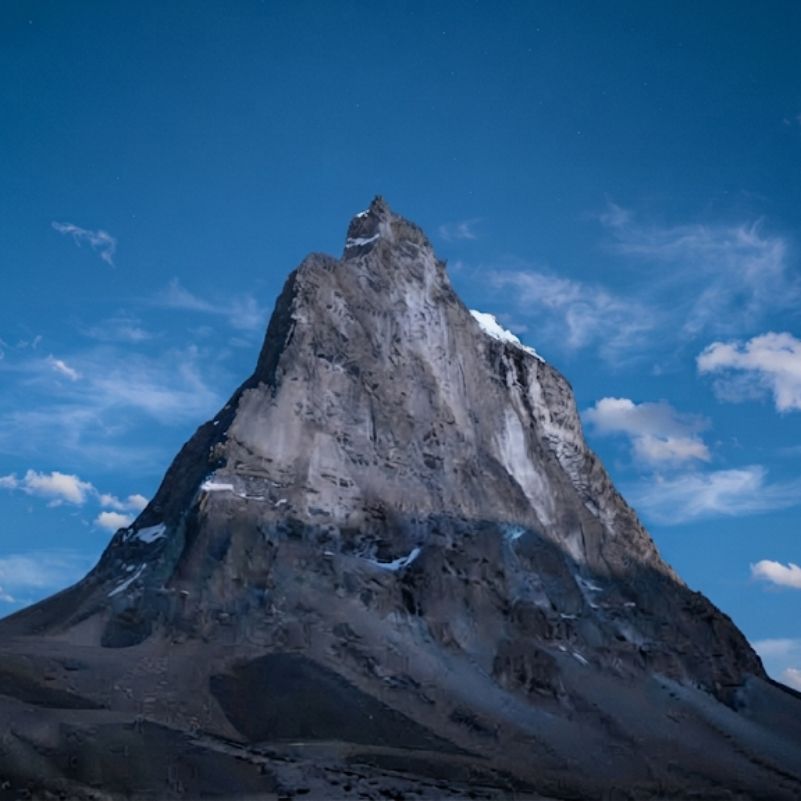
It rises alone from the valley floor, which is exactly why it stops people in their tracks. There is no ridge line leading up to it and no cluster of peaks around it. Just one dark tower against the open sky.
You will see the name spelled several ways online. Gumbok Rangan, Gombo Rangjon, Gumbo Ranjan. They all point to the same mountain, so do not worry if your search results look inconsistent.
Sources disagree on the exact height. The commonly published peak elevation is 5,520 metres, with the base sitting around 4,500 metres.
What most tourists get wrong is treating that peak number as the thing that matters. It does not. You are not going up. You are going to look, and that is the whole point.
Ladakh Tourism's official 2026 website lists Gonbo Rangjon as a signature destination and describes it as a dramatic natural rock pinnacle revered as sacred. That word, revered, is the one to hold onto.
Why is Gonbo Rangjon sacred?
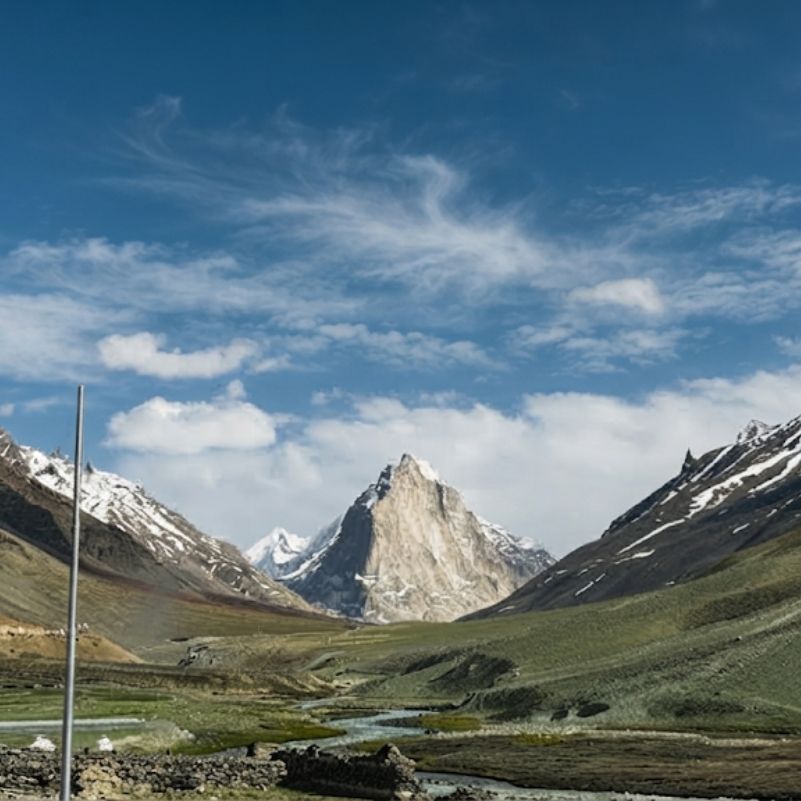
Local Tibetan Buddhist tradition associates Gonbo Rangjon with Gonbo, also known as Mahakala, a protector deity. The name of the mountain and the name of the deity are linked, which tells you how deep this connection runs for the people of the Lungnak Valley.
Academic research on sacred Himalayan landscapes describes Gonbo Rangjon as a self-manifested sacred mountain associated with Mahakala. In plain terms, it is not a mountain someone decided to make holy. In local belief, it arose sacred on its own.
This is a living religious landscape, not a story printed on a signboard for visitors. The people who live along this valley carry these beliefs into daily life.
When you stand in front of the mountain, you are standing in someone's sacred ground, the same way you would inside a monastery.
In our experience, travellers who understand this before they arrive have a far better trip. The ones who treat it as just another photo stop miss what makes the place worth the hard drive.
Can you climb Gonbo Rangjon?
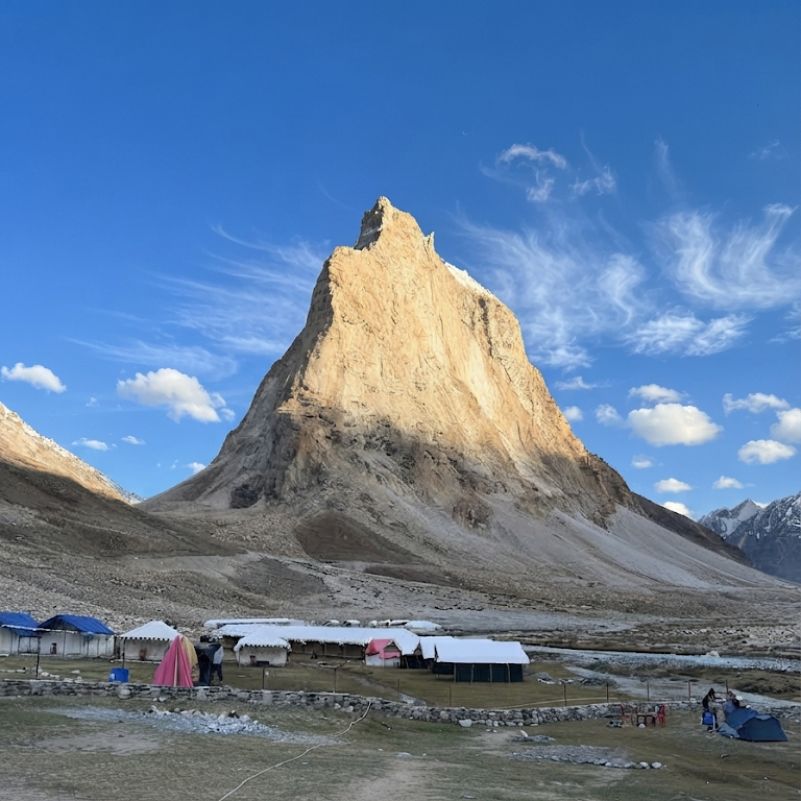
No, and this is the honest answer we give every traveller who asks. Do not treat Gonbo Rangjon as a mountaineering objective. Its religious importance to the local community makes climbing it disrespectful, regardless of what your legs can handle.
Instead, focus on what the place actually offers. Viewing the mountain from the valley. Walking around the permitted surrounding area. Photography from a respectful distance. Sitting quietly and taking it in.
If you came looking for a scramble or a summit tick, this is not that trip. The reward here is stillness and the sight of that lone rock tower, not the top of anything.
Frame your visit around respecting how local people relate to the mountain, and you will leave satisfied rather than restless.
How do you reach Gonbo Rangjon from Manali via Shinku La?
Manali to Sissu and Jispa
Manali is the main Himachal-side starting point for this route. You cross into Lahaul through the Atal Tunnel and the landscape changes fast, from green pine slopes to bare high-altitude valley.
Do not race from Manali straight to the high pass in one push. The altitude gain is brutal if you do that, and your body will let you know.
Break the climb by staying a night in Lahaul, around Sissu or Jispa. This single decision does more for your comfort than any gear you can pack.
We plan almost every northern trip this way, with a Lahaul night built in, because rushing the altitude is the fastest way to ruin the days that follow. Look at our Manali tour packages or Sissu tour packages if you want the stays sorted before you leave.
Jispa and Darcha to Shinku La
Darcha is the gateway to the Shinku La corridor. Past this point you are committed to the high route, so treat Darcha as your last real checkpoint to confirm conditions ahead.
Shinku La sits at around 5,000 metres. Sources differ on the exact figure, somewhere between roughly 5,050 and 5,091 metres, so do not trust any single precise number you see online. What matters more is that this is a serious altitude on a pass where weather turns quickly.
Snow, fresh melt, road work and administration advisories can change access with little warning. A pass that was fine yesterday can be a problem today. Build that uncertainty into your plan rather than hoping for the best.
Shinku La to Gonbo Rangjon
After crossing Shinku La, the road descends into southern Zanskar and approaches Gonbo Rangjon before continuing toward Kargyak, Purne and Padum. This is where the lone peak starts to appear in the distance, growing as you close in.
We will not hand you exact drive times here, because road conditions on this stretch decide everything and pretending otherwise would set you up for a bad day. Plan loosely and let the road tell you the pace.
What is the Shinku La road status in 2026?
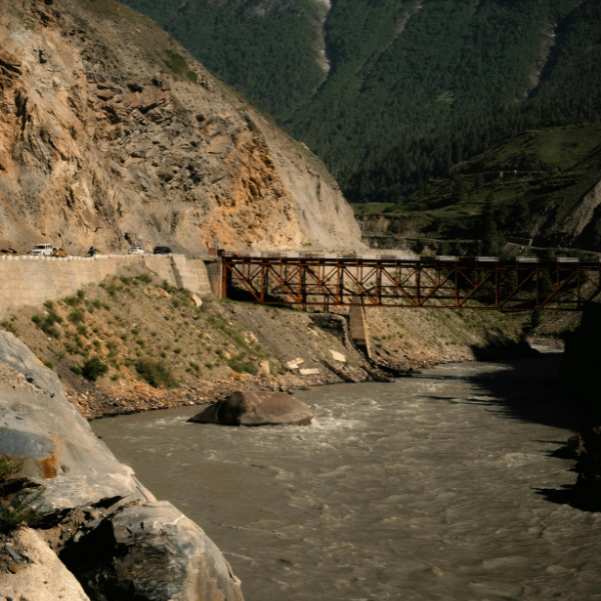
Here is what we actually know, kept honest. The Darcha to Shinkula road reopened for vehicle traffic after BRO snow clearance in May 2026. At that time, the administration reported access for heavy and light vehicles, but noted traffic stayed subject to weather and road conditions.
The official Lahaul and Spiti road-status page, updated on 20 August 2026, showed Manali to Keylong and Keylong to Leh open. It did not separately list the Darcha to Shinku La to Gonbo Rangjon stretch, so that page alone does not confirm the exact road you want.
A third-party snow tracker showed snow cover at Shinkula on 1 September 2026. Snow cover does not automatically mean the road is closed, so do not panic if you see a white satellite image. It also does not prove the road is clear.
So do this. Verify the Shinku La stretch the evening before you travel and again on the morning you leave.
We will not tell you "Shinku La is open today," because that changes constantly and any claim like that needs fresh confirmation right before you go. This is the one warning to take seriously on this whole trip.
What vehicle should you take to Gonbo Rangjon?
Road and vehicle restrictions can shift during the season, so treat this as guidance, not a fixed rule. What holds true every year is that you want a mechanically sound vehicle with high ground clearance and an experienced mountain driver behind the wheel.
We will not tell you a 4x4 is legally required for the whole season, because those restrictions have varied year to year. But the terrain rewards clearance and punishes low-slung cars. Water crossings and rough patches are normal on this side of the mountains.
Do not assume a scooter is fine just because you saw a reel of someone riding it there. Individual riders completing the route does not make it a sensible choice for a first-timer at this altitude on these roads.
What we tell our travellers is simple: match the vehicle to the worst part of the road, not the best.
What is the best time to visit Gonbo Rangjon?
Think in terms of season, not fixed dates, because the route does not open and close on a calendar.
June
June can still bring early-season snow, fresh melt and shifting road conditions. The scenery is dramatic but access is less certain.
July and August
July and August form the main summer travel window. This is when most people go. Water crossings and rain-related disruption are still possible, so keep a buffer day.
September
September can be genuinely rewarding, with clearer landscapes and thinner crowds. The trade-off is colder conditions and a rising chance of fresh snow.
October
October gets increasingly conditional. Only consider it if your dates are flexible and you accept the plan may change. Do not assume the route always closes on a fixed date, because it does not work that way.
Can you visit Gonbo Rangjon from Padum?
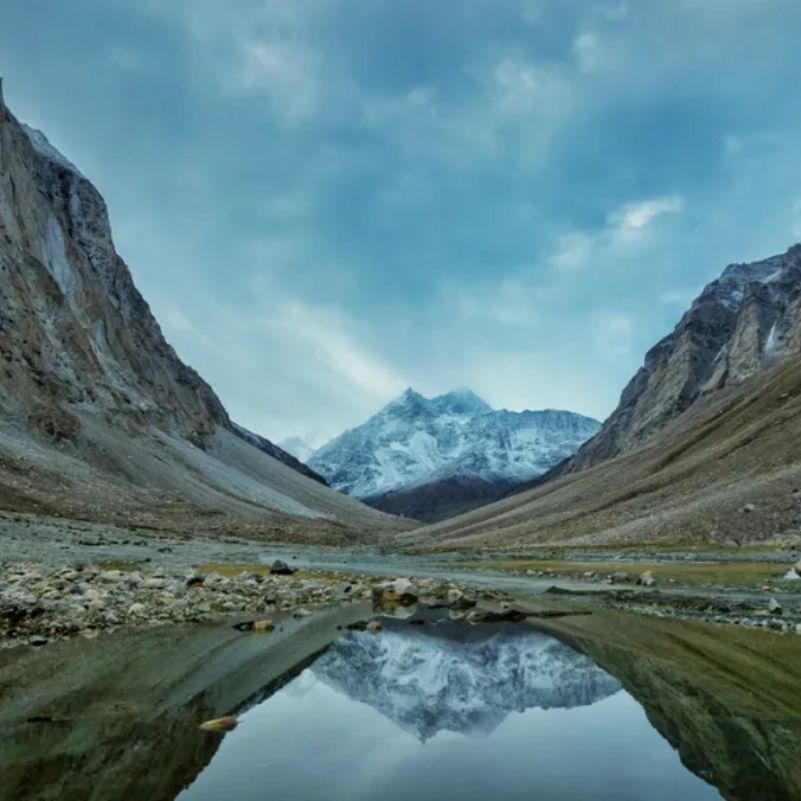
Yes. The reverse route runs from Padum toward Purne, Kargyak and then Gonbo Rangjon. If you are already deep in Zanskar or building a larger circuit, approaching from this side makes sense.
This works well for travellers who want to see more of Zanskar rather than doing an out-and-back from Himachal. You reach the sacred peak as part of a longer loop instead of a single-target dash.
Can you camp at Gonbo Rangjon?
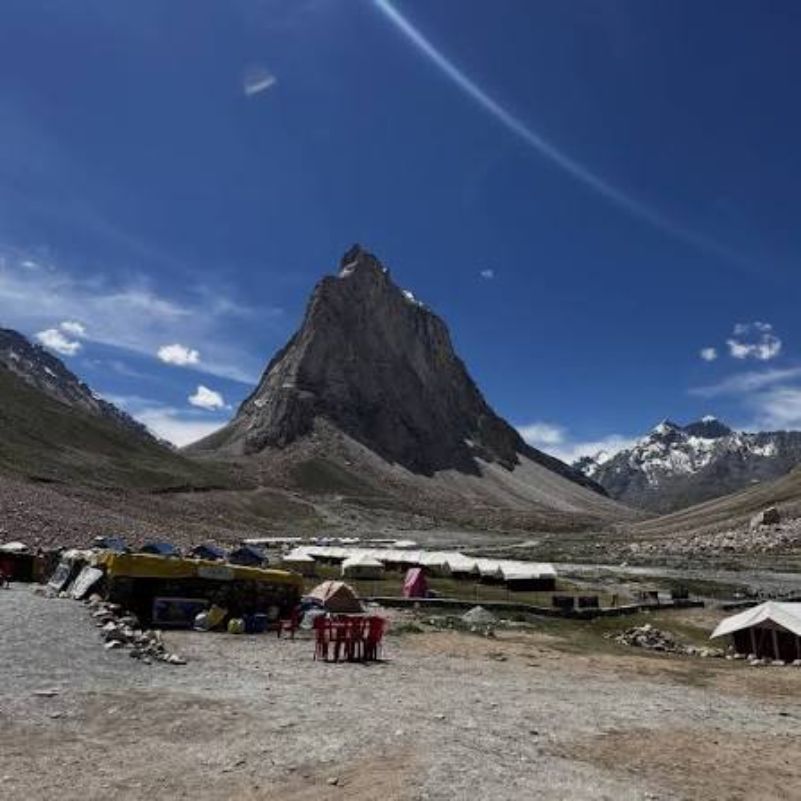
Yes, camping facilities exist in the area. The Deputy Commissioner of Zanskar inspected the tourist camp area at Gonbo Rangjon in June 2026, which confirms visitor camping is set up there.
Exact 2026 campsite tariffs were not published in the official update. You will find older and commercial sources quoting figures, but we are not going to repeat those as current prices because they may be out of date.
Current campsite prices can vary by operator and season, so confirm the latest tariff directly with the camp provider before booking.
Camps in this region are seasonal, so reconfirm whether they are actually operating for the days you plan to travel. A camp that ran last month may not be up when you arrive, especially at the edges of the season.
Do you need a permit for Gonbo Rangjon?
Handle this one carefully, because the internet is full of confident wrong answers. The official Leh Tourist Management System exists and continues to mention environmental fee, Red Cross Fund and wildlife fee components for applicable Leh travel.
However, this research did not find a clear 2026 government notice specifying a Gonbo Rangjon permit requirement for an Indian traveller entering through Darcha. So we will not tell you "no permit required" as a confirmed rule, because that is not something we can stand behind.
Permit and checkpost requirements can change, so confirm the latest rules with the relevant Zanskar, Kargil, Darcha or local police authority before travelling to Gonbo Rangjon.
How should you acclimatise before visiting Gonbo Rangjon?
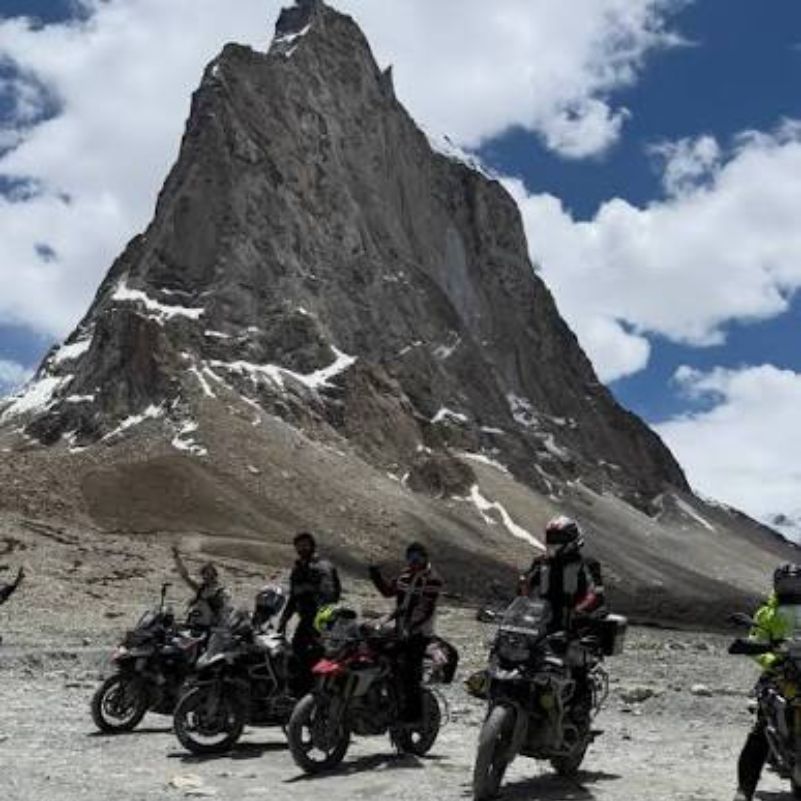
The route gains altitude very fast from the Manali side. You go from Manali's comfortable air to a 5,000-metre pass in a short stretch, and your body needs time it may not get if you rush.
Plan a gradual itinerary rather than a rushed day trip, especially if you are not already acclimatised. That Lahaul night we mentioned earlier is doing real work here.
The official Leh health advisory asks people arriving in Leh to complete at least 48 hours of acclimatisation before travelling to higher altitude areas.
Note that this 48-hour wording is an official advisory specifically for people arriving in Leh. It is not a Gonbo-Rangjon-specific regulation, so do not treat it as one.
Use it as a sensible principle about giving your body time, not as a rule that applies letter for letter to this route.
What should you expect for fuel, food and mobile network?
This corridor is remote in the real sense. Once you leave the settled part of Lahaul, services thin out fast.
Fill your tank before you enter the isolated high-altitude section. We are not naming a specific last petrol pump, because that detail was not reliably verified and getting it wrong could strand you. Assume fuel is scarce and top up early.
Carry enough food and drinking water for more than you think you need. Keep offline maps downloaded, because you cannot count on live navigation.
Bring cash and a charged power bank. Mobile coverage can be patchy and inconsistent along this route, so plan for stretches with little or no signal and download anything important before you leave.
What can you actually do at Gonbo Rangjon?
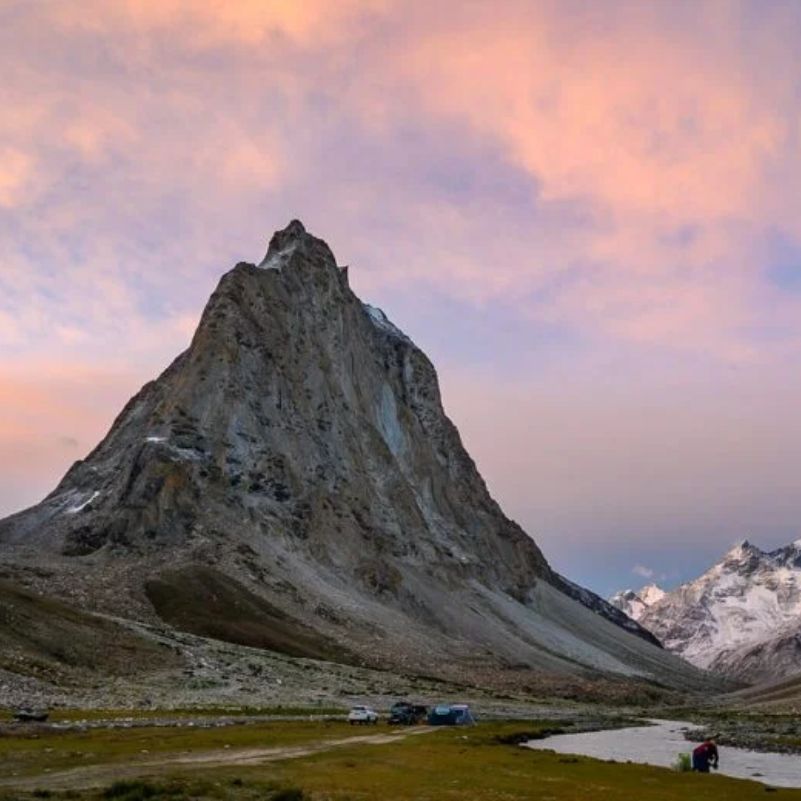
The honest answer is that the doing is quiet. Landscape photography with that lone rock tower as your subject. Sunrise or sunset viewing, when the light hits the rock and the whole valley shifts colour. Clear-night stargazing away from any town glow.
Slow walks around the permitted areas. Time spent simply sitting and looking. We will not promise you the Milky Way every night, because weather and moon phase decide that, not the guidebook. Some nights you get a sky full of stars, some nights clouds roll in.
Gonbo Rangjon rewards patience more than a packed activity list. The travellers who love it most are the ones who came to be still, not to tick boxes. Give the place a full evening and a morning rather than a rushed midday stop.
A sensible Gonbo Rangjon itinerary from Manali
Two-day minimum style
Day one runs from Manali into Lahaul, with an overnight around Jispa. This breaks the altitude and gives you a calm start rather than a frantic one.
Day two takes you from Jispa to Darcha, over Shinku La, and down to Gonbo Rangjon. Whether you push onward or turn back depends on the road condition that day, how you are handling the altitude, and whether you have confirmed accommodation ahead.
We will not hand you guaranteed drive times, because on this route that would be a guess dressed up as a fact.
Longer Zanskar circuit
If you have the days, continue from Gonbo Rangjon through Kargyak and Purne toward Padum, then build a wider Zanskar or Ladakh loop from there.
This is the version we quietly recommend to travellers who can spare the time, because backtracking the same hard road is the weakest way to use these days.
A longer circuit also spreads your altitude gain more sensibly and gives you far more to see. Our Spiti Valley tour packages cover neighbouring high-mountain routing if you want a sense of how these longer loops come together.
What is changing around Gonbo Rangjon after the Shinkun La Tunnel project?
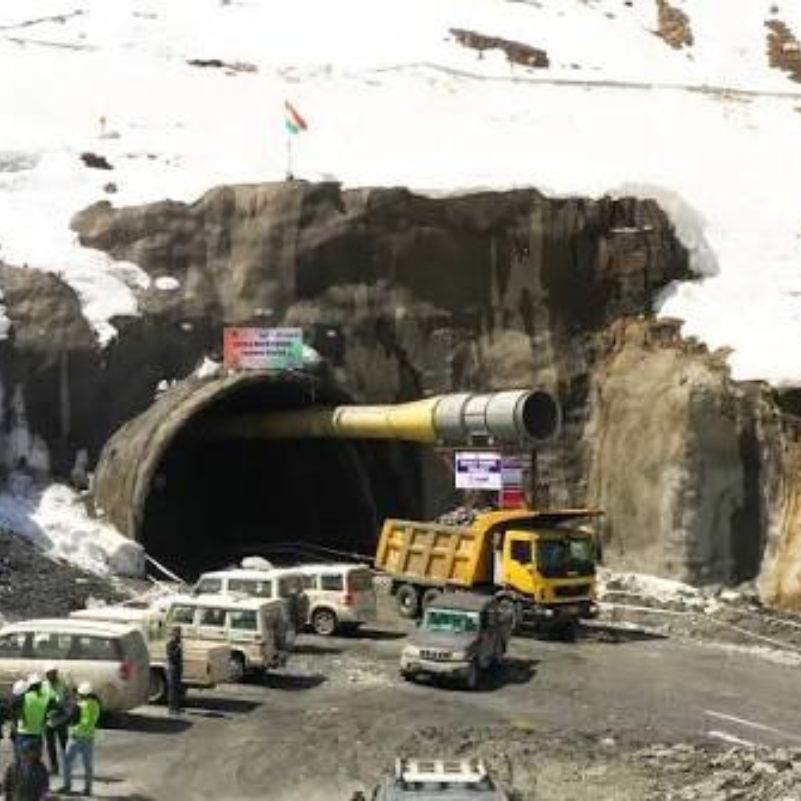
The Shinkun La Tunnel is still under construction in 2026. When finished, it is designed for future all-weather connectivity between Himachal and Zanskar.
The verified specs are worth knowing. It runs approximately 4.1 kilometres, twin tube, at around 15,800 feet. That is a serious piece of engineering at a serious altitude.
For now, it is not an operational tourist route, so do not plan around it for a 2026 trip. But it points to where this region is heading.
Once access gets easier, more people will come, and that makes responsible tourism around Gonbo Rangjon matter even more. The mountain that feels remote today will not stay that hard to reach forever.
How to visit Gonbo Rangjon responsibly
This is both a fragile high-altitude landscape and a sacred place, which means your behaviour here carries weight.
Stay on existing roads and tracks rather than cutting across open ground. Carry every bit of your waste out with you. Avoid disturbing prayer spaces or mani stones, and do not climb on them for a photo.
Ask before photographing local people, and accept no as an answer. Follow local instructions when you receive them.
Drone use may be subject to local restrictions and aviation rules, so confirm the latest requirements before flying one at Gonbo Rangjon.
The single most important thing you can do at Gonbo Rangjon is treat it the way the people who live beside it do. If you would like help planning a trip that respects the place and still works logistically, WhatsApp us and we will sort it with you.
Explore Our Curated Zanskar Valley Packages
 8D/7N
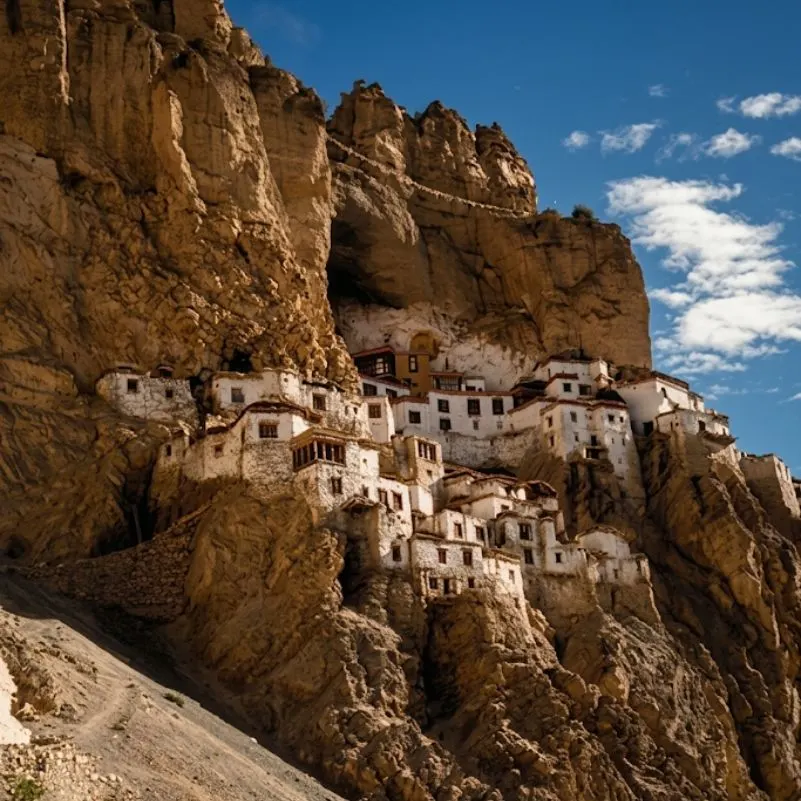
8D/7NPrivate Zanskar Valley 4x4 Expedition With Phugtal Gonbo Rangjon and Baralacha La
1D Manali•1D Purne / Kargyak / Gonbo Rangjon Side+2
₹44,999/ person- 8D/7N
Private Zanskar Valley Tour With Phugtal Gonbo Rangjon and Baralacha La
1D Manali•1D Purne / Kargyak / Gonbo Rangjon Side+2
₹29,999/ person 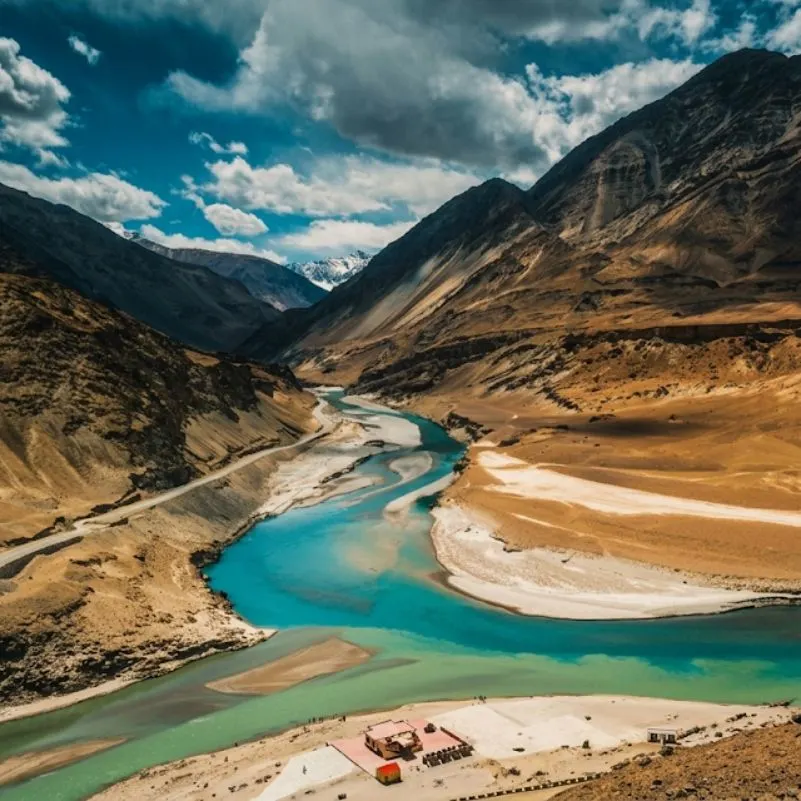 Group Tour8D/7N
Most Loved Zanskar Valley 4x4 Group Expedition
1D Manali•1D Purne / Kargyak / Gonbo Rangjon Side+2
₹32,999/ person
Related topics
Frequently Asked Questions
What is Gonbo Rangjon?
Gonbo Rangjon is a sacred standalone rock pinnacle in the Lungnak Valley of Zanskar, Ladakh, south of Kargyak village. It is revered by local Tibetan Buddhists rather than treated as a climbing peak.
Why is Gonbo Rangjon called God's Mountain?
Local tradition links it to Gonbo, or Mahakala, a Buddhist protector deity. Academic research describes it as a self-manifested sacred mountain tied to Mahakala.
Where is Gonbo Rangjon located?
It sits in the Lungnak Valley of Zanskar in Ladakh, south of Kargyak village, on the route between Shinku La and Padum.
How do I reach Gonbo Rangjon from Manali?
You drive from Manali into Lahaul, stay around Jispa, then continue via Darcha and over Shinku La before descending toward Gonbo Rangjon.
Is Shinku La open in 2026?
The Darcha to Shinkula road reopened after BRO snow clearance in May 2026 for heavy and light vehicles, subject to weather. Verify the exact stretch the evening before and the morning you travel.
Do I need a 4x4 for Gonbo Rangjon?
A high-clearance vehicle with an experienced driver is strongly recommended. We cannot confirm a 4x4 is legally mandatory all season, as restrictions have varied.
Can I ride a scooter to Gonbo Rangjon?
Some riders have done it, but that does not make it a safe choice at this altitude on these roads. We do not recommend it for most travellers.
Do Indians need a permit for Gonbo Rangjon?
A clear 2026 permit rule for Indian travellers entering via Darcha was not found, so confirm the latest requirement with Zanskar, Kargil, Darcha or the relevant checkpost authority before travelling.
Can I camp at Gonbo Rangjon?
Yes, a tourist camp area exists and was inspected by the Deputy Commissioner of Zanskar in June 2026. Current tariffs can vary, so confirm the latest prices and campsite availability for your travel dates.
What is the best month to visit Gonbo Rangjon?
July and August are the main summer window. September offers clearer views but colder nights. June and October are more conditional on road and weather.
Can I visit Gonbo Rangjon in three days from Manali?
It is possible with a Lahaul night for acclimatisation, but road conditions decide everything. A slightly longer plan is safer and more comfortable.
Can Gonbo Rangjon be visited from Padum?
Yes. From Padum you travel toward Purne and Kargyak to reach Gonbo Rangjon, which suits travellers doing a wider Zanskar circuit.
More about Zanskar Valley
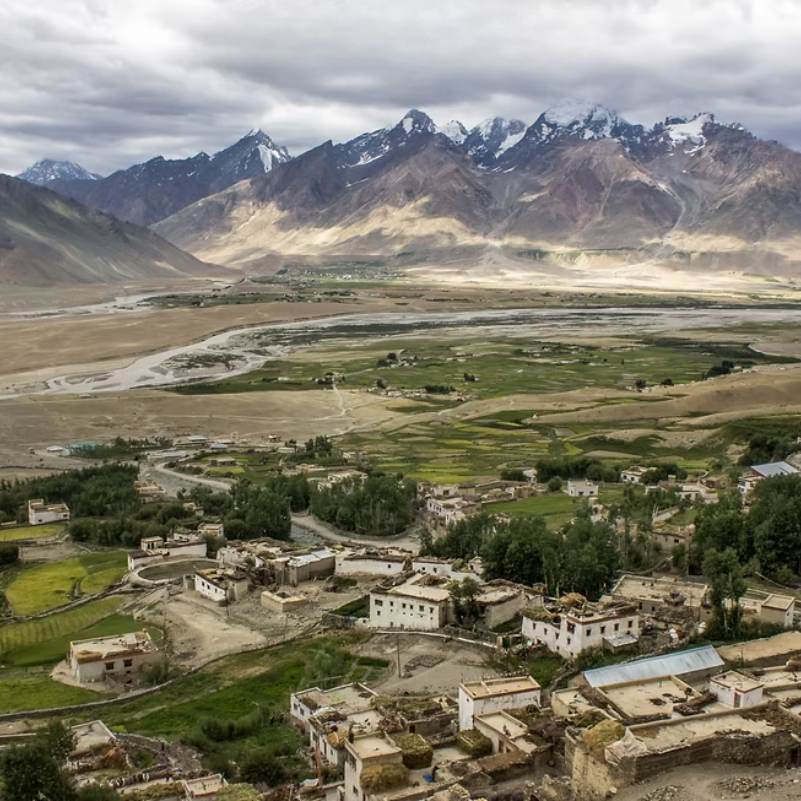 Zanskar Valley
The New Manali to Zanskar Road: Nimmu Padum Darcha Route Explained (2026)
Explore Gonbo Rangjon and the Nimmu–Padum–Darcha Road in 2026 with this complete Manali to Zanskar guide, covering the route, key stops, Shinku La, road conditions, and essential travel tips.
- How to Reach
- Road Trips
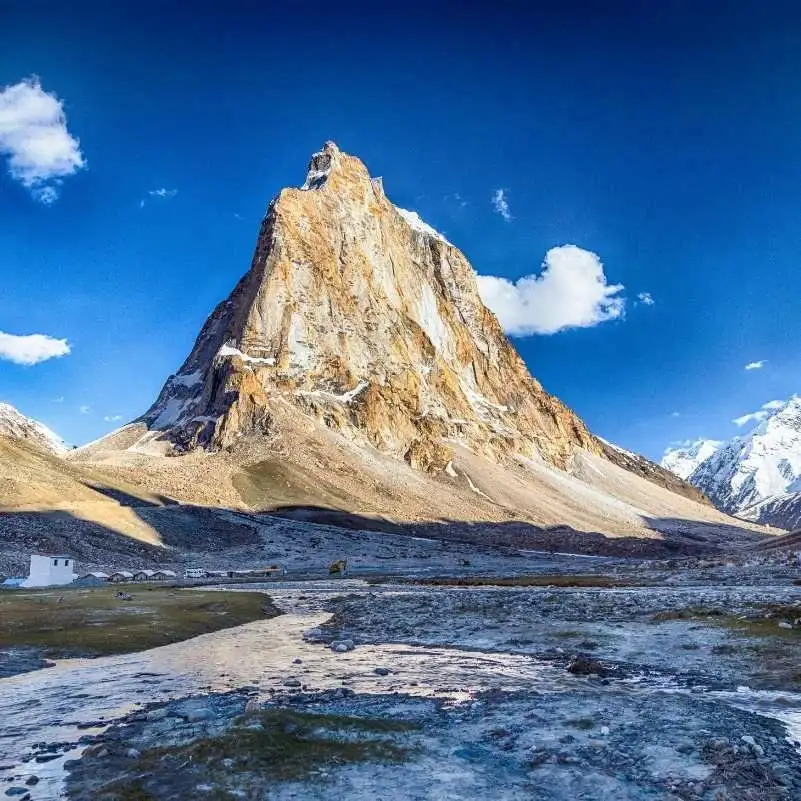 Zanskar Valley
Manali to Zanskar Itinerary: 5 and 7 Day Plans That Actually Work (2026)
Planning a Manali to Zanskar trip in 2026? This guide gives you practical 5 day and 7 day itineraries with the best route, overnight stops, driving times and key places to cover without making the journey too rushed.
- Itinerary
- Road Trips
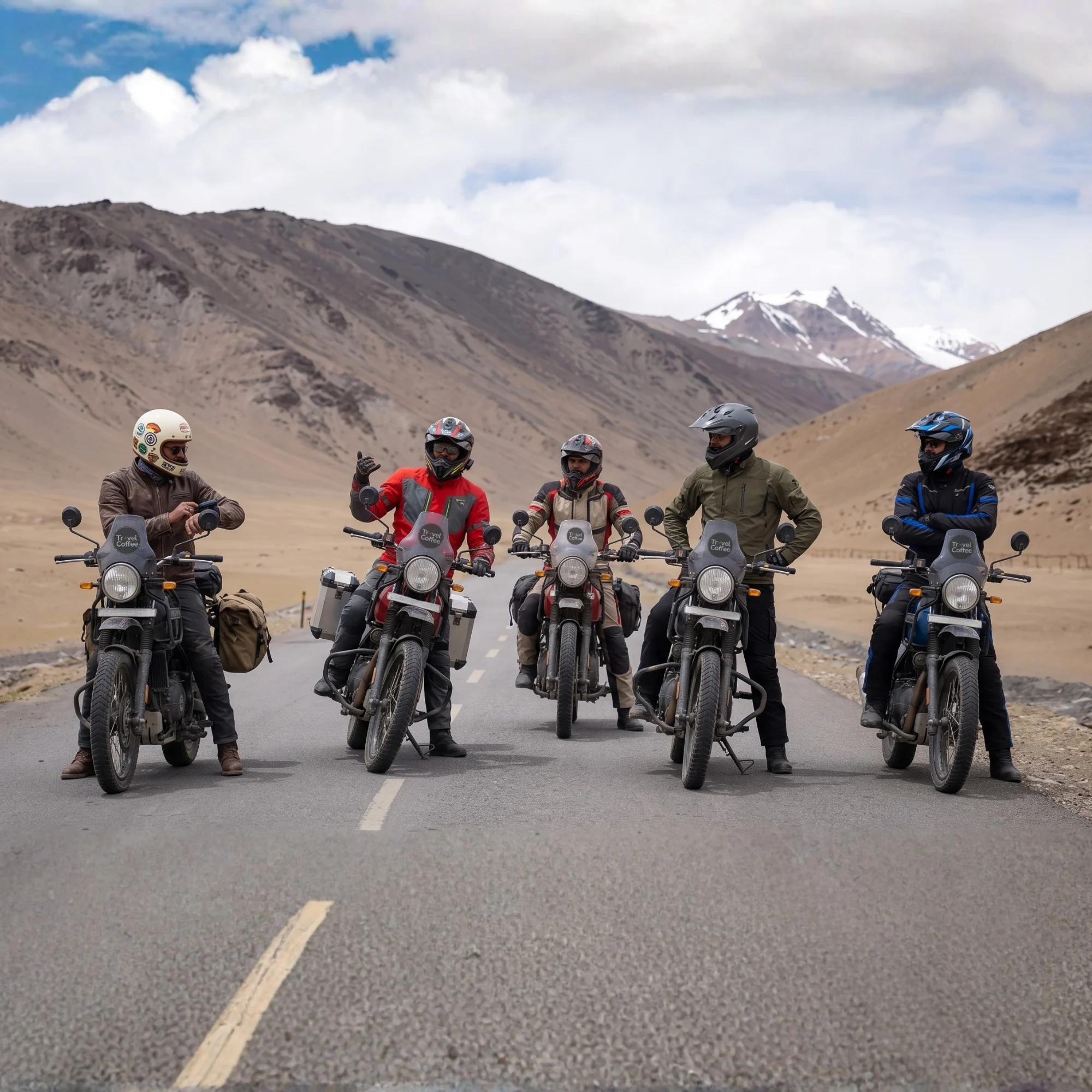 Zanskar Valley
Zanskar Bike Trip via Shinkula Pass: Route, Difficulty and Tips (2026)
Plan your Zanskar Bike Trip via Shinkula Pass in 2026 with this complete route guide covering the best itinerary, road conditions, key stops, permits, riding tips, and everything you need for an unforgettable Himalayan motorcycle adventure.
- Bike Trips
- Road Status