
Stargazing in Winter Spiti 2026: Where to Stay, Moonlight and What You Can See
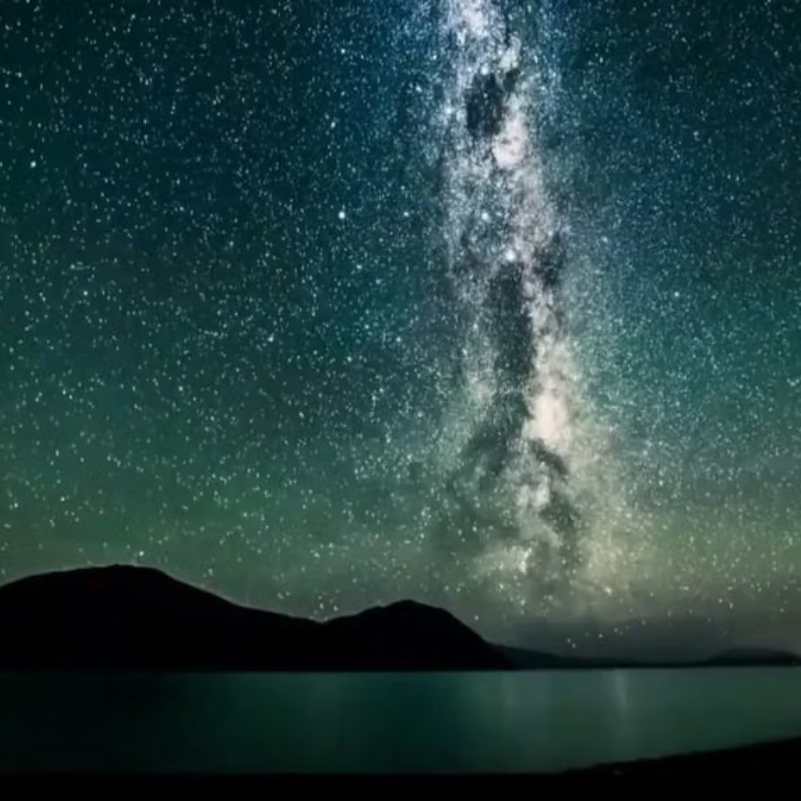
You searched for winter Spiti stargazing because you want a sky full of stars, not because you want to freeze on an icy road at midnight looking for a village that turned out to be shut. Good. That instinct will save your trip.
Winter Spiti gives you some of the darkest, clearest skies in India. But the planning is nothing like summer. Where you sleep matters more than where the "best" sky is, because the best sky is useless if you can't get warm again fast.
Quick Answer
Winter Spiti has excellent dark skies, but travel is much harder than summer. For most people, Kaza is the safest practical base. Langza or Kibber can give darker surroundings, but only when the road is clear and a winter homestay is confirmed open.
Pick a new moon night if you want faint stars and the subtle winter Milky Way. Pick a brighter moonlit night if you want snowy mountains and monasteries glowing in your photos.
One honest thing upfront: winter does not give you the bright galactic core you see in famous summer Milky Way shots. Winter gives you Orion, Taurus, the Pleiades, Sirius and a fainter winter Milky Way instead. Beautiful, just different.
If you want the trip built around real conditions, start with our Winter Spiti tour packages.
Why Is Winter Spiti So Good for Stargazing?
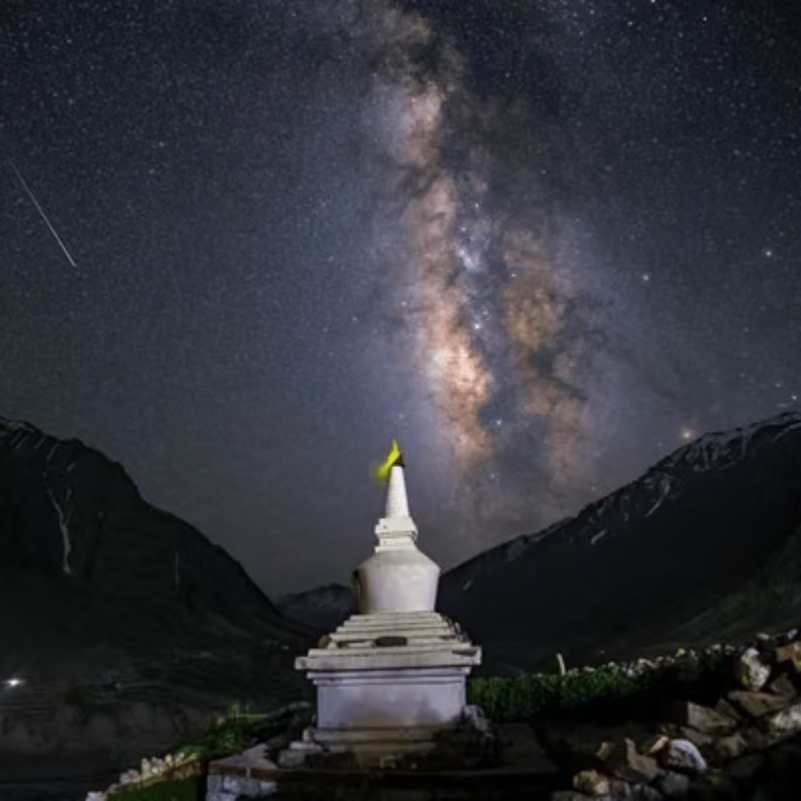
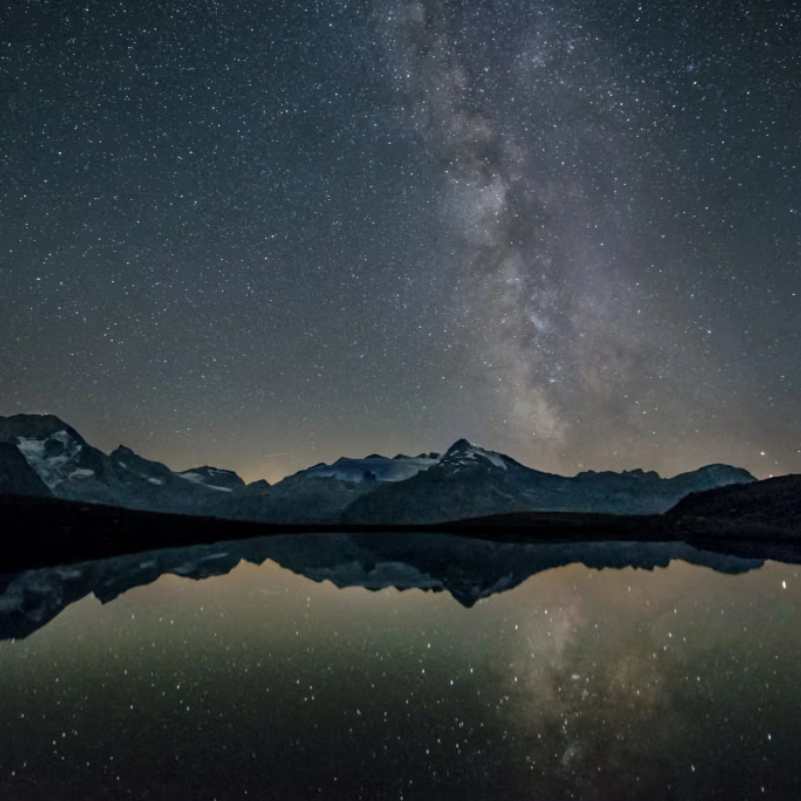
Spiti sits high in a cold, dry desert with very little artificial light. That combination is what stargazers chase. Thin, dry air means less haze between you and the stars. Tiny villages mean almost no light pollution washing out the sky.
Here is where most tourists get it wrong
They read that Spiti is a "Bortle Class 1" dark sky, treat it as a fact for the whole valley, and plan around it. We can't confirm that region-wide claim from any authoritative source, so we won't repeat it. What we can say honestly is that the sky is genuinely dark in the right spots.
Winter adds its own gifts. Nights are long, so you get more observing hours. The cold, dry air is often crisp and clear. And snow on the ridges gives you dramatic foregrounds that summer simply can't match.
But winter is not automatically "better." Roads close, homestays shut, heating gets tricky, and the altitude cold is brutal. You trade easy logistics for a rawer, quieter sky. Know that trade before you book.
Where Should You Stay for Winter Stargazing in Spiti?
Kaza: best first choice for logistics
Kaza sits at 3,660 metres and is the sub-divisional headquarters of Spiti. It has a bank, an ATM, a post office and a petrol and diesel filling station, according to Himachal Tourism. In winter, that fallback matters more than you think.
Yes, Kaza has slightly more local light than the tiny villages. But it also means fuel, help and warmth are close. In our experience, the best winter base is not always the highest village. It is the place where you can get warm again quickly.
Book a stay toward a quieter edge of town. Then walk to a nearby dark patch on foot instead of driving icy roads at midnight. That one choice keeps you safe.
Langza: darker sky with harder winter logistics
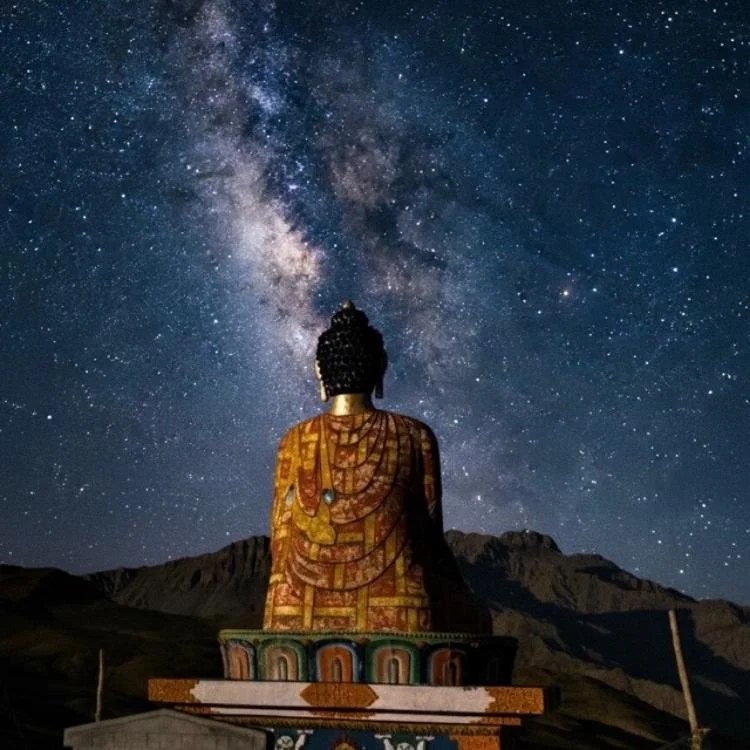
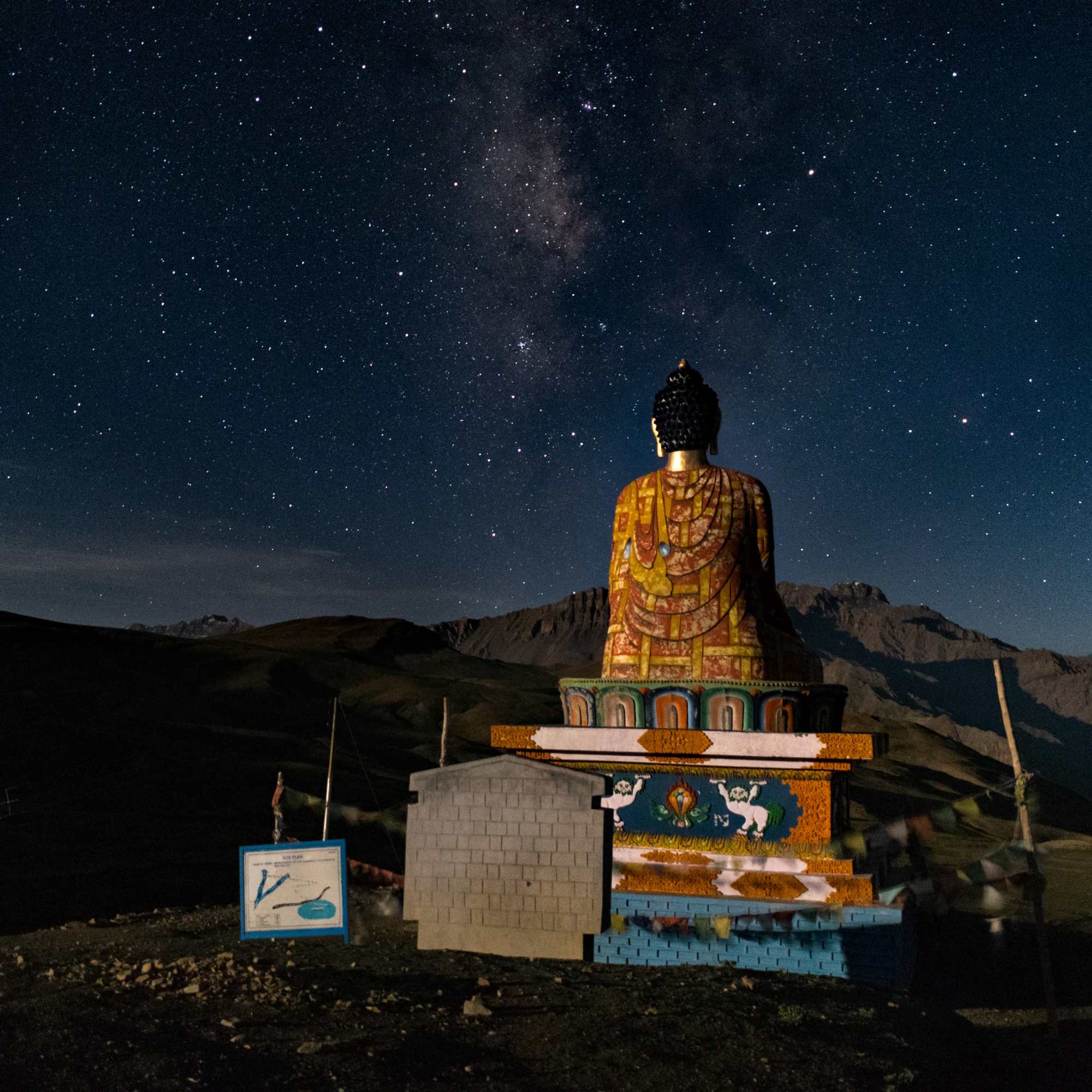
Langza is 16 km from Kaza, according to Himachal Tourism. The sky here is darker and the giant Buddha statue against the stars is a proper sight.
But only choose Langza for an overnight stay after confirming directly with the property that it is open for your dates and that road access, heating, toilets and water arrangements are suitable for winter conditions, since availability and facilities can change significantly in the colder months.
Kibber: dark village sky with warmth close by
Kibber is roughly 16 to 18 km from Kaza (two official government pages give slightly different figures, so we won't pretend to a single number). It sits at about 14,200 ft, according to the District Lahaul and Spiti website.
Kibber's real winter advantage isn't some magic astronomy number. It's that you can sleep right next to your observing spot and step back indoors within a minute when the cold bites. That matters at these temperatures.
Komic and Hikkim: excellent when roads cooperate
Hikkim is listed at 17 km from Kaza and Komic at 18 km from Kaza by Himachal Tourism. Both are famously high.
Don't assume higher means better. More altitude also means more wind, more snow and worse road odds. A lower, safer village on a bad-weather night is the smarter call. We tell our travellers to let the roads decide, not the ego.
Tabo: useful on the winter approach
Tabo sits at about 3,050 metres and is roughly 46 to 48 km from Kaza (official sources differ). Think of Tabo as a sensible acclimatisation halt on the Shimla and Kinnaur route, not a place you pick purely for dark skies.
If you're routing in through the lower valley, our Kinnaur tour packages cover this stretch.
What Should You Ask a Homestay Before Booking?
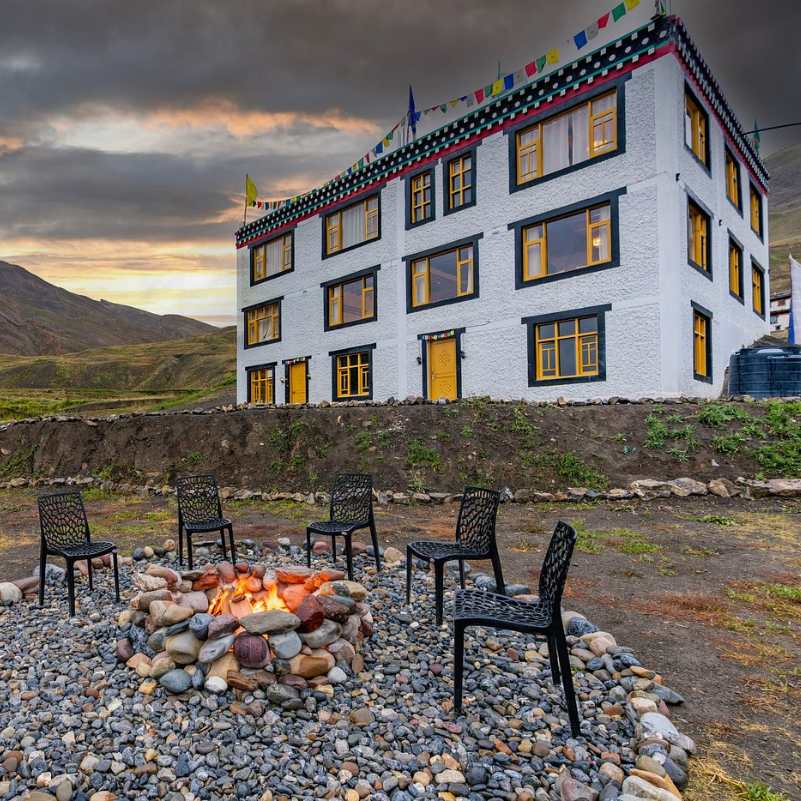
First question, always: are you actually open on my dates? Plenty of listings stay live online while the family has moved down to Kaza or the plains for winter. Confirm operation before you pay anything.
Then ask how the place is heated and when. Some rely on a bukhari (wood stove) that runs only in the evening. Ask if the toilet is indoors, because an outdoor toilet at minus fifteen is its own adventure. Ask how hot water works when pipes freeze.
Check whether power and charging are reliable enough to keep camera batteries alive. And ask the most important stargazing question: is there a safe dark spot within a short walk of the house?
Finally, message the host the day before arrival and ask about the current road condition. Locals know the ground reality before any website updates.
If the price is not clearly published or may vary by date, ask the host to confirm the final amount in writing before you pay, including any heating, meal or winter surcharges.
Is New Moon or Full Moon Better for Stargazing in Winter Spiti?
New moon for the darkest sky
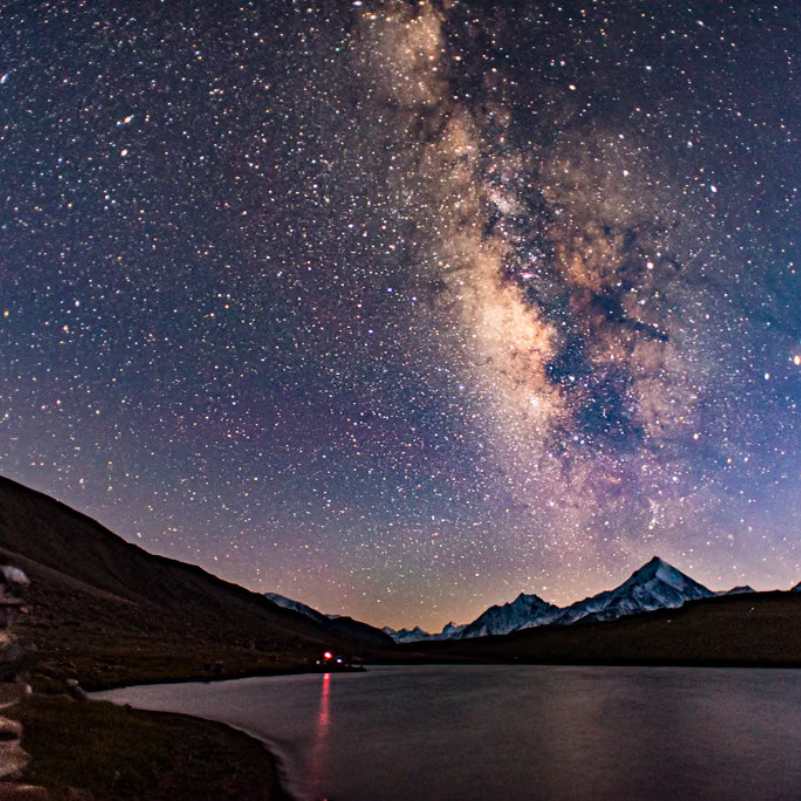
NASA's guidance says the few days around new moon are ideal for spotting faint stars, because bright moonlight isn't there to drown them out. If you want the maximum number of stars, the subtle winter Milky Way and faint deep-sky objects, plan around the new moon.
For 2026, the Spiti new moons fall on 19 January, 17 February and 19 March in the first half of the year. Later in the year, you get new moons on 9 November and 9 December. Aim your darkest observing nights within a couple of days of these dates.
Full moon for snow and landscape photography
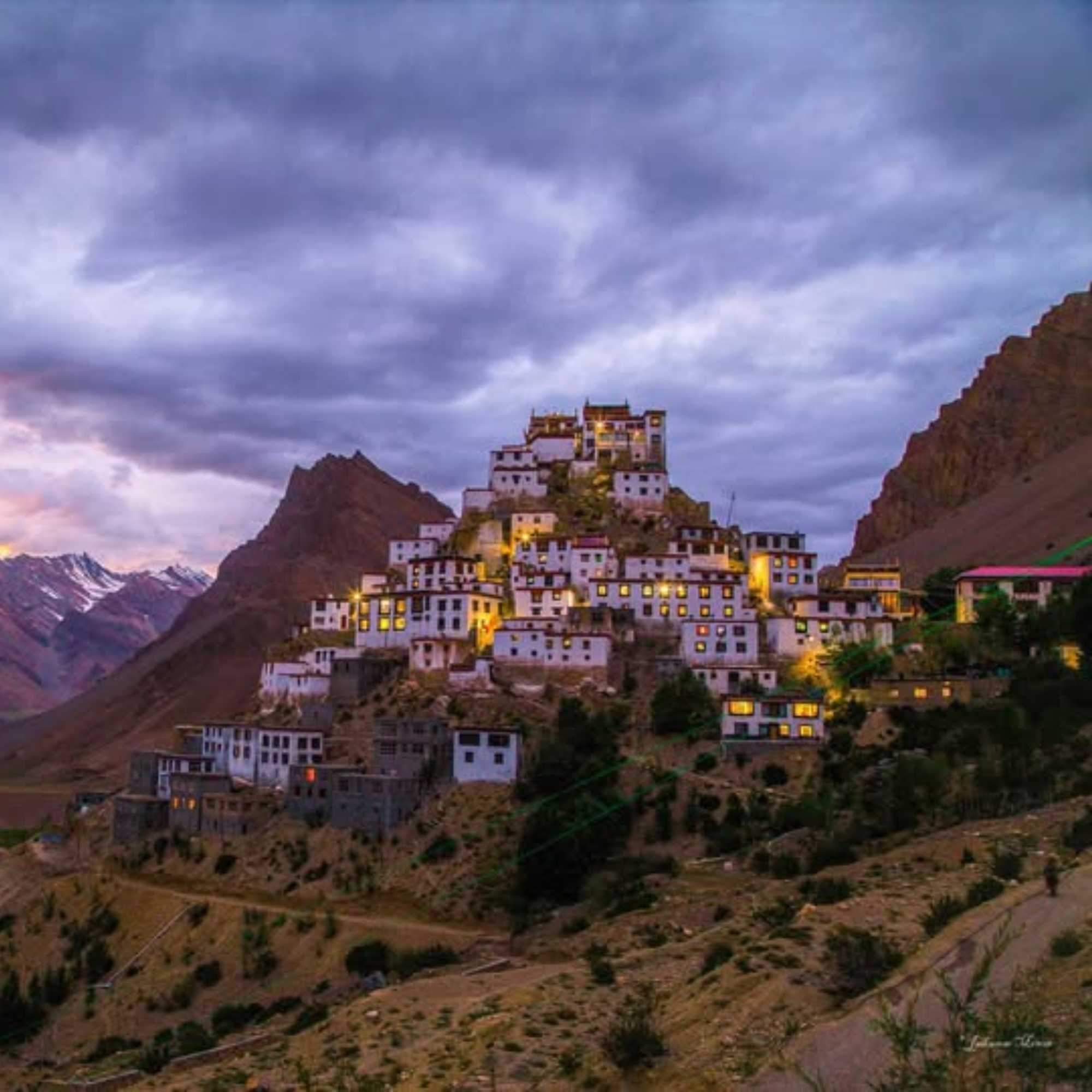
A full moon does wash out faint sky detail. But it doesn't ruin the night. In snowy Spiti, moonlight lights up the ridges, the village houses and the monastery walls in a way that looks unreal in photos. It changes the experience rather than cancelling it.
The late-2026 full moons land on 24 November and 24 December. A Christmas Eve full moon over snow-covered Kaza is a specific, beautiful thing to plan for if landscapes are your goal.
One catch people miss: the moon phase alone doesn't tell you if the moon is even in the sky during your session. Always check the exact moonrise and moonset for your travel night too. We won't invent those times here, so look them up for your specific date.
Can You See the Milky Way in Winter Spiti?
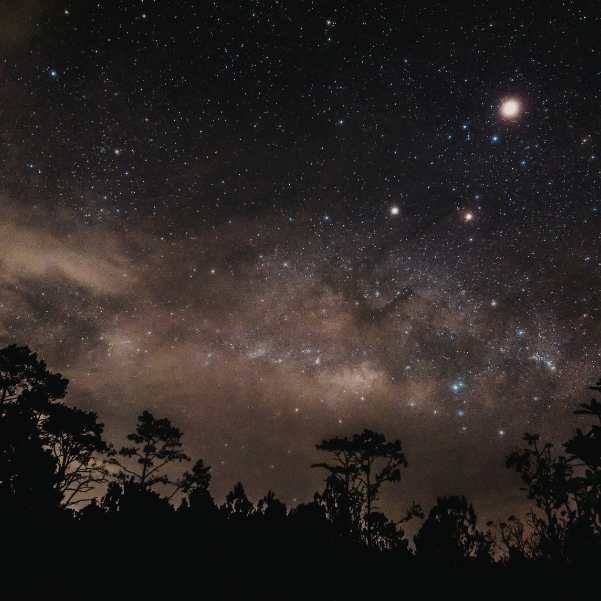
Yes, but read this section carefully, because it's where most winter trips end in quiet disappointment.
Sky and Telescope explains that the winter Milky Way is not as bright or distinct as the summer one. In winter, those of us in the Northern Hemisphere are looking outward along the plane of our galaxy.
In summer, we look toward the dense, brilliant galactic centre around Sagittarius. That's why summer photos glow the way they do.
So no, we won't promise you the dramatic bright galactic core in December, January or February. It isn't up there for you.
What a dark, moonless Spiti sky can show you in winter is a softer, subtler band of the Milky Way arching overhead. It's genuinely lovely. But if your heart is set on the classic bright-core photograph, plan a warmer-season astro trip instead.
Our team recommends deciding what you actually want to photograph before choosing the month. That one decision prevents most regret.
What Can You Actually See in Spiti's Winter Sky?
Orion and the Orion Nebula
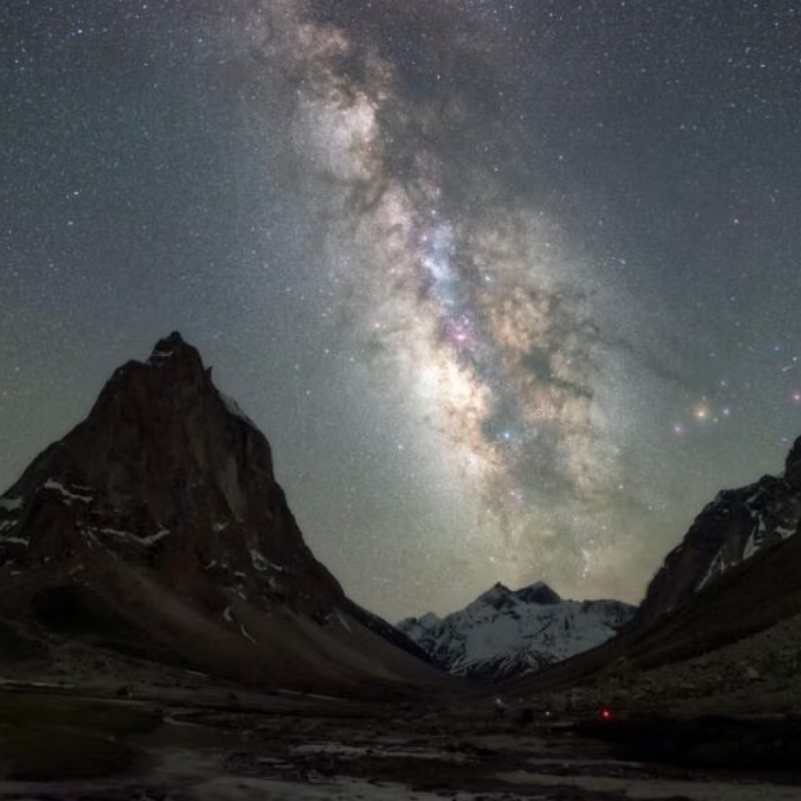
NASA calls Orion one of the most prominent constellations of the Northern Hemisphere winter sky. You'll spot it easily. Look for the three bright stars in a short, straight line: that's Orion's Belt.
Below the belt hangs Orion's sword, and inside it sits the Orion Nebula. NASA notes it can be just visible to the naked eye in very clear, dark conditions, which Spiti often delivers. Bring binoculars and it gets much easier for beginners.
Taurus, Aldebaran, Hyades and Pleiades
NASA identifies Taurus and the Pleiades as classic winter targets. The Pleiades look like a tiny, tight cluster of stars, sometimes mistaken for a small dipper. You can see them without any equipment, and binoculars reveal many more.
Use Orion's Belt as your starting map. From the belt, sweep in the direction of the bright orange star Aldebaran, and you're in Taurus territory. We won't hand you exact compass bearings, because the sky rotates through the night and false precision only confuses beginners.
Sirius and the Winter Circle
Sirius is the brightest star in the night sky and impossible to miss once Orion is up. Follow Orion's Belt downward and it points you toward Sirius.
From there you can trace the Winter Circle, a big loop of bright stars that's a friendly beginner pattern without the heavy astronomy jargon.
Andromeda
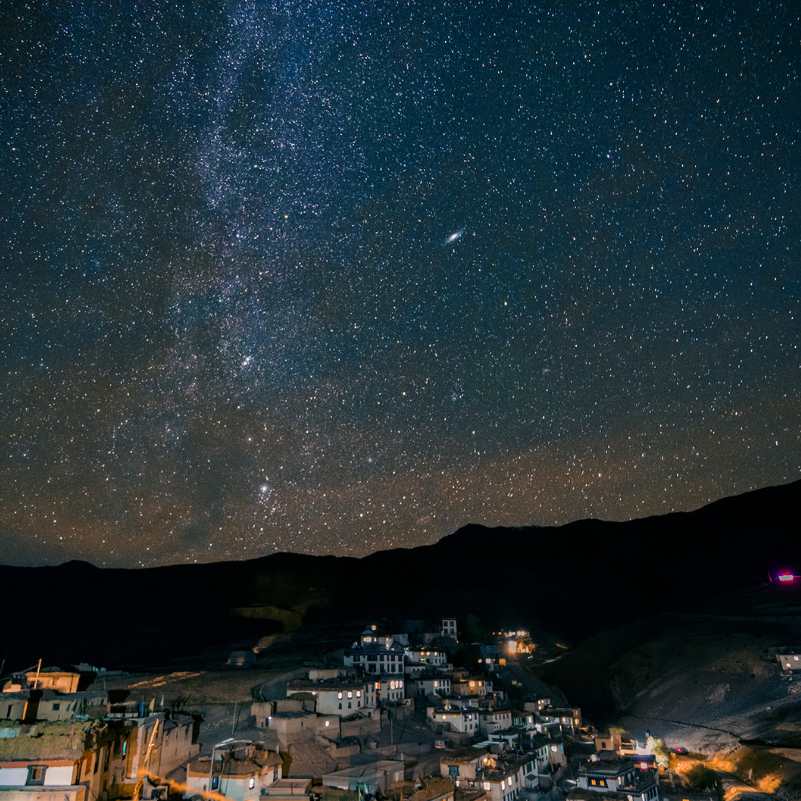
NASA includes the Andromeda Galaxy among notable Northern Hemisphere winter targets. It's the most distant thing your eyes can see unaided, though "can see" depends heavily on darkness, timing and your own eyesight.
Binoculars make it far easier. Don't expect a spiral like the photos, expect a faint smudge of light. That smudge is another galaxy, which is the point.
The winter Milky Way
As covered above, it's there but subtler than the famous summer view. Set your expectations to "soft band," not "glowing core."
Geminids in December 2026
Here's the exciting one. NASA lists the Geminid meteor shower as active from 4 December to 17 December 2026, peaking on the night of 13 to 14 December. NASA calls the Geminids one of the best and most reliable annual meteor showers.
The timing for 2026 is lucky. The Spiti new moon falls on 9 December, just days before the peak, and astronomy forecasts describe the moon during the peak as a favourable waxing crescent. Dark skies and a good meteor shower lining up like this doesn't happen every year.
We won't promise you a specific number of meteors. Real counts depend on cloud, horizon, darkness and patience. But if you can handle December cold in Spiti, this is a strong window.
Where Are the Best Winter Stargazing Spots Around Kaza?

Forget the standard summer ranking. In winter, safety and warmth outrank raw darkness.
Start with the dark outskirts of Kaza. For most travellers, this is the smart first pick. You get a genuinely dark sky on the edge of town, with fuel and a warm room minutes away.
Next, Langza, but only when road access and an open homestay are confirmed. The sky is darker and the foreground is spectacular. Just don't gamble on it blind.
Then Kibber, if you want a high-village stay and the ability to duck indoors fast. Sleeping beside your observing spot is a real winter luxury.
Treat Hikkim and Komic as weather-dependent bonuses, not fixed plans. And we're leaving Chandratal off this list entirely, for reasons below.
One firm rule: don't drive between these villages after midnight just to chase a darker patch. Icy mountain roads in the dark are not worth a marginally better sky. No photo is.
Why Chandratal Is Not a Winter Stargazing Base
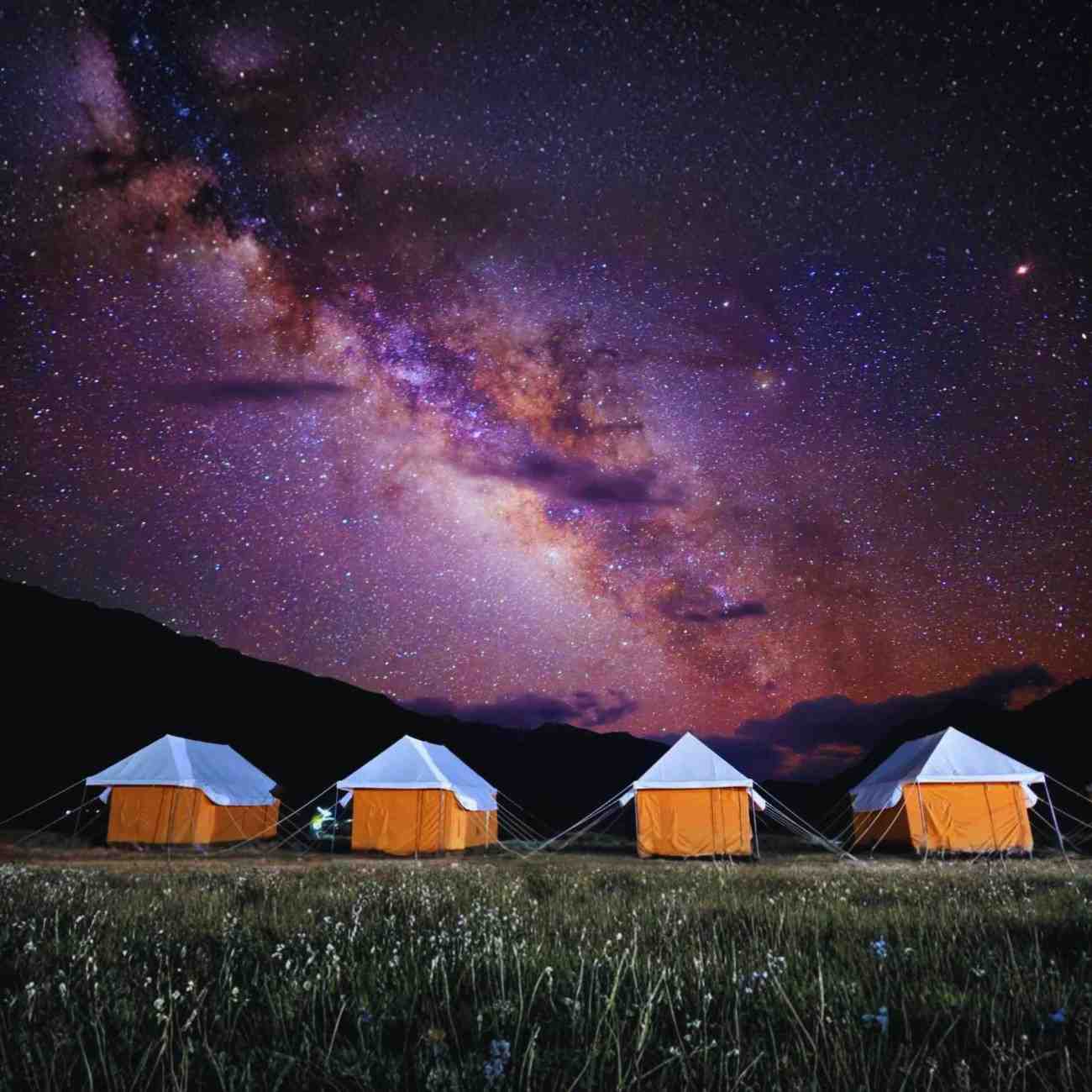
Search for Spiti night skies and you'll see jaw-dropping Chandratal photos. They're real, but they're summer. Winter travellers get misled by them constantly, so let's be blunt.
Himachal Tourism states that tented accommodation around Chandratal is available only from June to October. There is no winter camp waiting for you.
More importantly, the District Lahaul and Spiti administration says the Keylong to Kaza route closes in winter because Kunzum Pass and the surrounding road get heavy snowfall, generally from around October or November until June or July.
The road to Chandratal simply isn't open or safe in deep winter.
So please don't build a December to March itinerary around Chandratal. For the real seasonal picture, read our guide on when Chandratal opens in 2026. And if you're curious why it sits in a confusing spot on the map, we've explained whether Chandratal is in Lahaul or Spiti separately.
How Do You Reach Spiti for Winter Stargazing?
In winter, you go in through Shimla, Kinnaur, Nako and Tabo toward Kaza. The Manali side is not your route in the cold months.
The official District Lahaul and Spiti website lists the Shimla to Kaza route at roughly 412 km and about 20 hours of driving, excluding an overnight halt. Do not attempt that in one winter day. Break it up, sleep along the way, and let your body adjust to altitude.
The same district source confirms the Keylong to Kaza road through Kunzum closes in winter due to snowfall. The district's currently indexed 2026 road-status page also lists Keylong to Kaza as closed. That's exactly why you take the long Shimla route.
Road status changes fast here. A cleared road on Monday can shut by Wednesday. Recheck the district road page right before you leave, every time. If you're staging your first nights around Shimla, our Shimla tour packages can anchor the approach.
How Cold Is Winter Stargazing in Spiti?
Himachal Tourism and the district road page state that winter temperatures in Spiti can fall to around minus 20 degrees Celsius.
Some nights and some villages get colder, but we won't quote minus 30 or minus 35 as a valley-wide guarantee, because those figures aren't freshly verified. Minus 20 is already serious.
Dress in layers you can trust. Thermal base layers top and bottom, a heavy insulation layer, a windproof outer shell, insulated boots, warm gloves or mittens, and full head and face protection.
Here's the tip that catches people out
Standing dead still beside a tripod feels far colder than walking around. Your body isn't generating heat. So dress warmer than you think you need for "just standing outside," and take warm-up breaks indoors.
How Do You Stargaze Safely at High Altitude?
Kaza is at 3,660 metres and Kibber at about 14,200 ft. That's high enough for altitude to hit you if you rush.
Treat your first night as an acclimatisation night. Don't fly up to the highest village on day one. Sleep lower, let your body settle, then climb. This single habit prevents most altitude trouble.
We can't give medical advice or tell you what to take. But we can tell you where help is. Himachal Tourism lists a Community Health Centre at Kaza, a Primary Health Centre at Tabo and a Civil Dispensary at Kibber.
If you start feeling unwell during a session, go indoors immediately. Don't push through "just ten more minutes" for a photo.
The sky will still be there tomorrow. For solo travellers, especially women weighing a winter trip, our honest take on Spiti safety for solo female travellers is worth a read first.
What Camera and Phone Setup Works in Winter?

You want a stable tripod, your camera on manual or a proper night mode, and spare batteries. Cold kills batteries fast, so keep the spares inside your jacket against your body and swap them in as needed. Carry a headlamp with a red-light mode so you don't wreck your night vision.
We won't hand you one universal ISO or shutter-speed formula, because it changes with your camera, lens, focal length, moonlight and sky brightness. Experiment on the night.
Set your expectations honestly. Long exposures pull in colour and faint Milky Way structure your eyes can't see, so your photo will look richer than the live view. Both are real. The naked-eye sky in Spiti is spectacular even when it doesn't match an edited image.
And give your eyes time. NASA says it takes roughly 30 minutes for your eyes to fully adapt to darkness. Every time you check a bright white phone screen, you reset that. Dim your phone, use red light, and be patient.
A Simple 3-Night Winter Stargazing Plan Around Kaza
Night 1: Kaza and acclimatisation
Stay in Kaza and keep the evening gentle. Learn to find Orion and the Pleiades from a dark spot close to your stay. No high-altitude night drive. Let your body get used to the height while you get used to the sky.
Night 2: Langza or Kibber if roads allow
Pick just one, and only after your host or driver confirms that day's road conditions. If you go up, stargaze within walking distance of the house and retreat to warmth easily. Don't wander far in the dark.
Night 3: weather and moon backup
Keep this night deliberately loose. If snow, ice or bad roads make the higher villages a risk, use Kaza again and enjoy the outskirts. Winter Spiti rewards flexible planning far more than a packed checklist.
Winter Stargazing Mistakes to Avoid

The biggest mistake is expecting the bright summer Milky Way core in December. It isn't in the sky then, no matter how dark it gets. The second is planning Chandratal in deep winter, when the road is shut and no camps run.
We also see people book a village homestay without confirming it's actually open for the season, then arrive to a locked door. Others rush to the highest village on their very first night and pay for it with a splitting altitude headache.
Don't drive icy village roads after dark just for a better view. Don't bring only one camera battery into minus-twenty cold. Don't keep blasting a bright white phone screen and then wonder why you can't see any stars.
And don't write off a full-moon night as wasted; snowy landscape shots under moonlight can be the best photos you take.
Permits and 2026 Practical Information
Himachal Tourism says Indian citizens do not need a general permit to enter Spiti. So if you hold an Indian passport or ID, you're free to go.
Foreign nationals are subject to protected-area and inner-line rules in parts of the Spiti and Kinnaur border region.
Because these rules change and official pages describe the areas differently, foreign travellers should confirm their exact route and current permit requirement with SDM Kaza before departure.
We won't quote permit fees or processing times, because we don't have verified current figures.
Everyone should check the District Lahaul and Spiti road-status page close to departure. If you'd rather have us cross-check the practical bits before you commit, just WhatsApp us.
Explore Our Curated Winter Spiti Tour Packages
 Group Tour9D/8N
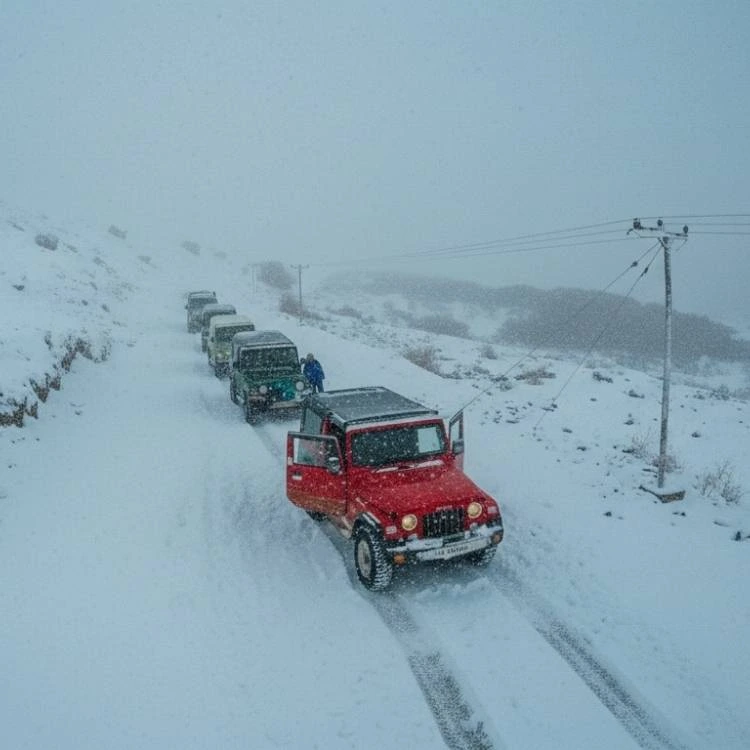
Most Loved 4×4 Winter Spiti Expedition
2D Sangla•1D Tabo+2
₹28,999₹35,999SAVE INR 7,000/ person Group Tour9D/8N
Best Selling Winter Spiti Valley Group Tour
2D Sangla•1D Tabo+2
₹18,999₹23,999SAVE INR 5,000/ person Group Tour8D/7N
Best Selling Kinnaur & Spiti Winter 4x4 Expedition
1D Sangla•1D Nako+2
₹25,999₹30,999SAVE INR 5,000/ person
Related topics
Frequently Asked Questions
Is Spiti Valley good for stargazing in winter?
Yes. The high altitude, dry air and low light give you dark, clear skies. The catch is that winter travel is cold, remote and weather-dependent, so plan around safety, not just the sky.
Which month is best for winter stargazing in Spiti?
For dark skies with a meteor bonus, mid-December around the Geminids is strong. January and February are darkest but coldest and hardest to reach. Match the month to your tolerance for cold and risk.
Can I see the Milky Way in Spiti in December or January?
You can see a fainter winter Milky Way band on a dark, moonless night. But the bright summer galactic core is not visible in deep winter, so don't expect those glowing summer photos.
Is new moon or full moon better for stargazing in Spiti?
New moon for faint stars and the most stars overall. Full moon for snowy landscape and monastery photos lit by moonlight. Pick based on what you want to shoot.
Where should I stay for stargazing in winter Spiti?
Kaza is the safest practical base. Langza or Kibber offer darker skies but only when the road is clear and a winter homestay is confirmed open.
Is Kaza dark enough for stargazing?
Yes, on its quieter outskirts. It has a little more light than tiny villages, but the safety and warmth nearby make it the smartest winter choice for most people.
Is Langza accessible in winter?
Sometimes, depending on snow and road clearance. Never assume. Confirm the road and an open, heated homestay before you plan a night there.
Can I visit Chandratal in winter?
No. Tented stays run only June to October, and the Kunzum route closes in winter due to heavy snow, generally from around October or November until June or July.
What stars and constellations can I see in winter Spiti?
Orion and the Orion Nebula, Taurus with the Pleiades and Aldebaran, bright Sirius, the Winter Circle, and Andromeda through binoculars on a very dark night.
Can I see the Geminids from Spiti in December 2026?
Yes, conditions look good. The shower peaks the night of 13 to 14 December, and the 9 December new moon means dark skies with only a favourable waxing crescent moon. Counts still depend on weather.
Can I reach Spiti from Manali in winter?
No. The Keylong to Kaza road via Kunzum closes in winter. You reach Spiti through Shimla, Kinnaur, Nako and Tabo instead, and you break the long drive over several days.
Do I need a permit to visit Spiti?
Indian citizens don't need a general permit. Foreign nationals should confirm current protected-area and inner-line requirements for their exact route with SDM Kaza before travelling.
More about Lahaul and Spiti
 Lahaul and Spiti
Joining a Winter Spiti Group in 2026: Room Sharing, Privacy and Group Expectations
Planning to join a Winter Spiti group in 2026? Learn how room sharing works, what privacy to expect, options for solo travellers and couples, and when a single room supplement may apply.
 Lahaul and Spiti
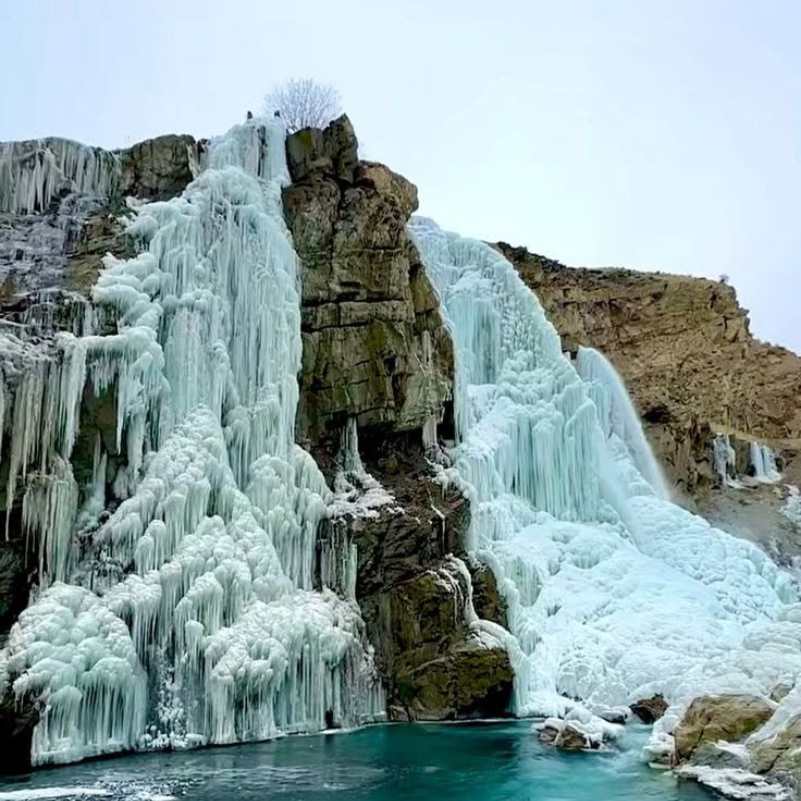
Lingti Frozen Waterfall in Winter 2026-27: Access, Photo Stops and What to Confirm
Plan your visit to Lingti Frozen Waterfall in winter 2026-27 with practical details on access, road conditions, the best photo stops and seasonal conditions. Learn what to confirm before leaving Kaza and how to visit this spectacular frozen waterfall safely.
- Places to Visit
- Snow Travel
 Lahaul and Spiti
Lahaul vs Spiti in Winter 2026/27: Sissu or Kaza for Your Snow Trip?
Planning a Himachal winter trip in 2026/27 and confused between Sissu and Kaza? This guide compares Lahaul and Spiti in winter, including snow, accessibility, temperatures, road conditions, sightseeing and trip duration, to help you decide whether Sissu or Kaza is the better winter destination.