
Spiti Bike Trip Itinerary 2026: Day-by-Day Route Guide for 7, 8 and 10 Day Trips
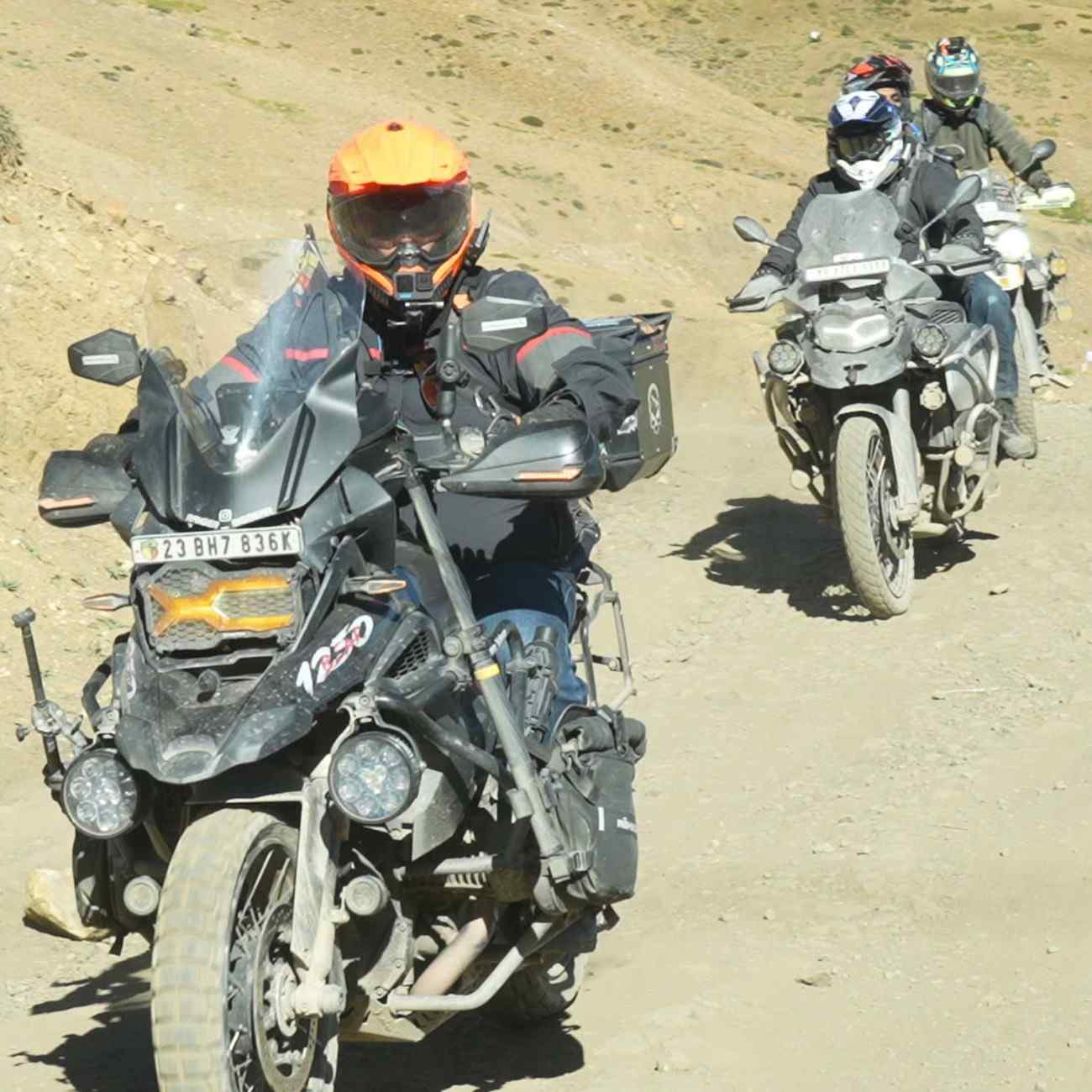
If you have been searching for a spiti bike trip itinerary that actually tells you the truth about days, distances and what your bike will go through, you are in the right place.
Most plans you find online are copy-paste jobs from someone who did the trip once in good weather. They make 7 days look like enough. They make Manali to Kaza sound like a smooth ride. It is not.
We run bike trips on this circuit every season from our Shimla base, and the difference between a great Spiti ride and a miserable one is almost always the itinerary.
This guide by Travel Coffee gives you the real day-by-day plan for 7, 8 and 10 day Spiti bike trips, with road realities, fuel logic, permit clarity and 2026 road status as on the date this article was published.
Quick Answer: What Is the Best Spiti Bike Trip Itinerary?
The best spiti bike trip itinerary for most riders is the full circuit: enter from Shimla or Kinnaur, ride to Kaza, cross Kunzum Pass, camp near Chandratal, and exit through Manali.
10 days is the safest plan because it gives you proper acclimatisation, a Kaza buffer day and room for road delays.
8 days is doable but tight, and works only if you skip the Delhi ride and start from Chandigarh or Shimla. 7 days is only for experienced riders or as a Manali-side mini circuit after Kunzum Pass opens fully.
The practical full-circuit season is mid-June to September. Before you book anything, verify the latest Kunzum Pass and Keylong to Kaza road status, because the Manali side opens last and closes first every year.
👉 WhatsApp us to plan your Spiti bike adventure
Which Spiti Bike Trip Route Should You Choose?
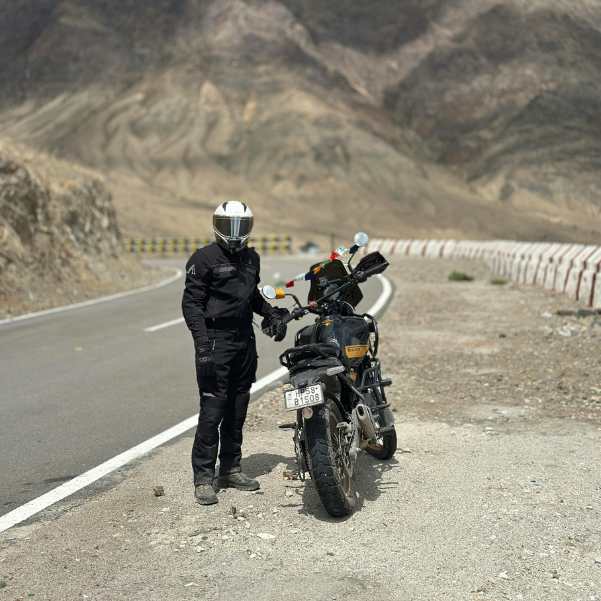
Route choice matters more than copying someone else's day-wise plan. The route decides your altitude curve, your fuel logic and how much room you have when something goes wrong.
In our experience, riders who pick the wrong direction in early season end up either turning back at Kunzum or sleeping at a checkpoint waiting for it to open.
Shimla to Kaza to Manali full circuit
This is the route we recommend to most first-time Spiti riders. You start from Delhi or Chandigarh, head up to Shimla or Narkanda, then through Sangla, Chitkul, Kalpa, Nako, Tabo, Kaza, Chandratal and finally exit through Manali.
The big advantage is acclimatisation. You climb gradually over 4 to 5 days, so by the time you reach Kaza at around 12,500 feet, your body has already adjusted.
This route also avoids the worst-case scenario, which is reaching Manali in early season and finding Kunzum Pass shut.
Manali to Kaza to Manali short route
This route looks shorter on paper but it is harder on the body and the bike. You climb fast through the Atal Tunnel, then take on the rough Gramphu, Batal and Kunzum stretch within the first 24 hours.
If Kunzum has not fully opened, you are stuck. We do not suggest this version unless the pass is confirmed open and you have ridden at altitude before.
Winter or early-season Shimla-only route
When Kunzum is still closed, your only option is the Shimla and Kinnaur side, with Kaza as the deepest point. You return the same way.
You will miss Chandratal and the Manali exit, but you still get Kalpa, Tabo, Dhankar, Key, Kibber and the Kaza high villages. This is what we plan for riders who want to come in April or early May.
For complete planning support, our Spiti Valley tour packages cover both directions, and our Manali and Kinnaur packages help if you want to stay focused on one side of the circuit.
Spiti Bike Trip Route Map: Full Circuit Overview
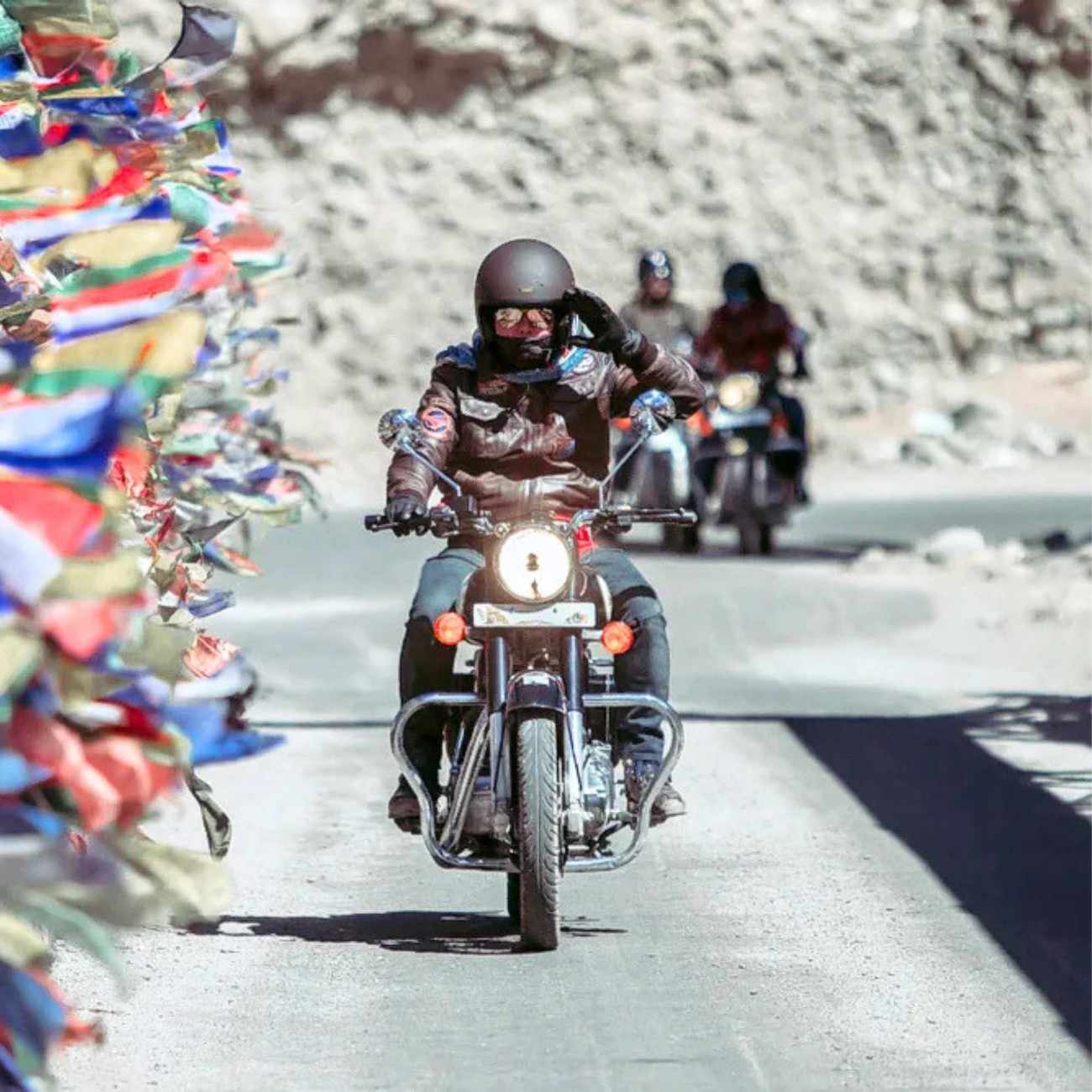
The full Spiti circuit by bike runs Delhi to Shimla to Narkanda to Sangla to Chitkul to Kalpa to Nako to Tabo to Dhankar to Kaza to Key to Kibber to Chicham to Langza to Hikkim to Komic to Losar to Kunzum to Chandratal to Batal to Atal Tunnel to Manali and back to Delhi.
Distances vary depending on where you start, which detours you take and where you stop overnight.
Do not trust Google Maps for time estimates on this route. A 100 km stretch can take 4 hours or 8 hours depending on landslides, water crossings and weather.
10 Day Spiti Bike Trip Itinerary: Best Full Circuit Plan
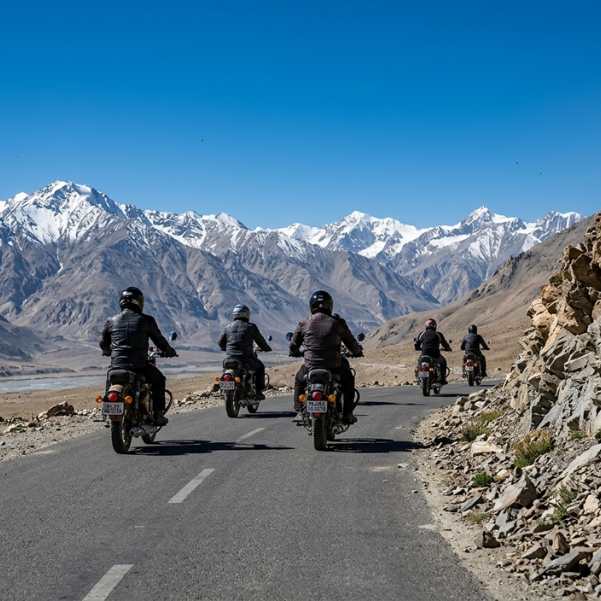
This is the plan we recommend to most groups we send on the Spiti circuit. It gives you proper acclimatisation, a Kaza buffer day, and enough margin to absorb a landslide or a closed pass without ruining your trip.
Day 1: Delhi to Manali by overnight Volvo, or own-bike riders reach Manali
Our Spiti bike expedition uses Delhi as the start and end point with overnight Volvo transfers, so riders are fresh when they reach Manali. If you are bringing your own bike, you can either ride up or transport it through a goods carrier.
Use Day 1 for the briefing, document checks, rest, and avoiding highway fatigue. A tired rider on Day 2 mountain roads is a bad combination.
Day 2: Manali to Jibhi
This is your warm-up mountain ride. The Manali to Jibhi stretch is roughly 100 km and 4 to 5 hours.
Use the morning for a proper bike check. Brakes, clutch, chain tension, tyre pressure, headlight, horn and luggage straps. Anything that feels off should get fixed in Manali, because the next mechanic might be two days away.
Jibhi is a soft landing into the mountains. Pine forests, a slow river and a valley that does not feel touristy yet. Many riders skip it, which is exactly why we keep it on the route.
If you want to read more about this stop, our Jibhi and Tirthan Valley page covers it in more detail.
Day 3: Jibhi to Sangla or Chitkul
This is one of the longer days of the trip. Jibhi to Sangla is roughly 230 to 250 km and usually takes 8 to 10 hours.
You cross Jalori Pass, drop down to Rampur, then enter Kinnaur after Karcham where the road takes a turn into the Baspa valley. The Karcham to Sangla stretch is narrow, cliffside and active with quarry trucks.
Reach Sangla before dark. Riding the Karcham-Sangla road at night with a fully loaded bike is the kind of thing our team simply does not allow.
Day 4: Sangla or Chitkul to Kalpa
A short day on the bike, which is the whole point. Sangla, Chitkul and Kalpa are roughly 90 km and 4 to 5 hours.
Use the morning for Chitkul, which is the last village on the Indian side of the Baspa valley. Then ride back through Karcham and climb up to Kalpa.
Kalpa sits across from the Kinner Kailash range. It is also a much smarter altitude transition before Spiti than pushing straight from Sangla to Tabo.
Day 5: Kalpa to Kaza via Nako, Khab and Tabo
This is a long, scenic and slow day. Kalpa to Tabo to Kaza are roughly 220 km and 7 to 8 hours.
You ride along the Sutlej, cross the Khab confluence where the Spiti river meets the Sutlej, then climb to Nako. From Nako, the green Kinnaur landscape ends and you enter the cold desert of Spiti.
Tabo is worth a one-hour stop for the monastery. Then push on to Kaza for the night. Plan your fuel carefully. The Kinnaur to Kaza stretch is long and there is no point gambling on a half-empty tank.
Day 6: Kaza local circuit: Key, Kibber, Chicham, Langza, Hikkim and Komic
Drop your luggage at the Kaza homestay and ride this loop with an empty bike. Kaza high-altitude circuit is roughly 45 to 60 km and 4 to 5 hours.
Key Monastery, Kibber village, Chicham bridge (claimed at 13,596 ft), Langza with its Buddha statue, Hikkim's old post office (claimed as the world's highest) and Komic.
Both rider and bike feel the altitude up here. Petrol bikes splutter, riders get short of breath, and helmets that were comfortable in Manali start to feel tight. Ride slow. Drink water.
For a fuller list of stops in this region, see our places to visit in Spiti Valley guide and our main Spiti Valley page.
Day 7: Buffer, Pin Valley, Dhankar or Kaza rest day
This single buffer day is what separates a good 10-day plan from a stressful 8-day one. Our Chandigarh to Spiti bike expedition includes Pin Valley, Dhankar monastery and the old fort village above it, or simply rest, do laundry, top up fuel, get your chain lubed and check the Kunzum and Chandratal road status.
In our experience, this is the day that ends up saving the trip. Landslides, road blocks and weather delays do not check your itinerary before they show up.
Day 8: Kaza to Chandratal via Losar and Kunzum Pass
Big day. Kaza to Chandratal is roughly 150 km and 5 to 6 hours, but distance varies depending on which Chandratal access track is in use that season.
After Losar, the road quality drops sharply. Kunzum Pass sits at 4,551 m or 14,931 ft, and the crossing is fully seasonal. On the Chandratal side, you turn onto the 14 km diversion road near Batal and slowly make your way towards the lake.
What we tell every rider on our trips is the same thing: Chandratal camping happens at the designated camping zone, not on the lake shore. You cannot pitch a tent next to the water. The walk from camp to the lake takes around 20 to 40 minutes.
For a full breakdown of dates, conditions and access, our Chandratal 2026 opening guide is a useful pre-trip read. If you want a ready package, the summer Spiti circuit with Chandratal covers this loop with stays already locked in.
Day 9: Chandratal to Manali via Batal, Gramphu and Atal Tunnel
This is one of the roughest sections of the entire ride. Chandratal to Manali is roughly 120 km and 6 to 7 hours.
Start early. Like 6 AM early. The water crossings between Batal and Gramphu get worse as the day goes on because snowmelt feeds them through the afternoon. A stream that was ankle deep at 8 AM can be knee deep by 2 PM.
After Gramphu, the road improves and the Atal Tunnel takes you back to Manali in less than an hour. By the time you park the bike, you will feel like you have aged five years and grown five years younger at the same time.
Day 10: Manali to Delhi or trip ends
Recovery day. If you are taking a Volvo back to Delhi, a hot shower, a proper meal and an early dinner is the right call.
Do not plan office for the next morning. We have seen too many riders push through and then sleep through a Monday.
Our full route is built into the Spiti bike expedition package, which is a 9 Nights / 10 Days plan starting and ending in Delhi.
👉 WhatsApp Travel Coffee for a complete Spiti bike expedition plan
8 Day Spiti Bike Trip Itinerary: Fast Full Circuit Plan
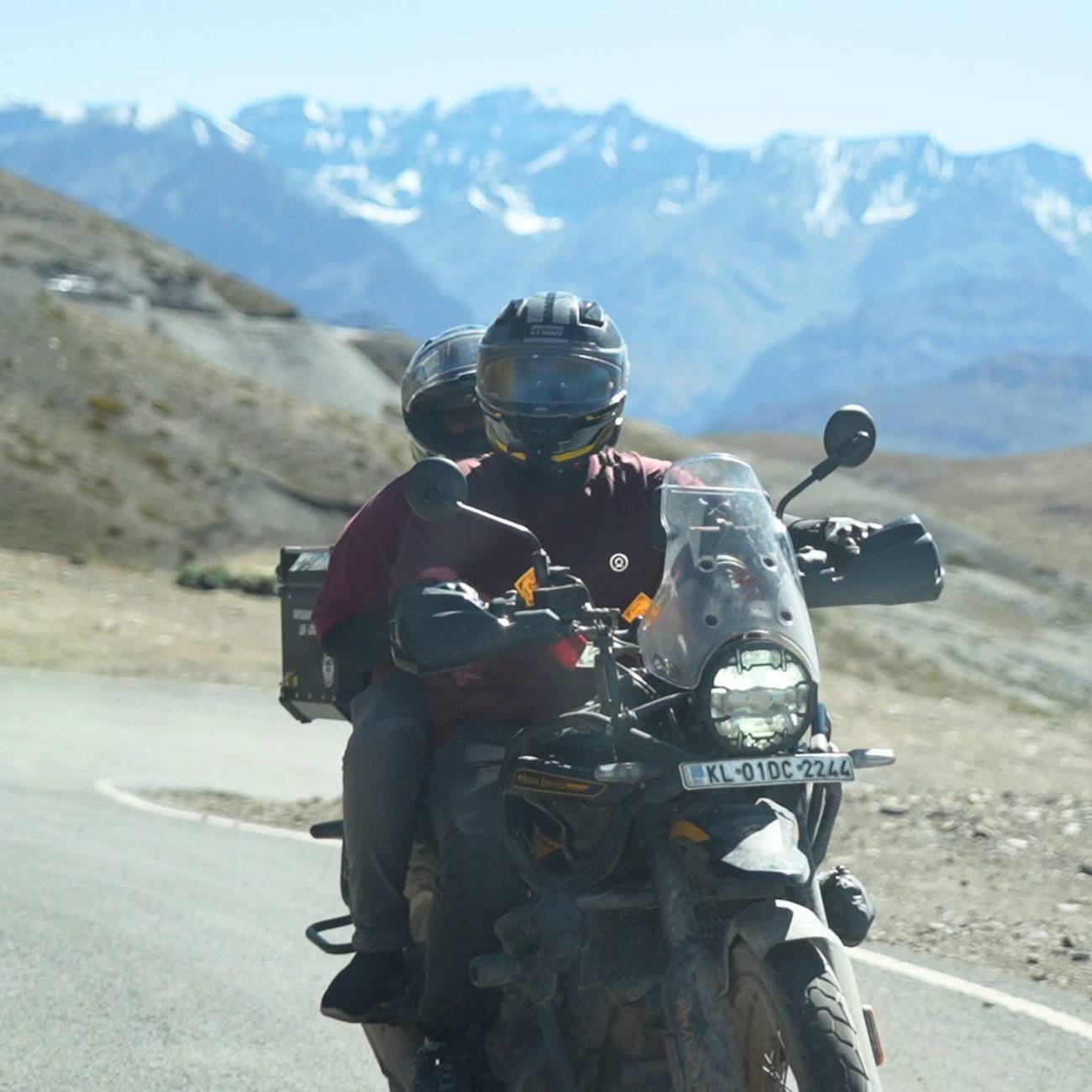
8 days works. It is just tighter. We usually run this version for experienced riders with limited leave who want the full circuit but cannot stretch to 10 days.
It works much better when you start from Chandigarh or Shimla, not Delhi. The Delhi to Shimla ride alone eats up an entire riding day, and that is a day you cannot spare on this plan.
Day 1: Delhi to Shimla or Narkanda overnight, or start from Chandigarh
Use the night to gain altitude before riding. If you are starting from Chandigarh, you can ride to Narkanda the same morning and save half a day.
Day 2: Narkanda to Sangla or Chitkul
A long Kinnaur day. Narrow roads, beautiful valleys, slow average speeds. Reach before dark, eat early, sleep early.
Day 3: Sangla or Chitkul to Kalpa
Half-day ride with a Chitkul morning. Same logic as the 10-day version, just slightly more compressed.
Day 4: Kalpa to Tabo or Kaza
Push for Kaza if your group is fit and the road is good. If anyone is feeling the altitude, halt at Tabo and continue the next morning.
Day 5: Kaza local high-village circuit
Empty-bike loop through Key, Kibber, Chicham, Langza, Hikkim and Komic. Same as the 10-day version.
Day 6: Kaza to Chandratal via Kunzum
Long, rough, beautiful. Treat it the same as Day 8 in the 10-day plan.
Day 7: Chandratal to Manali
The roughest day of the trip. Early start, plenty of water in the bottle, and your widest tyres on the front and rear.
Day 8: Manali to Delhi or trip ends
Volvo back, or own-bike ride down the highway.
What riders lose compared to the 10-day plan is real: no Pin Valley, no proper rest day in Kaza, and no buffer if a landslide closes the road for half a day.
If you want our team to plan an 8-day version with the right stays and route updates, the summer Spiti circuit with Chandratal page lists 7, 8 and 9 day options.
7 Day Spiti Bike Trip Itinerary: Only If You Know What You Are Doing
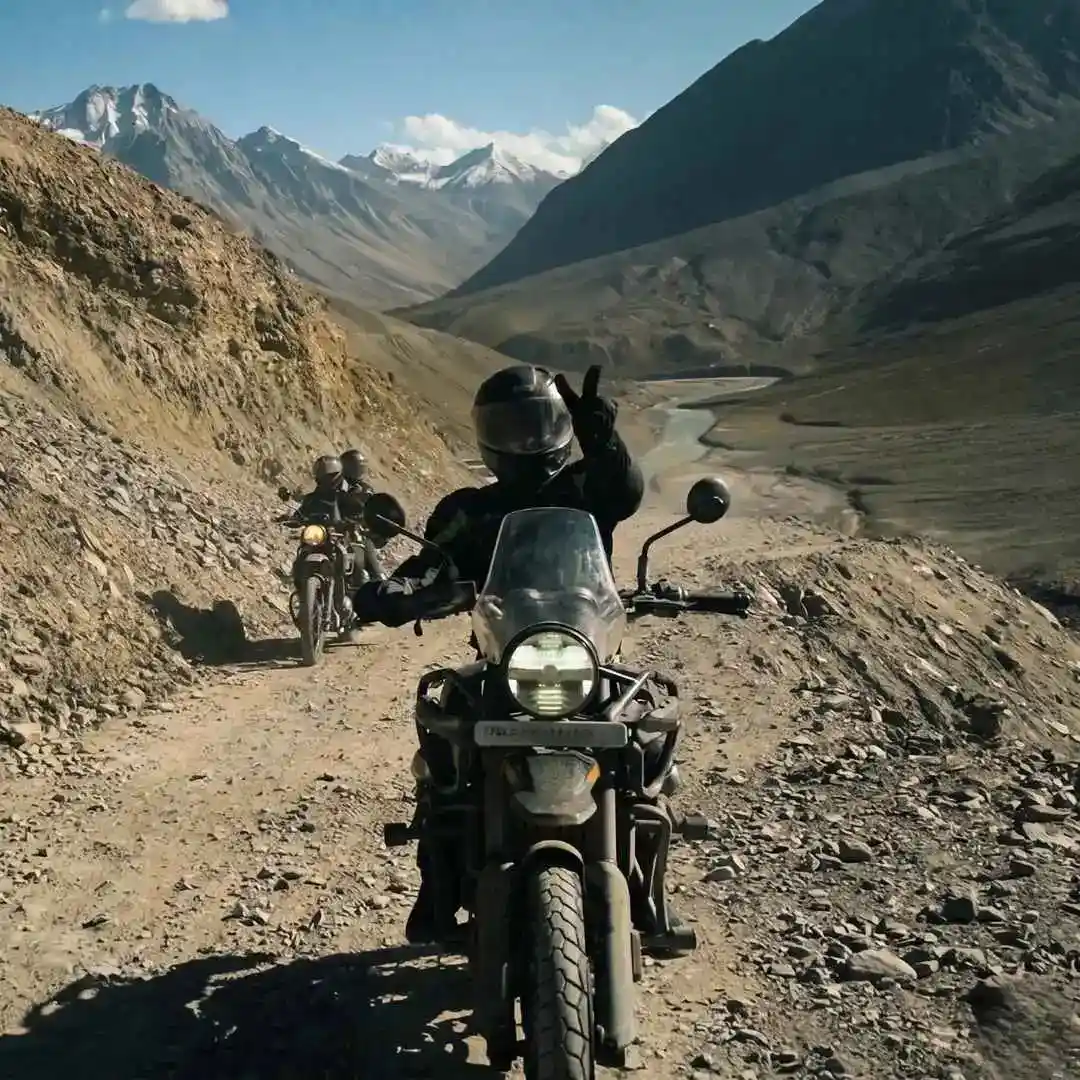
Honest answer first. 7 days is not ideal for a full Spiti circuit from Delhi. The roads, the altitude and the fuel gaps do not respect tight schedules.
What 7 days can work for is a Manali-side mini circuit after Kunzum Pass opens, or a fast Chandigarh-to-Manali loop for experienced riders.
Option A: 7 day Manali side mini circuit
Day 1: you reach Manali and use the evening for a briefing and acclimatisation.
Day 2: you ride from Manali to Kaza via the Atal Tunnel, Gramphu, Batal and Kunzum, which is a full hard day.
Day 3: is the Kaza local circuit.
Day 4: you ride from Kaza to Tabo, Dhankar or Pin Valley and back.
Day 5: you ride from Kaza to Chandratal.
Day 6: you ride from Chandratal to Manali.
Day 7: is your buffer day or departure.
For travellers with limited leave, our 7 Day Spiti Bike Trip From Manali follows this compact Manali, Sissu, Chandratal, Kaza and Kunzum format.
Option B: 7 day fast circuit from Chandigarh
Day 1: you ride from Chandigarh to Narkanda.
Day 2: from Narkanda to Kalpa.
Day 3: from Kalpa to Kaza.
Day 4: is the Kaza local circuit.
Day 5: from Kaza to Chandratal.
Day 6: from Chandratal to Manali.
Day 7: from Manali to Chandigarh.
A clear warning. Do not plan a 7-day Spiti bike trip if you are a beginner, if you have a pillion who is new to long rides, or if you are travelling before Kunzum and Chandratal are confirmed open.
This is also the version where most things go wrong, and our team often ends up rescheduling stays mid-trip.
7 vs 8 vs 10 Day Spiti Bike Trip: Which One Should You Pick?
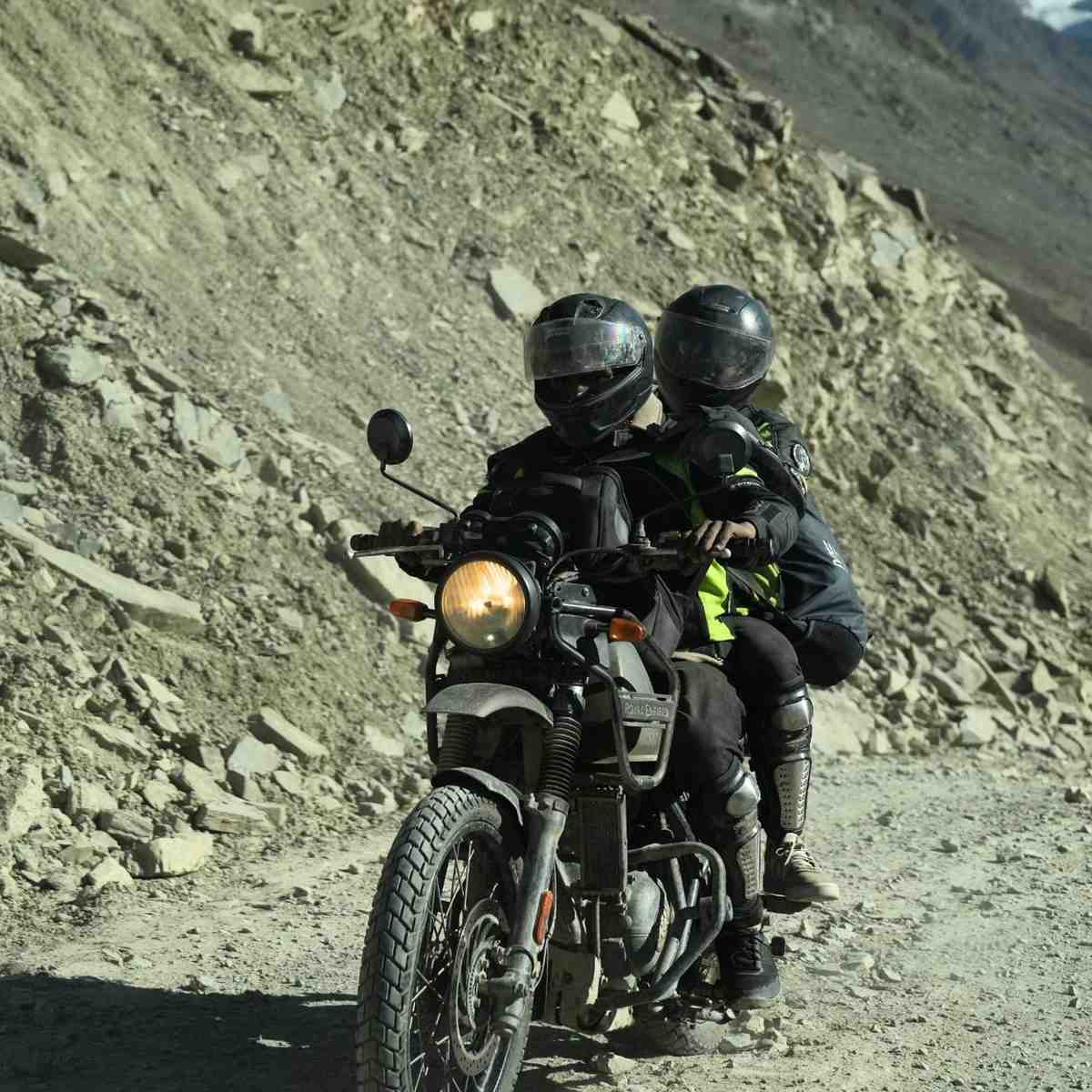
10 days is the safest and most complete plan. It is what we recommend to almost every group we book, especially for a first Spiti ride.
8 days is a practical compromise for riders who already know mountain roads and have done at least one high-altitude ride before. You lose the buffer day but keep the full circuit.
7 days should be treated as an advanced plan. It works in the right hands, but only with the right route, the right season and a serious attitude towards road safety.
If you have to pick blind, pick 10. The two extra days are cheap insurance for an expensive trip.
Best Time for a Spiti Bike Trip in 2026
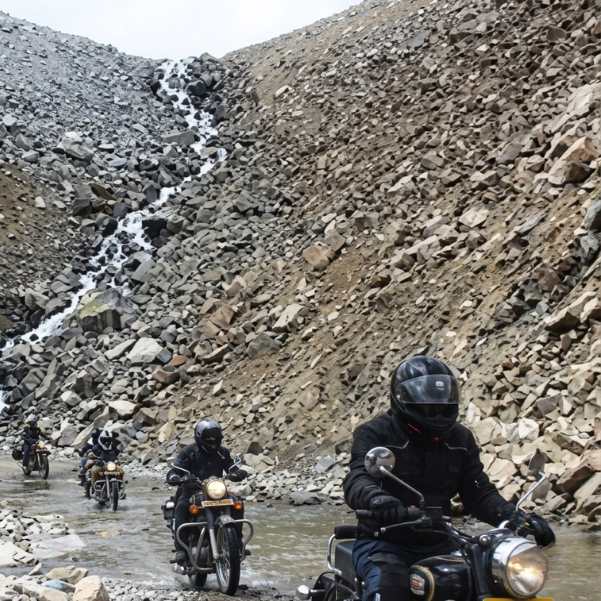
The practical full-circuit season is mid-June to September.
June and September are the sweet spots. June gives you snow walls near Kunzum, fewer crowds and dramatic landscapes. September gives you crisp air, clear lake reflections and the most stable road conditions of the year.
July and August can work, but the Kinnaur and Manali approaches face rain, landslides and unpredictable delays. The Spiti side itself stays relatively dry because of the rain shadow, but you have to get through the wet zones to reach it.
April and early May are not reliable for Kunzum and Chandratal. Plan a Shimla-only trip if you must ride in this window.
Road Conditions and 2026 Kunzum Pass Update
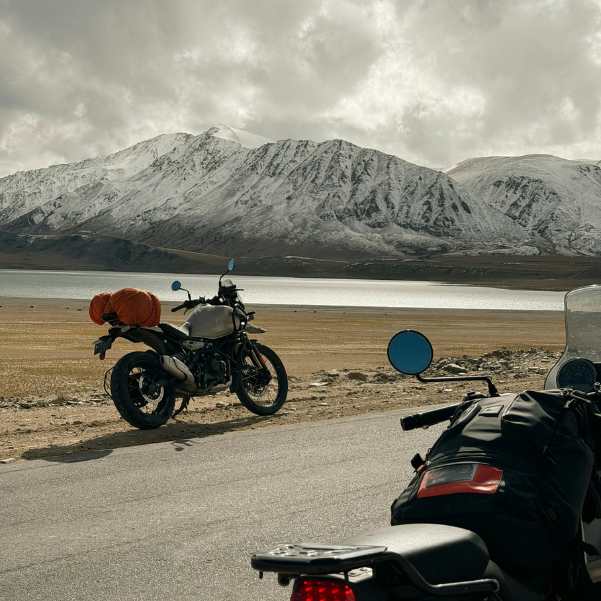
This is where blogs go stale fastest. Here is what we know as of recent updates.
The official Lahaul and Spiti district road status page, last updated 20 March 2026, showed Delhi to Manali open, Manali to Keylong open, Keylong to Kaza closed and Keylong to Leh open.
Recent road status information updated on 22 April 2026 showed that the Manali to Kaza route via Kunzum Pass was closed as of 21 April 2026.
The expected opening window for 2026 is mid-May to early June, depending on snow clearance and weather. The safer, more reliable crossing window for first-time riders is the second week of June onwards.
The bottleneck is the Gramphu to Batal to Kunzum stretch. Even when Kaza is reachable from the Shimla side, this stretch can stay closed for another two to four weeks.
Skip this trap. Do not plan a Manali entry in early June assuming Kunzum will open in time. We have seen too many groups stuck in Manali waiting for a road that opened five days after their flight back home.
Permits and Documents for Spiti Bike Trip
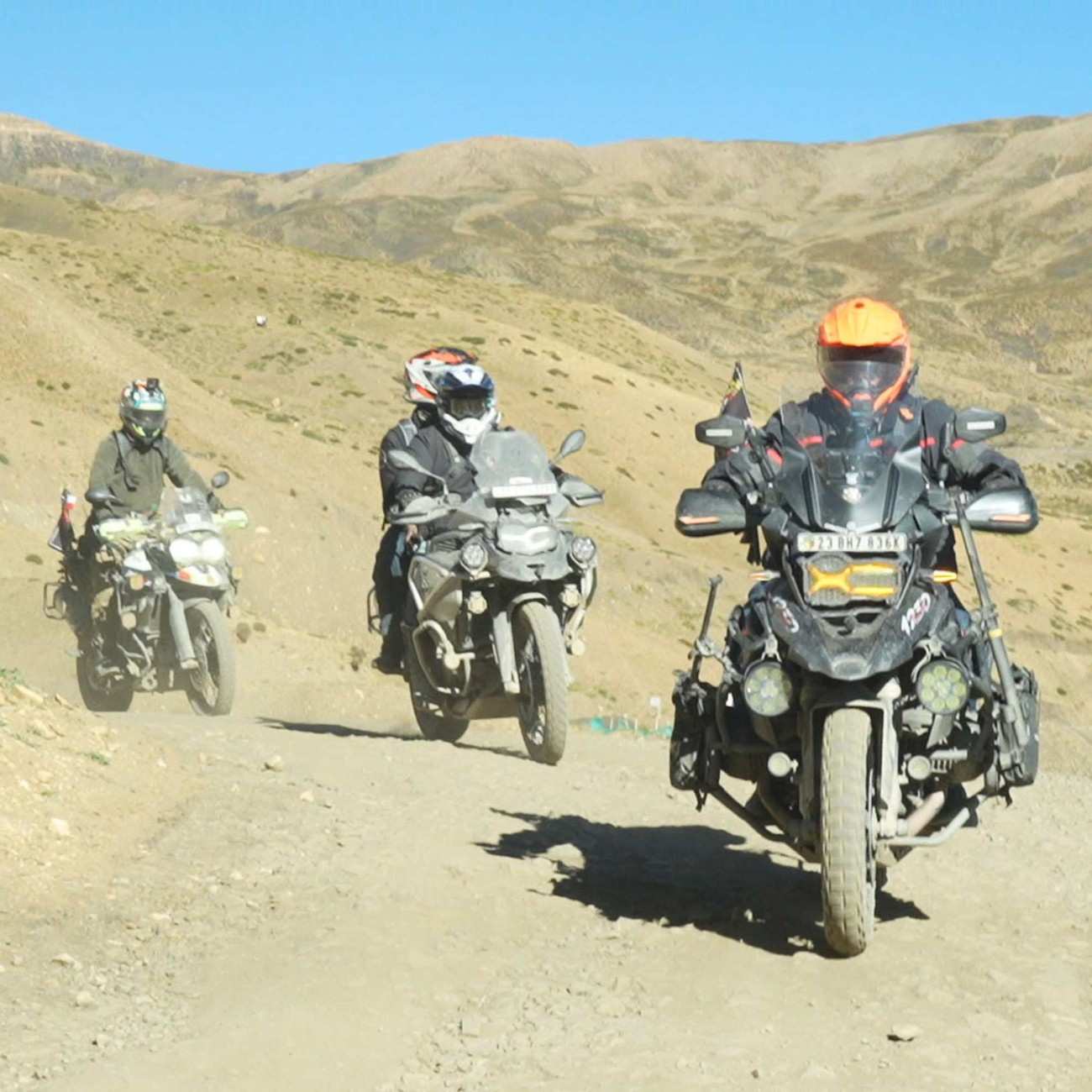
Indian citizens do not need an Inner Line Permit (ILP) or Protected Area Permit (PAP) for normal Spiti tourism. This is the single biggest source of confusion on travel forums.
Indian citizens should carry a valid photo ID. Foreign nationals may need a Protected Area Permit for restricted or protected areas, which is a separate process.
The Rohtang or Beyond Rohtang permit is a vehicle permit issue and only applies if you are crossing via that route. Most riders today use the Atal Tunnel, which has its own rules.
e-Aagman is a vehicle entry registration system for Lahaul and Spiti. It is not an ILP or PAP substitute. It is a separate vehicle entry record.
SADA is a local development fee collected at barriers. The reported two-wheeler fee is around ₹100 since these can change without notice.
Documents to keep on you at all times: driving licence, RC, insurance, PUC certificate, Aadhaar or voter ID or passport, emergency contacts and a written copy of any medical prescription.
A money-saving tip our drivers always share
Keep digital copies on your phone, but also carry physical photocopies. At checkpoints with no signal, the photocopy is what gets you through in five minutes instead of fifty.
Before you ride, also check our Kunzum Pass in May guide for early season road conditions and our Spiti Valley permit guide for the latest permit and document details.
Petrol Pumps and Fuel Planning on Spiti Bike Route
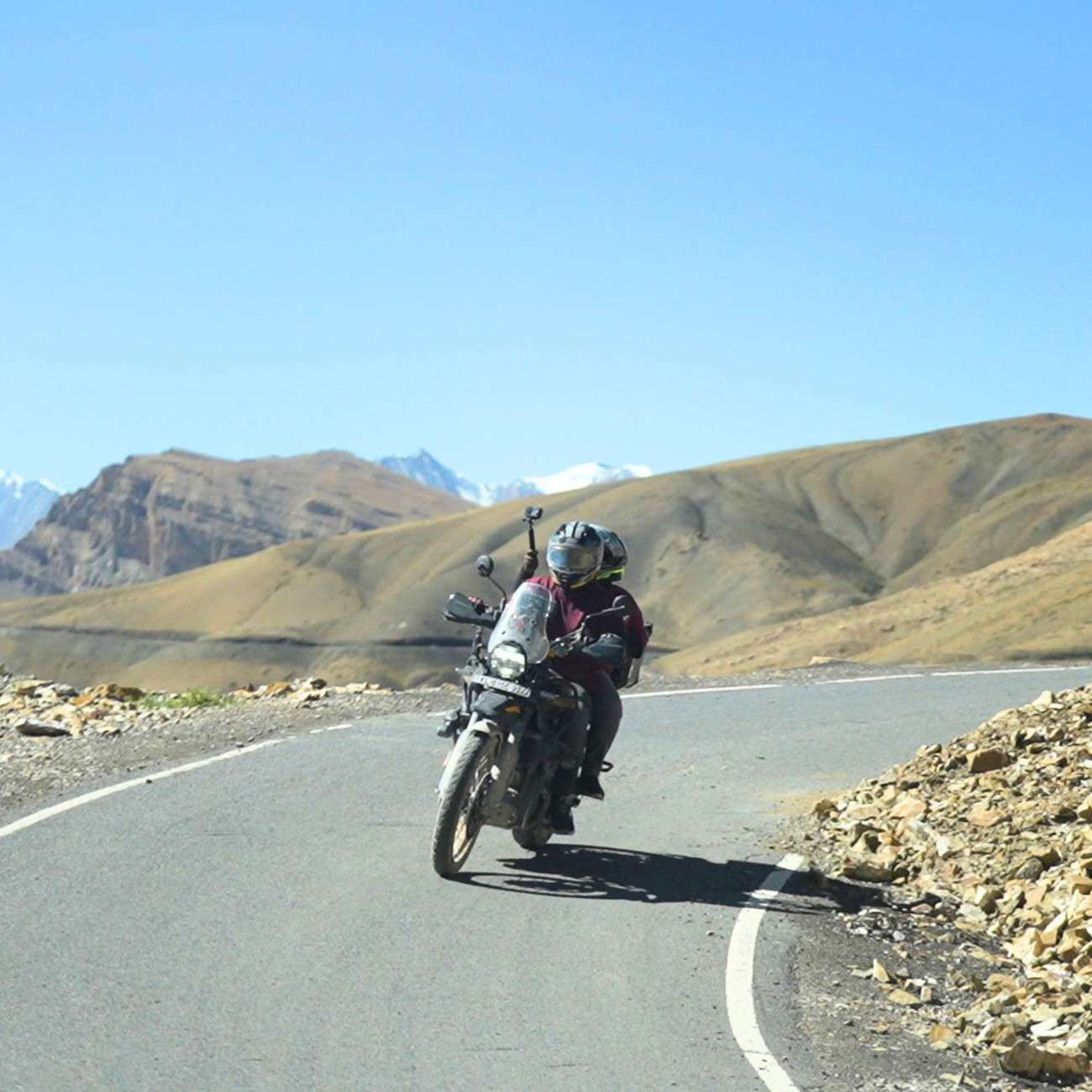
Fuel logic is the single most ignored part of a Spiti bike plan. Get this wrong and you are pushing your bike on a slope at 4,000 metres.
On the Shimla-Kinnaur side, fuel stops include Shimla, Narkanda, Rampur, Tapri, Reckong Peo, Pooh and Kaza.
There is no petrol pump between Manali and Kaza via Kunzum. None. Carry extra fuel.
A 5 to 10 litre jerry can is what we hand to every rider on our expeditions. It covers the Manali-Kaza stretch with margin.
Never leave Kaza with a half-empty tank. Top up the moment you reach. During peak season, the Kaza pump runs out of stock for hours, and you do not want to find that out at 6 AM the next morning.
Top up fuel at Reckong Peo even if you do not feel like it. The Pooh pump is small and frequently dry.
Spiti Bike Trip Cost in 2026
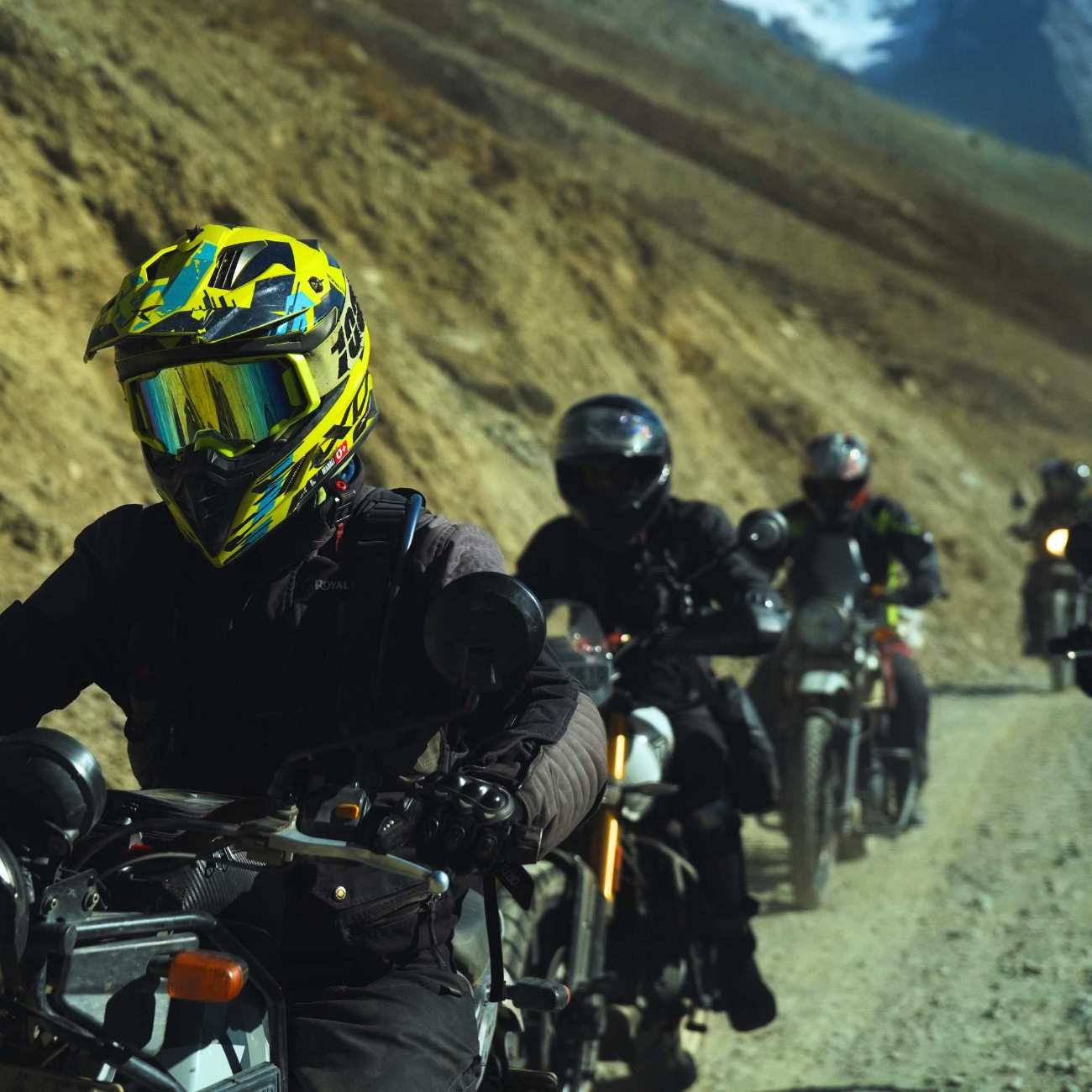
Real costs vary a lot depending on whether you ride your own bike, rent one, share a room or want a private one. Here is what the data tells us.
Recent Spiti bike budget estimates place a 10 day own bike trip around ₹18,000 to ₹32,000, while a rental bike trip for the same duration can go around ₹33,000 to ₹57,000.
Fuel is often estimated around ₹7,500 to ₹8,500 for 2,200 to 2,400 km at 30 kmpl with a safe buffer price of ₹105 per litre.
Current Himachal petrol prices are closer to ₹94 to ₹95 per litre, so your actual fuel cost may be slightly lower, but keeping an extra buffer is smart for mountain routes.
Budget homestays and guesthouses usually sit around ₹500 to ₹1,500 per night, while mid range hotels can cost around ₹1,500 to ₹3,000 per night.
A Royal Enfield Himalayan rental in Manali is commonly listed around ₹1,500 to ₹2,500 per day, depending on season, bike condition, and operator.
Travel Coffee’s Spiti Valley bike tour packages start from ₹25,999 per adult, though prices vary by duration, route, batch and availability.
Bike, Gear and Packing Checklist for Spiti
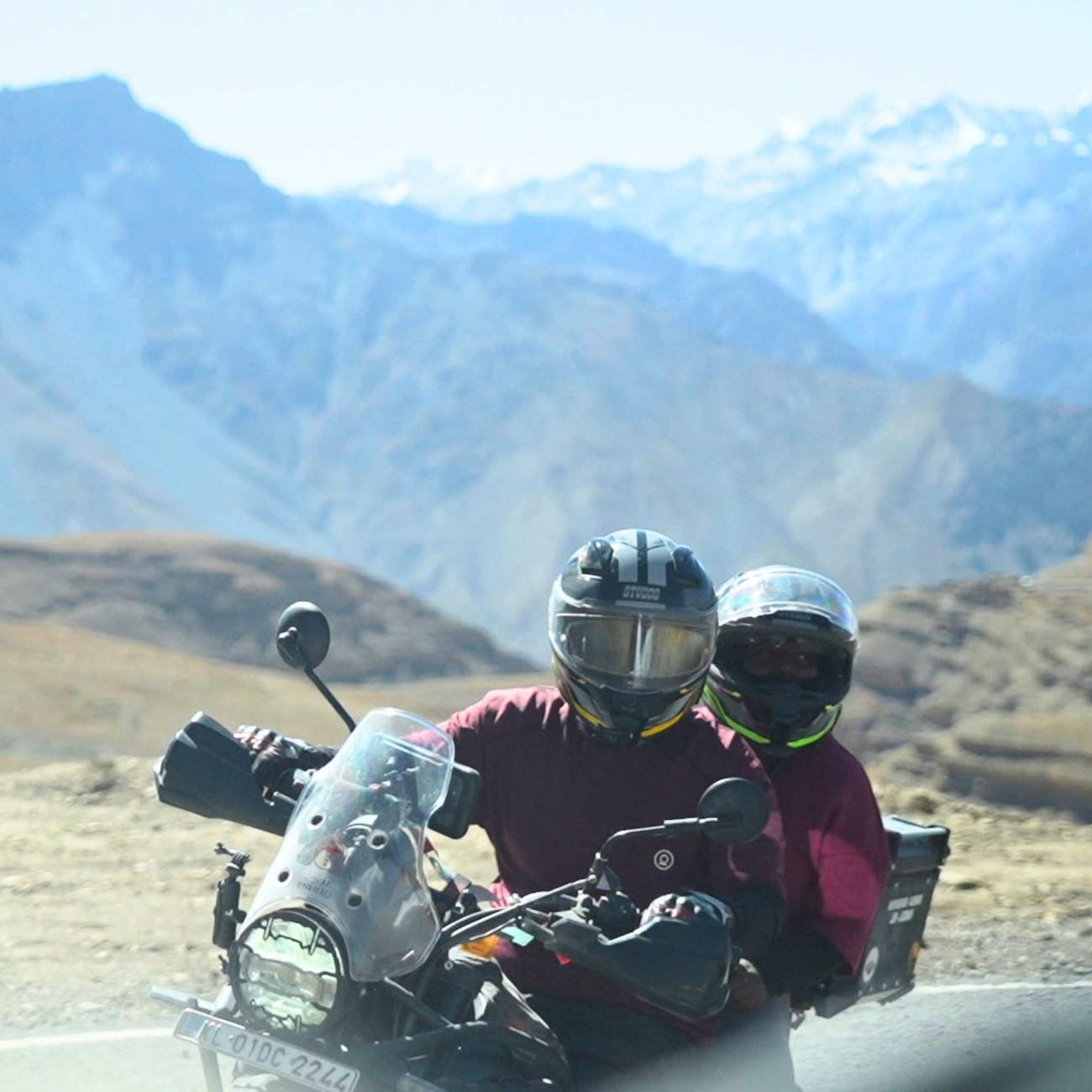
The single best bike for Spiti is the one you already know how to ride.
Bikes commonly used on this circuit include the Royal Enfield Himalayan, Scram, Classic and Bullet 350, Hero Xpulse, Bajaj Dominar, KTM Adventure and the Honda CB350. Each has trade-offs.
The Himalayan and Xpulse handle rough terrain well. The Classic 350 is comfortable but heavy. The KTM Adventure is fast but unforgiving.
What matters more than the model is whether you have ridden the bike for at least 1,000 km before this trip. Spiti is a bad place to learn a new clutch.
For gear, the must-haves are a full-face helmet, riding gloves, a riding jacket with armour, knee guards, a rain layer, thermals, sturdy waterproof riding shoes and a buff.
Tools and spares. A puncture kit, a spare clutch wire, chain lube, a few extra bungee cords, basic spanners and a tyre pressure gauge.
Other essentials. A power bank, offline maps downloaded for the entire route, basic medicines including paracetamol and antacid, ORS sachets, sunscreen and sunglasses with proper UV protection.
In our experience running expeditions, the most common packing mistake is overstuffing the tank bag and underloading the saddle bags. It throws off the balance of the bike on rough roads.
For riders who want help beyond just a checklist, our Lahaul and Spiti bike tour includes planned halts, road support, route guidance, and a Spiti riding experience designed for real mountain conditions.
Common Mistakes Riders Make on Spiti Bike Trips
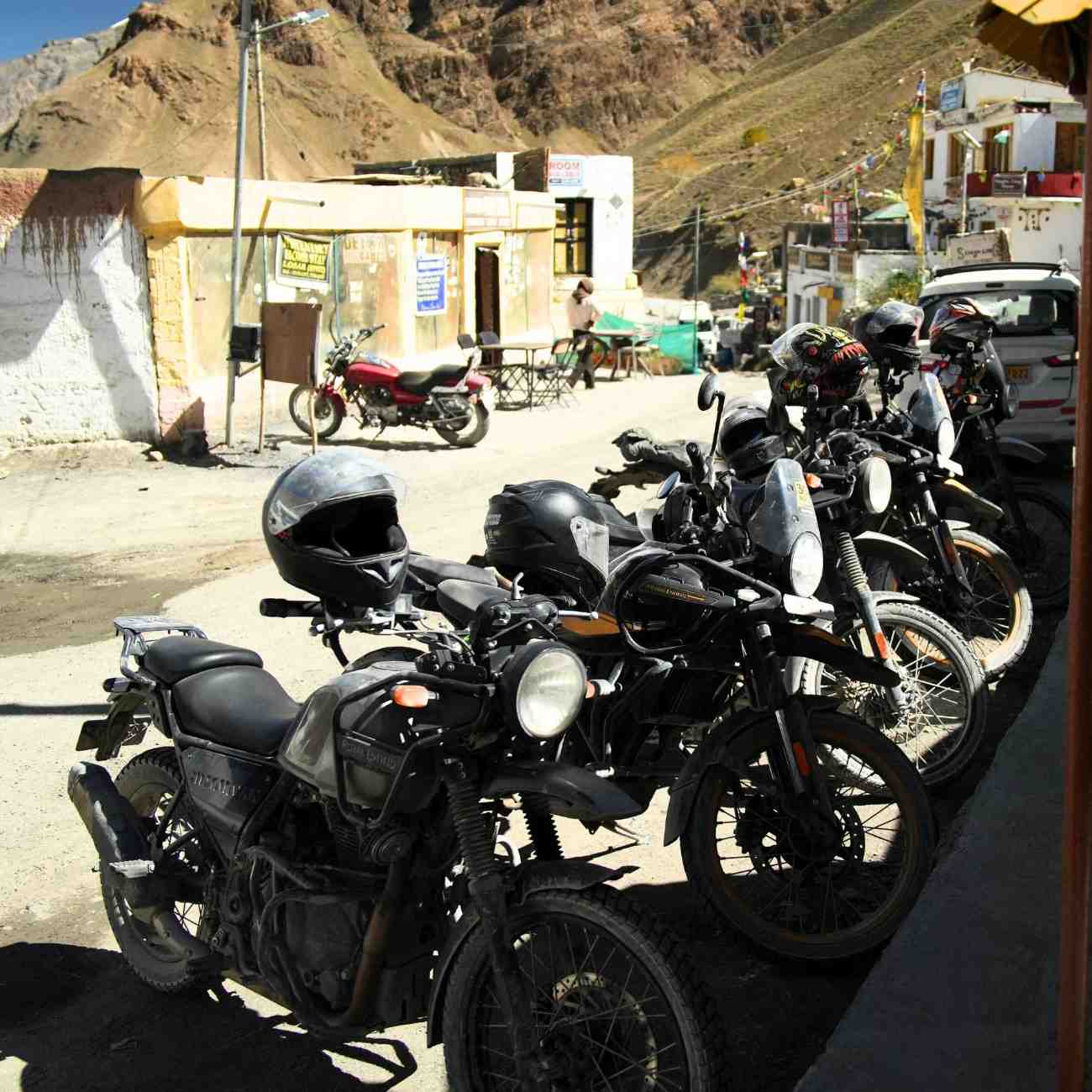
The most common one is starting the trip from Manali too early in the season. The Manali side is the last to open every year, and groups that book flights to Bhuntar in early June often end up turning back.
Riding after dark on the mountain road. Visibility drops, fatigue stacks up, and a small slip becomes a serious problem. Our drivers always remind riders to plan every day to end before sunset.
Ignoring AMS. Headache, nausea, dizziness or breathlessness are not "I'll be fine" symptoms at 4,000 metres. If anyone in your group shows signs, descend.
Underestimating fuel gaps. Every season, someone in our area runs out of petrol between Batal and Manali. A jerry can prevent this.
Planning 7 days like a normal hill trip. It is not. Spiti distances on Google Maps are lies.
Carrying luggage tied to the back seat instead of in saddlebags or a tail bag. It shifts your centre of gravity backwards, which is exactly wrong for steep climbs.
Not checking Kunzum or Chandratal status before leaving Manali. Both can change overnight.
The food tip we share with every rider. The dhabas at Batal serve hot dal, rice and chai right through the season once the road opens. It is the last hot meal before the Chandratal stretch and the first one after. Stop there. Tip the people running it.
Should You Do Spiti Bike Trip Solo or With a Guided Group?
Both work. The right answer depends on your experience and your appetite for risk.
Solo gives you full freedom on the route, the pace and the stops. The trade-off is that no-network zones cover most of the circuit, so a breakdown or a fall can become serious very fast.
Guided groups bring a road captain, a backup vehicle, a mechanic, oxygen support, pre-booked stays, daily route updates from local contacts and people who know which checkpoint is in a bad mood that week.
We are based in Himachal, our crew is local, and our routes are tested every season. If you want a planned Spiti bike trip with the safety net of a Himachali team, you can reach us through WhatsApp.
👉 WhatsApp Travel Coffee for bikes, permits, and route support
Explore Our Handpicked Spiti Valley Bike Trips
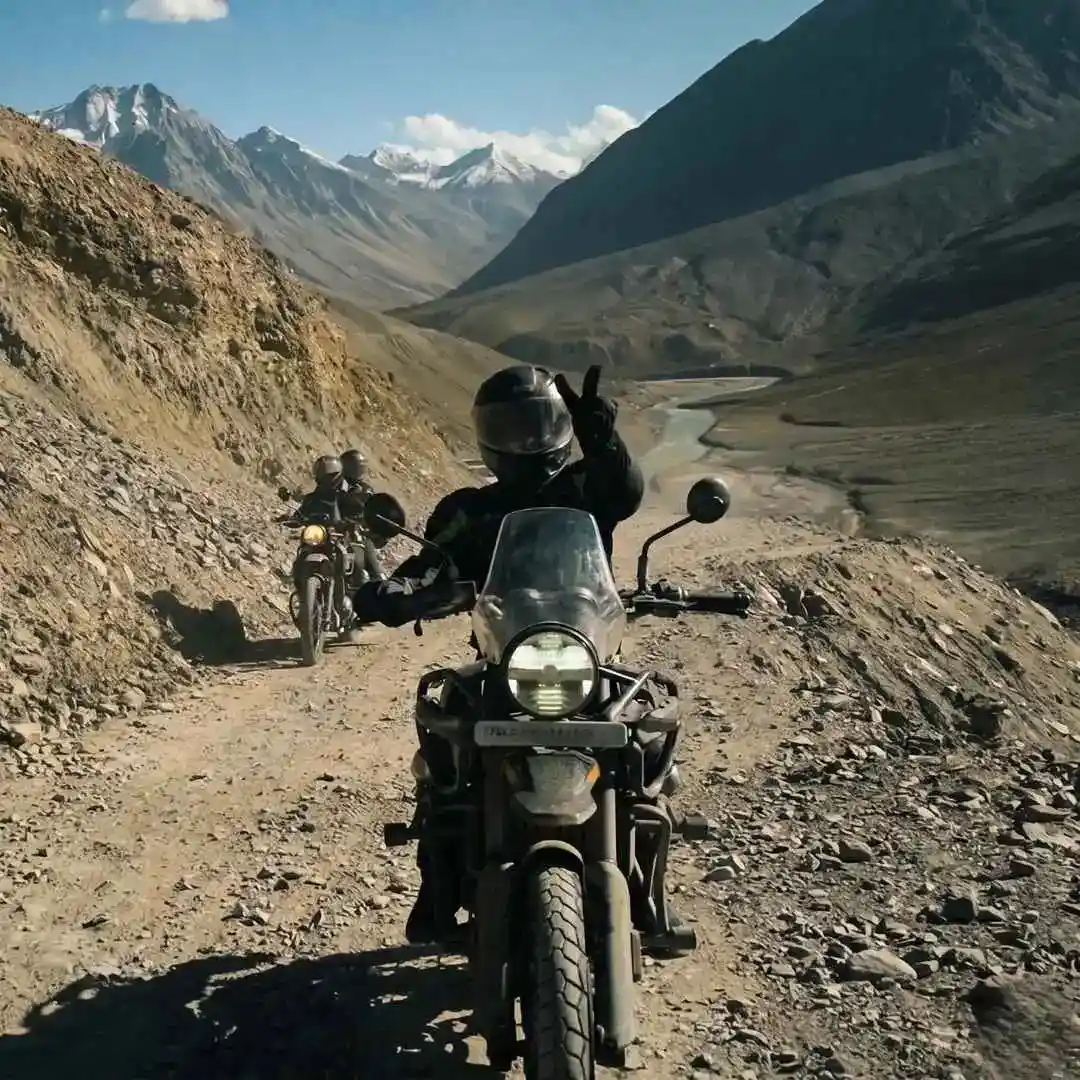 Group Tour7D/6N
Spiti Bike Trip From Manali With Chandratal
1D Sissu•1D Chandratal Camp+1
₹25,999₹29,999SAVE INR 4,000/ person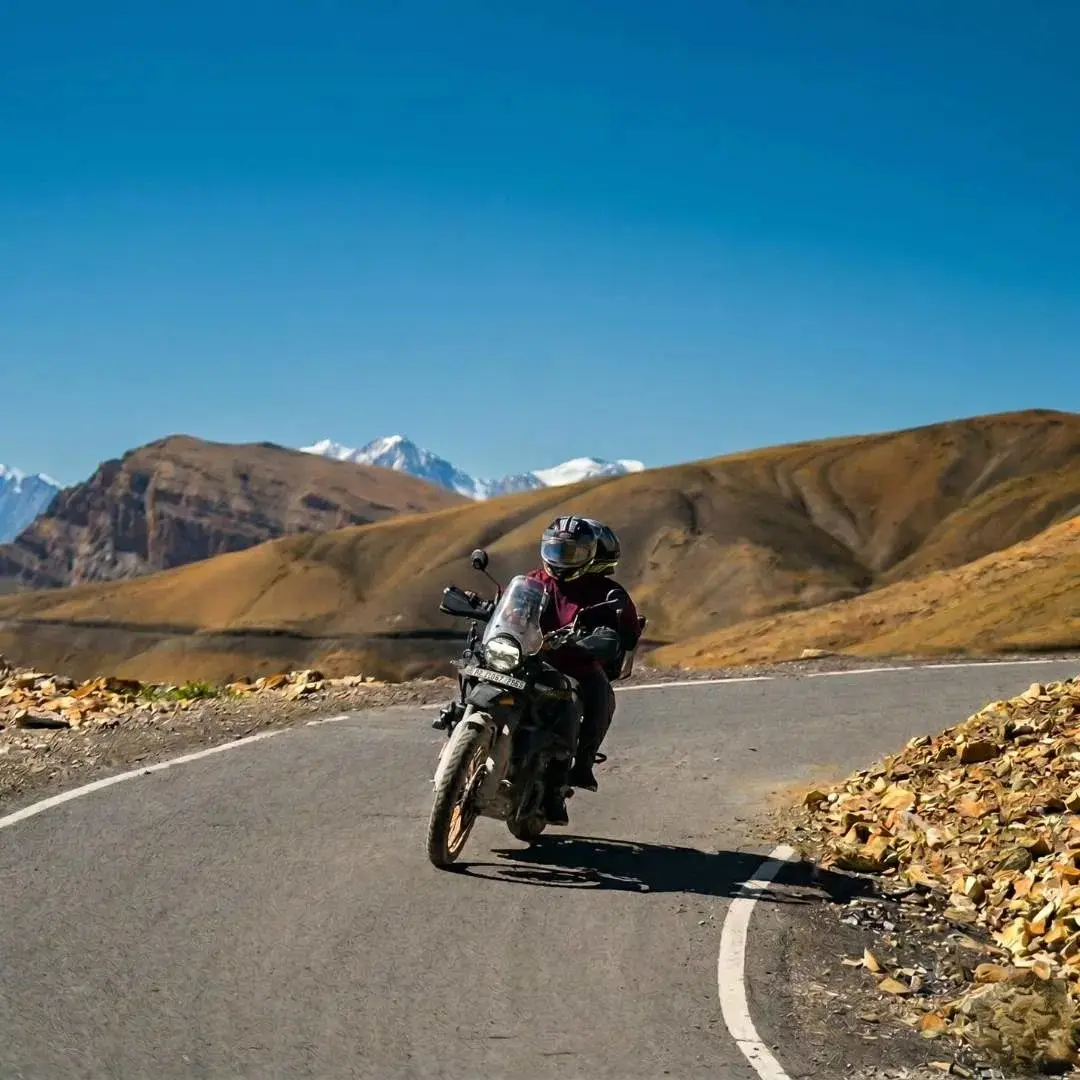 Group Tour11D/10N
Ultimate Spiti Valley Bike Expedition With Chandratal and Pin Valley
1D Narkanda•1D Sangla / Baspa Valley+5
₹32,999₹39,999SAVE INR 7,000/ person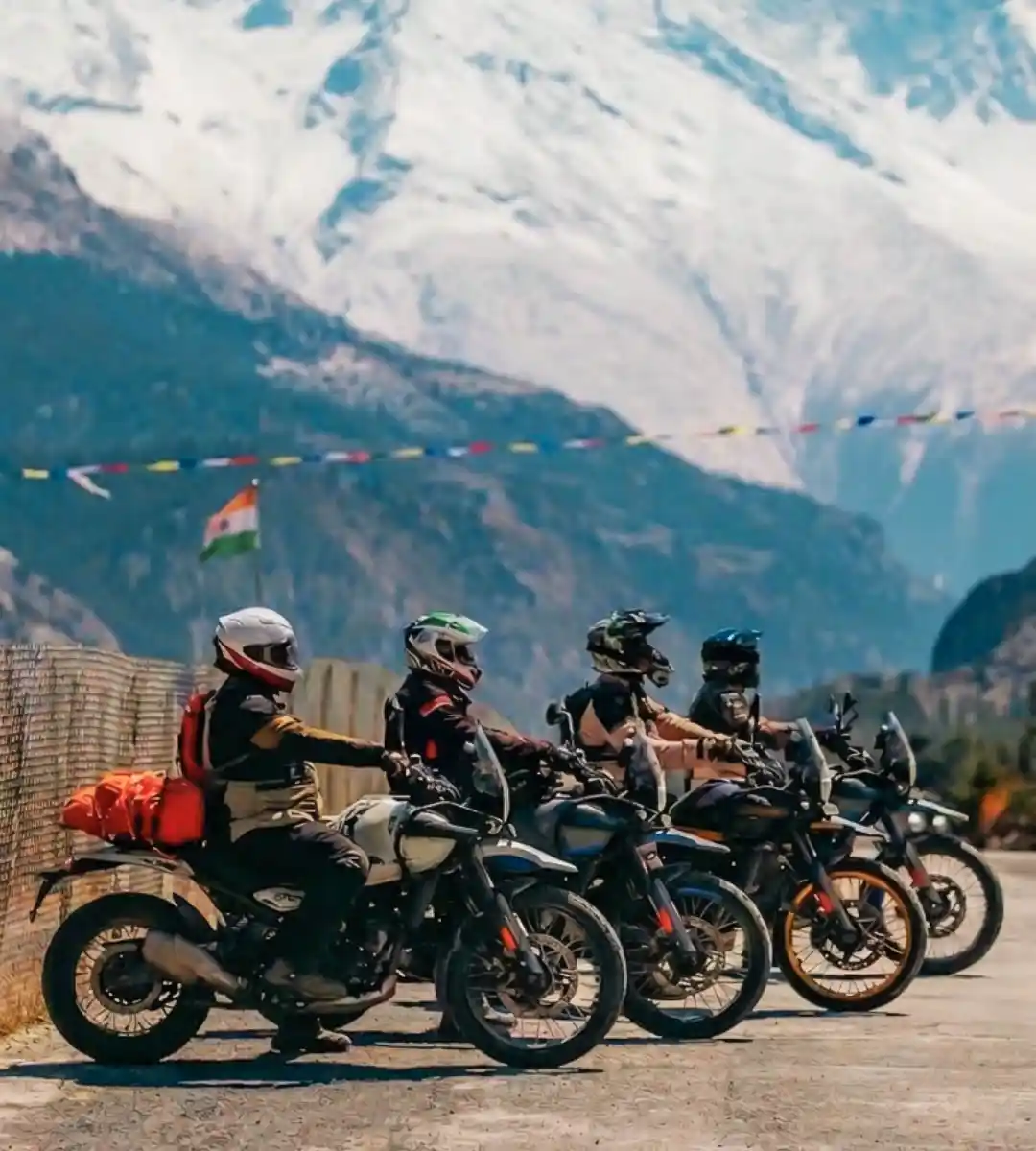 Group Tour10D/9N
Most Loved Spiti Valley Bike Expedition With Chandratal
1D Jibhi•1D Sangla+4
₹34,999₹41,999SAVE INR 7,000/ person
Related topics
Frequently Asked Questions
How many days are enough for a Spiti bike trip?
10 days is the comfortable answer for most riders. 8 days works if you are experienced and start from Chandigarh. 7 days is rushed and only suits advanced riders or short Manali-side circuits.
What is the best route for a Spiti Valley bike trip?
The full circuit. Enter from Shimla or Kinnaur, ride to Kaza, cross Kunzum, camp near Chandratal, and exit through Manali. The gradual altitude gain makes acclimatisation much easier.
Is 7 days enough for a Spiti bike trip?
Not for a relaxed full circuit from Delhi. 7 days only works for a Manali-side mini circuit after Kunzum opens, or a fast Chandigarh-to-Manali loop for experienced riders.
Which is better for Spiti by bike, Shimla route or Manali route?
The Shimla route for first-timers because of better acclimatisation. The Manali route is shorter but harsher and only works after Kunzum is fully open.
Can beginners do a Spiti bike trip?
Yes, with caution. Pick the 10-day Shimla route, ride within your limits, and consider going with a guided group your first time. Avoid the Manali side as your entry point.
Which bike is best for a Spiti Valley bike trip?
The bike you already know well. Common choices include the Royal Enfield Himalayan, Scram, Classic 350, Hero Xpulse, Bajaj Dominar and KTM Adventure. Familiarity matters more than the model.
What is the cost of a Spiti bike trip?
A 10-day own-bike trip is estimated at ₹18,000 to ₹32,000. A rental-bike trip is estimated at ₹33,000 to ₹57,000. Travel Coffee's Spiti bike expeditions start from ₹25,999.
Do Indians need a permit for Spiti Valley?
No ILP or PAP for Indian citizens for normal Spiti tourism. Carry a valid photo ID. Foreign nationals may need a PAP for some restricted areas.
Is Chandratal included in the Spiti bike circuit?
Yes, in season. Chandratal is part of the standard full circuit between Kaza and Manali, and camping happens at the designated camping zone, not at the lake shore.
Is the Manali to Kaza road open in 2026?
As of the road-status updates available in March and April 2026, the Manali to Kaza road via Kunzum was still closed. Expected opening window is mid-May to early June, weather dependent. Always reverify before you travel.
Where are petrol pumps available on the Spiti bike route?
On the Shimla-Kinnaur side: Shimla, Narkanda, Rampur, Tapri, Reckong Peo, Pooh and Kaza. There is no pump between Manali and Kaza via Kunzum, so carry a 5 to 10 litre jerry can.
Is it safe to ride solo to Spiti Valley?
It can be, with the right preparation. The bigger risk is no-network zones rather than bad people. A guided group adds backup support, mechanics and oxygen, which solo riders have to arrange themselves.
More about Lahaul and Spiti
 Lahaul and Spiti
Stargazing in Winter Spiti 2026: Where to Stay, Moonlight and What You Can See
Discover the best places for stargazing in Winter Spiti 2026, where to stay for darker skies and how moonlight affects visibility. Learn what you can realistically see from Kaza, Tabo and nearby villages during the winter months.
- Things to Do
- Snow Travel
 Lahaul and Spiti
Joining a Winter Spiti Group in 2026: Room Sharing, Privacy and Group Expectations
Planning to join a Winter Spiti group in 2026? Learn how room sharing works, what privacy to expect, options for solo travellers and couples, and when a single room supplement may apply.
 Lahaul and Spiti
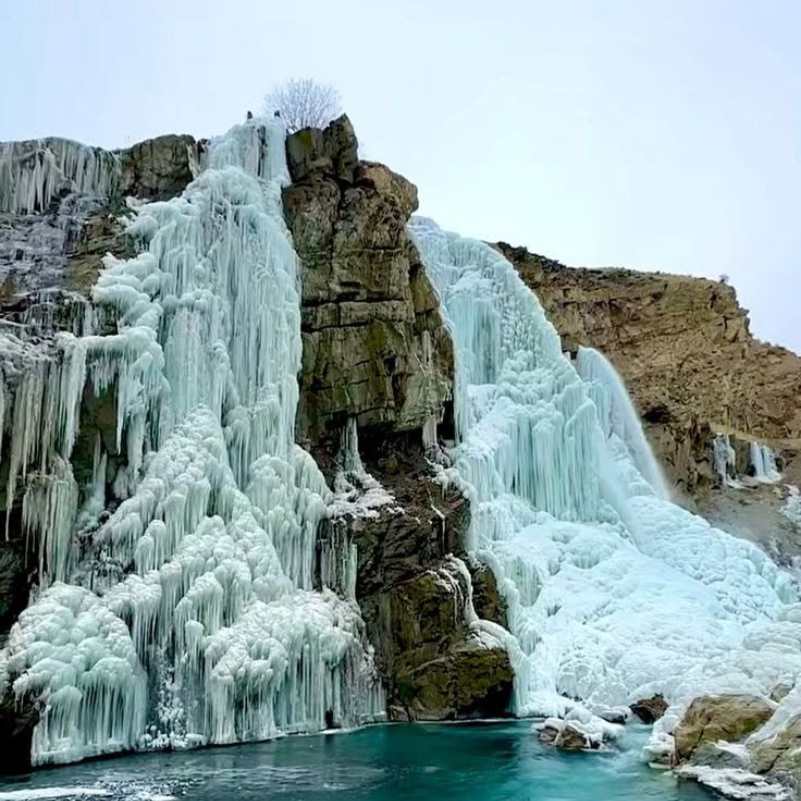
Lingti Frozen Waterfall in Winter 2026-27: Access, Photo Stops and What to Confirm
Plan your visit to Lingti Frozen Waterfall in winter 2026-27 with practical details on access, road conditions, the best photo stops and seasonal conditions. Learn what to confirm before leaving Kaza and how to visit this spectacular frozen waterfall safely.
- Places to Visit
- Snow Travel