
Solo Trip to Spiti in Winter 2026-27: DIY vs Group Tour, Safety, Budget & Transport
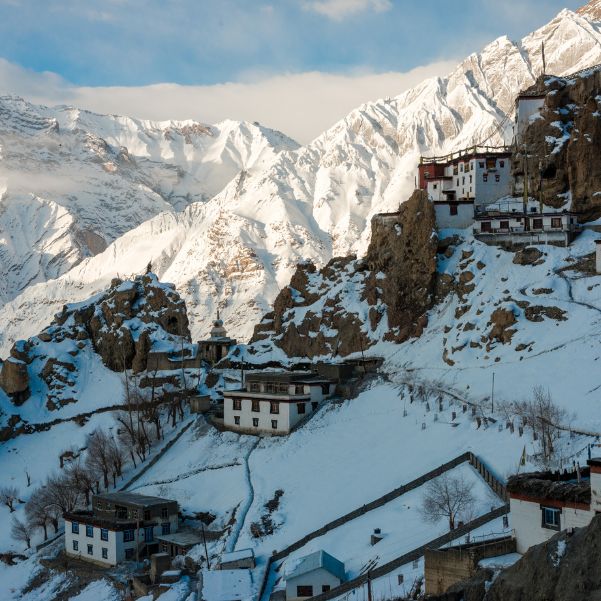
A solo trip to Spiti in winter sounds like the kind of adventure you remember for years. Empty roads, snow covered villages, quiet monasteries and the freedom to travel at your own pace.
But winter changes the rules. Buses are limited, shared taxis are less predictable, many stays close for the season and a simple roadblock can leave you stuck far longer than expected.
That is why the real question is not just whether you can travel solo to Spiti in winter. It is whether you should plan it completely on your own, join a fixed departure group, or use a mix of public transport and local taxis.
This guide by Travel Coffee breaks down the practical side of a solo Winter Spiti trip in 2026 and 2027. We will cover safety, transport, realistic budgets, DIY travel, group tours and the situations where paying for more support can make your trip much easier.
Quick Answer
A solo trip to Spiti in winter is possible, sometimes even on public transport when buses run, but it demands real flexibility.
The practical winter route runs through Shimla and Kinnaur to Kaza and back the same way, because the Manali side stays shut.
DIY suits experienced, flexible travellers. A fixed-departure group is more practical for first-time winter travellers, first-time Spiti visitors, and anyone with fixed return dates.
If you want the trip handled for you, look at our Winter Spiti tour packages before you lock dates.
What Is a Solo Trip to Spiti Actually Like in Winter?

Winter Spiti is not the summer circuit with snow added. It is a different trip with different rules.
The cold sits at a level most first-timers underestimate. Official tourism information says December to February temperatures in parts of Spiti can fall to around minus 20 degrees Celsius. That kind of cold freezes plumbing, so many stays switch to bucket water or dry toilets.
Accommodation shrinks. A lot of hotels close or run at half strength. Homestays become the base you actually plan around.
Daylight is short, so your usable travel window each day is smaller than you expect. High-village roads depend entirely on recent snow. And the itinerary you booked can change on the ground.
Our current winter departures run December through March, and those months are not identical. Early December often looks different from deep January, and March starts easing. Do not assume one snow picture across the whole season.
Here is the point most people miss
Reaching Kaza does not mean every sightseeing road above it is open. You can be sitting in Kaza with the Key Monastery road blocked. That gap between "I made it" and "I can see everything" is the whole story of Winter Spiti.
Is It Safe to Travel Solo to Spiti in Winter?
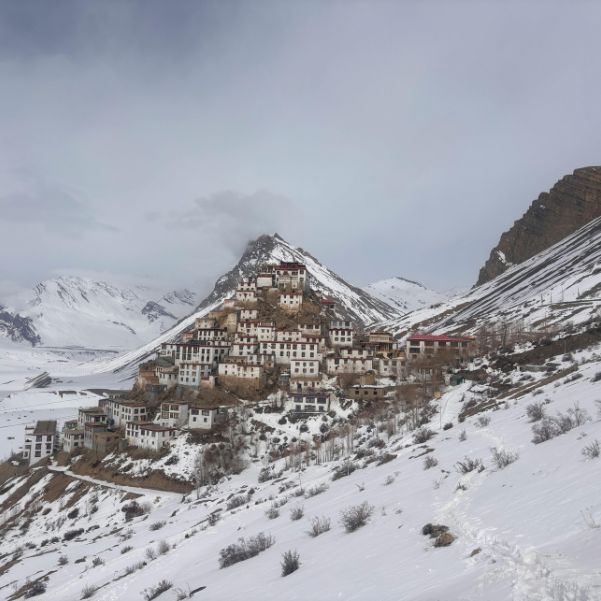
Social safety versus winter safety
Let us separate two things people mix up.
Winter Spiti is not "100% safe" and nobody honest will tell you it is. But the risks that should worry a solo traveller are not what most people assume.
Your real concerns are altitude, extreme cold, road closures, isolation, cancelled transport, and what happens when a planned connection simply does not run.
A cancelled bus hits one traveller harder than a group. When four people miss a bus, they split a replacement cab. When you are alone, you either wait, pay for the whole vehicle yourself, or find strangers fast. That maths matters more in winter than any other season.
Is Winter Spiti suitable for a solo female traveller?
Yes, with qualifications.
A prepared, experienced solo woman can travel Winter Spiti. But it is not the gentlest choice for a first Himalayan winter trip. The difficulty here is logistics and cold, not the social environment.
Book verified accommodation ahead. Arrive in daylight where you can. Share your full itinerary with someone at home.
Check in regularly. And always know your next transport and your next stay's contact before you leave the place you are in. That last habit saves solo travellers more trouble than anything else.
For a deeper read on the social side, see our guide on whether Spiti Valley is safe for solo female travellers.
Which Route Is Open for a Solo Winter Spiti Trip?

Winter routing is simple to state and important to get right. You go Shimla → Kinnaur → Reckong Peo → Nako → Tabo → Kaza, and you return the same way.
The official District Lahaul and Spiti website puts Shimla to Kaza at 412 km and describes the journey as roughly 20 hours excluding one overnight halt. It calls this an almost all-weather road.
Read "almost all-weather" carefully. It means the road usually stays open through winter. It does not mean snow, rockfall, or a temporary closure can never interrupt it. They can.
The other side is closed. The official Keylong to Kaza route is 185 km, and it shuts through winter because Kunzum Pass is snowbound, roughly from October or November until June or July.
Here is a concrete example of that seasonality. HRTC's Kullu to Kaza service stopped on 15 October 2025 and resumed only on 7 June 2026 after the winter closure. That is the Manali side, dead for almost eight months.
So be clear with yourself: a December to March trip is not a Shimla to Kaza to Manali circuit. You come and go through Kinnaur.
And Chandratal is not a winter destination. Do not build a deep-winter plan around it. If Chandratal is on your list, read when Chandratal opens and plan it for summer instead.
If you want to understand the Kinnaur stretch you will actually drive, or base a night in Shimla before the climb, those pages help.
Can a Solo Traveller Reach Kaza Using Only Buses and Shared Taxis?

Yes, it is possible. But treat winter public transport as weather-dependent, not guaranteed. A route existing does not mean a bus runs on your date.
Delhi or Chandigarh to Shimla
Plan this leg loosely. Current winter-planning sources place ordinary Delhi to Shimla bus fares at roughly ₹500 to ₹900 and Volvo fares at around ₹1,200 to ₹1,800, though actual fares can vary by operator and service type.
These are not from a live HRTC fare page, so confirm before you rely on them.
Shimla to Reckong Peo
Reckong Peo is your practical interchange and a sensible overnight stage. Breaking the journey here is smart, not lazy.
For Shimla to Reckong Peo, published fares are commonly around ₹430 to ₹650, so confirm the current fare before travel.
Reckong Peo to Kaza
The January 2026 Himachal Pradesh transport route scheme includes a Reckong Peo to Kaza route and a Rampur to Reckong Peo to Tabo to Kaza route. Good to know. But a scheme on paper is not a promise that two buses run on your snowy Tuesday.
For Reckong Peo to Kaza, published fare estimates vary from roughly ₹250 to ₹485, so use this only as a budgeting range and confirm the actual fare at the bus stand.
Reconfirm both road condition and bus operation right before you leave Reckong Peo. Ask at the bus stand, not online.
What happens when it snows?
A route can exist while its service is delayed or suspended because the road is temporarily unsafe. This is the normal winter reality, not a rare failure.
So a DIY traveller needs spare days, money for an extra stay, and a fallback plan. Never attach a winter Spiti bus to an inflexible flight or train back home. That is how people get stranded and panic-book expensive private cars.
Are Hostels Open, or Should Solo Travellers Plan Around Homestays?

Plan around pre-confirmed homestays. Do not assume a hostel bed will be waiting.
Current listings may show Zostel Spiti as temporarily closed, so check its availability for your exact travel dates before making plans around it.
That is a snapshot, not proof it stays shut all winter. But it tells you why assuming hostel availability is risky.
Current winter guides report many hotels closing or cutting operations, with homestays becoming the practical base.
For budgeting, homestays in Spiti commonly fall around ₹600 to ₹1,500 per night, though winter demand, room type and solo occupancy can increase the final rate.
Set expectations honestly. Expect simple rooms, bucket water, and dry toilets in some places. Do not assume central heating, hot showers, or attached running-water bathrooms unless a specific host confirms them.
In our experience, travellers who ask the homestay three blunt questions before arriving, about heating, water, and food, have far smoother nights.
How Can a Solo Traveller Visit High Villages Without Paying for a Full Private Cab?

Key, Kibber, Chicham, Langza, Hikkim, Komic. Everyone wants these. In winter, road access to each one changes with snow, and some days none of them are reachable.
The 2026 transport route scheme lists Kaza to Chicham, Kaza to Komic via Langza, plus routes to Lossar, Mudh, Lalung, and Demul. Same warning as before: a listed route does not guarantee a bus runs on a particular winter day.
Three realistic strategies work here.
First, take a local bus when the Kaza bus staff confirm it is actually running that day. Confirm with them directly, in person.
Second, find other travellers in Kaza and split a local taxi. When three or four travellers share a local sightseeing taxi, the per-person cost may fall around ₹800 to ₹1,200, though actual winter rates depend on the route, vehicle, road conditions and number of passengers.
That is not a guaranteed deep-winter tariff, and finding the people is the hard part in low season.
Third, ride an organised sightseeing vehicle as part of a winter departure, where the sharing is already solved.
Do not build your itinerary on hitchhiking. Travellers do report the occasional lift, and it can be a contingency, but it is not a backbone for a safe winter plan.
The honest summary: in Winter Spiti, weather chooses your final sightseeing list. Hold your village checklist loosely.
DIY or Winter Spiti Group Tour: Which Is More Practical?

Both are valid. It depends on you, not on which sounds more adventurous.
Choose DIY if…
DIY works best if you already understand Himalayan travel, cope calmly with last-minute route changes, have spare leave, are comfortable with simple homestays and public transport, and can genuinely shrug off skipping a village when conditions say no.
Its biggest wins are control over your pace and potentially lower cost. You go where you want, when the road allows, and you are not on anyone's schedule.
Choose a fixed-departure group if…
A group departure is usually more practical for a first Winter Spiti trip, a first high-altitude winter journey, tightly limited leave, or a solo traveller who does not want to solve vehicle-sharing and stays every single day.
The benefits are concrete, not sales fluff. The shared vehicle is already arranged. Stays are pre-booked. You are not hunting strangers to split every taxi. And when the itinerary changes, someone else handles the reshuffle while you stay warm.
The middle-ground option
You can keep some independence by travelling on your own to a convenient starting point, then using organised winter arrangements for the harder mountain stretch. Best of both, for many people.
What Is a Realistic Budget for a Solo Winter Spiti Trip?

No precise promises here. Winter budgets move.
DIY bus-led budget
Current planning estimates place an ordinary Delhi to Shimla bus at roughly ₹500 to ₹900, Shimla to Reckong Peo at around ₹430 to ₹650, and Reckong Peo to Kaza at approximately ₹250 to ₹485.
For accommodation, budget roughly ₹600 to ₹1,500 per night for a homestay, while basic food may cost around ₹400 to ₹500 per day. A shared sightseeing taxi can work out to roughly ₹800 to ₹1,200 per person when three or four travellers split the cost.
Based on these components, a nine-day DIY Winter Spiti trip can be budgeted at roughly ₹12,500 to ₹23,000 per person, excluding unexpected weather-related expenses, gear purchases and private transport.
That number is a planning estimate from current components, not a quoted package or a guaranteed trip cost. Someone who consistently catches buses, cheap homestays, and taxi-sharing partners stays near the low end. Solo rooms and replacement transport push you up.
Group-tour budget
At the time of writing, our 9D/8N Best Selling Winter Spiti Valley Group Tour is priced at ₹18,999 per person, while our 9-day 4x4 Winter Spiti expedition is priced at ₹28,999 per person. Check the live package pages for the latest price before booking.
Here is the analytical point. A group can turn surprisingly price-competitive for one person, because the vehicle cost, the biggest winter variable, gets divided automatically.
We are not saying the group is always cheaper. We are saying the DIY saving is often smaller than it looks on paper.
What Could Make a DIY Solo Trip Suddenly More Expensive?

One road delay creates an extra accommodation-and-food day you did not budget. That alone can eat a chunk of your saving.
Arriving in Kaza with nobody to split a sightseeing taxi is worse. You slide from a shared per-person rate toward the cost of booking a whole vehicle yourself. That single shift can double a day's transport.
Winter accommodation is thinner, so a closed homestay can force a pricier fallback. And itinerary changes mean re-planning on the move.
Do not carry a made-up "emergency fund" figure in your head. Instead, keep enough accessible money to cover extra accommodation, food, and replacement transport if the trip slips a day or two. That buffer is what keeps a delay from becoming a crisis.
How Many Buffer Days Should a Solo Traveller Keep?

Keep at least two spare days. Current 2026 winter guides independently recommend the same two, because snowfall and road closures reshuffle schedules.
These days should sit outside your optimistic itinerary. Do not fill them with extra mandatory sightseeing. Their whole job is to absorb a delay.
And do not schedule a critical flight, exam, work event, or any immovable commitment right after your expected return. We have seen more stress from tight return dates than from the cold itself.
What Check-In Plan, Emergency Contacts and Backup Plan Should a Solo Traveller Keep?

Vague "tell your family" advice is not enough. Use a real system.
Before you enter the remote stretch, share your full itinerary, accommodation names, and any contact details with one trusted person. Then check in twice per leg: once before leaving your overnight stop, once after reaching the next stay.
If you miss a check-in, that person should first try you, then your expected homestay or driver. Real emergencies get escalated through official channels.
Keep these verified Himachal emergency numbers saved offline. Single emergency number 112. Ambulance and medical 102 or 108. Disaster management 1070 or 1077. Women helpline 1091. Kaza has a Community Health Centre.
One honest caution on local numbers
Different official Lahaul and Spiti pages currently list conflicting Kaza figures, so we are not publishing a local police number here. For any emergency, use 112, and reconfirm any local contact shortly before you travel.
On connectivity: the district facilities page lists BSNL coverage in Kaza and Jio 4G in the Spiti subdivision. Do not read that as constant winter signal. Your emergency plan cannot depend on being online.
What Should a Solo Traveller Not Plan in Winter Spiti?

Some plans are just wrong for December to March.
Do not build the trip around Chandratal. It is snowbound and unreachable.
Do not plan to exit through Manali and Kunzum Pass. That side is closed for the season.
Do not assume a summer hostel, restaurant, bus, or high-village road still runs in deep winter. Many do not.
Do not make an unverified morning bus the only way to catch an expensive non-refundable connection home. That is the classic solo mistake.
And do not force the Langza, Hikkim, Komic circuit just because it is written on an itinerary. Road safety overrides the checklist, every time.
If summer Chandratal is what you actually want, check its opening status and plan a warmer-month trip, possibly pairing it with Manali once the passes open.
Who Should Skip a Fully DIY Solo Winter Spiti Trip?
Not skip Spiti. Skip the fully DIY format.
A fully DIY winter trip is the wrong shape for someone making their first mountain journey, someone who has never handled high altitude or severe Himalayan winter, someone who needs normal hotel facilities, or someone whose return date genuinely cannot move.
For those travellers, an organised Winter Spiti group departure delivers the same valley with the hard logistics solved. The vehicle, the stays, and the itinerary changes are handled, so the cold and the altitude are the only things left to manage.
In our experience, the travellers who enjoy Winter Spiti most are the ones who arrive prepared to change the plan when the mountain changes it first.
Explore Our Curated Winter Spiti Tour Packages
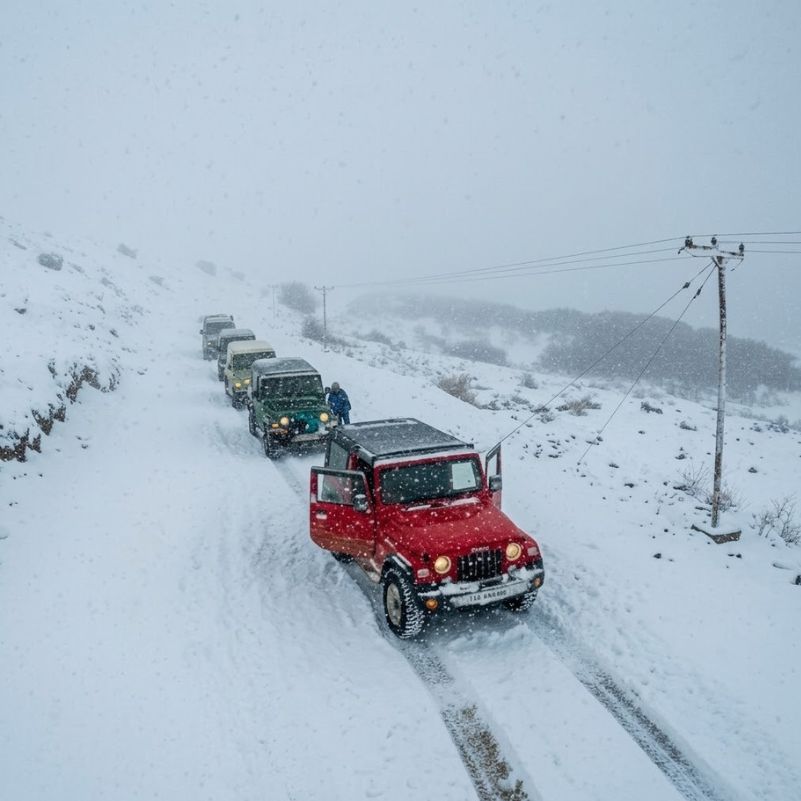 Group Tour9D/8N
Most Loved 4×4 Winter Spiti Expedition
2D Sangla•1D Tabo+2
₹29,999₹35,999SAVE INR 6,000/ person Group Tour9D/8N
Best Selling Winter Spiti Valley Group Tour
2D Sangla•1D Tabo+2
₹18,999₹23,999SAVE INR 5,000/ person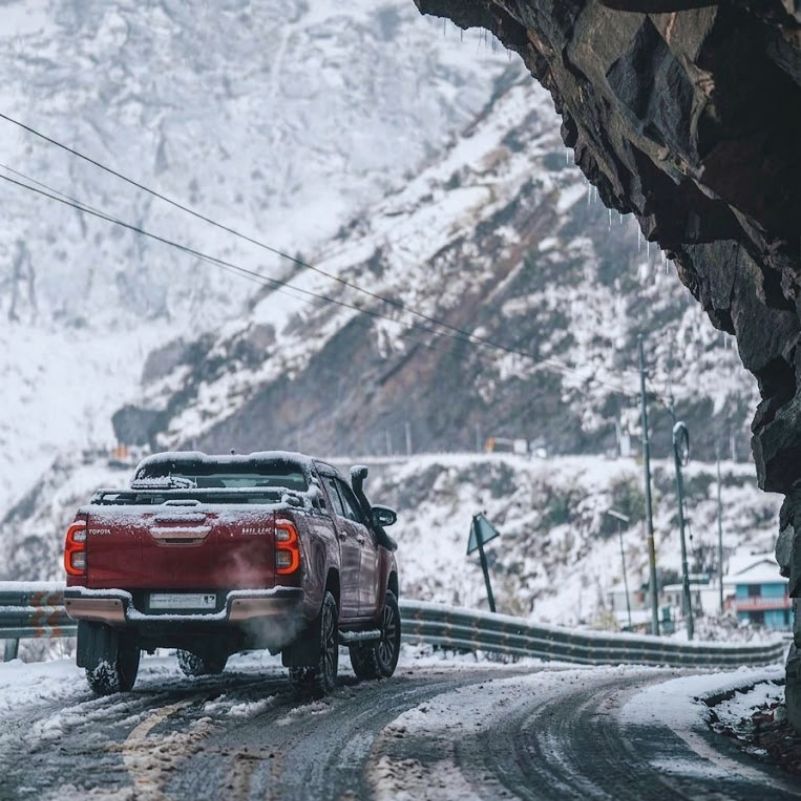 Group Tour8D/7N
Best Selling Kinnaur & Spiti Winter 4x4 Expedition
1D Sangla•1D Nako+2
₹27,999₹30,999SAVE INR 3,000/ person
Related topics
Frequently Asked Questions
Is it safe to travel solo to Spiti in winter?
Yes, but it requires careful planning. The main risks are altitude, extreme cold, road closures, isolation and cancelled transport. Keep buffer days, backup money and emergency contacts saved offline.
Is Winter Spiti suitable for a solo female traveller?
Yes, for a prepared traveller. Book verified stays, arrive before dark where possible, share your itinerary with someone you trust and keep transport and accommodation contacts ready
Can a solo traveller reach Kaza using only buses and shared taxis?
Yes, but winter transport is weather-dependent. The usual route is Shimla to Reckong Peo to Kaza. Confirm bus operation and road conditions before each leg and keep spare days for cancellations.
Are hostels open in Kaza during winter, or should I book homestays?
Plan around pre-confirmed homestays because many hotels and hostels close or reduce operations in winter. Confirm heating, meals, hot water and toilet arrangements directly before arrival.
Is a DIY trip or a fixed-departure group tour more practical in Winter Spiti?
DIY suits experienced and flexible travellers who can handle delays and changing plans. A group tour is usually easier for first-time winter travellers because transport, stays and vehicle sharing are already organised.
What is a realistic solo budget for transport, stays, food and sightseeing?
A bus-led DIY trip can be cheaper, but costs rise quickly if you need extra nights or private transport. Budget separately for stays, food, shared taxis, winter gear and weather-related delays
How can a solo traveller visit high villages without paying for a full private cab
A bus-led DIY trip can be cheaper, but costs rise quickly if you need extra nights or private transport. Budget separately for stays, food, shared taxis, winter gear and weather-related delays
How can a solo traveller visit high villages without paying for a full private cab?
Use local buses when operating, split a taxi with other travellers or join a shared sightseeing vehicle. Availability depends heavily on snowfall and road conditions, so keep plans flexible.
What check-in plan and emergency contacts should a solo traveller keep?
Share your itinerary and stay details with one trusted person and check in after every major travel leg. Save 112, 108, 1077 and 1091 offline and do not depend on continuous mobile signal.
ow many buffer days should I keep for Winter Spiti?
Keep at least two full buffer days outside your main itinerary. Snowfall and road closures can delay your return, so avoid booking an important flight, exam or work commitment immediately afterward.
Is Manali to Kaza open in December or January?
No. The Manali to Kaza route through Kunzum Pass normally remains closed in December and January. Winter travellers should enter and exit Spiti through Shimla and Kinnaur.
Do Indians need a permit for Spiti Valley?
No, Indian citizens generally do not need a permit to visit Spiti. Foreign travellers using protected sections of the Kinnaur-Spiti route may need permits and should verify the latest requirements before travelling.
More about Lahaul and Spiti
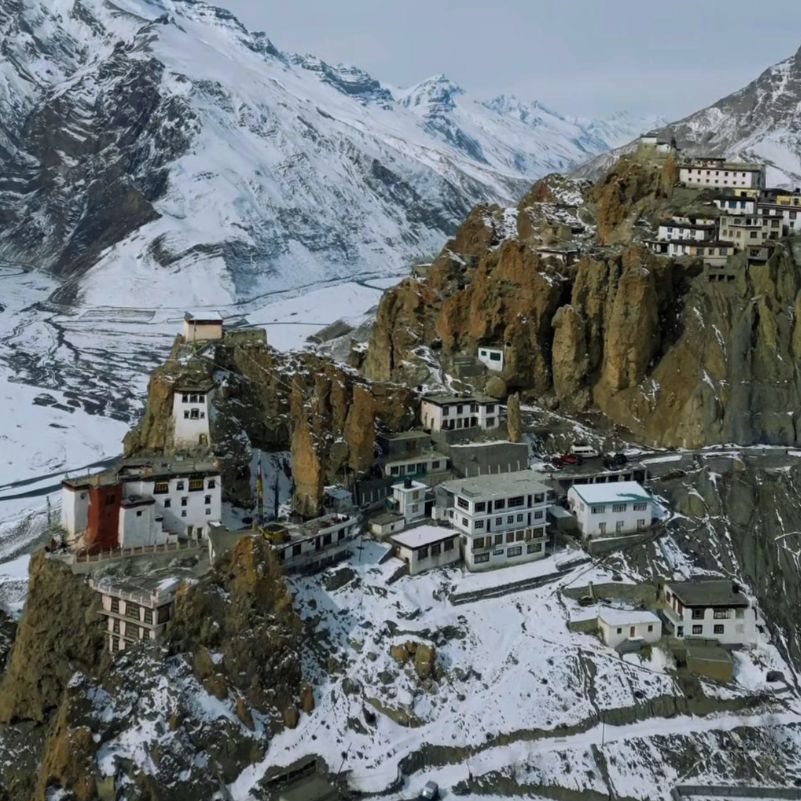 Lahaul and Spiti
Winter Spiti from Bangalore in 2026-27: Flights, Leave Days & Delhi 4x4 Departures
Planning a Winter Spiti trip from Bangalore in 2026-27? Explore flight options, Delhi pickup points, leave requirements, 4x4 group expeditions, travel costs and a practical itinerary to help you plan your Himalayan winter adventure.
- How to Reach
- Snow Travel
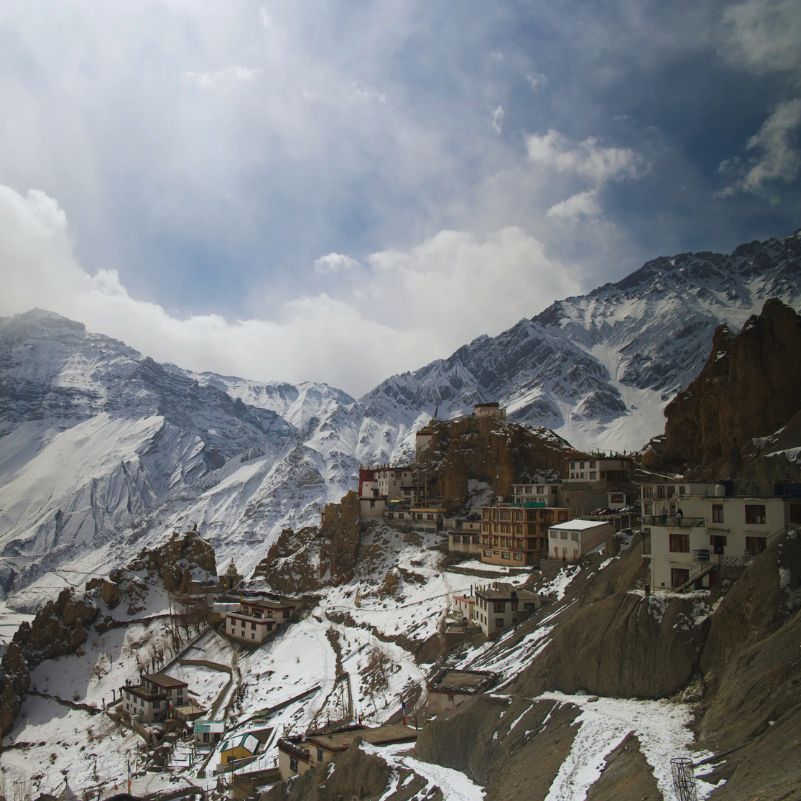 Lahaul and Spiti
What Does a Winter Spiti 4x4 Trip Really Cost in 2026-27? Package Price vs Total Holiday Budget
Planning a Winter Spiti 4x4 trip in 2026-27? Discover the real travel budget, including package prices, transport, meals, winter essentials and hidden expenses. Learn what your package covers, what costs extra and how to plan your Spiti Valley adventure without unexpected spending.
- First-Time Travellers
- Snow Travel
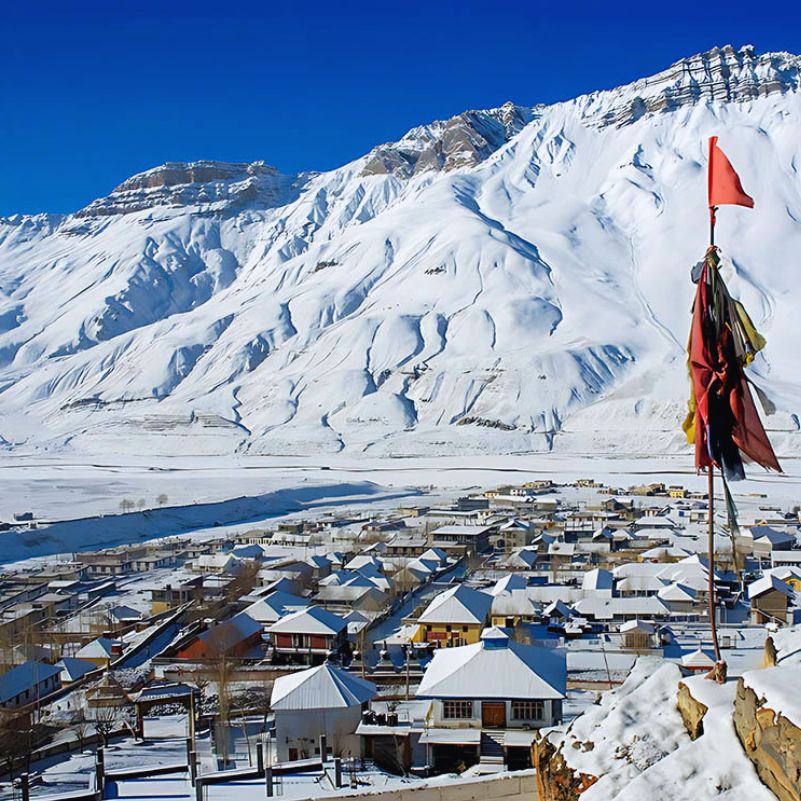 Lahaul and Spiti
How Many Leave Days Do You Need for a 9-Day Winter Spiti Trip in 2026-27?
Planning a 9 day Winter Spiti trip in 2026 to 2027 requires careful leave planning, especially for working professionals travelling from cities like Bangalore, Mumbai, Hyderabad and Delhi.
- Itinerary
- Snow Travel