
Chandratal in September 2026: Is It the Best Time to Visit Chandratal?
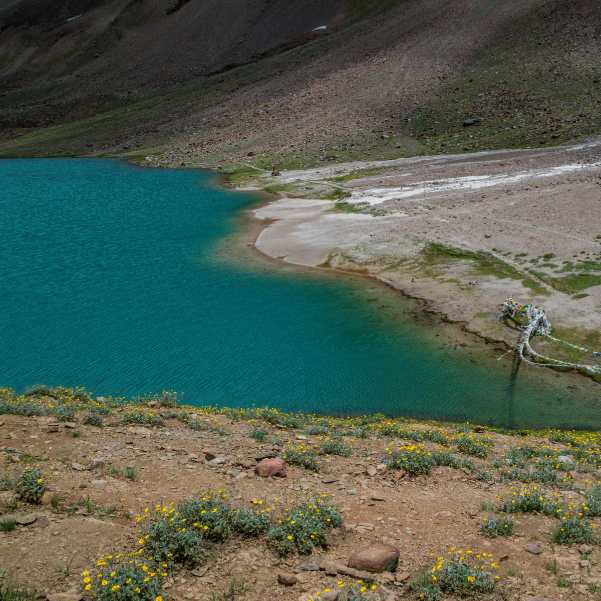
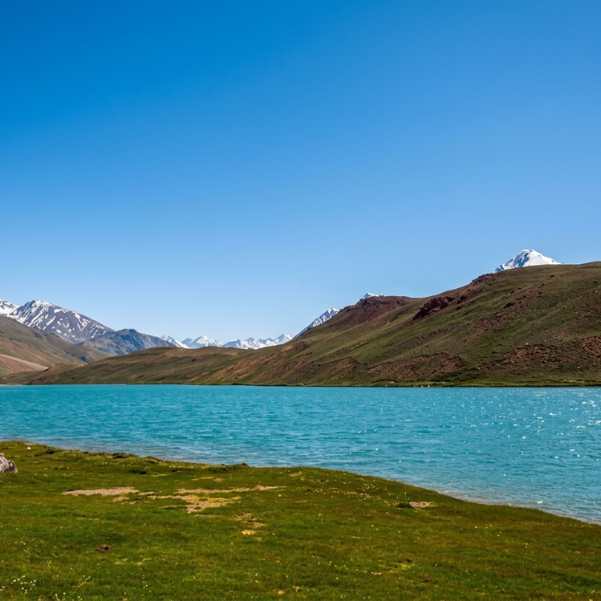
September at Chandratal feels different from the rest of the season. The summer rush has thinned out, the monsoon clouds have moved on, and the sky over the lake turns a shade of blue that July and August rarely deliver.
The brown mountains reflect sharper in the water. The air feels cleaner. And for the first time in months, you can stand at the shore without a crowd behind you.
But most people plan Chandratal for July or August because that is what every generic travel blog tells them to do.
What they miss is that Chandratal in September offers something those months simply cannot: silence, clarity, and some of the best light you will ever see at 14,220 feet.
The catch? Nights get seriously cold. And this is the tail end of the camping season, so you need to plan smarter, not just pack warmer.
This guide by Travel Coffee covers everything you need to decide if September is the right month for your Chandratal trip.
Quick Answer
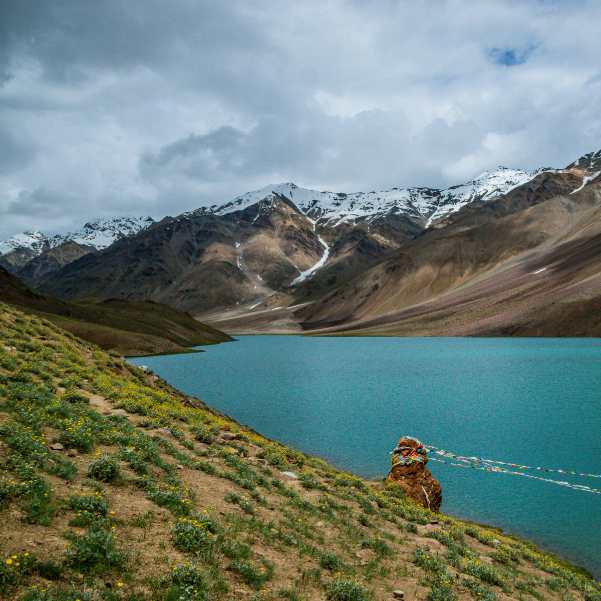
September is one of the best months to visit Chandratal Lake. Roads are usually still open, skies are clearer than the monsoon months, and the crowds drop off sharply after August.
The lake colours are at their deepest, and the landscape shifts to golden and brown tones that photograph beautifully.
The tradeoff is cold. Nights can drop below freezing, especially in the second half of September. Camps are generally still running through most of the month, but late-season closure timing varies year to year.
Always check live road status and camp availability before leaving. Do not assume that because September falls in the official season, everything will be exactly as it was in July.
Is September a Good Time to Visit Chandratal?
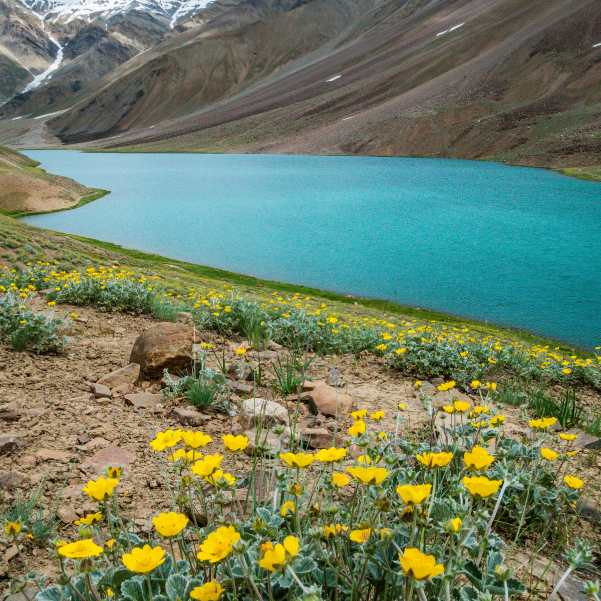
Yes. In fact, many experienced Spiti travellers deliberately avoid July and August and plan for September instead.
The reason is simple. July and August are the busiest months at Chandratal. The camps are packed, the trail to the lake has foot traffic through the day, and the monsoon (even though it is mild on the Spiti side) can make the Manali approach unpredictable with landslides and water crossings.
By September, most of that settles. The monsoon pulls back. The roads feel more stable than the rainy weeks. The sky clears to a deep, hard blue that changes the way the entire lake looks.
And the people who come in September tend to be calmer, slower, more intentional about the experience.
What most tourists get wrong about September is assuming it will feel like summer. It will not. Once the sun drops behind the mountains, which happens earlier than in July, the cold hits fast.
You can go from a pleasant afternoon to needing every layer in your bag within an hour. That sharp cold is the one tradeoff of visiting in September, and it is a real one.
In our experience running Spiti trips for years, September travellers come back happier than almost any other month's group.
They get better photos, better sleep (quieter camps), and a stronger sense of having the place to themselves.
What Makes September One of the Best Months for Chandratal?
Three things come together in September that do not align the same way in any other month.
Road conditions
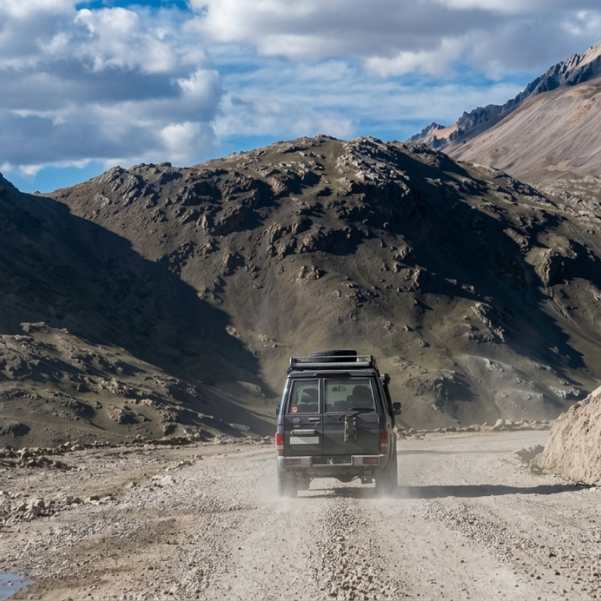
Road conditions are often more manageable than earlier in the season. The heavy snowmelt crossings that make June and early July rough have dried up.
The monsoon-triggered landslides that hit the Manali side in August have usually eased.
The road from Batal to the lake, which is always rough, tends to be in its most settled state by September.
Scenery
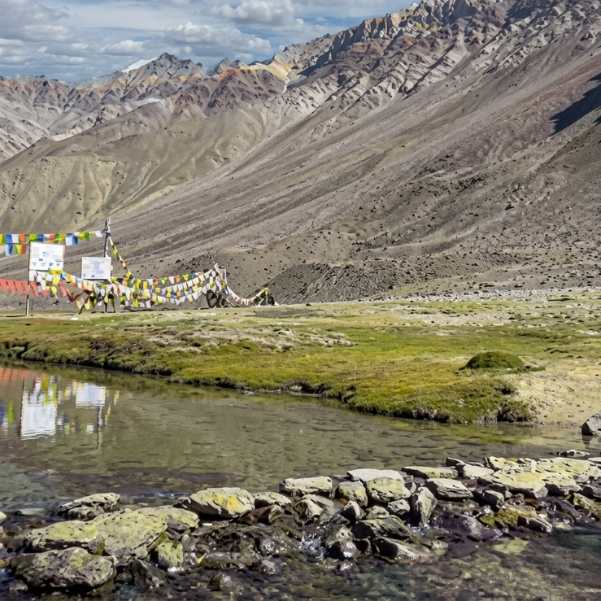
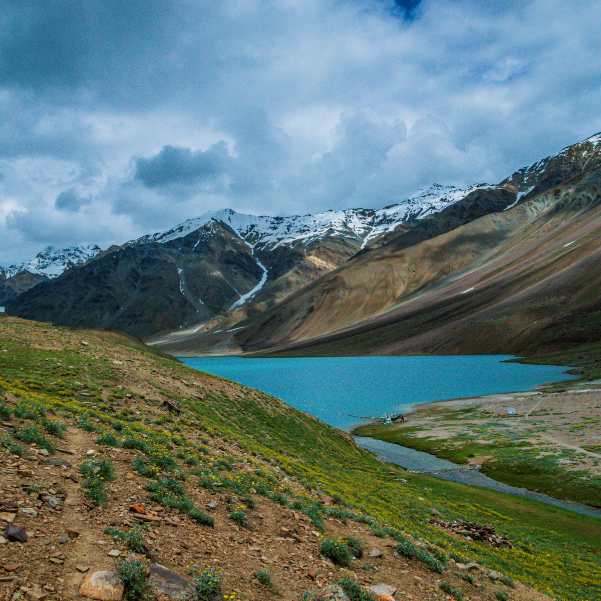
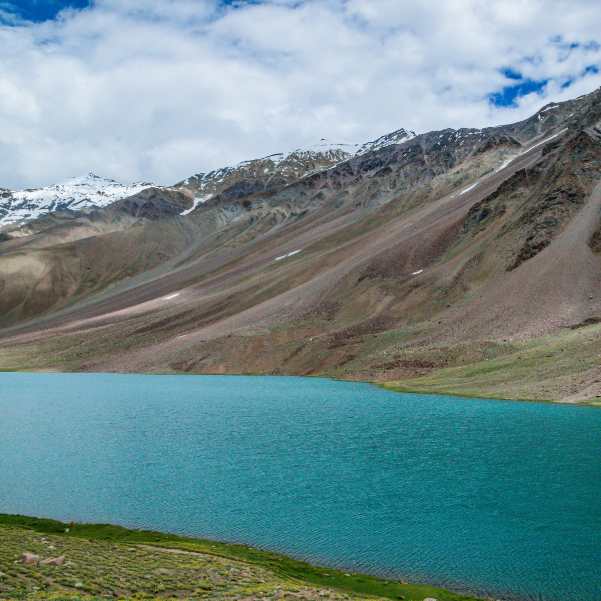
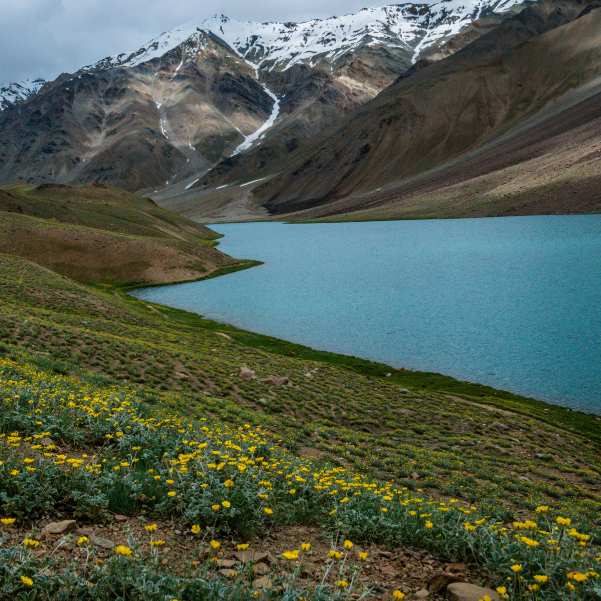
The scenery changes completely. The green tones of July and August give way to browns, golds, and deep earth colours. The lake water looks different too.
Clearer skies mean sharper reflections. The mountains behind the lake carry a dusting of early season snow on some years, which adds contrast that summer months lack.
Camps
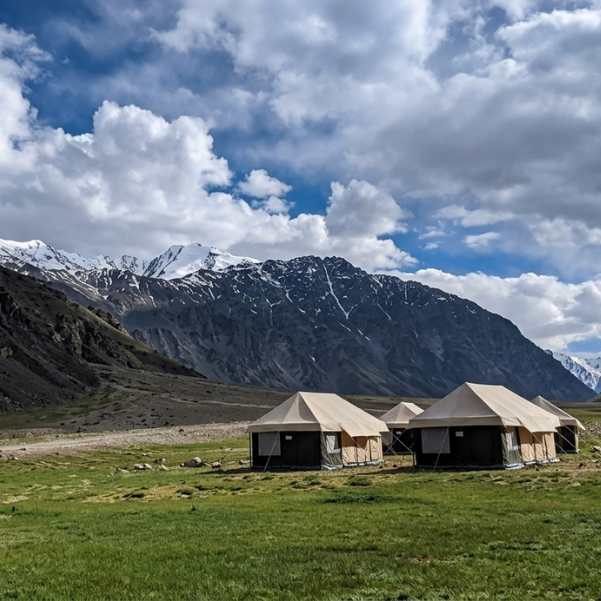
Camps are still operational through most of September. This is not October, where you are gambling on whether anyone is still running a kitchen.
In September, the camps in the designated zone near Chandratal are generally running, serving meals, and have bedding available.
The exact shutdown date changes each year, but most camps stay open through the third or even fourth week of September.
If you want a full breakdown of how the camping setup works, our Chandratal camping guide covers the camp locations, distances, costs, and what to realistically expect.
Chandratal in September Weather: What Should You Actually Expect?
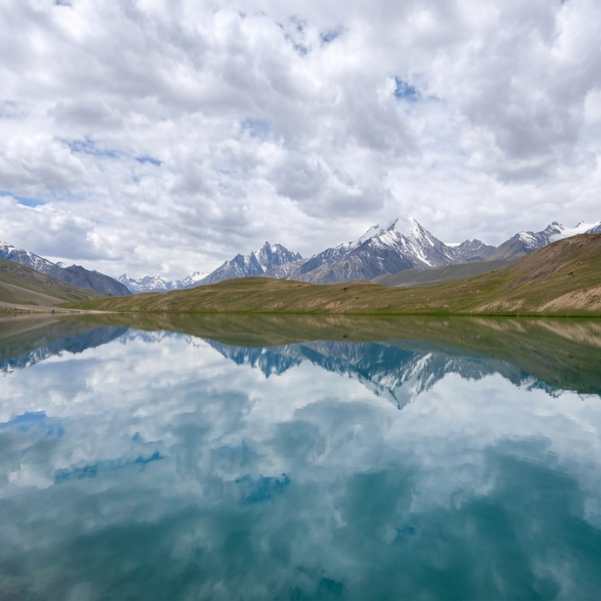
The weather at Chandratal in September has two faces. During the day, the sun is strong. You will feel comfortable in a light jacket or even just a fleece when walking around. The air is dry and clear. UV exposure at this altitude is intense, so sunscreen and sunglasses are not optional.
Then the sun sets. And that is where September at 4,270 metres stops being friendly.
Night temperatures can drop below freezing, especially in the second half of the month. Wind chill makes it feel even colder.
The open terrain around Chandratal offers no shelter from wind, and the thin air at this altitude does not hold warmth the way lower valleys do.
What catches people off guard is how fast the switch happens. You can be sitting outside the tent at 5 PM in pleasant sunshine and by 7 PM you are wearing thermals, a fleece, a down jacket, gloves, and a cap, and still feeling cold.
This is not an exaggeration. We hear this from almost every group we send there in September.
The dry air also affects your skin, lips, and throat. Carry lip balm with SPF, a good moisturiser, and drink more water than you think you need. Dehydration at altitude creeps up on you quietly.
Is September the Best Time to Visit Chandratal Overall?
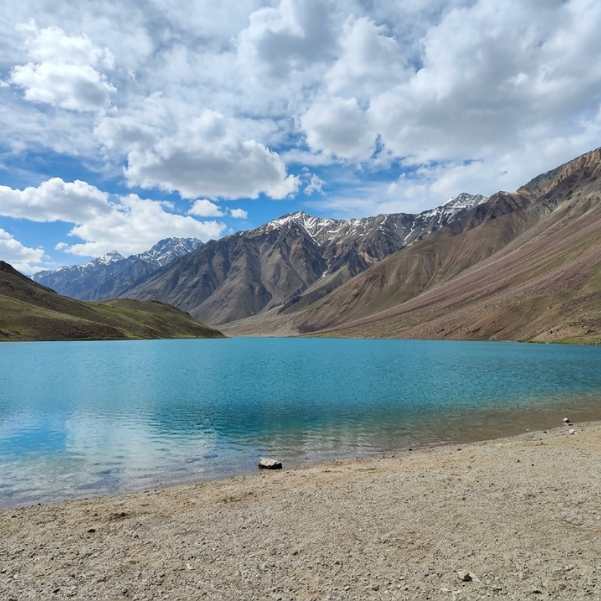
It depends on what kind of traveller you are, but for most people, September offers the best overall balance.
June
June suits people who want to see snow on the mountains and partially frozen edges near the lake. The landscape is dramatic, but roads are rougher, camps may not be fully set up in early June, and conditions are less predictable.
It is best for experienced mountain travellers. For more on how June plays out across Spiti, our Chandratal opening dates guide covers the timeline in detail.
July and August
July and August are the safest months in terms of access. Camps are fully running, roads are in the best shape they will be all season, and daytime temperatures are the warmest. But these months also bring the highest crowds and occasional monsoon disruption on the Manali side.
September
September gives you clearer skies, lower traffic, better photography light, and a quieter camp experience. The cost is colder nights and a shorter window to plan around.
Early October
Early October can work, but reliability drops fast. Camps may shut down. Weather can turn overnight. It is a gamble that only suits travellers who are flexible and comfortable with last-minute changes.
Our team usually recommends September to photographers, couples, solo travellers, and anyone who values a calm atmosphere over peak-season convenience. For families with kids or first-time high altitude travellers, July remains the safer pick.
September vs July and August: Which Is Better for Chandratal?
This is the question we get most often between June and September. Here is how they actually compare.
Crowds
July and August are significantly busier. Weekend trips from Manali fill up the camps. The trail to the lake can feel like a queue by mid-morning. September drops that traffic noticeably. You may share the lakeside with a handful of people instead of dozens.
Road conditions
July and August roads are generally good, but the Manali side can take hits from monsoon rain and landslides. September roads are often more settled because the rain has passed and the melt-season is over.
The Batal to Chandratal stretch is rough in all months, but September tends to have fewer water crossings.
Lake colours
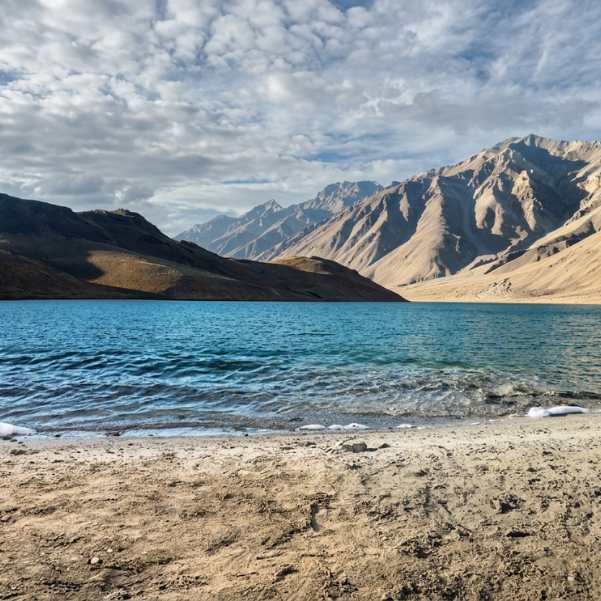
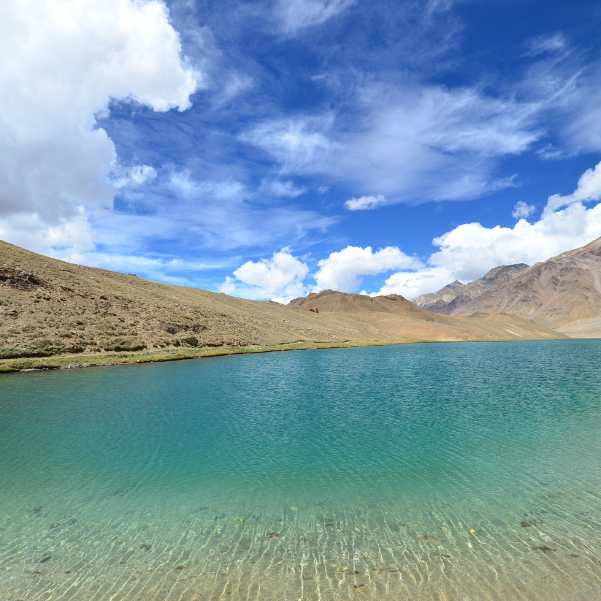
This is where September wins clearly. The post-monsoon clarity makes the water more reflective. The browns and golds of the surrounding landscape contrast with the blue water in a way that green July terrain does not.
Camp comfort
July and August camps are warmer at night, simply because the season has not shifted yet. September camps are colder after dark.
If you are a light sleeper or someone who feels cold easily, July will be more comfortable. If you do not mind bundling up, September rewards you in other ways.
Photography
September is the best month for photography at Chandratal. The light is cleaner, the sky has more depth, and the absence of haze gives your shots a sharpness that is hard to get in humid summer months.
One tip we always share with our travellers: if you have a specific week in mind in September, WhatsApp us to check live Chandratal road status before you lock your dates. Conditions shift, and a quick check saves a lot of trouble.
Can You Camp at Chandratal in September?
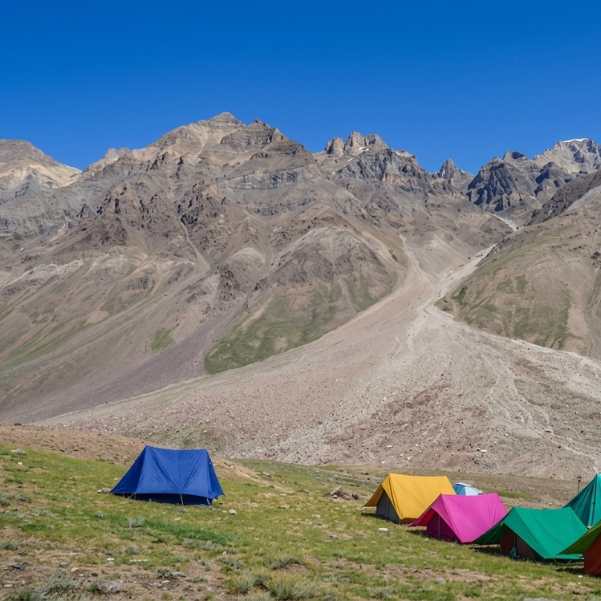
Yes. Camping is the primary way people stay near Chandratal, and in September, the camps in the designated zone are generally still running.
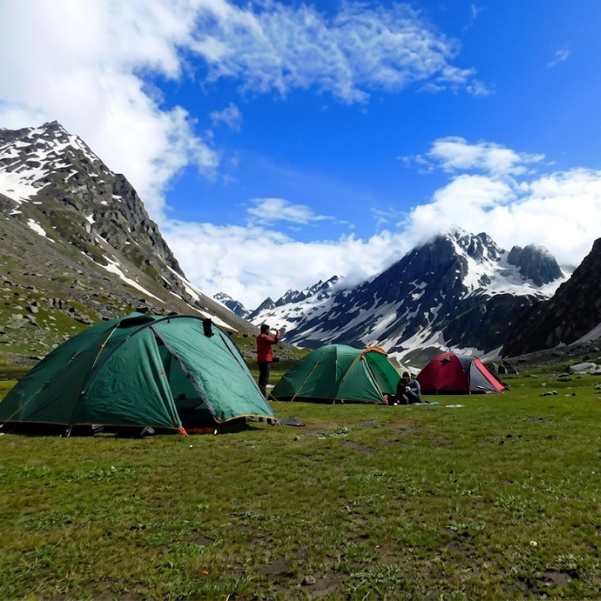
The important thing to understand is that you do not camp on the lakeshore. The camping area is roughly 1.5 to 2 kilometres from the lake, in a flat, open zone along the approach road.
You walk to the lake from camp. The walk takes about 20 to 40 minutes depending on your pace and how the altitude affects you.
Most camps offer basic tents with sleeping bags, blankets, and simple meals. Toilets are basic. There is no reliable electricity. Some camps have a solar setup for limited charging.
In September, the camp experience feels quieter and more relaxed than the packed-out July and August weeks. You may have fewer neighbours, which means less noise and a better chance of actually hearing the wind and nothing else.
One honest warning: some camps start winding down towards the last week of September, depending on bookings and weather forecasts.
If you are planning a late September trip, confirm that your camp is still operating before you make the drive. Do not show up assuming everything is running.
Can You Stay Right Next to the Lake?
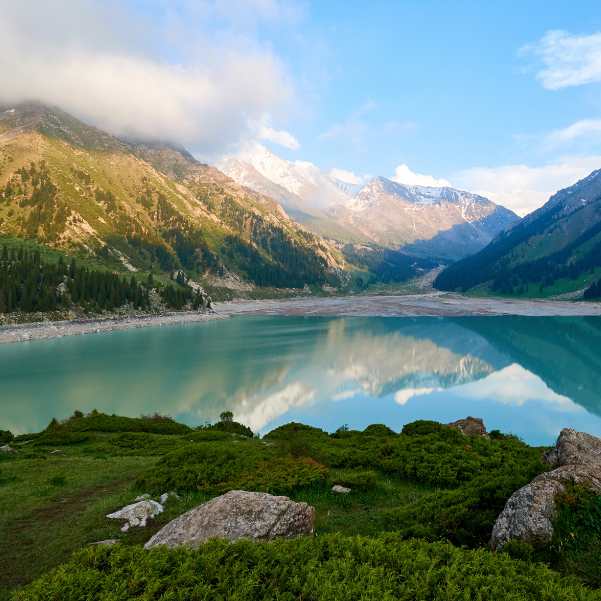
No. Camping on the Chandratal lakeshore is not allowed. The area around the lake is ecologically sensitive, and overnight stays near the water would damage the fragile soil and vegetation.
You stay at the designated camp zone and walk to the lake during the day. The walk is gentle and mostly flat, though the altitude makes it feel more tiring than it looks.
Early morning walks are best. The light on the water before 7 AM is completely different from what you see at noon. By 10 AM, the first wave of day visitors from Kaza side starts arriving and the trail gets busier.
This matters if you are travelling with older family members, young children, or anyone with limited mobility. The walk is doable for most reasonably fit people, but at 14,220 feet, even a flat 2 km walk can leave you breathless if you have not acclimatised. Plan for it.
If you are curious about where exactly Chandratal sits geographically and why it confuses people, our piece on whether Chandratal is in Lahaul or Spiti clears that up.
How to Reach Chandratal in September from Manali and from Kaza
There are two main approaches, and the right one depends on your starting point and your overall trip plan.
From Manali
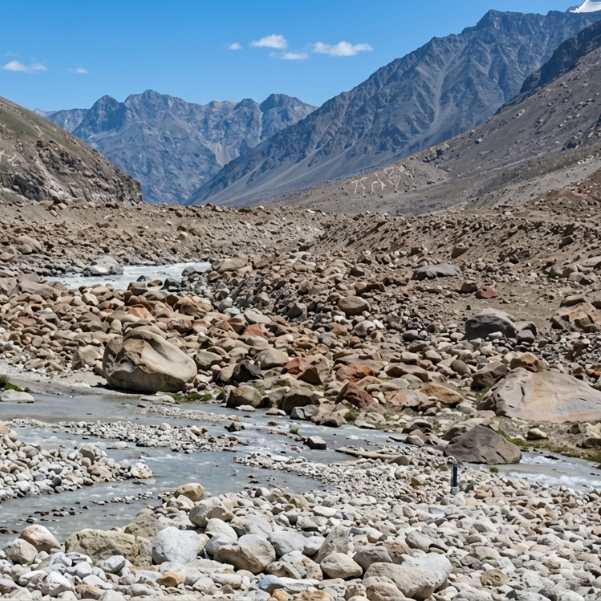
You drive through the Atal Tunnel, continue via Sissu, Koksar, and Batal, and then take the diversion road towards Chandratal.
This is the shorter, more direct approach and works well if your trip is focused on the lake rather than a full Spiti circuit.
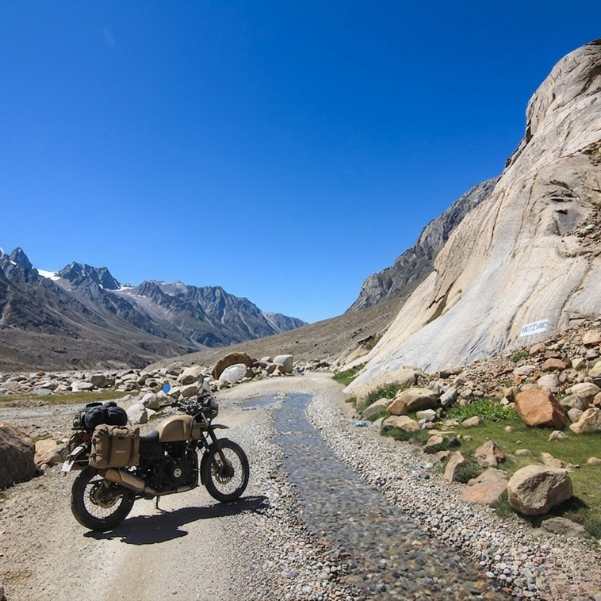
The road between Batal and Chandratal is always rough. Potholes, loose gravel, and water crossings are normal even in September.
A high-clearance vehicle is strongly recommended. Sedans are generally not suitable for this stretch.
In September, this route is usually in better shape than during the monsoon weeks, but always check conditions before you leave. If you want help planning the Manali side approach, our Manali trip packages include routes that pass through Sissu and onward.
From Kaza
If you are already doing a Spiti Valley circuit, this is the natural way to include Chandratal. You drive from Kaza through Losar, over Kunzum Pass, and then take the diversion near Batal towards the lake.
This route is better for acclimatisation. If you have spent a few days in Kaza at about 3,800 metres, your body has already adjusted to altitude, and the push to Chandratal at 4,270 metres feels more manageable.
Coming directly from Manali without stops means you gain altitude fast, which increases the risk of headaches and nausea at the lake.
Our Spiti Valley packages include Chandratal as part of the circuit with proper acclimatisation stops built in. The difference this makes is real. We have seen it with hundreds of travellers.
Whichever route you pick, the final decision should always depend on live road conditions. A route that looks good on a blog may not be passable on your specific travel day.
Do You Need a Permit for Chandratal in 2026?
The official Himachal e-Aagman portal states that an e-permit per vehicle is required for the Atal Tunnel Rohtang Koksar Chandertal circuit. This is the permit you need if you are approaching from the Manali side.
Permit rules in Himachal can change between seasons, and enforcement varies. Always verify the latest requirements on the e-Aagman portal before your trip. If you are booking through us or any local operator, the permit situation is usually handled as part of the logistics.
Do not skip this. Getting turned back at a checkpoint because of a missing permit wastes an entire day on a route where every hour of daylight counts.
What Road Status Should You Check Before Going?
This is where we cannot stress this enough. No seasonal article, including this one, can tell you what the road looks like on the day you travel.
Check the official Lahaul-Spiti district road-status page one day before your departure. Then check it again on the morning you leave.
There is a difference between a road being "open for the season" and a road being safe and passable today.
A landslide, a cloudburst, or a blocked culvert can close a stretch for 12 to 24 hours even in September. This happens more often than people expect.
One mistake travellers make is checking the Manali to Kaza road status and assuming that means the Chandratal diversion from Batal is also clear.
These are two different roads. The Chandratal diversion is a separate stretch, and it can be blocked while the main highway is fine. Always confirm both.
If you want a quick ground-level update, our team is usually the fastest way to get real information. We are on these roads every week during the season.
Who Should Avoid an Overnight Stay at Chandratal in September?
We love Chandratal, but we also know it is not for everyone, especially not in September when the cold gets sharper.
First-time mountain travellers who have never been above 3,000 metres should think carefully. Altitude sickness does not care about fitness or age.
If you have never dealt with the headaches, nausea, and breathlessness that come with high altitude, September at 14,220 feet with freezing nights is a tough introduction.
Very young children (under 8) and senior travellers with breathing or blood pressure conditions should consider a day visit instead of an overnight camp stay.
The cold after sunset, basic toilet facilities, and zero access to medical help make overnight stays risky for vulnerable travellers.
Anyone arriving at altitude the same day without acclimatisation should avoid spending the night. If you drove up from Manali without a stop at Sissu or Batal, your body has not had time to adjust. A day visit to the lake with a return to a lower altitude for the night is a smarter move.
What we tell our travellers is this: there is no shame in a day trip. Seeing the lake and returning to a lower, warmer place to sleep is a completely valid way to experience Chandratal, especially if you are not sure how your body handles altitude.
If you are a solo female traveller wondering about the safety side of things, our Spiti solo female safety guide covers that separately.
What Should You Pack for Chandratal in September?
Packing for Chandratal in September is about layering for two completely different climates in the same day.
During the day, you need sun protection. High SPF sunscreen, UV-blocking sunglasses, and lip balm with SPF are essential. The UV at 14,220 feet burns skin faster than you expect, even when the air feels cool.
For the evening and night, you need serious warmth. Thermal inners (top and bottom), a fleece mid-layer, and a windproof down jacket are the minimum.
Add warm socks (carry at least two extra pairs), gloves, and a warm cap or balaclava. The wind at Chandratal is constant, and it cuts through anything that is not windproof.
Sturdy, waterproof trekking shoes with good grip are essential for the walk to the lake. The trail is mostly flat but uneven in spots, and morning frost can make patches slippery.
Carry a headlamp or torch. There is no ambient lighting at the camps after dark, and stumbling around a campsite at 4,270 metres without a light is how people trip and hurt themselves.
A fully charged power bank is non-negotiable. Charging points at camps are rare and unreliable. Your phone, camera, and headlamp all need backup power.
Bring basic medicines: paracetamol for headaches, ORS packets, an antacid, and anti-nausea tablets. If your doctor has recommended Diamox for altitude, carry that too.
Dry snacks like nuts, energy bars, biscuits, and chocolate keep your energy up between meals. Camp food is simple (dal, rice, roti, sabzi), and you will want something to munch on during the walk or late at night when the kitchen is closed.
And carry your trash back. Every wrapper, every bottle, every tissue. Chandratal does not have a waste system, and the lake stays clean only because travellers take their garbage with them.
Best 1-Night and 2-Night Chandratal Plans for September
1-Night Plan from Manali
Leave Manali by 5:30 AM. Drive through the Atal Tunnel to Sissu, stop for tea, and continue to Batal. The last hot meal before the lake is usually at one of the dhabas near Batal.
The guy running the first dhaba past the checkpoint serves momos that are basic but warm, and you will be glad you stopped because there is nothing after this.
From Batal, take the diversion road to the Chandratal camping zone. Reach by afternoon, settle into camp, and walk to the lake before sunset. The golden hour light on the lake in September is worth rushing for.
Stay the night at camp. Wake up early the next morning and walk to the lake again before 7 AM. The sunrise light and the stillness of the lake at dawn are the real highlight. Return to camp, eat breakfast, and drive back to Manali.
This plan is tight. It works only if you start very early, the roads cooperate, and you are comfortable with long hours in a vehicle. But for people short on time, it is doable.
2-Night Plan via Kaza (Recommended)
If you are coming through a Spiti circuit, spend a couple of nights in Kaza first. Explore Key Monastery, Kibber, and Langza. This gives your body time to acclimatise at about 3,800 metres before you push to Chandratal.
From Kaza, drive to Losar and over Kunzum Pass to the Chandratal camping zone. Spend the evening and night at camp.
The next morning, walk to the lake at sunrise, spend the morning there, and then either head back towards Kaza or exit towards Manali depending on your route.
This version is more comfortable, better for your body, and lets you enjoy the lake without the exhaustion of having just driven 8 hours from Manali.
Our team usually recommends this approach for anyone doing a September trip. The two-night buffer makes all the difference.
If you want a full circuit that includes Chandratal with proper rest days, our Lahaul and Spiti Valley packages are built exactly for this.
Is Early October Better Than Late September?
In most years, late September is the safer choice.
Early October can be spectacular. Fresh snow on the peaks, almost zero crowds, and a stillness at the lake that feels like you have the entire mountain to yourself. But the flip side is real.
Camps may start shutting down in the first week of October. Weather can turn with little warning. A sudden snowfall can close Kunzum Pass overnight, leaving you stuck or forcing a long detour.
Late September gives you most of the same visual beauty, colder nights included, but with functioning camps and more predictable road conditions.
If your dates are fixed in the last week of September, you are still well within the safe zone for most years.
If you are considering October, keep your dates flexible. Do not book non-refundable camps or fixed return flights until you have confirmed conditions within 48 hours of travel. This is one part of Himachal where plans can change overnight.
Skip the paid "viewpoint" near the Chandratal parking area if anyone tries to charge you for it. The walk to the lake itself gives you better views than any fenced-off spot along the road, and it costs nothing.
WhatsApp us for a customized Spiti itinerary and we can help you decide between late September and early October based on what is actually happening on the ground.
Our Honest Verdict: When Is the Best Time to Visit Chandratal?
September is the best month for many travellers. It gives you clearer skies, better photography light, fewer people at the lake, and roads that have settled after the monsoon. The cold is the tradeoff, and it is a real one, but if you pack right and plan smart, it does not ruin the experience.
It actually adds to it. There is something about standing at a lake at 14,220 feet in freezing air under a sky full of stars that warmer months just cannot replicate.
June suits people who want snow-tinged drama and are okay with rougher roads and camps that may still be setting up.
July and August suit families, first-timers, and anyone who wants the most comfortable camp experience with the warmest nights.
Early October suits only flexible, experienced mountain travellers who can absorb last-minute changes.
What we always tell first-timers: carry a thermos. Fill it with ginger tea before you leave for the lake walk. At 14,000-plus feet, a warm drink in the early morning does more for your comfort than any expensive jacket. It is a small thing, but it changes how the morning feels.
For a broader view of how the entire Chandratal season unfolds, our Chandratal opening dates and best time guide covers every month from May to October.
If you are ready to plan, explore our Spiti Valley packages or check the Kinnaur route options if you want to enter Spiti from the Shimla side first.
Explore Our Curated Spiti Valley Tours
 Group Tour10D/9N
Full Spiti Valley Circuit With Chandratal
1D Narkanda•1D Sangla+5
₹29,999₹32,999SAVE INR 3,000/ person Group Tour9D/8N
Best Selling Winter Spiti Valley Group Tour
2D Sangla•1D Tabo+2
₹18,999₹23,999SAVE INR 5,000/ person 6D/5N
6D/5NBest Selling Leh Ladakh Tour With Nubra Valley and Pangong Lake
2D Leh•1D Nubra Valley+1
₹23,999₹28,599SAVE INR 4,600/ person Group Tour10D/9N
Most Loved Spiti Valley Bike Expedition With Chandratal
1D Jibhi•1D Sangla+4
₹34,999₹41,999SAVE INR 7,000/ person 6D/5N
6D/5NMini Spiti Circuit With Chandratal From Manali
2D Kaza•1D Chandratal Camp
₹26,999₹29,999SAVE INR 3,000/ person
Related topics
Frequently Asked Questions
Is Chandratal in September worth it?
Yes. September is one of the most rewarding months to visit Chandratal. The skies are clearer, the crowds are smaller, and the lake colours are at their deepest. You need to pack warm and confirm camp availability, but the experience is well worth the effort.
What is the best month for Chandratal?
September for most travellers who want clear skies and fewer crowds. July for families and first-timers who want warmer nights and fully running camps. June for snow lovers willing to deal with rougher conditions.
Is Chandratal open in September 2026?
Yes. September falls within the main Chandratal travel season, which runs from June to September. Both routes (Manali side and Kaza side) are generally open, and camps operate through most of the month. Always verify road status before departure.
How cold is Chandratal in September?
Cold enough to need thermals, a down jacket, gloves, and a cap at night. Temperatures can drop below freezing after sunset, especially in the second half of September. Wind chill makes it feel even sharper. Daytime with sunshine is comfortable in layers.
Are camps open in late September?
Most camps operate through the third week of September. Some stay open longer, but this varies by year and weather. If you are planning a trip in the last week of September, confirm directly with the camp operator before booking.
Can I visit Chandratal from Manali in one day?
A day trip from Manali is extremely difficult because the drive alone takes 7 to 8 hours one way. An overnight trip with a very early start is the minimum. A 2 or 3 day plan is far more realistic and enjoyable.
Can I stay near the lake?
You cannot camp on the lakeshore. Camping is allowed only in a designated zone roughly 1.5 to 2 kilometres from the lake. You walk to the lake during the day and return to camp for the night.
Do I need a permit for Chandratal?
The e-Aagman portal requires an e-permit per vehicle for the Atal Tunnel Rohtang Koksar Chandertal circuit. Rules can change by season, so check the portal before your trip or confirm with a local operator.
Is September better than July for Chandratal?
September is better for photography, smaller crowds, and clearer skies. July is better for warmer nights, fuller camps, and a more predictable overall experience. Your choice depends on what matters more to you.
Is Chandratal safe for families in September?
Families with older children (above 10) who are reasonably fit can visit in September. The cold nights and altitude make it less suitable for very young kids, elderly members with health conditions, or anyone without prior high altitude experience. A day visit from Batal is a safer option for such groups.
Can I take a sedan to Chandratal?
The road from Batal to Chandratal is rough, unpaved, and full of loose gravel and water crossings. A high-clearance SUV or 4x4 is strongly recommended. A sedan is generally not suitable for this stretch.
What should I wear at Chandratal in September?
Dress in layers. Thermals as a base, a fleece mid-layer, and a windproof down jacket on top. Warm socks, gloves, and a cap are essential after sunset. During the day, a light jacket and sunscreen are enough. Good trekking shoes with grip are important for the walk to the lake.
More about Chandratal
 Chandratal
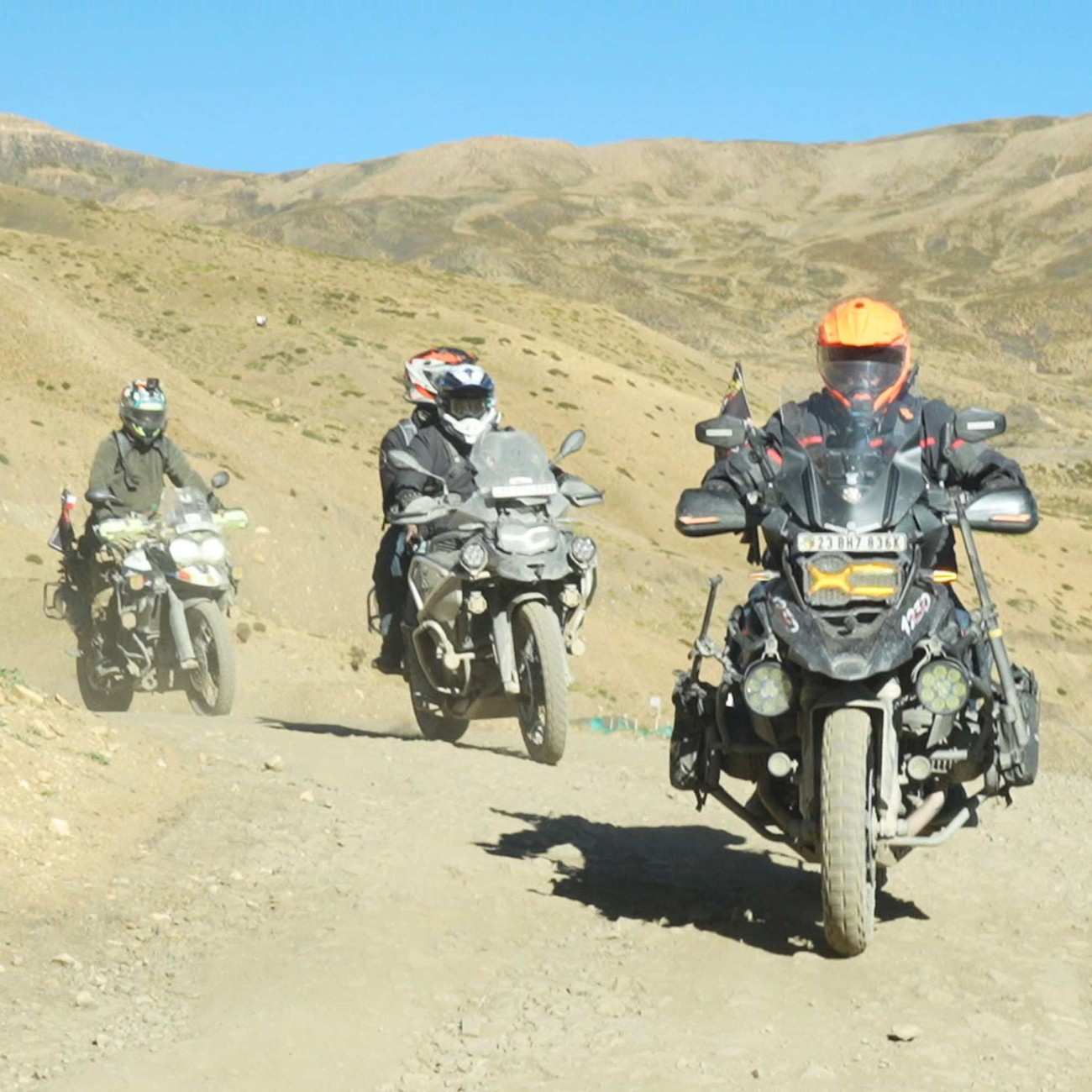
Chandratal by Bike Safety in 2026: Road Difficulty, Timing & Pillion Tips
Planning to ride to Chandratal by bike in 2026? This complete guide covers road difficulty, riding conditions, the best time to visit, safety precautions, water crossings, and pillion tips to help you enjoy one of Himachal Pradesh's most iconic high-altitude rides with confidence.
- Bike Trips
- Altitude & Health
- +1
 Chandratal
Where to Stay If Chandratal Camps Are Not Available in 2026
If Chandratal camps are not available in 2026, stay at nearby alternatives like Batal, Losar, or Kaza. Since camping is not allowed at the lake itself and designated camps operate a few kilometers away, these villages are the safest backup options for travelers planning a Spiti Valley trip.
- Itinerary
- Best Time to Visit
 Chandratal
Is Chandratal Crowded in June 2026? Honest Crowd, Road and Camp Guide
Planning Chandratal in June 2026? Here’s an honest guide to crowds, road opening chances, campsite availability, lake access, and the best time to visit without chaos.
- Best Time to Visit