
Fagu
A quiet ridge village at about 2,500 metres on the Hindustan Tibet road, about 18 km from Shimla and 6 km past Kufri, with apple orchards, Giri Valley views, and the kind of calm that comes from having almost no tourist infrastructure
- About 18 km from Shimla, ~6 km past Kufri
- Altitude ~2,500 m / ~8,200 ft
- Apple orchards, Giri Valley views, winter snowfall
- Day trip from Shimla or peaceful overnight stop
- Arrive by late morning for clear views
What makes it special
Fagu is a small farming village sitting on a ridge along the Hindustan Tibet road, about 18 km from Shimla and roughly 6 km past Kufri. At around 2,500 metres, it is noticeably colder than Shimla and gets snow earlier in winter. The name is believed to come from the word "fog," and if you have been here on a winter morning, that makes perfect sense.
There is not much to Fagu in the tourist sense. No monuments, no entry tickets, no curated experiences. What there is: apple orchards stretching across terraced hillsides, potato fields, deodar forest, and wide views over the Giri Valley and the surrounding ranges on clear days. The village sits on a ridge, so the outlook is broad. On a good morning you can see layered hills fading into the distance. The quiet is genuine. You can stand here and hear nothing except wind through the trees.
One practical tip that matters: get here by late morning. The valley views are usually sharpest before midday. By 3 to 4 PM, afternoon fog rolls in from the valley side, and on most days, visibility drops to almost nothing. If you are coming for views or photographs, plan around the morning window.
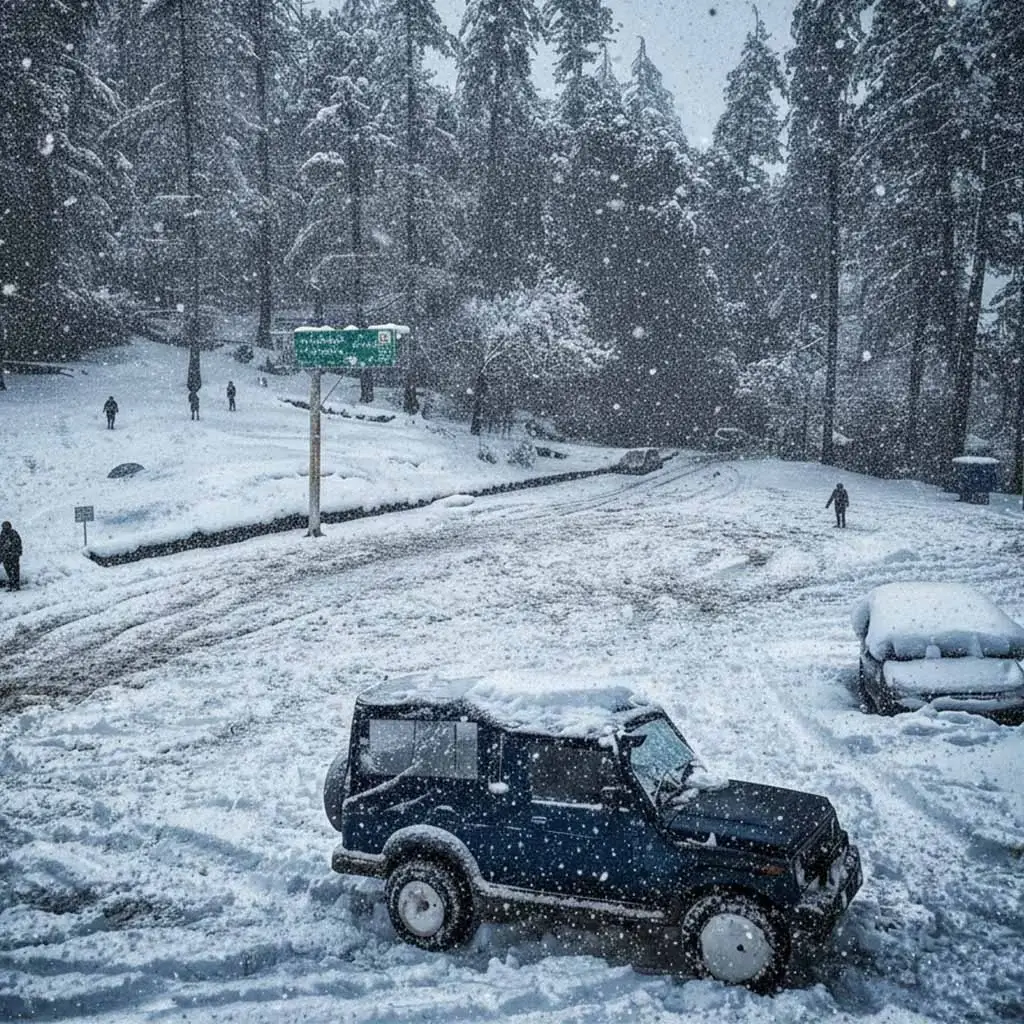
In winter, Fagu gets snowfall from late December through February. It sits higher than Shimla, so when the city gets rain, Fagu often gets snow. But keep expectations grounded. Active snow cover depends entirely on live weather, and it clears faster here than at higher points like Narkanda. If you are driving up specifically for snow, check conditions the morning of your visit and go early before the snow turns to slush and the day trippers crowd the road.
For most travellers, Fagu works best in one of two ways. As a calm stop on the road to Narkanda or Kinnaur, where you pull over, walk through an orchard, take in the valley, and continue. Or as a quiet overnight base, away from the noise of Shimla and the tout culture of Kufri, with the HPTDC Apple Blossom or a handful of homestays offering a slow evening and an early morning walk through mist.
Who it suits. Travellers on the Shimla to Narkanda or Kinnaur road who want a peaceful stop with valley views. Snow seekers in winter who want something closer than Narkanda. Anyone who wants a quieter, less commercialised alternative on the Shimla circuit. Photographers, especially in morning mist or apple harvest season (August to October).
Who should reconsider. If you need things to do, Fagu will not deliver. There is genuinely nothing here beyond the landscape. The village has almost no restaurants or services. Budget travellers may struggle to find affordable stays. If you want infrastructure and activity options, base yourself in Mashobra or Shimla and drive out to Fagu for a couple of hours.
If you are planning a trip that covers the Shimla region including the higher stops like Fagu and Narkanda, a Shimla Naldehra Kufri Narkanda package covers the routing and makes sure you do not miss the stops that are easy to drive past.
Quick answers
- What is Fagu?
- A small farming village on a ridge along the Hindustan Tibet road, about 18 km from Shimla and 6 km past Kufri, at roughly 2,500 metres. Known for apple orchards, Giri Valley views, and winter snowfall. Fagu is a stop on the road, not a standalone destination. Most travellers spend one to two hours here before continuing toward Narkanda or heading back to Shimla.
- How far is Fagu from Shimla?
- About 18 km from Shimla, roughly 45 minutes to an hour by car. The road is paved (Hindustan Tibet road) and the drive passes through Kufri, which is about 6 km before Fagu.
- When should I visit Fagu?
- January and February for snow, though active snow cover depends on live weather and clears faster than at Narkanda. October for apple harvest, clear skies, and the best valley views. March to May for pleasant walking weather. Regardless of season, arrive by late morning for the clearest views. Afternoon fog rolls in around 3 to 4 PM most days.
Quick facts
Everything you need to know at a glance.
At a glance
- Altitude
- About 2,500 m / 8,200 ft. Noticeably colder than Shimla. Gets snow earlier in winter.
- Location
- Shimla district, Himachal Pradesh. About 18 km from Shimla, 6 km past Kufri, on the Hindustan Tibet road (NH5). Between Kufri and Narkanda.
- Time needed
- 1 to 2 hours for a stop. Overnight possible at HPTDC Apple Blossom or a few homestays.
- Known for
- Apple orchards, Giri Valley views, winter snowfall, year round mist. A calm ridge stop on the Shimla to Narkanda road.
- Difficulty
- Easy. On the main highway. Gentle walking in the village and orchards.
On the ground
- Mobile network
- Jio and Airtel generally work on the main road. Patchy off the highway.
- ATM
- None. Carry cash from Shimla.
- Food
- Very limited. A couple of dhabas for chai and Maggi. HPTDC Apple Blossom has a basic restaurant. Bring snacks if you are just stopping.
- Fuel
- No petrol pump. Fill up in Shimla.
Seasonal weather
- March to May20°7°Spring
- June to September22°13°Summer and Monsoon
- October to November17°4°Autumn
- December to February8°-2°Winter
Suitable for
- Couples — suitable
- Families — suitable
- Seniors — suitable
- Solo — suitable
- First-timers — with some care
- Pet-friendly — with some care
How to reach Fagu
1 approach route, with seasonal access.
From Shimla (via Kufri)
Year round. In winter, the road can be icy after snowfall. Snow chains or careful driving required. The road is usually cleared within a day after heavy snow.- Distance
- About 18 km
- Time
- 45 minutes to 1 hour by car
- Road
- Paved highway (NH5 / Hindustan Tibet road). Good condition. Winding hill road but well maintained.
The standard drive. Take the Hindustan Tibet road (NH5) east from Shimla, passing through Kufri about 6 km before Fagu. The road climbs steadily. You will notice the air getting colder and the forest changing as you gain altitude. Fagu is right on the main highway, so you cannot miss it. Taxis from Shimla are easy to find. HRTC buses toward Theog or Narkanda pass through Fagu. Try to arrive by late morning when the valley views are clearest.
Best time to visit
Season by season, so you can plan around the weather rather than hope.
- Recommended
Spring
March to May
Comfortable walking weather, wildflowers, and clear morning views over the valley
- Temperature
- ~7 to 20 C
- Crowds
- Low
- Views
- Good mornings, fog by afternoon
Pleasant weather for walking through the orchards and fields. Wildflowers appear on the hillsides. Clear mornings give views over the Giri Valley and the Greater Himalayan ranges. This is the most comfortable season for spending a couple of hours outdoors here. Arrive before midday for the best visibility.
Summer and Monsoon
June to September
Heavy mist, green orchards, and almost zero visibility on bad days
- Temperature
- ~13 to 22 C
- Mist
- Heavy and near constant
- Roads
- Generally fine but check for landslips
The mist is at its thickest. Fagu lives up to its name. The orchards are green and the terraced fields are growing, but visibility can drop to almost nothing on some days. Monsoon rain makes the trails muddy. Not the best time for views, but the atmosphere is genuinely its own thing if you enjoy that sort of setting.
- Recommended
Autumn
October to November
Apple harvest, clear skies, and the sharpest valley views of the year
- Temperature
- ~4 to 17 C
- Crowds
- Very low
- Apple harvest
- August to October
The best month here is October. Apple harvest is in full swing, the air clears after the monsoon, and the views over the Giri Valley and the distant snow capped ranges are at their sharpest. November mornings are cold but midday is comfortable. If you want the best version of Fagu without snow, come in October.
Winter
December to February
Snowfall from late December, but snow cover clears faster than higher stations
- Temperature
- ~minus 2 to 8 C
- Snow
- Likely from late December, but clears faster than Narkanda
- Road
- Can be icy. Snow chains recommended.
Fagu gets snowfall from late December through February. It sits higher than Shimla, so it often gets snow when the city gets rain. The village under fresh snow is genuinely striking. But active snow cover depends on live weather and clears faster here than at higher points like Narkanda. Day trippers from Shimla pour in on snow days. Go early before the slush sets in. The road can be icy after fresh snow, so drive carefully or take a taxi. Genuinely cold, with nights dropping below freezing.
Things to see & do
3 things worth your time at Fagu.
Walk through the orchards and ridge viewpoints
1 to 2 hoursThe main thing to do in Fagu. Walk the road, walk the orchard paths, or find a trail into the forest. The terraced hillsides, apple trees with their characteristic anti hail nets, and the wide outlook over the Giri Valley are the entire experience. Get here in the morning when the air is clear and the valley views are sharp. By 3 to 4 PM, fog usually rolls in and the views disappear. During harvest season (August to October), the orchards are full of red apples and the air smells like it. No guide needed. Just walk.
Snow day trip in winter
Half day (day trip from Shimla)Fagu gets snowfall from late December through February, and sits high enough that when Shimla gets rain, Fagu often gets snow. Day trippers from Shimla drive up to play in the snow, build snowmen, and take photos. But keep expectations realistic. Snow cover clears faster here than at higher points like Narkanda, and it depends entirely on live weather conditions. Check forecasts the morning of your visit. If there is fresh snow, go early before it turns to slush and the crowds arrive. The road from Shimla is usually cleared quickly but can be icy. Drive carefully or take a taxi.
Continue the drive to Narkanda
Full day if continuing to NarkandaFagu is on the Hindustan Tibet road, and continuing another 40 to 45 km takes you to Narkanda, which is higher (about 2,700 m) and has Hatu Peak, skiing in winter, and more dramatic views. If you are already at Fagu, continuing the drive is worth considering. The road is scenic and the landscape changes noticeably as you climb. Narkanda makes a better overnight stop than Fagu if you want more to do beyond a quick visit. HPTDC has the Apple Blossom hotel in Fagu and another property in Narkanda.
Know before you visit Fagu
The practical bits, from people who have been.
Fagu is a village, not a townAlmost no services. No ATM, no petrol pump, very limited food. Carry supplies from Shimla.
Fagu has almost no tourist infrastructure. There is no market, no restaurant row, no cafe scene. A couple of small dhabas on the main road serve chai and Maggi. The HPTDC Apple Blossom hotel has a basic restaurant. A few private homestays offer meals. That is genuinely it.
There is no ATM. No petrol pump. Mobile network (Jio, Airtel) generally works on the main road but gets patchy off it. If you are planning to stay overnight, bring everything you need from Shimla. If you are stopping for a couple of hours on the way to Narkanda, you will be fine with what you have.
Nearby attractions
Other places worth the detour.
Kufri
About 6 km
The hill station above Shimla with pony rides, a nature park, and snow activities in winter. About 6 km from Fagu, back towards Shimla. More infrastructure and more to do. Most travellers visit both on the same drive.
Shimla
About 18 km
Shimla's main tourist hub. The Ridge is about 18 km from Fagu. Most Fagu visitors start and end their day in Shimla.
Narkanda
About 40 to 45 km from Fagu
A higher hill station (about 2,700 m) further along the Hindustan Tibet road. Hatu Peak, skiing in winter, apple orchards, and more dramatic mountain views. If you are at Fagu, Narkanda is the natural next stop if you keep driving.
Mashobra
About 15 to 18 km
The quiet forested area about 10 km before Kufri on the Hindustan Tibet road. A better overnight base than Fagu if you want forest stays with proper hotels and more food options.
Our packages with Fagu
Curated trips that include a visit to Fagu.
 6D/5N
6D/5NShimla Naldehra Kufri Narkanda Snow Valley Escape
1D Delhi•3D Shimla+2
₹11,999₹18,999SAVE INR 7,000/ person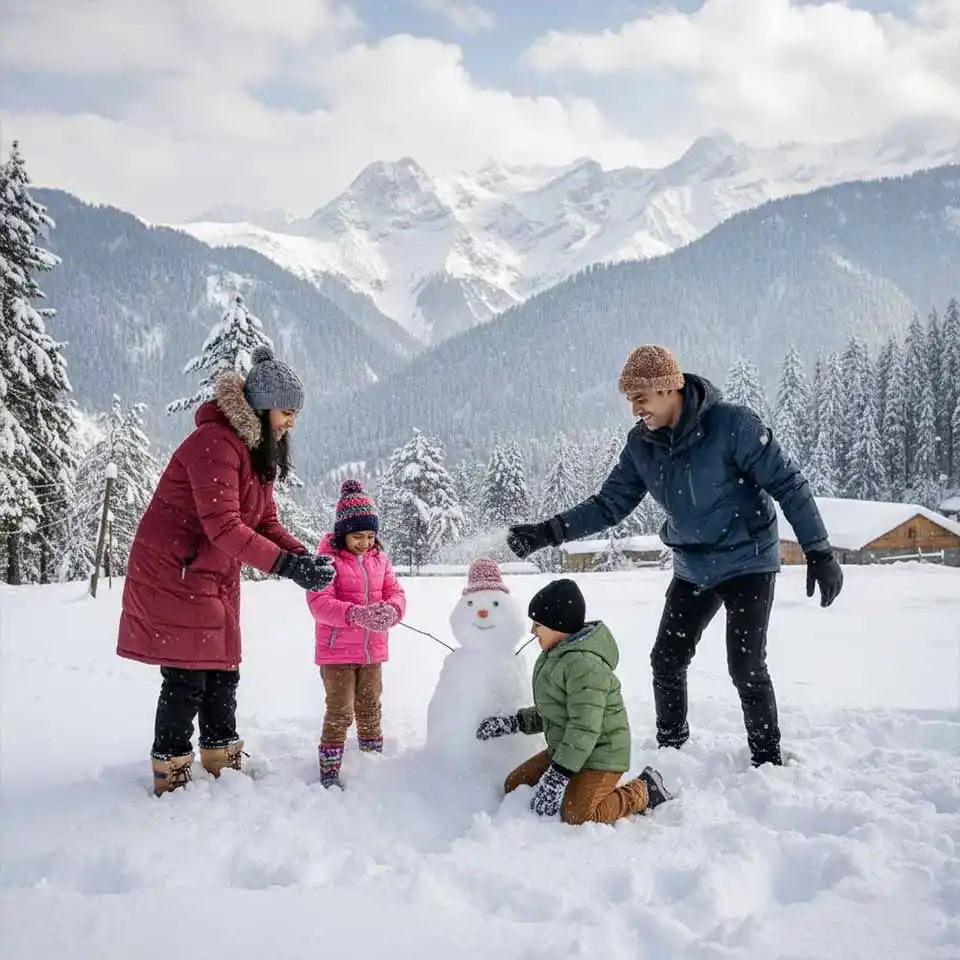 7D/6N
7D/6NBest Shimla Kufri Chail Narkanda Snow Trip From Delhi
1D Delhi•3D Shimla+3
₹14,700₹19,999SAVE INR 5,299/ person
Frequently Asked Questions about Fagu
Is Fagu worth visiting?
As a stop on the Shimla to Narkanda road, yes. As a standalone destination, only if you specifically want snow in winter or quiet apple orchards in autumn. There is genuinely very little to do here beyond walking and taking in the views. Most travellers spend one to two hours and continue driving. It also works well as a peaceful overnight base if you want to skip Shimla's crowds.
How far is Fagu from Shimla?
About 18 km from Shimla, roughly 45 minutes to an hour by car on the Hindustan Tibet road. The road is paved and in reasonable condition. Fagu is about 6 km past Kufri.
How much time do you need at Fagu?
For most travellers, one to two hours is enough. Stop, walk through an orchard, take in the Giri Valley views, have tea, and move on. If you want to stay overnight, HPTDC runs the Apple Blossom hotel and a few private homestays and guesthouses exist, but options are limited. Arrive by late morning for the clearest views. Afternoon fog rolls in around 3 to 4 PM most days.
What is the best time to visit Fagu?
October for apple harvest, clear skies, and the best valley views. January and February for snow, though active snow cover depends on live weather and clears faster here than at Narkanda. March to May for pleasant walking weather and wildflowers. Avoid July to September when the mist is constant, trails are muddy, and landslide risk is higher. Whatever the season, morning visits give far better visibility than afternoons.
Does Fagu get snow?
Fagu gets snowfall from late December through February. It sits higher than Shimla, so the chances are better here. But active snow cover depends entirely on live weather conditions and clears faster than at higher stations like Narkanda. Snowfall is not guaranteed on any specific day. If you are driving up for snow, check conditions that morning and go early.
What is the difference between Fagu and Kufri?
Fagu is a farming village with no tourist infrastructure. No pony rides, no nature park, no amusement park. It is quieter, less commercial, and the experience is purely about the landscape, the orchards, and the valley views. If you want activities, Kufri has more to offer. If you want calm and a more authentic feel, stop at Fagu.
Related guides
Posts about Shimla
- Shimla Snow Trip 2026: Best Time, Itinerary, Cost and Local Tips
- Shimla in February 2027: Weather, Snowfall, Itinerary and Travel Tips
- Snow Point Near Shimla in 2026: Kufri, Fagu, Narkanda and the Best Places to Find Snow
- Shimla Honeymoon Guide 2026: Best Time, Itinerary, Cost and Romantic Places
- Shimla Kufri Chail Narkanda Tour 2026: Complete 6 Day Itinerary, Cost and Road Guide
- Shimla to Kasol Distance, Route, Bus and Taxi Guide 2026