
Spiti With Kids in Winter 2026: Is It Safe? Age, Altitude, Cold, Stays & Better Alternatives
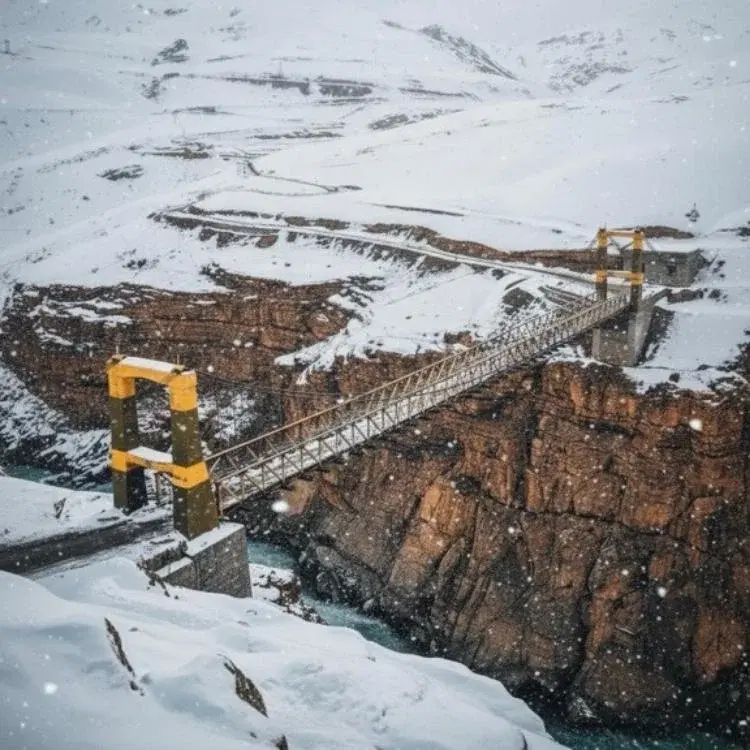
Taking your kids to Spiti in winter sounds like the kind of family adventure they might remember for years.
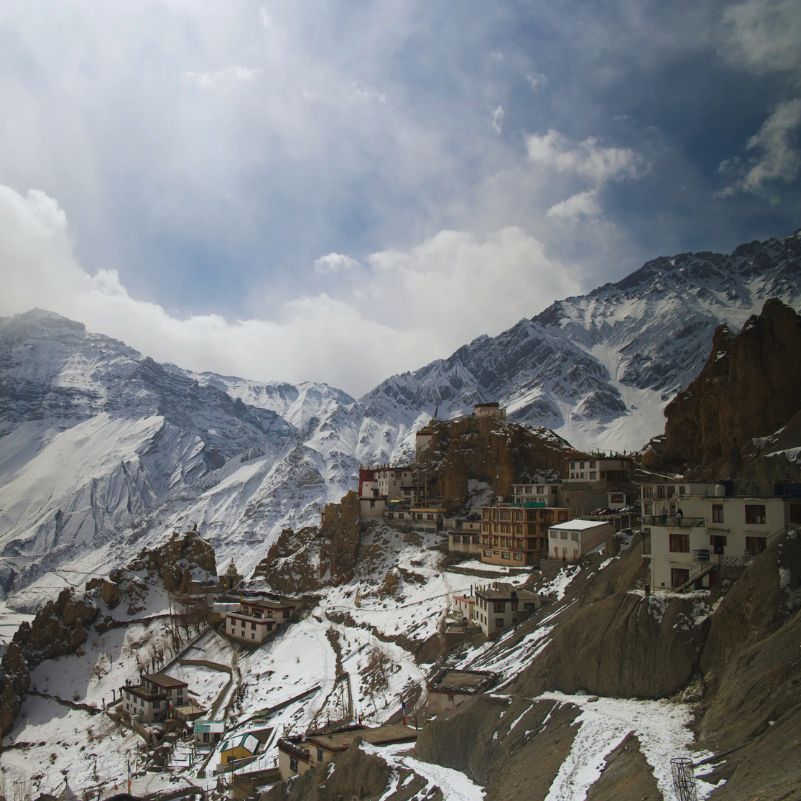
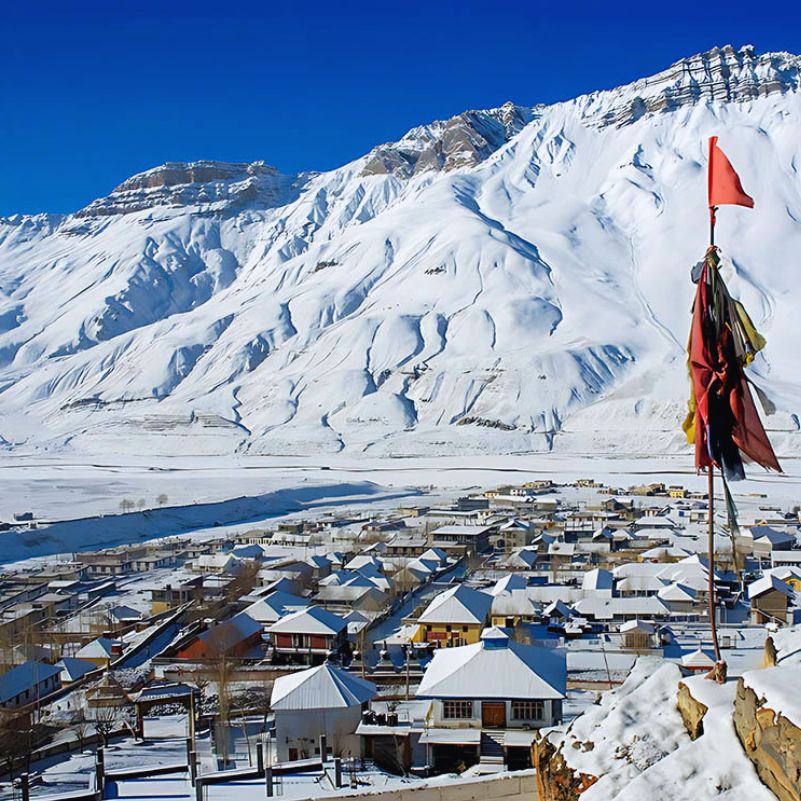
Snow covered villages, frozen landscapes, quiet monasteries and mountain roads can make the trip feel completely different from an ordinary Himachal holiday.
But winter Spiti with children is not just about packing extra jackets and finding a warm hotel.
You also need to think seriously about altitude, extreme cold, long driving hours, limited medical facilities, unpredictable road conditions and whether your child is physically comfortable with this kind of journey.
In this guide, we will help you understand what age may be suitable for a winter Spiti trip, how altitude can affect children, what kind of stays to expect, how cold it actually gets and when choosing a lower altitude destination may be the smarter family decision.
Quick Answer: Is Winter Spiti Safe With Kids?
There is no medically proven universal minimum age for Spiti with kids in winter.
Kaza sits at 3,660 metres, temperatures across Lahaul and Spiti can fall to around minus 20 degrees Celsius, and younger children are hard to assess for altitude sickness. So Winter Spiti is not our default pick for families with small kids.
Older children who can clearly say how they feel might be considered, but only after proper medical advice, with a slow itinerary, a flexible road plan, suitable winter stays and a real emergency strategy.
If you still want to weigh it up properly, start by looking at our Winter Spiti tour packages and read the rest of this honestly before you book anything.
Why Is Winter Spiti Harder for Children Than a Summer Spiti Trip?
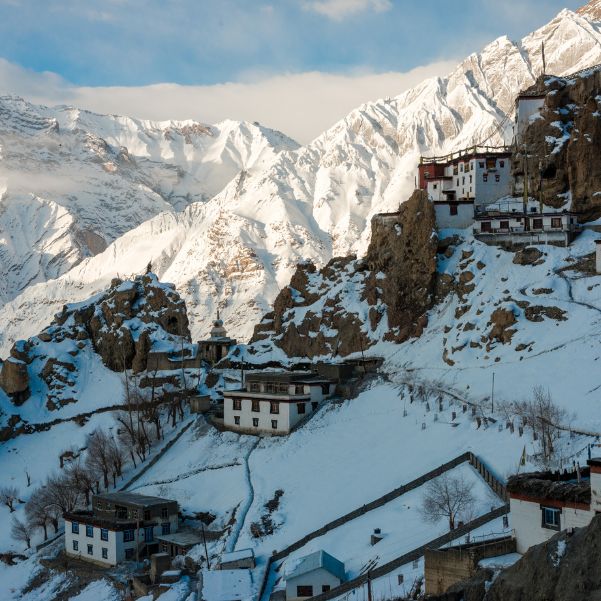
Winter Spiti stacks three separate challenges on top of each other: high altitude, extreme cold and remoteness. Each one is manageable alone. Together, with a child, they get complicated fast.
High altitude means lower oxygen pressure, colder air, very low humidity and stronger ultraviolet exposure. Snow makes the UV worse because it bounces sunlight back at you.
Winter also changes the basics you take for granted. Transport, electricity, running water and food supply can all be less predictable than in the main tourist season.
This does not mean every property loses water or power. It means conditions vary a lot, and you must confirm them with the actual place you are booking.
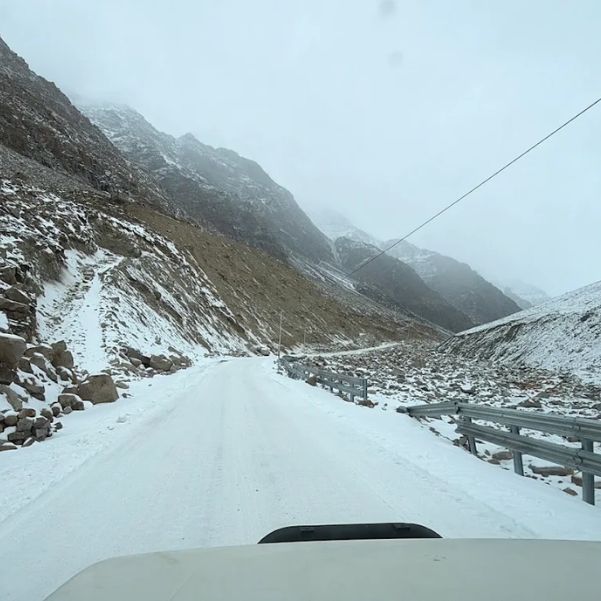
The biggest reason to slow down is the road. If a child needs to descend or reach better medical care, you cannot assume that happens on a fixed timetable in winter. A blocked road changes everything, and that is a heavier risk with a child than with a group of adults.
Is There a Safe Minimum Age for Taking Children to Winter Spiti?
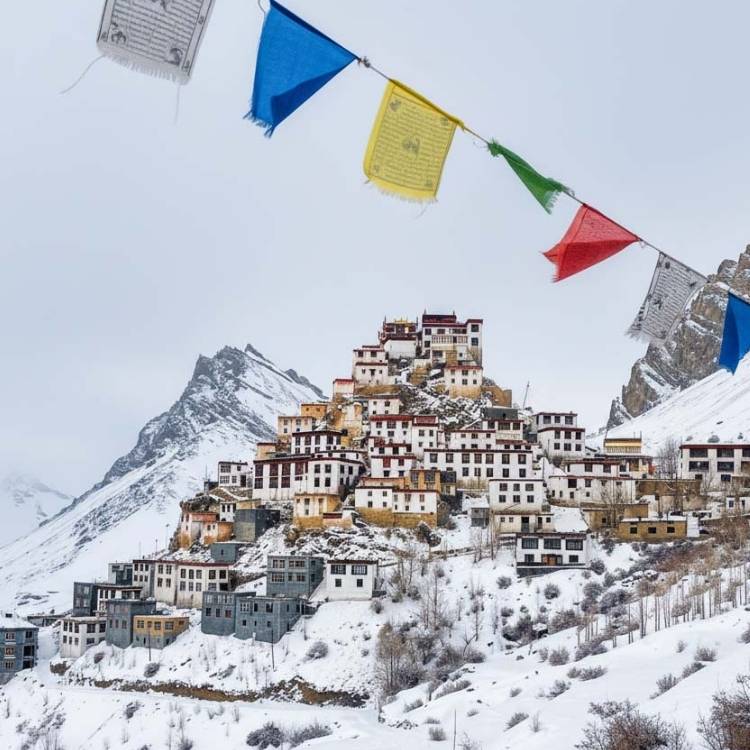
No. There is no scientifically established universal minimum age for Winter Spiti.
A big part of the decision is how well a child can communicate. Children under three may show changes in sleep, appetite, activity or mood that are hard to tell apart from altitude illness.
Some children aged three to eight also struggle to describe what they feel. Children aged eight and above generally report altitude symptoms more like adults do.
That does not mean age eight is automatically safe. It only means an older child is usually easier to read.
Conservative UIAA guidance generally recommends not taking a preschool child to a sleeping altitude above roughly 3,000 to 4,000 metres, and preferring to sleep below 2,500 metres.
Set that beside the plain fact that Kaza is at 3,660 metres, and you can see why we ask families to pause.
Age is only one piece. Health, communication ability, past altitude experience, how fast you climb, winter weather, the quality of your accommodation and access to medical care all matter just as much.
How Does Altitude Affect Children Differently From Adults?

According to CDC guidance, children are broadly as susceptible to altitude illness as adults. The idea that "kids handle it better" is a myth. They do not get a free pass.
The real difference for parents is recognition. A young child may not say "I have a headache" or "I feel dizzy." A preverbal child can instead show loss of appetite, irritability, pallor or general fussiness. Changes in sleep and activity are also easy to misread.
Acute mountain sickness commonly starts within roughly 2 to 12 hours after reaching a higher altitude, or during and after the first night. So the first evening and the first night in Kaza are exactly when you watch most closely.
Here is the trap. After a long, tiring road day, it is very tempting to explain away a cranky, off-food, pale child as "just tired from the drive." Do not assume that. Tiredness and early altitude illness can look identical.
If you suspect altitude illness, do not go higher. Worsening illness needs descent and medical attention. That rule is simple and it saves trips.
Should parents give children Diamox before Spiti?
Altitude medication for a child is a medical decision, not a travel-blog decision. Talk through your child's medical history, the itinerary and the exact sleeping elevations with your pediatrician or a doctor familiar with high altitude medicine. We do not and will not give doses.
Why Does Kaza's Altitude Matter for a Family?

Kaza is at 3,660 metres. That number matters more than it looks.
CDC advises avoiding a direct journey from low elevation to a sleeping elevation above 2,750 metres in a single day where possible.
Once you are above roughly 3,000 metres, conservative guidance says to raise your sleeping elevation by no more than about 500 metres per day, and to add an extra acclimatisation day for every 1,000 metres gained.
Kaza is already well past these thresholds. Reaching it is not a gentle step up.
So please do not take a freshly arrived child straight from Kaza to the highest villages just because the road happens to be open that morning. Open road and ready body are two different things.
How Slowly Should a Family Travel to Support Acclimatisation?
The guidance is clear even if the geography is not.
Avoid going from low elevation directly to above 2,750 metres sleeping altitude in one day where you can.
Once above roughly 3,000 metres, sleeping altitude should generally rise no more than about 500 metres per day, with an extra acclimatisation night for each roughly 1,000 metres of sleeping elevation gained.
The acute acclimatisation process is especially important over roughly the first three to five days.
Here is the honest Spiti-specific problem
The road, and where you can actually sleep along it, means a textbook-perfect elevation increase is not always possible. There is no single itinerary that is medically safe for every child, and we will not pretend otherwise.
What we can do is stack several lower and intermediate nights, build in generous rest, and route you through gradual gains where the road allows.
In our experience planning Himachal road trips, the families who do best are the ones who add nights, not the ones who add sightseeing points.
Our team recommends asking a clinician to review your actual nightly sleeping elevations, not just your travel days, if you are seriously considering this trip.
A slow, lower-altitude approach through areas like Kinnaur helps, and our Kinnaur tour packages can be shaped around gentler stops.
We do not publish a fixed "safe kids itinerary," because we cannot verify your child's health or every overnight elevation from here.
How Cold Does Winter Spiti Get, and How Do You Protect Children?
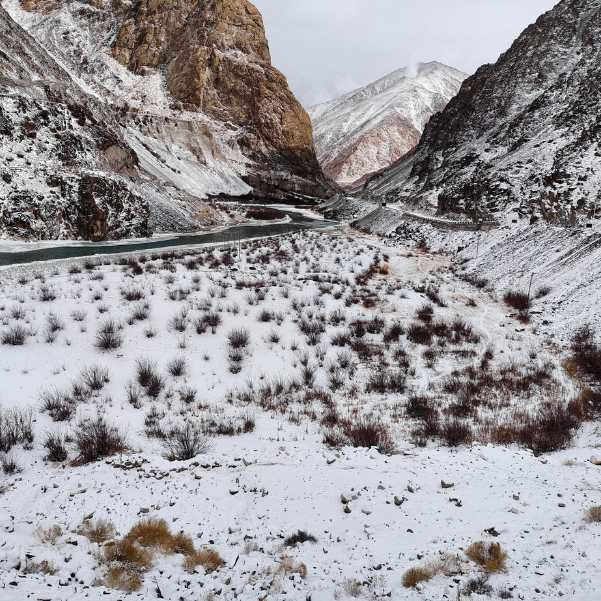
The Lahaul and Spiti district administration says temperatures can fall to around minus 20 degrees Celsius in winter. That is the firm figure we use. We do not throw around minus 30 or minus 40 numbers, because those are not verified.
Cold protection for a child comes down to layering done properly. Use several loose layers, a warm insulating layer, and a wind and water resistant outer layer. Add a hat, face protection, mittens and water resistant boots. This applies to adults too.
Staying dry is the part people forget. Wet clothing pulls heat out of a small body fast, so damp gloves or soaked boots are a real problem, not a minor annoyance.
Watch your child's hands, feet and face yourself. A young child may not tell you their fingers or toes have gone dangerously cold until it is uncomfortable. During severe conditions, keep outdoor time short and come inside on a schedule rather than waiting for complaints.
How do parents manage dehydration in Winter Spiti?
We will not invent a litres-per-day number for your child. Dry high altitude air and cold make it easy to forget fluids entirely, so offer regular drinks appropriate for your child's age and normal needs. Do not force excessive water.
One warning worth holding onto. Loss of appetite, vomiting, or a recently arrived child who cannot drink should not automatically be blamed on picky eating. In a child who has just gained altitude, that can be a signal, not a mood.
Does a child need sun protection when everything is covered in snow?
Yes, absolutely.
Ultraviolet exposure rises with elevation, and snow reflects extra UV back up at you. A cloudy, snowy day is not a safe day for skin or eyes.
Use protective clothing, a hat and proper sunglasses for your child. For children older than six months, CDC Yellow Book guidance favours mineral physical sunscreens containing zinc oxide, titanium dioxide, or both.
Infants younger than six months should be protected mainly with shade and clothing rather than sunscreen.
How Far Away Is Reliable Medical Care From Kaza and the High Villages?

The official district health setup lists a Community Health Centre at Kaza. It also lists Primary Health Centres at Tabo, Sagnam, Losar, Hansa and Kibber, among other district facilities.
This tells you local health infrastructure exists. It does not tell you that pediatric specialists, ICU beds, advanced imaging or every emergency service are continuously available.
Do not assume that pediatric specialists, ICU beds, advanced imaging or every emergency service will be available in Kaza at all times, especially during winter.
For distances, use these. Kee Monastery is at 4,116 metres and about 12 kilometres from Kaza. Kibber is about 14,200 feet and 16 kilometres from Kaza.
Komic is about 31 kilometres from Kaza, with Tangyud Monastery in that area around 15,000 feet. Tabo is about 46 kilometres from Kaza and roughly 3,050 metres, and a PHC is officially listed there.
We deliberately will not give you fixed winter travel times from these villages to Kaza. Snow and ice can change them massively, and a number would only mislead you.
Here is the decision that actually matters for a parent. The question is not "Is there a clinic?" It is "What happens if my child needs care beyond what the nearest facility can provide, and the road is delayed?" If you cannot answer that calmly, the destination may be the problem, not the plan.
What Heating, Food, Toilet and Hot Water Facilities Should Families Confirm Before Booking?
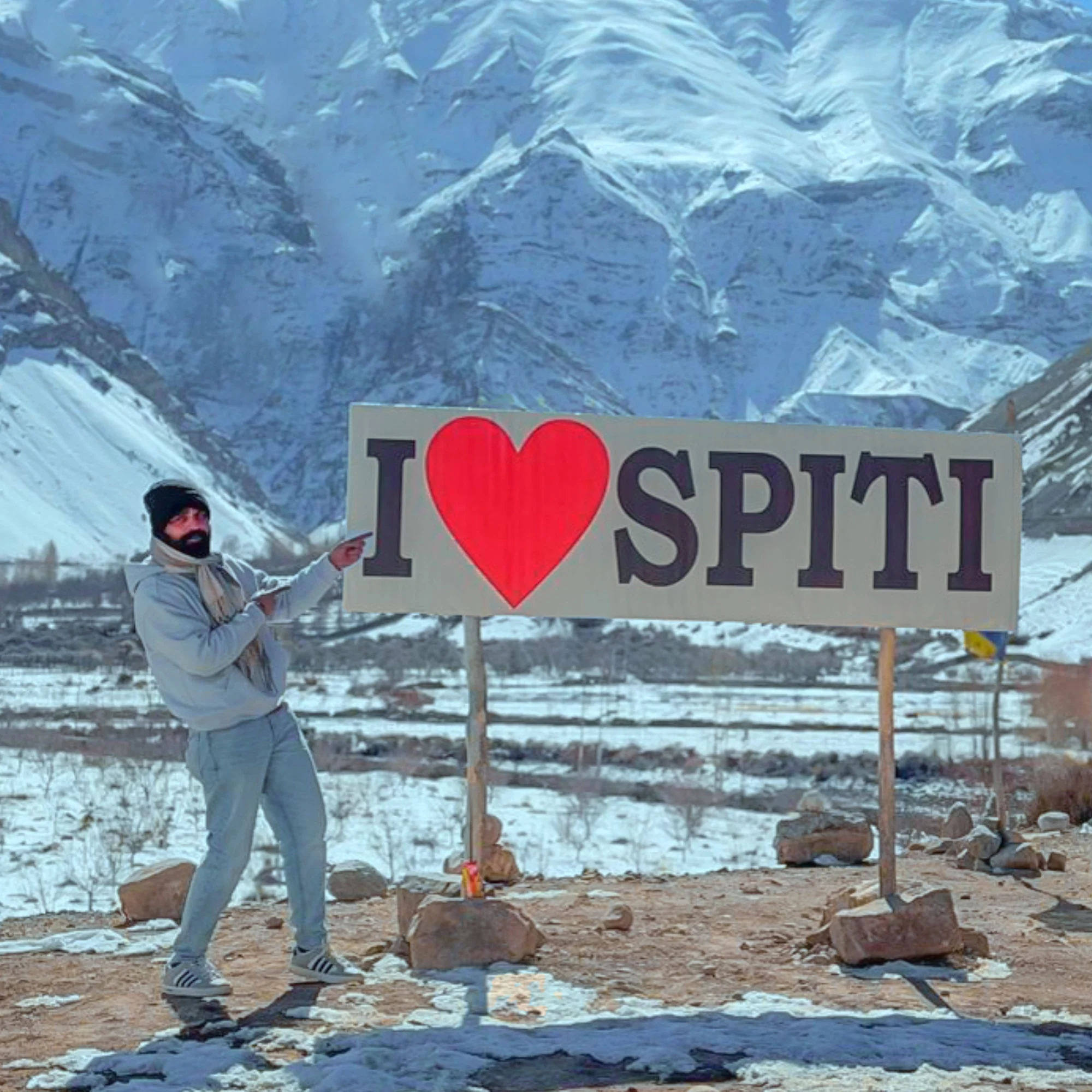
"Heated room" is far too vague a promise to book a child's winter trip on. Push for specifics.
Ask whether the bedroom itself is heated, what type of heater is used, and whether heating runs overnight. Ask whether it needs electricity, and what happens during a power cut.
Ask whether extra blankets and hot water bottles are available, and whether your child will have to cross an unheated corridor to reach the toilet at night.
If the property uses a bukhari, wood stove, kerosene heater or any other combustion heater, remember that combustion heating must be properly vented.
Carbon monoxide is colourless and odourless, which is exactly what makes it dangerous. Ask whether a functioning carbon monoxide alarm is installed near the sleeping area.
This is not an accusation against Spiti homestays. It is a sensible question for any winter property anywhere that burns fuel for heat.
For toilets, confirm whether the attached bathroom actually works in freezing conditions. Ask whether the pipes are running, whether the toilet flushes or uses a dry or pit system, and whether hot water means running water or buckets delivered at set times.
For food, confirm that the simple things your child normally eats can be made. Ask whether an early dinner is possible, whether milk or other staples you rely on are available, and whether safe drinking water is accessible even when shops and cafes are shut.
Also confirm backup power or charging, whether a host is around overnight, and whether the vehicle can even reach the property when it snows. Amenities vary a lot property to property, so treat none of this as guaranteed until the host confirms it.
Which Winter Places and Activities Are Realistic With Children?
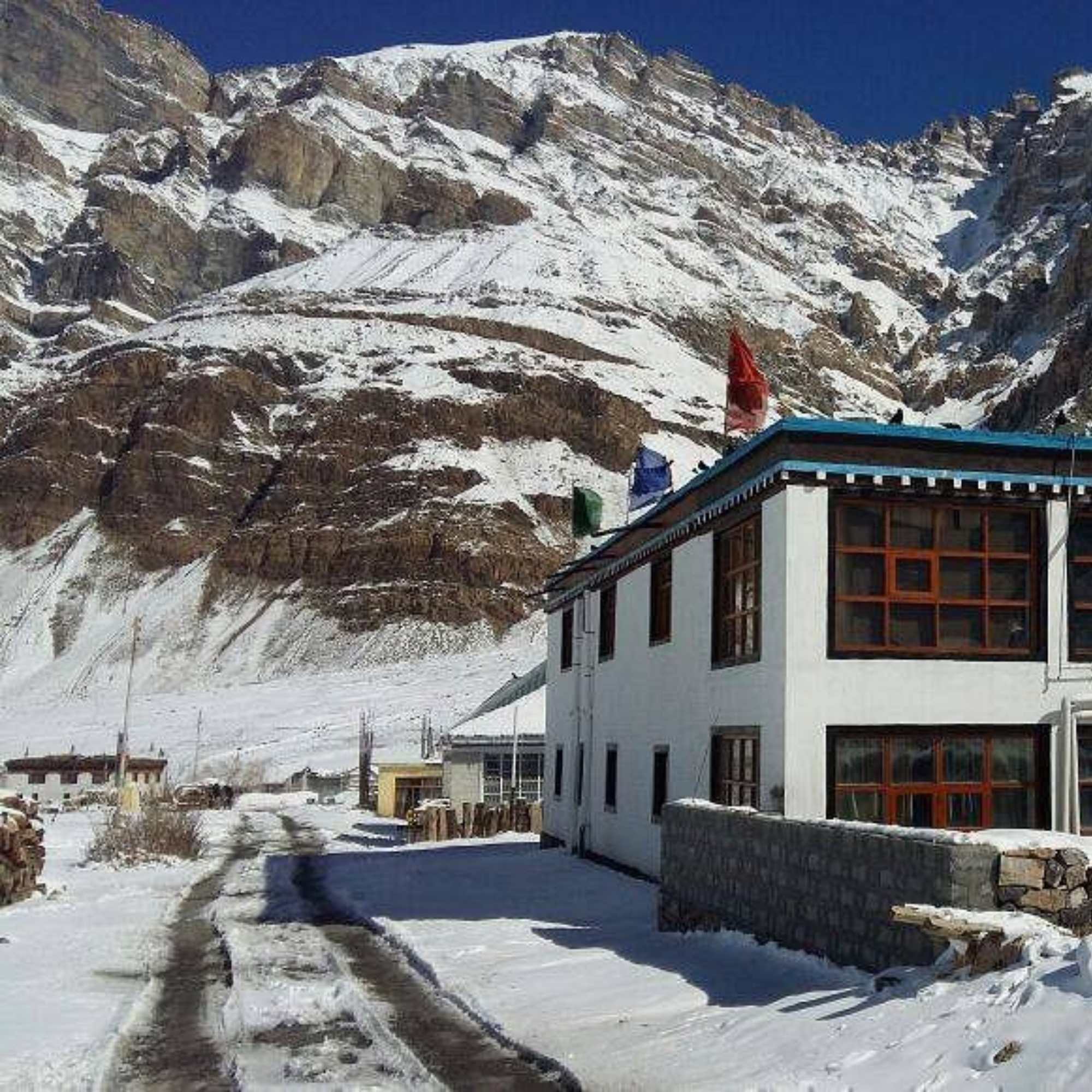
A child-friendly Winter Spiti plan should be deliberately less ambitious than any adult adventure itinerary. That is the whole point.
The conservative starting position is low-exertion time based in Kaza, and only once everyone is genuinely feeling well. Rest first, sightsee later.
Kee Monastery is 12 kilometres from Kaza but sits at 4,116 metres, higher than Kaza itself. Treat it as an optional excursion, taken only when the current roads are suitable and your child is already acclimatised and well.
Kibber at around 14,200 feet and the Komic area at around 15,000 feet are higher still, and neither should be treated as compulsory first-day sightseeing.
We do not recommend strenuous trekking, frozen waterfall climbing, long snow leopard tracking walks, overnight winter camping or anything similar as standard children's activities.
When families ask us whether Winter Spiti is the right snow holiday, we remind them that the goal is not to tick off every viewpoint. A child who spends the trip resting and feeling fine has had a better trip than one dragged to every high village.
One clear boundary. Chandratal and the Kunzum corridor are not normal Winter Spiti family add-ons, because the Keylong to Kaza route via Kunzum closes for the winter.
If you are dreaming of the lake, that is a different season entirely, and our guide on Chandratal opening in 2026 explains when it actually becomes possible.
Is Spiti Open in December, January and February? The 2026 Road Reality

Let me lay the road situation out plainly.
The district administration lists the Shimla to Kaza route as about 412 kilometres and roughly 20 hours of driving, excluding one overnight halt. It describes this road as almost all weather up to Kaza.
Read "almost all weather" as exactly that. It is not "never closes." Snowfall can still cause temporary disruption on this route.
The Keylong to Kaza road is about 185 kilometres. The district administration says it closes in winter for more than nine months due to Kunzum Pass closure and heavy snowfall, roughly from October or November until June or July.
As of the official August 20, 2026 road status update, Keylong to Kaza was listed as closed.
Winter 2026 to 2027 is in the future relative to this research, so those specific conditions are not known yet. Check the current official Lahaul and Spiti road status shortly before you leave, and again before you head up into the high valley.
A family itinerary needs buffer days and a real willingness to postpone or turn around if the road worsens. That flexibility is not a weakness in the plan. It is the plan.
When Should Families Avoid Winter Spiti and Choose Somewhere Lower?

Lean toward a lower altitude alternative when any of these are true.
When the child is too young to reliably tell you they feel unwell. When the child's own doctor advises against the altitude. When the child is already ill. When you simply do not have the days for gradual acclimatisation.
Also lean lower when the booked accommodation cannot confirm safe heating and working winter facilities, when you need predictable advanced medical access, or when weather and road conditions take away a dependable exit route.
The ability to cancel or turn around is part of responsible Winter Spiti planning, not a sign you failed. Some of the best decisions we have seen parents make were the trips they postponed.
What Are Better Winter Alternatives to Spiti With Kids?
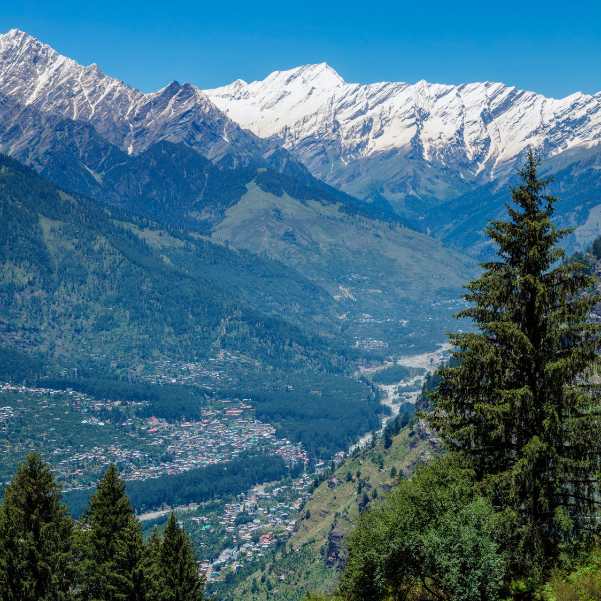
Choosing somewhere else does not mean giving up on a Himalayan winter with your family. It just means picking a mountain that is kinder to small bodies.
Shimla
Shimla's average altitude is about 2,205 metres, well below Kaza's 3,660 metres. That gap changes everything about how a young child copes.
If your priority is a proper winter hill holiday with easier urban infrastructure, hospitals within reach, and no remote high-altitude expedition, Shimla fits. Our Shimla tour packages work well for families who want snow without the altitude gamble.
Manali
Manali's average elevation is about 2,050 metres, also well below Kaza. You do not need to cross very high passes to give your kids a real mountain winter.
Base yourself around Manali and you get snow, walks and comfort within easy reach.
Our Manali tour packages suit families looking for exactly that, and if you want to add some activity for older kids, our guide to adventure activities in Manali is worth a read. Not every snow activity suits every age, so match it to your children.
A customised Kinnaur or lower Himachal itinerary
Kinnaur holds a wide range of elevations, so do not think of it as uniformly low altitude. A customised route can focus on the appropriate lower stops for your child's needs and the current road conditions.
Our Kinnaur tour packages can be shaped around gentler ground when you want mountains without pushing altitude too hard.
A Parent's Go or No Go Decision Before Booking Winter Spiti
Before you pay for anything, sit down and work through all of this honestly.
Can your child clearly describe headache, nausea, dizziness and unusual breathlessness? Has a pediatrician or travel medicine clinician reviewed the relevant health concerns?
Does the sleeping elevation rise slowly enough, and are there rest and buffer days built in? Does your driver have real winter mountain experience? Is the current road open?
Then the practical side. Does the accommodation have genuinely suitable heating and working winter plumbing? Do you know where the nearest health facility is? And is everyone in the family willing to descend, turn around or cancel if it comes to that?
No package, no 4x4, no oxygen cylinder and no expensive hotel removes the underlying altitude and winter risk. Those things help. They do not erase the mountain.
Explore Our Curated Winter Spiti Tour Packages
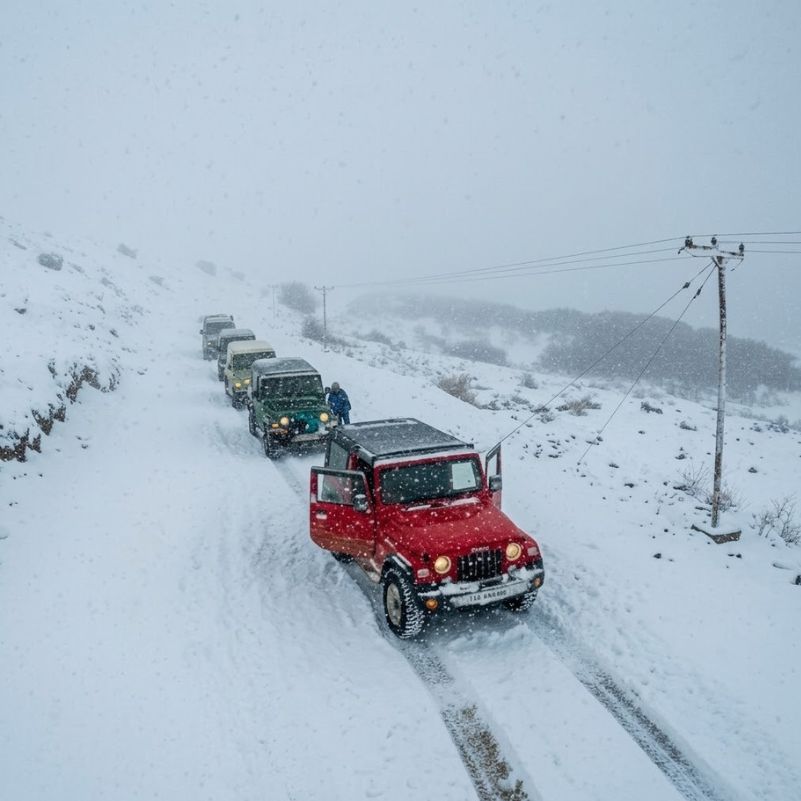 Group Tour9D/8N
Most Loved 4×4 Winter Spiti Expedition
2D Sangla•1D Tabo+2
₹29,999₹35,999SAVE INR 6,000/ person Group Tour9D/8N
Best Selling Winter Spiti Valley Group Tour
2D Sangla•1D Tabo+2
₹18,999₹23,999SAVE INR 5,000/ person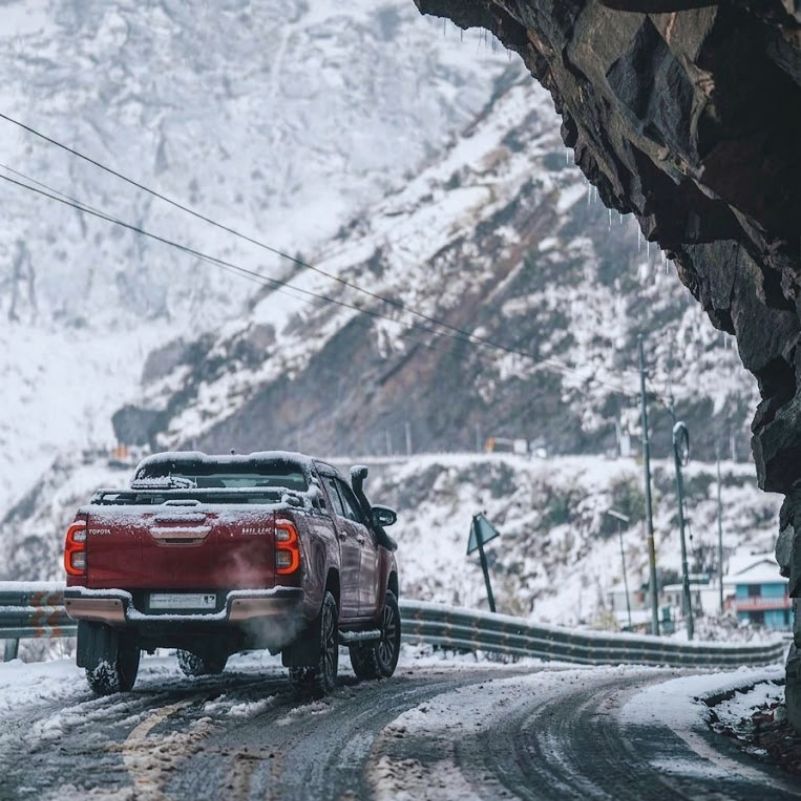 Group Tour8D/7N
Best Selling Kinnaur & Spiti Winter 4x4 Expedition
1D Sangla•1D Nako+2
₹27,999₹30,999SAVE INR 3,000/ person
Related topics
Frequently Asked Questions
Is there a safe minimum age for taking children to Winter Spiti?
There is no scientifically proven minimum age for Winter Spiti. Younger children need more caution because they may not clearly communicate altitude symptoms. Preschool children should be planned for very conservatively.
Can a 5 year old or 8 year old safely visit Spiti in winter?
There is no guaranteed safe age. An eight year old may communicate symptoms better than a five year old, but altitude, health, acclimatisation, weather and emergency access still determine the actual risk.
How does altitude affect children differently from adults?
Children can be just as vulnerable to altitude sickness as adults. Younger children are harder to assess because symptoms may appear as irritability, poor appetite, unusual tiredness or behavioural changes.
What altitude sickness symptoms should parents watch for?
Watch for headache, nausea, vomiting, poor appetite, unusual tiredness, irritability, pallor and behavioural changes. If altitude illness is suspected, do not continue higher and seek medical help if symptoms worsen.
How slowly should a family travel before sleeping in Kaza?
Avoid rushing directly from low altitude to Kaza whenever possible. Add acclimatisation stops on the way and give children enough time to adjust before sleeping at higher elevations.
How can parents protect children from extreme cold, dehydration and sun exposure?
Dress children in several warm layers with waterproof boots, gloves and a wind resistant outer layer. Keep them dry, offer regular fluids and use sunglasses, suitable sunscreen and other sun protection.
What medical facility is available in Kaza?
Kaza has a Community Health Centre for basic medical care. Advanced pediatric, ICU and specialist facilities may be limited, so families should plan for the possibility of transfer during a serious emergency.
How far are Kee, Kibber and Komic from Kaza?
Kee is about 12 km from Kaza, Kibber about 16 km and Komic about 31 km. Winter travel times can change significantly because of snow, ice and temporary road restrictions.
Do Winter Spiti homestays have heating, hot water and usable toilets?
Facilities vary from one property to another. Before booking, confirm room heating, hot water, functioning toilets, frozen pipe arrangements, power backup and whether heaters are properly ventilated.
Is the road to Kaza open in December and January?
The Manali and Kunzum route is normally closed in winter. Kaza is generally approached through Shimla and Kinnaur, but snowfall can still cause temporary closures, so check road conditions before travelling.
Which winter places and activities are realistic with children?
Keep the trip relaxed and mainly Kaza based after proper acclimatisation. Kee, Kibber and Komic should be optional, while winter trekking, frozen waterfall climbing and long snow walks are best avoided with children.
When should families choose Shimla, Manali or another lower altitude destination instead?
Choose a lower altitude destination if the child is very young, cannot report symptoms clearly, has health concerns, or if reliable accommodation and emergency access cannot be confirmed. Severe weather or uncertain roads are also good reasons to reconsider.
More about Lahaul and Spiti
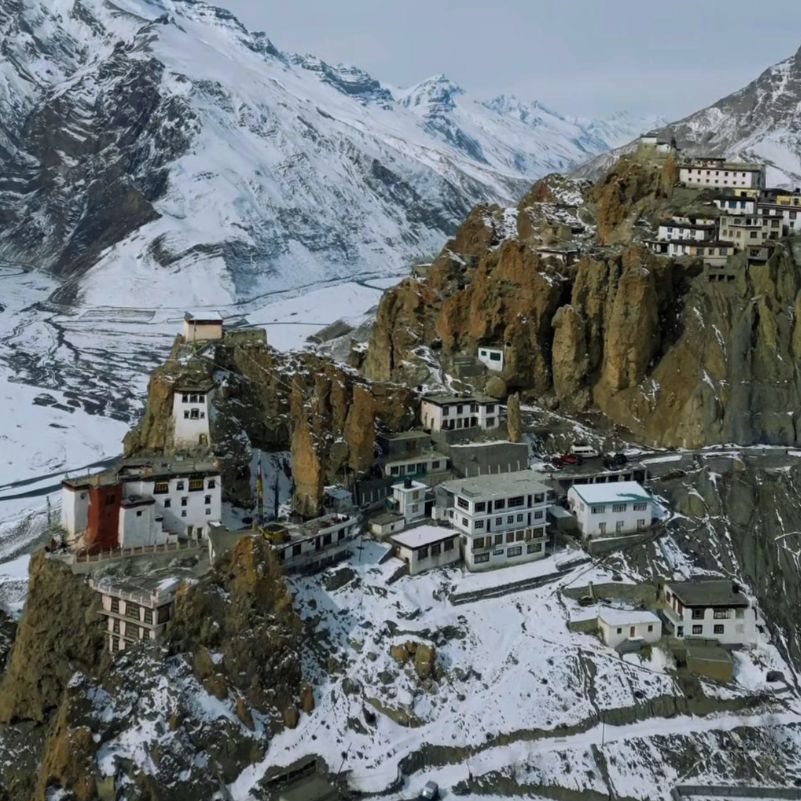 Lahaul and Spiti
Winter Spiti from Bangalore in 2026-27: Flights, Leave Days & Delhi 4x4 Departures
Planning a Winter Spiti trip from Bangalore in 2026-27? Explore flight options, Delhi pickup points, leave requirements, 4x4 group expeditions, travel costs and a practical itinerary to help you plan your Himalayan winter adventure.
- How to Reach
- Snow Travel
 Lahaul and Spiti
What Does a Winter Spiti 4x4 Trip Really Cost in 2026-27? Package Price vs Total Holiday Budget
Planning a Winter Spiti 4x4 trip in 2026-27? Discover the real travel budget, including package prices, transport, meals, winter essentials and hidden expenses. Learn what your package covers, what costs extra and how to plan your Spiti Valley adventure without unexpected spending.
- First-Time Travellers
- Snow Travel
 Lahaul and Spiti
How Many Leave Days Do You Need for a 9-Day Winter Spiti Trip in 2026-27?
Planning a 9 day Winter Spiti trip in 2026 to 2027 requires careful leave planning, especially for working professionals travelling from cities like Bangalore, Mumbai, Hyderabad and Delhi.
- Itinerary
- Snow Travel