
Spiti Winter Packing List 2026-27: Exact Clothes, Boots, Medicines & Emergency Gear

Packing wrong for Winter Spiti is the mistake we see most often. People carry one big jacket, a pair of sneakers, and hope for the best. Then the sun drops behind a ridge, the temperature crashes, and they are shivering in a homestay with no way to get warm.
This Spiti winter packing list gives you exact clothing counts, the right boots, the medicines to sort out before you leave, and the emergency gear that actually matters. We drive and plan these winter trips every season, so this is what we hand our own travellers.
Quick Answer
For a typical 7 to 9 day winter road trip, pack 2 complete thermal sets, 1 fleece mid layer, 1 substantial insulated down or synthetic jacket, and 1 wind and water resistant shell.
Add around 2 winter or trekking trousers, 3 to 4 pairs of wool or synthetic insulating socks with a dry spare kept safe, liner gloves plus insulated outer gloves, 1 ear covering beanie, 1 balaclava or neck gaiter, 1 pair of UV protective sunglasses, and 1 pair of waterproof insulated winter boots.
Also carry your personal medicines, a headlamp, a power bank, basic hygiene supplies, and a simple emergency backup kit.
One thing before you buy anything
A jacket label that says minus 20 degrees is not a standardized guarantee. Insulated jackets do not carry a universal temperature rating the way sleeping bags do, so do not pick a jacket on that number alone.
If you want a route and stay plan sorted around your dates, look at our Winter Spiti Valley tour packages, or just message us and we will tell you what the roads are actually doing.
Why is packing for Winter Spiti different in 2026-27?
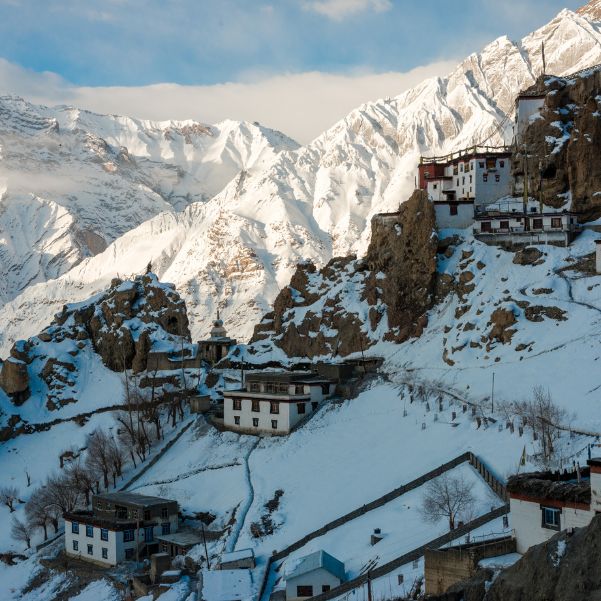
Most tourists pack for cold. Winter Spiti asks you to pack for cold, altitude, dryness, wind, and long broken road days all at once. That combination is what catches people out.
High altitude and winter cold happen together
Himachal Tourism places Kaza at 3,660 metres. That is high enough that your body works harder to stay warm and to breathe, before you even factor in the season.
Lahaul and Spiti district information says winter temperatures can fall to around minus 20 degrees Celsius. Add wind, dry air that pulls moisture out of you, and hours of driving where you barely move, and you understand why a single warm garment is never enough.
You need a system, not one hero jacket. Layers you can add and remove, dry socks in reserve, and protection for your face and hands. That is the real difference between winter here and a weekend in the plains.
Winter road access changes what you need to carry
The Shimla to Kaza road is 412 km, and the district describes it as an almost all weather road up to Kaza. Read that carefully. Almost all weather is not the same as guaranteed open every single day. Snow, ice, and landslides can still shut a stretch with no notice.
The Keylong to Kaza route is 185 km and normally closes in winter, because Kunzum Pass and that road take heavy snow, roughly from October or November until June or July.
So Winter Spiti is normally approached through Shimla and Kinnaur, always subject to what the weather and roads are actually doing on your dates.
Because you come in through Kinnaur, your trip runs longer and colder than a short summer dash. That is one more reason to carry a proper dry change and a real emergency layer. Our Kinnaur tour packages cover this approach if you want the winter routing handled for you.
Exactly how many clothes should you pack for a 7-9 day Winter Spiti trip?

Numbers help when you are staring at an open suitcase tonight. Treat these as our practical baseline, not a scientific rule. Adjust for your own comfort and washing options.
If you are sizing this against a fixed itinerary, our 9D/8N 9-day Winter Spiti expedition runs six mountain nights through Kinnaur and Spiti, which is the trip length these counts are built around.
Upper body packing quantities
Pack 2 thermal tops. One stays on your body, one stays dry in reserve, and you rotate so you never sleep in a damp layer.
Carry 1 main fleece as your insulating middle layer, and 1 substantial insulated down or synthetic jacket as your warm outer insulation.
Add 1 separate wind and water resistant shell when your insulated jacket does not already block wind and light snow well on its own. Beyond that, bring a couple of normal indoor tops if you like, without turning your bag into a wardrobe.
Lower body packing quantities
Carry 2 thermal bottoms so you can rotate and keep one dry. Add around 2 winter suitable or trekking trousers as a sensible 7 to 9 day baseline.
Skip denim as your main cold weather layer. Cotton soaks up moisture and holds it, which is exactly what you do not want when it gets wet in freezing weather. Jeans feel fine in the car and miserable outside it.
Socks, underwear and a dry change
Pack about 3 to 4 pairs of wool or synthetic insulating socks, and protect one completely dry pair for evenings or sleep. Dry feet at night are worth more than you expect.
What matters is keeping socks dry and having boots that fit properly, not stuffing your feet with sock after sock. For underwear and basics, just scale to your trip length and whatever washing you can realistically do on the road.
How should you layer clothes for Spiti in December, January and February?
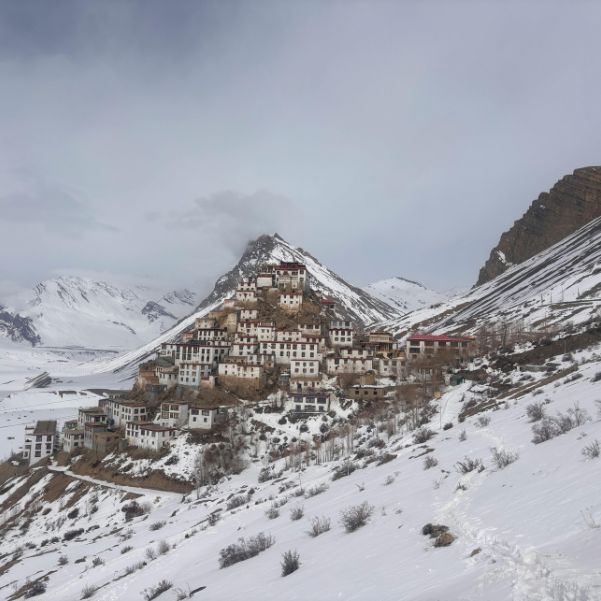
Layering is the whole game for winter Spiti clothes. Get the order right and you stay comfortable through a 20 degree swing between noon sun and night.
Layer 1: the base layer
Your base layer sits against your skin and manages moisture. Go for merino wool or a proper synthetic thermal fabric.
Cotton is a poor base layer here. The moment you are active or start to sweat, cotton holds that damp against you and chills you down. That is the opposite of what a base layer is for.
Layer 2: the mid layer
Your fleece is the mid layer. It traps warmth and stays easy to adjust.
Here is an insider habit worth copying. Open or peel off insulation before you get heavily sweaty, whether you are walking to a viewpoint or sitting in a heated vehicle.
Sweat now means a cold, clammy chill later. In our experience, the travellers who stay comfortable are the ones constantly adjusting, not the ones who zip up once and suffer.
Layers 3 and 4: insulation and weather protection
The full sequence in cold conditions is thermal base, fleece mid layer, insulated jacket, then a weather resistant shell.
People get confused about whether this is three or four layers. There are three functional jobs, moisture management, insulation, and weather protection, but severe winter conditions can mean four actual garments.
You will not wear all four every moment. In the strong midday sun you might strip down to base and fleece. When the wind picks up near a pass, you add everything back.
Is a down jacket necessary, and what warmth rating should you choose?

Short answer first. You need strong insulation for Winter Spiti, but you do not specifically need down. A good synthetic insulated parka can do the same job, and it handles damp better than down does.
Now the part several competing articles get wrong. Insulated jackets do not carry a standardized temperature rating the way sleeping bags do.
So do not choose a jacket just because the product page prints minus 20 degrees. That number is marketing, not a measured guarantee.
Down fill power describes the loft or quality of the down, not the total warmth of the finished jacket by itself. A high fill power number tells you nothing on its own about how warm you will actually be.
What actually decides warmth is enough insulation for the conditions, a fit that lets your thermal and fleece sit underneath without being crushed flat, a hood and neck coverage that seal in heat, real wind and shell performance, the day's actual weather, whether you will be walking or standing still, and your own cold tolerance.
Two people in the same jacket feel very different. Pick for the whole picture, not one printed figure.
What boots, socks and traction work best on snow and ice in Spiti?
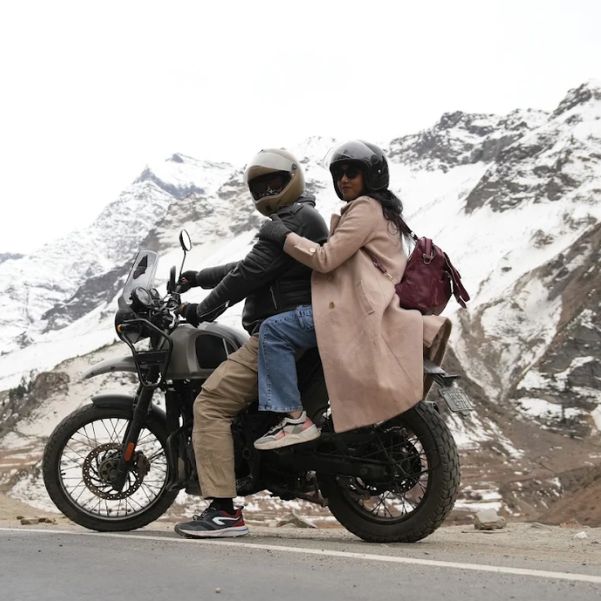
Feet are where budget packing falls apart. Snow boots Spiti travellers regret skipping the most.
What makes a suitable Winter Spiti boot?
Choose a waterproof, insulated, ankle covering winter hiking or snow boot with a strong lugged outsole. The ankle support and the deep tread are what keep you upright on icy paths.
The boot has to fit comfortably with an insulating sock on. If it goes painfully tight once you add a thick sock, it is the wrong boot, and tight boots actually make your feet colder by cutting circulation.
Ordinary sneakers and smooth casual shoes are weak choices here. They soak through, they have no grip, and they turn a short walk on packed snow into a fall risk.
How many socks should you carry?
Stick with the 3 to 4 pairs of wool or synthetic socks for a 7 to 9 day trip. Keep them dry above all else.
Do not assume piling multiple thick socks into a tight boot is warmer. Past a point it just compresses everything and cuts blood flow, which makes your toes colder, not warmer.
Do you need microspikes or crampons?
Microspikes or ice grippers help a lot on icy walking paths and compacted snow, and they pack down small. For ordinary sightseeing on winter paths, they are the sensible traction choice.
Technical crampons are a different tool, built for serious winter mountaineering and steeper terrain. An ordinary sightseeing traveller does not need to buy technical crampons.
If your itinerary includes technical winter trekking, follow the equipment list of your qualified guide rather than this general packing list.
Which gloves, caps, face protection and sunglasses are essential?
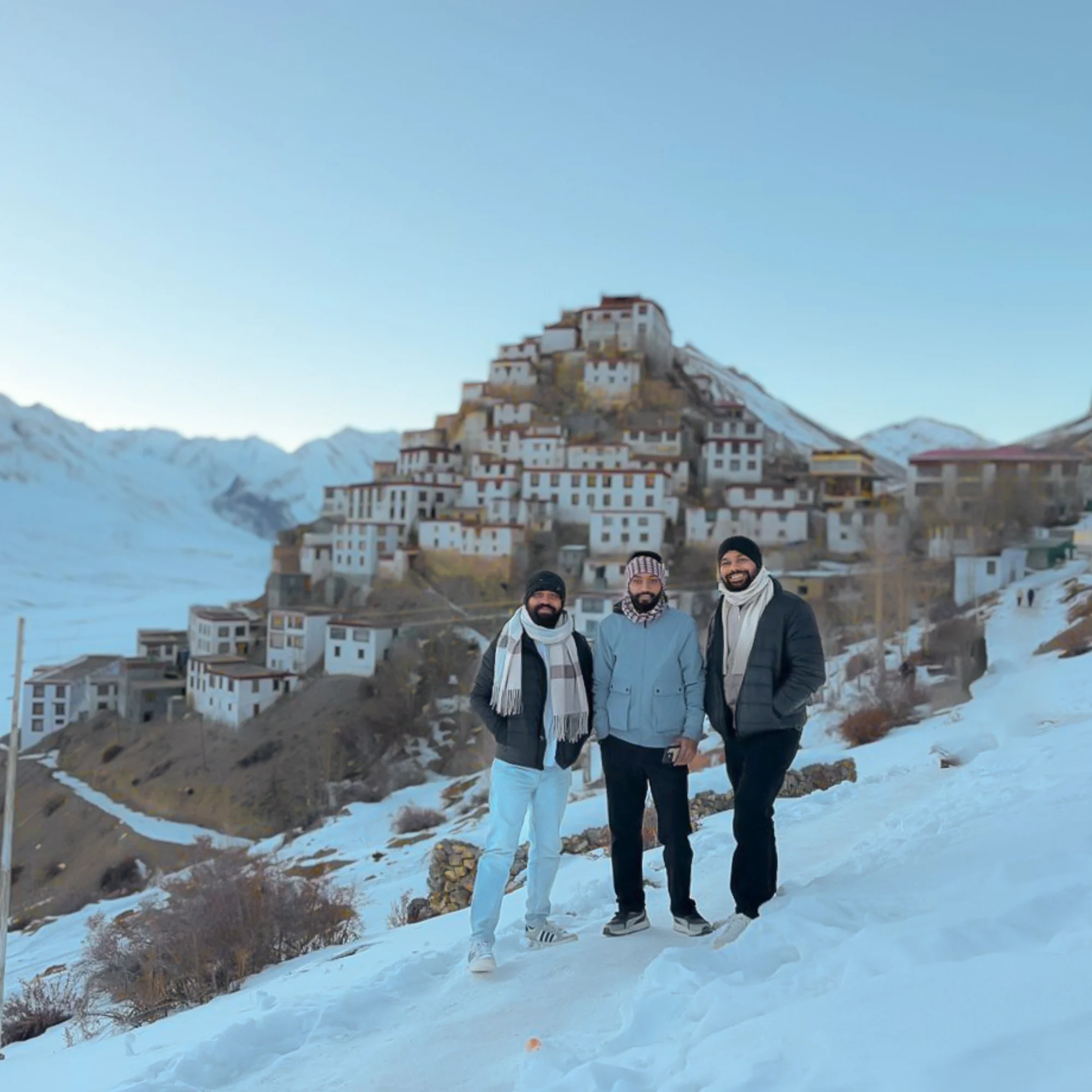
This is where the small stuff protects the parts of you that suffer first.
Carry a liner glove layer plus an insulated weather resistant outer glove or mitten. The liner lets you handle your phone or camera for a moment without exposing bare skin, then the outer goes back on.
Add an ear covering beanie, and a balaclava or neck gaiter that can cover your cheeks, nose, and neck when the wind turns brutal.
CDC cold weather guidance flags the nose, ears, cheeks, chin, fingers, and toes as areas commonly vulnerable to frostbite, and those are exactly the spots a beanie and gaiter protect.
For eyes, get sunglasses that give 99 to 100 percent UVA and UVB protection, or are marked UV400. Snow reflects sunlight straight back up at you, so UV exposure is intense, and good side coverage genuinely helps.
This is not a fashion call. A day on bright snow without proper sunglasses can leave your eyes burning by evening.
Which personal medicines and altitude related items should be discussed with a doctor?
Read this section as planning help, not medical instruction. Sort the medical side with a doctor before you travel.
Personal prescription medicines
Bring your normal prescription medicines in enough quantity for the whole trip, plus a few extra days in case snow or a landslide stretches your journey. Winter roads here do not run to schedule.
Where practical, keep medicines in their original containers and carry your prescription or basic medical information with you, so anyone helping you knows what you take.
Altitude medicine
Kaza sits at 3,660 metres. CDC guidance identifies unacclimatized travellers sleeping at around 2,450 metres or higher as potentially at risk of altitude illness, and Kaza is well above that line.
So talk to an appropriate doctor before a high altitude winter trip, especially if your health history or itinerary adds risk. Acetazolamide is something a doctor may discuss with you where appropriate.
We are not going to give you a dose, and altitude medicine is not something every traveller should simply buy and swallow on their own.
Symptoms that should change the itinerary
Acute mountain sickness usually shows up as a headache plus one or more of poor appetite, dizziness, fatigue, nausea, or vomiting.
If you have these symptoms, do not climb to a higher sleeping altitude. If they get worse despite rest or treatment, the answer is to descend and get medical assessment. This is not something to tough out. It is a simple rule that keeps people safe.
Pulse oximeter and portable oxygen
A pulse oximeter can add useful information, but readings at altitude need interpretation, and the device does not replace paying attention to how you actually feel or getting medical advice.
Be clear on one point. A small handheld oxygen can is not a rescue plan for genuine altitude illness. CDC guidance says these small cans contain too little oxygen for sustained improvement.
If you are ill at altitude, the real answers are descent and medical care, not a spray can. If you are travelling solo and thinking through safety carefully, our Spiti solo female safety guide is worth a read alongside this.
How can you protect phone batteries, cameras and power banks from extreme cold?

Cold kills batteries fast, and travellers lose photos and navigation because of it.
Very cold conditions temporarily shorten lithium battery life, and devices can shut down earlier than you expect.
Apple specifically warns that using an iPhone in very cold conditions can temporarily reduce battery life and cause a shutdown, with normal performance returning as the phone warms up.
Nikon's cold weather guidance recommends keeping spare camera batteries inside your coat, close to your body, and rotating them as they drain.
Turn that into simple habits. Keep your phone, camera batteries, and power bank in an inside jacket pocket or an insulated pouch when you are outside for long spells. Carry the charging cables you actually need.
Do not leave your only power bank or spare camera battery in a freezing vehicle overnight. And let very cold electronics warm up a bit before you try to charge them.
We will not throw a number like 10,000 or 20,000 mAh at you, because how much power bank you need depends on your devices and habits. Carry what covers your own usage with a margin.
What toiletries and hygiene items are useful when water pipes freeze?

Set your expectations honestly here. Winter Spiti stays can have limited or no running water, because the pipes freeze. Many Spiti homestays use traditional dry eco toilets. That is normal, not a problem, and it works fine once you are ready for it.
Pack toilet paper or tissues, hand sanitiser, a toothbrush and toothpaste, a small quick drying towel, moisturiser, lip balm, and a modest quantity of wipes. The dry air will crack your lips and skin, so moisturiser and lip balm earn their place.
Carry used wipes out with you rather than leaving them in a dry toilet or the landscape. Do not assume a hot shower every day at every remote winter stay.
Some places manage a bucket of hot water and that is a good day. Pack so you are comfortable either way, and be easy about it. The homestay setup is built for this climate.
Which emergency items should stay in your day bag and which should stay in the vehicle?

Split your gear by one simple rule and you will never be caught out.
What belongs in your day bag?
The rule is this. Anything you might need if you get separated from the vehicle for a few hours stays on you, not buried in the main luggage in the boot.
So your day bag holds your personal prescription medicines, any doctor prescribed altitude medicine, your ID and any required permit documents, some cash, your phone, a power bank and cable, a headlamp, sunglasses, sunscreen or lip protection, water or a thermos, calorie dense snacks, small first aid supplies, a spare dry pair of socks or gloves, one compact warm layer, and tissues and sanitiser. Keep it packed and keep it with you.
What belongs in the vehicle emergency kit?
The bulky shared gear lives in the vehicle. NHTSA winter driving guidance recommends carrying blankets, extra warm clothing, food, water, a snow shovel, appropriate abrasive traction material, jumper cables, a flashlight, warning devices, phone charging capability, and necessary medicines.
A properly equipped winter operator may also carry extra vehicle specific recovery equipment. Chains, recovery gear, and vehicle preparation are the driver's or operator's responsibility and depend on the vehicle and the conditions.
When we help travellers plan Winter Spiti, we make sure the vehicle side is handled by an experienced winter driver, so you are never relying on a rented sedan and good luck.
What should you NOT pack or rely on for Winter Spiti?

One enormous jacket is not a substitute for a base layer, insulation, and weather protection. It gives you warmth in one setting and no way to adjust when you overheat or when the wind cuts through.
Do not rely on cotton thermals or wet denim as your core snow clothing. Do not rely on sneakers or low grip casual shoes.
Do not treat an advertised jacket temperature number as proof of warmth. And do not treat a small portable oxygen can as your altitude emergency plan.
One more, from experience. Do not assume every size and type of winter boot, base layer, or technical accessory will be available to buy or rent in Kaza.
Sort your critical fit items, especially boots and thermal layers, before your trip starts. A boot that does not fit found at the last minute is worse than the boot you brought.
What road, permit and emergency checks should you make before Winter Spiti 2026-27?

The district's official access guidance says the Keylong to Kaza road across Kunzum normally closes for winter, roughly from October or November until June or July.
So Shimla and Kinnaur are the normal winter approach to Spiti, while conditions can still change with snow, ice, landslides, and temporary closures.
We will not tell you any road is guaranteed open on a future Winter 2026-27 date, because that cannot be confirmed yet. Here is why you must recheck close to departure.
On August 20, 2026, the official district English road status page listed Keylong to Kaza as closed, while the Hindi version listed Kaza to Keylong as open.
When the official live pages themselves disagree, you have to verify current official road information near your departure and not trust an old blog. Our Shimla tour packages start from the sensible winter side of this route.
On permits, be precise. Himachal Tourism says Indian citizens do not need a permit simply to enter Spiti Valley. Foreign tourists need permits for certain protected inner areas and routes close to the Tibet China border.
The Kinnaur district tourist guideline, updated August 29, 2026, lists an Inner Line Permit fee of ₹200 per person at the e Governance Centre, plus applicable travel agency service charges.
That ₹200 does not apply to every Spiti visitor. Exact foreign traveller requirements depend on your itinerary and the protected area rules.
Keep emergency numbers saved offline. Lahaul and Spiti district publishes a Disaster Management helpline, 1077. Official government sources publish 01906-222202 for the Spiti or Kaza tourism and administrative office. Save both before you lose signal.
One planning note that trips people up. Summer opening information for Chandratal and Kunzum does not apply to a winter trip, since that pass and road are normally shut in the cold months.
If you are reading dates for a summer visit, that is our separate Chandratal opening 2026 guide, and it should not be used to judge winter access.
Final Word
Winter Spiti rewards travellers who take it seriously and punishes the ones who wing it. Keep three priorities front of mind. Stay dry and layered, so you can adjust through every temperature swing.
Protect your extremities and your batteries, since fingers, toes, face, and phones fail first in this cold. And treat altitude and winter road access with real respect, because a doctor's advice and a verified road check matter more than any jacket.
Get those right and this Spiti winter packing list turns a hard trip into a genuinely great one. When you are ready to plan the routing, stays, and a winter ready vehicle, we are here to help you do it properly.
Explore Our Curated Winter Spiti Tour Packages
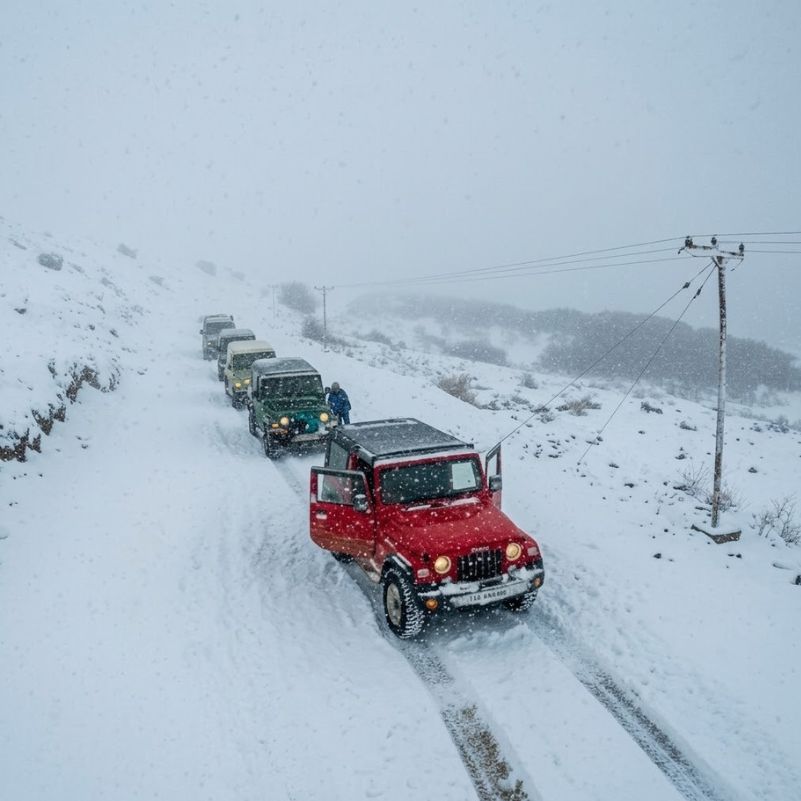 Group Tour9D/8N
Most Loved 4×4 Winter Spiti Expedition
2D Sangla•1D Tabo+2
₹29,999₹35,999SAVE INR 6,000/ person Group Tour9D/8N
Best Selling Winter Spiti Valley Group Tour
2D Sangla•1D Tabo+2
₹18,999₹23,999SAVE INR 5,000/ person 9D/8N
9D/8NWinter Spiti 4×4 Expedition
2D Sangla•1D Nako+2
₹32,999₹44,999SAVE INR 12,000/ person
Related topics
Frequently Asked Questions
What should I pack for Spiti Valley in winter?
Pack a layered clothing system, waterproof insulated boots, gloves, a beanie, a balaclava, UV sunglasses, your personal medicines, a headlamp, a power bank, and basic hygiene supplies. Think dry, layered, and protected extremities.
How many clothing layers are needed for Winter Spiti?
Plan for a base layer, a fleece mid layer, an insulated jacket, and a weather resistant shell. That is three functional jobs, and in severe cold it means four actual garments, though you will not wear all four at once.
Are thermals necessary for Spiti in December?
Yes. Carry two thermal sets, top and bottom, in merino or synthetic. They manage moisture and give you a warm, dry layer to rotate into, which matters when nights get very cold.
Is a down jacket necessary, and what warmth rating should travellers choose?
You need strong insulation, but not specifically down. A good synthetic parka works too. Ignore printed minus 20 style labels, since insulated jackets have no standardized temperature rating, and fill power alone does not tell you the finished jacket's warmth.
What type of boots, socks and traction are suitable for snow and ice?
Waterproof, insulated, ankle high boots with a strong lugged sole, worn with 3 to 4 pairs of wool or synthetic socks kept dry. The boot must fit comfortably with a thick sock, not painfully tight.
Do I need microspikes or crampons for Winter Spiti?
Microspikes or ice grippers help on icy paths and packed snow and are worth carrying for sightseeing. Technical crampons are for serious mountaineering and steeper terrain, so ordinary travellers do not need them. For technical treks, follow your guide's gear list.
Which gloves, caps, face protection and sunglasses are essential?
Carry liner gloves plus insulated outer gloves, an ear covering beanie, and a balaclava or neck gaiter for the nose, cheeks, and neck. Use sunglasses rated 99 to 100 percent UVA and UVB, or UV400, because snow glare is intense.
Which personal medicines and altitude related items should be discussed with a doctor?
Carry your normal prescriptions plus extra days' supply, and discuss altitude medicine like acetazolamide with a doctor before you go. Do not self prescribe. Kaza at 3,660 metres is above the altitude where illness risk begins, so plan the medical side properly.
How can phone batteries, cameras and power banks be protected from extreme cold?
Keep phones, camera batteries, and power banks in an inside jacket pocket or insulated pouch, rotate spare camera batteries from a warm pocket, and never leave your only power bank in a freezing car overnight. Let cold devices warm before charging.
What toiletries and hygiene items are useful when water pipes freeze?
Carry tissues, hand sanitiser, a toothbrush and toothpaste, a quick drying towel, moisturiser, lip balm, and some wipes, and carry used wipes out. Many winter homestays use dry toilets and may have limited running water, so do not expect a daily hot shower.
Which emergency items should stay in the day bag and which should stay in the vehicle?
Keep anything you would need if separated from the vehicle on you, including medicines, ID, permits, cash, phone, power bank, headlamp, snacks, water, and a warm layer. The vehicle carries bulky shared gear like blankets, a shovel, traction material, and jumper cables.
Can I buy or rent all my Winter Spiti clothes and boots after reaching Kaza?
Do not count on it. You cannot assume every boot size, base layer, or technical accessory will be available to buy or rent in Kaza. Arrange your critical fit items, especially boots and thermals, before your trip starts.
More about Lahaul and Spiti
 Lahaul and Spiti
Winter Spiti from Bangalore in 2026-27: Flights, Leave Days & Delhi 4x4 Departures
Planning a Winter Spiti trip from Bangalore in 2026-27? Explore flight options, Delhi pickup points, leave requirements, 4x4 group expeditions, travel costs and a practical itinerary to help you plan your Himalayan winter adventure.
- How to Reach
- Snow Travel
 Lahaul and Spiti
What Does a Winter Spiti 4x4 Trip Really Cost in 2026-27? Package Price vs Total Holiday Budget
Planning a Winter Spiti 4x4 trip in 2026-27? Discover the real travel budget, including package prices, transport, meals, winter essentials and hidden expenses. Learn what your package covers, what costs extra and how to plan your Spiti Valley adventure without unexpected spending.
- First-Time Travellers
- Snow Travel
 Lahaul and Spiti
How Many Leave Days Do You Need for a 9-Day Winter Spiti Trip in 2026-27?
Planning a 9 day Winter Spiti trip in 2026 to 2027 requires careful leave planning, especially for working professionals travelling from cities like Bangalore, Mumbai, Hyderabad and Delhi.
- Itinerary
- Snow Travel