
Spiti Valley Bike Trip In August 2026: Monsoon Risks, Best Route & Safety Tips
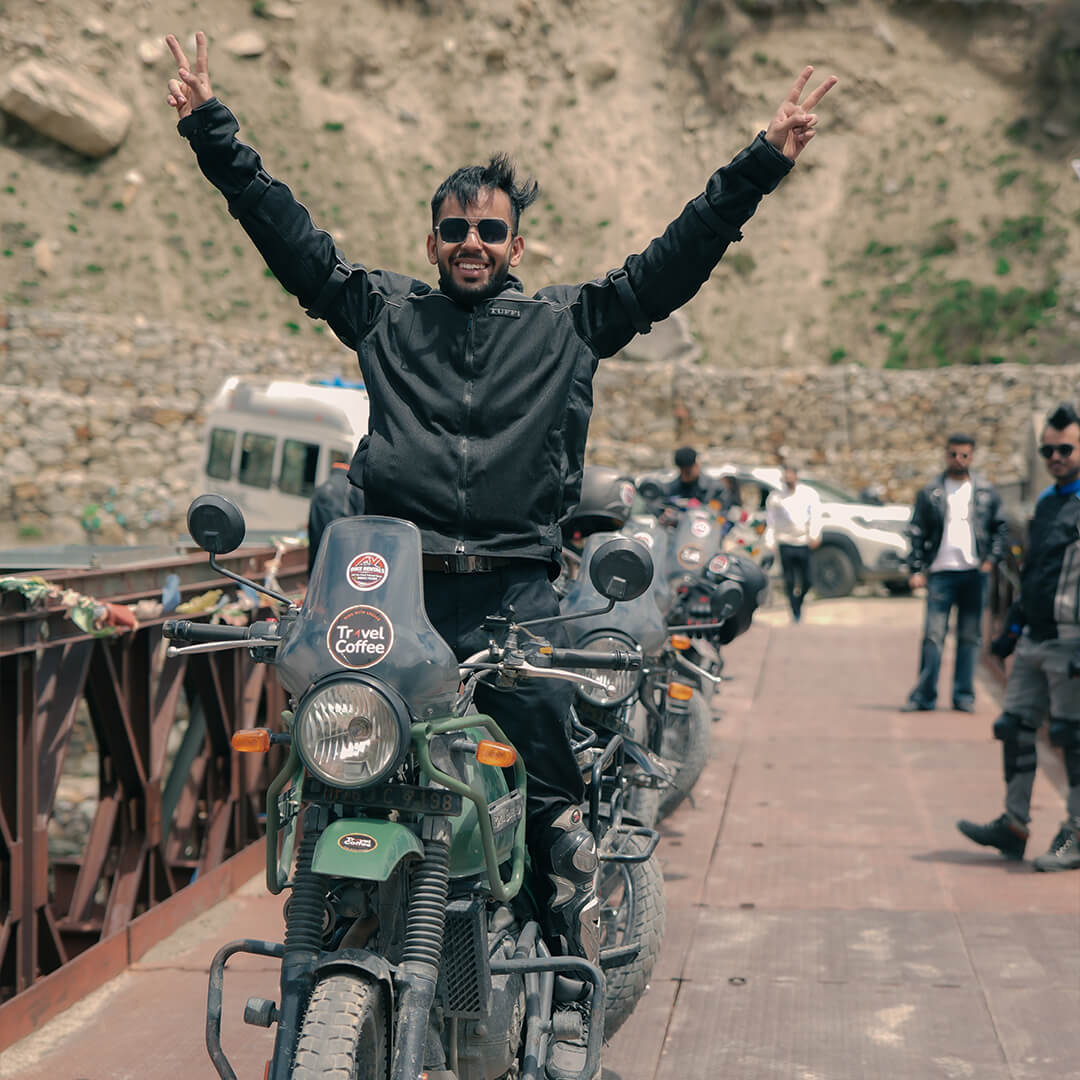
A Spiti Valley bike trip in August 2026 is one of those ideas that sounds incredible on paper. Green valleys, empty roads, dramatic clouds rolling over the passes. And it can be all of that.
But August is also the month when Himachal's monsoon hits the approaching roads hardest, and the difference between a great ride and a dangerous one comes down to how honestly you plan for it.
We have sent riders into Spiti in every month from June to October. August is the month where the most plans change mid-trip. Not because Spiti itself is the problem, but because the roads getting there are unpredictable, sometimes dangerously so.
This guide by Travel Coffee does not sugarcoat August. It tells you exactly what you are getting into, which route to take, what to skip, and how to ride safely if you decide to go.
Quick Answer: Should You Do A Spiti Valley Bike Trip In August 2026?
Yes, but only if you are an experienced rider with flexible dates, proper rain gear, and a willingness to change plans on the road. August is doable but risky.
The approach roads through Kinnaur, Kullu, Mandi, and the Gramphu to Batal stretch get hit by monsoon rains, landslides, and overflowing water crossings.
The safer plan is to enter via Shimla and Kinnaur, ride through Spiti, and exit via Manali only if Kunzum Pass, Batal, and Gramphu are confirmed open and stable. If you are a beginner or riding on a tight schedule with fixed return flights, choose September instead.
Keep at least 2 to 3 buffer days in your itinerary. Our team recommends this for every August rider we work with, and it has saved more trips than we can count.
>>Check August Spiti Route Feasibility With Travel Coffee
Is A Spiti Valley Bike Trip Safe In August 2026?

Spiti itself is not the main danger. Once you are in the Kaza belt, the valley sits in a rain-shadow zone and gets far less rain than lower Himachal. The sky is often clear, the roads are dry, and riding between villages like Key, Kibber, Langza and Hikkim feels completely different from the approach roads.
The real risk is the approach. Getting to Spiti means riding through the full force of the Himachal monsoon, and 2026 has been a wet one. The monsoon reached the state on 30 June and has stayed active into August. On the State Emergency Operation Centre report through 9 August, 124 roads were blocked across Himachal, with Kullu and Mandi worst-hit, while Lahaul and Spiti stayed almost clear in the rain shadow. Earlier in the season the statewide count peaked around 69 on 13 July and has swung between roughly 109 and 157 through early August. The IMD has the monsoon active again from 10 August, with another spell expected from the 14th to the 16th.
That is the pattern to ride around. Kinnaur's NH-5 sees landslides almost every August, the stretch between Gramphu and Batal turns into a mud-and-water obstacle course, and Kunzum Pass can close without warning after heavy rain. For the live route picture before you set off, check our Spiti road status guide, and if you are entering or exiting over Kunzum, our Manali to Kaza road status guide.
None of this means you cannot ride. It means you cannot ride without preparation, flexibility, and real-time road updates. The riders who have the best August trips are the ones who accept that their itinerary might change every morning based on what the road looks like that day.
If you are a solo female rider considering this trip, our guide on whether Spiti is safe for solo female travellers covers the safety picture in detail.
What Makes August Risky For Bikers?
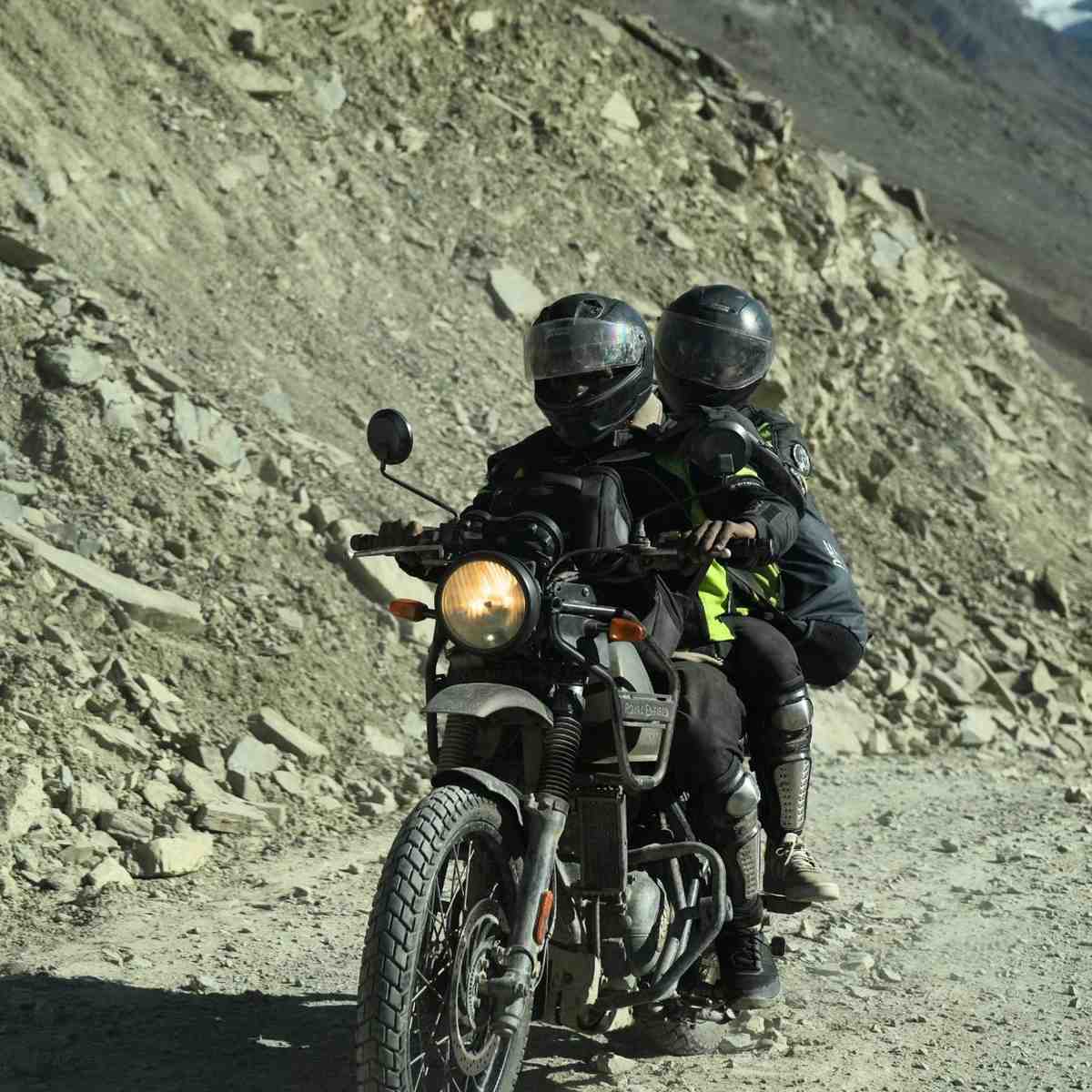
Monsoon On Approach Roads
The monsoon does not hit Spiti directly. It hits everything around it. Mandi, Kullu, Manali, the Atal Tunnel approach, and the entire Kinnaur belt all receive heavy rain between July and mid-September.
This means that no matter which route you take to reach Spiti, you will ride through rain-affected zones.
Lower Himachal roads get slippery. Visibility drops. Mud and gravel wash onto the tarmac. The Kinnaur stretch along the Sutlej Valley is particularly notorious for loose hillsides. In August 2025, over 313 roads in Himachal were closed on a single day due to monsoon damage.
You will not face this kind of rain inside Spiti. But you have to get through it to reach Spiti, and that is where August demands respect.
Water Crossings And Overflowing Nallahs
The Gramphu to Batal stretch is where most bikers get their first real shock. This 60 km section takes 4 to 5 hours on a good day. In August, it can take longer.
Nallahs that are ankle-deep in the morning can become waist-deep by afternoon. Snowmelt and rain both feed into these crossings, and water levels peak between noon and early evening.
Stretches like Pagal Nallah and Chhota Dhara are unpredictable. One rider crosses at 8 AM with no trouble. Another rider at 2 PM finds the same crossing impassable.
The rule is simple. Cross water early. Leave camp by 5:30 to 6 AM. Reach the worst nallahs before the sun has time to melt more snow into them. In our experience, every rider who followed this rule crossed safely. The ones who left late are the ones who got stuck.
Landslides And Shooting Stones
Landslides are not a possibility in August. They are a probability. The question is not whether you will encounter one, but how big it is and how long the road stays blocked.
The important riding rules: never stop your bike below a loose slope to take photos. If you see fresh debris on the road, speed through the section without stopping.
If a landslide has just happened and rocks are still falling, do not attempt to cross. Wait. Even if it takes hours. A few hours of waiting is better than riding into falling rocks.
Our drivers and riders know the specific zones where shooting stones are common. We brief every group on these stretches before departure, because most blogs do not mention them.
Which Route Is Best For Spiti Bike Trip In August 2026?
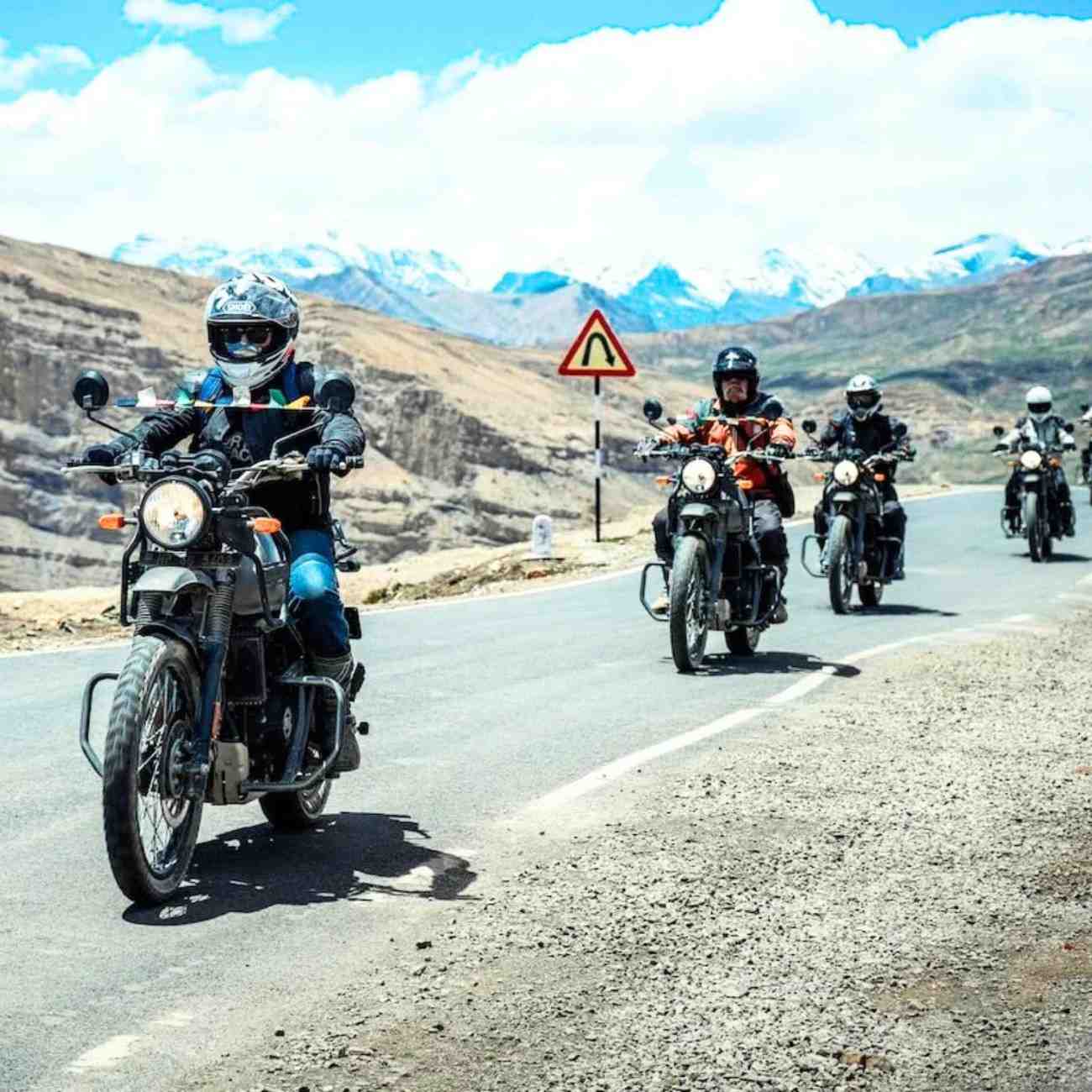
Safer Entry Route: Shimla To Kinnaur To Kaza
This is the route we recommend for August entry. Shimla to Kaza is about 412 km and takes around 20 hours of riding time, split across two days with a night halt.
The road climbs gradually along the Sutlej Valley through Narkanda, Rampur, Reckong Peo, Kalpa, Nako, and Tabo before reaching Kaza. The district administration describes this route as almost all-weather up to Kaza.
This does not mean it is smooth. Landslide-prone patches exist, especially between Rampur and Nako. But compared to the Manali side, this route gives you more towns, more fuel options, more fallback stays, and a much more gradual altitude gain.
Your body adjusts over two to three days instead of being thrown from 2,000 metres to 4,500 metres in a single ride.
If you want to explore our planned Spiti Valley Bike tour Packages that use this route, they are built with buffer days and local support specifically for conditions like these.
Riskier Route: Manali To Atal Tunnel To Gramphu To Batal To Kunzum To Kaza
This route covers about 200 km from Manali to Kaza via Rohtang, Batal, and Kunzum. It sounds shorter and more exciting. In August, it is also significantly more dangerous for bikers.
Here is what the route looks like in segments. Manali to Gramphu is about 50 km and 1.5 hours, mostly through the Atal Tunnel. Fine. Gramphu to Batal is about 60 km and 4 to 5 hours of rough, broken, water-logged road.
This is the stretch that breaks plans. Batal to Kunzum is about 12 km and 45 minutes, steep and exposed. Kunzum to Losar is about 19 km and 1 hour. Losar to Kaza is about 57 km and 2 hours on a better road.
In August, the Gramphu to Batal section is where most problems happen. Water crossings, slush, broken patches, shooting stones. Add rain and you have a stretch that even experienced riders find exhausting.
This route works beautifully in September. In August, it is not the best way to enter Spiti.
Our Recommended August Route
Enter via Shimla and Kinnaur. Spend your days riding through Spiti. Then exit via Manali only after confirming that Kunzum Pass, the Batal to Gramphu stretch, and the Chandratal approach are stable. If they are not, ride back the way you came via Shimla.
What most bikers get wrong is committing to the Manali exit before checking conditions. They book hotels in Manali for a fixed date, and then feel forced to ride through bad roads to make that booking.
Do not do this. Keep your exit flexible. Our Manali travel packages can be adjusted last-minute for exactly this reason.
Dangerous Stretches To Watch In August
Every rider going to Spiti in August needs to know which sections are the most unpredictable. Conditions can change overnight, so treat all of this as a general guide and verify live status before riding each stretch.
Rampur to Nako
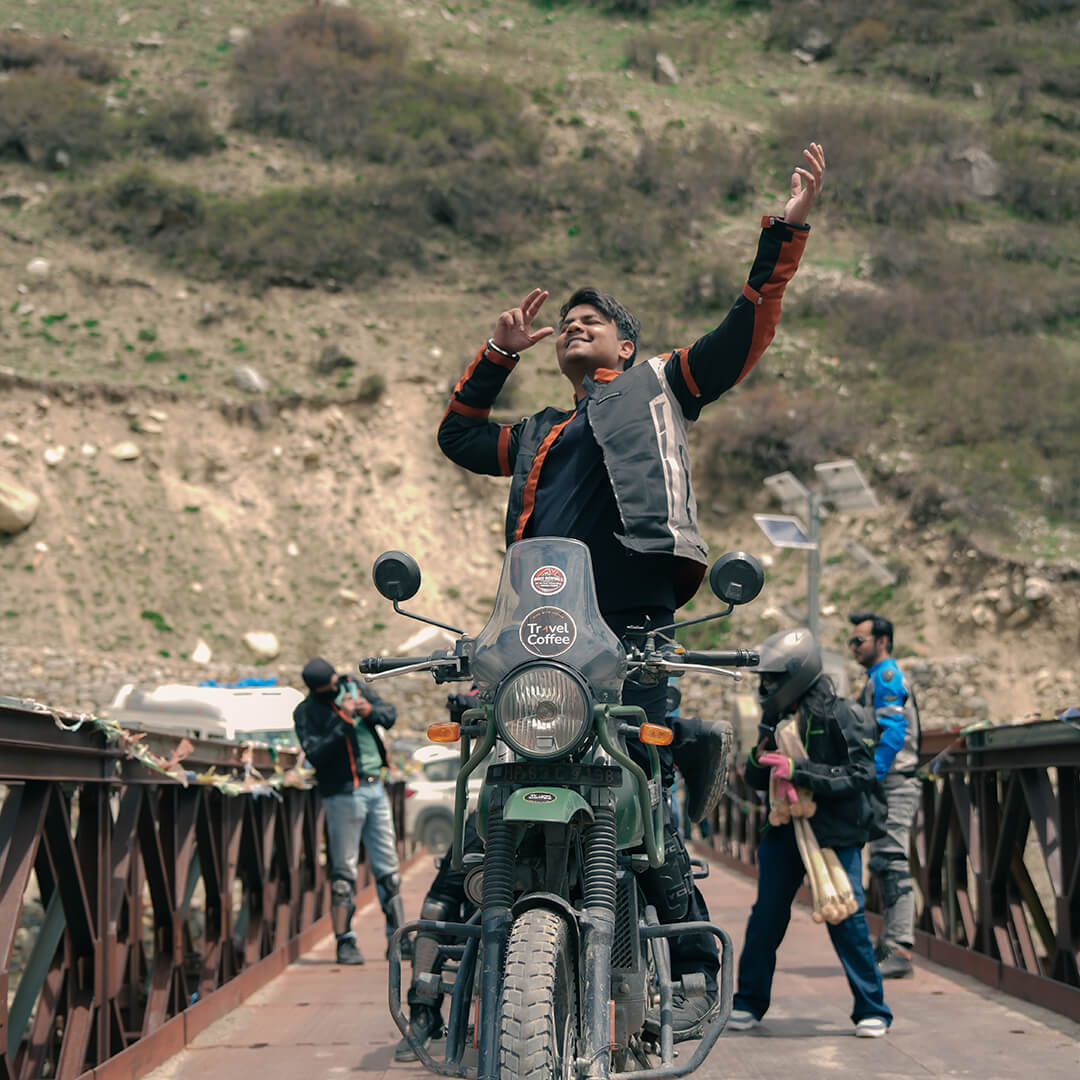
Rampur to Nako on the Shimla route passes through landslide-prone zones, especially near Tapri, Spillow, and the stretches along the Sutlej gorge. Loose hillside, narrow road, trucks coming from the opposite direction. Ride slowly and stay alert.
Nako to Tabo
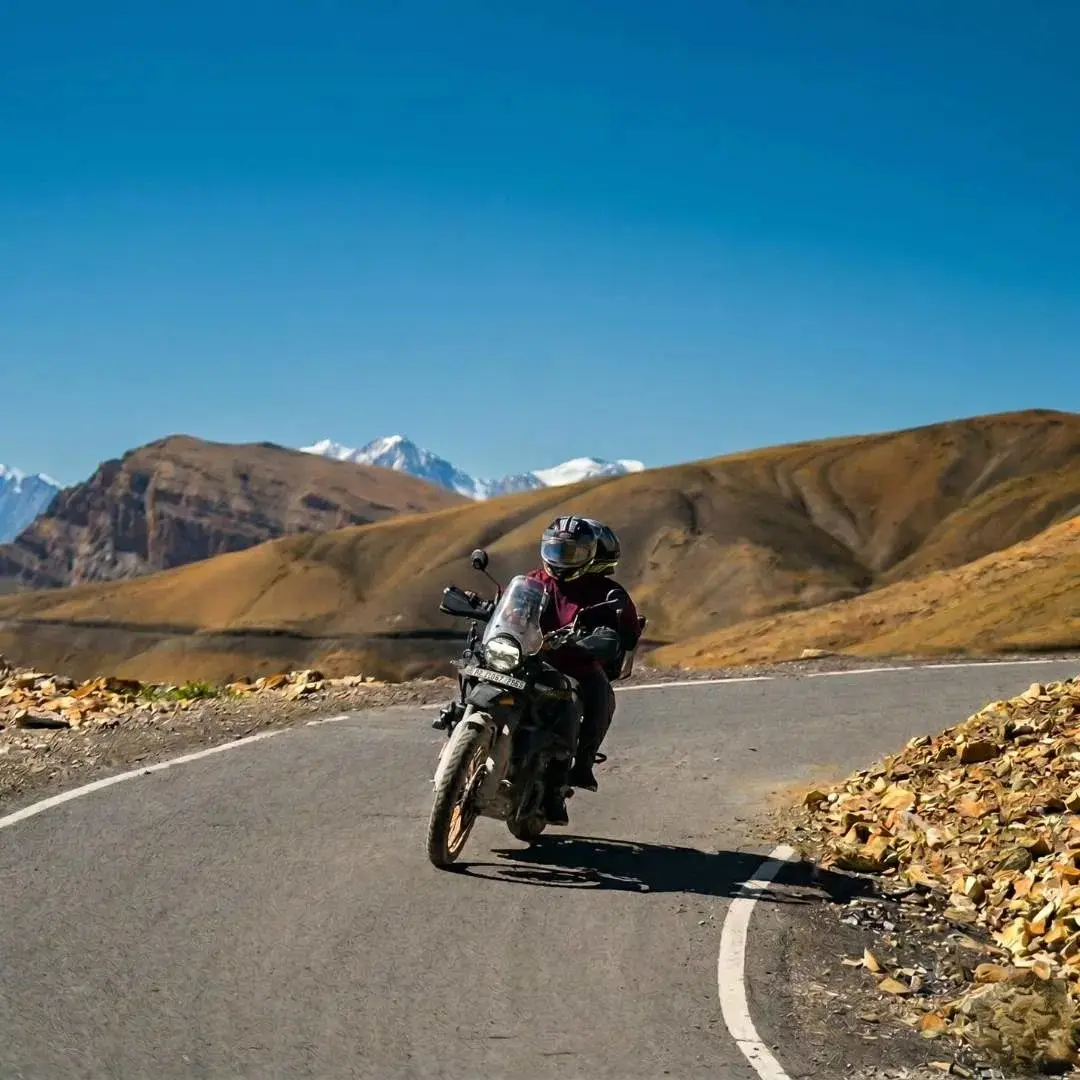
Nako to Tabo and the area near Malling and Attargoo can see debris falls after rain. The road quality here varies year to year. Some sections are freshly repaired, others are broken since the last monsoon.
Gramphu to Batal
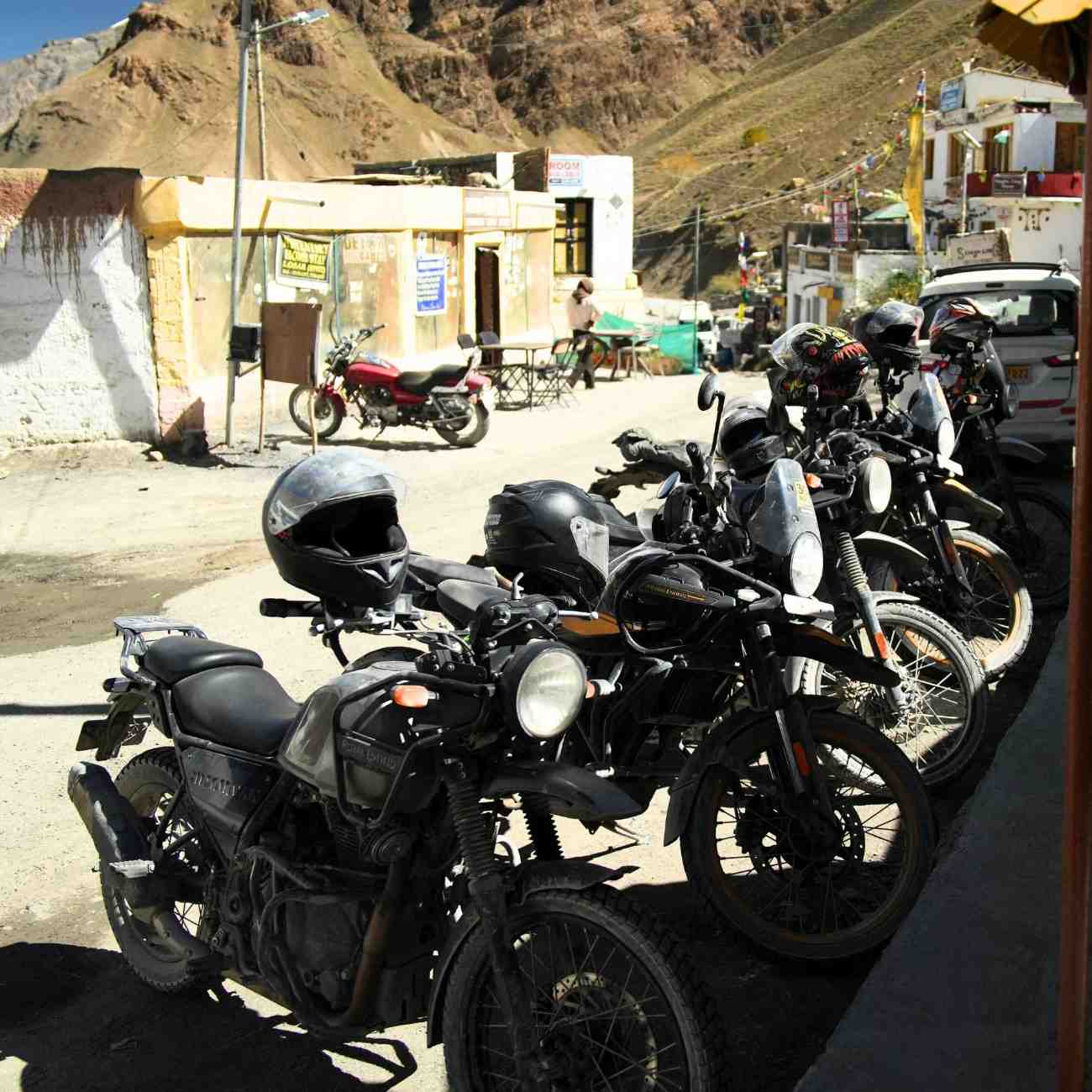
Gramphu to Batal is the single most dangerous stretch for August bikers. Overflowing nallahs, slushy patches, broken road surface, and zero infrastructure.
There is no mechanic, no fuel, no phone signal for most of this section. If your bike breaks down here, you are on your own until another vehicle passes.
Batal to Kunzum
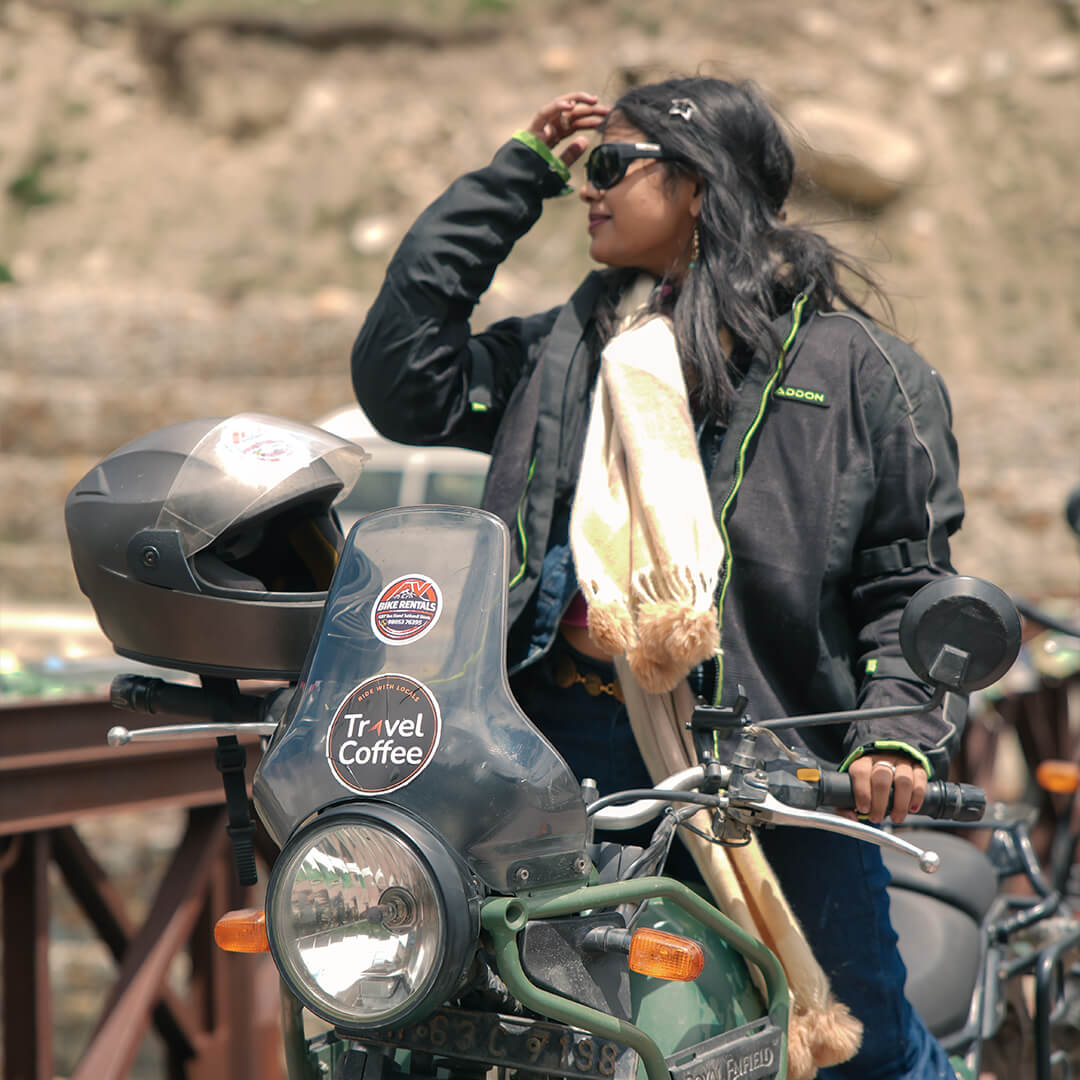
Batal to Kunzum is steep and exposed. Rain at this altitude can quickly turn to sleet. Visibility drops. The road is unpaved and slippery when wet.
Chandratal approach
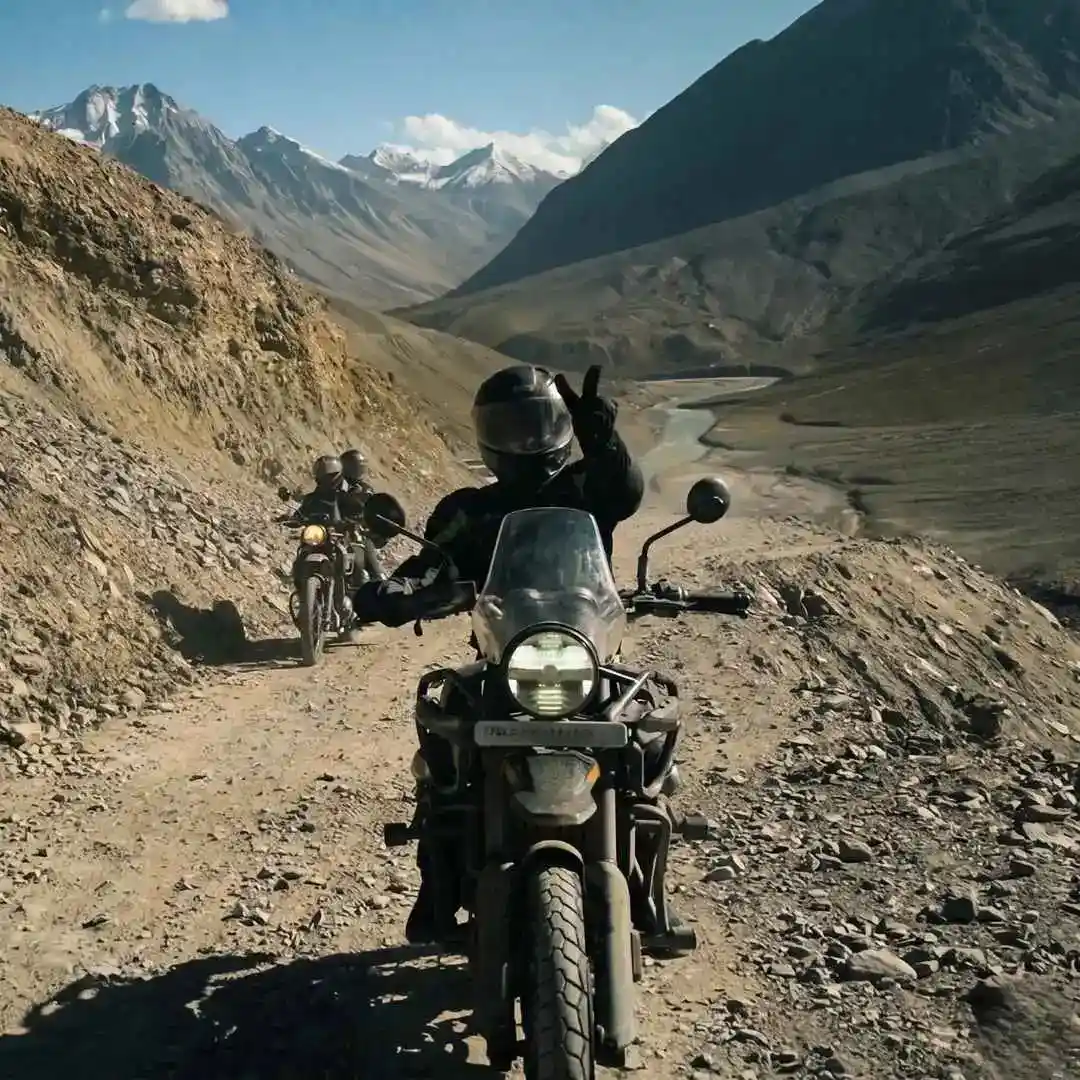
Chandratal approach from Batal is about 14 km of dirt road. In August, it is remote and weather-sensitive. We cover this in more detail below.
The money-saving tip most riders do not know
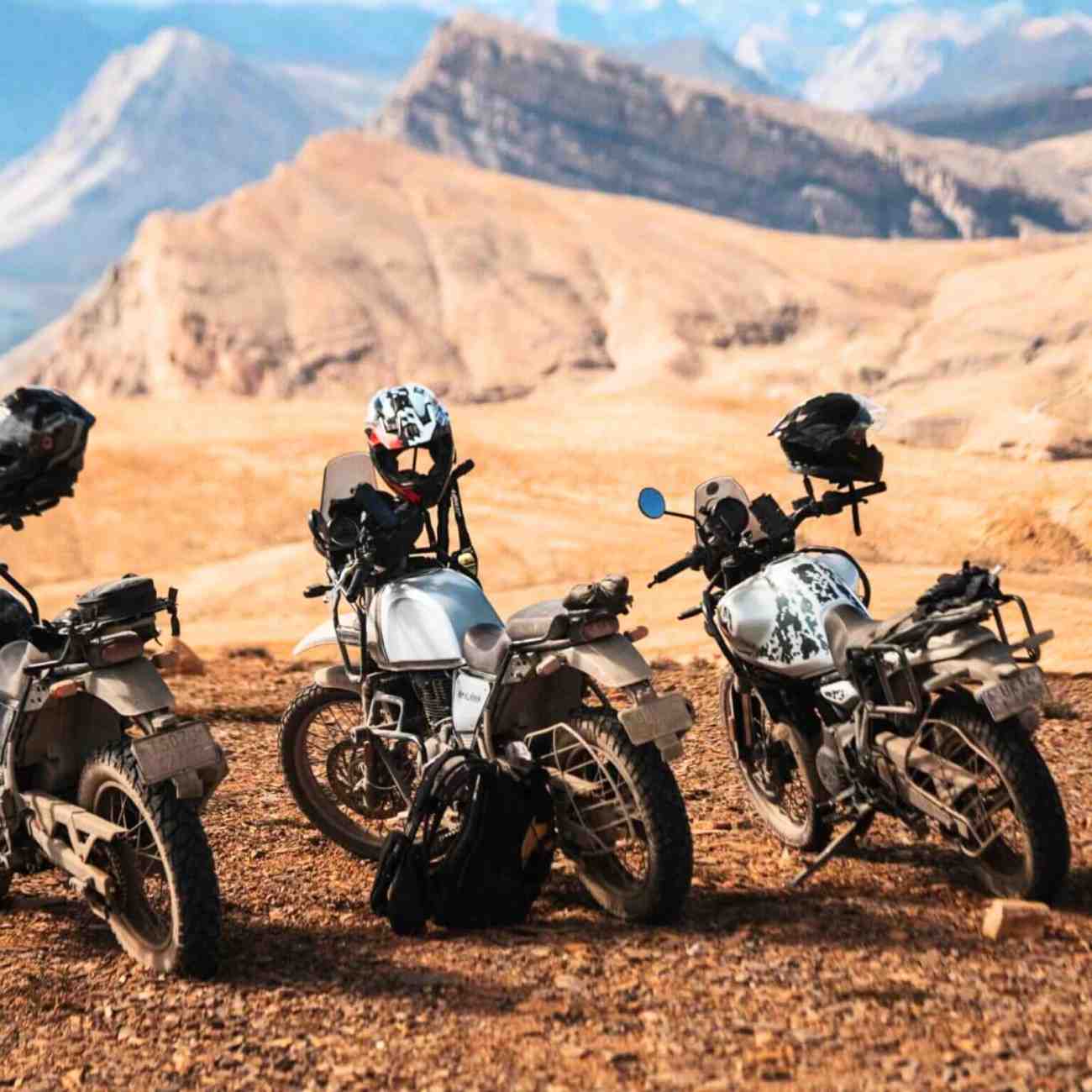
If you are riding in a group, ask locally in Kaza whether a mechanic can accompany your group for the tougher stretch.
Local mechanic support may cost around ₹1,500 to ₹2,000 per day in some cases, but treat this as an on-ground estimate, not a fixed published rate.
Also confirm whether the mechanic’s bike, fuel, food, stay, tools and spare parts are included. On rough sections like Gramphu to Batal, that one person can make a huge difference if a bike breaks down.
Recommended Safety-First Itinerary For August 2026
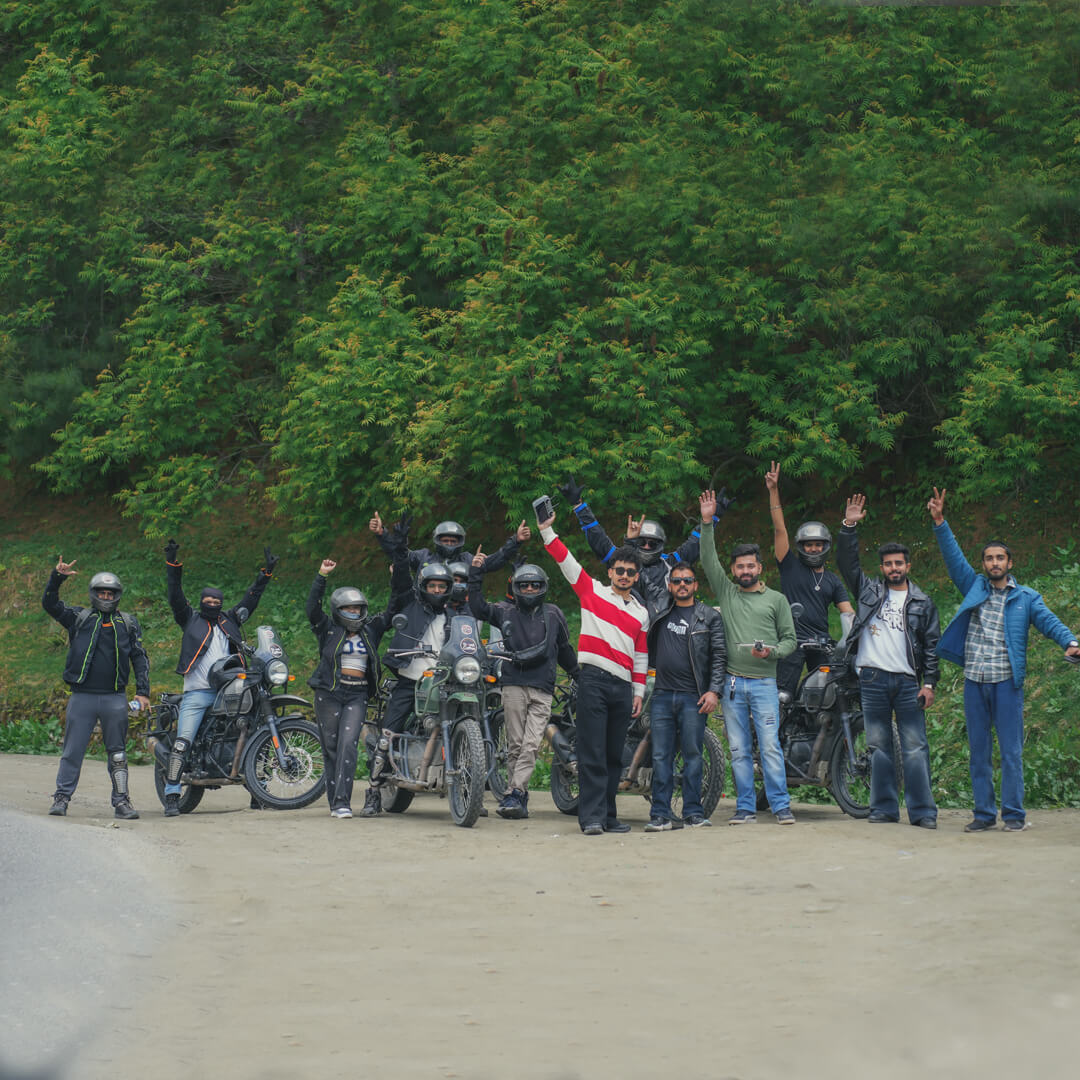
Here is a 9 to 10 day itinerary that gives you the full Spiti experience while keeping safety margins built in. This is the kind of itinerary we build for August riders who want to see everything without gambling on the road.
Day 1
Day 1starts from Chandigarh or Delhi with a ride to Shimla or Narkanda. This is a long highway ride, so leave early. Narkanda is quieter and cooler than Shimla, and a better place to sleep before the mountains start.
Day 2
Day 2 takes you from Narkanda to Kalpa or Reckong Peo. The road enters the Kinnaur belt. You ride along the Sutlej, gain altitude gradually, and reach Kalpa by evening. The views of Kinner Kailash from Kalpa are worth the ride alone.
Day 3
Day 3 is Kalpa or Reckong Peo to Tabo. This is a long riding day through some of the most dramatic terrain in Himachal. The landscape shifts from green valleys to dry, barren moonscape as you enter Spiti. Tabo Monastery is over a thousand years old and well worth an hour of your time.
Day 4
Day 4 takes you from Tabo to Kaza via Dhankar, if the road is stable. Dhankar sits at about 3,870 metres, about 32 km downstream from Kaza, and the old monastery perched on the cliff is something you will not find on any other route in India. Reach Kaza, rest, and eat properly.
Day 5
Day 5 is Kaza local sightseeing. Ride to Key Monastery, Kibber, Chicham Bridge, or head to Hikkim, Komic, and Langza depending on weather. These are short rides on relatively better roads, and this is where Spiti shows you why you came.
Skip the paid fossil viewpoint at Langza. The fossils embedded in the rocks near the Buddha statue are free to see and far more interesting than the ones in the glass cases.
Day 6
Day 6 is a buffer day or a ride to Pin Valley if conditions allow. In our experience, August riders need this day more than they think. Your body is adjusting to 12,500 feet. Your bike needs a check after several days of rough roads. Use this day to rest, repair, and recharge.
Day 7
Day 7 is Kaza to Losar, and if the road to Chandratal is open and safe, you ride there. If not, Losar is a quiet overnight stop. Do not force the Chandratal detour. More on this below.
Day 8
Day 8 is exit day. If Kunzum Pass and the Gramphu to Batal stretch are confirmed stable, ride out towards Manali. If not, turn around and exit via the Shimla route. No shame in it. The riders who come back in one piece are the ones who made this call honestly.
Day 9
Day 9 is a buffer day. If you exited via Manali, you are probably in Sissu or Manali by now. If you turn back, you are riding towards Shimla.
Either way, this day absorbs the delays that August almost always throws at you. Our Sissu travel packages make for a great recovery stop if you are coming out the Manali side.
Day 10
Day 10 is the ride home or an extra buffer if something went wrong on the road.
What we always tell our August riders: plan 10 days but mentally prepare for 12. The riders who enjoy August Spiti the most are the ones who stopped looking at the calendar and started reading the road.
>>Check August Spiti Route Feasibility With Travel Coffee
Who Should Avoid Spiti Bike Trip In August?
This is the section most blogs skip because they want every reader to feel like the trip is for them. It is not. August Spiti on a bike is genuinely not for everyone.
If you are a beginner who has never ridden above 10,000 feet, August is the wrong month to start. The combination of altitude, bad roads, rain, and cold is overwhelming even for experienced riders. Choose September, when conditions are calmer and more forgiving.
If you have tight return flights or train tickets that cannot be changed, do not plan an August Spiti bike trip. A single landslide can block a road for 12 to 24 hours. You cannot explain to a flight that a rock fell on the highway.
If you do not have proper waterproof gear, riding in August rain at altitude is a recipe for hypothermia. This is not Goa rain. This is cold, windy, high-altitude rain that soaks through regular jackets in minutes.
If your pillion is not comfortable with rough roads and long hours of bouncing, August will be miserable for them. The Gramphu to Batal stretch alone is 4 to 5 hours of non-stop vibration.
If you do not have access to live road updates through a local operator, travel group, or someone on the ground in Spiti, you are riding blind. And in August, riding blind can turn a bad situation into a dangerous one.
For all of these riders, September is genuinely better. Rains ease up, water crossings calm down, roads dry out, and the skies turn crystal clear. You get the same mountains with far less stress.
Bike, Gear And Support Vehicle Checklist
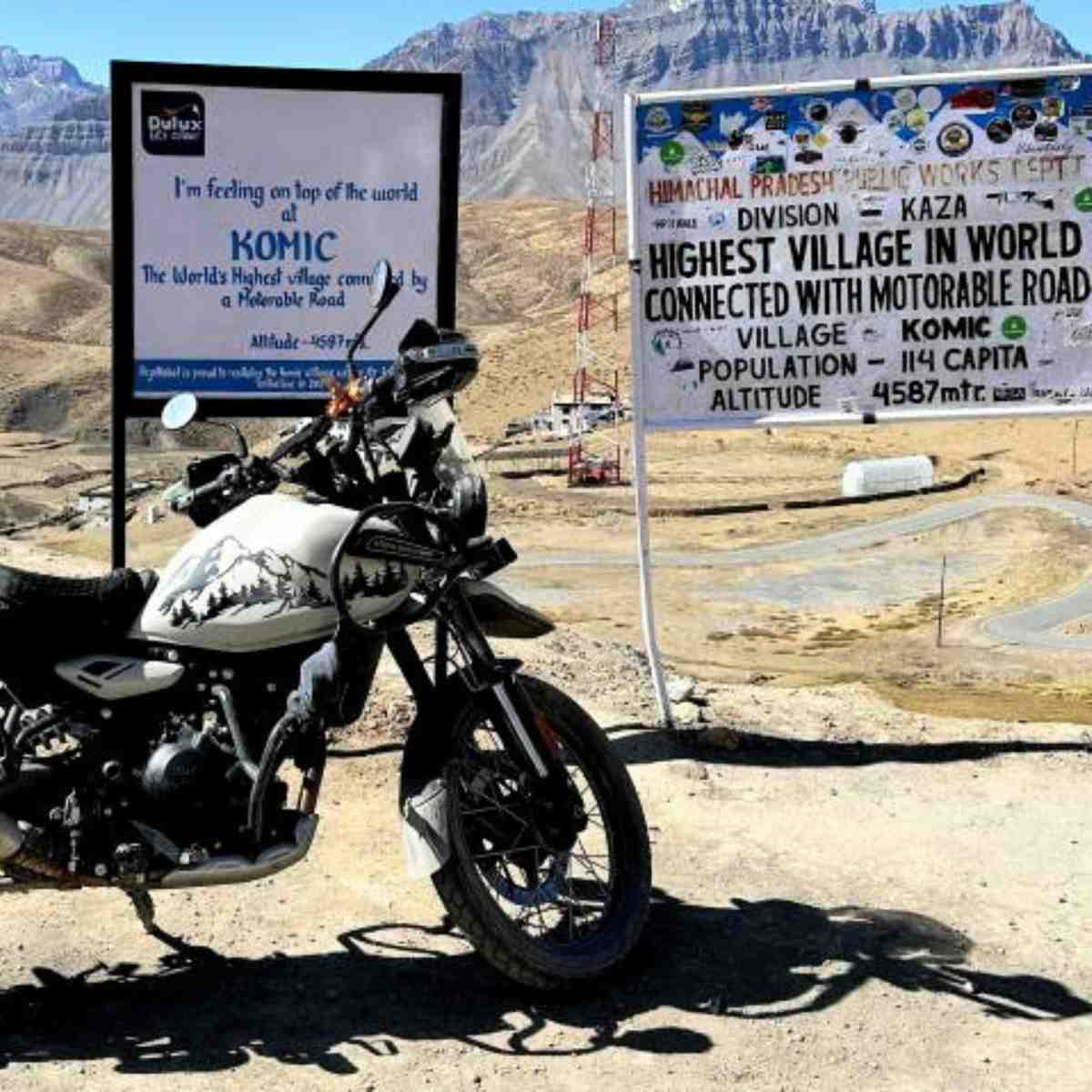
Your bike matters, but your preparation matters more.
Royal Enfield Himalayan is the most popular choice for Spiti, and for good reason. The ground clearance, the engine torque at low speeds, and the overall build suit mountain roads well. Hero XPulse is lighter and handles rough sections surprisingly well.
Classic 350 and Meteor can do the trip but feel heavier on broken patches and water crossings. Whatever bike you ride, make sure the tyres have good tread, the brakes are fresh, and you carry a spare clutch cable, a puncture kit, and chain lube.
Gear is where August riders either prepare properly or pay the price. A waterproof riding jacket with a rain liner is essential, not a plastic poncho over your regular jacket.
Waterproof gloves because wet hands lose grip fast. Gumboots or waterproof shoe covers for water crossings. A set of dry bags for your luggage because one unexpected downpour will soak a regular rucksack through.
Carry thermals even though it is "summer." Nights in Kaza and especially at Chandratal drop to near zero or below. A power bank rated at least 20,000 mAh because charging points are unreliable beyond Kaza.
Offline maps downloaded on your phone because network coverage is patchy at best across most of Spiti.
For health, carry ORS packets, paracetamol, anti-nausea medicine, basic first-aid supplies, and any personal prescriptions. The nearest proper hospital facilities are CHCs at Kaza, Udaipur, and Shansha.
That is it. In an emergency, the Citizen Call Center at 155300 and Commissioner of Rescue and Relief at 1077 are the helplines to know.
For group rides in August, a support vehicle is strongly recommended. It carries extra fuel, spare parts, luggage, and becomes a rescue option if a bike goes down on a remote stretch.
The cost of hiring an SUV with a driver from Manali for 10 days is a fraction of what a bike recovery operation costs on the Gramphu to Batal road.
Fuel planning
Fill up whenever you get the chance. Kaza has a listed fuel station, but always confirms fuel availability before leaving town.
Do not depend on finding fuel on the remote Kaza, Losar, Kunzum, Batal and Gramphu stretch. For bike trips, carry at least 5 litres of reserve fuel in a proper fuel-grade jerry can, especially if you are riding a rental bike or travelling with luggage.
Permits, Road Status And Documents For August 2026
Indian travellers need a valid ID (Aadhaar or Voter ID), driving licence, vehicle registration (RC), insurance, and a pollution certificate. If you are riding a rented bike, carry the rental agreement and the owner's authorisation letter.
The e-Aagman portal requires vehicles entering Lahaul and Spiti to apply for an e-pass. Routes involving Atal Tunnel, Rohtang, Koksar, and the Chandratal circuit require an e-permit per vehicle.
Other places require an e-ticket per vehicle. The Kullu permit portal lists options for Rohtang Pass, Beyond Rohtang, Hamta Pass, and Green Tax.
Foreign nationals require Protected Area Permits (PAP) for areas including Khab, Samdo, Dhankar, Tabo, Kaza, Morang, and Dubling. Inner Line Permits are required for certain inner areas of Kinnaur and Spiti bordering Tibet.
Should You Include Chandratal In August?
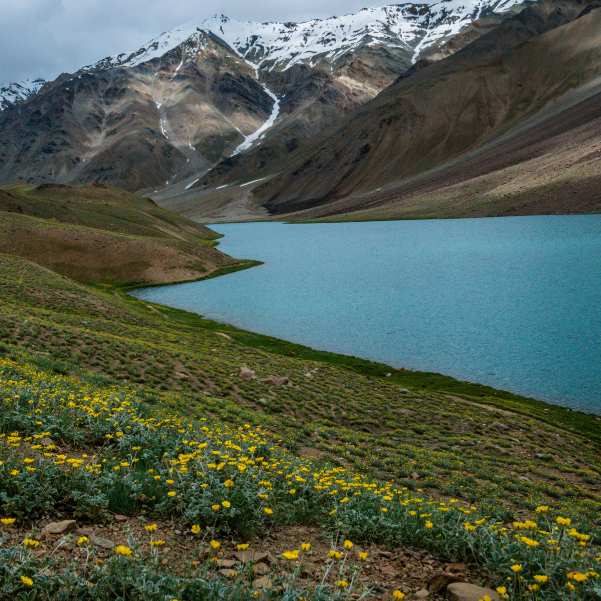
Chandratal is beautiful in August. The lake is vivid, the surrounding peaks often have wisps of cloud drifting across them, and the camping experience at 14,100 feet is unlike anything else in Himachal. But in August, treat Chandratal as a bonus in your itinerary, not a guaranteed stop.
The 14 km approach road from Batal to the lake is remote, unpaved, and weather-sensitive. If it has rained, the road gets slushy and some of the water crossings along it become tricky on a loaded bike.
August also brings the possibility of sudden weather changes at this altitude. You can start riding under a clear sky and hit rain 20 minutes later.
Our recommendation
Include Chandratal in your plan only if all of these are true. You are feeling well and properly acclimatised. The road status is confirmed open that morning by a local source.
You are starting the ride to the lake early, ideally reaching the camping zone by early afternoon. And the weather forecast is not showing heavy rain.
If any of those conditions are not met, skip it. Ride to Kunzum Pass for the views, and save Chandratal for a trip when conditions are cleaner.
For detailed month-by-month Chandratal conditions, our Chandratal opening dates and best time guide covers the full picture. And if you are wondering about the geography, our piece on whether Chandratal is in Lahaul or Spiti clears up the common confusion.
Reach the lake before 7 AM if you are camping there overnight and walking to the shore. The early morning light turns the water a shade of blue-green that photographs do not capture. By 10 AM, day-trippers start arriving and the trail gets busy.
August Vs September: Which Is Better For Spiti Bike Trip?
Let us be direct. September is better for most bikers.
August gives you greener valleys, more dramatic cloud formations, and a landscape that feels raw and alive. The wildflowers near Langza and Hikkim are at their best. There is an intensity to riding in August that some experienced riders genuinely love.
But September gives you drier roads, calmer water crossings, clearer skies, better visibility, and significantly less stress.
The Gramphu to Batal stretch, which can be a nightmare in August, is usually manageable in September. Kunzum Pass is more stable. Chandratal is accessible with fewer weather surprises. The riding experience is simply more enjoyable for the vast majority of people.
The golden-brown landscape of September Spiti, with deep blue skies and zero haze, is also more photogenic than the monsoon-green of August, at least in most riders' cameras.
If you have the choice, pick September. If August is your only option because of work or leave constraints, you can absolutely do it. Just prepare differently than you would for September.
Final Verdict: Should You Book A Spiti Bike Trip In August 2026?
If you are an experienced rider with flexible dates, proper rain gear, a backup exit plan, and access to live road updates, yes. August Spiti on a bike is challenging, dramatic, and deeply rewarding.
The greens are intense. The clouds move through the valleys like something out of a film. And there are fewer bikes on the road than in July or September.
If you are a beginner, short on time, riding on a fixed schedule, or planning your first Himalayan ride, no. Wait for September. The mountains will still be there, and the roads will be far kinder.
Our Himachal team checks live route feasibility every day during the season. We can tell you which stretches are open, which are dicey, and whether your planned dates make sense.
We can also build a flexible August Spiti plan with buffer days, support vehicle options, and safe camp stops along the way.
If you want help putting your August plan together or just want a straight answer on whether your dates work, our Spiti Valley packages are a good place to start.
The best Spiti bike trips are the ones where nothing goes wrong because someone planned for everything that could.
Explore Our Curated Spiti Bike Trips
- Group Tour11D/10N
Ultimate Spiti Valley Bike Expedition With Chandratal and Pin Valley
1D Narkanda•1D Sangla / Baspa Valley+5
₹32,999₹39,999SAVE INR 7,000/ person  Group Tour7D/6N
Spiti Bike Trip From Manali With Chandratal
1D Sissu•1D Chandratal Camp+1
₹25,999₹29,999SAVE INR 4,000/ person Group Tour10D/9N
Most Loved Spiti Valley Bike Expedition With Chandratal
1D Jibhi•1D Sangla+4
₹34,999₹41,999SAVE INR 7,000/ person
Related topics
Frequently Asked Questions
Is Spiti Valley bike trip safe in August 2026?
It is safe for experienced riders who carry proper gear, keep buffer days, ride with local road updates, and are willing to change plans based on conditions. The approach roads are the risky part, not Spiti itself.
Is August a good time for Spiti bike trip?
August is possible but not ideal. It is the peak monsoon month for Himachal's approach roads. Experienced riders enjoy the drama and green landscapes. Beginners and riders with fixed schedules should choose September.
Which route is safer in August, Shimla or Manali?
Shimla to Kinnaur to Kaza is safer for entering Spiti in August. The Manali side via Gramphu and Batal is much rougher and more prone to water crossings and landslides during monsoon.
Is Manali to Kaza road open in August?
Yes. BRO cleared Kunzum Pass in late May 2026 and the Manali to Kaza road has carried traffic since, so it is open as of early August. But it is frequently disrupted in monsoon: the Gramphu to Batal and Kunzum sections can close for hours after heavy rain, and Kullu has been among the worst-hit districts. Always verify live status the same morning before attempting this route.
Does Spiti get heavy rain in August?
Spiti itself is a rain-shadow region with very low rainfall compared to lower Himachal. But the approach roads through Kinnaur, Kullu, Mandi, and the Manali side get significant monsoon rain, which is the main concern.
Are landslides common on Spiti route in August?
Yes. Landslides are common on both the Shimla-Kinnaur route and the Manali-Gramphu-Batal route during August. In 2026, statewide blocked-road counts swung between roughly 109 and 157 through early August, though Lahaul and Spiti itself stayed almost clear in the rain shadow.
Can beginners ride to Spiti in August?
We do not recommend it. The combination of rough roads, altitude, rain, water crossings, and limited infrastructure makes August Spiti very challenging for first-time mountain riders. September is a much better choice.
How many buffer days are needed for Spiti in August?
Keep at least 2 to 3 buffer days. Road closures due to landslides or heavy rain can block stretches for 12 to 24 hours or more. A tight itinerary in August is a recipe for stress.
Can I visit Chandratal in August?
Yes, Chandratal is open in August. The Batal diversion cleared in June and the camps came online through mid-June. But monsoon disruptions are possible on the 14 km approach road from Batal, so treat it as a conditional stop, verify access the same morning, and avoid it if weather or road conditions look doubtful.
Do I need permits for Spiti bike trip?
Indian travellers need standard vehicle documents plus an e-Aagman e-pass for Lahaul and Spiti. Additional permits may apply depending on your route. Foreign nationals need Protected Area Permits. Specific requirements should be confirmed before departure.
What bike is best for Spiti in August?
Royal Enfield Himalayan and Hero XPulse are popular and well-suited choices. Any bike with good ground clearance, reliable brakes, and sturdy tyres can work. Avoid low-clearance bikes for the Batal and Chandratal stretches.
What should I carry for Spiti bike trip in monsoon?
Waterproof riding jacket with rain liner, waterproof gloves, gumboots, dry bags, thermals, spare clutch cable, puncture kit, chain lube, power bank, offline maps, ORS, basic medicines, and at least 5 litres of reserve fuel. Do not underpack on warm layers even though it is "summer."
More about Lahaul and Spiti
 Lahaul and Spiti
Rent or Buy Winter Gear for Spiti in 2026? Jackets, Boots, Costs and Pickup Options
Planning a Winter Spiti trip in 2026? Compare the cost of renting vs buying jackets, snow boots, thermals and other essential winter gear, along with practical tips on what to rent, what to buy and where to arrange it before your trip.
- First-Time Travellers
- Snow Travel
 Lahaul and Spiti
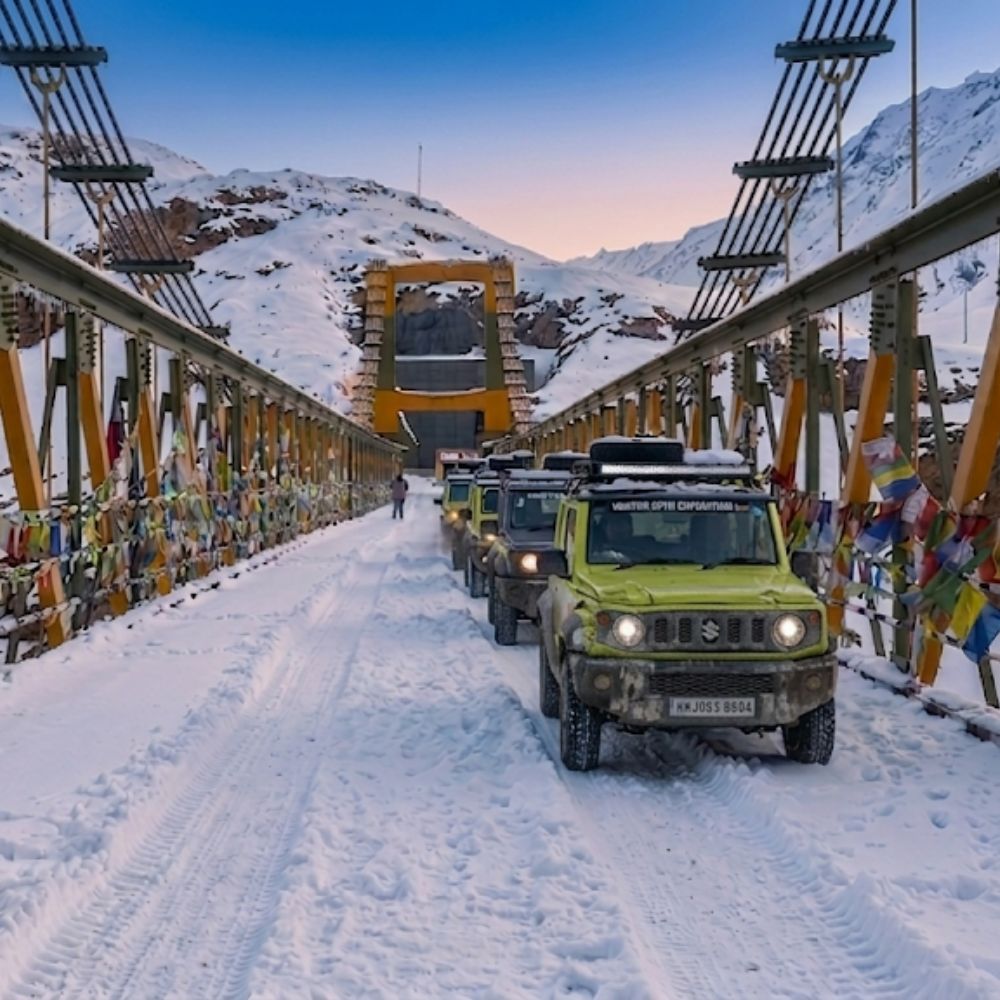
Winter Spiti 4×4 Seating Guide 2026: Jimny, Scorpio N, Thar and Hilux for Passengers and Luggage
Planning a Winter Spiti trip in 2026? This practical 4×4 seating guide compares the Jimny, Scorpio N, Thar and Hilux for passenger comfort, luggage space, winter roads and long mountain drives, helping you choose the right vehicle for your group size and travel style.
- Road Trips
- Snow Travel
 Lahaul and Spiti
Stargazing in Winter Spiti 2026: Where to Stay, Moonlight and What You Can See
Discover the best places for stargazing in Winter Spiti 2026, where to stay for darker skies and how moonlight affects visibility. Learn what you can realistically see from Kaza, Tabo and nearby villages during the winter months.
- Things to Do
- Snow Travel