
Spiti Bike Trip Water Crossings Guide 2026: Batal, Chhatru, Chhota Dhara & Gramphu
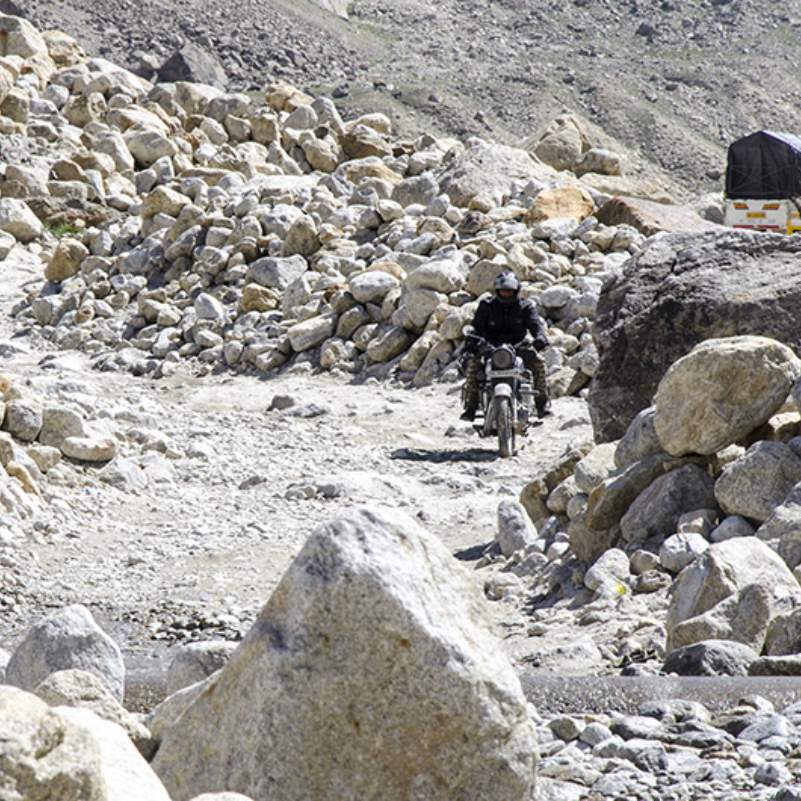
The moment the highway ends at Gramphu and the dirt begins, you enter a different kind of riding. The smooth Lahaul tarmac is gone.
What comes next is roughly 50 to 60 km of broken trail, glacier-fed streams cutting across the road, loose boulders, and the kind of terrain that makes your clutch hand ache for hours.
Most riders planning a Spiti bike trip obsess over Kunzum Pass or the altitude. But the real test is not a pass.
It is the water crossings between Gramphu and Batal, especially the stretch around Chhota Dhara, where icy meltwater runs fast enough to knock a loaded motorcycle sideways.
We have sent riders on this route every season since we started operating. Some came back grinning. Some came back shaken. The difference was never the bike. It was always preparation.
Quick Answer: How Dangerous Are Spiti Bike Trip Water Crossings?
The toughest Spiti bike trip water crossings sit on the Gramphu to Batal stretch of the Manali to Kaza road. Chhota Dhara is usually the most feared section, with fast, icy water, hidden rocks, and unpredictable depth.
The safest crossing window is early morning, roughly 5 AM to 9 AM, before glacier melt raises water levels. By noon, the same crossing that felt manageable at 7 AM can be knee-deep and violent.
Road conditions in 2026 must be verified on the same day you plan to ride. Yesterday's "open" means nothing on this route.
Where Are These Water Crossings on the Spiti Bike Route?
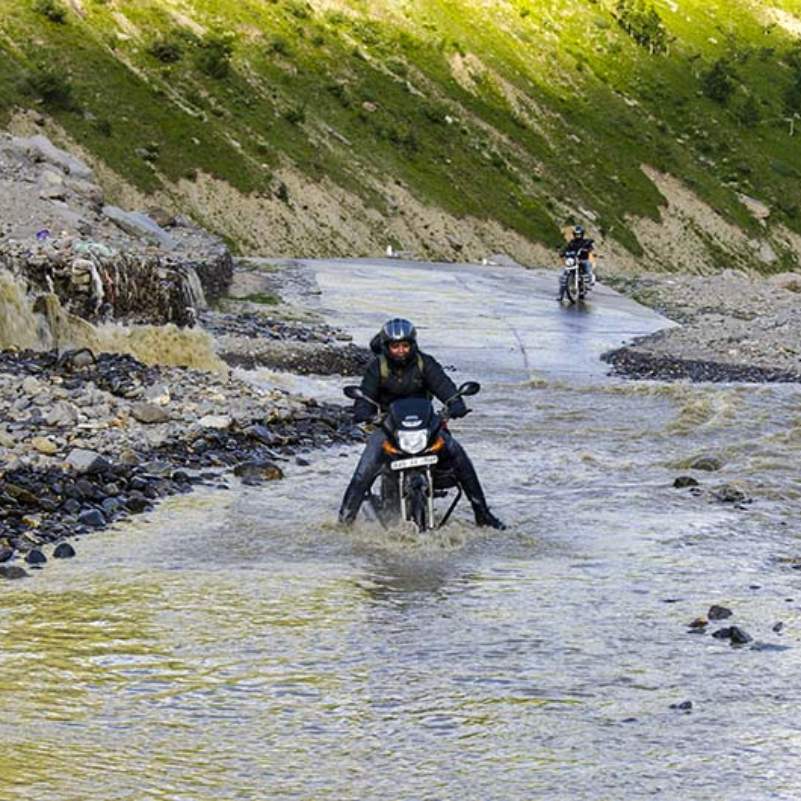
Manali to Kaza Direction
The route runs Manali → Atal Tunnel → Koksar → Gramphu → Chhatru → Chhota Dhara → Batal → Kunzum Pass → Losar → Kaza. The Atal Tunnel is 9.02 km long, and it cut the old Rohtang route shorter by 46 km and about 4 to 5 hours of travel time. So you exit the tunnel feeling like Spiti is easy.
It is not. After Gramphu, the highway disappears and the ride turns into a full off-road section with water crossings, broken dirt, rocks and stretches where your average speed drops to 10 to 15 km/h. Everything before Gramphu is a warm-up. Everything after it is the real ride.
If you want someone to handle the vehicle logistics while you focus on the riding, our Manali to Spiti Valley tour packages come with a support vehicle, local driver, and a team that actually picks up the phone when things go sideways.
Kaza to Manali Direction
Riders coming from Kaza or Chandratal usually hit Batal first, then Chhota Dhara, then Chhatru, and finally Gramphu before the highway begins again. The order of crossings is reversed, but the challenge is the same.
The one thing that changes is timing. If you leave Kaza late or spend too long at Chandratal in the morning, you hit the Batal to Gramphu stretch in the afternoon when meltwater is at its highest. Leave early. Cross before the sun has had three hours to work on the glaciers above.
If Chandratal is on your plan, our summer Spiti circuit with Chandratal builds the timing right so you are not rushing through the worst crossings at the worst hour.
Why Do Water Crossings Become Worse After Morning?
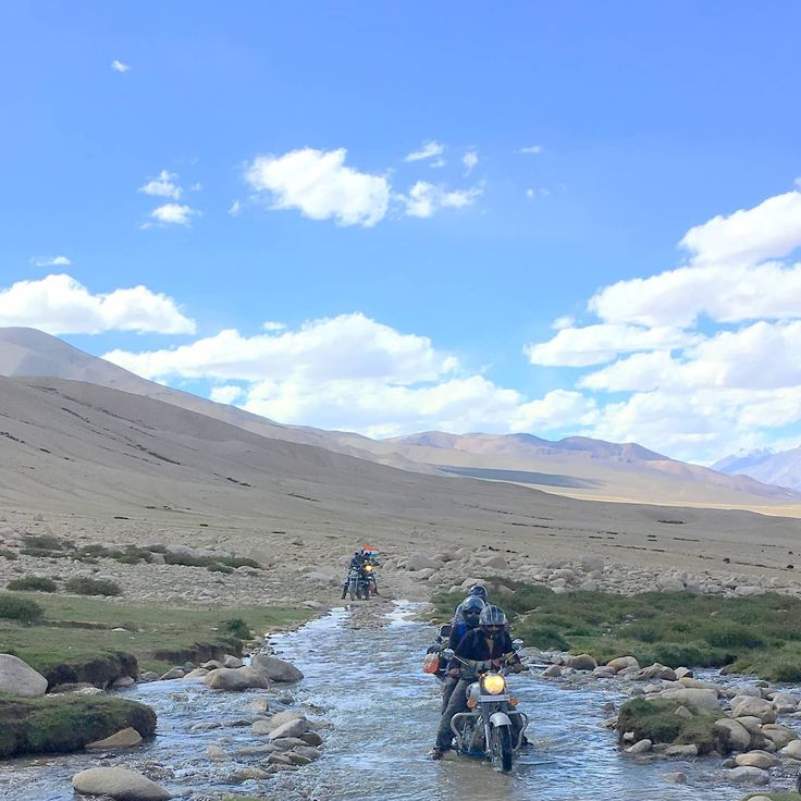
Here is what happens. The streams cutting across the Spiti road are not rain-fed. They are glacier-fed. The glaciers sitting high above the road start melting once the sun hits them, usually by mid-morning.
Between 5 AM and 9 AM, the melt is minimal. Water levels are at their lowest. Some crossings that are thigh-deep at noon are barely ankle-deep at 6 AM. By afternoon, the flow can double or triple.
This is why you will see experienced riders camping near Chhatru the night before and hitting the crossings at dawn. They are not being dramatic. They have seen what the same crossing looks like at 2 PM.
One mistake we see every season
Riders watch a morning reel or video of someone cruising through a crossing and assume it will be the same when they arrive at 1 PM. It will not. The stream does not care about your schedule. Plan around the glacier, not around your breakfast.
Gramphu to Chhatru: First Rough Section After the Highway Ends
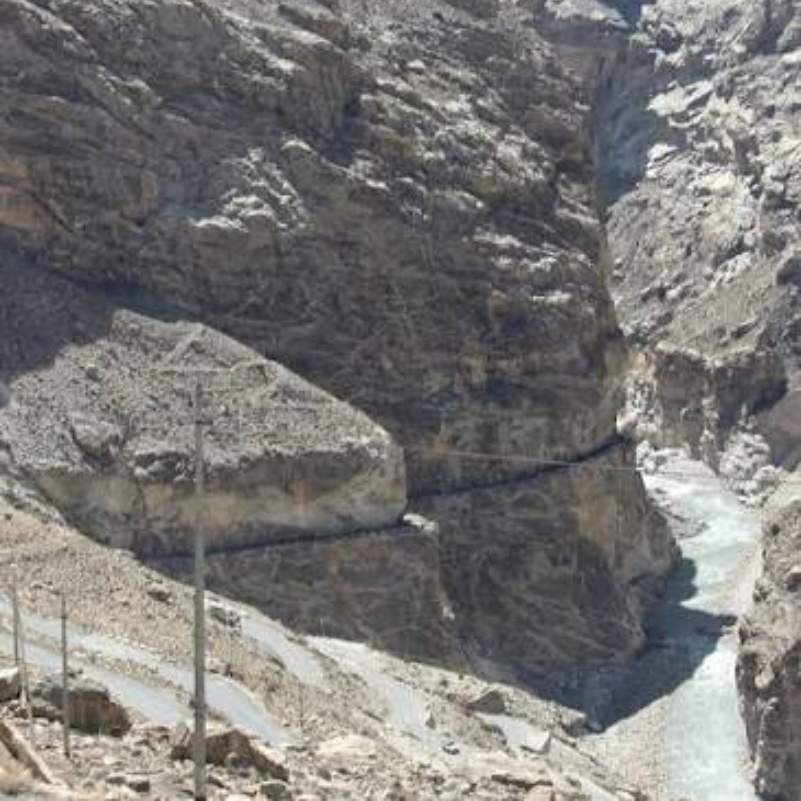
Gramphu is where the smooth Lahaul approach ends and the raw Spiti route begins. The highway literally stops, and what follows is sand, dirt, rocks and boulders mixed with seasonal water channels.
One source reports 4 to 5 water crossings between Gramphu and Chhatru alone. These are not the big ones yet. They are warm-up crossings, shallow and slow enough that most riders manage without drama. But they set the tone.
The road surface here is genuinely bad. Loose gravel, soft patches, ruts from truck tyres, and sections where BRO has dumped fresh earth that turns to mush after a bit of water.
Your speed drops. Your arms tense up. And you start understanding why people call this stretch the beginning of the real Spiti.
What most tourists get wrong: they treat the Gramphu to Chhatru section as the hard part and relax after clearing it. It is actually the warm-up. The real test comes after Chhatru.
If you are coming through and want to break the ride at Sissu for a night before pushing to Gramphu the next morning, our Sissu packages give you a comfortable base to rest and acclimatise before the rough section begins.
Chhatru to Chhota Dhara: Where the Ride Starts Testing You
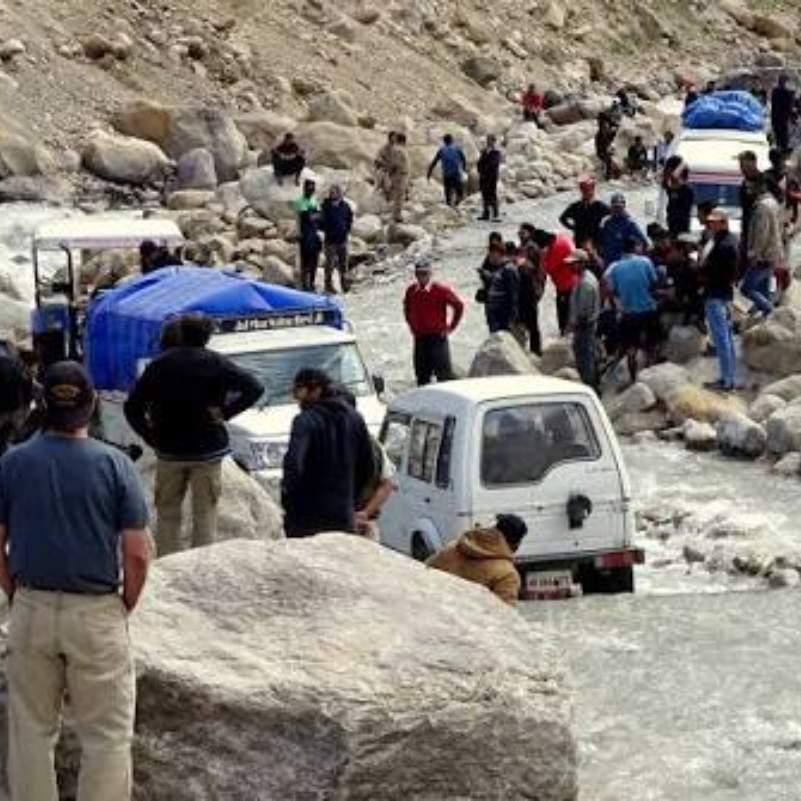
Chhatru is a seasonal campsite and rest point along the river. Some dhabas operate here during peak months, and riders use it as a lunch stop or overnight halt.
But do not depend on Chhatru blindly. Whether the dhabas are running and whether there is space depends entirely on the season and the year.
After Chhatru, the road towards Chhota Dhara gets quieter, more remote, and more rocky. The crossings here are colder and faster. Fatigue starts building because you have already handled an hour or two of broken terrain and cold water splashing up your legs.
In our experience, this is where underprepared riders start making mistakes. Tired hands grip harder. Tired minds make rushed decisions at crossings.
If you are feeling drained at Chhatru, rest. Eat something hot if a dhaba is open. The dhal and rice at Chhatru is not going to win any awards, but it is warm and it keeps you going. Do not skip it.
Chhota Dhara Water Crossing: The Section Riders Fear Most
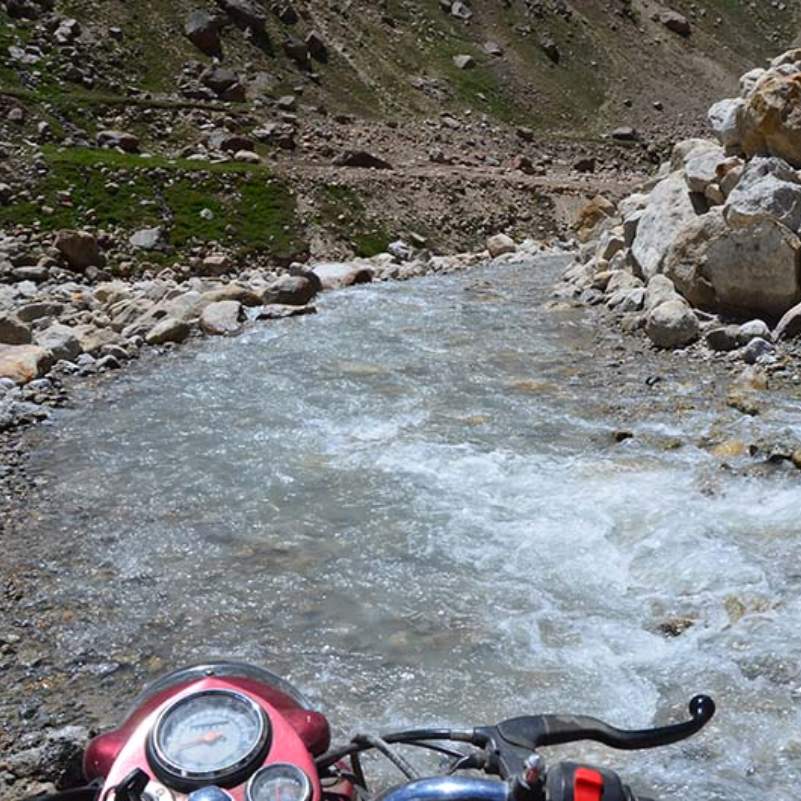
There is a reason every Spiti riding forum has a thread about Chhota Dhara. One rider source calls it "probably the most dangerous water crossing on the Spiti and Ladakh route." That is not an exaggeration for content. It is earned.
The Chhota Dhara water crossing involves fast-moving glacial water running over hidden stones. The streambed is not smooth. It is covered with rocks of different sizes, some stable, some loose, some slippery with algae.
The water is ice-cold, the current pushes hard against your front wheel, and if your engine stalls mid-stream, you are in trouble.
This is where riders should stop, wait, and watch. If a truck or another vehicle is crossing, watch the line they take. Watch the depth. Watch the flow speed. Do not assume you can ride the line you see in your head. Ride the line the water allows.
Our drivers, who cross this stretch every season, always tell riders the same thing: if you are not sure, do not cross. Wait for help. Wait for the flow to drop. Or wait for a heavier vehicle to go first so you can follow the path it clears.
Here is a money-saving tip most blogs will not tell you
If you are riding solo and reach Chhota Dhara feeling unsure, flag down a truck driver and offer ₹200 to ₹300 for them to wait on the other side while you cross. If you stall, they can pull you out. It is cheaper than a damaged engine and a ruined trip.
Chhota Dhara to Batal: The Last Hard Push Before Kunzum
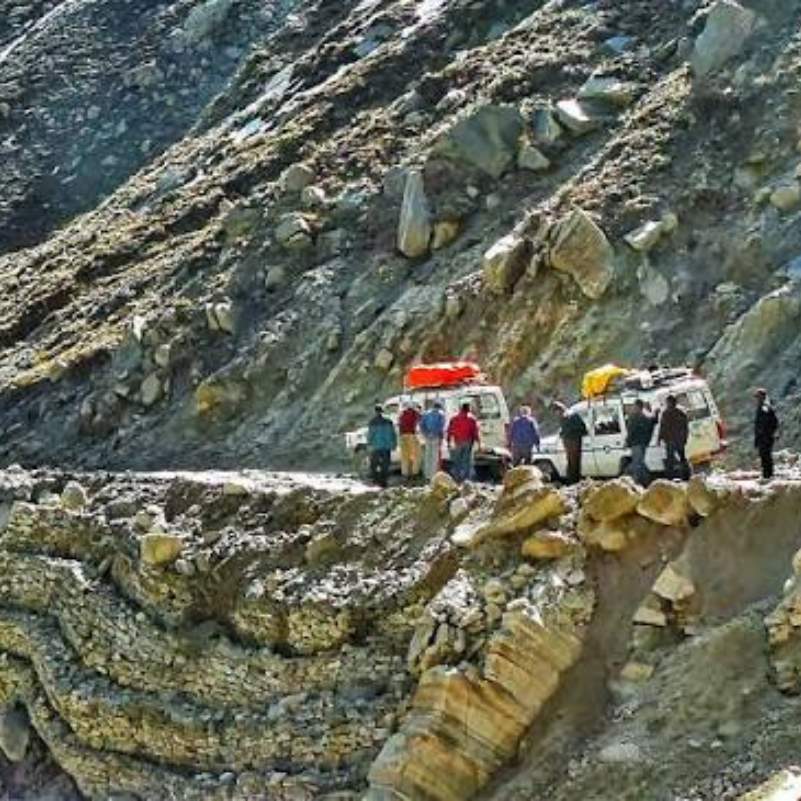
After Chhota Dhara, the road continues rough until Batal. Exact distances vary slightly by map, route source and road alignment, but riders can treat Chhatru to Chhota Dhara as roughly 17 km and Chhota Dhara to Batal as around 14 to 16 km.
The short distance can still take much longer than expected because of stones, water crossings, broken patches and slow riding conditions.
Other sources give slightly different totals. The terrain feels longer than the numbers suggest because every kilometre is slow.
Batal is a major relief point. When the seasonal dhabas are running (usually June through September), you can get a hot meal, chai, and a few minutes on flat ground without your bike vibrating under you.
The guy who runs the main dhaba at Batal has been there for years. The rajma chawal is basic but it is the last proper hot food before the Chandratal turn-off or the climb up to Kunzum Pass at 4,551 metres.
If Chandratal is on your mind, check our Chandratal opening dates and road status guide before making plans. The diversion road from Batal to the lake is a separate stretch that opens on its own timeline.
How Many Water Crossings Are There Between Gramphu and Batal?
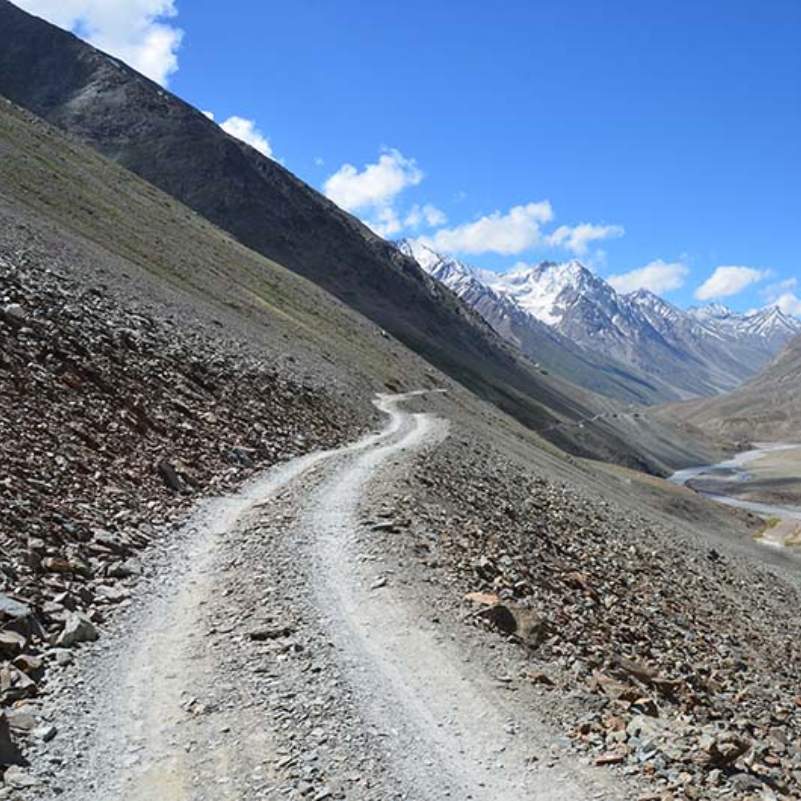
Do not try to fix a number in your head. The count changes with snowmelt volume, road repair work, rainfall, and the time of year.
On this stretch, riders commonly report anywhere from 30 to 40 water crossings, while some rides during peak snowmelt or monsoon months can feel like 50 or more.
In July and August, the Gramphu to Batal road can become especially challenging because repeated streams, broken patches and slush sections appear within a relatively short distance.
The numbers are not contradicting each other. They are describing different days, different months, and different conditions. A crossing that exists in early July might be dry by September. A section that was clear last week might have a new stream after a burst of rain.
The safe mindset is this
Expect many crossings. Do not count them. Focus on each one as it comes. The rider who is thinking about crossing number 27 while standing at crossing number 14 is the one who makes a mistake.
Best Month for Spiti Water Crossings: June, July, August or September?
June
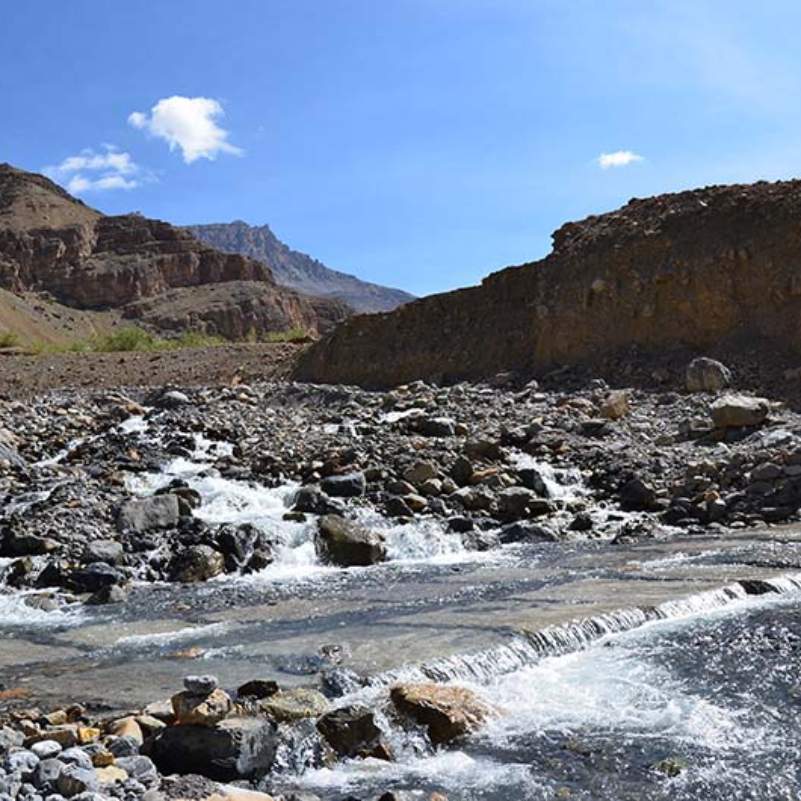
June brings fresh snowmelt and strong water flow. Early June is rougher and more uncertain because the glaciers are releasing their winter load. Mornings are cold, but water is already active because the sun at altitude hits hard and fast.
Snow walls may still line parts of the road near higher sections. The crossings are unpredictable, and some may not even be fully formed yet, meaning water runs across the road in wide, shallow sheets instead of defined channels.
For a deeper look at what June conditions look like across Spiti, we covered it in our best time for Spiti bike trip guide.
July and August
July and August bring the strongest sustained water flow on most crossings. Vargis Khan reported 40 crossings during this window.
Monsoon impact on the approach roads, especially around Kinnaur and the Manali side, adds landslide risk and slushy patches on top of the water crossings themselves.
The trade-off is that this is also when the road has been used the most, so the crossing lines are more visible and more riders are on the road to help if something goes wrong.
September
September is often the easiest month for water crossings. Melt is lower because the glaciers have already shed most of their summer load.
Skies are clearer and the road is drier overall. But shorter daylight hours and colder mornings mean you have a tighter window to ride, and if you start late, the cold catches up fast.
Step-by-Step Technique for Crossing a Himalayan Nallah on a Bike
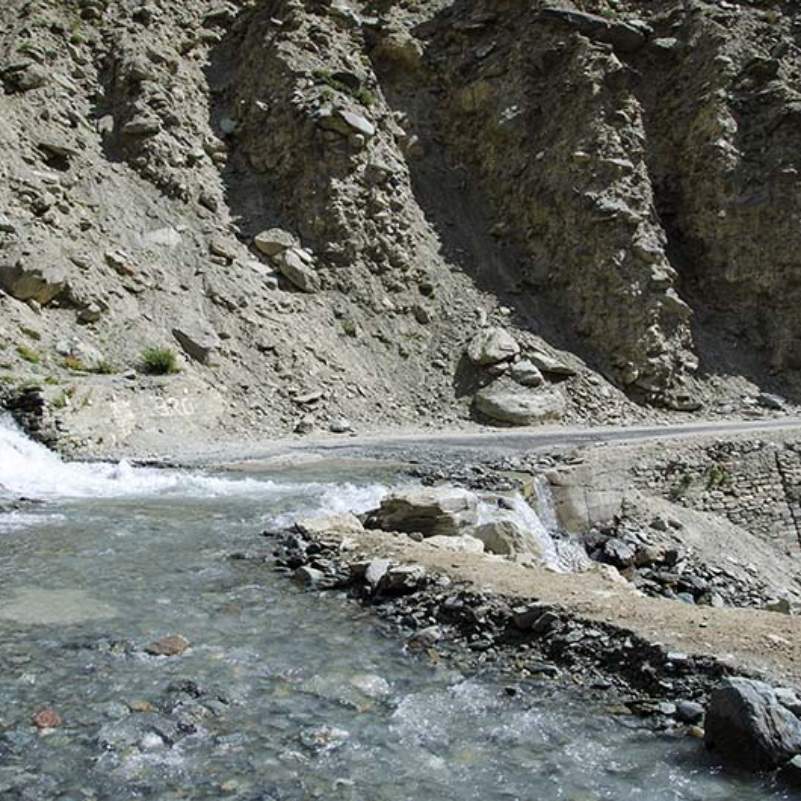
Stop before every crossing. Do not ride into water you have not read first. Get off your bike, walk to the edge, and look at the flow. Check if you can see the bottom.
If the water is brown and churning, you cannot see the stones underneath, and that is a sign to wait or find another line.
If a truck, car, or another bike is about to cross, let them go first. Watch where their wheels go. Watch how deep the water reaches on their vehicle. That tells you more than any guess.
Enter in first gear with a steady, slightly higher throttle. The engine needs enough power to push through resistance without jerking. Sudden braking in water is the fastest way to stall. If you need to slow down, feather the clutch rather than grabbing the front brake.
Keep your feet on the pegs. The instinct to put your feet down and paddle is strong, but it throws off your balance. Your boots on the pegs keep weight centred on the bike. Only put a foot down if the bike is about to tip.
If you are riding in a group, maintain distance. Do not enter a crossing while the rider ahead is still in it. If they stall, you need room to stop. Help each other. The strongest rider crosses first, waits on the other side, and guides the next one through.
What we always tell our riders:
The crossing is not a race. Nobody is timing you. Slow, steady, and boring is exactly what gets you to the other side.
If you'd rather ride with expert guidance instead of figuring out every crossing yourself, check out our Spiti bike tour packages designed for safe and hassle-free travel.
What to Do If Your Bike Stalls in a Water Crossing
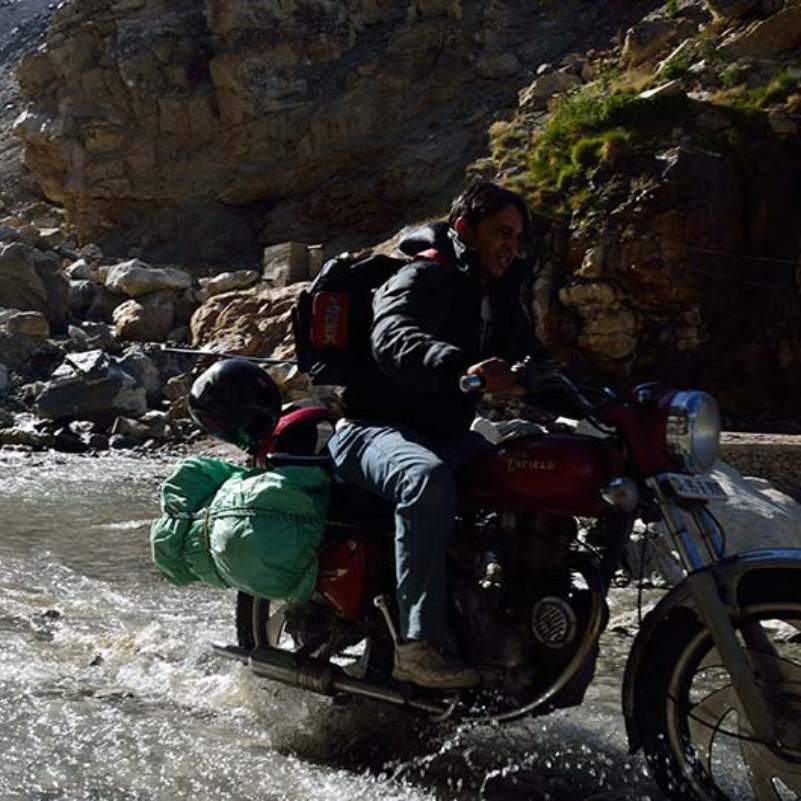
Do not panic. Do not keep cranking the starter. If water has entered the intake or exhaust area, forcing the engine can cause hydrolocking, which is far more expensive than a stall.
Kill the engine. Signal to anyone nearby. Push the bike out of the water with help. You do not need to push it all the way across. Push it to the nearest dry bank, even if that means going back the way you came.
Once out, check the air filter. If it is wet, dry it before restarting. Check the exhaust for water. Let the brakes dry by rolling the bike a few metres and gently tapping the brakes until they grip again.
If you are not confident about what got wet or damaged, do not force-start and ride. Wait for another rider or a support vehicle and get help. Batal and Chhatru sometimes have basic mechanics during the season, but do not count on it.
Bike, Tyres and Gear Checklist for Batal-Gramphu Crossings
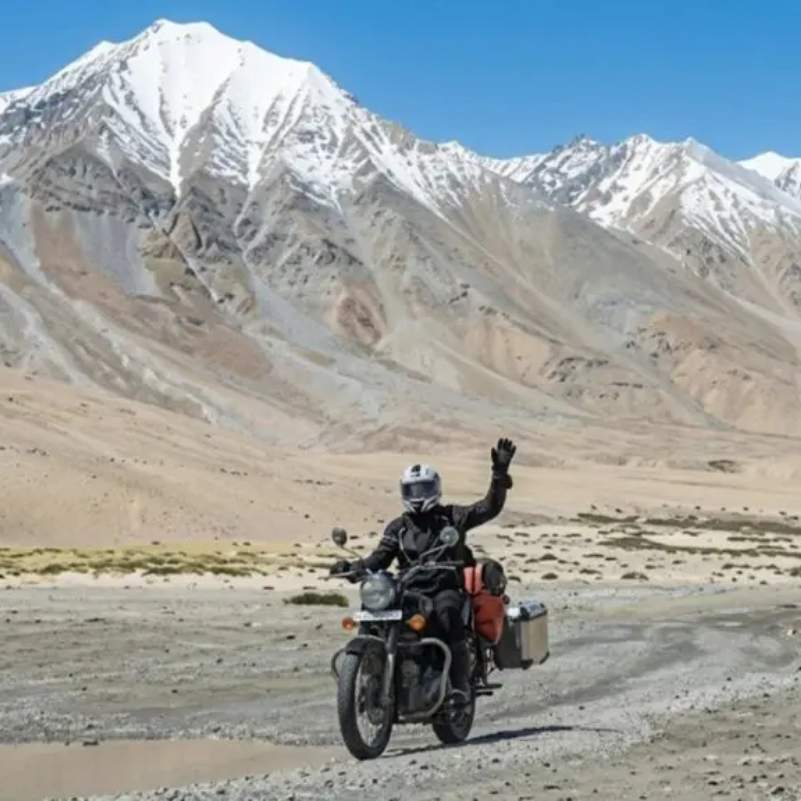
Your tyres matter more than your bike on this stretch. Stock road tyres on a Royal Enfield will slip on wet rocks. Dual-sport or knobby tyres give you actual grip where it counts.
If you cannot swap tyres, at least reduce tyre pressure slightly before the off-road section for better traction, and pump them back up afterwards.
Waterproof luggage is not optional. A single deep crossing can soak everything in your saddlebags. Dry bags or heavy-duty plastic lining inside your panniers will save your clothes, electronics, and documents.
Riding boots with ankle support and grip keep your feet stable on wet rocks. Sneakers and sandals are a disaster waiting to happen. Carry at least two extra pairs of dry socks in a sealed bag. Wet feet plus cold wind at altitude equals genuine misery.
Pack a basic toolkit: spanners that fit your bike, a spare clutch cable, puncture kit, chain lube, and zip ties.
Carry a rain layer and a thermal layer that you can pull on quickly. The temperature swing between sun and shade on this route is brutal, and after a water crossing, the wind makes soaked clothes feel like ice.
For riders exploring this route for the first time, our Spiti bike trip for beginners guide covers what else to carry and what to expect from the full circuit.
Should Beginners Attempt These Water Crossings?
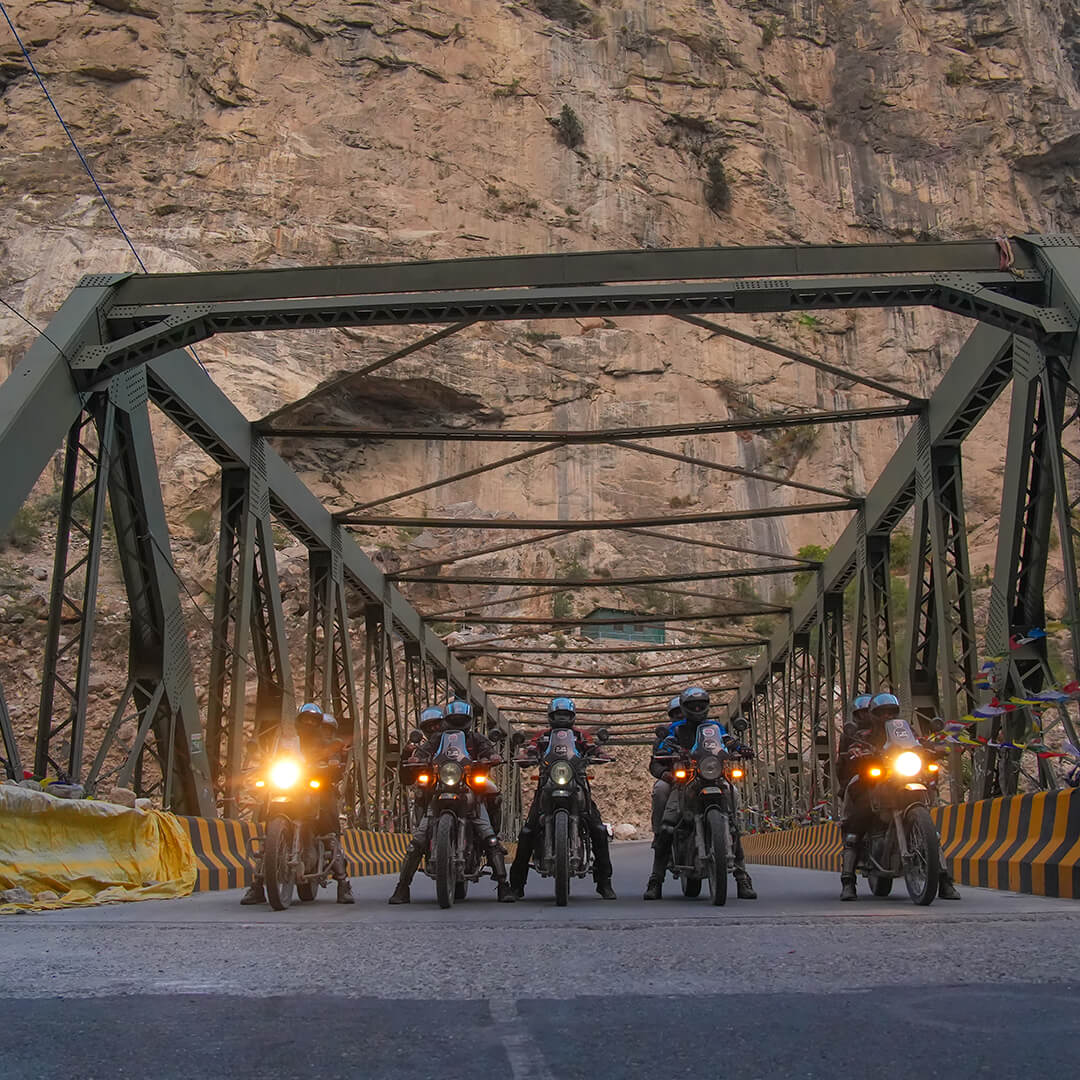
Here is the honest answer. Beginners can do Spiti. But direct Manali entry is not ideal for first-timers because the altitude gain is sharp and the roughest crossings come in the first day of off-road riding.
You go from the smooth tunnel road at about 3,000 metres to the Gramphu-Batal mud track and then up to Kunzum at 4,551 metres within hours. Your body has not adjusted.
Your riding muscles have not warmed up to off-road. And the water crossings do not care that this is your first time.
The smarter approach for beginners is entering Spiti from Shimla via Kinnaur. The altitude gain is gradual, the roads are paved for most of the way, and by the time you reach Kaza, your body has had days to acclimatise.
You hit the crossings on the way out towards Manali, after your riding confidence and altitude adjustment are both in better shape.
If you prefer the Manali entry anyway, join a group with a backup support vehicle. Knowing that a Bolero or Thar is behind you with a mechanic and your luggage takes the pressure off each crossing.
If you are a solo female rider considering this route, our Spiti solo female traveller safety guide covers the practical concerns that matter on the ground, not generic reassurances.
Skip the paid "Spiti training rides" that some outfits sell in Manali for ₹2,000 to ₹3,000. They are usually a 2-hour loop on a paved road that teaches you nothing about water crossings. Spend that money on a better pair of riding boots instead.
When Should You Turn Back?
Turning back is not failure. It is the smartest decision a rider can make in certain situations.
Turn back if the water is fast and above your axle level. Turn back if you cannot see the stones at the bottom. Turn back if there are no other vehicles around and you have no backup. Turn back if the weather is turning and visibility is dropping.
Turn back if it is late afternoon and you still have multiple crossings ahead. Turn back if you are exhausted and your reaction time is slow.
Turn back if your engine is already giving trouble or your brakes feel spongy after a previous crossing. Turn back if you are riding solo with no one in sight.
In our experience, the best riders on this route are the ones who know when not to prove a point.
Every season, we hear about someone who pushed through a crossing they should have skipped and ended up spending three days in Batal waiting for a mechanic and parts from Manali. The lake and the pass will still be there next morning.
Suggested Safe Itinerary for Riders
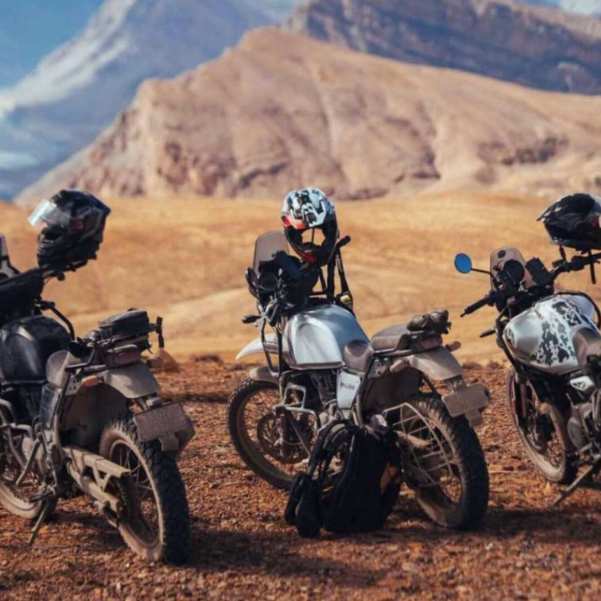
Safer Full Circuit Plan
Enter Spiti from Shimla via Kinnaur. The broad flow is Shimla to Narkanda, then Kinnaur (Kalpa, Nako), then Tabo, Kaza, and the Kaza belt villages. After spending time in Kaza, ride towards Chandratal or Batal and exit via Kunzum Pass and the Gramphu-Manali road.
This way, you hit the water crossings after a week of riding, not on day one. Your body is acclimatised. Your confidence on mountain roads is higher.
And you are riding downhill towards Gramphu, which means the tough section is behind you as you approach the highway.
Manali-Side Short Plan
If you only have a short window and must enter from Manali, the plan is Manali → Sissu or Koksar for one night of acclimatisation. Then an early morning start (before 5:30 AM) through Gramphu → Chhatru → Chhota Dhara → Batal → Kunzum → Kaza.
This is only for riders with off-road confidence and a confirmed route update from the same morning. Do not attempt this plan on a tight schedule with zero buffer. One blocked crossing can delay you by hours.
Our Spiti Valley packages are designed with buffer days and backup vehicles for exactly this reason. The crossings are part of the adventure, but they should not be the thing that ruins your trip.
2026 Road Status and Same-Day Verification
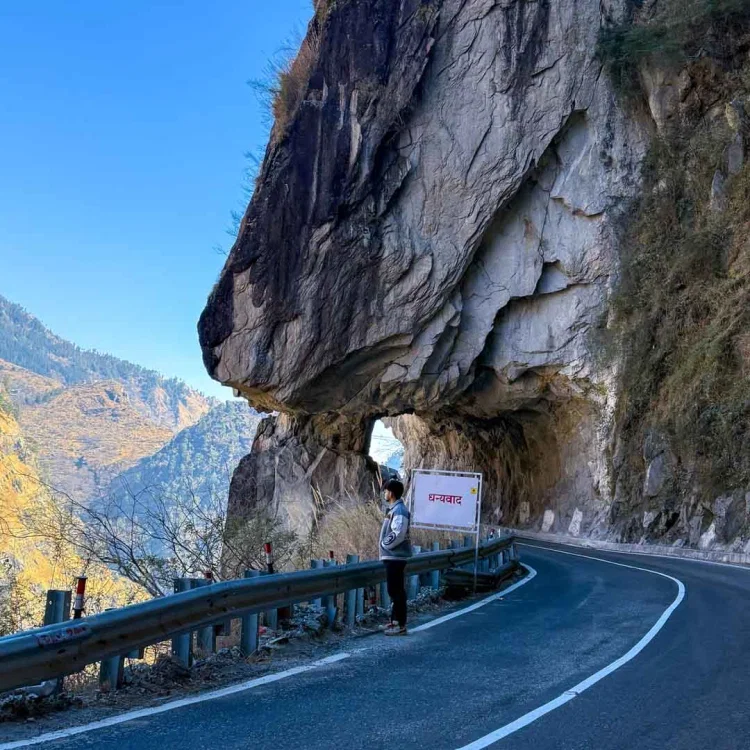
Road status on the Manali to Kaza route is conflicting right now. The official Lahaul-Spiti district page lists Keylong to Kaza as closed.
This kind of contradiction is normal in Spiti. Official pages can lag behind ground reality by days.
Local drivers sometimes confirm a road is passable before the district formally marks it open. And sometimes the reverse happens; a road is listed as open but a fresh landslide or water surge has blocked it overnight.
Here is what you should do. Check the Lahaul-Spiti district administration page. Check DDMA and police social media handles. Call or WhatsApp a local driver or camp operator in Kaza or Manali. And then check again the morning you plan to leave.
For the latest from our end, check our Manali to Kaza road status 2026 page, which we update through the season.
The official district page lists Delhi to Manali as open and Manali to Keylong as open. It lists Keylong to Kaza (about 185 km, roughly 6 hours) as closed at the time of writing.
It also lists Kaza via Rohtang, Batal and Kunzum as 200 km. Fuel is available at Tandi and Kaza only, so fill up before you leave Manali and top off at Tandi.
Do not leave Manali without same-day confirmation of the route. One phone call can save you a wasted day
Related topics
Frequently Asked Questions
Are there water crossings on a Spiti bike trip?
Yes. The Manali to Kaza route via Gramphu and Batal has dozens of water crossings, especially in the 50 to 60 km stretch between Gramphu and Batal. These are glacier-fed streams that flow across the road and vary in depth and speed throughout the day.
Which is the most dangerous water crossing between Batal and Gramphu?
Chhota Dhara is consistently called the most dangerous crossing on this route. The water is fast, icy, and runs over hidden rocks. Multiple rider sources and travel writers single it out as the toughest crossing on the entire Spiti and Ladakh circuit.
Is Chhota Dhara water crossing safe for bikes?
It is crossable with the right technique, timing, and caution. Cross early morning when water levels are lowest. Watch another vehicle cross first. Enter in first gear with steady throttle. It is not safe if you are tired, riding solo without backup, or attempting it in the afternoon when melt is at peak.
What is the best time of day to cross Spiti water crossings?
Between 5 AM and 9 AM. Glacier melt is at its lowest during this window. After that, the sun warms the ice above and water volume increases through the day, peaking in the afternoon.
How many water crossings are there between Gramphu and Batal?
There is no fixed number. It changes with the season, snowmelt, rain, and road repairs. Various experienced riders report anywhere from 30 to 50 or more crossings in a single ride. Expect many, and focus on each one individually.
Is the Manali to Kaza road open in 2026?
As of June 2026, reports are conflicting. The official district page lists Keylong to Kaza as closed, while local sources report the route is passable for light 4x4 vehicles. Always verify same-day status before leaving.
Can beginners ride through Batal, Chhatru and Chhota Dhara?
Beginners can do Spiti, but this particular stretch is not beginner-friendly as a first-day ride. The combination of altitude, rough terrain, cold water and fatigue is intense. Entering from Shimla and exiting via Manali is the smarter route for first-timers.
Is September better than June for Spiti water crossings?
Generally yes. September has lower meltwater volume, drier roads, and clearer skies. June has stronger fresh melt and more unpredictable conditions. September's trade-off is colder mornings and shorter daylight.
What bike is best for Spiti water crossings?
Any reliable motorcycle with decent ground clearance works. Royal Enfield Himalayan is the most common choice. More important than the bike is the tyre. Dual-sport or knobby tyres make a real difference on wet rocks and loose gravel.
What should I carry for Spiti bike trip water crossings?
Dual-sport tyres, waterproof luggage, riding boots with grip, spare dry socks, a basic toolkit with clutch cable and puncture kit, chain lube, a rain layer, thermal layer, and a fully charged power bank. Wet feet and cold wind are the combination that breaks riders on this route.
What should I do if my bike stalls in water?
Kill the engine immediately. Do not keep cranking the starter. Push the bike to dry ground with help. Check the air filter and exhaust for water. Let the brakes dry before riding again. If unsure, wait for mechanic help rather than forcing a restart.
Is it safe to ride solo through Gramphu to Batal?
It is possible but not recommended. If you stall in a crossing with no one around, you are stuck at 4,000 metres with no phone signal and no help. Ride with at least one other person, or time your ride so other vehicles are on the road.
More about Lahaul and Spiti
 Lahaul and Spiti
Rent or Buy Winter Gear for Spiti in 2026? Jackets, Boots, Costs and Pickup Options
Planning a Winter Spiti trip in 2026? Compare the cost of renting vs buying jackets, snow boots, thermals and other essential winter gear, along with practical tips on what to rent, what to buy and where to arrange it before your trip.
- First-Time Travellers
- Snow Travel
 Lahaul and Spiti
Winter Spiti 4×4 Seating Guide 2026: Jimny, Scorpio N, Thar and Hilux for Passengers and Luggage
Planning a Winter Spiti trip in 2026? This practical 4×4 seating guide compares the Jimny, Scorpio N, Thar and Hilux for passenger comfort, luggage space, winter roads and long mountain drives, helping you choose the right vehicle for your group size and travel style.
- Road Trips
- Snow Travel
 Lahaul and Spiti
Stargazing in Winter Spiti 2026: Where to Stay, Moonlight and What You Can See
Discover the best places for stargazing in Winter Spiti 2026, where to stay for darker skies and how moonlight affects visibility. Learn what you can realistically see from Kaza, Tabo and nearby villages during the winter months.
- Things to Do
- Snow Travel