
Best Time for Spiti Bike Trip 2026: Month-by-Month Riding Conditions & Road Status
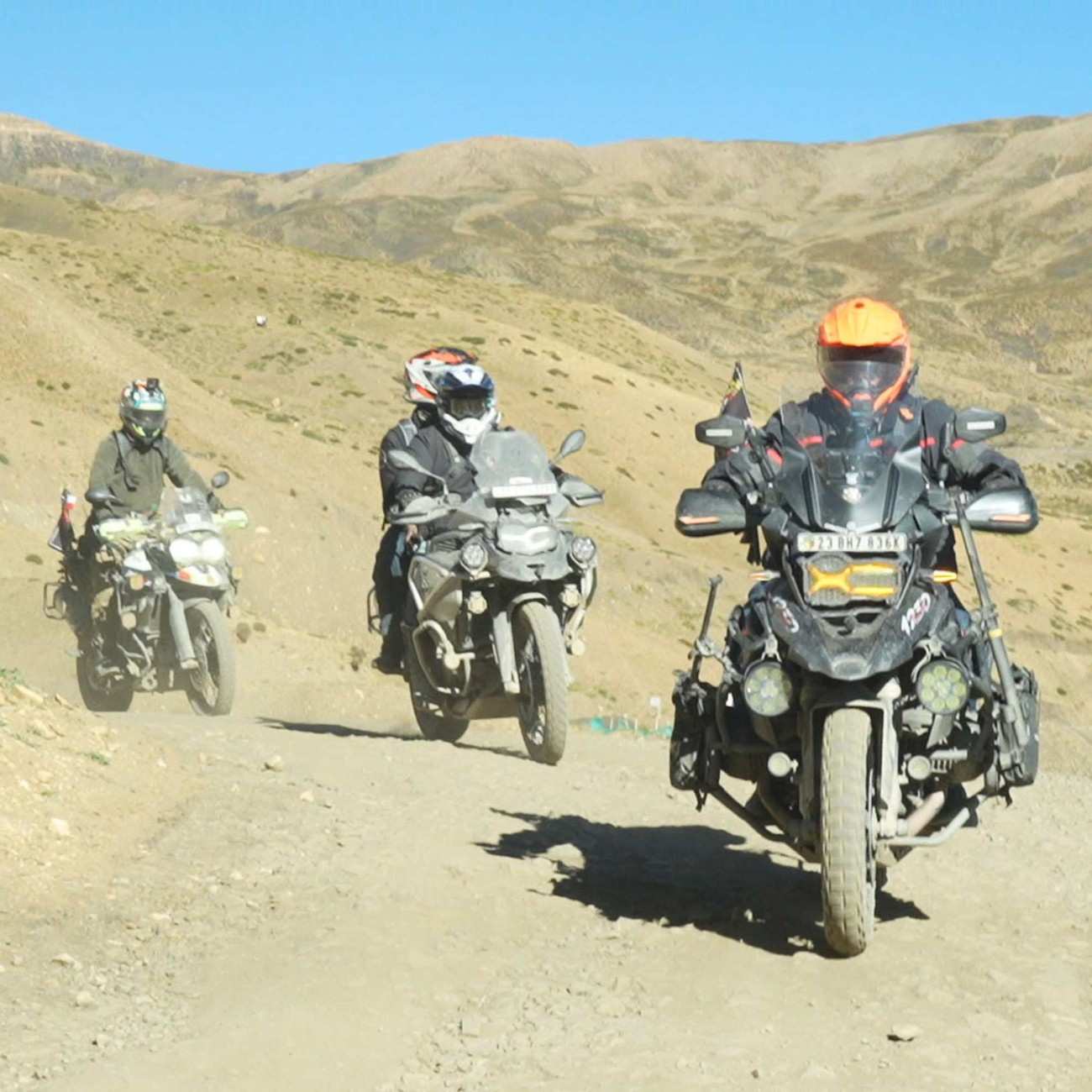
Most Spiti travel guides tell you June to September is the best time and leave it there. That is not enough for a rider. A Spiti bike trip depends on much more than weather.
You need to think about Kunzum Pass opening, road slush, water crossings, monsoon risk, cold nights, traffic, and how comfortable your pillion will be on broken stretches.
This guide by Travel Coffee explains the best time for a Spiti bike trip in 2026 month by month, so you can choose your travel dates based on real riding conditions and not just pretty weather charts.
Quick Answer: What Is the Best Time for a Spiti Bike Trip in 2026?
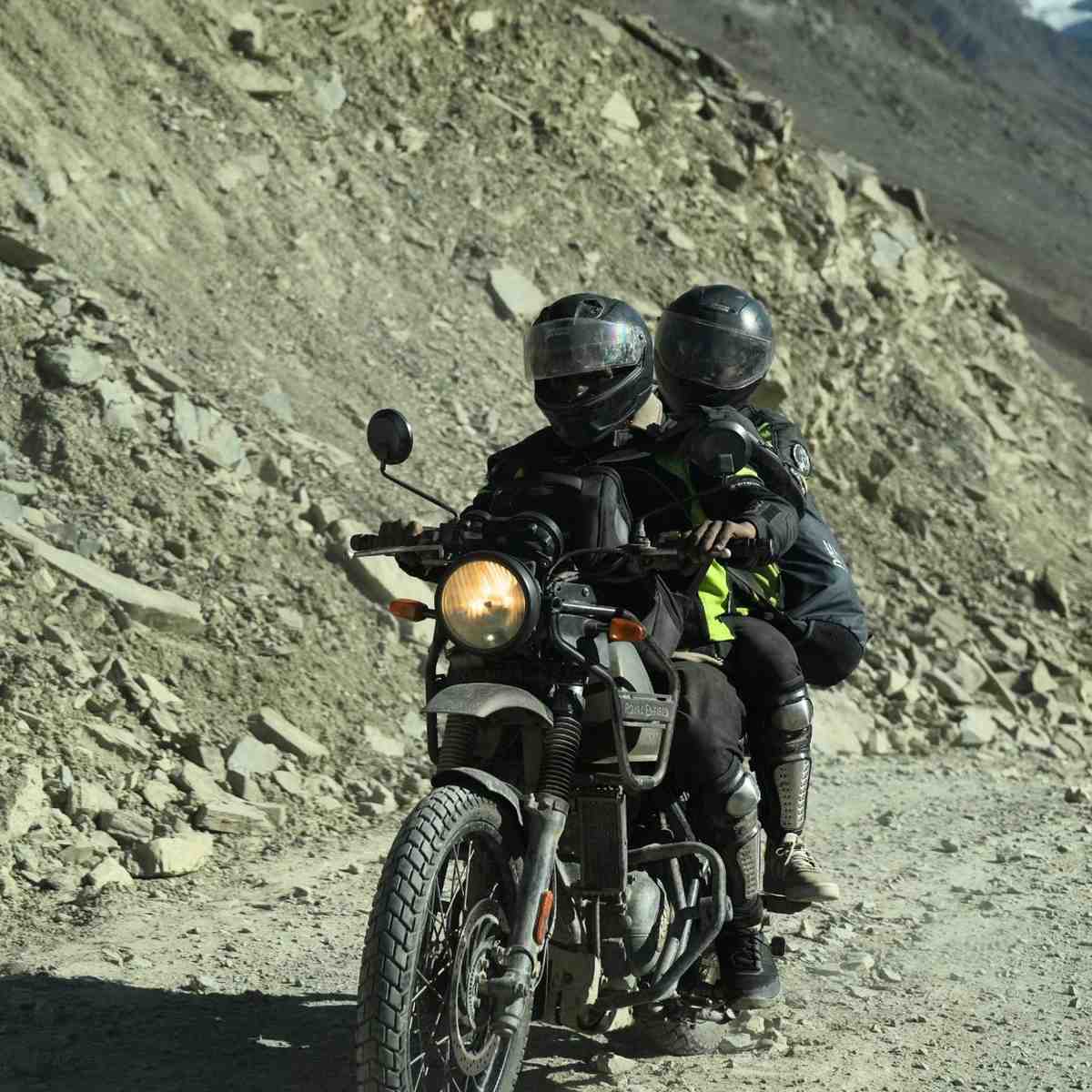
September is the best overall month for a Spiti bike trip in 2026. Mid-June to September is the main full-circuit riding season when both routes usually stay open.
June is adventurous because of fresh snowmelt and active water crossings. July and August work for confident riders but need buffer days because of rain on the approach roads.
Early October is beautiful but risky after mid-month when Kunzum can close without warning.
Spiti Bike Trip Season 2026 at a Glance
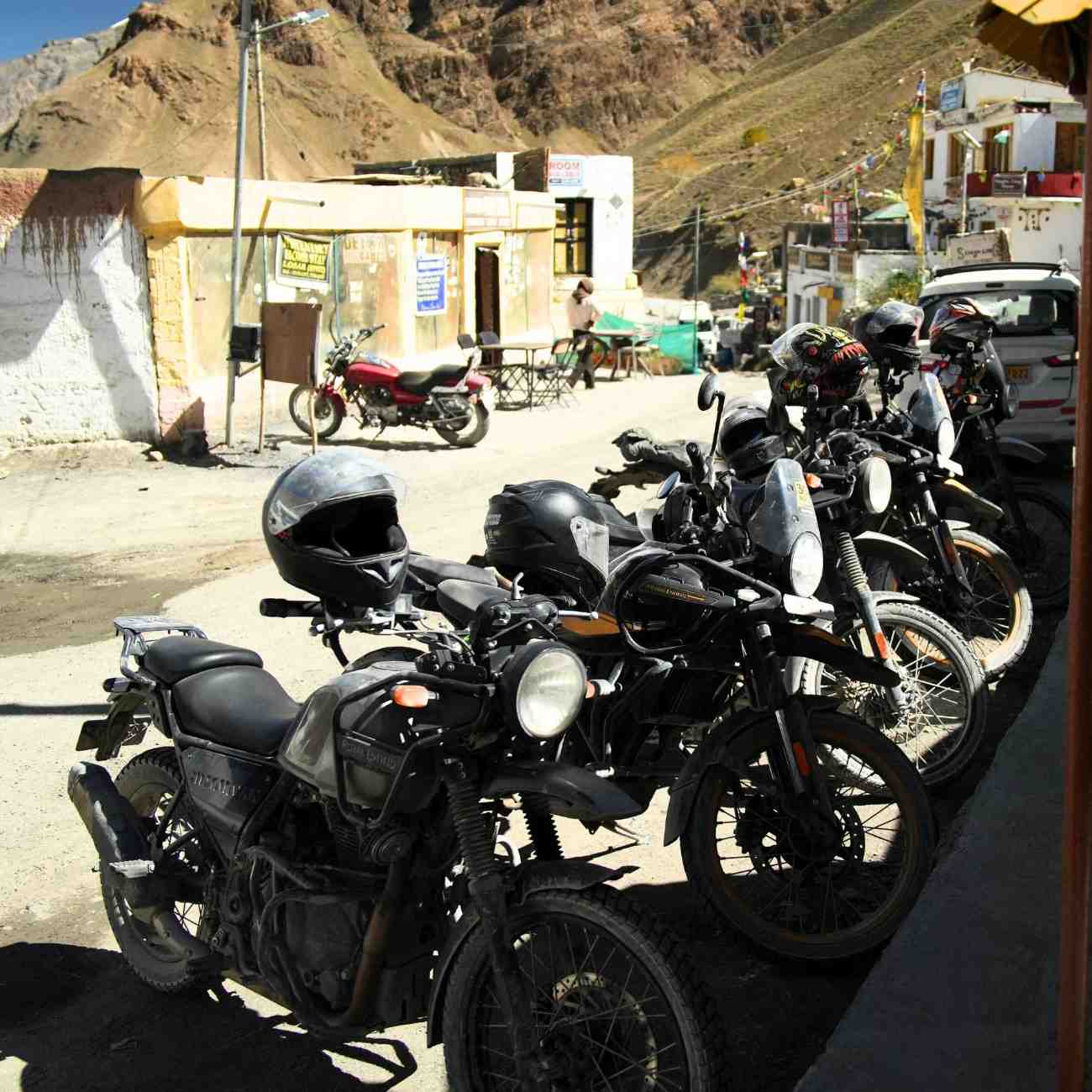
The Spiti riding season is short. From November to April, the high passes stay buried under snow and the Manali-Kaza road simply does not exist for any vehicle, let alone a loaded motorcycle.
The real window opens around mid-June and closes by mid-October. Here is what most riders miss. "Road open" and "safe for bikes" are two different things.
A road can open for 4x4s before it feels comfortable on a fully loaded Royal Enfield with a pillion and saddlebags. When BRO first cuts through the snow at Kunzum, the surface is loose, wet and full of slush.
A car can crawl through. A bike with road tyres slides. We have seen riders attempt the pass three days after first clearance and turn back because of black ice in the morning shade.
So when you read this guide, treat the best time for spiti bike trip question as a riding question, not a tourist weather question. The answer changes once you factor in slush, wind, water crossings and rider fatigue.
Why Bike Trips Need a Different "Best Time" Answer Than Car Trips
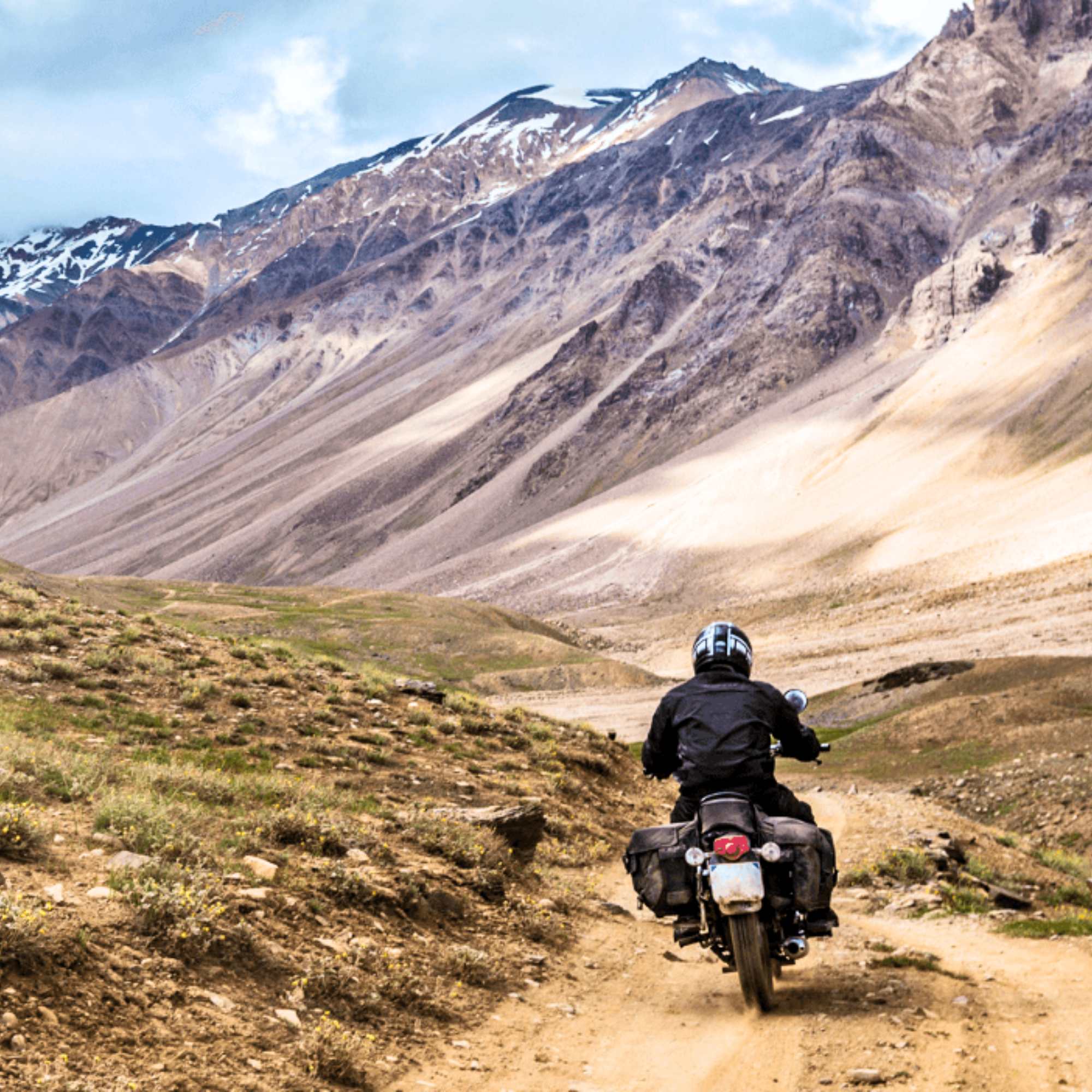
A car traveller can sit warm inside the cabin while a sudden hailstorm passes. A biker is exposed for the next 40 minutes. That single difference changes everything about how you plan the month.
On a motorcycle, slush adds at least an hour to every 50 km stretch. Loose gravel after Batal can fling rocks under your bike.
Cold wind at 14,000 feet drops your hand temperature fast even in July. Loaded panniers shift your balance through deep water crossings.
A car can also wait out a road closure overnight. Bikers usually cannot, because most have tight return-to-work schedules and are riding rented bikes with daily fees.
In our experience running both bike-friendly tours and car circuits, the riders who enjoy Spiti the most are the ones who picked September and gave themselves an extra day at Kaza to rest.
The ones who suffered the most picked late August with five fixed days and hit a single landslide that wiped out their plan.
If you are choosing your Spiti riding month and want a trip that balances adventure with safety, our Lahaul and Spiti Valley bike expedition is a good place to start.
Route Basics Before Choosing Your Month
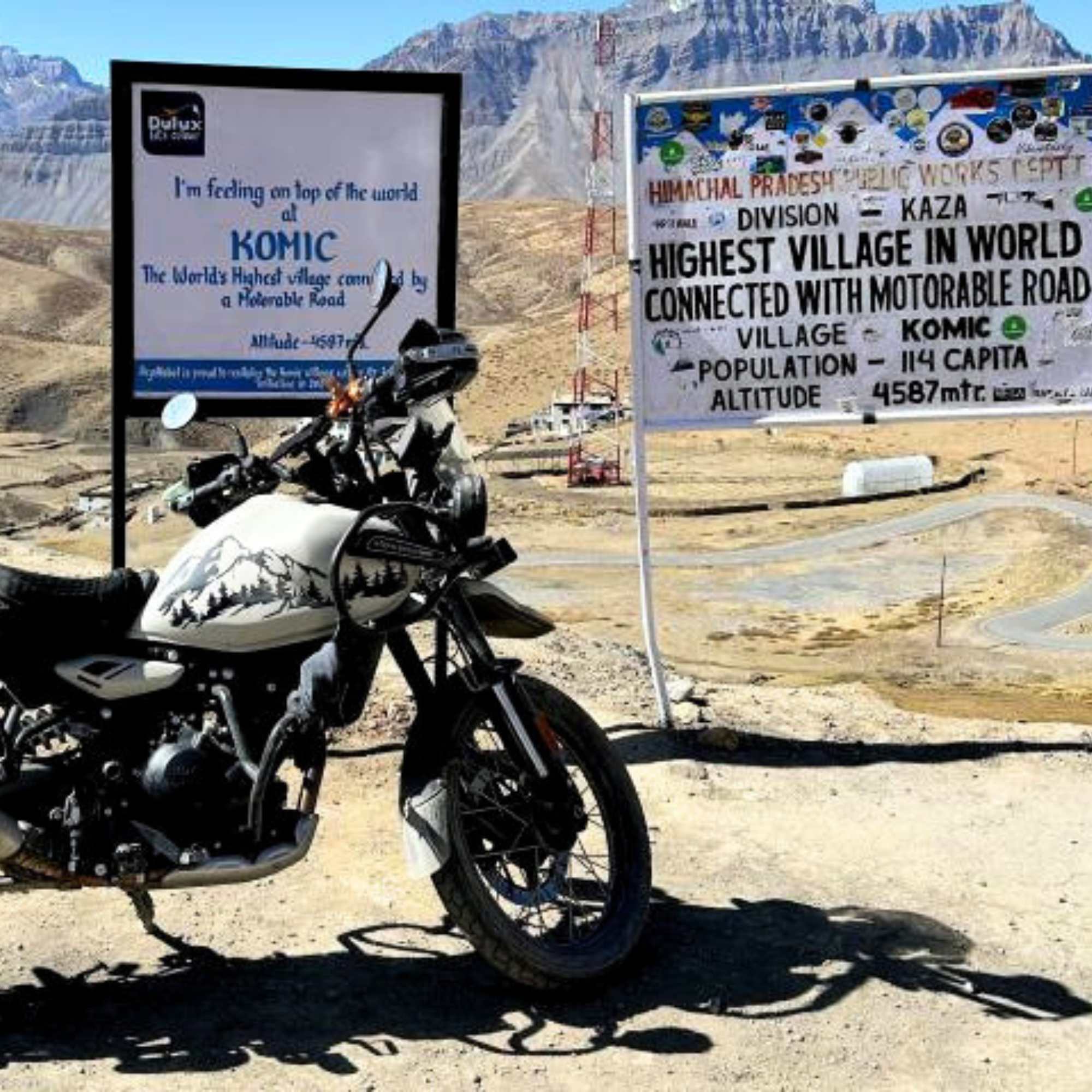
Shimla-Kinnaur-Kaza Route
This route is the safer choice for first-time Spiti riders. You climb gradually through Narkanda, Rampur, Kalpa and Nako before reaching Kaza at around 12,500 feet.
By the time you ride the high sections, your body has had three or four days to adjust. The Kinnaur side stays mostly open from April through October with minor closures during heavy rain.
This is why we usually plan our full-circuit packages with a Shimla or Kinnaur entry. If you want to see the route in detail, our Kinnaur tour packages cover the lower stretch with stays we have personally vetted.
Manali-Kaza via Atal Tunnel, Gramphu, Batal and Kunzum
This is the shorter route on paper. About 182 km via the Atal Tunnel and 202 km via Rohtang. But the Gramphu to Batal to Kunzum stretch is the section every biker worries about, and rightly so.
The road here is broken in places, fully gravel in others, and crossed by glacier-fed nallahs that swell as the day warms up. Travel time runs 7 to 10 hours for this section alone depending on conditions.
The route is fully seasonal and depends on Kunzum Pass clearance. For riders who want to skip the long highway approach, our Spiti Bike Trip From Manali starts the real ride from Manali and focuses on Chandratal, Kaza and Kunzum.
If you are starting from Manali, our Manali tour packages can help you build proper rest and acclimatisation before you push towards Kaza.
Recommended Route for Most Riders
Enter via Shimla and Kinnaur. Exit via Manali. This is what we tell almost every first-time full-circuit rider who asks us.
Your body adjusts on the way up, and by the time you ride the rough Manali-side exit, you are already acclimatised and confident. Doing it the other way around, Manali to Kaza first, is the most common altitude-sickness story we hear. The jump is too fast.
Spiti Bike Trip in May 2026: Too Early for the Full Circuit?
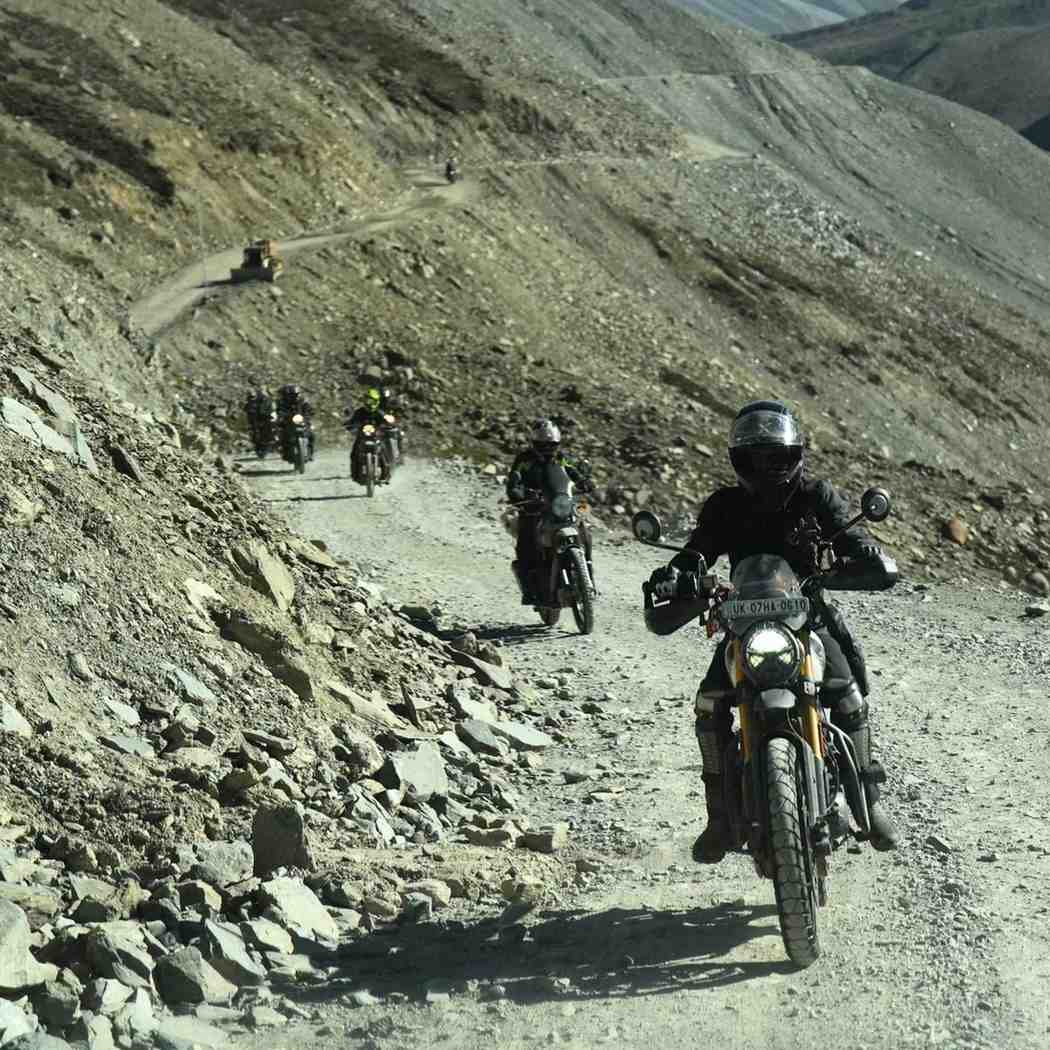
May is not the right month for the full Spiti circuit on a bike. The Kinnaur side may be open and rideable up to Kalpa or even Nako in many years.
But the Manali-Kaza route via Kunzum Pass is usually still snowed in or unstable. Chandratal access in May is also uncertain.
The diversion road from Batal stays under snow well into early June most years. Our Kunzum Pass in May guide explains the typical clearance pattern in detail.
May only suits riders who are flexible about not completing the full circuit. If your dates are fixed in May, plan a Kinnaur-only trip with a backup return through the same route.
Do not bet your entire ride on Kunzum opening early. We have seen too many riders fly into Delhi in mid-May only to learn the pass is still two weeks away from clearance.
Spiti Bike Trip in June 2026: Best for Snow Walls, But Ride Carefully

A spiti bike trip in june is the most photographable version of the season. Snow walls line the road near Kunzum. The Chandra River runs full and loud. Every photo looks like a Bullet ad.
But early June and mid-to-late June are very different riding experiences. Early June is a coin toss for the Manali side.
Kunzum may have been cleared once, but a fresh snowfall can shut it again with no notice. Mid to late June is more reliable, with most camps and dhabas operating again.
Water crossings are active in June because of strong morning snowmelt. By 10 AM, the streams near Pagal Nala and Batal are noticeably stronger than they were at 6 AM.
We always tell our June riders to leave Chhatru by 5:30 AM if they want the easiest crossings. The two tin-roof dhabas at Batal are the last proper hot meal before Chandratal. Skip them and you are riding three hours on cold biscuits and chocolate.
The honest negative about June. Cold mornings will hit you harder than you expect. Even at 8 AM in late June, the Kunzum top can be near zero. A summer riding jacket with no thermal layer is not enough.
>>WhatsApp us for a clean, well-organised Spiti biking experience
Spiti Bike Trip in July 2026: Open Roads, Strong Water Crossings
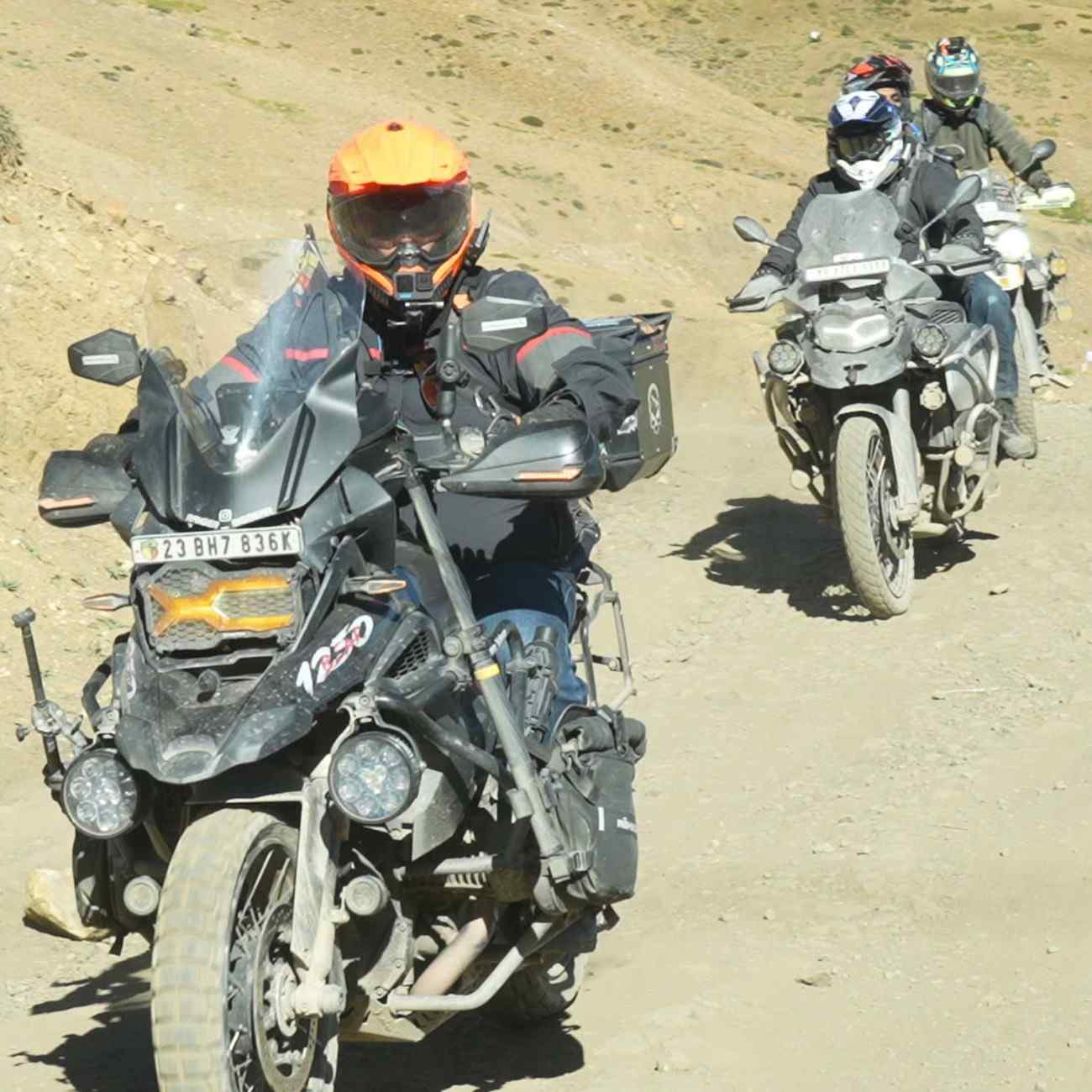
A spiti bike trip in july usually finds both routes open. Camps are running, dhabas are stocked, and the BRO has finished its first round of post-winter repairs.
On paper, this sounds ideal. The catch is monsoon. Spiti itself is a rain-shadow region and stays mostly dry, but the approach roads do not.
The Kinnaur side and the Manali side both face rain, slush and occasional landslides through July. Water crossings reach their strongest levels in July and August.
The same nallah that was ankle-deep in June can be mid-thigh deep on a July afternoon. We have had riders wait three hours for a flow to drop, only to find the water hadn't dropped at all because the glacier upstream was melting faster than the stream could clear.
July suits confident riders who have done at least one long Himalayan bike trip before. If this is your first 1,500 km ride, July is not the cleanest start.
Spiti Bike Trip in August 2026: Should You Avoid Monsoon?
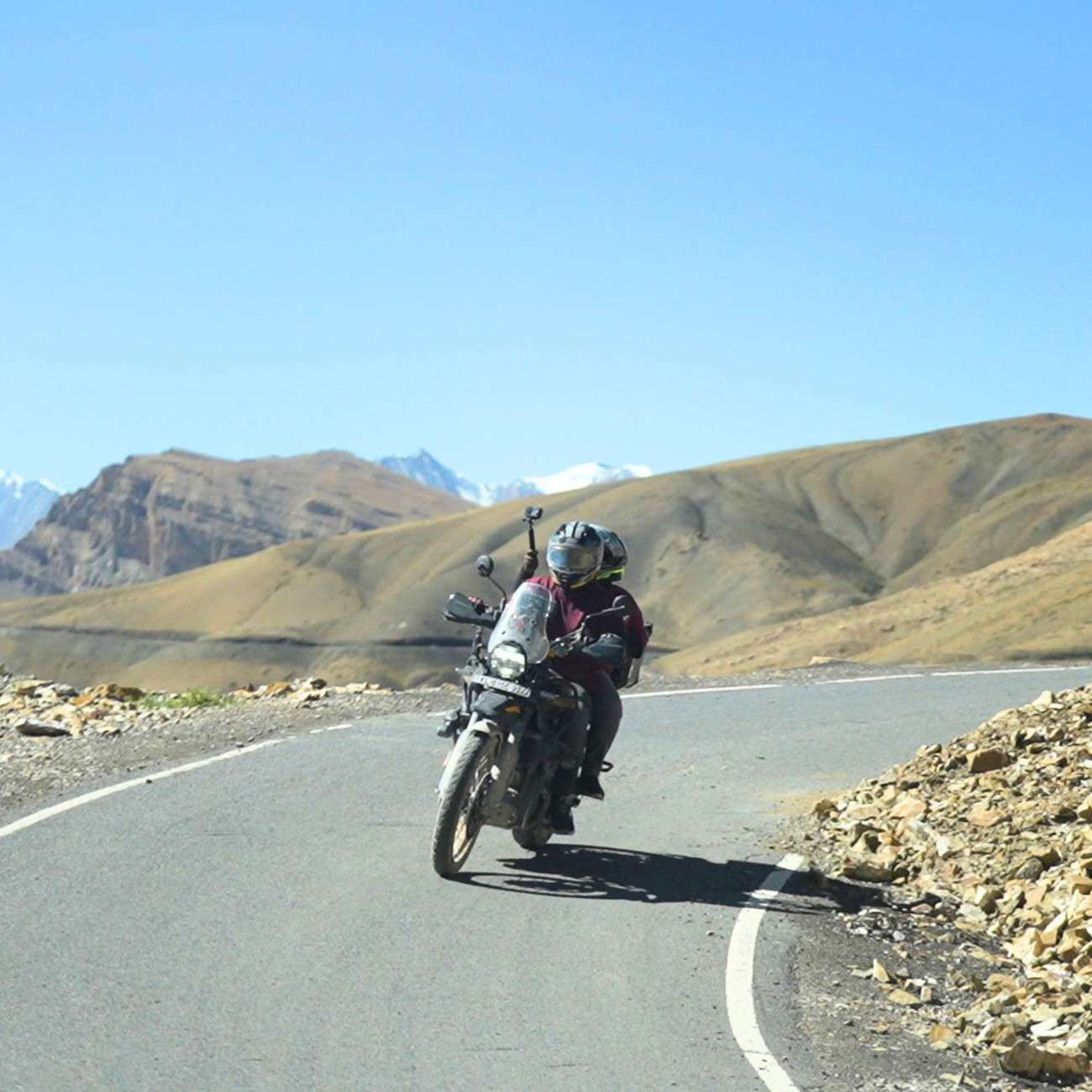
A spiti bike trip in august is not impossible, but it is the trickiest month for first-timers. The approach roads through Kinnaur and Manali both see active monsoon.
Landslides can shut a stretch for half a day or longer. Strong water crossings continue into August.
Waterproof riding gear, waterproof boots, and a rain liner under your jacket are non-negotiable. Riding in heavy rain on a loaded bike at altitude is exhausting in a way that flat-road monsoon riding never prepares you for.
If you are riding in August, plan 2 to 3 buffer days into your itinerary. A trip with no buffer days in August is the single most common reason we see groups arrive at Kaza tired and behind schedule.
What we tell our travellers is simple. If you can shift your dates by 4 weeks, shift them. Move to early September. The same trip with half the stress.
Spiti Bike Trip in September 2026: The Best Overall Month
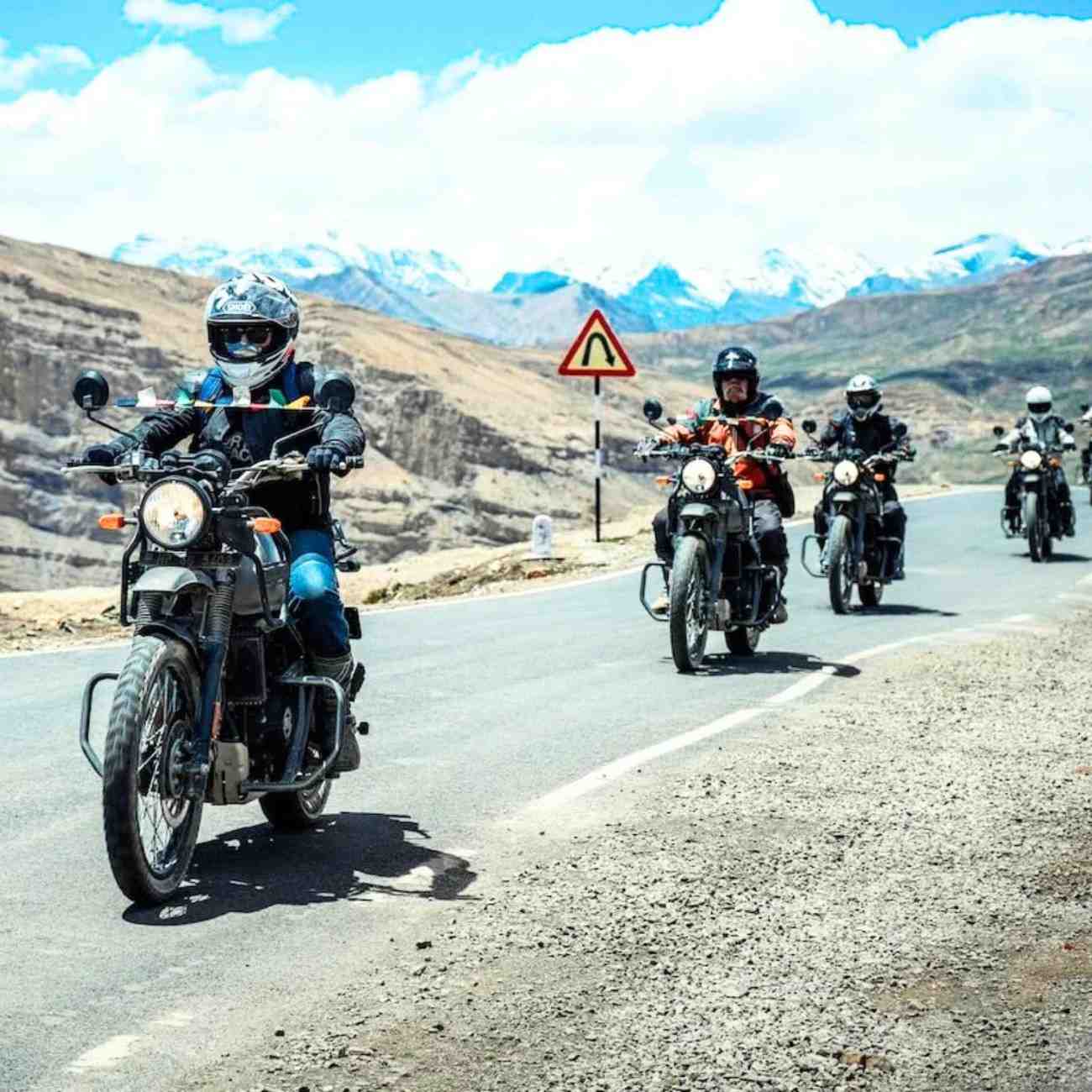
This is the one. A spiti bike trip in september gives you the best combination of open roads, calmer water crossings, clearer skies and lower crowds.
Both Shimla and Manali sides are usually fully operational. The post-monsoon clarity makes the landscape feel sharper, almost surreal.
By September, the streams along the Manali-Kaza stretch have settled. Glaciers are melting slower because nights are colder.
Crossings that were thigh-deep in July drop back to ankle or knee level. This single change makes a huge difference for a loaded motorcycle.
The visual difference is also dramatic. Skies are clean, mountains hold their first dustings of fresh snow on the high peaks, and the valley turns from green to gold.
For photographers, this is the month that delivers. Cold nights are the trade-off.
By mid to late September, Kaza nights drop close to zero. Chandratal nights regularly hit minus five with wind chill.
Pack a proper down jacket and thermal inners. Our Chandratal opening dates guide covers the camping conditions month by month if you want the full picture before booking.
September is also when crowds thin. July and August weekends bring waves of riders to Kaza. By mid-September, you can find a quieter table at the cafes in Kaza market and a parking spot at Key Monastery without circling.
Spiti Bike Trip in October 2026: Beautiful, Cold and Risky After Mid-Month
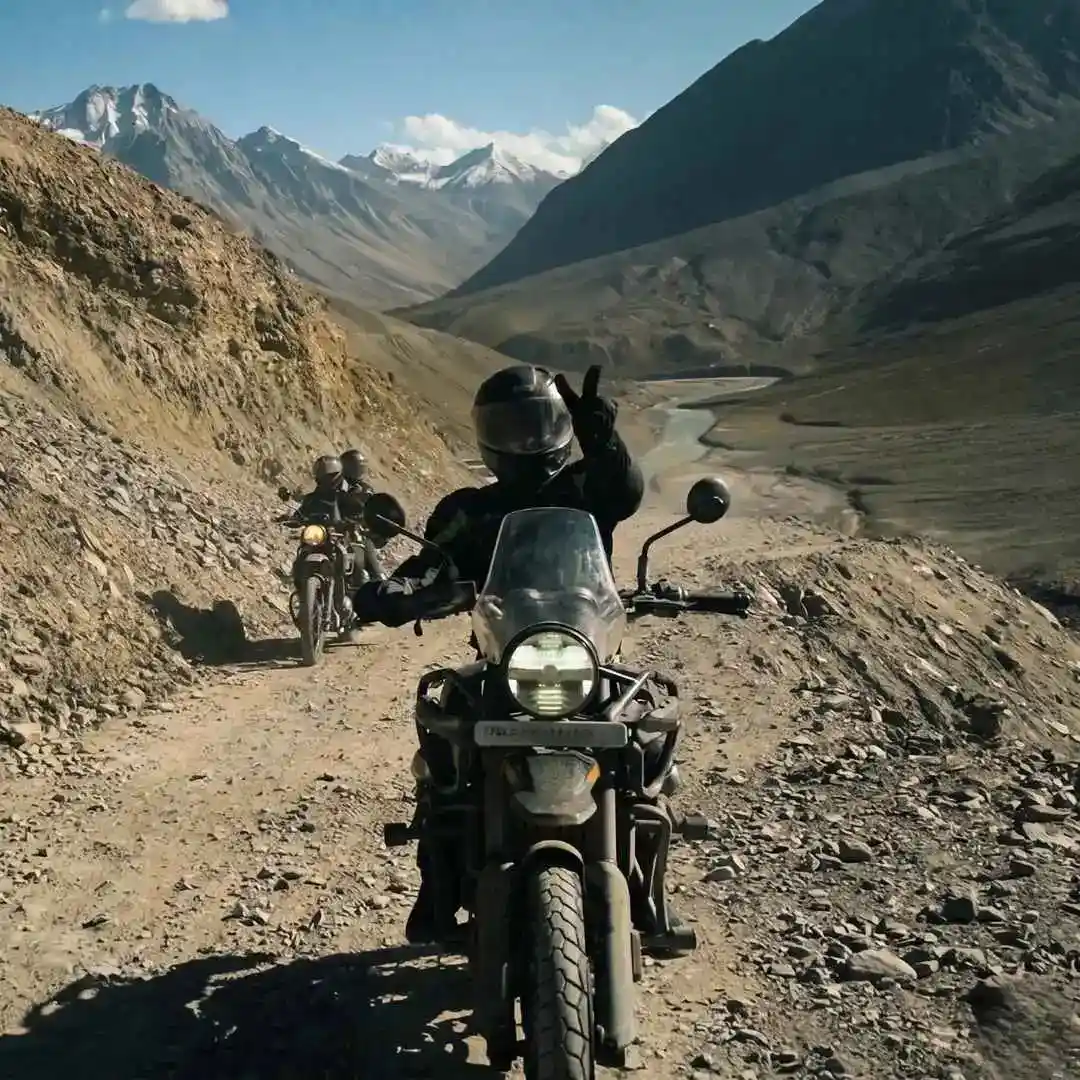
Early October can be one of the most beautiful weeks of the entire season. The light is golden, the air is crisp, and the high peaks already show fresh snow.
For experienced riders who know the route, it is a dream window. The risk shows up after October 10.
Chandratal camps start shutting. A single early snowfall can close Kunzum Pass overnight. Riders stuck on the Manali side with Kunzum closed have only one option, which is to ride back through Kinnaur.
That is at least three extra days you may not have. If you are attempting October, keep your itinerary loose and your exit through Shimla as a backup.
Do not commit to an Atal Tunnel exit on a fixed return date. We have seen too many October groups end the trip on a tow truck rather than two wheels.
Month-by-Month Riding Conditions for Spiti Bike Trip 2026
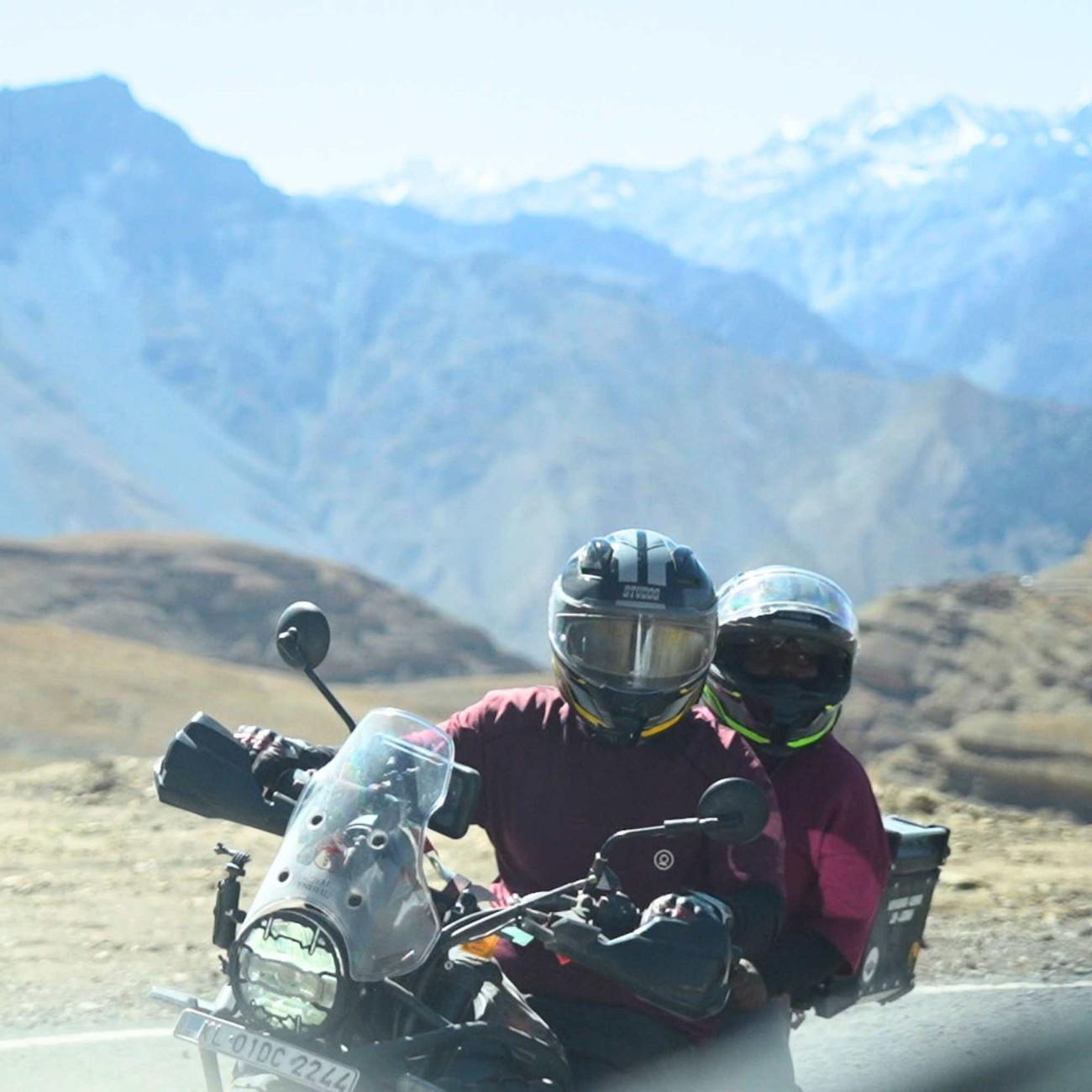
In May, the Kinnaur side opens up partially and the Manali side stays mostly closed. Roads on the upper Kinnaur stretch are rough but rideable for confident riders. May suits experienced riders willing to skip the full circuit.
In June, the full circuit usually starts opening from mid-month. Roads are fresh and broken in patches.
Water crossings build up through the day, easier in early morning. Suitable for intermediate to experienced riders, especially mid to late June. Beginners should wait.
In July, both routes are open and mostly stable inside Spiti. Approach roads face rain and slush. Water crossings hit their strongest levels.
Suitable for confident riders with rain gear and at least one buffer day. Not ideal for first-timers.
In August, monsoon affects approach roads heavily. Spiti itself stays drier but reaching it is the challenge. Landslides can delay travel by half a day or more.
Suitable for flexible experienced riders with 2 to 3 buffer days. Beginners should avoid.
In September, conditions are at their best for most riders. Roads are stable, water crossings calm, skies clear and crowds reduce.
Cold mornings start showing up after mid-month. Suitable for all experience levels including first-time full-circuit riders. This is the month we recommend most.
In October, early October is rideable for experienced riders. Mid to late October becomes risky as Chandratal camps shut and Kunzum can close after fresh snow.
Suitable only for experienced riders with flexible exit plans. Beginners should not attempt.
Current 2026 Road Status: Kunzum Pass, Manali-Kaza and Chandratal
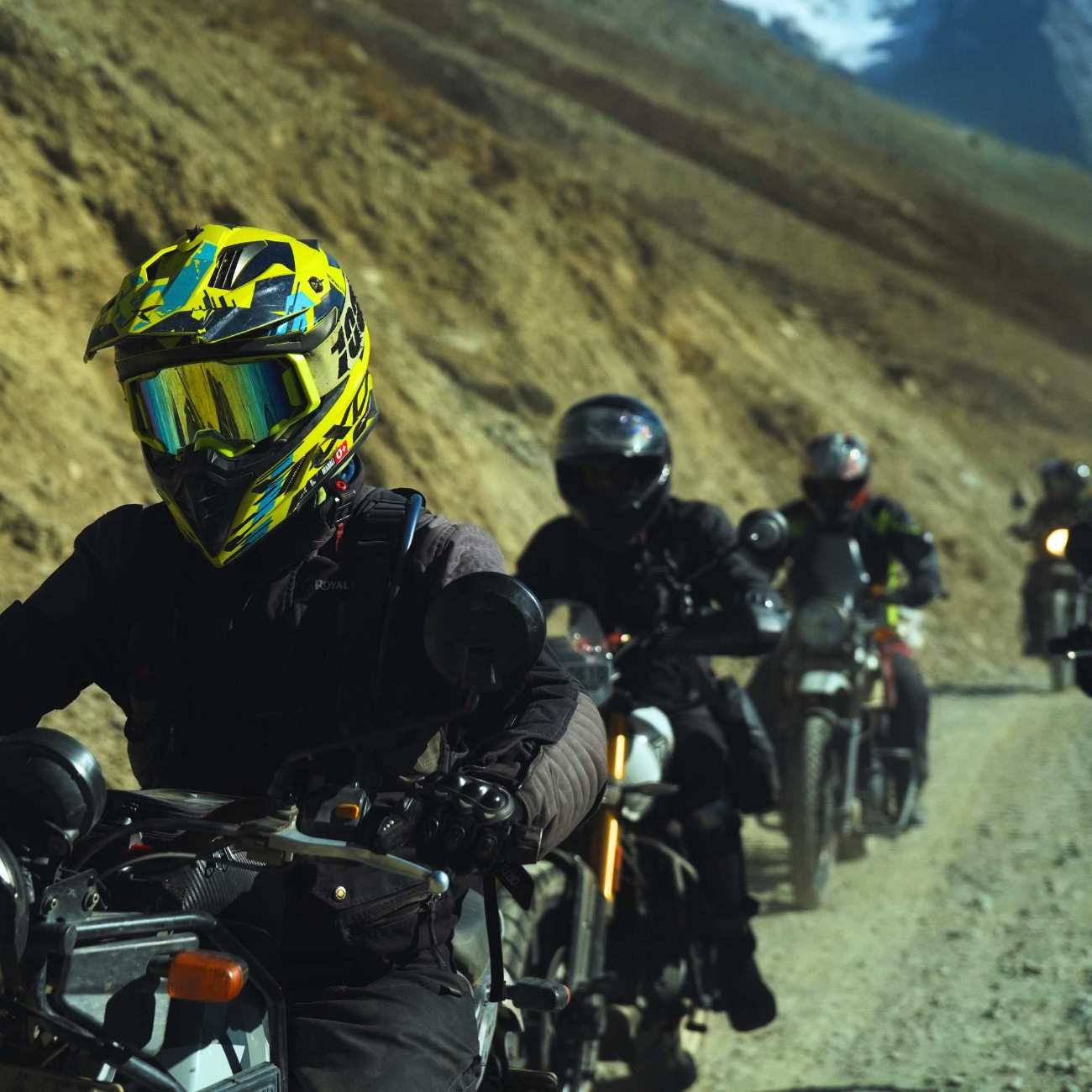
As of the official Lahaul-Spiti district road status page last updated March 20, 2026, the Delhi-Manali stretch was open and Manali-Keylong was open. The Keylong-Kaza stretch was still closed at that time.
A separate Manali-Kaza road-status tracker updated April 21, 2026 listed Manali-Kaza via Kunzum as closed and projected a full opening between mid-May and early June 2026, depending on BRO clearance and weather.
The official Lahaul-Spiti Passes page lists Kunzum La at about 4550 m and notes that the route is generally motorable from early August to late September depending on snowfall each year.
This is a conservative reading. Most years see partial opening earlier than August, but always treat early-season clearance as conditional.
What this means for your booking. If your dates are early or mid-June, build in flexibility. If your dates are September, you can plan with more confidence.
Either way, verify road status within 48 hours of departure. Conditions in this region change overnight.
If you would rather have someone tracking road status and rerouting for you, our Best-Selling Summer Spiti Circuit with Chandratal handles this end-to-end with a local team based in Himachal.
Water Crossings on a Spiti Bike Trip: Which Month Is Safest?
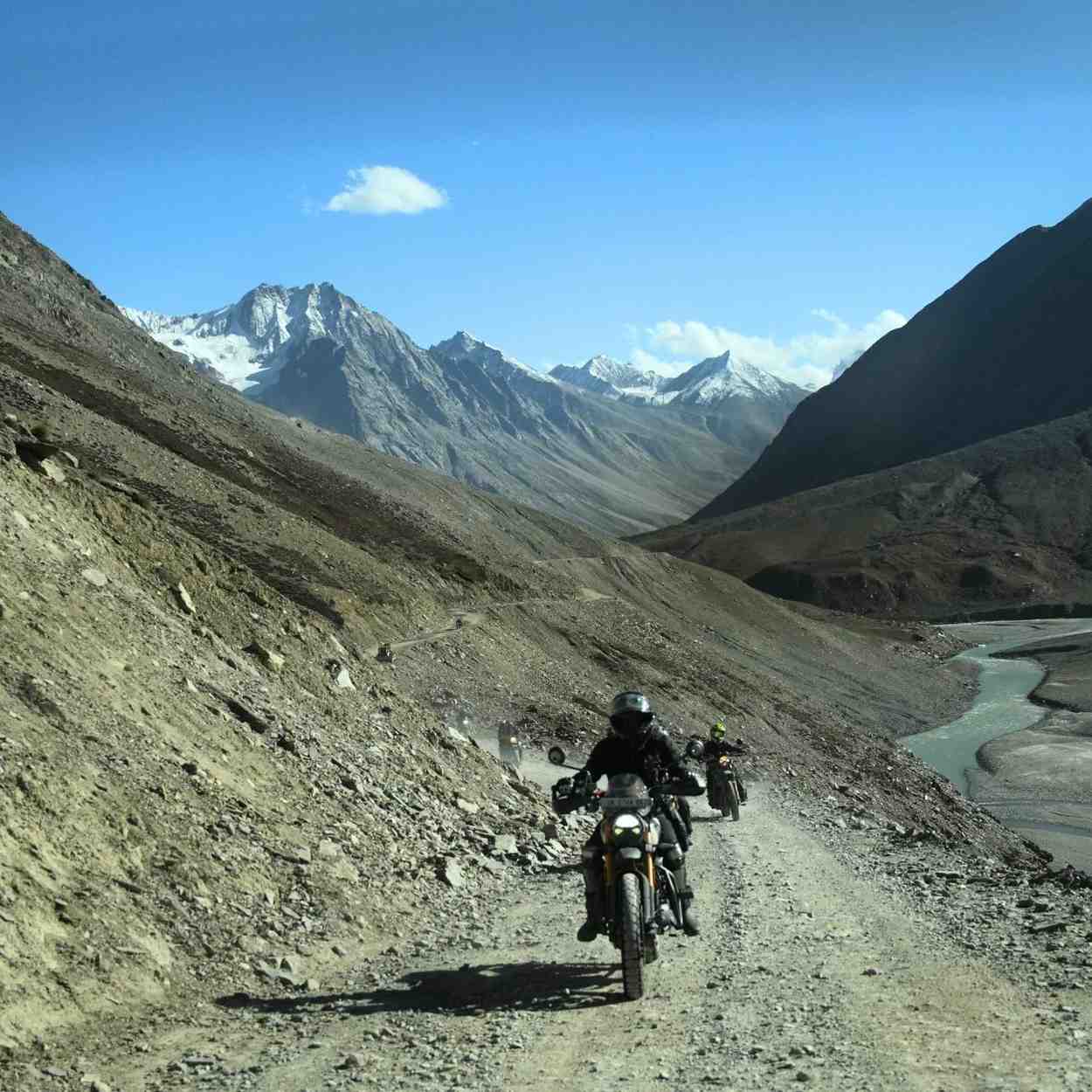
This is the single most underrated factor in choosing your month. Water crossings on the Manali-Kaza route are glacier-fed and timing-dependent.
The lowest flow window is roughly 5 AM to 9 AM. By the time the sun has been on the glaciers for a few hours, snowmelt picks up and streams start swelling.
By noon, the same crossing can be twice as deep and three times as fast. July and August see the strongest flows because of combined snowmelt and rainfall upstream.
Pagal Nala, the most famous of these crossings, lives up to its name in peak monsoon. We have seen it shut down for entire afternoons.
Late June and September are the most manageable months for crossings. By September, the morning glacier melt is slower and the rains have stopped. The same nallahs feel like a different country.
A safety rule we tell every rider. Never force a crossing where the water is above knee level and flowing fast.
The current at altitude is stronger than it looks because of the angle and the rocks underneath. If a crossing looks doubtful, wait. Watch a 4x4 cross first. If they struggle, you turn back.
Permits and Documents for Spiti Bike Trip 2026
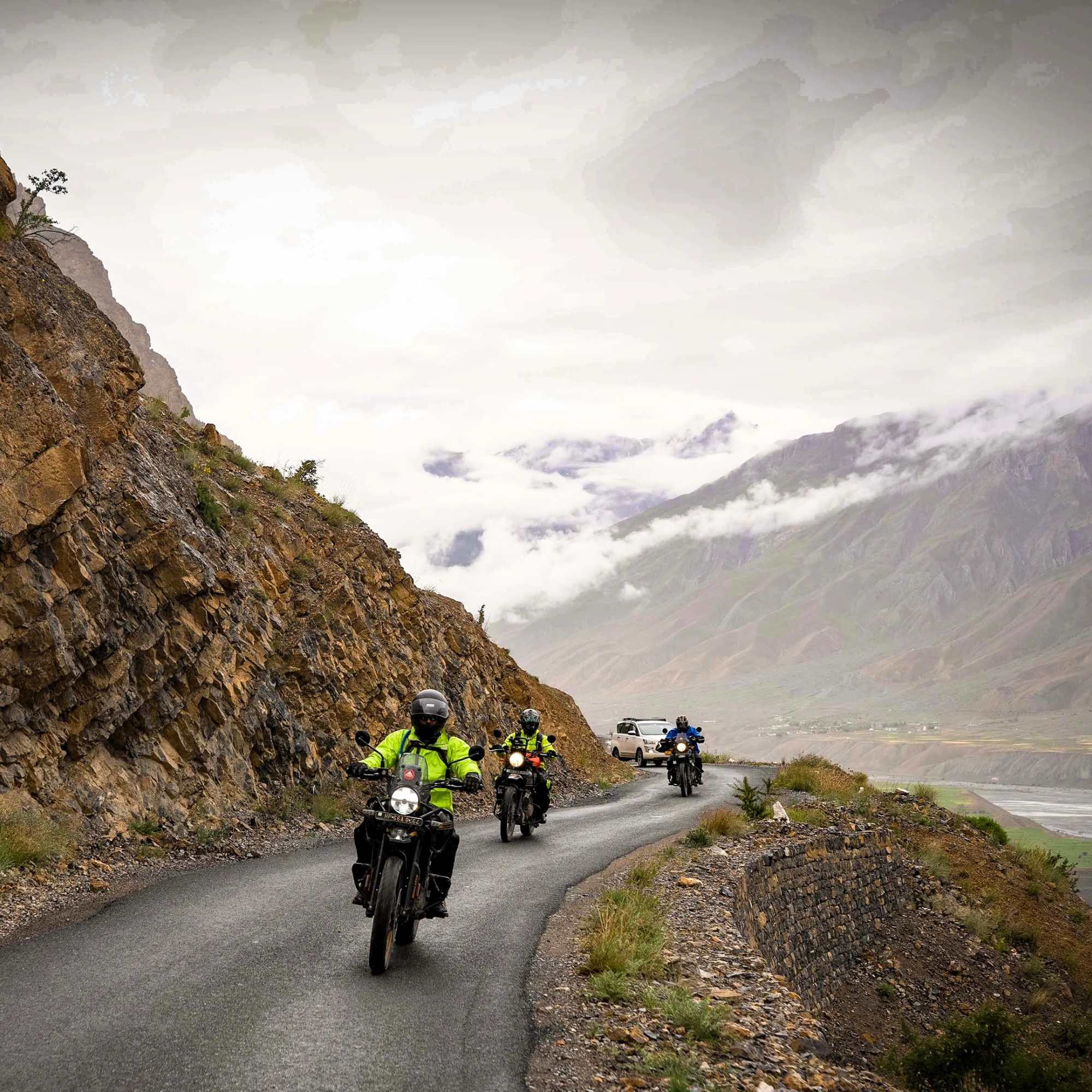
Do Indians Need a Permit for Spiti?
Indian citizens do not need an Inner Line Permit for regular Spiti tourism. Carry your government ID, driving licence, bike RC, insurance and PUC certificate.
That is enough for normal Spiti routes inside India. The confusion comes from older blogs that still mention ILPs for Spiti.
That requirement is for some restricted border zones, not the standard Kaza-Tabo-Chandratal circuit Indian travellers usually do. Skip those outdated guides and stick to current sources.
Rohtang and Beyond Rohtang Permit
This is a vehicle and congestion-charge system, not a nationality permit. The official Rohtang permit portal requires a valid ID, valid PUC certificate and vehicle registration details for the application.
Daily quota at Rohtang is 800 petrol vehicles and 400 diesel vehicles. Permit printout is compulsory.
The portal lists Rohtang tourism permit fee as ₹500 for car, jeep, MUV, bus and HMV with a congestion charge of ₹50 for car, jeep, MUV and ₹100 for bus and HMV. Beyond Rohtang congestion charges are listed as ₹50 for LMV/passenger vehicles and ₹100 for goods vehicles.
The bike-specific fee is not clearly listed in the same way. Check the official portal directly before your trip and confirm the current bike charge.
If you want a complete walk-through of the permit landscape, our Spiti Valley permit guide breaks it down route by route.
e-Aagman for Lahaul-Spiti Vehicle Entry
The official e-Aagman portal says applicants with vehicles entering Lahaul and Spiti must apply for an E-Pass. The portal further says E-Permit per vehicle is required for the Atal Tunnel-Rohtang-Koksar-Chandertal circuit.
It also says E-Ticket per vehicle is required for other places. Verify the exact requirement close to your travel date.
The e-Aagman system has changed format over the past two seasons and we have seen cases where riders showed up at checkposts with the wrong document type and had to apply again on the spot.
Foreign Nationals
Foreign passport holders need protected-area permission for the listed protected areas inside Lahaul and Spiti. The official Lahaul-Spiti foreigner section lists Khab, Samdo, Dhankar, Tabo, Gompa, Kaza, Morang and Dubling.
Apply through a registered tour operator if you are travelling on a foreign passport. We can help arrange this if you contact our team in advance.
Best Route by Rider Type
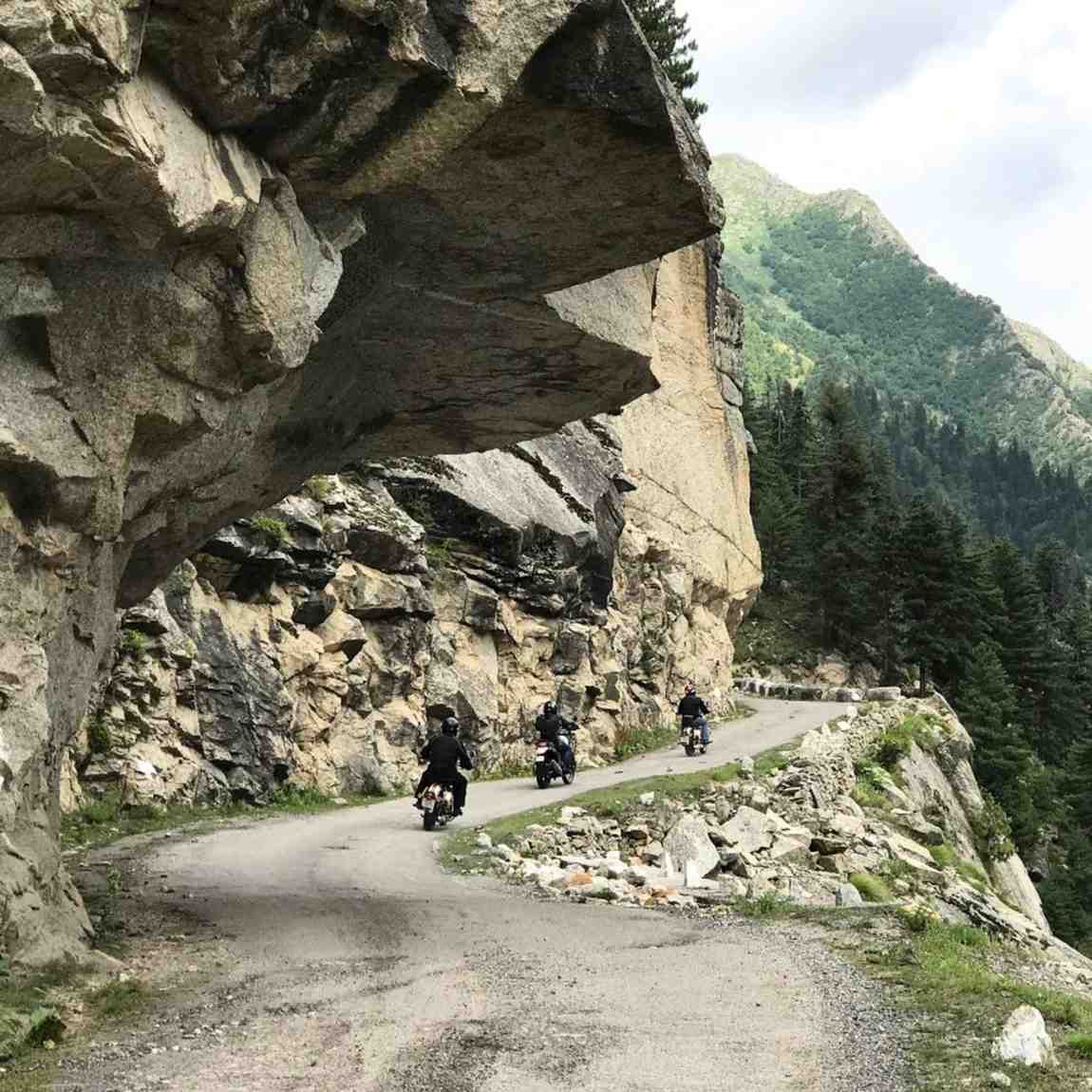
If you are a beginner with no high-altitude bike experience, choose September and enter via Shimla and Kinnaur. The gradual altitude gain over four days makes the difference between a great trip and one spent with a headache in your hotel room.
For an intermediate rider with one or two Ladakh or Leh trips behind you, late June or September both work. June will give you more dramatic snow walls. September will give you easier riding.
Experienced riders with confident off-road skills and recent monsoon riding under the belt can attempt July or August. Plan for buffer days. Carry full waterproof gear.
Solo riders should be especially careful in August because of isolated stretches and unpredictable weather. Avoid late evening riding in any month.
The Manali-Kaza stretch has long sections with no settlements. If something goes wrong at 6 PM on a wet road, you are very alone.
Our guide on whether Spiti Valley is safe for solo female travellers covers this in more detail with practical safety tips.
Pillion riders should sit with someone they trust on rough roads. The shifting weight on broken sections makes the bike harder to control. We always tell pairs to do at least one rough-road test ride before committing to Spiti.
How Many Days Should You Plan for a Spiti Bike Trip?
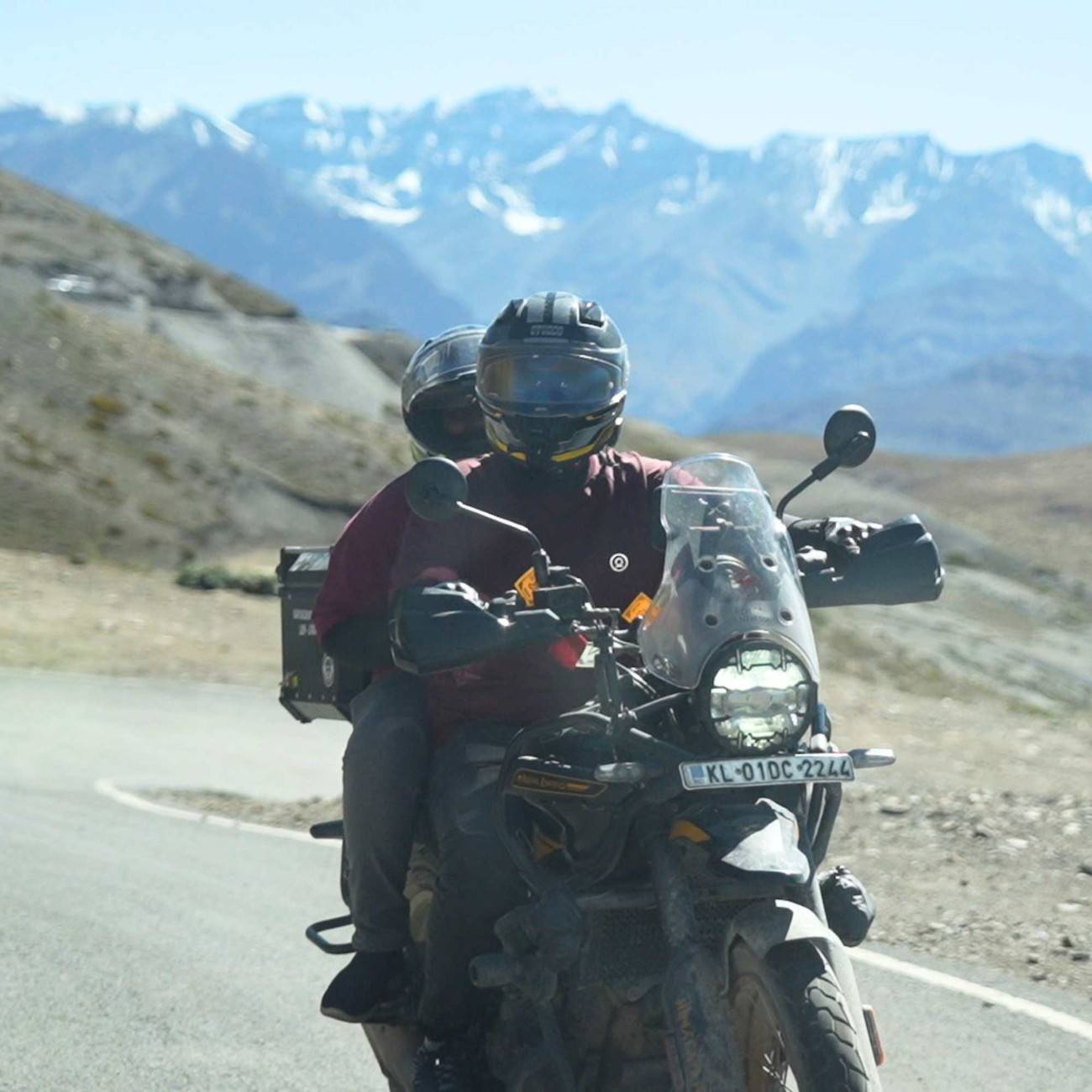
A full Spiti circuit needs 9 to 10 days minimum from Delhi or Chandigarh. 10 to 12 days is more comfortable and gives you space to enjoy the villages instead of just riding through them.
Do not rush Manali to Kaza in a single day if you have not acclimatised in Manali first. The altitude jump catches even fit riders off guard.
We always build at least one rest night at Sissu or Keylong before pushing to Kaza on our circuits. If you are planning August, add 2 to 3 buffer days to your minimum plan.
A landslide that delays you by 18 hours is normal in monsoon. Without buffer, that single delay turns into a missed flight back home.
What to Pack for Spiti Bike Trip by Month
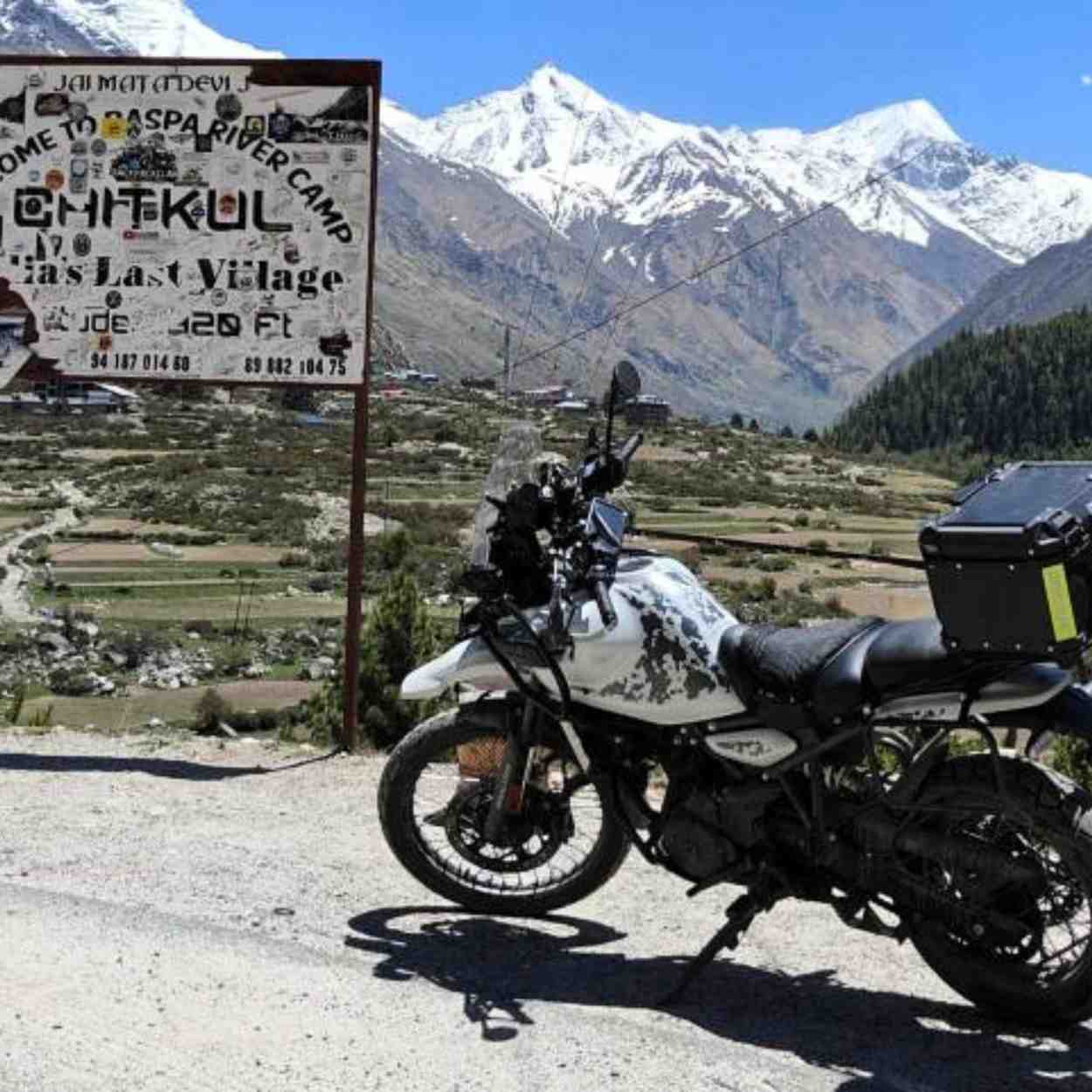
A proper riding jacket with armour is the foundation. Layered correctly, it works from June through September.
Add a thermal inner for cold mornings and a rain liner for monsoon protection. Waterproof gloves and waterproof riding boots are not optional in any month from July onwards.
Carry a basic spares kit with a puncture repair kit, spare clutch cable, spare throttle cable and chain lube. There is no petrol pump between Manali and Kaza so plan fuel stops carefully.
Important fuel points are Reckong Peo, Tabo and Kaza on the Kinnaur route. Carry a spare jerrycan if you are on the Manali-Kaza direct route.
A money-saving tip most riders miss. Renting your bike from Manali instead of Delhi saves you the long approach ride and the corresponding wear on the bike.
The daily rental charges are similar at both ends, but you avoid two days of Delhi-to-Manali highway riding that adds nothing to your trip. We tell our travellers to start from Chandigarh with a Spiti bike expedition and pick up the rental at Manali instead.
Cash matters here in a way it does not in other Indian trips. ATMs in Spiti are unreliable and many close before evening. Carry enough physical cash for the entire ride plus a buffer.
We tell our travellers to assume they will not see a working ATM after Reckong Peo. Offline maps, ORS sachets, sunscreen and basic medicines are the easy add-ons most riders forget.
Sunscreen at altitude matters more than you think. UV at 14,000 feet burns through cloud cover in ways it never does in the plains.
For June, focus on cold protection and water crossing prep. Quick-dry pants below your riding pants help you not stay wet for hours after a stream.
For July and August, double down on rain protection and waterproofing every electronic. For September and October, add a proper down jacket and thermal layers for the colder nights.
Travel Coffee Recommendation: Which Month Should You Book?
If you are riding Spiti for the first time, book September. Every metric we track points there.
Open roads, calmer water crossings, clearer skies, fewer crowds, more reliable camp operations. If you want raw adventure with snow walls and dramatic scenery, late June is your window.
Just go in with realistic expectations about cold, fresh snow patches and active crossings. If you cannot keep buffer days in your itinerary, do not pick August.
We have seen too many groups burnt out by single-day landslide delays that wiped out their plans.
One thing we tell every rider, skip the paid "Atal Tunnel viewpoints" that touts will offer near Sissu. The view from the road shoulder a few hundred metres further is the same, free, and usually quieter.
Save that money for an extra night at Kaza, which is where you will actually want it.
Our Best-Selling Summer Spiti Circuit with Chandratal lists 2026 departures including May 29 to June 6, June 5 to June 13, June 12 to June 20, June 19 to June 27, plus more dates through the season.
The starting prices shown on the package page should be verified before booking because exact pricing varies by departure date and group size. Availability must also be checked live.
The package page also notes that Chandratal and Kunzum are seasonal and condition-led, depending on road clearance and weather. Camping happens at the designated camping zone near Chandratal, not at the lake shore itself.
Mobile network is limited beyond Kaza and ATMs can be unreliable. Emergency oxygen is carried for support purposes only and is not a substitute for professional medical treatment.
If you want to compare options across the broader Himachal region, browse our Spiti bike tour packages for a quick look at full circuits we run every season.
Explore Our Curated Spiti Bike Trips
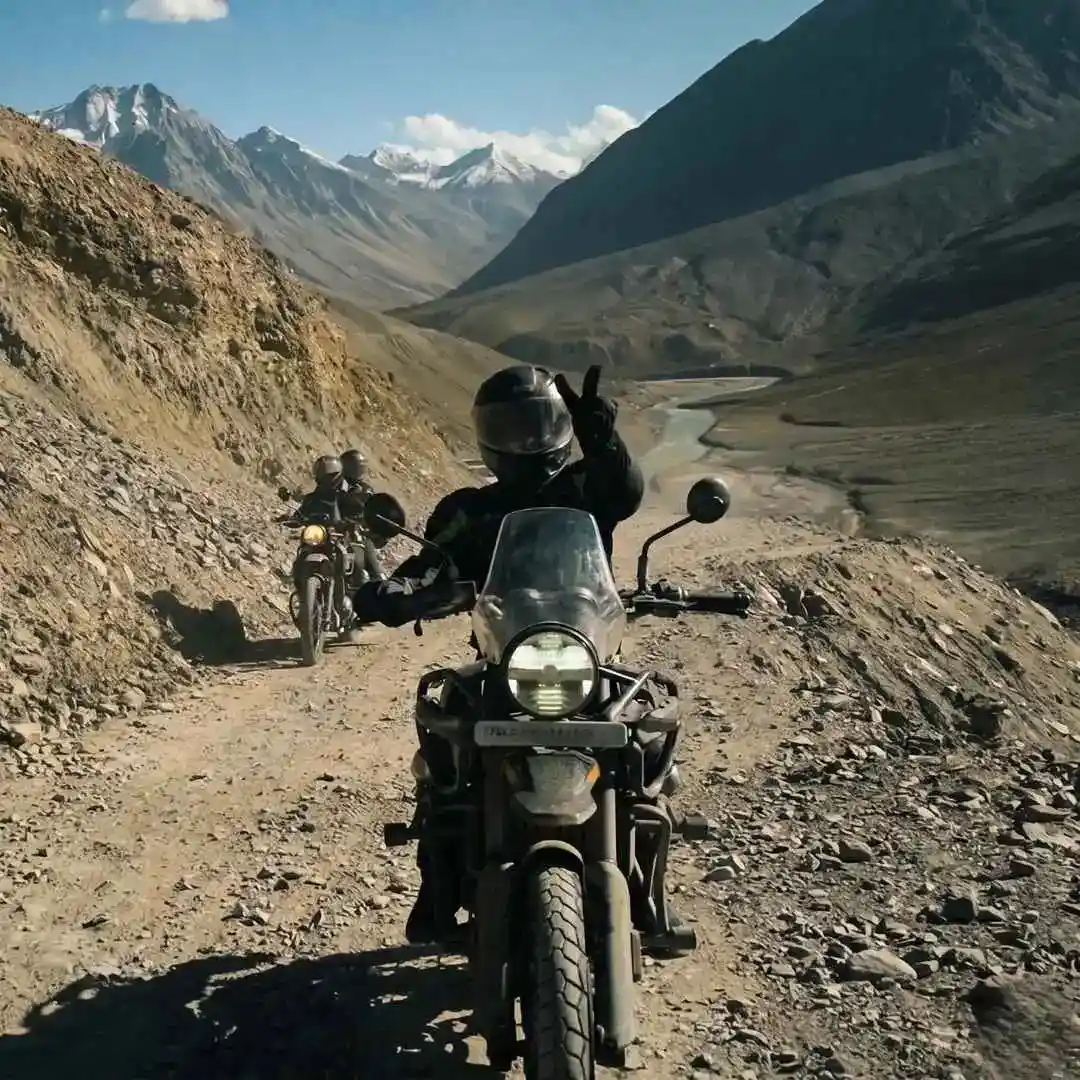 Group Tour7D/6N
Spiti Bike Trip From Manali With Chandratal
1D Sissu•1D Chandratal Camp+1
₹25,999₹29,999SAVE INR 4,000/ person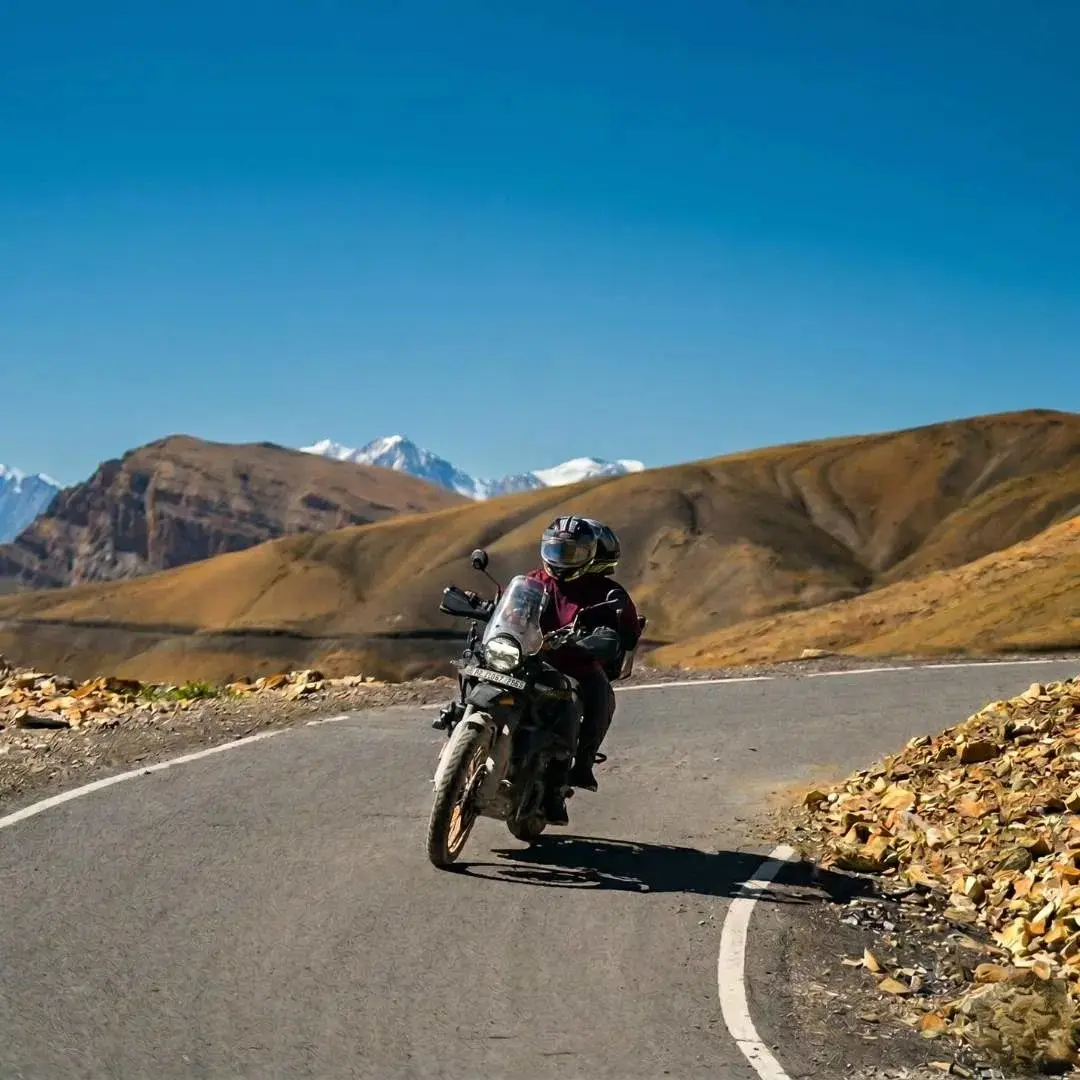 Group Tour11D/10N
Ultimate Spiti Valley Bike Expedition With Chandratal and Pin Valley
1D Narkanda•1D Sangla / Baspa Valley+5
₹32,999₹39,999SAVE INR 7,000/ person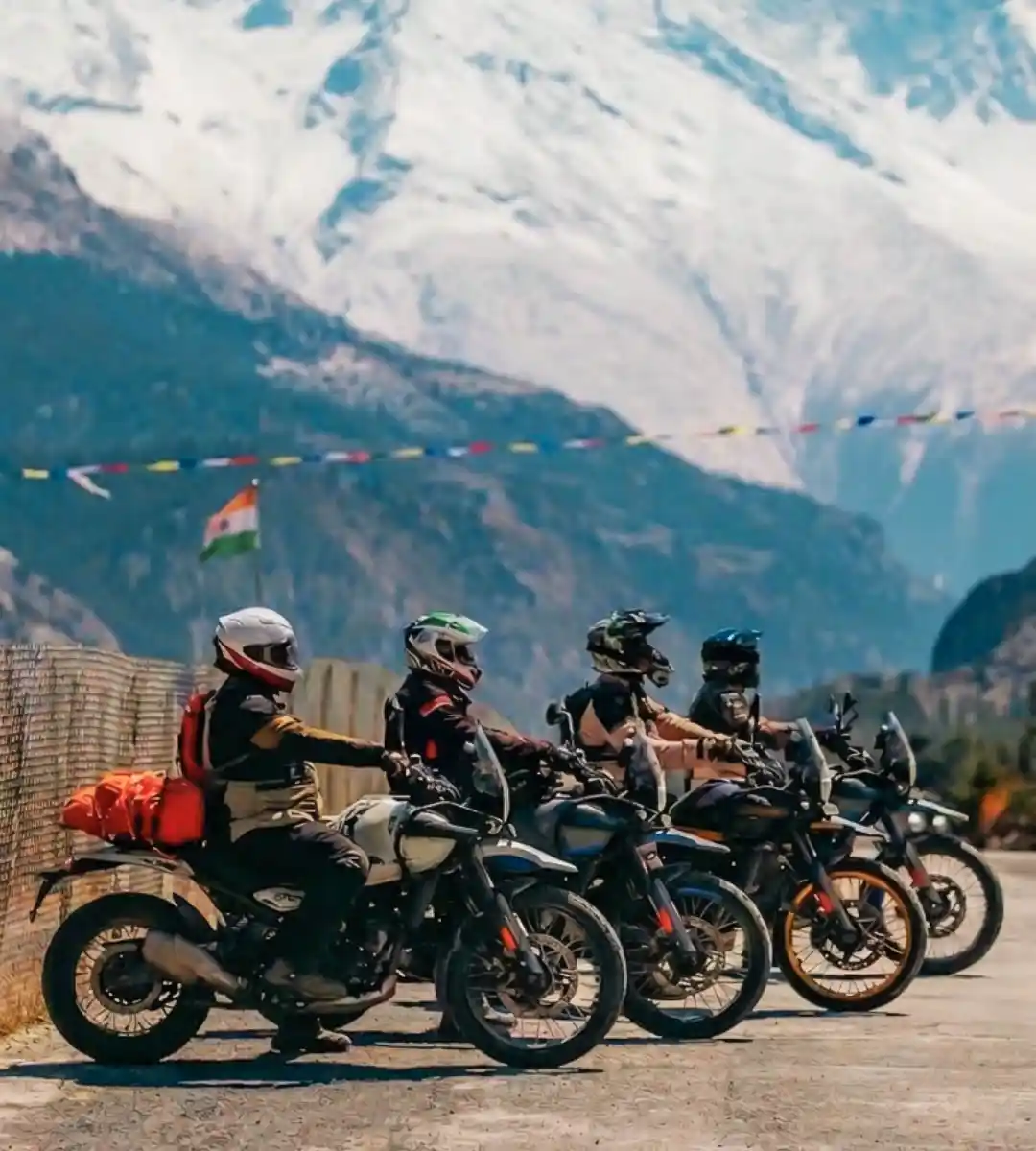 Group Tour10D/9N
Most Loved Spiti Valley Bike Expedition With Chandratal
1D Jibhi•1D Sangla+4
₹34,999₹41,999SAVE INR 7,000/ person
Related topics
Frequently Asked Questions
What is the best time for Spiti bike trip?
September is the best overall month for most riders. Mid-June to September is the main full-circuit season, with September offering the cleanest mix of open roads and manageable conditions.
Is June good for Spiti bike trip?
Yes, especially mid to late June. Expect snow walls, snowmelt and active water crossings. Early June is unpredictable for the Manali side because Kunzum may not be fully stable yet.
Is July safe for Spiti bike trip?
Possible, but better for confident riders. Approach roads face rain and slush, and water crossings reach their strongest levels. First-time full-circuit riders are safer in September.
Should I avoid Spiti bike trip in August?
Avoid if you are a beginner or cannot afford buffer days. August can work for flexible experienced riders with full rain gear and 2 to 3 spare days for landslide delays.
Is September the best month for Spiti bike trip?
Yes, for most riders. Both routes are usually open, water crossings calm down, skies are clearer and crowds are smaller. Cold nights start showing up after mid-September so pack accordingly.
Can I do Spiti bike trip in October?
Early October works for experienced riders. After mid-October, Chandratal camps shut and Kunzum can close on early snowfall. Keep a Shimla exit as backup if you try October.
When does Manali to Kaza road open in 2026?
Based on a road-status tracker last updated April 21, 2026, the route was expected to open between mid-May and early June 2026. Verify status within 48 hours of departure.
When does Kunzum Pass open for bikes?
Usually around late May to June, but bikes should wait until the road is stable. Do not ride immediately after first BRO clearance if conditions still show ice or fresh slush.
Are water crossings dangerous on Spiti bike trip?
They can be. Cross between 5 AM and 9 AM when flows are lowest. Avoid fast knee-deep water. Never force a crossing alone or when a 4x4 has just struggled across.
Which route is better for Spiti bike trip?
Shimla to Kinnaur entry and Manali exit suits most riders. The gradual altitude gain on the Kinnaur side helps acclimatisation before the rougher Manali-side exit.
Do I need permits for Spiti bike trip?
Indian citizens do not need an ILP for regular Spiti tourism. Vehicle systems like Rohtang, Beyond Rohtang and e-Aagman may apply depending on your route. Foreign nationals need protected-area permission for listed zones.
How many days are enough for Spiti bike trip?
9 to 10 days minimum for the full circuit. 10 to 12 days is more comfortable, especially in monsoon months when buffer days protect your itinerary from landslide delays.
More about Lahaul and Spiti
 Lahaul and Spiti
Stargazing in Winter Spiti 2026: Where to Stay, Moonlight and What You Can See
Discover the best places for stargazing in Winter Spiti 2026, where to stay for darker skies and how moonlight affects visibility. Learn what you can realistically see from Kaza, Tabo and nearby villages during the winter months.
- Things to Do
- Snow Travel
 Lahaul and Spiti
Joining a Winter Spiti Group in 2026: Room Sharing, Privacy and Group Expectations
Planning to join a Winter Spiti group in 2026? Learn how room sharing works, what privacy to expect, options for solo travellers and couples, and when a single room supplement may apply.
 Lahaul and Spiti
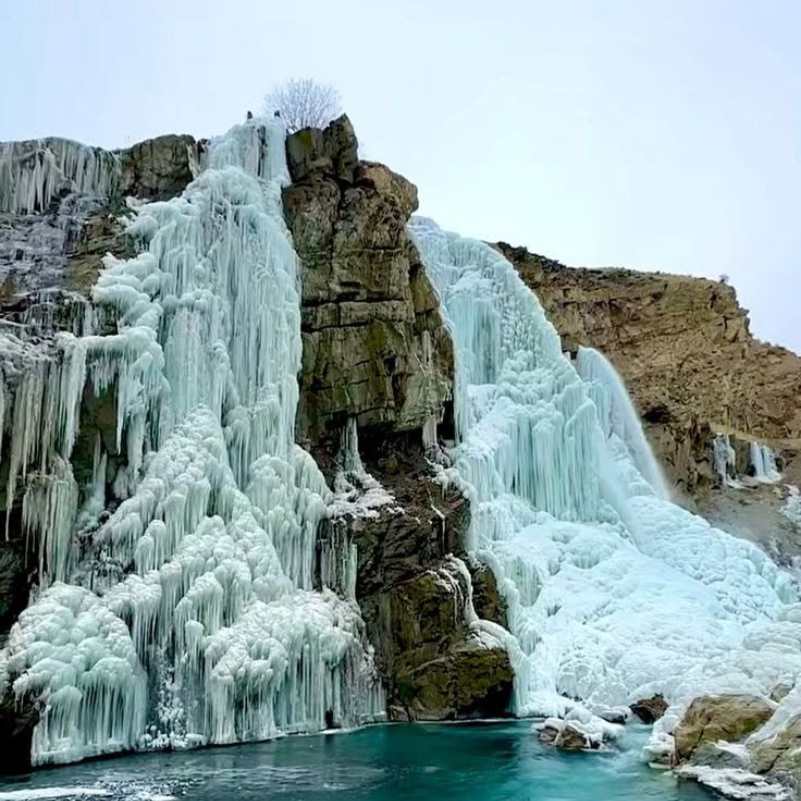
Lingti Frozen Waterfall in Winter 2026-27: Access, Photo Stops and What to Confirm
Plan your visit to Lingti Frozen Waterfall in winter 2026-27 with practical details on access, road conditions, the best photo stops and seasonal conditions. Learn what to confirm before leaving Kaza and how to visit this spectacular frozen waterfall safely.
- Places to Visit
- Snow Travel