
Spiti Bike Trip for Couples 2026: Package, Pillion Tips & What to Expect
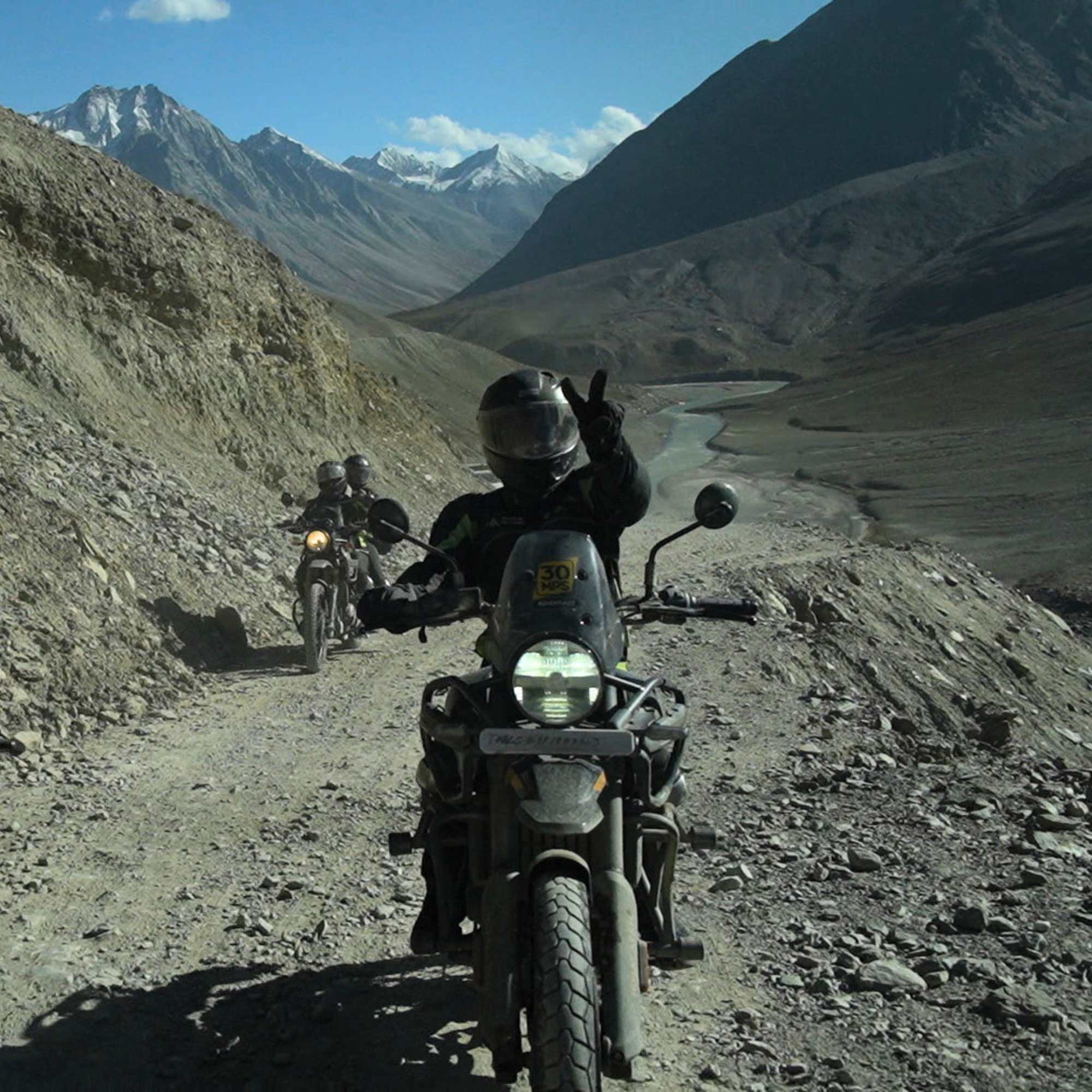
If you are searching for a spiti bike trip for couples that does not turn into a fight by Day 3, you are in the right place. We run this exact route every season with couples on Royal Enfield Himalayans, and this guide by Travel Coffee is built from those trips.
It covers the honest version of what couples should expect, what to pack, what your partner needs to know if they are riding pillion, and how to choose between solo, dual rider, and backup vehicle setups.
Quick Answer: Is a Spiti Bike Trip Good for Couples in 2026?
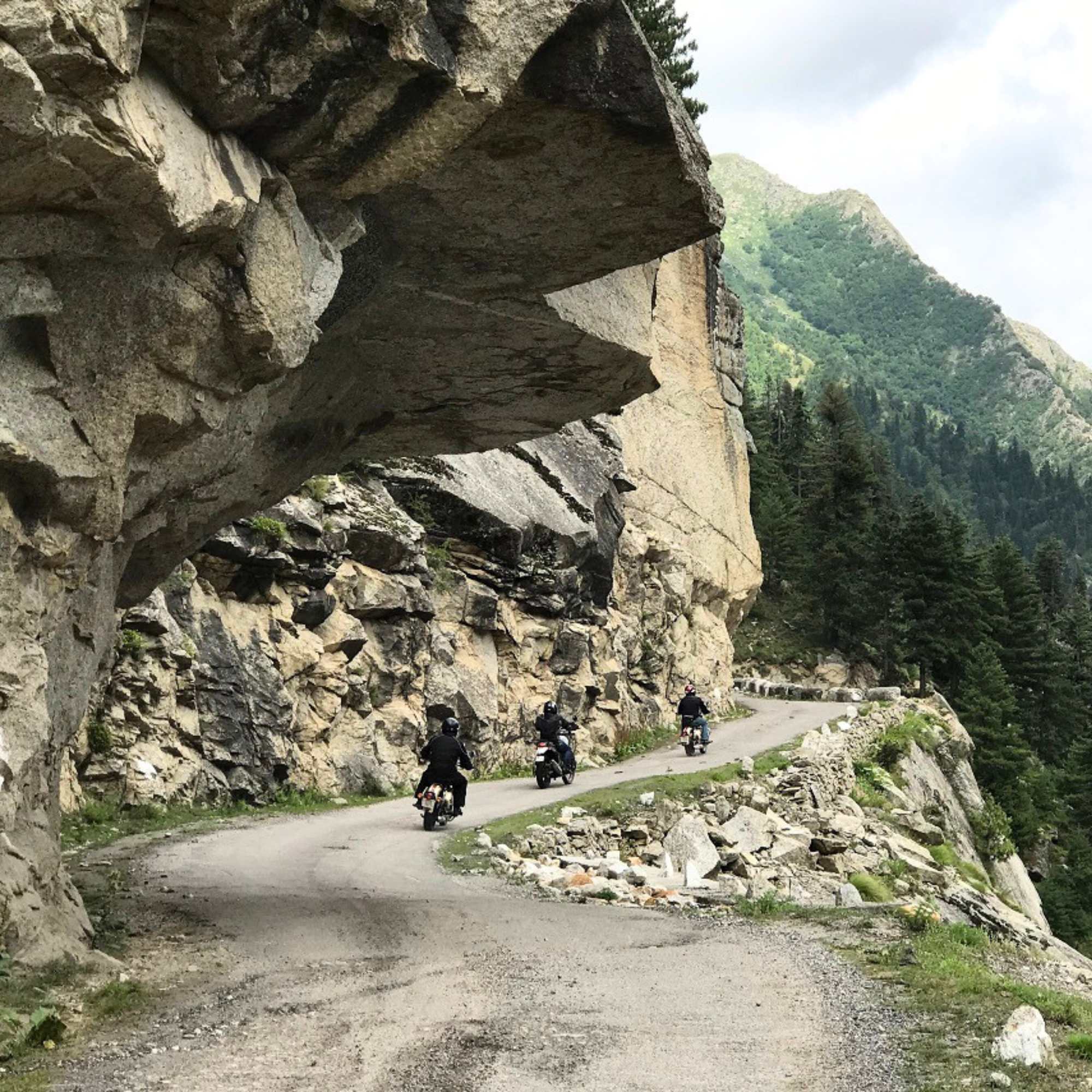
A Spiti bike trip is amazing for couples who genuinely enjoy adventure, raw mountain roads, cold nights, and long riding days where the journey itself is the destination.
It is not the right choice for couples expecting a slow luxury honeymoon with candlelight dinners, late mornings, and king-sized beds.
The safest setup we recommend is a guided bike trip with a backup vehicle, mechanic, oxygen cylinder, luggage support, gradual acclimatisation, and a pillion or backup vehicle option for whichever partner needs it.
👉 WhatsApp our team for a well-planned Spiti bike expedition
Who Should Choose a Couple Spiti Bike Tour?
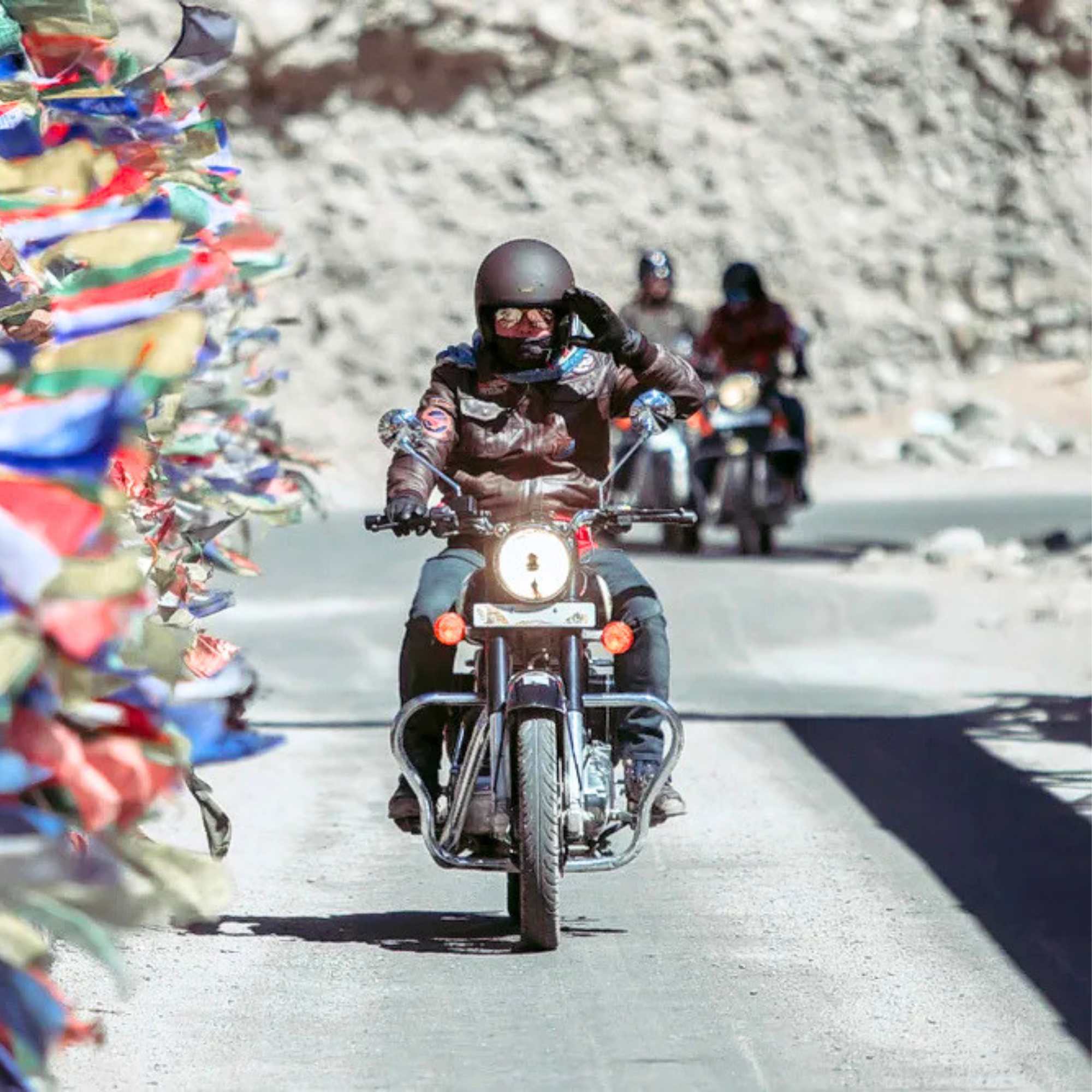
This trip works best for couples where at least one person is a confident rider and both partners are physically comfortable with long road days.
Both of you should also go in knowing Spiti is beautiful but demanding. The roads do not get smoother because you are on a honeymoon.
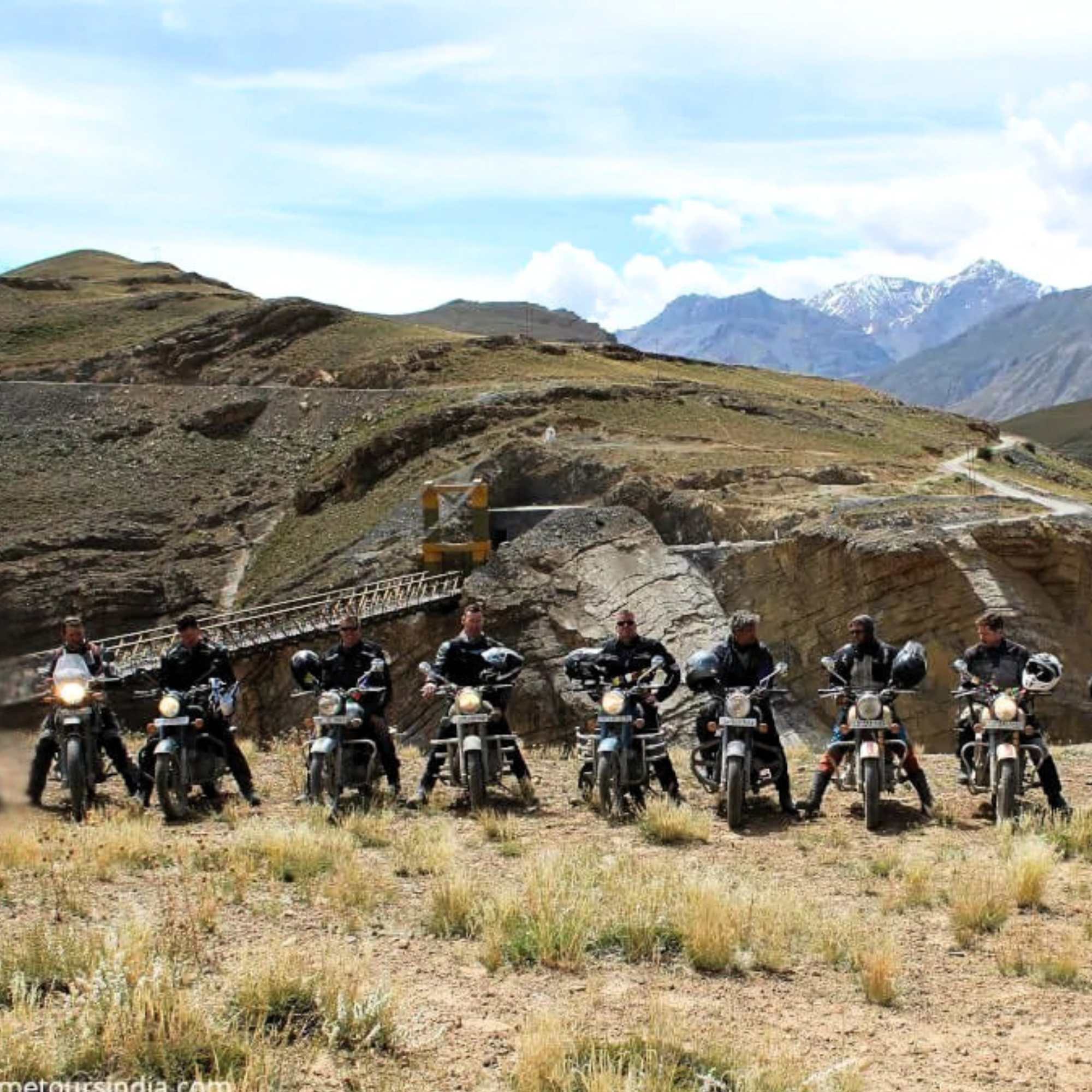
There are three couple formats that actually work on a Spiti bike trip. One rider plus one pillion on the same bike. Both partners ride separate bikes. Or one rider with the partner in the backup vehicle.
We have run all three formats with couple groups across multiple seasons. Each has its own rhythm and each works for a different kind of couple.
If your partner has serious back problems, asthma, cardiac issues, or simply does not enjoy rough roads, please consult a doctor before booking. You can also look at our Spiti Valley tour packages that use cabs instead of bikes.
There is no shame in choosing the cab-based version. We have put many couples on those trips and they came back happier than they would have on a motorcycle.
Can Your Partner Ride Pillion on a Spiti Bike Trip?
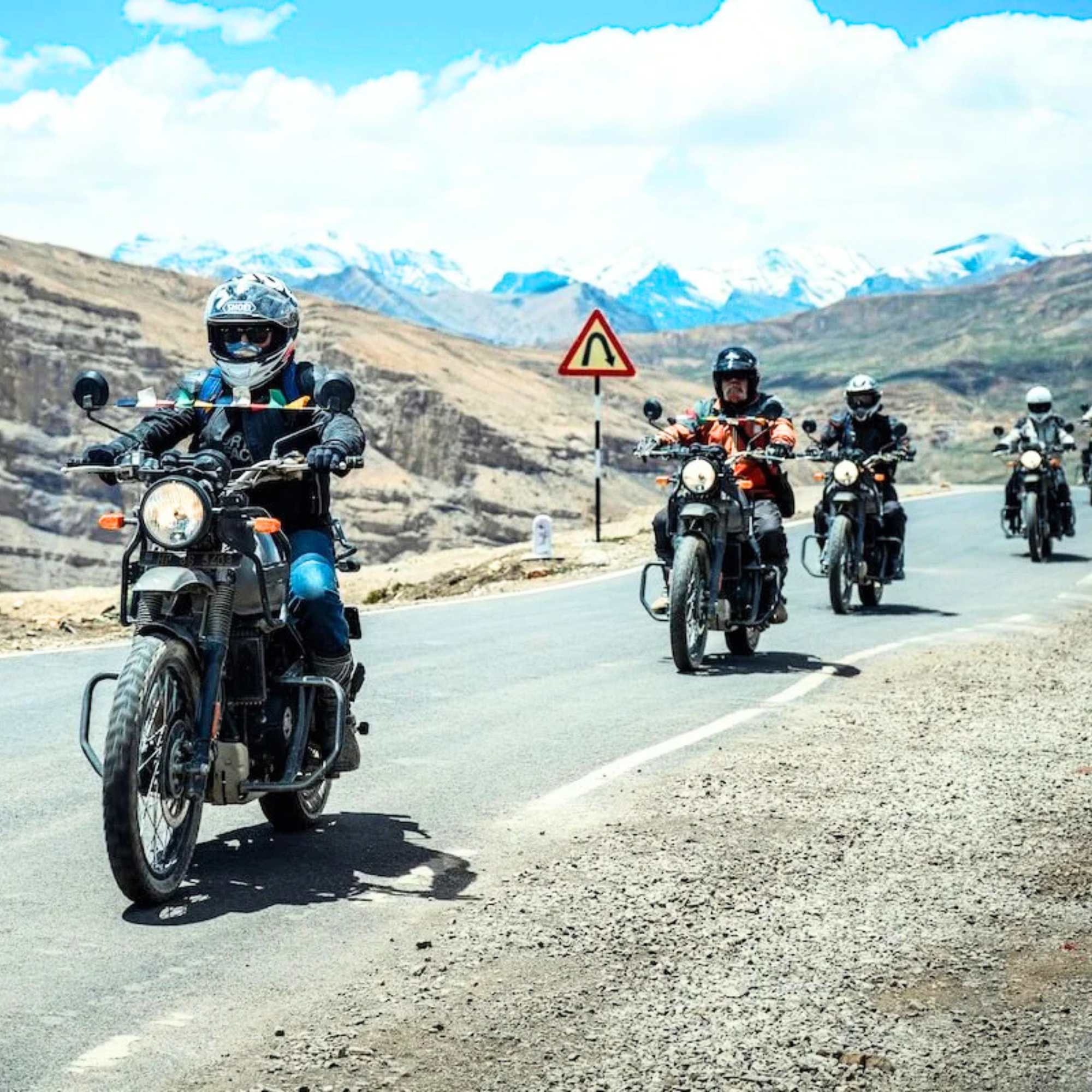
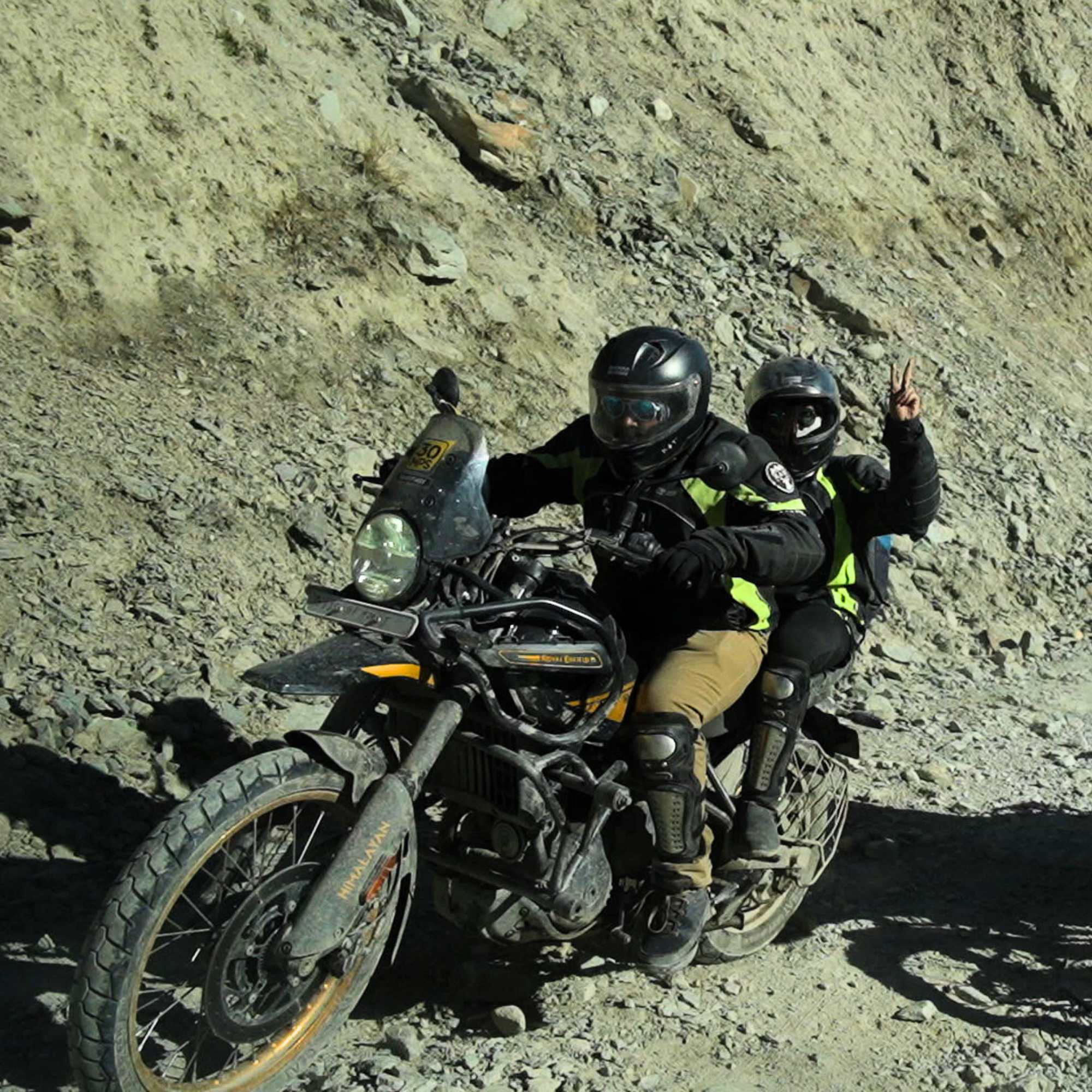
Yes, your partner can absolutely ride pillion on a Spiti bike trip. But they need to be reasonably fit, patient, properly geared, and mentally ready for rough patches that last hours, not minutes.
Solo riders need a valid motorcycle licence. Pillion riders and backup vehicle passengers do not need one. So your partner does not need to know how to ride a motorcycle to join this trip.
A good pillion keeps movements small, holds the rider's waist or grab rail, and avoids sudden leans into corners.
Communication should be simple taps on the rider's shoulder, not full conversations at 60 kmph. Long chats over the wind drain both of you.
The most important pillion rule is to get off the bike at tricky water crossings when the road captain or rider asks. Sudden weight shifts on a 411cc bike at 4,000 metres can throw the rider off balance.
What Is Included in a Spiti Valley Bike Trip Couple Package?
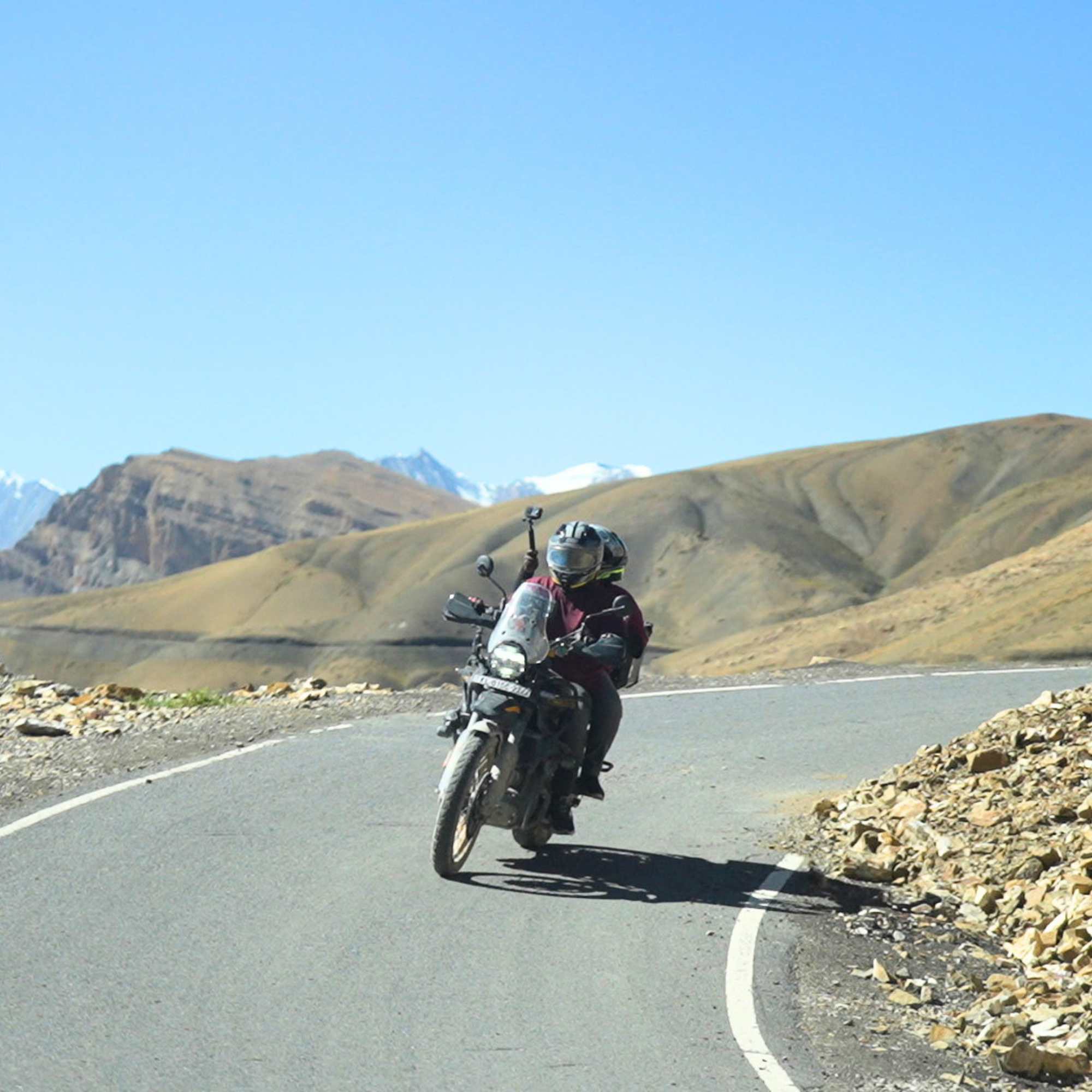
A good couple package should cover the bike, all riding gear, fuel, stays, food, the human support team, and every permit you need on the route.
Our Spiti Valley bike tour packages start from ₹25,999 per adult.
We also run a shorter 7-day option for couples on tighter timelines. Double sharing is available on request, which most couples ask for.
You get a Royal Enfield Himalayan 411cc bike in the base tier. The 450cc upgrade is available subject to availability.
The included riding gear is helmet for rider and pillion, knee guards, elbow guards, and riding gloves in sizes S to 3XL.
The package includes 14 meals from Day 2 dinner to Day 9 breakfast. Lunch is not included on purpose, because lunch stops shift daily based on roads and weather.
Budget around ₹200 to ₹400 per lunch at dhabas along the way. The dhaba thali at Tabo, just past the monastery, is the best lunch we have eaten on this route after years of running it.
Stays are Jibhi 1N, Sangla 1N, Kalpa 1N, Kaza 2N, Chandratal Camp 1N, Manali 1N, and overnight Volvo 2N.
The on-trip team includes a road captain, sweep rider, dedicated Royal Enfield mechanic, backup vehicle, medical kit, oxygen cylinder, and daily SpO2 checks.
The backup vehicle runs from Day 2 to Day 8. It carries luggage, spare parts, and anyone who needs a break from the bike.
There is a bike security deposit of ₹10,000 per motorcycle, fully refundable at trip end if there is no damage.
You can read the full package breakdown on our Spiti bike expedition with Chandratal page.
Recommended 2026 Route for Couples: Gradual Acclimatisation Beats Rushing
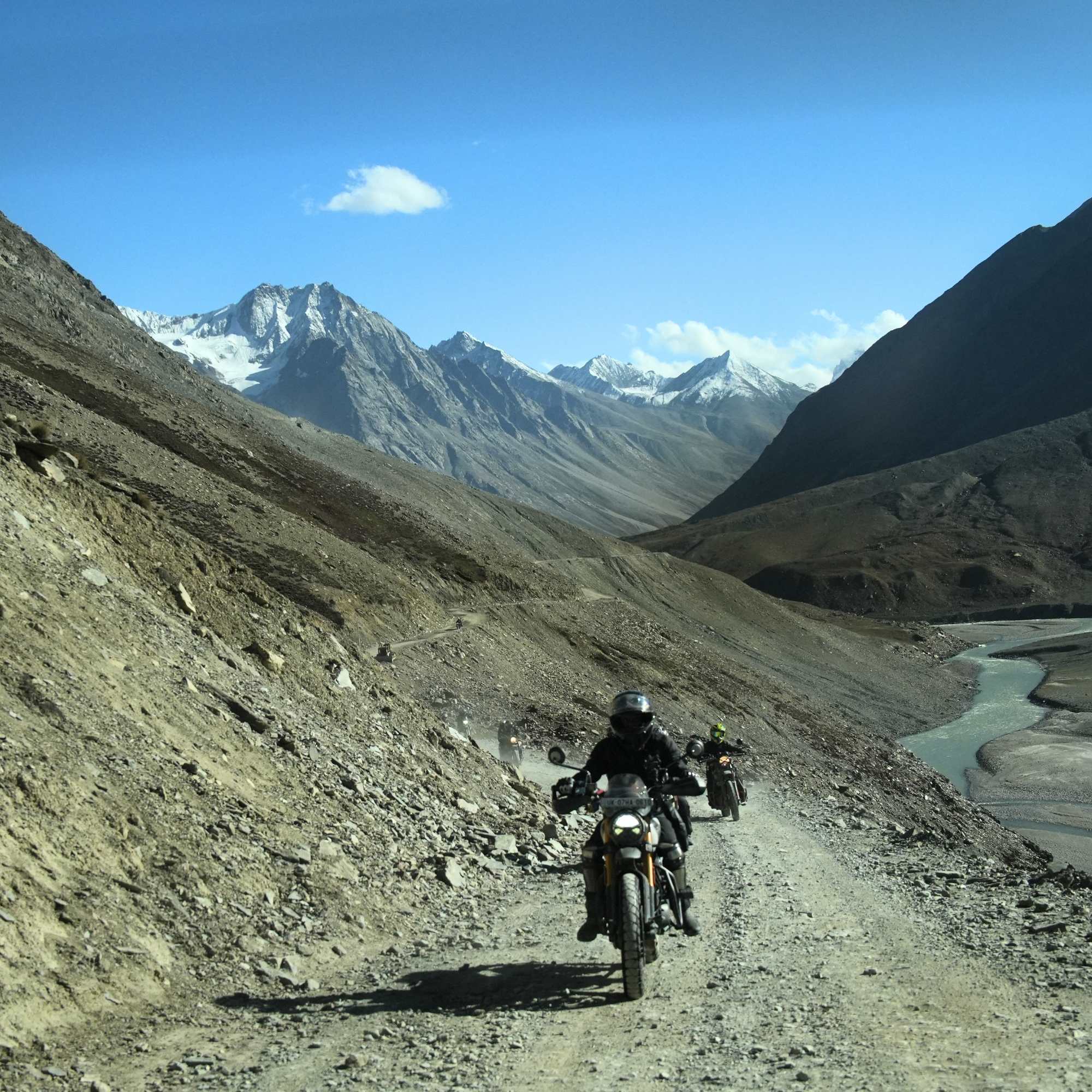
The single biggest mistake we see couples make is wanting to reach Kaza in two days. The body does not work that way at altitude.
Our route goes Delhi to Manali to Jibhi to Sangla to Kalpa to Kaza to Chandratal to Manali to Delhi.
Jibhi sits at 1,900m, Sangla at 2,621m, Kalpa at 2,759m, and Kaza at 3,650m. The body adjusts step by step, not in one jump.
In our experience, this gradual approach matters more for couples than for solo riders. One partner with a pounding altitude headache can flatten the entire mood of the trip.
A slow ascent prevents that. If you want to understand why we picked Jibhi specifically as the first night, our Jibhi and Tirthan Valley section goes deeper.
Day-by-Day Couple-Friendly Spiti Bike Trip Plan
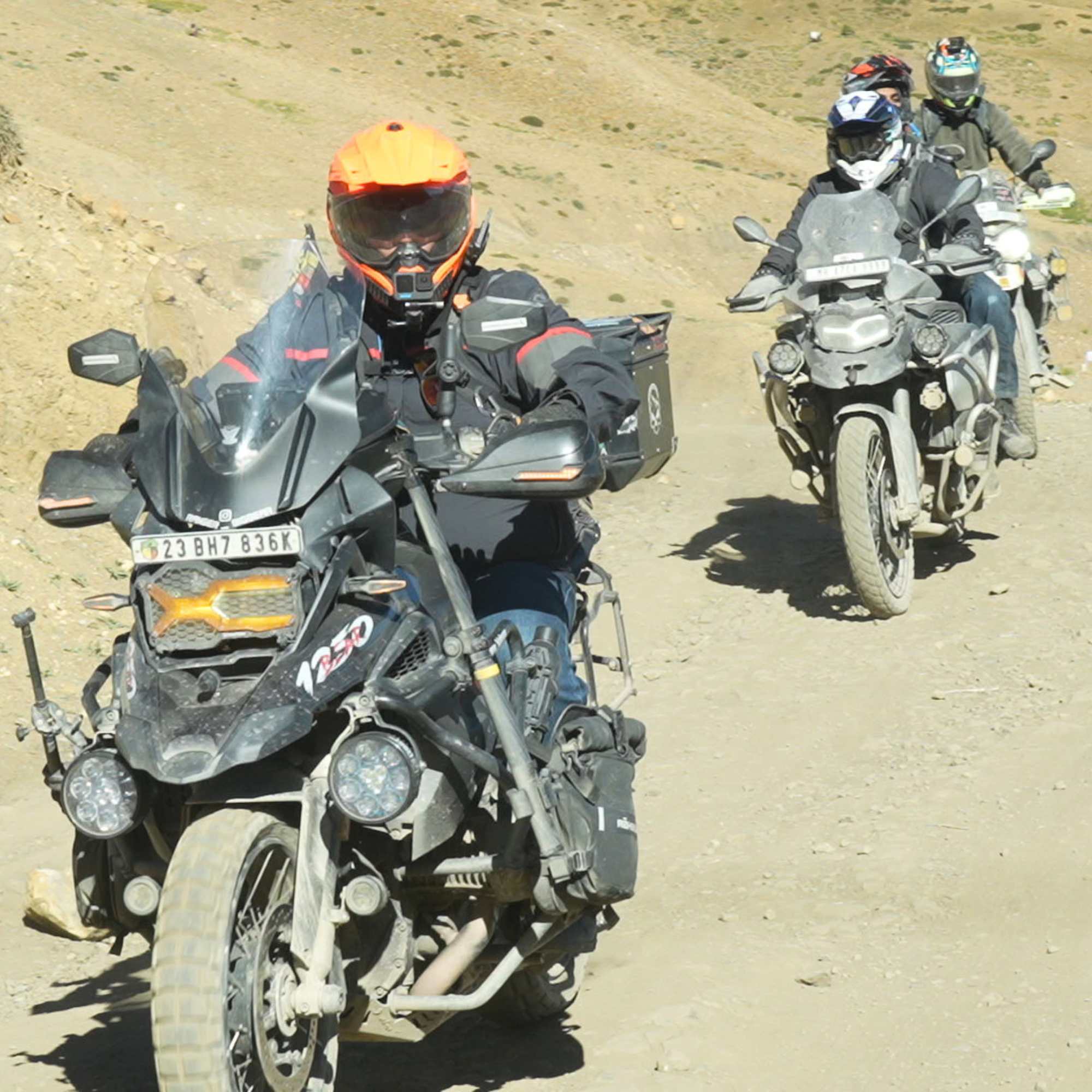
Day 1: Delhi to Manali Overnight Volvo
The trip starts with an evening Volvo from Delhi. Boarding is around 6:00 PM to 7:00 PM for the overnight journey, roughly 7:00 PM to 7:00 AM.
Sleep properly on the bus. Carry a light jacket because the AC gets cold. The biggest Day 1 mistake is staying awake chatting all night and starting Day 2 already exhausted.
Day 2: Manali to Jibhi Test Ride
Your first real ride together. About 100 km and 3 to 4 hours.
The morning starts with bike pickup, briefing, gear fitting, and a proper safety talk. The Jibhi route lets the road captain assess each rider's comfort with the bike before bigger days.
The road is mostly tarred with one or two rough patches, so it works as a soft introduction.
Day 3: Jibhi to Sangla via Jalori Pass
Now things get serious. About 200 km and 7 to 8 hours.
This is one of the longer riding days. Couples should not overload the bike with bags or skip breaks every 90 minutes.
Jalori Pass has a steep climb with tight turns, and the road quality varies by year. Eat a proper breakfast and carry water.
Day 4: Sangla to Chitkul to Kalpa Acclimatisation Day
A short and easy day on purpose. About 90 km and 4 to 5 hours.
This day works as an acclimatisation buffer before Kaza. You ride out to Chitkul, the last village before the Indo-Tibet border, sit by the Baspa river, and head to Kalpa for the night.
We deliberately keep this day light so your body settles into altitude. The chai at the small wooden cafe in Chitkul, just before the road ends, is the best chai stop on the route. Skip the famous big restaurant nearby and walk an extra hundred metres.
Day 5: Kalpa to Kaza via Nako, Gue, Tabo and Dhankar
The biggest riding day of the trip. About 220 km and 6 to 7 hours.
Start early. Stay hydrated. Avoid long photo breaks at every viewpoint, because there are dozens and you cannot stop at all of them.
The road follows the Sutlej before crossing into the Spiti valley with a completely different landscape. Couples often underestimate how tiring the wind and dust get on this stretch.
What we always tell our riders is to skip the famous "selfie point" past Nako that has people lining up for the same photo. The view a kilometre ahead is identical and there is no queue.
Day 6: Kaza Local Circuit: Key, Chicham, Hikkim, Komic and Langza
About 100 km and 5 to 6 hours, but the altitude is the main story. Komic reaches up to 15,500 ft.
This is the day altitude symptoms show up if they are going to. Watch each other for headache, breathlessness, nausea, or unusual tiredness.
Drink water every hour, even when you are not thirsty. The Key Monastery view is genuinely worth the climb. Hikkim has the world's highest post office, where you can post a card home.
Day 7: Kaza to Chandratal via Kunzum La
About 150 km and 5 to 6 hours, depending heavily on road status and season.
Kunzum La is the gateway between Spiti and Lahaul. The road from Losar to Kunzum is rough but manageable.
After Kunzum, the diversion to Chandratal is a short but bumpy stretch. The camp at Chandratal is basic, the night is cold, and the lake stays with you for years afterwards.
Day 8: Chandratal to Manali via Atal Tunnel
About 120 km and 6 to 7 hours.
This is the toughest road day in our experience. The Gramphu to Batal stretch is broken, with water crossings that change with the day's snowmelt.
After Gramphu, the Atal Tunnel takes you back to Manali in 15 minutes. Most couples plan a celebration dinner in Old Manali that night.
Day 9 and Day 10: Manali to Delhi and Trip Ends
Day 9 is a free morning in Manali. Sleep in. Walk around Old Manali. Pack slowly. Then board the evening Volvo.
Day 10 is arrival in Delhi early morning. Most couples book a hotel for a few hours of rest before flying home. Your body will thank you for it.
Solo Rider, Dual Rider or Backup Vehicle: Which Option Is Best for Couples?
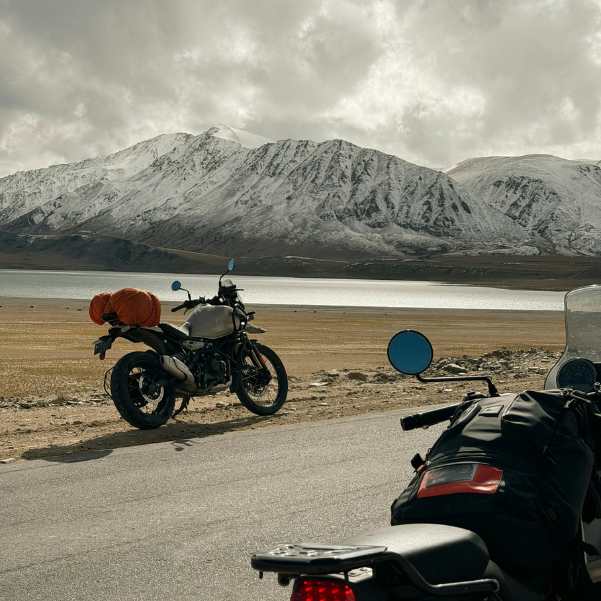
Solo rider
Solo rider format means each partner rides their own bike. This works only if both of you are confident on a 400cc plus motorcycle on rough roads.
If one of you is a beginner, this is not the format to learn on. Spiti is not the place for first-time motorcycle confidence building.
Dual rider
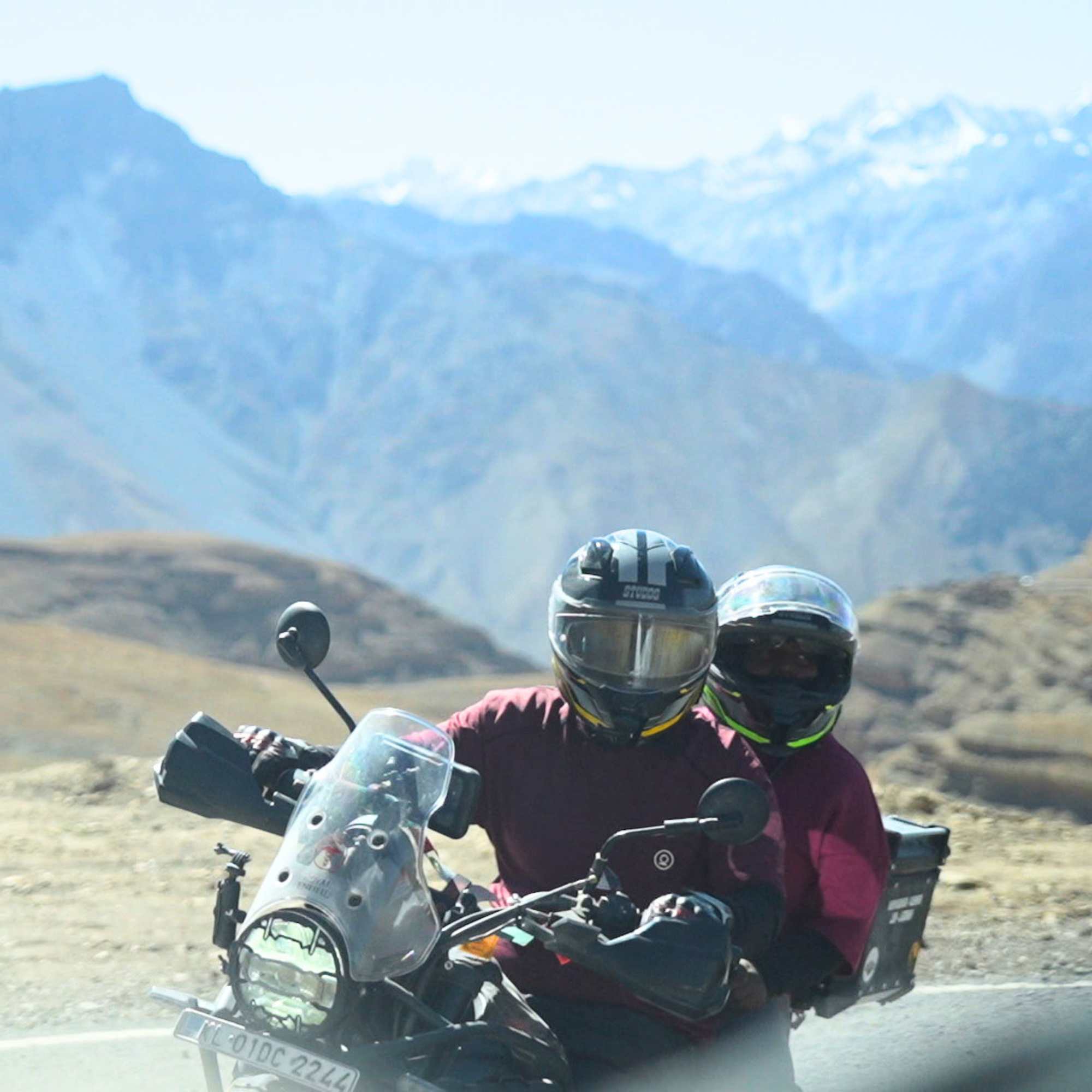
Dual rider format is one rider with one pillion on the same bike. This is the most common setup for couples on our trips.
It works best when the pillion is reasonably fit, packs light, and is patient on long days.
Backup vehicle
Backup vehicle format is when one partner rides and the other sits in the support vehicle. This is the smartest choice if your partner wants the Spiti experience without enduring every rough patch.
They still see everything. Just in more comfort.
In our experience, nervous couples do best with dual rider plus the option of switching to the backup vehicle on tougher days. We let couples switch mid-trip without making a fuss about it.
There is no ego on a Spiti road. The mountain breaks ego on Day 3 anyway.
For couples who want the freedom to ride together but also need backup support when the road gets rough, our Lahaul and Spiti Valley bike tour package is designed around that comfort.
Pillion Rider Tips for Spiti: What Your Partner Must Know
Sit relaxed, not stiff. A tense pillion makes the bike feel heavier and the ride more tiring for both of you.
Keep your feet planted on the foot pegs at all times, even when the bike is stopped, until the rider says otherwise.
Do not lean suddenly into turns or away from them. Stay neutral and let the rider handle the bike.
Communicate through small taps on the rider's shoulder, not full conversations at speed. One tap for slow down. Two taps for stop. Keep it that simple.
At water crossings, get off the bike and cross on foot when the rider or road captain asks. Extra weight on a slippery rocky bottom is the most common reason bikes fall in Spiti.
Drink water often, wear layers, and avoid carrying a heavy backpack while seated. More rear weight strains both the bike's suspension and your lower back.
Where possible, send your luggage in the backup vehicle. Keep just a small bag with your phone, wallet, lip balm, water, and a snack on you.
Is a Spiti Bike Trip Safe for Couples?
Spiti is generally safe socially. Local people are warm, the villages are quiet, and we have never had a couple report a safety issue with locals across years of running these trips.
The real risks are altitude sickness, fatigue, sudden weather, broken roads, water crossings, landslides, and riding after dark. These risks do not care whether you are a couple or a solo rider.
A guided trip reduces every one of these. You have a local road captain who knows the patterns, a sweep rider who never leaves the slowest bike behind, a mechanic for breakdowns, a backup vehicle for emergencies, an oxygen cylinder, a first-aid kit, and daily SpO2 checks.
The one thing we ask every couple is please do not hide symptoms. Headache, breathlessness, nausea, dizziness, chest discomfort, or unusual fatigue must be reported the moment you feel them.
Hiding symptoms to not slow the group down is the worst decision anyone can make at 4,000 metres. Our team would much rather take an extra rest stop than deal with a serious altitude case.
Road Conditions, Permits and 2026 Travel Updates Couples Should Know
Mountain roads in this region change weekly. The official District Lahaul and Spiti road status page last updated on March 20, 2026 showed Delhi to Manali open, Manali to Keylong open, Keylong to Kaza closed, and Keylong to Leh open.
This must be verified again before you travel. A status from March is not a status from June.
Permits are the part most couples get wrong. Vehicles entering District Lahaul and Spiti have to apply for an e-pass through the e-Aagman portal.
An e-permit per vehicle is required for the Atal Tunnel, Rohtang, Koksar, and Chandratal circuit.
The Rohtang permit portal has separate options for Rohtang Pass, Special Rohtang, Beyond Rohtang, Hamta Pass, and Green Tax. The official Beyond Rohtang page lists congestion charges of ₹50 for LMV and passenger vehicles and ₹100 for goods vehicles.
The Beyond Rohtang permission printout is compulsory. Carry a hard copy.
Only 2 Beyond Rohtang permits can be obtained per vehicle in a week from Tuesday to Monday. If your group has multiple support vehicles, the operator has to plan this carefully.
Our team handles every permit on a guided trip. But we still tell couples to know what each permit is for, because if something goes wrong at a checkpoint, knowing the basics helps.
For seasonal road and lake openings, our Chandratal opening dates guide for 2026 is the page we update most often.
Best Time for a Spiti Bike Trip for Couples in 2026
Our package season runs from June to September.
June and September are usually the best couple-friendly months. The weather is clearer, days are bright, and crowd pressure is lower than peak holiday weeks in July.
July and August can absolutely work, but expect unexpected showers and occasional landslides on the Manali approach. Couples who book in this window should be flexible about timing.
The full Chandratal and Kunzum route typically opens by mid-June, but this must be verified every year. Heavy snow years push the opening to late June or even early July.
If you want quiet roads, golden light, and clear skies, September is our personal favourite for couples. The cold is sharper at night, but the daytime feels almost perfect on a bike.
What to Pack as a Couple for a Spiti Bike Trip
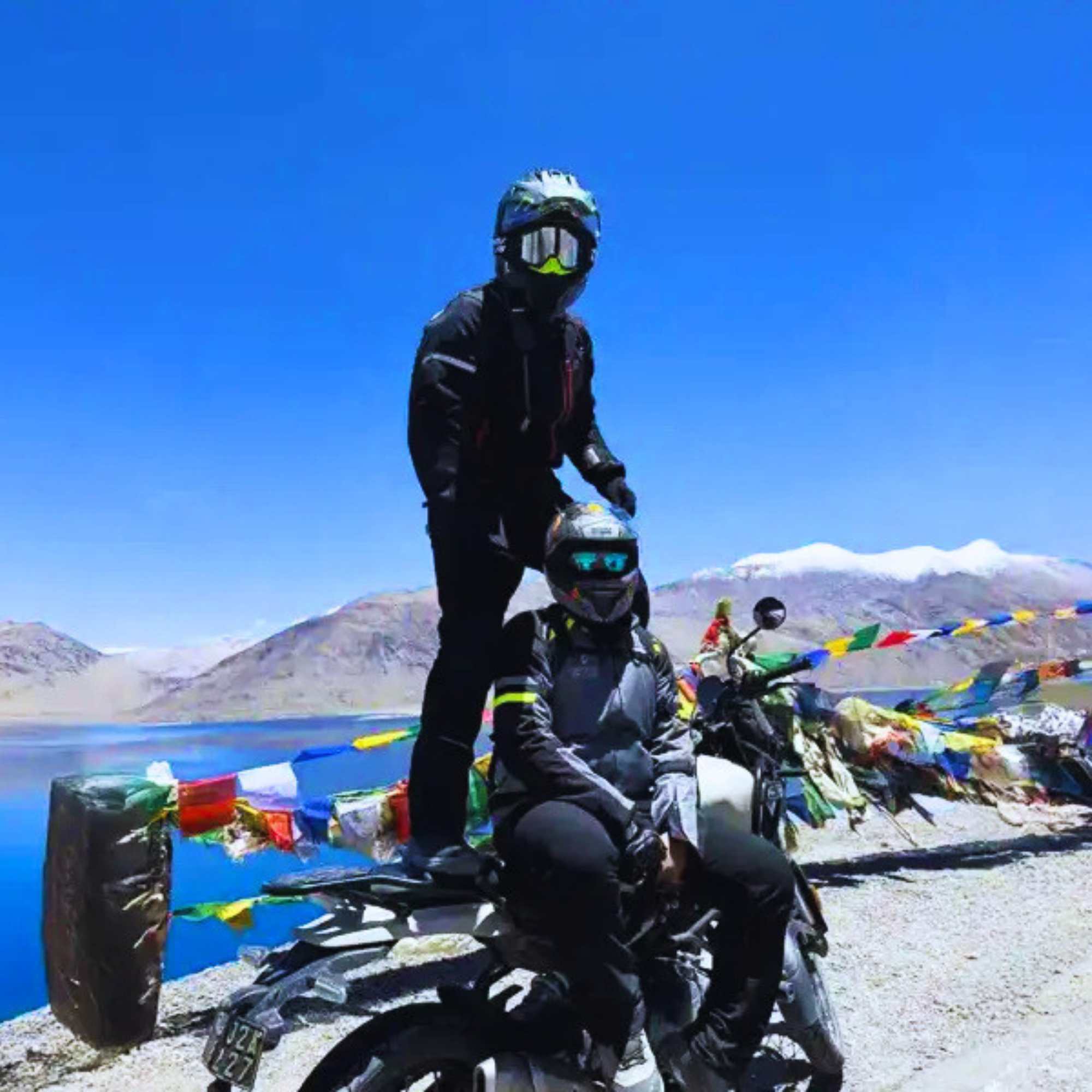
Riding gear is provided in our package, including jacket, helmet, gloves, knee guards, and elbow guards. If you have your own well-fitting helmet, bring it. Comfort across nine days matters.
Carry thermals for both of you, a waterproof outer layer, warm gloves for early mornings, and a lightweight raincoat that fits over the riding jacket. Cold gear matters more than fashion gear here.
Personal items to carry are sunscreen, sunglasses, a power bank, your medicines, a hydration bottle, lip balm, moisturiser, and basic hygiene supplies. Sunburn at altitude happens fast even when it does not feel hot.
Pack everything in a rucksack or duffle bag with a maximum of 15 kg. Trolley bags do not fit in the backup vehicle and they damage easily on rough roads.
Carry ₹5,000 to ₹10,000 cash between the two of you for lunches, monastery donations, small purchases, and emergencies.
What Couples Usually Underestimate
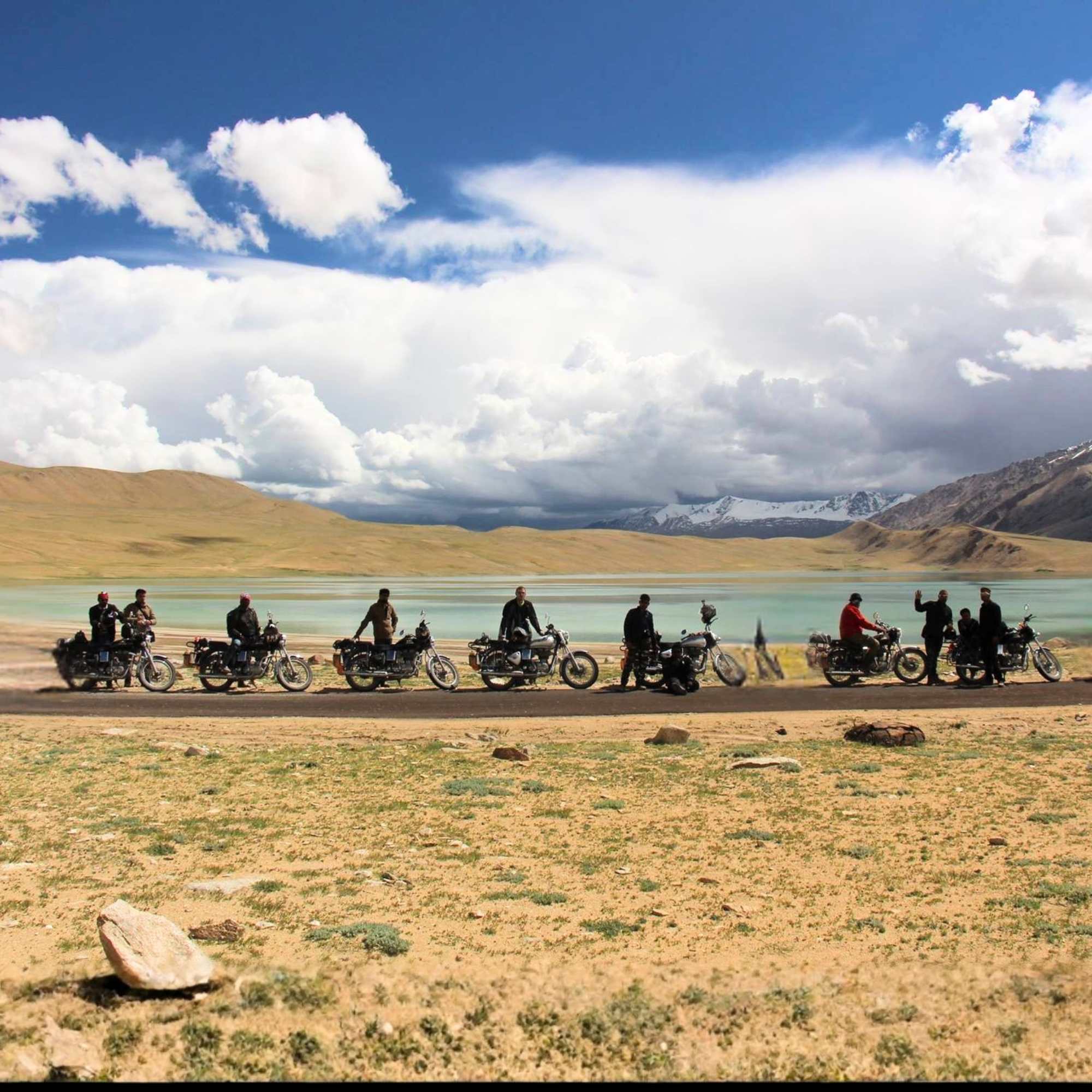
The fatigue is real. Eight hours on a bike feels like ten when the road is rough. By Day 4 most pillions are sore in places they did not know existed.
Dust gets into everything. Wear a buff or balaclava, even if the morning looks clean.
Cold nights catch couples off guard. Even in July, Chandratal nights drop below zero. The camp blankets are heavy, but you will want your own thermals.
Bathrooms in Kaza and Chandratal are basic. Hot water is a bucket in most stays.
Phone networks are unreliable. Jio and Airtel work until Kinnaur and then drop off. BSNL postpaid works best for calling in Spiti.
ATMs are unreliable past Reckong Peo. Withdraw all the cash you need before that point.
Most importantly, romance in Spiti is not about candlelight dinners. It is about your partner handing you their gloves when yours got wet, or rubbing your back when the altitude headache hits at 11 PM.
The couples we see come back happiest are the ones who reframed romance for the mountains.
Why Book a Guided Spiti Bike Trip Instead of Doing It Yourself?
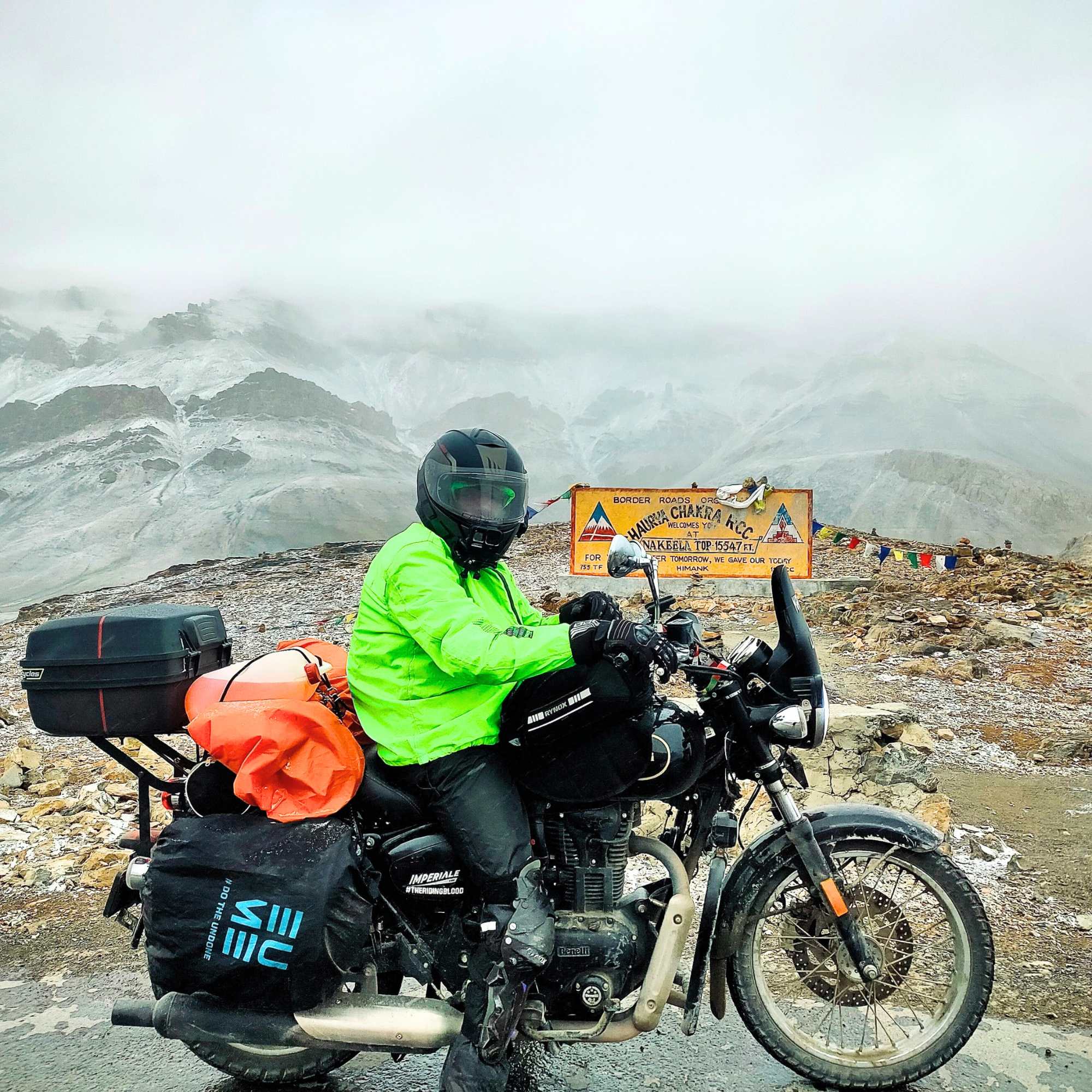 When you book a guided trip, you are not just paying for a motorcycle.
You are paying for route planning, a backup vehicle, luggage support, a local crew, a road captain who knows the patterns, a sweep rider who tracks every rider, a mechanic for breakdowns, an oxygen cylinder, daily health checks, all permits sorted, all stays booked, and support during weather closures or sudden roadblocks.
You are also paying for someone to make decisions when both of you are tired. At 4,500 metres after a long riding day, no one wants to argue about which dhaba to stop at or whether to push through to Kaza in the dark.
Our team has made those decisions hundreds of times. We have a default answer for almost every Spiti scenario you will face.
In our experience, guided support matters most when one partner is tired, scared, cold, or dealing with altitude. That is the moment a self-planned trip falls apart and a guided trip simply keeps going.
👉 WhatsApp us and ride Spiti with complete local support
If you want to extend your trip with two or three days around Manali before or after the bike portion, our Manali tour packages can be added without rebooking everything.
Final Verdict: Should You Book a Spiti Bike Trip as a Couple?
Book it if both of you want adventure, can handle discomfort, sleep well in basic stays, and like the idea of earning your views together rather than being driven to them.
Skip it, or pick a cab-based Spiti trip, if one partner wants luxury, slow mornings, short driving days, predictable comfort, and proper attached bathrooms every night. Neither choice is wrong. They are different trips for different couples.
Whatever you decide, our Himachal-based team helps couples figure out the right format every week. Bike, pillion, or backup vehicle.
👉 WhatsApp us to get your Spiti biking trip sorted, start to finish
Explore Our Curated Spiti Bike Trips
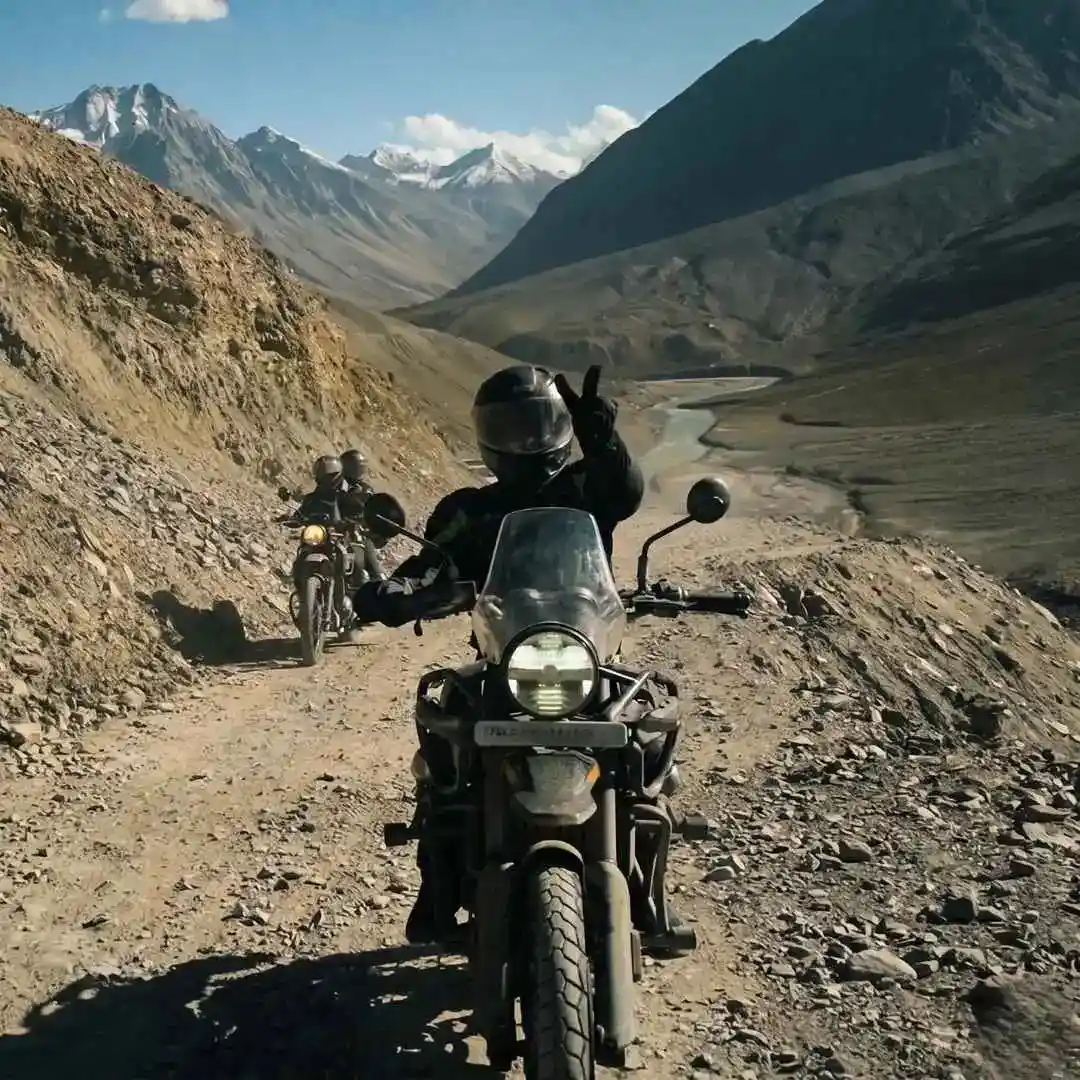 Group Tour7D/6N
Spiti Bike Trip From Manali With Chandratal
1D Sissu•1D Chandratal Camp+1
₹25,999₹29,999SAVE INR 4,000/ person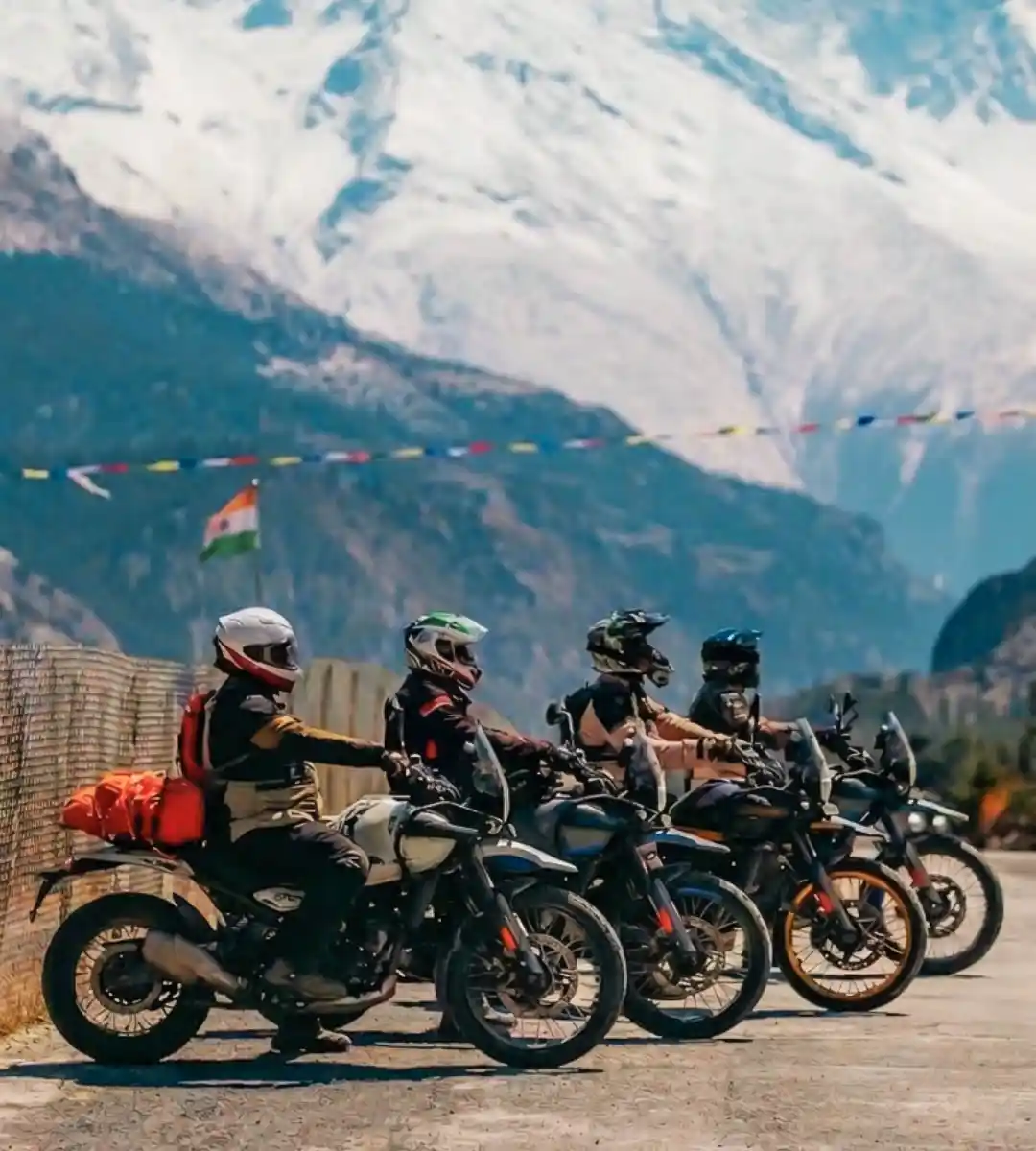 Group Tour10D/9N
Most Loved Spiti Valley Bike Expedition With Chandratal
1D Jibhi•1D Sangla+4
₹34,999₹41,999SAVE INR 7,000/ person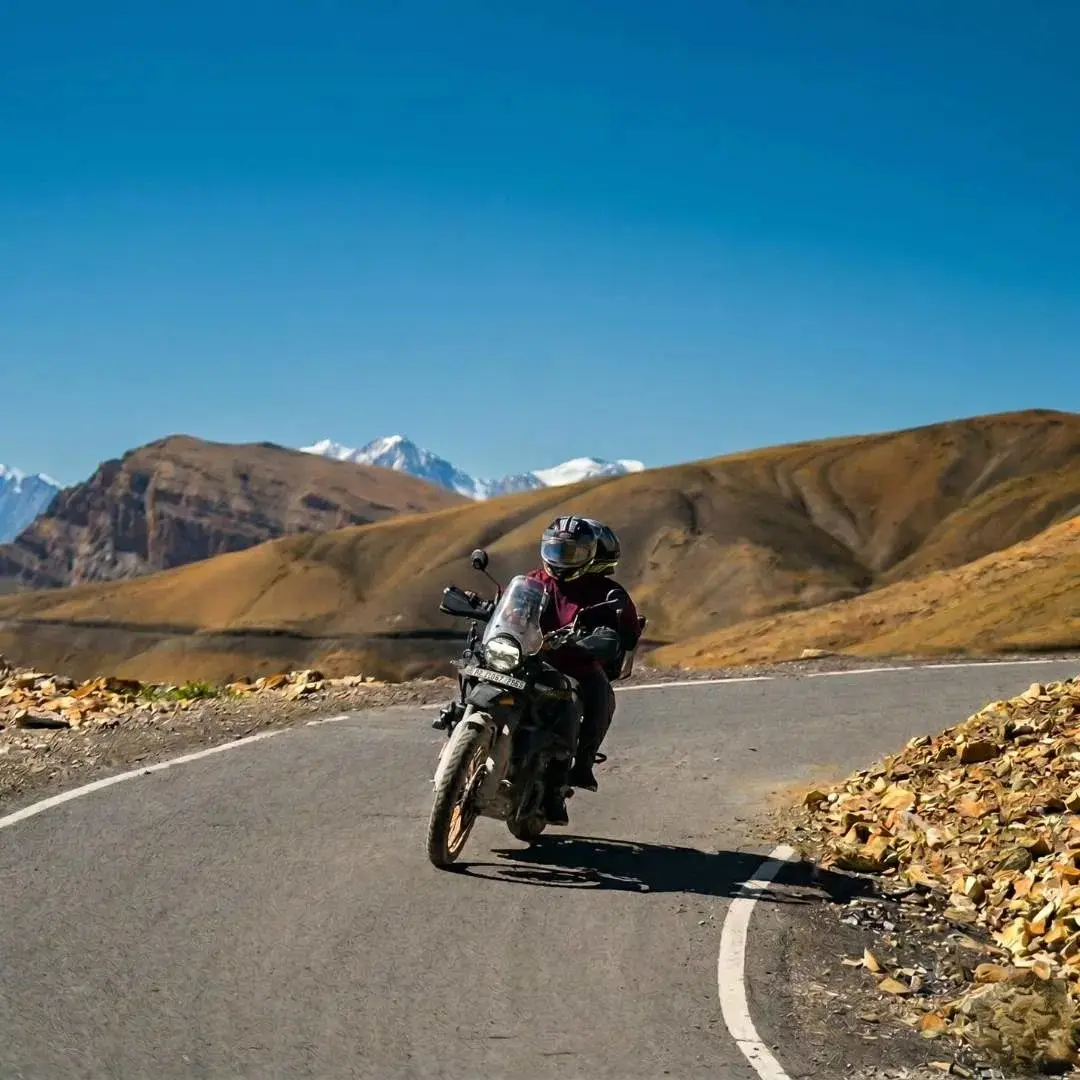 Group Tour11D/10N
Ultimate Spiti Valley Bike Expedition With Chandratal and Pin Valley
1D Narkanda•1D Sangla / Baspa Valley+5
₹32,999₹39,999SAVE INR 7,000/ person
Related topics
Frequently Asked Questions
Is Spiti bike trip good for couples?
Yes, if both of you are up for adventure, long riding days, and basic stays. It is not the right pick for couples expecting luxury or a slow honeymoon pace.
Can my wife or girlfriend ride pillion on a Spiti bike trip?
Yes, your partner can ride pillion through the entire route. They should be reasonably fit, mentally ready for rough roads, and comfortable wearing full gear for long hours.
Do pillion riders need a motorcycle licence?
No. Solo riders need a valid motorcycle licence. Pillion riders and backup vehicle passengers do not need any motorcycle licence at all.
Is backup vehicle available on a Spiti bike trip?
Yes. Our package includes a backup vehicle from Day 2 to Day 8 that carries luggage, spare parts, and any rider or pillion who needs a break from the bike.
What if the pillion gets tired during the ride?
The backup vehicle is exactly for that. Your partner can switch to the backup vehicle on any tough day without paying extra. We see this often and we never make it awkward.
Which bike is best for a couple Spiti ride?
The Royal Enfield Himalayan 411cc is the best balance of comfort, ground clearance, and reliability for two people on Spiti roads. The 450cc upgrade is available subject to availability.
Is Chandratal safe for couples?
Yes, with the right preparation and a guided setup. Altitude is the main concern, not safety from people. Our camp is in the designated zone near the lake and our team carries an oxygen cylinder.
What is the best month for a Spiti bike trip for couples?
June and September are our top picks for couples. The roads are cleaner, the crowds are thinner, and the weather is more predictable than peak July.
How much does a Spiti Valley bike trip couple package cost?
Our Spiti Valley bike tour packages start from ₹25,999 per adult. Double sharing is available for couples on request, and the bike security deposit is ₹10,000 per motorcycle, refundable if there is no damage.
Is Spiti bike trip safe for honeymoon couples?
It is safe for honeymoon couples who like adventure. If your honeymoon vision is candlelight dinners and luxury rooms, choose a cab-based Spiti trip instead. Both versions exist for a reason.
Can beginner riders do Spiti with a pillion?
We do not recommend it. The bike adds weight, the roads are rough, and altitude affects reflexes. Beginners should ride solo first or pick the backup vehicle option for one partner.
What permits are needed for a Spiti bike trip in 2026?
Vehicles need an e-pass for District Lahaul and Spiti through the e-Aagman portal, plus an e-permit for the Atal Tunnel, Rohtang, Koksar, and Chandratal circuit. Beyond Rohtang permits are limited to two per vehicle per week. Our team handles all of this on the guided trip.
More about Lahaul and Spiti
 Lahaul and Spiti
Stargazing in Winter Spiti 2026: Where to Stay, Moonlight and What You Can See
Discover the best places for stargazing in Winter Spiti 2026, where to stay for darker skies and how moonlight affects visibility. Learn what you can realistically see from Kaza, Tabo and nearby villages during the winter months.
- Things to Do
- Snow Travel
 Lahaul and Spiti
Joining a Winter Spiti Group in 2026: Room Sharing, Privacy and Group Expectations
Planning to join a Winter Spiti group in 2026? Learn how room sharing works, what privacy to expect, options for solo travellers and couples, and when a single room supplement may apply.
 Lahaul and Spiti
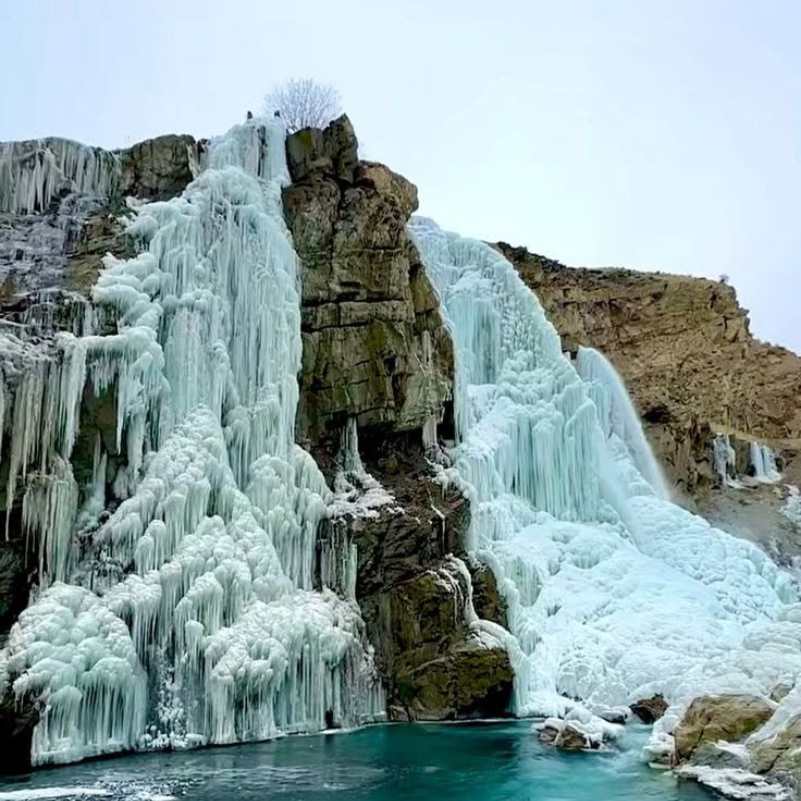
Lingti Frozen Waterfall in Winter 2026-27: Access, Photo Stops and What to Confirm
Plan your visit to Lingti Frozen Waterfall in winter 2026-27 with practical details on access, road conditions, the best photo stops and seasonal conditions. Learn what to confirm before leaving Kaza and how to visit this spectacular frozen waterfall safely.
- Places to Visit
- Snow Travel