
Kinnaur Photography Spots in Winter 2026-27: Kalpa, Sangla, Rakcham and Chitkul
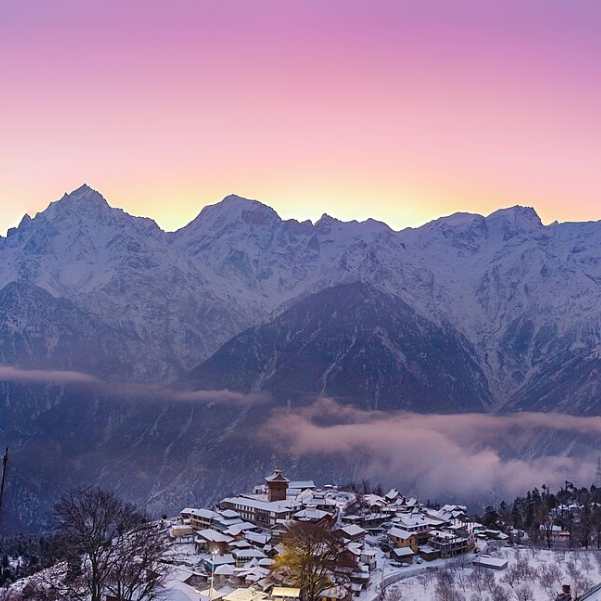
Winter in Kinnaur offers some of the most beautiful photography opportunities in Himachal Pradesh.
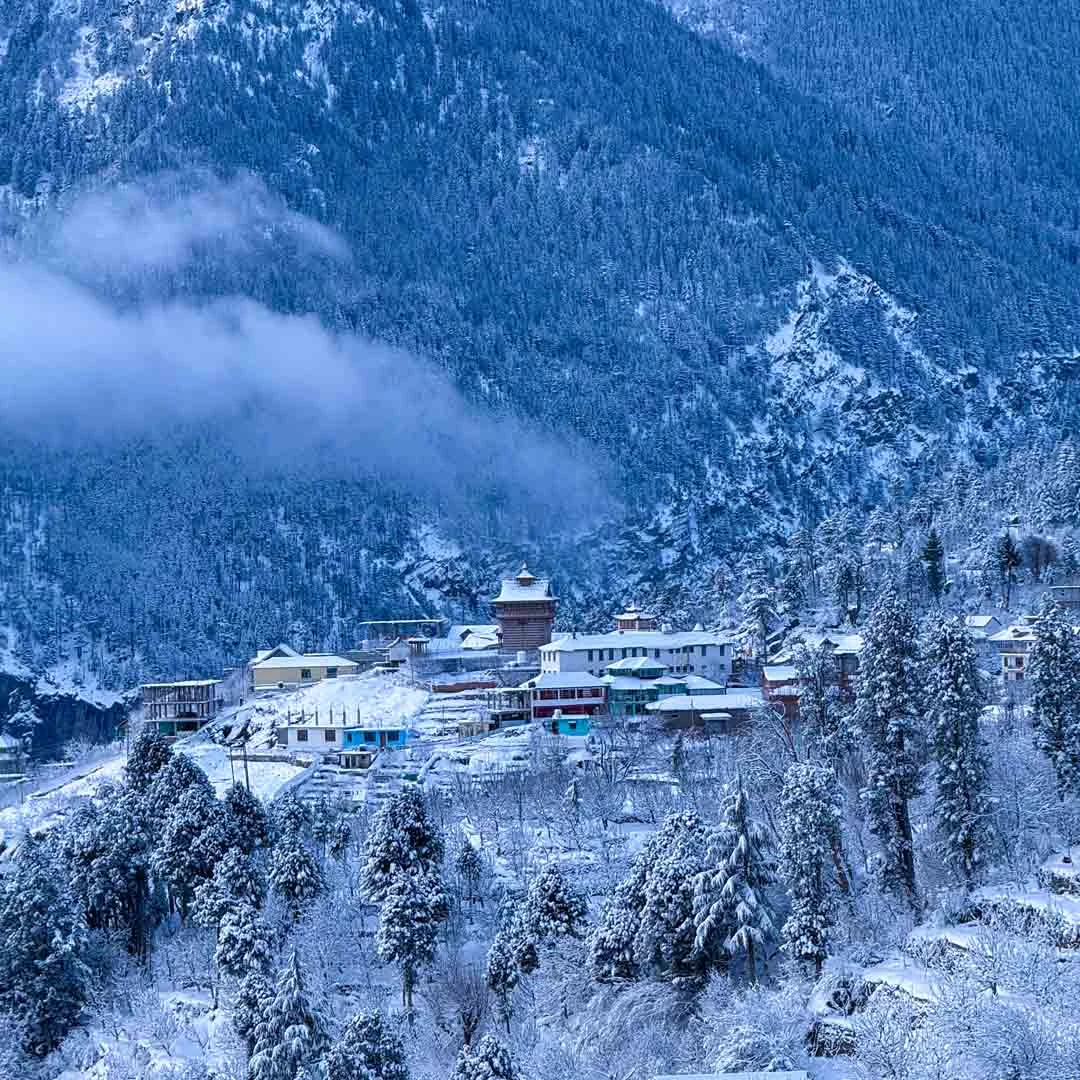
Snow covered villages, towering mountain peaks, frozen streams and traditional wooden houses give places like Kalpa, Sangla, Rakcham and Chitkul a completely different look during the colder months.
But finding the right photography spots is only part of the experience. Winter weather, road conditions, daylight hours and accessibility can affect how much you can explore and where you can safely stop for pictures.
Some locations may look stunning after fresh snowfall but can be difficult to reach during heavy winter conditions.
If you are planning a photography trip to Kinnaur in winter, it helps to know which places offer the best views, when to visit them and what conditions to prepare for.
This guide by Travel Coffee will cover the most photogenic spots, photography opportunities and practical winter travel tips for Kalpa, Sangla, Rakcham and Chitkul.
Quick Answer
For most winter trips, Kalpa is the best base for Kinnaur photography spots. You can photograph Kinner Kailash from the village and from mountain facing stays without a hard trek.
Sangla, Rakcham and especially Chitkul are conditional extensions. Whether they work depends on the road and the weather on the actual day.
Your best stop depends on three things: the subject you want, how much walking you enjoy, and live road conditions. Nobody can promise you snowfall for fixed dates, and we won't either.
What Most Winter Photographers Get Wrong in Kinnaur
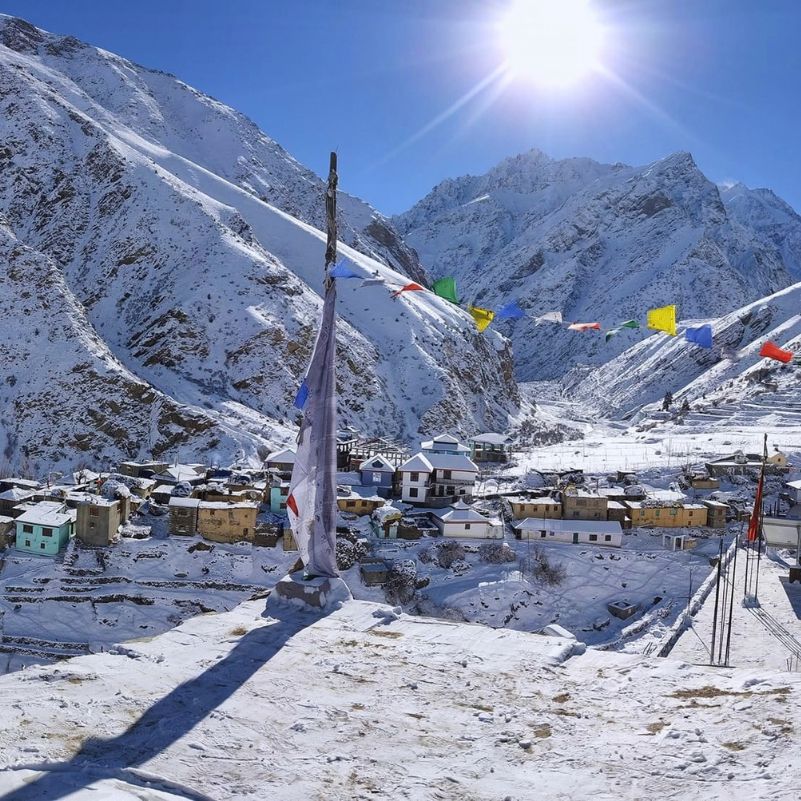
Most people build the whole trip around one snowy Chitkul frame they saw online. Then the road beyond Sangla turns doubtful, and the holiday suddenly feels like a failure.
In our experience, the trips that bring home the best pictures treat Kalpa as the anchor and Chitkul as a bonus. Kinner Kailash does not need any road beyond your hotel to stay open.
Kinnaur Winter Photography Planner at a Glance
Here is how the main Kinnaur photography spots compare in winter, so you can match each one to your subject, your legs and your patience with the cold.
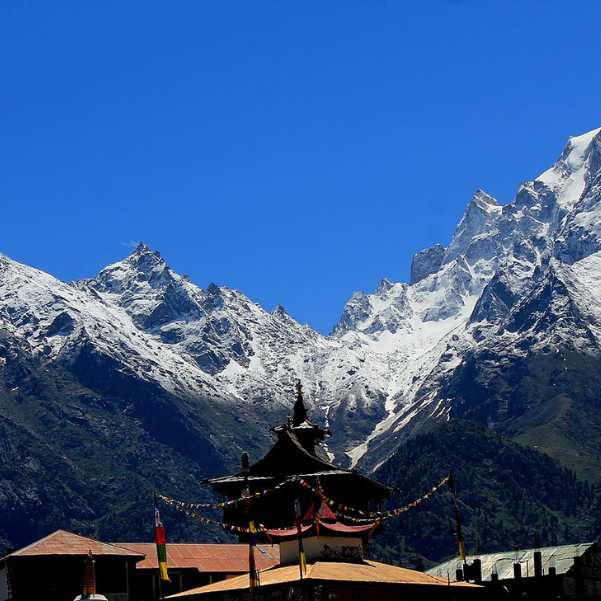
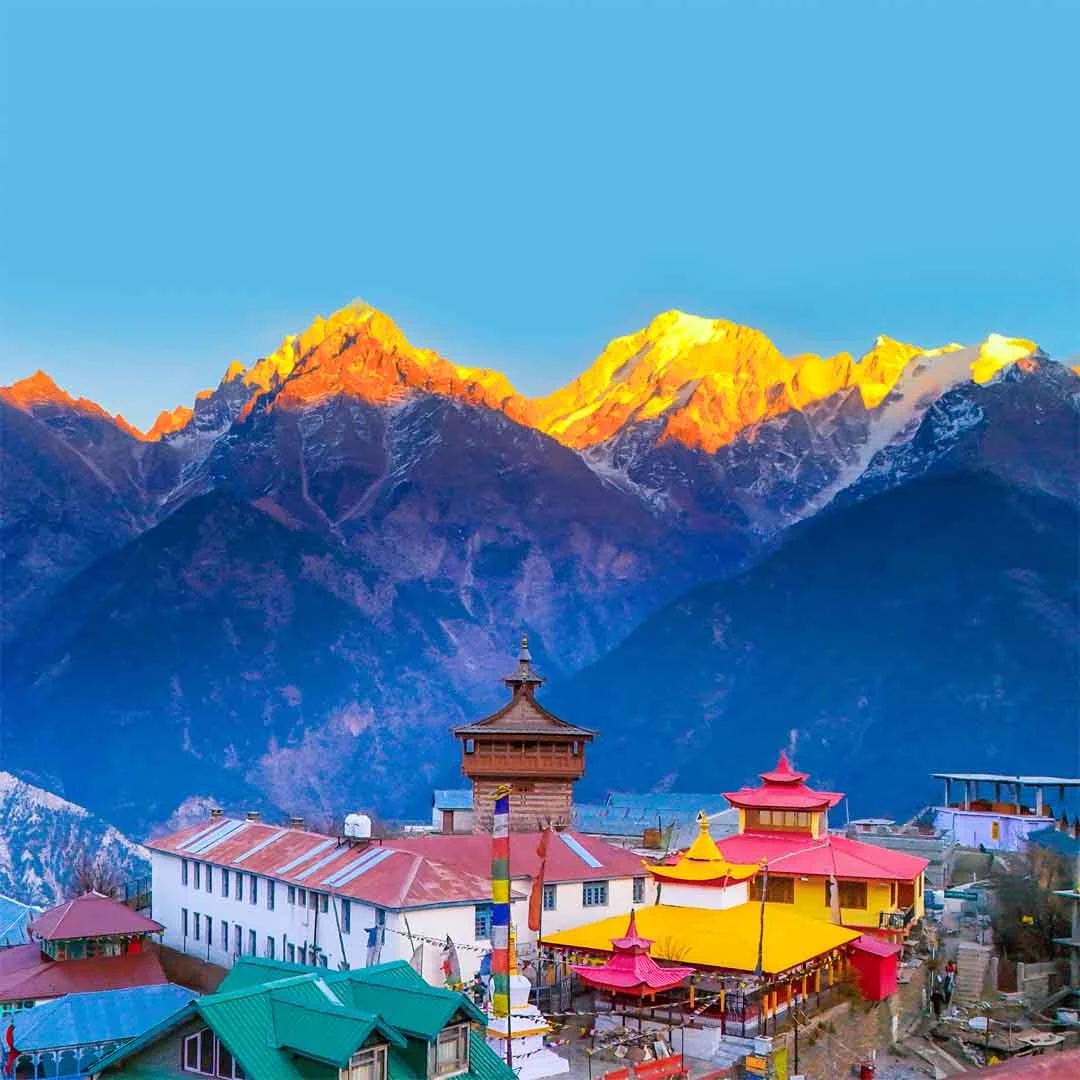
Kinner Kailash from Kalpa is the headline subject. You shoot a huge mountain face from village lanes or a suitably oriented terrace, so walking can stay minimal. Check the sunrise time for your exact date. Base: Kalpa.
Kalpa village details give you rooflines, orchards and old buildings as foreground for the mountain. Check morning and late afternoon light on your date. Footing on the lanes changes with ice. Base: Kalpa.
The Roghi route may hold good compositions, but we list no safe pull over or parking spot here. Treat it as a slow drive with a stop only where the road is wide and safe. Base: Kalpa.
Sangla Valley at 2,621 metres gives you the shape of the Baspa Valley, forest and snow layers, and village architecture. Access depends on the road from Karcham, 17 km away. Base: Kalpa, or Sangla once you confirm the road and an operating stay.
Rakcham gives you village architecture and valley scale between Sangla and Chitkul. Access depends on the road on the day, and walking should stay close to it unless locals confirm a safe path.
Chitkul at 3,450 metres is the last and highest village of the Baspa Valley. Access stays conditional all winter, and walking on snow or ice needs a local check.
Winter night photography works best from your Kalpa stay. You shoot stars and moonlit peaks, then walk straight back to warmth. Plan around your date, the Moon phase and cloud cover.
Why Is Kalpa the Best Base for a Winter Photography Trip?
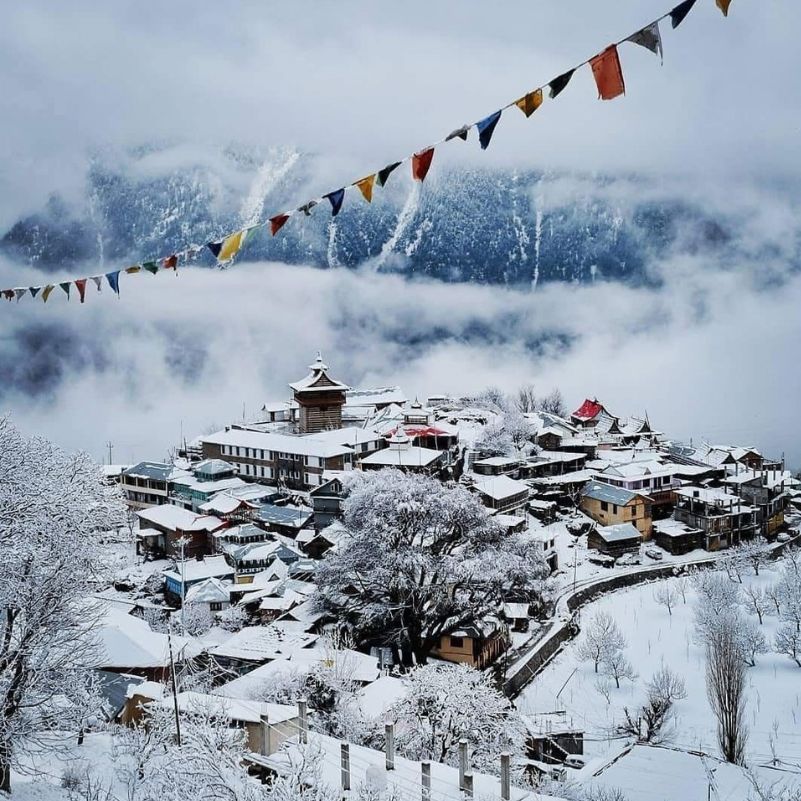
District Kinnaur lists Kalpa at 14 km from Reckong Peo and describes it as lying near the 6,050 metre Kinner Kailash. That closeness is the whole reason we base winter photographers here.
If you want the wider list of sights in the village, our guide to places to visit in Kalpa covers it. This article sticks to the camera.
District Kinnaur says the rising sun gives the snowy Kinner Kailash peaks crimson and gold light when you view them from Kalpa. You need no summit, no trek and no permit for that frame. You need a clear morning and a window that faces the right way.
That matters for families, couples and anyone with limited walking tolerance. You can get useful views from village lanes and from many appropriately oriented hotel terraces, so nobody has to do a long walk before dawn.
Here is the honest catch. Not every Kalpa hotel has this view, and rooms in the same building can face different ways. Ask the stay for a photo taken from your actual room or terrace before you pay.
Our guide on where to stay in Kinnaur in winter helps you shortlist stays before you start asking those questions.
A money saving tip we share often
Book all your nights in one mountain facing Kalpa room instead of splitting them across Sangla and Chitkul. If the upper valley road closes, you lose nothing on a room you cannot reach. Read the cancellation terms either way.
What we tell our travellers is simple. Give Kalpa at least two sunrises, because one cloudy morning should never decide your whole trip.
If Kalpa sounds right, tell us your dates, the subjects you want to shoot and how much walking feels comfortable. We will plan a private Kinnaur trip with time built in for photography stops.
Where Can You Photograph Kinner Kailash From Kalpa?
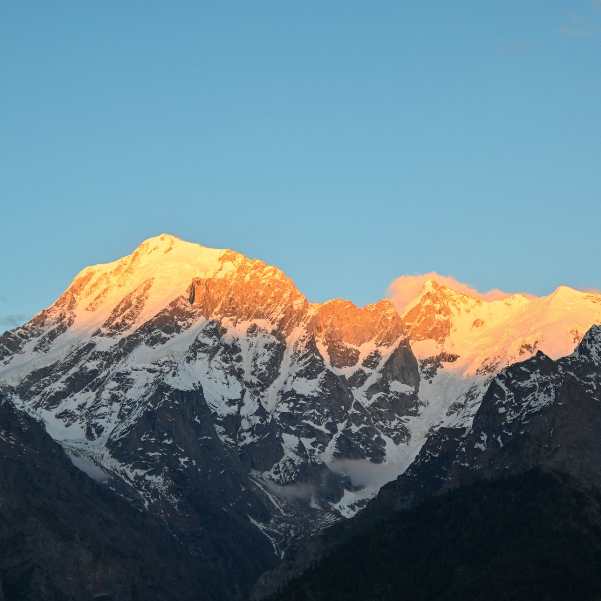
You have three kinds of places to work from in and around Kalpa. Each one asks something different from you and from the people travelling with you.
Hotel Terraces and Accessible Village Views
Some Kalpa stays and village areas look straight toward the Kinner Kailash range. For a Kinner Kailash sunrise from Kalpa, a terrace like this is the easiest setup in the whole district.
The best Kinner Kailash viewpoint in Kalpa for most families is not a famous point at all. It is a quiet terrace with a kettle nearby and a warm room three steps away.
A hotel terrace is private property, not a public viewpoint. If you are not a guest there, ask the owner before you set up a tripod.
Our insider tip: pick your tripod spot the evening before. Frame the peaks, note where your feet stand, and in the morning you only step out, switch on and shoot.
Do not pack up when the first colour fades. As the light spreads down the mountain, switch to wider frames that include the terrace rail, a steaming cup or the village below.
Those softer, later frames often end up as the photos your family actually prints. The crimson moment is short, but the morning keeps giving.
Kalpa Village Lanes and Roofline Compositions
One telephoto shot of the peak looks great. Ten of them look exactly the same.
Walk the lanes and use traditional rooflines, orchard trees and old buildings as foreground layers, with the mountain behind them. These frames tell people where you stood, not just what you saw.
Good Kinner Kailash photography often means stepping back. A rooftop or a bare orchard branch in the lower third gives the peak scale and gives your set some variety.
Kalpa is a living village. Ask before you photograph residents, and stay out of private courtyards even when a gate stands open.
Roghi Route and Village Compositions
The road from Kalpa toward Roghi may hold good compositions of the valley and its villages. Treat that as a possibility, not a licence to stop wherever the view looks good.
We list no pull over, parking area or walking distance on this road, because none appears in our verified notes. Ask your driver to stop only where the road is wide, straight and clear in both directions.
Skip the cliff edge pose. You will see photos of people perched over the drop on this kind of road, and we will never recommend recreating them. No frame is worth a fall, and a blind bend is the worst place to park a car.
For background on the mountain itself, read our Kinner Kailash guide.
Should You Add Sangla for Winter Photography?
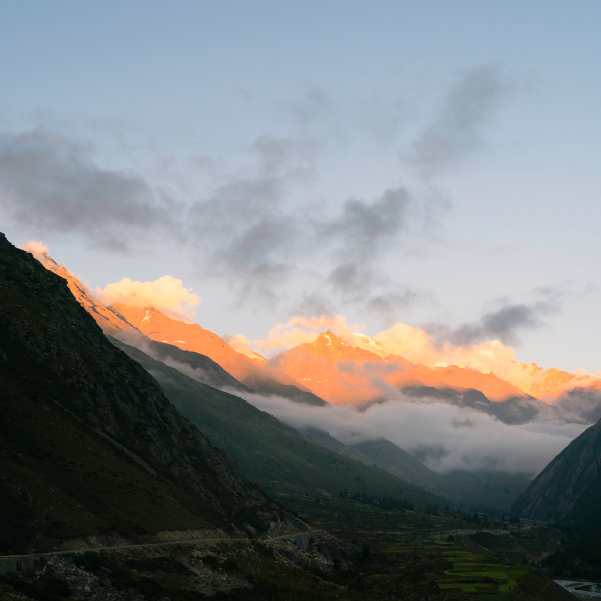
Add Sangla if you want the valley and the forest, and only after you confirm the road. District Kinnaur lists Sangla at 2,621 metres and 17 km from Karcham.
Sangla photography in winter is about shape and texture. You get the curve of the Baspa Valley, layers of forest and snow, traditional architecture and small village details.
Leave apple blossom and green meadows out of your expectations. Those belong to other seasons, and winter Sangla gives you a quieter, colder palette.
Sangla depends on the road far more than Kalpa does. Snow, ice or repair work can change the drive from Karcham on any given day.
One trap catches people every winter. Reaching Sangla does not prove the road farther toward Rakcham and Chitkul is safe, so treat each stretch as its own decision.
For Sangla photography spots on a winter day trip, choose frames close to the village and the road. You shoot, you get back into the warm car, and nobody stands around freezing.
Ask locally before you walk off the road onto snow. A field that looks flat can hide an irrigation channel or a drop under the snow.
To show the shape of the valley, look for a slightly raised public spot in the village rather than the riverbed. Height gives you the curve of the valley; the riverbank gives you only the near bank.
Is Rakcham Worth a Photography Stop in Winter?
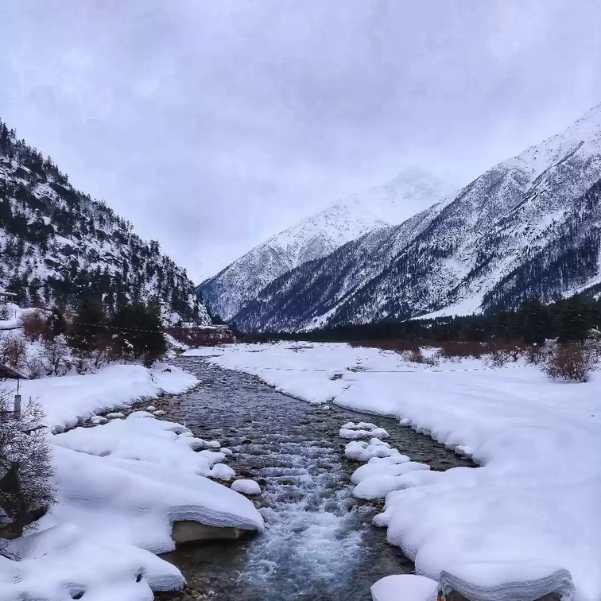
Yes, when the road is open and conditions are safe on the day. Rakcham sits between Sangla and Chitkul, so think of it as a possible stop, not a fixed one.
Rakcham photography rewards you with traditional village architecture, real valley scale and forested mountain compositions. A wide lens shows how small the houses look against the slopes.
We cannot promise access in deep winter. Snow and ice on this stretch change quickly, and a stop that worked for someone last week may not work for you.
You may see online photos from a meadow or the Baspa riverbank near the village. Do not assume those Rakcham photography spots are safe or reachable in winter until someone local confirms it on the day.
Rakcham is home to real families. Ask before you photograph people, homes, private courtyards, fields or any private property, and take no for an answer.
For more on the village itself, see our Rakcham guide.
Can You Photograph Chitkul in Winter?
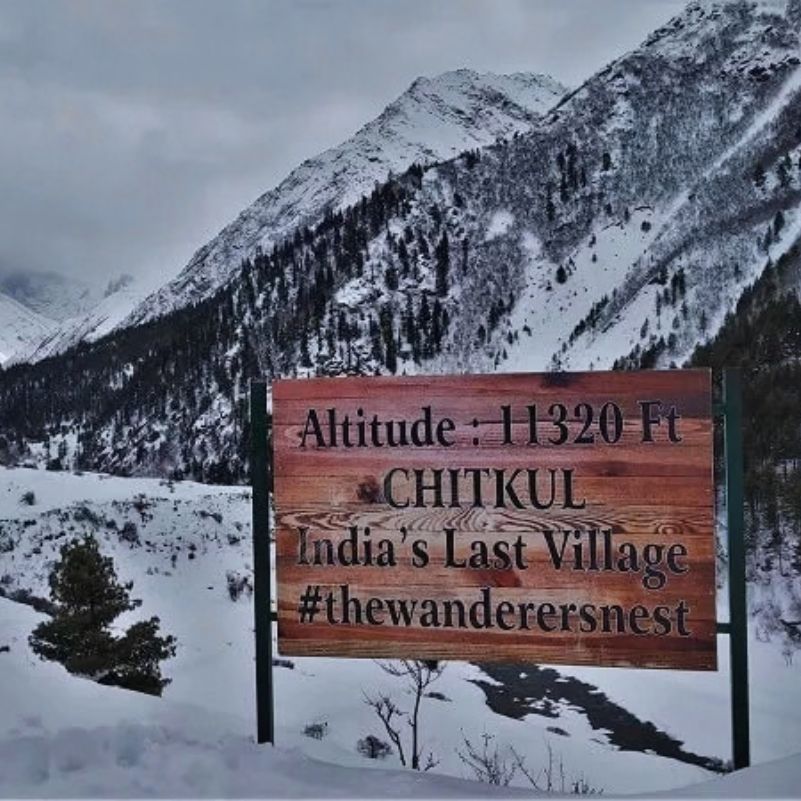
Yes, sometimes. But Chitkul must stay conditional in any winter itinerary.
District Kinnaur lists Chitkul at 3,450 metres and describes it as the last and highest village of the Baspa Valley. At that height, cold bites harder and help sits farther away.
We have found no reliable official fixed closing date for Chitkul, so we will not invent one. Check the road close to your travel date, then check the Sangla to Chitkul road again on the morning of the drive.
Safety warning: if that morning check sounds uncertain, do not go. We would rather turn the car around at Sangla than gamble on an icy stretch at 3,450 metres.
What to Photograph When the Road Is Open
When you do reach Chitkul, keep to safe exterior frames. Traditional village architecture, layered mountains and wide Baspa Valley photography make the strongest winter set.
Temple exteriors can add detail. Do not assume you can photograph inside, and ask first every time.
Never stand or walk on a frozen river for a picture. Ice that looks solid can give way, and the water underneath is deadly cold.
If you see a civilian or security restriction, respect it. No Chitkul photography spot is worth crossing a barrier.
Good Chitkul winter photography comes from patience, not from pushing. Shoot what the day allows and leave with time to drive back in daylight.
What to Photograph If Chitkul Is Not Reachable
Losing Chitkul should not ruin your trip. In our experience, it only hurts when people never made a backup plan.
Here is the plan we use. Photograph Sangla or Rakcham only as far as locals confirm the road is safe that day.
Or drive back to Kalpa and use the weather change for a second attempt at Kinner Kailash, village details or winter landscapes. If the same weather brings snow to Kalpa, you get a completely new set from the same terrace.
Treat Chitkul as a bonus. Your holiday succeeds on Kinner Kailash, the village and the people you meet, not on one road.
If December is your month, our Chitkul in December guide goes deeper into that window.
For what snow you can realistically expect and when, read our Kinnaur snowfall guide.
What Does Kinnaur Look Like in November Versus Deep Winter?
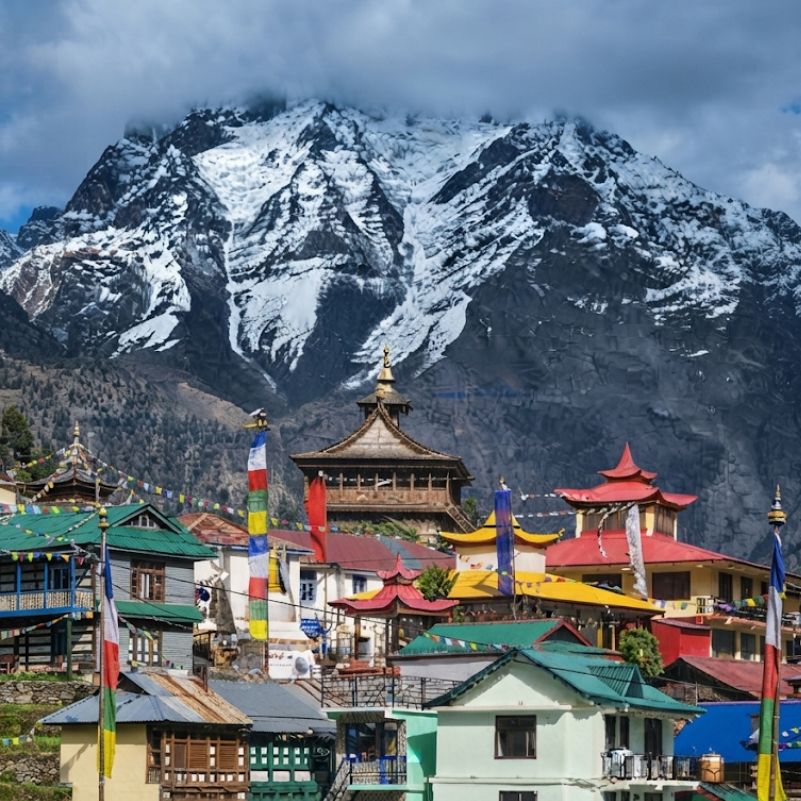
Season changes what you will photograph more than any lens does. Plan for the month you will actually travel in, not the month in someone else's photo.
Days get shorter as winter deepens, so the usable shooting window shrinks too. Build your drives around daylight first and your photographs second.
November
November is a transition month, not guaranteed deep winter. You can get snow on the high mountains and cold, clear scenes, but nobody can promise village level snow for your dates.
That still makes November a good month for Kinnaur sunrise photography. Snowy peaks above a snow free village have their own clean look.
November also suits people who dislike deep cold. You get the mountain light with less hardship, which matters a lot when you travel with parents or young children.
Every photo we publish should carry its exact location and capture date, and a November image should say November. When you research on other sites, check the date on a picture before you trust it.
December to February
Deeper winter brings a different look, and we show those frames separately with their real dates.
A January deep snow photo tells you about January. It tells a November traveller nothing about their own trip, and we will not publish it as if it did.
If Kinnaur snow photography is your main goal, deeper winter improves your odds. It still cannot promise fresh snowfall on fixed dates.
Honest date labels help you plan with real expectations. They are also why you can trust the rest of this page.
A Half Day Winter Photography Plan for a Couple
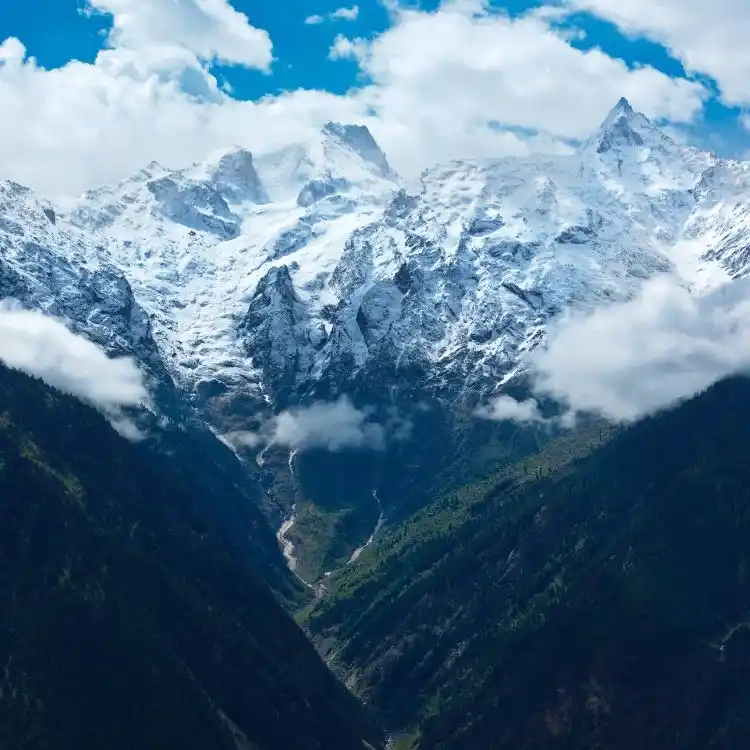
Start from the sunrise time, not a fixed clock. Look up the local sunrise for your exact date and build the morning around it.
Timing tip: around 30 to 45 minutes before the sunrise time you have checked for your date, the photographer steps out to the mountain facing terrace or window. If you set the tripod spot the night before, setup takes very little time.
One partner may want to stay under the blanket until the light starts. That is fine. Call them out when colour touches the peaks, and keep a warm jacket hanging by the door.
After sunrise, go indoors for breakfast and a proper warming break. Our favourite chai in Kalpa is the one you drink on your own terrace while the peaks still glow.
Mid morning, take a short village session together. Rooflines and lanes make good couple portraits with the mountain behind, and the walking stays short.
For portraits, put the mountain in the background and keep your partner close to the camera. A phone in portrait mode does a decent job here, and nobody has to hold a pose in the cold for long.
Planning the romantic side too? Our Kalpa Kinnaur trip for couples covers stays and pacing.
A Half Day Winter Photography Plan for a Family
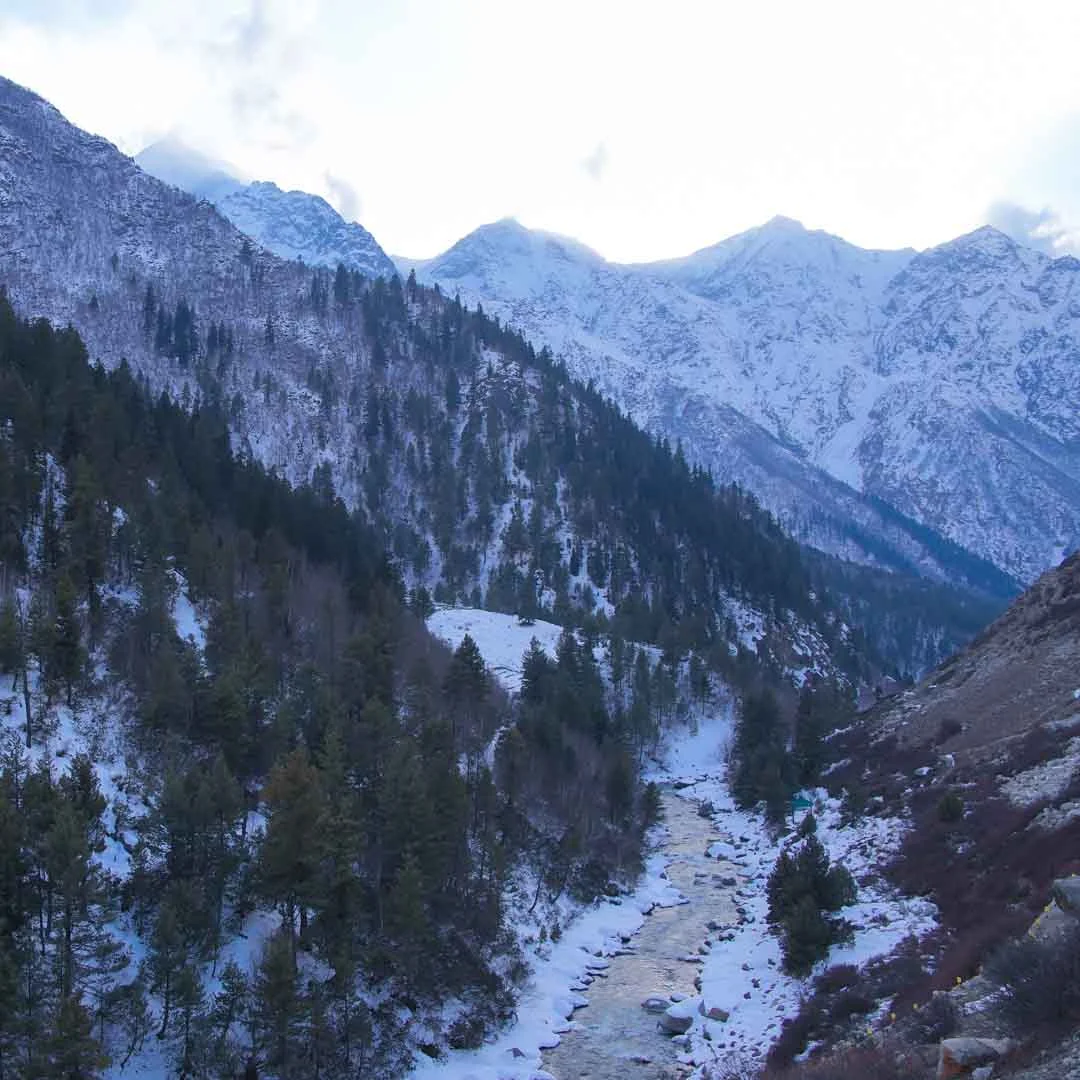
The rule for family photography in Kinnaur is simple. Make a terrace, a village lane or a spot you can reach by vehicle from your main location.
Do not make children, parents or older travellers wait outside through a long technical setup. Set up alone, then call everyone out for the few minutes that matter.
Steps, icy footing and uneven surfaces vary by stay and by morning. We have not checked every terrace and lane for this guide, so ask your stay about steps and ice before you bring your grandparents out.
Build an indoor warming break between outdoor sessions. Hot drinks, dry gloves and a charged phone keep everyone happier than one more frame.
A family day trip toward Sangla can work in daylight once you confirm the road. Keep the car as your warm base and shoot close to it.
Give the children a phone of their own for the morning. Kids notice icicles, dogs and small patterns that adults walk past, and they stay busy while you finish your frame.
Winter days are short in the mountains. Plan any drive out of Kalpa so you are back well before dark, whatever the photos look like.
If you would rather we handle the stays and driving, look at our Kinnaur packages.
What Camera and Phone Gear Actually Helps in Kinnaur Winter?
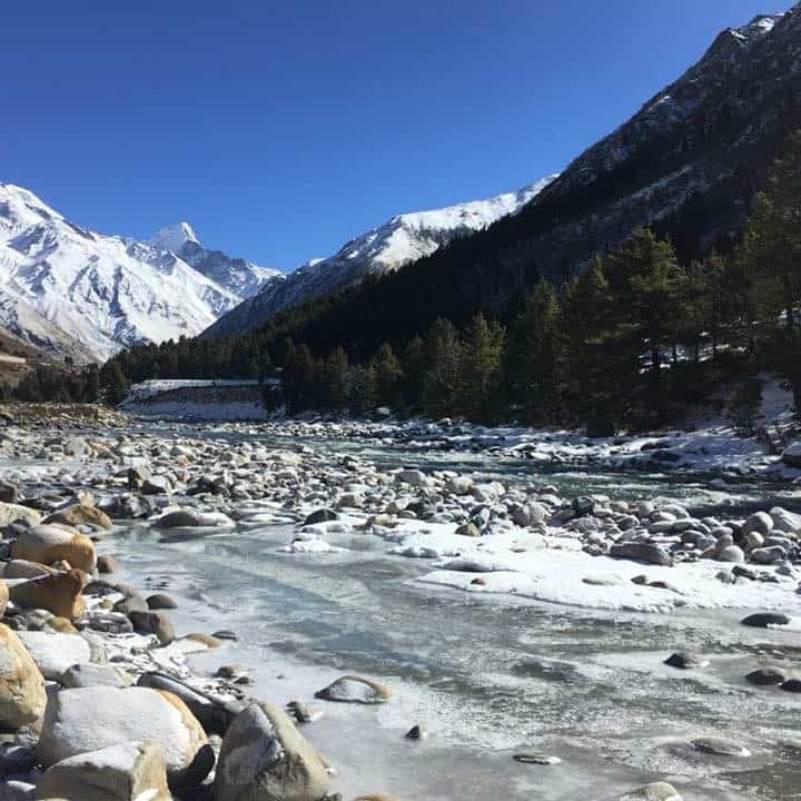
Keep it simple. Cold troubles your gear far more than the lack of a fancy lens.
Very cold conditions can temporarily shorten an iPhone's battery life and can cause charging problems or even shut down. Plan for that with every device you carry.
Arrive with everything fully charged, carry a suitable power bank, and pack spare batteries if you use a dedicated camera. Our insider tip: keep the spares in an inside pocket, close to your body.
Snow fools phone and camera meters. If the peaks look grey or the sky blows out, tap on the bright snow to set exposure, then nudge it until the highlights keep their detail.
When you come in from the cold, leave your camera in its bag for a while. A sudden move into a warm room can fog the lens and the inside of the body.
A small tripod helps with sunrise and night frames. Use it only where you can set it up safely and where the rules and the owner allow photography.
That is enough. You do not need a new camera for Kinnaur. You need charged batteries, warm hands and gloves that let you work your controls.
Is Kinnaur Good for Night Photography in Winter?
Yes, with the right expectations. Kinnaur night photography in winter means different subjects from the summer pictures you see online.
In the Northern Hemisphere, the bright Galactic Core is not available through the core winter period. Do not plan a summer style Milky Way Core photograph in November, December or early January.
Instead, look for the fainter winter Milky Way, star fields, constellations, moonlit mountain scenes, and village and mountain silhouettes when conditions suit.
Plan the exact shot around your date, the Moon phase, the clouds and where your subject sits in the sky. Nobody can promise a specific night composition months in advance, and you should doubt anyone who does.
Moon phase changes the whole night. A bright Moon lights the snow and the peaks beautifully but washes out faint stars, while a dark sky near new Moon shows far more stars and far less landscape.
If your dates fall near the full Moon, do not fight it. Shoot moonlit mountain scenes instead of star fields, and you will still come home with strong night frames.
Kalpa makes winter nights easier. You can shoot from your stay and step back inside to warm up between frames.
Photography Etiquette, Temples, Private Property and Border Areas
Kinnaur is a home first and a photo location second. A little courtesy usually gets you better pictures anyway.
Ask before you photograph people. Ask before you photograph inside a temple or during religious proceedings, and accept the answer.
If someone agrees to a portrait, offer to send them the photo on WhatsApp. It turns a quick click into a small exchange, and people remember the visitor who kept that promise.
Do not step into private courtyards, orchards, houses or fields just because they give you a better angle. Shoot from the lane, or ask the owner.
District Kinnaur's protected area guidance prohibits photography of military installations, field defences and security establishments in notified areas. Keep your camera down near them.
Two rules we repeat on every winter trip: no cliff edge poses, and never walk on a frozen river for a photograph.
Can You Fly a Drone in Kinnaur?
There is no single yes or no for all of Kinnaur. The answer depends on exactly where you launch and which rules apply there.
DGCA tells drone operators to check Digital Sky before every flight. You must get the applicable permissions before you fly in a Yellow or Red Zone.
Himachal Pradesh amended its Wildlife Protection rules in June 2026. The amendment changes photography, filming and drone provisions in wildlife sanctuaries.
To fly inside a wildlife sanctuary, you may need special permission from the Chief Wildlife Warden. The Rakchham Chitkul Wildlife Sanctuary lies in the upper Baspa Valley landscape.
So before you fly anywhere near Sangla, Rakcham or Chitkul, check your exact launch coordinates, the current Digital Sky zone, and any Forest Department or sanctuary permission you need.
How Should You Choose Your Winter Photography Base?
Kalpa is the strongest default. If Kinner Kailash, easier access and less walking matter most to you, base there and shoot from the village and your stay.
Sangla can work as a base once you confirm the road and a winter stay that is actually operating. Ask the stay directly, close to your dates.
Treat Rakcham and Chitkul as conditional extensions, not compulsory overnight bases in deep winter. Visit them by day when the road allows, and return to your base when it does not.
In our experience, the guests who come back happiest are the ones who unpacked once. Fewer check ins mean more mornings on the terrace and less time loading bags into a cold car.
Plan your approach with current information. District Kinnaur says the Manali to Kaza to Reckong Peo approach remains closed through most of winter and spring.
District Kinnaur also advises you to get current road condition information before you begin any winter journey. We check again on the morning of every drive.
For a simple Kinnaur photography itinerary, keep several nights in Kalpa and one flexible day for the Baspa Valley if the road allows. Put together, these Kinnaur photography spots reward a slow trip far more than a rushed loop.
For everything else worth seeing on the way, read our guide to places to visit in Kinnaur Valley.
Explore Our Curated Kinnaur Tour Packages
- Group Tour6D/5N
Kinnaur New Year Group Trip 2027
1D Sarahan•1D Kalpa+1
₹11,999₹16,999SAVE INR 5,000/ person  Group Tour5D/4N
Kinnaur Valley Weekend Group Trip With Sangla Chitkul and Kalpa
1D Sangla•1D Kalpa
₹6,999₹9,999SAVE INR 3,000/ person 4D/3N
Kinnaur Valley Scenic Circuit With Sangla Chitkul and Kalpa
1D Shimla•1D Sangla+1
₹16,999₹17,999SAVE INR 1,000/ person
Frequently Asked Questions
What are the best photography spots in Kinnaur?
Kalpa for Kinner Kailash and village frames, Sangla for the Baspa Valley, Rakcham for village scale, and Chitkul when the road allows. In winter, Kalpa is the reliable core.
Where is the best place to photograph Kinner Kailash?
Kalpa. You can shoot it from village lanes and from many hotel terraces that face the right way, with no climb.
What time should I photograph Kinner Kailash?
At sunrise, when District Kinnaur describes the peaks turning crimson and gold. Check sunrise for your date and be ready 30 to 45 minutes before it.
Is Kalpa good for photography in winter?
Yes. It is the easiest winter base in Kinnaur, with the big mountain view close to your stay.
Is Sangla accessible in winter?
It can be, but it depends on the road from Karcham on the day. Check current road conditions before you drive.
Is Rakcham accessible in winter?
Sometimes. Add it on the day only when locals confirm the road is safe.
Is Chitkul open in winter?
No reliable fixed closing date exists. Check the road near your travel date and again on the morning you plan to drive.
Where should a family stay for winter photography in Kinnaur?
Kalpa, in a stay with a confirmed mountain facing room or terrace. Ask for a photo of the actual view before booking.
Is November good for Kinnaur photography?
Yes, for snowy peaks and cold clear scenes when the weather allows. Nobody can guarantee village level snow in November.
Can I photograph the Milky Way in Kinnaur in winter?
You can shoot the fainter winter Milky Way and star fields. The bright Galactic Core is not available in core winter.
Can I use a drone in Kinnaur?
Only after you check Digital Sky for your exact launch point and get any sanctuary or Forest Department permission you need.
What should I photograph if Chitkul is closed?
Shoot Sangla or Rakcham as far as the road is safe, or return to Kalpa for another try at Kinner Kailash and the village.
More about Kinnaur
- Kinnaur
Kinnaur vs Manali in Winter 2026-27: Which Trip Fits Your Family or Couple Holiday?
Confused between Kinnaur and Manali for your winter holiday? Compare snowfall, road conditions, scenic beauty, accommodation, activities, and travel costs to discover which destination best suits your family trip, romantic getaway, or winter adventure.
- Kinnaur
Kinnaur Family Trip in Winter 2026: Planning Kalpa and Sangla with Kids or Parents
Planning a winter family trip to Kinnaur in 2026? Discover how to explore Kalpa and Sangla with kids or elderly parents while keeping comfort and safety in mind. Find practical itinerary ideas, hotel tips, road travel advice, and winter precautions for a smoother family holiday in the mountains.
 Kinnaur
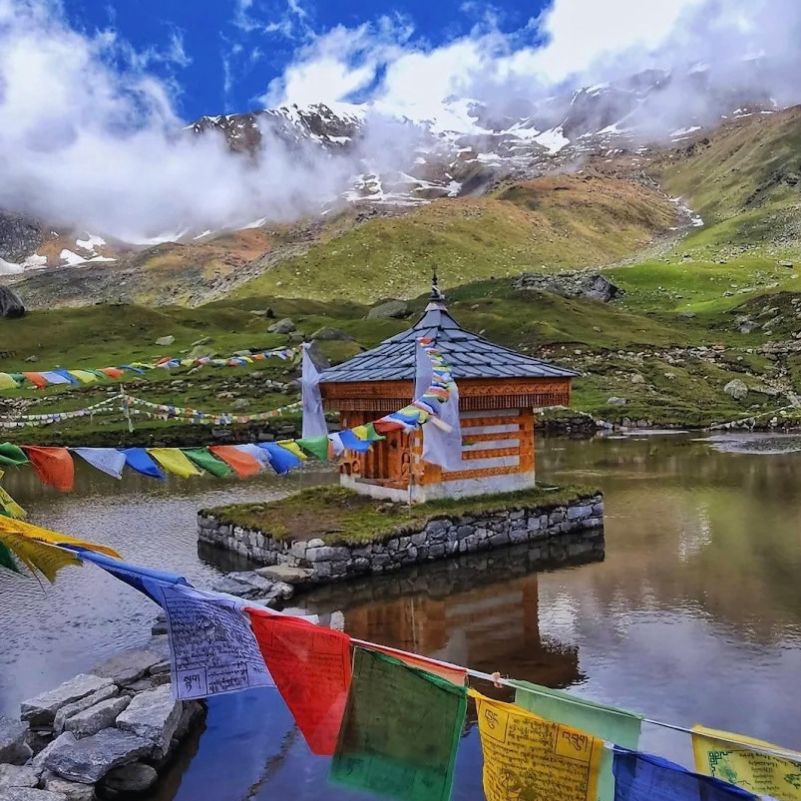
Yulla Kanda Trek Guide 2026: Route, Best Time, Cost and Planning
Planning the Yulla Kanda trek in 2026? This practical guide covers the trekking route from Yulla village in Kinnaur, distance and difficulty, the best time to visit, expected costs, camping options, and essential preparation tips. Discover how to plan this high-altitude Himalayan trek to the sacred Krishna Lake with realistic expectations and local travel insights.
- Things to Do
- How to Reach