
Yulla Kanda Trek Guide 2026: Route, Best Time, Cost and Planning
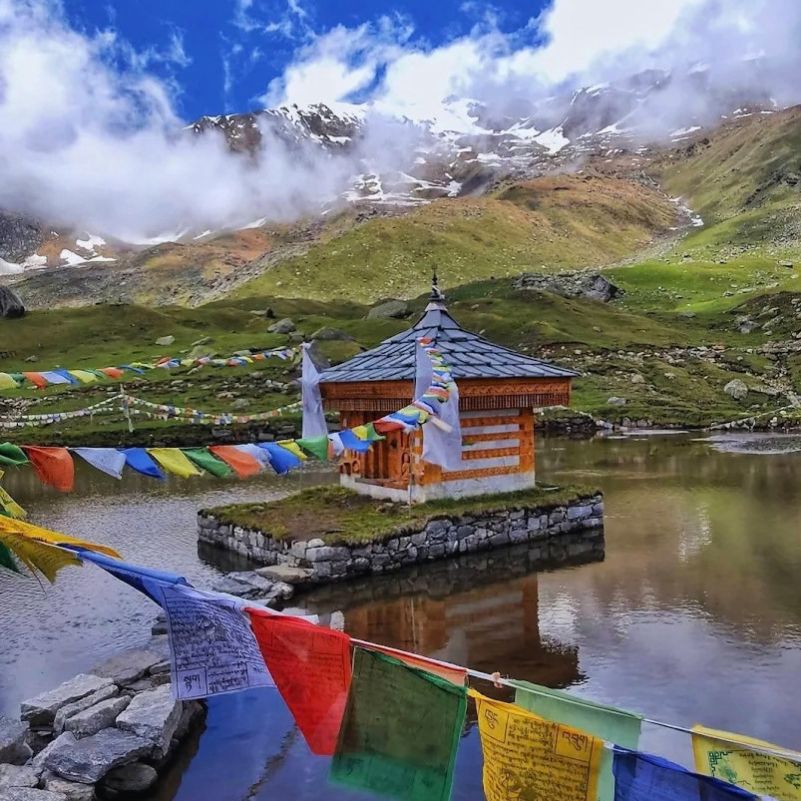
Yulla Kanda is one of the most scenic high altitude treks in Kinnaur, known for its peaceful mountain setting, beautiful lake and the famous Krishna Temple located beside it.
If you are planning the Yulla Kanda Trek in 2026, understanding the route, trekking season and basic preparation can make your journey much easier.
This Yulla Kanda Trek Guide by Travel Coffee covers the route, best time to visit, expected trip costs, stay and camping options and important planning tips. It will help you understand what to expect before travelling to Yulla Khas and starting the trek towards Yulla Kanda.
Quick Answer
The Yulla Kanda Trek is a high-altitude trek in Kinnaur district, Himachal Pradesh, and most people start it from Yulla Khas village.
The trail climbs through forest and open mountain meadows to a sacred alpine lake and a Krishna temple, widely described as the world's highest temple dedicated to Lord Krishna.
The temple and lake are commonly reported at around 3,895 metres, though you'll see other elevation figures in published material. Walking distances change depending on where you start and camp, so many trekkers use a two-day trekking plan with extra travel time on either side.
Late May to June and September to early October are the windows most people prefer, subject to snow, weather and access.
Where Is Yulla Kanda Located, and Why Is It Famous?
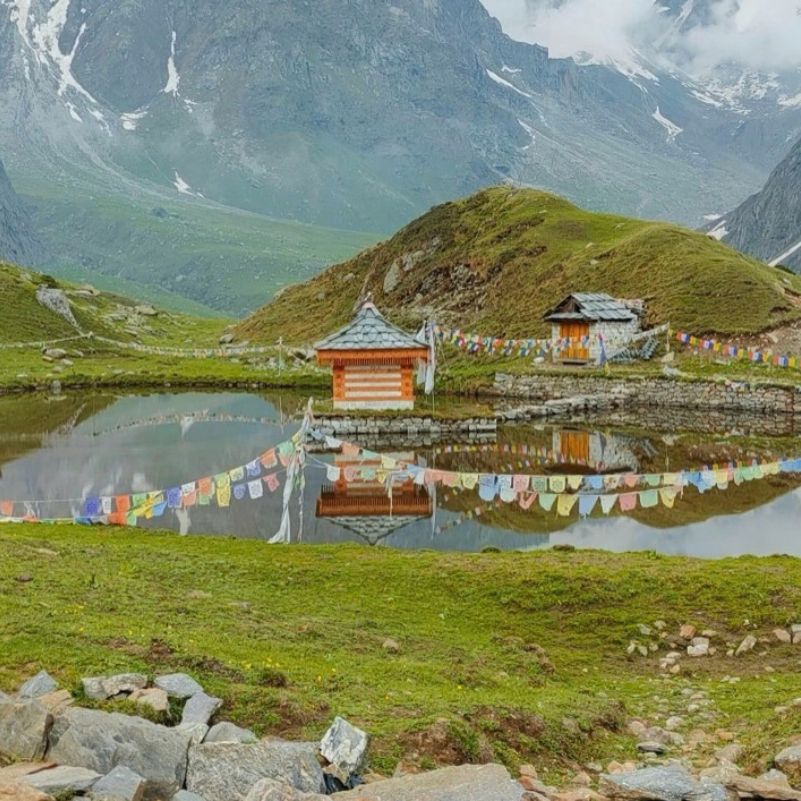
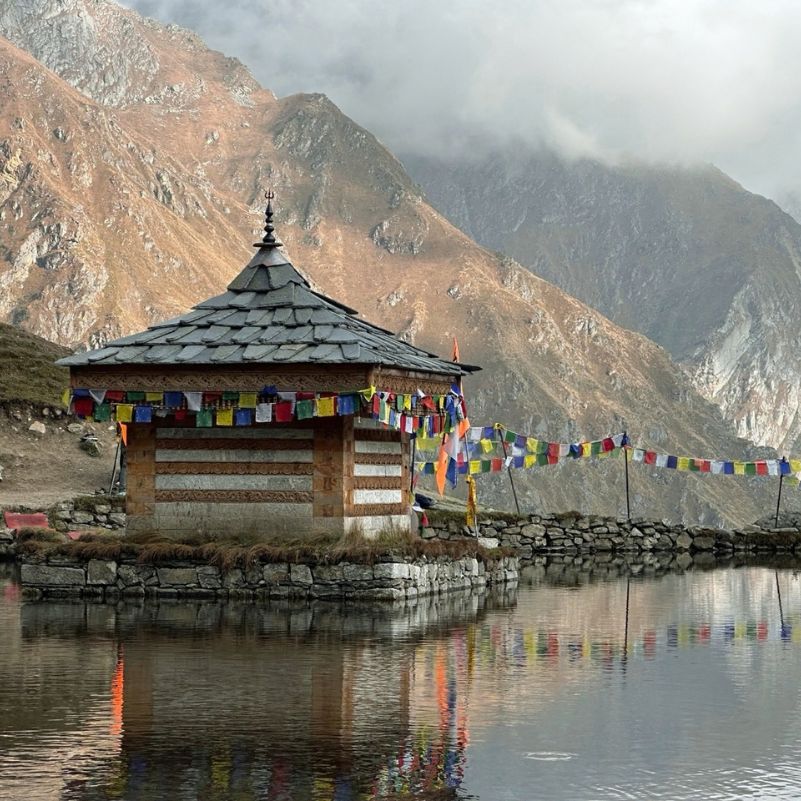
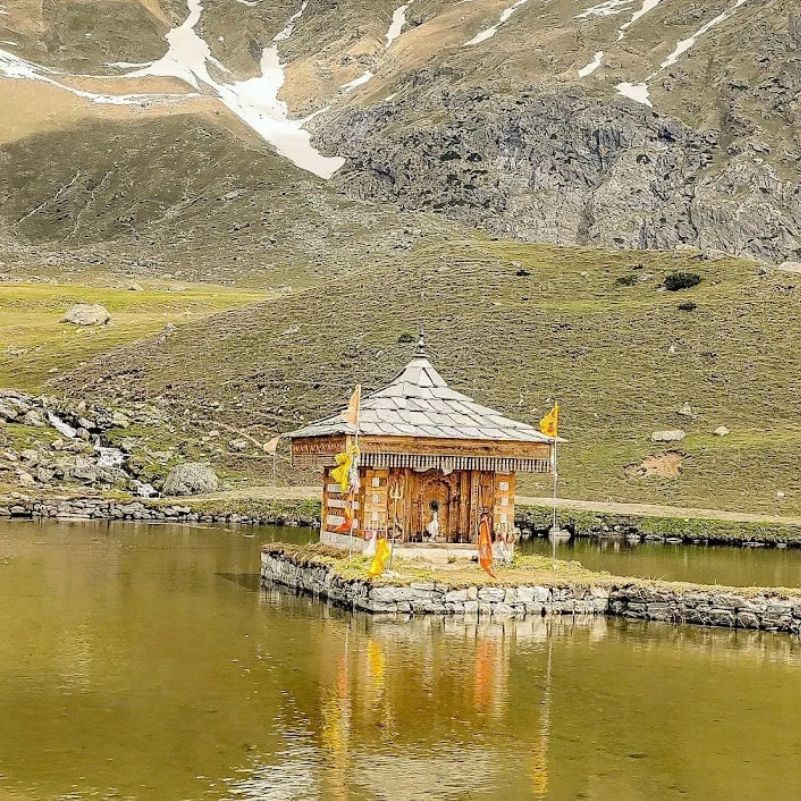
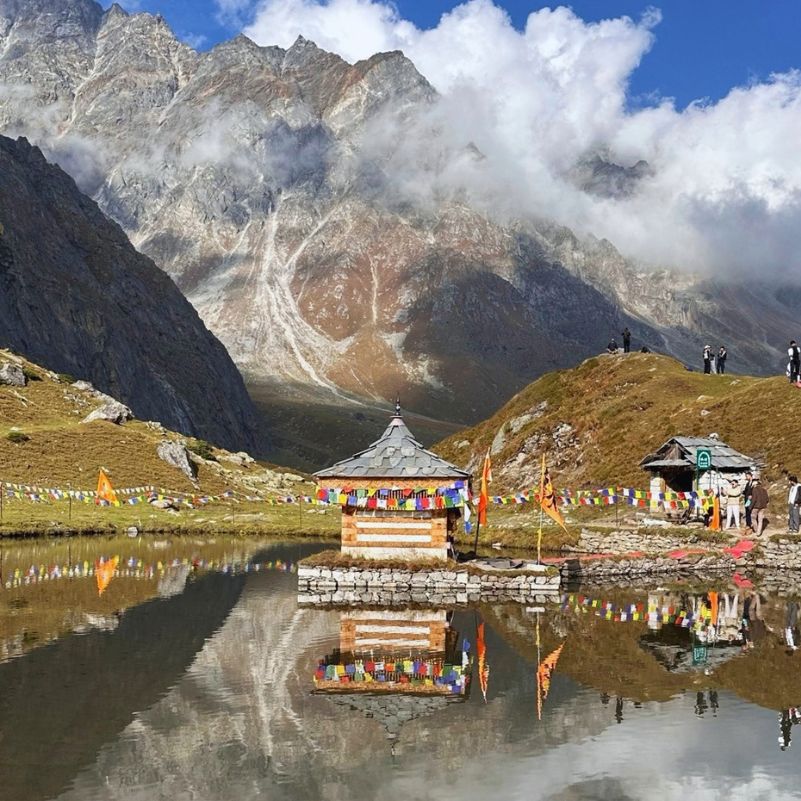
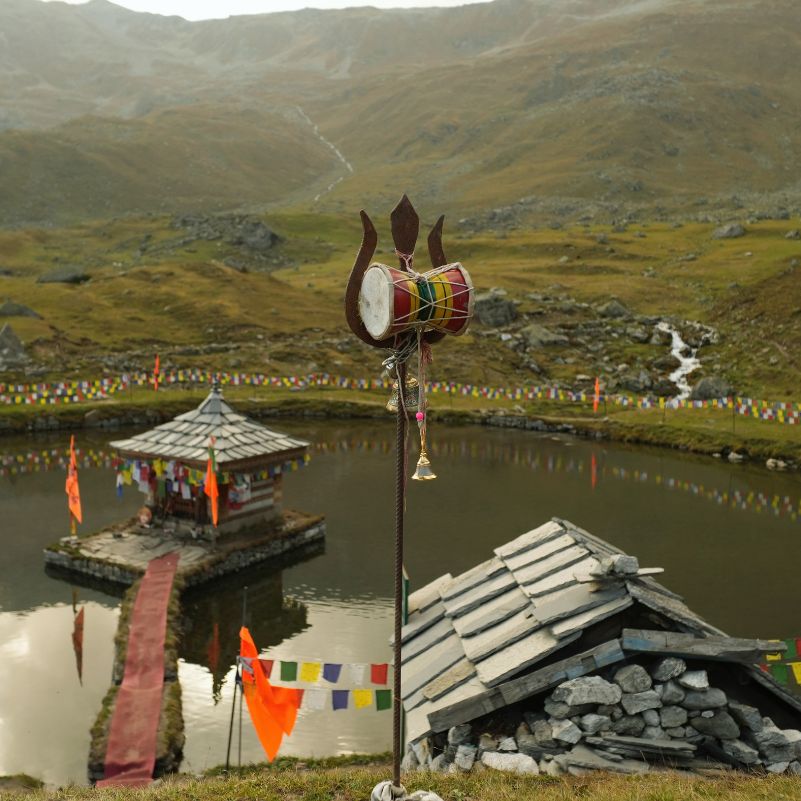
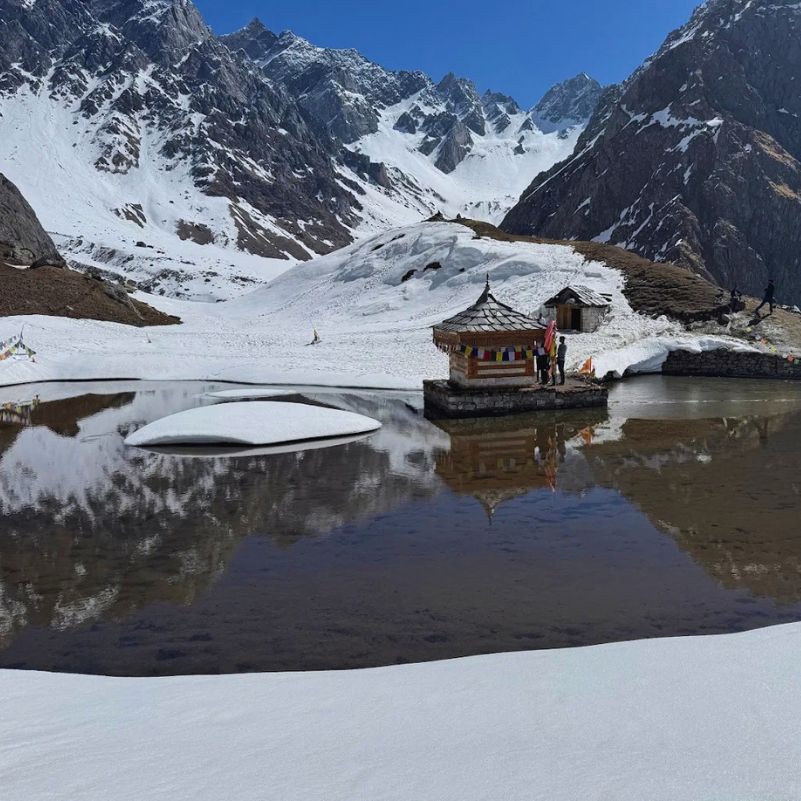
Yulla Kanda Lake and Krishna Temple
Yulla Kanda sits in Kinnaur, in the Nichar area, within the Rora Valley. The trek usually begins from Yulla Khas, a small village that serves as the practical base for the climb.
What draws people here is the combination at the top: a quiet alpine lake and a stone shrine to Lord Krishna, surrounded by high mountains and open meadow. It's not a crowded, commercialised trek. That's exactly why people who make the effort tend to remember it.
The Kinnaur district administration itself refers to the Krishna temple at Yula Kanda in its official trekking information, so this isn't just a name invented by travel blogs.
If you want this trek built into a larger trip through the region, our Kinnaur tour packages give you a sense of how it fits with the rest of the valley.
The Story Behind the World's Highest Krishna Temple
You'll see Yulla Kanda described almost everywhere as the world's highest Krishna temple. We'd ask you to treat that as a popular and traditional description rather than a separately certified world record.
It's a lovely claim, and it may well be true, but we haven't seen an independent record verification, so we won't pretend one exists.
There's also a local legend linking the site to the Pandavas. Again, that's tradition passed down locally, not documented construction history. We won't invent an age, a builder or a date for the temple, because honestly, nobody has reliably confirmed those to us.
How Long and Difficult Is the Yulla Kanda Trek?
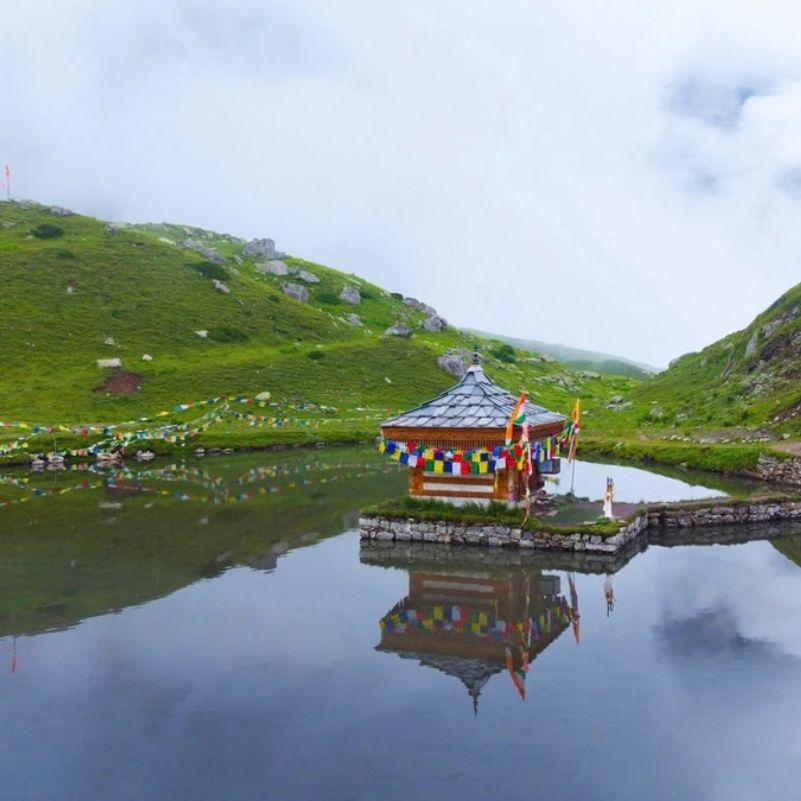
Yulla Kanda Trek Distance and Elevation
Here's where you need a clear head, because the numbers published online genuinely disagree.
Published one-way walking distances range roughly from 10 to 14 km. Some accounts describe a return walk of about 20 to 28 km. That's a wide spread. The gap usually comes down to where a person started counting, which trail they took, and where they camped.
We won't pick one figure and call it the official distance, because the available sources don't support that.
On height, most sources report the lake and temple at around 3,895 metres (roughly 12,778 feet).
But other published material gives figures like 4,114 metres or even 4,800 metres as the trek's highest point. These may describe different spots on the route rather than the temple itself.
The honest version: The lake and temple are commonly described as standing at around 3,900 metres above sea level, although elevation figures vary across published sources and should be treated as approximate.
Don't mix up the highest point of a whole route with a surveyed temple elevation. They may not be the same thing.
Can Beginners Complete the Trek?
Yulla Kanda is broadly treated as a moderate trek, but "moderate" can still feel hard on the day. You get sustained uphill walking, steep sections near the top, rocky ground underfoot, real altitude, and the often-underrated challenge of getting back down safely.
A reasonably fit beginner can consider it with proper preparation and some guidance. What we won't do is call it effortlessly beginner-friendly, because it isn't.
One thing worth saying plainly: being fit does not make you immune to altitude illness. We've seen strong, young travellers struggle at height while older, slower walkers do fine. Fitness helps your legs, not your acclimatisation.
How to Reach Yulla Kanda from Delhi, Chandigarh and Shimla?
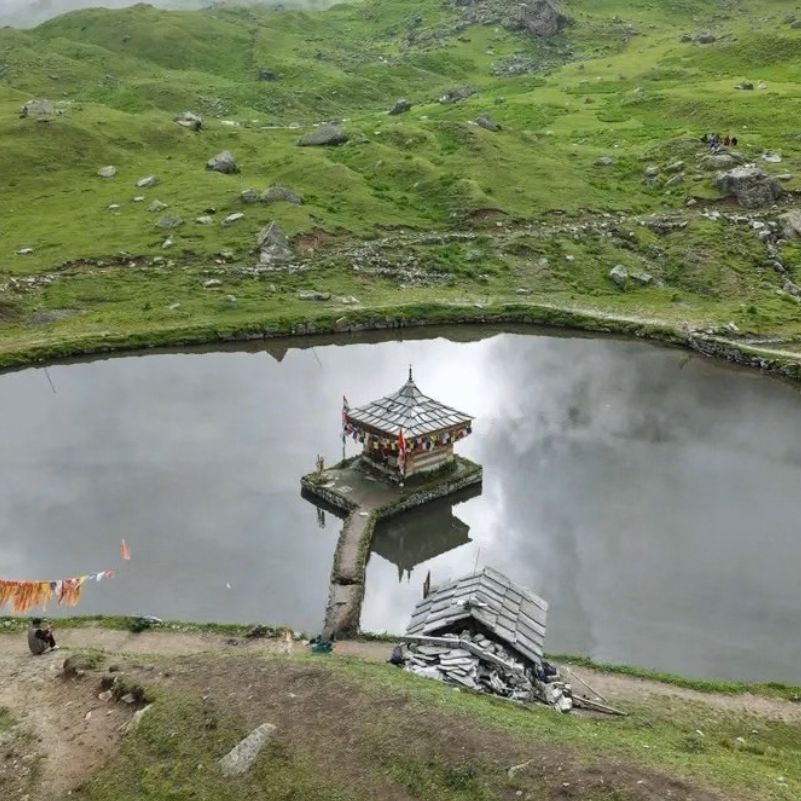
Shimla to Tapri via Narkanda and Rampur
The usual approach runs through Shimla, then Narkanda, Rampur Bushahr and Tapri, before the final leg to Yulla Khas.
Road conditions in Kinnaur can change your whole plan. Landslide-prone stretches, repair work and weather all affect how long the drive actually takes.
Exact road distances and travel times may vary depending on the route, road conditions and weather. It is best to check the latest road updates and allow extra travel time, particularly during the monsoon and winter months.
Our team recommends checking the road before leaving Shimla. If you want the city built in as a comfortable start or end point, see our Shimla tour packages.
Tapri to Yulla Khas Village
Tapri is the practical connecting point for reaching Yulla Khas. From there, you'll usually need a local taxi or whatever village transport is running to cover the final approach.
Sort this transfer out in advance. Arriving at Tapri late in the day and hoping something turns up for the last stretch is how people end up stuck. We can help you plan the transfer to Yulla Khas so you're not improvising at dusk.
We won't promise that a specific shared taxi or bus runs daily on this final leg, because that's exactly the kind of thing that changes without notice.
Public Transport, Self-Drive, Train and Airport Options
If you're coming from Delhi or Chandigarh, the pattern is to travel towards Shimla first, then connect with Kinnaur-bound buses heading deeper into the valley.
The commonly used access points are Shimla Airport and Kalka railway station. HRTC runs buses into this region, but you must check their schedules directly before you travel.
We won't invent departure times, fares, road kilometres or parking details, because guessing those helps nobody.
What Is the Complete Yulla Kanda Trek Route?
Stage 1: Yulla Khas Village and the Initial Climb
You start among village paths, stone steps and orchards. The uphill begins almost immediately, so your legs get the message early.
Fill up on water and carry enough food before you leave the village. Once you're on the trail, there's no shop waiting around the corner.
Stage 2: Forest Trail and Lower Campsite
The path moves into forest and keeps climbing. Trekking reports describe resting and camping areas along this lower-to-middle section.
Here's the important bit: confirm the actual permitted campsite locally before you commit to it.
We won't hand you a specific campsite name, altitude, distance or facility list, because the reliable detail for that isn't established, and a wrong campsite claim could send you somewhere you shouldn't pitch a tent.
Stage 3: Upper Meadows and the Final Temple Approach
The forest thins and opens into higher, more exposed mountain terrain. Visitor accounts mention a gate area, steep upper slopes, and then the approach towards the lake and temple.
How far you still have to walk, and how long it takes, varies from account to account. And don't count on finding reliable drinking water at a fixed point up here. Carry what you need.
Stage 4: Returning Safely to Yulla Village
The descent is where people get caught out. Slopes that felt fine going up can be slippery and tiring coming down, and tired legs make mistakes.
A traveller account posted in October 2026 described a genuinely uncomfortable descent after leaving the top too late, without a proper headlamp.
That's a lesson worth borrowing: plan your turnaround around daylight, carry a headlamp regardless, and follow current local guidance on the route. We're sharing that as a cautionary example from someone else's trek, not something that happened to our team.
How Many Days Are Needed for the Yulla Kanda Trek?
Day 1: Travel from Shimla to Yulla Khas
Treat this as a suggested itinerary, not a fixed departure we sell on a set date.
Travel from Shimla towards Kinnaur and reach Yulla Khas where road conditions allow. Meet your local contacts, settle in and rest overnight.
Getting in early enough to organise the next day matters more than it sounds. Sorting your guide, camping arrangement and an early start the evening before saves you a chaotic morning.
Day 2: Trek from Yulla Khas to a Permitted Campsite
Start the ascent after checking weather, route and camping arrangements. Walk up through the village, into forest, and on to the lower mountain sections.
Stay at a campsite that's been confirmed as suitable and permitted by local authorities or a responsible operator. Don't assume a lakeside camp is legal. It generally isn't, and we'll explain why further down.
Day 3: Visit Yulla Kanda Temple and Descend
Make the final approach to the shrine and lake when conditions allow it. Give yourself proper time, then descend safely back to Yulla Khas.
A road transfer onwards can follow only if the day's timing and the current road conditions make it practical. We won't promise you'll be back in Shimla or Delhi by a fixed hour, because mountain days don't work on clocks.
Can Yulla Kanda Be Done in One Day?
Experienced, properly acclimatised walkers do sometimes attempt the ascent and descent in a single day. It's possible.
For an unprepared beginner, it's not the sensible default. A long one-day push at altitude, after a long drive, is how trips go wrong. If you're coming all the way from Delhi or Chandigarh, build in extra time rather than chasing a weekend guarantee that the mountain never agreed to.
What Is the Best Time for the Yulla Kanda Trek in 2026?
May and June: Spring Snow and Greenery
Late spring and early summer are two of the most popular windows. The meadows green up, the lower forest feels alive, and you still get dramatic high-mountain scenery.
Snow patches can linger on the higher sections, especially early in the season. We won't promise a snow-free trail on a fixed date, because that depends entirely on the winter that just passed.
July and August: Monsoon Challenges
The monsoon brings rain, mud, slippery slopes and the real possibility of road disruptions across Kinnaur. The trail gets harder and less predictable.
A broad "season is open" statement does not mean conditions are safe on your particular departure. In the monsoon especially, check hard before you go.
September and October: Post-Monsoon Views
Once the monsoon pulls back, September to early October is a favourite for clean air and clear views. The landscape looks its best and the skies open up.
The trade-off is cold. Nights get sharp, and there's a genuine chance of snow later in the window. We wouldn't call late October automatically suitable. It can be, and it can also turn on you.
November to April: Winter and Snow Risk
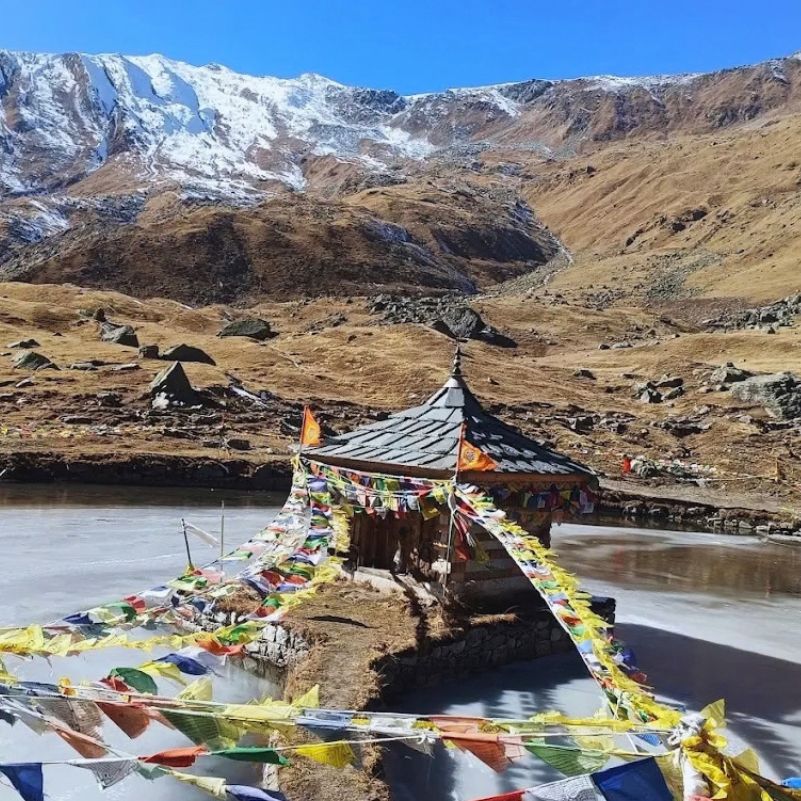
Through winter, heavy seasonal snow frequently makes ordinary trekking impractical on the upper trail. The region effectively locks up.
We won't invent a government opening or closing date for the trek, because there isn't a reliable fixed one to quote. If your heart is set on a shoulder-season attempt, check the exact conditions and any local restrictions first.
How Much Does the Yulla Kanda Trek Cost in 2026?
Budget Travel and Local Transport
Your cost adds up across a few buckets: travel to Kinnaur, the Tapri to Yulla transfer, local accommodation, food, guide help and any equipment you need to arrange.
One firsthand traveller report published in September 2026 described a reserved Shimla-to-Yulla return cab at ₹12,000 for four people.
Read that as one traveller's reported example, not a confirmed current rate. Group size, vehicle and the deal you strike all move that number.
Homestay, Campsite, Guide and Food Expenses
A few dated traveller examples give you a feel for the range, and we'll keep them clearly labelled as examples rather than live rates.
One traveller recounted basic Yulla homestays at roughly ₹800 to ₹1,200 per person, based on an earlier trip. A separate June 2026 account mentioned about ₹800 per person including breakfast and dinner.
A four-person trekking account reported ₹3,000 for a camp arrangement that included dinner, morning tea and breakfast, and ₹400 per person for a stay at a Tapri rest house.
Use these as dated reference points, not a price list. We won't invent guide charges, food prices or equipment rental rates on top of them.
DIY Trek Versus Organised Package
You can plan the Yulla Kanda trek independently or choose an organised trekking package, depending on your experience, travel preferences and group size.
DIY trekking gives you more flexibility over transportation, accommodation and meals. However, you will need to coordinate local transfers, confirm trail conditions, arrange camping equipment and find a suitable local guide if required.
Organised trekking packages simplify the planning process by combining selected services such as transportation, accommodation, meals, camping arrangements and guide support.
Package costs can vary significantly depending on the starting location, number of travel days, group size, accommodation type and included services. There is no single fixed price that applies to every Yulla Kanda trekking arrangement.
Before confirming your booking, check the exact pickup and drop-off locations, number of nights, accommodation arrangements, included meals, guide availability, camping equipment, cancellation terms and emergency support.
At Travel Coffee, we recommend reviewing the complete itinerary and inclusions rather than comparing prices alone. This helps you understand what you are paying for and plan your Yulla Kanda trek with fewer unexpected expenses.
Where Can You Stay and Camp During the Yulla Kanda Trek?
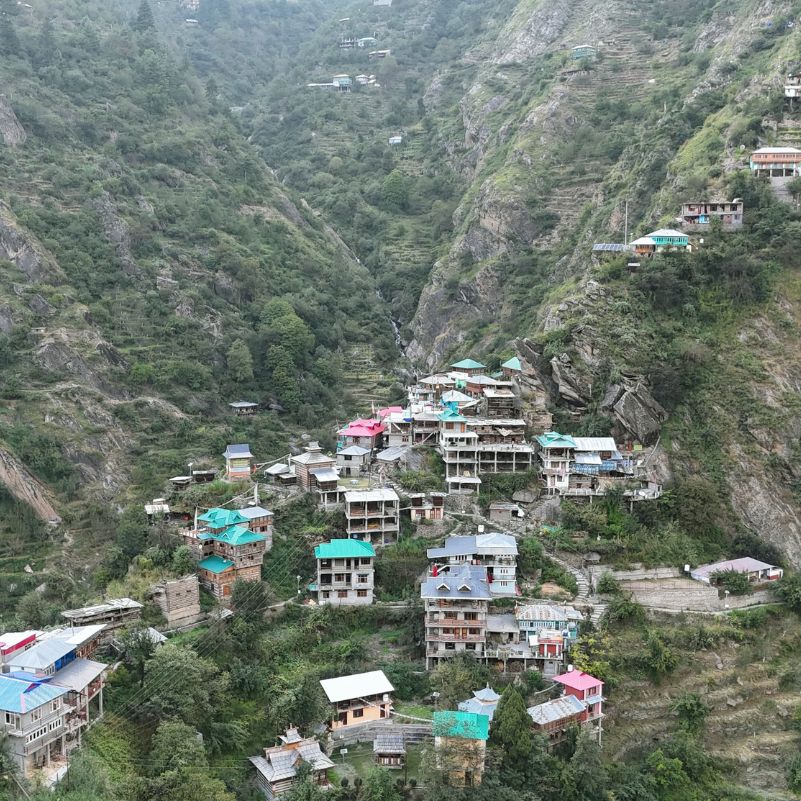
Homestays in Yulla Khas
Yulla Khas offers basic local homestays, and staying right at the trekking start is genuinely convenient for an early morning departure.
Confirm your room in advance. Availability and what's included change from one provider to the next, and this isn't a place with a dozen fallback options if you turn up unbooked.
We won't name a specific homestay here, because the research we have doesn't reliably support singling one out.
Camping Along the Trail
There's a real difference between camping at a lower authorised spot and camping right beside the lake. The lower, permitted arrangement is the sensible route.
An August 2026 traveller discussion reported restrictions on camping in the upper meadow, with a suggestion to camp lower down.
Treat that as a traveller report, not an official government order. Before you pitch anything, confirm the currently permitted camping zones with local authorities or your operator.
What we won't tell you is that camping beside the temple or lake is allowed, because the ecological sensitivity of these high lakes usually means it isn't.
Are Permits Required for the Yulla Kanda Trek?
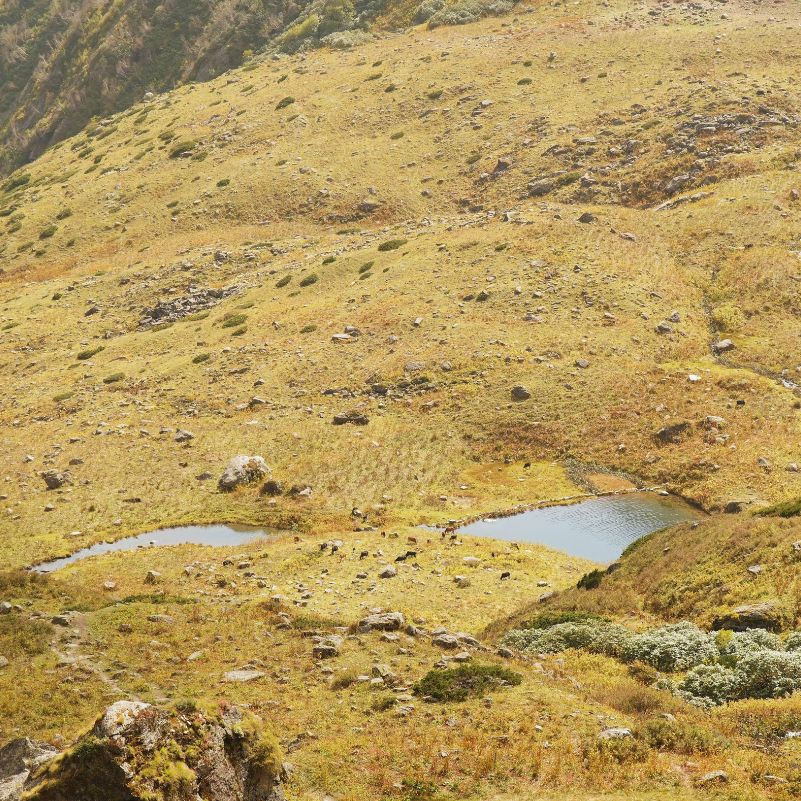
Indian Travellers and Local Trek Permissions
Available travel information suggests that Indian citizens generally do not need a special trekking permit for the standard Yulla Kanda route.
However, local registration, forest access and camping requirements may apply, so it is advisable to confirm the latest rules with local authorities before starting the trek.
Reconfirm local trekking registration, any forest access rules and camping permission before you go. We won't invent an entrance fee, because there's no supported figure to quote.
Foreign Travellers and Kinnaur Protected Areas
Kinnaur's official district tourism guidelines explain that protected-area permission applies to specified regions near the international border. The official page lists protected locations primarily in the Pooh Block and describes which authorities issue permits.
Don't assume every foreign visitor entering Kinnaur automatically needs a Yulla Kanda Inner Line Permit. That's not how the notified-area system works.
The district tourism guidelines list an ₹200 Inner Line Permit fee where applicable, but this is not a Yulla Kanda trek entry fee. Permit charges may change, so foreign travellers should confirm the latest fees and requirements with the relevant district authorities before travelling.
If you're a foreign traveller, check your exact itinerary against the notified restricted areas with district tourism officials before you travel.
How Should You Prepare for the Altitude and Trekking Conditions?
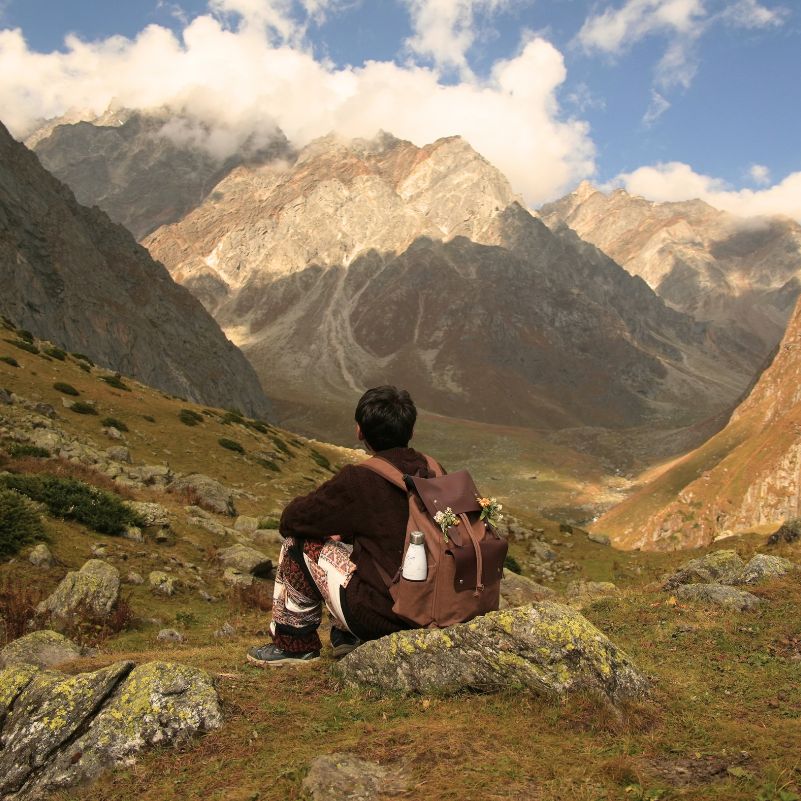
Acclimatisation and Fitness
The destination is commonly reported at around 3,895 metres, which is high enough to take seriously. Altitude illness can affect fit people just as it affects anyone else.
The CDC Yellow Book's guidance is the sensible frame here: ascend gradually, be careful about how much altitude you gain in a single overnight step, and give your body time to adjust.
We won't guarantee that one night at any particular village prevents altitude illness, because no honest source makes that promise.
Water, Food and Emergency Planning
Carry enough water, bring a reliable way to treat it, keep your food supplies topped up, and plan your return before you start the ascent.
A stream mentioned in someone's trek report is not a guaranteed source of safe drinking water. Don't build your day around finding one.
Watch for early warning signs such as headache, nausea, dizziness and unusual fatigue. If you develop concerning symptoms, stop climbing.
If they worsen or turn severe, descend and get appropriate medical help. We won't prescribe altitude medication or dosages here; that's a conversation for your doctor.
The Kinnaur district administration publishes 1077 as its rescue and relief helpline. Save it before you lose signal.
Is Yulla Kanda Safe for Solo Travellers?
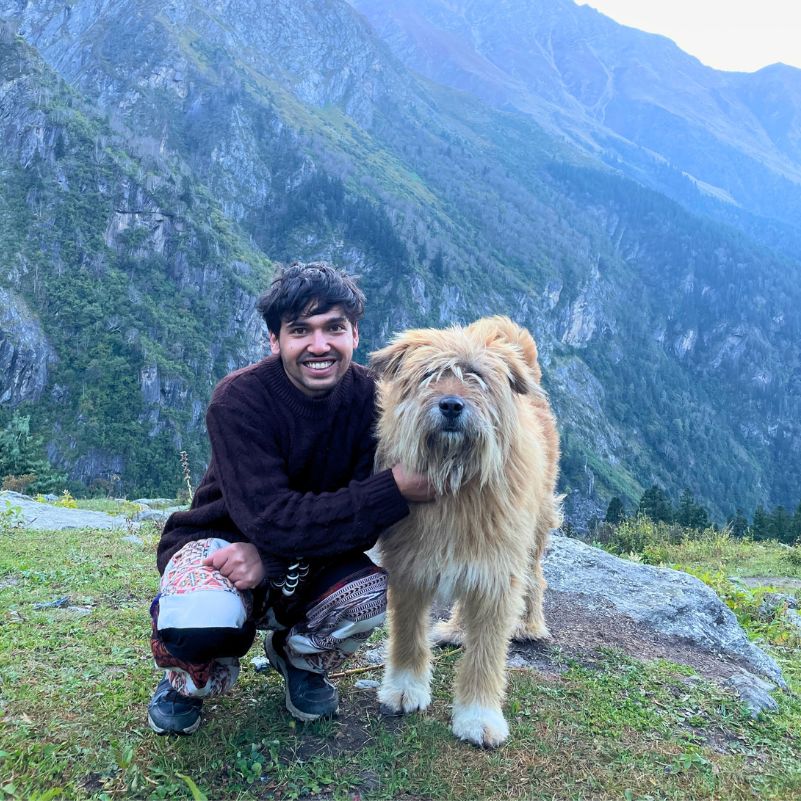
Navigation, Phone Signal and Local Guides
Trekking alone asks for more conservative planning, not less. Download offline maps, share your expected route, check local conditions, and tell someone when you plan to be back.
Mobile coverage is reported as inconsistent along the remote parts of this trail, so don't assume you can call for directions mid-climb. A local guide can genuinely help if you don't know the route, even though we won't claim one is legally mandatory.
Daylight, Weather and Turnaround Decisions
Start early. Carry warm and waterproof layers. Plan to be off the steep sections with daylight to spare.
Carry a headlamp even if you fully expect to be back before dark, because that October 2026 descent story started with someone making the same assumption.
And make the turnaround call honestly: if the weather turns, your legs are done, or altitude symptoms appear, going back is the win. Solo trekking here is doable, but it is not risk-free, and pretending otherwise helps nobody.
What Should You Pack for the Yulla Kanda Trek?
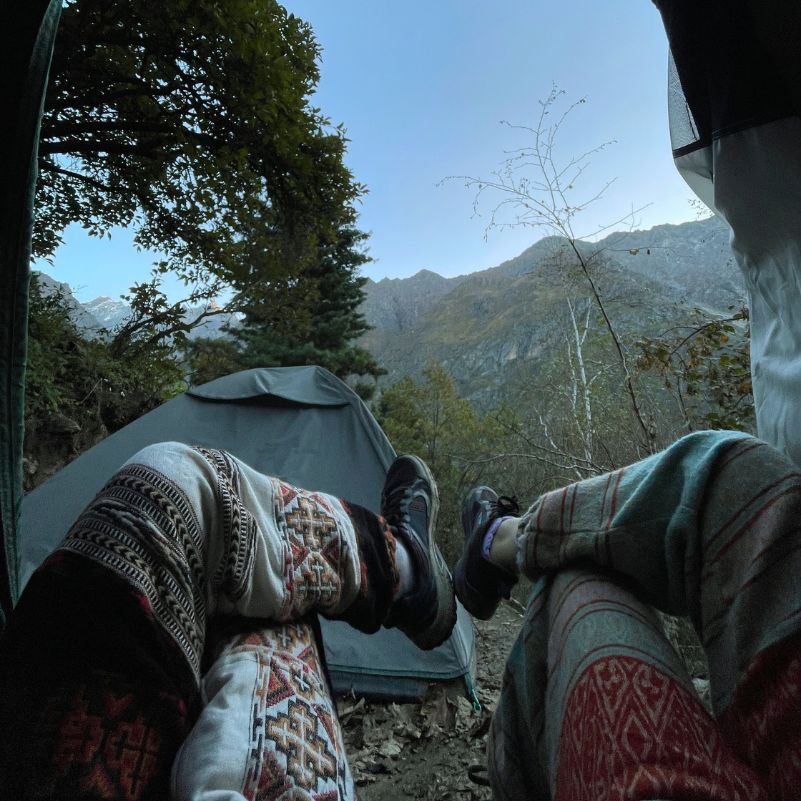
Clothing and Footwear
Trekking shoes with reliable grip come first, because the descent punishes bad footwear. Add warm layers, a waterproof outer, gloves and a warm cap.
The terrain gets slippery and rocky, so your shoes are the one thing we'd never cut corners on.
Navigation, Water and Safety Equipment
Carry a headlamp, a power bank, an offline map, a suitable backpack, a water container with a purification method, snacks, your essential personal medicines, a basic first aid kit and your ID.
Match your packing to the weather and to whether you're camping. We won't hand you a mandatory backpack size or a fixed number of litres of water, because the right amount depends on your day, your pace and the conditions.
What Are the Latest Yulla Kanda Road and Travel Updates for 2026?
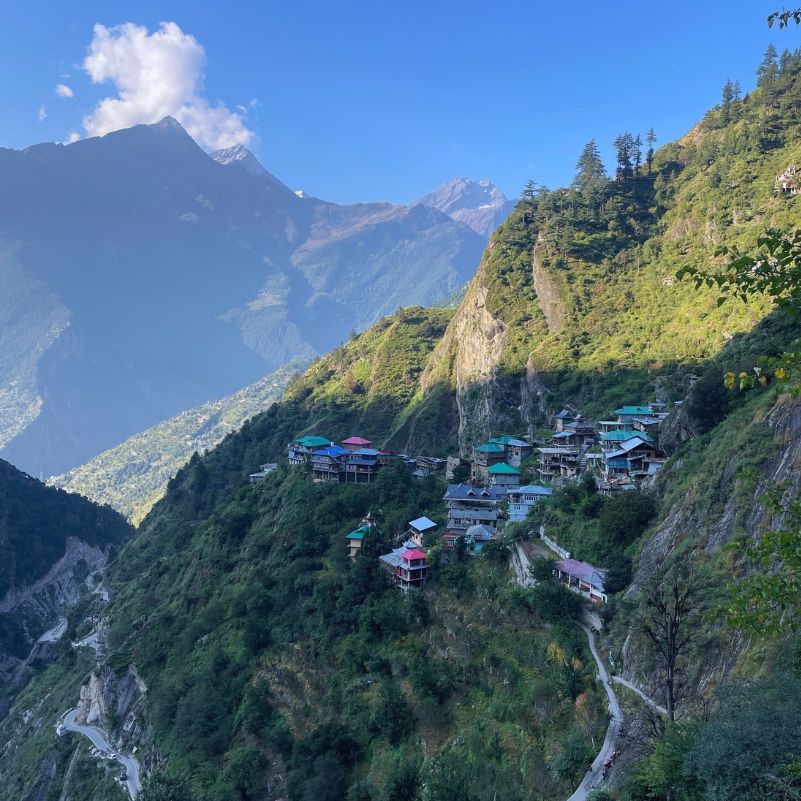
NH-05 Road Advisories and Landslide Precautions
The official Kinnaur district administration published a notice on 19 August 2026 about temporary closures and traffic regulation at Nigulsari and Nathpa. A further notice dated 5 September 2026 extended traffic regulatory arrangements at Nathpa.
Those are genuine official notices from the dates listed. What they do not do is establish the road's status on any later day.
The September notice should not be treated as confirmation of current NH-05 road conditions.
Road accessibility, traffic restrictions and landslide risks can change at short notice, so travellers should check the latest updates from the Kinnaur district administration and local authorities before departure, including the approach road to Yulla Khas.
What to Confirm Before Travelling
Before you leave, check the district notices, current road conditions, HRTC services, village transport, the state of the upper trail, snow levels and local campsite rules. Conditions here shift fast, and a notice from six weeks ago tells you little about tomorrow.
What Should Visitors Know About Yulla Kanda Temple and Janmashtami?
Janmashtami in 2026
The Krishna shrine is the spiritual heart of this trek, which is part of why people climb all this way.
The Hindu calendar lists Krishna Janmashtami on Friday, 4 September 2026. If you're hoping to time your visit around the festival, that's the date to plan from, not an August one that some older guides repeat.
Local ceremonies and celebrations at Yulla Kanda Temple may follow schedules that differ from the main Janmashtami festival date.
Travellers planning to attend specific rituals or celebrations should confirm the dates and arrangements with local temple authorities or residents before finalising their trip.
Temple Etiquette and Responsible Trekking
Behave as you would at any living place of worship. Follow the instructions of the temple community, and don't treat the shrine as a photo backdrop.
Carry your rubbish back down. Protect the lake, stay on established paths, and don't disturb other visitors. We won't tell you a particular ritual is compulsory or available every day, because that varies. And the Pandava link, lovely as it is, stays in the column marked legend.
What Other Places Can You Visit with a Yulla Kanda Trip?
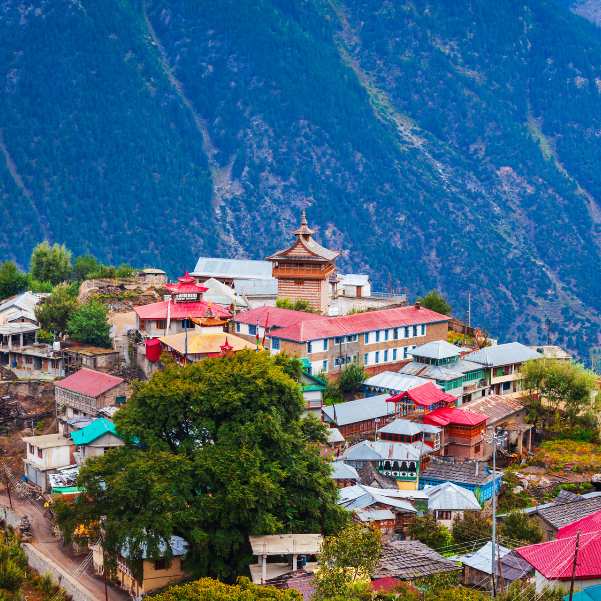
Kalpa, Sangla and Chitkul
Kalpa, Sangla and Chitkul make natural extensions within Kinnaur, and all three are listed on the district tourism website.
Each one needs extra travel time, so whether you add them depends on your available days and the current roads. We won't quote driving times or distances between them, because reliable figures for your travel day are exactly the thing that changes.
Extending the Journey Towards Spiti
If you have the days, a wider Himachal journey can continue towards Spiti. It's a bigger commitment, and it needs its own separate road, weather and permit checks before you commit. Our Spiti Valley tour packages show how that larger loop can come together.
And if, after reading all of this, the high-altitude trek doesn't feel like your kind of holiday, that's a completely reasonable call.
For a gentler, village-focused Himachal trip, look at our Jibhi and Tirthan Valley packages instead. These aren't stops on the Yulla Kanda route; they're an alternative if you'd rather skip the climb.
Explore Our Curated Yulla Kanda Tour Packages
- Group Tour5D/4N
Yulla Kanda Trek & Camping Group Tour
1D Yulla Khas•1D Yulla Kanda Campsite
₹7,499₹9,999SAVE INR 2,500/ person
Frequently Asked Questions
Where is Yulla Kanda located in Himachal Pradesh?
Yulla Kanda is in Kinnaur district, in the Nichar area and Rora Valley. The trek usually starts from Yulla Khas village, which acts as the base for the climb to the lake and Krishna temple.
How many kilometres is the Yulla Kanda trek?
Published figures disagree. One-way distances are reported at roughly 10 to 14 km, and return walks at about 20 to 28 km. The difference reflects where people start and camp, so there's no single official measurement we can quote with confidence.
What is the height of Yulla Kanda Krishna Temple?
It's commonly described at around 3,895 metres (about 12,778 feet). Other sources list figures like 4,114 metres or 4,800 metres, which may refer to different points on the route. The safe summary is around 3,900 metres, with the exact surveyed figure still needing confirmation.
Is the Yulla Kanda trek difficult for beginners?
It's considered moderate but can feel demanding. Expect sustained uphill, steep upper sections, rocky ground and real altitude. A fit beginner can manage it with preparation and guidance, but it isn't effortlessly easy, and fitness alone won't stop altitude sickness.
How many days are required for the Yulla Kanda trek?
Many travellers use a two-day trekking plan, with travel days on either side, so three days is a comfortable frame overall. Experienced, acclimatised walkers sometimes do the trek itself in a single long day, but that's not ideal for unprepared beginners.
What is the best month to visit Yulla Kanda?
Late May to June and September to early October are the windows most people prefer. May and June bring greenery with possible lingering snow higher up, while September offers clear post-monsoon views and colder nights. The monsoon months are harder and less predictable.
How can I reach Yulla Kanda from Delhi?
Travel from Delhi towards Shimla first, then connect with Kinnaur-bound buses heading through Rampur and Tapri, followed by local transport to Yulla Khas. Shimla Airport and Kalka railway station are the commonly used access points. Check HRTC schedules directly before you go.
How do I reach Yulla Khas from Shimla or Tapri?
The route runs through Narkanda, Rampur Bushahr and Tapri. Tapri is the practical connecting point, and from there you usually take a local taxi or village transport for the final approach. Arrange that last transfer in advance rather than arriving late and hoping.
What is the cost of the Yulla Kanda trek?
It depends on transport, stay, food and whether you go DIY or with a guide. Traveller examples include homestays around ₹800 to ₹1,200 per person and a four-person camp arrangement at ₹3,000 with meals. Advertised operator packages have ranged from around ₹6,000 to ₹10,998. Treat all of these as dated examples and confirm current rates.
Is camping allowed near Yulla Kanda Lake?
Camping right beside the lake or temple is generally not the done thing, and an August 2026 traveller report noted restrictions on camping in the upper meadow. Lower, authorised campsites are the sensible option. Always confirm the currently permitted zones locally before pitching a tent.
Do I need a permit or trekking guide for Yulla Kanda?
Tour-operator information reports no special trekking permit for Indian citizens on the standard route, though local registration, forest and camping rules should be reconfirmed. Foreign travellers should check their itinerary against Kinnaur's notified protected areas. A guide isn't claimed to be legally mandatory, but it helps if you don't know the route.
Can I do the Yulla Kanda trek solo or in one day?
Both are possible for experienced, well-prepared walkers. Solo trekking here needs conservative planning, offline maps, a shared route plan and a headlamp. A single-day ascent and descent is doable if you're acclimatised and fit, but it's not the right default for a beginner arriving after a long drive.
More about Kinnaur
 Kinnaur
Kinnaur Snowfall Guide 2026: When & Where to Look for Snow
Planning a snow trip to Kinnaur in 2026? This guide explains the best months for snowfall, the top places to find snow in Kalpa, Sangla and Chitkul, and what weather and road conditions to expect during winter.
 Kinnaur
Christmas & New Year in Kinnaur: A 2026-27 Winter Trip Guide
Planning Christmas and New Year in Kinnaur for 2026-27? Explore winter weather, snowfall chances, road conditions, stay options and a practical festive-season itinerary for Kalpa, Sangla and nearby areas.
 Kinnaur
Kinnaur in November 2026: Weather, Snow Chances & 7-Day Trip Plan
Planning a Kinnaur trip in November 2026? This guide covers weather, snowfall chances, road conditions and a practical 7 day itinerary for Kalpa, Sangla, Chitkul and nearby places.