
Kinnaur Snowfall Guide 2026: When & Where to Look for Snow
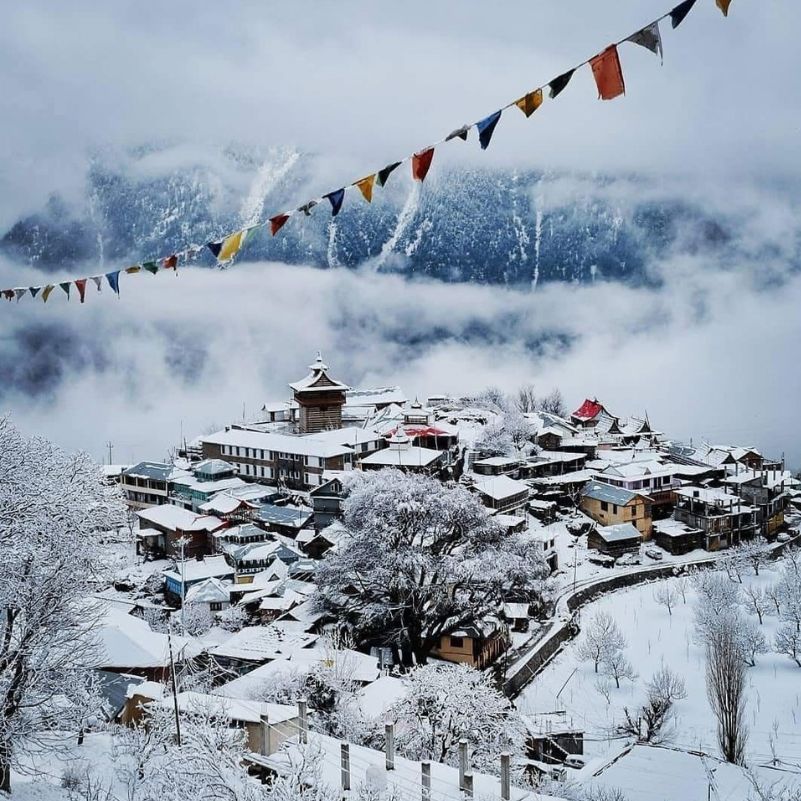
You want snow in Kinnaur this winter, and you have one week of leave. Your month matters less than your base and your flexibility.
Kinnaur snowfall does not land the same way across the district. Kalpa, Sangla and Chitkul sit at different heights, and the roads to each behave very differently once a storm arrives.
Here is what most tourists get wrong. They book one fixed date six months ahead and expect to watch snow falling the moment they check in. Winter here does not work on your calendar.
Quick Answer: When Can You See Snow in Kinnaur?
The HP Forest Department places winter in much of Kinnaur roughly from November to April. Snow at higher elevations generally starts in late November or early December.
January and February are the sensible months if you want snow on the ground. No date promises snow falling during your stay.
March can still deliver big snow. On 21 March 2026, IMD measured 18.2 cm at Kalpa and 20.5 cm at Sangla.
Make Kalpa your first base. Add Sangla when the valley road is clear, and treat Chitkul as a bonus in deep winter.
If you would rather have locals handle the stays, driver and route changes, our Kinnaur tour packages build in that flexibility from day one.
When Does Snowfall Start in Kinnaur? The Normal Pattern
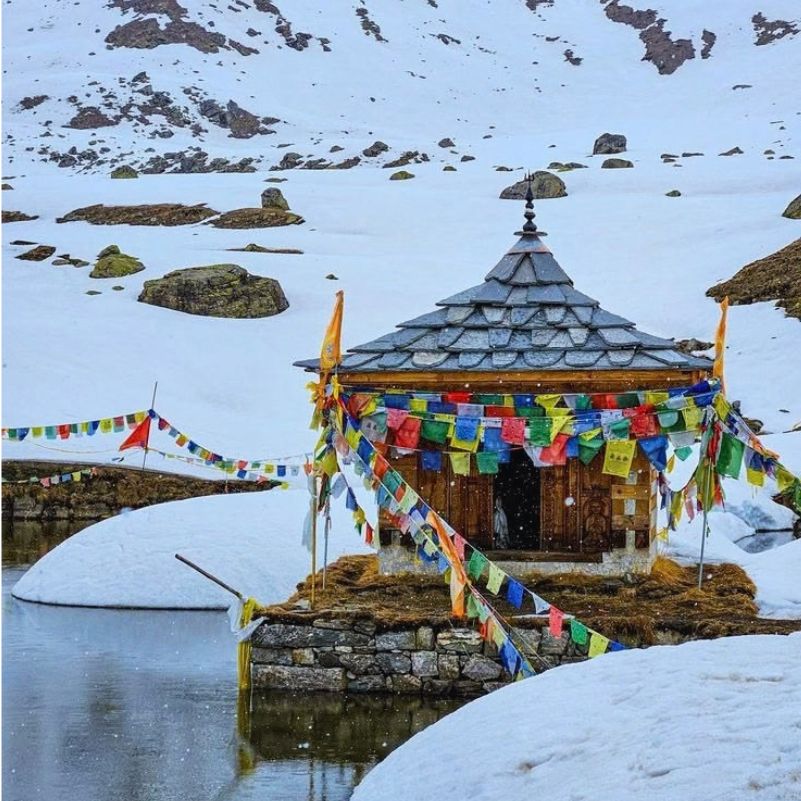
The Himachal Pradesh Forest Department's Kinnaur working plan gives the clearest long term picture. Winter generally runs from November to April in much of the district.
Snowfall starts at higher elevations toward the end of November or in early December. The high ridges turn white first.
Snow seldom stays long below about 2,000 m. In a normal year, most seasonal snow melts before mid May, except on shaded northern faces and inside nalas.
So the pattern goes like this. Peaks whiten first, villages follow when a storm carries enough moisture, and lower valley floors lose their snow quickly.
Why Every Winter Behaves Differently
That seasonal pattern is an average, not a timetable. Individual years can swing early, late, heavy or thin.
The 2026 season already proved this. On 26 September 2026, the Kuno Charang area under Pooh tehsil received Kinnaur's first reported snowfall.
That is unusually early. Please do not read it as a reason to book September next year and expect snow.
The same late September spell of snow and rain also damaged crops in Kalpa block, with losses reported from Rakchham panchayat. For farmers here, early snow means real hardship.
Which Month Is Best for Seeing Snow in Kinnaur?
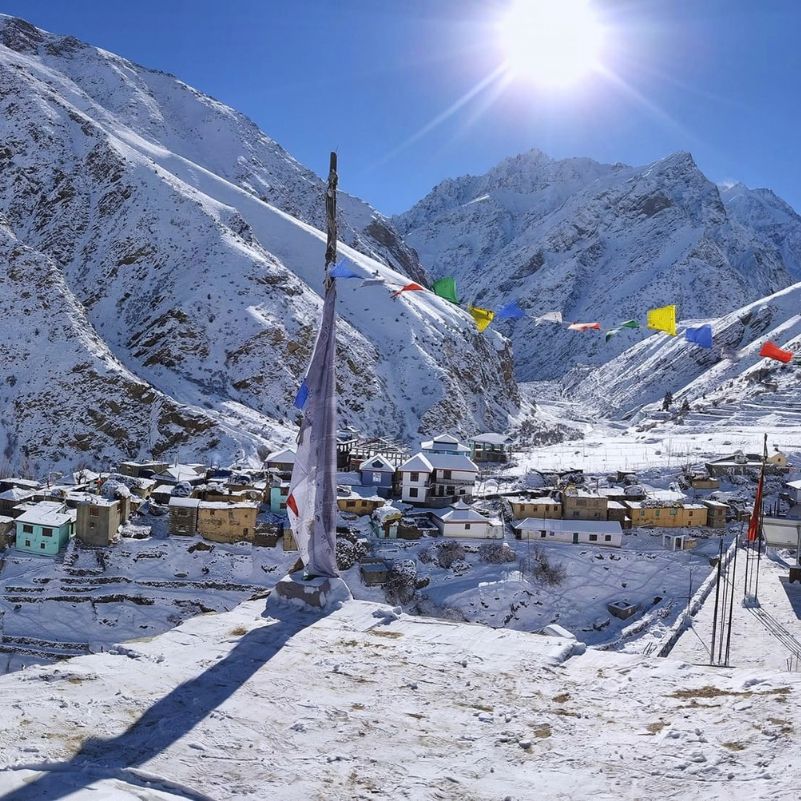
No month gives you certainty. Each month gives you a different mix of snow chances and road risk.
Kinnaur in November: The Transition Month
November sits between autumn and full winter. The higher mountains may already wear white, and an occasional snowfall can happen.
Do not expect village level snow in November. Come for crisp air and white peaks, and count any snowfall as a bonus.
Kinnaur in December: Winter Settles In
December is when winter becomes properly established. Late December generally gives you better snow chances than the first week.
Once substantial snow arrives, the road toward Chitkul becomes more and more weather dependent. Our team recommends keeping Chitkul flexible from December onward.
Kinnaur in January: The Most Snow and the Most Disruption
January is one of the strongest months for snow seekers. The 2026 numbers show you why.
On 27 January 2026, IMD measured 5.5 cm at Kalpa and 1.8 cm at Sangla. The next day, 28 January, Sangla recorded 30.5 cm, Kalpa 17.7 cm and Nichar 17.8 cm.
Now look at the road on the same days. On 27 January 2026, snow blocked NH-5 at Kufri, Fagu and Narkanda, cutting the Shimla to Kinnaur connection.
This is the single most important point in this article. The weather that gives you the best snow also gives you the biggest travel disruption.
Here is an insider detail most guides miss: On 28 January, Sangla at the lower elevation received far more snow than Kalpa. Altitude alone does not decide where the snow falls hardest.
Kinnaur in February: Settled Snow and More Storms Possible
February often keeps the snow that January left behind. Villages, orchards and shaded slopes can stay white.
Additional western disturbances may bring new snow too. We will not promise you fresh snowfall in February, but settled snow on the ground is a reasonable hope.
Kinnaur in March: The Month People Overlook
Most snow guides stop at February. That leaves out some of the best data from 2026.
On 20 March 2026, IMD measured 17 cm at Kalpa and 4.5 cm at Sangla. On 21 March, Sangla recorded 20.5 cm and Kalpa 18.2 cm.
That makes March rewarding for flexible snow seekers. Days feel a little longer, and a single late storm can turn the valley white again.
One snowy March does not make every March snowy, though. Treat 2026 as proof of possibility, not a pattern you can bank on.
If Sangla in March interests you for the Holi season as well, our Sangla Holi safety guide for solo travellers covers the festival side.
April and Later: Peaks Stay White, Villages Do Not
From April, village level snow becomes less and less reliable. The high peaks and shaded areas can still stay white.
In a normal year, most seasonal snow disappears before mid May, except on shady northern faces and in nalas. Come in April for views of snowy peaks, not snow under your feet.
Where Should You Look for Snow in Kinnaur?
Kinnaur is not one weather zone. The right base depends on how much snow you want and how much road risk you can handle.
Kalpa: The Best Balance of Snow and Practical Access
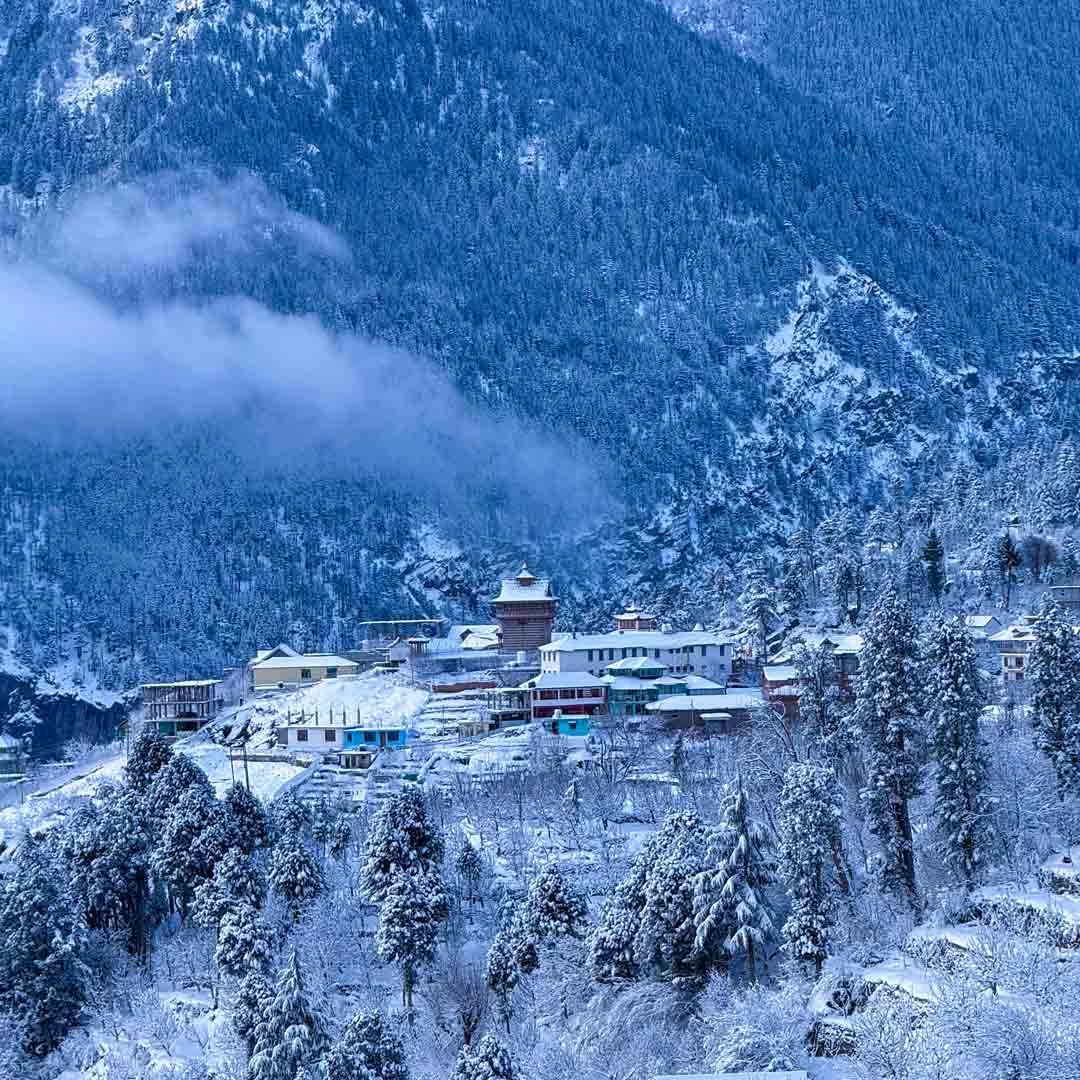
Kalpa sits at 2,759 m, just 14 km from Reckong Peo. District Kinnaur places it close to the 6,050 m Kinner Kailash massif.
That combination makes Kalpa the strongest centre for a winter snow plan. You get high mountain views, real snow potential and the district headquarters close by.
The 2026 IMD readings back this up. Kalpa recorded snow in both January and March storms.
One honest warning: Kalpa is not always reachable right after heavy snow. Proximity to Reckong Peo helps, but it does not make the road immune.
In our experience planning Kinnaur trips, Kalpa gives first timers the best odds of seeing snow without betting the whole trip on one fragile road.
Sangla: A Snowy Valley When Access Is Clear
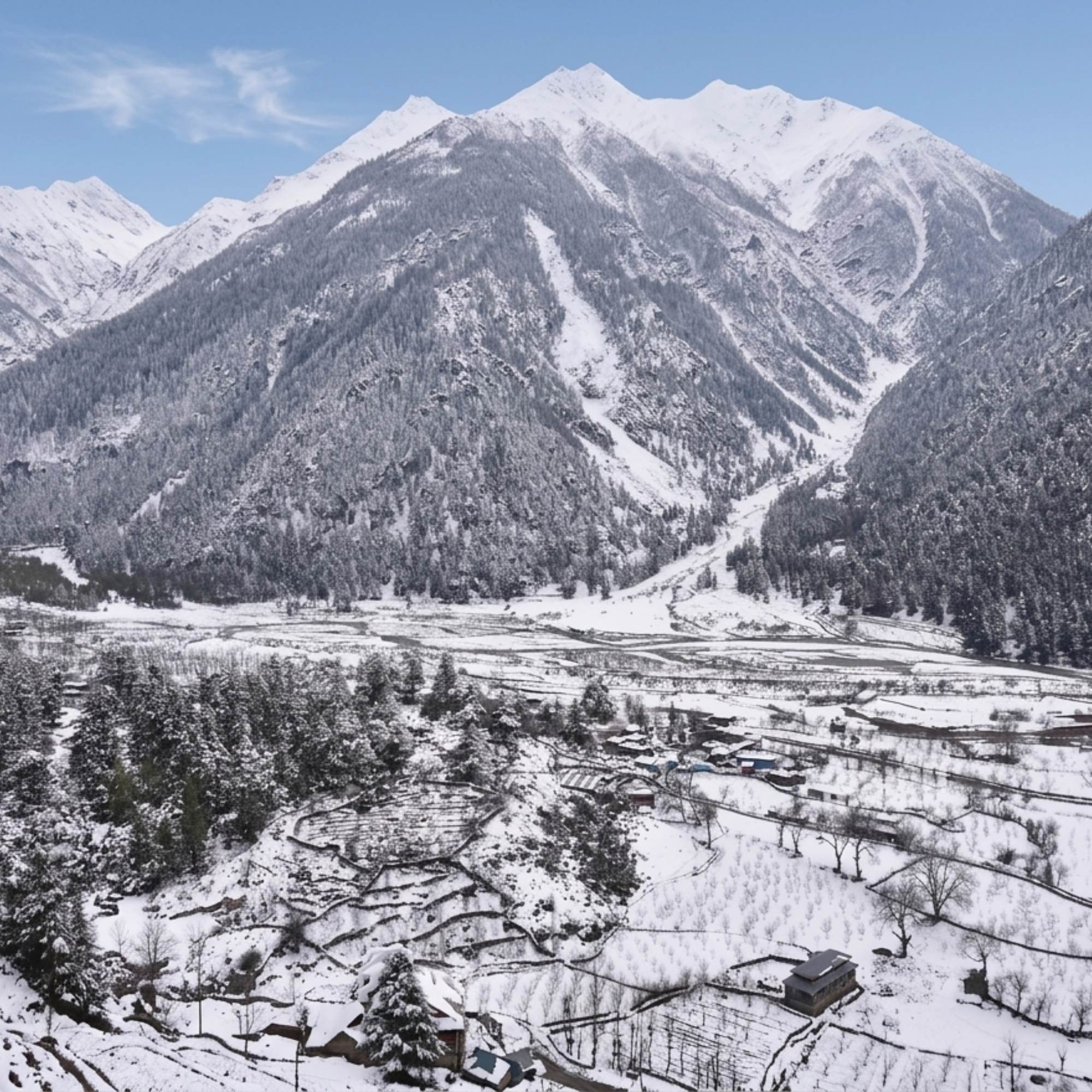
Sangla sits at 2,621 m, 17 km from Karcham. It opens up the Baspa Valley.
Do not let the lower elevation fool you. Sangla took 30.5 cm on 28 January 2026 and 20.5 cm on 21 March 2026, more than Kalpa on both days.
The practical question is getting into the valley. After a heavy storm, the road from Karcham decides whether Sangla stays in your plan.
Rakchham: A Quieter Stop Deeper in the Baspa Valley
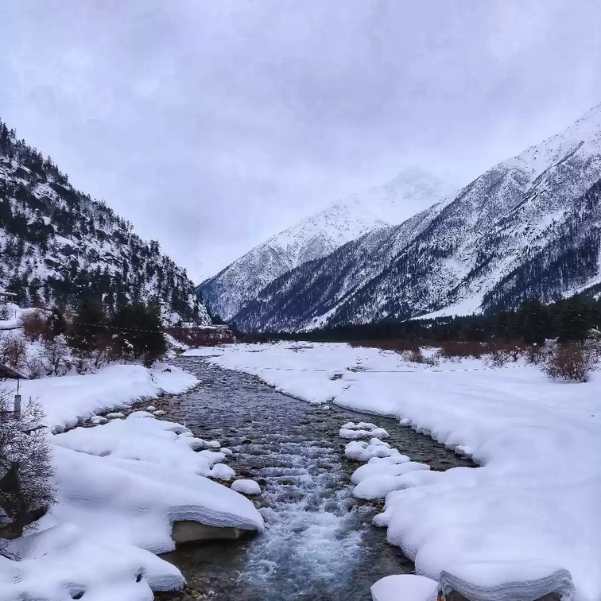
Rakchham lies on the Sangla to Chitkul corridor. It feels quieter than Sangla and sits deeper into the valley.
We do not have verified winter elevation, snowfall totals or closure dates for Rakchham, so we will not guess. Its panchayat did report crop damage during the unusual late September 2026 snow and rain.
Treat Rakchham like Chitkul in deep winter. Add it only when the road ahead is confirmed open that day.
Chitkul: Spectacular Snow, Conditional Access
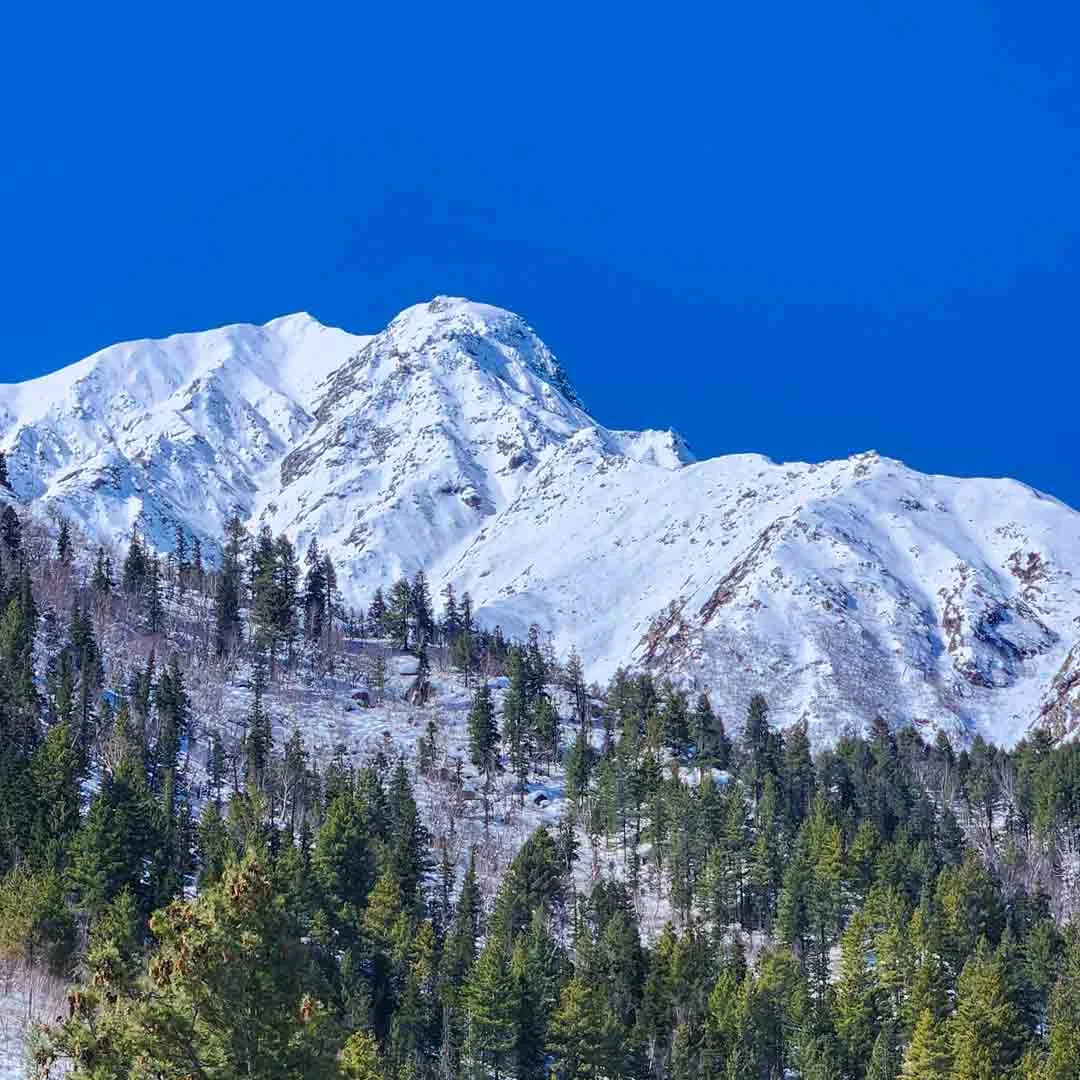
District Kinnaur gives Chitkul an elevation of 3,450 m and calls it the last and highest village in the Baspa Valley.
That height and setting pull snow seekers in. A white Chitkul looks like nothing else in Kinnaur.
Here comes the honest part. Heavy snow can close the Sangla to Chitkul road, and conditions change from week to week. No fixed annual closure date exists.
Never hike through a snow blocked road to reach Chitkul. If the road is shut, the village is not part of your trip that day.
Reckong Peo: The Practical Backup
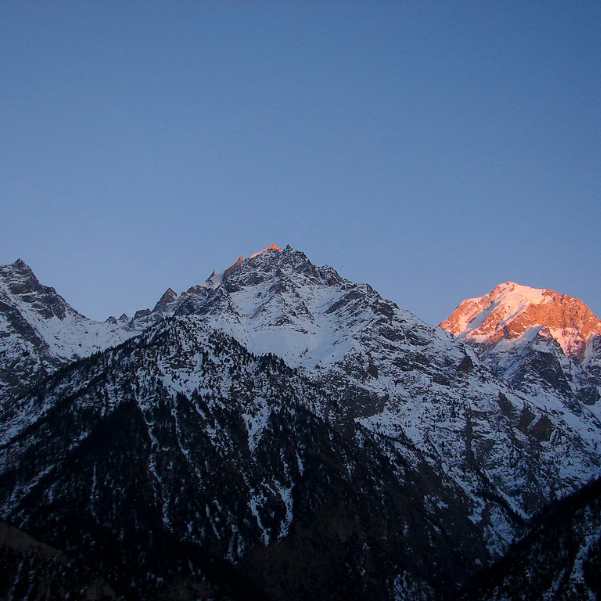
Reckong Peo is the district headquarters of Kinnaur, at 2,670 m. It sits right below Kalpa.
Know your backup before you push deeper into the valley. If the road toward Kalpa or Sangla turns tricky, Reckong Peo keeps you close to services and to the main highway.
What About Nako?
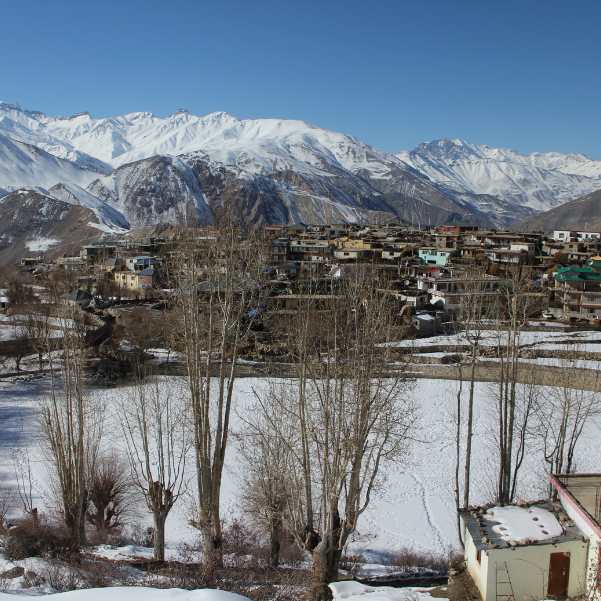
Nako sits at 3,663 m, higher than anything else in this section. District Kinnaur places it 119 km from Kalpa.
Higher does not mean easier. Nako belongs in an upper Kinnaur plan with its own road questions, so do not choose it simply because the number looks bigger.
If you are unsure which base fits your dates, send us a message. We will tell you honestly what the road and snow look like this week.
Fresh Snowfall vs Snow on the Ground: What Are You Actually Looking For?
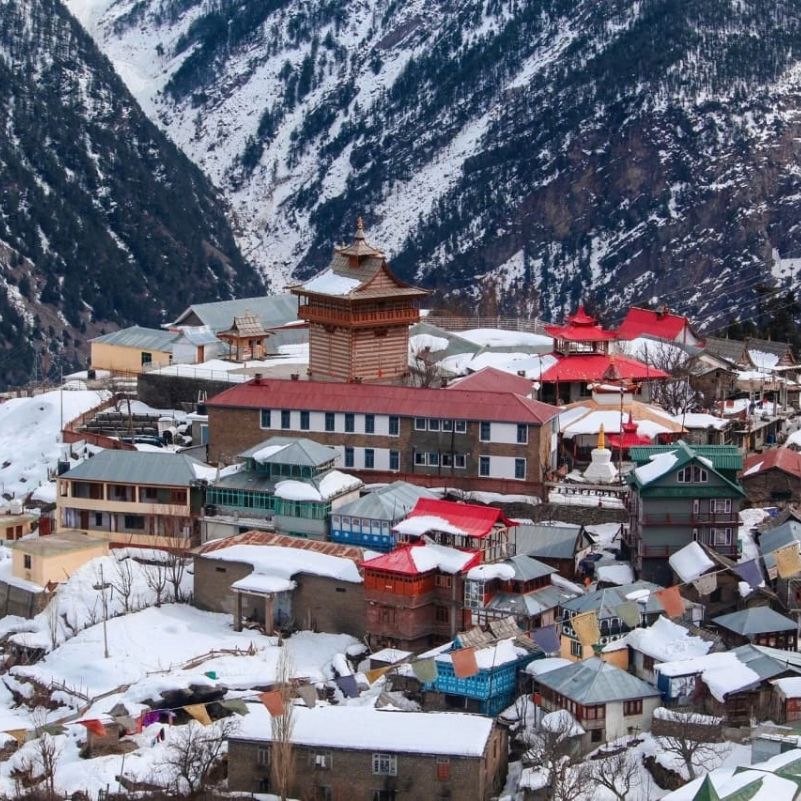
People say "I want snow" and mean three very different things. Decide which one you want before you book.
Fresh snowfall means you are in Kinnaur while a weather system actually drops snow. It feels magical, and it also brings the most road trouble.
Settled snow means you arrive after the storm, under clear skies. The villages and orchards stay white, and you can usually move around more easily.
Snow covered peaks are different again. You can enjoy dramatic Kinner Kailash views from Kalpa even when the road and the village below look mostly dry.
Here is our timing tip
The first clear morning after a storm often gives you the best of everything: settled white roofs, a blue sky and sharp views of the peaks. Wait for that morning instead of driving in the storm itself.
What we tell our travellers is simple. If snow is your main goal, flexible dates beat one "perfect" date booked six months ahead.
What Did the 2026 Snow Season Teach Travellers?
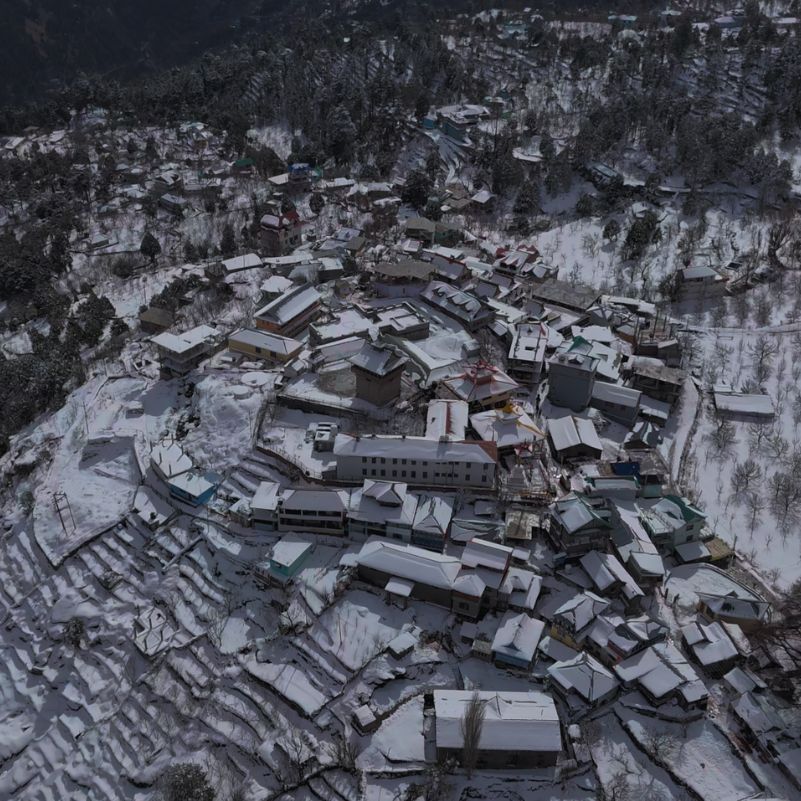
The short version: Kinnaur snowfall varies wildly from one year to the next, and even within one season.
Winter 2026 brought strong January storms. Sangla took 30.5 cm and Kalpa 17.7 cm on 28 January.
Then late March surprised everyone. Kalpa and Sangla both crossed 17 cm in a two day spell on 20 and 21 March.
After that came the unusually early snow at Kuno Charang on 26 September, with crop damage around Kalpa block.
The same season showed the other side too. Snow blocked NH-5 at Kufri, Fagu and Narkanda on 27 January, and shooting stones and mudflow blocked it near Tapri and Maling Nala on 27 September.
Do not take these events as a yearly pattern. Early September snow and heavy March snow do not happen every year.
The real lesson is that a snow trip carries two sides. You get spectacular measurable snow, and you accept that transport can stop for a while.
Is Chitkul Open When It Snows?
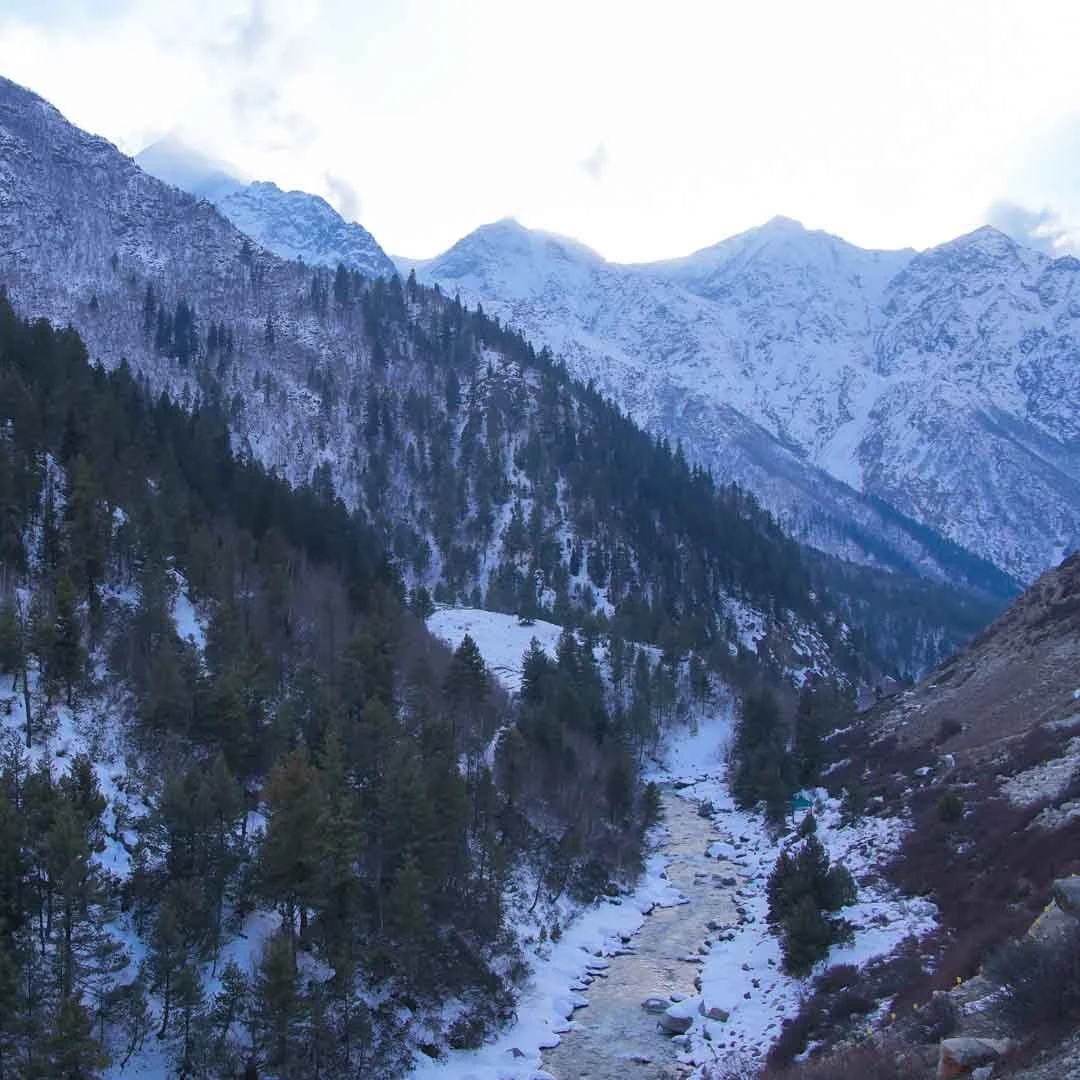
The direct answer: sometimes, and you only know on the day.
Winter access to Chitkul depends on conditions. Heavy snow can close the road from the Sangla side, and nobody can tell you months ahead whether it will be open on your date.
No responsible itinerary should promise a confirmed Chitkul night in peak winter. If someone promises you one, ask them what happens when the road shuts.
Our team recommends planning Kalpa or another dependable base first. Check the road locally, and add Chitkul only if it opens.
Can NH-5 Close Before You Even Reach Kinnaur?
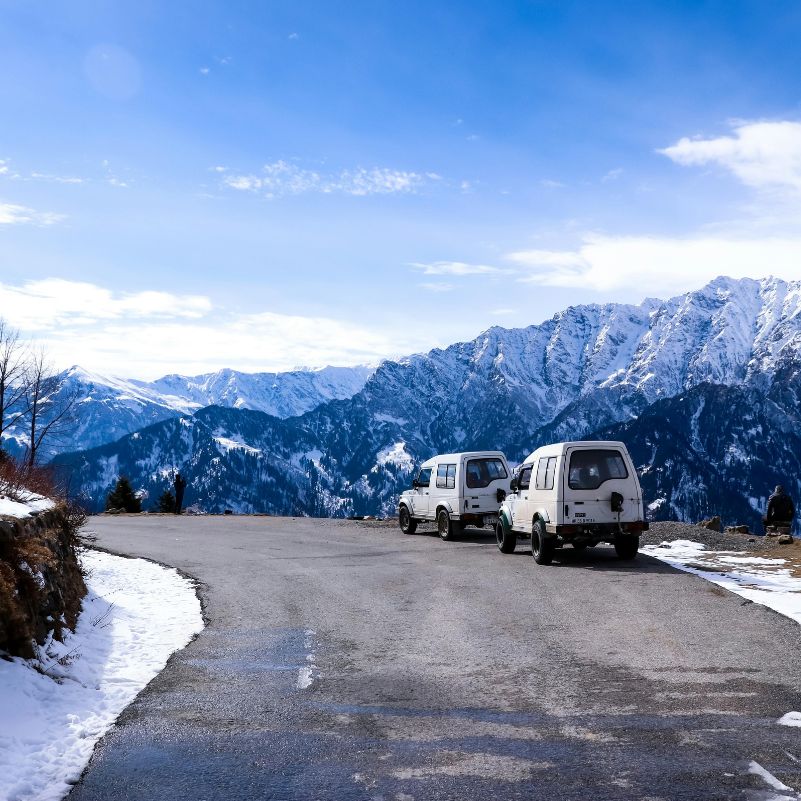
Yes, and many first timers forget this. Your trip can stall long before you see Kinnaur.
On 27 January 2026, snow blocked NH-5 at Kufri, Fagu and Narkanda. These points sit right above Shimla, so the disruption hit before travellers even reached the Kinnaur border.
Closures do not only come with snow. On 27 September 2026, shooting stones and mudflow blocked NH-5 around Tapri and Maling Nala.
So stop asking "Is the road open in winter?" as a yes or no question. Snow, rain, rockfall and maintenance can each close it for a while, at any point in the year.
That is why we like a comfortable night in Shimla before the long drive in. Our Shimla tour packages work well as a staging stop where you can wait out a closure without losing money on stays farther up.
How Do You Check Live Snowfall and NH-5 Road Status?

Monthly travel blogs, including this one, tell you the odds. They cannot tell you what happens on your travel day.
Use IMD short range forecasts for your actual dates. Check them a few days out and again the night before you drive.
Here is an insider tip most guides skip
District Kinnaur posts notifications about NH-5 restrictions, and these matter even outside winter.
On 5 September 2026, District Kinnaur published an extension of temporary traffic restrictions at the Nathpa block point. Check the latest district notification before travelling, as traffic timings and restrictions can change.
After fresh snowfall, confirm the final Sangla or Chitkul road condition on the morning you drive. Ask your stay, your driver or our team.
Start every winter drive early and finish in daylight. Snow, ice and rockfall look much more dangerous after dark.
If you want a second pair of eyes on today's conditions, we are happy to check for you.
Do You Need a Permit for a Winter Kinnaur Trip?
Read this section carefully, because the rules differ for Indian and foreign travellers.
District Kinnaur states that foreign tourists entering notified protected areas need the relevant Protected Area Permit. The district currently lists a fee of ₹200 per person, plus an agency service charge where it applies.
For Indian travellers, permit requirements can depend on the exact route, so confirm the latest rules with District Kinnaur before travelling, especially if you plan to continue toward upper Kinnaur or border sensitive areas.
Reconfirm Indian permit rules for your exact route with District Kinnaur before travel, especially if you continue toward upper Kinnaur or border sensitive areas.
A quick safety warning
The official foreigner permit fee is ₹200 per person plus service charge. If anyone asks you for a much larger "permit fee" without an official receipt, stop and check with District Kinnaur first.
A Flexible Kinnaur Snow Trip That Does Not Depend on Chitkul
This plan works because it bends instead of breaking when the weather changes.
Start with Shimla or another convenient staging stop. That gives you a safe place to wait if NH-5 closes near Kufri or Narkanda.
Make Reckong Peo or Kalpa the winter core of your trip. Spend your best days here, watching Kinner Kailash and waiting for snow.
Add Sangla if the valley road from Karcham is clear. Treat Chitkul as a same day decision you make only after confirming the road.
Keep at least one buffer day before your return journey. A single storm can hold you in place, and you do not want a flight or a train riding on a road you cannot control.
Here is a money saving tip from our planning
Do not prepay a nonrefundable Chitkul night in peak winter. Book your firm nights at the dependable base, and add the deeper nights only when access looks good.
Skip the idea of booking September or October purely for snow. The early snow in September 2026 was an exception, and you could spend good money on a trip that delivers dry roads and brown slopes.
On a cold Kalpa morning, our favourite small ritual is a hot cup of chai with a warm local meal at one of the small eateries around the Reckong Peo bus stand. Winter opening hours can vary, so choose whichever local spot is operating that day.
Some travellers want to continue into Spiti after Kinnaur. In peak winter, that is a separate plan with its own road questions, so check our Spiti Valley tour packages and ask us which version runs for your dates.
Do not assume the summer Kinnaur, Spiti and Manali loop works in deep winter. We plan that circuit only when the roads actually allow it.
What Should You Carry for a Kinnaur Snow Trip?
Pack in layers rather than one heavy jacket. A thermal base, a warm middle layer and a windproof, waterproof outer layer let you adjust as the sun comes and goes.
Waterproof footwear with good grip matters more than most people expect. Melting snow soaks ordinary sneakers within an hour, and cold wet feet ruin a day fast.
Carry warm socks, plenty of them, along with gloves and something to cover your head and ears.
Snow reflects sunlight hard. Sunglasses and sunscreen belong in your bag even on a freezing day.
Bring your personal medicines, a charged power bank, enough cash, a water bottle and some snacks for long waits on the road.
Download offline maps before you leave Shimla. Networks can drop out in the valleys, especially during storms.
On vehicles, do not let anyone sell you a blanket rule. Whether you need a 4x4 or snow chains depends on fresh snowfall, ice and the actual road condition, so confirm with your driver or local operator shortly before the trip.
Who Should Avoid a Peak Winter Kinnaur Snow Trip?
Deep winter suits flexible travellers. It does not suit everyone, and that is fine.
If your schedule has no room to move, a January storm can turn your trip into a long wait. Choose a gentler month or a lower stop instead.
If sudden route changes stress you out, peak winter will test you. Plans here change on the morning of travel, not the week before.
If you plan to drive yourself and you have only driven on dry plains roads, think twice. Snow and ice in the hills feel nothing like highway driving at home.
None of this is a reason to fear Kinnaur in winter. It is a reason to plan for flexibility, or to let someone who knows these roads handle the driving.
Final Verdict: Where Would We Go for Snow?
If you asked us over chai, here is exactly what we would say.
Go to Kalpa first. It gives you the strongest all round chance of Kinnaur snowfall, close views of Kinner Kailash and quick access to Reckong Peo.
Add Sangla when the road is good. In 2026, it actually snowed in Kalpa in both big storms.
Keep Chitkul as your dream extension, never your one non negotiable stop in peak winter.
Plan around January and February for settled winter snow. Stay open to March, because the 2026 IMD records show it can still deliver.
Never book September or October only for snow, whatever happened in 2026.
Explore Our Curated Kinnaur Tour Packages
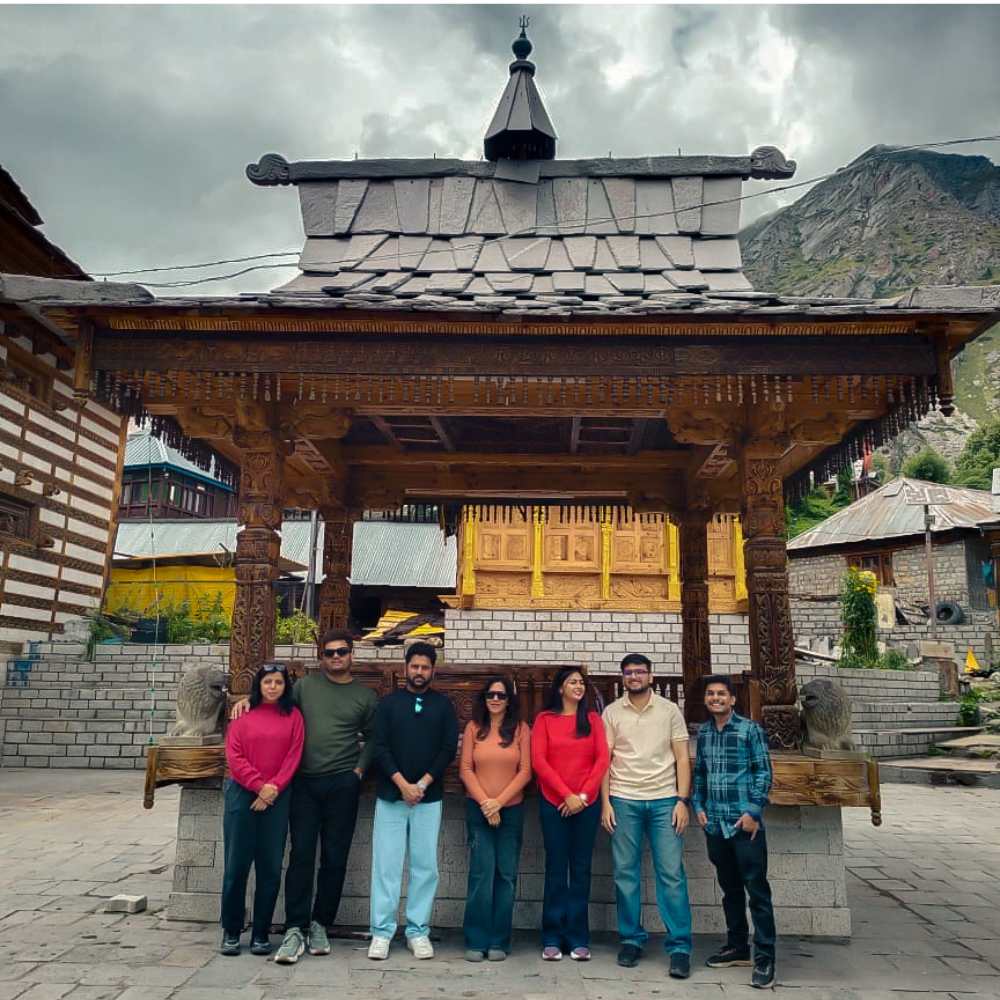 Group Tour5D/4N
Kinnaur Valley Weekend Group Trip With Sangla Chitkul and Kalpa
1D Sangla•1D Kalpa
₹7,999₹9,999SAVE INR 2,000/ person 4D/3N
4D/3NKinnaur Valley Scenic Circuit With Sangla Chitkul and Kalpa
1D Shimla•1D Sangla+1
₹16,999₹17,999SAVE INR 1,000/ person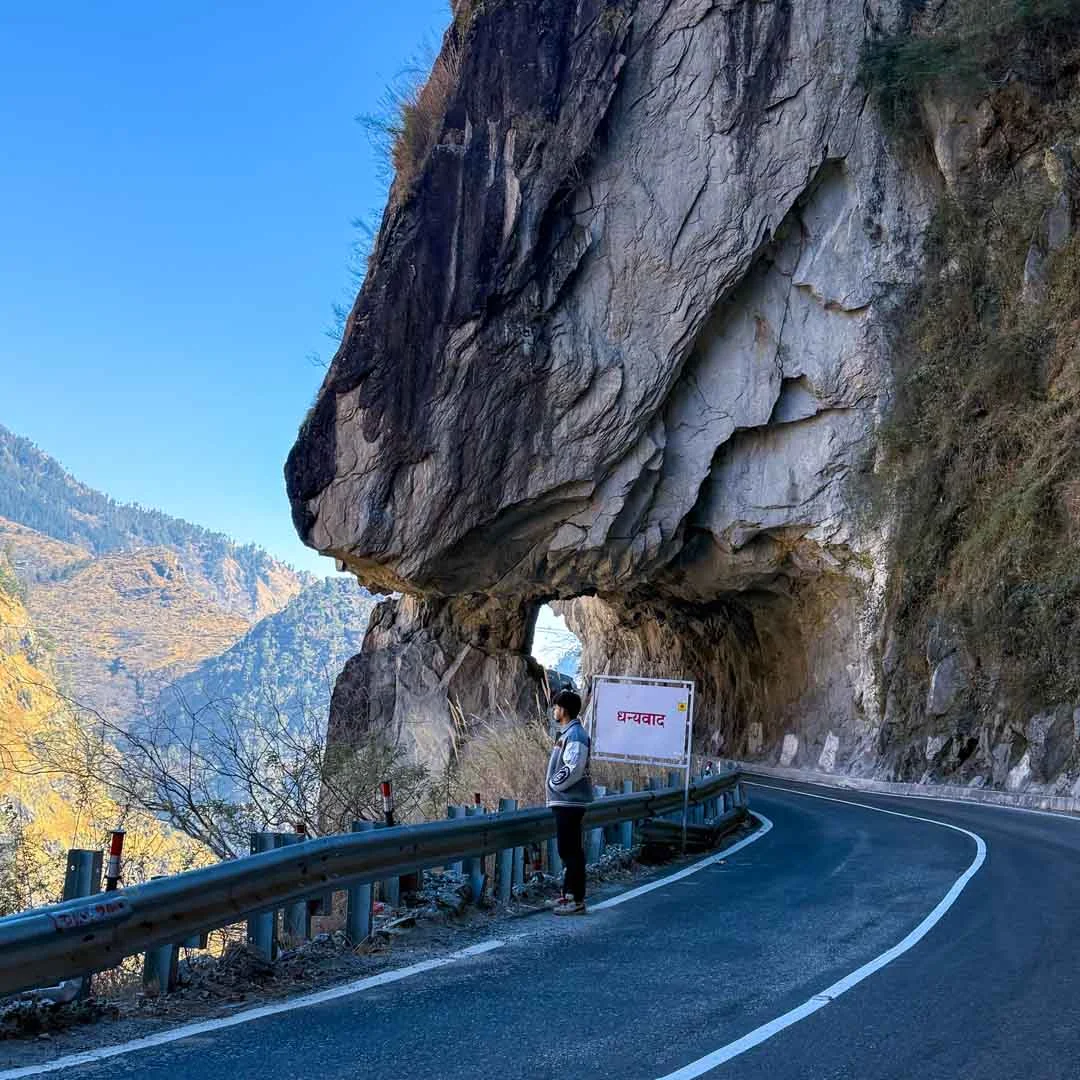 5D/4N
5D/4NKinnaur Tour Package From Delhi With Sangla Chitkul and Kalpa
1D Sangla•1D Kalpa
₹14,999₹16,999SAVE INR 2,000/ person
Frequently Asked Questions
When does snowfall start in Kinnaur?
The HP Forest Department says snow at higher elevations generally starts in late November or early December. Some years start much earlier, as Kuno Charang did on 26 September 2026.
Which month is best for snowfall in Kinnaur?
January and February give the best chance of snow on the ground. No month promises fresh snowfall during your exact stay.
Does Kalpa get snowfall in December?
It can, especially later in the month. December snow at village level varies a lot from year to year.
Is January a good month to visit Kinnaur for snow?
Yes, January is one of the strongest snow months. Keep buffer days, because the same storms can block NH-5, as they did on 27 January 2026.
Does Sangla get snowfall in winter?
Yes. IMD measured 30.5 cm at Sangla on 28 January 2026 and 20.5 cm on 21 March 2026.
Is Chitkul open in December and January?
Sometimes. Heavy snow can close the Sangla to Chitkul road, so confirm access on the day of travel.
Can I see snow in Kinnaur in March?
Yes, it is possible. In March 2026, Kalpa and Sangla both received over 17 cm in a single day, though not every March repeats this.
Does it snow in Kinnaur in October or November?
High peaks can turn white in November, and occasional snowfall happens. Do not book October for snow, since the September 2026 snow was unusually early.
Which is better for snow, Kalpa, Sangla or Chitkul?
Kalpa offers the best balance of snow and access. Sangla works well when its road is clear, and Chitkul stays conditional in deep winter.
Is NH-5 open during snowfall?
Not always. Snow blocked NH-5 at Kufri, Fagu and Narkanda on 27 January 2026, so check status before you drive.
Can tourists get stranded in Kinnaur after heavy snowfall?
Heavy snow can hold you in place until the roads open again. Keep a buffer day and a backup base like Reckong Peo.
Do I need a permit for Kinnaur in winter?
Foreign tourists need a Protected Area Permit for notified areas, currently ₹200 per person plus service charge. Indians should reconfirm rules for their exact route with District Kinnaur.
More about Kinnaur
 Kinnaur
Kinnaur in November 2026: Weather, Snow Chances & 7-Day Trip Plan
Planning a Kinnaur trip in November 2026? This guide covers weather, snowfall chances, road conditions and a practical 7 day itinerary for Kalpa, Sangla, Chitkul and nearby places.
 Kinnaur
Yulla Kanda Trek Distance and Route 2026: Yulla Khas to the Lake
Planning the Yulla Kanda trek in 2026? Explore the route from Yulla Khas village to the sacred Krishna Lake, with practical details on trekking distance, estimated duration, trail difficulty, elevation gain, and key landmarks along the way. This guide helps you prepare for the high-altitude ascent with realistic expectations and essential route-planning tips.
 Kinnaur
Yulla Kanda Krishna Temple in 2026: Location, Beliefs & Visiting Etiquette
Planning to visit Yulla Kanda Krishna Temple in 2026? Discover its location in Himachal Pradesh, religious significance, local beliefs, and the traditional customs visitors should respect. This guide covers the temple’s connection to Lord Krishna, its high-altitude setting near Yulla Kanda Lake, and practical etiquette for a respectful visit.