
Is Spiti Safe in Winter? 2026 Guide to Black Ice, AMS, Frostbite, Roadblocks & Emergencies

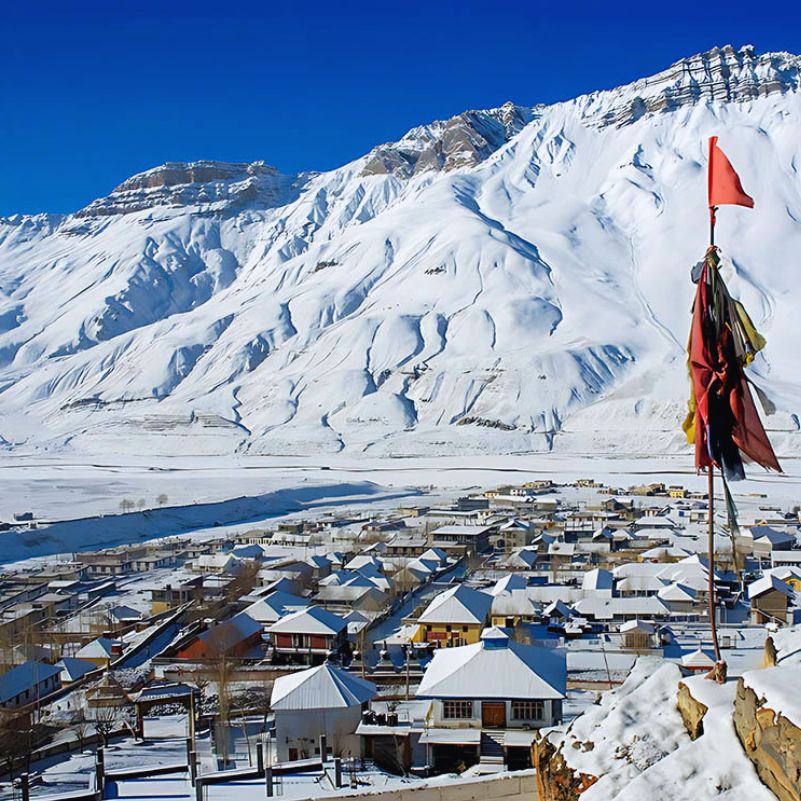
Winter Spiti looks incredible in photos. Snow covered villages, frozen landscapes, quiet roads and mountains that seem completely untouched.
But behind that beauty is a much more important question: is Spiti actually safe to visit in winter, or can the cold, altitude and unpredictable roads turn a normal trip into a serious problem?
The answer is yes, Spiti can be safe in winter, but only when you travel with proper preparation and realistic expectations. Black ice, altitude sickness, frostbite, sudden snowfall and roadblocks are not things you should ignore just because the road was open yesterday.
This guide by Travel Coffee gives you the practical side of winter travel in Spiti. We will explain the real risks, how to prepare for them, what to do during road closures or emergencies, and when it is smarter to change your plan instead of pushing ahead.
Quick Answer: Is Spiti Safe in Winter?
Is Spiti safe in winter? Yes, for travellers who prepare properly and stay flexible, but this is not a routine Himachal snow holiday. The normal winter approach is through Shimla and Kinnaur, because the Kunzum route closes for the season.
Five things demand real preparation: black ice, high altitude, extreme cold, sudden roadblocks, and help that can arrive slowly.
We say this to every traveller who asks us about a winter run to Spiti. The valley is stunning in the cold months, but the margin for error shrinks.
If your plan has no room to bend, winter is the wrong time to go. If you can move dates, carry the right gear, and travel with someone who knows the road, it becomes a very different, much safer trip.
Before you lock anything, it helps to see how a full winter route actually comes together. Our Winter Spiti tour packages are built around the Shimla side for exactly these reasons.
What Makes Winter Spiti More Difficult Than a Normal Himachal Trip?

Most first-timers picture Spiti in winter as Manali with more snow. That is the single biggest mistake we see. Manali has hospitals, hotels with heating, and quick road access. Deep inside Spiti, you have none of that on tap.
Four risks stack on top of each other here. Icy or blocked roads slow you down or stop you completely. High altitude works on your body every hour. Extreme cold punishes any gap in your clothing. And when something goes wrong, help moves slower than you expect.
Kaza sits at 3,660 metres. That altitude alone changes how your body handles effort, sleep, and cold.
The official Lahaul and Spiti district administration says winter temperatures can fall to around minus 20 degrees Celsius at the district level. That is a district figure, not a guaranteed daily Kaza reading, but it tells you the kind of cold you are packing for.
It helps to think in three loose phases. Early winter, when snow starts building. Deep winter, when cold and closures peak. And late winter, when things slowly ease.
But mountains do not read calendars. A mild December can behave like deep winter, and a late storm can shut a road in what should be the tail end of the season. Plan for the conditions, not the month.
Which Route Should You Use to Reach Spiti in Winter?

Why Shimla and Kinnaur are the normal winter approach
The official Lahaul and Spiti administration gives Shimla to Kaza as 412 km and about 20 hours of driving, not counting one overnight halt. Nobody drives that in one push. You break it across days, and that slower pace quietly protects you.
The administration calls this an "almost all weather" road up to Kaza. Read that phrase carefully. "Almost all weather" does not mean guaranteed open every single day.
It means this route stays workable far more often than the Manali side in winter, not that it never closes. Snow, landslides, and repair work can still shut sections of it.
The real advantage is the shape of the journey. You climb gradually through Kinnaur with natural overnight stops instead of gaining brutal altitude in one day. Your body gets time.
Our Kinnaur tour packages follow this same slow-climb logic, which matters more in winter than any other season.
One honest warning: even this route is not bulletproof. The Kinnaur administration published several temporary traffic and road-closure notices through 2026. The NH-05 approach through Kinnaur can face its own interruptions, so cross-check before you move.
Why the Manali and Kunzum route is not a winter entry plan
The official Keylong to Kaza road is 185 km, but it closes in winter because of Kunzum Pass and heavy snowfall.
The administration gives an approximate seasonal closure running from around October or November until June or July, depending on conditions. Actual opening dates shift every year.
Do not build a winter plan around crossing Kunzum. It is not a maybe, it is a no for the cold months. If a blog or agent suggests entering Spiti from Manali in January, that is a red flag about their knowledge.
Our Manali tour packages are wonderful in their own right, but Manali is not your winter gateway to Kaza.
This also settles the Chandratal question early. Chandratal sits off the Kunzum-Batal side, which is exactly what closes. For how that access opens up later in the year, see our Chandratal opening updates for 2026.
Why Is Black Ice So Dangerous on Winter Spiti Roads?
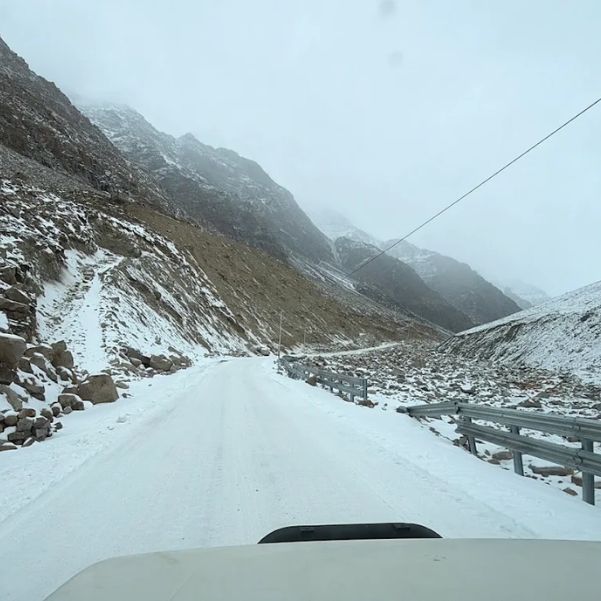
Where and when is black ice most likely?
Black ice is a thin, clear layer of ice that looks exactly like a harmless wet patch. That is what makes it dangerous. Your eyes tell you the road is just damp, and by the time your tyres disagree, you are already sliding.
General winter-driving guidance is clear on how it forms. When snowmelt or moisture on the road freezes again, you get black ice. It shows up most often after overnight refreezing and in early-morning conditions, when temperatures sit at their lowest.
Bridges, elevated road surfaces, and shaded stretches deserve extra caution. Cold air moves under a bridge on both sides, so it freezes before the open road does. Shaded sections never get sun to melt the ice off.
Here is the part we want to be straight about. We will not hand you a fixed map of black-ice spots around Nako, Malling, Kaza, or anywhere else, because no authoritative local black-ice map has been verified.
Anyone who publishes exact permanent hotspots is guessing. What we can tell you is which conditions favour it, so you slow down for the right places.
And a patch that was completely fine at noon can turn treacherous once temperatures drop in the afternoon and evening.
We will not invent a magic cutoff hour, but the pattern is real: as the day cools, refreezing begins, and a road you drove safely one way can bite you on the return.
What should drivers do if traction disappears?
The safest move happens before you ever reach the ice. Slow down early, leave a big gap to the vehicle ahead, and avoid sudden steering, acceleration, or braking. Smooth and slow keeps you out of trouble far better than any recovery trick.
If the vehicle does start to slide, authoritative road-safety guidance says avoid hard braking where you can. Use the brakes gently only if you must, and wait for traction to return before you accelerate again. Stamping the brakes on ice usually makes the slide worse.
We keep this simple on purpose. This is not the place for a performance-driving lesson.
One idea matters most, and we tell it to every traveller: a four-wheel-drive vehicle may help you move forward on slippery ground, but it does nothing to help you stop once grip is gone. Remember it this way. 4x4 helps you move; it does not repeal the laws of ice.
How Should You Plan for Winter Roadblocks?

Build a return plan, not just an itinerary
The mistake that hurts people most is scheduling something unmissable right after their expected return. A flight, a wedding, an exam, a critical work deadline the very next day. In our experience, that single decision turns a normal road delay into a genuine crisis.
We will not hand you a fixed number of buffer days, because there is no official universal figure and anyone who quotes one is guessing.
What you actually need is meaningful flexibility built in. Keep some schedule slack, the ability to book an extra night if you are stuck, and enough money set aside to absorb a delay without panic.
Check road conditions close to your departure, and again before you move between important overnight stops. Conditions in this region change overnight, so a status you read three days ago tells you very little on the morning you drive.
What should you do if a closure cuts off your planned return?
Stay put in the nearest safe inhabited place. Do not try to sneak around an official closure or a barricade to save time. Those barriers are there because someone with local knowledge decided the road ahead is not safe.
Follow whatever the police or district administration tell you. They are managing the whole route, not just your trip.
Once the road reopens, rearrange your onward bookings calmly instead of trying to claw back lost hours by driving hard. Aggressive driving on a freshly reopened winter road is how a delay becomes an accident.
One 2026 example shows exactly why you cannot trust a single source. On the same update date, the English version of the official Lahaul and Spiti road-status page showed Keylong to Kaza closed, while the Hindi version showed Kaza to Keylong open.
Same authority, contradictory statuses. That is not a winter prediction, it is a lesson: cross-check any important road information through more than one reliable source before you rely on it.
Does Winter Make Altitude Sickness Harder to Manage?
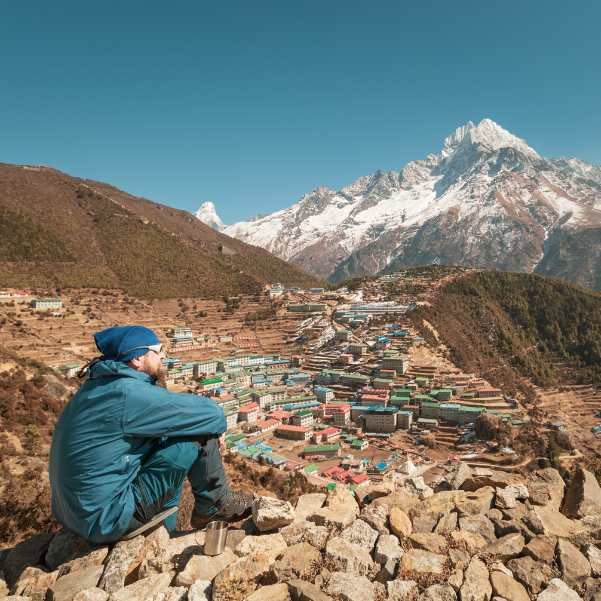
We will keep this short, because winter safety is mostly about roads and cold, not a deep altitude lecture. But you need enough to make safe calls.
Kaza sits at roughly 3,660 metres. CDC high-altitude guidance treats unacclimatised travellers who sleep at around 2,450 metres or higher as potentially at risk of altitude illness.
The two things that matter most are your sleeping altitude and how fast you climb to it. This is exactly why the slow Shimla-Kinnaur ascent, with nights at rising elevations, protects you.
Common AMS symptoms include headache, tiredness, reduced appetite, nausea, and vomiting. If you have these, do not continue climbing to sleep higher. If they get worse while you are resting at the same elevation, that is your signal to descend and get medical help.
Fitness does not make you immune. Strong, young, gym-fit travellers get AMS too. And to be precise about a common myth: cold itself has not been proven to cause AMS.
What winter does is stack two separate stresses, cold and altitude, on your body at once. That combination is why careful self-monitoring and conservative choices matter even more in the cold months.
If you are thinking about preventive altitude medication, talk to a clinician who knows your medical history and your itinerary. We do not prescribe medicines or dosing, and you should be wary of anyone online who does.
How Do You Recognise Frostbite and Hypothermia Early?
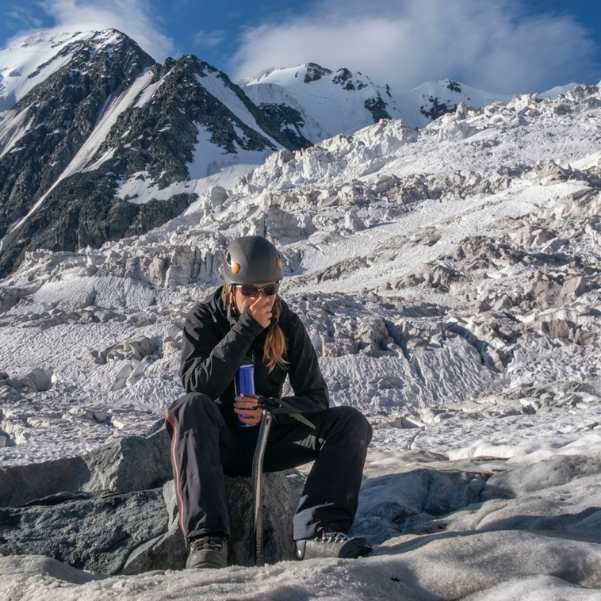
Early signs of frostbite
Redness or pain in exposed skin is an early warning worth acting on. It is your body telling you the cold is winning at that spot.
More concerning signs are skin that turns white or grey-yellow, feels unusually firm or waxy, or goes numb. Your fingers, toes, ears, nose, cheeks, and chin are the usual first casualties, because they are exposed and far from your core.
Do not treat numbness as a good sign. Numb tissue can mean you have stopped feeling the injury properly, not that the danger has passed. That is the moment to get warm and get help, not to push on.
Early signs of hypothermia
Early hypothermia shows up as shivering, tiredness, clumsiness, and confusion. The confusion part is dangerous, because the affected person often cannot judge their own state.
As it worsens, breathing and pulse can slow, and the person can lose consciousness. Treat suspected hypothermia as an urgent medical situation and get proper care fast.
Prevention matters more than toughing it out
Several loose, warm layers beat one thick jacket, because the air trapped between layers holds heat. Add wind protection, keep every layer dry, and cover the parts that lose heat fastest with insulated footwear, gloves, and head protection.
If someone is shivering and cannot stop, treat that as a clear warning, not toughness to admire. Get them into shelter and warm them up. For any suspected frostbite or hypothermia, aim for medical care rather than improvising heavy treatment yourself.
How Quickly Can Medical or Vehicle Help Reach You in Winter Spiti?

Official sources list a Community Health Centre at Kaza, a Primary Health Centre at Tabo, and a Civil Dispensary at Kibber. These are real and valuable, but do not picture them as a large city hospital with every specialist and machine. They handle a lot, within limits.
Here is the honest part
No official guaranteed winter ambulance, rescue, or vehicle-recovery response time was found in the sources we trust. So we will never promise you a rescue ETA, and you should distrust anyone who does.
Snow on the road, an active closure, your exact location, and patchy communication can all slow physical access to you. Every one of those can stretch a short distance into a long wait.
The practical takeaway runs through this whole guide. Never design a Winter Spiti plan that assumes roadside help or advanced medical care will reach you quickly. Build your trip so that you are the first line of safety.
What Should Be in a Winter Spiti Emergency Plan?

Save emergency contacts offline
Save these before you lose signal, because you will lose signal. 1077 is the district disaster and rescue helpline. 108 is for medical or emergency response. 100 is for police.
Store them in your phone and also on paper, because a dead battery should not wipe out your only copy.
We will not print a direct Kaza Police Station landline, because different current official pages show conflicting numbers and we would rather give you nothing than give you a wrong number in an emergency.
Carry backup supplies for an unexpected stop
Pack as if you might be stuck somewhere for longer than planned. That means extra warm and dry layers, a warm blanket or its equivalent, and enough of your regular prescription medicines to cover delays.
Carry food and drinking water suited to the length of your journey, a basic first-aid kit, and a torch or headlamp.
Keep a charged phone and a power bank, plus offline copies of your important contacts and route details. When the network drops, those offline notes become your lifeline.
For the vehicle, any winter recovery or traction equipment should match the actual road conditions and the advice of your local operator or the authorities, rather than gear you guessed at from home.
Check what your insurance really covers
Read the policy wording, do not assume. Check specifically for high-altitude travel, medical evacuation, weather-related trip interruption, road closures, adventure activities, and self-driving if that applies to you.
No ordinary travel insurance automatically covers all of these. Some exclude high altitude entirely, others exclude self-drive. Find out before you leave, not while you are stuck.
Is Winter Spiti Safe for First-Time Himalayan Travellers?

The honest answer is: it depends entirely on how you travel. We do not tell every first-timer to stay away. We do tell them to be clear-eyed about their exact setup.
A first-time visitor riding as a passenger with an experienced local winter driver, following a sensible acclimatisation pace, wearing proper cold-weather clothing, and keeping flexible dates has a genuinely reasonable risk profile.
That person is in good hands and mostly needs to dress right and stay patient.
Someone attempting their first-ever snow drive alone, in deep winter, on remote Himalayan roads, is a completely different story.
Stack up first-ever mountain driving, first-ever ice driving, a first high-altitude trip, and a rigid itinerary, and you have built unnecessary risk into every single day.
So the real choice is not "go or don't go." It is "who is driving, and how much slack does your plan have." For most first-timers, a local-driver or organised trip removes the most dangerous variable.
If an organised trip is how you want to remove that variable, our locally operated Winter Spiti 4x4 trip runs the Kinnaur route with experienced local drivers and a travelling coordinator, so a first-timer travels as a passenger rather than learning snow driving on the day.
If you are travelling solo and weighing safety more broadly, our Spiti Valley safety for solo female travellers covers a lot of ground that applies year-round.
Who Should Avoid Winter Spiti or Choose an Easier Season?

If your schedule cannot bend, winter Spiti is not for you. People who genuinely cannot afford to be delayed will find the stress outweighs the reward, because delays here are not rare, they are expected.
Inexperienced drivers who would be learning snow and ice handling on remote roads should skip the self-drive idea, at minimum. Learning those skills with a cliff on one side and no quick help is a bad trade.
Travellers who need guaranteed running water, heating, connectivity, or fast access to advanced medical care should also reconsider. Winter Spiti offers none of those reliably.
On health, we will not hand out a blanket exclusion list, because that is a doctor's job, not ours. If you have a relevant underlying medical condition, discuss a high-altitude winter trip with an appropriate clinician before you book.
And here is a gentle redirect. If you mostly want to see snow, not wrestle with the logistics of deep-winter Spiti, an easier Himachal destination or a more accessible Spiti season will make you far happier.
2026 Winter Spiti Safety Checklist Before You Leave
Check the official road status close to your travel date, and again before every important leg of the route. A status from last week is close to useless on driving day.
Cross-check that status with your local driver, your accommodation, or the relevant administration, because online updates conflict and lag behind real conditions, as that 2026 English-versus-Hindi mismatch showed.
Confirm your booked stay is actually operating in winter, and ask directly about heating, water, and meals. Plenty of places shut for the season, and a booking confirmation does not always mean an open, heated room.
Confirm the vehicle, tyres, and current winter equipment with your operator. Save your emergency contacts offline. Share your route and expected check-in times with someone at home, so a missed check-in triggers a response.
Above all, do not build a schedule with zero room for a roadblock. If you want a second pair of eyes on your plan, WhatsApp us and we will help you pressure-test it.
Explore Our Curated Winter Spiti Tour Packages
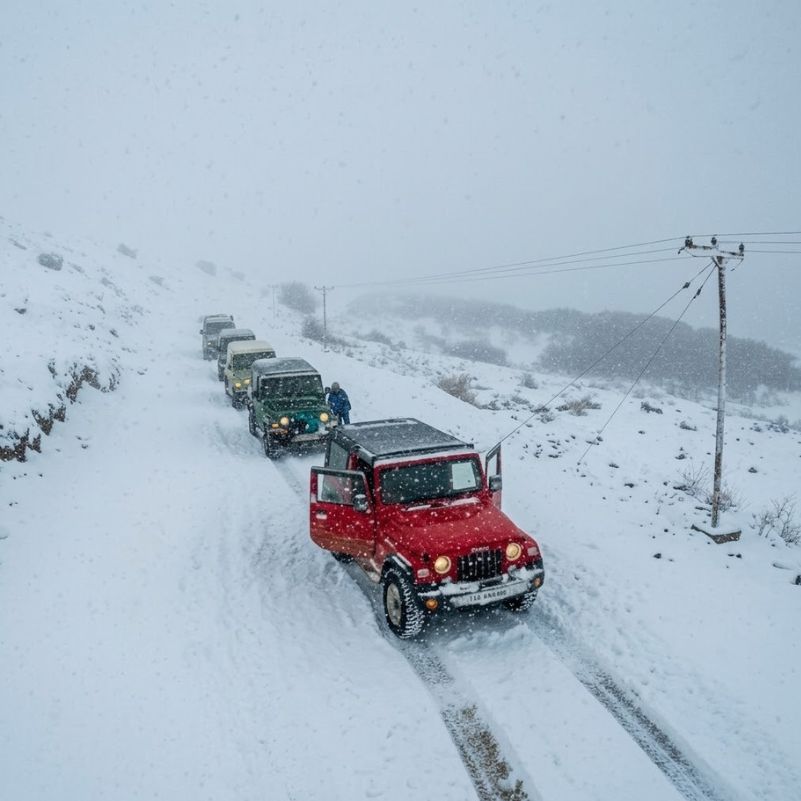 Group Tour9D/8N
Most Loved 4×4 Winter Spiti Expedition
2D Sangla•1D Tabo+2
₹29,999₹35,999SAVE INR 6,000/ person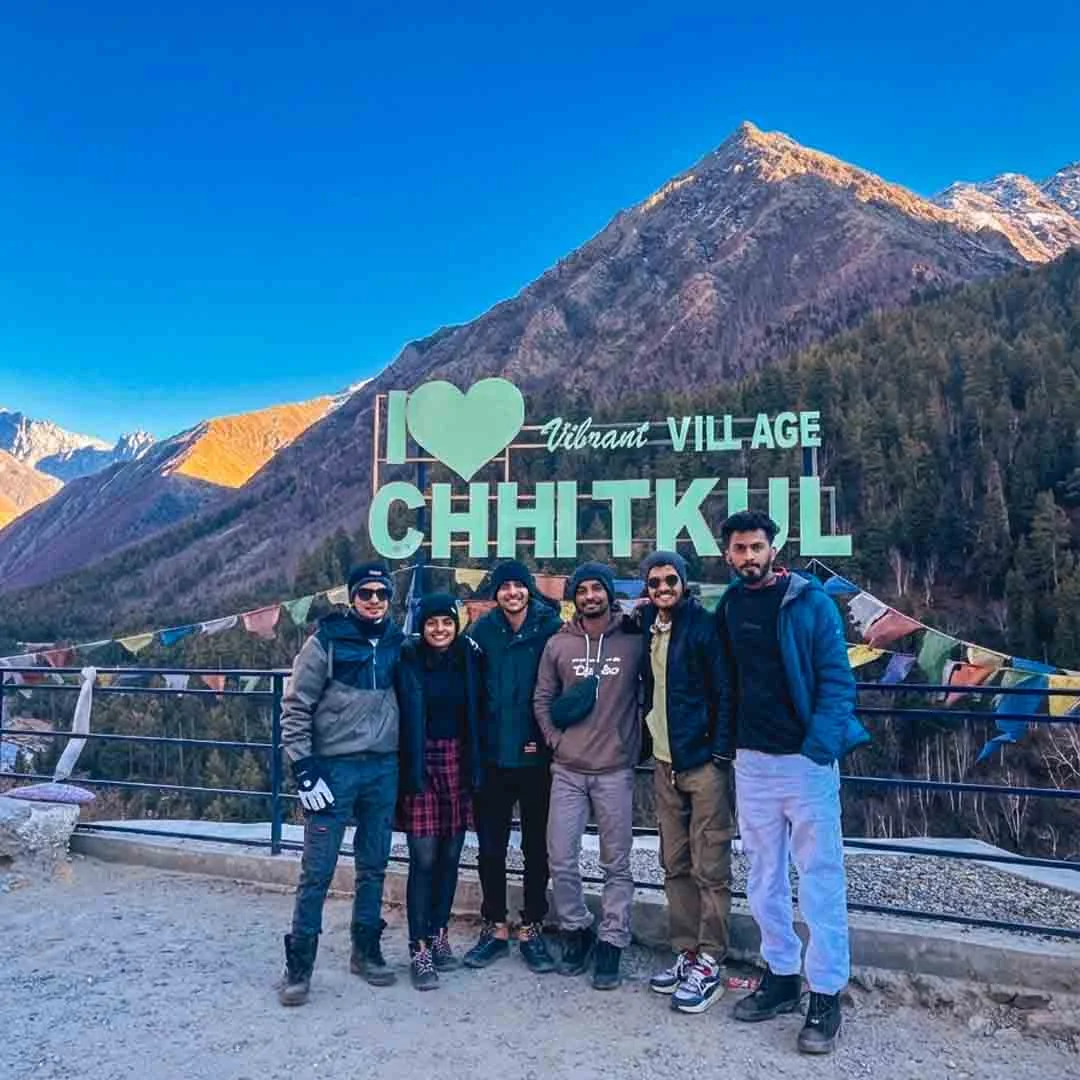 Group Tour9D/8N
Best Selling Winter Spiti Valley Group Tour
2D Sangla•1D Tabo+2
₹18,999₹23,999SAVE INR 5,000/ person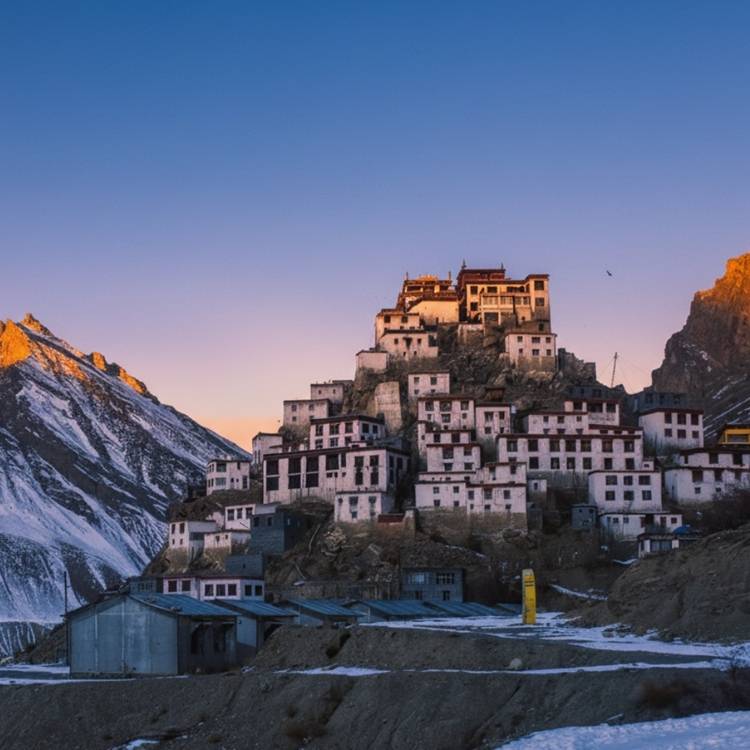 9D/8N
9D/8NWinter Spiti 4×4 Expedition
2D Sangla•1D Nako+2
₹32,999₹44,999SAVE INR 12,000/ person
Related topics
Frequently Asked Questions
Is Winter Spiti safe for first-time Himalayan travellers?
It can be, especially with an experienced local driver, slow acclimatisation and flexible dates. It becomes much riskier if you combine first-time snow driving, high altitude and a rigid schedule.
Where is black ice most likely, and how should drivers respond to it?
Black ice is common on shaded roads, bridges and areas where meltwater refreezes overnight. Slow down before these sections, increase distance and avoid sudden braking or acceleration if the vehicle starts to slide.
Does cold weather increase the difficulty of altitude acclimatisation?
Cold does not directly cause AMS, but winter combines cold stress with high altitude. This can make the trip more physically demanding, so acclimatisation, hydration and symptom monitoring become even more important.
What are the early signs of frostbite and hypothermia?
Frostbite may begin with pain, numbness or pale, waxy skin on exposed areas. Hypothermia can cause shivering, tiredness, clumsiness and confusion. Both can become medical emergencies and need urgent attention.
What should travellers do if a roadblock cuts off their planned return?
Stay in the nearest safe inhabited place and follow official instructions. Never try to bypass a closed road. Rearrange onward bookings and wait until authorities confirm that travel is safe again.
How quickly can medical or vehicle help reach remote winter locations?
There is no guaranteed response time in remote Winter Spiti. Snowfall, blocked roads, weak communication and your location can delay medical or vehicle assistance, so carry essential backup supplies.
What emergency contacts, insurance and backup supplies should travellers carry?
Save 1077 for disaster assistance and 108 for medical emergencies. Carry warm layers, medicines, food, water, a first-aid kit, torch, charged phone and power bank. Check insurance for altitude and weather-related disruption.
Who should avoid Winter Spiti or choose a less demanding season?
Avoid deep winter if you need guaranteed comfort, connectivity, fast medical access or a fixed schedule. Inexperienced snow drivers should also avoid self-driving. Anyone with relevant medical concerns should seek medical advice first.
Is Spiti Valley open throughout winter?
Spiti can remain accessible through the Shimla-Kinnaur route, but temporary closures still happen after snowfall. The Manali-Kunzum route closes seasonally, so winter access is never guaranteed every day.
Which route can you use to reach Kaza in winter?
Use the Shimla-Kinnaur-Reckong Peo-Kaza route in winter. The Manali-Keylong-Kunzum route normally closes because of heavy snow at Kunzum Pass.
Do you need a 4x4 or snow chains for Winter Spiti?
A 4x4 is helpful in snow but does not guarantee grip on ice. Snow chains may be needed depending on actual road conditions. Always follow local instructions and your vehicle manufacturer's guidance.
Can Chandratal be visited during a Winter Spiti trip?
Normally, no. Chandratal lies on the Kunzum-Batal side, which closes during winter. Do not plan a regular Winter Spiti itinerary around Chandratal access.
More about Lahaul and Spiti
 Lahaul and Spiti
Winter Spiti from Bangalore in 2026-27: Flights, Leave Days & Delhi 4x4 Departures
Planning a Winter Spiti trip from Bangalore in 2026-27? Explore flight options, Delhi pickup points, leave requirements, 4x4 group expeditions, travel costs and a practical itinerary to help you plan your Himalayan winter adventure.
- How to Reach
- Snow Travel
 Lahaul and Spiti
What Does a Winter Spiti 4x4 Trip Really Cost in 2026-27? Package Price vs Total Holiday Budget
Planning a Winter Spiti 4x4 trip in 2026-27? Discover the real travel budget, including package prices, transport, meals, winter essentials and hidden expenses. Learn what your package covers, what costs extra and how to plan your Spiti Valley adventure without unexpected spending.
- First-Time Travellers
- Snow Travel
 Lahaul and Spiti
How Many Leave Days Do You Need for a 9-Day Winter Spiti Trip in 2026-27?
Planning a 9 day Winter Spiti trip in 2026 to 2027 requires careful leave planning, especially for working professionals travelling from cities like Bangalore, Mumbai, Hyderabad and Delhi.
- Itinerary
- Snow Travel