
Best Bike for Spiti Valley Trip in 2026: Royal Enfield Himalayan vs Classic vs KTM
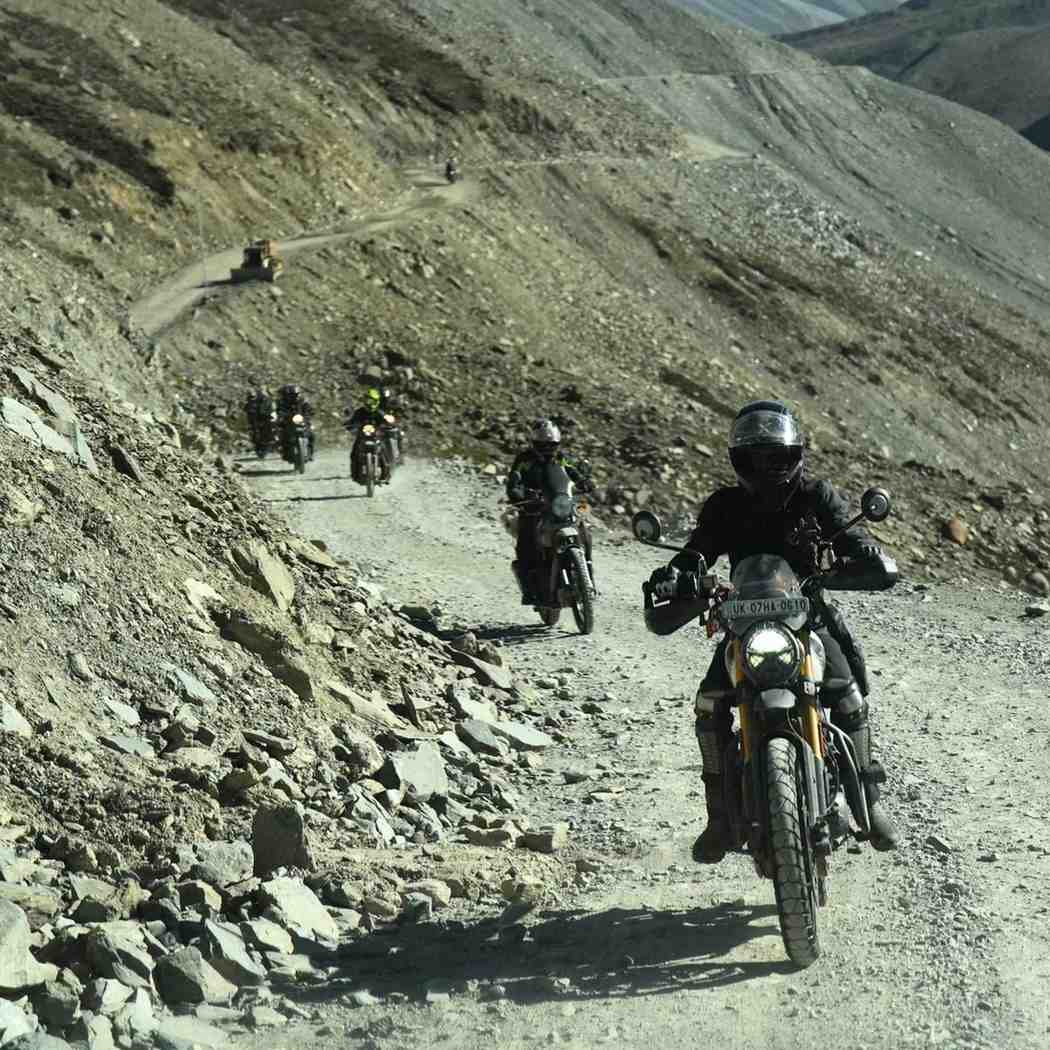
You are planning a Chandigarh Spiti bike tour and the same question keeps coming back. Should you take the Himalayan, the Classic 350, or the KTM 390 Adventure? And does it even matter that much, or is it really about how you ride and how the bike is prepared?
We have helped riders plan this trip for years from our base in Shimla, and we have seen all three bikes do well and all three bikes break down on the same stretch.
The bike does matter. But the right answer depends on your route, your experience, your luggage, and whether you are riding solo or with a pillion. This guide by Travel Coffee breaks it down honestly so you can make the right call for your trip.
Quick Answer: Which is the best bike for Spiti Valley?
The best bike for Spiti Valley for most riders is the Royal Enfield Himalayan 450 or Himalayan 411. It handles broken roads, water crossings, long saddle hours, and luggage better than a cruiser-style motorcycle.
The Classic 350 can do Spiti if you are an experienced rider, travel light, avoid aggressive throttle on water crossings, and preferably enter from the Shimla side.
The KTM 390 Adventure is excellent for skilled riders who want sharp handling and performance. But it is not the easiest first Spiti rental ride if you are still building hill confidence.
>>Chat with us on WhatsApp for a hassle free Spiti bike trip
Why bike choice matters so much in Spiti Valley
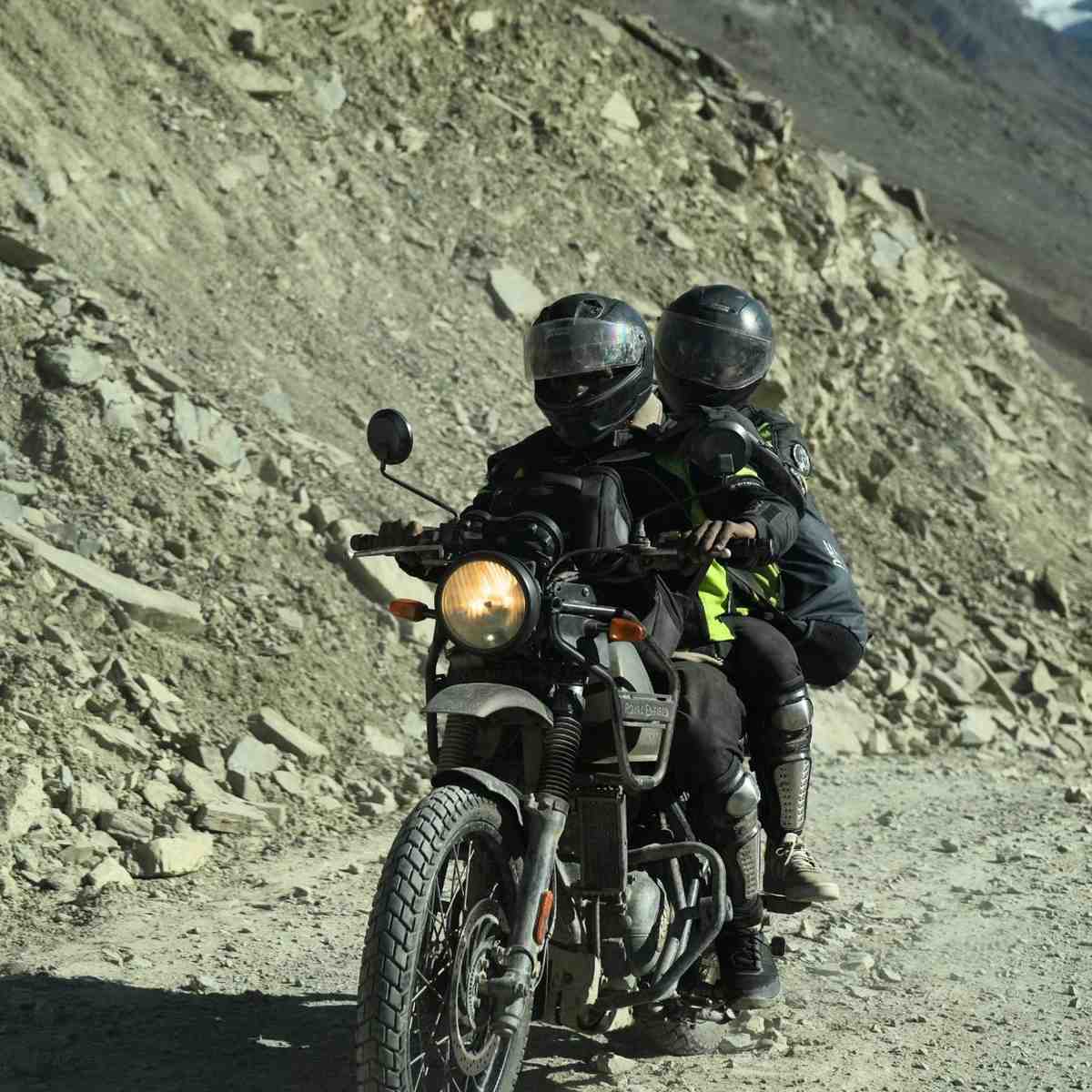
Spiti is not a normal hill-station ride. You are not just climbing some hairpins and reaching a hotel by evening.
You are looking at long days in the saddle, broken tarmac, loose gravel, narrow cliff roads, cold morning starts, water crossings, and high passes above 13,000 feet.
Repair access is patchy. If something snaps between Gramphu and Batal, the nearest mechanic is hours away.
In our experience, the riders who struggle most are not the ones on the wrong bike. They are the ones on a bike they have not prepared properly or one they have never ridden before this trip.
The Manali side, especially the Gramphu, Batal, Losar and Kunzum stretch, is where bike setup, ground clearance, luggage tying, and rider confidence all get tested at the same time.
This is the section where the wrong bike or a badly tied luggage bag turns a great trip into a long, painful day.
Himalayan vs Classic vs KTM for Spiti: the simple comparison
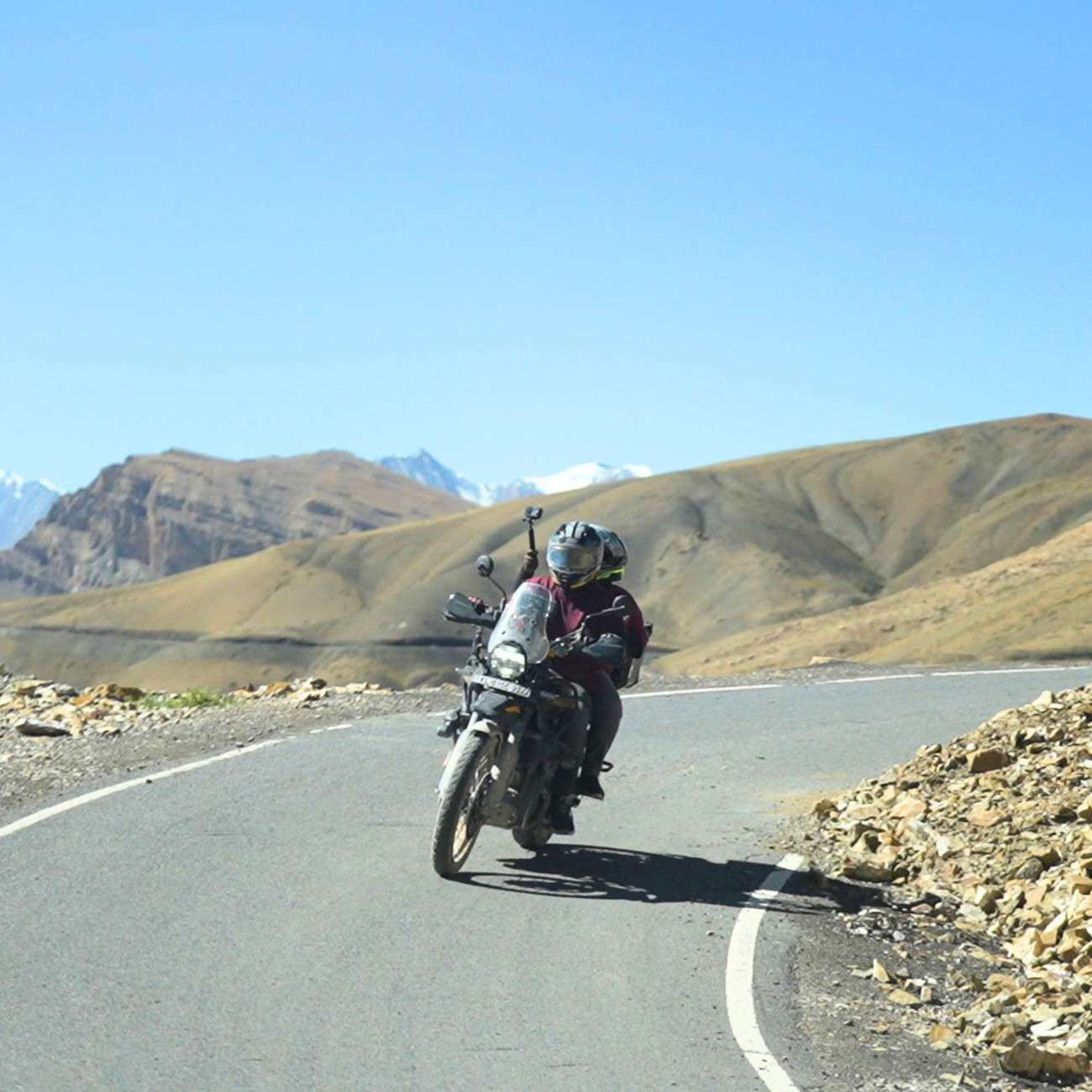
Let us go through each bike honestly. No marketing fluff, no fan-boy noise.
Royal Enfield Himalayan 450 or 411 for Spiti
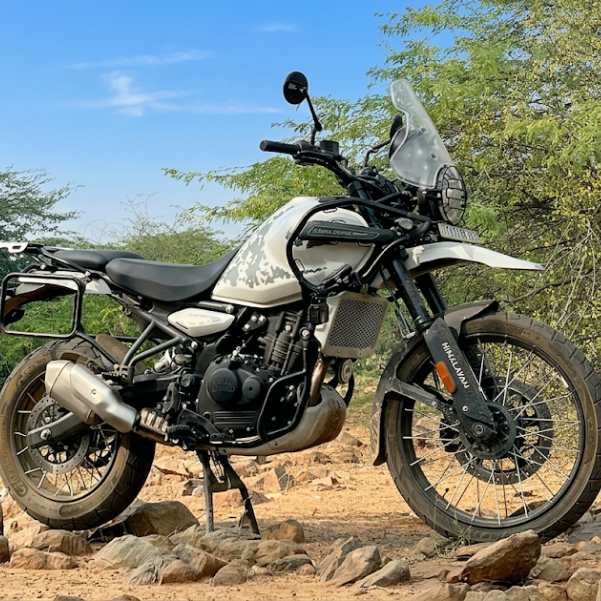
This is the safest overall recommendation for most riders heading to Spiti.
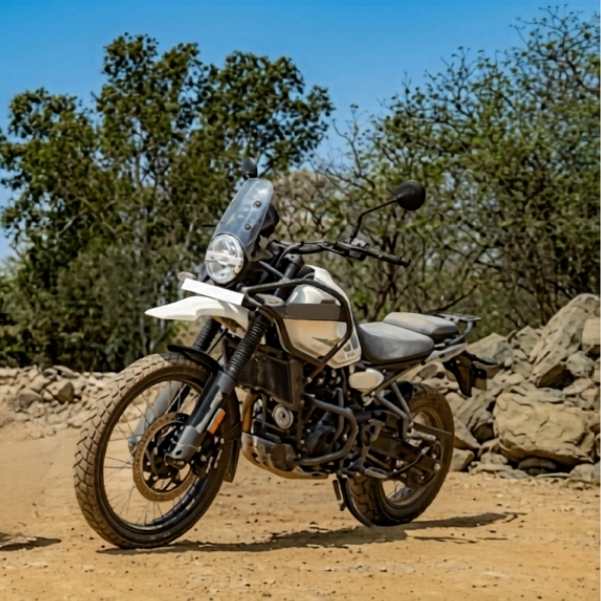
The Himalayan 450 has a ground clearance of 230 mm, which is a serious advantage on the rocky stretches near Batal and the broken patches before Kaza.
Seat height is 825 mm standard, adjustable to 845 mm, with a low seat option that brings it down to 805 to 825 mm. This matters more than people realise when you are stopping on a slope with luggage at the back.
Kerb weight is 196 kg with 90 percent fuel and oil. Fuel capacity is 17.0 litres, which is the biggest tank in this comparison.
In simple terms, the Himalayan gives you better clearance over stones, better posture for long saddle hours, more confidence on rough roads, and easier luggage handling than a Classic.
You sit upright, you can stand on the pegs over rough patches, and the bike does not punish you for small mistakes.
This is the bike we suggest most often when riders ask us what to rent. It forgives, and forgiveness is what you want when you are five hours into a riding day at 13,000 feet.
Royal Enfield Classic 350 for Spiti
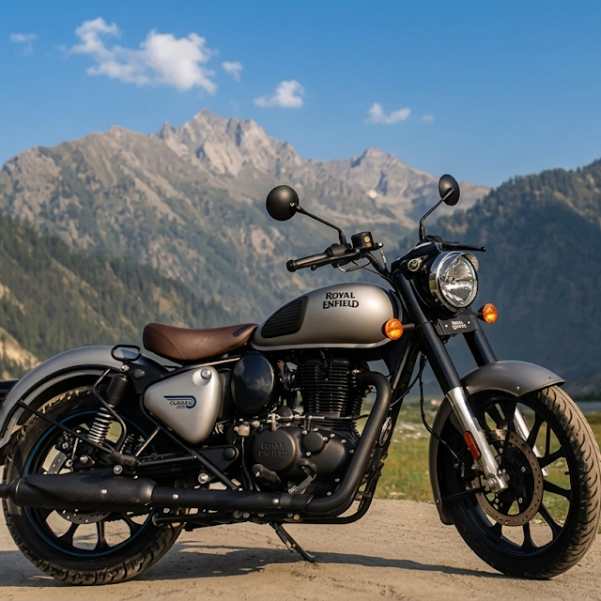
The Classic 350 can do Spiti. We have seen it done many times. But it is not the most forgiving choice if you want comfort on bad roads.
The Classic 350 has a 349 cc engine producing 20.2 bhp at 6100 rpm and 27 Nm of torque at 4000 rpm. Ground clearance is 170 mm, seat height is 805 mm, kerb weight is 195 kg, and fuel capacity is 13 litres.
That ground clearance number is the catch. 170 mm vs 230 mm on the Himalayan does not sound like much on paper. On the Batal road, it is the difference between rolling over a stone and scraping your bash plate.
The Classic is familiar, simple, stable, and lovely on smoother sections. The Shimla to Kalpa to Tabo run on a Classic is a beautiful experience.
Where it gets harder is on water crossings, loose gravel, and the broken Manali-Kaza sections. The cruiser-style setup does not let you stand on the pegs comfortably, and the lower clearance means you have to pick lines more carefully.
If you already own a well-maintained Classic 350 and you know how it behaves, you can plan Spiti with careful luggage tying, slow riding, and a Shimla-side entry. Just do not expect it to feel like a Himalayan when the road turns ugly.
KTM 390 Adventure for Spiti
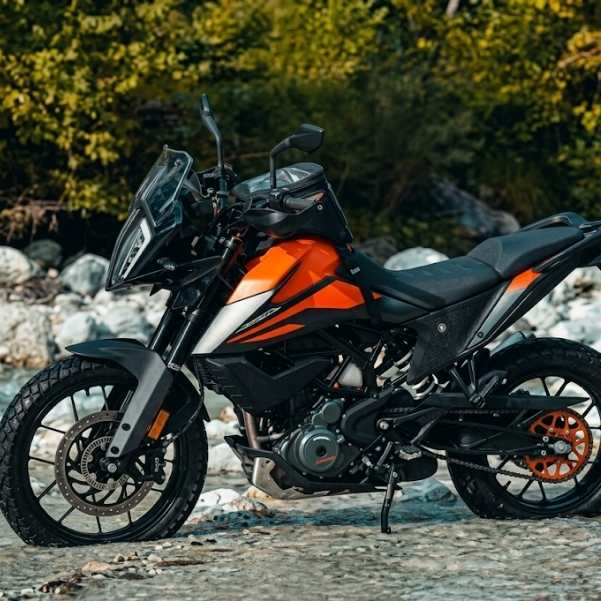
The KTM 390 Adventure is a very capable Spiti motorcycle for experienced riders. We need to say that clearly because some people write off the KTM as a "city bike" and that is wrong.
The bike has a 349.32 cc engine producing 41.5 PS at 8600 rpm and 33.5 Nm of torque at 7000 rpm. Front and rear suspension travel is 200 mm and 205 mm. Ground clearance is 228 mm, saddle height is 825 mm, kerb weight is 181 kg, and fuel tank is 14.5 litres.
It is lighter than the Himalayan 450 and has stronger performance. The suspension travel is genuinely good for bad roads.
The catch is the riding character. The power delivery is sharper. The throttle is more responsive. On gravel and wet rocks, that means a small over-input from the rider can translate into a slide.
This is not a bad bike for Spiti. It is the wrong bike for a rider who has never done mountain gravel riding. If you already enjoy quick bikes, ride smooth, and know how to keep your throttle calm on loose surfaces, the KTM 390 Adventure is a serious option.
If you are still unsure which bike suits your riding style, our Chandigarh Spiti bike tour with Pin Valley helps you plan the route with the right riding support, planned halts, backup assistance, and Chandratal included.
Which bike should you choose based on your rider profile?
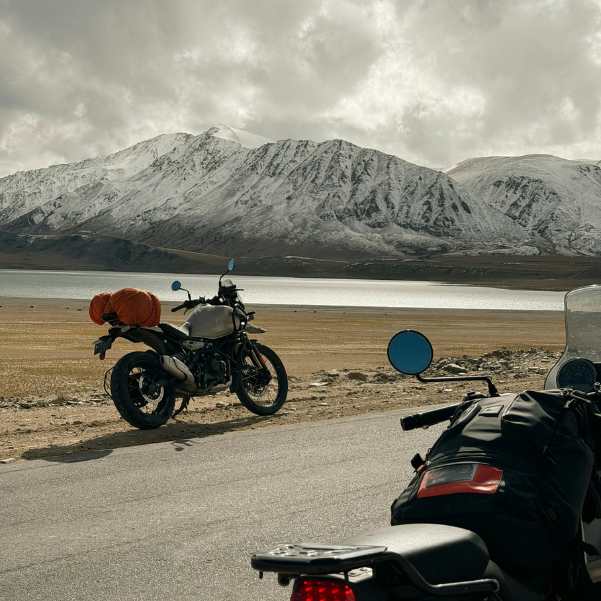
If this is your first Spiti bike trip
Choose the Himalayan. Not the Classic. Not the KTM. The Himalayan.
First-time Spiti riders need a bike that forgives small mistakes more than they need raw speed or street looks. The upright posture, ground clearance, and rough-road manners of the Himalayan reduce stress on long days. Stress at altitude is what causes most accidents in this region.
If you are a short rider or lighter rider
Seat height matters more than people think when you are loaded with luggage and have to plant a foot on a slope.
The Himalayan offers a low-seat option that brings the height down to 805 to 825 mm. The KTM and the standard Himalayan sit at 825 mm. The Classic is the lowest at 805 mm.
The honest tip from our team is this. Do not pick a bike based on the showroom test ride. Ride it loaded, with luggage at the back, on a gentle slope. That is when you find out if the bike fits you. We always tell riders to spend a full day on the bike before starting Spiti.
If you are riding with a pillion
Pick the Himalayan over the Classic for rough stretches.
When you add a pillion plus luggage, you eat into your suspension margin. On the Manali-Kaza side, that suspension margin is exactly what keeps your spine happy.
The Classic with a pillion is comfortable on the Shimla to Kalpa stretch. It gets tiring fast on the broken sections after Gramphu.
If you love performance riding
Take the KTM 390 Adventure only if you already have mountain and gravel experience. Spiti rewards smoothness, not speed.
The riders we see crashing in Spiti are almost never the slow ones. They are the ones who think their riding skill on highways translates to gravel cliff roads. It does not.
Should you take your own bike or rent one for Spiti?
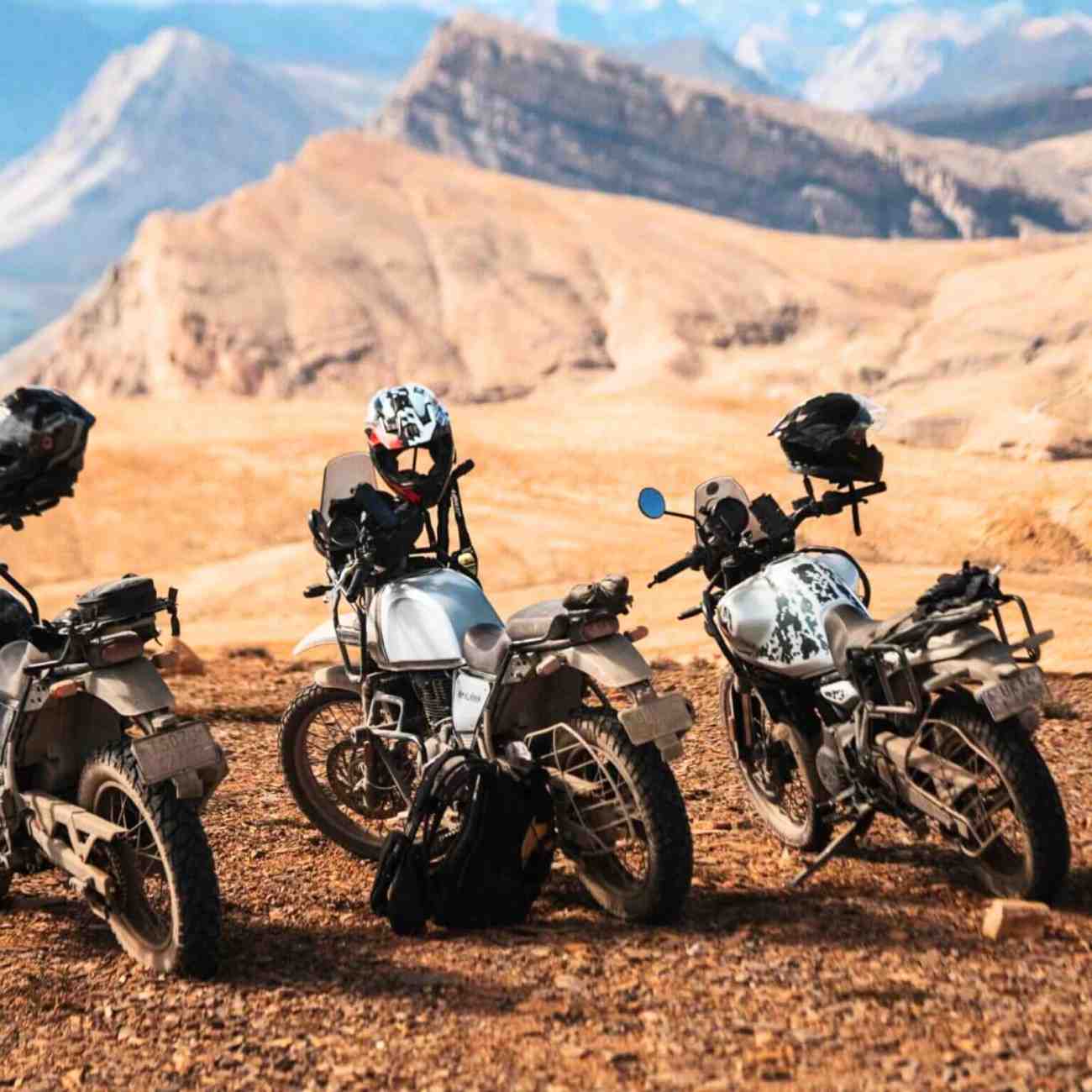
Both options work. The right choice depends on where you live, how well you know your bike, and how much risk you want to manage yourself.
Own bike advantages
You know its clutch feel, its braking behaviour, its quirks. You know its service history. You trust the bike, and trust matters at altitude.
Own bike disadvantages
You either ride all the way from your home city or pay to transport the bike. You manage spares, breakdown risk, and the long return ride after an already tiring trip.
Rental bike advantages
You skip the long highway transfer. You pick a bike already tuned for the route. Local rental shops in Manali or Shimla handle some of the documentation work.
Rental bike warning
Do not rent a bike you have never ridden and start straight for Spiti the next morning. We see this mistake every season.
Spend at least a half-day or full day on the rental bike on local roads first. Test the brakes hard. Test the clutch. Check the tyre pressure yourself. Check the chain tension.
The most important thing about rentals in Himachal is this. Rental quality matters more than the model name. A badly maintained Himalayan with worn brake pads and a loose chain is far worse than a well-maintained Classic.
If you want to skip the bike-sourcing headache entirely and have the route, stays, fuel and backup handled, WhatsApp us.
>>WhatsApp us and let us handle your complete Spiti ride
Best route for a Spiti bike trip in 2026
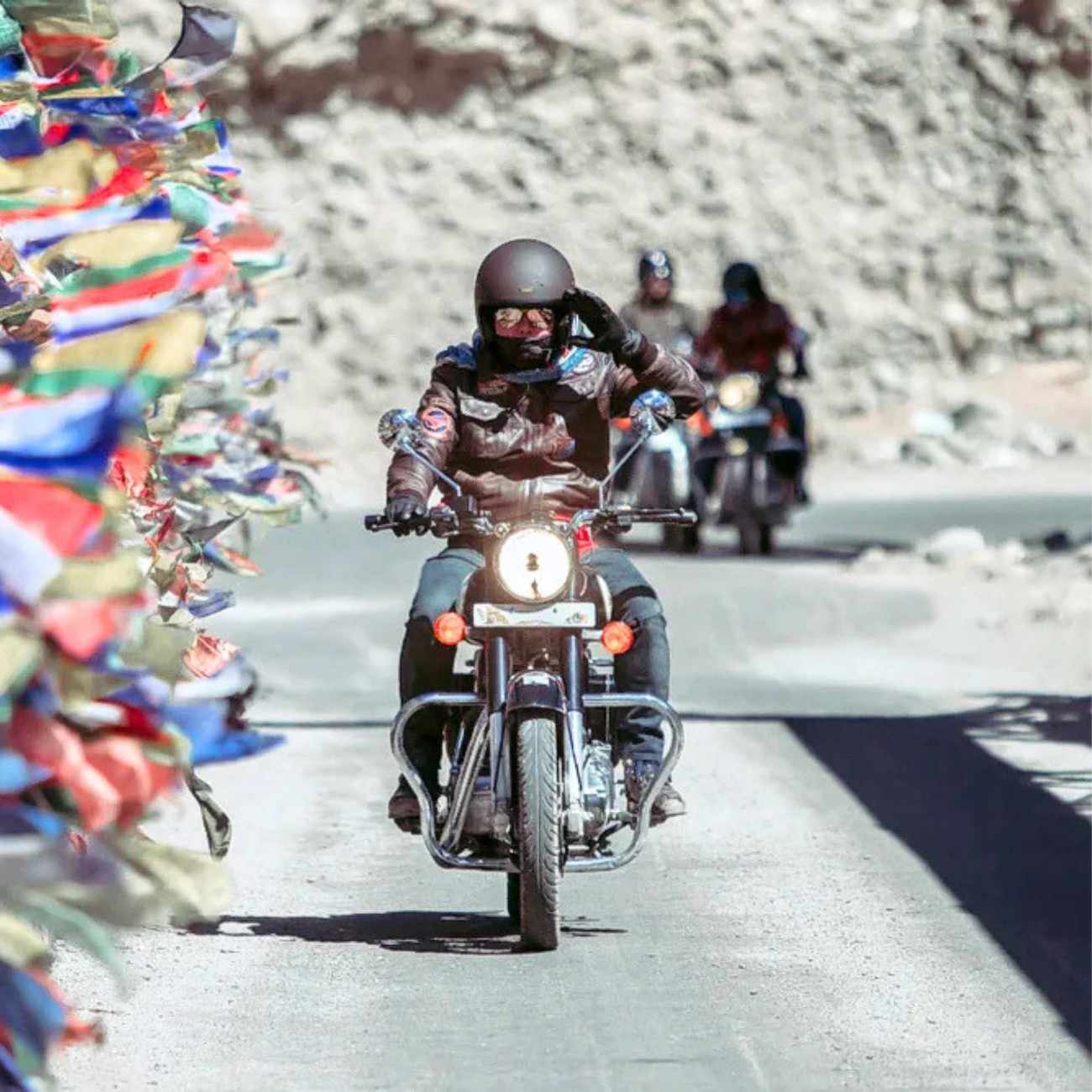
You have three real options. Each one suits a different kind of rider.
Shimla to Kaza route
This is the better route for first-time Spiti riders and for anyone serious about acclimatisation.
The flow goes from Shimla to Narkanda, then down to Rampur, up to Reckong Peo, sideways to Kalpa, then through Nako and Tabo to Kaza. You gain altitude gradually over four to five days.
By the time you reach Kaza at around 12,500 feet, your body has had time to adjust. That single fact saves more trips than any other piece of advice we give.
A rider who has acclimatised properly can ride a long day at altitude. A rider who jumped from the plains struggles to even sleep.
Manali to Kaza route
This is shorter but more intense. You go through the Atal Tunnel to the Lahaul side, then continue via Gramphu, Batal, Losar and Kunzum to Kaza.
This route has the rougher road sections, more water crossings, and faster altitude gain. It is also seasonal. Kunzum Pass needs to be open and stable for this route to work, and that does not happen until late May or early June in most years.
We have a separate piece on what the Kunzum Pass looks like in May if you are planning early-season.
Full Spiti circuit
The full circuit is the dream ride. You enter from Shimla, cover the Kinnaur side, reach Kaza, ride to Chandratal via Kunzum, and exit through Manali.
It only works when both the Manali-Kaza side and Kunzum Pass are officially open and stable. We cover the timing in detail in our Chandratal opening 2026 guide.
What we tell our riders is simple. Do not lock the Manali exit until you are already in Kaza and have confirmed the road. Keep a Plan B that lets you return via Shimla if needed.
For riders who want the full Spiti circuit without handling route uncertainty alone, our Lahaul and Spiti bike tour includes planned halts, Chandratal, backup support, and flexible route planning.
2026 road-status reality for Spiti bike riders
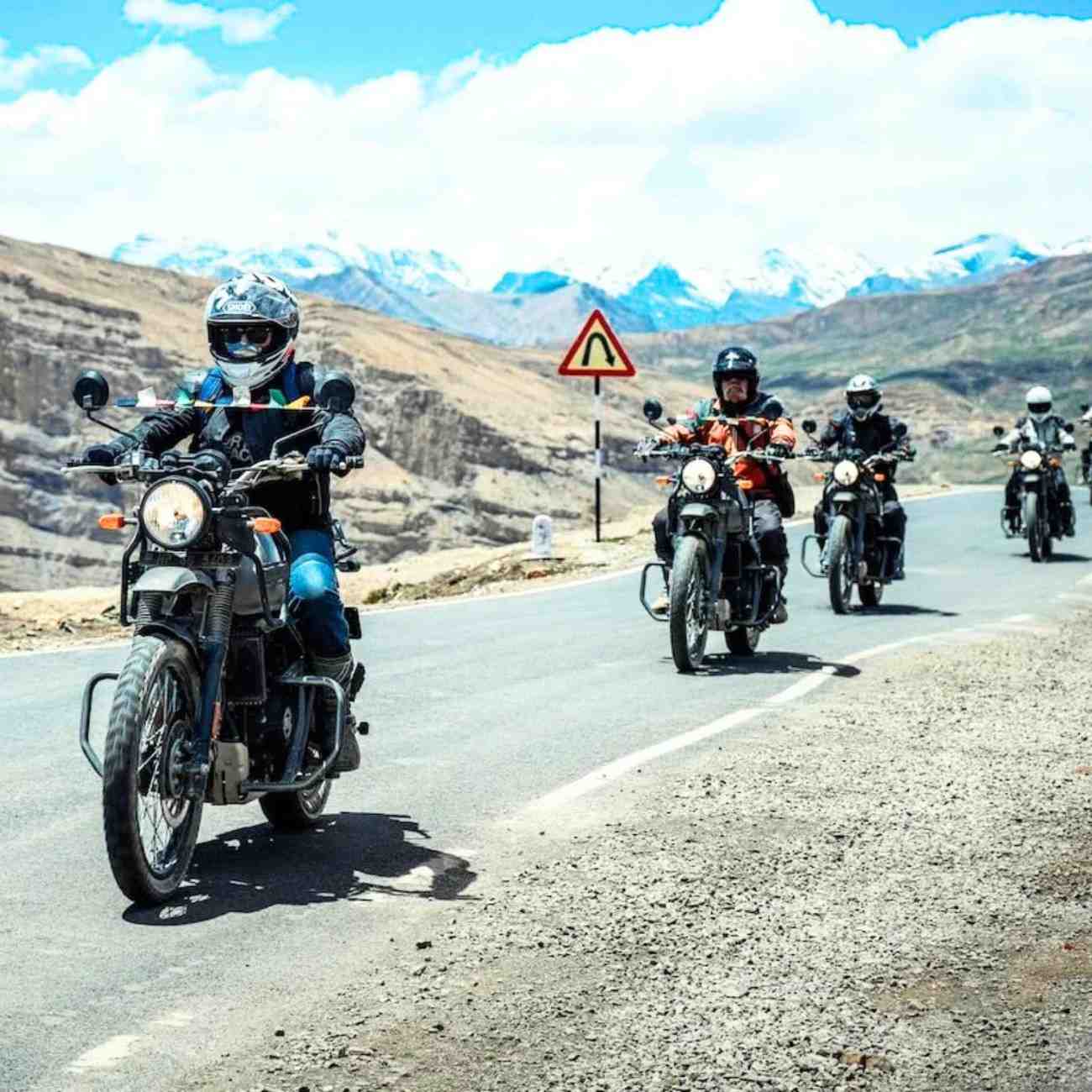
Here is the honest picture as we checked it for this guide.
The official Lahaul and Spiti road-status page showed Delhi to Manali open, Manali to Keylong open, and Keylong to Kaza closed.
As of April 21, 2026, recent road status updates showed the Manali to Kaza route via Kunzum Pass was still closed. The route was expected to open between mid May and early June, subject to BRO clearance, snowfall, and weather conditions.
If you are reading this after April 2026, do not trust these numbers blindly. Road status changes weekly. A bad snowstorm can push opening dates by ten days. Always check just before you ride.
April and early-May riders should not blindly plan the full circuit. Shimla side may still work when the Manali-Kaza side is shut, but conditions must be checked close to your travel dates.
What our team always tells first-timers is to keep one buffer day in the plan. Roads in Spiti do not care about your Monday-morning office meeting.
Fuel planning for Himalayan, Classic, and KTM in Spiti
Fuel is the one mistake that turns a fun day into a panic day. Plan it before you leave Manali or Kalpa.
Tank sizes again so you can compare. Himalayan 450 is 17.0 litres, KTM 390 Adventure is 14.5 litres, and Classic 350 is 13 litres.
Kaza has petrol pumps, but you should not leave Kaza with a half-empty tank when you are heading further out.
Practical advice from our team
Fill at every major fuel stop, even if you think you do not need to. Do not calculate fuel by your highway mileage in the city. Loaded bikes at altitude with cold starts and rough roads consume more.
Carry backup fuel on unsupported stretches, especially if you are riding a smaller-tank bike, riding two-up, or riding without a support vehicle. A 5-litre jerry can secured properly is enough for most riders.
Do not overpack fuel. Strap it low, away from the exhaust, and away from your body in case of a fall. We have seen riders carry 10 litres of fuel in flimsy plastic jugs near their seat. That is dangerous.
Bike preparation checklist before Spiti
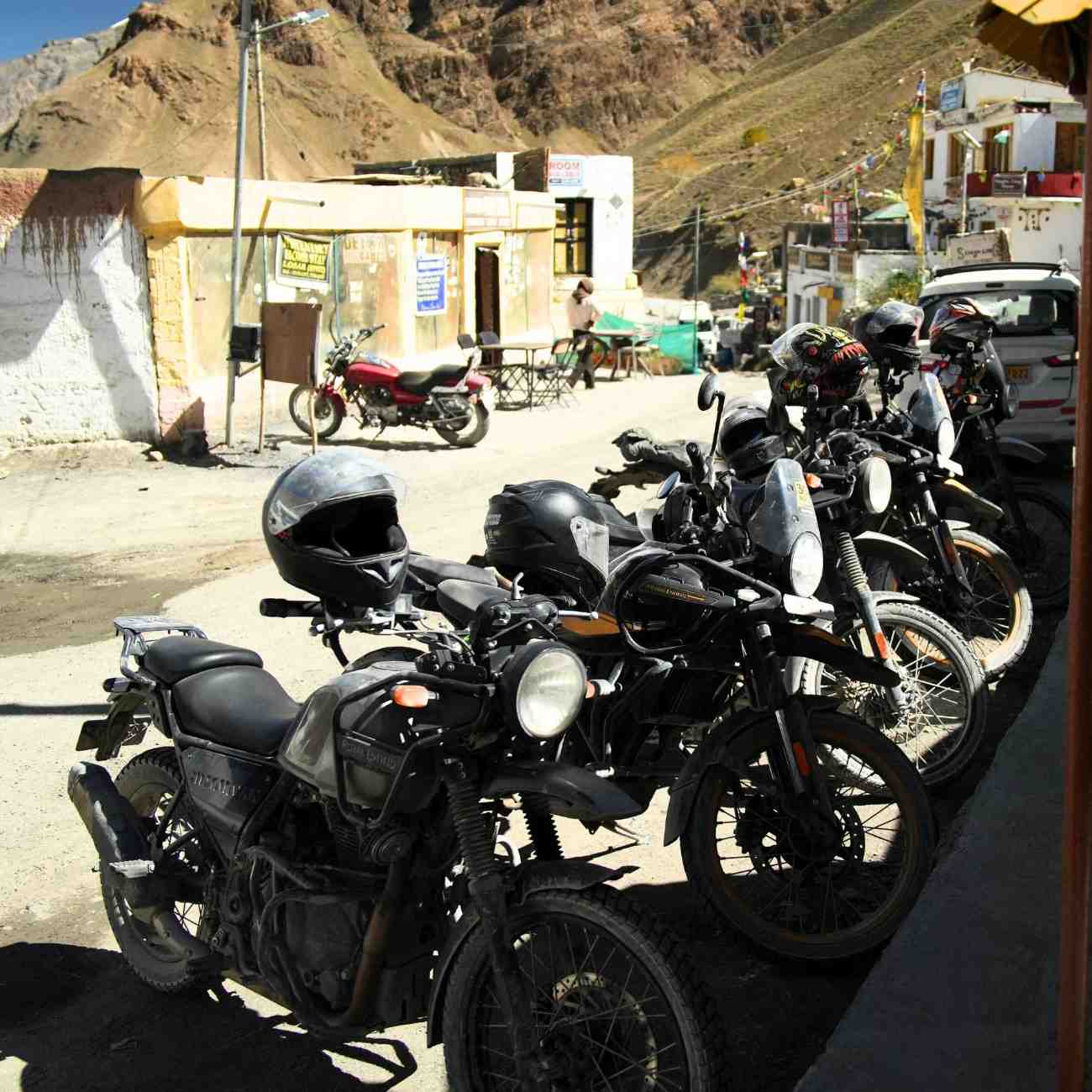
This is where most trips are won or lost. The bike does not break in Kaza out of bad luck. It breaks because something was loose or worn before you started.
Get a full service done at least a week before the trip. That gives you time to ride the bike post-service and catch any issues. A service done the day before you leave is a service you have not tested.
Check engine oil, brake fluid, suspension oil if applicable, coolant on liquid-cooled bikes, brake pads, clutch plates, chain and sprocket, battery health, headlight, indicators, horn, tyre tread, wheel alignment, clutch cable, throttle cable, spark plug, and air filter.
Carry a foot pump, puncture repair kit, full toolkit, spare fuse, spare spark plug, spare tubes if your bike runs tube tyres, spare clutch and brake and accelerator cables, chain links, a small bottle of engine oil, your spare key, nylon rope, bungee cords, and all your documents.
Documents that must be physical, not just digital. Driving licence, RC, PUC certificate, and insurance. Checkpost officers in Spiti sometimes want to hold the paper, not look at your phone screen.
Learn at least three things before you leave. How to fix a puncture. How to adjust chain tension. How to clean and replace a spark plug.
A service bill does not mean the bike is Spiti-ready. We have seen freshly serviced bikes break down on day two because a mechanic forgot to tighten one bolt.
Do your own walk-around the morning you leave. Squeeze the brake levers. Bounce the suspension. Wiggle the luggage. If something feels loose, it is loose.
What riding gear and luggage setup should you use?
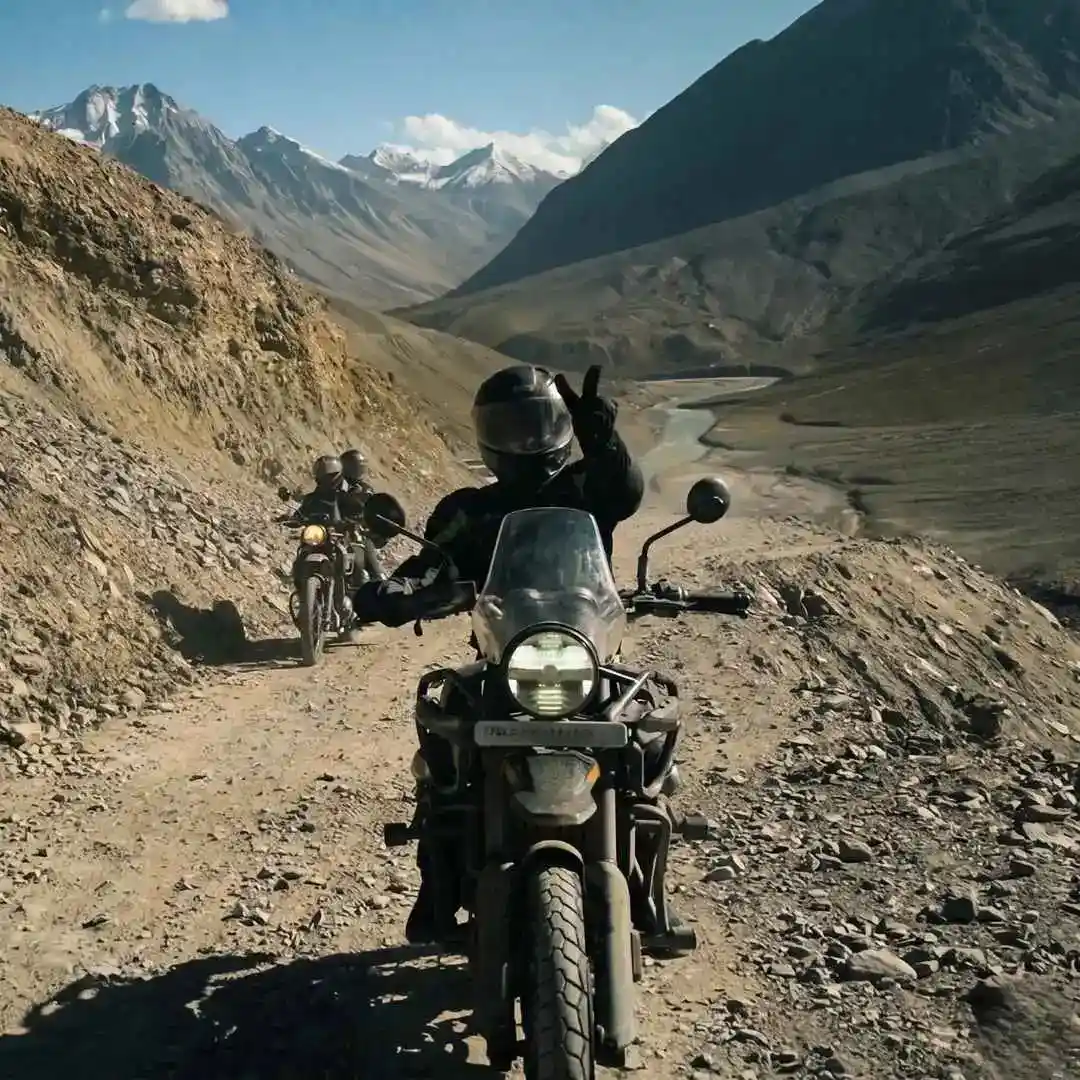
Your bike choice fails if your luggage is tied badly. We have seen this on the Batal road more times than we can count.
For gear, you need a proper helmet (not a half-face), gloves with knuckle protection, a riding jacket with armour, knee guards, riding boots or sturdy waterproof shoes, a rain layer that actually keeps water out, a thermal layer for nights, a small first-aid kit, a power bank, spare sunglasses, a hydration setup, and waterproof covers for your luggage.
For luggage, the rules are simple. Keep it low. Keep it balanced. Keep it tight.
Use saddlebags or panniers low on the bike, not a tall tower of bags on the rear seat. Use bungee cords plus rope for redundancy. One cord can fail. Two will not.
Avoid riding with a tall, heavy backpack on your shoulders for long Spiti days. After hour three, your shoulders and lower back will hate you.
If you are renting a bike or taking a package bike, ask in advance about the saddle stay, luggage rack, helmet quality, toolkit content, and luggage weight limit. Do not assume.
Is Spiti safe for beginner bike riders?
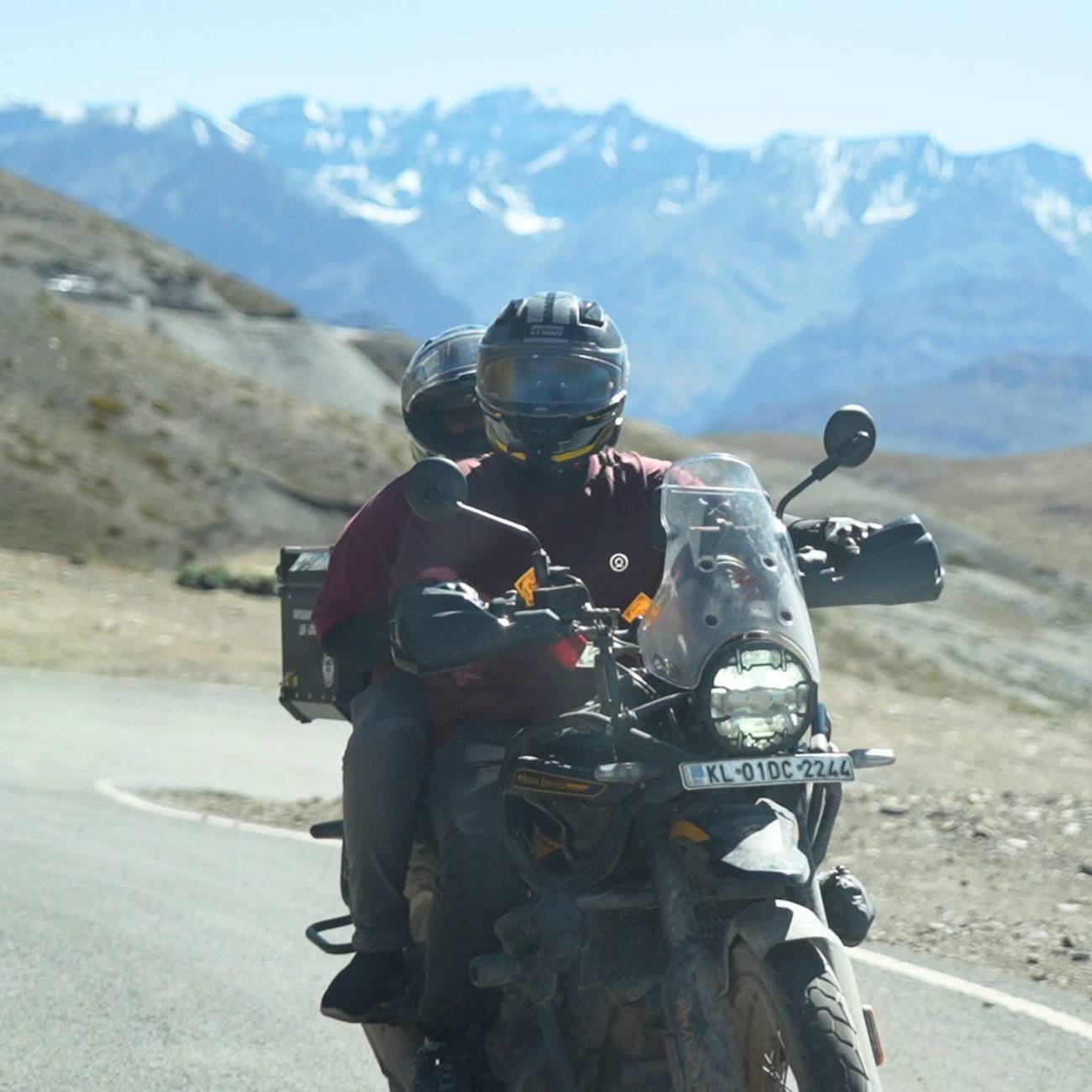
Honest answer. Spiti is not safe for total beginners who have only ridden in city traffic.
But a confident rider with hill-riding practice, basic fitness, patience, and the right bike can do it safely with proper planning.
If you have never ridden on hills, do not make Spiti your first hill ride. Spend a long weekend in Solang or Sissu first, get used to corners, get used to managing brakes on descents, and then plan Spiti.
Our suggestions for first-time Spiti riders
Enter from Shimla so you gain altitude slowly. Avoid night riding completely. Keep daily distances realistic, not based on Google Maps timings. Avoid alcohol at altitude on the first three nights. Ride with a group or guided support if possible.
For solo riders, especially women, we have a separate honest piece on whether Spiti is safe for solo female travellers.
Guided Spiti bike trip vs self-planned ride
Self-planned rides
Self-planned rides give you total freedom. They also place every responsibility on you. Route choice, stay bookings, fuel planning, mechanical issues, weather calls, permits and checkpoints, and emergencies. All of it.
Guided Spiti bike trip
A guided Spiti bike trip handles most of that load. The bike, fuel planning, stays, daily route calls, backup vehicle, road captain, mechanic, and local contacts are part of the package. You ride. They handle the rest.
As a market reference, a typical guided Spiti bike package in this region includes a Himalayan 411 or 450, helmet, fuel, an expedition leader, a mechanic, accommodation, and breakfast and dinner. That is the standard inclusion list across most operators.
We are not pushing you toward a guided trip if a self-planned ride is what you want. Some of the best Spiti rides we have seen have been solo and self-planned.
But if it is your first Spiti, or you are riding with a pillion, or you have limited time and zero margin for mechanical delays, a guided trip removes a huge layer of stress.
If it is your first Spiti ride, our Guided Spiti Bike Trip is built around Himalayan bikes, backup vehicle, mechanic support and local route planning.
Our team at Travel Coffee is based in Shimla. We plan Spiti rides for our travellers every season. We pick the right bike, the right route, the right season, and we have the local contacts when something goes sideways.
If you want a sensibly planned Spiti ride with backup support, our Summer Spiti Circuit with Chandratal package is a good starting point.
Final recommendation: the best bike for Spiti Valley
Here is the verdict from our team after years of running this route.
Best overall bike for Spiti Valley: Royal Enfield Himalayan 450 or Himalayan 411. The clearance, the posture, the tank size, and the rough-road manners make it the right pick for most riders.
Best for relaxed experienced riders with light luggage: Royal Enfield Classic 350. Especially if you already own one, know it well, and plan to ride mostly the Shimla side.
Best for experienced performance riders: KTM 390 Adventure. Lighter, sharper, and genuinely capable. Just respect the gravel.
Best for first-time Spiti riders who want lower risk: A guided Spiti bike trip with a well-maintained Himalayan and a backup vehicle.
The honest truth is that the best bike for Spiti is the bike that matches your skill, your route, and your preparation. There is no trophy for taking the toughest bike if you are not ready for it.
Spiti is not about proving a point. It is about reaching safely, riding the kind of roads you remember years later, and coming back with stories that make you actually smile when you tell them.
If you want help putting your Spiti bike trip together, or if you are still deciding between routes, talk to us. We have a Manali and Sissu base for the Manali-side riders, and we run the Shimla-side circuits ourselves.
>>WhatsApp us for a Spiti bike-trip plan that fits your dates
Explore Our Handpicked Spiti Valley Bike Trips
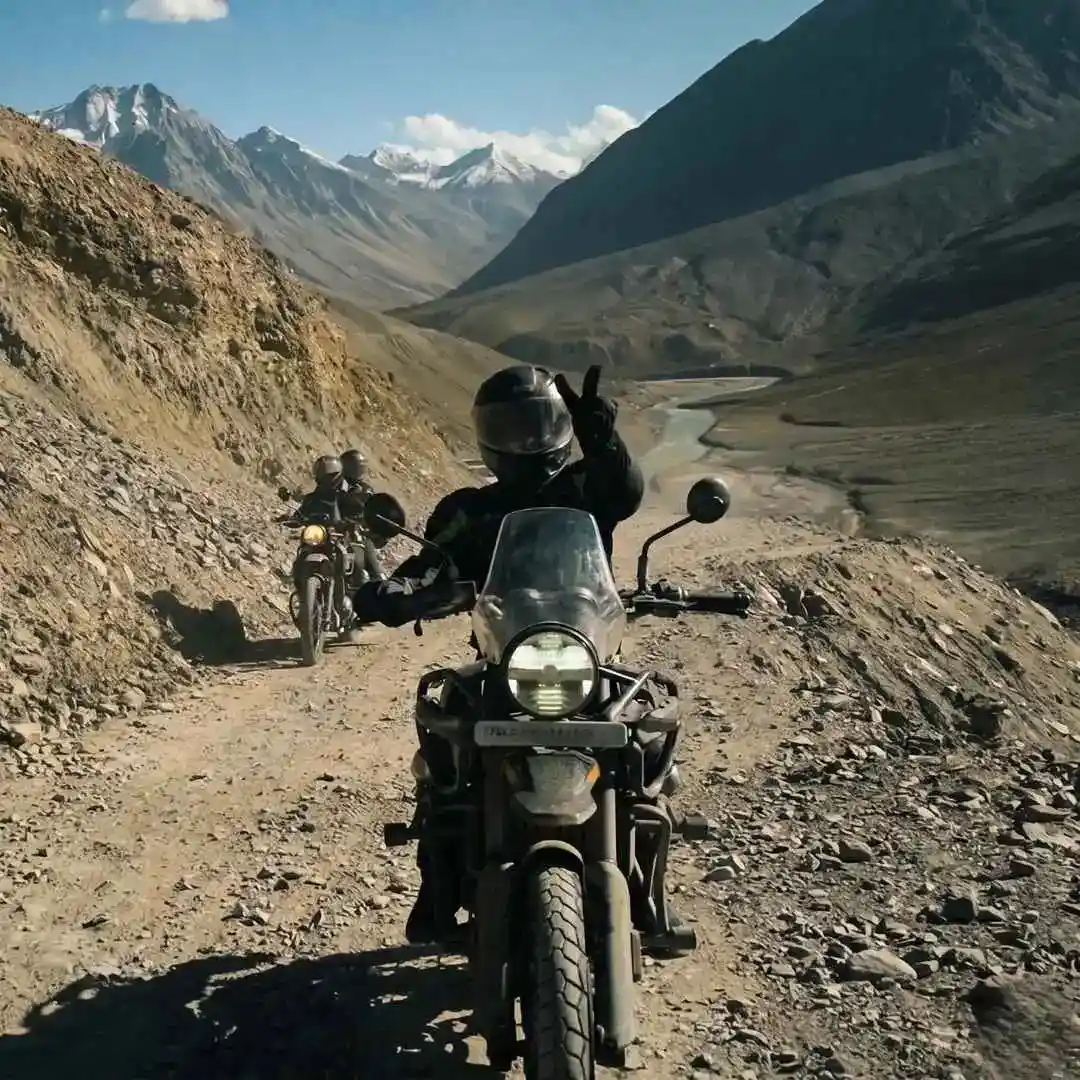 Group Tour7D/6N
Spiti Bike Trip From Manali With Chandratal
1D Sissu•1D Chandratal Camp+1
₹25,999₹29,999SAVE INR 4,000/ person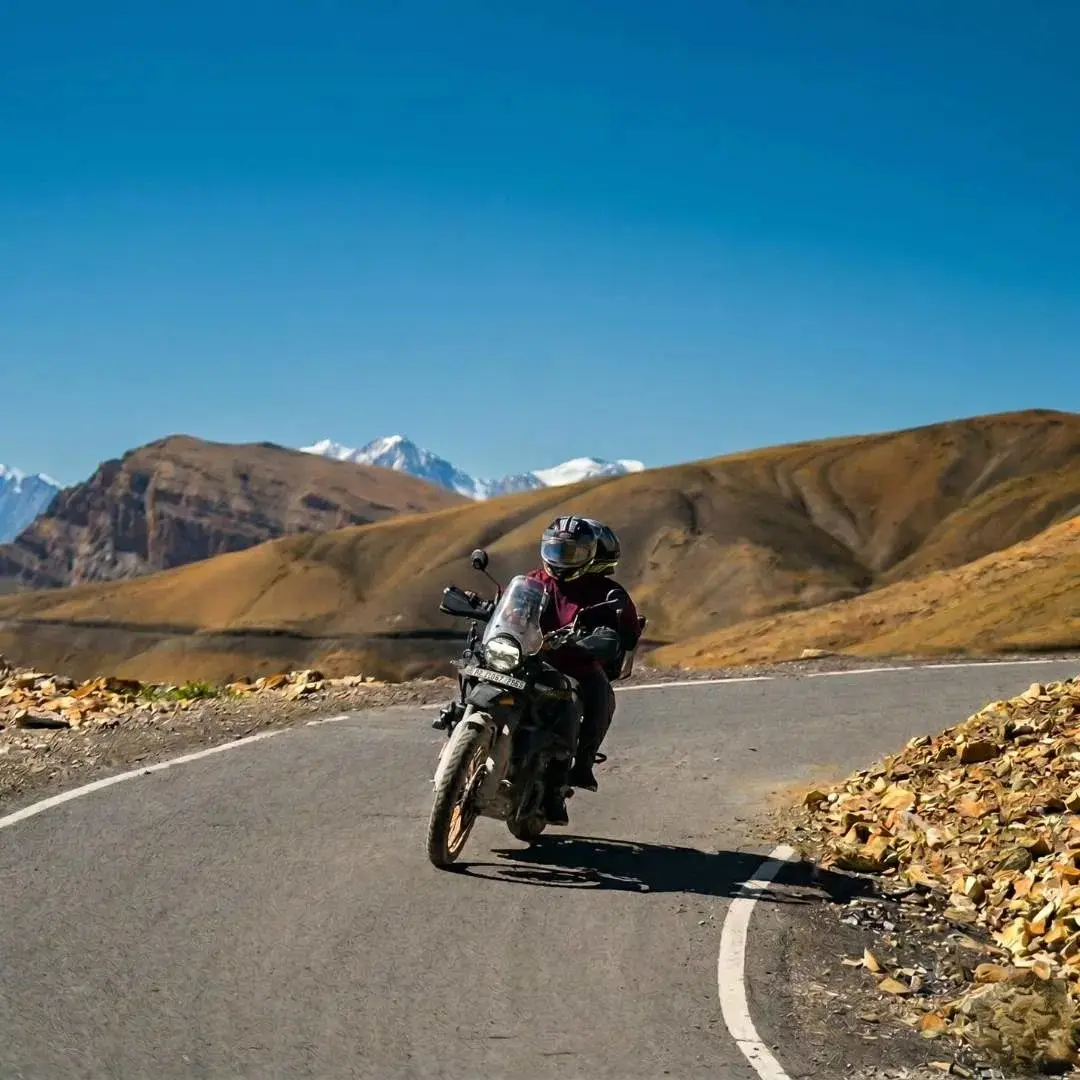 Group Tour11D/10N
Ultimate Spiti Valley Bike Expedition With Chandratal and Pin Valley
1D Narkanda•1D Sangla / Baspa Valley+5
₹32,999₹39,999SAVE INR 7,000/ person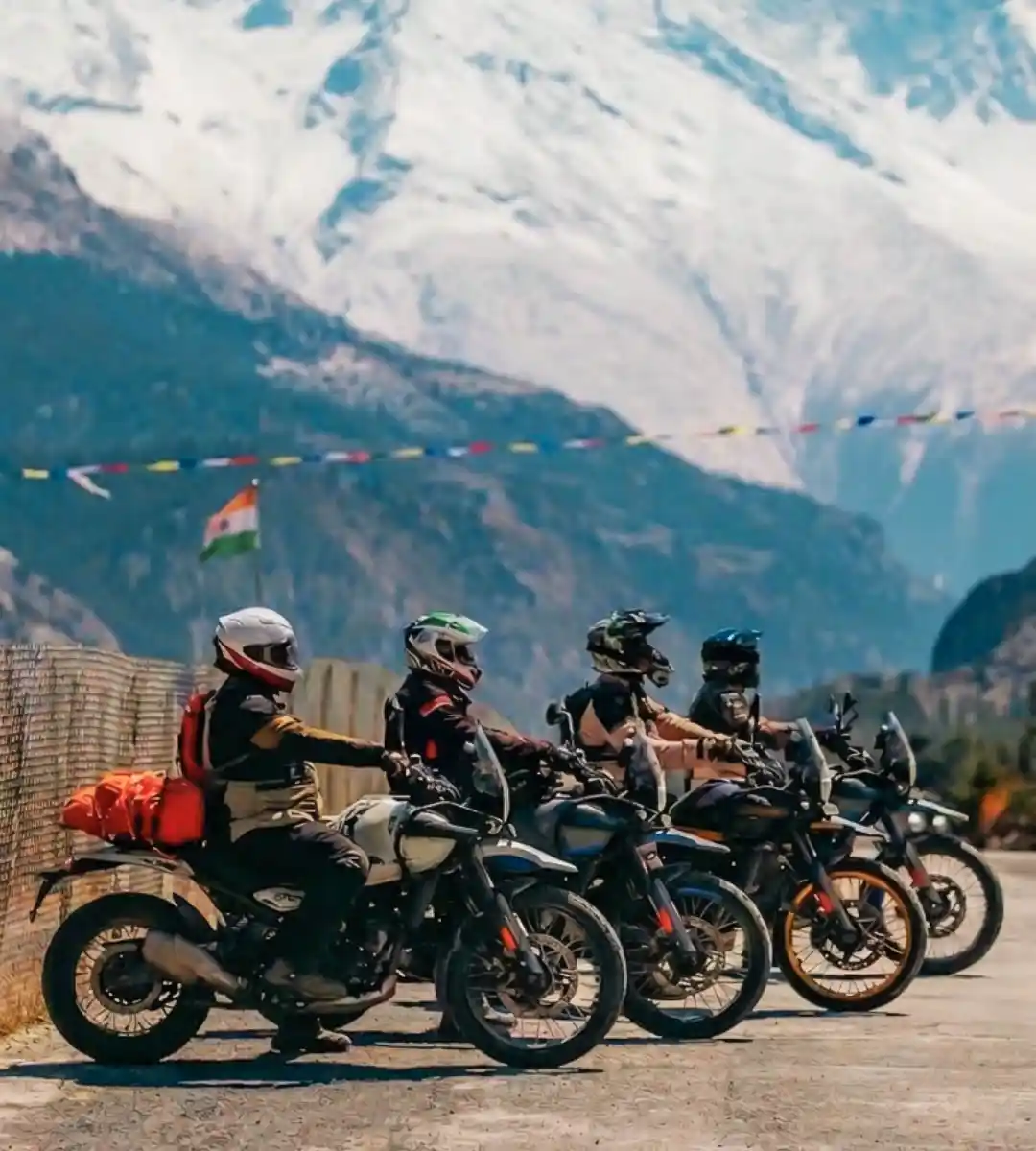 Group Tour10D/9N
Most Loved Spiti Valley Bike Expedition With Chandratal
1D Jibhi•1D Sangla+4
₹34,999₹41,999SAVE INR 7,000/ person
Related topics
Frequently Asked Questions
Which is the best bike for Spiti Valley trip?
The Royal Enfield Himalayan 450 or Himalayan 411 is the best bike for Spiti Valley for most riders. It handles rough roads, carries luggage well, and forgives small rider mistakes.
Is Royal Enfield Himalayan good for Spiti?
Yes. The 230 mm ground clearance, upright riding posture, large fuel tank, and rough-road comfort make the Himalayan one of the strongest options for Spiti.
Is Classic 350 good for Spiti Valley?
The Classic 350 can do Spiti if it is well maintained and you ride calmly. The 170 mm ground clearance and cruiser posture make it less forgiving on the roughest sections, especially the Manali-Kaza side.
Can KTM 390 Adventure do Spiti Valley?
Yes. The KTM 390 Adventure is very capable for experienced riders. It is light, fast, and has good suspension travel. New riders should pick the Himalayan instead.
Can a beginner do a Spiti bike trip?
A complete beginner should not. A confident rider with some hill-riding practice, basic fitness, and the right bike can do Spiti safely with proper planning and preferably guided support.
Should I rent a bike or take my own bike to Spiti?
Take your own if it is well maintained and you know it well. Rent if you want to skip the long highway transfer and want a bike already tuned for the route. Always inspect a rental bike yourself before leaving.
Which route is better for Spiti bike trip?
The Shimla to Kaza route is better for first-time riders because of gradual altitude gain. The Manali to Kaza route is shorter but rougher and is seasonal, depending on Kunzum Pass.
How much fuel should I carry for Spiti?
Fill up at every major fuel stop. The Manali to Kaza route has no fuel station for roughly 200 km after Manali. Carry backup fuel on unsupported stretches, especially on smaller-tank bikes or with a pillion.
Do Indians need a permit for Spiti Valley bike trip?
Indian citizens do not need an Inner Line Permit for normal Spiti tourism. Carry a photo ID for checkposts. Foreign nationals need permits for protected areas. Rohtang and Beyond Rohtang vehicle permits are separate when riding from the Manali side.
What spares should I carry for a Spiti bike trip?
Carry a puncture repair kit, foot pump, spare tubes if running tube tyres, spare cables, spark plug, fuses, a full toolkit, chain links, a bottle of engine oil, nylon rope, bungee cords, and all your documents.
Is a Spiti bike trip possible with a pillion?
Yes. Pick a suitable bike like the Himalayan, keep luggage light, and avoid overloading. The Himalayan is more practical than the Classic for pillion plus luggage on rough roads.
What is better for Spiti, Himalayan or Classic?
The Himalayan is better for most Spiti riders because of higher clearance, better posture, and stronger rough-road comfort. The Classic is fine for experienced riders who already own it and ride carefully.
More about Lahaul and Spiti
 Lahaul and Spiti
Stargazing in Winter Spiti 2026: Where to Stay, Moonlight and What You Can See
Discover the best places for stargazing in Winter Spiti 2026, where to stay for darker skies and how moonlight affects visibility. Learn what you can realistically see from Kaza, Tabo and nearby villages during the winter months.
- Things to Do
- Snow Travel
 Lahaul and Spiti
Joining a Winter Spiti Group in 2026: Room Sharing, Privacy and Group Expectations
Planning to join a Winter Spiti group in 2026? Learn how room sharing works, what privacy to expect, options for solo travellers and couples, and when a single room supplement may apply.
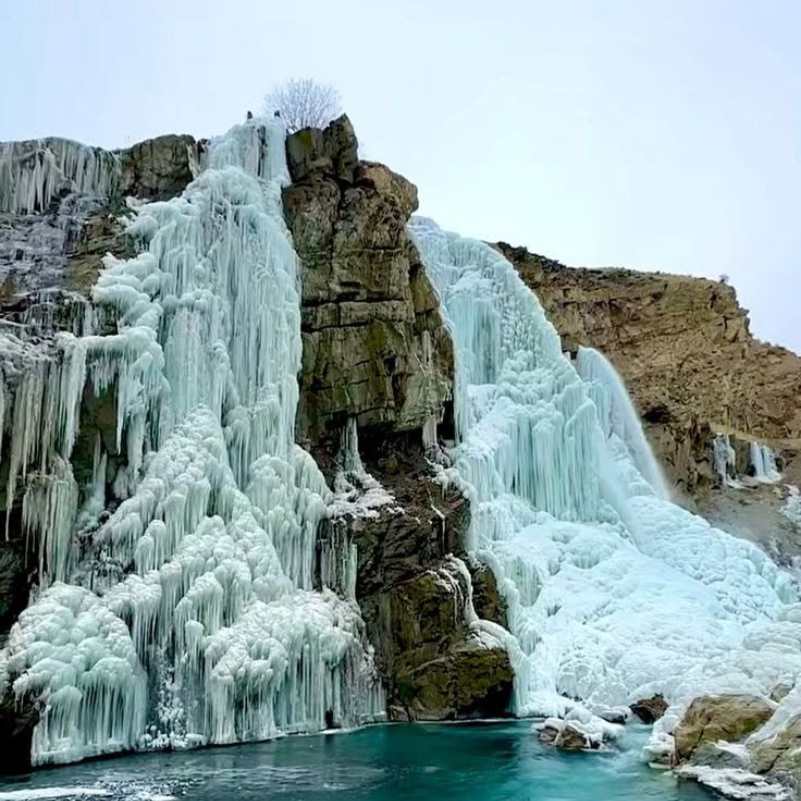 Lahaul and Spiti
Lingti Frozen Waterfall in Winter 2026-27: Access, Photo Stops and What to Confirm
Plan your visit to Lingti Frozen Waterfall in winter 2026-27 with practical details on access, road conditions, the best photo stops and seasonal conditions. Learn what to confirm before leaving Kaza and how to visit this spectacular frozen waterfall safely.
- Places to Visit
- Snow Travel