
Shangchul Mahadev Temple
A three tiered Kath Kuni temple of deodar and stone at the edge of the Shangarh Meadow in Sainj Valley, presiding over a stone free sacred ground the village still protects, and known across the Kullu hills as a deity who grants refuge to outcasts and to couples who marry against their families' wishes
- Kath Kuni temple
- ~2,100 m
- Shangarh Meadow
- No entry fee
- Open year round
What makes it special
Shangchul Mahadev Temple stands at the edge of the Shangarh Meadow in Sainj Valley, a three tiered structure built in the Kath Kuni style of alternating courses of deodar wood and dressed stone. The roofs step inward and up in the way of the wooden hill temples of upper Kullu, slated against the rain and weighted at the eaves with carved beams. Walk close and the wood smells faintly resinous in the afternoon sun, a smell that drifts in from the deodars at the meadow's edge whenever the wind shifts. The grass in front of the temple is unusual: a wide green stretch with no stones, no boulders, no scrub, just smooth, even pasture that looks combed clean by hand.
Local tradition explains the stone free ground. During the years of their exile in the Mahabharata, the Pandavas are said to have spent time in this part of the valley, and they sieved the soil here, handful by handful, until not a single pebble remained. Once they left, the village belief continues, the open ground drew demons. Shangchul Mahadev came from Kinnaur, drove the demons out, and chose to settle at this spot. He is said to have divided the meadow then: one half for the cattle of the village to graze, the other half kept clear for the devtas to gather. The temple marks the place where he made the ground his own. The structure has been rebuilt at least once after a fire, reported around 1998, but the original timber craft and the proportions of the building have been preserved by the carpenters of the village.
The deity here is also known for something more living than mythology. Shangchul Mahadev is regarded across this part of the Kullu hills as the protector of those rejected by family, caste, or community. For generations, couples who have chosen each other against their families' wishes have travelled to this temple seeking sanctuary. What follows is not a tourist legend. It is a traditional, council backed process: the couple presents itself at the temple, the village council acknowledges the union under the deity's roof, and the community thereafter recognises the couple as married. The arrangement has carried real social weight in the region for a long time, and the village has shouldered the responsibility of housing and standing by such couples when their own families would not. If you happen to be in Shangarh while a ceremony of this kind is taking place, please give it the same respect you would give a wedding in your own family. It is not a performance for visitors and it should not be photographed.
For travellers who care about Himachali wooden architecture, the temple is a quiet but rewarding study. The carved door frames, the pillar capitals, and the panels worked into the upper tiers are handwork rather than machine cut, and they reward close looking. If you want to see the same building tradition in a larger and older form, Chehni Kothi near Banjar is the standard reference within a half day's drive.
Quick answers
- Is Shangchul Mahadev Temple worth visiting?
- Yes, if you are already at Shangarh. The temple is a two minute walk from most homestays and sits right at the edge of the meadow. It is not a standalone pilgrimage destination, but it is the cultural heart of the village and the reason the meadow exists in the form it does. The Kath Kuni architecture, the carved beams and door frames, and the village's living tradition of refuge make it worth a proper visit rather than a quick photo stop.
- How much time do you need?
- Thirty minutes to an hour at the temple itself, longer if you want to walk to the smaller shrines scattered around the meadow. Most visitors combine the temple with a dawn or evening walk across the meadow, which is the natural way to see it. There is no ticketed visit or guided tour to plan around.
- What is the village's tradition with eloping couples?
- Shangchul Mahadev is held to be the protector of those rejected by family, caste, or community. For generations, couples who have married against their families' wishes have come to this temple seeking sanctuary. The village council recognises the union under the deity's roof, and the couple is treated as married in the community thereafter. It is a traditional, council backed arrangement, not a curiosity for visitors. If you ever witness it, treat the ceremony as you would a private family wedding.
Quick facts
Everything you need to know at a glance.
At a glance
- Altitude
- Around 2,100 m (roughly 6,900 feet), same as Shangarh village.
- Location
- At the edge of the Shangarh Meadow, Sainj Valley, Kullu district, Himachal Pradesh.
- Nearest town
- Sainj town ~15 km, Aut ~25 km at the highway turn off.
- Open season
- Year round. No fixed opening or closing hours. The temple is always accessible.
- Entry fee
- None. Donations are welcome but not required.
- Time needed
- 30 minutes to 1 hour at the temple. Combine with the meadow walk.
- Access
- Flat walk of about 2 minutes from the nearest homestays. No climb, no trek. The meadow is level ground.
On the ground
- Dress and behaviour
- Remove shoes, caps, and all leather items including belts and leather wallets before entering the temple or the inner sacred ground. This rule is observed by everyone, including visiting officials, and is not negotiable. Modest clothing is expected.
- Sacred ground rules
- The Shangarh Devta Ground meadow is the deity's open courtyard. No camping or tenting on the grass at any time. No alcohol on the meadow or around the temple. No smoking, no chewing tobacco. No loud arguments, raised voices, or music played on speakers. These rules are strictly observed by the village.
- Photography
- Exterior photographs of the temple and meadow are generally fine. Photography inside the main shrine may be restricted; ask before shooting. Do not photograph rituals, devta processions, or any ceremony connected to the village's tradition of sheltering couples, unless explicitly invited to.
- Festivals
- Local festivals with devta processions (deity carried on a palanquin) happen through the year. Phagli festival in February or March marks the end of winter. Ask your homestay about upcoming dates.
- Mobile network
- Very patchy at Shangarh. BSNL works in parts of the village. Jio and Airtel unreliable.
- Food
- Nothing at the temple itself. Homestays in the village are the primary, most reliable option for meals; a few small cafes near the road head exist but hours are inconsistent.
Seasonal weather
- March to early June22°6°Spring
- July to August24°14°Summer monsoon
- September to early November20°4°Autumn
- Mid November to February12°-4°Winter
Suitable for
- Couples — suitable
- Families — suitable
- Seniors — suitable
- Solo — suitable
- First-timers — suitable
- Pet-friendly — with some care
How to reach Shangchul Mahadev Temple
3 approach routes, with seasonal access.
From Shangarh village homestays
Year round.- Distance
- About 50 to 200 metres
- Time
- 2 minutes on foot
- Road
- Flat grass and village path. No road needed.
The temple sits at the edge of the meadow, a short walk from most Shangarh homestays. No transport needed. Walk out of your homestay, cross the village path, and you are at the meadow with the temple visible at one end.
From Aut (the highway turn off)
Year round. Last stretch can be muddy after monsoon.- Distance
- About 25 km to Shangarh village
- Time
- 1.5 to 2 hours by road
- Road
- NH 3 through the Aut tunnel to Larji, then Sainj valley road. Tarred to Sainj town, rougher for the last 10 to 15 km.
- Last fuel
- Aut and Sainj town
The standard approach to Shangarh. From Aut, drive through the 3 km tunnel towards Larji, take the left fork into the Sainj valley road, pass Sainj town, and continue on the narrowing road to Shangarh. The temple is a short walk from wherever you park in the village. Full route details are in our Shangarh Meadows guide.
From Delhi
Year round on the approach.- Distance
- About 490 to 510 km
- Time
- 13 to 15 hours to Shangarh
- Road
- NH 44 to Chandigarh, NH 3 to Aut, then Sainj valley road.
- Last fuel
- Chandigarh, Swarghat, Bilaspur, Sundernagar, Aut, Sainj
Overnight Volvo to Aut, then taxi to Shangarh. Self drive runs 13 to 15 hours. The temple is not a standalone destination from Delhi. Plan it as part of a two to three night Shangarh stay.
Best time to visit
Season by season, so you can plan around the weather rather than hope.
- Recommended
Spring
March to early June
Green meadow, clear mountain views, the temple at its most photogenic
- Day temperature
- 14 to 22 C
- Night temperature
- 6 to 10 C
- Crowds
- Light to moderate
The best window. The meadow is deep green, wildflowers appear at the forest edges, and on clear mornings the snow peaks behind the temple are sharp. The temple carvings catch good light in the early hours. Weekdays are calm, May and June weekends get busier.
Summer monsoon
July to August
Wet meadow, mist over the temple, rough approach road
- Day temperature
- 18 to 24 C
- Night temperature
- 14 to 16 C
- Crowds
- Low
The meadow stays wet, the mountain views disappear into cloud, and the approach road from Sainj can get muddy. The temple itself is accessible year round, but the overall Shangarh experience is diminished. Skip unless you specifically like mist and rain.
- Recommended
Autumn
September to early November
Sharpest air, the temple against clear skies, local festival season
- Day temperature
- 12 to 20 C
- Night temperature
- 4 to 8 C
- Crowds
- Moderate in October, drops by November
Late September to mid October is the cleanest version. Post monsoon air clears the views, the meadow is dry and even, and local festivals with devta processions are most likely in this window. Nights get cold by November.
Winter
Mid November to February
The temple in snow, quiet, cold, and atmospheric
- Day temperature
- 4 to 12 C
- Night temperature
- -4 to 2 C
- Crowds
- Very low
Occasional snowfall dusts the wooden tiers and the meadow. The temple against fresh snow is genuinely striking. Expect cold, few other visitors, and basic heating at homestays. Phagli festival in February or March is worth timing for if you can.
Things to see & do
5 things worth your time at Shangchul Mahadev Temple.
Walk to the temple at first light
30 to 45 minutesThe temple is at its quietest and most photogenic at dawn, before the village wakes up and cattle come out to graze. The wooden tiers catch the first light while the deodar forest behind is still in shadow, and the smell of resin from the warming wood is sharper at this hour than at any other. The stone free grass is wet with dew, and the only sounds are wind in the pine tops and a distant cowbell. Carry a jacket, the morning air bites even in May. No guide needed.
Look at the carvings up close
15 to 20 minutesThe upper tiers carry detailed wooden carvings of mythological scenes; the stone sculptures at the base are older and rougher. Most travellers glance at the temple from the meadow and miss the detail. Walk up to the building and look at the door frames, the pillar heads, and the carved panels on the upper storeys. This is handwork, not machine cut, and it rewards close looking. The same tradition runs through the wooden hill temples of upper Kullu, and the small variations are part of why the style is worth studying.
Walk the smaller shrines around the meadow
30 to 45 minutesSeveral smaller shrines stand at various corners of the Devta Ground. Locals say the devta rests at these spots at different times of the year, and a wooden enclosure near the meadow entrance serves as a resting place for visiting devtas during festival processions. These structures are not ruins; they are active stations in the sacred geography of the village. Walking the full perimeter of the meadow and visiting them in turn gives you a fuller sense of how the ground works as one whole, not as a temple and an empty field.
Catch a devta procession if your dates align
1 to 2 hoursDuring local festivals and village ceremonies (weddings, seasonal celebrations), the deity is carried out on a palanquin in a procession with music and prayer. Phagli festival in February or March is one of the bigger occasions. These are not scheduled for tourists, so ask your homestay about upcoming dates when you book. If you are lucky enough to be present, stand to the side, watch in silence, and photograph from a polite distance only if no ceremony is in progress. Never block the path of the palanquin bearers.
Sit on the meadow and watch the temple change light
As long as you wantThe temple looks different at every hour. Morning side light picks up the grain of the deodar. Midday flattens it. Late afternoon turns the tiers golden against dark forest. Sit on the smooth, stone free grass, face the temple, and watch the light shift. The smell of warm pine and grass settles in around 3 PM, the kind of detail you only notice when there is nothing else competing for your attention. This is free, unlimited, and arguably the best use of your time in Shangarh.
Know before you visit Shangchul Mahadev Temple
The practical bits, from people who have been.
What the temple actually isA three tiered Kath Kuni temple of deodar and stone, presiding over a stone free meadow that the village treats as the deity's open courtyard.
Shangchul Mahadev Temple is a three tiered structure of deodar wood and dressed stone, built in the Kath Kuni style of the wooden hill temples of upper Kullu. The roofs step inward and up, slated for the rain, with carved beams weighting the eaves. The building stands at the edge of the Shangarh Meadow, a wide stone free pasture that the village treats as the deity's open courtyard.
The deity is a local form of Shiva. According to village tradition, the Pandavas sieved the soil of this meadow handful by handful during their Mahabharata exile, leaving the grass clean of every stone. After they left, the open ground is said to have drawn demons. Shangchul Mahadev came from Kinnaur, drove them out, and chose to remain here. He divided the meadow into two halves, one for the cattle of the village, the other kept clear for the devtas to gather. The temple marks the point where he settled.
The current building was rebuilt after a fire, reported around 1998 in some accounts, by the carpenters of the village, preserving the original timber craft. The smaller shrines that stand at the meadow's other corners are not ruins; they are stations where the devta is said to rest during festival processions, and they are part of the active sacred geography of the village.
A tradition of refuge: the temple's role in the communityA traditional, council backed system of refuge for those rejected by their families or community. Treat any ceremony as you would a private family wedding.
Shangchul Mahadev is regarded across this part of the Kullu hills as the protector of those rejected by family, caste, or community. For generations, couples who have chosen to marry against their families' wishes have travelled to this temple seeking sanctuary. The process is not a folk legend told for visitors. It is a traditional, council backed arrangement: the couple presents itself at the temple, the village council and the temple's hereditary functionaries acknowledge the union under the deity's roof, and the community thereafter recognises them as married.
In a region where caste and family approval can carry heavy social consequences, this has given the temple real standing as a guarantor of refuge. Couples have come from villages well beyond Sainj Valley, and Shangarh has carried the responsibility of housing them, feeding them, and standing by them when their own families would not. Some of the older homestay families can quietly trace this work back through generations.
If you happen to be in the village while a ceremony of this kind is taking place, the right response is the one you would give any private family event. Stand at a distance. Do not interrupt. Do not photograph the couple or the council. Do not ask intrusive questions afterwards. The dignity of this tradition has been preserved by visitors knowing the difference between witnessing something and turning it into content.
Sacred ground rules: what the village expects of every visitorNo leather (including belts) on the sacred ground. No camping on the meadow. Absolute prohibition on alcohol, smoking, and loud arguments. Photograph the temple exterior only, never ceremonies.
The temple precinct and the meadow it stands on are treated as a single sacred unit, the Shangarh Devta Ground. The following rules are observed strictly by the village and are expected of every visitor, with no exceptions for rank or background.
Leather is not allowed on the holy grass or in the temple. Remove your shoes, your belt, and any leather wallet or watch strap before stepping onto the main precinct. The shoe rule is universal at most Indian temples; the belt rule is specific here and is observed by visiting officials and police as well. Anyone who keeps these items on is considered to invite the deity's displeasure.
No camping or tenting is permitted on the meadow at any point. The grass is divine property, not a campsite. Homestays in the village handle accommodation; the meadow itself stays free of tents. Do not roll out a sleeping bag or pitch a shelter even for a single night.
Absolute prohibition on alcohol. No drinking on the meadow or around the temple. Do not arrive carrying liquor for an evening picnic. This is not a flexible rule.
No smoking, no chewing tobacco, no pan masala. These count as defilement of the ground. Step out of the village if you need a cigarette.
No loud arguments, raised voices, or quarrels within the precinct. Do not bring family disagreements onto the grass. Do not play music on speakers. The silence here is part of the deity's space, and breaking it is a real offence.
Photography of the temple exterior and the meadow is generally accepted. Inside the main shrine, photography may be restricted; ask before lifting the camera. During devta processions or any ceremony connected to the village's tradition of welcoming eloping couples, do not photograph at all unless you have been explicitly invited to.
These are not arbitrary tourist guidelines. The preservation of this ground over centuries is the direct result of the village holding these rules firmly. Continuing that respect is the minimum a visitor can offer.
Planning the visitPart of a Shangarh stay, not a standalone trip. Visit at dawn or late afternoon for the best experience.
The temple is not a standalone destination that justifies a trip on its own. It is part of the Shangarh Meadows experience, and most travellers visit the temple as part of a two to three night stay in the village.
There is no ticketed entry, no guided tour, and no set visiting hours. Walk out of your homestay, cross to the meadow, and the temple is right there. The best times are dawn (for quiet and good light) and late afternoon (for golden light on the wood). Midday is flat and less atmospheric.
If you are interested in Kath Kuni architecture more broadly, pair Shangarh with a half day visit to Chehni Kothi near Banjar, a much older and taller Kath Kuni tower. The two structures are quite different in scale and purpose, but seeing both gives you a real sense of the building tradition.
For the full Shangarh planning details, including how to reach, where to stay, and what else to do, see our Shangarh Meadows guide.
Nearby attractions
Other places worth the detour.
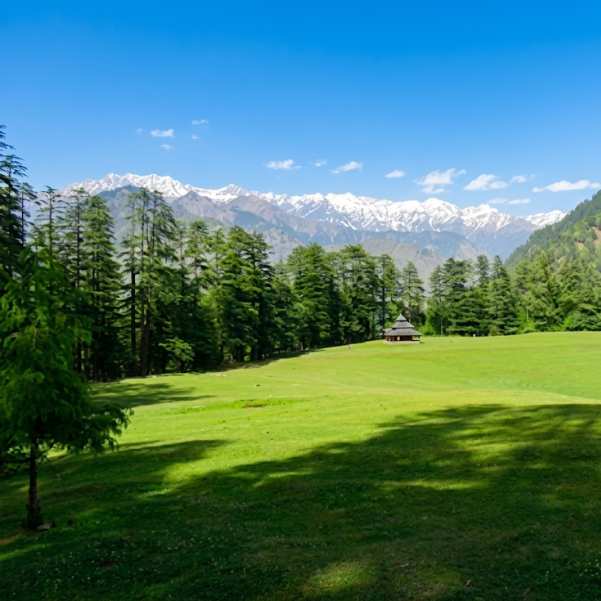
Shangarh Meadows
The temple sits at the edge of the meadow
The wide, flat, stone free grassland that the temple presides over. The meadow and the temple are a single experience.
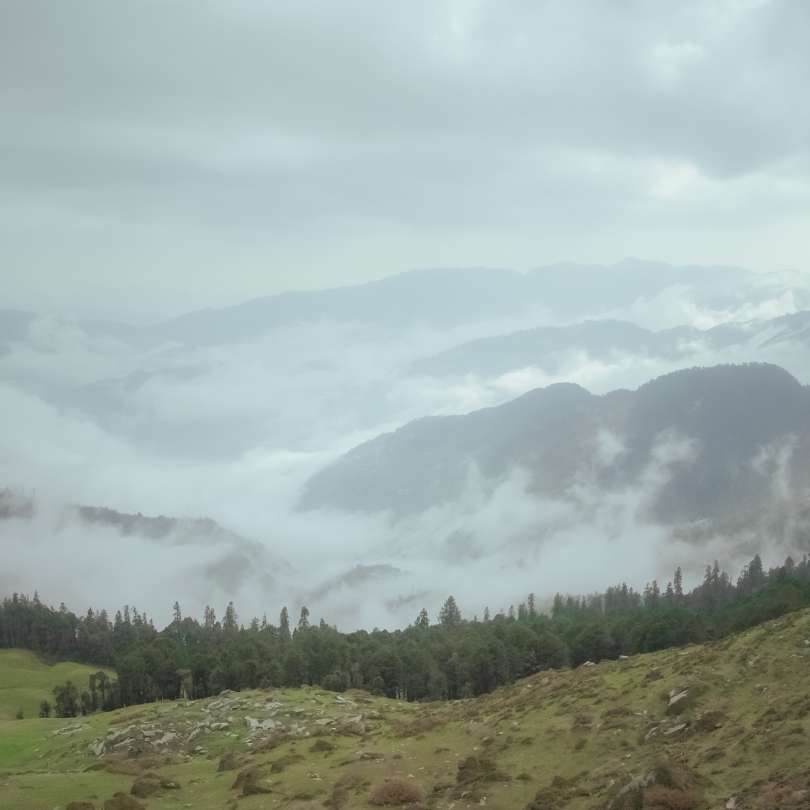
Great Himalayan National Park
GHNP ecozone boundary at the village edge
UNESCO World Heritage protected wilderness. Shangarh sits on the western edge of the ecozone, with the Sainj Wildlife Sanctuary a short walk away.
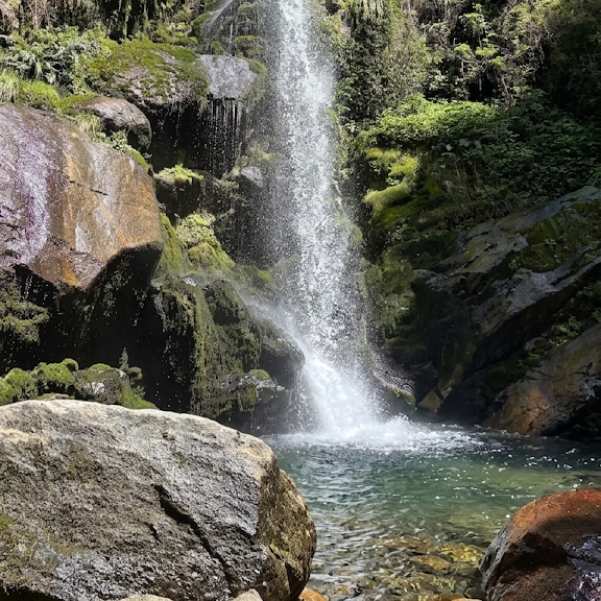
Barshangarh Waterfall
~2 to 3 km walk from Shangarh
A tall waterfall reached by an easy forest walk through smaller villages. The most popular half day outing from Shangarh.
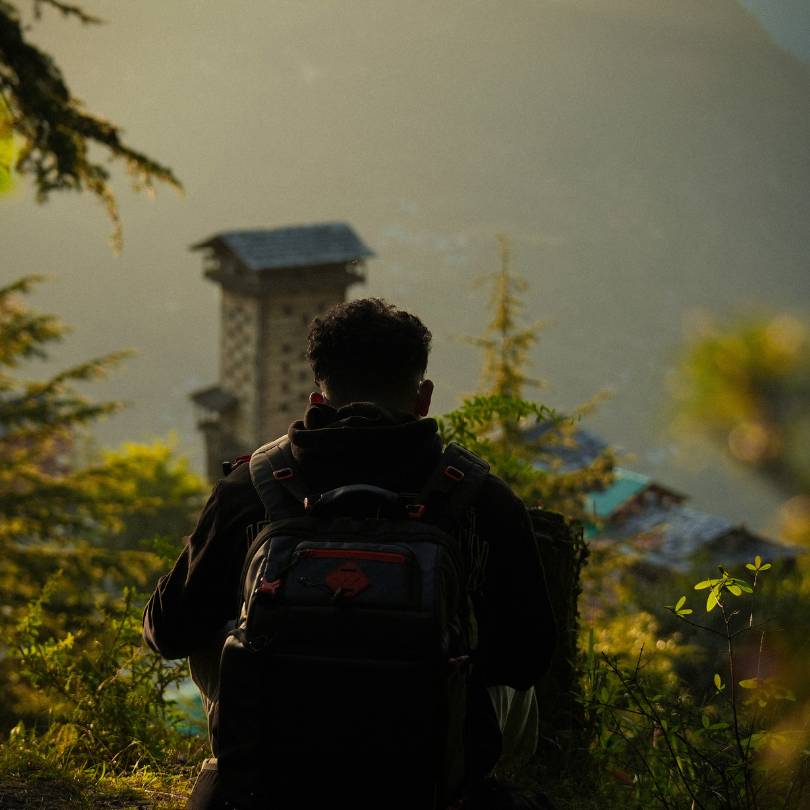
Chehni Kothi
~40 km · 1.5 hours drive via Banjar
The most famous Kath Kuni structure in the area. A tall stone and wood tower above Banjar, several centuries old. Good pairing if you are interested in traditional Himachali architecture.
Tirthan Valley
~2 hours drive via Aut and Larji
The other main GHNP approach with riverside homestays, trout fishing, and the Ropa gate walk.
Our packages with Shangchul Mahadev Temple
Curated trips that include a visit to Shangchul Mahadev Temple.
 Group Tour5D/4N
Sainj Valley and Shangarh Group Trip
3D Shangarh
₹8,499₹12,499SAVE INR 4,000/ person 5D/4N
5D/4NMost Loved Shangarh Sainj Valley Tour With Private SUV
2D Shangarh
₹12,999₹16,999SAVE INR 4,000/ person Group Tour6D/5N
Best Jibhi Tirthan Valley Tour With Shangarh Meadows
2D Tirthan Valley•1D Shangarh (Sainj Valley)
₹9,999₹12,999SAVE INR 3,000/ person
Frequently Asked Questions
Where is Shangchul Mahadev Temple?
At the edge of the Shangarh Meadow in Sainj Valley, Kullu district, Himachal Pradesh. The village sits at around 2,100 metres, about 25 km from the Aut tunnel on the Manali highway and about 15 km past Sainj town.
What is Shangchul Mahadev Temple famous for?
Two things stand out. First, the architecture: a three tiered Kath Kuni temple of deodar wood and dressed stone, with carved beams, slate roofs, and the proportions typical of the wooden hill shrines of upper Kullu. Second, the deity's role in the community. Shangchul Mahadev is regarded as the protector of those rejected by family or caste, and the village has a long traditional practice of giving sanctuary to couples who marry against their families' wishes, recognised by the village council under the deity's roof.
Is there an entry fee?
No. The temple is open year round with no ticketed entry and no fixed visiting hours. Donations are welcome but not required.
What are the rules for visiting?
Remove shoes, caps, and any leather items including belts before entering the temple or stepping onto the main sacred ground. This is strictly observed and applies to every visitor regardless of rank. Modest clothing is expected. No camping or tenting on the meadow at any time. No alcohol on or around the meadow. No smoking, no chewing tobacco, no pan masala. No loud arguments, raised voices, or music played on speakers. Ask permission before photographing inside the shrine or during any ceremony.
Is it true the temple gives sanctuary to eloping couples?
Yes, and it has done so for generations. Shangchul Mahadev is regarded as the protector of those rejected by family or community, and couples who marry against their families' wishes have come here seeking sanctuary for as long as the village remembers. The arrangement is a traditional, council backed process: the union is acknowledged at the temple, and the village recognises the couple as married thereafter. It is a real social institution, not a curiosity. If you ever witness a ceremony, treat it as you would any private family wedding. Stand at a distance, do not interrupt, do not photograph the couple or the council.
When is the best time to visit?
March to early June and September to early November, matching the best seasons for Shangarh overall. For the temple specifically, dawn and late afternoon offer the cleanest light. The Phagli festival in February or March and local devta processions through the year are worth timing for if possible.
How old is the temple?
The temple is considered centuries old by local tradition, though the current structure was rebuilt after a fire, reported around 1998 in some accounts, by the village's own carpenters. The Kath Kuni building style and the worship of Shangchul Mahadev as the village deity go back much further than the present building.
What is the story behind the temple?
Village tradition holds that the Pandavas, during their Mahabharata exile, sieved the soil of this meadow handful by handful until no pebble remained, which is why the grass remains stone free to this day. After the Pandavas departed, demons are said to have occupied the open ground. Shangchul Mahadev came from Kinnaur, drove the demons out, and divided the meadow into two halves, one for the cattle of the village, the other left clear for the devtas. The temple marks the spot where he chose to stay.
Can I visit the temple as a day trip?
Technically yes from Aut or Sainj, but it is not recommended. The drive to Shangarh takes 1.5 to 2 hours from Aut on a rough road, and a rushed visit misses the point. The temple is best experienced as part of a two to three night stay in Shangarh, which gives you time for the meadow at different hours, the forest walks, and the village pace.
Is the temple accessible for seniors?
Yes. The walk from most Shangarh homestays to the temple is flat and very short, usually 2 to 5 minutes. The meadow itself is level ground. The bigger challenge for seniors is the road in to Shangarh, which is rough on the last stretch.