
Udaipur to Kumbhalgarh Ranakpur Day Trip 2026: Route, Timings, Cost and Itinerary
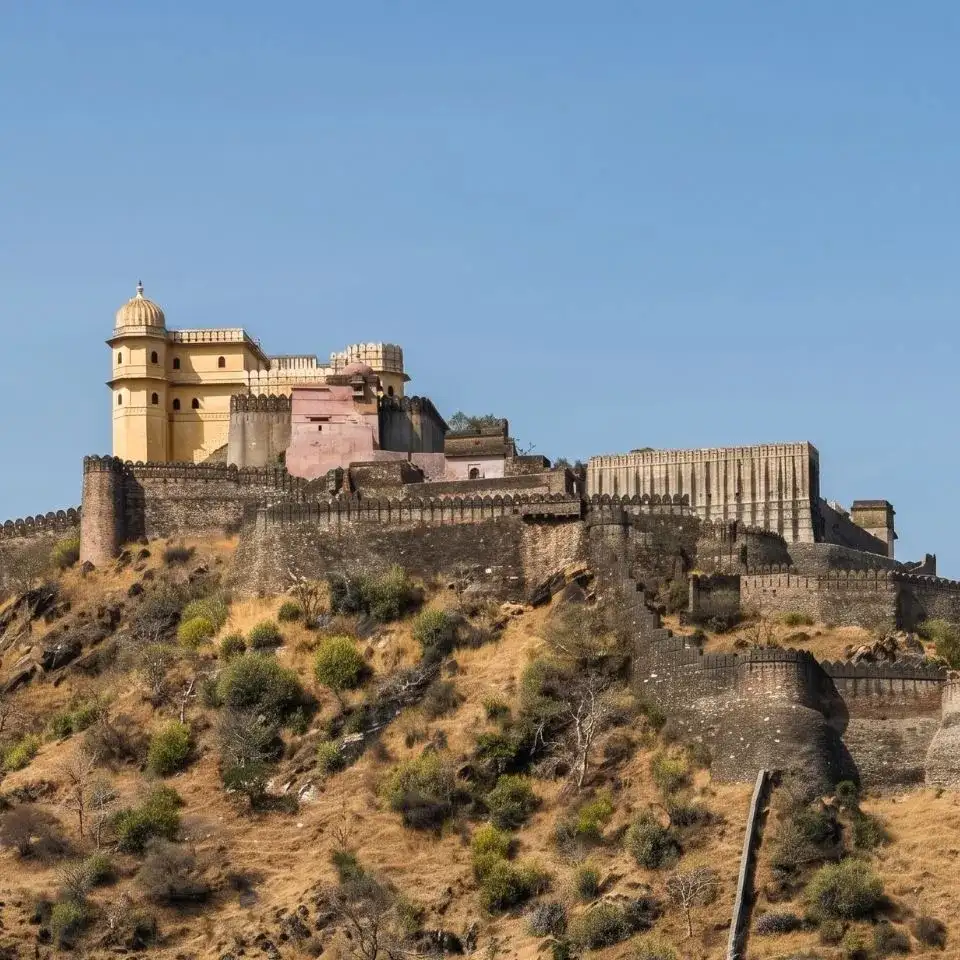
Planning a Udaipur to Kumbhalgarh Ranakpur day trip is a great way to explore two of Rajasthan’s most impressive heritage attractions in a single day without changing hotels.
The trip usually combines the massive hilltop Kumbhalgarh Fort with the beautifully carved Ranakpur Jain Temples, but the order of stops, departure time and road travel need to be planned carefully to avoid a rushed experience.
This guide covers the best route from Udaipur, suggested timings, sightseeing order, expected transport cost and a practical one day itinerary for visiting both Kumbhalgarh and Ranakpur.
Whether you are travelling as a couple, family or small group, this guide by Travel Coffee will help you plan the day comfortably and understand how much time and budget you should keep aside for the trip.
Quick Answer
Yes, you can cover both Kumbhalgarh Fort and Ranakpur Jain Temple in a single day from Udaipur, and it is one of the most popular day trips out of the city. The trick is to leave early, around 6:45 to 7:00 AM, and keep the day focused on these two headline sights.
The normal route runs Udaipur to Kumbhalgarh Fort to Ranakpur Jain Temple and back to Udaipur. The whole day usually takes about 10 to 12 hours, of which roughly 5 to 6 hours is actual driving.
Kumbhalgarh comes first for a simple reason. Ranakpur's tourist window generally begins around noon, so the fort fills your morning while the temple fits the early afternoon.
If you would rather have someone else handle the planning and pacing, look at our Udaipur tour with Kumbhalgarh Fort and Ranakpur Jain Temple.
Can You Visit Kumbhalgarh and Ranakpur in One Day from Udaipur?
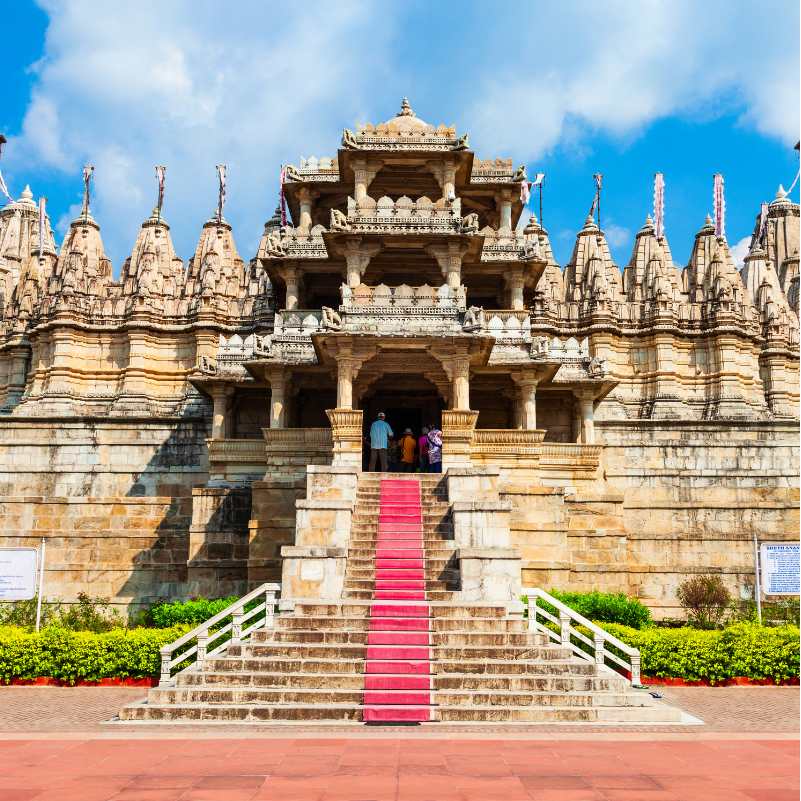
You can, as long as you treat it as a two-attraction day and not a sightseeing marathon. The udaipur to kumbhalgarh ranakpur day trip works well when the fort and the Jain temple are the only two real stops, with a lunch break in between and a straight drive home after.
Here is the part people misread. The 5 to 6 hours of driving is not the length of your day.
From the moment your car leaves your Udaipur hotel to the moment you walk back into the lobby, you are looking at a 10 to 12 hour day once you add parking, tickets, the fort climb, lunch, the temple visit and a few short breaks.
That is a full day out, not a lazy one. What breaks the plan is trying to squeeze in extras. A late start, three or four bonus temples, a sanctuary activity or the evening light-and-sound show all push your timings and your return much later.
In our experience, the travellers who enjoy this day the most are the ones who accept it as a long but rewarding outing rather than a relaxed drive. If you want to see how it fits with the rest of the city, browse our Udaipur tour packages.
Which Should You Visit First, Kumbhalgarh or Ranakpur?
Best order for a normal daylight trip
For a standard daytime run, visit Kumbhalgarh Fort in the morning and Ranakpur Jain Temple after noon. This order lines up neatly with how both sites work through the day.
Ranakpur generally welcomes non-Jain tourists only from around midday, so there is little point reaching the temple at ten in the morning. The fort, on the other hand, is open earlier and far more pleasant to climb before the sun is high.
Kumbhalgarh involves a serious amount of uphill walking, and doing that in the cooler morning hours saves your legs and your energy.
There is also the matter of getting home. Finishing at Ranakpur in mid-afternoon gives you the best chance of driving back to Udaipur mostly in daylight, which is exactly what you want on hill roads. This is the order our team recommends for almost every group.
When Ranakpur should come first
There is one good reason to flip the route. If you specifically want to catch the Kumbhalgarh light-and-sound show in the evening, you would drive to Ranakpur around noon, visit the temple, then head to Kumbhalgarh for the show later in the day.
Be clear-eyed about the trade-off. This version means returning to Udaipur late and partly in the dark, over roads that are more comfortable in daylight.
It also depends entirely on the show running on the day you visit. Show timings, ticket prices and operational days can change, so reconfirm the latest schedule directly before planning your route around it.
What Is the Udaipur Kumbhalgarh Ranakpur Route and Total Distance?
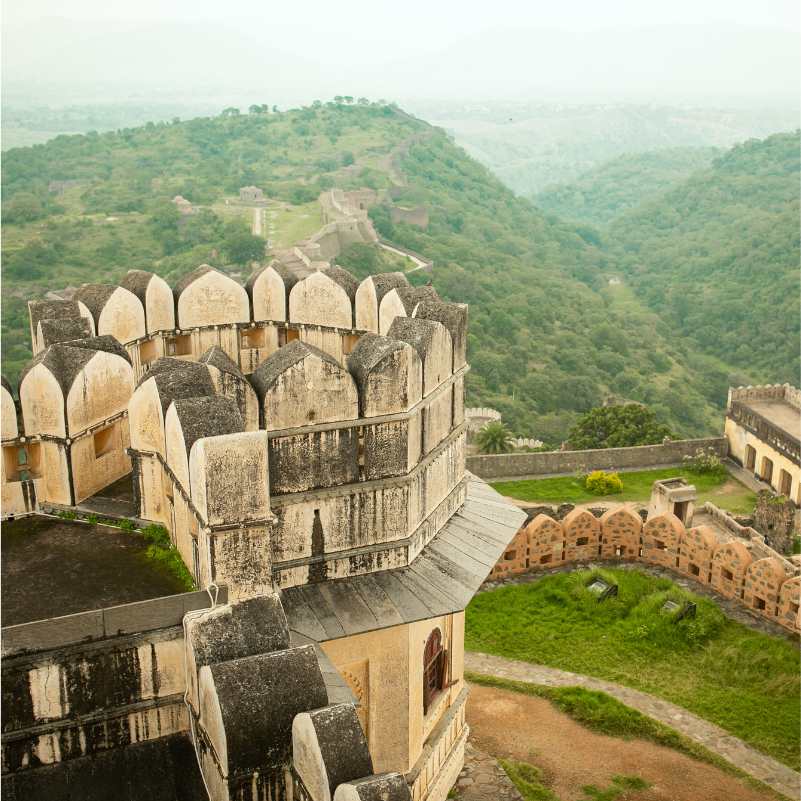
Udaipur to Kumbhalgarh Fort
The first leg is roughly 84 to 87 kilometres and takes about 2 to 2.5 hours. It is a scenic drive that gradually leaves the plains and climbs toward the Aravalli hills.
As you get closer to the fort, the road tightens into curves and a few narrower sections through the hills. It is nothing dramatic in a well-driven car, but it does mean the last stretch is slower than the open road earlier on.
Kumbhalgarh to Ranakpur
This middle leg is the short one in distance but not always in time. It is somewhere around 35 to 50 kilometres and takes roughly 1 to 1.5 hours.
Why such a wide range? Published distances for this stretch genuinely conflict because there is more than one way to make the connection, and different routes vary in length and surface. That is why we never quote a single exact figure for this leg.
Ranakpur to Udaipur
The drive home is about 90 to 95 kilometres and takes another 2 to 2.5 hours. Leaving Ranakpur in the mid-afternoon gives you the best shot at reaching Udaipur while it is still light, which is the comfortable way to end the day.
Put the three legs together and the full udaipur kumbhalgarh ranakpur distance works out to roughly 210 to 230 kilometres for the loop, depending on where your hotel sits and which route your driver takes.
We deliberately keep it as a range rather than pretending it is one precise number, because your actual total will shift with your starting point.
For more on the city itself, our Udaipur travel guide is a good companion read.
What Is the Best Udaipur to Kumbhalgarh and Ranakpur One-Day Itinerary?
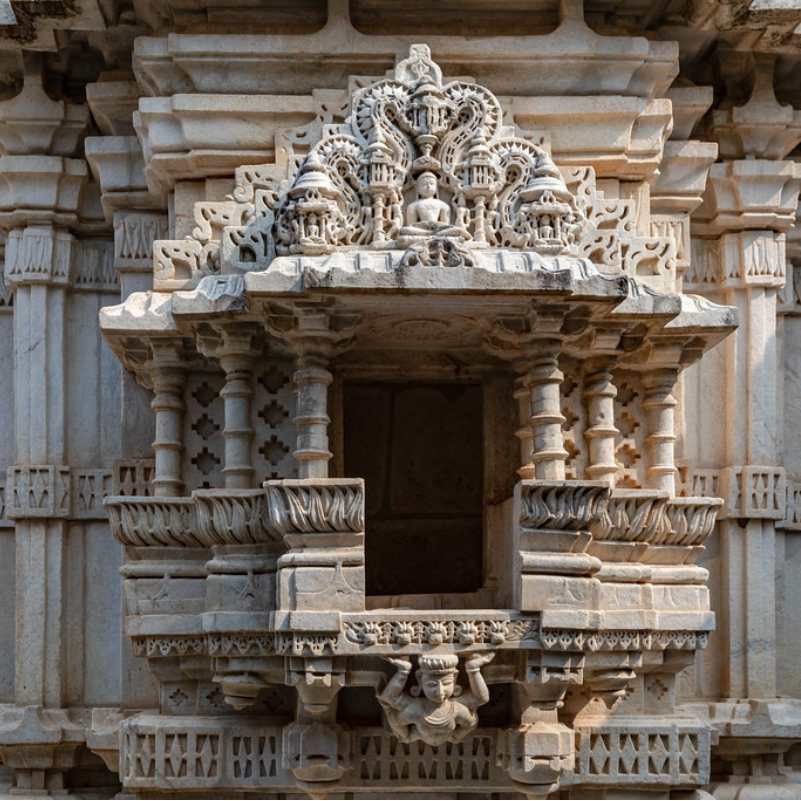
6:45 to 7:00 AM: Leave Udaipur
Aim to roll out by 6:45 to 7:00 AM. Sort breakfast before you leave, or ask your hotel for a packed breakfast you can eat on the way, because every minute counts on a day this long.
Before the car moves, run a quick check. Confirm the route on live navigation, make sure the tank is full, check that your driver's duty hours cover the full day, and reconfirm the current ticket situation at both sites.
Around 9:00 AM: Reach Kumbhalgarh Fort
You should reach Kumbhalgarh Fort at roughly 9:00 AM. Leave a little buffer for parking, buying tickets and the walk from the entrance up to the fort itself.
Online ticketing through the official ASI portal is available, which can save time, but treat the exact fee as something to reconfirm before you travel rather than a fixed number.
9:00 to 11:15 or 11:30 AM: Explore Kumbhalgarh
Give the fort about two hours. Focus your energy on the famous fort wall, the main climb up to the top, Badal Mahal and the wide panoramic views across the hills.
You do not need to inspect every single temple inside the complex, and try to eat into your afternoon. Do go in knowing this is the most physically demanding part of the day, with a fair bit of steady uphill walking.
11:15 AM to 12:45 PM: Drive to Ranakpur
Set off for Ranakpur around 11:15 to 11:30 AM. This leg often takes longer than the short distance suggests, so do not be surprised if it stretches toward the upper end of the time estimate.
The reason is the road itself. Expect curves, the occasional slow vehicle to overtake and some route variation along the way. None of it is dangerous, but it is not a stretch you rush.
12:45 to 1:30 PM: Lunch near Ranakpur
Plan lunch for around 12:45 to 1:30 PM near the temple. A dependable, confirmed option in the area is the restaurant at RTDC Hotel Shilpi, close to the Jain temple.
There is also a temple bhojanshala that some visitors use, though meal prices, serving times and visitor access can vary, so confirm the latest details at the temple when you arrive.
Here is a simple rule we give our travellers. If your group only reaches Ranakpur after about 2:00 PM, go into the temple first and eat afterwards, so you never risk missing the tourist-entry window.
1:30 to 3:00 PM: Visit Ranakpur Jain Temple
Allow about 1.5 hours at Ranakpur Jain Temple, and up to two hours if anyone in your group loves architecture, because this place rewards a slow look.
Build the practical bits into that estimate too. You will remove your footwear, pass a clothing check, possibly use a locker for restricted items, sort out any visitor services and follow the audio-guide procedure if you use one. All of that takes a little time on top of walking around.
3:15 to 3:30 PM: Return to Udaipur
Begin the drive back around 3:15 to 3:30 PM. The return takes roughly 2 to 2.5 hours, which puts you back in Udaipur in a normal window of about 5:30 to 6:30 PM.
That return time is a guide, not a promise. Heavy traffic, rain, a later-than-planned start or slow sightseeing earlier in the day can all push it later, so keep the evening flexible.
What Should You Prioritise at Kumbhalgarh Fort?
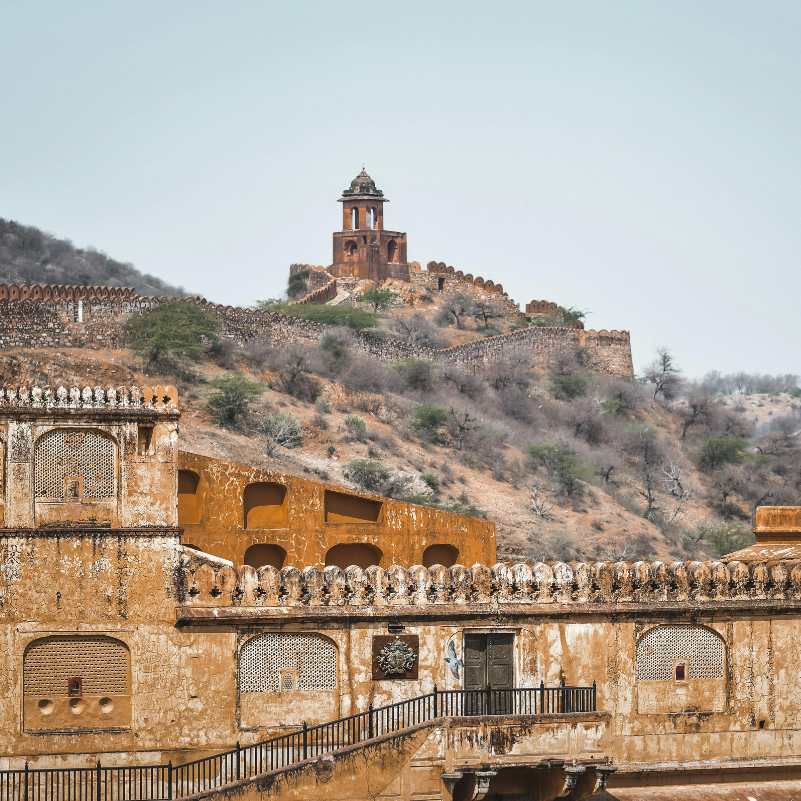
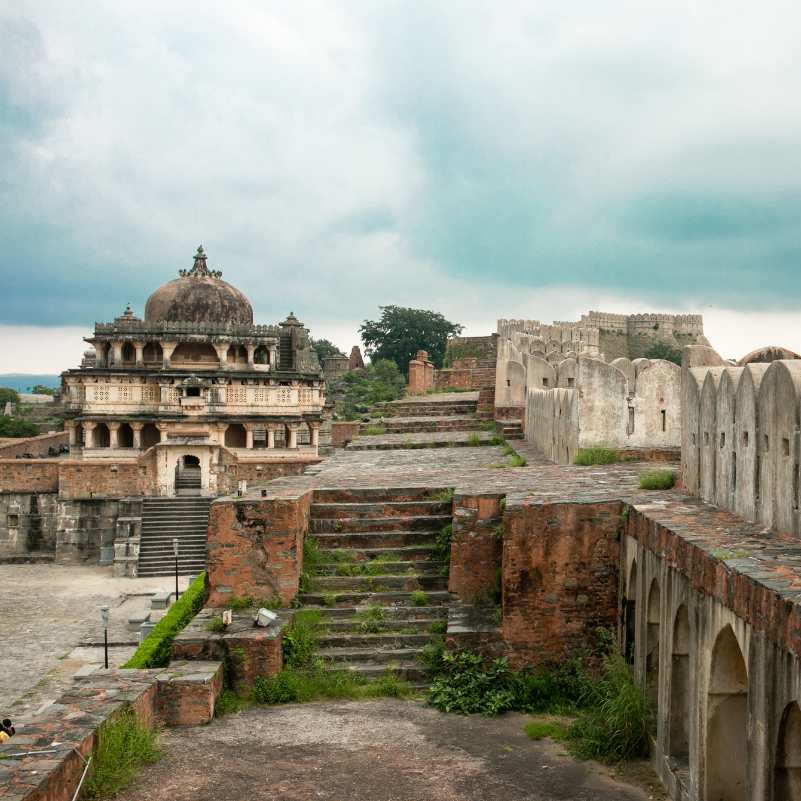
Kumbhalgarh Fort is part of UNESCO's Hill Forts of Rajasthan, which tells you straight away that it belongs in the top tier of the state's forts. It is grand, historic and genuinely worth the climb.
The headline feature is that enormous perimeter wall. Rajasthan Tourism gives the wall length as roughly 36 kilometres, and it is often described as one of the longest fort walls anywhere.
The fort was built in the fifteenth century by Rana Kumbha and is closely associated with the birthplace of Maharana Pratap, so the history here runs deep. Inside the complex, Badal Mahal is the standout destination and worth making your way up to.
On a combined day trip like this, plan for about 2 to 2.5 hours at the fort so you see the best of it without running your whole schedule late. Come prepared for the walking. The ascent involves a lot of steady uphill, so comfortable footwear and water are not optional, they are essential.
If you are hoping for any kind of local vehicle assistance up the slopes, availability can vary and should not be relied on, so plan on walking and treat any available transport as a bonus.
What Should Travellers Know Before Entering Ranakpur Jain Temple?
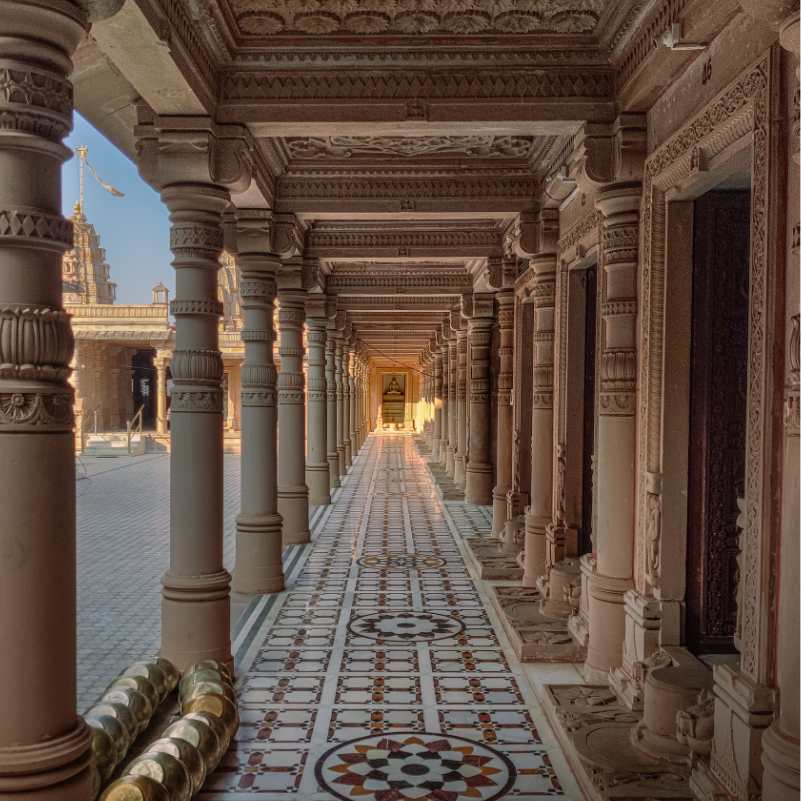
The single most important thing to know is the timing. The tourist or non-Jain visitor window at Ranakpur Jain Temple generally runs from around 12:00 noon to 5:00 PM.
The wider devotional schedule can be longer, but tourists should never plan around worship hours, only around that afternoon visitor window.
Dress modestly. Shoulders and knees should be covered, which means shorts, short skirts and sleeveless tops are best left in the car. Footwear comes off before you enter, as at any Jain temple.
There are rules around what you can carry too. Leather items such as belts, wallets, bags and straps may not be allowed inside and might need to stay in the car or a locker.
Phones, cameras, lockers and audio guides can each carry their own separate rules or charges, so check the current notice at the entrance rather than assuming.
A word on photography. Do not assume you are free to photograph idols, worshippers or restricted areas.
Follow whatever the entrance notice says on the day, since these rules can change. Food and water may also need to stay outside the main temple, so check the current entry rules when you arrive.
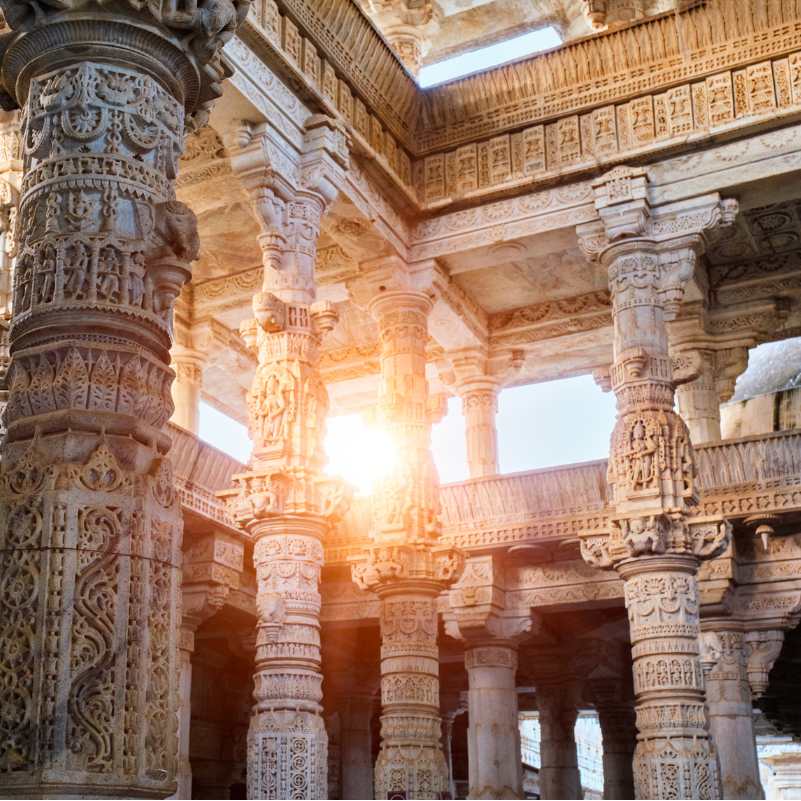
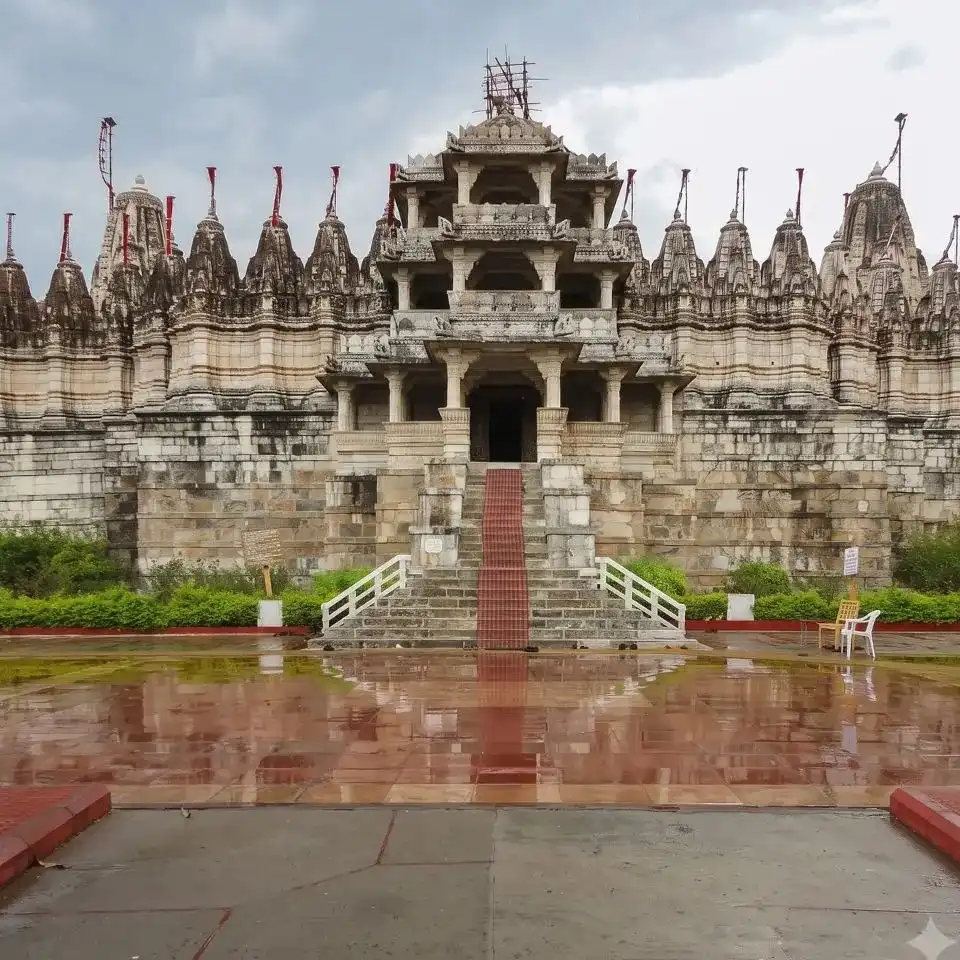
The temple itself is astonishing and worth the effort of getting the details right. This fifteenth-century marvel covers more than 48,000 square feet, holds 1,444 carved pillars, and its principal Chaumukha temple is dedicated to Adinath.
What Are the Latest Entry Fees and Ticket Checks?
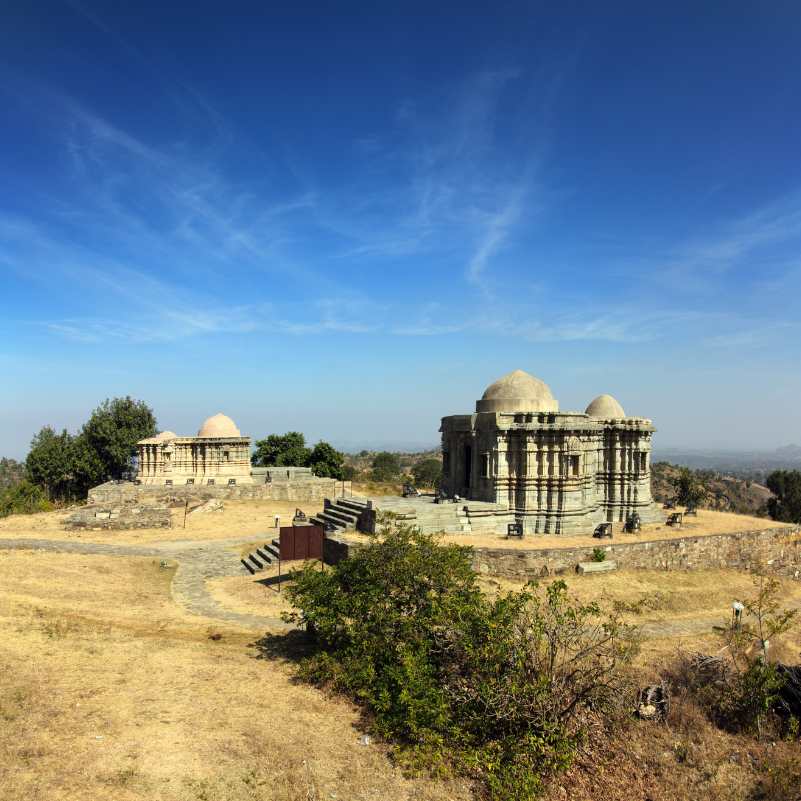
Kumbhalgarh Fort
As a planning figure, the online fee is around ₹35 for Indian, SAARC and BIMSTEC visitors and about ₹550 for other foreign visitors. Since ticket rates can change, reconfirm the latest price on the official ASI booking portal before your visit.
Keep in mind that online and counter charges may differ, so the number you see at the gate might not match the portal exactly.
Published gate hours also conflict between 6:00 AM to 6:00 PM and 9:00 AM to 6:00 PM, so plan around a 9:00 AM arrival to be safe and reconfirm the current gate time before you leave.
Ranakpur Jain Temple
Here the picture is genuinely murky, and we would rather be honest than give you a false sense of certainty. Current fee information for Ranakpur Jain Temple conflicts from one source to the next.
Some current reports quote roughly ₹200 for certain non Jain or foreign visitors, while others mention separate charges of around ₹100 for a camera or phone and about ₹300 for a video camera or tablet.
Since published fee information varies considerably, do not rely on these figures as fixed prices and confirm the current charges at the entrance on the day of your visit.
Other reports describe free entry with only camera, audio-guide or visitor-service charges.
We are not going to pick one version and call it the truth, because the sources simply do not agree. Treat every Ranakpur figure as something to confirm at the entrance on the day.
What to check before leaving Udaipur
Before you pull out of Udaipur, run through a short list in your head. Check the ASI ticket portal, the Ranakpur tourist window, the current temple rules, live navigation, your driver's duty hours and, if it matters to you, the Kumbhalgarh show status.
Carry an original photo ID, some cash and a digital-payment option as well. We say both because not every counter accepts every method, and it is no fun to be caught short at a ticket window.
How Much Does a Udaipur Kumbhalgarh Ranakpur Day Trip Cost?
Let us talk about money, starting with the vehicle. Current local listings for this route indicate roughly ₹3,200 to ₹3,600 for a sedan and about ₹4,800 to ₹5,000 for an SUV or a regular Innova.
Think of these as market-planning figures to set your expectations, not guaranteed Travel Coffee prices.
Split across a group, the maths gets friendlier. Two travellers sharing that vehicle range would pay roughly ₹1,600 to ₹2,500 each before tickets and food. Four travellers sharing the same range would pay closer to ₹800 to ₹1,250 each, again before tickets and food.
The vehicle is only one line in the budget. Your real total is the vehicle plus the Kumbhalgarh ticket, plus Ranakpur visitor services, plus food, plus an optional guide, plus parking, tolls and any evening-show or late-return charge if you go that way. Each of those sits on top of the cab fare.
This is why we always tell people to ask for a written quote. A good quotation spells out the included kilometres, the duty hours, fuel, tolls, parking, driver allowance, GST, the extra-kilometre charge, the extra-hour charge and any night charge.
When all of that is on paper before you start, there are no awkward surprises at the end of the day.
Where Should You Stop for Food and Restrooms?
The natural rhythm of this day is breakfast in Udaipur and lunch near Ranakpur, with quick restroom breaks folded into your two main stops. Sorting breakfast before departure keeps your morning moving.
For lunch, RTDC Hotel Shilpi near the Jain temple is a confirmed restaurant location and a safe bet. We will not invent its menu, meal rate or opening hours here, so check those on the day, but it is a reliable place to know about near the temple.
There is also the Ranakpur bhojanshala, where reported meal prices are roughly ₹50 to ₹150, though actual charges can vary.
Published lunch timings also differ, with some sources mentioning 12:00 to 1:15 PM and others extending the window to around 2:00 PM, so confirm the current meal timing and price locally before relying on it.
Before you rely on the bhojanshala, confirm whether it is actually open to you and whether a coupon is required, since that is not always obvious.
Either way, carry water and a few snacks in the car for the drive, while remembering to follow the temple's current rules about what you can bring inside.
Should You Book a Taxi, Self-Drive or Use Public Transport?
Private taxi
For most people, a private car with a driver is the easy answer. It suits first-time visitors, families and anyone who would rather not navigate hill roads themselves, and it is why the kumbhalgarh ranakpur taxi from udaipur is the default choice for this trip.
You get flexibility over your stops, a driver who waits while you explore, and a fixed pickup and return plan. As covered above, the one thing to insist on is a written, all-inclusive quotation so you know exactly what is and is not covered before you set off.
Self-drive car
If you enjoy driving, the route is normally manageable in a well-maintained sedan or SUV. The roads are tarred for the most part, but expect curves, gradients and the odd narrow or rough patch along the way.
Set off with a full fuel tank and offline maps downloaded, because signal can be patchy in the hills.
One honest caution. If you stay for the evening light show, driving back in the dark is noticeably less comfortable than a daylight return, so weigh that up before committing to the reversed route.
Public transport
We would not tell you that no buses exist, because they do in some form. The problem is that the connections and transfers are uncertain, and return timings are unreliable for a day this tightly scheduled.
For a same-day trip that hinges on hitting Ranakpur's afternoon window and getting home at a sensible hour, public transport simply is not the right tool. A private cab or a self-drive car gives you the control this itinerary needs.
Is the Day Trip Suitable for Children, Elderly Parents and People with Limited Mobility?
The two real challenges are the long time in the car and the climb at Kumbhalgarh. Everything else on this day is fairly gentle, but those two things are what you should weigh before booking.
For most families who can comfortably handle a 10 to 12 hour day out, the trip works well and the kids usually love the fort.
Where we would pause is with frail elderly travellers, anyone with serious knee or back trouble, people who suffer badly from motion sickness, or families who really want a slow, unhurried day, unless you are happy to shorten the fort visit.
If any of that describes your group, an overnight stay near Kumbhalgarh or Ranakpur is the kinder alternative.
It turns a demanding day into a comfortable two-day trip with time to breathe. We cannot make medical calls for you, so use your own judgement about what your family can manage.
What Is the Best Season for This Day Trip?
October to March
For the fort walk, October to March is the sweet spot. The weather is cool enough to enjoy the climb and the panoramic views without wilting, which is exactly what you want on a day with this much uphill.
July to September
July to September brings the monsoon, and the Aravallis turn beautifully green in this window. The catch is that rain can slow the hill drive and stretch your timings, so build in some slack if you travel then.
April to June
April to June is the hot stretch. It is still doable, but you will want an earlier departure and less time standing around outdoors during the hottest afternoon hours. For a fuller view of the calendar, see our guide on the best time to visit Udaipur.
Can You Include the Kumbhalgarh Light-and-Sound Show?
You can, and this is where the reversed route comes in. You would drive from Udaipur to Ranakpur around noon, visit the temple, then head from Ranakpur to Kumbhalgarh in the afternoon, catch the evening show and drive back to Udaipur late.
RTDC officially lists a Kumbhalgarh light and sound show, but timings, ticket prices and operating days can change, so reconfirm the latest schedule directly before planning your day around it.
If you go this way, settle the logistics with your driver in advance. Confirm the waiting charge, night charge and late return cost before leaving Udaipur, so there are no surprises at the end of the day.
What Should You Not Add to This One-Day Itinerary?
It is tempting to bolt on Nathdwara, Eklingji, Haldighati, Ranakpur Dam, a handful of outlying temples or a Kumbhalgarh Wildlife Sanctuary activity. On this particular day, resist the urge.
The reason is simple arithmetic. Every extra stop steals time from the fort and the Jain temple, or it pushes your return home much later into the night. You end up doing more places badly instead of two great places well.
The wildlife sanctuary deserves a special mention. It is a separate activity with its own operating and booking rules, and a January 2026 eco-sensitive-zone notification covers the area around the sanctuary.
That does not create any special permit for the ordinary fort-and-temple taxi circuit, but it does mean sanctuary visits are best planned on their own, on another day.
If you want ideas for those extra places on a different day, our guide to places to visit in Udaipur has you covered.
How to Book the Trip Without Last-Minute Surprises
Good bookings come down to nailing the details up front. Confirm your pickup address, the start time, the passenger count, luggage, vehicle type, the included kilometres, duty hours, the full inclusions, the temple rules, the ticket situation and whether you actually want the evening show.
While you are at it, take a moment to check current road conditions.
There has been a repair tender for part of the Jaswantgarh to Sayra to Ranakpur stretch of SH-32, which on its own does not mean anything is closed, but it is a good reminder to check live navigation and ask your driver about local conditions on the morning of travel.
There is no official blanket road closure in place, yet roads change, so treat that morning check as part of the routine.
One more honest suggestion
If you only have one or two nights in Udaipur, weigh this long excursion against a properly paced multi-day plan, because a rushed day is not the only way to see this region.
Our Rajasthan tour packages show the slower options, and you can also WhatsApp us to talk it through.
Explore Our Curated Udaipur Tour Packages
 3D/2N
3D/2NUdaipur Tour With Lake Pichola Boat Ride and Bagore Ki Haveli
3D Udaipur
₹9,999₹12,999SAVE INR 3,000/ person 4D/3N
4D/3NUdaipur Honeymoon Tour With Candlelight Dinner and Boat Ride
4D Udaipur
₹17,999₹21,999SAVE INR 4,000/ person 5D/4N
5D/4NUdaipur Mount Abu Tour With Nakki Lake and Dilwara Temples
2D Udaipur•2D Mount Abu
₹20,999₹24,999SAVE INR 4,000/ person
Related topics
Frequently Asked Questions
Can Kumbhalgarh and Ranakpur be covered in one day from Udaipur?
Yes, as long as you keep it to those two attractions and leave Udaipur by about 6:45 to 7:00 AM. Expect a full 10 to 12 hour day with roughly 5 to 6 hours of driving. It is very doable, just not a lazy one.
Which should be visited first, Kumbhalgarh or Ranakpur?
For a normal daytime trip, visit Kumbhalgarh Fort first in the morning and Ranakpur Jain Temple after noon, since Ranakpur's tourist window generally opens around midday. Only reverse the order if you are staying for the Kumbhalgarh evening show.
What time should the day trip start and finish?
Start by 6:45 to 7:00 AM and you will usually be back in Udaipur around 5:30 to 6:30 PM. That return time can slip later with traffic, rain or a late start, so keep your evening open just in case.
What is the total Udaipur Kumbhalgarh Ranakpur distance?
The full loop is roughly 210 to 230 kilometres, depending on your hotel and the route. Udaipur to Kumbhalgarh is about 84 to 87 kilometres, Kumbhalgarh to Ranakpur is somewhere around 35 to 50 kilometres, and Ranakpur back to Udaipur is about 90 to 95 kilometres.
How much does a private taxi cost?
Current local listings point to roughly ₹3,200 to ₹3,600 for a sedan and about ₹4,800 to ₹5,000 for an SUV or regular Innova. These are planning figures rather than guaranteed prices, and your final cost also depends on tickets, food and any extras.
What should be included in the taxi quotation?
Ask for a written quote that lists the included kilometres, duty hours, fuel, tolls, parking, driver allowance, GST, the extra-kilometre charge, the extra-hour charge and any night charge. Getting all of that on paper before you start is the surest way to avoid surprises later.
What are the Kumbhalgarh Fort timings and entry fees?
Plan to reach Kumbhalgarh Fort around 9:00 AM, as published opening times vary. Entry is around ₹35 for Indian, SAARC and BIMSTEC visitors and about ₹550 for other foreign visitors, but reconfirm current timings and fees before visiting.
What are Ranakpur Jain Temple tourist timings and charges?
Tourist visiting hours are generally around 12:00 PM to 5:00 PM. Entry and camera charges vary, so check the latest fees at the temple entrance on the day of your visit.
What is the Ranakpur dress code, and are leather items allowed?
Wear modest clothing that covers your shoulders and knees, and remove footwear before entering. Leather items such as belts, wallets and bags may also be restricted, so check the entrance rules when you arrive.
Where should travellers stop for lunch?
RTDC Hotel Shilpi near Ranakpur is a reliable lunch option. The temple bhojanshala may also serve affordable meals, but timings and access rules should be confirmed locally.
Is the trip suitable for children and elderly parents?
Yes, for families comfortable with a 10 to 12 hour sightseeing day. Frail elderly travellers or those with knee, back or motion sickness problems may find an overnight stay more comfortable.
Can the Kumbhalgarh light and sound show be included?
Yes. Visit Ranakpur around noon and then continue to Kumbhalgarh for the evening show. Confirm the latest show timings and any driver waiting or night charges before starting the trip.
More about Udaipur
 Udaipur
Udaipur to Chittorgarh Day Trip 2026: Fort Route, Timings, Cost and Honest Advice
Planning a Udaipur to Chittorgarh day trip in 2026? This practical guide covers the best fort route, travel time, sightseeing timings, expected costs and transport options. We also share honest advice on how much time you need at Chittorgarh Fort, what to prioritise and whether the trip is worth adding to your Udaipur itinerary.
- Places to Visit
- Road Trips
 Udaipur
Udaipur Trip Cost 2026: Budget for 2, 3, 4 and 5 Days
Planning an Udaipur trip in 2026? This practical cost guide breaks down the budget for 2, 3, 4 and 5 days, including hotels, food, local transport, sightseeing and activities. Use realistic budget ranges to plan your Udaipur holiday without overspending.
- First-Time Travellers
- Itinerary
 Udaipur
Udaipur Local Transport Guide 2026: Auto, Taxi, Cab, Scooter, Parking and Old-City Access
Planning how to get around Udaipur in 2026? This practical transport guide compares autos, taxis, cabs and scooter rentals, with tips on fares, parking and navigating the narrow Old City. Learn which option works best for sightseeing, lake areas and day trips, and where vehicle access can become difficult.
- How to Reach
- First-Time Travellers