
Snow Leopard in Spiti Valley 2026-27: Best Season, Kibber Base, Cost & Realistic Chances
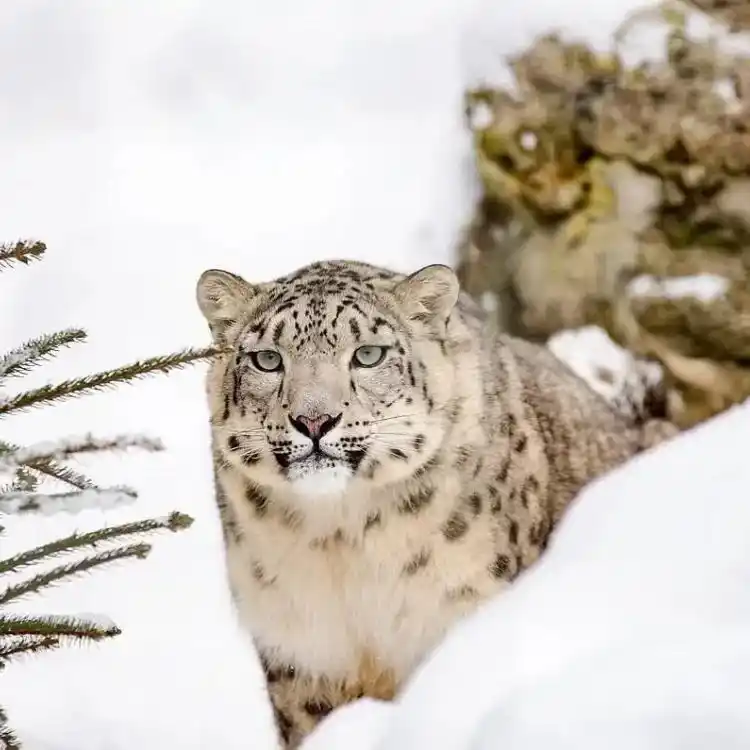
You searched for the snow leopard in Spiti because you want the real story, not a brochure promising a guaranteed sighting. Good. That instinct will serve you well on this trip.
Here is the honest truth from the start. A snow leopard is a wild animal in a vast mountain landscape. Nobody can promise you will see one.
What Spiti can offer is a serious, well-supported attempt in one of India's strongest snow leopard habitats, with skilled local trackers and enough field days to make your chances real.
We have watched travellers spend a quiet week scanning empty slopes and then catch a distant grey shape moving across a ridge on day five. That moment is worth the wait. But you have to go in understanding what you are signing up for.
Quick Answer
January to March is the main snow leopard tracking season in Spiti. If you want one simple recommendation, February is our best all-round editorial pick, though it is not a scientifically proven "highest probability" month.
Kibber and Chicham are the useful winter wildlife bases because of the habitat, community trackers, and homestay setups there.
Keep roughly 8 to 10 days overall, with at least 3 to 5 dedicated tracking days after travel and acclimatisation. And know this clearly: no sighting can be guaranteed.
If you want the trip built around your dates, our Spiti Valley tour packages are a good place to start planning.
Why is Spiti one of India's strongest snow leopard landscapes?

Himachal Pradesh's second statewide snow leopard assessment estimated 83 snow leopards, with a confidence interval of 67 to 103 animals. Camera traps recorded 44 unique snow leopards across 262 detections.
That study found the highest densities in the trans-Himalayan landscapes of Spiti and Pin Valley, followed by Upper Kinnaur and Tabo. So when you plan a snow leopard trip in Spiti, you are heading to a genuinely leopard-rich country, not a random mountain.
Kibber Wildlife Sanctuary is home to snow leopard along with its main prey, the blue sheep or bharal and the Himalayan ibex. Where prey lives, predators follow.
What most travellers get wrong about the numbers
Here is the mistake we see again and again. People read "83 snow leopards" and assume that translates into a high personal chance of seeing one. It does not.
A population-density study tells you the animals are out there. It says nothing about whether one will walk into your line of sight during your five days on the slopes. Those are completely different things, and mixing them up leads to disappointment.
What does help you is the terrain. Spiti's open, treeless, high-altitude slopes let trackers systematically scan huge distances through spotting scopes. In a forest, a leopard vanishes. Here, a patient team with good optics can pick out movement across a whole valley.
What is the best time to see snow leopards in Spiti in 2026-27?

January: deep winter and fewer travellers
January sits firmly inside the core winter tracking season. Current 2027 expeditions already run January departures, so the infrastructure is in place.
The trade-off is the cold and the roads. Deep winter means severe temperatures and the real chance of weather delays. You need flexibility in your plan and warmth in your bag. If you cannot tolerate a lost day to snowfall, January will test you.
February: the best all-round choice for most travellers
If you push us to pick one month, we say February.
February falls in the middle of the January to March tracking window, and it sits inside the snow leopard mating season, which runs roughly from January to mid-March.
Current 2027 schedules also show multiple February departures, so you have a choice of dates and company.
We will be straight with you though. February does not have a verified numerical advantage over January or March. It is our editorial best-all-round pick, balancing season timing and practical logistics, not a guarantee of better odds.
March: still an excellent winter wildlife month
A 2026 Condé Nast Traveller Spiti field report describes February and March as peak viewing months. March stays firmly within the main winter tracking period.
The winter-road and weather caveat still applies. March can bring its own snow and closures, so keep buffer days no matter how late in the window you travel.
Why are Kibber and Chicham the main winter wildlife bases?

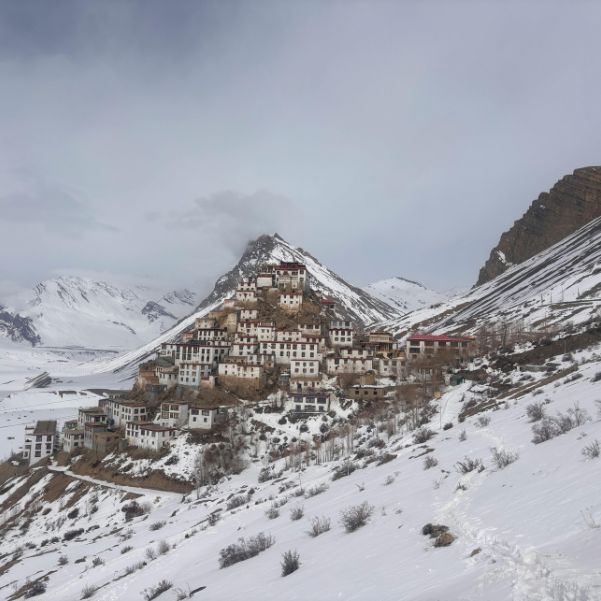
Kibber sits in the Upper Spiti wildlife landscape, right beside Kibber Wildlife Sanctuary, a large protected high-altitude area about 20 km from Kaza. The village sits at about 4,200 metres.
A quick honesty note on the numbers. Sources conflict on the sanctuary's exact size, with the current Spiti Wildlife Division page listing 2,220.12 sq km and an older district page still showing 1,400.5 sq km.
Altitude figures for Kibber also vary. We would rather tell you "a large protected landscape at about 4,200 metres" than pretend there is one settled figure.
What matters more is the community setup. The Spiti Wildlife Division has formally registered snow leopard Eco Development Committees in both Kibber and Chicham.
Snow Leopard Trust reporting says 46 of Kibber's 80 houses now run as winter homestays, with residents also working as trackers, guides, and porters.
Bases, not fixed viewpoints
Here is an insider point most guides skip. Kibber and Chicham are operational bases, not viewing platforms where you sit and wait for a leopard to appear.
Trackers follow current wildlife information across the suitable areas of Upper Spiti. If word comes that a leopard was scraping on a ridge two valleys over, your team moves toward that information. You are working the landscape, not staking out one spot.
What are the genuine chances of seeing a snow leopard in Spiti?

Let us be very direct. There is no independently verified official tourist sighting percentage in the research we have for this article.
You will see operators online claiming 60 percent, 70 percent, even 100 percent success. Treat those with real caution. They are self-reported, not audited, and not comparable to each other. We will not repeat them as fact, and neither should you when you compare trips.
Sightings stay unpredictable even in the best season. A week in the field can hold several quiet days, and even when a leopard is finally located, it may sit hundreds of metres away as a distant shape through a scope.
What genuinely improves your attempt is straightforward. Go during the core season. Keep more dedicated field days. Work with experienced local trackers. Use spotting scopes. Stay flexible about where the team scans each day.
So here is our memorable, non-hyped conclusion. Spiti offers a serious wildlife attempt, not a guaranteed appointment with a snow leopard.
How many days should travellers keep for a realistic sighting attempt?
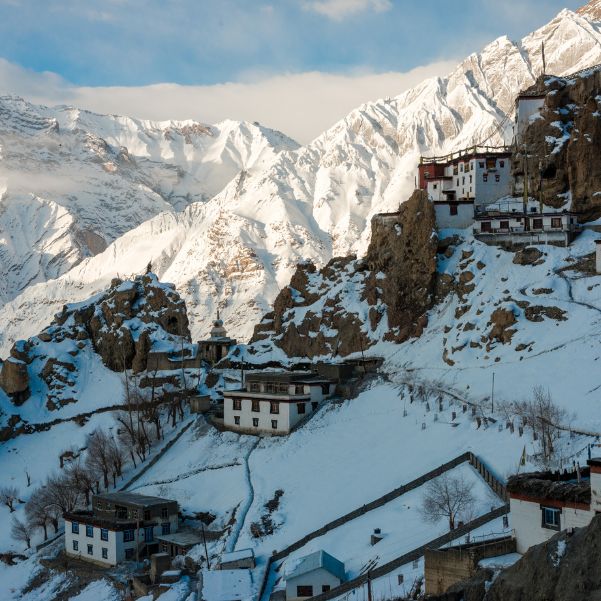
Our practical recommendation is 8 to 10 days overall, with at least 3 to 5 full dedicated tracking days once you subtract travel and acclimatisation.
The evidence backs this. Bikat's current 2027 itinerary runs 9 days with three dedicated snow leopard spotting days. Spiti United's longer 12-day expedition allocates six Kibber expedition days. Different formats, same logic: more field days, more chances.
If you are photography-focused and have the time and budget, five or six full field days make good sense. More mornings on the slopes means more opportunity for the light and the animal to line up.
None of this guarantees anything. A specific number of days improves your odds; it does not buy a sighting.
Is a local wildlife guide or snow leopard spotter necessary?

If your main goal is seeing or photographing a snow leopard, treat an experienced local spotter as essential in practice.
Local trackers read the terrain, the fresh tracks, the scent scrapes, and the movement of prey. They also plug into the village information network, which is often how a leopard gets located in the first place. You simply cannot replicate that as an outsider scanning blind.
This is not marketing talk. The scientific monitoring itself leaned on local Kibber expertise, with eight Kibber youths leading the camera-trap deployment work in the latest statewide assessment. The people who know these mountains best live in these villages.
A good local team also handles the winter logistics, picks the sensible routes, and keeps you on the right side of the wildlife rules.
How much does a snow leopard trip in Spiti cost in 2026-27?

There is no single universal average, so it is better to look at current market examples.
A 9 day Snow Leopard Expedition is currently listed at ₹49,500 + 5% GST per person, Shimla to Shimla, with three dedicated spotting days. Published 2027 departures include 23 to 31 January, 6 to 14 February, 20 to 28 February, and 6 to 14 March.
Another 9 day winter snow leopard trip is currently priced at around ₹54,990 per person, excluding GST. Treat this as a current market reference rather than a fixed 2027 tariff.
So, for planning purposes, expect organised Spiti snow leopard trips to start around ₹50,000 to ₹55,000 per person, while longer specialist expeditions can cross ₹2 lakh per person.
Why two similar trips cost so differently
Look closely and you will see why prices swing so much. Duration, number of field days, group size, private versus shared vehicle, specialist trackers, naturalist or photographer support, porter support, accommodation, and which wildlife and camera fees are bundled in all move the final number.
A cheaper headline price with fewer field days is not always better value if your whole reason for coming is time on the slopes. Read what each day actually includes.
We do not quote a fixed Travel Coffee package price here, because the right build depends on your dates, group size, and how many field days you want. Send us those and we will shape something honest around them.
How do you reach Kibber and Spiti in winter?

In winter, the Shimla and Kinnaur side is the practical approach to Spiti.
The official district administration lists Shimla to Kaza as 412 km and about 20 hours of driving, excluding one overnight halt. It describes this as an almost all-weather road.
But do not read "almost all-weather" as "always open." The Spiti Wildlife Division separately warns that weather can cause sporadic closures, especially in winter.
The Manali side is not your winter route. The district lists Keylong to Kaza as 185 km and about 6 hours when open, but it closes through winter because Kunzum Pass is snowbound under heavy snow.
Here is a dated snapshot, not a forecast. The official road-status page showed Keylong to Kaza CLOSED as of 20 August 2026.
That tells you nothing certain about January or February 2027, so do not plan around it. What it does confirm is that the Kunzum side is unreliable outside the open season.
Recheck official road status immediately before you travel. This is not optional advice in winter.
For the approach and staging, our Kinnaur tour packages and Shimla tour packages cover the practical winter side. If you are set on the summer Kunzum route instead, our Manali tour packages fit a warmer-season trip better.
What does a realistic 9-day snow leopard itinerary look like?

Think of this as an example shape, not a rigid package.
You begin from Shimla and travel through Kinnaur in stages, gaining altitude slowly. You move via the Tabo and Kaza side while your body adjusts, then shift toward the Chicham and Kibber wildlife base only after a staged ascent.
You hold at least three full days purely for tracking, then return through Kinnaur.
We build it this way for a reason. The gradual climb protects you from altitude sickness far better than rushing up. Trackers then work the Upper Spiti terrain across your field days rather than sitting at one spot.
Expect the exact day plan to move. Wildlife information, snowfall, road blocks, and how your body handles altitude can all reshape the schedule. A good winter itinerary bends without breaking. This is a wildlife expedition, not a sightseeing checklist to tick off.
What clothing, binoculars and photography equipment are useful?

Clothing for long stationary winter sessions
The Lahaul-Spiti district administration says winter temperatures can fall to around −20°C. That is the number to respect when you pack.
Carry a thermal base layer, insulating mid layers, substantial down insulation, wind or weather protection, insulated winter boots, thick wool socks, gloves or mittens, a warm cap or balaclava, and good sunglasses.
We are not going to invent a mandatory jacket rating like minus 30 or minus 40. Layer well and you will manage.
Here is the point people miss. Snow leopard tracking often means standing or sitting still outside for hours, not walking to stay warm. Your body generates little heat when you are stationary behind a scope. Pack for warmth while still, not warmth while moving.
Binoculars and spotting scopes
A spotting scope is genuinely valuable, because snow leopards are usually first spotted at a long distance.
A current specialist operator recommends 8×42 binoculars as a practical balance, with 10×42 or 10×50 for those comfortable with higher magnification.
Take those as practical suggestions, not official standards. Your own steady hands and eyes matter as much as the number on the barrel.
Camera gear for snow leopard photography in Spiti
Current specialist expedition guidance points to a 400 to 600 mm telephoto range as practical. A compatible teleconverter helps in some situations, though not everyone needs one.
Bring a sturdy tripod, spare batteries, and extra memory cards. Cold drains batteries fast, so keep spares warm inside your jacket.
One honest expectation. Do not count on close eye-level portraits. Viewing distances vary enormously, and a spotting scope stays useful even for photographers because so many sightings are far off.
What permits, camera fees and ethical wildlife rules apply?
First, separate two different things: entering Spiti, and entering protected wildlife areas.
Indian citizens do not need a general permit simply to enter Spiti Valley. Foreign tourists, however, have Protected Area or Inner Line requirements for specified border stretches along the Kinnaur and Spiti route.
The exact current permit process for foreign travellers, including any group or agency requirements, should be confirmed with the competent issuing authority before departure.
For wildlife areas, here are the rates from the Himachal Pradesh Forest Department's June 2026 amended protected-area notification.
For an Indian citizen, the listed entrance or tourism fee is ₹300 per day for the first three days and ₹500 per day for every additional day after three.
For a person other than an Indian citizen, it is ₹600 per day for the first three days and ₹1,000 per additional day thereafter.
The listed still-camera fee for Indian citizens is ₹625 for the first three days plus ₹125 for each additional day.
For a non-Indian citizen it is ₹1,250 for the first three days plus ₹250 for each additional day. The notification also lists ₹1,000 per day for a light vehicle and ₹2,000 per day for a heavy vehicle.
Do not try to total your own sanctuary bill from these figures. The wildlife fees that apply to your specific itinerary, and the way they are collected, should be confirmed with the Spiti Wildlife Division or your tour operator before travel.
The wildlife etiquette that actually matters
The official rules are simple and worth following to the letter. Obtain the required permits and stay on designated routes. No flash photography near animals, nests, or dens.
Never approach, chase, harass, or feed wildlife. Keep a respectful distance. Keep noise down. Pack out your waste. Drone or aerial photography needs explicit prior approval from the wildlife or forest authority.
We will add one thing from our own view. Never ask a tracker or operator to bait an animal, crowd it, or push closer just for a photograph.
A snow leopard that changes its behaviour because of tourists is a loss for everyone who comes after you. The distant shot you earned honestly is worth more than the close one you forced.
What else can you see if the snow leopard does not appear?

Treat this as a winter wildlife experience, not a single-species transaction. That mindset is the difference between a rewarding trip and a disappointed one.
Kibber Wildlife Sanctuary officially records Himalayan ibex, blue sheep or bharal, red fox, and Himalayan wolf among its mammals. There is high-altitude birdlife too, though we will not hand you a guaranteed species checklist that wildlife rarely honours.
Even without a leopard, good sightings of prey herds, fresh tracks, animal behaviour, and the raw winter landscape make your field days genuinely worthwhile. The mountains in deep winter are their own reward.
Who is this trip suitable for, and who should skip it?
This suits wildlife enthusiasts, photographers, and patient travellers who accept that long stretches may be spent scanning mountains in severe cold. Altitude, uncertain winter roads, and basic local accommodation are all part of the deal.
It is a poor fit if you want a guaranteed big-cat sighting, a two-day casual detour from Manali, luxury-resort comfort, or an itinerary that cannot absorb weather delays.
If any of those describe you, we would rather tell you honestly now than have you frustrated at 4,200 metres.
What we tell our travellers is simple. Come for the whole winter wildlife experience and the patience it demands. If the leopard appears, it becomes the trip of a lifetime. If it does not, you still had a genuine expedition in an extraordinary country.
Explore Our Curated Winter Spiti Tour Packages
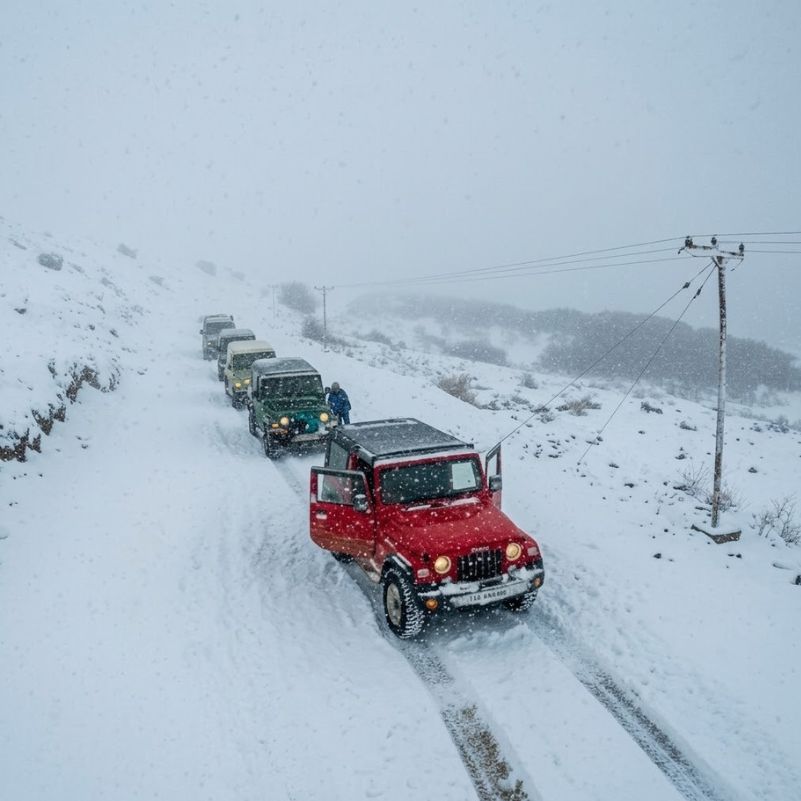 Group Tour9D/8N
Most Loved 4×4 Winter Spiti Expedition
2D Sangla•1D Tabo+2
₹29,999₹35,999SAVE INR 6,000/ person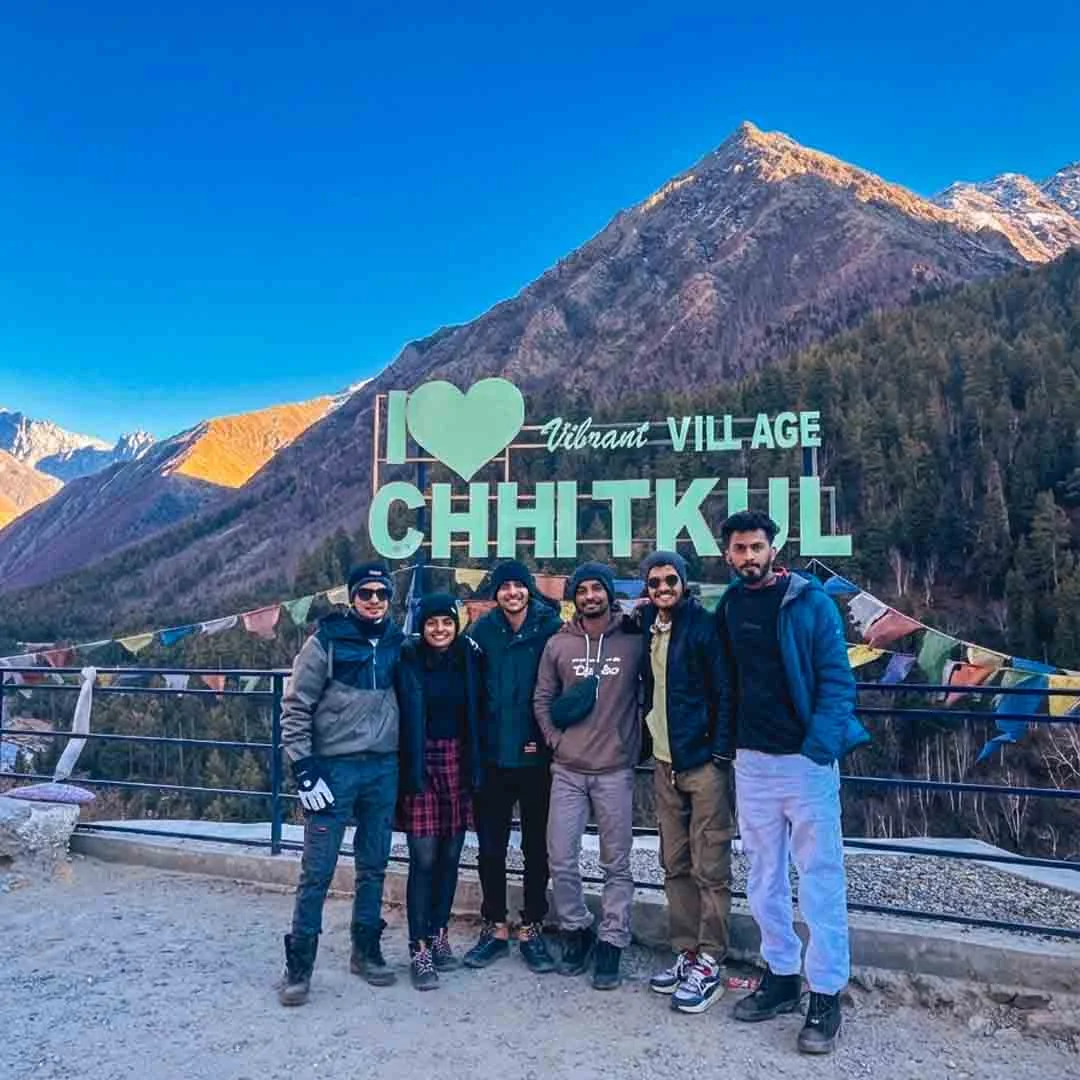 Group Tour9D/8N
Best Selling Winter Spiti Valley Group Tour
2D Sangla•1D Tabo+2
₹18,999₹23,999SAVE INR 5,000/ person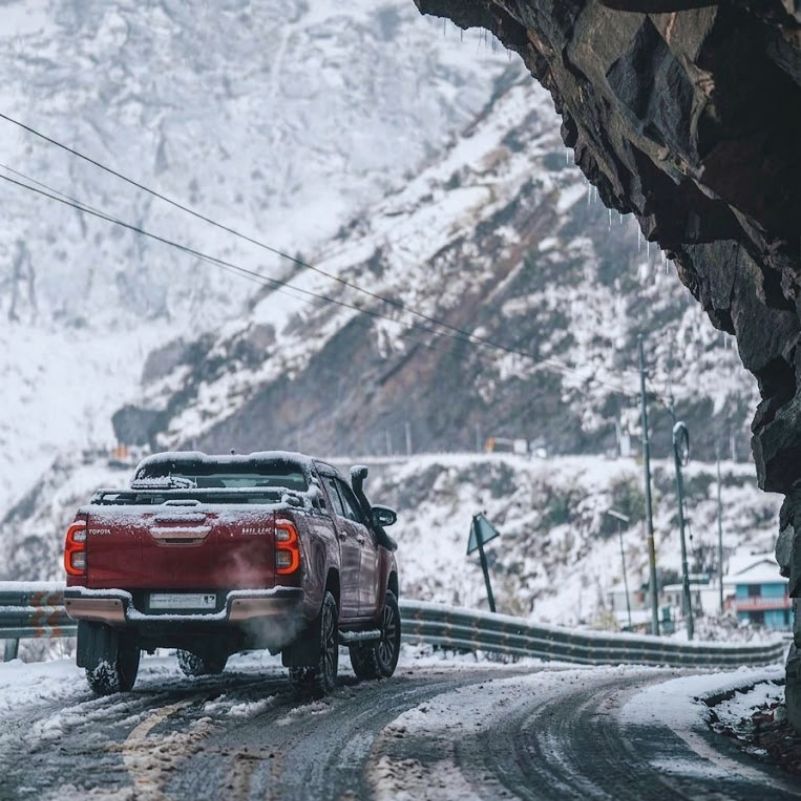 Group Tour8D/7N
Best Selling Kinnaur & Spiti Winter 4x4 Expedition
1D Sangla•1D Nako+2
₹27,999₹30,999SAVE INR 3,000/ person
Related topics
Frequently Asked Questions
What is the best month to look for snow leopards in Spiti?
February is a strong all-round choice, but the main snow leopard season runs from January to March. No month guarantees sightings, so flexibility matters more than choosing one exact date.
Why are Kibber and Chicham used as winter wildlife bases?
Both villages sit in prime Upper Spiti snow leopard habitat with open terrain for long-distance scanning. They also have experienced local trackers, winter homestays and community wildlife networks.
How many days should travellers keep for a realistic sighting attempt?
Plan around 8 to 10 days overall, including at least 3 to 5 full tracking days. More field days improve your chances, but sightings can never be guaranteed.
What are the genuine chances of seeing a snow leopard?
There is no reliable official tourist sighting percentage. Even in peak season, sightings remain unpredictable and may be from hundreds of metres away.
Is a local wildlife guide or spotter necessary?
Yes, if snow leopard tracking is your main goal. Local spotters understand tracks, terrain, prey movement and village information networks, which greatly improve the quality of the search.
How much does a snow leopard trip in Spiti cost?
Current 9-day expeditions are listed around ₹49,500 to ₹54,990 before applicable taxes, while longer specialised trips can cost much more. Price depends on duration, tracking days, group size and inclusions.
How do you reach Kibber during January or February?
Travel through Shimla and Kinnaur to Kaza, then continue to Kibber when road conditions allow. The Manali route over Kunzum Pass remains closed during winter.
Do Indians and foreign travellers need permits?
Indian citizens generally need no entry permit for Spiti. Foreign travellers may need Protected Area or Inner Line permits for specified border areas, while wildlife zones can have separate entry and camera fees.
What clothing and binoculars should visitors carry?
Bring thermal layers, heavy insulation, wind protection, insulated boots, gloves, warm headwear and sunglasses. For binoculars, 8×42 is versatile, while 10×42 or 10×50 offers greater reach.
What lens is useful for snow leopard photography in Spiti?
A 400 to 600 mm telephoto lens is a practical range because sightings are often distant. Also carry a sturdy tripod, spare batteries and plenty of memory cards.
What ethical wildlife and photography rules should visitors follow?
Keep a respectful distance, stay quiet and never chase, feed or disturb wildlife. Avoid flash near animals or dens, carry out all waste and use drones only with explicit permission.
Kibber or Hemis: which is better for a snow leopard trip?
There is no verified universal winner. Kibber offers strong local tracking networks and open terrain, while the better choice depends on access, trip length, photography priorities and current tracker teams.
More about Lahaul and Spiti
 Lahaul and Spiti
Winter Spiti from Bangalore in 2026-27: Flights, Leave Days & Delhi 4x4 Departures
Planning a Winter Spiti trip from Bangalore in 2026-27? Explore flight options, Delhi pickup points, leave requirements, 4x4 group expeditions, travel costs and a practical itinerary to help you plan your Himalayan winter adventure.
- How to Reach
- Snow Travel
 Lahaul and Spiti
What Does a Winter Spiti 4x4 Trip Really Cost in 2026-27? Package Price vs Total Holiday Budget
Planning a Winter Spiti 4x4 trip in 2026-27? Discover the real travel budget, including package prices, transport, meals, winter essentials and hidden expenses. Learn what your package covers, what costs extra and how to plan your Spiti Valley adventure without unexpected spending.
- First-Time Travellers
- Snow Travel
 Lahaul and Spiti
How Many Leave Days Do You Need for a 9-Day Winter Spiti Trip in 2026-27?
Planning a 9 day Winter Spiti trip in 2026 to 2027 requires careful leave planning, especially for working professionals travelling from cities like Bangalore, Mumbai, Hyderabad and Delhi.
- Itinerary
- Snow Travel