
Shangarh Travel Guide 2026: Best Time to Visit, Things to Do, Itinerary, Budget and Local Tips

Most people have never heard of Shangarh. And honestly, that is exactly why you should go now.
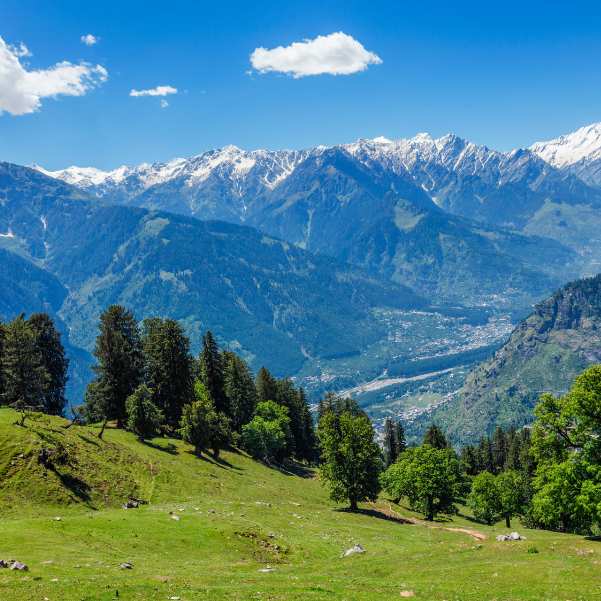
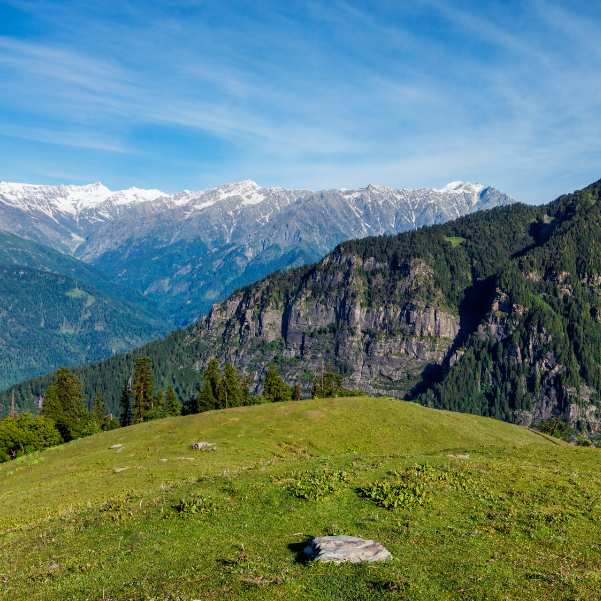
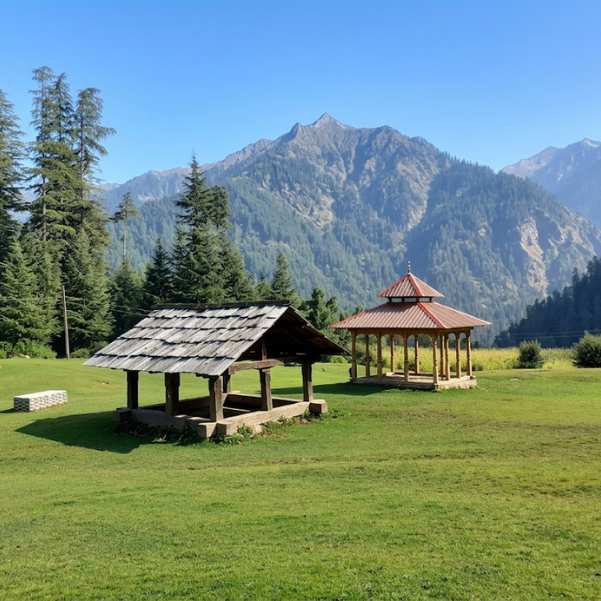
While half of North India fights for parking in Manali and squeezes into Kasol cafes, this quiet village in the Sainj Valley sits at about 2,000 metres, surrounded by thick deodar forests and a meadow so green and flat it looks photoshopped.
No traffic jams, no overpriced restaurants, no Instagram crowds blocking the view.
But Shangarh is not going to stay this quiet forever. The word is out, especially among remote workers and slow travellers, and 2026 might be the last year you get to experience it before the crowd catches up.
We have been sending travellers to Shangarh for the last few years now, and every single one has come back saying the same thing: "Why did nobody tell me about this place earlier?"
This guide by Travel Coffee tells you everything. When to go, how to get there, what it costs, and the things most travel blogs either skip or get wrong.
Quick Answer for Shangarh Travellers
Best season: March to June and September to November.
Ideal duration: 2 to 3 days. Any less and you will feel rushed. Any more and you might not want to leave.
Route: Delhi → overnight Volvo to Aut → taxi or local bus to Shangarh via Sainj. Total from Aut is about 1.5 to 2 hours.
Average budget: ₹2,500 to ₹8,000 per person depending on how you travel.
Best for: Couples looking for quiet time, solo travellers who want space to think, remote workers who want a mountain desk, and anyone tired of crowded Himachal destinations.
Not for: Party groups expecting nightlife, travellers who need constant connectivity, or anyone uncomfortable with basic mountain stays.
👉 Talk to our Himachal team on WhatsApp for trip planning.
Where Is Shangarh in Himachal Pradesh?
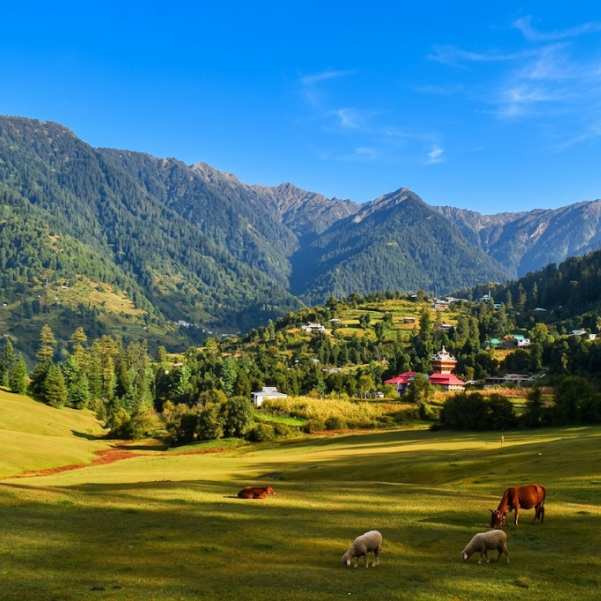
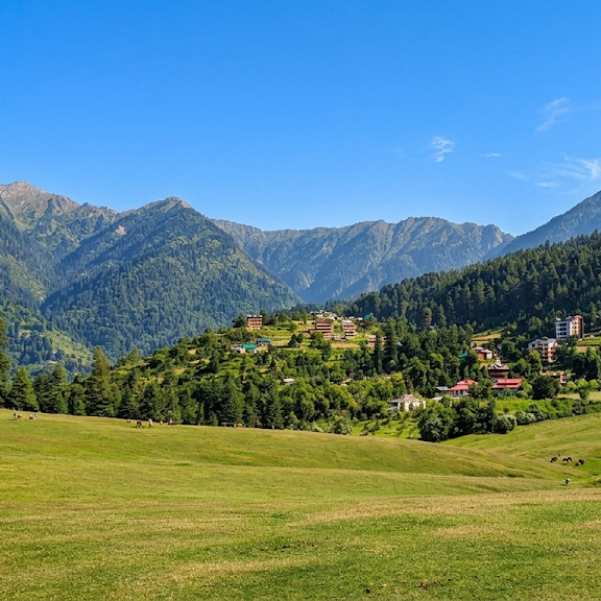
Shangarh sits in the Sainj Valley of Kullu district, right on the edge of the Great Himalayan National Park (GHNP) buffer zone.
The altitude is around 2,000 metres, which means the weather stays pleasant through most of the year without the extreme cold of higher altitude destinations.
From Aut on the national highway, you turn off into the Sainj Valley and follow a narrow mountain road that winds through small villages, thick forests, and apple orchards. The drive itself is half the experience.
If you are thinking of combining Shangarh with a broader valley trip, our Sainj Valley and Shangarh packages cover the logistics so you can focus on the place.
What most tourists get wrong about Shangarh is assuming it is just another version of Jibhi or Tirthan. It is not. Shangarh is quieter, smaller, and far less developed. That is the whole point.
Why Shangarh Is Becoming Popular in 2026
Three reasons, all connected.
First, the slow travel trend. More and more Indian travellers, especially people in their mid-20s to early 30s, are choosing villages over hill stations. They do not want another Mall Road.
They want a wooden cottage, a forest trail, a cup of chai with a mountain view, and nothing else on the schedule.
Second, the workation crowd found Shangarh. Remote workers started showing up during and after the pandemic, and the word spread.
A few cafes with WiFi, a quiet cottage with a decent view, and zero distractions. For a lot of freelancers and startup folks, Shangarh became the Himachal alternative to Goa.
Third, Kasol and Manali are full. Not just on weekends. On weekdays too. Travellers who used to visit those places five years ago are actively looking for something less chaotic. Shangarh fits that need perfectly.
The downside of growing popularity? Some homestays are getting booked out weeks in advance during peak season. If you are planning a trip between April and June, book your stay early.
Best Time to Visit Shangarh
There is no bad time, just different versions of the same beautiful place.
Summer (March to June)
This is the most popular window and for good reason. The weather stays between 10 to 25°C during the day. The meadow is at its greenest. The forest trails are dry and perfect for walking.
March is still a little chilly, especially in the evenings. April and May are the sweet spot. June gets warmer but also brings the first hints of pre-monsoon clouds.
If you are visiting in May and considering other Himachal options nearby, our guide on Jibhi in May covers a similar valley experience.
Monsoon (July to August)
Shangarh gets heavy rain in July and August. The forests look incredible, everything dripping green and misty, but the roads are risky. Landslides can block the route from Aut to Sainj without warning.
We do not usually recommend monsoon visits unless you are genuinely comfortable with uncertainty and have flexible dates. The beauty is real, but the risk is too.
Autumn (September to November)
This is the window photographers love. The rains have cleaned the air, the skies are sharp blue, and the light in the valley is soft and golden. September still has some lingering moisture, but by October the weather is crisp and dry.
Our team considers October the single best month for Shangarh. The crowds have thinned out after the summer rush, homestay owners have more time for you, and the apple orchards along the road are heavy with fruit.
Winter (December to February)
Shangarh can get snowfall between December and February. Temperatures drop to near -5°C on cold nights. The meadow covered in white snow is a sight, but the roads can get tricky and some homestays shut down for the season.
If you go in winter, confirm your homestay is open and heated. Carry serious warm layers. And do not expect cafes or restaurants to be running at full capacity. The village slows down in winter, which some travellers love.
How to Reach Shangarh
The most common route starts from Delhi.
Delhi to Aut
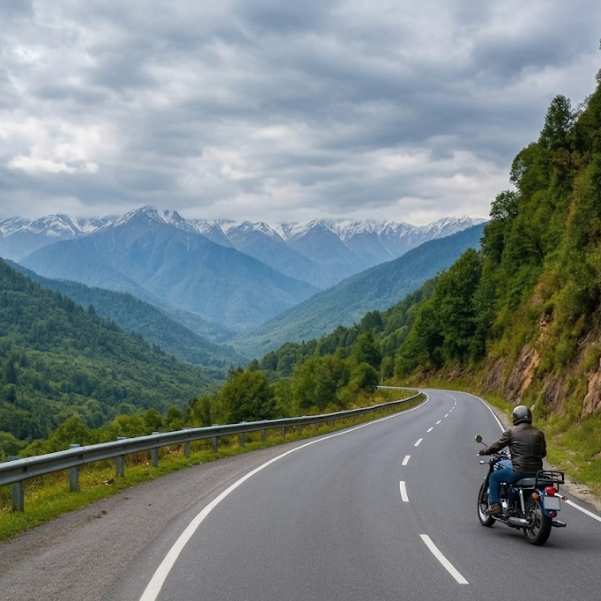
Take an overnight Volvo bus from Delhi to Aut. Multiple operators run this route daily. The bus drops you at the Aut Tunnel on NH-21, which is the turnoff point for the Sainj Valley. The ride takes about 10 to 12 hours depending on traffic.
You can also fly to Bhuntar Airport (the Kullu-Manali airport). From Bhuntar, Shangarh is about 60 km by road. A taxi from Bhuntar takes about 2 to 2.5 hours.
Aut to Shangarh
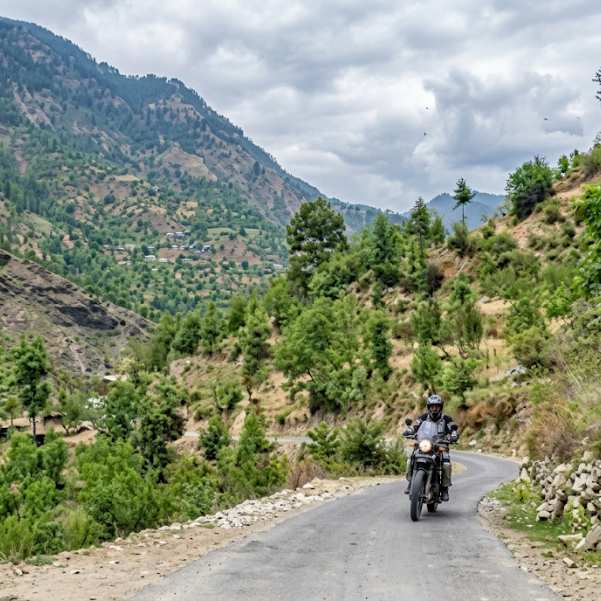
From Aut, you take a taxi or a local bus towards Sainj, and then onwards to Shangarh. The road is paved for most of the stretch but narrows significantly in the last few kilometres.
If you are driving yourself, be ready for tight turns and sections where two cars cannot pass at the same time.
Local buses run from Aut to Sainj but the schedule is limited. A private taxi from Aut to Shangarh costs about ₹1,500 to ₹2,000. If you can find other travellers to share, the cost splits nicely.
One tip from our drivers: do not attempt this road after dark if you are not familiar with mountain driving. The last stretch has no street lights and the turns are sharp. Leave Aut before 3 PM if possible.
Things to Do in Shangarh
Shangarh Meadow
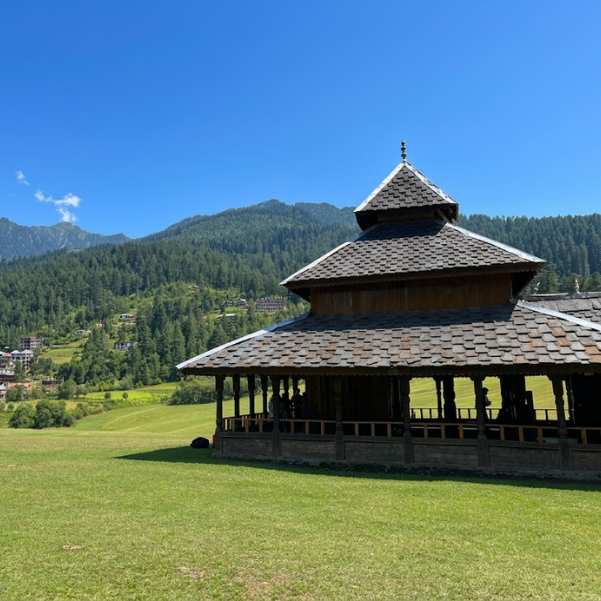
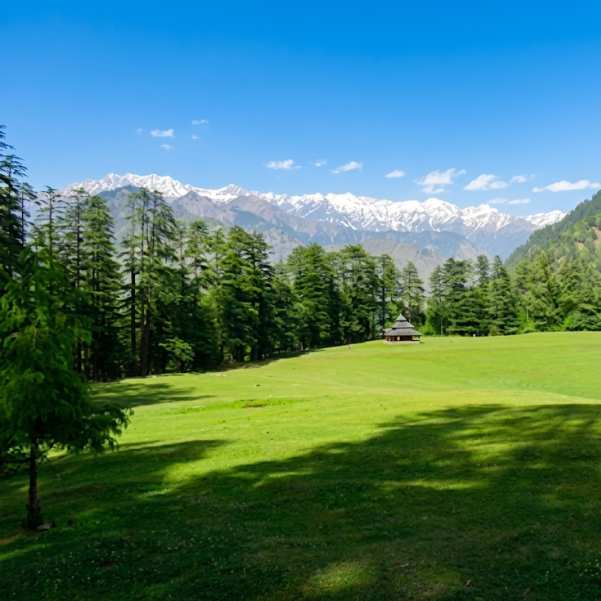
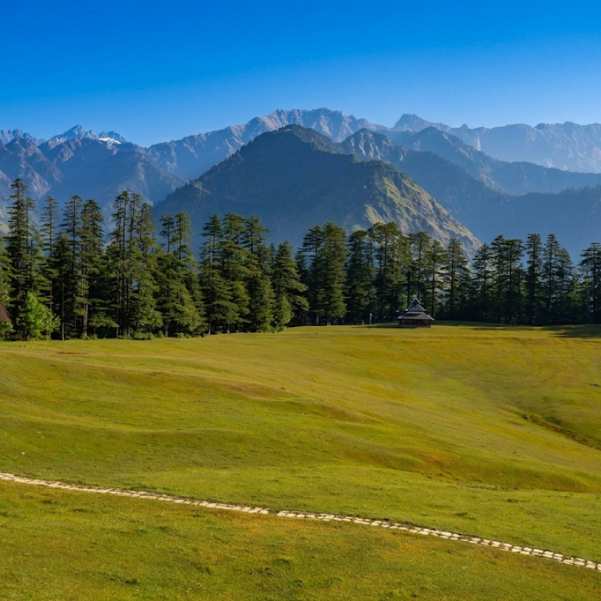
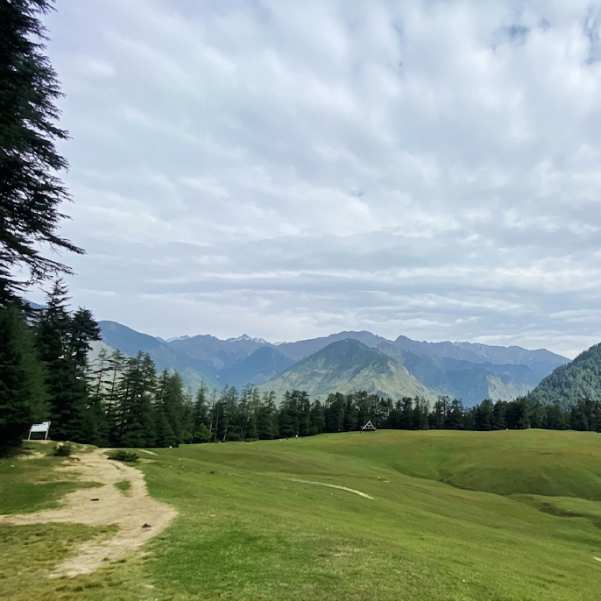
This is the reason most people come. A large, flat, impossibly green meadow surrounded by deodar trees on all sides. It feels like a cricket ground in the middle of a forest, except nobody is playing cricket and the only sound is wind through the trees.
The meadow is a protected area. You cannot camp on the meadow, and loud music is strictly not allowed.
These rules exist because the meadow sits near the Shangchul Mahadev Temple and the locals consider the area sacred. Respect it. We have seen groups get asked to leave for playing Bluetooth speakers here.
The best time to visit the meadow is early morning, around 6 to 7 AM. The mist sits low over the grass, the light filters through the trees, and you will likely have the entire place to yourself.
Shangchul Mahadev Temple
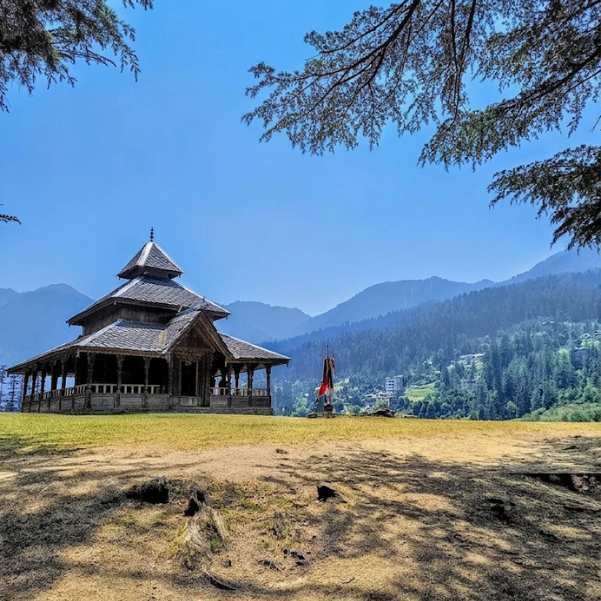
Right at the edge of the meadow stands the Shangchul Mahadev Temple, built in traditional Kath Kuni architecture. This style uses alternating layers of stone and wood without any cement or mortar, and some of these temples have stood for hundreds of years.
The carvings on the wooden panels are worth spending time with. Most tourists walk past them in 30 seconds to take a photo and leave. Sit for a while. The craftsmanship tells you a lot about how people in these valleys have lived for centuries.
Barshangarh Waterfall
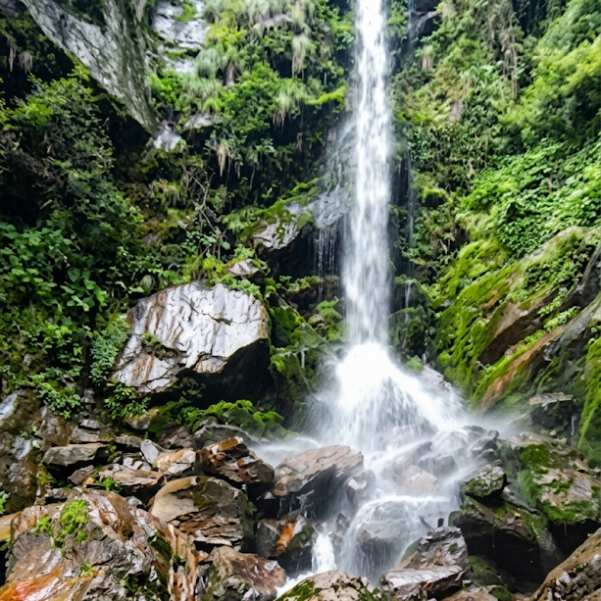
About a 30 to 45 minute walk from the village, Barshangarh Waterfall is a solid half-day activity. The trail passes through forest and crosses a couple of small streams.
The waterfall is not massive, but the walk to get there is the real payoff. Dense tree cover, birdsong, and barely any other people on the trail.
Skip the waterfall during peak monsoon though. The trail gets slippery and the streams swell enough to make crossings uncomfortable.
Pundrik Rishi Lake Trek
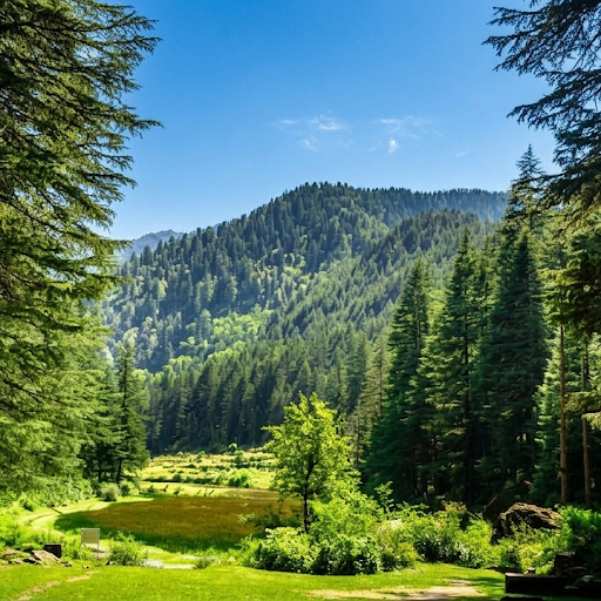
For a proper day hike, the Pundrik Rishi Lake trek is about 5 km from Shangarh. The trail goes through thick forest and climbs steadily. The lake itself is small and sacred, surrounded by tall trees.
This trek is moderate difficulty. You do not need a guide for the main trail, but the last stretch can be confusing if you have not done it before. Ask your homestay host for directions before you start. They will usually draw you a rough map or point out the landmarks.
Carry water, some snacks, and a light rain jacket regardless of the season. The forest canopy makes it cooler than the village, and afternoon rain showers are common even outside monsoon.
Forest Walks and Birdwatching
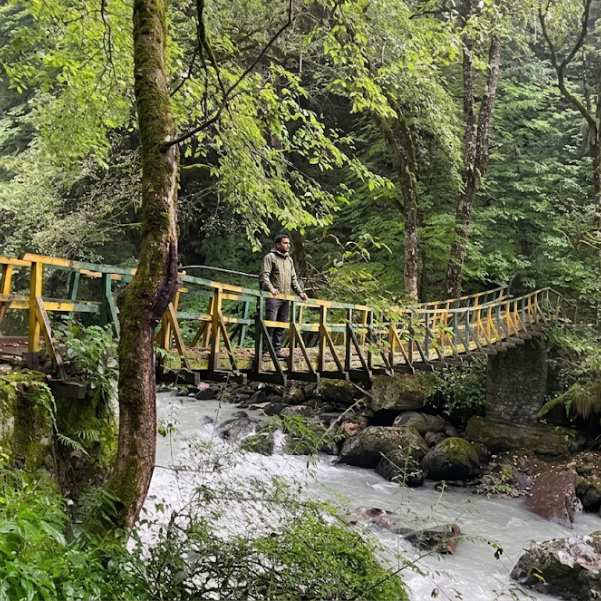
Shangarh sits in the GHNP buffer zone, which means the forests around it are dense, undisturbed, and full of birdlife.
If birdwatching is your thing, early mornings around the meadow and the trails near Barshangarh are excellent. You will spot Himalayan species that are hard to find in more populated areas.
Even if you are not a serious birder, the forest walks here are reason enough to visit. No marked trails, no entry fees, no queue. Just pick a direction and walk.
Slow Cafes and Workation Experience
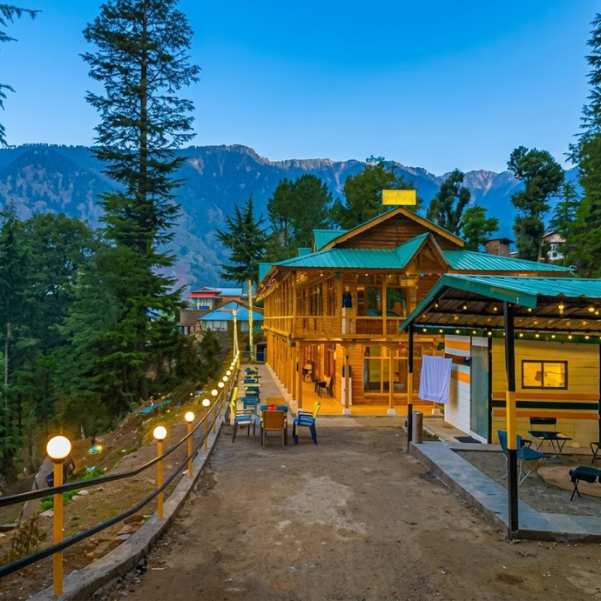
A handful of small cafes have opened in and around Shangarh over the last couple of years. Most serve coffee, pancakes, maggi, and basic meals. The vibe is deliberately slow. No rush, no loud music, no waiters hovering.
For workation travellers, some homestays and cafes now offer WiFi, but do not expect city-level speeds. It works for emails, calls, and light browsing. Heavy video conferencing or large file uploads may test your patience. More on connectivity below.
What we tell our travellers is this: if you need guaranteed fast internet for critical work, Shangarh is not the right workation spot. But if your work allows some flexibility and you want to write, design, or think in a place that actually feels peaceful, it is hard to beat.
2 Day Shangarh Itinerary
Day 1
Take the overnight Volvo from Delhi and reach Aut by morning. Grab breakfast at one of the dhabas near the tunnel. Then hire a taxi to Shangarh. You should reach your homestay by late morning.
After checking in and a quick lunch, walk to the Shangarh Meadow and the Shangchul Mahadev Temple. Spend the afternoon here. Bring a book if you want. Or just sit on the grass and do nothing. That is allowed.
In the evening, have dinner at your homestay. Most serve simple home-cooked Himachali food. Ask for siddu if they make it.
It is a local steamed bread stuffed with poppy seed paste, and most places outside the valley do not serve it. This is the kind of food tip you will not find on Google.
Day 2
Wake up early and trek to Barshangarh Waterfall or walk through the forest trails near the village. Return by lunchtime, pack up, and take a taxi back to Aut to catch your return Volvo.
If you have a vehicle, you can also stop at Sainj on the way back and explore the lower valley before heading to the highway.
This itinerary is tight but works if you only have a weekend. You will wish you had a third day.
3 Day Shangarh + Sainj Valley Itinerary
Day 1
Arrive at Aut by morning. Instead of heading straight to Shangarh, spend the first half of the day in the lower Sainj Valley. Visit Neuli village, walk along the river, and have lunch at a local dhaba. Then continue to Shangarh and check into your homestay by afternoon.
Evening at the meadow and temple. Dinner at the homestay.
Day 2
Full day in Shangarh. Morning trek to Pundrik Rishi Lake (about 5 km, plan 4 to 5 hours round trip). Afternoon rest. Evening chai at one of the local cafes.
This is the day to not plan anything after the trek. Let your legs recover and watch the sun go down behind the trees.
Day 3
Morning walk to Barshangarh Waterfall. Return, pack up, and drive back to Aut. If time allows, detour through nearby villages in the valley. These small hamlets have apple orchards, walnut trees, and the kind of mountain life that feels like stepping back 50 years.
Catch your evening Volvo back to Delhi.
👉 Send your travel dates on WhatsApp and we’ll handle the rest.
Shangarh Trip Cost Breakdown
The good news: Shangarh is genuinely affordable. You do not need to spend a lot to have a great time here.
Backpacker Budget
Budget homestays start at around ₹949 per night. Add meals at the homestay (usually ₹150 to ₹300 per meal), shared transport from Aut, and basic expenses. A solo backpacker can do Shangarh in ₹2,500 to ₹4,000 for 2 days comfortably.
The money-saving tip most people miss: book directly with the homestay by calling them instead of using a booking platform.
You save the commission, and the host often throws in an extra meal or helps arrange local transport for free. Our team can share contact numbers if you need them.
Couple Trip Budget
A couple staying at a nicer homestay with a mountain-view room, eating well, and hiring a private taxi from Aut should budget about ₹5,000 to ₹8,000 per person for 2 to 3 days. This is still cheaper than a single night at most Manali hotels during peak season.
Workation Cost Estimate
If you are staying for a week or more, negotiate a monthly or weekly rate with your homestay. Long-stay rates can drop significantly. Budget about ₹15,000 to ₹25,000 per person for a week including food, stay, and basic expenses.
Carry enough cash before you arrive. ATM access is limited in the valley, and most homestays and cafes do not accept cards reliably.
Best Homestays and Cafes in Shangarh
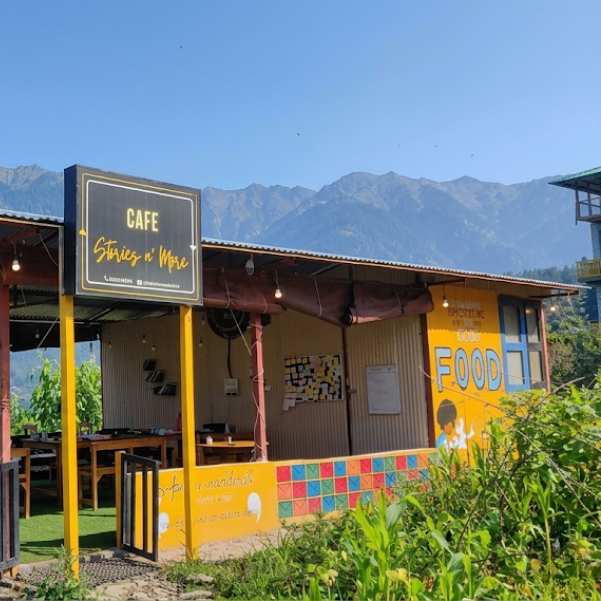
Shangarh accommodation is almost entirely homestays and small wooden cottages. There are no hotels, no resorts, and no big commercial properties. That is part of the charm.
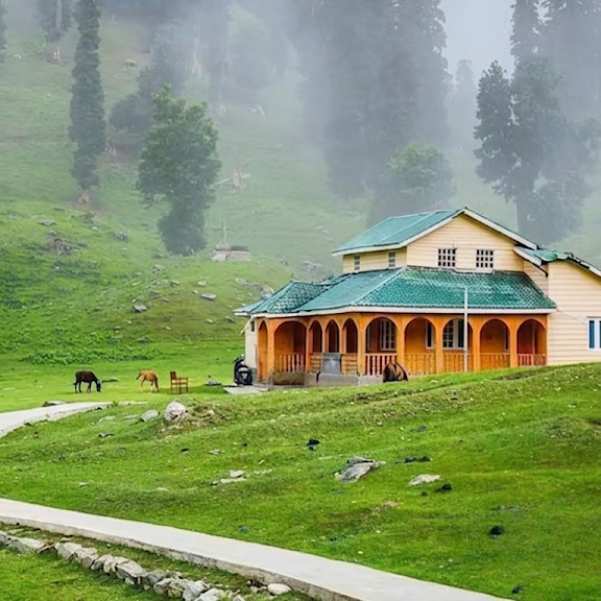
The best stays are wooden cottages with a view of the valley or the meadow. Rooms are simple but clean. Hot water is usually available from a geyser or bucket system. Some newer homestays have attached bathrooms, but many older ones have shared facilities.
We do not want to name specific properties here because quality and management can change season to season. What we recommend is calling 2 to 3 places before booking, asking about room type, hot water, meal options, and WiFi.
Our Sainj Valley packages include stays we have personally vetted, so that is the easiest route if you do not want to do the research yourself.
A few mountain cafes have come up in the area serving coffee, breakfast, and light meals. The food is decent, the views are excellent, and the pace is deliberately unhurried. Do not expect fast service. This is a village, not a city cafe.
Internet, ATM and Network Connectivity
This is where you need to set expectations before you arrive.
Mobile network
Mobile network is patchy throughout the Sainj Valley. BSNL usually has better reach in many Himachal interiors, but even that can drop in certain spots.
Airtel and Jio work intermittently near the main road but become unreliable as you climb towards Shangarh.
Internet (WiFi)
Internet (WiFi) is available at some homestays and cafes, but speeds vary wildly. Good enough for emails and messaging.
Not great for video calls or heavy uploads. If your work depends on stable internet, test the connection as soon as you arrive and have a backup plan (like a BSNL hotspot).
ATMs
ATMs are scarce in the valley. The nearest reliable one is likely in Sainj town or back at Aut. Carry all the cash you will need for your entire stay. Include a buffer for unexpected expenses.
Power cuts happen, especially during bad weather. Carry a power bank and a small torch.
Important Local Tips Before Visiting Shangarh
Respect the meadow rules.
No camping on the meadow. No loud music. No littering. The locals take this seriously, and honestly, they should. The meadow stays beautiful because people have protected it. Do not be the person who ruins it.
Carry basic medicines.
There is no medical shop in Shangarh. The nearest pharmacy is in Sainj or further. Pack paracetamol, band-aids, ORS, and any personal prescriptions.
Expect power cuts
Expect power cuts during rain or snow. Your phone and power bank should be fully charged before you arrive.
There is no nightlife.
If you want a place to drink and party after dark, Shangarh is not it. The village goes quiet after sunset. Some travellers love this. Others find it boring. Know which type you are before booking.
Bring a torch or headlamp.
The paths between homestays and the meadow have no street lighting. After dark, you are walking by starlight unless you brought your own light.
In our experience helping travellers plan Shangarh trips, the biggest complaint we hear is from people who expected Kasol-like energy and got a quiet village instead. That is not a problem with Shangarh. That is a problem with wrong expectations.
Shangarh vs Jibhi vs Tirthan: Which Is Better?
All three are in similar parts of Himachal and attract a similar crowd, but the vibe is different.
Jibhi
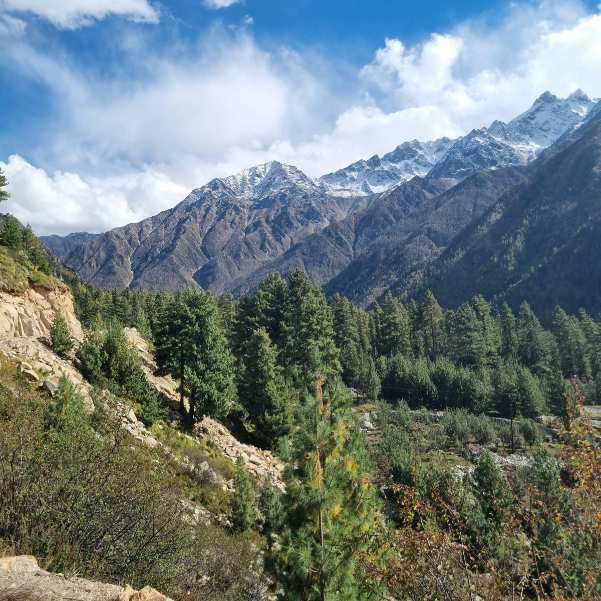
Jibhi is the most developed of the three. More cafes, more homestays, more Instagram activity, more travellers. If you want a social experience with things to do in the evening, Jibhi works.
But it has also gotten noticeably crowded in peak season. Our Jibhi vs Kasol comparison covers this in detail.
Tirthan Valley
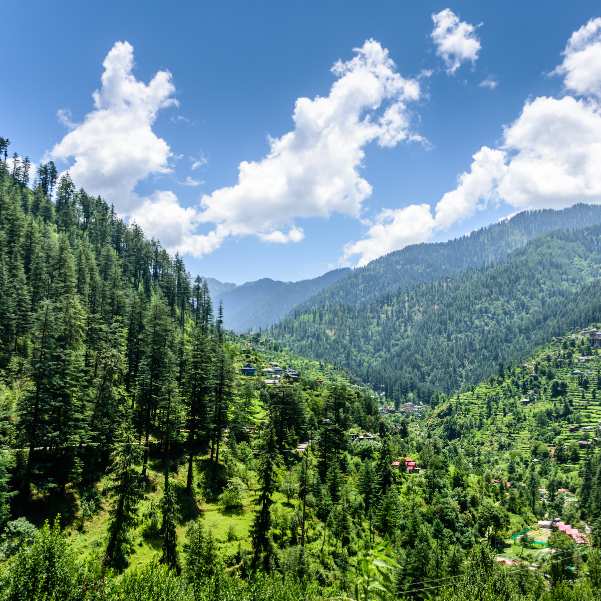
Tirthan Valley is excellent for treks, fishing, and GHNP access. It suits outdoorsy travellers who want a mix of adventure and nature. If hiking and river walks are your priority, Tirthan is the better pick. Our Jibhi and Tirthan Valley packages combine both in one trip.
Shangarh
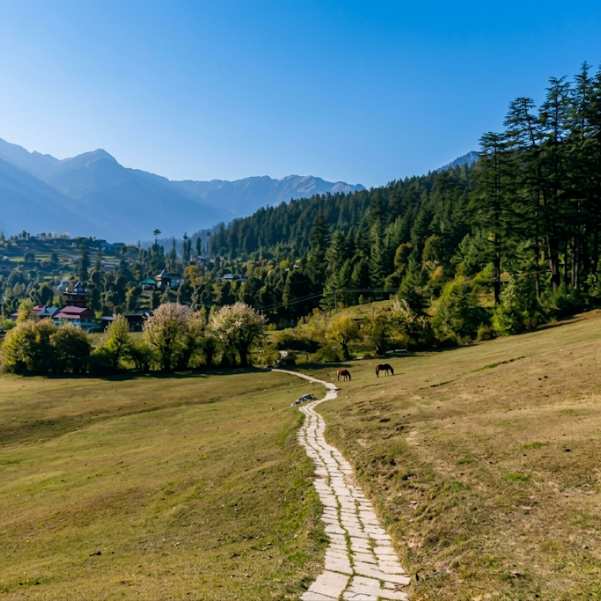
Shangarh is the quietest of the three. The meadow is its centrepiece, and the pace of life here is slower than Jibhi or Tirthan. If what you want is silence, space, and nothing on the schedule, Shangarh wins.
The skip-this recommendation we always share: if you are visiting Shangarh for the first time, do not try to club it with Manali in the same trip. Some travel blogs suggest a "Manali + Shangarh combo."
The two places are completely different moods, and rushing from Manali traffic to Shangarh silence in the same day defeats the purpose. Give Shangarh its own trip.
Is Shangarh Worth Visiting in 2026?
Yes. Without hesitation.
For couples
For couples, Shangarh offers what most hill stations cannot: genuine privacy, quiet evenings, and a pace that lets you actually spend time with each other instead of standing in queues.
For solo travellers
For solo travellers, it is one of the safest and most welcoming villages in Himachal. Homestay hosts are warm, the community is small, and the setting gives you real space to decompress. We have had solo women travellers tell us they felt completely at ease here.
For photographers
For photographers, the meadow at sunrise, the temple architecture, the forest trails, and the valley light make Shangarh one of the most photogenic spots in Kullu district.
For workation travellers
For workation travellers, it works if your internet needs are flexible. The environment is perfect for focused work during the day and forest walks in the evening. Just do not plan client video calls during your stay.
The honest negative: Shangarh does not have much to "do" in the traditional tourist sense. There is no adventure sports company, no river rafting, no paragliding, no market to shop in. If you need activity-based entertainment, you will run out of things after one day.
But if you are the type who considers sitting in a meadow with a book and a cup of chai a perfect day, Shangarh might be your favourite place in Himachal.
👉 Message us on WhatsApp for honest guidance on your Shangarh or Himachal trip.
Explore Our Curated Jibhi-Tirthan Valley & Shangarh Tour Packages
 5D/4N
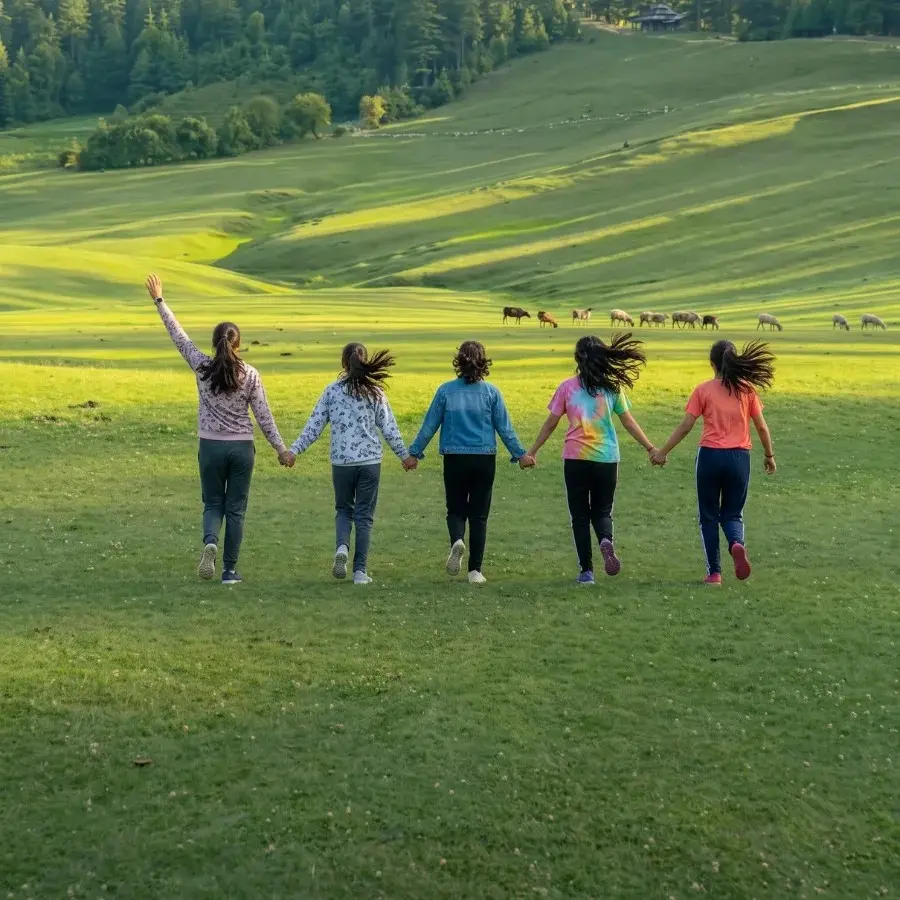
5D/4NMost Loved Shangarh Sainj Valley Tour With Private SUV
2D Shangarh
₹12,999₹16,999SAVE INR 4,000/ person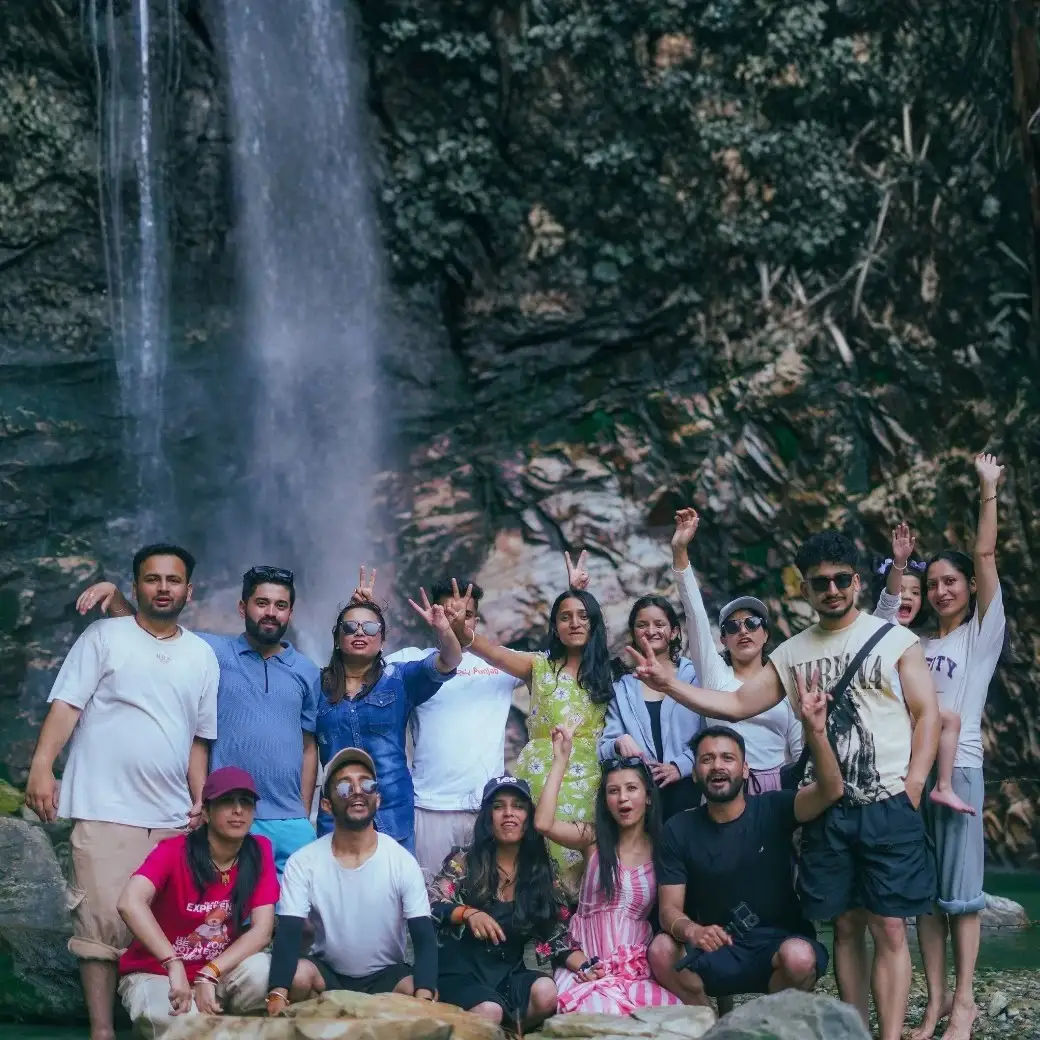 Group Tour6D/5N
Best Jibhi Tirthan Valley Tour With Shangarh Meadows
2D Tirthan Valley•1D Shangarh (Sainj Valley)
₹7,499₹9,699SAVE INR 2,200/ person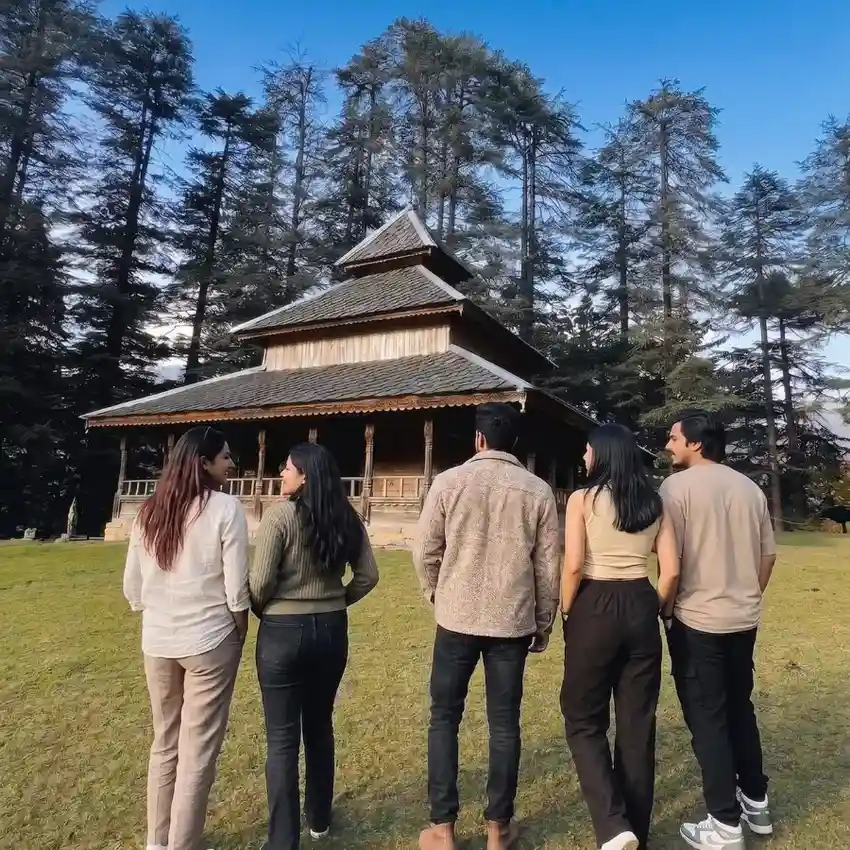 Group Tour5D/4N
Sainj Valley / Shangarh Weekend Group Trip
2D Sainj Valley
₹7,499₹9,999SAVE INR 2,500/ person
Related topics
Frequently Asked Questions
Is Shangarh worth visiting?
Yes, especially if you value quiet, nature, and slow travel over activities and nightlife. It is one of the most peaceful villages in Kullu district and suits couples, solo travellers, and remote workers.
Does Shangarh receive snowfall?
Yes. Shangarh can receive snowfall between December and February. The meadow covered in snow is beautiful, but roads may get difficult and some homestays close for the winter.
How many days are enough for Shangarh?
2 to 3 days is ideal. Two days cover the meadow, temple, and one trek or waterfall visit. Three days let you explore the broader Sainj Valley and actually relax.
Can we camp in Shangarh meadow?
No. Camping on the meadow is not allowed. The area is protected and considered sacred by the local community. Loud music is also restricted.
Is Shangarh safe for solo travellers?
Very safe. The village is small, homestay hosts are welcoming, and we have had many solo travellers, including women, visit without any issues.
What is the best month to visit Shangarh?
April, May, and October are the best months. April and May for green landscapes and comfortable weather. October for clear skies, fewer tourists, and golden autumn light.
Are cafes available in Shangarh?
Yes, a few small mountain cafes operate in and around Shangarh. They serve coffee, breakfast, and basic meals. WiFi is available at some but speeds are inconsistent.
Is internet reliable in Shangarh?
Not always. WiFi is available at some homestays and cafes, but speeds are unpredictable. BSNL mobile data works in patches. Carry a hotspot as backup if you need connectivity for work.
How to reach Shangarh from Delhi?
Take an overnight Volvo bus from Delhi to Aut (10 to 12 hours). From Aut, hire a taxi or take a local bus to Shangarh via Sainj (about 1.5 to 2 hours). You can also fly to Bhuntar Airport and drive about 60 km from there.
Is Shangarh better than Jibhi?
Different, not better. Jibhi has more cafes, more social energy, and more things to do. Shangarh is quieter, less developed, and better for solitude. Your choice depends on whether you want activity or stillness.