
Manali to Spiti Bike Trip vs Shimla Route: Which Is Better for Riders in 2026?
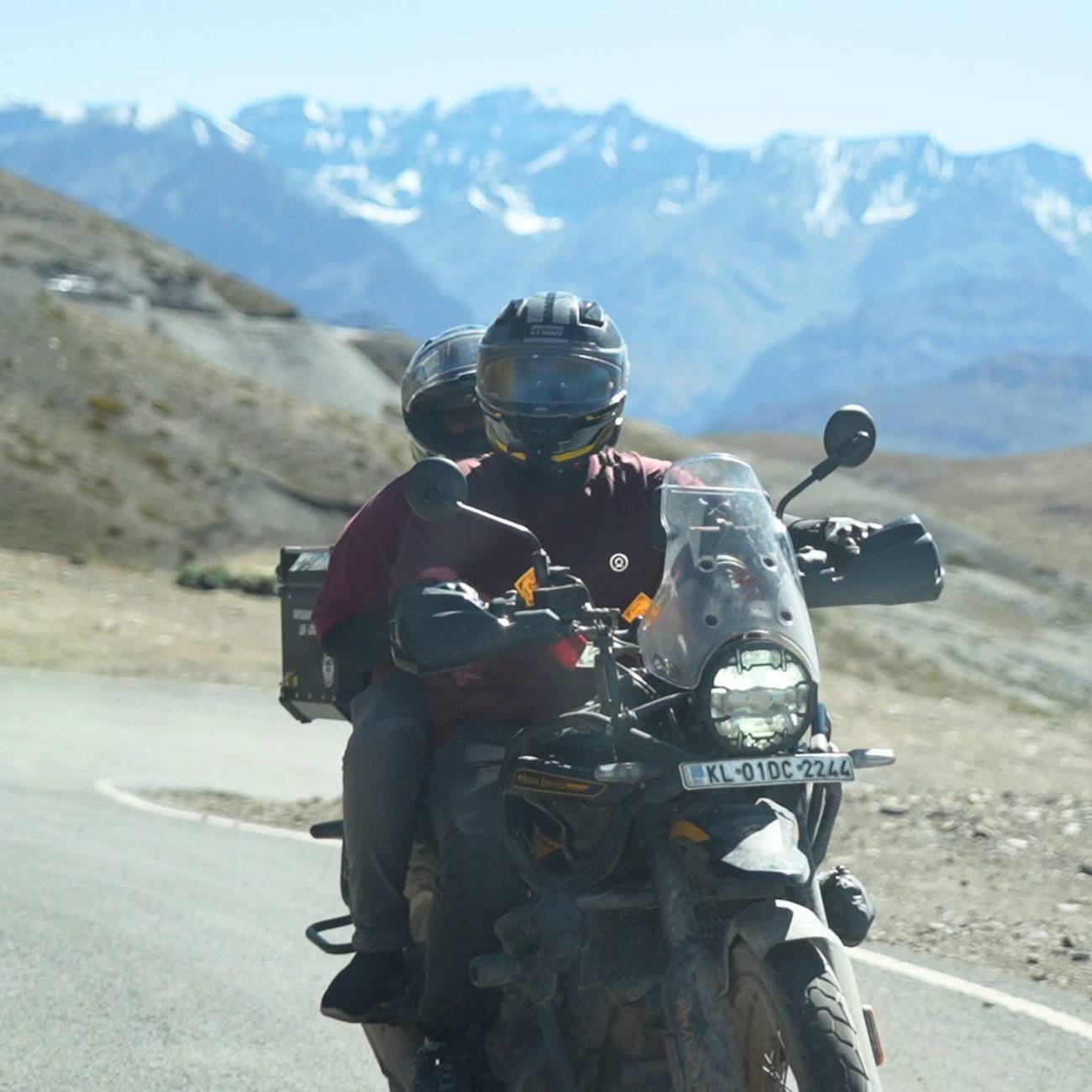
If you are stuck between starting your Spiti bike trip from Manali or Shimla, the answer is not the same for everyone. Both routes end at Kaza. But what you ride through, how your body handles it, and how much your bike takes a beating are completely different stories.
We have run rider trips on both sides for years. The wrong route choice does not just make the trip harder. It can ruin the first three days of what should be the best ride of your life.
This guide by Travel Coffee breaks down the Manali to Spiti bike trip against the Shimla route honestly, with road conditions, costs, permits, and rider-type recommendations for 2026.
Quick Answer: Which Route Is Better for a Spiti Bike Trip in 2026?
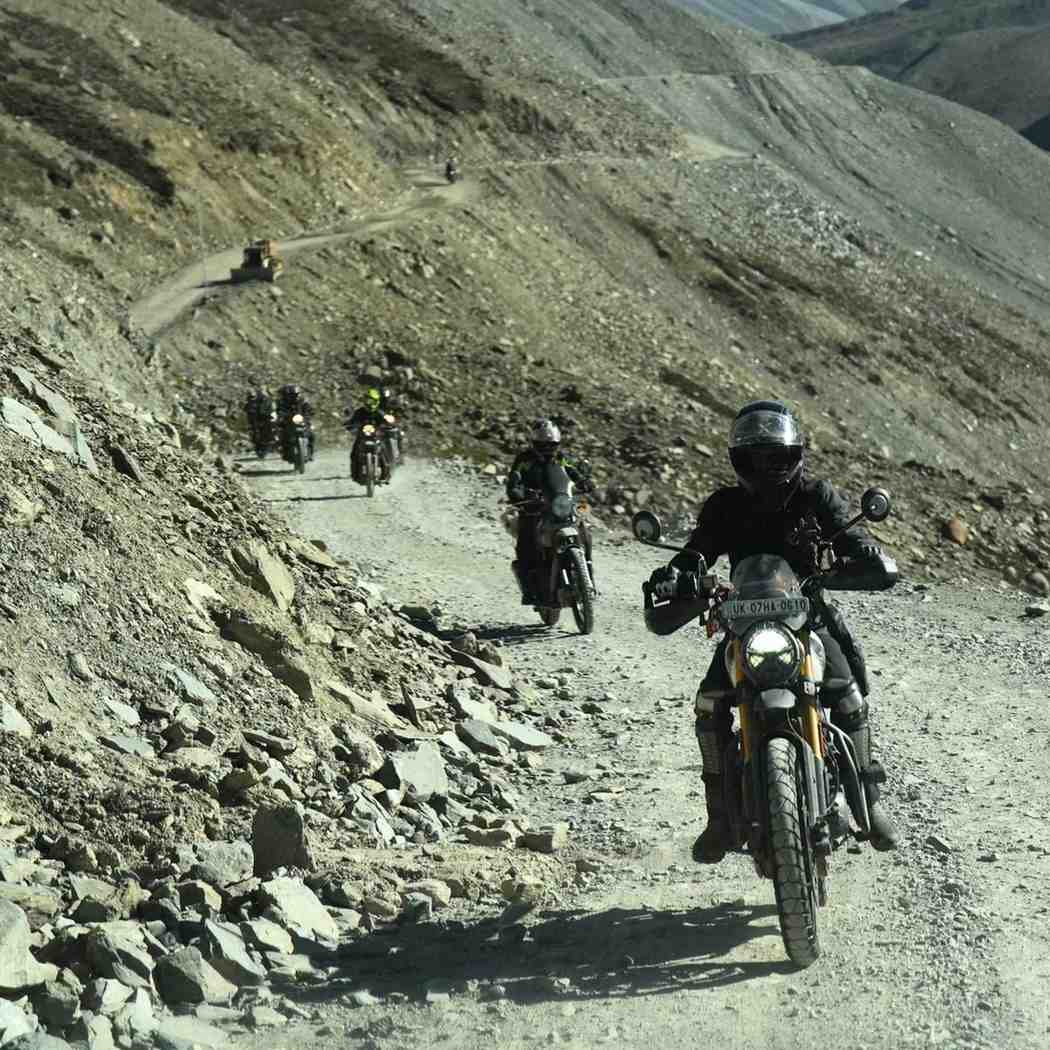
Shimla route
The Shimla route is better for first-time riders, pillion riders, anyone on a rented bike, and anyone who wants safer altitude adjustment. It gives your body a slow climb and your bike easier roads to start with.
Manali route
The Manali route is better for experienced riders who want a shorter, tougher ride and the rawest Himalayan feel from day one. But this only works once Kunzum Pass is officially open and the road has stabilised.
For most riders, the smart pick is Shimla in, Manali out. You enter through gentle Kinnaur, acclimatise properly, and tackle the rough Manali side after your body and your bike are tested.
Why This Route Choice Matters More on a Bike Than in a Car
In a car, a bad road is a few hours of bouncing around in your seat. On a bike, every pothole, water crossing, and gravel stretch hits your hands, your spine, and your concentration directly.
You also feel the cold differently. Wind chill at 14,000 feet on a moving bike can drop the felt temperature by 8 to 10 degrees, even in July. A car driver does not deal with that.
Then there is altitude. Riders breathing heavily through a helmet at 15,000 feet hit AMS faster than passengers sitting still in a Bolero. The shorter Manali route looks faster on paper but pushes your body up too quickly.
Luggage matters too. A bike with a tankbag, saddle bags, and a tail bag handles very differently on slush and water crossings than an empty test ride in your home city. Your route choice has to factor this in.
What Is the Manali to Spiti Bike Trip Route in 2026?
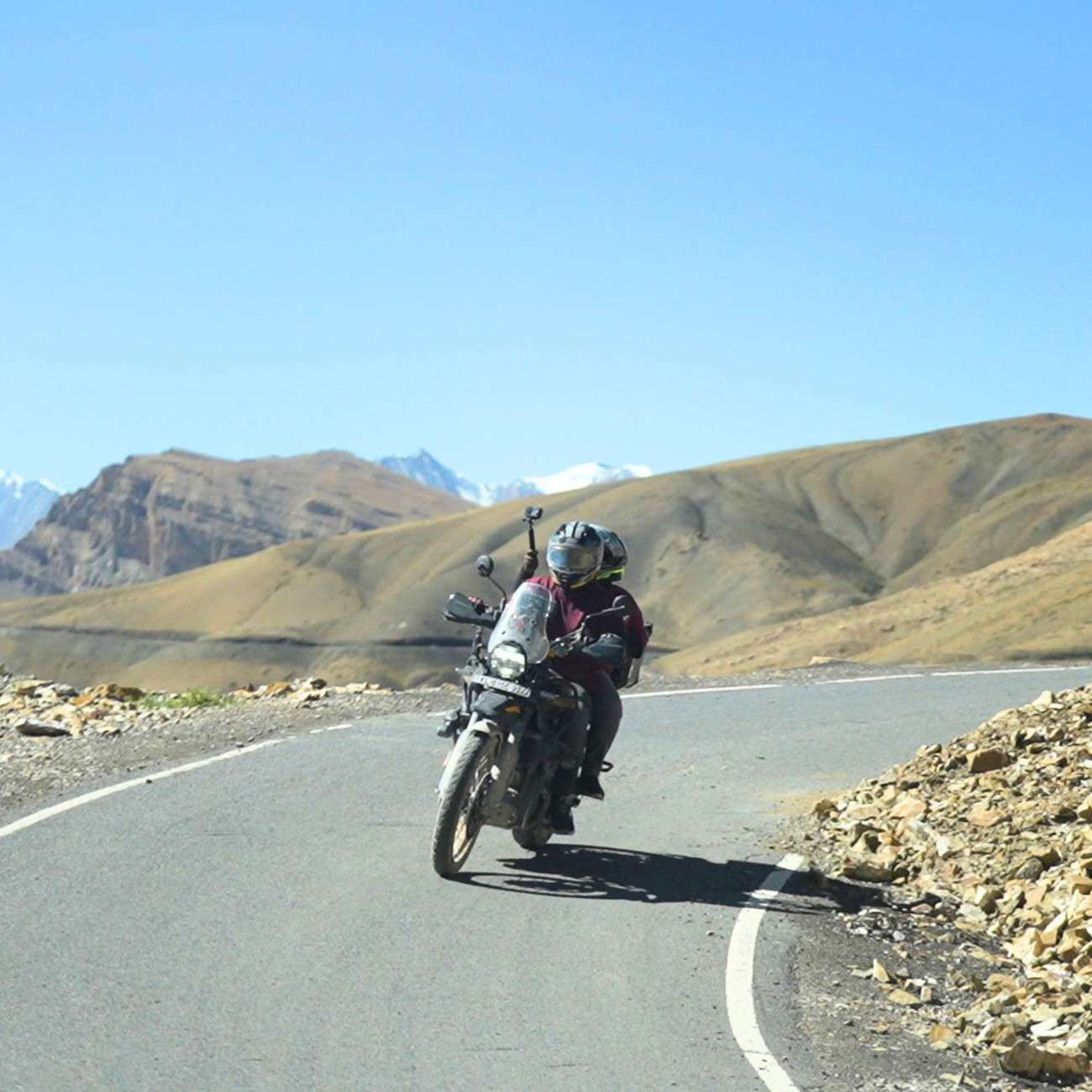
The Manali to Spiti Valley by bike route is the shorter, more dramatic option. It cuts through Lahaul, climbs over Kunzum Pass, and drops into the Spiti Valley near Losar.
This is the route most riders fantasise about. It is also the one that humbles them the most.
Manali to Kaza via Atal Tunnel and Kunzum Pass
The standard route runs from Manali through the Atal Tunnel, then on to Khoksar, Gramphu, Chhatru, Batal, Kunzum Pass, Losar, and finally Kaza.
The Atal Tunnel is 9.02 km long and cuts hours off the old Rohtang route. It also keeps the Lahaul side accessible through most of the year, though the onward road to Kaza still closes in winter.
Manali to Kaza is approximately 182 km via the Atal Tunnel and around 202 km via the Rohtang route. On a map, that looks like a long but doable day. On a bike, it is a different story.
Riding time is usually 7 to 10 hours depending on road conditions, water crossings, breaks, and weather. In our experience, very few riders manage it under 8 hours unless they skip stops, which is a bad idea at altitude.
Where the Road Gets Difficult for Riders
The road from Manali to Khoksar is mostly fine. It is the stretch after Gramphu, heading toward Batal and Kunzum, that turns into a real test.
You get loose gravel, boulder patches, slush from snowmelt, water crossings that change depth by the hour, and almost no network. This is not the place to learn how to ride off-road.
Our riders who have done this stretch always say the same thing. Start early. By 6 AM from Manali ideally. Late afternoon water crossings near Pagal Nala and Batal get deeper as glacial melt picks up through the day.
What we tell every rider in our group is to never ride this section alone if you can help it. A small mechanical issue at Batal with no network is a long, cold problem.
If you want to ride this route with proper backup, planned halts, road support, and Chandratal included, you can check our complete Lahaul and Spiti bike expedition.
What Is the Shimla to Spiti Bike Route?
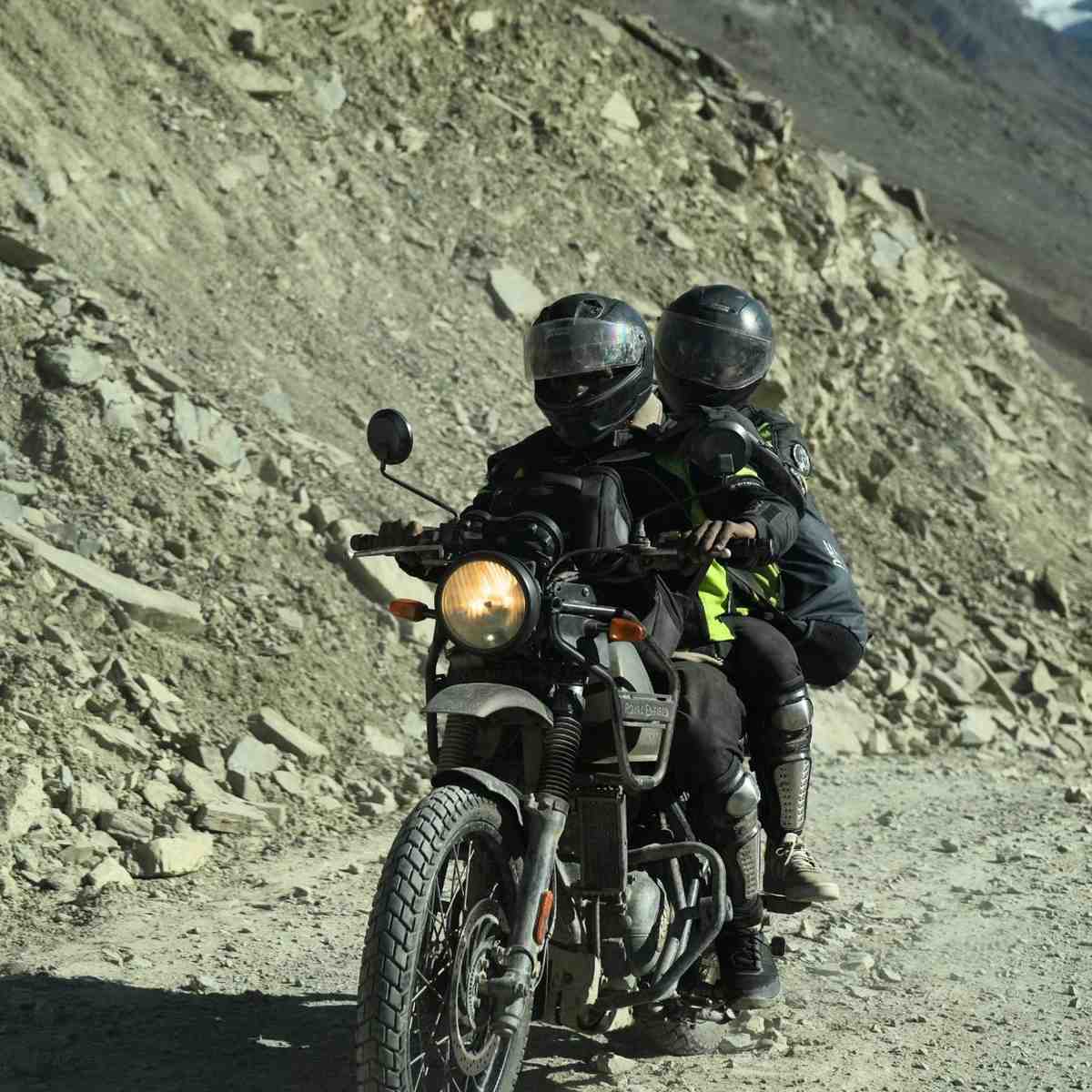
The Shimla route runs from Shimla through Narkanda, Rampur, into Kinnaur via Reckong Peo or Kalpa, then on to Nako, Tabo, and Kaza.
This route gains altitude slowly over four to five days, which is exactly what your body needs at these heights.
You pass through proper villages with hotels, mechanics, fuel pumps, and food. If your clutch cable snaps in Kalpa, you find help in 30 minutes. If it snaps near Batal, you might be there till nightfall.
The roads are mostly tar with some broken patches in the Kinnaur stretch, especially after rain. But compared to the Manali side, it feels gentle.
For first-time Spiti riders or anyone on a rented bike, this is the route we always suggest. You build into the altitude instead of slamming into it. Our Kinnaur tour options follow this gradual entry pattern for exactly this reason.
The trade-off is time. The Shimla route adds two to three extra days compared to the Manali side. If you only have 7 days total, that math is tight.
Manali vs Shimla Route for Spiti Bike Trip: Rider Decision Guide
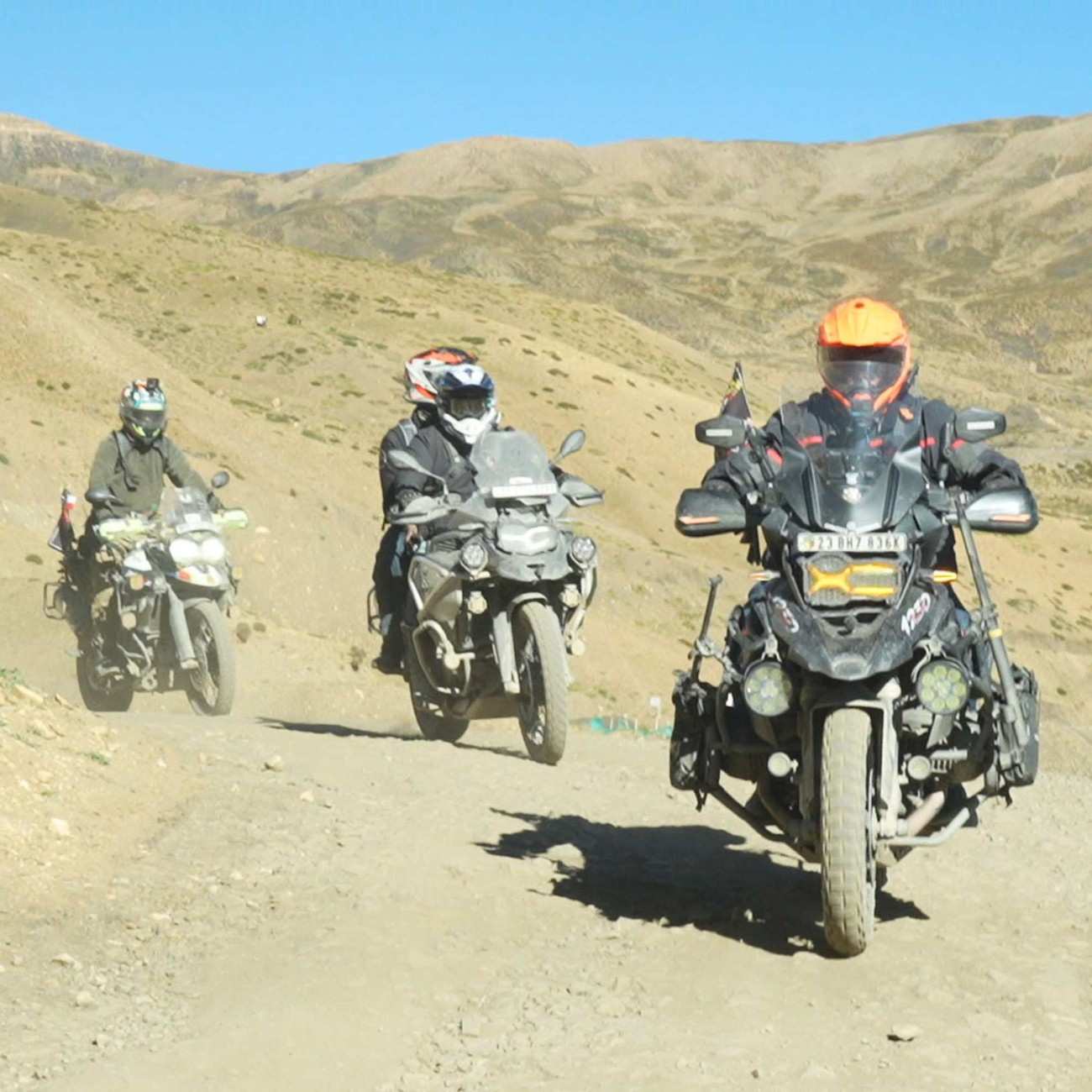
There is no universally better route. There is only the right route for your skill, your bike, your group, and your dates.
Choose Manali Route If
You are an experienced rider who has done at least two Himalayan trips before. You are comfortable with gravel, water crossings, and pushing a fully loaded bike through slush.
You have fewer days. A Manali to Kaza loop fits into 6 to 7 days. The Shimla circuit needs 9 to 10.
You want the tough, raw mountain riding feel from day one and you have the experience to handle it without becoming a problem for your group.
This route should only be attempted after Kunzum is officially open and the road has stabilised, usually 2 to 3 weeks after the BRO declares it clear.
Choose Shimla Route If
You are a beginner or an intermediate rider planning your first Spiti ride. The Shimla side gives you a much softer learning curve.
You are riding with a pillion. The rough Manali stretch is hard on pillion riders even if the rider is comfortable.
You are on a rented bike. Rentals are not always in peak condition, and breakdowns on the Manali side are far harder to fix.
You are doing this trip in May or early June, before Kunzum Pass officially opens for the season.
Best Overall Route for Most Riders
What we recommend to most groups is Shimla in, Kaza, Chandratal, Manali out. This is the format that works for 8 out of 10 of our riders.
You enter slowly through Kinnaur, give your body and your bike four to five easier days, then tackle the rough Manali side once you are already used to the altitude.
By the time you reach Chandratal and the Gramphu stretch, you have ridden 1,500 km of mountain roads. That stretch hits very differently when you have already been at 12,000 feet for five days.
>>WhatsApp our team for a rider-friendly Spiti plan
Is the Manali to Kaza Road Open for Bikes in 2026?
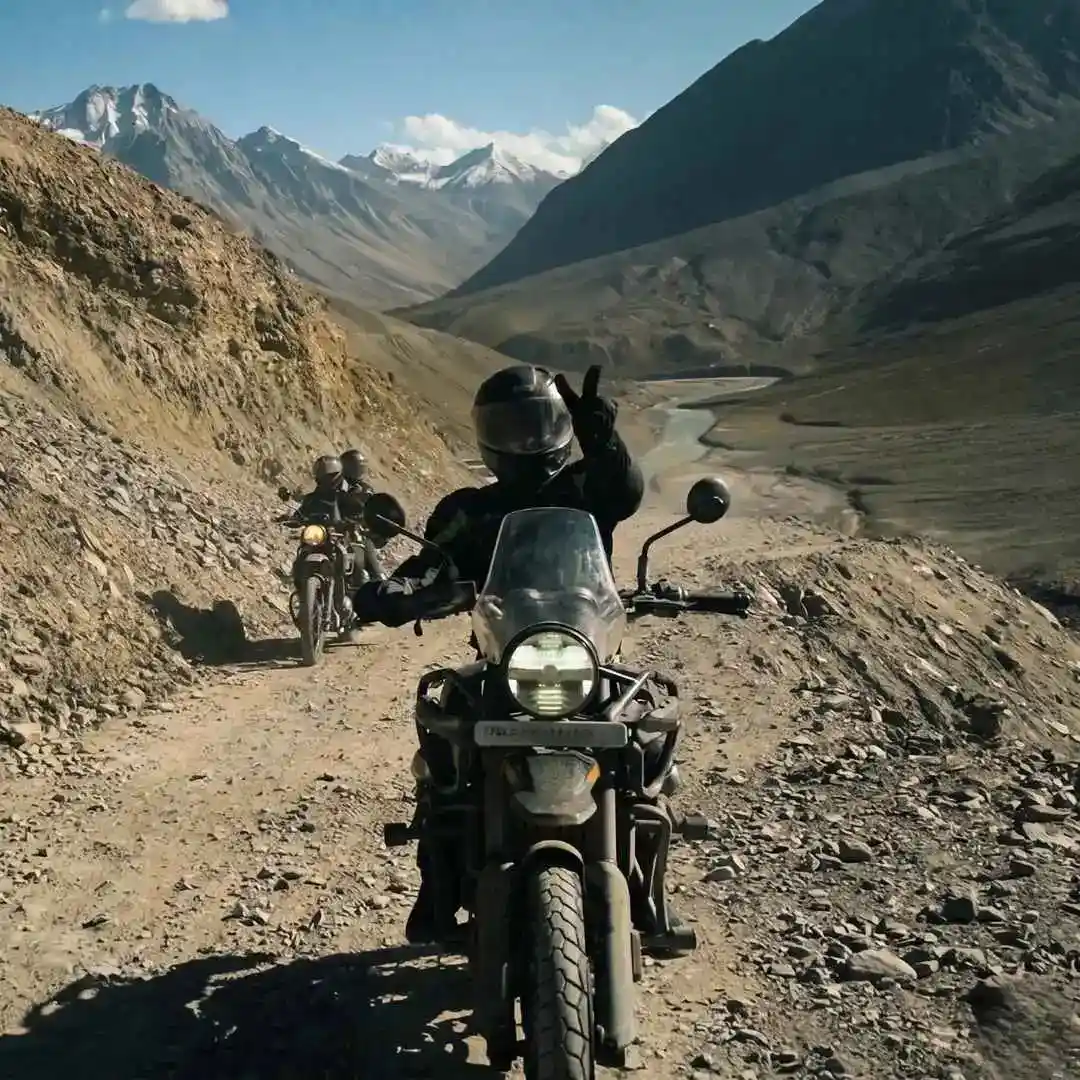
This is the question that decides your trip. And the honest answer is: it depends on the week you are reading this.
At the time of research, the official Lahaul and Spiti road-status page listed Delhi to Manali as open, Manali to Keylong as open, and Keylong to Kaza as closed. A 2026 road-status tracker reported the Manali to Kaza route via Kunzum Pass as closed as of April 21, 2026.
The expected opening window is between mid-May and early June 2026, depending on BRO clearance and weather. But this is an estimate, not a promise. A heavy late snowfall can push it back by a week. Mild conditions can move it forward.
Always check the official Lahaul and Spiti district road-status page before you leave. Not Reddit. Not Facebook groups. The official page.
The road being declared open also does not mean the road is good. Most experienced riders we work with wait 2 to 3 weeks after official opening for things to settle.
Fresh-clearance roads have unstable shoulders, surprise water crossings, and freshly fallen rocks that nobody has cleared yet.
If you want a quick check on Chandratal access, our Chandratal opening dates and best-time guide has the full month-by-month picture.
Best Time for a Manali to Spiti Bike Trip in 2026
The Manali side has a short riding window. Picking the right month inside that window makes a real difference.
June
June can be adventurous but rough. Early June often still has unstable roads, snow walls along Kunzum, slush patches, and strong water crossings.
This window is best for experienced riders who want dramatic landscapes and emptier roads. If you are riding in early June, expect at least one day of unexpected delay because something will not go to plan.
July and August
These months usually give better access once the road has stabilised. Camps near Chandratal are running, dhabas at Batal are open, and the Spiti side is mostly dry.
The catch is monsoon. The approach to Manali through Mandi and Kullu, and the Shimla side through Kinnaur, both see landslides and washouts during peak monsoon. Always keep at least one buffer day in your plan.
September
September is what we recommend to most riders if their dates are flexible. Skies are clearer after the monsoon, water crossings are usually less aggressive, and road conditions are more stable.
The trade-off is cold nights. Temperatures at Kaza and Chandratal can drop below freezing by late September. Pack thermals and a proper riding jacket with a thermal liner.
October
October is beautiful but risky. The light is incredible, the crowds are gone, and the landscape turns golden brown.
But snowfall can close Kunzum Pass with very little warning. We have seen groups stuck on the wrong side of Kunzum after an overnight snow event in early October. Avoid late October unless you have flexibility, backup plans, and the willingness to retrace via the Shimla side.
How Hard Is the Manali to Spiti Bike Trip?
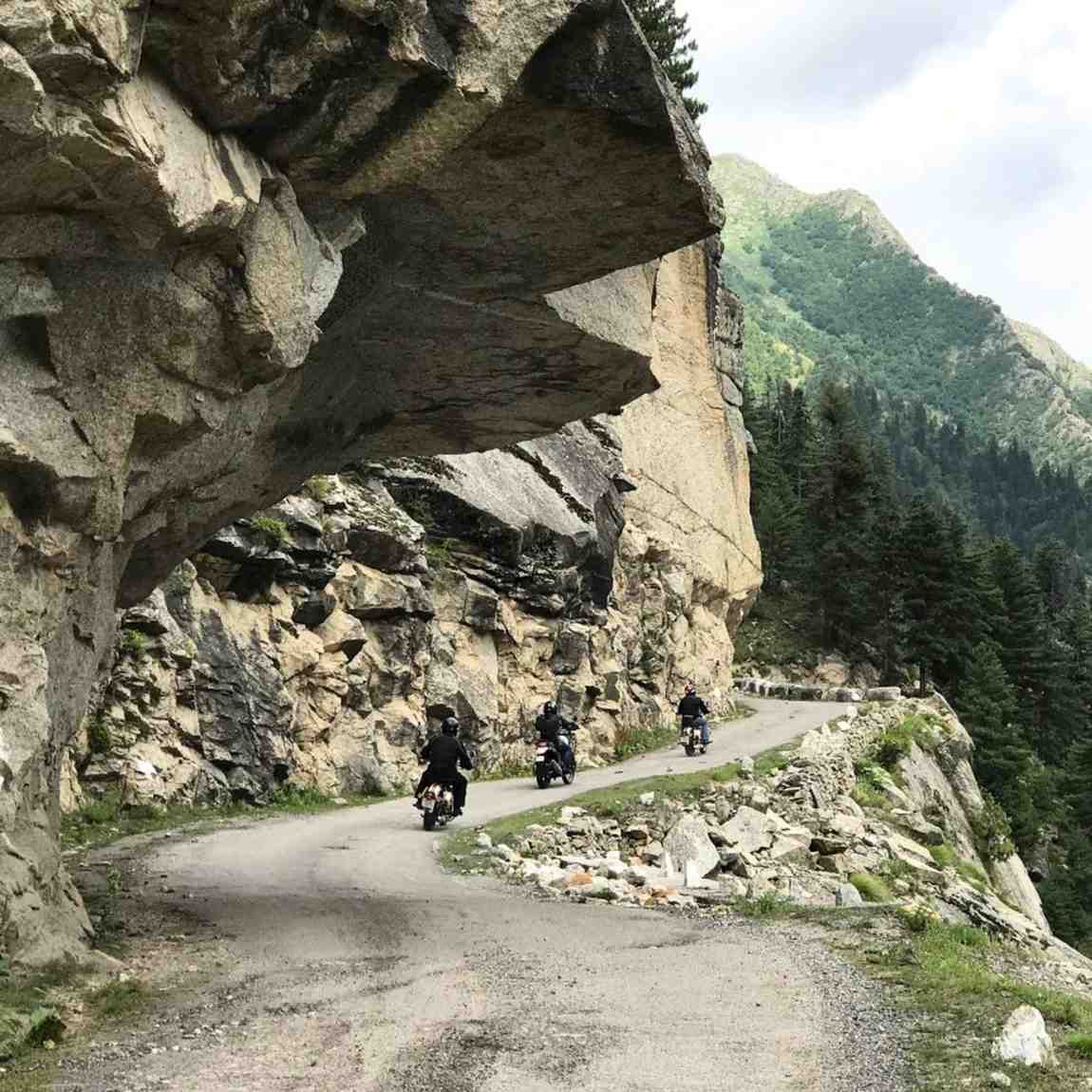
We rate it moderate to difficult depending on rider skill, current road status, weather, and how much luggage you are carrying.
The hardest sections are Gramphu to Batal, Batal to Kunzum, and the Chandratal approach road. These three stretches, totalling around 80 to 100 km, are where most rider problems happen on this trip.
A pillion rider increases the difficulty noticeably. So does heavy or badly balanced luggage. A bike that handles fine empty in Delhi behaves differently with 20 kg of saddle bags on slush.
The flip side is that the Shimla to Kaza route is genuinely easier in terms of riding skill required. You still ride through high altitude, but the road surface itself is much friendlier.
Can Beginners Do Manali to Spiti by Bike?
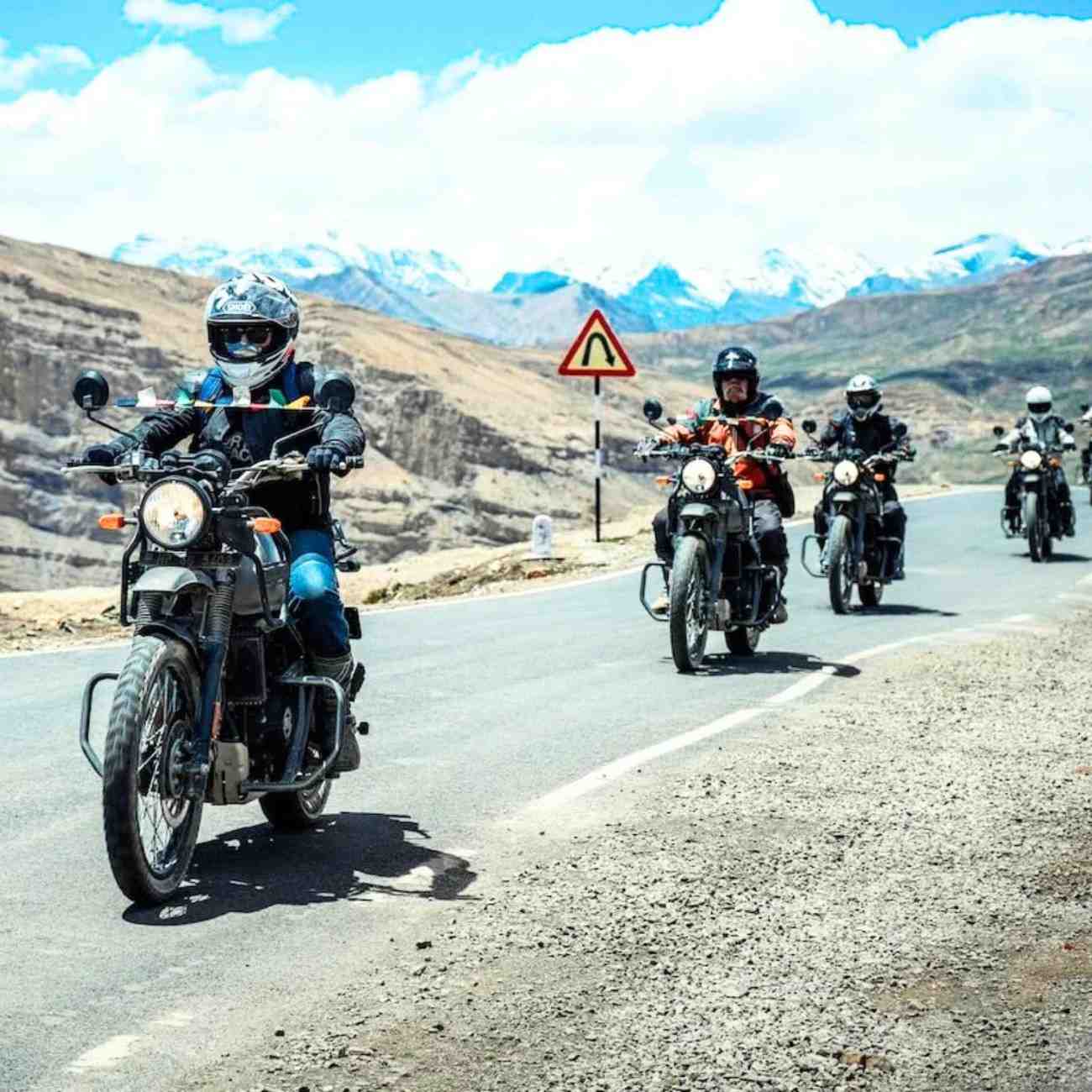
Honest answer: not Manali-first.
If this is your first proper Himalayan ride, do not start with Manali to Kaza unless you are with an experienced group, a road captain, a mechanic, and ideally a backup vehicle. Solo first-time riders should not treat the Manali-Kaza stretch casually.
For first-time Spiti riders, we always suggest Shimla-first. The roads are easier, the villages are friendlier for stops, and the altitude builds slowly enough that your first night above 12,000 feet does not also have to be a tough technical ride day.
This is the part where most travel content gets too polite to be useful. A first-time rider attempting Manali-Kaza on a rented Classic in early June with a pillion is genuinely a bad idea. Be honest with yourself about your skill before you decide your route.
Which Bike Is Best for Manali to Spiti Valley by Bike?
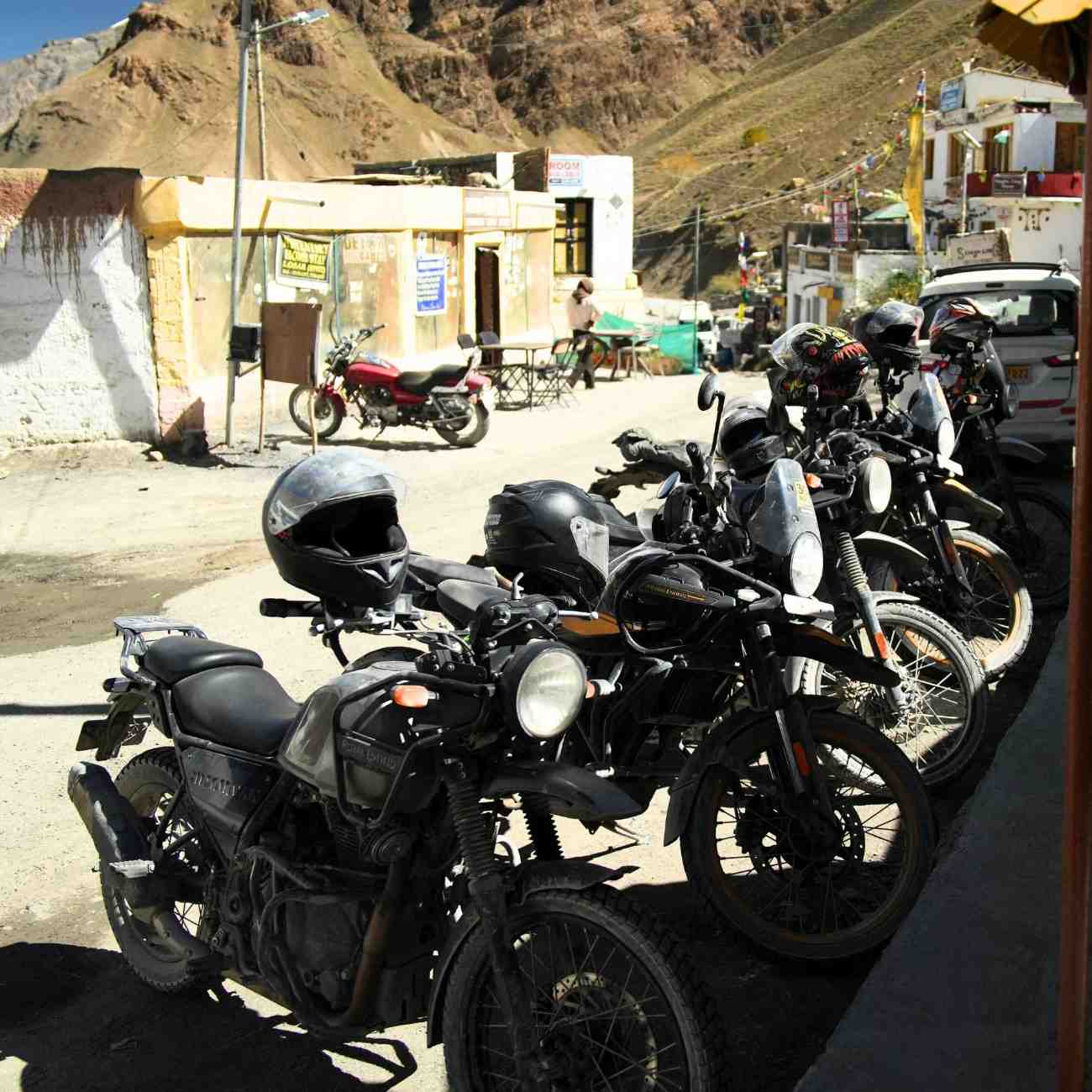
The honest answer is that no single bike is the best. The bike that works depends on your size, your riding style, your luggage, and your comfort with weight.
The Royal Enfield Himalayan and the newer Scram 411 are the most popular choices, and for good reason. Long travel suspension, decent ground clearance, and a torquey engine that does not panic at altitude.
The Hero Xpulse is light, easy to handle on rough sections, and very capable for solo riders. It is harder to push for two-up touring but excellent for nimble riding.
A well-maintained Royal Enfield Classic 350 also works for experienced riders who know how to handle weight. Plenty of riders we have worked with have done the full circuit on a Classic without issues.
What matters more than the brand is the condition of the bike. Tyres with proper tread, working brakes, a clutch that does not slip, lights that work, decent ground clearance, and a luggage setup that does not unbalance the bike.
What we always tell our travellers is to skip the rental that "looks fine." Inspect the chain, the clutch lever, the front brake, and the tyres before you sign anything. A great-looking bike with a worn chain will not get you back from Batal.
Scooters and poorly maintained rentals should not be on the Manali-Kaza stretch. The road eats them.
If you want to avoid the stress of choosing rentals, checking bike condition, and planning backup support, you can explore our Lahaul and Spiti bike expedition where the route, halts, and riding support are already managed.
Fuel, Network, Cash and Repairs: What Riders Must Know

This is the section where most blogs underprepare you. Pay attention.
There is no petrol pump between Manali and Kaza. None. Fill up in Manali and carry extra fuel in a proper jerry can. A 5-litre extra is the minimum. A 10-litre is smarter.
Kaza has fuel, but during peak season the supply can run out for a day or two when tankers are delayed. Top up the moment you reach Kaza, even if your tank is half full.
Network drops sharply after Manali. BSNL has the best chance of working in Spiti, with patchy Jio in some pockets. Airtel is mostly dead. Inform someone at home about your itinerary before you leave Manali.
Carry cash in small denominations. UPI works in Kaza and a few bigger villages but fails everywhere else. Dhabas at Batal, Chhatru, and Losar are cash only. ATMs are unreliable, and the Kaza ATM has a habit of running out on long weekends.
Mechanic support is rare beyond Manali. There are basic puncture-repair guys at Kaza and a couple of village setups, but proper mechanics are a long ride away. Carry your own basic toolkit, a tyre inflator, a puncture kit, a spare clutch cable, and chain lube.
Do You Need Permits for Manali to Spiti Bike Trip in 2026?
Permit rules have shifted in recent years. Here is what currently applies.
If you take the old Rohtang Pass route, the Rohtang permit rules apply. The Atal Tunnel bypasses Rohtang completely, which is why most riders now skip the Rohtang permit entirely.
The e-Aagman portal says vehicles entering Lahaul-Spiti have to apply for an e-pass. The same portal also says an e-permit per vehicle is required for the Atal Tunnel Rohtang to Koksar to Chandertal circuit. Apply online before you leave.
The Manali Green Tax for bikes not registered in Himachal Pradesh is ₹100. This is paid at the entry point.
The Beyond Rohtang congestion fee, as listed on the official portal, is ₹50 for LMV and passenger vehicles and ₹100 for goods vehicles. Bikers should check the latest Beyond Rohtang rules at the time of travel since slabs can be revised.
Foreign nationals need a separate Protected Area Permit for the Kinnaur-Spiti belt. This is an inner-line permit and applies whether you are on a bike or in a car.
For the full break-up of permits with current links, our Spiti Valley permit guide covers it in detail.
Always verify rules a week before departure. Permit slabs and entry fees change without much public notice.
Should You Include Chandratal on a Manali to Spiti Bike Trip?
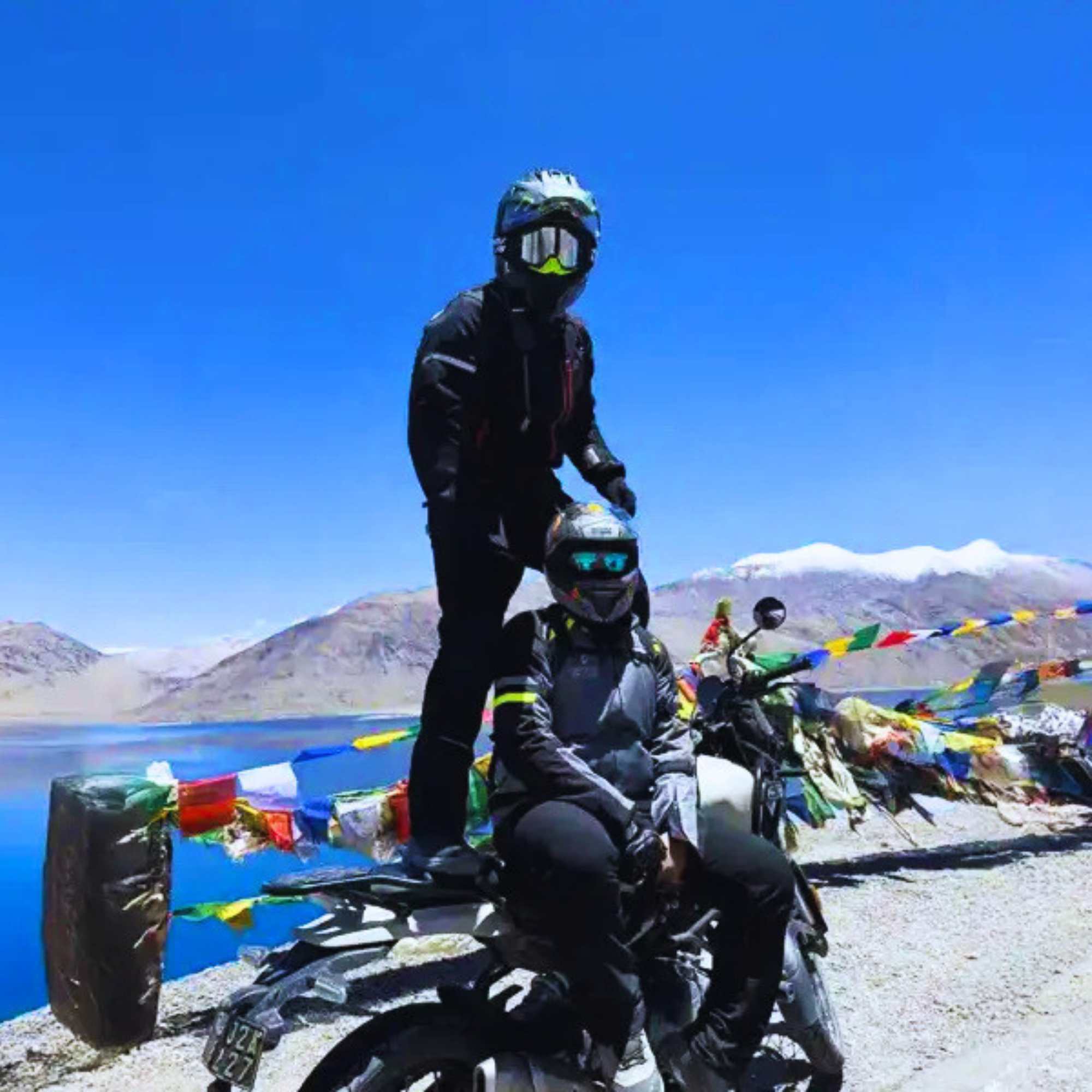
Chandratal is the highlight of the entire circuit for most riders. The crescent-shaped lake at over 14,000 feet, surrounded by nothing but mountains, is the photo everyone wants.
But do not rush it. The approach road from Batal to Chandratal is narrow, rough, and altitude-sensitive. On a fully loaded bike, this 14 km stretch can take well over an hour.
We always recommend doing Chandratal after Kaza, not on the way in from Manali. By then your body has been at altitude for several days, and the climb to 14,000 feet does not blindside you.
If anyone in your group is showing AMS symptoms, headache, nausea, dizziness, or loss of appetite, skip the overnight near Chandratal.
Sleeping at 14,000 feet with AMS already setting in is genuinely dangerous. Do a day visit from Batal instead and head back down to lower altitude for the night.
The Chandratal entry fee is collected at the parking before the lake, but exact 2026 amounts and rules should be verified on arrival.
Suggested 7 to 9 Day Bike Itinerary
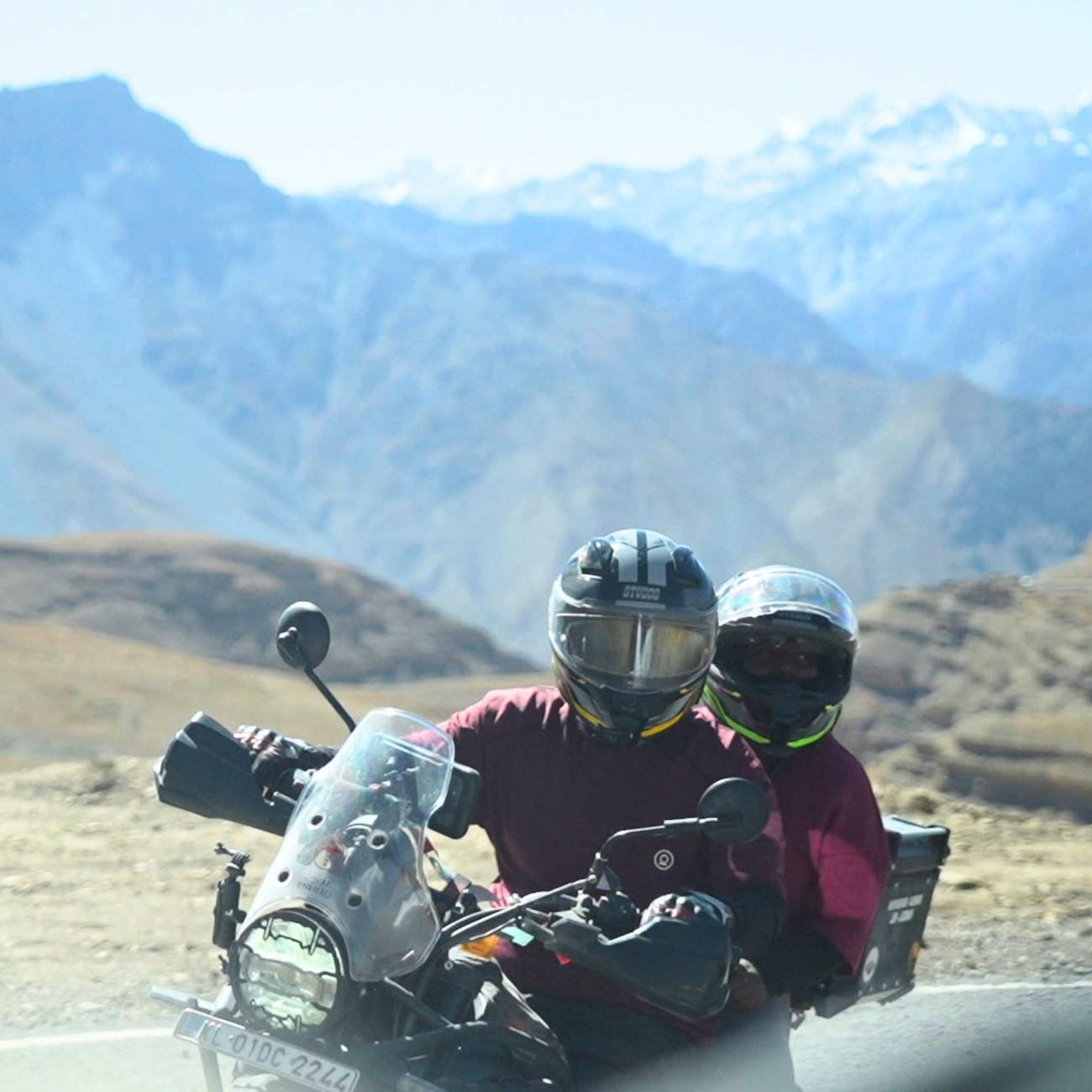
Here are two itineraries we run regularly, depending on rider experience and the open window.
Safer Shimla-In, Manali-Out Circuit
Day 1: Chandigarh to Spiti bike trip, then push on to Narkanda for the night. Easy day, mostly tar roads, gives your bike and luggage setup a real-world test before the mountains start.
Day 2: ride from Narkanda to Kalpa or Chitkul through the Kinnaur valley. The roads have a few rough patches but nothing technical. Spend the night at Kalpa with views of the Kinner Kailash range.
Day 3: ride from Kalpa to Tabo via Nako and the famous Khab sangam. This is where Spiti starts feeling like Spiti. Long ride, around 7 to 8 hours with stops.
Day 4: easy day from Tabo to Kaza via Dhankar Monastery. Use the second half of the day to rest in Kaza, eat real food, and let the altitude settle in.
Day 5: local Spiti circuit from Kaza covering Key Monastery, Kibber, Chicham Bridge, and Hikkim. No long-distance riding, just exploring. Your body needs this day.
Day 6: ride from Kaza to Chandratal via Losar and Kunzum Pass. Camp overnight near the lake or stay at Batal. Either way, this is the toughest single day of the trip on a bike.
Day 7: ride from Chandratal to Manali via Batal, Gramphu, and the Atal Tunnel. Long day. Start by 7 AM at the latest.
Day 8 and 9 are buffer or return days. Use one to rest in Manali and ride down to Chandigarh on the last day.
For a fully supported version of this circuit with stays, fuel stops, and route captain, our best-selling summer Spiti circuit with Chandratal follows this exact pattern.
Short Manali to Kaza and Back Ride
Day 1: ride from Manali to Sissu or Jispa for the night. Easy half-day ride through the Atal Tunnel, gets you to Lahaul without a full push.
Day 2: ride from Sissu to Kaza via Gramphu, Batal, and Kunzum Pass. This is the long, rough day. Start by 5:30 AM. Reach Kaza by evening if all goes well.
Day 3: rest day in Kaza. Local sightseeing only. Do not skip this. Bodies that have just climbed from 6,000 to 12,500 feet need a day.
Day 4: local Spiti circuit covering Key, Kibber, and Chicham. Short rides, lots of stops.
Day 5: ride from Kaza to Chandratal. Spend the night at a camp near the lake.
Day 6: ride from Chandratal to Manali via Batal and the Atal Tunnel. Long day, but downhill mostly.
Day 7: return ride from Manali to Chandigarh or buffer day if anything goes wrong.
This format is only for experienced riders with confirmed open road status and at least one buffer day. If Kunzum is not stable, do not attempt this version.
If you want this shorter Manali-side format with support, check our Spiti Bike Trip From Manali with Chandratal.
Cost of a Manali to Spiti Bike Trip in 2026
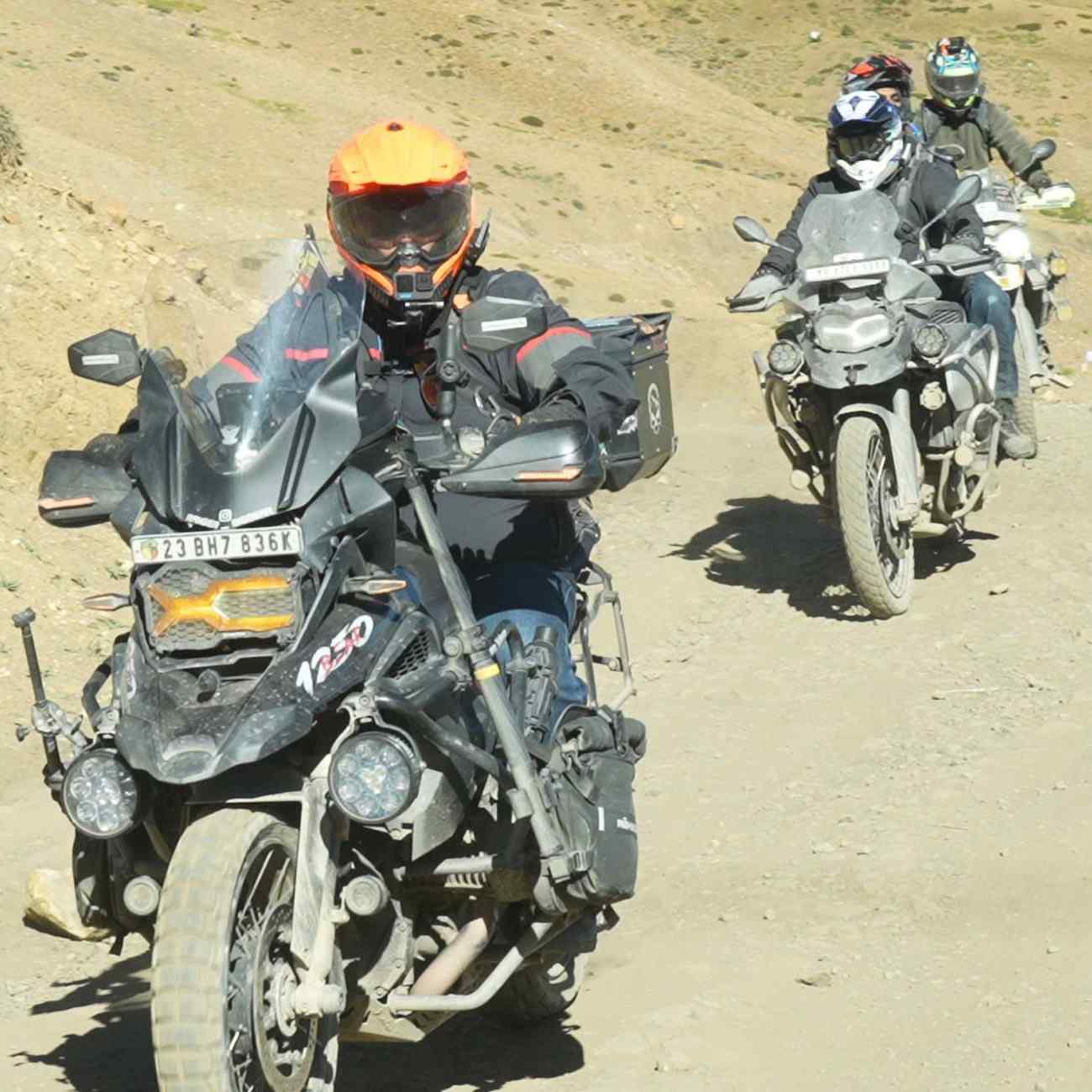
Costs vary widely based on bike type, season, and whether you self-organise or join a guided ride.
Himalayan rental
Himalayan rental in Manali is usually around ₹1,400 to ₹2,500 per day, depending on the model, bike condition, season, operator, and rental duration.
A few listings may show lower rates for older bikes, but always confirm the current price, deposit, and bike condition directly with the rental shop.
Fuel
Fuel for a 10-day trip covering 2,200 to 2,400 km at around 30 kmpl works out to roughly ₹7,000 to ₹7,700, based on current Himachal petrol prices of around ₹94 to ₹95 per litre. Petrol prices fluctuate, so this is an estimate.
Homestays and guesthouses
Budget homestays and guesthouses in Spiti typically run between ₹500 and ₹1,500 per night for basic rooms with shared or attached bathrooms. Tabo and Kaza have slightly higher options if you want better stays.
Food
Food costs average around ₹500 to ₹800 per day if you eat at dhabas and basic restaurants. Add a buffer for chai stops, snacks, and the occasional better meal.
A guided Spiti bike trip package costs more than self-riding because it includes a backup vehicle for luggage, a mechanic, route captain, fuel, permits, all stays, meals, and group dinners. The premium is worth it for first-time riders who do not want to sort out logistics on the road.
>>Want help choosing a self-ride vs supported bike package? Talk to our team on WhatsApp.
Safety Tips Our Himachal Team Gives Riders
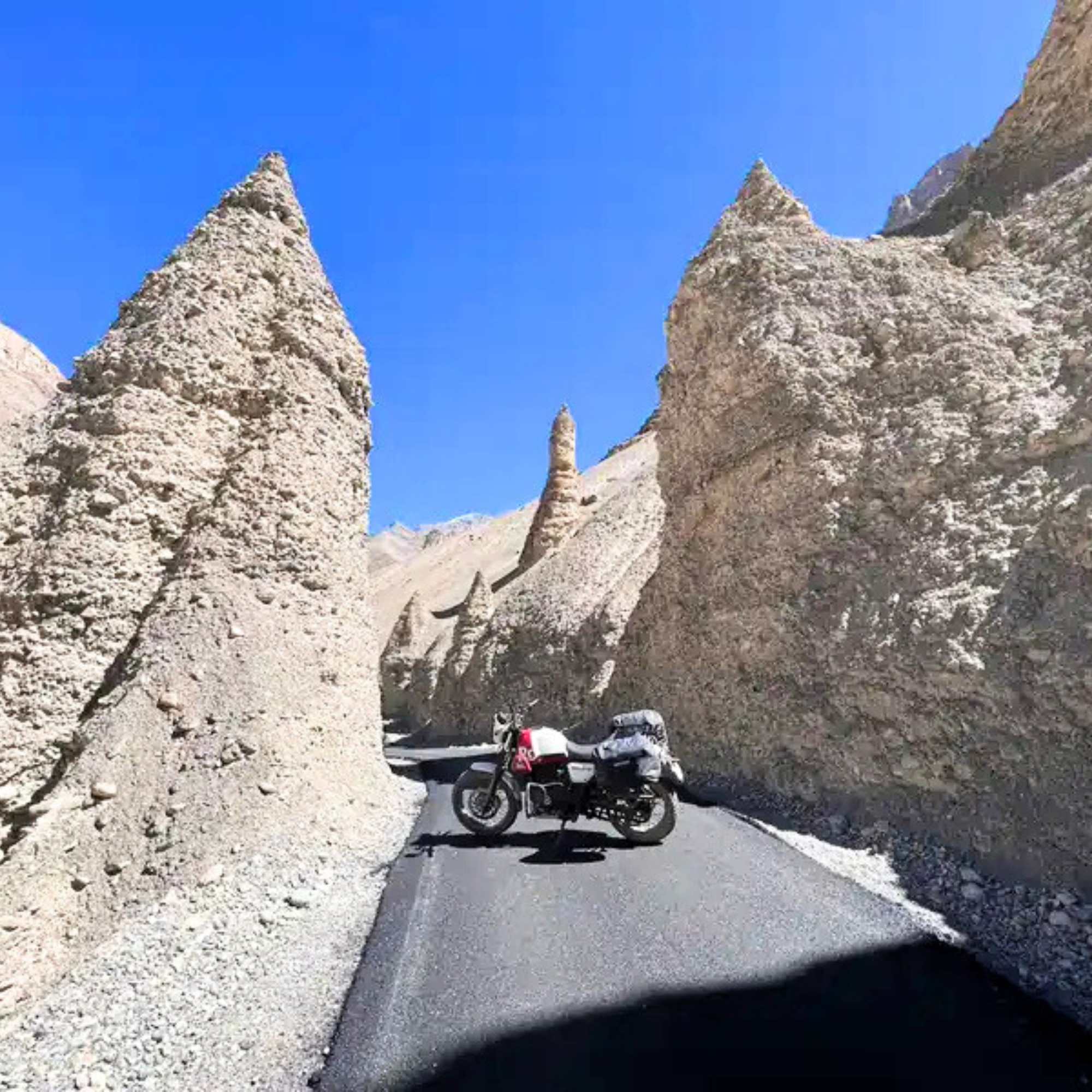
Start every riding day early. By 6 AM ideally, especially on the Gramphu to Batal stretch.
Cross water streams before noon. Glacial-melt streams swell through the day. A crossing that is ankle-deep at 9 AM can be knee-deep by 4 PM.
Do not ride at night in Spiti or Lahaul. There are no streetlights, no markings on the roads, and almost no help if something goes wrong.
Keep at least one buffer day in your plan, ideally two. Roads close. Bikes break. Weather turns. Buffer days save trips.
Do not race after Khoksar or Gramphu. The road quality changes without warning. The rider in front of you might brake suddenly for a boulder you cannot see.
Carry proper riding gear. Helmet, riding jacket with armour, riding gloves, knee guards, and proper boots. Not sneakers. Not a hoodie. Real gear.
Pack a thermal layer, a rain layer, hydration salts, paracetamol, basic medicines, a tyre inflator, a puncture kit, a spare clutch cable, chain lube, and at least 5 litres of extra fuel.
Drink water constantly at altitude. Avoid alcohol the night before a hard ride day. Eat light at altitude. These small habits prevent AMS more reliably than any tablet.
For broader trip support and tour planning, our Spiti Valley tour options cover both bike and car formats with full local logistics.
Final Verdict: Manali Route or Shimla Route?
For a first-time rider, the answer is Shimla in, Manali out. No question. Better acclimatisation, easier roads in the early days, and a tougher second half once you are warmed up.
For an experienced rider with fewer days, the Manali to Kaza route once Kunzum is stable is fine. You know what you are signing up for.
For pillion or rented-bike riders, choose Shimla-first or join a guided package. The Manali side is too rough for a first attempt with a passenger or a bike you do not fully trust.
For solo beginners, do not attempt Manali-first. The combination of altitude, rough roads, no network, and zero help if something goes wrong is genuinely dangerous for a first trip.
The mountain is not going anywhere. Pick the route your skill matches today, not the one your ego wants. Our Manali tour page and Shimla tour page have more on stays and start-point logistics if you are still deciding.
>>WhatsApp us to plan your Spiti bike adventure
Explore Our Handpicked Spiti Valley Bike Trips
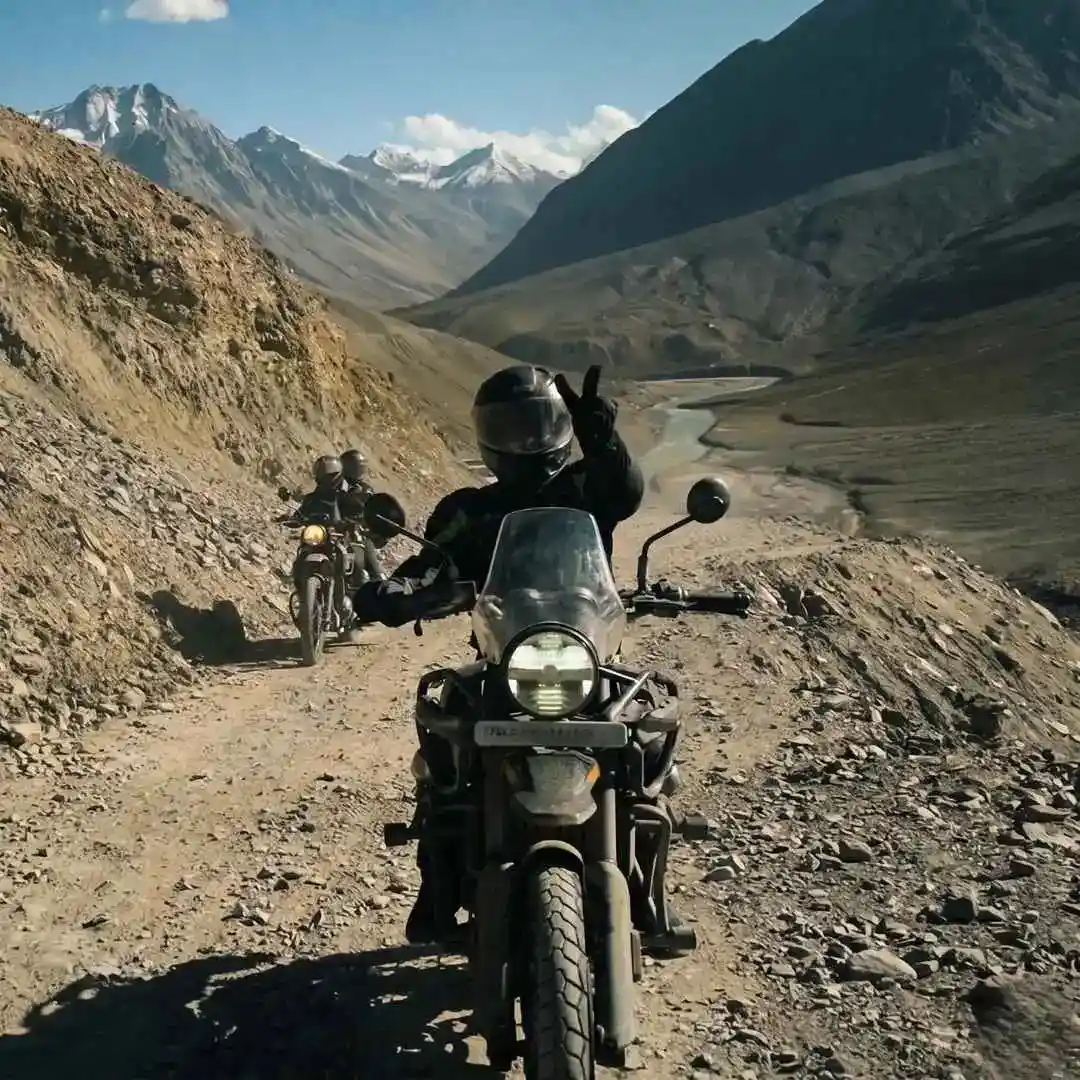 Group Tour7D/6N
Spiti Bike Trip From Manali With Chandratal
1D Sissu•1D Chandratal Camp+1
₹25,999₹29,999SAVE INR 4,000/ person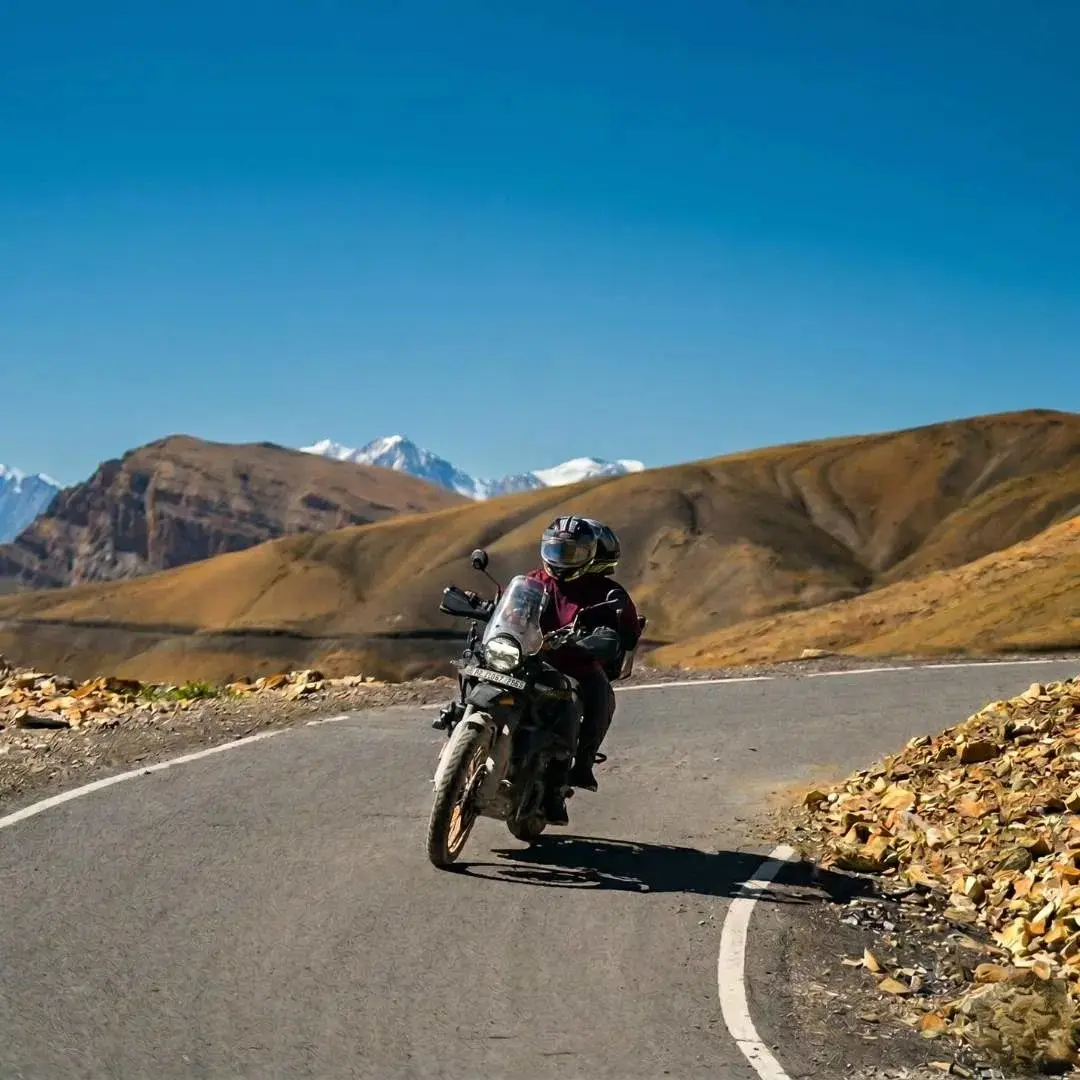 Group Tour11D/10N
Ultimate Spiti Valley Bike Expedition With Chandratal and Pin Valley
1D Narkanda•1D Sangla / Baspa Valley+5
₹32,999₹39,999SAVE INR 7,000/ person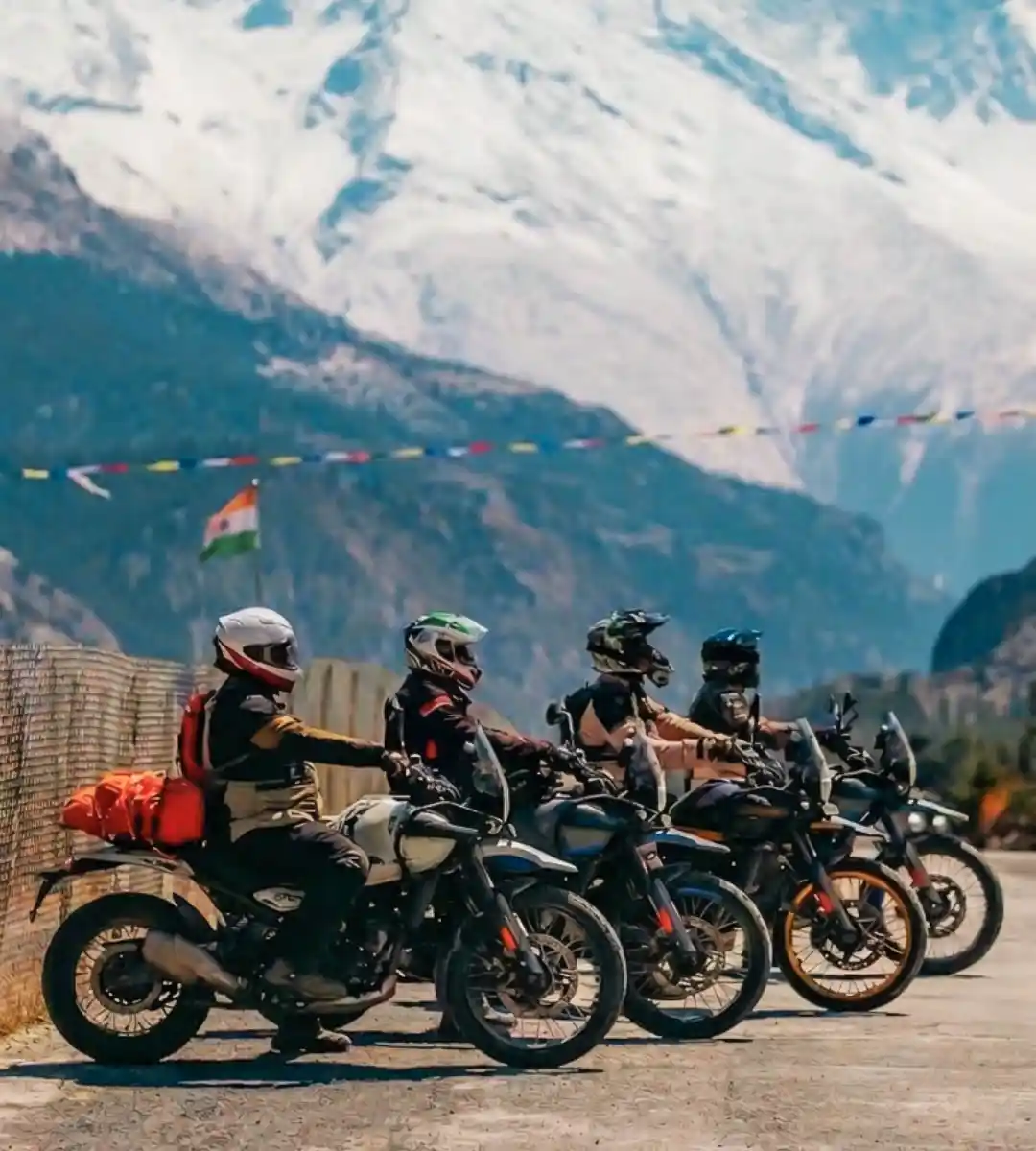 Group Tour10D/9N
Most Loved Spiti Valley Bike Expedition With Chandratal
1D Jibhi•1D Sangla+4
₹34,999₹41,999SAVE INR 7,000/ person
Related topics
Frequently Asked Questions
Is Manali to Spiti bike trip safe in 2026?
Yes, with the right experience, gear, and timing. The bigger risks are altitude, rough roads, and weather, not the destination itself. Solo beginners should not attempt the Manali side.
Which is better for Spiti bike trip, Manali or Shimla route?
Shimla is better for first-time riders, pillion riders, and rented bikes because it gives gentler roads and gradual altitude gain. Manali is better for experienced riders short on time once the route is fully open.
How many days are enough for Manali to Spiti by bike?
A short Manali to Kaza loop needs 6 to 7 days. A full Shimla-Kaza-Chandratal-Manali circuit needs 9 to 10 days. Always add at least one buffer day.
Can beginners ride from Manali to Kaza?
Beginners should not attempt the Manali-first route alone. Join a guided ride with a road captain and backup vehicle, or pick the Shimla route instead for a first Spiti trip.
What is the best time for Manali to Spiti bike trip?
Mid-June to September is the most reliable window. September is often the best balance of clear skies, stable roads, and lower water crossings. October is risky because of sudden snowfall.
Is Manali to Kaza road open now?
At the time of research, the Manali to Kaza route via Kunzum Pass was reported closed as of April 21, 2026. Expected opening is between mid-May and early June 2026, weather dependent. Always check the official Lahaul and Spiti road-status page before you ride.
Do I need permit for Manali to Spiti bike trip?
Indian riders need an e-Aagman e-pass for entering Lahaul-Spiti and the Atal Tunnel circuit. Manali Green Tax for non-Himachal bikes is ₹100. Foreign nationals need a separate Protected Area Permit for the Kinnaur-Spiti belt.
Is Chandratal safe on bike?
Yes, during the open season with proper acclimatisation. The 14 km approach road from Batal is rough and altitude-sensitive. Skip the overnight near Chandratal if anyone in the group has AMS symptoms.
Which bike is best for Spiti Valley?
Royal Enfield Himalayan and Scram are the most popular for good reason. Hero Xpulse works for solo riders. A well-maintained Classic 350 also works in experienced hands. Bike condition matters more than brand.
Is petrol available between Manali and Kaza?
No. There is no petrol pump between Manali and Kaza. Fill up in Manali and carry at least 5 litres of extra fuel in a proper jerry can. Kaza has a pump but supply can fluctuate during peak season.
Can I ride solo from Manali to Spiti?
Experienced riders can ride solo if they carry proper gear, tools, extra fuel, and inform someone of their daily plan. Solo first-time riders should not attempt the Manali side because help is far away if anything goes wrong.
Should I book a Spiti bike trip package or self-ride?
Self-ride if you are experienced and want full control. Book a package if you are new to high-altitude riding, want backup support, or do not want to sort out permits, fuel logistics, and stays yourself.
More about Lahaul and Spiti
 Lahaul and Spiti
Stargazing in Winter Spiti 2026: Where to Stay, Moonlight and What You Can See
Discover the best places for stargazing in Winter Spiti 2026, where to stay for darker skies and how moonlight affects visibility. Learn what you can realistically see from Kaza, Tabo and nearby villages during the winter months.
- Things to Do
- Snow Travel
 Lahaul and Spiti
Joining a Winter Spiti Group in 2026: Room Sharing, Privacy and Group Expectations
Planning to join a Winter Spiti group in 2026? Learn how room sharing works, what privacy to expect, options for solo travellers and couples, and when a single room supplement may apply.
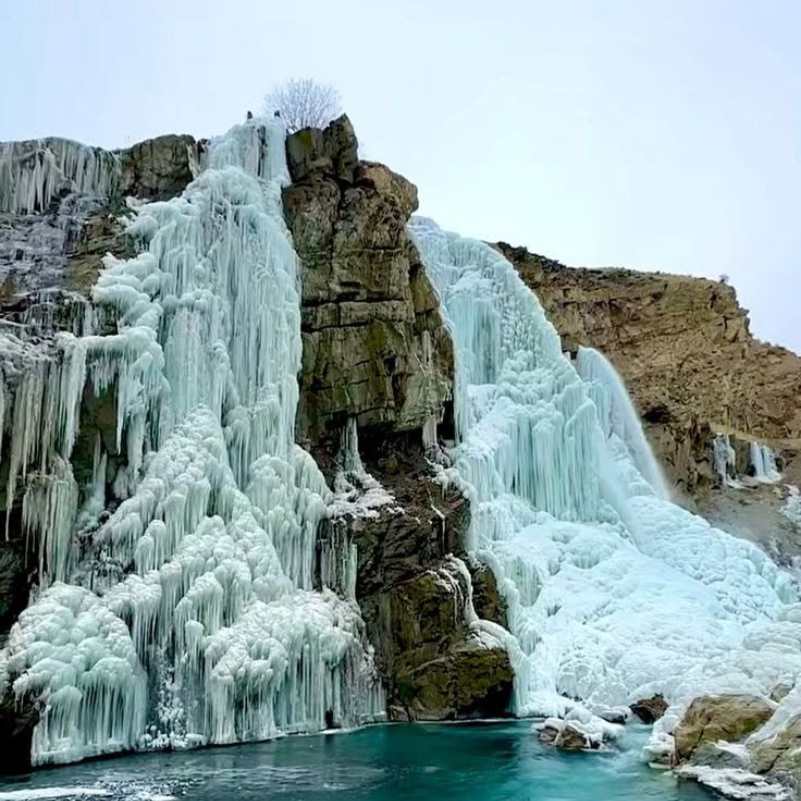 Lahaul and Spiti
Lingti Frozen Waterfall in Winter 2026-27: Access, Photo Stops and What to Confirm
Plan your visit to Lingti Frozen Waterfall in winter 2026-27 with practical details on access, road conditions, the best photo stops and seasonal conditions. Learn what to confirm before leaving Kaza and how to visit this spectacular frozen waterfall safely.
- Places to Visit
- Snow Travel