
Manali to Rohtang Pass Taxi Fare 2026: Cab Price, Booking and Local Taxi Rules
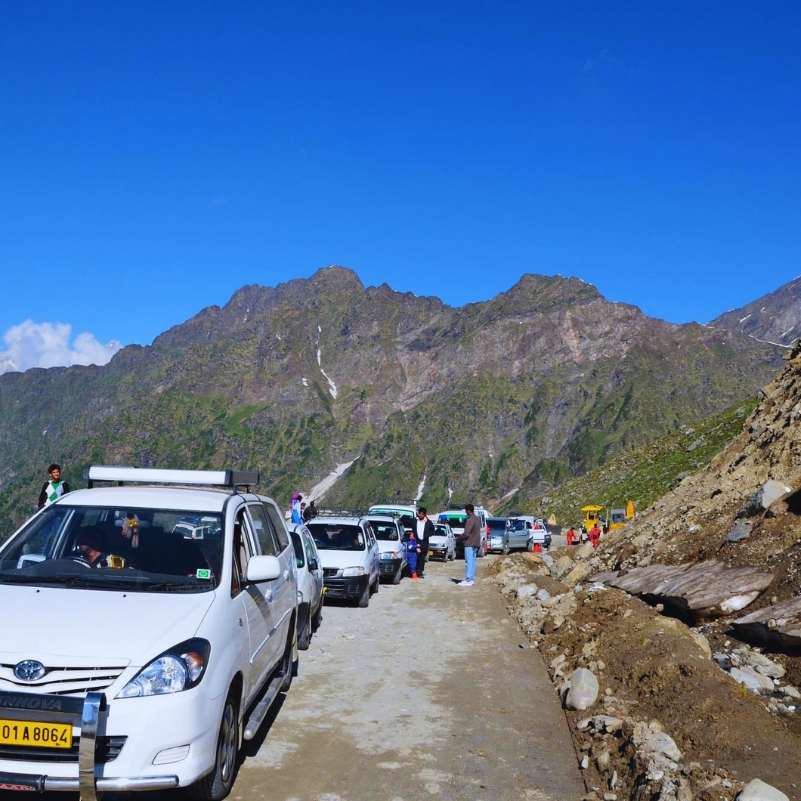
If you are trying to figure out the real manali to rohtang pass taxi fare in 2026, you have probably seen numbers all over the place. One site says ₹2,250. Another says ₹8,666. A third promises ₹800 a seat.
They are not all lying. They are quoting completely different things. One is a one-way drop. One is a full-day sightseeing taxi. One is a single shared seat. Here is how to read past the confusion and know exactly what you should pay.
Quick Answer
A private manali to rohtang pass taxi fare in 2026 usually needs a planning budget of around ₹4,500 to ₹7,500 per vehicle for a same-day trip.
The exact amount depends on your vehicle type, the season, whether the ₹550 permit is included, and whether the administration lets your taxi go all the way to Rohtang Top or stops you at an authorised snow point.
Private taxi quotes are almost always per vehicle, not per person. And this ₹4,500 to ₹7,500 range is a market planning figure from current listings and traveller reports, not an official taxi-union rate.
What Is the Manali to Rohtang Pass Taxi Fare in 2026?
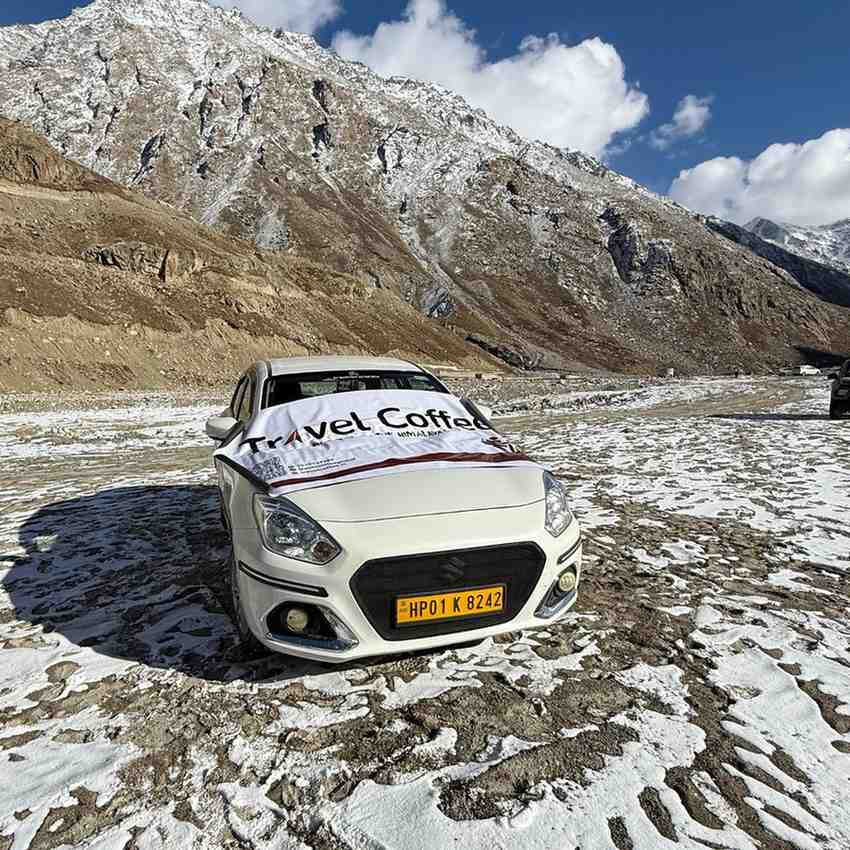
Let me break down the actual numbers we see operators quoting this season, so you know what is normal and what is inflated.
Private taxi price by vehicle type
Right now, some operators list an Alto at ₹4,500 in season with the permit included. That same Alto can drop to around ₹3,000 off-season with the permit still in.
Another operator advertises a hatchback at ₹3,999, a sedan at ₹4,999, and an SUV at ₹6,999, all marketed as inclusive packages.
Treat these as market examples, not fixed rates. Prices move with dates and demand.
For most travellers, a planning range of ₹4,500 to ₹7,500 per vehicle is more honest than chasing an unusually cheap aggregator price that turns out to be a one-way drop.
A bigger SUV, a holiday date, peak season, or a combined Sissu run will push you toward the higher end.
In our experience running Manali trips, the travellers who get burned are the ones who book the lowest headline number without asking what it actually covers. The cheap quote almost always means one-way.
Is the fare per person or per vehicle?
Private taxi prices are quoted per vehicle. You pay one price for the car, whether two of you sit in it or four.
Shared taxi prices work the other way. Those are per seat.
One operator currently advertises a shared seat at ₹800, but treat that price, its availability, and whether the permit is included as unconfirmed until you check directly.
Before you book, confirm how many passengers the car takes and how much luggage fits. A packed Alto with four adults and bags is not a comfortable ride to 3,978 metres.
One-way cab price versus sightseeing taxi price
Here is where most people get confused. Online aggregators sometimes show a one-way sedan fare of around ₹2,250 or ₹4,333.
That is not the same as a full-day Rohtang taxi that picks you up, waits at the tourist point while you play in the snow, and drives you back.
One result showed ₹4,333 one way and ₹8,666 round trip when checked. Same route, double the price, because a round trip with waiting time is a completely different job.
So before you compare quotes, ask one question: is this a direct drop, a return journey, or an eight to nine hour sightseeing duty? Until you know that, the numbers mean nothing.
What Should Be Included in the Rohtang Pass Taxi Price?
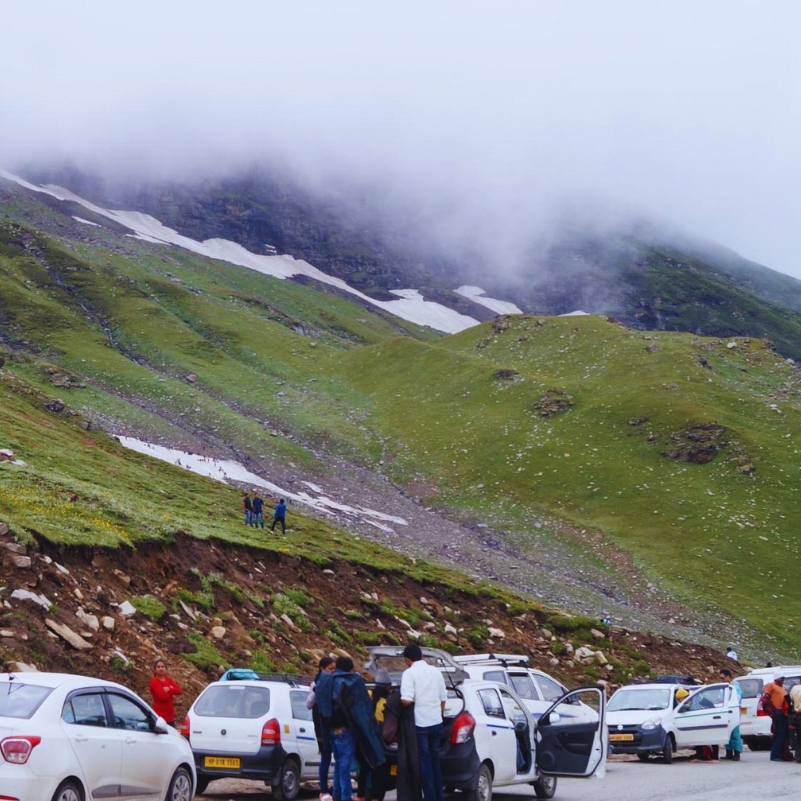
A "₹4,999 all inclusive" banner tells you nothing until you see the list. Ask what is actually inside the price.
You want to know if the quote covers the government permit, the congestion charge, fuel, driver allowance, parking, hotel pickup, waiting time, and the return drop.
The official government charge for a car, jeep, or MUV is ₹500 permit fee plus ₹50 congestion charge. That is ₹550 total. Confirm whether that sits inside your fare or gets added later.
Snow clothes, skiing, paragliding, ATV rides, meals, and anything you buy up there are normally separate. Do not assume they are bundled.
Never accept the words "all inclusive" without a written list. We tell every traveller to get the inclusions in a WhatsApp message before paying, so there is no argument at the barrier.
How Much Does the Rohtang Pass Permit Cost in 2026?
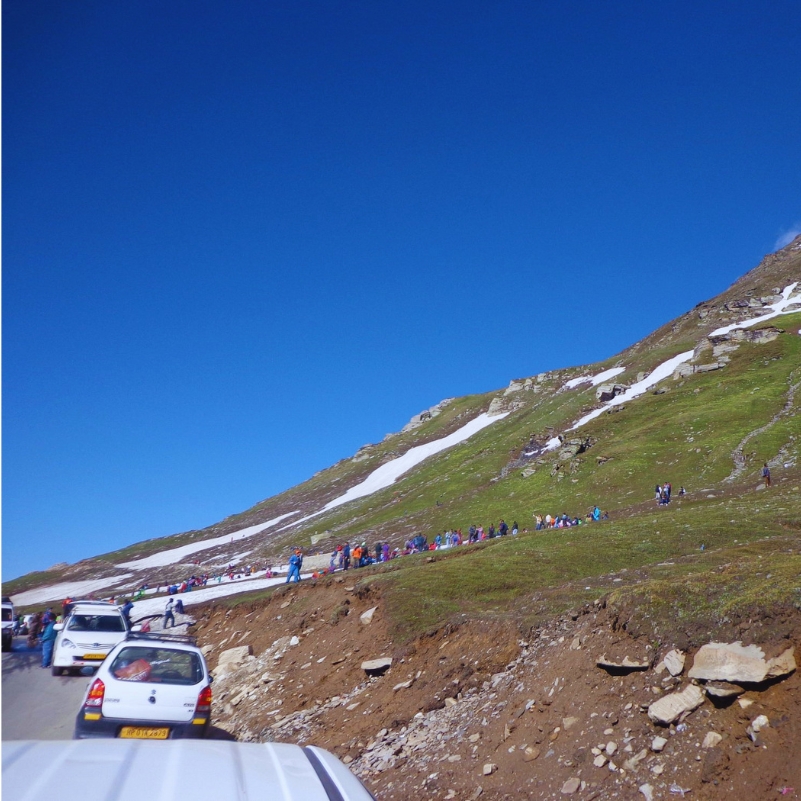
Standard tourism permit fee
The official permit fee for a car, jeep, or MUV is ₹500. The congestion charge is ₹50. Together that is ₹550.
This permit is valid for one day and covers a to-and-fro journey.
The daily limit is 800 petrol vehicles and 400 diesel vehicles. Once those fill, that is it for the day.
When can the permit be booked?
Permits drop in two batches. The first release is at 10:00 AM with 400 petrol and 200 diesel permits.
The second release is at 4:00 PM with another 400 petrol and 200 diesel permits.
You can only apply for the next two days from the current date. You cannot lock a permit weeks ahead, so forget about booking it during your trip planning in March.
There is also a per-vehicle cap. A single vehicle can get a maximum of three permits in one Tuesday-to-Monday week.
You need a valid ID and a valid PUC certificate. A printed permit is compulsory. No printout means no crossing, even if you paid.
Who arranges the taxi permit?
When you hire a taxi, the operator normally arranges the permit for that specific vehicle. But you must confirm the permit cost is inside your fare.
A booked cab does not automatically mean a booked permit. Those are two separate things, and the permit has a daily quota that can run out.
Ask your operator to confirm the vehicle number and the permit before you pay the full balance. This one check saves a lot of morning-of panic.
Special private-vehicle permit rules
The official portal also has a separate special permit category for private vehicles, the white-plate cars.
That page lists a vehicle age limit of no more than ten years from registration. The daily special-permit quota is 60 petrol and 40 diesel vehicles.
It also states this permit is issued only once to a vehicle during the season.
Rules like these change without much notice, so check the current eligibility on the official portal before you travel.
Is Rohtang Pass Open in 2026?
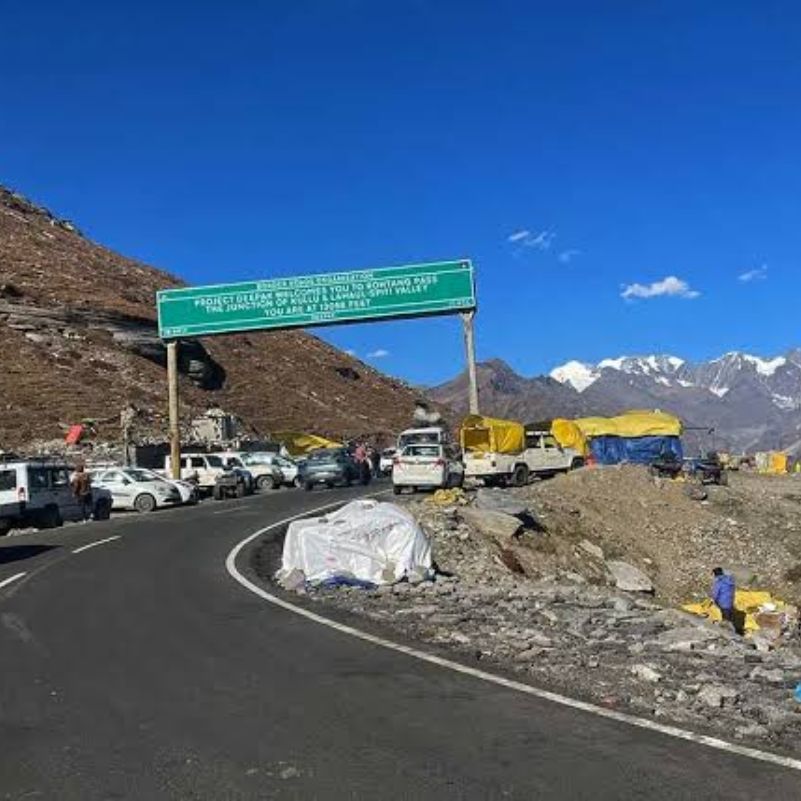
Three different questions get mixed up here, and mixing them is exactly how trips go wrong.
The road can be open for snow-clearing or local traffic. The permit portal can accept applications. And tourists can still be stopped before Rohtang Top at whatever snow point is authorised that day. All three can be true at once.
On May 17, 2026, the Kullu administration allowed tourist vehicles up to the third curve beyond Rahni Nala at kilometre 46.35, while the rest of the snow clearing continued.
On July 25, 2026, the official permit portal was live and showed 767 petrol and 382 diesel permits still available at the time checked.
But do not read portal availability as proof every taxi could reach Rohtang Top. Available permits and open road are not the same guarantee.
So ask your operator one precise question: "What is today's permitted final tourist point?" A good operator will know before you leave.
Do Tourists Have to Hire a Local Manali Taxi for Rohtang Pass?
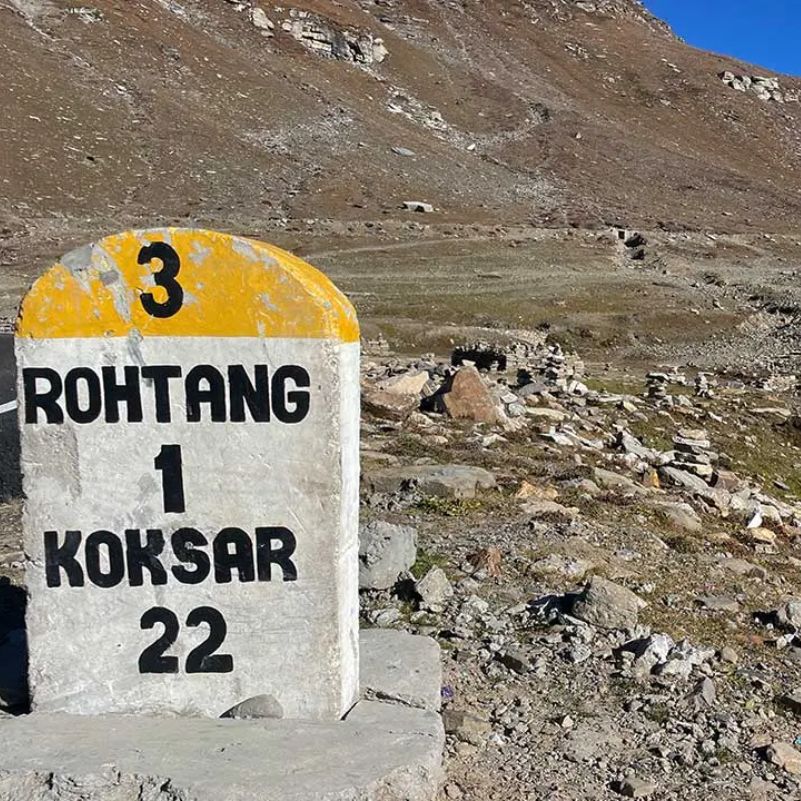
This is one of the most confusing topics online, and a lot of blogs state it far more confidently than the facts allow.
What the official portal confirms
The permit is issued for a specific vehicle and controlled through a daily quota. The portal keeps the normal tourism permit and the special private-vehicle permit as separate categories.
What the portal does not clearly state is a permanent 2026 blanket ban on every taxi registered outside Manali or Himachal. No clear current order confirming that was found during research, so we will not claim it exists.
Can a Delhi or Chandigarh taxi go to Rohtang Pass?
A Delhi or Chandigarh taxi may not automatically be permitted for Rohtang Pass sightseeing. Eligibility can depend on vehicle registration, commercial permits, current district rules and checks at the barrier, so confirm access before travelling.
A taxi that brought you all the way from Delhi or Chandigarh may not automatically qualify for Rohtang sightseeing.
Get written confirmation from your operator before you assume the same vehicle can take you up. You may need to switch to a permitted Manali taxi for the Rohtang leg. Better to know that before you are standing at Gulaba.
Can tourists take their own car?
Private vehicles are not automatically banned. But you need the right special permit and you have to meet the portal's listed conditions.
That means the ten-year vehicle-age limit, the small special quota of 60 petrol and 40 diesel vehicles, and the once-per-season rule.
We cannot promise a private permit will be available on your date. The quota is tiny and it goes fast.
How Should You Book a Rohtang Pass Taxi?
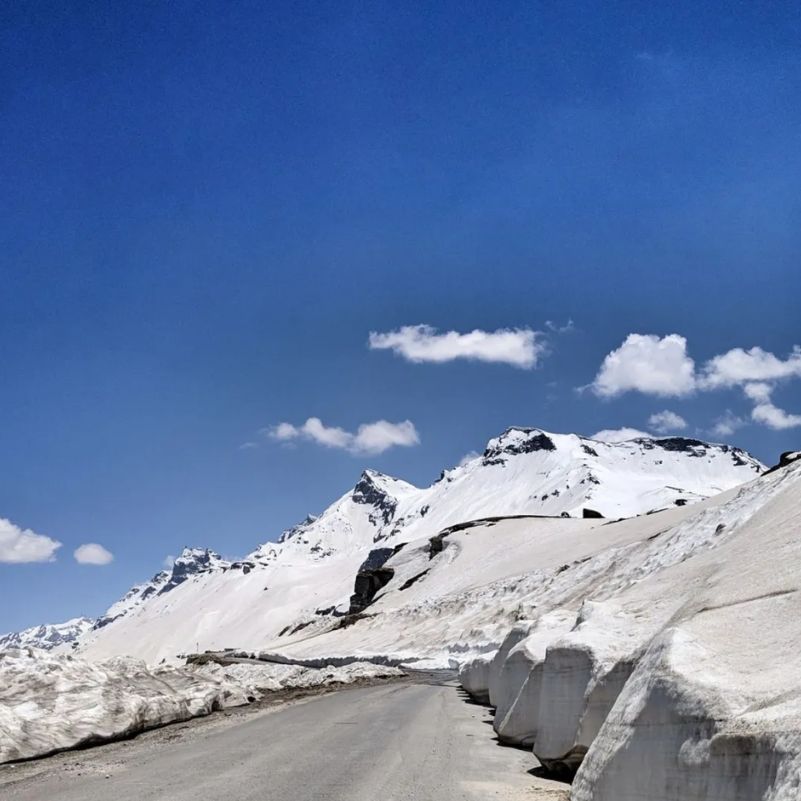
Questions to ask before paying
Ask for the vehicle model, the registration number, the driver's contact number, the passenger capacity, and the luggage capacity.
Ask whether the ₹550 government charge is included in the fare.
Confirm whether the quote covers pickup, parking, waiting time, and the return drop.
Ask for the exact planned final point: Rohtang Top, Rahni Nala, Marhi, Gulaba, or whichever snow point is authorised that morning.
And ask what happens to the price if the road closes before the promised point. Get that answer before you pay, not after.
When should a taxi be booked?
Arrange the taxi early for May, June, weekends, and public holidays. Those dates fill fast and the good drivers get taken first.
You can discuss the taxi weeks ahead, but the official permit itself can only be applied for in that next-two-day window. So the taxi conversation and the permit are on two different clocks.
Do not pay the entire fare before the operator confirms both the permit and the road status. A deposit is fine. The full amount before confirmation is not.
Permit and cancellation policy
The official portal states that a successful permit payment is non-refundable. Refund claims are considered only for failed transactions, not for successful bookings you later cancel.
Taxi cancellation terms are a separate thing. Confirm those directly with your operator, because they vary from one to the next.
If you would rather not chase drivers and permits yourself, our Manali tour packages and Rohtang Tour Packages come with a local driver and a team that actually answers the phone.
How Far Is Rohtang Pass from Manali?
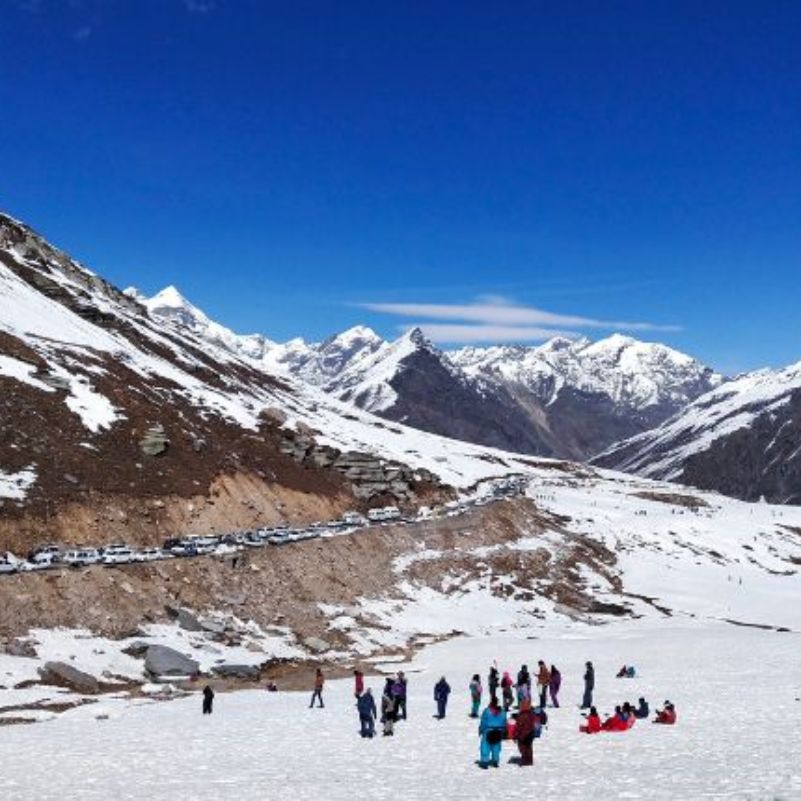
Rohtang Pass is roughly 51 kilometres from Manali. Its elevation is about 3,978 metres.
In normal conditions, allow two to three hours for the one-way drive. On paper that sounds quick for 51 km. In practice, the road is slow.
Holiday traffic, narrow-road congestion, police checks, weather, and the current barrier location all stretch the time. A festival weekend can double it.
A full taxi excursion commonly runs around eight to nine hours. That is an operator estimate, not a fixed official duration, but it is close to what we see on the ground.
What Route Does the Taxi Follow?
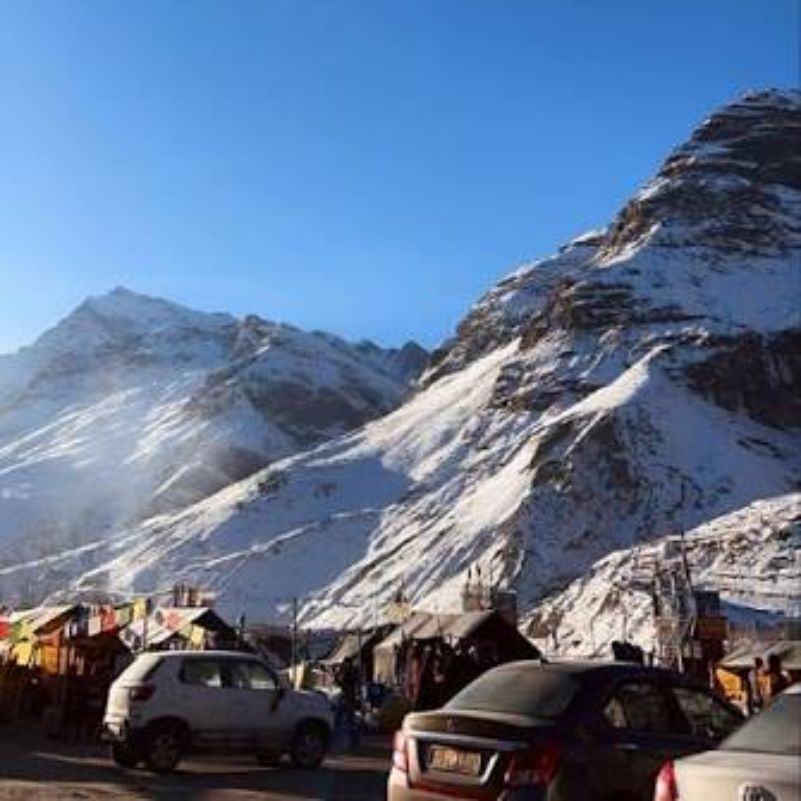
The direct run toward Rohtang uses the old Manali to Rohtang road, the one that climbs past Gulaba, Marhi, and Rahni Nala.
Do not think of the Atal Tunnel as the direct road to Rohtang Top. It is not.
The tunnel sits on a different route through the mountain. It usually comes into play as part of a Sissu extension or a circular trip, and only when road conditions and administration orders allow it.
Can Rohtang Pass, Sissu and Atal Tunnel Be Covered Together?
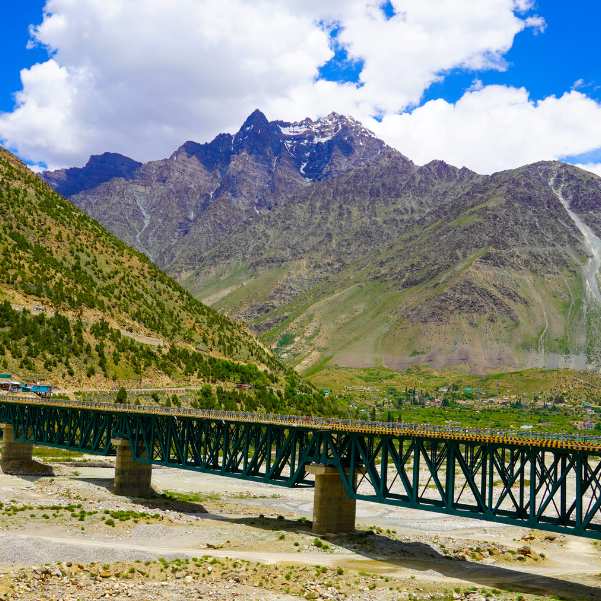
Some operators sell a combined route covering Rohtang, Koksar, Sissu, Atal Tunnel and Solang Valley.
One operator advertises around ₹500 to ₹1,000 extra for this extension, but that is not an official price, so treat it as a rough add-on.
The circular trip only works when the road across Rohtang is open and authorised. When there is partial access, active snow clearance, a landslide, or weather restrictions, the loop is off. We will not promise it in those conditions, and no honest operator should.
If Sissu is high on your list, our Sissu tour packages cover the Lahaul side properly.
Are Shared Taxis Available from Manali to Rohtang Pass?
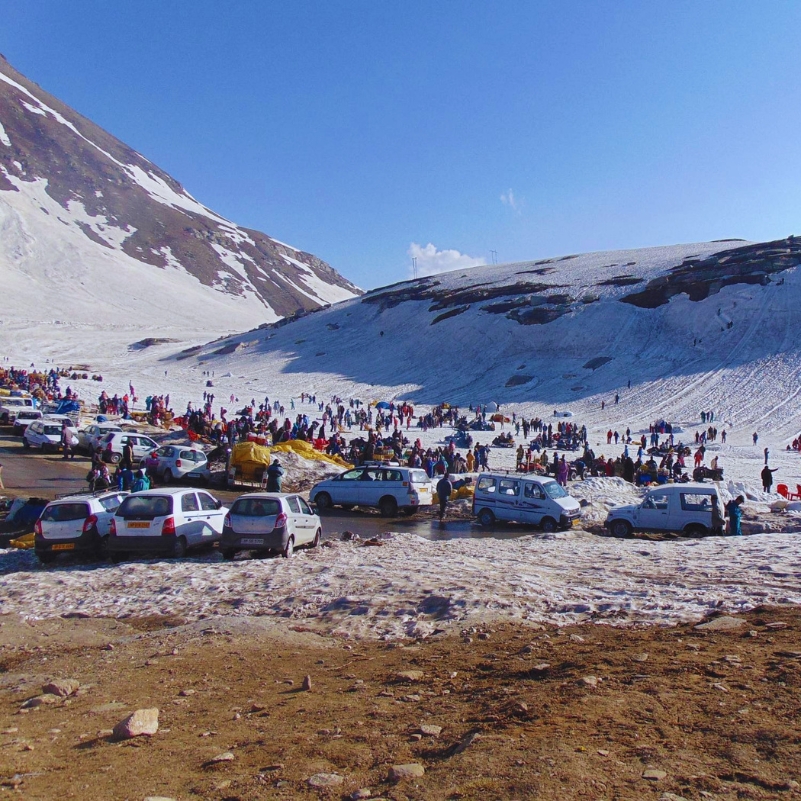
Shared taxis do turn up through local agents and taxi operators, mostly in peak season.
One operator advertises ₹800 per seat, but confirms the number before counting on it.
A shared departure depends on two things: enough passengers to fill the car and a vehicle permit for the day. If either falls short, the trip does not run.
If you do go shared, confirm the pickup point, departure time, return time, the permitted final point, and your luggage allowance.
For families, kids, or anyone who wants to stop for photos, a private cab is worth the extra money. Shared taxis run on the group's schedule, not yours.
What Happens If Rohtang Pass Is Closed?
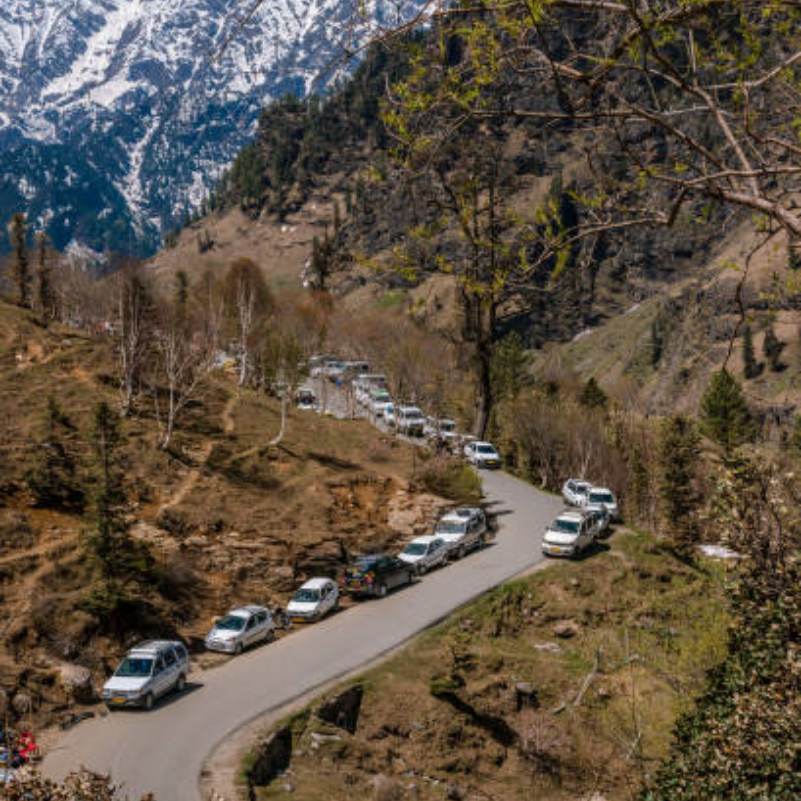
You might get stopped at Gulaba, Marhi, Rahni Nala, or another point the administration picks that day.
A permit does not override a police, weather, or district safety restriction. If they say stop, you stop, permit or not.
Ask your operator upfront whether the taxi price drops, stays the same, or converts to another itinerary if the promised point becomes unreachable.
Remember the official permit payment is normally non-refundable, so that ₹550 does not come back even if the road shuts.
A reliable operator tells you the permitted final point before you leave. If yours cannot answer that in the morning, that is a warning sign.
How Can Travellers Avoid Inflated or Misleading Taxi Quotes?
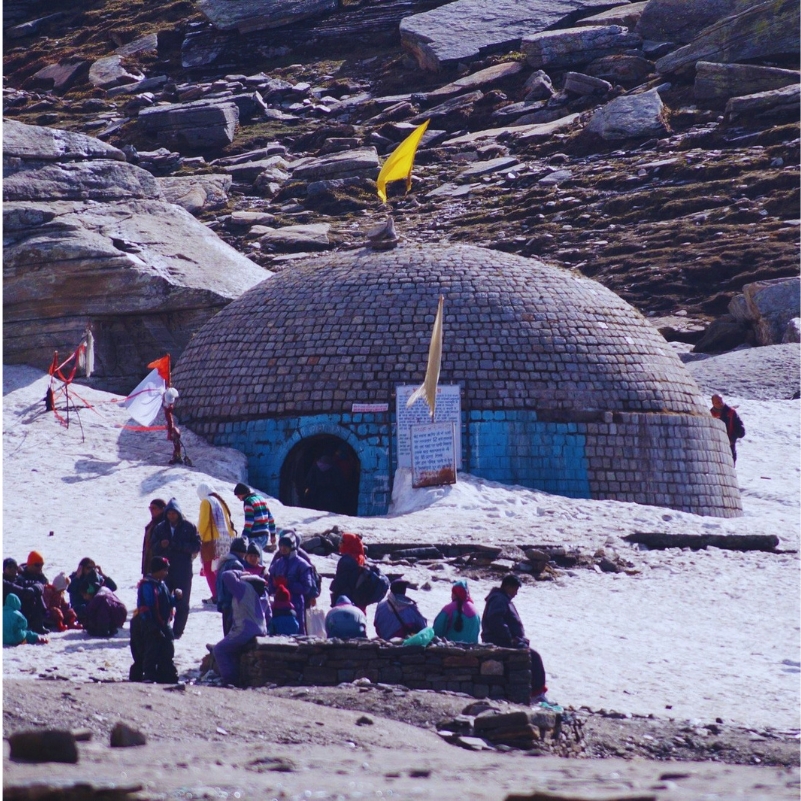
An unusually low quote is often just a one-way transfer dressed up as a Rohtang trip. A high quote might pack in an SUV, a peak-season surcharge, the permit, parking, waiting time, or a Sissu extension.
Ask for the final total, not the headline number. That is the only figure that matters.
Do not assume "Rohtang taxi" always means Rohtang Top. Half the time it means the current snow point, which could be well below the actual pass.
Keep the price, the inclusions, the exact route, and the cancellation policy in a WhatsApp message. If there is a dispute later, that message is your proof.
Which Vehicle Should You Book?
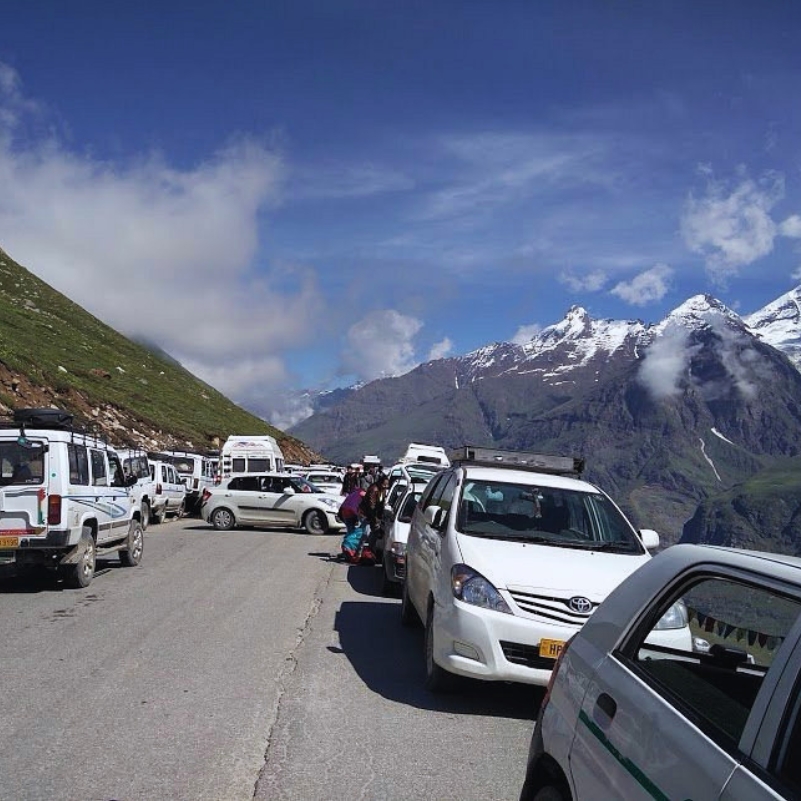
A hatchback or sedan works fine for two to four travellers when the road is open for normal vehicles.
An SUV is more comfortable for a bigger group, extra luggage, and rough patches.
You do not always need a 4x4. But the administration can temporarily restrict movement to 4x4 vehicles during snow, ice, or bad weather. If that rule is in force on your date, a sedan will not get through, so check before booking.
Is the Rohtang Taxi Trip Safe for Families?
Start early and treat it as a full-day excursion. Rushing it in the afternoon is how you end up driving mountain roads in fading light.
Rohtang sits at about 3,978 metres, so some travellers feel breathless or a bit off. That is normal at this height. Take it slow up there.
Carry warm layers even in summer, and follow the police or driver instructions when the weather turns, which it does fast at this altitude.
If you want to add snow activities or adventure to the day, our guide to adventure activities in Manali covers what is worth doing and what to skip.
Explore Our Curated Rohtang Pass Tour Packages
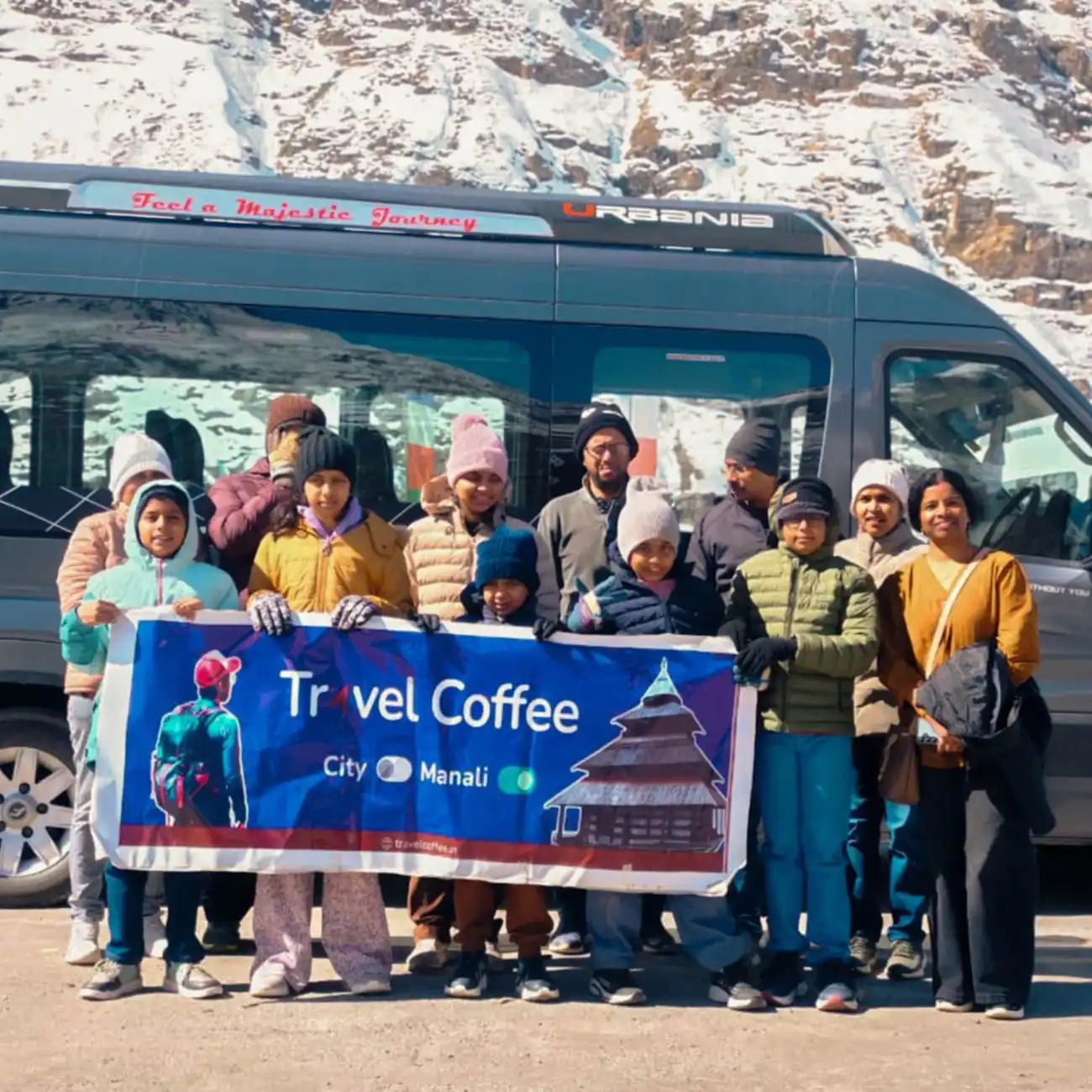 5D/4N
5D/4NPremium Manali Tour Package with Private Cab and Rohtang Pass
4D Manali
₹14,999₹19,999SAVE INR 5,000/ person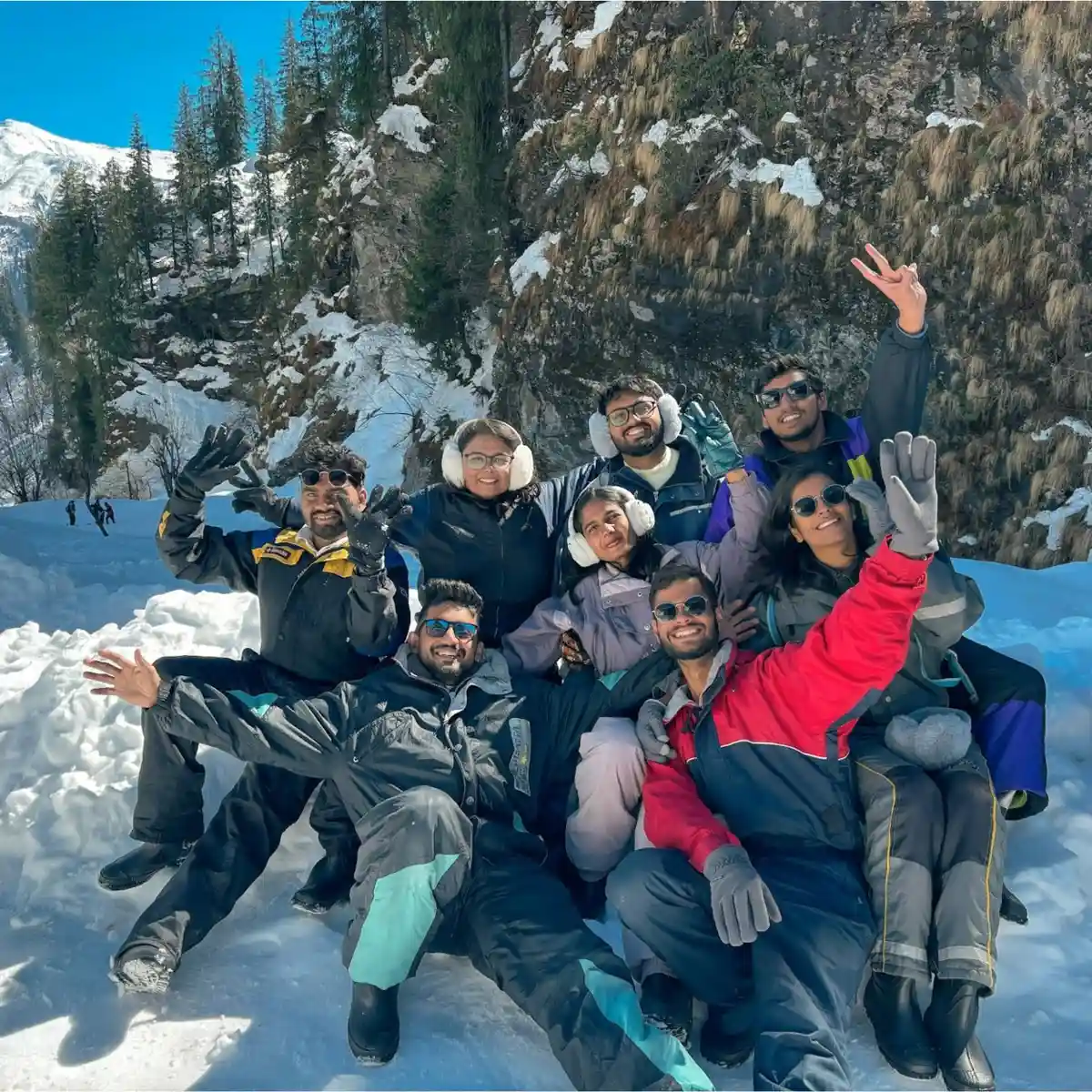 5D/4N
5D/4NBest Value Manali Volvo Package with Rohtang Pass
3D Manali
₹9,999₹13,999SAVE INR 4,000/ person 7D/6N
7D/6NComplete Shimla Manali Volvo Package with Rohtang Pass
2D Shimla•2D Manali
₹15,999₹19,499SAVE INR 3,500/ person
Related topics
Frequently Asked Questions
How much is a taxi from Manali to Rohtang Pass?
Budget around ₹4,500 to ₹7,500 per vehicle for a private same-day trip. This is a market planning range from current listings, not an official fixed tariff.
Is the taxi fare per person or per car?
A private taxi is priced per car. A shared taxi is priced per seat. So four people in one private cab split a single vehicle fare.
Is the ₹550 permit included in the taxi fare?
Sometimes yes, sometimes no. It depends entirely on the operator. Always confirm whether the ₹550 government charge is inside your quote before paying.
Can I book a Rohtang Pass taxi online?
Yes. Operators take online and WhatsApp bookings. The vehicle permit itself is handled separately through the official permit system with its daily quota.
Are only local Manali taxis allowed?
Local Manali taxis are the common choice, but a permanent blanket 2026 ban on all outside taxis was not confirmed in our research. Check current enforcement before you plan around it.
Can an outside-state taxi go to Rohtang Pass?
An outside-state taxi may not automatically be allowed to visit Rohtang Pass. Access depends on the vehicle registration, commercial permit and current district rules, so get written confirmation from your operator before travelling.
Can I take my private car to Rohtang Pass?
Yes, with the special private-vehicle permit. Your car must be under ten years old, and the special quota is tiny at 60 petrol and 40 diesel vehicles a day, issued once per vehicle per season.
Is Rohtang Pass closed every Tuesday?
Tuesday is commonly the maintenance closure day. But check the live official portal or the current district order before finalising, because these things can shift.
How long does the taxi journey take?
About two to three hours each way in normal conditions. The complete outing usually runs around eight to nine hours with stops and waiting time.
Are shared taxis available?
Sometimes, yes. One operator lists ₹800 per seat, but the price, the permit inclusion, and whether a car actually departs all need confirming.
Can I visit Sissu and Atal Tunnel on the same trip?
Only when the road across Rohtang is fully open and authorised, and when you agree the extended route with your operator in advance. During partial access, it is off the table.
What happens if the taxi cannot reach Rohtang Top?
You get stopped at an authorized snow point like Gulaba or Marhi. Ask beforehand whether the fare changes. The official permit fee stays non-refundable regardless.
More about Rohtang Pass
 Rohtang Pass
Rohtang Pass Altitude Sickness in 2026: Symptoms, Prevention and When to Turn Back
Planning a trip to Rohtang Pass in 2026? Learn the symptoms of altitude sickness, prevention tips, and when to turn back for a safe mountain journey.
- Altitude & Health
- First-Time Travellers
 Rohtang Pass
Best Places to Visit on the Way to Rohtang Pass in 2026
Discover the best places to visit on the way to Rohtang Pass in 2026, including Solang Valley, Rahala Waterfalls, Gulaba, Marhi, and more for an unforgettable Himalayan road trip.
- Places to Visit
- Road Trips
 Rohtang Pass
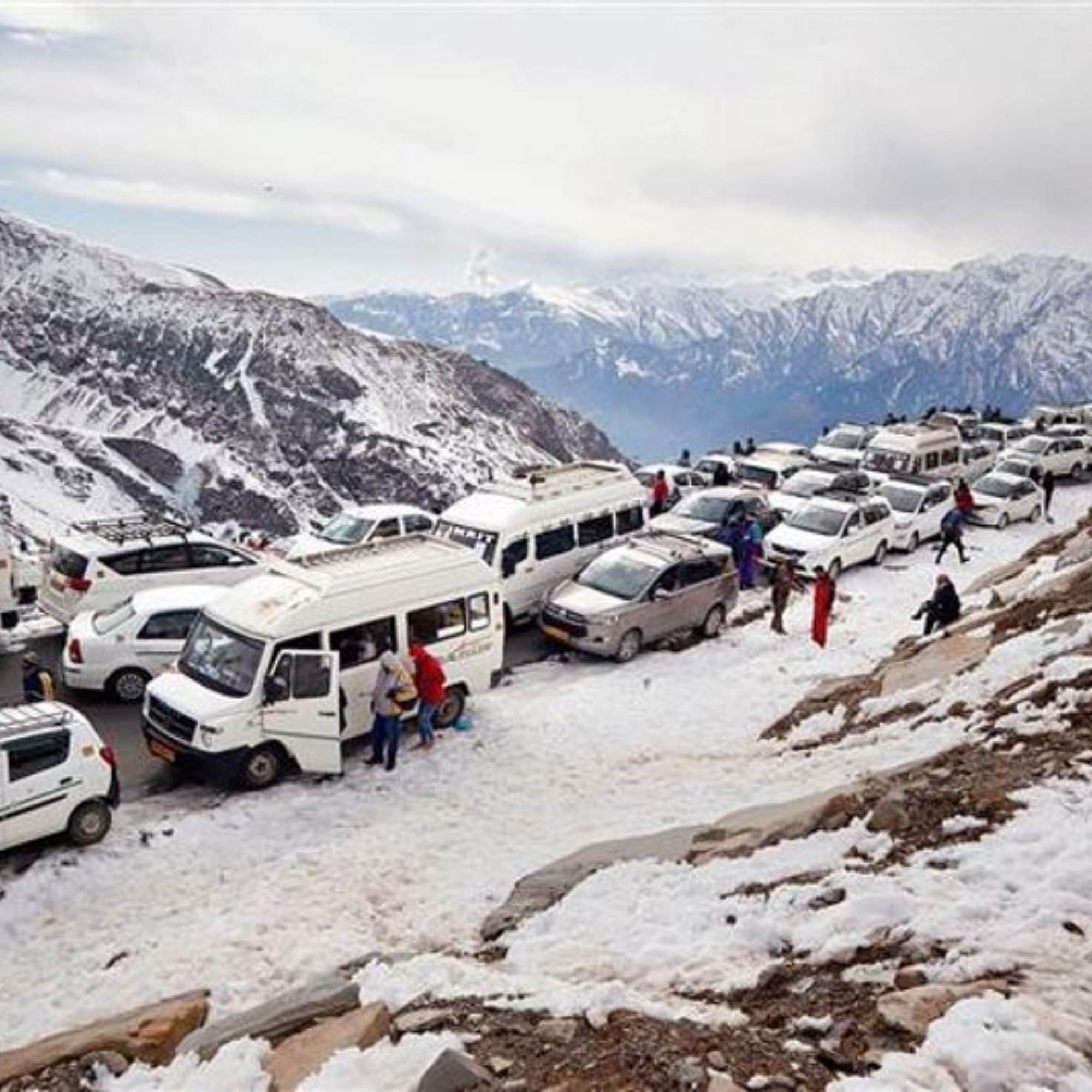
15 Rohtang Pass Mistakes to Avoid in 2026: Permits, Taxi Scams, Timing and Snow Rentals
Planning a Rohtang Pass trip in 2026? Discover 15 common mistakes to avoid, from permits and weather to packing and safety, for a smooth mountain adventure.
- First-Time Travellers
- Permits & Fees